Unimog is a rugged off-road truck line that can be built for all kinds of specialized uses. The hosts are saying Jay Couch really likes them and even builds and races custom versions.
“6x6,” “8x8,” and “10x10” tell you how many wheels a vehicle has and how many of them get power. More driven wheels usually means better grip when the terrain is rough.
The G-Class is a luxury SUV that’s also built to go off-road. The podcast mentions special versions with extra wheels, like 6x6 and 8x8, which are made for extreme terrain. It’s being discussed because it has a reputation for rugged capability.
The Ineos Grenadier is an off-road truck designed with a classic truck structure. It uses a ladder-style frame, heavy-duty axles, and it can be equipped with locking differentials so it can keep traction on tough trails.
A ladder frame is the truck’s main metal skeleton. It’s built like two long rails with bars connecting them, and it’s popular on off-road trucks because it’s tough over bumps and rough terrain.
Body-on-frame means the car’s body sits on top of a separate heavy-duty frame. Off-road trucks use this because it tends to be stronger when you hit rocks, ruts, and big bumps.
Solid axles connect the wheels with a rigid bar. That helps the truck keep traction when the ground is uneven, because the wheels can follow bumps and dips more effectively.
A locking differential makes both wheels on the same axle turn together. If one wheel starts slipping, it helps the other wheel still get power so the truck can keep going.
Pinion angle is the alignment angle of the gears that send power to the driveshaft. If you lift the truck too high, that angle can get off, making the drivetrain work harder and run hotter.
The drive shaft is the part that carries power from the drivetrain to the axle. If the truck is lifted and the angles change too much, it can cause extra stress and heat.
Portal axles are a special axle design that gives you extra ground clearance. Instead of lifting the whole suspension, the axle’s gearing is arranged so the wheels sit higher off the ground.
Camel Trophy was a famous off-road event where teams drove 4x4s through very challenging terrain. They mention it to make the point that you don’t always need huge tires to do well off-road.
Term
heavy foot
“Heavy foot” just means driving with more throttle than usual. Off-road, that can help keep speed and momentum when you hit rough sections.
Articulation is how much a vehicle’s suspension can move up and down on one axle while keeping tires in contact with uneven terrain. More articulation helps maintain traction over bumps and dips, which matters a lot in off-road competitions.
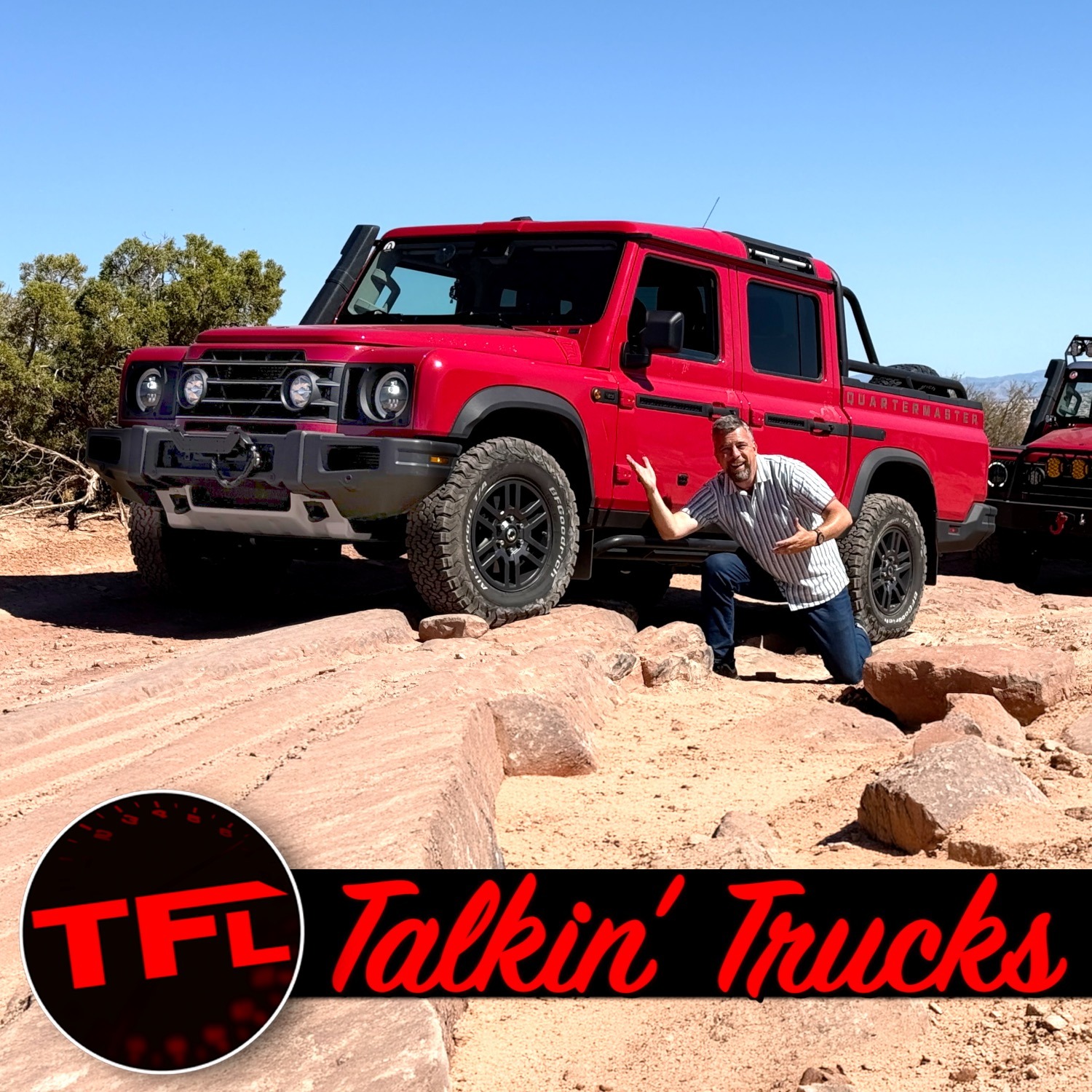
The Ineos Grenadier Quartermaster is the pickup version of the Grenadier. They’re talking about it as an off-road truck that can handle trails like Moab, even if it doesn’t look like it has huge clearance at first glance.
In off-road truck talk, “portals” are axle parts that add extra clearance under the truck. They help the truck sit higher so bigger tires can fit and the wheels can clear obstacles.
“37’s” means the truck is running very large tires—about 37 inches tall. Larger tires usually help the truck clear rocks and ruts, but they can require lift and careful fitment so they don’t rub.
Ground clearance is how high the truck sits off the ground. The higher it is, the less likely you are to hit the bottom of the truck when driving off-road.
They’re a German company that makes an off-road “portal kit.” The kit helps change how the wheels sit on the truck, which can improve clearance for rough terrain.
A portal kit is an off-road upgrade that raises the wheels using gearing near the hubs. It can give you more clearance for rocks and ruts, though the truck’s overall balance can change.
Track width is how wide the truck is from one wheel to the other. A wider track usually feels more stable, while a narrow track can feel tippier, especially if the truck sits higher.
They bring up the Ford Focus to make a comparison about width. The point is that the Focus can be wider than older solid-axle G-Wagons, which can make the truck feel less tippy.
Term
tippy
“Tippy” is shorthand for a vehicle feeling like it will tip over, which relates to rollover risk. Width, suspension geometry, and how the truck is loaded all affect how stable it feels on uneven terrain.
The Ford F-150 is a full-size pickup truck. The podcast is talking about Raptor versions, which are built to drive faster and handle rough roads. So the F-150 is mentioned as the base truck line for that kind of performance setup.
Articulation is how much the suspension can “flex” so the wheels can move independently over bumps. More flex usually means better tire contact and traction off-road.
Independent front suspension means the left and right front wheels can move separately. That can still work great off-road, but it may not match a solid axle’s wheel-to-wheel flexibility in extreme crawling.
A sway bar disconnect lets the suspension move more freely. Off-road, that can help each wheel stay in contact with the ground when the truck is twisting over rocks.
The Ford Bronco is built for off-road driving. Here, they’re talking about how its suspension can be tuned (with a sway bar disconnect) to let the wheels move more over rocks.
The Chevrolet Colorado ZR2 is an off-road-focused version of the Colorado. They’re saying it can still rock-crawl well even without a solid front axle because it has good ground clearance and locking differentials.
Lockers are traction aids that make both wheels on an axle turn together. When one wheel loses grip on rocks, the other wheel can still pull you through.
A live front axle is a solid front axle that’s connected to the drive system. Off-road, it can help the truck keep traction and let the wheels move well over rocks.
Car
Ram Heavy Duty
Ram Heavy Duty is Ram’s big, heavy-duty truck line. The hosts mention it because it’s one of the few trucks you can buy new that still uses a solid front axle.
The Dodge Ram is a full-size pickup truck. When people say “heavy duty,” they usually mean it’s built for towing and hauling more than a regular pickup. The podcast mentions it while comparing heavy-duty trucks.
Ford’s Super Duty is a heavy-duty truck line meant for serious towing and work. The hosts bring it up as a popular pick for people who prefer certain heavy-duty truck designs.
Independent suspension is when each wheel can move up and down more on its own. Some off-road people don’t like it as much as a solid axle, but others prefer it because it can ride and handle better on the road.
Car
RAM heavy duty trucks
RAM makes heavy-duty pickup trucks designed for towing and tough use. In the conversation, RAM is mentioned alongside Ford as a preferred option in the heavy-duty truck world.
Desert running is off-road driving across rough, sandy terrain. It usually requires suspension travel and stability so the truck can handle bumps and ruts.
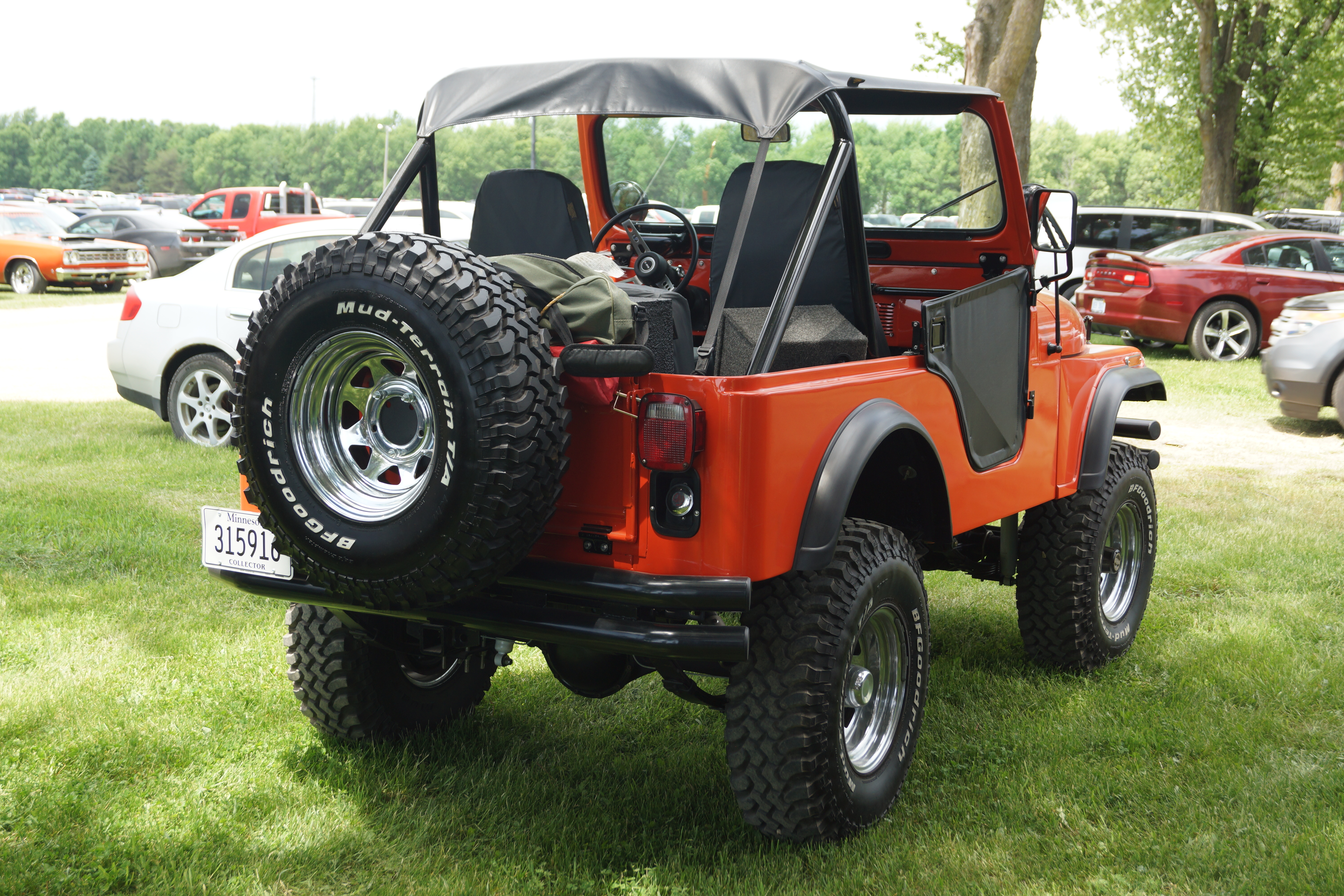
The CJ2A is an old Jeep that’s famous for being tough and capable off-road. The host mentions it to explain they’re used to the way solid-axle vehicles drive.
Brand
Lane Rover
This sounds like “Land Rover,” a brand that makes SUVs built for off-road. The host is saying Land Rover has made suspension systems that work well both off-road and on regular roads.
Cross-linked air suspension is an air-spring suspension system where the left and right sides are connected in a way that helps the truck/suv stay controlled over bumps. The goal is better off-road wheel movement without giving up too much ride quality on the road.
The Honda Ridgeline is a pickup that’s tuned to feel smoother and more comfortable, kind of like Honda’s SUVs. The point here is that it doesn’t drive like a typical rougher, more old-school truck.
The Honda CR-V is a crossover SUV. In this segment it’s mentioned to explain that the Ridgeline feels more like an SUV to drive than like a classic truck.
The Ferrari F50 is a very high-end sports car made for performance. The podcast mentions it to talk about how refinement can exist even in a vehicle that’s meant to be exciting to drive. It’s being used as a reference point in a discussion about ride and handling feel.
Death wobble is when a truck starts shaking violently from the front end, usually through the steering. It’s often triggered by suspension problems or an improper lift setup.
Neglected maintenance means letting wear items go too long without service, which can allow suspension and steering components to become loose or out of spec. On trucks with solid axles, that can increase the likelihood of instability problems like steering vibrations.
They’re talking about why solid-axle trucks can feel great off-road but different on the highway. They also explain that steering behavior can be affected by both the truck’s design and whether key parts are worn out.
Ball joints are parts that let the suspension move while keeping the wheels pointed correctly. If they’re worn, the steering can feel sloppy or unsafe.
Tie rod ends are steering linkage parts that help move the wheels when you turn the wheel. If they wear out, the steering can feel loose and inaccurate.
The Jeep Wrangler JL is a newer Wrangler generation. The discussion is basically that newer Wranglers can feel more controlled and refined than older ones—especially if the older one has worn steering parts.
“Return on center” is the steering tendency to naturally straighten itself after you complete a turn. If it doesn’t return well, the steering can feel like it stays “off” or requires more driver correction—something the host ties to the Ineos’s steering setup.
Caster is an angle built into the front suspension that influences how the steering feels and whether it wants to straighten itself after a turn. The host thinks the Ineos is set up so it feels more direct off-road rather than perfectly self-centering.
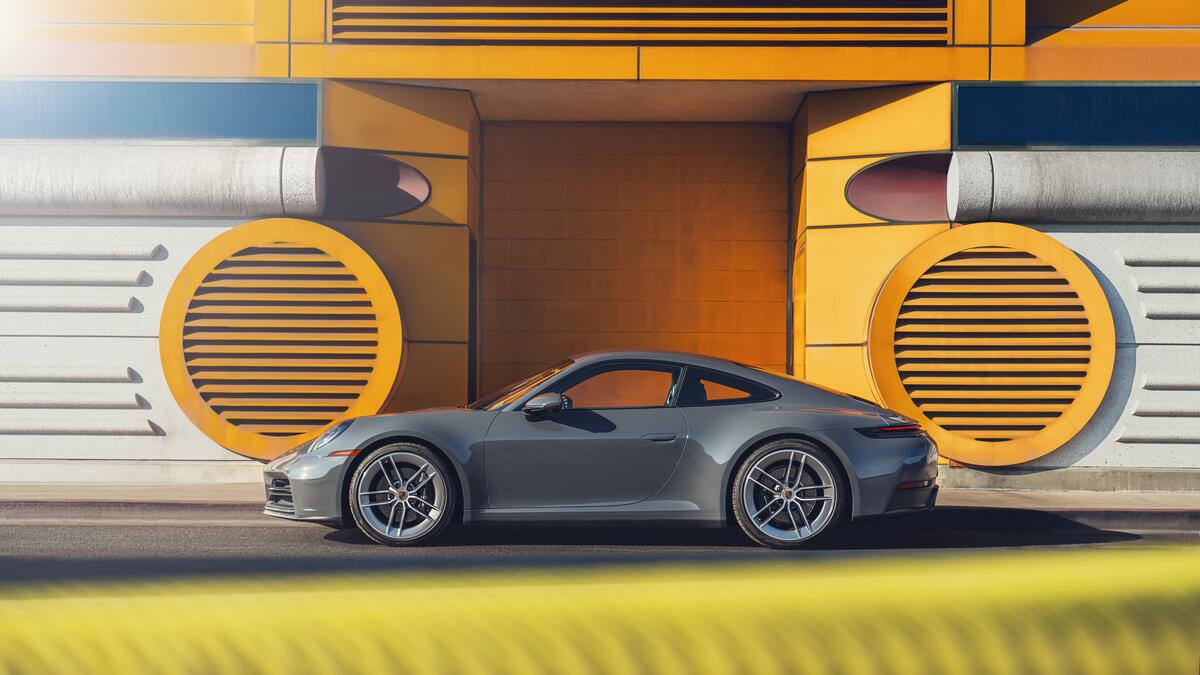
The Porsche 911 is a sports car designed for fast driving and cornering. People talk about it a lot because it feels responsive when you turn the steering wheel. The podcast is referencing how it handles when you’re making lots of turns.
Solid front axles connect both front wheels with a rigid axle. That can help the tires stay in contact with the ground when you hit rocks, ruts, or uneven trails.
Here, “delete” means taking out emissions equipment from the truck. People do it to change performance or simplify the system, but it can cause legal trouble and may affect warranty coverage.
Term
DLEF
DLEF refers to an emissions system component on some diesel trucks. When people “delete” it, they remove parts that help the truck meet emissions standards.
EGR is a system that sends a bit of exhaust back into the engine. It helps the truck burn cleaner, and deleting it usually means the truck no longer follows emissions rules.
Straight piping means removing the muffler and other exhaust restrictions so exhaust flows directly out. It typically makes more noise and can change backpressure, which may alter how the engine and turbo spool feel compared with stock.
Street legal means you’re allowed to drive it on public roads. If it’s not street legal, you may not be able to register it or pass inspections where you live.
Wheelbase is how long the truck is from front wheels to rear wheels. That length changes how stable and how “maneuverable” the truck feels over bumps and obstacles.
Payload capability is how much weight a truck can carry in addition to its own curb weight. In this segment, the host links payload to suspension tuning—using different springs to manage how the truck flexes and handles when loaded.
Springs are what help the truck absorb bumps. If you change them to be stiffer, the suspension usually moves less, which can affect how well the truck grips on rough trails.
Cognito makes aftermarket upgrades for off-road trucks. The idea is to replace weaker factory parts with stronger ones so they last when you drive hard off-road.
Airing down is when you let some air out of your tires for off-road driving. It helps the tires grip better on dirt and rocks and can make the ride less bouncy.
The Jeep Gladiator is a Jeep pickup designed for off-road use. In this segment, they’re taking it on a very difficult trail to see how well it handles rough terrain.
Car
Ram Rebel
The Ram Rebel is a truck trim meant for off-road driving. Here they’re talking about breaking a front drive shaft, which is part of the drivetrain that can get stressed when you lift the truck and run bigger tires.
Bigger tires can help a truck roll over obstacles and clear the ground better. But they can also put extra strain on parts of the drivetrain, especially when combined with a lift.
Traction just means how well the tires can grip the ground. On rough trails, the surface changes as you drive, so grip can get better or worse each time.
A winch is a powered cable that can pull you (or another vehicle) out of a stuck situation. The hosts are saying the factory winch option costs a lot, so not everyone orders it.
A quad motor system means the truck or SUV has four electric motors working at the same time. Because each motor can be controlled separately, the vehicle can send power to the wheels that have grip, but the computer has to do it correctly.
The Rivian R1T is an electric pickup built with off-roading in mind. Here, they’re talking about how its multiple electric motors and computer control send power to the wheels when traction is tricky.
The Rivian R1S is Rivian’s electric SUV. They mention it alongside the R1T because both use multiple electric motors, and the computer has to manage traction off-road.
An E-locker is a computer-controlled way to “lock” how power is shared between wheels. The idea is to keep both sides working together when traction is uneven, but the software has to time it correctly.
Torque is the force that helps the vehicle move and pull, especially at low speeds or when climbing. The hosts also point out that dyno testing can make torque numbers feel confusing on EVs because the measurement method is indirect.
A dyno (dynamometer) is a test device that measures how much power a vehicle makes under controlled conditions. The segment notes that it measures horsepower directly and then derives torque from RPM, which can make EV torque measurements seem counterintuitive.
Low range is an off-road gear setting that makes the vehicle crawl and pull harder at low speed. The point here is that EVs already have strong torque, but they may not get the same extra “gear multiplication” that traditional trucks use.
Car
electric G wagon, the G580 with EQ technology
The Mercedes-Benz G580 with EQ technology is an electric version of the classic G-Wagen formula: a body-on-frame off-road platform with serious low-speed capability. In this setup, it uses a quad-motor layout (one motor per wheel) and low-range gearing so it can crawl and handle obstacles like a traditional off-road SUV.
“G-wagon” usually means the Mercedes-Benz G-Class. It’s famous for being tough off-road, and in this clip they’re discussing how its tires and clearance affect how well it does on dirt.
Term
slip test
A slip test is a way to see how well a vehicle can keep moving when the tires start to lose grip. It checks whether the truck can control wheel spin and still make progress.
Slicks are special race tires that have almost no tread. They can grip really well on a clean, dry surface, but they may not work as well on dirt because they don’t have the pattern to dig in.
Depreciation is how much the car’s resale value goes down as time passes. They’re wondering if buying this kind of truck/SUV could help reduce that loss.
Car
Mercedes G-Wagon
The Mercedes G-Wagon is a tough, off-road SUV. Here, they’re talking about an electric version and whether people will still want a G-Wagon even if the electric sales aren’t huge.
The Dodge Power Wagon is a pickup truck version that’s built for off-road and tough jobs. The podcast is talking about different Power Wagon options, including whether a diesel version was available at the time. It’s mentioned because it’s designed to handle rough driving.
A “fake scoop” is a hood feature that looks like it’s for airflow, but it doesn’t actually do much. In this case, it also makes the hood shape taller, which can block your view of the trail.
This just means the driver sits higher up in the truck. Even then, the hood and windshield shape can still block your view of what’s right in front of you on the trail.
Camera systems are the built-in cameras that show you what’s around the car. They can help in tight spots, but off-road they might not show distance and depth as clearly as looking directly.
Visibility is how well you can see what’s around you while driving. Off-road, it matters a lot because you need to judge obstacles and distance, and cameras don’t always show depth the way your eyes do.
A snatch block is a pulley for your winch cable. It helps you change the cable’s direction and can make the winch pull harder in certain setups.
LIVE
[SPEAKER_01]: In case, I feel like on this episode of our TFW talking trucks podcast, you and I are going to be doing some arguing.
[SPEAKER_01]: Oh really?
[SPEAKER_01]: You think it's going to get contented?
[SPEAKER_00]: It might.
[SPEAKER_00]: It might.
[SPEAKER_00]: Do you have some hot takes or something?
[SPEAKER_00]: Well, maybe look warm.
[SPEAKER_01]: Say mine takes a pretty reasonable.
[SPEAKER_01]: Well, sometimes you have a hot take too.
[SPEAKER_01]: No, but I'm we're talking about afrod pickups.
[SPEAKER_01]: Yeah, because you and I, so you recently did a humongous trip in Utah with Tommy.
[SPEAKER_01]: Sure.
[SPEAKER_01]: We recently had several really capable afroders in our test fleet.
[SPEAKER_01]: Yeah.
[SPEAKER_01]: I'm so I really wanted to talk a little bit more about what makes a pickup truck.
[SPEAKER_00]: great at off-roading and also maybe that takes away from on-roading yeah you know what I'm saying often does i think it's an important thing to talk about and it is something that we spend a lot of time on because we're based here in the mountains mow avutas right in our backyard we even have a company owned [SPEAKER_00]: place out there that we stay at because we're in MoEb so often.
[SPEAKER_00]: So it's something that we get to explore and test a lot in a lot of different vehicles.
[SPEAKER_00]: Many of the things that make off-road trucks really good are pretty intuitive.
[SPEAKER_00]: But there's a few things we could talk about as well that you might not necessarily think about.
[SPEAKER_00]: that we've found to be helpful or not so helpful over the years in testing a lot of different trucks.
[SPEAKER_01]: Yeah, and mainly what kind of brought up the topic, more to the forefront recently, is that we have, for several weeks, actually, we have an Inia's Granite Deere Quatermaster, which is really one of those pickup trucks, [SPEAKER_01]: which is brand new, but it has some of those traditional elements to it where it just combines a lot of old-school tech.
[SPEAKER_01]: Actually, not so much tech, but just hardware that it brings to the table.
[SPEAKER_00]: Well, and to your earlier point of trucks having some off-road features that can [SPEAKER_00]: I think the NEO says a good example of that because it is an enthusiast vehicle through and through and because of that, it makes some compromises to be to your point old school in ways that don't make it the best driving vehicle on road, which we can talk about.
[SPEAKER_01]: Yeah, and I recently, they have a lot of experience now with this, because just what several days ago, I went to the Grand Adiree, or any of Grand Adiree gathering in Moabuta.
[SPEAKER_01]: So I took a quartermaster, which is a pickup truck, which they're now selling.
[SPEAKER_01]: I drove it about 360 miles from here in Boulder to Moabuta.
[SPEAKER_01]: Yeah.
[SPEAKER_01]: I have floated it extensively, because we were on the trail for about 8 to 9 hours.
[SPEAKER_00]: And it's pretty cool to be there in Moab with what almost 200 and he has vehicles and that gathering.
[SPEAKER_00]: So awesome because these are vehicles that you see so rarely out on the road here in Colorado because we're in a more rugged area.
[SPEAKER_00]: I see them every now and then, but they're not very common.
[SPEAKER_00]: No, it's infrequent, so pretty neat to see a lot of inios grenadiers in the same place.
[SPEAKER_01]: And our producer Cole is showing us some clips.
[SPEAKER_01]: If you're watching us on TFL Talk channel, I'm at up with our friend Jay Couch.
[SPEAKER_01]: He's now building, well, he's got some parts that he's working on for inios and grenadiers and [SPEAKER_00]: truck to Moab.
[SPEAKER_00]: And the way that we know Jay couch is because he's a big unimog guy.
[SPEAKER_00]: Yeah.
[SPEAKER_00]: So generally, his two primary areas have been first and foremost, building some insane half million dollar plus unimog campers, even racing unimogs all kind of crazy stuff.
[SPEAKER_00]: He's got also has a lot of six by six, eight by eight and even 10 by 10, military off-road vehicles, which are pretty cool.
[SPEAKER_00]: But he's also a big G-wagon guy, and I think that this Ineos appealed to him in a special kind of way, but of course, if J couch is going to do anything with Ineos, it's going to be over the top because that's how we operate.
[SPEAKER_01]: Exactly, so, and just really quick before we look at J-Struck as well.
[SPEAKER_01]: Ineo is guaranteed here, and I want to hit these points.
[SPEAKER_01]: The chassis is a ladder frame, so it's a body-on-frame vehicle.
[SPEAKER_01]: It's got solid axles front and rear.
[SPEAKER_01]: It also has locking differential front and rear, which are optional, actually, but you could equip it from the factory.
[SPEAKER_01]: Yeah.
[SPEAKER_01]: So, it already has the good bones, right?
[SPEAKER_00]: So the question is do you want to start out in the podcast by talking about some of the items in general that make for good off road trucks or do you want to dive deep into your experience and time spent with the grenadier?
[SPEAKER_01]: Well, let's let's go to Moab in the grenadier first and then hit some of the generics.
[SPEAKER_01]: Um, the reason why I brought up axles and kind of the chassis components is because I think that's what I peel to Jay right and I peels to many other enthusiasts because if you look if you go back and look at what he did he basically so [SPEAKER_01]: G-wagon squared has its own portal axles, but according to J, I was talking to him about it.
[SPEAKER_01]: Those are about six, maybe six and a half inches of lift because that's kind of the size of that portal on each side of the axle, which is think of it just basically gears.
[SPEAKER_01]: that are attached to the hub at the hub level, not so much, you know, the axle is left alone and the suspension is left mostly alone.
[SPEAKER_00]: Yeah, which is nice for a couple of reasons because with these innios vehicles in particular, if you try to lift them very heavily, much beyond an inch and a half or two inches, the pinion angle on the drive shaft gets pretty crazy, it builds up a lot of heat and [SPEAKER_00]: the vehicles just not have destroyed itself after that.
[SPEAKER_00]: So on these grenadiers you can't really do a massive suspension lift, which is weird actually.
[SPEAKER_00]: Yeah, it's a bummer because typically solid axle vehicles one of the perks usually versus independent front suspension is that it's a little easier to get away with the geometry of lifting them more heavily, but not so much the case with these grenadiers.
[SPEAKER_00]: Now the other cool thing about portal axles is you get a lot of ground [SPEAKER_00]: and a lot of extra ground clearance versus doing a suspension lift because your axle moves that further from the ground.
[SPEAKER_00]: So if you do a typical suspension lift, the only way your axle is getting higher up off the ground and offering you more clearance is by running a bigger tire, which the lift allows for, which the lift allows for, but you need the bigger tires.
[SPEAKER_00]: But if you do portals, then the lift is basically taking your axle [SPEAKER_00]: and the body and underside of the vehicle up with it.
[SPEAKER_00]: Everything, all of a sudden.
[SPEAKER_01]: And you could put tiny tires on it still and still have a lift.
[SPEAKER_00]: Yeah, so it's a pretty, it's a cool way to do it.
[SPEAKER_00]: Portals are very expensive and they do require maintenance because they have gear oil in them.
[SPEAKER_00]: So it's not for everyone, I mean, it's not for me because again, it's not priced out of, I think my entire 4x4 [SPEAKER_01]: Really exciting can be very expensive so call if you by the way I think we're also live on patreon dot com slash tfl car.
[SPEAKER_01]: Thank you for your support I think we'll also have a comment.
[SPEAKER_01]: I noticed from I think it's from Elliott Tucker Dixon.
[SPEAKER_01]: Thank you, Elliott He says he is Sometimes we make him laugh out loud.
[SPEAKER_00]: Nice.
[SPEAKER_01]: I'm glad.
[SPEAKER_01]: Yeah, yeah, if anything [SPEAKER_01]: I think, sorry, now I'm left without loud.
[SPEAKER_01]: So if you go back to the portal axles, when we're looking underneath this truck, coal.
[SPEAKER_01]: Yeah, there, right there.
[SPEAKER_01]: I think one of the reasons why they're expensive.
[SPEAKER_01]: Well, first of all, it's kind of low volume production.
[SPEAKER_01]: For sure, yeah, there's not hundreds of thousands of people buying porous, exactly.
[SPEAKER_01]: So that already makes it expensive, because it's kind of more a custom-made unit.
[SPEAKER_01]: But also, it just has to be, I don't know, built in a very stout manner, right, because there's a lot of engineering that goes into it, because it's kind of hanging on the outside, so it takes a lot of forces through it as well.
[SPEAKER_00]: Yeah, a lot of machine work, a lot of really nice materials, engineering that goes into them, so they are expensive things to build.
[SPEAKER_00]: I think, you know, so I bet my second gen RAM is less expensive than the average portal.
[SPEAKER_01]: Yeah, because I think they run and I'm not going to get the right because I think you know I looked at this like a year ago and back then I think a portal a single axle was like $20,000.
[SPEAKER_01]: So it's an expensive list.
[SPEAKER_01]: So I don't know it's maybe even more now, but what I appreciate about what Jay is doing is because he's also based in Colorado here near Denver.
[SPEAKER_01]: So and he manufactures a lot of stuff in the house, which is really cool.
[SPEAKER_01]: So this is a made in the USA type deal, and to be fair, people who are buying grenadiers have some money.
[SPEAKER_01]: Well, yeah, they're already paying 70, 80, 90, 100,000 dollars for some of these vehicles.
[SPEAKER_01]: Yeah, exactly.
[SPEAKER_01]: So yeah, so I think it was really cool to see J.J. because it's okay.
[SPEAKER_01]: because also the look, I'm all over the place today, because the look of the truck is also like matters a lot to me, right?
[SPEAKER_01]: When you look at the stock vehicle, it's good, but the smaller tires on the stock vehicle make it a little bit out of proportion to me.
[SPEAKER_00]: Yeah, it's, well, so it's interesting, I think that the Ineos design philosophy and layout is, is a lot like what you see with old school land rovers, which is intentional.
[SPEAKER_00]: And you look back at photos from camel trophy back in the day and some land rovers that did some really incredible things in those competitions and difficult tasks off-road.
[SPEAKER_00]: They were never running really huge tires.
[SPEAKER_00]: because back then, people had skill.
[SPEAKER_00]: Sure, they also had a heavy foot.
[SPEAKER_00]: Yes.
[SPEAKER_00]: You know, carry some momentum and a lot of articulation.
[SPEAKER_00]: The interesting thing actually about a stock grenadier, whether it's the SUV that they call the wagon, or the pickup truck version of it, the quartermaster, like what you brought out to Moab.
[SPEAKER_00]: Is it even though they don't look like they have a whole lot of clearance?
[SPEAKER_00]: They do actually they do and they end up doing pretty well all things considered it doesn't look like it's sitting up that high But Jay's on portal axles is obviously sitting up very high.
[SPEAKER_00]: He's also got a a custom fabricated Bed on the back of his cool little And also customized from bumper as well.
[SPEAKER_00]: Yeah bumper a light bar mount so Jay's truck looks [SPEAKER_00]: In fact, he calls it the smurf.
[SPEAKER_00]: I gotta imagine that there's probably a quarter of a million dollars wrapped up in his truck.
[SPEAKER_00]: We didn't talk about dollars.
[SPEAKER_00]: That would be my guess.
[SPEAKER_01]: There's a lot of work putting it.
[SPEAKER_01]: Well, because I think this, the granite deer that he brought on 37's, so those portals allowed him to put a 37-inch tall tire pretty easily, also much wider tires as well without rubbing.
[SPEAKER_01]: This is kind of his test bed, right?
[SPEAKER_01]: So it's not really like, hey, Jay, you know, how much is this going to cost?
[SPEAKER_01]: Because he's kind of testing things out, for sure, getting it fit it.
[SPEAKER_01]: And his goal, I think, is to, you know, having some of the stuff for sales, so other people can enjoy this as well.
[SPEAKER_01]: Yeah.
[SPEAKER_01]: But it was just, I wanted to bring it here, because it just kind of takes it to 11.
[SPEAKER_01]: Oh, yeah.
[SPEAKER_01]: I mean, because ground clearance is insane.
[SPEAKER_01]: So if the stock Granidier has about 10 inches of ground clearance, J told me his portals are offering about four and a half inches of lift.
[SPEAKER_01]: Yeah.
[SPEAKER_01]: So you're already going without even changing the tires.
[SPEAKER_01]: You're already going to about 14, 14 and a half inches of ground clearance.
[SPEAKER_01]: And then you go to 37s.
[SPEAKER_01]: Yes, so that adds another two three inches of sidewalk.
[SPEAKER_01]: I mean, overall tire difference.
[SPEAKER_01]: So I felt like I could lay down on the ground and he could drive over me without much problem.
[SPEAKER_01]: Yeah, yeah, exactly.
[SPEAKER_00]: I could probably sit crisscross.
[SPEAKER_00]: And have to drive over.
[SPEAKER_00]: Maybe not quite that much, but it's an impressive look in machine.
[SPEAKER_00]: There is a German company called Litek.
[SPEAKER_00]: Litek.
[SPEAKER_00]: Thanks so, yes.
[SPEAKER_00]: Don't necessarily know the exact correct way to say it, but they also had a portal kit that was fitted to a lot of any else grenadiers.
[SPEAKER_00]: And it looked neat, but it also looked pretty top-heavy.
[SPEAKER_00]: I would say that J-Couches, [SPEAKER_00]: Seems maybe a little more stable.
[SPEAKER_00]: Why it doesn't look quite as narrow and because you're not a really good You know I saw those other portals on a grandadier.
[SPEAKER_01]: I think that they're over on next poll, right?
[SPEAKER_01]: And I think I also saw it at the New York Hatter Show.
[SPEAKER_01]: Yeah last year as well I agree with you and when Jay told me my Portal axles.
[SPEAKER_01]: He was talking about his the ones he designed [SPEAKER_01]: are a little bit lower than the others.
[SPEAKER_01]: I couldn't believe my ears.
[SPEAKER_01]: Because Jay always goes bigger.
[SPEAKER_00]: He's pretty extreme, a hugeer.
[SPEAKER_01]: And when he said, I'm a little bit lower, I was like, what?
[SPEAKER_01]: But I think he's thinking about the whole package, right?
[SPEAKER_01]: You don't want to be too high in two-tippy, right?
[SPEAKER_01]: And then that makes for a bad off-roader.
[SPEAKER_00]: Yeah, because that's the G-Wagon problem a lot of times, especially older, solid axle G-Wagans.
[SPEAKER_00]: They're very, very narrow track width vehicles.
[SPEAKER_00]: If I remember correctly, and if you don't believe me, feel free to Google this.
[SPEAKER_00]: But I'm pretty sure the track width of a Ford Focus.
[SPEAKER_00]: is wider than the old G-Wag and the old solid axle G-Wagans before they updated them in 2018.
[SPEAKER_00]: Is that right?
[SPEAKER_00]: Is that what you're thinking?
[SPEAKER_00]: Yeah, yeah.
[SPEAKER_00]: They went into independent front suspension.
[SPEAKER_00]: They made it wider in a current generation.
[SPEAKER_00]: But those old G-Wagans are very narrow.
[SPEAKER_00]: People lift them.
[SPEAKER_00]: People do portals on those G-Wagans, and they are very capable in a lot of ways, but they are tall and skinny.
[SPEAKER_01]: It's not like they get tippy and and also we can talk about with a little bit later because when you have a super white truck like an empty wrap there Yeah, you you have trouble fitting into some trails.
[SPEAKER_00]: There's a sweet spot.
[SPEAKER_01]: Yeah, so having a narrower vehicle is also very helpful [SPEAKER_01]: We have Jonathan here, also in the chat room, so thank you for joining us.
[SPEAKER_01]: He's saying, glad you guys were able to get a grand year for testing.
[SPEAKER_01]: One of the most interesting vehicles on sale right now.
[SPEAKER_01]: See, a lot of people are very big fans of the grand year.
[SPEAKER_00]: Yeah, when they know what it is, which obviously most of the people don't.
[SPEAKER_00]: Most of people listening to this podcast will know what a Grenadier is because they're fans of trucks and pay attention to the industry, but out and about on a day-to-day basis, it's always surprising to me how many people that are interested enough in vehicles, [SPEAKER_00]: to pay attention and actually ask the question, hey, what is that?
[SPEAKER_00]: There's a lot of people that have no idea I've never seen one before.
[SPEAKER_00]: And it's a head-turner.
[SPEAKER_00]: Even in stock form, the one that we're testing, when you drive it around, people look at it a little confused.
[SPEAKER_01]: Yeah, and also I noticed, well, sometimes people in other pickup trucks, check out other guys' trucks, right?
[SPEAKER_01]: So that's normal, but I've noticed, little truck envy.
[SPEAKER_01]: Yeah, but but I've noticed people in like I don't know Subaru they're taking notice.
[SPEAKER_01]: I mean if across the board like no matter what they're driving They're taking notice of the e-neos granted here.
[SPEAKER_01]: So yeah, that's quite interesting and like Jonathan and saying yes We'll have more videos so you did cliffhanger 2.0 with a gladiator versus quartermaster I did more videos from Moab so that's coming up very soon
[SPEAKER_01]: So would you agree, well, I think this is where the argument starts, would you say that a great Afro truck should have front solid axle or not, you know what I'm saying?
[SPEAKER_00]: Yeah, so when we typically talk about off-roading, we are talking about rock crawling, because we live in the Rocky Mountains and Rocky is an accurate description.
[SPEAKER_00]: That's in the name.
[SPEAKER_00]: That's in the name for a good reason.
[SPEAKER_00]: That's the kind of off-roading that we have around us, but of course there's different kinds of off-roading.
[SPEAKER_00]: There's mud, there's sand, you know, you can go hit the dunes.
[SPEAKER_00]: I think that like the majority of raptor trucks, for example, those are more high speed off-roaders.
[SPEAKER_00]: So you're talking whoops, you're talking desert running.
[SPEAKER_00]: But for us, it's generally rock crawling.
[SPEAKER_00]: And traditionally speaking, solid axle configuration is a great setup for rock crawling.
[SPEAKER_00]: Especially because they articulate really well it's not to say that you can't design in an independent front suspension that articulate to really well.
[SPEAKER_00]: There's a lot of very, very capable rock buggy, some crazy machines that run IFS and they do a fantastic job of articulating well.
[SPEAKER_01]: And also a lot of side, I mean side by side was, for example, [SPEAKER_00]: I mean, the full size for Bronco, independent front suspension with a sway bar disconnect and you get fantastic amount of articulation from that, maybe not quite as much as the solid axle, whether they sway bar, disconnect a lot, right there still, yeah, but a lot, so it's yeah, it's pros and cons, I think for for most people, it's a big trade off.
[SPEAKER_00]: and not necessarily worth it, you could still absolutely have a great rock-crawling truck within the Penteint front suspension.
[SPEAKER_00]: I think a good example of that is the Colorado ZR2 in the Canyon 84X because those trucks have independent front suspension like all of the GM trucks, but they're great rock crawlers because they're very tall and they have front and rear lockers.
[SPEAKER_00]: So you get great clearance from the factory and you get all the traction that you need.
[SPEAKER_00]: So even without the most amount of articulation of any truck on the market, they do a great job.
[SPEAKER_00]: So it's maybe not a total deal breaker to be rock crawling while it's definitely not a total deal breaker to be rock crawling within a kind of front suspension.
[SPEAKER_00]: But it is cool to see a truck on the market with a live front axle with a solid front axle because at this point, [SPEAKER_00]: there is the grenadier and the Jeep Gladiator.
[SPEAKER_00]: Yes.
[SPEAKER_00]: There's the heavy duty ram and the heavy duty Ford.
[SPEAKER_00]: That's about it.
[SPEAKER_00]: Yeah.
[SPEAKER_00]: And across the market, of course, with the grenadier and the Jeep, there are the SUV versions of those.
[SPEAKER_00]: uh... but i'll be out of the two-way and there's no more the two-way and there's no uh... uh... uh... uh... uh... uh... uh... uh... uh... uh... uh... uh... uh... uh... uh... uh... uh... uh... uh... uh... uh... uh... uh...
[SPEAKER_00]: off the top of my head, those are the only four vehicles, platforms, whatever, technically six vehicles, because there's the SUV versions, the two trucks, four trucks total.
[SPEAKER_00]: Those are the only things I can think of that you could buy right now brand new in the states with a solid front axle.
[SPEAKER_01]: So here's my hot take, or maybe it's not so hot, but my hot take is that you don't really need solid front axle to be a great off-road truck.
[SPEAKER_01]: Yeah, I think you might be agreeing with that kind of sort of, but I've spoken to many, many afella, where they said they will never consider, like in the heavy duty space, they would never consider a GM, HD truck because of the independent, because of the independence suspension, and they always say, you know, the Ford Super Duty and the RAM heavy duty trucks.
[SPEAKER_01]: are they just enjoy those too because a lot of owners who own those trucks, like bigger tires and they put, sometimes lift kids on those trucks as well.
[SPEAKER_01]: Like we said, typically easier to lift a vehicle on solid axles.
[SPEAKER_01]: Yeah, typically speaking.
[SPEAKER_01]: So, but I'm in the other camp.
[SPEAKER_01]: And I think you may be in the same camp where you can have a good all-around truck that can do some rock crawling and can do some desert running and can do many other [SPEAKER_01]: And also be a daily driver.
[SPEAKER_01]: I think that's the most important thing, right?
[SPEAKER_01]: Because you and I love afroading.
[SPEAKER_01]: We have a job where that allows us to do some serious afroading.
[SPEAKER_01]: But most people in you and I spend most time on the road.
[SPEAKER_00]: Yeah, everybody does inevitably.
[SPEAKER_00]: The majority of miles that you do is on the road.
[SPEAKER_00]: I actually have a counterpoint to the daily driving solid axles thing.
[SPEAKER_00]: Okay, but you own one, actually.
[SPEAKER_00]: two, so two and three vehicles, I actually own it.
[SPEAKER_00]: I have some products too, yes.
[SPEAKER_00]: So the majority of the vehicles that I actually don't tell me more with my own money have solid front axles.
[SPEAKER_00]: I love solid front axles.
[SPEAKER_00]: It's how I learned how to drive a lot of an old CJ2A.
[SPEAKER_00]: I could have nine years old.
[SPEAKER_00]: I've spent a lot of time in vehicles with solid front ends.
[SPEAKER_00]: And I think that the nice thing about it for me, the reason that I gravitate towards them, [SPEAKER_00]: is because if I'm shopping around for a truck or an SUV, I kind of want that vehicle to have the driving characteristics and personality of a truck or an SUV.
[SPEAKER_00]: Now, it's really impressive the drive ability that you could get out of a vehicle that's still very rugged with an independent front suspension, good combination, I think.
[SPEAKER_00]: you know, without giving them too much praise and lighting comments on fire.
[SPEAKER_00]: Lane Rover does a great job, or has in the past of making some vehicles that have cross-linked air suspension fully independent that still articulates really well gives you a bunch of clearance and drives great on road so you can kind of have your cake and eat it to it's possible to engineer set up like that.
[SPEAKER_00]: But I love getting in a vehicle that has solid axles because I want to jump behind the wheel of that machine and drive it around and feel like, yeah, this is a rugged 4x4 or this is a big truck.
[SPEAKER_00]: And that's how it drives.
[SPEAKER_00]: That's a personality that it has.
[SPEAKER_00]: No shade to the Honda Rich line.
[SPEAKER_00]: The Honda, the Honda Ridgeline is what I think a lot of engineers are targeting for NVH, noise vibration and harshness that kind of experience.
[SPEAKER_00]: There's a Ridgeline drives a lot like a CRV across over or you know, a Honda pilot.
[SPEAKER_00]: It doesn't drive like how you think a truck traditionally speaking would drive.
[SPEAKER_00]: And that makes a lot of people gravitate towards it, but when I'm shopping around for a truck, I want it to feel like a truck, and a solid axle definitely does that, so it doesn't bother me at all when I'm daily driving them, even though you are literally sacrificing comfort.
[SPEAKER_01]: I own something with a solid front axle as well.
[SPEAKER_01]: Buhanka.
[SPEAKER_01]: My Buhanka Soviet van does have solid in front rear axles.
[SPEAKER_01]: We have a little model of one here on our desk as we're talking.
[SPEAKER_01]: So I've been wrestling with this, right?
[SPEAKER_01]: Like I said, I drove about 800 miles total, maybe more combining commuting in the granite here.
[SPEAKER_01]: And I [SPEAKER_01]: I see what you're saying, right?
[SPEAKER_01]: There is a way, I think there is a way to make a truck with a front solid axle be refined.
[SPEAKER_01]: When I drive a super duty and let's say like an F-50 and we're not talking about like chassis cabs that beat you up because they have really stiff springs and they're meant for something else.
[SPEAKER_01]: but like I have to 50 or so, it feels trucky and feels big and strong, but it also feels like I can go a thousand miles in one, like from here to Phoenix, without a lot of fatigue, you know, without feeling like I need to saw it to wheel a little bit or, you know, [SPEAKER_01]: However, when you lift those guys, there is also something called death wobble, where, right, so that can come up if you improperly lift something, or with the same thing as your audience.
[SPEAKER_01]: Yeah, neglected maintenance.
[SPEAKER_01]: So, scary and comfortable.
[SPEAKER_01]: But when I was driving the Granidear, I felt like I was a little bit more fatigued than otherwise would be.
[SPEAKER_01]: Sure, you know what I'm saying?
[SPEAKER_01]: And I think also in the other chatroom, and we'll get to some of these comments as well, Cole.
[SPEAKER_01]: But in the other chatroom, we had Chris Park mentioned something about the Granidear because his friend recently purchased one.
[SPEAKER_01]: And he says that after a few days later, they returned it to the dealership because of the steering.
[SPEAKER_01]: So I want to talk about the steering.
[SPEAKER_00]: Yeah, it's definitely not for everyone.
[SPEAKER_00]: You know, the whole solid axle experience.
[SPEAKER_00]: I think ultimately you have to be not just an enthusiast in general, but an enthusiast of a certain kind to to actually feel like the trade off of a solid front axle is worthwhile, but there is also a spectrum of refinement in solid axle vehicles, right?
[SPEAKER_00]: Because [SPEAKER_00]: I think a lot of people will lack the nuance when they talk about, well, you know, jeeps are so sketchy to drive.
[SPEAKER_00]: You know, I drove one on the highway once and it was horrible.
[SPEAKER_00]: Like, yeah, well, I'm pretty sure that jeep that you drove on the highway once was a lifted YJ Wrangler that had never seen a pair of ball joints or tie rod ends, you know, since it was by a new on the factory line.
[SPEAKER_00]: So, [SPEAKER_00]: what what the solid axle was then versus a brand new JL Wrangler, they're very different.
[SPEAKER_00]: And I actually think that the gladiator and the Wrangler have better steering with their solid front axle than the inials does.
[SPEAKER_00]: And even even with the updates that inials has made to the steering which we know they did.
[SPEAKER_00]: Yeah, which they did do.
[SPEAKER_00]: I think the jeeps actually steer better.
[SPEAKER_01]: Well, so, the Ineos has this thing, and Cole, we can also go to the other chatroom.
[SPEAKER_01]: The Ineos steering, granted your steering, doesn't really return on center.
[SPEAKER_01]: After, after you complete the turn, it's like that the caster is maybe not quite here.
[SPEAKER_01]: Yeah, and I think that was on purpose.
[SPEAKER_01]: I mean, really, it was a little bit more maybe for direct feedback when you're off-roading.
[SPEAKER_01]: Yeah, and the steering on the Ineos works great off-road.
[SPEAKER_01]: Yeah, because I have wrote it for nine hours and I actually felt really good after that.
[SPEAKER_01]: So that's the trade-off.
[SPEAKER_01]: Spending nine hours off-road over rough terrain and rocky terrain in Moam versus spending six hours on-road, you know, I felt really...
[SPEAKER_01]: much better after I have wrote it versus some other trucks that we've had versus spending six hours on the highway.
[SPEAKER_01]: You see them saying it is a real trade-off.
[SPEAKER_01]: Yeah.
[SPEAKER_01]: But so let's say you take that out of the question.
[SPEAKER_01]: Let's say you take the self-centering thing out.
[SPEAKER_01]: But the other thing I don't get about the Grenadier system, it's also not, it doesn't have a lot of angle.
[SPEAKER_01]: So it doesn't [SPEAKER_00]: Yeah, I think that's one of the things that they've worked on and had and they tried to help it improve It's also a lot of turns locked a lot a lot So you're shuffling the wheel around a bunch.
[SPEAKER_00]: So again, the the in yells is an enthusiast vehicle and enthusiast vehicles are always compromised [SPEAKER_00]: think about something like a portion 9-11, if you tried to convince, you know, your wife or somebody that this was a smart buy, they would say, well, you know, it's got a tiny trunk in the back seat, so you can't really use them.
[SPEAKER_00]: And, right, yeah, that's because it's an enthusiast vehicle and it's compromised to be a sports car.
[SPEAKER_00]: It's kind of the same thing, but in the opposite direction, with a vehicle like the in-eos.
[SPEAKER_00]: It's got solid front axles, it's got the option of these lockers.
[SPEAKER_00]: It's, [SPEAKER_00]: body on frame, it's very traditional in all of those ways, which is going to have an impact on the way that it drives and the way it operates.
[SPEAKER_01]: Yeah, so those are the things you really have to consider when purchasing a truck for off-roading.
[SPEAKER_01]: I wanted to address some of the comments from Ben Torex, who is here as well.
[SPEAKER_01]: Thank you, Ben, for joining us.
[SPEAKER_01]: He's got a couple things here.
[SPEAKER_01]: He's also enjoys the podcast.
[SPEAKER_01]: He suggests that I should join Karrish podcast with you guys and call it truckish.
[SPEAKER_01]: Truckish, yeah.
[SPEAKER_01]: We could have a little bit more truckish.
[SPEAKER_00]: Yeah.
[SPEAKER_01]: Um, if Tommy and Jenna are okay with it, I'm okay with it.
[SPEAKER_01]: Yes.
[SPEAKER_01]: It calls okay with it.
[SPEAKER_01]: If our producer call is okay with it, maybe we could try it.
[SPEAKER_01]: He does it.
[SPEAKER_01]: And also Ben has a question, which is quite interesting.
[SPEAKER_01]: Um, he says, my son-in-law wants to delete his 2025 GMC 3-liter Duramax turbo diesel.
[SPEAKER_01]: He's convinced it won't void his warranty.
[SPEAKER_01]: How do I talk him out of it?
[SPEAKER_00]: I would probably have him call his dealership, because, uh, I don't know, I don't own anything nearly that's not, I don't, I don't work with dealerships a lot, but I got to imagine that that would have an impact.
[SPEAKER_01]: Okay, so I think Ben's son-in-law, first of all, he's probably enjoying his three-leiter, because a lot of people who purchase those engines, because they're very efficient.
[SPEAKER_01]: Yeah, we love the three-leiter Germans, it's great for you.
[SPEAKER_01]: But he's probably, I don't know, either one's more power, or maybe more sound out of it, or maybe, [SPEAKER_01]: all of the above, I don't know what he's looking for, but so first of all, okay, so if you remove deleting means removing emissions equipment, so basically almost like straight piping it, maybe putting a muffler, but removing the DPS, EGR, DLEF, EGR, DLEF, maybe.
[SPEAKER_01]: Well, EGR, DLEF, [SPEAKER_01]: So all those things, you're actually changing the way it came from the factory.
[SPEAKER_01]: So, and this is a newer truck.
[SPEAKER_01]: So, as such, first of all, it almost surely will avoid warranty.
[SPEAKER_01]: Whether it's a legal problem or not, it's a different topic because, you know, the regulations are kind of in flux right now with different enforcement.
[SPEAKER_01]: But the way I would approach it also is if your son-in-law wants to resell this truck ever again.
[SPEAKER_01]: Let's say two, three, four years down the road.
[SPEAKER_01]: I think it might pose an issue because the next customer, [SPEAKER_01]: We'll see some of the mods and say, why was it modded?
[SPEAKER_01]: How was it modded?
[SPEAKER_01]: Why is it deleted?
[SPEAKER_01]: And it will just lose value.
[SPEAKER_00]: I mean, that truck may not be here.
[SPEAKER_00]: Especially geographically, there's a lot of areas where, as much as legislation is changing, [SPEAKER_00]: For example, if you live where our office is here in Boulder, Colorado, there's regulations are pretty strict.
[SPEAKER_00]: Yeah, you still have to test for a mission, so it would pretty massively narrow the scope of people that would actually be able to buy it.
[SPEAKER_01]: If you live in Wyoming, for example, the regulations may be different, and that could be a different story.
[SPEAKER_00]: So it's just the other thing Ben was mentioning, which is a good point.
[SPEAKER_00]: Is that the rocks or does have a solid front axle?
[SPEAKER_00]: That's true.
[SPEAKER_00]: That is something that you could buy brand new with a solid axle edition of the vehicles that we were talking about, though they're not street legal.
[SPEAKER_01]: Yes, very true, and also we drove, we had the rocks recently, thanks to rocks, we had one on loan, and I found it really refreshing and kind of honest, except it didn't have locking differentials, and I think that kind of slowed it down, that didn't end like the old school flat fender jeeps that it's kind of based on didn't have a ton of articulation either.
[SPEAKER_00]: which again is common with those as well.
[SPEAKER_01]: Yeah, granted it doesn't suffer from lack of articulation, maybe that's pretty well.
[SPEAKER_01]: Yeah, the rocks are struggled a little bit with that.
[SPEAKER_01]: And I think the rocks are also, it's trying to combine payload capability, the wheelbase that it has with different springs, because it has a lot of payload.
[SPEAKER_01]: And when you put a different spring on, they'll be a little bit less flex in that.
[SPEAKER_01]: It's not a high speed off road via.
[SPEAKER_01]: No, no, no.
[SPEAKER_01]: It's not a high speed anything.
[SPEAKER_01]: So, I don't know, I think, remember two years ago, you and I and Roman, and I think Tommy, we voted for the 4th Ranger Raptor as a truck of the year.
[SPEAKER_00]: Yep, yeah, I understand by that.
[SPEAKER_01]: And it has independent France suspension, and I think that still shows that you could build a pickup.
[SPEAKER_01]: without a salt-front axle and still create a very desirable capable view.
[SPEAKER_00]: I actually agree with you, even though I am... What?
[SPEAKER_00]: Personally, very, I know crazy, right?
[SPEAKER_00]: I am very passionate about solid axles myself.
[SPEAKER_00]: It's the thing that I like to buy and drive, but I agree.
[SPEAKER_00]: It's not a deal breaker as far as an off-road truck.
[SPEAKER_01]: Okay, so now Lloyd is here.
[SPEAKER_01]: Thank you, Lloyd.
[SPEAKER_01]: So I met Lloyd Schwartz in Moab, just at this gathering, Lloyd was very nice to meet you.
[SPEAKER_01]: Lloyd says this, he knew it was certainly a niche vehicle.
[SPEAKER_01]: The trade-off is unrivaled afro capability and most durable afro-de-vehicle mass produced today.
[SPEAKER_01]: So, I think Lloyd is hitting on a great point.
[SPEAKER_01]: And I want to keep hitting this point [SPEAKER_01]: It's on my list here, we have a list.
[SPEAKER_01]: Because if you look underneath the Eneos and Jake Houch had the same opinion, is that the components are gigantic.
[SPEAKER_01]: The frame is big, the tyrodans are big, the axles are big, and that means there's a lot of metal there.
[SPEAKER_01]: And it's also not very light.
[SPEAKER_01]: Yeah.
[SPEAKER_01]: I think the quartermaster, I think I calculated that there's about 60 to 100 pounds.
[SPEAKER_00]: Yeah, that's what it's called.
[SPEAKER_01]: That's what my second gen common is, ways.
[SPEAKER_01]: See, so beefy components, what else is Lloyd saying with less luxury and less [SPEAKER_01]: Well, but see, the Enes is also pretty luxurious, you know, has very nice seats.
[SPEAKER_01]: Did you enjoy those recarrows?
[SPEAKER_00]: You know, I don't know if I would describe it as luxurious.
[SPEAKER_00]: I think it's got some luxurious features.
[SPEAKER_00]: I think the the transparent panels in the roof that you could pop open.
[SPEAKER_00]: That's really cool.
[SPEAKER_00]: I think it's luxurious in that it is.
[SPEAKER_00]: Like, like some of our comments are saying here it is very unique, it's it's a little niche It's not something that you see on the road all the time Which that in itself holds a lot of value for a lot of people so in a way it is a a luxury item But not necessarily a luxury vehicle in the traditional sense because [SPEAKER_00]: Ultimately, the interior and materials are not over the top, but it's a pretty plastic key interior.
[SPEAKER_00]: I think it's a cool design.
[SPEAKER_01]: Yeah, yeah, but I agree.
[SPEAKER_01]: I think what I was going also is that when I look at the just coming up to the granular here, just looking at it, it just looks premium.
[SPEAKER_01]: It's hard to explain and I don't not talk about the price like let's say I could I could forget that it costs a hundred thousand Yes, let's say I could When I come up to it just the way the panels are fitting together and the way that the door feels you know in the way that Just it appears it feels like a special vehicle [SPEAKER_00]: Yeah.
[SPEAKER_00]: And I think that's the best way to describe it.
[SPEAKER_00]: It does feel special.
[SPEAKER_00]: It feels a lot more special.
[SPEAKER_00]: We test a lot of trucks.
[SPEAKER_00]: We test plenty of trucks that are more expensive.
[SPEAKER_00]: SUVs that are more expensive than the NEOs.
[SPEAKER_00]: Yeah.
[SPEAKER_00]: But whenever we have an NEOs here, it feels a lot more special than most vehicles.
[SPEAKER_00]: And it's hard to put your finger on it.
[SPEAKER_00]: You know what I'm saying?
[SPEAKER_00]: Yeah, and I think it's partly because they are exotic, right?
[SPEAKER_00]: Because it's a new company, and it's not a vehicle you see on the road a whole lot, and it's not something that's been around for a long time.
[SPEAKER_00]: So it's a little out there in different exotic in that sense.
[SPEAKER_00]: And I think that it has some of the same [SPEAKER_00]: charisma and curb appeal that G-Waggan's bring to the table because if you think of a G-Waggan sitting there at a stoplight, it has a certain presence to it and the innuously is similar in that sense.
[SPEAKER_00]: It's just this big boxy, you know, no nonsense, this serious looking rugged SUV, not that the majority of G-Waggan's are rugged.
[SPEAKER_00]: But they do have that kind of presence to them.
[SPEAKER_00]: So yeah, I agree at, I think it's a luxury product.
[SPEAKER_01]: Yeah, even though the interior could be a little bit plastic, I agree.
[SPEAKER_01]: But also the floors are plastic.
[SPEAKER_01]: Well, they have like a plastic type of covering, but there's drain holes as well.
[SPEAKER_01]: I mean, dude, functionality of the eannios.
[SPEAKER_01]: There's no such thing as water damage.
[SPEAKER_01]: That's what you're saying.
[SPEAKER_01]: Yeah, you could see some interior shots of this quartermaster right now.
[SPEAKER_01]: We're Jenna and I were taking it for a test drive.
[SPEAKER_01]: I met several awesome, many awesome people at the gathering.
[SPEAKER_01]: At the grandadier gathering, Lloyd was, of course, one of them.
[SPEAKER_01]: I also met Merv, who was also an owner participating in the event, and Merv told me that he used to be, he's retired now, but he used to be a helicopter pilot with a military, with the US Army, and he appreciated the switches.
[SPEAKER_01]: It's kind of reminded him a little bit more aviation related, all the switch gear inside of the in-eos, and I want to hit more about [SPEAKER_01]: Maybe visibility and also durability, right?
[SPEAKER_01]: Because if you look underneath some of the modern independent France suspension vehicles and you look at those thin little parts, you know, the homage to was guilty of this too.
[SPEAKER_00]: Remember how was it?
[SPEAKER_00]: Was it a steering component?
[SPEAKER_00]: What was it that steering length?
[SPEAKER_00]: Yeah.
[SPEAKER_01]: Yeah.
[SPEAKER_01]: Remember, I even upgraded ours.
[SPEAKER_01]: Remember, we went to Cognito, I think, was the aftermarket company, and we got some beefier components for it, because some of those components are just thin, and unless you actually use it, which is using it after out.
[SPEAKER_01]: sometimes they just fail.
[SPEAKER_00]: And that's one of the cool things about the news because you may look at the at times, you know, eye watering prices, attached to them in wonder why because, you know, it maybe doesn't have all of the technology and comfort features that other similarly priced vehicles have, but when you understand [SPEAKER_00]: the way that that vehicle was designed and developed to your point, to be very durable and actually engineered to go off road long distances and hold up to that kind of punishment, then you start to understand better why that vehicle costs what it does.
[SPEAKER_01]: Yeah, and well, and also the granted near quartermaster is built at the factory in France, so it has a lot going against it with chicken tacks and other territory on the truck.
[SPEAKER_01]: On the truck specifically, because of all the taxes that it has to deal with.
[SPEAKER_01]: So that's a working against it.
[SPEAKER_01]: I think in the chat room in the Patreon, we also had Adam's tromb, so I wanted to thank Adam for joining us as well.
[SPEAKER_01]: Lloyd says the grenadier doesn't have any massaging seats, so, hence... Yeah, it depends on the road surface, so I'd drive it over, you might get a massaging a little bit, a little bit, a little bit more massaging.
[SPEAKER_00]: Kind of like an 80s massaging bed that just shakes you around, right?
[SPEAKER_01]: Exactly, but you know what, when when I aired down, we did seven mile and backwards bill trails.
[SPEAKER_01]: Yeah.
[SPEAKER_01]: When I was there in Moab, near Moab, and...
[SPEAKER_01]: Earring down to about, I went to about 26 PSI because I didn't want to go too low, I don't know just the thing that I do.
[SPEAKER_01]: It was really comfy actually.
[SPEAKER_01]: It was nice.
[SPEAKER_01]: It was pretty nice.
[SPEAKER_01]: And I was, like I said, I want to point that out.
[SPEAKER_01]: I wasn't pressed after 8 or 9 hours off-road.
[SPEAKER_01]: I was still, it didn't beat me up.
[SPEAKER_01]: I mean, the grandadier was quite good.
[SPEAKER_00]: Well, and Tommy and I, we took that Grenadier and a Jeep Gladiator up cliffhanger 2.0, which isn't a trail that we've been using as often recently.
[SPEAKER_00]: And it's a very difficult trail we broke.
[SPEAKER_01]: Because of this, if you're watching it on video, sorry to interrupt you, it's got loose rocks.
[SPEAKER_00]: Yeah, very loose.
[SPEAKER_01]: So they move every time you drive over them.
[SPEAKER_00]: The trail changes with every run.
[SPEAKER_00]: It's soft, silty dirt and rocks that, yeah, to your point, go tumbling down the hill every time you try to drive up it.
[SPEAKER_00]: So the trails never really quite the same two times.
[SPEAKER_00]: And we actually broke.
[SPEAKER_00]: Was it a front drive shaft a long time ago on a ram rebel?
[SPEAKER_01]: I slightly lifted ram rebel.
[SPEAKER_01]: I wasn't going to point it out.
[SPEAKER_01]: It wasn't a stock truck, so it probably was a little bit stressed because we lifted it and put bigger tires on it, but we did break a rebel.
[SPEAKER_00]: It could shot me walking with a camera.
[SPEAKER_00]: It was beautiful in this video, but the NEOs and the Jeep, both did a great job getting up this very challenging stretch of trail, challenging as far as traction is concerned especially.
[SPEAKER_00]: because this grenadier has lockers.
[SPEAKER_00]: I'm always a little surprised to see because I look around at these anyoses on the use market.
[SPEAKER_00]: There's really a lot of them that people bought and without lockers.
[SPEAKER_00]: Didn't option the lockers on.
[SPEAKER_00]: Yeah.
[SPEAKER_00]: I'm not so surprised that a lot of people don't option the winch because the winch from the factory on these is pretty expensive.
[SPEAKER_00]: I think it's like $3,500 or something.
[SPEAKER_00]: Yeah, but man, I just can't personally, I can't imagine ordering one of these it and not getting the lockers.
[SPEAKER_00]: It's not to say that you couldn't do a lot of fun trails with them, but this is a vehicle that goes so far in its hardware to the extreme of being a rugged off-road machine that I just think equipping it with lockers makes a lot of sense.
[SPEAKER_00]: And it really does add a lot of capability.
[SPEAKER_01]: Yeah, and I was talking also, I met Michael at the gathering.
[SPEAKER_01]: I was talking to Michael about the new electric pickup trucks as well.
[SPEAKER_01]: Because remember years back, when we first heard about the Rivian R1T and the R1S and the four motors, the quad motor system, I thought it was the end game.
[SPEAKER_01]: I thought having a mortar for each wheel was going to be perfect.
[SPEAKER_01]: It was going to be an amazing traction, slow fast, it doesn't matter.
[SPEAKER_01]: And then we ran into some problems testing some of these vehicles.
[SPEAKER_00]: Yeah, so it seems like on the software side of things, whenever you have an E-locker where basically the software is trying to send power to the wheels that still have traction.
[SPEAKER_00]: there can be a little bit of confusion there so it doesn't always seem to be programmed perfectly and that's an issue that can be overcome and something that actually Rivian did work on.
[SPEAKER_01]: And also Rivian since then came out with a two motor system and also they helped the quad motor, they reprogrammed that software made it better and then they made the two dual motor Rivian trucks [SPEAKER_01]: also fairly capable.
[SPEAKER_01]: So they've been improving this.
[SPEAKER_00]: But I think, over time, one of the interesting things about electric trucks like that, quad motor setups that you would think would have the potential to send power exactly where it needs to go and be even better off road than the traditional old school lockers.
[SPEAKER_00]: system that you kind of use the other thing that I think is a limiting factor with them is that those electric motors obviously they produce a boatload of torque, right?
[SPEAKER_00]: What's the rating rate it at like 900?
[SPEAKER_01]: I don't know but I mean remember the homerated there is a 12,000 pound feet of torque because the use multiplication for two ratios so [SPEAKER_00]: And when measuring, measuring torque in an EV is a little wonky because when you put a vehicle on a dyno it's, it's a little counterintuitive, but on a dyno the dyno actually measures horsepower measures of the work being done, but it calculates torque based on RPM.
[SPEAKER_00]: And that's where things get wonky.
[SPEAKER_00]: But there'll be, I mean, different things in the like.
[SPEAKER_00]: With the motors.
[SPEAKER_00]: Yeah.
[SPEAKER_00]: So that's that's why sometimes you look at an e-bike that has a chain.
[SPEAKER_00]: That's about, you know, an eighth of an inch thick.
[SPEAKER_00]: And they say it's got 800 foot pounds of torque.
[SPEAKER_00]: Wow, that's like, wow, I don't know if that's strictly true.
[SPEAKER_00]: Okay, but as much torque as EVs do have huge amounts They don't have the advantage of the multiplication of gearing that you get in a combustion vehicle with not only several gears in its transmission But a low range Transparency and the axle as well too.
[SPEAKER_00]: That is a huge multiplication of the amount of torque available So when you get an EV truck that's a quad motor and it's teetering on two wheels on an obstacle [SPEAKER_00]: Well, you've cut the power in half there because you're only using maybe two or the four electric motors it has.
[SPEAKER_00]: There's also only so much power that can flow to those electric motors.
[SPEAKER_01]: Yeah, when they're moving slowly, yeah, it's exactly.
[SPEAKER_00]: Without burning things out.
[SPEAKER_00]: Yeah.
[SPEAKER_00]: And you essentially have the same gearing, if you want to call it that you would have on the highway.
[SPEAKER_00]: So you don't have this multiplication of the gearing that you get in a combustible vehicle.
[SPEAKER_00]: So torque, as much torque as electric vehicles have, it can actually be kind of a problem.
[SPEAKER_00]: off-road.
[SPEAKER_00]: They don't always have quite enough to do those heavy heavy EVs up a big rock feature.
[SPEAKER_01]: So when we are talking about moving slowly over difficult obstacles like that, potentially rocks.
[SPEAKER_01]: We usually talk about rock crawling.
[SPEAKER_01]: Uh, I think a solid axle vehicle with triple lockers is still superior.
[SPEAKER_00]: Yeah, low range, low range blocking differentials and locking differentials can't be physically locking.
[SPEAKER_00]: One interesting thing though, it's it's kind of equipped on the wrong vehicle because there's not really an off-road package of it, but the electric G wagon, the G580 with EQ technology.
[SPEAKER_00]: Yes.
[SPEAKER_00]: has low range gearing, so it's a quad motor vehicle, one electric motor for each wheel, and each one of those wheels has its own low range gear set.
[SPEAKER_00]: which is really cool and almost like a portal because a portal has a sort of gear.
[SPEAKER_00]: There's gear in a portal.
[SPEAKER_00]: Yeah.
[SPEAKER_00]: And we did actually test the G580 with EQ technology.
[SPEAKER_00]: Wait a minute.
[SPEAKER_00]: Well, I wasn't here.
[SPEAKER_00]: No, you weren't.
[SPEAKER_00]: You should have been.
[SPEAKER_00]: It was cool.
[SPEAKER_00]: Okay.
[SPEAKER_00]: We did the tank turn with it in the dirt, but we also went up the trenches and put it in low range.
[SPEAKER_00]: And it did a really good job.
[SPEAKER_00]: It's just limited on tires and clearance because it's a G-wagon.
[SPEAKER_01]: Yeah, the tires weren't very aggressive.
[SPEAKER_00]: No, it had like auto-mirac tires.
[SPEAKER_00]: Yeah, what is up with that?
[SPEAKER_00]: Yeah, they were like race car tires.
[SPEAKER_00]: Oh man, I missed this.
[SPEAKER_00]: Oh no, I want it to be there.
[SPEAKER_00]: But we put it on the slip test.
[SPEAKER_00]: It did fantastic.
[SPEAKER_00]: It did really well in the trenches.
[SPEAKER_00]: It's, it is a capable vehicle.
[SPEAKER_00]: It's got like trucks.
[SPEAKER_00]: I know, it's got slicks for like racing.
[SPEAKER_00]: It's so, it looks so out of place on the dirt because of the wheel tire package because of the clearance.
[SPEAKER_00]: But the four wheel drive system they engineered into this electric G-wack is really good.
[SPEAKER_01]: So, wow, so I'm hoping here's my hope because I know that GWagon is probably approaching $200,000 new.
[SPEAKER_01]: Yeah, right?
[SPEAKER_01]: I'm hoping there'll be these GWagons on the use market.
[SPEAKER_01]: Oh, I see you doing the tank turn, too.
[SPEAKER_00]: Whoo!
[SPEAKER_00]: You know what I'm saying?
[SPEAKER_01]: A couple of years down the road.
[SPEAKER_01]: Maybe you could pick one up for, I don't know, under 100k, I'm hoping.
[SPEAKER_01]: I mean, hopefully.
[SPEAKER_00]: Who knows, because G-Wagon's don't appreciate that fast.
[SPEAKER_00]: No, they don't.
[SPEAKER_00]: Electric Mercedes, to appreciate extremely fast.
[SPEAKER_00]: Maybe this will be somewhere in between.
[SPEAKER_01]: Did you wagon will take some of this thing out of the depreciation?
[SPEAKER_01]: Probably.
[SPEAKER_00]: Probably.
[SPEAKER_00]: Because ultimately, even though the sales on the electric G wagons aren't huge, I think people would still like to have a G wagon of some sort.
[SPEAKER_00]: And I don't think these are ever going to be $15,000 cars.
[SPEAKER_01]: So I want to hit, I think we hit durability, we hit a lot of, uh, subject here.
[SPEAKER_00]: Yeah, like you said, but all over the place, man.
[SPEAKER_00]: Uh, but what about visibility?
[SPEAKER_00]: I just doesn't exist in monocards.
[SPEAKER_01]: Well, [SPEAKER_01]: So here's a couple of things.
[SPEAKER_01]: I appreciate and I was also struggling with this when I first got into the granite deer.
[SPEAKER_01]: I think granite deer, as far as looking at the terrain around you, has good visibility.
[SPEAKER_01]: The windshield itself is kind of short, right?
[SPEAKER_01]: So let's say you come up to a traffic light.
[SPEAKER_01]: It's too close.
[SPEAKER_01]: Sometimes it's hard to look up through the windshield, at least for me.
[SPEAKER_01]: and kind of see even with a glass panel on the roof.
[SPEAKER_01]: But if you're looking down, it seems like the window is low enough where you could see towards the side of your vehicle.
[SPEAKER_01]: And also it has no gauges in front of you.
[SPEAKER_01]: It has that little panel fortunately.
[SPEAKER_01]: Well, fortunately or unfortunately, it's also a trade-off, right?
[SPEAKER_01]: Because there is no binical there to prevent you from looking over your front fenders.
[SPEAKER_01]: and also the hood is angled right on the grain idea the hood comes to a point kind of and the fenders are lower.
[SPEAKER_01]: Yeah so you could see a little bit better towards the front of it.
[SPEAKER_00]: Yeah, the Ineos certainly, in this day and age, far from the worse offender.
[SPEAKER_00]: Same thing with jeeps, jeeps kind of have the narrow hood and separate fender layers.
[SPEAKER_00]: And they are sort of narrow vehicles in general and the visibility from them.
[SPEAKER_00]: Also pretty decent, although, like with the Ineos, it's a pretty short windshield.
[SPEAKER_00]: But vast majority of vehicles on sale now.
[SPEAKER_00]: impossible to see out of.
[SPEAKER_00]: And then there's cameras.
[SPEAKER_00]: So they add cameras to solve those.
[SPEAKER_00]: Yeah, which is kind of a band-aid solution for it.
[SPEAKER_00]: And the funny thing is, like, for example, we went on the launch of the current generation of RAM heavy heavy duty trucks.
[SPEAKER_00]: And from rebel at the time, there wasn't the diesel power wagon, but even, you know, regular power wagon, [SPEAKER_00]: they all have a performance kind of appearance hood that has a basically a fake scoop scoop it's going to be more of a hood bulge I guess than it's a bulge which is not functional and it takes away visibility.
[SPEAKER_00]: Yeah so on the off road trims of the truck your visibility is actually worse and it's really bad.
[SPEAKER_00]: I mean you can maybe see something [SPEAKER_00]: Oh, I don't know.
[SPEAKER_00]: Well, there would be a way to put a real number on it and it would depend a little bit on your heightened seating position, but it's maybe 10.
[SPEAKER_00]: ten feet or more in front of you that you can't see past.
[SPEAKER_00]: So I hope you have a good memory of what you were driving toward on the trail because it's going to be a while before your wheels actually roll over it.
[SPEAKER_01]: Exactly, which is a sometimes an issue for at least me when we're filming off-road because we're also talking to the camera.
[SPEAKER_01]: And if I take my eyes off the trail and I speak to the camera for just a few seconds, I already forgot what I was about to drive over.
[SPEAKER_00]: What on, and on some hills, depending on how the angle of the hill changes, you might be sitting in one of those trucks.
[SPEAKER_00]: It's not even that steep of the hill.
[SPEAKER_00]: And all you see is is basically just sky.
[SPEAKER_00]: Yeah, the skyline like that.
[SPEAKER_00]: The sky of the mountain, but you're not seeing the trail really.
[SPEAKER_00]: Yeah, so you just have to hope that everything in front of you is okay.
[SPEAKER_00]: because the camera systems, even though they can be helpful, they kind of flatten things out it's hard to get a real feel for it.
[SPEAKER_00]: So, uh, yeah, visibility in a lot of modern cars, not really a thing.
[SPEAKER_01]: But it's important, especially for off-roading.
[SPEAKER_01]: And also, I mean, in the city, I mean, if you having, you know, a tight parking situation, it's very helpful.
[SPEAKER_01]: Yeah.
[SPEAKER_00]: Um, or if there's a small car parked in front of you and maybe you've got no idea because it's completely obscured by your [SPEAKER_01]: So I took also a part of the Granite Year gathering.
[SPEAKER_01]: By the way, it's kind of a, you know, Granite Year invited us there as well.
[SPEAKER_01]: So the manufacturing support was there.
[SPEAKER_01]: And so it's kind of, but it has its own, I mean, it's got its own set of people who are running it and helping with it and Lloyd was there.
[SPEAKER_01]: He was also leading some trails, right?
[SPEAKER_01]: So there's, [SPEAKER_01]: There's a variety of different sponsors also for that event and I did some afro training So I like basically afro recovery, I should say, not afro driving But afro recovery training and we use the winch on the grandadier Which is is there and then it's did you run at a line huh?
[SPEAKER_01]: Yeah several times.
[SPEAKER_00]: It's short It's like it's 50 feet [SPEAKER_01]: Yes.
[SPEAKER_01]: Yes, so that's one point.
[SPEAKER_01]: It's not very long.
[SPEAKER_01]: So you could bring your own extension case through the extension line.
[SPEAKER_01]: And also snatch blocks.
[SPEAKER_01]: You can do multiplication.
[SPEAKER_01]: You can do a lot of geometry.
[SPEAKER_01]: A lot of fun things.
[SPEAKER_01]: But when you pull the line almost closer to the end, [SPEAKER_01]: Yeah.
[SPEAKER_01]: It's got a red marker on the line, which kind of says there's about a meter or three feet left inside the inside the wind.
[SPEAKER_01]: And if you lift it up just a hair, like let's say it's not perfectly horizontal, but the dryer can actually see that red marker.
[SPEAKER_01]: like you could be sitting behind the steering wheel which means you have good visibility.
[SPEAKER_01]: Yeah.
[SPEAKER_01]: You know I'm saying so that was cool to see.
[SPEAKER_01]: That wouldn't be the case with the big hoods even like the Chevy Colorado.
[SPEAKER_01]: The Ford Ranger has kind of a large hood but I think the Colorado has a very large hood in front of it.
[SPEAKER_01]: So a lot of these new vehicles even in mid-sized.
[SPEAKER_01]: fairly large one.
[SPEAKER_00]: That's the bigger the truck, the worse the visibility is.
[SPEAKER_00]: Because it's sitting taller.
[SPEAKER_00]: Yeah, and they're just styling wise, bigger grills, taller hoods.
[SPEAKER_00]: Now, we've talked about, because we mentioned at the beginning of this podcast, we're going to talk about some of the features that make for good off-road vehicles in general.
[SPEAKER_00]: We've talked about quite a few of those in our discussion in the Yeneos it already.
[SPEAKER_00]: So we kind of talked a little bit about axle configurations, we talked about lockers, talked about visibility, but there's a few more things that we can mention.
[SPEAKER_00]: So one of them is angles of approach, breakover, departure, which is a big deal.
[SPEAKER_00]: So in general, my go-to category of pickup truck.
[SPEAKER_00]: if I'm going to be picking out of anything to take off road, is going to be a mid-size because weight is also a big factor.
[SPEAKER_00]: Okay.
[SPEAKER_00]: The heavier the truck, the more it's going to struggle under certain circumstances like cliffhanger for example, it's such a soft dirt hill.
[SPEAKER_00]: that are in a really heavy truck.
[SPEAKER_00]: You start to dig and sink down.
[SPEAKER_00]: So lightness is nice.
[SPEAKER_00]: That's one of the reasons that I like mid-sizeders, also because they're narrow.
[SPEAKER_00]: And when you're narrow, you get more line choice.
[SPEAKER_00]: So there's a lot of places you could go in bigger trucks, HD trucks, something like a power wagon.
[SPEAKER_00]: But it's more challenging in a lot of ways.
[SPEAKER_00]: And as far as angles are concerned, on mid-sized trucks.
[SPEAKER_00]: both the grenadier and the gladiator have pretty long wheelbases.
[SPEAKER_00]: They're on the larger side of mid-sizeders.
[SPEAKER_01]: Well, gladiators is definitely guilty of this.
[SPEAKER_01]: I think it's like 135 inches, which is humongous for a mid-sized truck.
[SPEAKER_00]: Yeah, and the grenadiers are a big one too.
[SPEAKER_01]: Yeah.
[SPEAKER_01]: For a grenadier, I would put it on side of the bigger tires, which will improve the break over angle, specifically.
[SPEAKER_00]: Yeah, and it's one of the nice things with those trucks or any of these trucks is they could be modified, you can improve the angles.
[SPEAKER_00]: But as far as a factory option for a pickup truck with some really great angles, my personal pick.
[SPEAKER_00]: It's probably going to be Colorado's R2 or Canyon 84X because as much as we love the range of Raptor.
[SPEAKER_00]: So I think that's a more fun truck than the Colorado and Canyon because of that power train.
[SPEAKER_00]: The Ranger Raptor sits very low compared to an 84X or Colorado's R2.
[SPEAKER_00]: And especially if you get like a ZR2 bison or Canyon 84x A-E-V, mm-hmm.
[SPEAKER_00]: Oh my god.
[SPEAKER_00]: That truck on 35s, it's on stills.
[SPEAKER_00]: Yes, it's hard to jump into actually.
[SPEAKER_00]: Yeah, it is.
[SPEAKER_00]: It's a difficult truck to get into because it sits up so high.
[SPEAKER_00]: So those are very expensive trucks.
[SPEAKER_00]: But if you're willing to spend the money from the factory, you can get a truck with a boatload of clearance.
[SPEAKER_00]: But like we were saying, too, any one of these trucks you could modify, and you could lift them, but man.
[SPEAKER_01]: I think, so here's the thing about the Quartamaster that we took off road.
[SPEAKER_01]: The approach angle is plenty, I think it's over 36 degrees, and I felt really confident approaching some of those ledges, and then you I would not hit my bumper.
[SPEAKER_01]: I don't want to damage any vehicle, especially vehicle that doesn't belong to me, right?
[SPEAKER_01]: This was on loan.
[SPEAKER_01]: But then my departure angle is also pretty good.
[SPEAKER_01]: It's like 25 degrees, but it's long Still the tail is very long on the truck So I was dragging my hitch.
[SPEAKER_01]: I did not take off my hitch and the receiver.
[SPEAKER_01]: I'm talking about the receiver sticks out a little bit of a truck Not the actual ball, but the receiver sticks out.
[SPEAKER_01]: So I hit that several times [SPEAKER_01]: actually more than several times and also the bumper corners in the back I was hitting yeah but it's not very visible right when when you because it's underneath so I felt okay I did put a couple scratches sorry news but [SPEAKER_01]: I think it's a matter of just comfort, right?
[SPEAKER_01]: When you don't have enough breakover angle or approach or departure, you either constantly hitting or you damaging stuff, and that does not make for a good day, right?
[SPEAKER_01]: So when you are in that Colorado Zero Two Bison, like we've been, right?
[SPEAKER_01]: Yeah.
[SPEAKER_01]: You're just not touching any obstacles, if you're on your own stills.
[SPEAKER_01]: Because they're unstilts.
[SPEAKER_01]: But that makes you feel like you're jake out on portals.
[SPEAKER_00]: Yeah.
[SPEAKER_00]: So when it comes to angles and also weight and again narrowness, a lot of these things that make vehicles not only better off road, but more fun in a lot of ways.
[SPEAKER_00]: I really do think that [SPEAKER_00]: even just a standard Colorado ZR2 or Canyon 84X, but especially the kid-it-out versions of them are from the factory, some of the best trucks that you could get as far as clearance and angles.
[SPEAKER_00]: Because Tommy and I went out to Moab and met our buddy Ryan from Driving Sports TV.
[SPEAKER_00]: Right there.
[SPEAKER_00]: Right.
[SPEAKER_00]: He's got a Tacoma that he lifted.
[SPEAKER_00]: He did some modifications to it.
[SPEAKER_00]: It's a really nice truck.
[SPEAKER_00]: Um, but he's also based in the Pacific Northwest.
[SPEAKER_00]: I think it's it was kind of configured for that set up and we dragged him out to Moab where it was all rock crawling.
[SPEAKER_00]: Um, and the Tacoma was was hitting the rocks quite a bit.
[SPEAKER_00]: Uh, where's the the Canyon 84x.
[SPEAKER_00]: We have a talk, which is not an A ev edition.
[SPEAKER_00]: Oh, right.
[SPEAKER_00]: Regular 84x.
[SPEAKER_00]: Others the video.
[SPEAKER_00]: Yes, our canyon really touched down very little.
[SPEAKER_00]: We did top of the ward top of the world Trail world yeah, which for a lot of bone stock which is not easy.
[SPEAKER_00]: Yeah, for a lot of bone stock vehicles on some of the hard lines is it's not in a Sarily good idea, but man the the canyon is just such an awesome little rock roller and it look [SPEAKER_00]: kind of to our earlier point, this is a vehicle with independent front suspension, not the most articulation of any truck on the market, but it's got a lot of clearance and it's got the front rear lockers, so it did awesome.
[SPEAKER_01]: Yeah, and that's kind of where my mind was going, right?
[SPEAKER_01]: I would think about this truck and also the Ranger Raptor to some extent, [SPEAKER_01]: I mean Tacoma is also good.
[SPEAKER_01]: I mean, but thing about Tacoma, Tacoma, you cannot get it on 35s.
[SPEAKER_01]: Like you could with a bison for example.
[SPEAKER_01]: Yeah.
[SPEAKER_01]: And it's stock.
[SPEAKER_00]: I mean, it's one of the off-road mid-sizeders, I guess, one of the few that you can't get with a front locker.
[SPEAKER_00]: Because the grunner deer, you can, you can, you can, the can in Colorado, you can, the Ranger, you can.
[SPEAKER_01]: to you to where are you so it's what frontier in Tacoma and in a Honda and even the trail sport even the trail sport ridge line does not have a front locker or rear or rear lock or any acts all of the axles for that matter yeah [SPEAKER_00]: Yeah, so, you know, those are all factors.
[SPEAKER_01]: Good points.
[SPEAKER_01]: Elliott is here too in the comments.
[SPEAKER_01]: Thank you, Elliott, for commenting with us on Patreon.
[SPEAKER_01]: Case, can you help me decode his message, which is because I was looking at his comment.
[SPEAKER_01]: Did it go away?
[SPEAKER_01]: Okay, sorry.
[SPEAKER_01]: Thank you, Elliot.
[SPEAKER_01]: Thank you, Elliot.
[SPEAKER_01]: I was having trouble decoding his comment.
[SPEAKER_01]: Good comments.
[SPEAKER_01]: So the...
[SPEAKER_01]: The trail I was on on backward bill, there was an area called the Toaster.
[SPEAKER_01]: Basically two rocks that are very close to each other, and we were like a slice of bread going through.
[SPEAKER_01]: Yeah, so you're like a slice of bread getting into this Toaster, and the grandadier, it's not a super wide truck by design.
[SPEAKER_01]: I had maybe two inches on each side, I mean it was a very tight squeeze.
[SPEAKER_01]: So I was thinking to myself, if I was in a bronch or raptor, [SPEAKER_01]: I would not be able to actually finish this trial.
[SPEAKER_01]: No, you'd have to drive over both of the...
[SPEAKER_01]: Probably drive over them, which would be big boulders.
[SPEAKER_01]: So, yeah, definitely, when you were saying, when you were thinking about an off-roader, you would think mid-size, I think that's what you were thinking probably.
[SPEAKER_00]: For sure.
[SPEAKER_00]: Yeah, and again, there's a use case for every difference scenario, because [SPEAKER_00]: uh... what just in just in king that we know for example he has a powerwag in the the offroads a lot in he uses it as a recovery vehicle specifically because it's big and heavy and they so it's an anchor exactly a substantial vehicle like that for recoveries is actually really useful so there are there is a time in place for vehicle that's wide maybe you're doing some high speeds and does a running like what a bronco raptor set up for
[SPEAKER_00]: But again, a lot of the stuff around us, man, narrow is a big advantage.
[SPEAKER_00]: Lots of trees here as well.
[SPEAKER_01]: And also, Justin King owns a Bronco for the other reasons, right?
[SPEAKER_01]: Because it's a smaller vehicle, narrower and, you know, better clearances to some degree.
[SPEAKER_01]: I wanted to talk a little bit about the granity here as well because you're jumping in the truck.
[SPEAKER_01]: It does not have a push button start.
[SPEAKER_01]: Yeah.
[SPEAKER_01]: And I was wondering, and I think it comes back to kind of simplicity, durability.
[SPEAKER_01]: If you're in the middle of the Serengeti and let's say the button fails, you push button.
[SPEAKER_01]: Push start.
[SPEAKER_01]: If you can't put a key into the slot.
[SPEAKER_00]: You know what I'm saying?
[SPEAKER_00]: Yeah, I don't know if it's the main thing I would worry about failure and good equal in the Serengetti.
[SPEAKER_00]: But yeah, you know, I don't think that the lack of, it's, it's a little strange vehicle at that price point.
[SPEAKER_00]: What was the sticker on that Granity?
[SPEAKER_00]: A hundred and one thousand.
[SPEAKER_00]: Yeah, so it's a lot of money.
[SPEAKER_00]: And I don't think that the lack of a push button start is the end of the world.
[SPEAKER_00]: It's, it's a little strange in a modern vehicle, especially one that costs that amount.
[SPEAKER_00]: But at this point, actually putting a key into the steering column and turning it to start a vehicle, it's almost a little bit of a novelty.
[SPEAKER_00]: So it might be as much of an upside as a downside for most people, especially the kinds of eccentric, maybe people that are shopping around for a granted year anyway.
[SPEAKER_01]: Yeah, so the grenadier is a very interesting vehicle because it's got these quirks.
[SPEAKER_01]: Yeah, a lot of quirks.
[SPEAKER_01]: Some of them are really awesome, like we've talked about the premium appearance of it and very attractive, but also these quirks, but I think, I don't know, [SPEAKER_01]: What I love about the Granite Air also, for example, in the interior, it has visible bolts that you can remove.
[SPEAKER_00]: It's supposed hardware.
[SPEAKER_01]: Exposed hardware, you can remove each component, you could look behind it, you could open the panel down by your right knee, and there's a fuse box there, and it's really easy to reach.
[SPEAKER_01]: So it has a lot of those types of things, but there's also stock, nowhere to put your iPhone.
[SPEAKER_01]: Like, you know, you could put it, I guess you could hide it in the, in the center console somewhere, but in order to have it visible somewhere for mapping or something like that, it does have Apple CarPlay, which is nice.
[SPEAKER_01]: But I kind of like to mount my phone somewhere in the vehicle, so it's kind of handy.
[SPEAKER_00]: Yeah, it is, it's an interesting combination of things because you've got solid axles, this body on frame, you know, it's got a, a [SPEAKER_00]: more traditional kind of lever to stick it into low range, so in a lot of way that you actually insert the key and everything in a lot of ways, it is very old school, but then at the same time, you have some of the overseas, the European regulations, safety regulations, so some of the things that it chimes at you for.
[SPEAKER_01]: And also every time you shut it off and turn it back on, [SPEAKER_01]: So if you were in an off-road mode or not.
[SPEAKER_00]: So there's a lot of little warnings and messages that pop up about this in that safety system and the attention don't be distracted.
[SPEAKER_00]: And the fact that all of essentially your information is in that center screen, because you've got that group of dummy lights directly in front of you, but it doesn't have the old school analog gauges.
[SPEAKER_00]: So [SPEAKER_00]: It's a little, it's kind of a weird combination in the two things because a lot of things about it are very old school, and then there are some kind of, what I would describe as frustratingly new school things about it, where I kind of wish it had some old school analog gauges and definitely wish that it didn't chime at you all the time about this in that safety feature.
[SPEAKER_01]: So I think Elliot also made a comment that he would want Chase as a special guest.
[SPEAKER_01]: Is he talking about Chase or detail specialist?
[SPEAKER_00]: I don't know.
[SPEAKER_00]: Could be.
[SPEAKER_00]: Or yeah.
[SPEAKER_00]: I've also been called Chase many a time.
[SPEAKER_01]: Some people confuse Chase and Chase.
[SPEAKER_00]: Yeah, it's pretty clear.
[SPEAKER_00]: Pretty clear.
[SPEAKER_00]: It's all good.
[SPEAKER_00]: nice things about chase.
[SPEAKER_00]: So, okay cool if it be cool if that means me, but I don't I don't know.
[SPEAKER_00]: We don't know.
[SPEAKER_00]: We don't know.
[SPEAKER_00]: Um, thank you really have a detailed guy name, Chase.
[SPEAKER_00]: Yes.
[SPEAKER_00]: I'm not the only person with a name that sounds similar to that.
[SPEAKER_01]: So I think to it, we're kind of at the end of this episode.
[SPEAKER_01]: I really appreciate some of the digital screens on the Granite Year like Inclonometer, our compass, LLT2 elevation, meter, temperature gauges.
[SPEAKER_01]: I appreciate a lot of the physical buttons.
[SPEAKER_01]: Lots of physical buttons.
[SPEAKER_01]: Or lockers and otherwise.
[SPEAKER_01]: Yes, and auxiliary switches up above that you could add lights to [SPEAKER_00]: I will say though, not all locker engagement is made equal because any else the engagement and disengagement on the lockers can be finicky.
[SPEAKER_00]: Yeah, yeah, maybe maybe a little finicky, especially compared to, I think, Ford on the Bronco and Jeep on the Wrangler Gladiator, theirs work immediately.
[SPEAKER_01]: And granted your works a little bit like Tacoma, I would say.
[SPEAKER_00]: Yeah, yeah, Toyota can also be a little tough with getting in a low range and also engaging lockers.
[SPEAKER_01]: And this engaging such features.
[SPEAKER_01]: Yeah.
[SPEAKER_01]: So, and I think a lot of it maybe is based on, you know, the size of those components because usually Toyota and maybe even Granadir maybe they use larger, you know, thicker chains or different gears.
[SPEAKER_01]: and some of those mesh, you know, the way they mesh together is a little bit different.
[SPEAKER_01]: I think maybe that charitable way to... Well, I'm trying to look at the positive side, I guess.
[SPEAKER_01]: But you know the best feature about an alpharote pickup truck, the best, the one single one, is that it doesn't cost a lot of money.
[SPEAKER_00]: And which truck is that?
[SPEAKER_01]: I used one, probably.
[SPEAKER_01]: Yeah, one that's like 30 or 40 years old.
[SPEAKER_01]: Okay.
[SPEAKER_01]: No, because I'm being a little bit, you know, I'm joking, but, but I'm not joking.
[SPEAKER_01]: Because the best truck is the one you don't feel bad if you are, if you are scratching it.
[SPEAKER_01]: Yes.
[SPEAKER_01]: If you track less than $100,000, I mean less than $10,000 or less than $20,000, you don't feel you don't feel bad when you're scratching it.
[SPEAKER_00]: It's true, unless you care about a vehicle in some ways the more fun you have off-roading it, the more things you can do with it, I mean, you could get a Mustang up, hell's gate.
[SPEAKER_00]: If you were willing to send it up there at 70 miles an hour.
[SPEAKER_00]: Yeah, you could.
[SPEAKER_00]: Yeah, there is something to that.
[SPEAKER_01]: So yeah, so I would say, you know, the more affordable something is the better, but we're testing a lot of brand new vehicles and we will be doing more of this.
[SPEAKER_01]: Yeah.
[SPEAKER_01]: Next week, I'm traveling to Detroit to see something there, stay tuned, then what else do we have going on?
[SPEAKER_01]: I mean, we have a lot.
[SPEAKER_01]: I mean, Roman is out on events.
[SPEAKER_01]: Tommy is currently out.
[SPEAKER_01]: He's going towards Modfest.
[SPEAKER_01]: Modfest.
[SPEAKER_01]: So he's going to have some offroading for us to look at.
[SPEAKER_00]: Yeah.
[SPEAKER_00]: And if you're interested in this kind of podcast format, diving deep into the subject of off-road vehicles and everything really that has to do with off-roading, that's something that Tommy and I have been doing sporadically.
[SPEAKER_00]: So yeah, we love podcasting about.
[SPEAKER_00]: off-road subjects because a lot of the podcasts that are out there about off-roading are about some pretty dying fringe on that.
[SPEAKER_00]: Oh no, no, not at all.
[SPEAKER_00]: I don't think anyone's offended.
[SPEAKER_00]: Uh, I think coldest.
[SPEAKER_00]: A lot of the podcasts about off-roading are are about some crazy tube chassis rock luggies and things.
[SPEAKER_00]: Oh yeah.
[SPEAKER_00]: Yeah, we wanted to do one a little bit where we talk about some vehicles you could walk into a dealership and buy and still have maybe as a daily driver.
[SPEAKER_00]: So yeah, it's definitely something that will be doing more of.
[SPEAKER_01]: So you have some of that going on at TIFL Talk channel.
[SPEAKER_01]: And of course, our podcasting anywhere podcasts are available.
[SPEAKER_01]: and coal works really hard, you know, on our Spotify outlet, you know, Apple podcast, all that stuff.
[SPEAKER_01]: Thanks, coal.
[SPEAKER_01]: Colors work really hard to be honest.
[SPEAKER_01]: How do it sums up?
[SPEAKER_01]: Behind the scenes, thankless, really, thankless work.
[SPEAKER_01]: Yes.
[SPEAKER_01]: But we're taking them now.
[SPEAKER_01]: Yeah, yeah, true.
[SPEAKER_01]: Yeah.
[SPEAKER_01]: All right.
[SPEAKER_01]: All right.
[SPEAKER_01]: Thanks for joining us.
[SPEAKER_01]: Hopefully this was fun I mean I really enjoyed the Moab.
[SPEAKER_01]: You also had a rugged adventure there with Onox Howf Road.
[SPEAKER_00]: Yeah, that's true.
[SPEAKER_00]: If you want to see a really neat video because some of Andres haven't come out yet Then you could check out the rugged adventure that Tommy and I did it's on the off-road channel [SPEAKER_00]: The whole video is like an hour long, but it's enjoyable.
[SPEAKER_00]: I watched it.
[SPEAKER_00]: Yeah, we put a lot of effort into it.
[SPEAKER_00]: It was very cool video.
[SPEAKER_01]: It was Land Rover versus Land Cruiser.
[SPEAKER_00]: Yeah, and everyone that's watched it, I think, has enjoyed it.
[SPEAKER_00]: Every single person.
[SPEAKER_00]: So.
[SPEAKER_01]: We checked.
[SPEAKER_01]: Check it out.
[SPEAKER_01]: Yeah.
[SPEAKER_01]: All right.
[SPEAKER_01]: So thanks once again, and we'll see you next week.
About this episode
The hosts kick off with a debate on what makes a pickup great off-road versus on-road, then tie their Moab testing to traditional hardware like ladder-frame design, solid axles, and lockers. Portal axles come up as a clearance hack—though they’re expensive and need gear-oil maintenance. They also cover rock-crawling realities: approach/breakover/departure angles, visibility limits from modern hood shapes, and why locker/low-range behavior can be finicky. The episode closes with practical buying and ownership talk, including emissions-delete and warranty concerns.
In this episode, Andre and Kase dive deep into the age-old debate: Does the "perfect" off-road truck actually exist, or is every great trail rig a massive compromise on the pavement?
The catalyst for today’s discussion is the arrival of the Ineos Grenadier Quartermaster in the TFL test fleet. Andre recently took this old-school, solid-axle pickup on a 360-mile trek from Boulder to Moab for a massive gathering of nearly 200 Ineos vehicles. We break down how it handled the long highway miles versus nine hours of grueling technical trails in Utah.
We also take a look at a wild project from our friend Jay Couch—a portal-axle equipped Grenadier on 37s—and discuss why portal axles might be the ultimate (if expensive) solution for ground clearance.