
Old Cars and New Adventures with Brian McLean
About this episode
Rallying older vintage cars is framed as “a gamble,” but the hosts and guest Brian McLean keep coming back to why long-distance use works: deferred maintenance, not age, is often the real culprit. The conversation ranges from towing coverage and roadside breakdown stories to cold-weather diesel gelling, DEF cautions, and even fuel/fluids improvisation. Along the way, they share classic-car shopping and rare Ferrari/Rolls-Royce adventures, plus practical rally/road-trip logistics and group-driving etiquette.
What happens when you buy a vintage Ferrari in Italy, drive it through the Alps in August with failing alternators, and then rally it to Monterey Car Week? Naturally… you plan on doing it again.
This week on the Avants Podcast, Dan and Nick sit down with Brian McLean — a man who believes old cars are meant to be driven, not hidden away in climate-controlled garages. From a long-wheelbase Rolls-Royce Shadow to a manual V12 Ferrari 400i, Brian shares stories of cross-country breakdowns, roadside repairs, sketchy one-way flights, questionable financial choices, and why the best automotive adventures usually begin with, “This is probably a bad idea.”
The crew dives into:
-
Driving vintage cars thousands of miles on rallies and road trips
-
Buying a Ferrari sight unseen in Italy
-
Why old cars aren’t unreliable — deferred maintenance is
-
Rally culture, road-trip philosophy, and building the next generation of enthusiasts
-
Fuel leaks in Nevada, seized bearings in Nebraska, and why every adventure needs a backup plan
-
Pop-up headlights, oddball wagons, V12 obsessions, and the joy of weird cars
It’s equal parts automotive therapy session, comedy show, and reminder that the destination is never the point — the drive is.
As always: Don’t just get there… enjoy the drive.
Our question of the week: What old car do you want to take on a rally adventure?
The Avants Podcast is brought to you by our friends at STEK USA and Carter Seattle!
Not an Avants member? https://www.avants.com/member-plans
Leave us a review on Apple Podcasts!
Leave us a voicemail or send us a text any time at 425-298-7873!
We're doing give aways! Leave us a review on Apple Podcasts and we'll pick a random name every 25th review!

Ford Bronco
"... We have two full-size, two babies, and the weird Bronco. The weird Bronco, yeah. Yeah, no, doing good."
The Ford Bronco is a large SUV made to handle rough roads and off-road trails. People talk about it a lot because it’s designed for adventure but can still be used like a normal daily car. The podcast is just referencing one they have or had.
The Ford Bronco is a full-size SUV built for off-road capability, with a focus on rugged driving and trail-ready features. It often comes up in conversations because it’s a modern throwback to the Bronco nameplate and is popular with people who want both daily usability and adventure. In this podcast, it’s mentioned as a “weird Bronco,” suggesting a personal or distinctive take on the vehicle.
rally older vintage cars
"We're going to talk... A while ago, we brought up a topic about it's really cool to rally older vintage cars that are kind of a gamble, and there's always an adventure when you're taking an older car on a rally."
They mean taking old classic cars on a rally-style drive—usually a planned route with rules. The “gamble” part is that older cars can break down or need more help than newer ones.
The hosts are talking about rallying older vintage cars, which is a motorsport-style road event where you drive a route and follow rules while dealing with the unpredictability of older machinery. Vintage cars can be “a gamble” because reliability, parts availability, and unexpected failures are more likely than in modern cars.
adventure when you're taking an older car on a rally
"and there's always an adventure when you're taking an older car on a rally. We're just going for a long drive. I mean, even a cross-country road trip."
They’re describing how old cars can make a trip more unpredictable—like getting problems on the road. With a newer car, you usually don’t have to deal with that as often.
This phrase points to the typical “adventure” of vintage-car events: breakdowns, getting stuck on the roadside, and needing improvisation or roadside assistance. It contrasts the experience with driving a newer car, which is generally less likely to fail in the same way.
cross-country road trip
"We're just going for a long drive. I mean, even a cross-country road trip. It's a cool, different experience, and we have a guest that's very, very familiar with that."
It’s a very long drive across the country. Long trips can be harder on older cars, especially if something goes wrong far from home.
A cross-country road trip is a long-distance drive across large regions of a country, which matters for cars because it stresses cooling, fuel planning, tires, and overall reliability. In the context of vintage rallies, it highlights why older cars can turn a simple drive into a bigger challenge.
towing package
"[82.1s] but the problems are more interesting when... Where's the nearest service station? [85.9s] 1800 miles that way. [88.0s] That's why I have great towing package with through Hagerty on the Triumph."
A towing package is coverage that helps pay for a tow truck if your car can’t be driven. It’s especially useful for older cars that might break down and need help getting to a shop.
A towing package is an insurance-style coverage add-on that pays for towing and roadside transport when a vehicle can’t be driven. For older cars, this matters because breakdowns can happen far from home and the nearest service option may be many miles away.
Hagerty
"1800 miles that way. [88.0s] That's why I have great towing package with through Hagerty on the Triumph. [92.1s] That's right."
Hagerty is a company that focuses on classic-car owners. In this segment, they’re providing towing coverage so the car can be moved if it breaks down far from home.
Hagerty is an insurance and collector-car services company that’s well known for supporting classic and enthusiast vehicles. Here, it’s mentioned as the provider of a towing package, which is a common perk for owners of older cars that may be harder to get serviced quickly.

Mazda Rx8
"[98.1s] Speaking of which, I saw... I was impressed today. [100.3s] I saw an RX-8 on the road, and it was running. [102.2s] No. No. [103.7s] It was just running."
The Mazda RX-8 is a special kind of sports car because it uses a rotary engine instead of the usual piston engine. The host is impressed because the car is running normally, not just sitting in a garage.
The Mazda RX-8 is known for its rotary engine (it uses a Wankel design rather than a conventional piston engine). In this segment, the host is impressed that an RX-8 is actually running on the road, which is a big deal for a car with a reputation for complexity and maintenance needs.
LS swap
"[114.1s] So it obviously had a Chevy engine in it. [115.6s] Probably. [116.0s] Oh, okay. [117.2s] It's an LS swap. [118.4s] Yeah, I was going to say."
An LS swap is when someone removes the original engine and installs a GM LS V8 instead. People do it because the LS engines are powerful, reliable, and there are lots of parts and know-how for them.
An LS swap means replacing a car’s original engine with a General Motors LS-series V8 (commonly from models like the Camaro/Corvette). It’s popular because the LS engines are compact, modern, and have strong aftermarket support, but the swap requires fabrication and tuning to make everything work together.
diesel
"[120.7s] Carter, I'm going to give you a tip of the week. [122.5s] We talked about diesel before, and we talked about farm diesel, off-road diesel, agricultural diesel,"
Diesel is a type of fuel used in diesel engines. The host is about to talk about diesel used in different settings like farm and off-road work.
Diesel is a fuel and engine type where compression ignites the fuel, rather than using spark plugs like most gasoline engines. The host is teeing up a discussion about different diesel use cases (farm/off-road/agricultural), which often have different equipment needs and maintenance considerations.
number two
"almost all we have here is the most commonest diesel number two. That's your standard, just everything diesel."
“Number two” is the regular diesel most people see at the pump. It works great in normal temperatures, but in deep cold it can thicken and cause starting problems. Colder regions may use different diesel grades.
“Diesel number two” is the common, everyday diesel fuel grade sold in most places. It typically contains additives and waxy components that can improve lubrication, but it can still gel in cold weather. That’s why fuel grade and climate matter.
block heaters
"It's why you have heaters and some diesels. Block heaters. Yeah."
A block heater is a plug-in heater that warms the engine before you start it. In cold weather, it makes starting easier and helps the diesel run instead of refusing to start. People use it a lot where winters are harsh.
A block heater is an electrical heater that warms the engine’s block (and often the coolant) while the car is parked. For diesel engines, it helps prevent hard starts by keeping fuel and engine components warm enough to operate. It’s especially common in very cold climates.
gel
"Like biodiesel will gel much higher temperatures than number two or diesel. Once you get close to freezing, you got to be careful with bio…"
“Gel” here means the diesel fuel gets thick and waxy in cold temperatures. If it gels, it can block fuel from reaching the engine, making starting harder or impossible.
In diesel fuel talk, “gel” means the fuel’s components start to form waxy crystals and thicken, restricting flow to the fuel system. This is why cold-weather diesel performance matters: once gelling happens, filters and lines can clog and the engine may not start.
B20
"Once you get close to freezing, you got to be careful with bio, especially if it's higher than like B20."
B20 is a mix of biodiesel and regular diesel—about 20% biodiesel. In cold weather, blends with more biodiesel can be more likely to thicken or gel.
B20 is a biodiesel blend containing 20% biodiesel and 80% petroleum diesel (the “B” percentage is by volume). The episode suggests being careful with higher biodiesel content because it can gel at higher temperatures, especially near freezing.
dash
"My parents took the van out for a trip and my dad's like, there's a light that came on the dash and we had spoken about it."
The “dash” is the area with the gauges and warning lights. If a light comes on there, it usually means the car noticed a problem.
“Dash” here refers to the instrument panel area where warning lights appear. A warning light on the dash indicates the vehicle’s onboard diagnostics detected a fault that may need attention.
DEF
"Most diesel systems with DEF are not designed for the additives that are in them. Oddly enough, there's even warnings about it when I had my GMC, which specific DEF to get, and they were like nothing with additives."
DEF is a special fluid used on many diesel trucks. It’s added to the exhaust to help the engine meet emissions rules. Using the wrong kind of fluid (or mixing additives into it) can cause problems because the system expects the correct DEF.
DEF stands for Diesel Exhaust Fluid, a urea-based liquid injected into many modern diesel exhaust systems. It helps reduce harmful nitrogen oxides (NOx) by converting them into less harmful emissions. The key point here is that DEF is a specific product, and using the wrong additives can interfere with how the system is designed to work.
warranty
"Hey, storyteller, put Cummins diesels in your van. I think that might ruin my warranty. Anyway, we have a guest today."
Here, “warranty” means the manufacturer’s promise to fix certain problems for free. The host is saying that changing the engine (like swapping in a Cummins) could cause the warranty to not apply.
In this context, “warranty” refers to the manufacturer’s coverage rules that can be affected by modifications like engine swaps. The host is implying that installing a Cummins into a vehicle originally built with a different emissions setup could void or complicate warranty coverage.

Ford Ranger
"...her time, but I got somebody else in a van spot a ranger raptor. Oh, yeah."
The Ford Ranger is a pickup truck that’s smaller than a full-size truck but still meant for hauling and everyday driving. Some versions are built to be more performance-focused and tougher off-road. The podcast mention sounds like a comparison involving a Ranger Raptor.
The Ford Ranger is a midsize pickup truck known for being practical and capable, especially for work and light off-road use. It gets discussed in enthusiast circles because there are performance-oriented versions like the Ranger Raptor. In the podcast, it’s mentioned in the context of someone swapping or comparing a Ranger Raptor to another vehicle.

F-150 Raptor
"...e, but I got somebody else in a van spot a ranger raptor. Oh, yeah."
The Ford F-150 is a large pickup truck used for everyday driving and hauling. The podcast mention sounds like it’s part of a group of vehicles they were talking about, not a detailed technical discussion. It’s being referenced because it’s a common, practical truck.
The Ford F-150 is a full-size pickup truck known for its wide range of configurations and popularity as a daily work vehicle. In the podcast context, it’s mentioned alongside other vehicles in a comparison about who had space in a van spot, suggesting it came up as part of a vehicle lineup or discussion. That makes it a relevant “everyday truck” reference rather than a deep technical topic.
71 long wheelbase Rolls Royce Shadow
"But, you know, the one that I've put the most mileage on that I've had probably the longest [455.1s] is a 71 long wheelbase Rolls Royce Shadow. [458.6s] Nice. [459.4s] So we've had that car 12, 13 years now."
This is a 1971 Rolls-Royce Shadow, and the “long wheelbase” means more space between the front and rear seats for a smoother, more comfortable ride. The big point here is that the host uses it like a real road-trip car, not just a show car.
A 1971 Rolls-Royce Shadow (specifically a long-wheelbase version) is a classic British luxury sedan known for its stately ride and chauffeur-era comfort. In this segment, the host highlights it as a car they’ve actually used for long-distance trips, including needing reliable climate control.
Palm Springs
"We just drove it down to Palm Springs last month and back. [466.8s] So about 3,000 miles we put on it. [470.7s] And my wife insisted we take that one because that's the one with the operational air conditioning"
Palm Springs is a hot desert area. If you’re driving there in an older car, having air conditioning that works is a big deal.
Palm Springs is a desert city in Southern California known for hot, dry weather. That climate makes working air conditioning especially important for comfort and usability in an older car.
operational air conditioning
"And my wife insisted we take that one because that's the one with the operational air conditioning [475.2s] and we need it in Palm Springs. [477.3s] Yep."
They’re saying the car’s air conditioning actually works. For an older car, that matters a lot on hot trips because you don’t want to be stuck without cooling.
“Operational air conditioning” means the car’s A/C system is functioning well enough to cool the cabin reliably. On older luxury cars, A/C is often a key usability factor for road trips because it can be expensive or time-consuming to repair if components fail.
Route 66
"We've put about 35,000 miles on that car. [483.8s] We've driven that car most of the way down Route 66. [488.0s] We've done trips around Vancouver Island."
Route 66 is a legendary U.S. road trip route. They’re bringing it up to show the car was actually driven on big trips.
Route 66 is the famous historic U.S. highway route associated with classic Americana road trips. Mentioning it here emphasizes that the car was used for long-distance touring rather than kept purely for collecting.
low mileage vehicle
"There's a lot of people that aim for a low mileage vehicle, especially when they start looking for older stuff because they feel like that's a vehicle in better shape."
People often think fewer miles means less wear. But if a car sat unused for a long time, parts can still go bad from age, not just from driving.
“Low mileage” is often treated as a proxy for condition, but on older cars it can be misleading. If a car sat for long periods, rubber and other wear items can age and degrade even without many miles.
rubbers or nitrile bits
"So things that are made out of rubbers or nitrile bits or... All of those things that are artificial pieces, they all rot over time."
Nitrile rubber (often used in seals, hoses, and fuel-system components) and other rubber parts harden and crack as they age. Heat, fuel exposure, and time accelerate this “rot,” so long-stored cars often need rubber refresh work.

Toyota Land Cruiser
"...because you got a better starting point. Yeah, my Land Cruiser had relatively low miles at a 99, I think about i..."
The Toyota Land Cruiser is a tough SUV designed for long-term ownership and rough terrain. It’s known for being dependable and is often kept for many years. The podcast is referencing a 1999 example with low miles.
The Toyota Land Cruiser is a long-running, body-on-frame SUV famous for durability and off-road strength. It’s often brought up because it’s built to last and is commonly owned for many years, which fits the podcast’s mention of a 1999 with relatively low miles. That kind of example is typically discussed as a “starting point” for a project or ownership story.
well-rings
"All the injectors needed new well-rings, basically anything, like you said, anything that was rubber needed to be replaced..."
Well-rings are small seals that help keep fuel from leaking around the injector area. If the rubber ages, they can fail, so they often get replaced during injector service.
“Well-rings” are sealing rings used around injector wells/fitment areas to prevent fuel or vapor leaks. Because they’re typically rubber or elastomer, they can harden and fail with age, which is why low-mile, older cars can still require injector seal work.
injectors
"All the injectors needed new well-rings, basically anything, like you said, anything that was rubber needed to be replaced, anything, anything that was rubber needed to be replaced."
Fuel injectors are the parts that deliver fuel to the engine. On older cars, the small rubber seals around them can wear out, so the injectors may need seal replacements to prevent leaks and keep running right.
Fuel injectors are the components that spray fuel into the engine in precise amounts. On older cars, injector-related seals (like O-rings/well-rings) can degrade, causing leaks or poor fueling, so they may need replacement even at relatively low mileage.
65 horsepower
"So on a good day, it might have had like 65 horsepower. [773.0s] Right."
Horsepower is a number that tells you how strong the engine is. Here, they’re saying the diesel wasn’t very powerful.
Horsepower is a measure of engine power—how much work the engine can do over time. In this context, the host is using it to set expectations for how modest the diesel’s output is.

Type 2 bus
"We got passed by a Type 2 bus going up a hill. [785.8s] Those things can go up hill?"
A “Type 2 bus” is a classic Volkswagen van/bus. The speakers are joking that even something that looks like a big old bus can still climb a hill.
The “Type 2 bus” refers to the Volkswagen Transporter/Bus line (commonly called the VW Type 2). It’s known for being a classic air-cooled Volkswagen platform, and it’s notable here because the hosts are surprised it can climb a hill.

350Z
"I would have had, had my XKR and I had my 350Z. [812.9s] So I had fun cars, but I didn't have old fun cars."
The 350Z is a Nissan sports car. They’re mentioning it as one of the fun cars they had at the time.
The Nissan 350Z is a late-2000s-era sports coupe famous for its naturally aspirated V6 and driver-focused feel. Here it’s used as an example of a “fun car” the host owned, contrasted with not having “old fun cars.”
rust
"It had rust, but I had fun. And I'm like, you know, I think I just want a better version."
Rust is when metal starts corroding. On an older car, it can be a big problem because it can damage the body and spread even if it looks small at first.
Rust is corrosion of metal, and on classic cars it’s especially important because it can weaken body structure and spread under paint. The speaker notes the earlier Rolls-Royce had rust, which is part of why they sought a better example.
veneer
"It was in colors. I absolutely fell for the veneers in it. We're just spectacular."
Here, “veneer” means a thin decorative wood finish used inside the car. The host liked the look of the wood trim.
In classic luxury cars, “veneer” refers to thin decorative wood layers used on interior trim. The speaker says they “fell for the veneers,” which points to the car’s high-end cabin materials and finishing rather than performance hardware.
1969 Rolls Royce coupé
"And then, and then a couple of months ago, a friend offered me. He had a two door coupé, a 1969 Rolls Royce coupé."
This is a 1969 Rolls-Royce two-door coupe. It’s a very old-school luxury car, and the point here is that it’s a cool classic that someone offered as a gift or hand-me-down.
A 1969 Rolls-Royce coupé is a classic British grand tourer, known for its long-hood styling and traditional Rolls-Royce luxury. In this context, the host is highlighting a specific vintage two-door Rolls-Royce as a desirable “old car” find.

Aston Db9S
"a manual. And so I knew they made a few Aston DB9s and manuals. I driven one."
The Aston Martin DB9 is a luxury sports car meant for smooth, fast driving. The podcast is talking about a version that can be driven with a manual transmission. They’re mentioning it because they’ve driven one and know about how rare that setup is.
The Aston Martin DB9 is a luxury grand tourer built for comfortable high-speed driving, with a focus on performance and refinement. It’s notable in enthusiast circles because some versions were offered with a manual transmission, which is specifically referenced in the podcast. The host’s mention suggests they’ve driven one and knew about the limited manual options.

Fiat 500
"So I call the dude and I kid you not this little dude and a 500 who's the mechanic, he screeches up like seven minutes later, because we hadn't gone far."
The Fiat 500 is a small, popular Italian car. In the story, the mechanic arrives in a Fiat 500 to help after the main car won’t restart.
The Fiat 500 is a small Italian city car that’s often used as a practical daily driver. Here, it’s mentioned as the mechanic’s car, setting the scene for who showed up to help when the Ferrari wouldn’t restart.
alternator
"So they did, they got it working and, you know, we had one alternator fail because there's two of them."
The alternator is what keeps the car’s battery charged while you’re driving. If it fails, the car can lose power or refuse to restart, which is why it matters in this story.
An alternator is the electrical generator on a car that powers the vehicle’s electronics and recharges the battery while the engine runs. The host says they had an alternator fail, and notes there are two of them—suggesting a setup where redundancy or multiple charging units exist.
drain the battery
"And so I would drain the battery. So we had bought another battery and a charger and we'd swap batteries every night..."
“Drain the battery” means the car uses up the battery’s stored electricity faster than it can recharge. If that happens, the car may not start.
“Drain the battery” means the car’s electrical system is drawing more power than the battery (and charging system) can replenish. In older cars or when the charging system is stressed, that can lead to no-start situations.

Dodge Charger
"...e battery. So we had bought another battery and a charger and we'd swap batteries every night to make it th..."
The Dodge Charger is a sporty car that’s built for performance. The podcast mention suggests they had trouble with the battery and used a charger and battery swaps to keep it running. That’s a practical maintenance or troubleshooting topic.
The Dodge Charger is a performance-oriented sedan/coupe that’s known for strong engines and a sporty driving feel. In this podcast context, it’s mentioned alongside a battery and charger routine, implying an electrical or battery-related issue that required swapping batteries. That kind of story is often discussed when troubleshooting or maintaining a car with repeated starting/power problems.
hot start issues
"it was broke down by the road because it had hot start issues and other stuff."
“Hot start issues” means the car is hard to start after it has been running and then sits briefly. Heat can make certain parts act up, so it won’t crank or fire as easily.
“Hot start issues” are starting problems that happen when the engine is warm—often after heat-soak. Common causes in older cars include fuel vaporization, weak ignition components, or battery/charging problems that show up more when everything is hot.
car washes
"Usually when we're eating or at the car washes, yeah, yeah, big time. Oh no, I mean, like happened, happened over this last weekend, you know,"
They’re talking about car washes as a place where car people hang out. It’s not just cleaning cars—it’s where they meet, talk, and connect.
“Car washes” in this context isn’t the basic activity—it’s being used as a social setting where car people gather and interact. The hosts are describing how these meetups create friendly community around older cars.
Wilbur, Washington
"we went to this little old drive-in in the middle of nowhere, Wilbur, Washington and Wilbur. Yep."
Wilbur is a small town in Washington. The hosts went to a classic drive-in there, which is a common kind of hangout for car people.
Wilbur, Washington is a small town in eastern Washington, and the hosts describe driving to a “little old drive-in” there. This matters because drive-ins and small-town car culture are often where older-car communities show up and socialize.

Viper
"And, you know, of course, us being. No, get away. Like, well, which ones? The first one, Viper. I was going to say the Viper had to be high on the list."
The Viper is a famous American sports car. It’s known for having a huge engine and a very exciting, old-school driving experience.
The Dodge Viper is a hardcore American sports car known for its big V10 engine and raw, analog driving feel. In this segment, the hosts mention it as one of the standout cars a high-school graduate wants to ride in, highlighting its “bucket list” status among enthusiasts.

Buick Skylark
"...re. And, you know, coming from a 75 piece of junk Skylark in high school, right? Right."
The Buick Skylark is a car model made by Buick. In the podcast, the speaker is talking about an older Skylark they had in high school and calling it unreliable or not very good. It’s mentioned as part of a personal history.
The Buick Skylark is a midsize car that was produced across many decades, with earlier versions often remembered for being affordable and common. In the podcast, it’s mentioned as a “75 piece of junk Skylark” from high school, which signals a personal story about a less-than-perfect ownership experience. That kind of reference is typically used to contrast past cars with what someone owns or drives now.
fuel pump
"Did we have a fuel problem? Is the fuel pump bad? And then it really makes a violent jarring."
A fuel pump is the part that sends gas from the tank to the engine. If it goes bad, the engine may not get enough fuel and can start acting up or even stop running.
The fuel pump is the component that moves fuel from the tank to the engine at the right pressure. If it fails, the engine can starve for fuel, run poorly, or stall—sometimes with sudden drivability problems.
lock solid
"And just as I'm about to slowing down where there's an overpass I'm aiming to just get underneath the rear right wheel, just lock solid. We left, we left a stripe like 40 feet long as it came to a halt."
“Lock solid” means something that should rotate gets stuck and can’t move. In a car, that can happen when a part like a bearing fails, and the vehicle may stop suddenly.
“Lock solid” describes a failure mode where a rotating component stops moving entirely and becomes rigidly stuck. In a vehicle, that can happen when a bearing seizes or a driveline component fails, leading to sudden loss of motion.
differential
"I'm like, well, we either just lost a bearing or a differential or I'm going to call it tow truck."
The differential is part of the drivetrain that lets the two driven wheels turn at different speeds, like when you go around a corner. If it breaks, the car can make bad noises and may not move normally.
A differential is the gear mechanism that allows the drive wheels to rotate at different speeds while still receiving engine torque. If a differential fails, it can cause binding, loud noises, and driveline lock-up symptoms.
seized failed bearing
"No, it isn't. It wasn't. So it, and it ultimately, it did, it did have a seized failed bearing."
A bearing helps moving parts spin smoothly. If it seizes, it can basically jam and lock things up, which can cause loud crunching and the vehicle to stop abruptly.
A bearing is a precision part that lets shafts or wheels rotate with low friction. When a bearing seizes, it stops rotating and can lock up the drivetrain/wheel, causing sudden harsh noises, vibration, and loss of motion.
parts depot
"Yeah, like there's not a parts depot is going to have what I need."
A “parts depot” is basically a place that stores car parts and can sell or ship them. If you’re fixing a car and need a specific part, that’s the kind of place you’d look for it.
A “parts depot” is a dedicated storage and distribution location for automotive parts. In a breakdown or repair situation, it’s where you’d hope to source the specific components you need quickly.
trailer
"We found nearby they put a trailer and little, one of those little box vans together and we loaded the rolls up to it."
A trailer is like a cart you tow behind a vehicle to carry things. In this story, they used one to haul the items after loading them up.
A trailer is a wheeled platform pulled by a vehicle to carry cargo. Here, they’re using a trailer to move “rolls” (likely materials or parts) after assembling them into a box-van setup.
box vans
"We found nearby they put a trailer and little, one of those little box vans together and we loaded the rolls up to it."
A “box van” is a fully enclosed truck for hauling items. It keeps cargo protected while it’s being transported.
A “box van” is a cargo truck with an enclosed, box-shaped body. Enclosing parts or materials helps protect them from weather and road debris during transport.
car ship
"Or you've, you've, you've got that car ship somewhere. It's going to cost you just as much as the U-Haul."
A “car ship” means paying someone to transport the car for you. They’re saying it might cost about the same as renting a truck/trailer, but takes more time.
A “car ship” here refers to using a vehicle-transport service to move a car (or possibly a project car) rather than driving it yourself. The speaker is weighing time and cost versus self-hauling.
U-Haul
"It's going to cost you just as much as the U-Haul."
U-Haul is a company that rents moving trucks and trailers. Here, they’re comparing hauling options and costs.
U-Haul is a well-known U.S. company that rents trucks and trailers for moving goods. In this context, it’s being used as a reference point for the cost of hauling a car or parts.
quad headlights
"They looked at it and they saw the quad headlights, but they didn't know how to put a square, you know, they, they're like, this is a square back in Paul, what is this?"
Quad headlights means the car has four headlights instead of two. It’s a visual detail that makes older cars easier to recognize.
“Quad headlights” means there are four headlight lamps total—typically arranged as two per side. This is a common styling cue on certain older American cars and helps people identify the model at a glance.
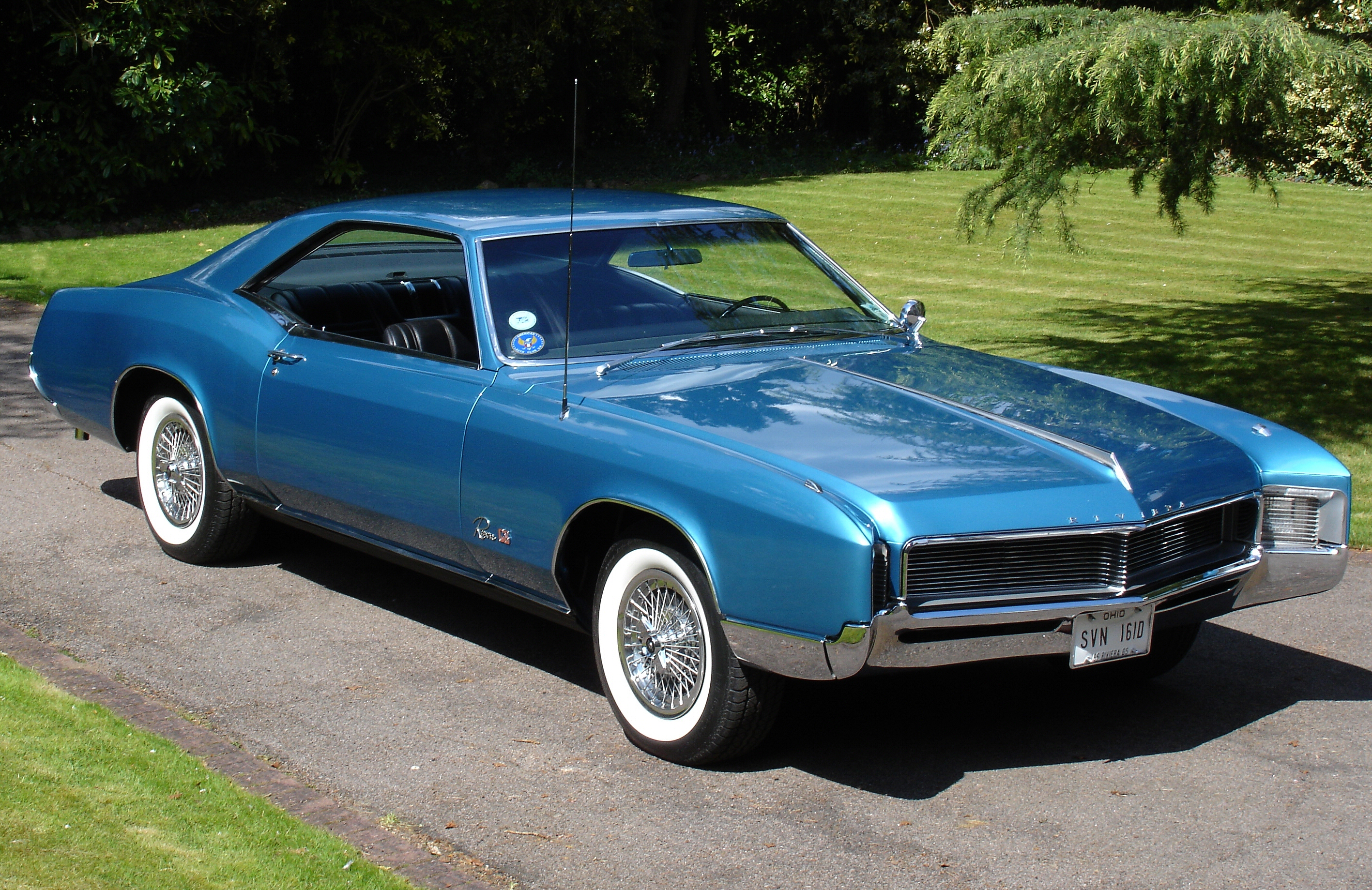
Riviera
"And I've had people say, is this a Riviera when looking at it from the front? Okay, I can see that."
The Buick Riviera is a specific older Buick model line. The speaker says people thought the car was a Riviera just based on how the front looked.
The Buick Riviera is a personal-luxury coupe/convertible line from Buick, known for its distinctive front-end styling. In the segment, people are confusing the car’s front appearance with a Riviera, showing how the Riviera’s look is recognizable even when the exact model isn’t.

Rietta
"Okay, I can see that. I guess not a Riviera, Rietta. Rietta, yeah, I actually understood what you meant."
The Buick Reatta is a specific Buick model. The speaker is saying people mix it up with the Riviera, but it’s actually the Reatta.
“Rietta” refers to the Buick Reatta, a rare personal-luxury car produced by Buick. The speaker is clarifying that the car being discussed isn’t a Riviera, but instead is a Reatta—another model with similar-era styling cues.
kilometerage
"I mean, kilometerage. Kilometerage. Cause that car is all in, you know, metric, not, not, not freedom."
Kilometerage just means how many kilometers the car has been driven. It’s the metric version of mileage.
“Kilometerage” is how many kilometers a car has been driven, similar to “mileage” but using the metric unit system. It’s commonly used in Europe and other regions where distances are measured in kilometers.
V12
"And it's a V12 Ferrari. It's got torque. It's got torque all day long, right?"
A “V12” means the engine has 12 cylinders arranged in two groups that form a V shape. It’s a big, high-end engine layout that often sounds great and pulls strongly.
A “V12” is an engine with 12 cylinders arranged in a V shape (two banks of six). In a V12 Ferrari, that cylinder layout is part of why the car can feel smooth and produce strong power across a wide range.
torque
"And it's a V12 Ferrari. It's got torque. It's got torque all day long, right?"
Torque is the engine’s pulling strength—the force that gets the car moving. More torque usually means easier acceleration without needing to rev as high.
Torque is the engine’s twisting force that helps the car accelerate, especially at lower speeds or during steady driving. When the host says it has “torque all day long,” they mean it keeps pulling strongly across much of the rev range.
AC
"So we could, we get idle with all the cooling fans and the AC on. Was the AC functional? Was it?"
“AC” means the car’s air conditioning. They’re talking about whether it was working and whether the car could idle normally with it running.
“AC” here means the car’s air conditioning system. The host is checking whether it was “functional,” and later mentions idling with the cooling fans and AC on—both of which can increase electrical and engine load.
cooling fans
"So we could, we get idle with all the cooling fans and the AC on. Was the AC functional? Was it?"
Cooling fans are the electric fans that help keep the engine from overheating. They usually run when the car needs extra cooling, like at idle.
Cooling fans move air through the radiator to keep engine temperatures under control, especially when the car is idling or when airflow is limited. The host’s point is that the car could idle while the fans were running and the AC was on.
millimeter belts
"But I also felt bad for it because I'd only replaced one of the alternators and [2132.5s] they have like eight millimeter belts. [2134.1s] And I was afraid of shredding one."
Belts are like power-transmission straps that spin important parts. If the belts are very small or narrow, they can be easier to damage if they’re not in perfect condition.
Belts in the charging system transmit rotation from the engine to accessories like the alternator. Very narrow belts can be more sensitive to tension, alignment, and wear—so shredding one can happen if the setup isn’t right.
throw a code
"That car did not throw a code the whole trip. [2154.7s] Nope. [2155.0s] Just arcana. [2156.6s] The Porsche's through codes."
Cars have computers that watch sensors and systems. If something goes wrong, the car can save an error message (a code); “no code” means it didn’t detect any problems.
“Throw a code” refers to the car’s onboard diagnostics (OBD) detecting a fault and storing a diagnostic trouble code. If a car “does not throw a code,” it means the computer didn’t log any detected errors during that trip.
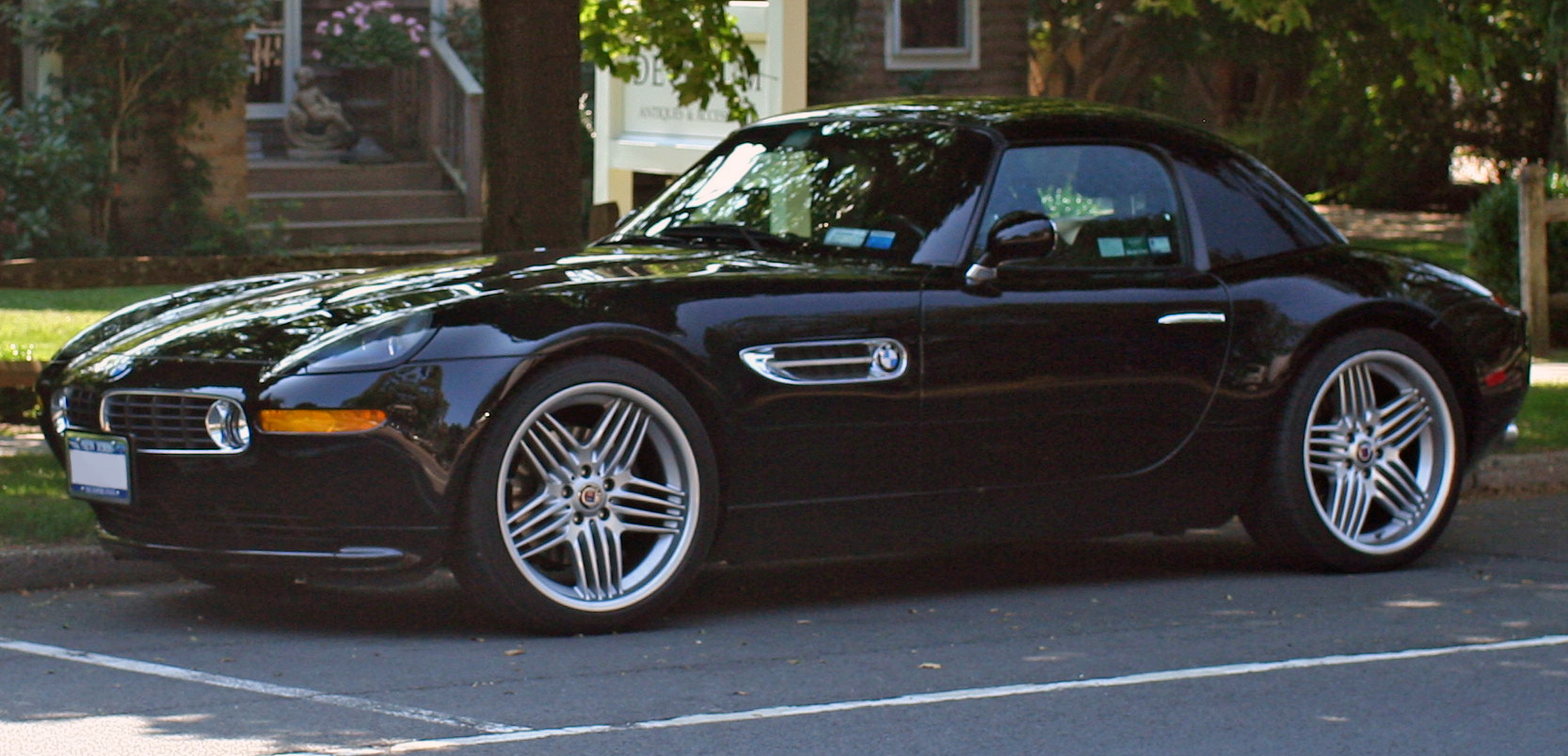
Alpina Z8
"...s suffocating and dying. Well, Lincoln did in the Z8 and then we got to the drive through tree, the Ch..."
An Alpina Z8 is a special version of the Z8 that’s been modified by Alpina. Alpina is known for tuning cars to feel better and perform differently than stock. The podcast is mentioning it as part of a story, not as a basic introduction.
The Alpina Z8 refers to an Alpina-tuned version of the BMW Z8, with Alpina typically focusing on performance and drivability upgrades. In the podcast, it’s mentioned in a dramatic story context involving suffocating and dying, which suggests the car is part of a personal anecdote rather than a spec discussion. The name comes up because it’s a distinctive, less common take on the Z8.

XKR
"Yeah, after spending, after spending a day behind Alex's Viper with [2228.8s] because I took the XKR on this trip last weekend."
The Jaguar XKR is a faster, sportier Jaguar than the regular XK, known for strong acceleration and a more “serious” driving feel. They’re using it as the other car in their trip story.
The Jaguar XKR is a performance version of the Jaguar XK, built around a powerful supercharged V8 and a grand-touring vibe. The host mentions taking the XKR on the trip, contrasting it with the Viper and setting up a comparison of driving character.
top down
"And I had the top down for a lot of it. [2233.7s] So it's just the glorious sound of that Viper snaking through sneak,"
“Top down” just means the car is a convertible and the roof is down while driving. It makes the engine/exhaust sounds louder and more fun to hear.
“Top down” refers to driving with the convertible roof lowered. It’s mentioned here to set the scene for the Viper’s sound—open-air driving makes engine and exhaust notes much more noticeable.
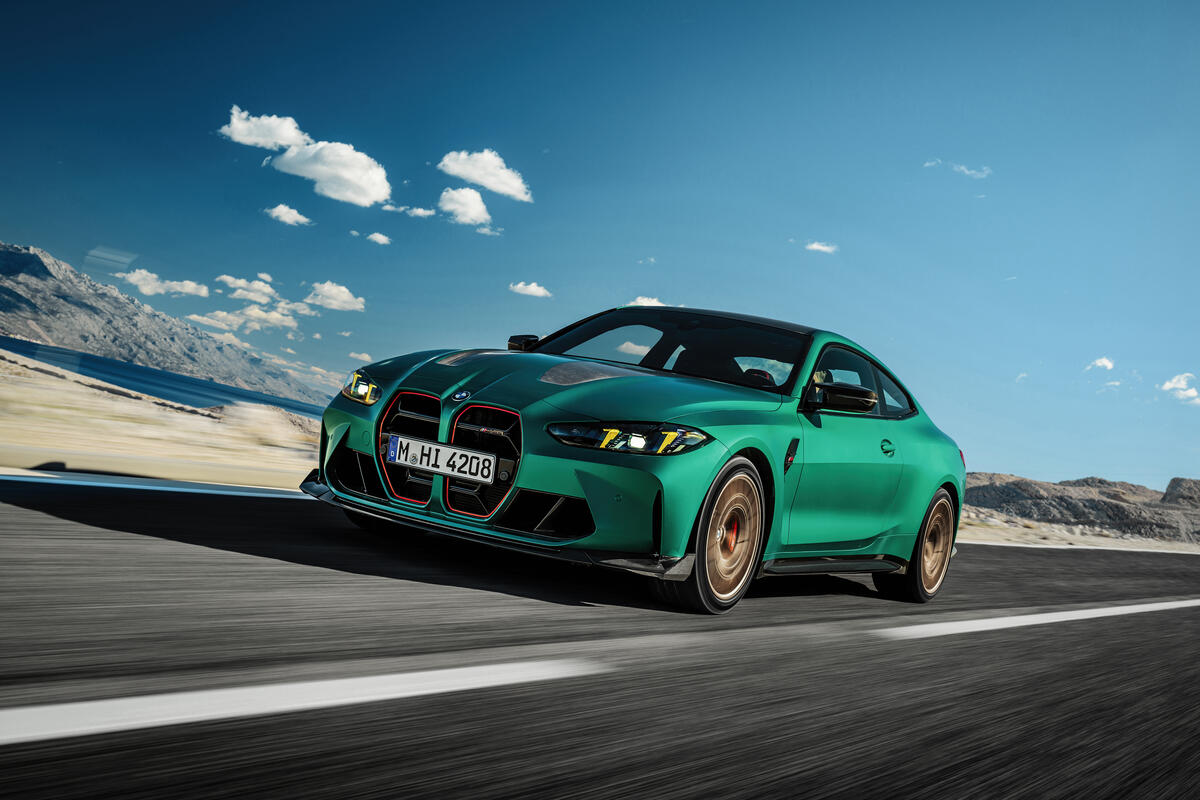
M4
"We forced Ben into it because we didn't want to really take him back to pick up [2262.0s] his M4, but didn't even put a foot wrong the whole weekend."
The BMW M4 is BMW’s high-performance version of the 4 Series. They’re talking about it as Ben’s modern car that they didn’t want to make him go back for.
The BMW M4 is BMW’s performance coupe/convertible in the M lineup, built for sharper handling and stronger power than a standard 4 Series. In this segment, they mention Ben’s M4 as the car they didn’t want him to go back and pick up, implying the M4 is the “other” modern performance option versus the classic SLC.
override button
"I'm like, there's an override button to turn the AC off. [2281.2s] And that one I'm like, if you need more power, it's the passing button."
An override button is a control that lets you bypass or change the normal behavior of a system. Here, the host says there’s an override to turn the AC off, likely to reduce load on the engine for more power or throttle response.
passing button
"And that one I'm like, if you need more power, it's the passing button. [2284.2s] Push the off button first."
A passing button is a button you press when you want extra push to overtake. In this story, it’s treated like a quick way to get more power right when you need it.
A “passing button” is a driver control that temporarily boosts performance for overtaking, often by changing throttle mapping or engine response. The host connects it to needing more power, implying it’s meant for quick acceleration when you’re trying to pass.

85 Mercedes wagon diesel
"We've done, I have an 85 Mercedes wagon diesel that was relatively long mileage when I picked it up. It was only 90 something thousand when I picked it up."
This sounds like an older Mercedes-Benz wagon with a diesel engine. The host is saying it has a lot of miles but still works well enough to drive often.
This is a Mercedes-Benz W123-era wagon with a diesel engine, and the key point is its reputation for durability and long-distance use. The host is describing it as a “relatively long mileage” car that still gets used frequently.

G-Class Mercedes Wagon
"But so funny. We've done, I have an 85 Mercedes wagon diesel that was relatively long mileage when I pi..."
The G-Class is a luxury SUV made by Mercedes-Benz. It’s designed to handle rough roads and is known for being built tough. The podcast is mentioning an older diesel Mercedes they had with high mileage, as an example of long-term ownership.
The Mercedes-Benz G-Class (often called the G-Wagen) is a rugged luxury SUV known for its boxy design and off-road capability. The podcast mention references an “85 Mercedes wagon diesel” with relatively high mileage, which fits the idea of long-term ownership and durability. It’s brought up as part of a conversation about older vehicles and how they hold up over time.
W123s
"when you talk about the opposite spectrums of, you know, what's reliable and what's not reliable, those those W123s are the cockroaches of the car world."
“W123” is a Mercedes-Benz model generation. The host is basically saying it’s one of those older Mercedes cars that’s hard to kill and tends to last a long time.
“W123” refers to Mercedes-Benz’s W123 generation, known among enthusiasts for being extremely tough and long-lived. When the host calls them “the cockroaches of the car world,” they’re emphasizing that these cars tend to survive neglect and keep running.

Porsche Boxster
"Sherry has a 21 GTS Boxster, a GTS 4. Yeah. She specced that out exactly the way she wants it. You can tell it if it's in her name, just just write it down."
A 2021 Porsche Boxster GTS is a Porsche roadster with a sporty trim level. The host is saying it was ordered with the exact options the owner wanted.
A 2021 Porsche Boxster GTS is a mid-engine roadster with a performance-focused trim that typically adds sportier tuning and equipment. The host notes it was “specced out exactly the way she wants it,” emphasizing how the GTS package is chosen for a specific driving feel.
specced
"Yeah. She specced that out exactly the way she wants it. You can tell it if it's in her name, just just write it down."
“Specced” means you picked the exact options and configuration for the car when you ordered it. The host is saying Sherry chose everything the way she wanted.
“Specced” is enthusiast shorthand for specifying a car’s build—choosing the exact options, trims, and packages when ordering. Here, the host says Sherry “specced that out exactly the way she wants it,” meaning she configured the car to her preferences.
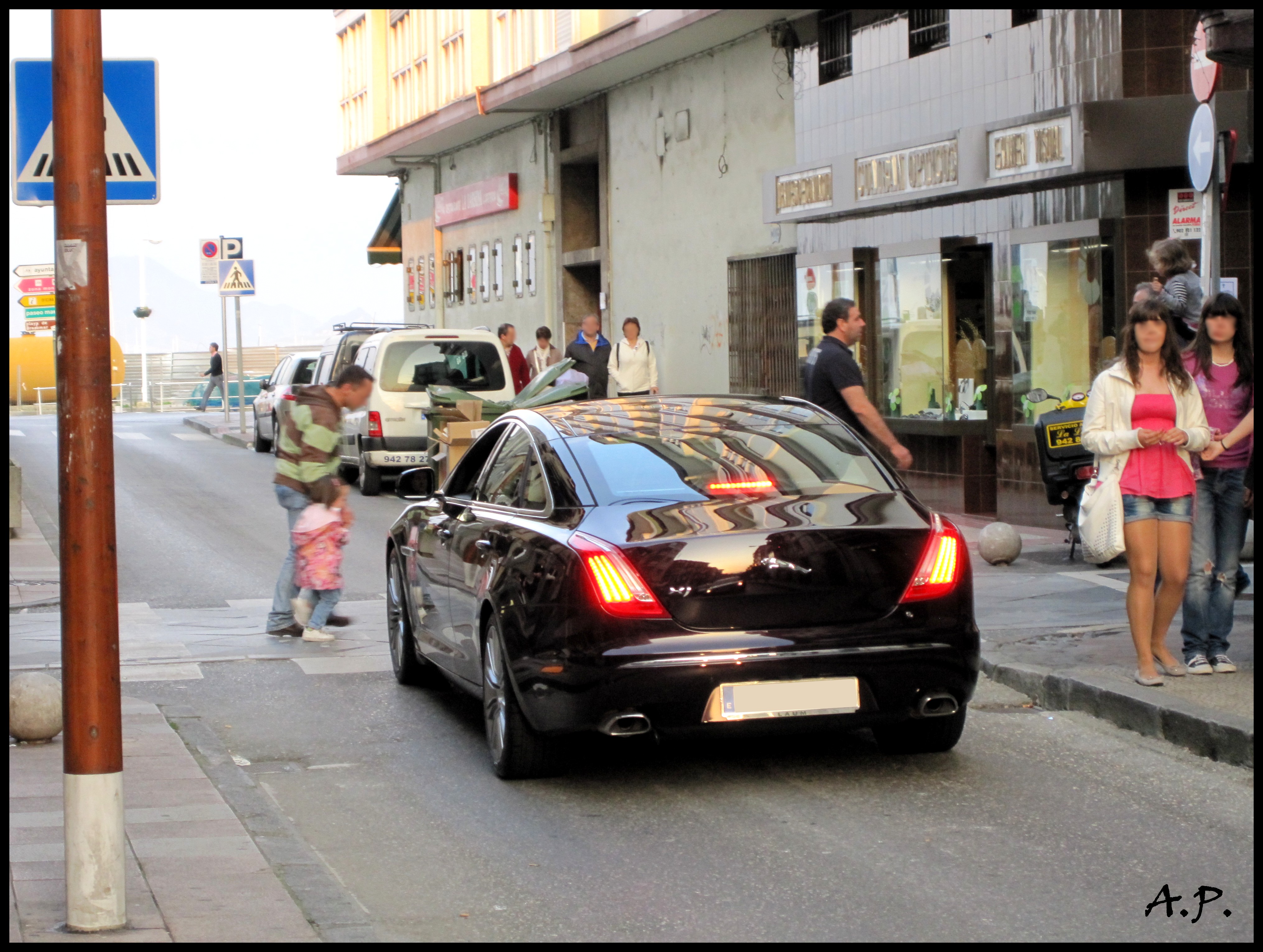
2011 XJL
"I have a 2011 XJL as well, but that's kind of the that's that's the winner beater car picked it up off of auction really cheap felt pretty confident because the XKR has the same drivetrain."
The 2011 Jaguar XJL is a bigger, longer version of the Jaguar XJ. It’s meant to be a comfortable cruiser. In this segment, the key point is that the host chose it because it shares the same main mechanical setup as his XKR, which helps him feel confident about reliability.
The 2011 Jaguar XJL is a long-wheelbase version of Jaguar’s XJ sedan, built for comfort and highway cruising. The host treats it as a “winner beater car” and specifically links its ownership confidence to the fact that it shares the same drivetrain as the Jaguar XKR.
drivetrain
"felt pretty confident because the XKR has the same drivetrain."
Your drivetrain is the “power path” that takes engine power and sends it to the wheels. If two cars share the same drivetrain, they often feel similar to drive and can have overlapping parts and repair knowledge.
A drivetrain is the set of components that transfer power from the engine to the wheels, typically including the transmission, driveshaft(s), differential, and related parts. When the host says the XKR has the same drivetrain as the XJL, he’s implying the cars share major mechanical hardware, which can make ownership and troubleshooting simpler.
HP DE
"It's kind of my HP DE fun day car. And it kind of jumps all the way back to the 85 928."
“HP DE” is basically a track day—an event where you drive your own car on a race track for fun and practice. It’s not a race like NASCAR; it’s more about learning and enjoying the car safely.
“HP DE” is shorthand for high-performance driving events, commonly called track days, where drivers take their own cars onto a circuit for timed or coached sessions. The host’s “HP DE fun day car” phrasing means his 350Z is set up for that kind of on-track use.
T H four hundreds
"the motors themselves are great. The transmissions are T H four hundreds. I mean, yeah, there's not a lot to go wrong with them."
This is the host talking about the car’s transmission type. He’s saying that, in his experience, that transmission is generally dependable if you drive and maintain it the right way.
“TH four hundreds” appears to refer to a specific transmission family/type used in some Rolls-Royce applications. The host’s point is that these transmissions are durable and “not a lot to go wrong with them” as long as they’re treated properly.
braking system
"As long as you treat them well. And then it's the braking system that's weird. But now that I understand what that is and what it entails,"
The braking system is what makes the car slow down and stop. The host is saying that part felt unusual at first, but now he understands why.
The braking system is the set of components that slow and stop the car, including the brake hardware and how it’s controlled. The host calls it “weird,” then says he understands what it entails now, implying there’s a particular design or behavior that surprised him earlier.

Dodge Challenger
"... was a different dude. But just this bright green challenger pops up at a gas station and say, can I follow yo..."
The Dodge Challenger is a muscle car, meaning it’s designed to be fast and have a strong engine. The podcast is describing a bright green one that stood out at a gas station. It’s being mentioned because it caught attention and led to a fun moment.
The Dodge Challenger is a muscle car known for bold styling and powerful engine options. In the podcast, it’s mentioned as a bright green Challenger that appeared at a gas station and prompted someone to follow along, which highlights the car’s visibility and presence. That kind of story is common with Challengers because they’re often driven and recognized as enthusiast cars.
convertible
"OK, so it's it's convertible. It's orange over white with a white top."
A convertible is a car with a roof that can be lowered or removed to let you drive with open-air exposure. In classic American cars, convertibles were often a major part of the “show” and lifestyle appeal, not just a performance feature.
front wheel drive
"I mean, it's it's a 500 cubic inch front wheel drive."
Front-wheel drive means the front wheels do the work of both steering and moving the car. It’s different from cars where the back wheels are the ones that push you along.
Front-wheel drive (FWD) means the engine’s power is sent to the front wheels, which handle both steering and propulsion. That’s a notable packaging choice for a large, 1970s-style cruiser like the one being discussed, because it changes how the car is laid out compared with rear-wheel-drive designs.
500 cubic inch
"I mean, it's it's a 500 cubic inch front wheel drive."
Cubic inches measure the size of an engine. “500 cubic inches” means it’s a very large engine, which usually translates to strong pulling power.
“Cubic inch” is a displacement measurement for an engine—how much total volume the cylinders sweep as they move air and fuel. A “500 cubic inch” engine implies a very large V8-era displacement, which helps explain why the car feels like a big, torque-rich cruiser even when it’s front-wheel drive.

Porsche 928
"The 928 was the 928 was somewhat whimsical... But like, well, the 928 is cheap enough... And then I fell in love with it... it's actually one of my favorite cars to drive... It sounds great... it's just pop up headlights."
The Porsche 928 is a Porsche grand touring car—meant for cruising. It’s known for its V8 sound and for having pop-up headlights, and the host is saying it’s fun and easy to drive for everyday errands.
The Porsche 928 is a front-engine grand tourer (GT) from Porsche, best known for its V8 and long-distance comfort. In this segment, the host highlights it as an easy-to-drive, great-sounding car and specifically calls out its distinctive pop-up headlights, which help explain why it stands out visually and driving-wise.
pop up headlights
"I think it's just cool... It sounds great... and it's easy to drive and and it's just pop up headlights... It's pop up headlighting."
Pop-up headlights are headlights that slide up from the front of the car when you turn them on, instead of staying fixed in place. The host is pointing out that this is a cool, recognizable feature on the car.
Pop-up headlights are headlamps that retract into the body when off and rise when activated. They’re a styling and packaging feature that can also affect aerodynamics and how the car looks at a glance—here, the host uses them to describe what makes the Porsche 928 feel distinctive.
lower 48
"So yeah, that's one thing I've learned from driving a lot of cars across countries in the most back remote ways possible is in the lower 48 of US."
“Lower 48” just means the main part of the U.S. that’s connected by land. It’s not Alaska or Hawaii, and it matters because you’re usually not as far from help as you might think.
“Lower 48” is shorthand for the contiguous United States—the 48 states that are connected by land. In an overlanding context, it’s a reminder that even remote areas are still within a large, populated country.
overlanders
"And like two hours later, there's some like a convoy of overlanders comes by and I'm like, I'm 100 miles from anything."
An “overlander” is a traveler who drives far into remote areas, usually on rough roads. They typically plan ahead so they can handle problems far from towns.
An “overlander” is someone who travels long distances over rough roads or remote routes, often with a vehicle set up for self-sufficiency. The term is common in the off-road/expedition community and implies planning for fuel, water, and recovery.
Starlink
"It's uncomfortable, you know, but we've got battery, we've got phone. We'll figure it out. Well, you know, yeah, now we've got Starlink."
Starlink is satellite-based internet. It can work even where cell service doesn’t, which helps if you’re stuck somewhere remote.
Starlink is a satellite internet service that can provide connectivity in areas without normal cell coverage. For remote driving, it reduces the risk of being truly “cut off” if you break down.
pilot bearing
"Yeah, well, seeing your trips, the Ferrari, the Ferrari seized its pilot, its main, what was it called, the pilot bearing in the club in the transmission on that trip down to Monterey last year."
The pilot bearing is a small part that helps the transmission input shaft spin smoothly where it meets the engine. If it goes bad, the car can start making noise or feel rough when you drive.
A “pilot bearing” (often called a pilot bearing/bushing) supports the transmission input shaft at the engine side. If it fails, it can cause driveline noise, vibration, or shifting issues—especially noticeable when the car is being driven hard or after long trips.
Monterey
"the pilot bearing in the club in the transmission on that trip down to Monterey last year."
Monterey is a California area that’s famous for car events. Enthusiasts often plan trips there because there are lots of automotive activities.
Monterey refers to the Monterey area in California, which hosts major automotive events and drives. It’s a common destination for car enthusiasts, including events tied to the Monterey car week ecosystem.
Request an Explanation
Heard something you'd like explained? We'll add it to this episode.
Sign in to request explanations for terms you heard.
Want to learn more?
Browse our glossary for plain-English explanations of automotive terms, jargon, and concepts.
Help improve this episode
See something that's not quite right? Our annotations are AI-generated and can sometimes miss the mark. Click the flag icon on any annotation to suggest a correction.
1 community members have helped improve this episode.