
About this episode
Cold War-style jabs kick things off as the hosts say the current Volkswagen Transporter looks like it’s copying another van’s design language—“It’s so obviously a transit.” The conversation then turns to Mercedes-AMG, where they call the new AMG GT four-door “an appalling piece of car design,” criticize Mercedes’ aero-first softness, and nitpick wheel placement and grille “krill mouth” styling. After more styling rants, they pivot to used Bentley Arnage buying logic, including service history and a parts-car strategy.
Jonny and Richard have some thoughts about the new Ferrari Luce and the AMG GT 4-door. Also in this episode, the nostalgia of made in West Germany stickers, what’s wrong with the latest VW Transporter, a Vauxhall Chevette correction, spotting the water version of No Name Full Suspension Mountain Bike Guy, being left handed and another cracking pick from Car & Classic.
For early, ad-free episodes and extra content go to patreon.com/smithandsniff
To buy merch and tickets to live shows go to smithandsniff.com
This episode is sponsored by Car & Classic https://candc.li/uc1yqz
This episode is sponsored by Heatable. Use codes SSG150 or SSG300 to get up to £300 off https://short.do/ByX2-Y
Hosted on Acast. See acast.com/privacy for more information.

Volkswagen Transporter
"And do you remember when certain products were stamped [41.5s] with Made in West Germany or Made in East Germany? Yes. Yeah. Well, I always get a great [48.0s] delight from a retro Made in West Germany sticker, for example, on an old Volkswagen [52.0s] or something. ... [105.0s] you know, the current Volkswagen transporter, the transit based one."
The Volkswagen Transporter is a popular van used for work and everyday driving. Here, they’re talking about the newest version and how it looks like it was styled to resemble a Ford Transit.
The Volkswagen Transporter is a long-running German van platform known for being a practical, widely used workhorse. In this segment, the hosts are discussing the current Volkswagen Transporter and how its design reads as a “Transit-based” look.
AMG GT four door
"But the, the AMG, what's the name of that? That new, I don't, the new AMG that was [174.9s] released. I think officially it is the AMG GT four door. It's the new four door has already [182.1s] existed. But this is like, it's probably cut as some combination of AMG GT four door EV."
This is Mercedes-AMG’s four-door take on the AMG GT name. The hosts are talking about a new version and whether it’s heading toward an electric powertrain.
The AMG GT four door is Mercedes-AMG’s idea of turning the AMG GT name into a larger, four-door body style. In this segment, the hosts are discussing a newly released AMG four-door concept and speculating about an electric (EV) version combined with the AMG GT four-door platform.
EV
"But this is like, it's probably cut as some combination of AMG GT four door EV. [188.4s] Yes. Something like that. So I'd like your opinion on it, Rich, please. Shall we?"
EV means electric vehicle. The hosts are wondering if this new AMG four-door might be an electric version.
EV stands for electric vehicle, meaning the car is powered primarily by an electric motor and battery rather than a combustion engine. The hosts speculate that the new AMG GT four-door could be a combination of the AMG GT four-door concept and an EV powertrain.
Aero
"I think you're right about the disc. I've looked at it a lot [275.9s] and I think we are now at peak Mercedes confused design house. Mercedes does not know what to do. [284.1s] It's tried some stuff and it's clearly good at Aero, but it just doesn't know. It's lost."
“Aero” means aerodynamics—how the car’s shape moves through the air. The host is saying Mercedes may be good at the airflow part, even if they don’t like how the car looks.
In automotive context, “aero” refers to aerodynamics—how air flows around the car to affect drag, stability, and efficiency. The host says Mercedes is “clearly good at Aero,” implying the brand’s shapes work well even if they dislike the overall styling.
Gordon Wagner
"I'm hoping we'll see a change now because after many years, Gordon Wagner, the head of designer [295.2s] Mercedes is stepping down. Yeah. And you know, he was the boss. The blame must lie with him for"
Gordon Wagner is a key person in Mercedes-Benz’s design leadership. The hosts think his departure could explain (or fix) why they feel Mercedes designs have been going in the wrong direction.
Gordon Wagner is a Mercedes-Benz design executive, described here as the head of designer Mercedes. The hosts connect his stepping down to their belief that Mercedes’ design direction has become confused.
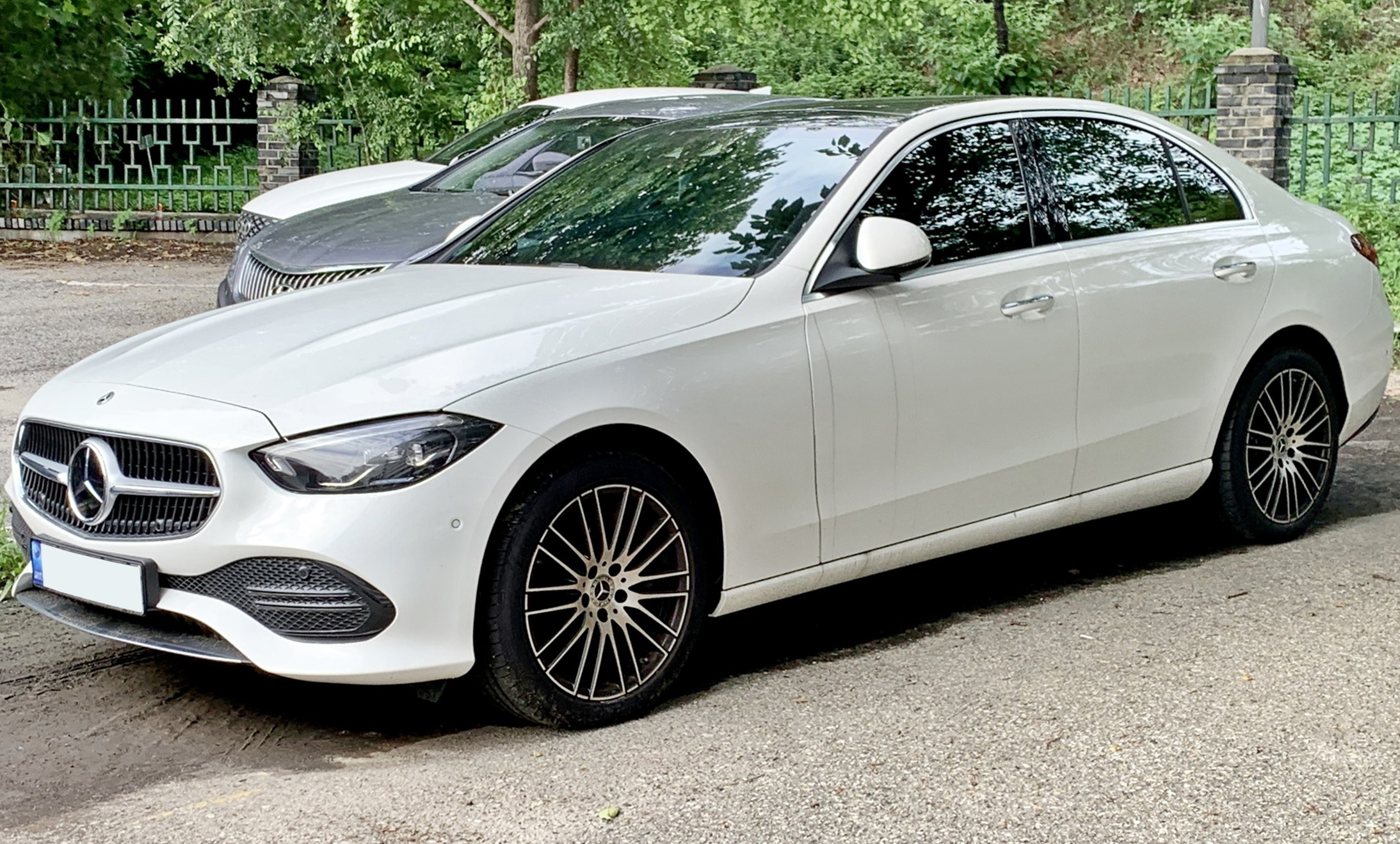
C-Class
"I think years. I was thinking about it because I've been doing a bit of motorway work in the [306.6s] last few days and I saw a new C-Class that was in some traffic in the next lane to us. And I [310.8s] just went, Oh, it's a terribly soft looking car. Like almost like the nineties about, you know,"
The Mercedes-Benz C-Class is the brand’s compact executive sedan/wagon line. Here, the host uses a recently seen C-Class as a real-world example of what they perceive as Mercedes design direction—describing it as “terribly soft looking.”

E-Class
"And then I saw a new E-Class and that's not quite right either. No, it's just too soft. It's like"
The Mercedes-Benz E-Class is the brand’s midsize luxury sedan, and the host argues the newest one also lacks the right “feel.” They describe it as “too soft,” suggesting the car’s visual proportions and road presence don’t communicate confidence.

S-Class
"And yeah, you're right. Well, the S-Class I think has still got a little bit more kind of the necessary gravitas."
The Mercedes-Benz S-Class is the top-of-the-line Mercedes. The speaker thinks it still feels more important and composed than the newer C-Class and E-Class.
The Mercedes-Benz S-Class is the brand’s flagship luxury sedan, and the host claims it still has the “gravitas” the others lack. In this context, “gravitas” means a more authoritative, composed presence—both visually and in how it’s perceived on the road.
wheel spaces
"Look at a second generation ML or a third generation SLK, the front wheels, do they need spaces? And the factory decided no."
Wheel spacers are parts that push the wheel outward a little. People use them to change how the car looks (stance) or to help with clearance and fitment.
Wheel spacers are hardware that moves a wheel outward from the hub to change track width and wheel/tire positioning. In this discussion, the speaker is suggesting that some Mercedes wheel placement might have benefited from spacers for a better stance or fitment.

Mercedes-Benz SLK
"...k at a second generation ML or a third generation SLK, the front wheels, do they need spaces? And the f..."
The Mercedes-Benz SLK is a small two-seat convertible roadster. The podcast is talking about wheel fitment—specifically whether you need spacers so the wheels sit correctly and don’t rub. It’s a practical question for anyone changing wheels or tires.
The Mercedes-Benz SLK is a compact two-seat roadster, known for its sporty character and (in many generations) a retractable hardtop. The podcast mentions a second-generation ML and a third-generation SLK, focusing on whether “front wheels” need spacers—an ownership/modification question about fitment and clearance. That’s the kind of detail that comes up when people are trying to change wheel setups safely.
do less, better
"So why don't you stop, stop, stop making lots, do less things better. Just please do. And this is a cry out for so many car manufacturers at the moment…"
It’s basically the idea that a company should make fewer things, but make them better. The host is saying car brands should focus on their best models instead of trying to do everything.
“Do less, better” is a product strategy idea: reduce the number of variants and concentrate resources on the most compelling models. In the episode, it’s used as a critique of how some manufacturers spread effort across too many offerings instead of refining the core lineup.
krill sifting
"We've talked about krill sifting. Yes. Yeah, yeah. It's got a krill sifting mouth. So large, large sediment won't go through. Small sediment will go through."
They’re using “krill sifting” as a picture of filtering. The idea is that the front openings are shaped so bigger bits get blocked while smaller bits can get through.
“Krill sifting” is a metaphor here for a grille/air intake that filters what passes through. The host uses it to describe how the grille openings are shaped to block larger debris while allowing smaller particles and airflow to pass.
AMG GT four mouth
"That's what the AMG GT four mouth is. It's krill mouth, but car krill mouth, not driver."
They’re talking about the Mercedes-AMG GT’s front grille, which has a distinctive “four mouth” look. The host compares it to a filter that only lets smaller stuff through, just to make the design easier to picture.
The Mercedes-AMG GT is a sports car, and the host is talking about its front-end “four mouth” grille design. They describe it as a “krill sifting mouth,” using the grille shape as a visual metaphor for how the openings are meant to filter airflow and debris.
soap bar
"Is that when it, do you mean, is that when it went quite soap bar? That was the beginning of"
“Soap bar” is a slang design description meaning the car’s shape looks rounded and bland, like a bar of soap. In this context it’s used to criticize a Mercedes design shift toward softer, less distinctive styling.

Mercedes-Benz CLS
"...hat I think is, is, is not bad. And obviously the CLS, not the current one, I think it's lost its way a..."
The Mercedes-Benz CLS is a luxury car with a coupe-like look, even though it has four doors. The podcast is saying that in an older version (not the current one), the CLS didn’t feel like it was going in the right direction anymore. It’s about how the car’s style or purpose changed.
The Mercedes-Benz CLS is a luxury four-door coupe-style sedan, built around a more dramatic shape than a traditional sedan. The podcast says the CLS (not the current one) “has lost its way,” implying the model’s direction or character changed over time. That kind of comment typically reflects how the car’s appeal, feel, or design intent evolved.

AMG GT
"What about the AMG GT? I still think is a great looking car. Oh, yes. Man, I keep looking at those on classifieds."
The AMG GT is a sporty Mercedes-AMG with a strong, performance-oriented personality. The host’s point is that it can feel a bit too wide for tight roads, which changes how comfortable it is to drive.
The Mercedes-AMG GT is a performance grand tourer from AMG, known for its muscular styling and V8-powered character. Here, the hosts discuss how it looks and how its width can make it feel tense on narrow British roads.
AMG GT R
"The R is my favorite, but that is more money. Yes. But you can get an AMG GT around the same money as a BMW I8."
The AMG GT R is a high-performance Mercedes-AMG version of the AMG GT. It’s the more serious, more driver-focused one, and that’s why the host keeps saying it’s the favorite.
The Mercedes-AMG GT R is a track-focused variant of the AMG GT, built for sharper performance and more aggressive driving feel than the standard GT. In this segment, the hosts compare it directly against other expensive options and talk about why the “R” is the one they’d want.
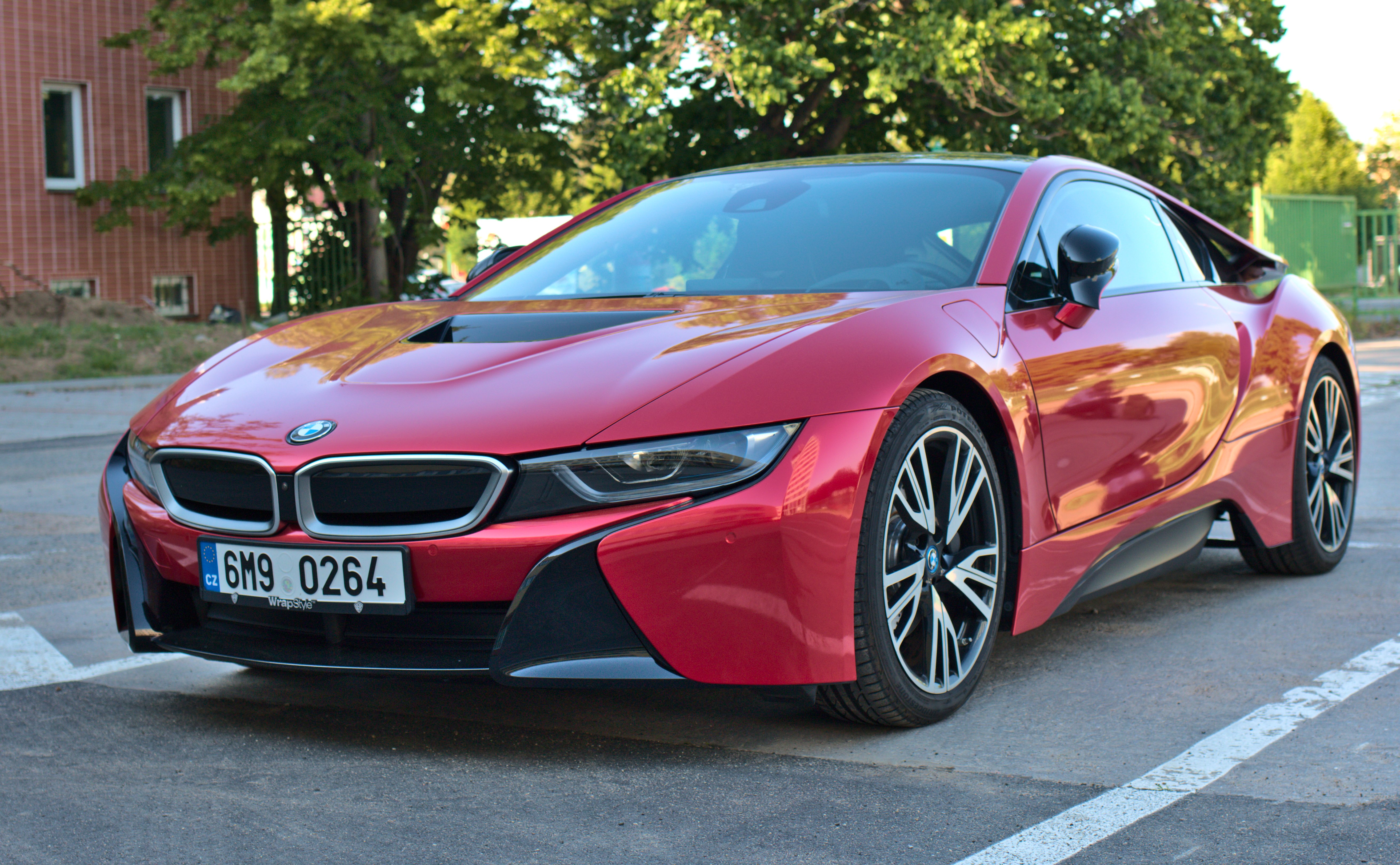
BMW i8
"But you can get an AMG GT around the same money as a BMW I8. Very different beasts."
The BMW i8 is a hybrid sports car with a very distinctive look. The hosts mention it to show that you can spend similar money, but you end up with a completely different kind of car.
The BMW i8 is a plug-in hybrid sports car known for its futuristic design and hybrid powertrain. In this segment, it’s used as a price and “different kind of car” comparison point against the Mercedes-AMG GT.
Belgian Grand Prix
"Across Luxembourg and Belgium to the Belgian Grand Prix. And the road was really early. We got up absolutely crack of dawn to get to the circuit before it got busy."
The Belgian Grand Prix is a big Formula 1 race in Belgium. The host is saying they drove there very early so the roads would be empty.
The Belgian Grand Prix is a Formula 1 race held in Belgium, and it’s a major event that draws large crowds. The hosts reference driving their car across Luxembourg and Belgium to reach the circuit early to avoid traffic.
heat pump
"there's loads of debate at the moment about whether to switch to a heat pump or stick with a traditional gas or oil boiler."
A heat pump is a home heating system that transfers heat instead of burning fuel to make heat. They’re using it as an analogy in the conversation, not as a car topic.
A heat pump is a home heating system that moves heat from one place to another rather than generating heat by burning fuel. The hosts use it as an analogy while discussing whether to switch from traditional gas/oil boilers to a heat-pump setup.
gas or oil boiler
"whether to switch to a heat pump or stick with a traditional gas or oil boiler."
A gas or oil boiler is the traditional way of heating a home by burning fuel. In this segment it’s just part of a comparison, not the main topic.
A gas or oil boiler is a conventional heating system that produces heat by burning fuel. It’s mentioned here only to contrast with a heat pump in the hosts’ analogy.

Ferrari
"Someone we know who is a very senior car journalisty person was one of the lucky few who went to a preview of the new or electric Ferrari Lucy Goosey…"
Ferrari is a famous Italian supercar maker. In this segment, they’re talking about a new (electric) Ferrari and saying it doesn’t look like what you’d expect from the brand.
Ferrari is an Italian supercar brand known for mid-engine sports cars and a strong design identity. The hosts discuss a newly announced Ferrari (described as electric in the transcript) and argue it doesn’t look like a traditional Ferrari, comparing it to other “new design direction” possibilities.

Dodge Charger
"The Ferrari, see, what's amusing about the Ferrari is as soon as I [1090.9s] saw some, the profile of it, because it's four doors, it's a slippery four door, it reminded me [1096.9s] of the new electric Dodge Charger, which I think the new electric Dodge Chargers is a really [1103.1s] interesting looking car."
The Dodge Charger is a famous American car name. Here they’re talking about the newer electric Charger and how its shape looks similar to the four-door Ferrari they’re discussing.
The Dodge Charger is a long-running American muscle-car nameplate, and the host is specifically referencing the new electric Charger. The point here is visual similarity: the Ferrari’s four-door shape and “slippery” profile remind them of the electric Charger’s styling.
gap between top of tyre and arch
"Do you know what they both suffer with? Offensive. Offensive [1139.4s] gap between top of tyre and arch for a sporty car. Offensive. Yes. You cannot sell a sporty car [1147.4s] when there's a big arch gap because it looks like someone's either left the speed ramp mode up,"
They’re talking about the space between the tire and the fender. If that gap is too big, the car can look like it’s not lowered enough for its sporty look.
This is the visible wheel gap between the tire’s top and the wheel arch. On sporty cars, too much gap can make the car look like it’s sitting high, which can hurt the intended “stance” and visual proportions.
speed ramp mode
"because it looks like someone's either left the speed ramp mode up, [1152.2s] which I'm not going to call them out. But someone did the school run the other day, [1157.4s] a dad in a Ferrari F12, pulled up at the drop, strictly pick up and drop off very quickly area, [1163.6s] sat there for 20 minutes with the car running with the windows up over and the hot and that [1168.6s] made that ground my gears. But the worst thing was because he obviously wanted to show the world that he had this car was he'd left it in speed ramp mode. So the front of the car was much higher than the back of the car and it looked stance was all wrong."
They’re describing a setting that changes the car’s height/attitude—especially the front-to-rear balance. If it’s left on, the car can look uneven, like the front is raised compared to the back.
“Speed ramp mode” here refers to an adjustable ride-height/stance setting that changes how high the car sits at the front versus the rear. The host claims leaving it on makes the car’s nose sit higher, so the stance looks wrong.

Ferrari F12
"But someone did the school run the other day, [1157.4s] a dad in a Ferrari F12, pulled up at the drop, strictly pick up and drop off very quickly area, [1163.6s] sat there for 20 minutes with the car running with the windows up over and the hot and that [1168.6s] made that ground my gears."
The Ferrari F12 is a high-end Ferrari supercar with a big V12 engine. The hosts are talking about how the car’s stance—how high it sits and how the wheels look—can make it seem off, even if it’s a famous car.
The Ferrari F12 is a grand touring (GT) supercar from Ferrari, known for its powerful naturally aspirated V12 engine and long-distance comfort. In this segment, it’s used as an example of how wheel choice and ride height can make a car look “wrong” in real-world parking/stance.
aftermarket alloys
"Yeah. How do you say it looked shit? [1185.9s] This Ferrari loose looks like it's got aftermarket alloys on straight away and they don't work. [1193.8s] Yes. And the car sits too high and I could see that the minute I mean look I'm not the I'm not"
Aftermarket alloys are non-factory wheels. They’re saying the wheels on that Ferrari look like they were changed, and that the new wheels don’t suit the car’s look.
Aftermarket alloys are wheels made by companies other than the car’s original manufacturer, often chosen for style or fitment. The host argues that the Ferrari’s aftermarket wheel choice doesn’t match the car’s proportions, making the stance look off.

Ford Fiesta
"...hat looks like something that you'd fit to like a fiesta rally car because it's very strong. Oh yes I know..."
The Ford Fiesta is a small car. The podcast is saying it looks like it could be related to rally racing, and that it seems strong and purposeful. They’re mainly commenting on the look and vibe of the car.
The Ford Fiesta is a compact car that’s often associated with sporty versions and motorsport-inspired styling. In the podcast, the Fiesta is described as looking like something you’d fit to a “Fiesta rally car,” and the speaker says it looks “very strong,” which points to a perception of toughness and performance intent. That’s a common way people talk about how a road car’s design cues relate to rally heritage.
arch gap
"but again I think it's also partly because you're right the arch gap is just a bit off. It's like you're trying to say this is an SUV."
“Arch gap” is the gap you can see between the tire and the fender. They’re saying that gap looks off, which makes the whole car look like it’s trying to be something it isn’t.
“Arch gap” is the visible space between the tire/wheel and the wheel arch (the fender opening). The hosts use it to argue the fitment looks wrong—like the car is sitting or shaped as if it were an SUV, even though it isn’t.
deck
"So why don't you just get it down on the deck. Get it down on the deck and make it bloody look sleek."
“Get it down on the deck” means make the car sit lower. They think lowering it would make the design look more sleek.
In car styling talk, “get it down on the deck” means lowering the car’s stance so it sits closer to the ground. The hosts are arguing that a lower stance would make the body proportions look sleeker and more cohesive.

Chevrolet Impala
"they look like a 90s Chevrolet in America. Yes they do oh my it's a 90s Impala when the Impala all went to shit."
They’re saying the rear lights and shape remind them of a 1990s Chevrolet Impala. Their point is that the proportions feel like they belong to that older design, not the newer car.
The hosts compare the described rear styling to a 1990s Chevrolet Impala. They argue the lighting and overall rear proportions resemble a “90s Impala” look, and that the scale feels wrong for the modern car being discussed.
concept car
"again just looks like a 90s sort of like a reinvention like a concept car where Chevy have gone hey you know what people used to like 90s Impalas"
A concept car is a one-off or limited show vehicle used to show off ideas. They’re saying the design feels like it’s trying to be a “concept” version of an older car.
A concept car is a show vehicle built to preview design ideas or technologies, often not intended for mass production. The hosts use it as a critique: they think the styling reads like a modern “concept” interpretation of a 1990s Impala rather than a cohesive real-world design.
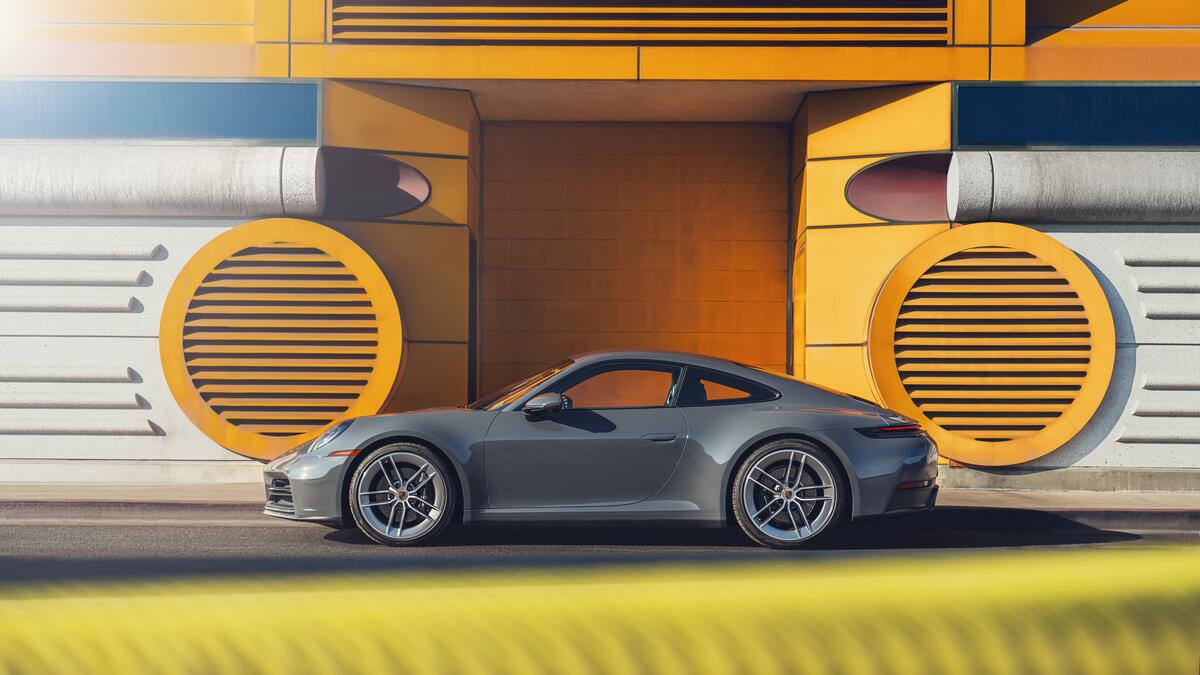
911 Gt Porsche
"... bought six Porsches that are cack to buy the one GT Porsche that you want the Porsche macaque but you're a mu..."
The Porsche 911 is a sports car made by Porsche. The podcast is talking about someone choosing a particular high-performance “GT” version of the 911 after buying other Porsches. It’s mentioned because different 911 versions feel and perform differently.
The Porsche 911 is a long-running sports car known for its distinctive design and rear-engine layout. In the podcast, it’s referenced in the context of buying multiple Porsches and then choosing a specific “GT” 911, highlighting how people can be selective about which 911 variant they want. That makes sense because the 911 lineup includes different performance-focused trims that appeal to different buyers.
800 volt architecture
"190 mile an hour top speed 330 miles range fully charged officially um 800 volt architecture so they can do lots of wizzy stuff"
“800 volt architecture” means the car’s electrical system runs at a higher voltage than many EVs. That can make fast charging easier and improve how efficiently the car handles high power.
800 volt architecture is an electric-vehicle design that uses a higher-voltage electrical system than the more common 400-volt setup. Higher voltage can reduce current for the same power, which helps enable faster charging and more efficient high-power components.
adaptive suspension
"it's got adaptive suspension like on the um pure eight sandwich so"
Adaptive suspension is a suspension setup that can adjust how stiff the shocks feel while you drive. It helps the car stay comfortable on rough roads but feel more controlled when you drive hard.
Adaptive suspension is a suspension system that automatically changes its damping characteristics based on driving conditions. The goal is to balance ride comfort and handling by making the car softer or firmer as needed.

Type 00
"...nt who've had so much heat for the way that their type 00 concept car looked and the reinvention of Jaguar ..."
The Type 00 is a Jaguar concept car, meaning it was shown to preview ideas rather than being a normal car you could buy. The podcast says people criticized how it looked a lot. Concept cars are usually talked about because they hint at what a company wants to do next.
The Jaguar Type 00 is a concept car that was discussed for its design and for how it represented a reinvention of Jaguar. The podcast mentions it receiving “so much heat” for how it looked, which suggests the concept sparked strong opinions. Concept cars like this are often covered because they signal where a brand’s design language and future direction may be heading.

Type 01
"...ah and you know having seen what's now called the type 01 um production car is very similar to the concept ..."
The Type 01 is a Jaguar production car, meaning it’s the real version that came after a concept. The podcast says it looks very similar to the concept that came before it. They’re basically comparing the final car to the earlier design idea.
The Jaguar Type 01 is the production car that the podcast says is very similar to the earlier Type 00 concept. The mention of “production car” indicates it moved from a design study into an actual vehicle you can build and sell. That’s why it comes up: people often compare concepts to the final product to see how closely the real car matches the original vision.
car and classics auctions
"it should be called Cars and Catnip because it's a deeply addictive platform for not just classics but also newer stuff and they do the auctions and I've found a car for you Rich"
They’re talking about finding cars through an auction website. The point is how they locate specific models they want to buy or recommend.
The hosts discuss using carinclassic.com’s auction platform to find specific classic and late-model cars. This is a buying-channel topic rather than a technical automotive concept.
Volkswagen ownership
"there's a specific era of Bentley which I have got the taste for and it's the just at the start of Volkswagen ownership so right at the end of the 90s 99 2000"
Bentley was owned by Volkswagen for a while, and that ownership affected how the cars were built and designed. The host is saying the car he wants is from the early part of that era.
“Volkswagen ownership” points to the period when Bentley was owned by the Volkswagen Group, which influenced engineering, sourcing, and design direction. The host frames this as a transition era at the start of that ownership period.

1999 Arnage red label
"okay 1999 Arnage red label with 101 000 miles on the clock 6.75 litre v8 I'm gonna forward it to Rich"
This is a Bentley Arnage from 1999. It’s a big, old-school luxury car, and “Red Label” is a nicer version of that model. The host also mentions it has a very large 6.75-liter V8 engine.
The Bentley Arnage is a luxury flagship sedan from Bentley, known for its big V8 and classic late-1990s/early-2000s grand-tourer vibe. In this segment, the host specifies a 1999 Arnage Red Label, which is the higher-spec trim within the Arnage lineup and is paired with a 6.75-liter V8.
6.75 litre v8
"okay 1999 Arnage red label with 101 000 miles on the clock 6.75 litre v8 I'm gonna forward it to Rich"
That phrase describes the engine: it’s a V8 (eight cylinders) and it’s very large at 6.75 liters. Bigger engines like this are typically smooth and make strong pulling power.
“6.75 litre V8” refers to an engine with eight cylinders arranged in a V shape, with a total displacement of 6.75 liters. Engine displacement is a key spec that often correlates with how smooth and torquey a large luxury car feels.
head gaskets
"it's just had the benefit of having its head gaskets replaced in the the company's own workshop who was selling it"
A head gasket is a seal inside the engine that helps keep fluids where they belong. If it goes bad, the engine can run poorly or overheat, so replacing it is a big deal.
Head gaskets are the sealing layers between an engine’s cylinder head and the engine block. If they fail, they can cause overheating or coolant/oil leaks, so replacing them is a major repair that often signals the engine has been properly addressed.
TT
"John McGuinness isle of man TT hero John McGuinness yeah a friend of mine ... he blew the diff up doing burnouts at the TT in it"
“TT” here means the Isle of Man TT, a very famous motorcycle race held on real roads. The host is saying the car got damaged during that kind of hard-use trip.
“TT” refers to the Isle of Man TT, a famous motorcycle road-racing event on public roads around the Isle of Man. The host uses it as a reference point for where the burnout/differential failure happened.
John McGuinness
"but I feel like I've said this before but John McGuinness isle of man TT hero John McGuinness yeah a friend of mine he phoned me once"
John McGuinness is a famous racer associated with the Isle of Man TT. The host mentions him to show he’s talking from experience and connections in the car world.
John McGuinness is a legendary Isle of Man TT racer known for winning multiple TT races. In this segment, he’s used as a credibility reference for the host’s knowledge about older cars and buying decisions.
Bentley Arnage T
"he said you know about these things because we'd had various chats about older cars he said I'm on my way to look at a Bentley Arnage T it's 25 grand ... he went no I've bought it I'm driving it back ... he's still got that car ... he blew the diff up doing burnouts at the TT in it"
A Bentley Arnage T is a big, luxury Bentley from the older era. The story here is about someone buying one cheaply and then breaking something in the drivetrain after doing burnouts.
The Bentley Arnage T is a large, luxury V8-era Bentley with a reputation for being an “executive car” that still has real performance. In this segment, the hosts discuss buying one for around £25k and then note a drivetrain failure after aggressive use (burnouts).
diff
"I know that he blew the diff up doing burnouts at the TT in it"
The diff (differential) is what allows the wheels to spin at different speeds when you turn. If someone “blows the diff,” it means that part broke, usually from very hard driving.
“Diff” is short for differential, the gearbox component that lets the left and right wheels rotate at different speeds while turning. When the host says he “blew the diff up,” they mean the differential failed—often from hard launches, burnouts, or sustained high torque.

Bentley Continental GT
"[2134.0s] apart from I mean you can get very cheap continental GTs but I'm I don't like the early [2139.8s] cars looks wise because they look a bit cheap whereas I think these have got a majesty to them"
They’re talking about the Bentley Continental GT, a luxury touring car. The point here is that early versions look less impressive to them, while the later one looks more expensive and confident.
The Bentley Continental GT is Bentley’s grand tourer (a luxury car built for long-distance driving) and the host is comparing cheaper early examples to a later, more “majestic” look. They specifically dislike the early cars’ styling because they seem “cheap,” while the later one they’re discussing has a more imposing presence.
mollycoddle
"also buying a car [2191.0s] around the millennium is yes it's a classic now but it's a it's not a classic you have to [2197.4s] mollycoddle on a level of a car from the 60s or the 50s so you could genuinely"
They mean “mollycoddle” as “baby it” or treat it very carefully. They’re saying older classics often need more gentle treatment than newer ones.
“Mollycoddle” here is used in an automotive sense to mean treating an older classic with extra care and gentleness—like you would with a fragile, delicate car. The host contrasts that with a more modern (around the millennium) classic that can be driven more regularly.
mileage
"well I was going to say the fact that this particular one for sale has [2207.1s] 101,000 miles on it I actually think is a plus point because you do see this around where there [2216.0s] were obviously a sort of high days and holidays car and they've got you know 18,000 miles on"
They’re talking about mileage as a clue for how the car has been used. In this case, they think 101,000 miles is actually fine—and maybe even good—because the car has been driven and kept moving.
“Mileage” is being discussed as a buying signal: the host argues that 101,000 miles on a 27-year-old car can be a positive because it suggests the car has been used enough to stay “limber.” They’re pushing back on the idea that higher mileage automatically means worse condition.

Land Range Rovers
"... it's yeah it's I think yeah all the fever around Range Rovers l3 2 2s and all that for jazz or I'm thinking no ..."
The Range Rover is a big luxury SUV made by Land Rover. It’s designed to be comfortable on normal roads but still capable off the road. The podcast is basically saying people talk a lot about them.
The Land Rover Range Rover is a large luxury SUV known for combining off-road capability with high-end comfort. The podcast mentions “fever” around Range Rovers, which suggests the car is a frequent subject of discussion—often because of its popularity and the attention it draws. It’s also a model people talk about when weighing ownership experience versus what you get for the money.
Le Mans 24 hours
"[2364.2s] for various reasons he needs a car that can do long distances comfortably is his name w o Bentley [2371.8s] and does it have to minimum of 100 miles an hour I don't say long distances I mean of course the [2376.7s] Le Mans 24 hours oh he's just by realize he also he kind of he would like some off-road capability"
Le Mans is a famous race that lasts 24 hours. They’re using it as a way to say the car needs to handle long, demanding driving—like sustained high-speed running.
The Le Mans 24 hours is the famous 24-hour endurance race held at Le Mans, and it’s used here as a benchmark for what kind of speed and long-distance ability the car needs. Mentioning it signals the hosts are talking about cars that can sustain high-speed running for extended periods.
Suzuki SJ
"[2394.9s] you know is smart enough that you can go anywhere and people won't kind of go oh look so so he [2400.1s] doesn't want like a I don't know a guy Suzuki SJ or something yes obviously because that wouldn't"
The Suzuki SJ is a small, rugged off-road vehicle. The hosts are saying it might look too much like a basic off-road car, not the kind of thing you’d want if you want to blend in while still being able to handle rougher roads sometimes.
The Suzuki SJ is a compact, older-generation off-road 4x4 (the “SJ” stands for the model family) that’s more utilitarian than luxury. The hosts mention it as an example of something that might be too obviously “off-road only,” which they think would make people stare.

Porsche Cayenne
"do the long distances no and he's a lighted on an old Porsche Cayenne is what he needs yeah maybe"
The Porsche Cayenne is Porsche’s SUV. It’s the kind of car people pick when they want something that can comfortably handle long drives.
The Porsche Cayenne is Porsche’s SUV built around a performance-focused chassis and strong engine options. In this segment it’s mentioned as a practical choice for long-distance driving needs.
Pirelli scorpions
"tick looks posh tick no just put some Pirelli scorpions on on a on an arnage yes done"
Pirelli Scorpion is a type of tire. The idea is that the right tire choice can help a car grip better on uneven or less-than-perfect surfaces.
Pirelli Scorpion is a tire line associated with SUVs and crossovers, typically aimed at balancing road comfort with off-road-ish traction. The hosts suggest swapping to these tires to improve the Arnage’s ability to deal with rougher ground.
ground clearance
"I've probably got really good ground clearance yeah I think they have actually and of course lots of sidewall so yes oh my gosh"
Ground clearance is the distance between the road and the lowest part of the car. Higher ground clearance helps prevent scraping on bumps, ruts, or uneven tracks—something the hosts connect to tire sidewall and rough-surface travel.
sidewall
"and of course lots of sidewall so yes oh my gosh"
The sidewall is the part of the tire that connects the tread to the wheel. A taller sidewall can help the tire handle bumps better.
The tire sidewall is the rubber section between the tread and the bead that holds the tire to the wheel. More sidewall (often from taller tire sizes) can help absorb impacts and improve ride comfort and compliance on rough ground.
torque
"imagine that and you just tickle it using all that torque it's 400 horsepower those"
Torque is the engine’s pulling force. It’s what helps the car get moving and keep pulling when you’re going slowly or on rough ground.
Torque is the twisting force an engine produces, which strongly affects how easily a car accelerates from low speeds and how it pulls under load. The hosts use torque to explain why the Arnage could be “tickled” up a farm track.
900 newton meters
"it's 400 horsepower those things was like yeah 900 newton meters just tickle it up a farm track"
Newton-meters are a unit for measuring torque, basically how strong the engine’s twisting pull is. Higher numbers generally mean stronger low-speed pulling power.
Newton-meters (N·m) are units of torque. Mentioning “900 newton meters” is a way to quantify how much twisting force the hosts claim the car has.
hinged opening windows
"it was a three-door chivette with and the back windows you know your classic hinged opening windows pop out pop outs pop outs yeah exactly"
These are windows that open by swinging on hinges. In the story, a hinge problem is what caused the rear window to come loose.
Hinged opening windows are side or rear windows that open by pivoting on hinges rather than sliding. The hosts use this to explain how the Chevette’s rear window could be secured and how a hinge failure could let the glass drop.
Request an Explanation
Heard something you'd like explained? We'll add it to this episode.
Sign in to request explanations for terms you heard.
Want to learn more?
Browse our glossary for plain-English explanations of automotive terms, jargon, and concepts.
Help improve this episode
See something that's not quite right? Our annotations are AI-generated and can sometimes miss the mark. Click the flag icon on any annotation to suggest a correction.