
About this episode
The hosts weigh up the odd appeal of preserving unwanted cars, but make clear they would rather see the right obsessive take them on than own them themselves. They then dig into how German premium brands have shifted from their old design and interior values toward touchscreen-heavy, busier cabins. The episode also turns into a car-spotting puzzle, as they identify a mystery music-sleeve car as a late-60s Plymouth Satellite or Belvedere and swap examples of album covers featuring cars.
Jonny and Richard answer listeners’ questions about cars you wouldn’t want even if they were the last one left, what’s gone wrong with German car makers, a mystery album cover with a car on it, and favourite sleeves featuring cars.
For early, ad-free episodes and extra content go to patreon.com/smithandsniff
To buy merch and tickets to live shows go to smithandsniff.com
Hosted on Acast. See acast.com/privacy for more information.
engine seizing
"I vividly remember the engine seizing on the M1 with fewer than 20,000 miles on it."
“Engine seizing” means the engine basically locks up and can’t turn. It’s a serious failure that usually means the car needs big repairs.
“Engine seizing” means the engine’s internal moving parts stop moving because of extreme friction or lack of lubrication. In practice, it usually indicates severe damage and often requires major repairs or a full engine replacement.

Chevrolet Corvette
"Because now we're in the realms of a bit like one-of-one Corvette guy."
The Corvette is a famous sports car from Chevrolet. The speaker is joking about a person who really wants the rarest, last, or most unique Corvette.
The Chevrolet Corvette is a long-running American sports car line from Chevrolet. The speaker uses “one-of-one Corvette guy” to describe someone who’s obsessed with owning the last or most unique version of a Corvette.
last surviving
"this is the last surviving GXI version, or the last one with the sunroof."
“Last surviving” means it’s the final one of that specific type still around. Collectors often get excited because it’s rare, even if the car isn’t perfect.
“Last surviving” refers to the final known remaining example of a particular variant or configuration. In car collecting, that status can create a strong emotional and financial pull, even when the car isn’t otherwise appealing to the buyer.
sunroof
"this is the last surviving GXI version, or the last one with the sunroof."
A sunroof is a panel in the roof that lets in extra light, and sometimes opens for fresh air. Collectors may care because it can affect how rare a specific car is.
A sunroof is a glass or fabric panel in the roof that can open to let in light and air. In collector terms, the presence (or absence) of a sunroof can make a particular car more desirable or rarer.

BMW X6
"[187.3s] No, I would always want it to go to the right obsessive. [191.3s] If you said this is the last BMW X6, [197.0s] I'd be like, OK, well, if you want, [200.2s] I can tell you where the nearest landfill site is."
The BMW X6 is a luxury SUV from BMW. It’s popular and common, so it’s not usually the kind of car people treat like a rare collectible.
The BMW X6 is a midsize luxury SUV/crossover known for its sporty, coupe-like roofline. In collector conversations, it often comes up as a mainstream, mass-produced model rather than a rare classic.
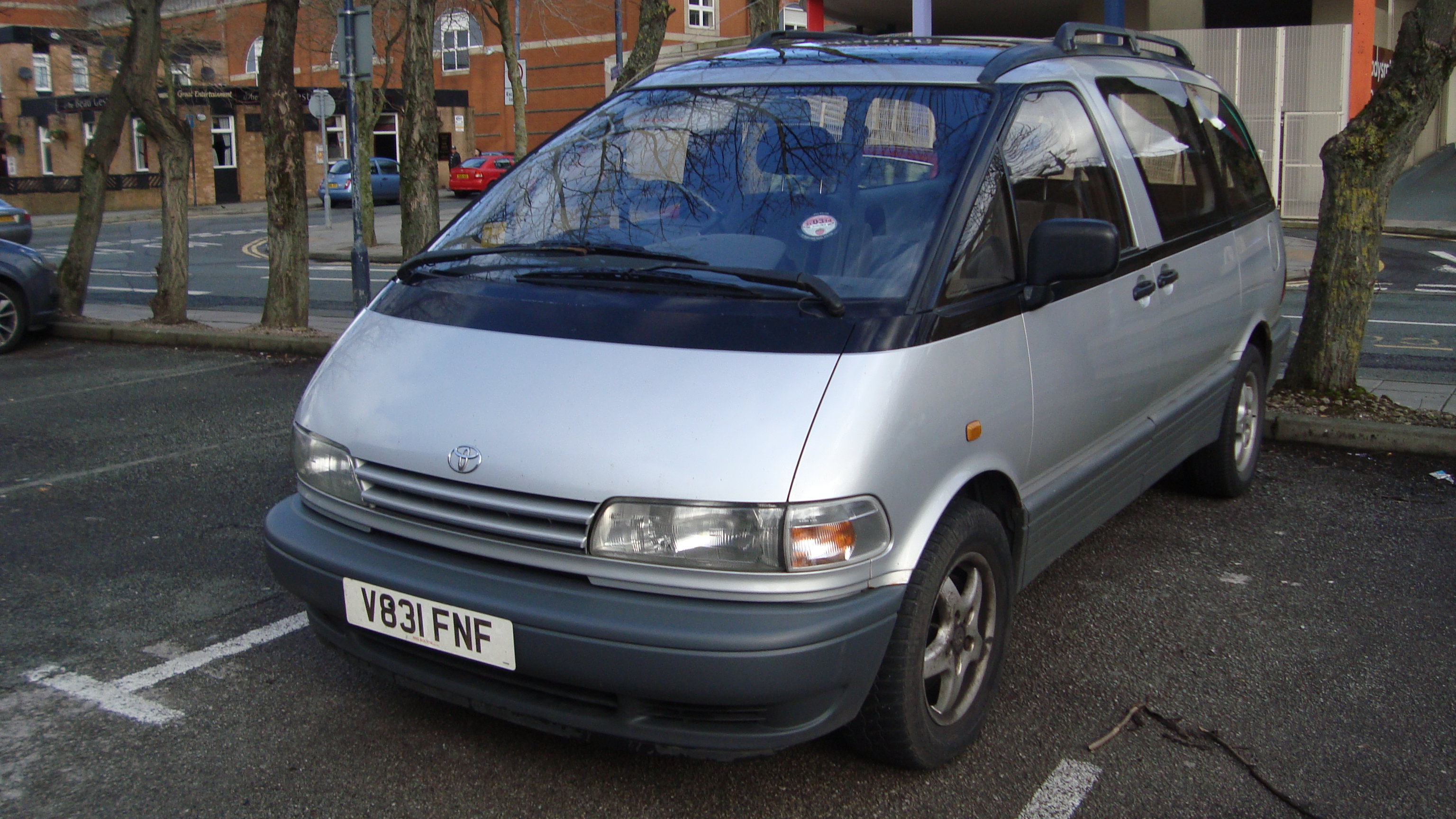
Toyota Previa
"in the same way that we talk about aspiring to own a Previa. Yes."
The Toyota Previa is a minivan. People like it because it’s a little unusual-looking and has a lot of space inside.
The Toyota Previa is a minivan known for its unusual, boxy design and practical interior space. In enthusiast circles, it’s often admired as a quirky, “different” alternative to more common minivans.
practical packaging
"I think the practical packaging brings joy. Yeah. I think you would get delight from a sort of relative simplicity of it"
“Practical packaging” just means the car is laid out in a smart way. The inside space and storage are arranged so it’s useful day to day.
“Practical packaging” means the way a car’s layout uses space efficiently—how well the interior, seating, and storage are arranged for real-world use. It’s a design/engineering way of saying the car is easy to live with.
90s norm core interior
"and it's sort of 90s norm core interior and it would probably be quite amusing in its own way. Exactly. That's why Greg James has got that SPAS,"
They’re describing the interior as very “normal” and typical for the 1990s. It’s not trying to look fancy or special.
“Norm core” is a style idea meaning plain, mainstream, and unflashy. In this context, “90s norm core interior” suggests the car’s cabin looks like a typical, everyday 1990s design rather than something sporty or luxury.
remote control radio
"I mean, the chaotic patterned interior is amazing with the remote control radio. It's just fantastic. It's just so cool."
A “remote control radio” means you can change the radio or audio using a remote instead of only the main radio controls. It’s a convenience feature.
A “remote control radio” means the audio system can be operated from a separate handheld or remote unit rather than only from the head unit. In older cars, this was a convenience feature that could make the cabin feel more “techy” or playful.

Solara
"The reason that Adam's message particularly chimed with me is because it's about a Solara. Like I've said before, my dad had a couple of Solaras in the 80s"
The Toyota Solara is a two-door car (a coupe, and there’s also a convertible version). The hosts are talking about it because it’s a memorable, nostalgic model for them.
The Toyota Solara is a two-door coupe/convertible based on the Camry platform, popular in the 1990s and 2000s. In the episode, it’s discussed as a personal, nostalgic car—something the speaker’s dad owned and that listeners sometimes find for sale.
Proustian rush
"I think I'd sort of have one driving it and go, well, this takes me back. But I don't, you know, what's that sort of Proustian rush has worn off?"
They mean a strong wave of nostalgia. Driving the car makes them remember a past time, and it feels emotional for a moment.
A “Proustian rush” is a sudden, emotional memory trigger—here, tied to driving a car that brings back feelings from the past. In car terms, it’s the nostalgia effect some people get when they experience a familiar vehicle again.
face lifting
"Mark six, face lifting Mark six, whatever it might be."
A “facelift” is when the same car model gets refreshed partway through its production. Think of it like a newer-looking version with some updates, without switching to a whole new generation.
A “facelift” (often called a “mid-cycle refresh”) is when a car gets updated styling and sometimes mechanical tweaks while staying in the same generation. These changes can affect headlights, bumpers, interior features, and infotainment.
5,000 miles proper time caps your car
"You could offer me an absolutely amazing one of those 5,000 miles proper time caps your car. I don't want it."
They’re talking about a car with extremely low mileage, like it was barely driven. Enthusiasts like these because the car can feel “new” in terms of wear and condition.
This describes an extremely low-mileage car—so low that it’s essentially preserved like a “time capsule.” The key enthusiast angle is that the car may retain original wear patterns, interior condition, and components that haven’t been used much.

Suzuki X 90
"A young woman who's got a Suzuki X 90. Yes. And I think was taking it to some rust of it or something like that."
The Suzuki X-90 is a small older Suzuki that has a cult following. Some people love it because it’s unusual and compact, and it can feel like a “classic” even though it’s not a famous supercar.
The Suzuki X-90 is a small, quirky Japanese sports-utility-style car from the early 1990s. It’s known for its distinctive styling and compact size, which is why it can feel like a “modern classic” to newer enthusiasts.
modern classic
"And they're quite young. So this is probably their first sort of, you know, modern classic."
A “modern classic” is a car that’s not old enough to be a traditional antique, but people are starting to treat it like one. It’s often because it’s cool, different, or has a dedicated community.
“Modern classic” is an enthusiast term for a relatively newer car (often from the last few decades) that’s starting to be appreciated like a classic. It usually means the car is becoming collectible due to design, rarity, or a growing fan base.
Jasper Chrysler
"Was he formerly known as Jasper Chrysler before? Yeah. And then get swallowed up into PSA or some sort of complex."
“Jasper Chrysler” appears to refer to a Chrysler-related brand identity or dealership/brand name that the speaker believes preceded later ownership changes. The transcript treats it as a former name before being absorbed into larger corporate groups.
PSA
"And then get swallowed up into PSA or some sort of complex. Yeah. Jasper PS Talbot."
PSA is a big car company group. The hosts are saying that a smaller brand got bought by PSA, and that ownership reshaped what the brand makes.
PSA is the French automaker group that later became part of Stellantis. In the context of the transcript, it’s referenced as a corporate owner that absorbed other brands and changed their direction.
Mercedes-Benz
"Germany's big three, BMW, Mercedes-Benz and Audi, enjoyed sharing the top automotive step..."
Mercedes-Benz is a major German luxury car brand. The speaker is comparing its current situation to how it used to lead in the luxury/automotive space.
Mercedes-Benz is a German luxury automaker. In this segment it’s mentioned as one of the “big three” German brands that previously shared a top position in the market but are now described as losing their way.
Audi
"[588.9s] Audi eroding any sense of quality. [591.6s] BMW's recent i3 styling madness."
They’re talking about Audi as a car brand and saying it doesn’t feel as well-made as it used to. They’re basically complaining about quality and craftsmanship.
The speaker is criticizing Audi’s recent direction, implying the brand’s build quality or design standards have slipped. In car talk, “quality” usually refers to materials, fit-and-finish, and how well the car holds up over time.

BMW i3
"[591.6s] BMW's recent i3 styling madness. [594.5s] Mercedes with their melty egg wagons"
They’re referring to the BMW i3, which is BMW’s electric car. The host is saying the design looks weird or over-the-top to them.
The BMW i3 is an electric hatchback known for its distinctive, somewhat polarizing design. The speaker calls its styling “madness,” suggesting they dislike the brand’s aesthetic choices for this model.
gigantic touchscreen BS
"[596.5s] and all insisting on gigantic touchscreen BS. [599.8s] I think that stands for bullshit, not Bridgestone,"
They’re complaining about cars that rely on huge touchscreens for everything. The issue is that it can be annoying or distracting compared with normal buttons.
This refers to the trend of using very large touchscreen displays as the main user interface for vehicle functions. Enthusiasts often criticize it when controls feel distracting, unintuitive, or overly dependent on software rather than physical buttons.
Bridgestone
"[599.8s] I think that stands for bullshit, not Bridgestone, [602.4s] which is bloody dangerous, the opposite of timeless,"
Bridgestone is a company that makes tires. The host is making a joke about letters meaning different things.
Bridgestone is a major tire manufacturer. The speaker jokes that “BS” could mean “bullshit” rather than Bridgestone, but the mention matters because it’s a common automotive acronym association for tires.
timeless
"[602.4s] which is bloody dangerous, the opposite of timeless, [606.3s] and the opposite of the restrained elegance"
They’re using “timeless” to mean a car design that doesn’t look old quickly. The point is whether the styling will still look good years later.
Here, “timeless” is used as an automotive design criticism: the speaker contrasts designs that age well with ones that quickly look dated. It’s about styling longevity—whether a car’s look stays attractive over years.

W123
"[654.9s] I was thinking about this the other day in the context of Mercedes, [657.6s] because a friend of mine put up a picture of the interior of his W123,"
W123 is a Mercedes-Benz from the 1970s and 1980s. The host is using it as an example of a more classic, long-lasting style compared with today’s designs.
The Mercedes-Benz W123 is a classic 1970s–1980s model family known for durability and a more traditional, understated design. The speaker brings it up as a contrast to modern interiors and styling choices.
Jaguar
"They're not bleak, those old mercs inside, [691.6s] but they're not as warm and welcoming as a contemporary Jaguar. [696.8s] No."
They mention Jaguar as another luxury car brand. The idea here is that Jaguar’s newer cars feel more comfortable and friendly inside than the older Mercedes examples.
Jaguar is mentioned as a contrasting luxury brand. The speaker suggests contemporary Jaguar interiors feel warmer and more welcoming than the older Mercedes interiors being discussed.
Citroën
"They're not as cosy-ting as a Citroën. [707.1s] No, no, that's the thing."
They bring up Citroën as a brand that tends to feel softer and more comfortable. In this conversation, it’s used as a comparison to show that the other cars feel firmer.
Citroën is referenced as a brand known for a softer, more comfortable ride and interior feel. Here, the speaker contrasts Citroën’s “cosy” vibe with the harder seats in the older cars they’re discussing.
patrician
"It's almost, you know, there's something quite sort of patrician about them. [721.5s] Particularly Mercedes, I think, was this kind of, we know best."
“Patrician” basically means “fancy and old-school,” like something meant to feel high-class. Here they’re saying the car’s vibe feels more formal than warm and friendly.
“Patrician” describes a refined, upper-class, formal attitude or style. In car terms, the speaker is saying the interior vibe feels more aristocratic and reserved—less cozy—than a more modern, welcoming luxury approach.
button craziness
"you actually saw Mercedes get a bit lost in button craziness in the 90s and into the 2000s before touch screens."
This phrase means the dashboard has too many buttons. When there are lots of them, it can be harder to find what you need quickly.
“Button craziness” refers to dashboards overloaded with many physical buttons and switches. The idea is that too many controls can make the interior feel cluttered and harder to use quickly, especially while driving.
touch screens
"in the 90s and into the 2000s before touch screens. There is obviously a compromise to be found where sometimes stuff can go on a touchscreen if it's very rarely needed."
Touchscreens are the displays you tap to control things in the car. The point here is that some features can be controlled by touch, but you still want important controls to be easy to use without fumbling.
Touchscreens are digital displays used to control vehicle functions by tapping on-screen menus instead of using physical buttons and knobs. The hosts discuss the trade-off: some functions can move to touch interfaces, but frequently used or safety-critical controls may need dedicated physical access.

S-Class
"for a while, you know, the S-Class and the SL were just sort of covered in buttons and it was a bit much."
The Mercedes-Benz S-Class is a top-tier luxury Mercedes. Here they’re using it as an example of a car that had too many physical buttons for its dashboard.
The Mercedes-Benz S-Class is the brand’s flagship luxury sedan, known for high-end comfort and technology. In this segment, it’s referenced as being “covered in buttons,” highlighting how control layouts can become overwhelming in luxury cars.

SL
"for a while, you know, the S-Class and the SL were just sort of covered in buttons and it was a bit much."
The Mercedes-Benz SL is a luxury Mercedes roadster. In this discussion, it’s mentioned as another example of a car that used lots of buttons on the dash.
The Mercedes-Benz SL is a luxury roadster/coupe line (depending on generation) focused on comfort and refinement. The hosts mention it alongside the S-Class to illustrate how some Mercedes models leaned heavily on button-heavy dashboards before touch interfaces became mainstream.
VW
"VW probably the same. You know, the way they used to put the radio in the Golf Mark 2, like right up high because they went, it should be very easy for the driver to adjust the volume"
They’re talking about Volkswagen (VW) and how it used to design controls for easier use. The idea was to let the driver change things like the radio volume without taking their eyes off the road.
VW (Volkswagen) is referenced for its design approach to driver controls and usability. The hosts point to how older VW layouts placed the radio high so the driver could adjust it without looking down.
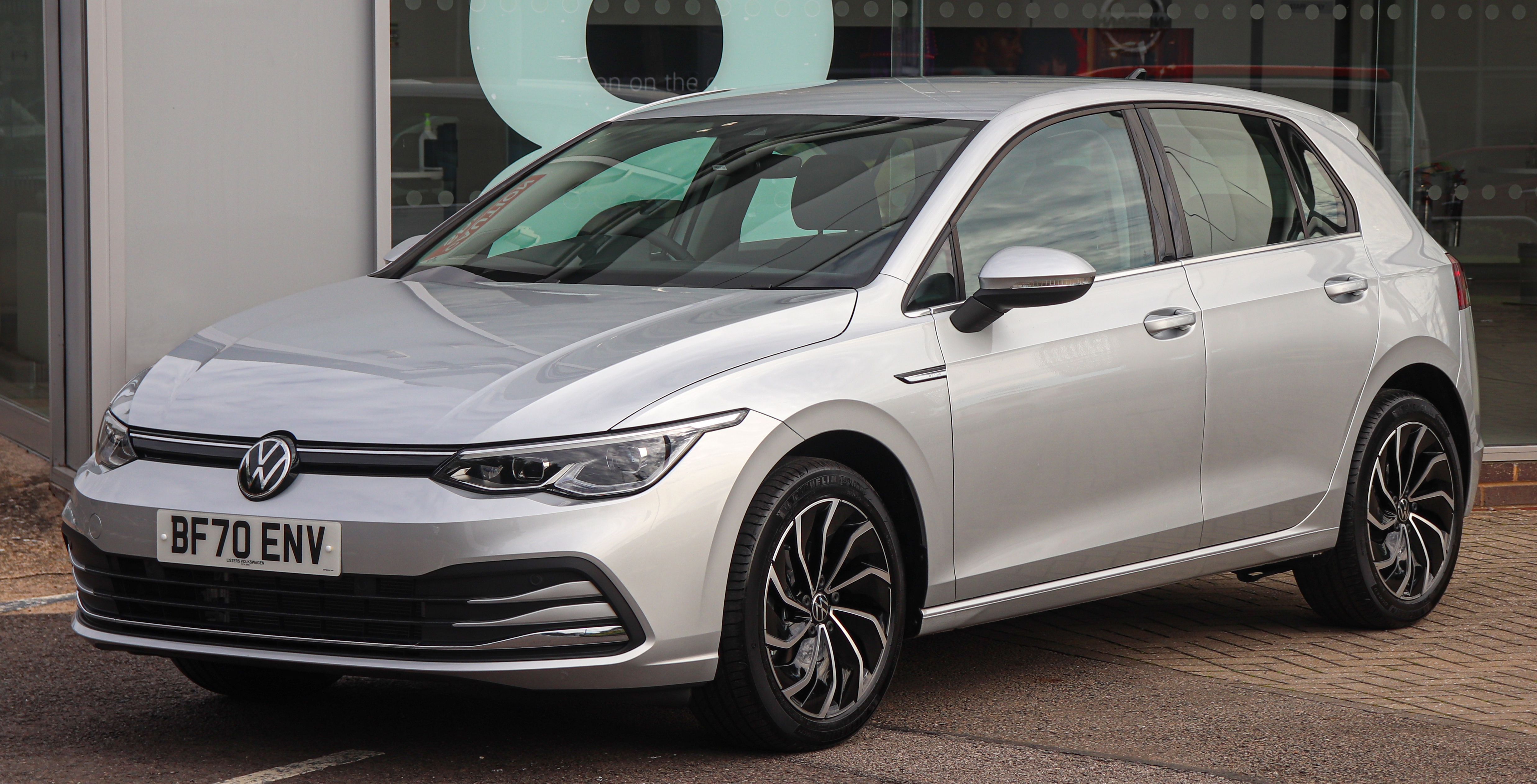
Volkswagen Golf
"the way they used to put the radio in the Golf Mark 2, like right up high because they went, it should be very easy for the driver to adjust the volume"
This is the Volkswagen Golf from the second generation. They’re using it to show a simple design choice: putting the radio where the driver can reach it easily without looking down.
The Volkswagen Golf Mk2 is the second generation of the Golf, and it’s used here as an example of practical interior ergonomics. The hosts describe placing the radio high so the driver can adjust volume without looking down into the footwell.
luxury seems to have focused too heavily on tech
"[844.5s] the other German makers. [845.5s] Well, I think luxury seems to have focused too heavily on tech [853.5s] and tech has changed so fast."
They’re saying some luxury car brands spent too much effort on new tech features. The worry is that tech changes so fast that the car can lose the character people expect from that brand.
This is a critique of how luxury automakers prioritize technology features. The hosts argue that tech evolves so quickly that chasing it can make cars feel less “authentic” or less aligned with the brand’s traditional identity.
Tesla
"So they're, you know, a lot of their electric cars [898.4s] might not be as good as Tesla's or as popular as Tesla's at least."
Tesla is a company that makes mostly electric cars. Here, the hosts are comparing other brands’ electric cars to Tesla’s popularity and overall execution.
Tesla is an electric-vehicle brand known for its battery-electric cars and large, software-driven user interfaces. In this segment, it’s used as a benchmark for how well other electric-car makers are doing.
big touchscreen thing
"They've gone so far down the big touchscreen thing to chase them [905.8s] that it hasn't quite, I think in a lot of cases, hasn't quite worked."
Many newer cars use a huge screen instead of lots of physical buttons. The speaker thinks some brands tried to copy the trend and it didn’t work out well.
This refers to the modern trend of using large, central touchscreens as the primary interface for vehicle functions. The host argues that chasing this design direction can hurt usability or overall customer experience.

Audi Rs
"I look at Audi front grills, especially the Audi RS stuff now [958.8s] and also some of the bigger BMWs [962.1s] and the tackiness and the plasticiness of the front of that car."
Audi uses “RS” to label its faster, sportier versions of certain models. The speaker is saying the front grille styling on these cars doesn’t feel high-quality for the money.
“RS” is Audi’s performance sub-brand, used on higher-output, sportier versions of its models. The host is specifically criticizing the look of Audi RS front grilles, implying the styling feels cheap or overdone.
emotional design
"You know, car design, people often talk about more emotional design, more expressive design. I don't think I fully understand this except that a lot of the time when they say emotional design, they often mean busier and I sort of don't quite understand why that has to be the case"
“Emotional design” is a phrase designers use when they want a car to feel exciting or expressive. In this conversation, they’re saying that people often use it to mean “more flashy,” and they’re not sure why that’s always the case.
“Emotional design” is a marketing and design term meaning the car’s styling is meant to create a strong feeling—often through more dramatic shapes, contrast, and visual complexity. In this segment, the hosts question why “emotional” is often equated with “busier” visuals.

Audi 100
"So a 90s Audi 100 or 80 which looks really clean sort of simple look now is actually a bit sort of plain and doesn't look expensive enough because it's almost like there's not enough going on to justify the money."
The Audi 100 is an older Audi luxury sedan. The point they’re making is that its simple, clean styling can look a little too plain by today’s standards.
The Audi 100 is a mid-size luxury sedan from Audi’s lineup, especially associated with 1980s–1990s generations. Here it’s used as an example of a “clean” design that now can feel too plain to some buyers because it lacks enough visual detail to signal value.
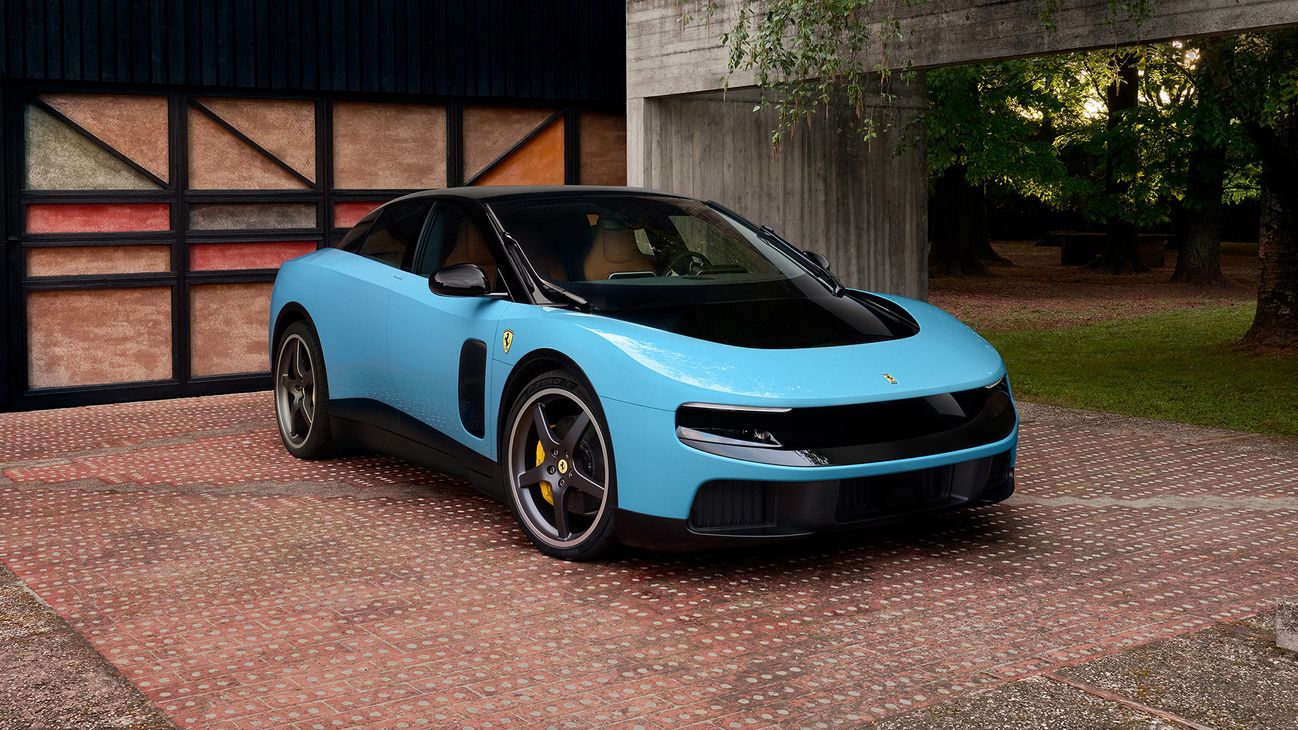
Ferrari Luce
"...me of an old Mazda, hasn't it? Yes, they are the luce, yeah. The interior of that is celebrating the a..."
The Ferrari Luce is a Ferrari model, and the podcast is mainly talking about what the inside looks like. The interior is described as being distinctive and eye-catching. That’s the part being emphasized in the conversation.
The Ferrari Luce appears to be a model name referenced in the podcast, with the discussion focusing on its interior. In this context, it sounds like the conversation is about the car’s cabin design and how it stands out visually. Because the name “Luce” is the only identifier provided, the key takeaway here is that the interior is being highlighted as a notable feature.
analogness
"The interior of that is celebrating the analogness in the same way that you have like a mechanical automatic watch that is very clear and confident but analog and mechanical feeling."
Here “analogness” means the car feels more traditional and mechanical, not like everything is done through screens. It’s about having a more tactile, straightforward experience.
In this context, “analogness” refers to a design philosophy that emphasizes traditional, mechanical-feeling interfaces and controls rather than purely digital experiences. The hosts connect it to the idea of tactile feedback and clarity, similar to analog instruments or mechanical devices.
mechanical automatic watch
"in the same way that you have like a mechanical automatic watch that is very clear and confident but analog and mechanical feeling."
They’re comparing the car’s interior to an automatic mechanical watch. The idea is that it feels solid and trustworthy because it’s driven by mechanical parts, not just electronics.
A mechanical automatic watch is a self-winding timepiece powered by mechanical movement rather than a battery. The hosts use it as a metaphor for an interior that feels “mechanical” and reassuring through tactile, physical design rather than digital-only interfaces.
touchscreen madness
"We're already seeing people getting a bit fecked off with touchscreen madness, peak touchscreen BS."
They’re complaining about cars that put too many controls on a screen. The worry is that it’s harder to use quickly and safely while you’re driving.
“Touchscreen madness” is a critical phrase for the trend of moving most vehicle controls onto a touchscreen interface. The concern is that touch-only controls can be less intuitive and require more attention than physical controls.

Volkswagen Id3
"They've just updated the VW ID3 and given it proper hard buttons for climate control and hard buttons on the wheel."
The Volkswagen ID.3 is an electric hatchback, and the hosts specifically note an update that adds physical (“hard”) buttons for climate control. This is a common response to criticism that touchscreens can be slower or less intuitive while driving.
hard buttons
"They've just updated the VW ID3 and given it proper hard buttons for climate control and hard buttons on the wheel."
Hard buttons are real physical buttons you can press. They’re easier to use while driving because you don’t have to look at a screen to find them.
Hard buttons are physical, tactile controls (as opposed to touchscreen icons) used for functions like climate control. They’re often preferred because you can operate them by feel without taking your eyes off the road.
BYD
"...a lot of people just get the same benefits from buying, you know, a BYD or something. Yeah."
BYD is a car company (mostly known for electric cars). The hosts are saying that lots of brands can offer similar features, but the logo/brand image is what feels different to buyers.
BYD is a Chinese automaker best known for electric vehicles and batteries. In this discussion, it’s used as an example of a brand that can offer similar benefits to other buyers, even if it doesn’t have the same “badge” prestige.
Talbot
"We do want to know if you actually own a Talbot though, most importantly. Yes."
Talbot is an old car brand from the UK. The host is basically asking if someone really owns one, because that would make the discussion more grounded.
Talbot is a historic British car brand. Here, the host asks whether the listener actually owns a Talbot, using it as a prompt to discuss real-world ownership and examples.

Plymouth satellite
"In the past, I've had my eye on a 1969 Plymouth satellite. Yes. Brackets Belvedere."
A 1969 Plymouth Satellite is a classic American car from the late 1960s. The host is saying they’ve been interested in one as a potential buy.
The speaker is talking about a 1969 Plymouth Satellite, a mid-size muscle-era car from Plymouth (a Chrysler brand). It’s mentioned as a specific target purchase, which makes it a useful anchor for the episode’s American-car discussion.
four-door saloon
"Yeah. Four-door saloon. Possibly ex-government spec."
A “saloon” is basically a sedan—an everyday passenger car with a separate trunk. “Four-door” just means there are doors for both the front and back seats.
A “saloon” is a passenger car body style similar to a sedan, typically with a separate trunk and a conventional layout. “Four-door” means it has two rows of seats with doors for rear passengers as well.
ex-government spec
"Four-door saloon. Possibly ex-government spec. Yeah."
“Ex-government spec” means the car used to be set up for government work. That can include extra equipment or different setup compared with a normal car.
“Ex-government spec” means the car was previously configured for government use, often with equipment and durability choices suited to official fleets. In the UK, this commonly points to police or public-service vehicles, which may have different trim, wiring, or radios.

Dodge Road Runner
"Okay. A good shape car. Same as the Road Runner, front end, back end pretty much."
The Road Runner is a famous older Dodge muscle car. Here it’s mentioned as a style reference—like saying the unknown car looks similar in shape.
The Dodge Road Runner is a classic American muscle car known for its aggressive styling and “front end / back end” look that people often compare to other 1960s-era Mopar cars. In this segment, it’s used as a visual reference for the unidentified car’s shape.
KLF
"When you mentioned like Copcar from the late 60s, I thought of that as actually a Ford Copcar, the KLF used to use, and which was on one of their single covers."
KLF is a music group mentioned because they used a car image on their single cover. The point is to help identify what car appears in the artwork.
KLF is a music act referenced here as having used a “Ford Copcar” image on a single cover. The hosts are connecting the unidentified car to album/sleeve artwork rather than discussing the vehicle itself.
Metronomy
"And I immediately thought that there's one that's right up your street. I think we've talked about it before, which is that the band Metronomy have got an album cover with a Honda Insight like yours on it."
Metronomy is a music group. In the conversation, they’re mentioned because one of the band’s album covers includes a picture of a Honda Insight.
Metronomy is the band referenced in the discussion about music album artwork featuring cars. The hosts connect the band’s album cover imagery to a specific car model (a Honda Insight).

Honda Insight
"I think we've talked about it before, which is that the band Metronomy have got an album cover with a Honda Insight like yours on it. Yeah, and it was like on a hillside looking down at a town or a city."
The Honda Insight is a Honda car that’s known for using a hybrid powertrain. Here, the hosts are saying a music album cover uses a picture of a Honda Insight that looks like the one the listener has.
The Honda Insight is a compact hybrid model from Honda. In this episode, they’re talking about an album cover that clearly shows a Honda Insight matching the listener’s car, including the distinctive body shape and proportions.

Land Rover Defender
"Adams with the Land Rover County artist before the Defender. He's sitting on one, I think, and there's a white letter tire on the back"
The Land Rover Defender is a tough, off-road SUV. Here, the hosts are talking about a photo where someone is sitting on the Defender’s roof and they’re describing the wheels and tires.
The Land Rover Defender is a rugged off-road SUV known for its boxy body, simple mechanical layout, and long production history. In this segment, it’s used as the backdrop for a photo/story, with the hosts pointing out details like the tires and wheels.
white letter tire
"He's sitting on one, I think, and there's a white letter tire on the back with the track listing from memory."
A white letter tire is a tire with white text on the sidewall. It’s usually for looks, so it stands out in pictures.
A “white letter tire” has raised or printed white lettering on the sidewall (often the brand name). It’s mostly an aesthetic choice and can be a clue to the tire’s style or era in a photo.
wheel
"And guess what the wheel is? Is it a weller? It's a white weller."
A wheel is the part the tire is mounted on. They’re saying the wheel was so rusty it basically fell apart.
A wheel is the metal (or alloy) rim that the tire mounts to. In this segment, the hosts are joking about the wheel’s condition—specifically that it’s rusting and crumbling right after the photo.

Belvedere
"it's definitely a Plymouth satellite or Belvedere from the late 60s. Mainly showing left headlight and half a grill."
Belvedere is a classic Plymouth car model from the late 1960s. The hosts think the mystery car could be this one too, based on what parts of the front are visible.
The Plymouth Belvedere is another classic Plymouth mid-size model from the 1960s. Here, it’s offered as an alternative to the Plymouth Satellite, with the hosts pointing to visible front-end cues like a left headlight and partial grille.
Request an Explanation
Heard something you'd like explained? We'll add it to this episode.
Sign in to request explanations for terms you heard.
Want to learn more?
Browse our glossary for plain-English explanations of automotive terms, jargon, and concepts.
Help improve this episode
See something that's not quite right? Our annotations are AI-generated and can sometimes miss the mark. Click the flag icon on any annotation to suggest a correction.
1 community members have helped improve this episode.