
About this episode
Hosts field listener questions, trading mispronounced car names and brand mix-ups, then pivot into “tiny car” choices for tight city parking—smart fortwo vs Toyota iQ, plus EV microcar alternatives. The conversation turns personal with prom-car stories and borrowed vehicles, including an Audi R8 Spyder leg-room complaint and a Shedfest 2026 BMW E36 M3. Later, they swap roadside “bodge” repair tales (from door micro-switches to exhaust fixes with gum) and discuss why MX-5s attract more attention, especially with pop-up headlights winning over younger fans.
In this episode of the Smith and Sniff second show, Jonny and Richard answer audience questions about mangled car names, Smart ForTwo v Toyota iQ v something else, prom cars, quick fixes that didn’t quite work, and a listener wonders why his MX-5 gets so much abuse.
For early, ad-free episodes and extra content go to patreon.com/smithandsniff
To buy merch and tickets to live shows go to smithandsniff.com
Hosted on Acast. See acast.com/privacy for more information.

Fiat 500
"... car went past. He looked and said, that's a Fiat 500 R-Browth. I nearly wet myself. He's mangling off ..."
The Fiat 500 is a small car designed mainly for city driving. It’s easy to spot because of its compact, rounded look. In the podcast, someone sees a particular Fiat 500 and reacts strongly because it’s unexpected or special-looking.
The Fiat 500 is a small city car that’s known for its compact size and distinctive styling. The podcast mentions a “Fiat 500 R-Browth,” which sounds like a specific variant or a personalized/modified example, and the reaction suggests it’s an especially notable or surprising sight. It’s brought up because it’s memorable when it passes by and stands out in a crowd.

Volvo XC40
"If all goes well, I will be in the market for a small second car. And by small, I mean really small, because we have an XC40 Volvo as a family car."
The Volvo XC40 is a small SUV. The host mentions it so you understand what kind of car they already have before talking about a tiny second car.
The Volvo XC40 is a compact SUV that the speaker uses as their family car. It’s mentioned to set the baseline for what they already own before choosing a much smaller second car.

smart 42
"And I want a second car that can park in very tight spots on the streets. The obvious choice is a smart 42 but then piston heads featured a Toyota IQ as a shed of the week."
The smart 42 is a very tiny city car meant for easy parking in small spaces. The hosts are comparing it to other small cars, and one key point is that you can’t get it with a manual transmission.
The smart 42 (smart fortwo) is a microcar designed for squeezing into tight urban parking spaces. It’s brought up as the “obvious choice” for the listener’s needs, but the discussion highlights that it’s not available with a manual gearbox in the configuration they want.

Toyota IQ
"The obvious choice is a smart 42 but then piston heads featured a Toyota IQ as a shed of the week. And my head was turned. All I'll do with the car is use it to take the dog for a walk, me to an evening class, and perhaps my 16 year old daughter to college and horse riding."
The Toyota IQ is a tiny car that tries to fit people and luggage efficiently. The hosts discuss it as an alternative to the smart, especially for how practical it is for everyday trips.
The Toyota IQ is a compact city car known for packaging—its cabin is arranged to maximize usable space in a very small footprint. In this segment it’s compared directly with the smart fortwo for practicality, including how many people it can realistically seat.

Mitsubishi i
"But it's a random one. But the Mitsubishi i. Oh, very narrow. It's not as small, but it is very narrow. It is very narrow."
The Mitsubishi i is a super-narrow small car. The host brings it up because its size makes it easier to deal with tight streets and parking.
The Mitsubishi i is a very narrow microcar aimed at city driving, which is why it comes up as a possible alternative to the Toyota IQ and smart fortwo. The hosts emphasize its tight width as a key trait for navigating narrow streets.

Peugeot Ion
"... I mean, they're within budget. That's right. The Peugeot Ion. Isn't it the Ion? Yeah. Yeah, or Lyon as I calle..."
The Peugeot iOn is an electric car meant for city driving. Instead of using gasoline, it runs on electricity from a battery. The podcast mentions it because it fits a budget and because people aren’t always sure how to say its name.
The Peugeot iOn is an electric city car designed for short trips and everyday commuting. It’s discussed in the podcast in the context of staying within budget, which fits how these cars are often considered for lower running costs compared with gasoline vehicles. The mention also includes confusion about the name pronunciation, reflecting how it’s not as widely known as some mainstream models.
manual
"I think I like the second gen overall the best and I don't care about a manual because of what kind of city, urban work it will do."
A "manual" means you change gears yourself using a clutch and shifter. The host is saying it doesn’t matter much for city driving, where you’re stopping and starting a lot.
In this context, "manual" means a manual transmission—where the driver selects gears with a clutch and gear lever. The host is saying they don’t care about having one because city driving is the kind of stop-and-go where an automatic can be easier.

Lexus LS 400
"For my junior prom I used my mother's LS 400 finished in a pearl white with 10 seats while senior prom was my gray Saab 93 Viggen."
The Lexus LS 400 is a big, comfortable luxury sedan. Here it’s brought up as a fancy, roomy car for a prom night.
The Lexus LS 400 is Lexus’s flagship luxury sedan, known for being a smooth, comfortable long-distance cruiser. In this segment it’s mentioned as a prom car—specifically a pearl white LS 400 with 10 seats—highlighting how it can be used as a roomy, upscale people-mover.

Saab 93
"...white with 10 seats while senior prom was my gray Saab 93 Viggen. What a time to be alive. Oh, great pair o..."
The Saab 9-3 is a regular-sized car made by Saab. The “Viggen” version is a more performance-focused version of the 9-3. In the podcast, it’s recalled as the car used for a prom, making it part of a personal memory.
The Saab 9-3 is a mid-size car from Saab, known for its distinctive design and practical, family-friendly layout. The podcast specifically references a “Saab 93 Viggen,” which is a performance-oriented trim/version that’s often sought after by enthusiasts. It’s mentioned in a nostalgic way tied to senior prom, emphasizing how memorable the car was in that moment.

Audi R8 Spyder
"One of them was a borrowed Audi R8 Spyder and we had to sit in an enormous amount of holding traffic because they were doing like photos in front of the hotel..."
The Audi R8 Spyder is a fancy, high-performance supercar with a convertible roof. The host says it’s not very comfortable for legs, which is why they ended up with leg ache during the event.
The Audi R8 Spyder is a mid-engine supercar with the roof down, built to deliver exotic-car drama and sound. Here it’s used as a borrowed prom car, and the host complains about the lack of leg room—an ownership/comfort detail that matters in real-world use.

Beetle
"Then I supplied my Dodge for my nephews. I supplied my Beetle for my niece because she really wanted to ride in the Blue Bug and then a friend's son wanted the Dodge so we did that in the Dodge..."
They’re talking about a Volkswagen Beetle—an old, famous car with a very recognizable shape. In this story it’s the “Blue Bug” they used to take someone around.
“Beetle” refers to the Volkswagen Beetle, a long-running, iconic air-cooled (in many classic eras) design known for its simple, rear-engine layout. Here it’s used as a family ride (“Blue Bug”), which highlights how classic Volkswagens are often chosen for personality and nostalgia rather than outright practicality.

Vauxhall Cavalier Cabrio
"It was either a silver or gunmetal metallic with the roof down and you just went that's so cool. It wasn't a sporting model at all. It was just a Vauxhall Cavalier Cabrio and I was like yeah, so retro. Loved it."
This is a Vauxhall Cavalier convertible. The host is saying it wasn’t the sporty version, but it still looked really cool and retro with the roof down.
The Vauxhall Cavalier Cabrio is a convertible version of the Vauxhall Cavalier, a British family car from the 1980s/1990s era. The speaker specifically notes it wasn’t a “sporting model,” which is a useful reminder that some of the most memorable cars at events are the unexpected, non-performance variants.

BMW M3
"This is a letter from Tony. Hi, you pair of 4D gel number plates. On the way to Shedfest 2026 in my BMW E36 3 liter M3. Nice car, Tony."
This is a BMW M3 from the E36 generation. The “3 liter” part means it has a 3.0-liter engine, and that’s part of what makes the E36 M3 famous with car fans.
The BMW E36 3 Series is a well-known 1990s BMW platform, and the M3 is the high-performance variant built for enthusiast driving. In this case, “3 liter M3” points to the E36-generation M3’s 3.0L inline-six engine, which is a big part of why the E36 M3 became a benchmark for driver-focused BMWs.

BMW E36
"...ber plates. On the way to Shedfest 2026 in my BMW E36 3 liter M3. Nice car, Tony. The driver's window w..."
The BMW 3 Series is a sporty, mid-size car line made by BMW. The E36 M3 is a high-performance version of that model, built for driving feel and power. In the podcast, it’s mentioned as the car used for a trip to an event.
The BMW 3 Series is a compact executive sports sedan/compact car line, and the podcast specifically references an E36-generation 3 Series M3. The E36 M3 is significant because it’s a performance-focused version with a reputation for being engaging to drive. It’s discussed in the context of a trip to Shedfest 2026, highlighting the car’s enthusiast appeal and road-trip presence.
micro switch
"The driver's window wouldn't close fully when I shut the door due to a worn micro switch. Very annoying wind noise on the on the ride up."
A micro switch is a little sensor/electrical switch. If it wears out, it can make the car’s window or door controls act weird—like not closing all the way.
A micro switch is a small electrical switch that’s triggered by a tiny movement. In a car door, it can be part of the window/door interlock logic, so when it’s worn the window may not fully close or may behave inconsistently.

Hillman Avenger
"your ears two door yellow Hillman Avenger for £20 in 1987. I was 17 ish 20 pounds £20. That car would have been like 10 years old and a two door."
The Hillman Avenger is an older British car that people often worked on themselves. Here it’s mentioned because it had rust on a suspension mounting point, which is the kind of problem you’d expect on an older car.
The Hillman Avenger is a classic British compact from the 1970s/early 1980s, known for being a simple, DIY-friendly car to keep running. In this story, the Avenger’s age shows up as corrosion on a front leaf spring hanger—something that’s common on older, neglected British cars.
front leaf spring hangers
"One of the front leaf spring hangers was corroded needing a repair. Luckily, my mate had an arc welder, so we began to weld the corrosion."
Leaf springs are part of the suspension, and the hangers are the metal brackets that hold them in place. If the hangers rust through, the suspension can get loose or start making noise, so you may need to repair or weld them.
Front leaf spring hangers are the brackets that attach the leaf spring suspension to the chassis. If they corrode, the suspension can loosen or fail to locate correctly, which can cause handling issues and annoying noises—hence the need for welding in the story.
quick fix
"Any quick fixes that you guys have ever done or seen that haven't quite worked? Cheers Tony Evans head of quality control at Land Rover."
A quick fix is a temporary workaround to keep a car going. It’s usually meant to solve the problem just long enough to get home or to a proper repair shop.
A quick fix is an improvised, short-term repair intended to get a car working well enough to continue driving. The segment contrasts “quick fixes that you guys have ever done” with fixes that fail, like tying a broken suspension hanger with rope that only lasts a few miles.
exhaust system
"and that ended with the entire exhaust system coming off the car and he needed to drive home that night quite a long way."
The exhaust system carries the engine’s fumes out of the car. If it comes loose, it can fall off or hang down, and you may need to secure it just to drive safely.
The exhaust system is the set of components that routes engine gases from the engine to the tailpipe, typically including the manifold/downpipe, mid-pipes, and muffler. If it comes loose or detaches, it can hang down, leak, and become unsafe—exactly what happens in the story when the entire exhaust system comes off.

Chevette
"my mum's light blue Chevette with my mum and an elderly relative of some sort, all furiously chewing"
The Chevrolet Chevette is an older, small Chevrolet. Here it’s just the car the host’s mum drove, and it’s part of a story about improvising a roadside fix.
The Chevrolet Chevette is a compact, budget-focused car from Chevrolet, best known in the UK for being common and easy to work on. In this story, it’s the family car the host remembers, and it sets the scene for the “fix it on the roadside” mindset.
jubilee clip
"can have something beer soft, soft drink, slit it open, shroud the hole in the exhaust, jubilee clip jubilee clip. That's why my dad used to always carry a jubilee clip."
A jubilee clip is a clamp with a screw that tightens around a pipe. People use them to hold parts together—like exhaust or hoses—when something has come loose.
A jubilee clip is a screw-type hose clamp used to tighten a band around tubing. It’s commonly used on exhaust and other automotive hoses/pipes to secure joints, and the host says their dad always carried one as a quick roadside solution.
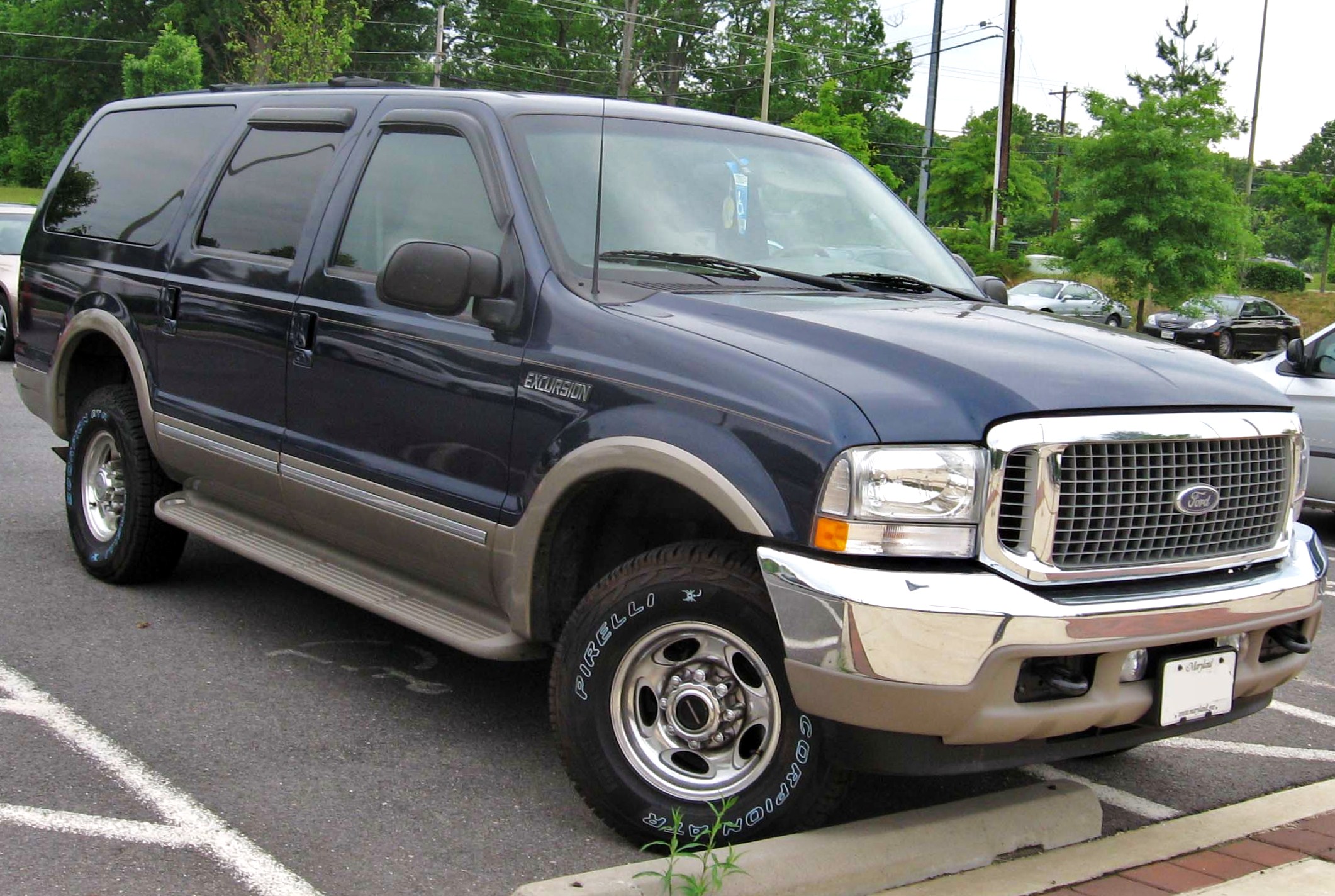
Ford Excursion
"...ub that is quite active with driving to events or excursions, road trips, it happens on on route. And I used t..."
The Ford Excursion is a very large SUV meant for carrying lots of people and gear. It’s commonly used for long trips and events because it has a lot of space. In the podcast, it’s mentioned as the kind of car that gets used for those outings.
The Ford Excursion is a large, body-on-frame SUV built for towing and big passenger loads, often used for road trips and event travel. In the podcast, it’s referenced as being “quite active” for driving to events and excursions, which matches its purpose as a spacious, capable people-mover. It’s the kind of vehicle that stands out because of its size and utility.
alternator
"I've broken down at shows before I've, I've taken the alternator off my dodge when I was drunk because I was at a festival."
The alternator is what keeps the car’s battery charged and powers the electronics while you drive. If it stops working, the car can start dying because the battery isn’t being recharged.
The alternator is the generator that powers the car’s electrical system and recharges the battery while the engine is running. If it fails, the car can lose power quickly, which is why alternator removal/replacement is a common roadside repair topic.

MX five
"I've got a mark three MX five in winning blue that I've used as a daily for the past two years. I absolutely love it. It's great fun and makes every drive enjoyable."
The Mazda MX-5 is a small, fun roadster that’s built to be easy and enjoyable to drive. Here, the point is that the owner feels people treat their MX-5 more aggressively than other cars.
The Mazda MX-5 (often written as “MX-5”) is a lightweight, rear-wheel-drive roadster known for its fun, tossable handling and relatively simple, driver-focused layout. In this segment, the listener is describing how their MX-5 gets more negative attention than other cars, which ties into how the car’s small-convertible vibe can affect how other drivers behave around it.
barn find
"My worry is that I will drive the latest MX five and then I will just want the latest MX five and then it'll become a pest in my brain. I did a barn find the other week and the person that was helping tried to get his friend's car to fire up who'd written to me."
A “barn find” is an old car that’s been sitting unused for a long time and gets found later. People like them because they can be interesting and original, but they usually need work to get running again.
A “barn find” is a car that’s been stored away for a long time—often in a barn or garage—and is only recently discovered or brought back to life. It’s a common enthusiast term because these cars can be surprisingly complete, but they also often need significant recommissioning after long storage.
algal
"He said, Oh, one of my neighbors has got an MX five that's been sat there. It's really algal. And it's a yellow one."
They’re basically saying the car looks like it’s been sitting outside or unused for a long time and has gotten really dirty or covered in growth. That’s common with cars found after storage.
“Algal” here is almost certainly a transcription of “alleged/algae-covered,” used to describe a car that looks like it’s been sitting and collecting growth or grime. In barn-find contexts, this kind of description usually points to long-term storage effects like surface corrosion and neglected exterior condition.
pop up lights
"And I appreciate Joe's as a mark three, but but the mark one, particularly because of the pop up lights."
“Pop-up lights” are headlights that sit tucked into the car’s front and then lift up when you switch them on. On some classic sports cars, like the early Mazda MX-5, that’s a signature look. It’s mostly about style and the car’s character.
“Pop-up lights” are headlights that are hidden behind the front bodywork and then mechanically rise when you turn them on. On the first-generation Mazda MX-5 (NA), this design is a defining visual feature and part of the car’s classic roadster identity. It also changes the car’s front-end look compared with fixed-headlight designs.

MGFs
"I've driven the MX fives a lot over the years. And I'd never experienced that. And I don't think I've had that in like MGFs or any other sort of, you know, said threes, fours, whatever."
MGF is a small British roadster (a two-seat open-top car). The host mentions it as another example of a car people might enjoy, similar to the Mazda MX-5. They’re using it to compare how different roadsters feel and how people react to them.
MGF refers to the MG MGF, a British two-seat roadster that’s often compared with the Mazda MX-5 for its small-car, open-top vibe. The speaker groups it with other “said threes, fours” roadsters, implying similar enthusiast appeal but different driving character. In this context, it’s used as a comparison point for how the MX-5’s appeal shows up with younger drivers.
secondhand ones
"But now they've the floodgates have opened. There's so many secondhand ones. They're a real drive car that you people under 21 can actually stand a chance of living with."
“Secondhand” just means used. The idea is that if there are lots of used examples, more people can afford them and get into the hobby.
“Secondhand” here means used cars—vehicles that have already been owned and are being sold again. In enthusiast circles, the availability of secondhand examples often matters because it lowers the barrier to entry for buying and modifying a model.

Porsche Taycan Sport Turismo
"I recently borrowed a Porsche Taycan Sport Turismo, which is a terrific car. And it got a lot of attention."
This is a Porsche electric car (the Taycan) but in a wagon-like shape. It’s meant to be both quick and a bit more practical, and it tends to draw a lot of looks.
The Porsche Taycan Sport Turismo is Porsche’s electric wagon-style variant of the Taycan, built around a high-voltage EV drivetrain rather than a traditional engine. It’s notable because the “Sport Turismo” body style blends Taycan performance with extra practicality and a distinctive, attention-grabbing look.
Request an Explanation
Heard something you'd like explained? We'll add it to this episode.
Sign in to request explanations for terms you heard.
Want to learn more?
Browse our glossary for plain-English explanations of automotive terms, jargon, and concepts.
Help improve this episode
See something that's not quite right? Our annotations are AI-generated and can sometimes miss the mark. Click the flag icon on any annotation to suggest a correction.