They’re talking about protecting a car’s paint from things in the air. The claim is that pollen and dust can act like tiny sand particles and wear the paint down if you don’t protect it.
They’re talking about S-Tec as a product that protects the car’s paint. The idea is that it makes the paint less likely to get damaged by dirty stuff blowing around, like pollen and grit.
They’re talking about car prices and how it’s harder to find a car that costs under $20,000. It’s part of the episode’s bigger point about value and hype.
The Nissan Versa is a low-cost, basic car model. The hosts mention it because it was one of the cheaper options before Nissan stopped selling that model.
The Kia Forte is a regular-sized, affordable sedan. The hosts mention it because it’s part of the lineup of cheaper cars that are no longer as accessible.
EV means electric vehicle. Instead of using gasoline, it runs on electricity stored in a battery, which can help when gas prices are high.
Concept
incentives to buying
“Incentives” means deals that lower the price of buying a car. The host is saying those discounts can make it easier to justify switching to a cheaper car.
Fuel efficiency describes how much fuel a vehicle uses to travel a given distance (often discussed as miles per gallon). The host contrasts fuel-efficient “commuter” choices with fuel-hungry trucks to explain why gas prices change what people consider a good deal.
Term
commuter
A commuter car is the one you use for everyday trips—especially going to work and back. The big idea is that you want it to be dependable and not too expensive to keep running.
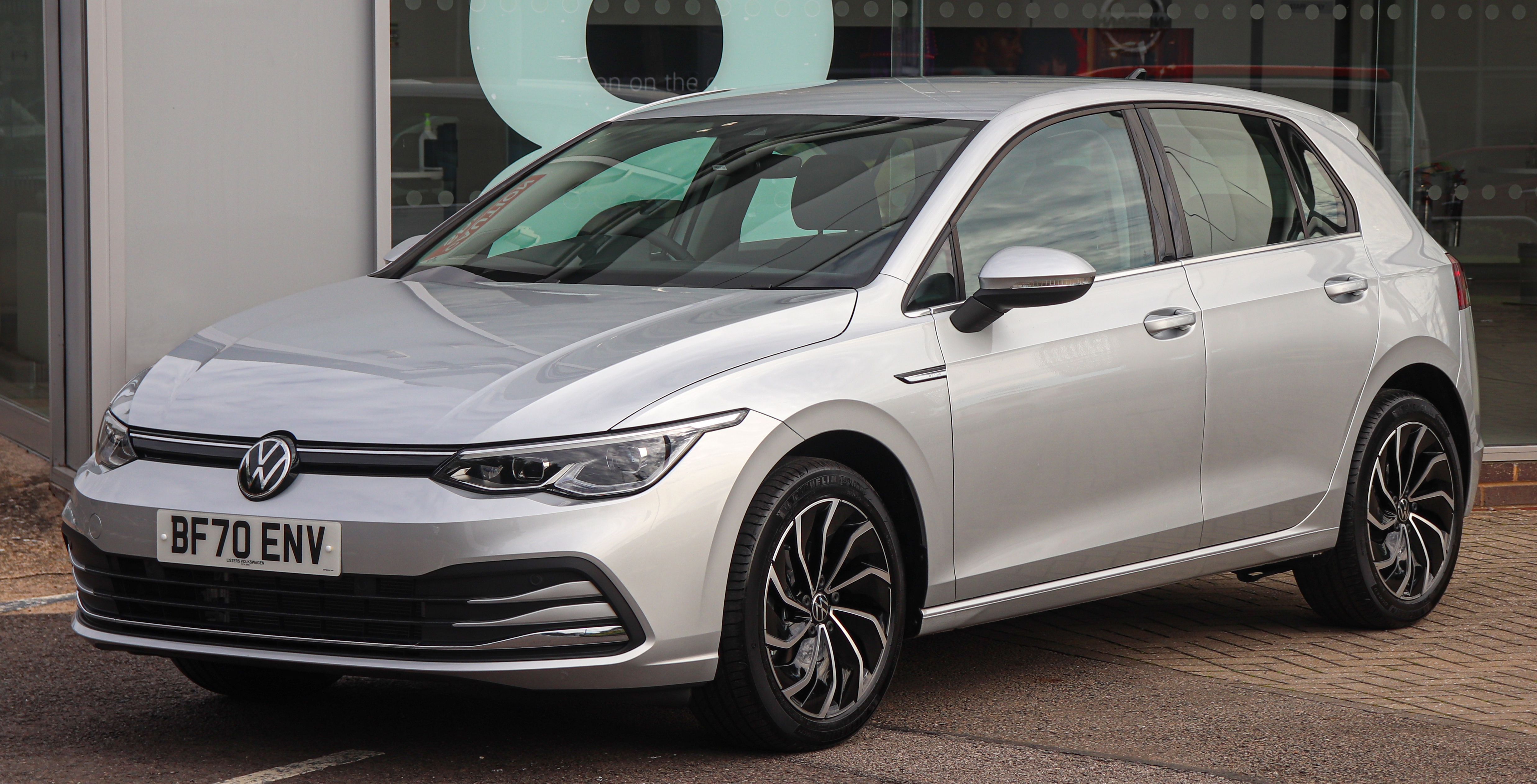
The Volkswagen Golf is a small car that’s often used for commuting and everyday errands. The podcast talks about it as a normal option for getting to work, and then mentions a GTI as a sportier choice. It’s basically the “everyday” starting point in their discussion.
In car talk, maintenance means scheduled upkeep and repairs needed to keep a vehicle running properly over time. For used commuting cars, the key point is that “cheap” can become costly if maintenance needs are high or if service history is unclear.
A Toyota Corolla is a small car made for daily driving. People like it because it’s usually dependable and not too expensive to maintain. The podcast brings it up as a good option if you can find one that was cared for.
The “sticker” is the official label on a car that shows things like estimated fuel costs. They’re saying you can usually find the estimated yearly fuel expense right on that label.
The Ford F-150 is a big pickup truck. Here it’s mentioned as the “regular” truck example, compared against a more expensive high-mileage situation.
Car
Ford Raptor R
The Ford Raptor R is a more hardcore, performance version of the F-150. The discussion is basically about whether it’s “worth it” financially if you don’t drive it much.
A recall means certain vehicles have to be taken back to be checked and fixed. It’s usually done because of a safety problem that could affect many cars.
The Morgan Plus Six is a sports car made for driving for fun. The podcast brings it up because it can use a lot of fuel, which affects how expensive it is to keep. They’re discussing it in terms of cost versus enjoyment.
The Subaru Forester is a family-friendly crossover that’s built to handle everyday driving and bad weather. “Sport” is a higher trim level, usually meaning it comes with extra features compared to the basic model.
The Subaru Forester is an SUV that’s meant for everyday driving and family use. The podcast mentions a hybrid version and says they drive a Forester themselves. That suggests it’s a practical vehicle they rely on regularly.
Leasing is like renting a car for a few years with a contract. You usually pay less per month than buying, but you have limits (like how many miles you can drive) and you return the car at the end.
A hybrid system is the parts that let the car use gas and electricity together. The car decides when to use each one to help you get better fuel economy.
“Gas mileage” means how far the car can go on a gallon of gas. City driving can be different from highway driving because you stop and start more often.
Octane is basically the “quality grade” of gas. Higher octane helps prevent engine knocking, and some high-performance engines are happier with higher grades.
The Bronco Raptor is Ford’s off-road version of the Bronco. They’re using it as another example of what gas you can use (octane) and when you might want the higher grade.
Direct injection is a way of delivering fuel straight into the engine’s cylinders. It can affect how much carbon buildup happens, which is why it comes up when people talk about cleaning the engine.
A “two-step” is a drag-racing trick that helps the car rev to a set RPM before you launch. You hold the car still, press the gas, and it keeps the engine at a controlled speed so the start is more consistent.
Launch control is an electronic system that manages engine RPM and sometimes shift behavior to optimize the start from a standstill. In the context of two-step, it uses inputs like engine/air conditions and the tune to decide what RPM the car should hold for the launch.
The “red line” is the engine’s maximum recommended RPM range. Revving to or beyond it increases the chance of traction loss (spinning tires) and can also stress components like the clutch and drivetrain during hard launches.
The clutch is what lets a manual car transfer power from the engine to the gearbox. If you launch it too aggressively—especially at very high revs—you can wear it out or damage it quickly.
They’re using the Honda Civic as an example of a normal car people might try to launch hard. The point is that revving it to the red line and launching can damage parts or just waste traction.
Retarding timing means the engine’s spark happens a bit later than usual. The hosts say that’s part of how a more “normal” two step reduces the harshness and avoids dumping extra fuel.
This means the car’s computer stops (or reduces) the spark and/or fuel so the engine doesn’t burn as much. That’s used to control what happens during a two step instead of making big flames.
Full throttle shifting means you shift gears without easing off the gas. Some cars can do it because their drivetrain/engine control helps manage the torque during the shift.
The Ford Mustang is a performance car that’s known for being fun and stylish. The podcast mentions it because it has a feature that makes it feel especially exciting when you drive it. They’re pointing out that Mustangs can do that too.
Naturally aspirated means the engine doesn’t use a turbo or supercharger to force extra air in. It relies on normal engine breathing, which many people think feels more direct.
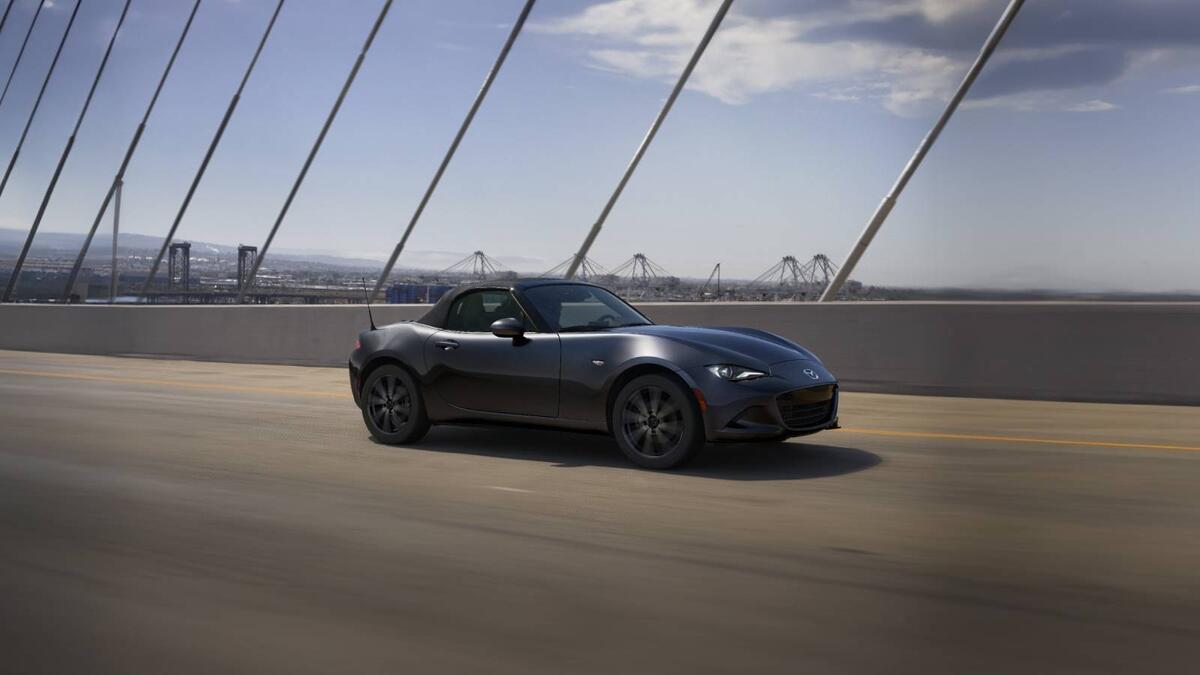
The Miata (MX-5) is a small two-seat roadster made to be fun to drive. It’s lighter than many cars, which helps it feel quick and responsive. The podcast is highlighting it as a great “driver’s car” for someone who wants that kind of enjoyment.
The X-Bow is a small, performance-focused vehicle designed to feel exciting when you drive it. The podcast groups it with other cars that are made for fun rather than everyday comfort. They’re talking about how it can be a “riot” to drive.
Shelby Cobras are lightweight, V8-powered sports cars. The point here is that you can make them faster with a supercharger while still keeping the car light.
A supercharger is a forced-induction device that uses an engine-driven compressor to push more air into the engine. More air enables more fuel to be burned, which can raise power output—especially useful when you want strong performance without relying on very large displacement or modern “huge horsepower” figures.
The Honda S2000 is a sports car designed to be fun, especially when you drive it enthusiastically. It’s known for revving high and feeling responsive. The podcast is pointing out that it can feel quick even with a moderate horsepower number because the car is light.
The Lotus Esprit is a mid-engine British sports car best known for its distinctive styling and, in some versions, a V8 that can be a bit “sketchy” compared to more straightforward Lotus models. In this segment, the hosts connect the Esprit to a reputation for reliability quirks while still praising it as a great-sounding, iconic car.
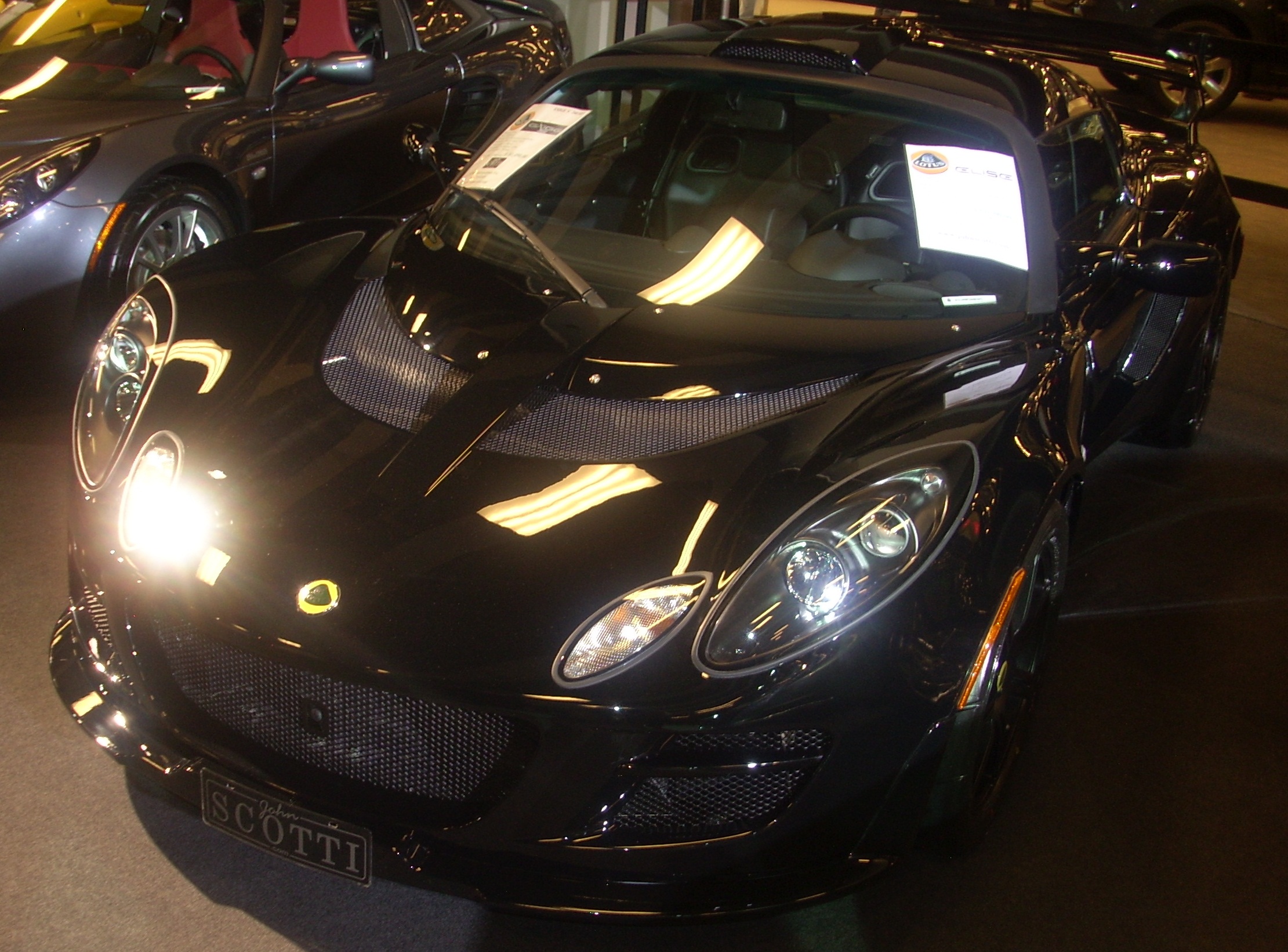
The Lotus Elise is a lightweight, agile sports car that’s often praised for handling. In this segment, the hosts clarify that the suspension issue they were thinking of belongs to the Elise—not the Esprit—highlighting how different Lotus models can have different common problem areas.
A V8 is a gas engine with eight cylinders. More cylinders usually means smoother, stronger acceleration—at least in the way these engines are designed.
All-wheel drive means power goes to all four wheels. That can help the car grip the road better, especially when accelerating hard or on slippery surfaces.
Front-wheel drive means the front wheels do the work of moving the car. The host is basically saying the Corsica is a normal commuter setup, not something built for dangerous high-speed driving.
The Ford Edge is a family-sized SUV that’s meant for normal daily driving. In the podcast, it’s mentioned as a more typical, practical vehicle rather than something built for wild performance. They’re using it as a comparison point.
A top speed run is when someone tries to drive a car as fast as it can over a long, controlled stretch of road. The car’s shape and gearing matter a lot.
Going downhill makes it easier for a car to reach higher speeds because gravity helps it keep accelerating. That can make a “top speed” result less about the car alone and more about the road too.
If the rear end melts, it means the car got way too hot for its parts to handle. At very high speeds, airflow can heat things up dramatically, especially around the rear bodywork.
The Vector W8 is a very unusual, rare performance car. The podcast brings it up because it has interesting engineering details. It’s not a common car you’d see every day.
A three-speed transmission means the car only has three forward gears. That can make it harder to keep the engine working efficiently, especially in a high-performance car.
The Ford Torino is an older American car model. The podcast is talking about its transmission, specifically a three-speed setup. They’re using it to discuss how certain older cars were built.
The Ferrari 288 GTO is a legendary 1980s Ferrari supercar. The host is saying it’s their favorite from that time period because it feels like the best version of that style of car.
The Ferrari F40 is a famous, hardcore supercar from the late 1980s. People bring it up because it’s known for being intense and driver-focused, not comfortable or easy.
The Ferrari 308 is an older, iconic Ferrari that people still talk about today. Here, it’s used as a reference point for what the speaker thinks the 288 GTO represents.
The pedal box is the space and mounting area where the gas and brake pedals sit. If it’s designed tightly, it can make the pedals feel cramped and uncomfortable to reach.
The Corvette C7 is a newer generation of the Corvette. The host mentions it to explain that even in a performance car, their height doesn’t fit the cabin comfortably.
The Huracán Spider is a Lamborghini supercar with the roof open. The host brings it up to show that even expensive exotics can be awkward to sit in if you don’t fit the seating position.
The Audi R8 is a supercar that many people find more usable than other exotics. The host says it still didn’t work for them because they don’t fit comfortably in the cabin.
The speaker uses a “1998 Accord” as a benchmark to illustrate how much faster modern cars feel compared to many vintage cars. It’s a comparison about real-world performance expectations rather than a deep dive into the Accord itself.
The Ford Granada is being referenced as an example of a late-70s American car with a big, old-school interior feel. The speaker specifically mentions the bench seat and “shifted on the tree,” highlighting how older cars’ seating and shifter layouts shaped the driving experience.
“Resto mods” are restomodded cars—classic vehicles that are restored cosmetically but updated with modern mechanicals or performance upgrades. The speaker’s point is that many stock 1960s/70s cars feel weak, so enthusiasts often improve them to make them more enjoyable to drive today.
The speaker references a 1969 Dodge Charger to illustrate how some famous muscle cars can feel “gutless” when they’re completely stock. The discussion is about the gap between the car’s reputation and what it feels like without performance upgrades.
The Chevy SSR is a weird, niche vehicle that mixes a pickup look with a roadster-style roof. The host thinks it was overrated and not everyone liked it.
A solid front axle connects the front wheels with a single rigid bar. Off-road, it helps the tires stay in contact with the ground when the terrain gets bumpy.
Lockers are devices that keep the wheels on an axle from spinning at different speeds. That helps when one tire is slipping, so the vehicle can keep moving.
Bigger tires can help the car climb over rocks and ruts more easily. If they come from the factory, the Jeep is ready for off-road without extra shopping.
The Wrangler is an off-road SUV designed to handle rough roads and trails. The podcast is saying it’s one of the best choices if you want a vehicle that can go off-road. They bring it up while comparing it to other types of vehicles people might consider.
“Death wobble” is when a 4x4 starts violently shaking the steering wheel and front end. It’s usually caused by suspension or steering parts that aren’t tight or aligned correctly.
Rock crawling is off-roading where you go very slowly and try to climb over rocks. The host says if that’s what you want to do, a Jeep can make sense—after upgrades.
Axles are what connect the engine’s power to the wheels. The host says people often replace them with stronger ones for serious off-roading.
Company
Curry
The host mentions “Curry” as a place/company people contact to upgrade parts for off-roading. It’s an example of the aftermarket support behind these builds.
Aftermarket parts are upgrades made by other companies, not the car’s original maker. The host is saying serious off-road builds usually require buying these upgrades.
Taking the doors off makes the ride more open, but it also means less protection in a crash and more dust/debris getting in. The hosts are basically saying it’s fun, but there are real safety tradeoffs.
LIVE
Welcome to the Yvonne's podcast. I'm Dan. I'm Nick. How's life? Wet. Wet. Where'd that come from?
I don't know. 80 degrees yesterday dumping rain today. I'm glad to see the pollen going away for a
little bit, though, and the yard is exploding. I mowed it, thank God. But it's all the crap coming
out of the trees that I have a problem with. It's not the pollen now. It's all like everything's
coming down. Yeah. It's a good time to take care of your paint. Obviously, this is the time of
year when your paint's getting hammered. I know everybody thinks winter, but this constant pollen
dust, stuff debris flying around. That stuff is rough. Like we've talked about it before. Don't
just scrub it off your car, run water over it. It really is like sand on there. Yeah, it is.
S-Tec for the win. If you haven't done that yet, we'll talk more about that.
Should have done it on the whole truck. I say it all the time. I know. I should have just taken
out a mortgage and done it right. Yeah. The Audi stayed safe and warm in here, but it's
covered in S-Tec. And I think Sean was talking about driving it tomorrow to work for the fun of it.
I was like, let me go raining. And she's like, that's what I got the S-Tec for.
It's fair enough. Yep. That's true. My parents are in Glacier, literally across the street from
where that poor man lost his life. Oh yeah. They weren't there when that happened. But
I took the opportunity. My dad's like, can you go drive the new Audi? And I was like,
I can absolutely do that for you. So the car looks great. It's covered in S-Tecs.
Yes. The first time I've seen it in person. Yeah. Because obviously you've talked about it,
but it's beautiful. That color is gorgeous. I love that car. Yeah. It's been,
there's been, I will say this and, you know, Brandon told us this, it's a brand new model.
So, I mean, fresh up. So there's been a couple of little things here and there, but of course,
Audi's been wonderful and it's nothing that's not solved in about an hour. So it's been wonderful.
Little things. Yeah. Cool. So I wanted to kind of talk about a topic and then we're going to get
into the Carter automotive tip. But the last car that you could buy for under $20,000 is no longer
on the market. Sad. Yeah. We've talked about this a lot in the fact of the prices of cars
going through the roof and things like that. But, you know, the last one on the market was the Nissan
Versa. I think it hit, it was starting, it was a starting price of like $12,500. Nissan just
killed the model. What other cars were out there was like the Hyundai Venue, the Hyundai Venue and
then the Kia Forte, but both of those are either have been raised above or discontinued. So I mean,
the idea, and I hate to say that $20,000 is a lot of money. I, yeah, I'm going to say that, but
the idea is of getting a cheap new car that, you know, yeah, like a little commuter you just want
to get through and from those days are it's over. So yeah, it's, it's interesting that you bring
this up. I was, there's been a lot of threads on Avants, a lot of threads about gas prices and
vehicles. And you know, it's hitting some people really hard. I think I've watched Andy from Vogue
was filling up his F 250 diesel. Maybe it's a 350, but it's a big tank, big tank. It was almost $300
from zero for one fill. It's big enough that you have to run the credit card twice. Right. Yeah. Yeah.
So people were talking about just, you know, getting a cheap, a commuter vehicle or an EV,
both great options. You know, if you can find a good cheap EV or a cheap used car,
now's a great time to be considering that considering gas prices don't look gonna come
down anytime soon. But you know, I don't think people are mathing very well, because
if the vehicle you have now, if, if you have only one vehicle and you want to replace your
primary vehicle, we're having a different discussion because there's always good incentive to buying,
you know, buying a cheap car and with good mileage. But you're not looking at the cost of
buying a new vehicle insurance. And if you're taking a loss like it, for example,
I have one of the least fuel efficient vehicles, I have three of the least fuel efficient vehicles
you can possibly buy. My F-150 Raptor is my daily driver, if you can call it that,
but I don't drive it that often. I fill up on average two to three times a month,
three on a heavy month, but usually about twice. I'm really limiting my driving.
And I'm just like, well, you could go get another vehicle. I could trade it in and get
something cheaper, for sure. But how much fuel am I really using? Like it takes a lot to get
another vehicle. If I was going to go purchase, just say like, oh, I'm going to go get a cheap
commuter to go to and from work with. Yeah, picking up a GTI or something like that. Yeah,
I looked at like three to $5,000. Well, you'd have to get into maintenance. If I'm looking for
something like reliable, new ish, I'm looking probably 10 to 12. And I think most cars, most
good, good condition quality used cars for commuting are going to be in that market of the,
you can get a nice one for probably bare minimum eight. I would say something you can just get
it in drive. I feel like you can get a Corolla or Civic for, if you can get one that's been
well maintained with the history. That's a challenge in itself. But I have to offset,
to do that, the insurance, the cost of the car and, you know, basic wear and tear maintenance.
So if I buy a car, let's just make it a really even numbers. I buy a car for 10 grand. That's a
pretty good average market. It's probably a lot of cheap commuter cars out there for 10 grand.
Cheap ish. I'm not saying 10 grand is cheap. I'm saying cheap ish 10 grand.
Insurance is probably going to cost you $500. Yeah, probably minimum.
Multiple car disc. Yeah. So paying an extra $500 in insurance.
So either way, I have to, am I going to, how long is the question it adds up to is how long will
it take me to offset, let's say on the cheap $11,000 in fuel? How much fuel do I go through for
$11,000? Well, and that's going to be lengthened because just because you're using that to commute
doesn't mean you're still not going to be using the Raptor from time to time. Exactly. Okay.
So, but I mean, to offset the cost of vehicle, I basically have to burn $11,000. How long will
it take me to spend $11,000 extra dollars in fuel in the Raptor? We can have. Yeah, exactly. So
yeah, no. So for a completely terribly inefficient vehicle, it's probably going to take me
two years. Yeah, at least. Yeah, probably two years. Because I mean, and you may know this,
I don't, when you bought the Raptor, what did it say the average fuel cost was a year for that
vehicle? I can't remember. Because usually it says it on the sticker. Yeah. And I mean, and I thought
with the bigger trucks, it was somewhere between five to eight. Probably. Yeah. Let's see your
average fuel costs. So averages between 13 and 16. And I'm actually getting. Oh, miles per gallon.
Yeah, I'm actually 16,000. No, I'm actually getting an average of about $16 a gallon,
or 16 miles per gallon. So 16 miles a gallon. Let's say you're doing a thousand miles a month
in something. So 12,000 miles. So they say, okay, here we go. $7,000 a year for high mileage,
for high mileage drivers. So it's going to take you at least a year and a half.
Yeah. That's not driving the F-150. Right. That's a high mileage. Yeah. So and they say an average
of $5,400. That's for the Raptor R. Yeah. So still. So yeah, so I would have to own the vehicle
outright for two years and not put any miles on the Raptor to offset the cost of the vehicle.
That's what it comes down to for me. Now, is it worth it to have another car? Maybe it could be fun.
Yeah. I mean, I would be fun to have another vehicle, but I, you know, that's going really cheap.
I agree. So I would have to spend, you know, I would have to keep, I would have to have a really,
really cheap commuter vehicle. And then there's the other side of the argument is we love to drive.
I like driving my vehicle. I like driving my truck to and from work. I like being,
even, you know, it's, it's easy to park, you know, on campus because the parking,
there's plenty of parking. It's huge. Even a big truck is easy to park there. I don't really have
a place where I have to pack it into a tiny spot. So I mean, as much fun as it would be, I've
actually considered getting an EV many, many times because I think it'd be fun to own one,
experience it, see what it's like, especially when you're really close to looking at buying a,
you were, I think it was in that Volkswagen was sitting in the driveway that you're,
Oh yeah. I thought about getting a GTI. Yeah. I almost had that one. That one was a great deal.
And I would have had to put some money. How dare you be a good uncle? Is that where it went?
Yeah. Okay. Yeah. I would have had to put about 3,500 bucks into it to make it, you know,
perfect. It needed a trans, it still needs, it might need some transmission work down the line,
things like that, but I could have driven it for a couple of years as is. And I knew all that buying
it. So I mean, it would have been into it probably eight to $9,000. So on the cheap end, I could have
picked up a nice DS, DSG GTI that would have worked just fine for commuting and, you know,
eight grand. That would have been worth it to me in the end. And it'd be fun to have a little car
like that. But it really was just a commuter. So as everybody's saying, Oh, you got to buy a cheaper
car, you got to buy a cheaper car. That doesn't make a lot of sense for a lot of people when you
do the math. Well, the cheaper the car, the more the maintenance, so the less cheap of the car,
I guess. Right. Unless you buy a new. But like you said, in the beginning of the show,
we're not finding any used cars for $20,000. No. So. Well, and a lot of people sit there,
you know, the city people, and they use the Uber and, and what's the other one, the Uber?
Lyft. Lyft. Waymo's kind of out right now, because they're recalling all their cars,
because one of them drove into a flood. And so the national traffic safety said, you know,
why don't you bring all those back and fix that? Yeah, we did not have them drive actually in
the water. Yeah. That's like I said, if you don't know that there was one in, I think,
San Antonio last month that it was swept away in a flood because it didn't know better. So
they're recalling all of their fleet, like 3,700 cars, the United States. I think they'd just
be like a software update. It is. But there's they still, I think the national traffic statement
still has to. Oh, like recertified, recertified. If it does it, it fails. I mean, how many times
I didn't mean to go off on that, but I'm saying this is an example of a lot of people sit there.
And I think a lot of people that live in big, major cities, New York and San Francisco,
they don't own cars because you don't have a place to park it. And so therefore, I would be
interested to see those costs, like somebody that's actually doing a big commute, because when
you're using obviously public transit, it's going to be a lot less, because you can get
yourself a monthly bus pass. But it's, you know, and like you said, also the cost and something
you didn't put the cost in, it's the cost of parking it. Like if somebody was to, you know,
live in the city or something and parking, it's going to cost something. Obviously,
you have the room here. But it's all, you know, it all adds up to the point where
ideally you go, yeah, I get a cheap car. And I go to the pump and instead of putting $150 in,
I'm putting $40 in, then that's great. So yeah, no, it's definitely a savings. It's just it's,
if it's your only car, and you can make that move, that's a different story. For a lot of us
though, adding a cheap car, going to buy one, it doesn't really make a lot of money sense for me.
It might, it might equal zero itself out if I spent less than $10,000, but that's a lot of gas,
even at six plus a gallon, that's a lot of gas. Well, we're in the middle bit. I just told you
that right before that. Thanks to our friends at Carter Automotive, Kate and I have talked about
a long time. She's got a 2023 Forester Sport. We love it. It's got 54,000 miles on it. She was
driving a ton of it before we met back and forth between where she was up north. I got her a lot
of good stuff from Mother's Day, even though we just have a dog, but that still counts, you know.
But we went out and it's sort of snowballed. Kate and I never do anything really planned.
We're very good with our money, but it's never planned. So we ended up at Carter Motors in
Ballard, seeing my good salesman Craig and saying, okay, what would happen? She really loves the new
2026 Forester Hybrid. And her Forester is kind of what we drive because, I mean, the truck goes
places, but for obvious reasons, you know, and so we ended up, we're actually going to lease it for
now. But we, and they of course didn't have one on the lot, but they found one for me because
this is what I have to say this, and I've said it before, this is why I started being a customer
of Carter Automotive. And this is why we'll continue like they, they, you know, if we were
joking, I was joking, joking to my salesman, if they sold Raptors, I would have bought my Raptor
there. So we're actually taking delivery of that the day after this, we record this, but
it's the same thing. We looked at it and we went, okay, the new range on that is 581 miles or something
with the hybrid system. It actually gets better gas mileage in the city than it does on the freeway,
but which is fine. But that's going to be our community car. And we realized that, you know,
we broke down our miles and we said, okay, how many miles are we really doing even with our stuff
like that? We're not putting probably much less than a thousand miles a month on it. So I mean,
I'd got a 15,000 mile lease because I thought it was smart case if we want to really take it
somewhere, then it's great. But we had that conversation. It was like, she says, I'd, I'd
like to, you know, find something that's a little more fuel efficient. And by the way,
her super is incredibly fuel efficient compared to anything else on the driveway, the Triumph
motorcycle, anything we own. Maybe not the monkey. No, but spontaneous spontaneously, you know,
and as a, and you, you've probably experienced this with our friends buying cars. When somebody
comes around to us and is like, Oh, I'm thinking about buying a car, we get really excited. Yeah,
we're happy for them. And she has been kind of not knowing it, triggering that in my, and I've
had to really hold back where I'm like, I only have the conversation with her when she wants to
talk about it. And we, we went into town to get some Dairy Queen in Bellevue and we drove through
another dealership and they had one. And of course, again, loyalty is loyalty. And I was like, well,
you know, we can go look. And that turned into, you know, they had to find us one, but there was
only like one or two in the state. And so that's a high demand vehicle here. Well, it is apparently,
and I found this out afterwards. And sometimes I trust my salesman. If my salesman says something
to me, you know, it's truthful, but they're not making as many of the sports they're, you know,
so with the hybrids, but yeah, we're going to end up doing that, which would be great. Cause
again, I mean, you know, I fill up the truck, it's a hundred bucks, she fills up the Subaru,
it's like 45 to 50, something like that. So this will be better. Yeah, I think I put 150 in the
F 150 to the day. 150 in the 50. Yeah. 150 in the F 150. So that was, that was a steep fill up.
And I can go to, to regular and let it on those. Yeah, I have found myself just putting an 87
every once in a while. It's, it's made for it. For one, it's in the owner's manual. You can run
87 or 91 in the F 150 Raptor or the Bronco Raptor. And it's just fine. If you have the
Ford performance soon, obviously have to go with the, you have to go 91. You have to go 91.
But I don't have that on mine. And so I've just been filling up with that. And it's been fine.
Like I said, I'm just commuting with it twice a week probably. Sure. And so who cares? It doesn't
get any change. It doesn't change your mileage for me. I'm barely, I think I only floor it just
to make sure I'm cleaning it out. Yeah, that's why I'm doing it. Yeah. It kind of is what I'm
doing. And I don't really, like I've been traffic. So flash out the carbons. Yeah, exactly. Like I
try and punch it all the way to red line, which we'll talk about in a second with our Carter tip.
By the way, that's not an excuse when you get pulled over. I was just cleaning out the carbon
officer. I blame the direct injection. Yeah. Speaking of pulled over, did you, I know,
you don't watch, do you watch Tavares' videos ever? Often on you. I'm subscribed. I love him.
So he bought, he bought a Holden, a right hand drive Holden. And that's important to this little bit
story. And they were in Tennessee. And his, his passenger was on his phone and filming things.
And the Tennessee State Patrol saw him and pulled him over. And they were joking before she came
up to the car. He's like, I wonder if she's going to think that you were the driver on your phone.
And she literally walks up, looks in the, in the car and goes, sorry, gentlemen, and then walks away.
So that was pretty funny. Yeah. Like with your phone. You're not on your phone. So, yeah. That's
great. Actually, let's talk about our car to automotive tip of the week. Yeah. I came in here
and again, Dan and I, Dan probably knows a lot more than I do, but I said, I had heard it in a
video. Somebody was, it was with a drag car and they had a two step on it. And I was like,
I know the dance move, but I don't actually know what that means. So we quickly did a little research.
Yeah. Two step is basically, I mean, there's two step as you know it and two step as it functions.
Two step is basically you have two red lines. It's launch control. That's what it's primarily
used for is you have a lower red line. It's often adjustable from the factory in certain cars. You
can change that shift point. A lot of cars, it's automatic. My Porsche completely automatic. You
can, in some cars, tire temperature, ambient air temperature, boost, what tune you've got on it,
what fuel is in it. It takes all these things into consideration and then it changes the,
what the RPM launch should be at. So you put your launch mode on, hold down the brake, slam on the
gas and it holds and it brings your red line down to 4,000 because you won't see any mechanical
advantage going over that. You don't need to dump all that power and shock your drivetrain
and everything else at a full red line. One, you'll probably just spin tire. It won't make you
faster. Or it'll spin bearings. Yeah, or it'll spin bearings. Exactly. We're going to blow your
clutch out or God knows what else if you launch it full red. Yeah, kick down the street in the
Honda Civic. Launching it at red line is not a good idea. It may be their only option in their
old Civic. Fair. But yeah, that's basically what the two step is. It's two different red lines.
Now what you're hearing, we call verbal tunes, crackle tunes, all that stuff. So how it normally
works is it cuts fuel and what a two step tune as your most people are accustomed to it now with
all that popping in the exhaust is it doesn't. Aftermarket two step tunes, keep dumping fuel,
gives you massive boost and it takes all that extra fuel in there and dumps out the exhaust valves.
So that's why you get all that flame on. Hence the fire. Yeah, hence the fire, hence the crackling,
hence the popping, all that stuff comes out of your exhaust. So that's what you're hearing.
Usually in a normal factory two step tune, it's retarding timing. It's rolling. Yeah. So
cutting spark and fuel. So you're not dumping all that extra fuel out. What fun is that?
That's not fun. I mean, especially in gas prices today, you want to dump more fuel.
Right. Yeah. But yeah, that's basically what it is. And oversimplifying terms. If you want to see the
full long explanation, go to check out our friends at Engineering Explained. They have a great video
on two step that goes into really technical detail, but that's the high level overuse. You just
have a different red line, a lower red line. So let's just, you know, we'll save the engine.
Yeah, the engine, drive train, everything else. Like I said, if you want to dump your clutch,
we should talk about at some point, another time, we're going to talk about full throttle
shifting and how some cars with manuals can do full throttle shifting, which is really,
really, really fun. If you have ever have the chance. Are you talking about shifting without a
clutch? Like, no. Oh, never. You don't, you don't lift. Oh, okay. You just hold it floored. Yeah.
Gears and good to go. Yeah. In Corvettes, you can do that in several other cars. And it is a
really cool feature that Mustangs too, actually, I think. That's part, I don't have it, but I think
that's a part of that software on my bike, that quick shifter. Oh, yeah, yeah. You don't have to.
Yeah, bikes are really famous for this. Yeah, bikes. I think that was probably the first commercial
application. We have to go look into this. I haven't researched it at all. But if you have a
chance to drive a car that is able to do full throttle shifting, it sort of works in the same
way. You should check it out. It's really, really fun to do and dangerous. But yeah. Well, another
EV by Sudast, Lotus has decided not to go forward with their fully electric hypercar, supercar.
In a strange twist of events, which we never saw coming, which, you know, being a British
manufacturer, we thought they would just crash and burn until they were bought out by some other
Middle Eastern firm. Electricity would go away. They probably already are. They're putting a V8.
Yeah, V8 hybrid. V8 hybrid. Which is, okay, any other brand that'd be celebrating this,
Lotus, I'm not. Lotus is lightweight. That's their thing. They're lightweight. They handle well.
No, you need to have a naturally aspirated V8 that says two middle fingers to whatever EPA
you're under and every other consumer out there and make, hey, you know what, we make performance
cars for drivers and give that thing like, oh, I don't know, a supercharged V6. Oh, wait.
Well, but I mean, the base of their engines are Toyotas. Yeah. Great engine. So
in thinking, maybe that Toyota V8 would be making its way over. Yeah, it's, that's not a bad thing.
I just wish they would just stick to, anytime you go hybrid and big fan of hybrids,
then talking about it forever, they make great power and then the 01 X will buy will be a
hybrid, but I, that statement just makes me laugh. Yeah. It's a hybrid.
Right? Yeah. Okay. Yeah. It's a full performance hybrid, but it's over four. You know, it's almost
4,000 pounds, I think. Yeah. And I really like go back some time if you haven't, if you, if you
are a newer driver and you haven't had the opportunity to go back and drive fun, lightweight
cars with power and don't be wrong. Miata's are fun and all that. They're great cars to drive,
but if you have a lightweight car with a lot of power, it's a riot. Lotus, Arial Adam, KTM
Crossbow, if you can get your hands on it. Yeah. Arial Adam's kind of the peak, but you know,
Shelby, Shelby Cobras, anything in the nineties with a supercharger added to it because it
won't have the factory, but lightweight, you know, high power cars. And I don't mean high
power, I mean like 300 horsepower. Not like today's high power, everything's, you know,
6,700, but like lower the weight of the car to less horsepower you need. S2000. Oh, here you go.
There you go. 240 horsepower, not really a lot of torque, but winter car. Actually,
it is a great winter car. Perfectly balanced. I can't believe you did that. Yeah. Okay. They're
fantastic. Right tires. Those things are great. But like, you don't need a lot of horsepower. You
don't even need a lot of torque, but just something that revs. It's got decent amount of power.
So much fun to drive. And I think that's where Lotus really shined is they had a bunch of
honestly pretty unreliable cars, especially with the Esprit, everything else like that. But every
but was the Esprit the one had the suspension issue? Oh, no, that was the Elise. Elise. Okay.
Yeah. But the Esprit had that V8 that was really sketchy. Yeah. Best. And it's a great, it sounds
great. I love the Esprit. I think it's one of the prettiest like 80s or technically 70s, but the
80s icon and then into the nineties, of course, the pretty woman. That one was the submarine,
right? Yeah, from James Bond. Yeah, the gray pretty woman. Yeah. Yeah. And what's that one
with the dude from 21 Jump Street? Raise a spy with Richard Greco. Oh, is that one called? I
don't know. It's a terrible movie. There's a red Lotus and it was really cool, though. He did kind
of like this James Bond spin off thing high school. The movie is terrible. The car is cool.
Lots of those. Anyway, Lotus, lightweight, fun cars, go back to that. I mean, who knows? Let's
see what they can do. Let them cook. Let's see what happens. I forgot the name of it now. That
all electric hypercar, supercar they built was really pretty. Oh, yeah, it's beautiful. I don't
know if anybody actually took delivery of them. Yeah, I was kind of wondering that. I know some
people, I don't know people, but I know people had wanted it, but I don't know if anybody, I'd seen
it a couple of times in Monterey. Yeah, that's right. I think I did. I'm gonna message Alexa.
She'll know. Yeah. She's got all the cool stuff. Yeah. She's actually got all the cool Lotus stories,
but yeah, I think it's a good to be a good move for them to go to the hybrid, I think.
But that's a saturated market, too. Yeah. I think it's a necessary market,
unfortunately. Well, I'm just saying to go into that market of a V8 supercar slash hypercar, you
know. I mean, if they make it all wheel drive, which they probably will, being hybrid and a V8,
like it'll probably be knowing Lotus, it'll be mid-engine V8 hybrid, front-wheel drive hybrid.
It's the Temurario. It's a V8 now. Yeah, Temurario is a V8 hybrid.
That'll be interesting. If Audi comes back out with the R8, that'll probably be the same.
Still up in the air. They keep saying they're going to, but it's been back and forth on that.
They're teased. Yeah. Audi's a cocktail. We all know that. Yeah.
I'm hoping it'll make this more valuable because... Of course. Yeah. I mean, I would love to see
them just bring back a V8 R8. Yeah. I think that would be great. I think that's a great,
I dare say the word entry-level supercar. I kind of wish they would though. Yeah,
not a V10. Give me a... That's the thing is you don't need 567 and horsepower cars.
They're great, but give me a lightweight, like you said, V8 manual R8.
Yeah. Yes, please. Yes, exactly. Because I think price-wise, you'd be okay. Like,
keep the hybrid out of it. Yeah. And as you're saying, costs have gone up so much,
but if you introduced it at, say, $150,000, you're into that like,
sort of, you're into that C8 market is what you're into. That's exactly where I was going with that,
because that's going to, you're going to pull from that C8 market. You're going to pull from
the Porsche market, things like that. That's a sweet spot. Yeah. Anyway, I guess if somebody
buys an Audi, that Porsche will still win. Right. At the end of the day. Yeah.
We should, oh, we got to look at our voicemails. So we got text messages. Okay. So we obviously,
we launched the new episode and we, we ends asking what was the actual question was like,
what was the fastest you've ever been? I correct. Correct. And we said we would have anonymity
if you wanted to call us or text us. Yeah. So here's everybody's name, who they are. Yeah.
Welcome, John Smith to the show. So it's going to be funny. John Smith called in a lot. He
right. Yeah. Then so did Jane. So this was not the answer I was expecting or the, and I love it.
This is the kind of stuff that you kind of hope for and don't ask for.
Fastest in a car. Early nineties was in a nearly brand new Chevy Corsica company car. So did not
care. Eastern Idaho, beautiful, random Tuesday. I had a work assignment to call on a good three
hours each way from mountain home. Top of a slight hill I could see for miles, pedal to the floor.
120 miles an hour was the maximum speedometer showed. I did that maybe more question mark
then realized it's a Chevy Corsica mass produced front wheel drive and I wanted to live
coasting back to 80 a cruise. And so I had a Corsica in that's living on the edge. Exactly.
I had a Corsica as a driver's ed car. Okay. Doing 80 plus in one of those would be terrifying.
I'm not surprised it went above 80. Yeah. Even downhill. Yeah. And I kept thinking I was like,
oh man, like doing these insane speeds and cars that are made for it is one thing.
Doing excessive speeds, even 120 in a Chevy Corsica or, you know, an older Ford Escort
or something like that. That's living on the edge. Doing that in a car that is a corporate car is
not a good idea because corporate cars are monitored. Now, yes, Chevy Corsica. No, I'm just
saying and for future anybody that listens to this story. Right. Yeah. So I respect that is
absolutely. I remember doing crazy stuff like that scares me just to listen to that story.
Yeah. No, no, no.
This car is brand new. Where's the rubber? I don't know. Yeah. Yeah. Oh, that's so funny.
Let's see here. Oh, I got a couple, couple ones here. No name. His name is less than I
can leave it out. Recording, recording roads to drive. Let's see here. No, sorry. This one most
unreliable car I've ever road tripped. It's a different answer here. Okay. Nothing that terribly
fancy, but I drove an at the time 18 year old Cadillac Seville. So 18 years old at the time.
With a first generation North Star V8 grandfather had one of those. Yep. Yeah. From Asheville,
North Carolina to Wrightsville Beach and back 740 miles round trip and miraculously Cadillac's
least trustworthy V8 ever of all time gave me zero issues. Yeah. Yeah. That is a gamble that
that North Star V8 was a bomb. It's a ticking time bomb. If you've had one, I remember all the buzz
around how Cadillac when it first came out, Cadillac had made this revolutionary smooth motor
that barely needed any coolant like it. It was really thermally well, thermally needed more
coolant. It needed more oil because it was like a disaster of an engine. And so that yeah,
I will say this, if you ever get a chance to drive in a like a late 80s, early 90s Cadillac,
they're boats. Oh yeah. And they really float down the road. And most of the interior was
usually blue leather, but great cars. Yeah. Yeah. When they're running. Yeah. And then Josh
mentioned, he posted on the page as well. This is a long time ago. So he knew it was well beyond
the statute of limitations here. So we can say Josh's name. So I knew Josh when he had this car.
He had this he had a beautiful WS six Ramair Transam. Oh, I love that car. He kept that car
beautiful. And it was even at the time that car stood out. But I mean, his was just perfect.
So I missed that car, Josh, I wish you still had it. I ran into it ran into him at a stoplight
in Redmond actually. And he has a Tesla. I forget which one it is. But he took off from that light
next to me. And it always reminds me like if you haven't seen a Tesla like full throttle and
off his stop, it's an impressive even a non plaid model. Yeah, it doesn't matter what it is. Like
yeah, anyway, his his Tesla is really nice. I think it's lowered wheels. It's really clean
looking car. But yeah, good dude. Great photographer. He helps us out at the events too. But yeah,
anyway, he talked to it. So the previous owner of his car, there's an article about it from
Open Road Racing. He got up to 172. And then Josh got it. And
let's see, he hit 183 miles an hour, going the opposite direction of where I did it in the
R7. Oh, nice. Mount Vernon to starboard road. So in the opposite train of thought, you can slow
down really easy going up that big hill or your accelerator easy going down that big hill. Yeah.
Choose your braking zone. Yeah, our friend, Amanda, and Amanda is Juan's wife. Oh, yeah.
Yeah. So we know Amanda from the off road stuff. They do a bunch of motorcycle stuff. Great people
as well. Amanda was in the car with him at the time. We were allegedly racing an Evo. And I just
kept going to see how far it would go. Decided to shut it down before starboard just in case the
state patrol is waiting for me. It just barely gotten into sixth gear. So I mean, a little bit
more here and there. Yeah. Yeah. So 183 is no joke. That car is a beast though. That was a lot of
car to get to 183 miles an hour. Pretty aerodynamic car though. Yeah. No, I get that. I still think
the course. This is a course. Good story. Yeah. The course takes the cake. The most thrilling
top speed run because that I don't think you get one of those fast. If you dropped it off a cliff,
which many were so downhill helps in these situations. So anyway, please don't die. Please
don't kill anyone else. There's a lot of there's now there are a ton of top speed events. If that
tickles your fancy and you want to go try that out, look them up. There's a ton of ways for you
to legally get into the 200 mile an hour club on a closed course with an eight car standing by,
which is nice when you. Well, they do it in Texas all the time, right? Texas,
no, but Texas and Nevada. I just wondered if they could do it here that that runway in Moses Lake
that's one like one of the longest. Yeah, I don't know. Because they have that run. If you don't
know, there's a it used to be one of the world's longest runways. Yeah. Not as long as the Fast
and Furious one. That was nothing is as long as that was 372 miles long. But yeah, yeah, there
was there is a picture going around. I'll find it. I'm going to post this with the with the episode
that C seven. I think it was a 01 Yeah, 01 that was doing the
like high as they were doing a top speed run, illegal, you know, in an actual course.
And it got so hot because it. Oh yeah, the rear bumper, the rear, the whole
rear end of the car melted. I think it ran 217 miles an hour for a few minutes.
Like it was an insanely long run and it the whole rear end of the car.
Cool stuff. I would 100% try and warranty that if I was him. That would be funny, right?
That's not supposed to happen. Yeah. So let me let me check your computer. No, don't do that.
Just just know that the rear bumper melted. Yeah, right. So I have a question that it's
going to be our, our, our question of the week. And it is, what is the most overrated car
that you can think of? Boy, something that got all this hype. And maybe you've driven it.
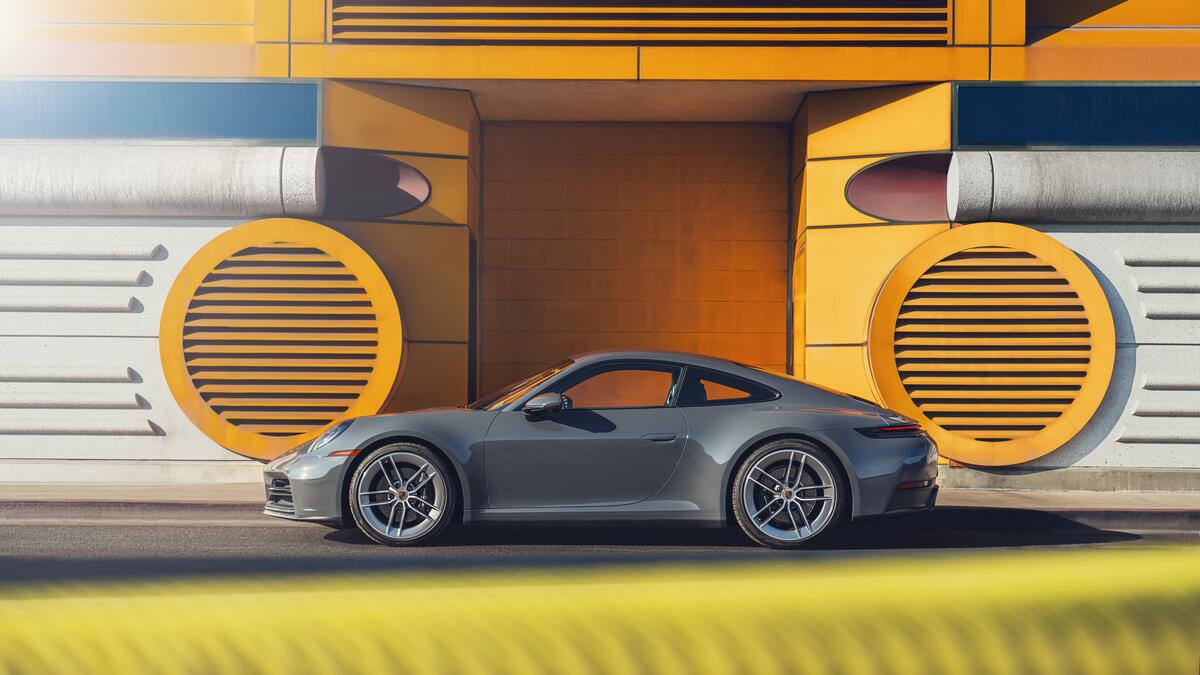
Maybe you've seen it. Maybe you went, uh, the Porsche 911. I'm just, I'm just totally kidding.
I just heard all the radios click off. That's so weird. I can hear that. Yeah. And so many
buttholes clenching, including mine. Somebody just grew something at there. Absolutely. Yeah.
Through their phones. Yeah, that guy. Like maybe, uh, aesthetically not pleasing. It didn't perform
well. Ooh, that's a tough one. Um, boy, the Toyota Paseo. Um, it can be anything. I mean,
like again, there, this is an open ended question. One of the ones on my list is the Jaguar XJ220.
Oh yeah. That didn't do 220. No, that was a disappointing from the
actually, I will, I will give an answer that is still controversial, but actually,
I say it every time somebody posts an article about it. This is like the one thing on Facebook
where I chime in and I'm like, no, no, no. No, actually, not the Aztec. Um, that would be the
Vector W8. Oh, I think it, okay. Engineering wise is one of the worst cars ever made period.
It has a three speed transmission out of a Buick Torino or something grand something.
This guy's some three speed transmission in it. Um, it never ran long enough for any of the testers
to complete a full test, to actually test its specs. It broke down at every magazine test it
had. Um, Andre Agassi famously refused to drive his incentive back. Um, I think it is one of the
most beautiful iconic designs ever. I love them so much. As far as like looking at them and the
design, I had a poster, I think it had two posters on my wall, that car. You wanted one for a long
time. I still do. Um, they have one down at LeMay right now. Yeah. That's the 99 SR V8 or whatever.
Yeah. Uh, that's not the W8. Oh, okay. But it's Vector. It's Vector. Yeah. Yeah, that's my point.
Yeah. Okay. That was a brand, I think, one of the most overrated brands period. But I mean,
iconic design, but easily one of the worst cars ever made. And if I had the money, like if I had
FU money, I would buy one and rest them all the shit out of it. I would swap that engine out. I
would swap that transmission out. I would keep it looking the same. I would fix the terrible,
terrible seats that are about as supportive as a freaking picnic bench. Like it is,
it is an awful vehicle. Um, but I would, I love it. I love it so much. And it's one of the most
overrated, awful cars ever created. I think the Qantas is pretty close to my next, my next list.
Next, I have driven a Qantas. I think the Qantas for me, as far as like 80s cars, I mean, it is all
the hype. The Qantas, the F40, the 288 GTO is actually my favorite of the era, just because
the 308 design, I think it's like the, you know, if you made the perfect 308, you end up with the
288 GTO. But the Qantas, funny how that works. Yeah. Drives terribly. It's uncomfortable to sit in.
It's a whole experience to drive it. If I had the money, I would absolutely own one.
And I would change nothing. Yeah, to be clear, just because it's overrated,
doesn't mean we wouldn't buy one. Oh, yeah. I would buy an XJ220. Oh, yeah. Because I think
it's an interesting car. I just don't think it ever lived up to the hype. Yeah, exactly. And so,
yeah, driving the Qantas is this incredible experience of sound. You can't see a damn thing
out of it. Shoeless sound. You can't wear shoes. Yeah, you can't wear shoes. The pedal boxes
makes it makes an Esprit pedal box look big. And off to the right. Yeah. And it's offset.
If you're tall, like me, or I'm long torsoed, I'm short leg, the long torso. Is that what we're
saying these days? Long torsoed. I'm 6'1", but I only have a 32 inch inseam. Okay. So for me, like
ergonomics and cars are kind of a big deal. Like I don't fit well in a lot of cars. My C7
Corvette, for example, my head is right at the roof. I wish I had a photo the first time we put
you in a Huracan Spider. Right. That would be like, I'm looking over the windshield getting
smacked in the face with bucks. Sorry. I don't know why we didn't take a photo. Brian wasn't
there to take the photo. Yeah. Yeah, we should do that sometime. Yeah. I don't fit in the R8
for the record. Like I just don't, it's not a car I would buy because I don't fit in it,
even though I love it. But I'm such a driver, like I only buy cars because I love to drive them.
So the Kuntas is terrible for me. I think there's, I'm trying to think of the other cars
people look back on and love that I've just been like, why? Why do you have this? Why does this
exist? You know, we should reach out to Mike Wilson. Yeah, we really should. Have him come on the
show because he has owned that Red Bull Kuntas for, I don't know how many years. This is like
a big sport of exotics, but it would be interesting. I'll reach out to him and see if he'd come in
or maybe come on the phone and talk to us because I'd be curious about somebody that's owned one
that long. Yeah, there's a lot of cars I get in and I'm like, this seems like example early on.
Early Miata's, if you don't, if you've driven one, you're like, why is this thing getting
so much attention? It doesn't have enough power. Like it's basic. And then you drive and you're
like, oh, I totally get it. Like this thing's not overhyped. This thing's awesome. Like I want
one of these so freaking bad. It can always use more power, but yeah. Right. But it's still like
it's such a great car. I'm trying to think. Those two that immediately come to mind.
If you are used to driving modern cars and you drive any vintage car,
it is any vintage, especially like 60s muscle car. One, you realize how fast cars have become
and you'd be like, man, I really wish I was driving a 98 Accord right now
because you'd have the same performance. There's something about, it's not even muscle cars,
it's 60s and 70s cars. Like my 79 Ford Granada, I miss a bench seat. There was just something
about being able to put your arm up like, you know, shifted on the tree. It wasn't, I guess,
not three on the tree. It's just, it's an automatic transmission. But there was just
something about those cars. They were huge. They were steel. Like I remember my mom going,
I love that this is your first car because I don't think you can hurt yourself. And I don't
think you can go fast enough to hurt anybody else. Yeah. So yeah, it's going to say 60s muscle
cars. If you've driven just a stock one, I think they're all better as resto mods.
Yeah, they had no power. Like we've talked about it before. Like if you had taken like a stock,
like 69 Dodge Charger or the, the General Lee is what I'm talking about or smoking the
Bannet car, smoking the Bannet car is gutless. Oh, it's terrible. It's absolutely gutless.
Which means most of those cars were always souped up for them.
Yeah. What was that, Joe? Here comes Cadillac to drop an eight liter V8 that gets four miles to
the gallon and that's 180 horsepower. 60 in 14 seconds. So again, post a photo and post a quick
comment as far as why you think it's overrated. There's no wrong answer here. And I think,
especially with the Avant's form, I think it's going to create a really fun conversation. Yeah,
I'm going to post, post a picture of that W8 and ruin everybody's day. Then I'm
going to explain how much I love it and also why it's I think the most overhead car. Yeah.
I'm trying to think. I had one just a second ago. I want to say the Chevy SSR just to make Brian mad
because I think that is one of the ugliest, most overrated pieces of,
it's the funny thing is, is I think people even hated it at the time. It was just a really niche
vehicle. And I love that. What's his name? The short one from Top Gear kept his car. Clarkson
always gives him. So he's like, yeah, who doesn't need a Corvette with a truck bed in a retractable
roof. Yeah. Yeah. Oh man. We're putting it out there. And that's a good question. That's a great
question. It's kind of fun. Well, maybe it'll come to me after the show and I'll take myself and just
you'll know if it does because this will be edited and then all of a sudden at the end Dan
will come on by himself and go, Hey, it's me. This is it. Yeah. Yeah. Oh, I know what it was.
Oh, here's the one. A stock Jeep Wrangler. No, any stock Jeep Wrangler. Does exist? Yeah. Oh,
wow. Okay. Even modified. This is one of it's here's that here's why I think it's
overrated, overrated, overhyped, overrated in every single way. Jeeps are about as good as you
can get off road today. If you want nothing but an off road vehicle, I don't care what kind of
fanboy you are for Toyota, even me as a Bronco owner. You are hard pressed to beat a Jeep in
any situation. Solid front axle, better articulation, lockers front and rear. This is off the showroom
floor we're talking. Yeah. Factory 35 inch tires. Just if you want to go anywhere vehicle, I still
don't think even the Bronco with 37s is going to get you more places than if you were in the
market for a Hemi 392 Jeep. I think that is the single best off road vehicle you buy. The problem
is you have to do it's also road legal. And if you've driven a Jeep, they drive like ass. I mean,
they make everything look good on the road. You tell me that vertical windshield is not good for
you. That's solid front axle in a vehicle. The suspension geometry is all wrong
for the road. The death wobble is a thing I've had everybody know has experienced it or lied
that they haven't experienced it. They are so terrible on the road. They leak still from the
factory with any soft top, even the hard top scheduling. The Bronco does too, to be fair.
But there's panel gaps are terrible. The reliability is now terrible outside of the 392,
oddly enough, which by the way is really you can Jeep made a ton of those and there's a really
good deals on those 392. Yeah, all of a sudden. Yeah, yeah, it might be a couple years old and
new. But yeah, if you're looking to build like the ultimate off road vehicle and you want to go
crawling specifically crawling, rock crawling, you want to put some power down, go buy a Jeep,
you'll end up swapping the axles out anyway for super duty axles or something else or you're
going to call up Curry or one of those other companies and spend as much as your credit card
can limit at and more and more. Even if you've got great credit, you know, you got great credit.
Yeah, you can go buy another Jeep in parts and put on your Jeep and you will have the ultimate
off roader. But as far as a overhyped vehicle, people who just like I want to get a Jeep,
something I can take the top off and you know, run around town and you've picked the worst
possible vehicle you can buy. And you should probably buy a Bronco. If you if the top down
SUV is what you're going for, the Bronco drives night and day better. It is a better vehicle
for almost everyone unless you live in Moab or if you live next to Sand Hollow, maybe just,
you know, when I was in high school, that was the that was my right. That was the carrot. My
parents always used to say like if you do if you get so good at grades, it will get you a Jeep.
FYI, never got a Jeep. You can do your own math there. I couldn't. But I always wanted to drive
around with the doors off and I look at it now and I go, I would never do that. Like, especially
with the other cars on the road, like maybe when I was off road, absolutely take the doors off,
but like, you can reach out and prop yourself up and roll over. Yes, so bad idea. Or kick your
leg out. I see people driving out their doors off and kudos to you. I just couldn't do it.
Like, no, first of all, there's no privacy. Yeah. And second of all, it's less protection. It's
one less piece of protection if something happens. I just wouldn't. Yeah. The old man in me and to
take the doors off to relocate the mirrors. I don't know if you should do the brand new ones.
I think you still do. That was one of the best selling points of the Bronco. They're like,
hey, our mirrors stay on when you take the doors off. Right? Yeah. By the way,
I mean that about the Bronco too. I wouldn't drive around my doors. No, I wouldn't either. They come
off really easily. But I still, I even have the bags up there for them, but I've never taken them
off. It's just, yeah, it's Washington for one and two. Even when you're out in the desert,
we're like, oh, it'll be hot. I can take the top of the doors off. You're covered in dust in like
two seconds. So unless you, the only, I don't get it man. Cause the only place I would do that is
like California in the city and then I wouldn't park it anywhere. I would do it if I was in Moab
because having the doors off and being able to lean out and see an obstacle, I get while you do it.
Yeah. But until you roll over. Right. And then you're like, hold on to something. I'd rather
be hit by the door coming in than a rock coming into the door. Right. Yeah. So that's my, that's
listeners. Let us know what the overhyped vehicle is. Good question. I don't even know,
like I said, it's amazing. Cause I've said this to Kate and she doesn't understand it. Like when
I'm working, I always have other stuff playing and stuff just kind of comes out and somebody said
it on a video. They're like, that's an overhyped vehicle. And I was like, huh, there's a question.
I didn't even troll you guys. I could have said something like the Mark four Supra or the E 30
Oh, what else is there? Oh, you're gonna, we're gonna get hate. Just say nine 11 to Corvette nine
11's. I'm just kidding. See two. Oh, wow. That's split window. No, 60 67 split window. See, what's
C one? I thought C one was the original. Okay. And then C two was like the, the peak. Okay. The
427. Okay. And C three. Okay. Like every's baby, the C two C three. Yeah. It's like the perfect
American. What was the one that was in Corvette summer? That one. That's the C three and that's
a late C three. That is the worst. Oh, Mark Hamill. It's okay. After this week, I think his career's
over. So we're fine. I'm just gonna say this. I don't care what your political views are.
Don't put a picture of a dead president on Twitter. It never works out for anybody.
No, I don't care what president it is. I don't care. It should never be done. But I'm just saying,
Mark, that wasn't a smart decision. You're kind of paying for that right now. I'm not, I'm not
taking sides. Don't do it. Yeah. All right. Well, we're gonna leave it at that. Like I said,
write your comments down. You can send them into the text line, which is 425 298 7873. It's always
in the show notes. It's on every episode. If you want to, you can you can text or
sorry, Facebook message Dan or me. Yeah, respond to the comments in the chat. Yeah. And then I
think is next week, the event at Salish. Yep. So we're going to be there. Yep. So you'll hear this.
We should probably tell somebody we're coming. Oh, yeah. I'll tell Chrissy. Well, yeah,
oh, shabby, probably. Oh, yeah, shabby and Chrissy. Yeah. We're gonna be there. So if you see us,
come say hi. We may have that we may have the recording stuff. So come talk to us. Yeah,
love to hear it. Love to talk to you. Excellent. All right. For this episode of the advanced podcast
is always I'm Nick and I'm Dan and don't just get there. Enjoy the drive.
About this episode
Wet weather turns into a paint-protection chat, then the conversation zooms out to affordability and why “cheap” cars can get expensive fast. Gas prices and fuel economy drive a commuting cost break-even debate, with the Ford Raptor and a possible GTI/EV used as foils. The “overhyped” theme expands into reliability stories, supercar hype vs reality, and even two-step/launch-control tech—plus off-road practicality in the Jeep vs Bronco argument.
OVERHYPED! No, not us, we're pretty self aware. It's why we cry in the shower. In this episode we're talking about overrated cars. Not cars we hate, but cars we actually love, but still think are overrated like the Vector W8, the Jaguar XJ220, the Jeep Wrangler, and several classic cars. Are they bad cars? Not at all, and we want all of them in our garages, but the comprises these cars come with or came with are pretty hard to ignore. What's on your list?
On the life side of things, Nick and Kate picked up a new car, and we’ve gotta give another shoutout to our friends at Carter Subaru for hooking that up. Nick also spent some time in the new S5 this week, which is fully wrapped in STEK, so at least it’s surviving this absolute mess of weather—sun, rain, pollen, and whatever else the trees feel like throwing at it.
The Avants Podcast is brought to you by our friends at STEK USA and Carter Seattle!
Not an Avants member? https://www.avants.com/member-plans
Leave us a review on Apple Podcasts!
Leave us a voicemail or send us a text any time at 425-298-7873!
We're doing give aways! Leave us a review on Apple Podcasts and we'll pick a random name every 25th review!