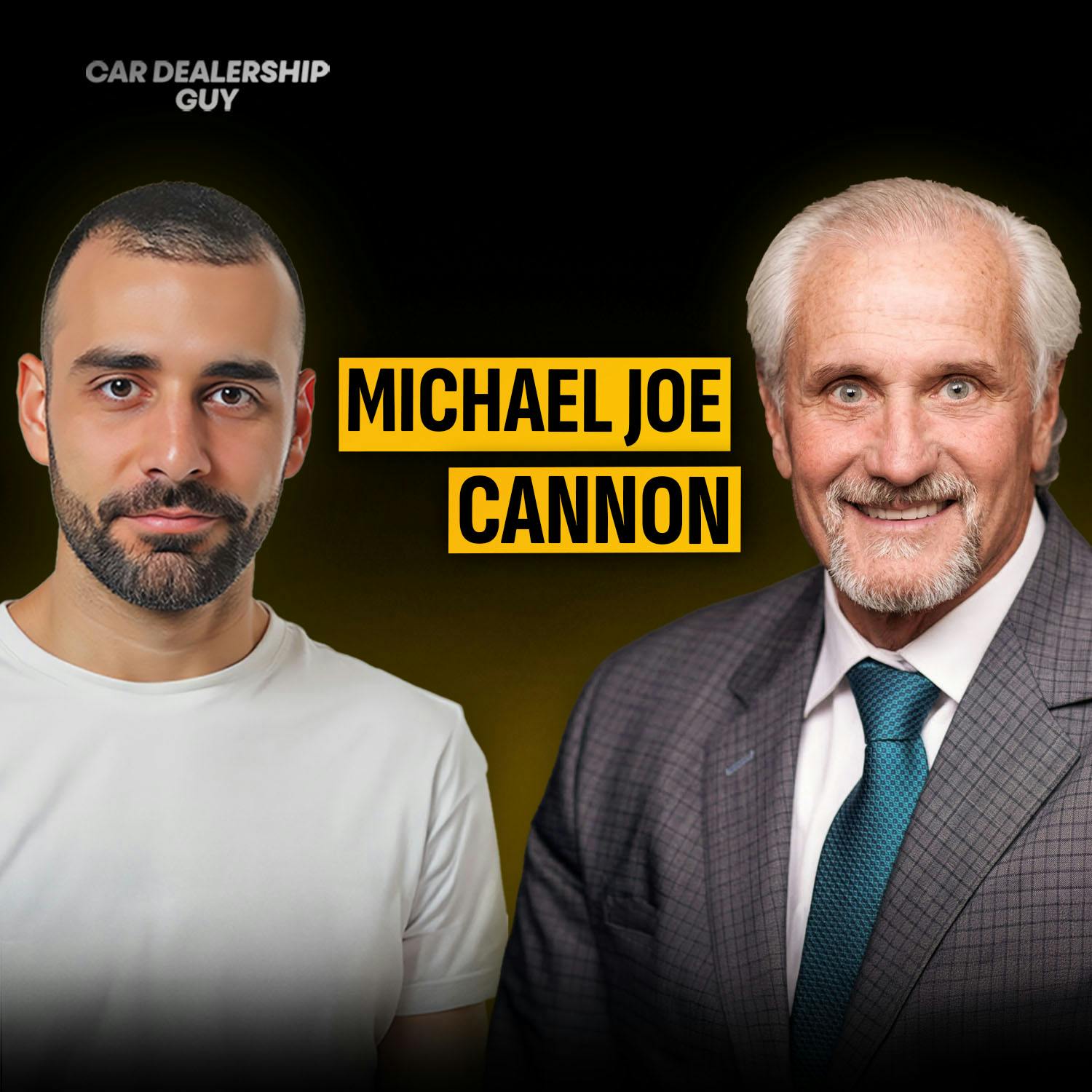
"People Are The Asset!" – How No Layoffs and Radical Retention Built a 37-Store Empire In The South | Michael Joe Cannon, Owner of Cannon Motors of Mississippi
Michael Joe Cannon shares his journey from aspiring football coach to owner of Cannon Motors, a 37-store dealership group in the South. He discusses his no-layoff philosophy, emphasizing employee retention through his 'Circle of Life' program, which focuses on communication, attitude, and proactive problem-solving. Michael highlights the importance of treating employees as the dealership's greatest asset and maintaining small-town values while scaling a large enterprise. He also reflects on challenges like technician shortages and the evolving auto industry landscape, including direct sales and new market entrants.
Today I'm joined by Michael Joe Cannon, Owner of Cannon Motors of Mississippi.
After stepping away from a coaching career at Ole Miss to take over his father’s 12x12 used car lot, Michael has scaled his group to 37 rooftops by treating business like a team sport.
He breaks down his "Circle of Life" philosophy, explaining why employee stability is the ultimate defensive play against market volatility and direct sales threats.
This episode is brought to you by:
1. Podium - The AI platform trusted by one in three dealerships. Podium helps dealers consolidate sales, service, messaging, and voice into one connected system that actually runs the work. If your AI isn’t driving real outcomes, it’s time to take a closer look @ here.
2. Experian - If you’re ready to step up your game to the next level – outpacing the competition and building customer loyalty – there’s only one place to go from here: Experian Automotive. They’re the only ones with exclusive data across vehicles, consumers, and credit—plus expert data scientists who connect the dots to uncover the insights you need. Get the industry-leading insights from Experian Automotive today @ here.
3. CDG Recruiting – Hire top dealership talent, fast. From sales managers to GMs and C-suite execs, we’ve placed over 1,000 roles across auto retail. Ready to scale without the hassle? Visit @ here to get started.
Check out Car Dealership Guy’s stuff:
For dealers:
CDG Circles ➤ https://cdgcircles.com/
Industry job board ➤ http://jobs.dealershipguy.com
Dealership recruiting ➤ http://www.cdgrecruiting.com
Fix your dealership’s social media ➤ http://www.trynomad.co
Request to be a podcast guest ➤ http://www.cdgguest.com
For industry vendors:
Advertise with Car Dealership Guy ➤ http://www.cdgpartner.com
Industry job board ➤ http://jobs.dealershipguy.com
Request to be a podcast guest ➤ http://www.cdgguest.com
Topics:
08:05 Why Athletes Dominate in the Car Business
11:45 Why the “Good Old Days” Were Actually Easier
12:15 The Real Reason Dealers Need Fixed Ops to Survive
15:10 Your Employees Are Worth More Than Your Inventory
18:50 “They Didn’t Get Fired… They Fired Themselves”
21:05 Your Reputation Matters More Than Millions
27:10 The Strategy to Keep Customers Forever
35:45 Scaling Culture Is the Hardest Problem in Growth
Car Dealership Guy Socials:
X ➤ x.com/GuyDealership
Instagram ➤ instagram.com/cardealershipguy/
TikTok ➤ tiktok.com/@guydealership
LinkedIn ➤ linkedin.com/company/cardealershipguy
Threads ➤ threads.net/@cardealershipguy
Facebook ➤ facebook.com/profile.php?id=100077402857683
Everything else ➤ dealershipguy.com
"...as the industry faces high stakes tension from direct sales in a shrinking technician pool..."
There are fewer car mechanics available to fix and maintain cars, which makes it harder for car shops and dealers to keep up with repairs.
The shrinking technician pool refers to the decreasing number of skilled automotive technicians available to service and repair vehicles. This shortage affects dealership service departments and the broader automotive industry.
"...as the industry faces high stakes tension from direct sales in a shrinking technician pool..."
Direct sales means car makers sell cars straight to buyers without using car dealerships. This changes how people buy and get cars fixed.
Direct sales in the automotive industry refer to manufacturers selling vehicles directly to consumers, bypassing traditional dealerships. This model challenges the traditional dealership sales model and impacts how cars are sold and serviced.
"...Michael reveals how he maintains a no layoff policy while aggressively acquiring new stores."
A no layoff policy means the company promises not to fire workers even if business gets tough, trying to keep everyone employed.
A no layoff policy is a business approach where a company commits to not terminating employees during economic downturns or operational challenges, focusing instead on retention and support.
"...He breaks down the Cannon framework for operational excellence and why he believes athletes are uniquely wired to win in the car business."
Operational excellence means running a business really well by making things better and faster all the time.
Operational excellence is a management philosophy focused on continuous improvement and efficient business operations to deliver high-quality products and services.
"...He was one of the first buy here, pay here guys in that industry that we started. It was a used car lot, right?"
Buy here, pay here means you buy a used car and pay the dealer directly in small payments, which helps people who might not get loans from banks.
Buy here, pay here is a type of used car dealership financing where the dealer provides in-house financing to customers, often targeting buyers with poor credit. This model allows customers to make payments directly to the dealership rather than through a bank or third-party lender.
"You spent the first roughly 20 years as independent dealer. You then became a franchise dealer."
An independent dealer is a car seller who doesn't officially represent one car brand but sells various cars, often used ones.
An independent dealer is a car dealership that operates without an official franchise agreement with a specific manufacturer, often selling used cars or multiple brands.
"You spent the first roughly 20 years as independent dealer. You then became a franchise dealer."
A franchise dealer is a car seller who officially represents one car brand and sells new cars from that brand.
A franchise dealer is an authorized car dealership that has an official agreement with a specific car manufacturer to sell and service their new vehicles.
""But things are a lot more, margins are a lot different nowadays than they once were. You know, back in the old days, people...""
Dealership margins are how much money a car dealership earns after paying for the cars and services they sell. These profits can be smaller or bigger depending on the market and how things change over time.
Dealership margins refer to the profit margins that car dealerships make on vehicle sales, parts, and services. These margins have changed over time due to shifts in the automotive market and consumer behavior.
""You know, people didn't focus on parts and service and body shop as much as they do today, where I was.""
Parts and service departments are the areas in a car dealership where cars get fixed and parts are sold. These areas help the dealership make money and keep customers coming back.
Parts and service departments in a car dealership handle vehicle maintenance, repairs, and the sale of automotive parts. These departments have become increasingly important for dealership profitability and customer retention.
""You know, people didn't focus on parts and service and body shop as much as they do today, where I was.""
A body shop is where cars get fixed if they have dents, scratches, or damage from accidents. It's part of the dealership that helps keep cars looking good and safe.
A body shop is a facility within or associated with a dealership that specializes in repairing vehicle bodies, including collision repair and paint work. It is a key part of modern dealership operations.
"I said, you know what the most important asset that this dealership has? And they all look around like. I said, it's you, it's the employees. That's what you're buying."
Employee retention means keeping the people who work at a company so they don’t leave. This is important because experienced workers help the business run smoothly.
Employee retention refers to strategies and practices used by businesses to keep their employees over time. In car dealerships, retaining experienced staff is crucial for maintaining customer relationships and operational success.
"Enter Experian Automotive. Whether you're tracking market share, boosting service revenue, targeting the right buyers or making smarter inventory decisions, Experian has you covered."
Experian Automotive is a company that collects and analyzes car and buyer information. They help car dealers and companies understand the market better so they can sell cars and services more effectively.
Experian Automotive is a division of Experian that provides automotive industry data and analytics. They offer insights on market share, consumer credit, vehicle data, and inventory decisions to help dealerships, OEMs, lenders, and agencies make informed business choices.
"Back in the day, if you didn't buy the car from a new car store, a lot of dealers wouldn't service it."
A new car store is a place where you buy brand-new cars. Usually, if you buy a new car there, they take care of fixing it while it's under warranty.
A new car store is a dealership that sells brand-new vehicles directly from the manufacturer, often offering full warranty and service support. Traditionally, customers who bought cars from such stores expected exclusive servicing and warranty coverage at those dealerships.
"They wouldn't service the warranty. And I go like that."
Warranty service means fixing your car for free if something goes wrong within a certain time after you buy it. Some places only do this if you bought the car from them.
Warranty service refers to the maintenance and repairs covered by the vehicle manufacturer's warranty, usually provided free of charge within a specific time or mileage period. Some dealerships restrict servicing warranty repairs to customers who bought the car from them.
"probably internally is, you know, and everyone's facing that is technicians. It's becoming a real challenge for the automobile industry overall, it's just people that's not, for whatever reason, they're not going into that field as much as they once was. And it's a great field, you know, that there's, we got technicians, you know, make six figures, easy."
Technicians are the people who fix and take care of cars when they break or need maintenance. They know how to find problems and make cars work well again.
Technicians in the automotive industry are skilled professionals who diagnose, repair, and maintain vehicles. They play a critical role in dealership service departments and independent shops, often requiring specialized training and certifications.
Why Athletes Dominate in the Car Business
Why the “Good Old Days” Were Actually Easier
The Real Reason Dealers Need Fixed Ops to Survive
Your Employees Are Worth More Than Your Inventory
“They Didn’t Get Fired… They Fired Themselves”
Your Reputation Matters More Than Millions
The Strategy to Keep Customers Forever
Scaling Culture Is the Hardest Problem in Growth
Select text to request an explanation
Let's be sure if we're got to separate from an employee,
let's be sure that they let their self go,
that we didn't let them go.
So what do you mean by that?
I said, let's be sure that we've done everything in our power
to help that person succeed, right?
We've coasted them, we've mentored them,
we've done everything that we can,
and then if it don't work out, hey man, it's on them, right?
And very seldom does that happen.
Today I'm joined by Michael Joe Cannon,
owner of Cannon Motors of Mississippi,
as the industry faces high stakes tension
from direct sales in a shrinking technician pool,
Michael reveals how he maintains a no layoff policy
while aggressively acquiring new stores.
He breaks down the Cannon framework for operational excellence
and why he believes athletes are uniquely wired
to win in the car business.
Dealers should listen to understand how to bridge the gap
between small town values
and large scale enterprise success.
A big thank you to our sponsors
for making this episode possible.
Podium, Experian, and CDG Recruiting,
and now let's get into the show.
Michael Cannon on the CDG podcast, Michael, welcome.
Yeah, welcome, thank you.
I appreciate the opportunity to be on here with you
for a few minutes and share a little bit
about where we came from, how we got there,
and where we're going next, right?
So yeah, thank you.
I appreciate having you on.
The first thing I was thinking about
before a hop and witness recording
was that there is an alternative reality
where we are not recording right now
or we are recording
and you happen to be an NFL football coach.
But here we are and you're a dealer
and a quite successful dealer.
So that's how the cookie crumbles, right?
I want to start with that story though,
because I think that's, I think one of the most interesting
things about you is your background
and the fact that you were in a football coaching career,
you're at Ole Miss and life changed on the dime
and you got into the car business.
Can you tell us about that story?
You know, it started back,
I grew up in a small town in North Mississippi, Calhoun City.
And I always grew up playing football in the backyard.
Of course, my dad taught me how to work at a young age
at a peanut stand and then we'd go around town
selling peanuts and then have a snowball stand.
Peanut stand, we need more peanut stands today.
There's too many iPad stands.
We need peanut stands.
Amen, amen.
Yeah, had a snowball stand.
I did that and then ran a food hall when I was 14 years old.
So I had the opportunity to learn how to work early on
and you know, it was great.
My real passion was football.
Of course, I loved all sports.
I just had the opportunity to go a little further in football
and so I thought I'd ever want to do, you know,
was be a professional football player.
And as we all have done that want to be a,
that love football, you know, I've stayed in the backyard
pretending I'm Bart Starr, right?
I'm telling my age now or Joe Namath or Fran Tarkington,
or whomever, you know, Terry Bradshaw.
And I dreamed of being that person one day.
And so anyway, fast forward there,
had an opportunity, I had a went to high school
and got, had signed a scholarship
with Northwest Community College,
which was up in North Misscipian.
Was there actually two and a half years
because I tore my knee up and had to come back
for the third year to finish there.
And then went on to Memphis State and played football there.
As long as where I met my wife, she was a cheerleader there.
So I go try out.
And, you know, I think I'm doing pretty good.
And coach comes over and slaps me on the shoulder
and he says, hey man, hey, Cannon,
you sure do give a lot of effort.
And I go like, thanks coach.
So he walks off and I'm going like,
I'm not exactly sure if that's what he meant.
You know, maybe he was telling me
it's time for me to do something different.
So anyway, yeah.
So anyway, that's when I got into the coaching,
went back to Northwest Junior College
and Community College coach there
and then had the opportunity to coach at Ole Miss.
And, you know, which was, you know,
I guess I grew up being an Ole Miss fan,
being 35 miles north of where I live, 40 miles there.
And watched them, you know, all through growing up,
used to go to the games and had a chance to coach there.
And then June the 15th, 1986, 40 years ago this year,
I got a call, was working in Memphis in the summertime,
working security for mid-South Concerts
and my dad had passed away.
So yeah, I got an older brother,
he didn't want anything to do with the car business.
So my dad had a little 12 by 12 building
with a little half light bulb there.
Most people don't even know what that is.
But anyway, I went back, he had 10 cars on the lot
and had some money.
He was one of the first buy here, pay here guys
in that industry that we started.
It was a used car lot, right?
There was a franchise, yeah.
No, no, it's just a little,
literally 12 by 12 building, 12 feet by 12 feet.
He had a desk in it and a couch, small couch
and a refrigerator and that's really about it.
And he, of course, he did well for himself, you know
and went back there to collect
what money he had on the book,
sell the cars for my mom.
Fast forward a year later and I look up
and I had collected all her money
but I hadn't paid her all of it
because I had turned around
and put it back out on the street, so to speak.
And so that's when I decided, I guess,
well, I guess I'm in this for the long haul.
And so we added another used car lot in 89.
And then, you know, fast forward
in first new car dealer in 01.
And so my intentions was to obviously be a head coach
in the FCC, right?
Or either a professional coach
once my playing days ran out.
But here I am today, right?
40 years later, we were just reminiscing talking about,
you know, somebody says, do you miss it?
Man, I miss it every day.
I was gonna ask you, that was literally,
I was actually gonna ask you, are you nostalgic?
That was gonna be a good question.
Yeah, it may not bring home to some folks,
but you know, when the fall, it gets to be fall
and you can, I can smell the football in the air, you know?
And somebody says, what do you fish?
No, do you hunt?
No. No.
Play golf? No.
I do go to some sporting events, right?
Cause I love, that's my hobby.
I love football.
It's my passion.
And look, I'd go back and play again today.
I've had surgeries and all that,
but it's just, it's nothing like it,
especially on a Saturday afternoon
when you come out of that tunnel
and you know, the band's playing
and the crowd's cheering and smell the popcorn in the,
literally it can smell the popcorn in the air.
It's nothing like it, it's nothing like it.
I never played football.
I was an athlete or you know, played several sports,
but it's a, I can, you know,
I can tangentially imagine the feeling you're describing.
Do you think, do you think in general athletes
should find their way to the car business
or do you think that's something, you know,
a good transition point?
I know off camera, we were talking about shelf life
for an athlete and you know, it's a very,
you're time bound, right?
Something you can do when you're typically younger,
but you did it very successfully
and through of course, a small family business.
What's your take generally on just athletes
and you know, transitioning to automotive?
I mean, to me, they make the best car folks, you know,
and say, well, why is that?
Of course, you don't have to,
obviously been an athlete to be in the car business,
but you know, you just learned,
because the car business is a great business.
It's a, you can, you know, be very successful in it,
but it's also long hours and it's hard at times, you know?
Cause you get, you get knocked down a lot
and playing sports, you learn that, you know?
That's part of the thing you learn as a being an athlete
is you're going to get knocked down,
but you got to keep getting up over and over and over again.
And if you do that, you'll be successful.
And so that's the reason I think, you know,
a lot of times you get told no a lot
in the automobile industry, you know,
because people are not ready to buy
or they don't feel comfortable or whatever that may be,
but that experience that you've had
with showing up when you're supposed to on time
and being where you're supposed to be
and do what you're supposed to be.
And then when things don't go well, you know,
you learn how to practice more to get better, right?
And you learn how to, you know,
watch films, so to speak of yourself
and how you took care of the customer
being an athlete gives them an upper hand
for having the opportunity to succeed in the carpets.
Are your kids athletes or worthy athletes?
They were, they played.
My oldest son played a little bit more.
He played a little small college baseball,
but both of them played.
And you know, sometimes, you know,
even if you could retire, I wouldn't retire
because I think it's good for your kids
to see you go to work every day.
What is retirement even?
I don't even, like, I don't even,
the retirements are like a made up concept.
You're gonna do something.
So you're essentially, and I'm young
and I'm saying this right, but like, not to your hold,
but I'm younger than you, I should say.
But what is that?
What does retirement, what does that even mean?
Like, you're gonna do something.
Essentially what you're saying is I would like to swap
my current daily activities with other daily activities.
And that's fine, but you know,
you're not gonna sit there and twiddle your thumbs.
Nah, not me, you know.
Number one.
Well, definitely not you on the board of NADA
from Mississippi, we'll talk about all your involvement
and also how you've branded yourself.
I wanna ask you, before we get into that,
one quick kind of transition question,
but you got into this industry 40 years ago,
which is pretty incredible.
You spent the first roughly 20 years as independent dealer.
You then became a franchise dealer.
Today you oversee many domestic brands.
Bob, I think more importantly,
for our dealers in their 40s and 30s
and even like early 50s,
how is the business different today than it was?
Was it better back then, like many of us actually say,
is it just different and we're just naturally like nostalgic
over what used to be?
Like, just give us a little comparison
of the business today versus back then.
And in your opinion, what's better?
Yeah, I don't know what it was better back then.
You know, everybody talks about the good old days, right?
And what do you mean?
Well, some people can't explain that
when they say the good old days.
You know, I enjoyed the early stages of my automobile career,
you know, because I was learning
and I'm still learning every day.
Things are a little bit different.
You know, you have some manufacturers
pulling to wanna sell direct.
And so nowadays, I think it was probably back then
it was probably a little bit more lucrative
than it is today.
And what do you mean by that?
Well, it's still a great business, right?
You get to work with people, you get to serve people,
you get to sell them a vehicle
and see them by their first car or their 50th car,
whatever that may be.
But things are a lot more,
margins are a lot different nowadays than they once were.
You know, back in the old days, people,
I said older days, they were first started.
You know, people didn't focus on parts and service
and body shop as much as they do today, where I was.
And so nowadays, it takes all of those cylinders,
so to speak, to be hitting on full speed
in order to have a successful dealership.
It's very much so.
This episode is brought to you by Podium.
If you're like most dealers,
you've probably tried some version of AI by now.
The real question, is it actually doing the work
or just answering with generic messages?
In our CDG circles groups,
I keep seeing Podium come up
when dealers are talking about vendors.
And it's not hype.
It's because they're meeting the needs of dealers right now.
One in three dealerships is already using Podium
and thousands of their customizable AI agents
are actively running sales and service workflows every day.
What makes them different
is they're not just another AI add-on.
They consolidate sales, service, messaging,
and especially voice into one customizable platform
so you're not stacking a bunch of disconnected systems
and let's be real.
The phone is still where a lot of money is won or lost.
Podium's voice AI books, appointments,
routes calls correctly and escalates
when it should based on your dealership's playbooks.
If your AI isn't driving real outcomes,
it might be worth a look.
Check out podium.com slash CDG
or click the link in the show notes below.
Okay, so that's actually a good transition
to my next question, which is that
when I look through your, let's call it figurative resume,
you've sort of branded yourself in three ways
as far as I can tell.
No layoffs, right?
So very employee-centric.
That's one of your rules.
We'll talk about what that really means.
Like you do not lay off and you're also very acquisitive.
No layoffs plus being very acquisitive.
It's an interesting combination.
We're gonna hear how you do that.
And that's kind of one and two.
But in three, you also have something
you call circle of life, which is your retention strategy.
One of the most, like call it, you know,
infamous retention conversations I've had on this podcast
just based on, you know, dealer feedback
was my conversation with Vince Sheehy about a year ago.
So I want to start there, right?
Just talk to us about your retention strategy
as someone who, you know, likely didn't spend much time
on this historically or in the past.
You are very, very serious about retention today.
Which makes sense, right?
That's the, you know, economically smart thing to do
in today's market.
You've created this program called Circle of Life
or Canon Circle of Life.
Can you just tell us about this program,
like the nuts and bolts of it?
So it's so funny.
We, every time we go in and we buy a store,
we gather the employees together and we talk to them a little bit.
And of course you can see for the most part,
the uncertainty in their eyes, right?
They don't know what to think.
I tell them, I said, I talked to them a little bit
and then I said, you know what the most important asset
that this dealership has?
And they all look around like.
I said, it's you, it's the employees.
That's what you're buying.
Yes, the brand is important, the location's important,
but you know, I love to use football terms.
You gotta have 11 people to play on the team, right?
When we go out there to kick off,
we can't play with 10, right?
We can't play with nine, we gotta have 11.
And so the people are the most important asset
that any of us have, I'm truly in any business,
but especially in the car business.
And you know, we've always, you know,
I remember when the COVID came, you know,
we had folks that was around us
that were laying people off right and left.
I got our general manager on the call and I said,
hey man, here's, look, I don't know what's gonna happen.
I wished I had to crystal ball,
but I said, I can tell you one thing,
play them with words, when the smoke clears,
we're still gonna be here, right?
And I said, good Lord, been good to us.
We saved a lot, we saved some money.
We got enough to keep these people employed
and we're gonna keep them employed as long as we can.
The last thing we're gonna do is go lay them people off.
And so that's always kind of been our philosophy
and it's the people's the most important asset.
And you know, if you got good people,
then they take care of your customer
and they're talking about the Canon Circle of Life.
So let's, actually I like that you shifted to this.
Let's finish this one before we go to Circle of Life
because I think that's a very, especially coming from,
you know, more rural environment.
And you said you started in a small town.
It's a very, you know, powerful way to brand yourself.
Do you think that has really,
or that kind of branding that you just mentioned,
is that known to the public?
Do you like project that outwardly,
you know, during hiring sprees?
Or, you know, do people know about this
or is this something internally
that you happen to think about more than others?
Like how well is this really, you know,
popular of your brand?
Yeah, as I always say, we learn every day.
And I'm just sitting here thinking
to answer your question, they know about it,
but do they know about it as much as they should know?
So that's what I learned from today,
from just us being here talking
that we need to do a better job telling our message, right?
And spreading the word because it's important to us.
And I think that's part of the reason
that we've been able, I truly believe,
to acquire a lot of stores
because the people that own those stores,
they know that, right?
They know that we are not a person
that comes in there and lays everybody out.
Not saying a lot of people do that.
I'm just saying what we do.
We're that person that we want to keep everybody on the team.
We want to give them an opportunity.
And yes, we've run into a few
that didn't like the way we did think.
No, that's okay, right?
But I'm gonna let you make that choice.
I'm not gonna make it.
And you know, I tell them all the time.
How does that actually play out, right?
Like performance management,
obviously there's firing for performance
or for cause or anything like that.
So where do you draw the line of a layoff
and having this type of just brand positioning
work for you, not against you?
Yeah.
Well, always tell our guys, if we guys and gals,
let's be sure if we're got to separate from an employee,
let's be sure that they let their stuff go,
that we didn't let them go.
So what do you mean by that?
I said, let's be sure that we've done everything in our power
to help that person succeed, right?
We've coasted them, we've mentored them,
we've done everything that we can.
And then if it don't work out, hey, man, it's on them, right?
And very seldom does that happen, right?
Now that you, every now and you do, and look, I get it.
Hey, I tell them all the time, man, it's okay.
You don't play on our team, no worries.
This is our team, this is how we do things.
We're gonna do it morally, right, ethically, right.
We will treat it cusper, we're not gonna tell them a lie.
And this is how we do it.
And if it doesn't fit into you and what you believe in it,
it's all good, man.
Yeah, it's all good, but most of the time it does.
No, that was a good explanation.
So what do you believe?
You mentioned if you don't, what are your beliefs?
Like what are your strongest beliefs,
the people that know you closest in the business?
Well, I hope they would say that he's a God-fearing man,
that he believes in the higher up aboves,
and that he works at displaying that
on a daily basis with the people
that he comes in contact with.
And I hope that they would say
that he's a passionate guy about what he does.
He loves people.
He's just straight to the point.
On the other hand, he can be passionate,
but in the end, we all have a job to do.
And in order for us to all succeed,
we have to do those things.
And so, I hope that they would say
that had an old fellow tell me one time,
his words is born, if he tells you something,
you don't have to write it down.
You have to sign a piece of paper.
You don't have to sign in blood.
If he tells you something, that's the way it is.
And so, when my time comes,
and I say that all the time in front of our folks,
I say, hey, when we leave here,
all we're gonna leave is memories.
All we're gonna leave is what people
are gonna say about us.
That's it.
You can have $4, 4 million, 400 million.
They're not gonna remember that.
What they're gonna remember is
what kind of person you are,
and how you treated them,
and how you made them feel.
You know, I think a lot about how trust
is sort of the lubricant and accelerant
of just business and commerce.
Think about it, right?
You trust someone, just, you know,
you get things done so much quicker,
much bigger, anything deals, whatever it is,
but just the fact of having that trust
is so important, and it compounds.
And so, I do some advising,
and I talk to younger generation, younger than me,
and I just talk about, like, it's all,
when I see people, when I have conversations,
I have lots of conversations,
it's always about what is the time horizon
of this person's thinking?
The longer their time horizon,
the better decisions and higher quality decisions
they end up making in their career and their life.
Because, you know, it's always the short-term thinking
that bites you in the butt,
and you end up doing the wrong thing.
And so, anyways, that's just me kind of pontificating
based on what you said, but I agree.
Trust is immensely important, it compounds,
and it pays back dividends from a, you know,
it's actually the financially savvy thing to do,
to, like you said, hold to your words,
stick to it even when times are hard.
So that's my rant on that,
but I wanna go back to a circle of life.
So, you mentioned investing in people
and being a person of your word.
You created this retention strategy.
Tell us about it, like, what is it?
How does it work?
This is, many dealers are leaning into, you know,
like lifetime oil changes or stuff like that
just to create more retention.
So tell us about your retention strategy in Fixed Ops.
The bigger you get, the harder it is to get everyone
to adhere to your philosophy, your thinking, you know?
And I tell you-
The more disconnected you get, that's a shout out to,
shout out to Chris Braddock, X drive time VP of operations.
I gotta give him credit on that one.
You think you're more disconnected?
And that's, you know, that's something we constantly
have to work at because, you know,
our goal is for the year in North Mississippi
over in Lower Alabama,
we want you to get the same experience wherever you are.
And that's so hard.
And, you know, it's just when you're dealing
with that many people, it's, you know,
you can tell them and tell them, but it's, you know,
always say, man, we need to treat this customer
like it's the last customer you'll ever have
or treat this customer just like this was your mama, right?
How would you, how would you treat your mama?
And if we'll do that-
But do people just, do people smile, not at you?
You say, yeah, yeah, cool.
And then, you know, do they change?
Like what actions do they really take?
How does that manifest in business?
I'd love to say they all change, but they don't, right?
Again, you know, it's kind of like
you look at professional athletes, you know,
some athletes will be on a team
and they just don't fit with that team, right?
And they get traded or they leave
and they fit in with another team.
And so, no, they, I feel like because we do,
we try to keep a family atmosphere with it, you know,
with a pretty good job or we there and no,
but we, you know, it's kind of like going to church, you know,
sometimes you go to church five times,
hear the same message and you don't,
it doesn't resonate the fifth time.
You're like, oh, so that's what they're talking about, right?
And so I think we just need to constantly
keep training our people, talking to our people,
mentoring our people, leading our people,
you know, telling folks all the time, man,
that is, if you're a manager, that is an honor.
You need to look at that as an honor
to be able to lead people, right?
You've been given a God-given talent
that a lot of people don't have.
And so I just feel like that, you know,
if you look at it that way and you approach it that way,
are we going to get perfect?
No, but you know what?
We're going to strive for perfection
and settle for no less than excellence, right?
And that's just kind of been our,
our message.
This episode was brought to you by Experian Automotive.
Like most Cardios guy listeners,
you're constantly looking for the inside edge
on the auto industry.
So if you're ready to step up your game to the next level,
outpacing the competition and building customer loyalty,
there's only one place to go from here.
Enter Experian Automotive.
Whether you're tracking market share,
boosting service revenue, targeting the right buyers
or making smarter inventory decisions,
Experian has you covered.
They're the only ones with exclusive data
across vehicles, consumers and credit,
plus expert data scientists who connect the dots
to uncover the insights you need.
And their insights aren't just for dealer operators.
OEM, lender, agency, whatever your role,
Experian's powerful tools help you win.
Get industry leading insights you need
from Experian Automotive today.
Learn more by visiting Experian.com
or clicking the link in the show notes below.
I'm not letting you off the hook though.
I still want to know the specifics of the circle of life.
So I want to understand this.
Yeah, so we always, you know,
I drew it up on a piece of paper a long time ago
and I put parts, service, body shop, car, parts.
And I said,
Michael, don't lie to us.
You were watching Lion King with your,
with your son.
Probably was, with my kids, right?
With your kid.
Yeah, and I remember the first time I told Will Hunt,
who does our marketing, not marketing,
I said, I want to create the canon circle of life.
And I got this idea, of course,
I'm not real, do a very good job of drawing and all that.
And I kind of drew it out and I said,
you know, I kind of want to,
if we can get our customers inside the canon circle of life
and we do all the things we're supposed to do,
they'll never penetrate outside of that.
Well, number one, why would they want to?
And I said, you know, that's my goal
is to keep them in the canon circle of life.
And so how do we do that?
Well, number one, we got to take care of our employees
because, you know, saying, right,
you take care of your employees,
the employees that take care of your customers.
And so they kind of all run, run together.
And, and that's just, whether you're buying a part,
five dollar part, or getting an oil change,
or buying a car, or getting your car worked on or whatever,
you know, if we can get you in that canon circle of life,
and we do all the things we're supposed to do,
you have no reason to leave.
So this is not an explicit consumer only strategy.
I mean, you're talking about your general business philosophy.
It's the circle of life, take care of employees,
they'll take care of my customers, understood.
Are there any tactics that you use
to actually make this happen,
or to, you know, provide the support for the team?
Other than, of course, the values, right?
Communicating that to them, right?
Saying, hey, this is what's important.
Are there any specific tactics
that are unique to canon motor group?
That when you acquire a store, right,
you infuse these tactics, say, hey, do this,
do that.
Yeah, so, yes.
So our philosophy, our culture is canon,
and it's spelled out, C-A-N-N-O-N.
And so the C stands for communication, right?
So, well, I mean, that's, yeah, I mean, right.
Well, what does that mean?
Well, and I tell people all the time,
look, if you can't do this, you can't work at canon, right?
And what does that mean?
Well, that means our service advisors
are supposed to be communicating with our customers,
updating them on a daily basis.
You're supposed to be communicating with your supervisor.
You're supposed to be communicating with each store.
It's amazing when we get those guys communicating
from one store to the other,
how we can take care of a customer
that's bought in North Mississippi
and getting his car serviced in South Mississippi,
and because they communicate with one another, right?
About, hey, I got this customer coming in,
this is what to have, blah, blah, blah, that it'll work.
And so if we can communicate time after time
after time during the month, and we go over that,
we have a monthly meeting,
bring ourselves managers in in the morning,
fix ops in the afternoon,
and I give illustration after illustration
of where when we've done those things,
when we communicate, it works.
The A stands for attitude, right?
If you ain't got the right attitude
and you don't believe in communication,
oh, hell, I don't have to talk to them people.
I got this, I know what I'm supposed to do.
Then it's not gonna work.
And then the two ends, we act now instead of later, right?
If there is an issue, if there is a problem,
we act now instead of later,
we can turn that negative into positive
about 95% of the time.
And we do it all the time.
You know, we always say don't run away from the problem,
run to the problem.
And if you run to the problem,
there's a really good chance that we're gonna,
then we're gonna take care of that.
And then the O is if we've done all those things,
we communicate, had the right attitude,
act now instead of later, turn the negative into positive.
That O that says we can play offense over defense.
What does that mean?
Well, we can be focusing on making the business better
instead of being on our heels, right?
Trying to figure out why we screwed up
because we didn't communicate.
And then the last N is, that's our slogan,
nobody beats a Cannondale, nobody.
And so it's really simple.
But the more we talk about it with our folks.
You're saying you could have done your last name
with one fewer ends.
Yeah, you could put one to the side,
only two ends was enough.
Yeah, yeah, I'm playing.
Well, you'd be surprised.
You know, our slogan is when the smoke clears,
nobody beats a Cannondale, nobody.
And it's not about the price most of the time.
It's really not.
It's about the experience that you give the customer, right?
When they come into your dealership,
or that you, when you're out in the community,
doing community activities, when they see you,
you know, walking around with a white shirt on,
it says, Cannon, and you're doing extra things
that you really not get paid for,
but you do it because you care.
And it just, that's kind of part of the Cannon Circle
of life as well.
You know, you said it, when you do good, good comes to you.
When you do bad sooner or later, it's gonna catch you.
If you stack your dealership, right, next to competition,
or whoever it may be, other comparable dealers,
what do you think would stand out the most
about how you run your operation?
How many stores do you have right now, Michael?
How many rooftops?
So we just bought three, so that gives us 37.
37 rooftops, okay.
You're, you know, you're no small cookie here.
You're running a big operation.
And so, stacking them up, right,
what do you think, if I put them next to other stores
of comparable size, you mentioned the Cannon Difference,
what would I see as a customer when I walk in?
Would I see something, you know, noticeably different?
Would it just be the treatment from the client,
or from the staff?
I mean, is there anything else I would notice?
Of course, we always say, hope's not a strategy, right?
But I would hope, I would hope that you would see
the same thing at every store, and so what is that?
A smiling face when you come in,
your car is lined up in a nice line
with tags on the front of them.
They're all positioned properly.
I hope that you would see the same experience.
I hope you would see a guy in a white shirt
that didn't have his shirt tailed out,
that wouldn't stand outside smoking cigarettes.
I hope that you would, you would get to experience it.
You know, always said, my dad used to tell me,
son, money'll spend anywhere, right?
And people can spend their money anywhere they want to.
And our goal is to make sure that we give them a reason
not to spend anywhere.
That's just kind of elsewhere.
Back in the day, if you didn't buy the car
from a new car store, a lot of dealers wouldn't service it.
They wouldn't service the warranty.
And I go like that.
When I got into the new car business in 01,
I said, in my opinion, that's the dumbest thing I ever heard.
I said, yeah, we're gonna service those cars,
and we're gonna show those people
why they should have bought the car from us
as to the other guy down the street.
And that's just kind of been our culture along.
Let's not give them, again,
it's not give them a reason to spend their money anywhere
but at our dealership.
This episode is brought to you by CDG Recruiting.
Here's the truth, top dealers don't leave talent to chance.
That's why I built CDG Recruiting,
the go-to talent partner for dealers who want the best.
We're placing general managers, FNI talents,
service directors, controllers, you name it.
From the showroom to the C-suite,
we work with dozens of the largest groups in the country.
So if you're working with us, you're in good company.
And because we've built the largest audience and automotive
backed by over 180,000 industry professionals
across our media platforms,
we know exactly where to find the people
who can move the needle for your store.
If you're ready to stop hiring like everyone else,
go to CDGRecruiting.com to book a free call.
Again, that's CDGRecruiting.com
or click the link in the show notes below.
Absolutely.
So let's say you had right now,
me and you are sitting on a stage
and there's a captive audience of thousands of experienced dealers
from across the country listening
who are all listening to you and able to provide feedback.
Now, let's pretend that's a reality
because it sort of is a reality, right?
When this airs, there's lots of people listening.
Many of them are experienced dealers
who can provide feedback.
What is a challenge you're facing, right?
I don't want to go as far as saying Achilles heel
because to me that's something more like a persistent challenge
that maybe you can't kind of fix or solve.
But what is just a challenge you're currently facing
or several challenges,
but just something that you're working on
where you see it's a really big opportunity
for improvement for you and your group?
Yeah, well, the first one,
and we mentioned it earlier when we were talking,
the first one is to be sure as we grow, right?
That we keep all our people engaged from north to south.
Skill and culture.
It is, it's probably number one because it's hard.
And the only way you do that,
is you just have to stay engaged all the time
with your people and constantly delivering the message, right?
There's a reason that, I tell them all the time,
there's a reason that if you go to a professional,
I'm not a play golf,
but if you go to a professional golf tournament,
the guy that's leading or the guy that comes in third,
when they get through and they go in and sign their card,
you know, where they go?
They go back out to the range.
They're driving and putting and chipping.
And so there's a reason you have to continuously
go on all those things.
So, you know, for us is keeping,
making sure that we got the same message
to every employee we have.
And then, of course, on a much deeper and a little bit deeper,
probably internally is, you know,
and everyone's facing that is technicians.
It's becoming a real challenge for the automobile industry
overall, it's just people that's not,
for whatever reason,
they're not going into that field as much as they once was.
And it's a great field, you know,
that there's, we got technicians, you know,
make six figures, easy.
And so that, and then for me, you know,
it just continued to stay the course,
not me personally for, as you grow, you know,
you hear some outside chatter to stay humble,
you know, to make sure that you keep your values
close to your heart.
And because, you know, there's, I'd say,
there's some folks that may not have
your best interests at heart.
And so I tell my kids that all the time,
hey man, just, you got to stay humble, right?
You got to stay humble because it's, you know,
it human nature tells you the more success you have,
you know, I've got this.
No, you don't, right?
You don't, so.
Has anything happened throughout your recent career
or lifetime where you feel like maybe you weren't as humble
as you should have been?
Yeah, we bought a couple of stores,
you know, we had had a lot of success
taking, you know, smaller stores and tournament success.
And we bought a lot of stores that was already successful.
But it's, and I think a lot of almost all car dealers
will tell you that the smaller stores are harder to run
than the bigger stores.
And the best way I can describe that is, you know,
if you're a smaller team and you have one five-star
right and he goes down or she goes down,
you don't have anybody to back them up.
Yep.
You're the alabamas or the whomever of the world.
You just call number 78, holler at him,
tell him to get in there, right?
You got another five-star backing another five-star up.
And so that's, it's a lot harder to run a small store
than it is a big store.
Anyway, we bought a store, two stores,
and I don't want to say,
and I thought, ah, we can fix that thing.
And man, we put a lot of energy and we fixed it,
but it took so much time, so much energy
that we took away from the rest of the, we ended up selling it.
And, but I say all the time,
good Lord knew how to weigh a humble like this.
He humbled me because it was not easy.
What was the mistake there though, Michael?
Like what, what was the learning from that?
Like was there like a, did you tweak your process after that?
Well, what we learned was, you know,
you need to do a lot more legwork, right?
Before you make an investment, you need to bet it, right?
You need to, you don't need to.
And by the way, what number acquisition was that
to store that you're referring to?
That was probably 18, 19.
Okay, so you've come a long way since.
Yeah, well, yeah, we learned from it.
It was, it was a great experience for us.
And, and a good learning experience.
And, uh, we finally got it turned around and made money,
uh, made a little money.
Yeah, I don't want to end up, end up selling it.
And, uh, after we got turned around,
but it was a time that it took to get it turned around.
Of course, opportunity.
This doing well now, but it just,
there weren't enough people to pick from right there.
And when you got to bring people from the outside,
it's going to be there every day.
Just not, it's not a very good recipe.
The people need to be, especially if it's,
they need to be in the community.
They need to be living in the town.
Our fellow CDG circles member,
our digital peer group for dealers,
sent us a question that I chuckled out.
He said, who is the best car dealer
that lives in Oxford, Mississippi?
The person that submitted that question was Matt Bowers
from Bowers Auto Group.
I had to bring that up.
I had to.
Nobody but him, man.
He's, he's a, you know, Matt lives in Oxford now.
You know, he's, he's moved to Oxford.
And of course I know Matt and Matt's, that's a great guy.
Yeah.
Look at him.
He doesn't miss much now.
I can tell you about him.
Yeah.
He cracks me up.
Oh yeah.
So Michael, before we wrap up,
what do people not know about you?
Tell us something about yourself that just
no one knows about.
I'm curious.
Oh man, I, I don't want to tell all my secrets.
Then you, then I want to have a couple.
Now, you know, I, I hope the folks that don't know me
have watched where we have started
and where we got to or where we are today.
I don't, I hope that they know that I'm the same guy
that I was, had a used car lot me and one other guy back
in 1986 that I've, I've tried to stay close to my roots
and, and, and you know, I'm the same person that I was then.
And, and, and I hope that the, cause it's easy.
If you don't know me, know where I grew up.
You might, you may not know that.
And, and I would hope and pray that, that, that those folks
would say, well, that was a boy from small town, Mississippi
that good Lord had been good to, he worked hard.
And, and more importantly, he surrounded himself
with some very good people.
And, and he took care of the cusper.
And for that, he, he had an opportunity to, to lead
a group of folks and, and, and had been successful.
So, you know, I wouldn't, it ain't me.
I tell people all the time, our guys and gals.
I, I said, you know, I hope I live for a long time,
but I said, I'll use an address where one of our stores are
on highway six in Oxford, Mississippi.
I said, you know what's going to be happening
if I died the day, day after tomorrow,
they're going to be selling cars and parts and services.
And so my goal is to make sure that, that I have a plan
and we have a vision that when that happens,
where there's I hope 15, 20 years, whatever from now,
that things will, will go smoothly, right?
As smooth as they are today when, when I'm alive.
And so.
Are you optimistic, are you optimistic about the future?
I am. Yeah.
The car business is a great business.
You know, we probably our biggest concern
besides direct sales for as far as a dealer is,
is besides direct sales, it's probably the, the Chinese
getting in this market and which is a whole another topic.
But I am optimistic.
I think, I think the economy is, is in a good shape.
I think we, we've got some, you know, the cars we make today
or whether it's domestic or foreign, they're great cars.
You know, yes, I'm very optimistic about the future.
But the automobile business and what, what lies ahead?
You mentioned Chinese cars.
And I think that, you know, many of the smartest dealers
I speak with are constantly thinking about ways
to capitalize on that.
And it takes time.
But just like in, you know, 40 or 50 years ago
when Toyota's, the Honda's entered the country
and look at them today, there's always opportunity
to capitalize and to be determined what that opportunity is.
But that's definitely a big conversation out there.
Man, you're, you're an interesting guy, Michael.
So I appreciate you coming on,
appreciate you coming on the podcast
and sharing your insights with us
and a little bit about your story.
And as we wrap up, I'm just curious, you know,
what's, what's the most exciting thing to you nowadays?
Or again, like I said, I'm probably the most exciting thing
for me is, is getting to see my grandkids.
You know, I'm pretty simple guy, but
How many grandkids?
Yeah, three, we have three.
Yeah, I had three kids and only one, I'm, one I was married
and he worked, like I said, both, both boys work
in the business and our daughter doesn't.
But, you know, it's, it's exciting.
The future watch, you know, I, I love people.
I love watching employees grow, you know,
and, and watching the guy that started out as a,
as a detailed guy and now he runs a body shop
and a guy started out of detail.
And now he's a sales manager and a guy started out
as a salesman and now he's, he's a GM.
It's just, it's, that's probably, you know,
besides my family, that's probably what I get the most
charge out of.
It's just watching, watching them grow, you know,
and it's exciting.
Well said.
Michael Cannon from Cannon Motor Company.
Michael, thanks so much for coming on the podcast
and sharing your interests with us.
Yeah, awesome.
Thank you.
Thank you for having us.
It was great and I hope I didn't bore you
with all those other stories.
Yeah, you did not bore us.
Thank you.
All right.
Hope you enjoyed that episode.
Please give the podcast a rating,
consider subscribing to the show
and check the show notes for links to what we talked about.
Thanks for tuning in.
I'll see you guys next time.
Request an explanation for:
Request an Explanation
Heard something you'd like explained? We'll add it to this episode.
Sign in to request explanations for terms you heard.
Want to learn more?
Browse our glossary for plain-English explanations of automotive terms, jargon, and concepts.
See something that's not quite right? Our annotations are AI-generated and can sometimes miss the mark.
Click the flag icon on any annotation to suggest a correction.