MotoGP is a top-level motorcycle racing series where the fastest bikes and best riders compete on special tracks. It's very popular and showcases advanced motorcycle technology.
Car
GSX-R
The GSX-R is a line of sports motorcycles made by Suzuki. They are designed for speed and performance, making them popular in racing.
Servicing and parts are what you need to keep a motorcycle or car running well. This includes fixing things when they break and replacing worn-out parts.
Breaking the rear end means making the back of the car slide a bit, which can help turn the car better in a corner. It's a tricky move that drivers need to practice.
The cylinder head is a part of the engine that helps control the flow of air and fuel into the engine and the exhaust out. It's important for how well the engine runs.
Pit stops are quick breaks during a race where cars can get fuel, change tires, or fix problems. They are important for keeping the car running well during the race.
LIVE
A listener production.
I'm automotive commentator and journalist Greg Rust and this is Rusty's Garage.
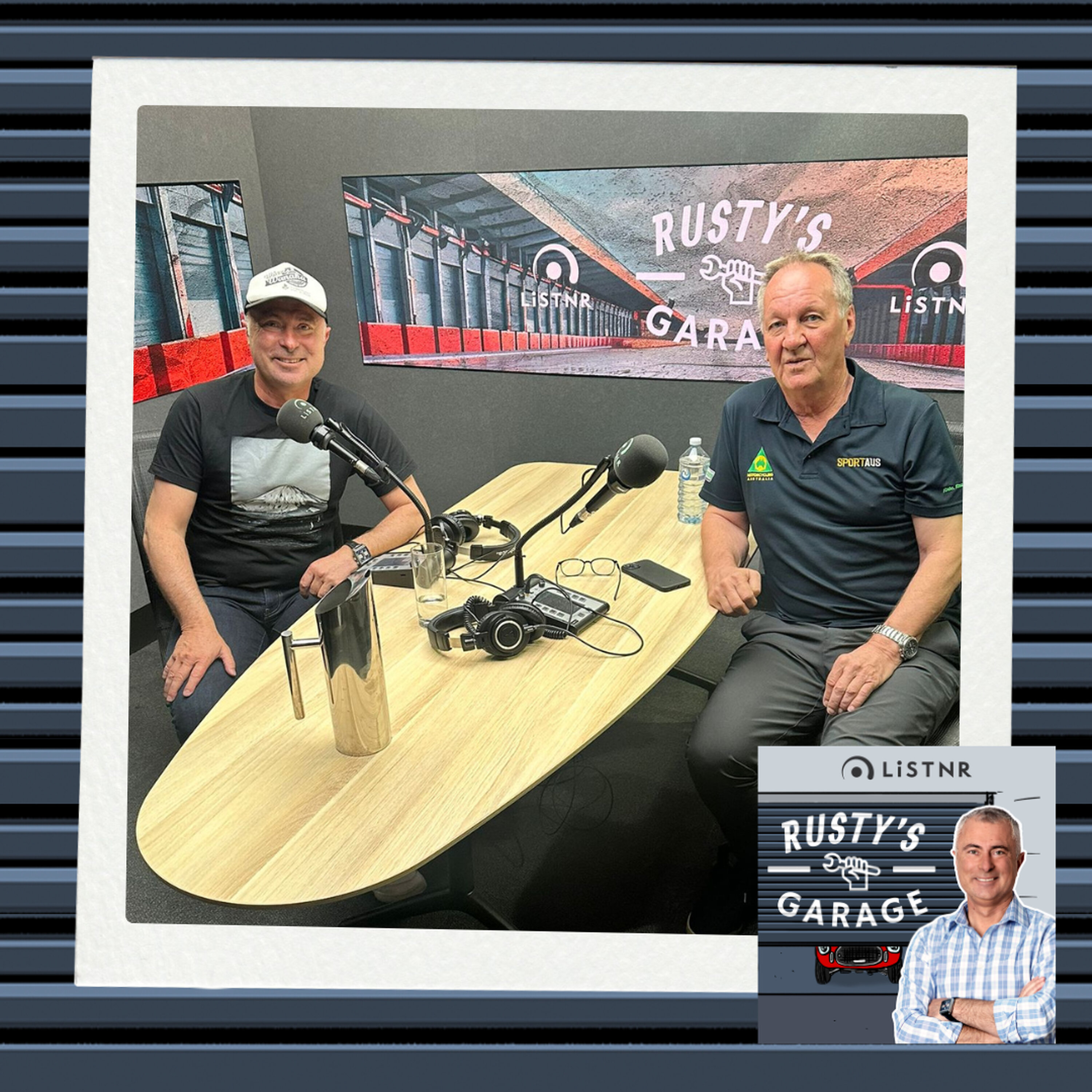
G'day it's Rusty here all set for part two of an excellent discussion with
Motorcycling Australia CEO Peter Doyle. We'll come to a bit more on his role now
later in this second instalment of the pod. If you've arrived here and you think
it's going to be all rules and regs and admin talk you're very much mistaken.
This is the story of someone from a motorcycle loving family with racing in
the jeans. Some legends would come around to the Doyle house as he grew up for
barbecues and more. As you'll hear in part one if you haven't given it a run yet
jump back to the library and check that one out. Being around bikes and those
stars of the day clearly had a profound effect on Doyle and after coming to
an almost life crossroads he chose to park his own racing for a career working
on the other side of the pit wall. Working on the bikes and helping to guide
the riders to success. He was bloody good at it and with an incredible list of
achievements. Let's continue the discussion now.
You got sick of wearing the suit around the turn of the century right after
more than whatever it was 20 years with Kawasaki. You joined Yoshimura Suzuki in
the United States and I think the plan was initially a short term one but it
became a long one didn't it? Yeah Matt rang me up and said I kept in touch with
him obviously he rode with us in like 91, 92 and then went to Europe for the
Kajiva which wasn't a great thing for him and then I can vividly recall him on
the grid at Sydney Motorsport Park or Eastern Creek as it was known then for
the couple of you know GPs. Yeah and then you know so he came back to Australia
and we put him back on a superbike and we hoped to be part of helping resurrect
his career there but he obviously had that like a gyrocopter accident nearly
lost his leg and so there was a long process there for him to heal and but
ultimately he came back and he was the result started to come back and he was
picked up by Suzuki US but as your phone ring at this point or something what
happens? Yeah we had a chat and I wasn't really that interested in going I'd
been at Kawasaki there for 20 odd years at that stage so. So you're green
through and through you think mate yeah? I thought that stage and a lot of people
thought that and then but they're the suit we're in the suit every day started
to get to me you know that corporate side and I was missing getting on the tools
I like to get on the lathe or the mill and make things and doing engines and
so Matt rang up and said well my crew chief's gone he said do you want to
come over to Daytona for the test which was in December so I took annual leave
and I told Kawasaki where I was going or something going to the test at Daytona
I turned up there and the boss come over to me Don Sakakura he turns up and
pleased to meet you da da da and he said well here's the setup sheet you
want to I said I still work for Kawasaki he said oh we won't tell anyone but
they were so welcoming there and so I did the test and watched how the team
worked big team yeah yeah free riders you know probably a 25 million dollar US
budget at the time and bike sales were huge in the US and I did the test there
and it was a brand new bike as well and did the test met everybody went back to
their workshop and then flew home and then basically a week later said be okay
I'm going to come over and but you know family had to get visas I mean it was a
bit of a battle yeah and you know moving to a new country and where do you base
yourself there Tino Hills California so basically geographical center of LA so
but you know you had no idea I went over there I couldn't get paid because I
didn't have a social security number I couldn't get a social security number
until the visa come through and they had to apply had to wait you know 8 to 12
weeks for that to happen I couldn't get a bank account open and therefore I
couldn't get a credit card I couldn't buy a car like there was all these things
that because it was all rushed and you're trying to build new bikes new team new
environment and you got to be at Daytona in the second week of March so it was
but it worked out I went there for three years and I stayed for 14 amazing and
I mean you talked about the health of the industry there then and the budget that
the team had and so on was a golden era mate you were there in a great period
for that sport with success as well weren't you there was a year there 2001
through 34 when you're talking about 16 18 factory bikes on the grid huge teams
sales and to put it in perspective the Suzuki sales manager said to me I said
how can you put so much money into racing here it's more than motto GP teams are
spending and he said well he said last year we sold 50,000 GSXRs 607 50,000
and high booster if you take a thousand dollar profit off each bike look at
servicing and parts putting 20 25 million dollars into the GSXR range was
their pride and joy back in those days putting 25 million into support that
program probably wasn't a big deal amazing couple of other Aussies came over
from that period too I think Marty Kragle who's been on the pod turned up for a
time there too didn't he yeah Marty was there Bucky Damon Buckmaster came over
obviously Anthony Gilbert Alex Gilbert Aaron Gilbert the whole Gilbert family
ended up there Aussies everywhere yeah Adam Ferguson come over for a few races
there was a lot of ins and outs but there was also seven or eight Aussies that
were making careers over there they said big dollars Bucky raid for factory Yamaha
so you know it was it was a golden era through to about 2008 before you come
back is there in all of this you know from from the formation of the Kawasaki
team that goes on not in a street but in a very small budget sense relative to
others like jucati winning that world championship or the success you had the
continued success you had with Matt in the in the States is there a zenith thing
for you in the racing that you look back on and go man that's pretty special to be
a part of that to have helped shape that I look I'd like being part of all of it
whether it was from winning the you know helping ask an arty win the Australian
125 motocross championship which was just him on his own and me turning up as the
manager with McFarlane and those guys but helping ask an arty because he had
no one they're helping him right through to you know that domination in the U.S.
I think when you look back now Milad and Speese Yates Tommy Hayden that great
names yeah and we went through I think I think we went 80 odd races without
winning everyone or three years and then we lost one and then still won the
next 20 so it was you know Joe still remember the day I remember the day we
lost a race for the first time in three odd years which was Jake Zemke on the
Honda Beta sat Utah Mila Motorsport Park and in the first race there but we
sort of quickly resumed control after that but that was the same anything in
racing needs stability for long-term success and we built a long-term group
of people who were focused on racing enjoyed racing like to go racing and
we're also pretty good at their jobs and when you combine that with a healthy
budget that stability is something like I said before with riders being honest
with themselves and not blaming the bike too much that's a great trait to have
building a solid consistent foundation for your team gives them that platform to
launch those guys can launch from what made Milad and so good as a rider has a
racer hard to find anybody more determined and more focused on the job he
was one of those guys that said you're paying me good money so I need to
deliver and I've heard him say that so many times to people well it's like
they said I'll go here's your bonus structure Matt and you know and we're
going to give you you know five thousand dollars to finish fifth and he's got
to look at them like they've got two heads and said well if I date when I
don't deserve to get paid do I so I don't want a fifth place bonus I want a
bigger first place bonus got you and determination I'll change coach I'll
try something different I'll do what the footballers do I'll do what the rowers
do just not rest on laurels changing it up and he kept changing it up and I'll
go and I'll go and buy a bicycle he was winning and then all of a sudden every
rider was competing in these bicycle races yeah I'm going to go and do this
then all of a sudden riders are going to do that a little bit like slight at
world championship level in the 90s Milad and was setting benchmark for goals
that other riders were going I need to do that too and and the focus and
determination he went to America for one reason to win and there was he did
everything he could around that set himself up I mean I went around to his
house one day you know it was showing me around his house in Chino and I walked
in and he's sleeping in an altitude bed with a pump so what are you doing he said
oh we've got pike's peak at Colorado and you know it's at 10,000 feet and the
bikes are slow and I'm a climatizing and it's the poor white family you know
putting up with his bed beating all night pumping all night the pumps going
but he did whatever was needed to win and I love that I couldn't ride a motorbike
like him but you know I wasn't bad at pool or darts or table tennis and we
would go around there and you know have a few beers on Friday night he wouldn't
drink of course all the team would but you know he wouldn't touch alcohol until
after the race last race of the year we go in but he wanted to play table tennis
because I wasn't bad at it and we would sit there I'm drinking beer in between
points and he's up the other end and he wasn't that good at it and he wasn't that
good at darts but by the end of our era over there he kicked our arses at both
unbelievable that says and that's what he did that says so much but before we
move on to the kind of administrative part of your career can I come to dealing
with people right so you've enjoyed the engineering side you talked about being
on the lathe and working on engines and stuff like that before but clearly it's
the athlete too right so and you've worked with some very different they're
all wired very differently and so on when did you sort of grasp that people
aspect and the importance of because you have to motivate them all in different
ways I would imagine Doiley do you you sort of and they're all different and
they all they all act different they all want something different and you know
and when I come back to having those kids ride those bikes I remember the we had
Robbie Phyllis's bike Matt Mladen's bike and Aaron Slyte's bike and they were
all ZX7s but they were all so different and we call them soft medium and hard
Phyllis was soft Slyte was medium and Mladen's was like a brick and that's just
the way you know their style their ability the way they rode the bike the one
thing we didn't do there may have been a small part of it we never tried to
change the rider to suit the bike gotcha you know we've got to make the bike his
bike right so yeah you got to tell riders sometimes and say you know hey we
think you're doing this wrong or you know Troy Bayless for example was never a
great user of his feet you say yeah you really need to use your feet more to
weight but that's not telling you how to change your style that's trying to help
him ride the bike better by using your feet on the pegs to change the weight
balance yeah so but we'd never try and change their style too much so is it
more about you understanding them to provide them the thing underneath them
correct so we had three different motorbikes that were so different that
the riders couldn't ride each other's bike but they also the same uptime unbelievable
yeah I mean yeah when you come into the era of data and data started in the
let's call it 1990 ish is when data started to come in and I had some
hilarious things with data over the years what was one and but a lot of riders
learnt this datum the guy who started 2d which is probably one of the most
utilised data systems acquisition systems in MotoGP and bike racing in the world
now that guy Dirk Debuss turned up at Hockenheim when we were doing a test
with Robbie in 1990 and said oh I'm this I'm a Kawasaki fan and he said
I've got this data logger I'm trying to build and he said I'd like to put it on
your bike and with we had a look at it and said that's not bad we're not
going to hurt you put it on the bike so you put it on the bike and he's sitting
there and we're just doing our thing and he come over he said oh he said Rob Phyllis
is a terrible gear changer
look I can see on the data and he's showing us the data anyway Phyllis
hears this comment he comes over and he says what are you talking about you know
and tells the guy he says I can make you go half a second a lap faster
because you are losing this time on every gear shift he says yeah he said
you tell that thing to ride the bike
so that era of data led to riders now grow up with it
so there's data on your own standard bikes now
back in those days you got this data and then you've got to try and look at the
data and you interpret the data and then try and convince the rider that
hey look the rider says I'm going through that
corner flat out and I say yeah nah come and have a look at the
data I can swear it's wide open and I think
that's that mental thing where you know you're going through a
corner and I think the head sort of says
roll that throttle off and you know so the data was really
good for convincing them when they said nah I'm going through that corner flat out
yeah well yeah actually not because the throttle position shows you're rolling out
so that was a really good tool for us to be able to show
when it first started yeah nah you're not doing what you think you're doing
so it's not me saying you're doing it wrong Robbie or Matt
it's the data saying you're not doing what you say you're doing because the data
sort of says otherwise and when they embraced that
and Matt Muladden went from a guy who was also a little
bit anti-data to start with he had his own computer
had MoTeX set up on there and he would take the files
after the race and he would take them at night and he would study
his data he knew how to read data like some of the engineers
right that's the amount of focus that he had on his job
so the US chapter finishes you well correct me if I'm wrong here you received an
honorary completion of your original apprenticeship did you not complete that did you get it
later kind of thing or something what happened there yeah I sort of when I went racing
you know you bailed out and so I wasn't I couldn't attend trade school
and so yeah I had to do that later and
I did that through we were doing some educational stuff with Sydney
TAFE a lot of TAFE colleges and giving them engines and going there
and speaking with some of the young guys at some of the colleges and then
one of the teachers there I said one day he said you got
such a lot of experience what was your trade and I told him the story
and he chased it up for me I love that he found all the details and said
you're now complete that's on the Aussie side but you had
is it a Bachelor of Science in Engineering in the States too is that right
so living in the states was something
it's hard to explain to people but we went through September 11
and we were living in Los Angeles when that went down and we had
staff around the country flying to the final well second last race of the year
and we had to do the last race of the year during that
era of war was breaking out and we're turning
up to LAX airport and they're about to shut the airport because the US started bombing
Iraq so we went through the
GFC so living in the US it was a
there was definitely an experience there but it also tightened
up a lot of the visa laws and one
of the ways to basically cement that
was that I needed to finish a degree
so we worked on that and I got that through the University of
Wisconsin and that was just to make life easier
but that's a great acknowledgement of what you've done around racing
and a great compliment to what you've done in racing isn't it?
We moved to the E3 visa
it was great change in the US in that period and the rules changed as well
so yeah we had to adapt. So you come back we are talking here
in 2025 you come back 2015 you become the technical manager
of Motorcycling Australia did you ever imagine yourself Crompo often uses
a line in the commentary about poacher turn gamekeeper right people who've worked
on the pit side who then go and work for the administrator
or the rule maker did you ever imagine yourself doing that? No it's funny
they'd asked a couple of times what do you do
we don't have any technical people here and
the moon sort of aligned and it was a part time gig
and I was quite happy because I wanted to set up my own little workshop and
do some work here and get back on the tools and
got in there and oh boy what a change
you've gone from as you said the keeper but I put it for
you've gone from the guy who's
automatically the guy who's trying to bend the rules to the people who try and make the rules
from breaking to making
Beardo talks about it in Supercars like I know all the bullshit aligns because I've been there
and just so you know
Timmy Edwards who was one of our board members has done the same thing
he came onto the MA board and obviously now he's
away from Tickford as with Supercars. It becomes
Sporting Manager in 2016 in 17 you move into
the CEO role how have you found that whole
experience and I mean you know you're in charge of lots of different categories as we said
in the two wheel world and so on it's been a big responsibility for you hasn't it?
It's a massive change I mean the technical side wasn't
too bad I mean it's pretty normal
regulation noise just do some stuff for the federation that makes
them tick a few boxes you know and a lot of it was around noise control
which is a big problem in motorsport as you know especially in motocross tracks
out in the regions and getting into the sporting side of
motocross and supercross and super bikes and
but the CEO role wasn't something that I'd ever thought about
it just came because the organisation imploded
and had to pick up the
the ashes from there and I remember being I was on a plane to the ISDE
and they asked me to go and help out the ISDE and I got to
Bangkok and got off the plane and turned the phone on and
all these messages I ran back and they said oh you need to come back we've just
fired a couple of people and no one knows what they're doing we can't even pay the staff
so I got a hotel room there and flew back
the next day and you know and started to try and
rebuild it from there but where are you at in that journey
how do you feel about where you are now and so on
well look I think the
it was broke there was a lot of debt five million dollars roughly in debt and
there were issues every bit of paper you picked up for
two years there was a bomb going off under it god damn it's been hard to deal with
you've come from winning positives
and that injection of adrenaline positive stuff and then here you are
every page you turn has got some sort of
and that went on for probably a minimum 18 months to two years
how did you stick that out then like because you just wanted the good for the game why did you
well I think it was serious enough and a lot of people won't know how serious it is
to probably you know a few more years down the track when it comes out
but it was serious enough that when I got back and paid the wages
there was only seven thousand dollars left in the bank account and there was a garner shoe
from the tax department so which I just sort of
looked at and said well the garner shoe from the tax department means that they
they're going to block 30% of your bank account and say well 30% of seven
grand is not much so go ahead you know and we said about paying it
but you know where four years later
debt free well done so
there's no assets out there anymore the properties had to go
that they had but debt free and where we're going along but
the biggest issue there was we were on quite a solid recovery until
COVID hit and then you know that was like well the last three
years we've got the place almost to wear it there and then whack we get
three years of well it was two years but in reality it was three
because nobody was prepared to set calendars and invest money
in events when you didn't know whether the government was going to close its borders or
shut you down so we got to a point where we were
strong enough we didn't have to put off any of the staff we
maintained all our staff and we'd also set about
rebuilding our staff so we got
like any race team you've got to have good people around you it's not
just me or just him or just her or just
that rider you know in the end the administration of the sport is
also a little bit like racing you've got to have a solid team of people around you
so well when we were bringing some people in new people
and changing jobs we were bringing some people
with some experience same with the board you know we got Peter Goddard and
Michael Strano and there was people from within the industry
who understand a bit about motorsport were coming onto the board
Roy Chamberlain our president now so we got some good people on the
board they weren't just enthusiasts they had also been actively involved in the
sport from low level to top level but it also could bring
a bit of kind of call it business acumen or something or elements of that to
the table bring that they bring a bit of cloud and the name brings
some integrity you know Goddard was a great person to have on the
board as a leader he world endurance champion Australian champion
dirt track he done motocross speedway dirt track road racing
Japan Europe so as a figurehead and a leader
having those people there people look at the company differently
good so we bought other people in the staff you know we bought in
with my position had to change and move into that role
we bought in Pip Harrison from Honda who led the Hondas race team for 15 to
20 years and he wanted to change and he's still there today
so you've got to get those good people around you and right now we've got
wider and we're always looking to improve by the way
but we've got quite a good team good framework good framework and
we've got some experienced people in there in all our areas of all
departments media events operations technical
so we've got some solid people in there so we know we've still got to improve
but I think that's just like any race team if you're not looking to improve
you're not doing your job
Peter is part of the board for the Australian motorsport Hall of Fame
in 2025 the panel voted to uplift Casey Stoner to legend status
a very worthy inclusion in a rare group of champions with nerves of steel
we entered the corner at 265
and the slowest point of the corner I cracked the throttle and opened it again
was 258k an hour we were breaking the rear end to
get it out so that's the quickest we ever went through there I'd say through a race
because I never wanted to spin the tyre too hard I wanted to save it throughout the race
we're probably sitting at about 250 I suppose every lap
Casey's recollection of tackling a corner now named after him at Phillip Highland
is just one of many captivating stories in his podcast with Rusty
he also opened up on some health battles he faced in post race life
search for Casey's two-part EP in the garage library
now back to Doyle
what are the green shoots like for the next generation of races coming through
well I think you know right now and it's funny because
our sport is so many disciplines
so we went through a
such a golden era of road racing I mean you can look back
really from the 70s to the 80s to the 90s to the
it just keeps going it's probably a bit thin on the ground now
but a lot of that is due to probably what occurred 10 years ago
where
FIM will superbike rules went away from Australia for more than 10 years
fragmentation multiple series in Australia different promoters and
state bodies within our own or pulling in different directions
no pathways it really really changed the landscape in road racing
but you know right now our Speedway and motocross boys
and our Enduro guys are really solid globally
more than solid yeah yeah yeah I mean Speedway of Nations two
twice in the last three years motocross of nations twice in a row
ISDE we've got a room at the MA office
which is just one of our small meeting rooms we call it the ISDE
room because we've got all the team trophies there
the women won six in a row we've won outright the trophy team
the junior team there was a year they won all three
Daniel Sanders won the world rally this year and I didn't check this morning's results
but I'm hoping he goes undefeated that would just be incredible
won the Dakar, Toby Price won the Dakar a couple of times so
you look at Enduro, Speedway and motocross and in reality the
world results have never been better ever
I think road race has changed enough that
it's going to be hard to see a McDewan era
because the fact is getting there now
is totally different McDewan got there on talent
Wayne Gardner on talent Casey Stone on talent now you've got to have talent
and money and I think that's a bit of a game changer
in road racing I'm not necessarily a fan of it but the only
way through there is this huge cost to get to it now and I think it's probably gone a little bit
the way I've formed with the one I'm assuming but the days of that
manager coming out and watching the support race at MotoGP
and saying jeez I like that Troy Bayless I'm going to get him on one of my
I think those days are gone I think the dot joining and all of that
somehow is that from all of us collectively finding the right
sort of benefactor that has that same belief that you just talked about and then getting
them somehow to help that rider to get to the top
there's a lot of riders overseas right now and I was
looking to put in perspective we never
recovered our international participation from COVID rapidly
so to give you an idea we have to issue FIM
licences on behalf of the FIM so the international licences for
all the Aussie riders are issued through the MA office so
the peak of that was pre-COVID
probably going back to about 28 was 300
we went to COVID it went below 100
and we've only now we're back up to about 260-270
and we've got a couple of months to go this year so we'll almost have
an equivalent record number of Aussies who are taking
international licences and participating overseas
it's just not necessarily at MotoGP where you've only got Jack Miller
they're over there doing Spanish championships, BSBs
and there's a few popping up in the AMAs again and so
Asia Talent Cup, Red Bull Rookies, there's a lot of young talent
out there so you've got to be hopeful that in a few
years one of them get through and we can on Earth another
Kelso and Ralston, Harry Voigt's got a wild card this weekend
they're at the fringe there's a lot of guys knocking on that door
I think that there's money and being in the right place at the right time
or putting up that right performance in the right place at the right time is now
very important to those guys to take that next step. You've been ace with your time
let's do a couple to finish. Firstly you bring up MotoGP that is this weekend
we're recording days out from heading to Phillip Island you might even be heading there today for all I know
on race weekend what happens for you are you immersed in things
can you take it in what have you got to do?
Well so today when I go back from here we've
actually got 15 officials at the MA office today and we've got
the FIM senior officials there and they're delivering
the clerk of course so the people who run the event in race control
so we're delivering that seminar today at the MA office with
the FIM and we'll head down tomorrow
tomorrow afternoon will be a track inspection with the FIM
and motorcycle Australia and people
from Dorna there'll be a lot of this it's grown from having one or two
people do it there's entourage and buses and
walk around the track so it's grown into this massive
big and everybody's got their input oh that corner's too fast that barrier
to here that needs doing and a lot of it's not really that relevant
it's just part of the show now but we'll do
that Thursday obviously a lot of catching up with people that's one of those
events like any of the big events there's people from manufacturers
turn up there's partners there's sponsors there's riders
will turn up there's other business contacts that will turn up
and there's a lot of meeting and liaison goes down there it's that
that connectivity is probably for us the most important part of the Grand Prix
It has been a crazy busy few weeks for you from the United
States back here to MotoGP but I want to come to the fact that we had
MXGP in Darwin you know I was there with you at Broadford all of those years ago
fantastic that we can get that level of motocross back in Australia
what did you think of that the track they created at the Hidden Valley circuit I thought was awesome
other than a decent downpour which surprised everybody late on Sunday afternoon
it was massive mate wasn't it? Well you were there you've seen it I've seen it
I went to the disnations and obviously the week after
and yet there was people
still talking about MXGP in Darwin the global promoter
in front loved it the riders loved it all the international
people had a great time up there the track was fantastic
great crowd I think major events Northern Territory major events
did a great job and we were just happy to
get that Grand Prix back here and it's quite there's a funny
well it's not a funny story but a lot of people are not going to believe
how that came about but with Craig Fletcher
who used to be at the Grand Prix Corporation and that was just a conversation
that Craig and I were having over super bikes going to supercars
and I said Fletcher you're in major events now
MXGP is a little golden nugget sitting out there that
a lot of people have kicked around over the years and
someone needs to take it because
look at the market and look at the amount of people in the right place with the right promoter
with the right track it'll be as big as MotoGP. Amazing great
and we're really excited about you know building on it for 2026 and beyond
you shared a post very recently on MA socials with some
absolute legends at Donations. Jeff Leeske
is in there, Stephen Gould who I'm going to get on the pod soon is in there and I love the fact
that while we're talking about the Lawrence brothers and what they were doing and how the Australian team
generally performed so well we have these
legends that we're acknowledging in the same breath mate aren't we? Yeah look Stephen Gould
Jeff Leeske and again I'm fortunate that I've known those guys for years
and you know those two guys
support the Australian MXGP team by organizing a tour
and they lead the tour so Stephen Jeff organized that and they had
60 people with them but Marty Kragle was part
of that so two-time Superbike Champion here international Chris Watson
was there who's won so many dirt track championships and
South Australia look I think he's probably lost count. Ray Vanderberg formed
Mr Motocross and I knew Gough really well we were juniors together
and Junior Racing as was with Jeff Leeske and Mark Leeske his brother
and those guys all up there wearing the Australian shirts and
having a good time and waving the flag and
proudly waving the flag too mate. So they ran it for Madeleine Basin
in the UK and that was the first go
it went okay and then we're going to do MX of Nations in the US
and they were already talking we're going to have to do an A in France
so the competitive side of the year comes out there's only one thing
possibly better about Australia
you're beating the Americans in America and Motocross is probably
beating the French in France so I think that should be
what everybody sits back I hope that's the aspiration they used to
for everybody to get behind an A next year. I love that. To finish
you have had an amazing career that spans
decades you've been a part of some successful very successful racing
teams and manufacturers you're doing some great things now in a governing
body sense what do you reckon is the key to your longevity
and the success and I want to I don't want to put words in your mouth I don't want to part answer
it from an observation that I have I reckon it's a roll your sleeves up approach
I reckon it's a that Aussie kind of can do thing but also I reckon it's a no BS
approach what if you sat back and looked at it am I right? Yeah I think you're
right when we were running race teams there was one
one thing I like to do is that like any
business you're running running a race team running a business you have to
have a good crew around you so you hire the people
people come and do the job people get sick people leave people go away
people don't turn up whatever might happen my thought process was that
I need to be able to do the job of everybody in the team so
if somebody's not there I can change the gearbox or I'll put that cylinder
head on or I'll change that engine or shock or forks or so
that was something that you can only do by
working in the sport for a long long time so you have that ability to
roll your sleeves up and get dirty if you need to I mean I even
being in the US when we used to do the pit stops at Daytona before they
sort of stopped all what we used to do in the old days I was the
rear wheel guy so even as the team manager you know you
you roll your hands up and get dirty and hopefully
you hope that that's leading by example so that is my
approach and I'm a fan of the no BS approach
whether it's coming from me or whether it's at me I'm quite
happy with that approach great stuff it's been wonderful to talk a bit of life
and time with you and what you've achieved congratulations I
get the joy of spending a little bit of time with you around the Australian Motor Sport Hall of Fame
and we're doing some some cool things with that too we wish you continued success with
Motor Sport Australia and thank you mate for everything you've done along the way it's been lovely to tell a bit of your
story thanks mate anytime I'm sure there's more stories that will never see the light of day but anyway
it's been great thanks awesome cheers
About this episode
Peter Doyle shares his journey from a motorcycle-loving family to becoming the CEO of Motorcycling Australia. He discusses his transition from Kawasaki to Yoshimura Suzuki in the U.S., where he thrived during a golden era of motorcycle racing. Doyle reflects on the importance of understanding riders' unique styles and the evolution of data in racing. He also addresses the challenges faced by the sport, including financial struggles and the impact of COVID-19, while highlighting the successes of Australian riders in various disciplines. His insights into the future of racing and the significance of teamwork are particularly compelling.
Moving to America and playing an important part in an incredible period of dominance with Suzuki.
The competitive intensity fellow Aussie Matt Mladin brought to his training and racing as well as the emergence of data and the deep dives that helped make him a better rider.
Returning home and switching from team land, where you try to exploit even the smallest holes in the rules, to enforcing them for Motorcycling Australia.
How policing the technical side lead to the top job, the challenges navigating through covid and a balance sheet that was on life support.
The greenshoots in all areas of two wheel competition in Oz inspired by our MXON and Speedway teams in recent months.
Plus working on the Australian Motorsport Hall of Fame board and a park the politics ‘roll your sleeves up’ approach to management.
Peter’s candid approach to story telling will leave you in no doubt that the right administrator can make a good Motorsport podcast guest.
Head to Rusty's Facebook, Twitter or Instagram and give us your feedback and let us know who you want to hear from on Rusty's Garage