Pike’s Peak is a race where cars drive up a mountain road. The road is closed for the event, and the climb is so steep and high that it makes driving and car cooling much harder than a normal track.
The Buick Century is a car model that Buick has made for a long time. It’s a midsize sedan, meaning it’s meant for everyday driving with room for passengers. The podcast mention suggests they’re talking about how the model name has lasted for years.
The Isle of Man TT is a motorcycle race on roads that aren’t closed off like a typical track. It’s famous for being extremely risky, which is why people talk about whether it’s “still legal.”
Racing “classes” group cars by rules like performance potential and allowed modifications, so drivers compete against similar machinery. When the guest mentions winning in his class and also podiuming in the open class, he’s describing how different rule sets can change the competition level.
Pike’s Peak is a race where cars drive up a mountain road as fast as they can. It’s tough because it’s long, steep, and the road isn’t built for that kind of speed.
Concept
factory teams vs grassroots teams
Factory teams are manufacturer-backed racing programs with major funding and engineering support, while grassroots teams are smaller, independently run efforts. Pike’s Peak is described as unusual because it mixes both types of teams in the same competition.
Car
Volkswagen IDR
The Volkswagen IDR is an electric car that’s famous for setting very fast Pike’s Peak times. Here it’s mentioned to show that record-level attempts can require huge budgets.
Concept
World Endurance class racing
Endurance racing is the kind of motorsport where teams race for a long time and have to plan for more than just speed. The speaker is saying Pike’s Peak also demands that same level of serious preparation.
Hyundai is referenced here as a sponsor/brand tied to a pro driver’s racing program. Sponsorship matters in motorsport because it can determine how much budget a team has for development and competition.
Electric conversion means taking a gas car and changing it so it runs on electricity instead. It’s not just swapping the engine—there’s a whole new electric system to make it work and perform.
A prototype EV is an experimental electric car that’s still being developed. It’s built to test how well an electric setup can handle tough conditions like a steep climb.
Elevation change means the track goes up a lot in height. That can change how the car runs and cools, and it can make the same setup behave differently as you climb.
Turbocharging is a way to make a gas engine produce more power by forcing extra air into it. It can be more complicated, so it’s a bigger engineering jump than just tuning.
A six-motor setup means the car has six electric motors working together. That can help the car put power down more effectively as conditions change on the climb.
An “eight motor setup” means the car has eight electric motors instead of one. More motors can help the car manage traction and deliver power more precisely. It’s a complex setup, which is why it’s notable in racing.
Concept
elevation power loss (normally aspirated vs electric motors)
Higher up, the air is thinner. Gas engines need oxygen to make power, so they lose power at altitude. Electric motors don’t “breathe” air, so they keep making power much more consistently.
A normally aspirated engine doesn’t use a turbo or supercharger to push extra air in. When you drive higher up and the air gets thinner, it can’t get as much oxygen, so it makes less power.
Concept
EVs on Pike's Peak (altitude + uphill climb)
They’re saying Pike’s Peak is a great EV race because it’s a steady uphill climb. EVs can deliver strong, consistent pull the whole way, and they don’t lose power just because the air is thinner at altitude.
Range anxiety is the worry that your battery won’t last long enough. In everyday life it affects how far you dare to go. In this race context, the course length makes that worry much smaller.
Torque is what makes the car pull. “Constant torque” means it keeps pulling strongly and steadily instead of only having power at certain moments. That’s especially useful on a long, steep climb.
Power is basically how hard the car is working to keep moving fast. “Constant power” means it can keep that effort going for the whole climb, instead of fading. That helps you hold speed uphill.
The battery pack is the EV’s battery. Bigger batteries store more energy, but they also add weight. In a race, you want enough energy to finish without carrying extra weight.
They’re talking about carrying the bare minimum energy to finish the race. If you bring extra battery or fuel, you add weight, and weight can make you slower. The goal is to arrive with just enough to complete the run.
Battery capacity is basically how much energy the battery can hold. More capacity can mean you can drive harder for longer—important for a long climb like Pikes Peak.
“Battery monoliths” refers to large, self-contained battery modules/blocks used in the vehicle’s pack. Using fewer or lighter modules can reduce total mass while still meeting the energy needed to reach the summit.
It means you’re faster when you know a track really well. If you’ve driven the course many times, you learn where to brake and how to drive each section.
Concept
course notes like you would for a rally
Course notes are like a cheat sheet for the road ahead—what kind of turns and what to expect. He took notes while riding along so he could remember the course better for later runs.
Concept
imprinted in your brain
In high-speed driving, “imprinting” the course means memorizing the track’s turns, braking points, and timing so the driver can execute consistently. Chris describes using repeated mental and physical runs to build that muscle memory before his first attempt.
A target time is a specific lap or run duration the driver is trying to achieve. Here, he slows down another champion’s video and compares it to the time he wants, using it as a benchmark for how to drive the course.
The racing line is the path a driver tries to take through turns to keep the car moving quickly. On Pike’s Peak, the best path through corners can be different than what works on a typical track.
“Measured risk” means you’re not just gambling—you’re pushing only when you think you can still stay in control. It’s about balancing speed with safety.
Term
send it around this corn
“Send it” just means going for it—driving into the corner with a lot of confidence. Here, it sounds like the driver is taking the turn without slowing down much.
GT4 is a racing category for cars that are based on models you could buy. The cars are modified for racing, but they’re not as extreme as some other race classes.
They’re talking about how a race course has lots of turns, and even tiny improvements at each one can change the final result. It’s about being consistent and not losing time repeatedly.
The Nürburgring Nordschleife is a very famous race track in Germany. It has big elevation changes and fast corners, so it’s easy to make mistakes—coaching helps a lot.
“Risk/reward” means deciding whether a more aggressive move is worth it. On hard tracks, pushing harder can save time, but mistakes can be dangerous.
Term
arm coop
“Armco” is the steel guardrail you see protecting the track. The point here is that the grass area isn’t meant to safely stop you—it’s more about how the car slows down and sets up what happens next.
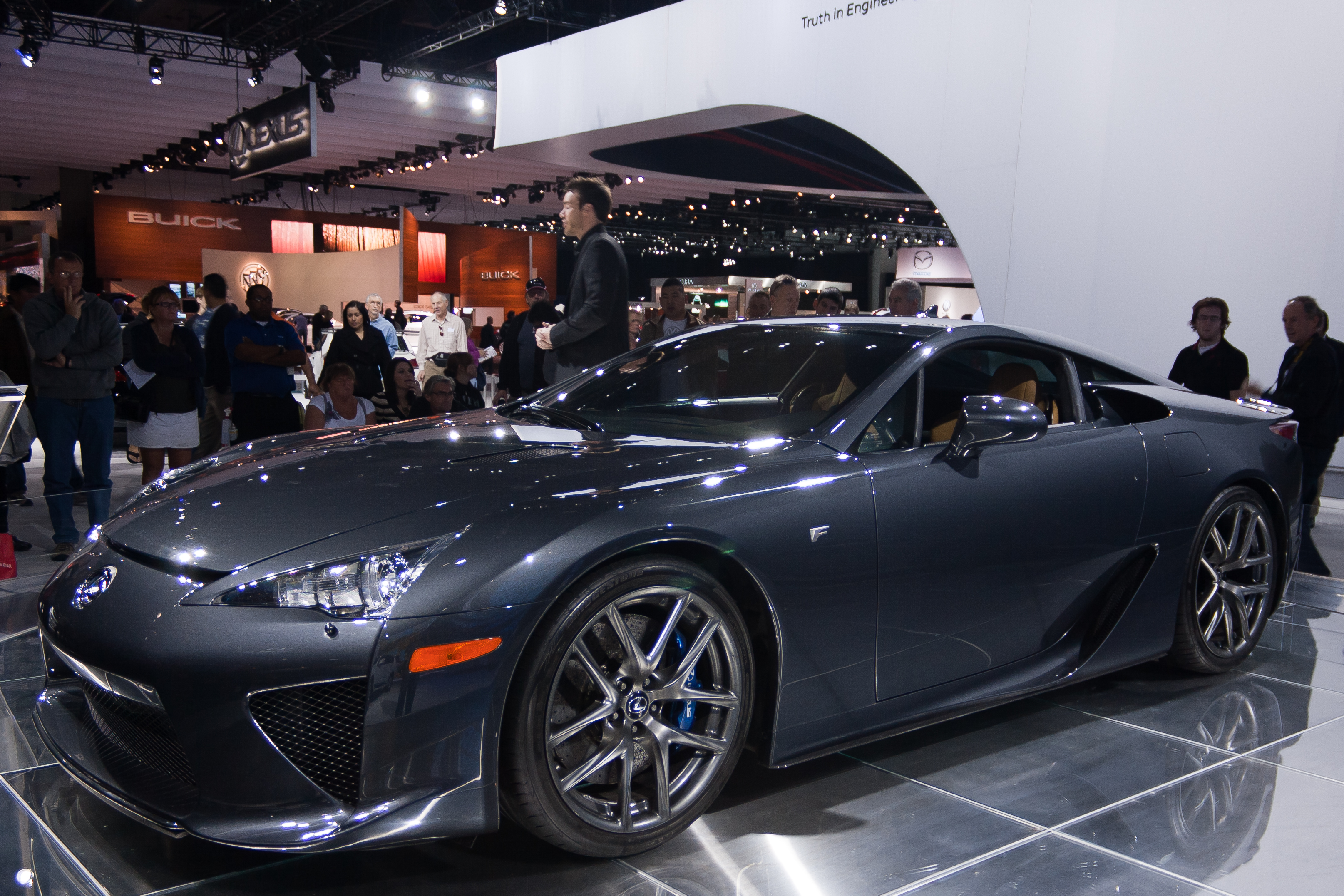
The Lexus LFA is a very rare, very fast supercar made by Lexus. Because it’s special and not common, people talk about it when they discuss how it feels and performs when driven hard on a track. It’s the kind of car where mistakes can be costly.
A manual transmission uses gears you select to change how the car’s power reaches the wheels. Here, it’s used to help the EV reach higher speeds for Pike’s Peak.
Direct drive means the motor is connected to the wheels without using gears to change the ratio. Gears help the car keep pulling effectively and avoid getting stuck at a limited top speed.
A top speed limitation is the highest speed the car can reach. The point Lennon is making is that without the right gearing, the car would stop accelerating too early for Pike’s Peak.
Rev matching means you “time” the engine speed when you downshift so everything stays smooth. Instead of the car jerking when you shift, you bring the RPM to the right level first. The host is saying they still had to do this even though the EV doesn’t sound like a normal engine.
An EV powertrain is the electric system that makes the car move, like the battery and electric motor. Here, the host is talking about putting that electric system into a car that still has a gearbox. Because of that, downshifting still needs careful RPM matching.
A two-speed gearbox means the EV has two gear ratios instead of just one. That helps the motor stay in a good operating range for both quick starts and higher speeds. The segment also contrasts it with a setup that uses a clutch.
Heel-and-toe shifting is a way to downshift while braking without making the car jerk. You use your footwork to brake and “tap” the gas at the same time so the engine speed matches the lower gear. The speaker is saying they’re doing that technique even with an EV.
Term
max out your deceleration
It means braking as strongly as you can without losing control. The idea is to slow down hard for the corner while keeping the car stable so you can turn in cleanly.
The clutch is what lets you change gears in a manual car by temporarily disconnecting the engine from the gearbox. The point here is that an EV launch doesn’t require that same clutch step.
EV means electric vehicle. Since the motor makes power right away, the car can launch without the same shifting and clutch steps you’d use in a typical gas car.
A gearbox is how the car changes gear ratios to keep the power working well. Here, the car has five gears available, but the driver only uses three because of how the power comes on.
Term
equivalent horsepower
Equivalent horsepower is a comparison number that translates electric motor output into horsepower so people can judge it like a gas engine. It’s basically a “how strong is it?” number in familiar units.
“Dinoed” refers to running the car on a dynamometer (dyno) to measure output like horsepower and torque under controlled conditions. The speaker says they haven’t dynoed since a motor setup change, implying the power estimate is conservative rather than directly measured.
Term
pound feeted tour
Torque is the twisting force that helps the car accelerate. It’s especially important for launches and low-speed pull, which is why EVs often talk about torque a lot.
They talk about how sponsors get involved and what sponsors get in return. The main idea is that the car and the team’s media coverage are used to give sponsors visibility.
Suspension components are the parts that help the tires stay in contact with the road. They also help the car handle bumps and stay stable, which matters a lot in racing.
Öhlins is a company that makes high-end suspension parts for performance cars. If they’re mentioned here, it’s because their shocks or suspension gear are part of the racing setup.
They’re saying the race car is like a moving ad. Instead of just paying for ads online, sponsors put their logos on the car so people see them everywhere the car shows up.
EV TUNERS is one of the groups helping with the project. They’re providing information about the sponsorship levels and sharing updates through their online channels.
Car wraps are large vinyl graphics applied over the bodywork, letting teams change colors and sponsor artwork quickly. The speaker highlights that wraps are fast to design and install, which is why the car can look different almost every year.
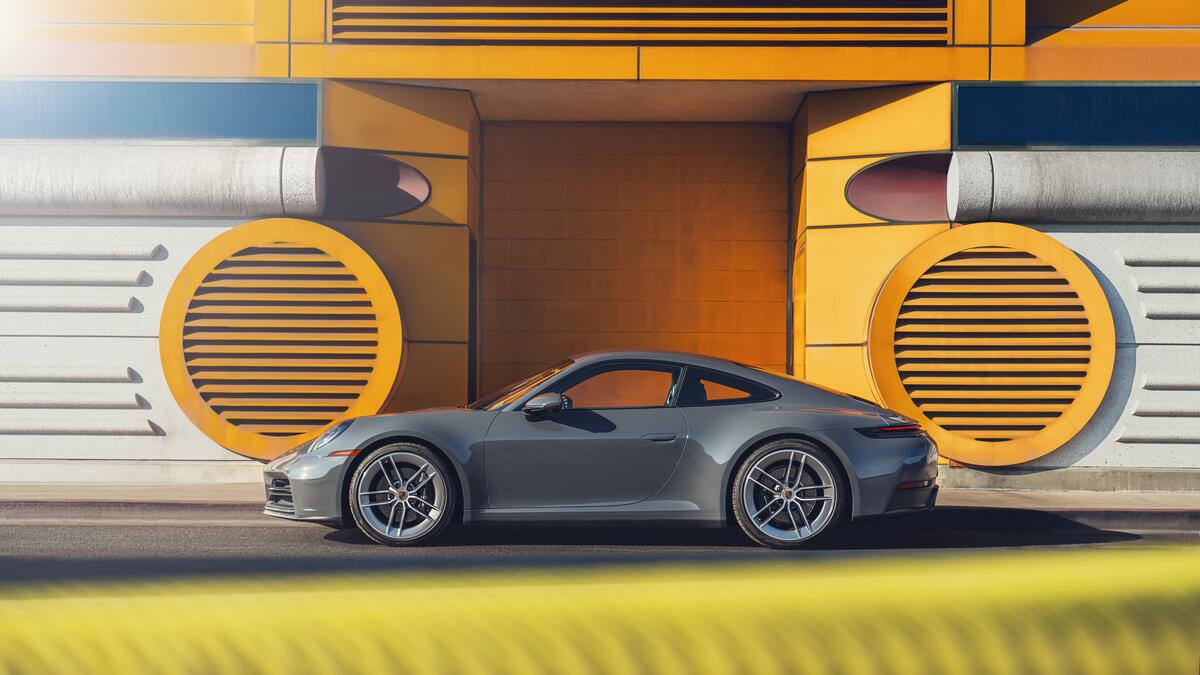
The Porsche 911 is Porsche’s iconic sports car. It’s famous for its rear-engine layout and has been made for decades, so people often compare the older versions to the newer ones.
Electric propulsion means the car is powered by an electric motor and battery instead of a gas engine. The guest is saying they’ve raced both EVs and gas cars, so they can compare how they feel and perform.
A flat-six is an engine where the cylinders are laid out flat, like two rows facing each other. The host is pointing out that even with electrification, the flat-six’s sound is still a big part of the experience.
Coasting is when you take your foot off the gas and just let the car roll. The point here is that, for fast driving, instructors often want you to manage throttle more precisely instead of just letting the car drift along.
Maintenance throttle means you don’t fully lift off the gas; you keep a little throttle on purpose. It helps the car stay settled and predictable while you’re driving fast.
In racing, adhesion is how well the tires stick to the road. When you’re at the “edge,” the car is right about to lose traction. That’s why throttle inputs feel so sensitive.
Formula One is the highest level of open-wheel racing. Here, the host is talking about how drivers are changing their driving style—especially when they lift off the gas and coast—and how it’s getting better. They also compare it to IndyCar strategy.
Races aren’t just about going fast—they’re also about using fuel wisely. If a driver can drive in a way that saves fuel, they may be able to stay out longer and gain position. The host credits Scott Dixon with doing that extremely well.
“Power plant” just means what’s powering the car—basically the engine system. The host is saying the rules don’t usually force everyone to use the same type of engine.
GT4 is one of the race categories at Pikes Peak. It’s more tightly regulated than the “anything goes” classes, so cars are closer to each other in rules.
A spec class is a race category where the rules are stricter about what the cars can be. That helps keep the cars more similar than in “anything goes” classes.
Open is another Pikes Peak race category. It’s not as unrestricted as Unlimited, but it still allows a lot of freedom, and strong cars can win from it.
“Open Wheel” is a racing category where the wheels are exposed instead of hidden under fenders. At Pikes Peak, it’s also a class that tends to attract more experimental race-car designs.
“Time Attack” means the class is built around cars that start from production models. They’re modified for speed, but they’re still more like regular cars than full-on prototypes.
“Exhibition” is a category for prototype cars—more like experimental entries than the main championship fight. It’s meant to let new ideas run, even if they’re not in the main competition.
“Vintage” was a class for older cars, but the speaker says it’s been discontinued. They explain it became less popular because old cars got more valuable and the rules required changes that weren’t worth it for many owners.
A tube frame is a strong “skeleton” made from metal tubes that supports the car. The point here is that the car may look old, but the important structure is modern and purpose-built for safety.
The Chevrolet Corvette is a sports car made by Chevrolet, designed to be fast and handle well. People bring it up when they talk about how well regular, factory cars can perform on a race track. Even though it’s built for performance, it may not be set up for the hardest track use.
LIVE
Bloomberg Audio Studios, Podcasts, radio News. I'm Hannah Elliott and
I'm Matt Miller.
This is Hot Pursuit.
Coming up on today's podcast, we have Chris Lennon. He
is a Pike's Peak winner, but also a winner of many other different kinds of races on many other different kinds of track tracks. He's a driving instructor as well
as has been the president of his Porsche Club of America chapter and done many other things with the PCA. Plus,
he's a bit of a media engineering mogul, so he's written the textbook on media workflows and straddling the two worlds of business and racing. I think makes him a
pretty cool guest for our particular podcast.
Yeah. Also, who's going out of seventy three nine to
eleven RSR tribute car which is electric which we should electrified? Yeah, fascinating.
Somebody grabbed Barry Ritholtz because this is this is right.
True?
Yeah, So I mean at the pikes Peak race is coming up quick, right, it's just about a month and a half away.
Yeah, and it's good. It's fun. Anyone, if you're thinking
about it, you should do it.
I have to say it's it's up there with like what I consider to be the coolest race is obviously you've got the big.
Indy car Indy five hundred.
You've got the big Lamal that we went to last year that was awesome, the Nurberg Norch Life they don't race f one car is there anymore, But that's like up there with the most legendary Manza. And then this
This has been going on for well o our century.
Right, yeah, this I think this year is the one hundred and fourth time they've run it, and it's literally like a time trial on open public road. I mean
they stop the they close the course for this race, but it's literally up a fourteen thousand foot mountain side on a road. It's kind of wild and wooly, and
it's one of the few things that feel very old world when you go. Like if you go, you can
just walk around freely in the paddock, in the garages.
They're like these tent garages. You can watch people working
on the cars, you can go up and talk to them.
It's really unregulated, which is great.
I mean they're very dangerous.
Yeah, right, It's one of those things like like the tt on the Isle of Man where you kind of totally wonder is this still legal?
I know, it's crazy, Like, don't tell anyone they're still doing this because it's really cool and it feels like a throwback to an earlier age when men were men and women were men and you know, all of that stuff.
Well, with all that aside, let's get right over to Chris Lennon.
I mean, I was looking at how I would introduce you, Chris, and obviously you've won in your class at Pike's Peak.
I don't know how current my information is, but I see that you've podiumed at least six times. You've you
podiumed also in the open class, which I imagine is one of the fastest classes. I don't know much about
as much as obviously as you do about the race.
You wrote the book about the Pipe's Piece race. But
you're also a driving instructor obviously have been president of your chapter of the PCA, and there's so many accolades for you in terms of racing and all the licenses that you've got.
I didn't really know where to start.
What would you say is your proudest accomplishment or what would you put as the headline on your on the story of you right now in terms of racing.
Well, the headline is definitely a Pipe Peak champion. Yeah,
everything else that I've done in my racing career pales in comparison to winning on pipes, So that's all that really matters.
Can you give us a little bit of background on Pike's Peak? Obviously, you know Matt and I have attended.
It's an old race, but it's a rather niche race, although it's very prestigious. So just give give our listeners
sort of a rundown of why it's so grueling and difficult and really death defying too. I'd love to hear
just from your perspective as a driver.
So number one, it's unique, right, there's no other race that's even similar to it. There are other hillpliines. You know,
hill climbs started a long time ago in the UK and they were literally climbs up hills. Pipe speaks not
a hill as you as you know, but they call it a hill climb. So you know, most of those
are you know, one two three miles long and this is twelve and a half miles long, and you know, up a mountain, that sort of thing. It's completely unique
in what it is in the the risk reward totally unique.
You know, the kind of speeds where you've got cars going one hundred, one hundred and fifty miles an hour up a mountain road that wasn't really designed for that is quite unique. The grueling aspect of it is also
something that a lot of people don't realize that they think, well, it's one you know, you know, ten minute run up the mountain sounds sounds like a sprint race, sounds pretty simple, and it's not. I can tell you having competed in
this seven times, you know your success or failure really is dictated by your preparation, liking everything right, and for the successful teams of what we've done always is it's been a year long effort or in some cases multi years to prepare for it. That in the years when
I was running every year back to back, the day after the hill climb, we would get the team together and have an immediate debrief and planned for next year while it's all fresh of what went well, what didn't go well, what do we need to do differently? That
sort of thing, And that's I think something that a lot of people don't realize is is the commitment required for this race if you want to be highly competitive is very large. The other thing that a lot of
people don't realize is the budgets that are involved with this and that. And another thing that makes it very
unique too is that this is a combination of factory teams and grassroots teams, which you don't really find that.
I like to equate this to you know, people pay a lot of money to go to baseball or football fantasy camps and run around the field with their their favorite athletes, and that this is like that, but it's real, like you're actually competing against your your professional heroes. So
it's very unique, you know, in that way. And yeah,
so it's.
It's wait, Chris, what do you think is the delta between you know, the cheapest you could run Pike's Peak and be an actual contender, right and the biggest budget teams.
That end up on the podium.
So we like to think of ourselves as pretty bare bones in our budgets run around a quarter million, so that's about the cheapest. I mean, you can run cheaper
than that, but you're not going to be competitive whatever, that's right. I'm sure there are there are people who
spend twenty or thirty thousand and they go up and have fun and great, but they're the chances of them being on the podium or in being competitive is not high.
So to be competitive, I would say, you know in that range of quarter million up to the Volkswagen IDR that set the all time record was rumored to have spent forty million on their effort.
And so season in World Endurance class racing.
Yeah.
Well, and even before that, the pre record holder, when Sebashton Loade came with Pugio over over a decade ago, that was ten million, and they actually spent their Laman budget.
They withdrew from Lamon that year so they could run Pike's Peak. So if that gives you an idea, they
brought I think sixty people over from France and put them up at the five star hotel and all that sort of thing. So if you want to do it,
if you want to set an all time records, it's in the tens of millions.
I can.
I can recall several years ago commiserating with Rhys Mellon, who's no joke pro driver, who was sponsored by Hyundai, and he was complaining that they only had a million dollar budget and they couldn't compete.
Are you racing this year, Chris.
I'm not so. We've been developing the car for the
last several years. We ran it the last time in
twenty nineteen when we did the electric conversion initially, and we learned a lot. We got a third place, man,
but it was definitely not a winning car, and I had said, you know, we're not coming back until we have a winning car, and so it's a it's a true prototype science experiment. We finally just a few months ago,
got it to the point where it is achieving the speeds that I expect of it. The downside of that
is it's exposed the fact that the breaks are not sufficient.
So now that we're going as fast as we should, we can't slow down as fast as we need to.
So there's still some some development needed on the car.
So we're targeting twenty twenty seven, and you're working on our effort toward that. Getting getting We've got a nice
team together, you know, get the right partners, sponsors on board, and you know, that's kind of what we're heading toward.
By the way, I want to get to get to that.
Wait, I have a question on the development of this car really quickly, because we know with the elevation change, obviously, electric vehicles have very different considerations to internal combustion cars when you're going up the hill, and that's on top of dealing with how the weather can change. You know,
in a matter of minutes up the mountain, when you're talking about developing a prototype EV to go up and handle this type of elevation change, what are the considerations compared to something that's just internal combustion.
But a great question, So maybe I'll give a little bit of background on how we ended up going down this road. So Pipe's peak, like all racing is an
arms race, right, every year you have to improve to continue to compete. And over the first six years that
I competed, we went from a three leader internal combustion motor to three two two or three six, and then we're at the point where it's like, well, we're gonna have to turbo charge or supercharge this, which leads to a whole other level of expense and risk and that sort of thing. And at that point I was actually
approached completely randomly by a group of guys who were out in the not southern California, but south of the Bay Area.
Is this Zero Motorcycles. Yeah, the Zero Motorcycle fan is
big fan.
Yeah, yeah, cool. And they they said, hey, you are
you the guy who's run this old looking Porsche up and one on Pipespeak And I'm like yeah, and they're like, hey, would you like to go faster? Would you like to?
And I'm like, well, of course. And so this this
was just a group of employees Zero who had a passion around this and who had actually the main guy had built a prototype out of a street night portion nine twelve with four motors and four electric motors from Zero Motorcycles invited me out. I drove it on the
streets there and they were all like, Okay, what do you think is this? I said, well, sepasts nine to
twelve are driven, but this is not sufficient. So we
end up building it up to a six motor set up for twenty nineteen and we were competitive. We've got
a third place where technically the second fastest car of it due to some rules, we ended up third, which is still pretty good for our first year. And then
but we said we have to go faster, So now we're in an eight motor setup. Which again it's nobody
has ever done this before. There are a lot of
companies and particularly in California who electrify Porsches and other cars, but for the street, and it's a whole different thing to do it for racing, and then a whole different thing again to do something robust enough for Pike's Peak, which is really really punishing on Manu Machine both. So, yeah,
it's been a.
What does the elevation do, Chris, Because I know obviously in the gas car the arrogance center of top, right, But what's the difference for an electric car at elevation?
Yeah, I mean, internal combustion cars are just like you and me. They breathe air, and so there's less air,
they don't perform as well, just like we don't. So
you know, we had figured we were we were losing about forty percent of our power by the time we got to the summit over fourteen thousand feet with a normally aspirated internal combustion engine, where electric motors don't breathe so they don't care there. So it's a huge difference,
not only in the raw numbers which we're moving from, just in raw sea level numbers from around two hundred and sixty horse power to over five hundred. But when
you reduce that to sixty to up, that summits around one hundred and sixty and we're going to be over five hundred there. So and the top of the mountain
on Pipe Peak is the part we really go fast.
It's all fast, but the top part is really really fat as part, and that's really where you know, EV's come into their own and you know EV's have had a long history on Pike's Peak. The first one ran
I want to say, about twenty five years ago. So
it's the perfect race for evs. You know, you don't
have to worry about range anxiety. You know, you don't
have to go just under twelve and a half miles.
It's straight uphill, but still you don't have to worry about that. And yeah, it's you want that constant torque
and constant power all the way up. So it's absolutely
the perfect rank.
By the way, how big is your battery pack?
I imagine you want to use the smallest possible battery pack to achieve twelve miles and ten minutes and change.
Yeah, it's it's exactly the same problem you have with gasoline you don't want an ounce more gasoline in a race car than you need, right And actually we achieved that one year. I actually ran out of gas putting
in the car back on the trailer after the race, which was perfect. And that's what that's where we want
to be. Yeah, it was great, and that's where we
want to be with the battery capacity that we want enough capacity to get in the summit. We don't even
care if we've got enough to get back down. We
can tow up back down, that's fine. And so that's
it's designed to just have enough to go up there.
And that's part of what we need to test over the next year more rigorously is do we have too much battery because the batteries are very heavy as and weight is the enemy of speed. So if we could
we right now have four large zero motorcycles battery monoliths, which each one I think is about one hundred and seventy five pounds, So yeah, we've got four of them.
If we can eliminate one, wow, that would be huge.
So we need to determine that. But yeah, it's it's
a lot, but you don't want too much on there.
And you know that forty million dollar Volkswagen effort that that won. If you look up on the internet, you'll
notice he didn't drive it back down. And our suspicion
is they had it so perfectly engineered that he probably pretty much ran out of battery as he brought the finish line, which I mean, if that isn't the ultimate German engineering, I don't know what it is.
Absolutely all right, that was a little bit of our conversation with Chris Lennon. Will get read right back to
it after a word from our sponsors. All right, let's
get more with Chris Lennon, now author of The Peak of Racing and winner of the Pipe's Peak International Hill Climb.
We should say they actually speaking of zero motorcycles. This
used to be a motorcycle hill climb as well, until a few years ago. They stopped it because people kept dying.
I mean, this race is no joke. And Chris, I'm
so curious. You know, I've got, of course Jeff Swart,
famous on the Peak, cam Ingram, a friend of mine, great great races up the Peak. What are the advantages
to you of having done it so many times? Just
to know that specific course, obviously we're talking about engineering the cars to be maximized on the hill. But what
about as a driver the advantage that you have knowing that race so well over someone like Travis Pastrana, great driver, you know, famous driver, but he doesn't know that race course like you do.
Yeah, I think there's definitely a home field advantage for those of us who have the opportunity to drive it a lot. And I mean before I raced it the
first time I went up, and I was driving it multiple times a day. I'd driven it hundreds of times
in a streetcar.
It's an open public road. We should say it's an
open public road kind of close to Manitou Springs in Colorado, if we haven't.
Said it is. And I can recall getting a lot
of really funny looks from the rangers because I would go up and down at like five or six times in a day, which there's no rule against that, but it's a little bit odd. It's a tourist road and
they keep seeing the same guy going up and down and up and down. But I was doing it just
to learn the road. I did several runs up and
down sitting in the passenger seat with actually the laptop and my lap of making course notes like you would for a rally, and that was actually the genesis of the book was Originally the book was intended to be for rookies to say, you know, here's everything I've learned about it, here's here's what you need to do. The
book turned into something totally different, more entertainment based, but that was the idea. So, yeah, there's a huge home
field advantage by you know, running it a lot. The
other thing I did in terms of prep before running it the first time, and again once you get it imprinted in your brain, I mean I could close my eyes and drive the whole thing in my mind right now with no trouble at all. But the first time
it's a little bit it's a little bit different. But
what I did the first time I was going to run it, I looked at at the time in this first race I did was in twenty twelve, the guy who would won it perennially was a guy named Monster Regima from Japan, and so I grabbed a copy of his video from one of his winning runs, slowed it down to the kind of target time that I had, and studied what he did and how he drove it.
Because it's not like a traditional racetrack. You know, as
you guys said, you know, I've been racing for a long time on traditional circuits, and I understand what a racing line is and coach that all the time. On
Pike's peak, the traditional racing line is not always the ideal line. So I wanted to understand what you know
at the time, the greatest champion they they've had in recent times did and so that was hugely valuable and one of the highlights for me. When I stepped down
off the podium that first year, he was the first person to shake my hand, which I thought was like cloud, this has gone full circle, and he didn't even know that I had totally pattered my driving off of him.
Is there a brotherhood among and sisterhood among the drivers or is it extremely cutthroat and you know no one's going to give you a lift.
Now, there's definitely a brotherhood in sisterhood between all the drivers, and even when we had bikes across all the bike racers and the car racers. It's a very small community
and we all know how privileged we are when we get accepted into this race. There are a lot of
applications and very few are actually accepted. And when you
look at even over the one hundred plus year history of this race, there's very few people who have had the privilege of doing it and pro an amateur alike.
We all realize that, and to me, the racing community in general is just an awesome community of people that even though once we put the helmets on we're cutthroat, when the helmets come off, we'll do anything to help our competitors. And you know, I've got lots of stories
of doing that on the peak of you know, we're we're struggling with something and just walk over in the pad it to somebody else who we know knows what they're doing and say, hey, we're struggling with this, you know, what do you do? And I've never ever had anybody
clam up and say, you know, tough luck to you're competing against me. Everybody wants everybody else to succeed. I
think I think the risk of Pike's Peak maybe makes that even more important, that everybody realizes that there are big risks in doing this, and you know, we we all you want to beat your competitor, but you want it.
We all want everybody to make it safely up to the subnit and to have a good run and have a good time.
So I'm reminded of Yeah, I'm reminded of this kind of epic picture of ken Block that was taken by Larry chan On basically dragging the back half of his car off a turn on Pike's Peak. I want to
say it like dusk or sunset. I'll anyone listening, you
can google it and I'll have Chris maybe you know it, Matt, maybe you know it. But to me, that really captures
it is truly a knife's edge up there. So when
you say, like people realize this is this is a race for adults, it's really true.
Well, and even those who are highly prepared, right, I mean Carlon Dunn was reportedly one of the masters of safe technique and someone who everybody thought was a very responsible driver, and he tragically lost his life, which is why motorcycle racing there was at least paused, if not stopped permanently.
Yeah. Yeah, so yeah, that that that picture, that the
footage of cam Block he was actually reprint do seeing the way Louis Unser used to drive, and that's that's actually on the cover of I think it's no, it's not on the cover, but yeah, it is on the cover of my book. That's the way he would That's
the way he would race every year up there and and and that was ken Blocks thing was a reproduction of that exact turn, which was super cool.
But I see it, Louis, I see it in.
The race every year. Uh. And it was It was nuts.
And one of the great privileges I got in my pet's Peak career here and in in writing this book was really getting to know Bobby Unswered pretty well and spending a lot for your book. Yeah, he did, and
he was super, super generous with his time. He was amazing.
He's one of the most amazing human beings I've met in my life, and probably the greatest storyteller I've ever met.
He was just just incredible. Uh And and literally I
just reached out to him from He didn't know who I was, but I did have some pipes speak credentials, and I think that got my foot in the door.
But but yeah, one of the things he would he said, is and again he's the the you know, the winningest driver in history, you know, the king of the hill, the all time king of the hill and he said he would he wouldn't ride with his brother Louis. He was,
but you can see it, there's photographic evidence of it.
But yeah, and I think that's a big part of this race, and and I like to think that's maybe a little bit of the home field advantage I have.
I'm willing to take some risks. I think maybe some
people who don't have as much experience on the mountain are not willing to take. And I think there's several
people who who do that. It's all measured risk, right,
but you know there are there are some turns that people who are fairly inexperienced rookies that sort of thing are going to really respect, and which is right they should be doing that. But the more experienced drivers know
you can you can send it around this corn. You know,
you don't need to break and it's it was. It's
always fun for me, even as a competitor, to watch some of my fellow competitors when we're practicing and watch how they're approaching some of the some of the turns that I could see. And Travis Pastrana was actually one
of the ones when he was competing in the GT four class where all the cars were the same, and I would watch and it's like I could see he was gonna win, just from the practices and just the fact that everybody else in his class was breaking for a particular corner and he wasn't, and he was just sending it through the corner. But he's Travis Pastrana. I mean,
it's a great, great driver, a great risk taker, that sort of thing. So there's a lot of that. Again,
we look at it. It's one hundred and fifty six turns, right,
and if if you could find a tenth of a second in every turn, that's going to make an enormous difference in where you're going to finish.
Yeah, you get, you get.
Do you get people by the way, Chris asking you for instruction, I mean because you're a driving instructor otherwise on other tracks or on the Norge slipho right, do somebody say, listen, I want a campaign at Pike's Peak, and I'd like to hire you as my instructor.
I've had a few that I've helped, but not a huge number. I'm always anybody who wants help, I'm happy.
We should also give a plug. Do you still run
your winding Road Adventures, which takes yes, So here's a perfect chance because you seem like you'd be the best guide for this.
Yeah, so yeah, I have a side gig that every year would take a group to Germany for what we call the ultimate car lover's trip under Winding Road Adventures, and the idea is to take people to Germany and give them a great experience for a week visiting all the great sites, the Porsche Museum, the Porsche Factory, the Audi Museum, Audi Factory, Mercedes, the Hockenheim Ring, and then two days driving actual race cars around the Norchlifa at
the nrburg Ring and where I coach people around there who need coaching or who would like coaching, or if you know, people just want thrill rides around there. I've
had a lot of laps around that circuit, which I think is actually quite similar to Pike's Peak, believe it or not. See really, Yeah, there's a lot of parallels
that most people don't realize. That number of turns can
depends how you count it, but it's over one hundred turns depending on how you count on the Norchlifa and the elevation change, even though it's not all uphill in a single lap on the North Life. I think it's
about one thousand feet difference between the high point and low point on a lap, which is crazy for a racetrack.
And so to me, there's aye and also the risk reward.
You cannot mess up on the Nurse Life. As you
can see if you look on YouTube, it's it's very high speed asphalt followed by grass, which I always tell people the grass is there to accelerate you into the arm coop. It's not a buffer to make your impact
even harder. So you know, a lot of again risk
reward blind corners.
Similar length right, sorry, similar length right?
The length yeah, almost almost the same length and you know good Interestingly, a good time on type's peak is also a good time on the Nerch Life.
So oh that's a cool correlation.
Yeaescept Wait, so what's the Norch Life?
Is like a five five and a half minutes in a like a Portia nine to nineteen like LMP car, right.
Yes, but that's it. That's not a normal car, right right?
I mean a good a good time on it. Tourist
drive day around the Nurse Life is you know, nine minutes is good eight and a half is really good and those are really good times on Pike's Peak, So it's similar, you know, it's there are definitely, uh yeah, points of comparison between between the two. So anyway, we
do that trip typically every September and take a small group for a very boutique experience. Usually ten people are
less and it's really cool fun.
Do the people who go on this trip need to have driving experience, track diving experience or can it be all all levels?
It's gonna be all levels, and so some people we take are very very experienced drivers and and they take to it like a duck to water. But others have
never been on the race track before and and honestly a lot of the people you see lapping on the open tourist day on the norse Lfa have no experience, which is somewhat terrifying to someone like that, but you just have to expect that whoever you're passing probably doesn't know what they're doing, because it probably eighty to ninety percent of them don't. The other ten percent are probably
phenomenal drivers, of some of who are probably pro drivers.
You could have Max Verstappen out there in a car getting some seat time, I mean, who knows. So it's
a mix of everything, which again is somewhat analogous to Pike's Peak, whereas although we're not passing on Pipe's Peak, thank goodness, but it's a it's a little bit of everything out there. So yeah, that's a fun thing I
do and it helps to somewhat fund some of my racing activities, although for Pike's Peak, it's so much money that we rely on sponsorship for that. It's you know,
I don't have two hundred and fifty thousand a year just hanging around in the seat chushions to pull out and spend on that, and it's a great opportunity for sponsor is to get on board for a really unique story.
Well let's talk about the sponsors for a second.
So you had you had a what a like an rs tribute before, right, and now you're are you using a nine to twelve from the zero team or still using.
It's the same car that I compete every year, with a different power train every year, but it's a seventy three RSR Tribute car with eight zero motorcycle motors in the back of it, so massive amount of power. Interestingly,
this is one of the few evs you'll find that actually has a manual transmission in it.
We actually, how does that work? How tell us it's insane.
So the reason that we did keep a manual transmission in there is when the engineers did the math, they figured if it was direct drive, we would have a top speed limitation of just over one hundred miles hour, which was not good enough for price peak. For price peak,
there are places where you could get up to potentially out of fifty miles an hour, and so if you're not capitalizing on that, you know you're you're just leaving a lot of time on the table. So when they
did the math, they thought, you know, gearbox will actually help that with our with our top speed. So we
left the gearbox in there. We hardened it up significantly,
and it was funny. The first time I went to
test this car after we put the EV powertrain into it, I was I got in the car and the head engineer said, oh, by the way, you're still gonna have to rev match on your down shifts, and I'm like, I looked and like, okay, so there's no techo it here, there's no roar of the engine. How am I going
to do that. He said, well, you're the driver, you'll
figure it out. And strangely, and this this is a
leads to something else interesting. Strangely, after I came in
from the first test session, Mike crew Chief said, so, how did the REV matching go? And I'm like, I
don't even know that I did it. And he's like, well,
let's check the video and check the video. And I
did it. It was completely subconscious that I did it,
just based on now it's not like it's a silent TV.
There is some wine to it. But I think my
subconscious brain was so wired in that car to doing that automatically, to doing that foot action on the pedals, that I did it without even being aware of it, which to me was an enormous accomplishment.
That's insane. Yeah, that is insane. I mean, A, it
speaks to what a good driver you are, ye. But b.
Just to me, the idea of having a gearbox and an EV like, I don't know why nobody's tried that commercially.
Why doesn't you know Portia do that?
They do actually, and the Tykon actually has a two speed gearbox, so but only two pedals.
It doesn't have a clutch. Now, does your car have
a clutch?
Yeah?
Ye three?
What is what is the clutch uh doing?
You're the only guy heel and toe shifting with an EV?
I am, I am, I am? I mean it's on
on the on the down shifts. It's it's quite similar
to you know, internal combustion. Again, it's the idea is,
because we're shifting between gears, you don't want to upset the car too much by going between gears, and so rev matching just smooths all that out and makes it faster and smoother going into the corners, which again ten to the second in every corner, really important to be able to max out your deceleration into the into these corners. Interestingly, though,
going off the start line, which pipe speak is a standing start, I don't have to use the clutch for that at all. It's just a matter of I've got
it in gear. It's an EV, so it's in gear,
it's ready to go, and I just mashed the pedal when it's time to go. The other thing that's interesting
about it is it's got so much power. Now I
don't actually use first and second gear at all. I
started third gear, so I'm using a five speed gearbox but only using three gears in it. In fact, it's
got so much power I could easily start for fifth.
But how much power are we talking here, Chris? Over
a thousand equivalent horsepower?
We haven't. We haven't dinoed it since we put the
eight motor set up. But conservatively we're saying it's at
least five hundred horse power five hundred pound feeted tour.
And how much does it weigh? We don't talk about that,
You're just like the OEMs.
Wait a second, yes, yes, yeah, we don't know exactly the power. We do know the exact way, but we
don't talk about Italy. We're always working on a shedding
pound on the car.
Of course. That's it.
That's it, Yeah, that's it exactly. That's that's a constant battle.
So if I were to even tell you what it was, it's probably gonna be different than a few months.
And one more quick pause, more with Chris Lennen. Right
after this, welcome back to Hot Pursuit. We are talking
with driver Chris Lennon, and who's podiumed at Pike's Peak six times, also the author of book The Peak of Racing.
Here's more with Chris Linen.
By the way, so this is what in terms of sponsorship, I was thinking about componentry, right, So you could have a gearbombs, a gearbox maker sponsor. You could have you know,
suspension components, olins or whatever sponsor you. You've got your
work at least worked with zero, right they, I guess could have or could sponsor you. You're kind of a media
engineering mogul in your own right.
Your company could sponsor you.
How do you deal with that year and a year out getting enough corporations to give you some cash.
It's always a challenge, right, getting people to separate themselves from their hard earn cash. Even if they're a corporation, right,
they're going to be responsible about their marketing budget. And
marketing budget is what this is. Right. The race car
is a rolling billboard, and that's kind of how we've treated it and with with my background in media and set a rate sheet for the card and say okay, here's what different pieces of real estate cost you on the car, and here are all the different levels that that you can you know, be a member of the team at In fact, we've we've just stood up a new site for people to look at for that sort of thing. We have a new partnership with a couple
of great organizations. One is called ev Tuners UH and
they're all in on this, and they've actually set up a nice page at their web ev tuners dot com slash pipe Speak and you can see all about our effort there and UH and see what our different levels are for sponsorship and that sort of thing. And they've
they've also got a YouTube channel which will be popular once we start testing the car and and that sort of thing. So ev Tuners and another group called Team
arc Blast. Arc Blast have been a new additions to
UH to our fight Speak team, and they've also got a YouTube channel. We've gotten a bunch of stuff up there.
So we're you know, we we try to, yeah, again, with any business deal, it's got to be a win win, right.
It can't just be that, Hey, you're just giving us a bunch of money and you're not getting anything for it.
You know. We we want to make sure that we
give a lot of exposure to any sponsors that we get, and we've got a great track record of that. We've
gotten incredible global press in the past with the car, even before we had this story and the headline that we've got right now up on the the EV Tuners Pipe pipes Peak page is it says it won Pipe's Peak on gas now it's coming back to beat itself.
And the car, and the car looks awesome. I love
the Livery. Is there any story behind this this Livery design?
It's it's very cool. It's a mix of blues and
it's got some really cool sort of orange red arrows on the side. Is there a story behind that?
Yeah?
That was actually at the at the request of one of our major sponsors several years ago that they said, we would really like to do a golf tribute Livery here, and so this is a kind of it's not a copy, but it's a tribute to the old golf.
It's way cooler than the copies than the director. This
is actually a great variation.
Yeah. Yeah, So we had some amazing artists and yeah,
this was at the encouragement of a sponsor who was paying paying the freight for all this and uh and yeah, we had we had some great partners to work on this.
You know, we like all race cars. The look of
the car is uh, can be dictated completely by what sponsorship It gets and so it may not look like this for next year. In fact, almost every year that
we've competed on Pipe Peak, it's looked different every year.
We want to we want to have something that looks the way the sponsor wants it to look, whether it's you know, with a big logo or a certain color scheme or that sort of thing. So that's the great
thing about Wraps, right, It's it's very very quick to design something, uh and and get it on the car.
And so you know, we are entirely open to a completely new look. I love this look, but I've loved
all of the looks that the cars had over the years.
And you know, well, well, this car is such a sexy looking car, it's never going to get with any.
True true it's a gorgeous car.
Obviously, Hannah and I are both big fans of the old nine to elevens, probably in the new nine elevens.
As well, but.
Originally a gas car, now an EV car. And you're
a guy who has been into cars for many years.
I'm sure you have a huge appreciation for the classics, but are you now sold on totally sold on electric propulsion systems? And do you think like in the future,
evs are going to hold all the records on not just Pike's Peak, but all the race courses.
So it's tough because I raced this car which is an EV on Pike's p I also off of Pike's Peak left for the last five years with road racing, I've done Formula cars which are internal combustion, so I've got like a foot in each camp. At the moment,
I can see the advantages of both. I love them both.
I really do. The roar of a Porsche three point
six year Porsche racing engine naturally aspirated, it's just absolutely glorious.
And when I look at my old videos, it's like, oh my god, sounds so good. But in terms of performance,
the EV is clearly superior for pikes Peak, and like I said, Pike's Peak, it's like Pike's Peak is made for EV's. Having said that, though, there are plenty of
very competitive internal combustion cars still on Pike's Peak, and you know, every year it's you don't know if it's going to be, yeah, an EV or internal combustion car, So it's a tos it's a toss up, But but I think it's got so many inherent advantages. For pipes peak,
it's it's the way to go as far as I'm concerned. Yeah,
for that particular race for.
Road car, what about for production road going canyon carving?
Nine to Eleven's what's your For the rest of us who aren't race car drivers.
Mhm, it's it's all a matter is the performance more important to you or is the sound more important? You know,
it's a it's a trade off. I love them all
and as a as a driving instructure, I get to drive.
I'd like to say I've driven practically every Porsche ever built, which is a slight exaggeration, but not much of one, including all the evs, and they're all amazing cars, you know, every one of them in particularly Yeah, of course I'm biased toward portsiche, but you know, every one of them is a race car in streetcar clothing. Uh, you know,
even the Techons and the electric Macons and that sort of thing, there's still just incredible performance machines sell you know.
My advice to friends who are looking and I get this question pretty frequently because they know I race both, and I'll be like, you know, it's just it's eat individuals decision and taste, Go and drive each and see what you think. I kind of think your horses got
it right with the more recent having the uh uh, you know, the hybrid power trains with the nine to eleven, so I have a little bit of a little bit of electric but still have the the sound of a wonderful flat six motor. Yeah, personal taste.
I'm what I wonder what I wonder what you think Chris about I'm sure that you're never lifting and coasting in your car on the way up the hill.
What do you think about? F one?
Because we're we're now in a in a in a in an era where drivers are gonna be neither on the gas or on the break, which I was always taught is exactly not what you want to do in performance driving.
Yeah, and that's that. Yeah, that's exactly the opposite of
what I trained my my higher level students. It's like,
we gotta eliminate this coasting because everybody does it, even if they don't realize they're doing it. And I mean
I'll do it sometimes.
Isn't it called just being a momentum car? Chris? You know,
if you're in a slower car, you got to you gotta use that momentum.
Well, there's a difference between coasting and maintenance throttle, and so you know, in a momentum car, I'll say, look, we want maintenance throttle. We want to be feathering it
through the corner and just feeling the edge of adhesion with your right foot. So yeah, with that F one,
it's it's interesting. It seems to me like that in
the last race, they they're starting to get it more right. Yes,
but the lift, the whole lifting and coasting idea is yeah, it kind of makes the hair on the back of my neck to stick out. However, I will say that
I do admire. I'm a big fan of Indy cars
as well, and that's been a big part of IndyCar for years, with you know, being feel of efficient. You know,
one of my favorite drivers is Scott Dixon, who's like the master of fuel and there is some real skill involved in getting an extra lapp or to the rest of the field can't get in winning a race because of that. So so I respect the talent in doing that,
but I think F one's got a little bit wrong.
But I think they're working.
On they're fixing it.
I agree the last race was much better than the first race, right, so it seems to have gotten better each he traced. I know they only need to change
tweet the regulations for Miami, but it was it was again excite, an exciting race, and the skill with which these guys can spin. Both for Stappin and Leclair spun
it and then ended up going the right way, and I was like, how am the hell do those guys do that?
Oh, they're the best drivers in the world. That's why
they're driving Formula One and we're not.
Man, I have one more question for you, Chris, and I know we want to be respectful of your time, but we should say that it's the one hundred and fourth running of Pike's Peak this year. It's happening in June,
on June twenty first. In my experience, Pike's Peak is
not the easiest or most spectator friendly car race. It's
every time I've gone, it's always freezing. Sometimes there's snow,
it's hard to get to. You find it yourself squatting
in the woods somewhere. You know. It's it's not like
a glamorous thing. It's a very cool thing. Do you
have advice for people who may want to go and watch this race. About the best way to be a
spectator at Pike's Peak.
Sure, yeah, I get that question a lot, even though I personally never been a spectator.
That's also very cool.
However, I was a spectator for like half the race in twenty sixteen. By one time I didn't finish on
the podium, I was on a winning run and the engine let go at Devil's Playground, which is.
This is a section of the course that's tricky.
Tricky, and it's also the biggest spectator area. And so
as bummed as I was, I'm like, okay, well that was like that was going to be a win, and it wasn't. The car was immediately surrounded by fans and
I was taken over to hang out with the fans.
They fed me, they need stuff to drink. It was
just it was an incredible even though I think they recognize how down I was and they lifted me up.
But I got the experience of watching the race from Devil's Playground. That's the place to watch the race, and
that's typically the first area to get sold out to understandably, but you do. You're absolutely right. You need to be
prepared for any weather and probably every weather you could imagine, from being the beating down sun at eleven thousand feet, which is kind of what you're at there in almost twelve thousand that does this playground to snow, sleep, hail, rain, anything, and generally that the fans are subject to all of that.
I can tell you in the seven races I've done up there, I think three times, I've built a snowman on top of the car on the peak, and I've driven up on slicks every year.
Do you carry oxygen with you on your way up?
I do? I do? I gave in. I was the
the macho male who said, well, I live at seventy four hundred feet anyway, I don't need oxygen. And several
years ago my crew chief said, it's not your decision anymore, you're doing it, and it was. Actually it was a
good call, and I think I was one of the first to start using oxygen. I've noticed more and more
in recent years using oxen, and the way my crew chief put it to me is if this makes you make a better decision, just slightly faster than you might otherwise, this could be the different feeding winning and losing the race, and it's a tiny little canister. It's not going to
add any significant weight. He's like, just do it. It's
not going to degrade your performance. It's only going to
improve your performance. And so that that sold me on it,
and I wouldn't do it again without it. So but
as a fan, you certainly don't be ox out there, I don't think unless you're planning on doing a job while you're up there. But yeah, Devil's Playground is great.
If you don't want to make that kind of commitment to being subjected to every kind of weather imaginable, the next best, in my opinion, would be just to be down in the paddock at the start line where you can come and go at will. Everywhere else on the
mountain you're stuck until all the cars come down, right, But at the start line you can come and go whenever you want. The other thing I will say is that, uh,
you know, a highlight every year. And what's really I
think incredibly unique about right, to speak from a driver's perspective, is after everybody is done and all the race cars are up on the summit, we do a parade of the cars down the mountain, And I mean, I get emotional right now thinking about it, it's the most emotional part gets again. The adrenaline's done. You know, you've you've
you've made it to the summit, you've finished wherever you've finished, and then you get to go down and mix with the fans. So you drive down and they let the
fans come out and high five and some of them almost break your hand, but it's it's cool and uh, you know, I'm a I'm often almost in tears doing that, and and I will at Devil's Playground in particular, I'll I'll thank everybody for coming out because I know what they went through to watch this and support us in this, and uh so very unique you have not I can't think another race that lets the fans come out to the track with the cars coming down at low speed
and I can I can hear everything they're saying, and you know, and yeah again slapping the hands and all that is. It's a super cool experiences.
Only just finally, ask for people who don't figure it out a way to get to Colorado for this. Is
there a good way to watch the race online? And
also can you just quickly tell us that the classes because I know you've raised in Vintage and Open class and I imagine there's like electric and what what are they?
So first of all, to watch it, there's I don't know what they have arranged this year, but pretty much every year they have a live stream that runs for the whole day and this race takes generally eight hours you have to run, so there is a live stream to watch. It's usually done pretty well. Just I would
say you go to the Pipe Speaking and Hope Plane website and closer to the race time and they'll they'll give you coordinates for getting to the live stream. What
was the second part.
Of the questions? Classes? You've breached in a number of
different classes.
So what's really interesting is people think there's this huge differentiation between the classes, and sometimes it is. But what's
interesting about all the classes is none of these classes have any restriction on power or on power plant, so they're all unlimited power. That wild despite there being an
unlimited class, people like, well, that's the one that's got unlimited power. No, they all have unlimited power except for well,
the GT four class are our GT four cars, so yeah, that's kind of self governing, but but all the other classes are you know, whatever you want. They don't differentiate
between internal combustion gas diesel. I always say you could
probably put a rocket engine in your car if you want to. I mean that the rules are very strict
when it comes to safety for this race, understandably, but when it comes to performance not so much so. The
classes they generally have up there, they'll typically have a GT four class, which is more of a spec class where you'll get you know, came in g T four r S is in other GT four class type of cars. Obviously,
you have Unlimited, which is what it sounds like, anything goes and you get the really really riles suv. Yeah,
well yeah, it's it's anything really and so yeah, Unlimited is a Wild West Open. This kind of a step
down from that, although sometimes the overall winning car comes from Open. So you open, there's a little more restricted
on the arrow that you can have on the car, and a few other restrictions that Unlimited doesn't have, but it's kind of a notch below. You've got Open Wheel,
which is all the really cool open wheel cars, and you get a lot of innovation in that class as well.
And then you've got Time Attack, which is more cars that are based on stock cars. They're not stock, but
they're they're more based on stock kind of cars. And
then finally exhibition, which i've run in I think, which we ran in when we did the electric power train the first time. And exhibition sounds like, oh, that that'll
just be a joke. It's just you know people too
have that album. No, it's intended for prototype vehicles, and
we do that going in, but after we entered it's like, oh, wait, this is where all the manufacturers entered their cars, enter their prototypes, and so that was like, hmm, maybe that isn't the easiest. The last time I entered, I had
the choice of actually three classes for this car, which is kind of unique because of just the way the build is. It could be exhibition because it is absolutely
a prototype, no question about that. It could be open
it's run and open before, and it could actually be unlimited.
Unlimited is supposed to be cars that are competing for the overall title. So you know the Volkswagon id are,
for instance, that ran in seven fifty seven seconds, that's an unlimited car.
But like I said, canny vintage since it's the nineteen seventy three, no.
Vintage vintage is is gone. It's been gone for several years.
Ah okay, okay, So.
They've ran that for quite a while and it just kind of dwindled, I think, because you know, the older cars become more valuable and you get fewer people who really want to run those on pipe B.
You don't want to put car up up there.
Well, yeah, there's there's there's that, and then the fact that they don't want to do the modifications needed. Yeah.
That The organizers, like I said, are very strict about safety, and so even they'vetage car. Even you know, car like
mine that looks vintage is now people ask like what year is it. I'm like, well, we're entering into the
seventy three, but everything in it is like one or two years old. So the organizers don't want fifty year
old metal fatigue in a car going up there and have something fail. So even a car that looks vintage
like mine is very modern on the inside, it's it's it's all really a tube frame inside there, so none of the old there's a little bit of the old sheet metal in there, but none of that's structural. So
so yeah, vintage sadly went away. It was always a
fan favorite because you got really really cool cars going up in that. But yeah, some of the people who
used to run vintage still still will find classes to enter their cars, so you still get some vintage looking cars out there. But yeah, it's challenged. Yet they have
a class that did exist and then went away that another time attack class that was truly to really stock several years ago, and a lot of men they thought they could get a lot of manufacturers to take their showroom stock cars up and showcase, which great idea. Over
the years, those just almost to a car didn't make it up to the side. You know, a showroom stock car,
even if it's a Corvette or a Porsche, is not really built to do that. Is made the one exception
to withstand the punishment yet going up pipe speak by and large, overheating, you know, other issues. So anyway, it's
it's a fairly simple They had a ton of classes before they've really rationalized it, which I think was a really good move on the area. It's easier for the
fans to keep track of five classes and sit at ten and you can kind of keep track of who's racing who that way, So yeah, I think they've done a really good.
Job well, dude, thank you so much for your time.
I really appreciate it.
We could obviously talk about this for hours and I can't wait to watch the race now and go there.
That's the Yeah, that's the biggest, biggest bonus.
I hope you guys find amazing sponsors and ye win your class.
Can tell us about it, you know for next year.
Yeah, that's that's always the biggest challenge is getting the right sponsors together. And so yeah, when anybody's listening, it
is interested, finds the story compelling and would like to be a part of it. If you'd want to have
you join us.
That does it for this week's show. Remember to follow
and subscribe to Hot Pursuit on apples, Spotify, and anywhere else you listen. You can also send us your comments.
Email us at hot Pursuit at Bloomberg dot.
Net, and check out Hannah's columns and stories on Bloomberg dot com and on the Bloomberg Business app. Go there
for car reviews, events and stories you won't find anywhere else.
Find it all at Bloomberg dot com, slash Pursuits, slash autos.
I'm Matt Miller.
And I'm Hannah Elliott. We'll be back in your podcast
feed again next week.
About this episode
Pike’s Peak gets framed as “literally like a time trial on open public road,” climbing “up a fourteen thousand foot mountain side on a road” with a knife-edge margin for error. Chris Lennon explains how preparation, budgets, and course notes matter, and why EVs can shine at altitude—“electric motors don't breathe so they don't care there.” The conversation also digs into EV drivetrain choices, braking limits, battery weight/strategy, and how sponsorship turns the car into a “rolling billboard.”
Hannah and Matt welcome the author and Porsche driver to talk about what goes into preparing a car and getting to the podium of the century-old hill climb race in Colorado. Plus, details of Lennon's 1973 Porsche 911 RSR tribute - that he changed to run on electricity.