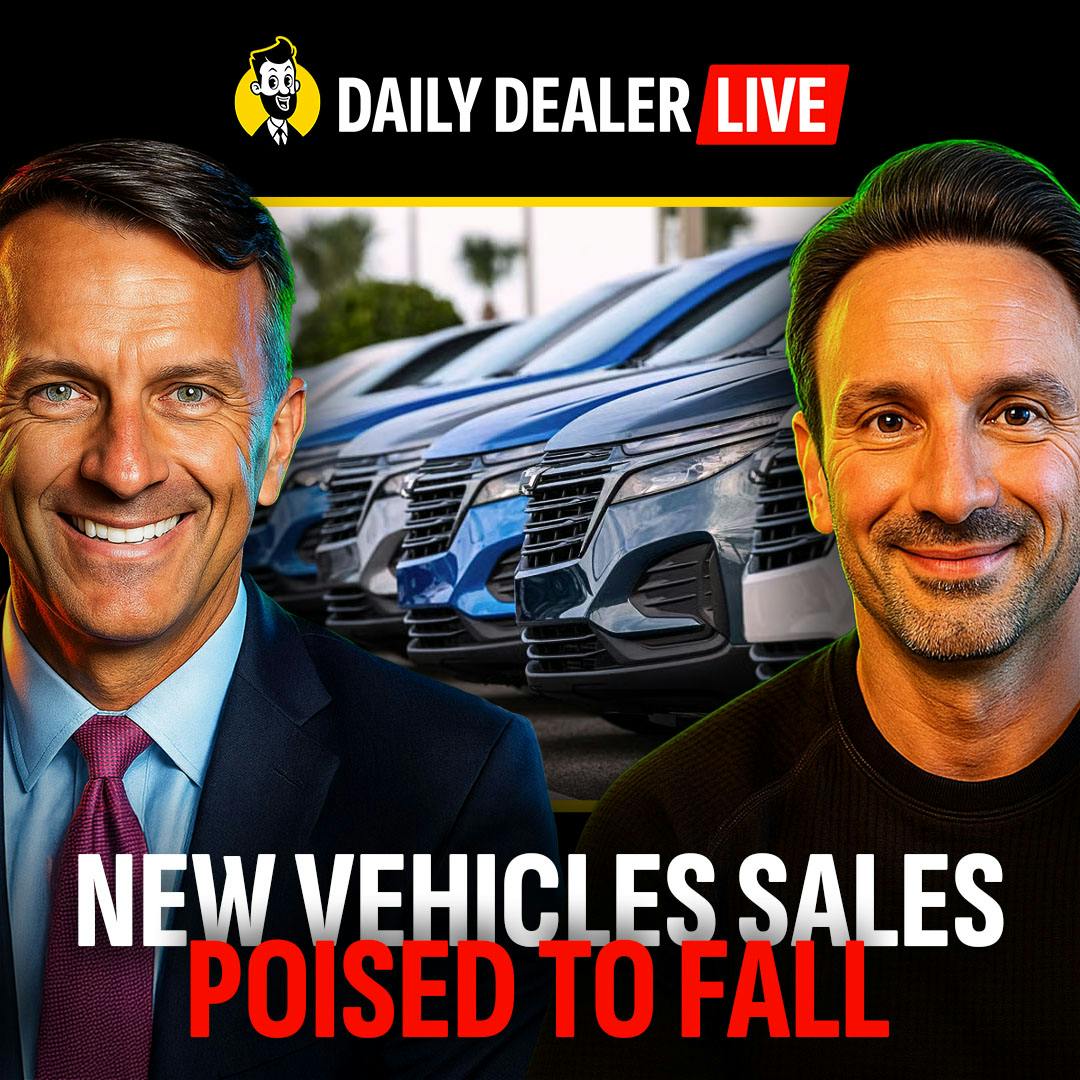
A deep dive into the challenges facing automotive dealers, featuring insights from Laura Perota of the New Jersey Auto Dealers Association on direct-to-consumer threats from manufacturers like Volkswagen's Scout. The episode also covers the rising costs of auto insurance and how it impacts dealership sales, with Chris Prez from Poly discussing strategies to integrate insurance solutions into the car buying process. The conversation highlights the importance of protecting the franchise model and enhancing customer experience through transparency and education.
Today's show features:
- Chris Pres, VP, Automotive Distribution of Polly
- Laura Perrotta, President of NJ CAR
This episode is brought to you by:
Stream Companies – Stream Companies is a full-service, fully integrated, tech-enabled advertising agency that drives measurable results through performance marketing, creative and content development, and proprietary AdTech solutions. Our innovative platforms, including the Retail Ready platform and Integrated Marketing Cloud, empower brands to optimize performance and accelerate growth. To learn more, visit StreamCompanies.com.
Polly – Polly helps dealers turn insurance into a better customer experience and stronger deal performance. By bringing insurance directly into the car-buying journey, Polly helps dealers close more deals, move them faster, and keep buyers happier. Learn more at www.polly.co/cardealershipguy
Check out Car Dealership Guy’s stuff:
CDG Circles ➤ https://cdgcircles.com/
CDG News ➤ https://news.dealershipguy.com/
CDG Jobs ➤ https://jobs.dealershipguy.com/
CDG Recruiting ➤ https://www.cdgrecruiting.com/
My Socials:
X ➤ https://www.twitter.com/GuyDealership
Instagram ➤ https://www.instagram.com/cardealershipguy/
TikTok ➤ https://www.tiktok.com/@guydealership
LinkedIn ➤ https://www.linkedin.com/company/cardealershipguy/
Threads ➤ https://www.threads.net/@cardealershipguy
Facebook ➤ https://www.facebook.com/profile.php?id=100077402857683
"The acquisition marks the group's third Chevy store and helps kick off its 70th anniversary year, expanding the family-owned group into a new local market."
Chevrolet, or Chevy, is a popular car brand in the United States, known for making many different types of vehicles like trucks and cars.
Chevrolet, often referred to as Chevy, is a well-known American automobile brand that produces a wide range of vehicles, including cars, trucks, and SUVs.
"This according to JD Powers and Global Data, dealers are expected to sell about 909,000 new vehicles at retail."
JD Power is a company that collects information about how people feel about cars and helps businesses understand what customers want.
JD Power is a global marketing information services company known for its consumer insights, data, and analytics, particularly in the automotive industry.
"Last week we talked with NADA about this act where they're wanting to put marks on catalytic converters to decrease catalytic converter theft."
A catalytic converter is a part of a car that helps clean the exhaust gases before they leave the vehicle. It's important for reducing pollution, but it's also a target for theft because it contains precious metals.
A catalytic converter is an essential component of a vehicle's exhaust system that helps reduce harmful emissions by converting toxic gases into less harmful substances before they exit the vehicle. They are often targeted by thieves due to the valuable metals contained within them.
"...one topic that we talked a little bit about last week, and Charlie deferred because he's like, hey, there's others that know more about this, is Volkswagen's fight with the different states to go direct to consumer."
Volkswagen is a well-known car brand from Germany that makes many popular models. They have been in the news for trying to sell cars directly to customers instead of through dealerships, which is a big change in how cars are usually sold.
Volkswagen is a German automotive manufacturer known for producing a wide range of vehicles, including the iconic Beetle and the Golf. The company has been involved in various legal and regulatory discussions regarding its sales practices, particularly in relation to direct-to-consumer sales.
"...So Tesla obviously is direct to consumer. They didn't exist."
Tesla is a car company that makes electric cars and sells them directly to customers instead of through car dealerships. This is different from how most car companies operate.
Tesla is an American electric vehicle manufacturer known for its innovative approach to automotive technology and direct sales model. Unlike traditional car manufacturers, Tesla sells its vehicles directly to consumers, bypassing the dealership model.
"...help auto dealers and protect their interests in the franchise model, Laura?"
The franchise model is a way car companies work with local dealers to sell their cars. It helps ensure that the dealers follow the company's rules and provide good service.
The franchise model in automotive retail refers to the relationship between manufacturers and dealers, where dealers are granted the right to sell a manufacturer's vehicles under specific terms. This model helps maintain brand standards and customer service quality.
Direct sales mean that car companies sell their cars straight to customers instead of going through local dealerships. This can sometimes make cars cheaper for buyers.
Direct sales in the automotive industry refers to manufacturers selling vehicles directly to consumers, bypassing traditional dealerships. This approach can lead to lower prices for consumers but challenges the established dealership franchise model.
"...most people that aren't in this industry don't appreciate is OEMs have tried the direct to consumer model in the past..."
OEM means Original Equipment Manufacturer. It's the company that makes the car or its parts, like Ford or Toyota.
OEM stands for Original Equipment Manufacturer, referring to companies that produce parts and equipment that may be marketed by another manufacturer. In the automotive context, OEMs are the car manufacturers themselves, like Ford or Toyota.
"...they tried it in the 90s with the Ford experiment and it just didn't work."
Ford is a major car company in the United States that makes many types of vehicles, including trucks and cars. They have been around for over a century.
Ford is a well-known American automotive manufacturer that produces a wide range of vehicles, from trucks to sedans. The company has a long history in the automotive industry, dating back to 1903.
"...it enhances recall notification of the consumers that you can go and get your vehicle fixed free of charge at your local dealership."
Recall notification is when car companies tell you that there is a problem with your vehicle that needs fixing. They will fix it for free to keep you safe.
Recall notification refers to the process by which manufacturers inform vehicle owners about safety defects or non-compliance with safety standards. This is crucial for ensuring that consumers can get necessary repairs done at no cost to them, enhancing vehicle safety.
"...you talked a little bit about New Jersey's motor vehicle open recall notice and fair comp act is a big win for dealers."
An open recall notice is a warning that your car has a safety problem that hasn't been fixed yet. It's important to pay attention to this so you can get it repaired for free.
A motor vehicle open recall notice is an official alert that a vehicle has an unresolved safety issue that needs to be addressed. This notice is important for consumers to ensure their vehicles are safe and compliant with regulations.
The fair compensation act is a law that helps make sure people are treated fairly when they buy or fix their cars. It helps protect consumers' rights.
The fair compensation act typically refers to legislation aimed at ensuring that consumers receive fair treatment and compensation in various transactions, including automotive sales and services. This can include provisions for recalls and repairs.
"...we also are working on training more auto technicians. And what we do here is we bring to a dealership who's raised their hand in 18 week training program..."
Auto technician training helps people learn how to fix cars. It usually includes classes and practical work on vehicles so that students can gain experience before they start working professionally.
Auto technician training programs are designed to equip individuals with the necessary skills to work in automotive repair and maintenance. These programs often include both classroom instruction and hands-on experience, allowing students to learn theory and apply it in real-world settings.
"...if you raise your hand and volunteer to host a TAP program, you'd get your pick of the litter. You get the first two texts, go to your dealership..."
The TAP program helps train new car mechanics and connects them with jobs at car dealerships. It often offers students money and tools to help them get started in their careers.
The TAP program, or Technician Apprenticeship Program, is an initiative that helps train and place aspiring auto technicians in dealerships. It connects students with employers looking for skilled technicians, often providing financial incentives for participation.
"...Right now, we're hearing a lot from our Nissan and Volvo dealers..."
Nissan is a car company from Japan that makes many types of vehicles, including electric cars. You might have heard of their popular models like the Altima or the Leaf.
Nissan is a Japanese automotive manufacturer known for producing a wide range of vehicles, from sedans to trucks and electric cars. They are recognized for models like the Altima, Sentra, and the popular Nissan Leaf electric vehicle.
"...Right now, we're hearing a lot from our Nissan and Volvo dealers..."
Volvo is a car brand from Sweden that is famous for making safe and reliable cars. They offer different types of vehicles, including SUVs and sedans.
Volvo is a Swedish automotive brand known for its focus on safety and quality. They produce a range of vehicles, including sedans, SUVs, and wagons, with a reputation for innovative safety features.
"So they walk away in the car they want you allow the customer to purchase additional F&I products. What we found is that when customers just quote with Paulie not even necessarily buy insurance, they ended up the dealership ends up making 20% more gross profit in the F&I."
F&I products are extra services and protections that car dealerships offer when you buy a car. They can include things like insurance and warranties to help keep your car safe and running well.
F&I products refer to finance and insurance products offered by dealerships, which can include various types of insurance, extended warranties, and service contracts. These products are designed to protect the buyer's investment and provide additional revenue for the dealership.
"many F&I products are risk based products, whether it's gap insurance or making sure that you've got maintenance plans going forward."
Gap insurance helps you if your car is stolen or totaled. It covers the difference between what you owe on your car loan and how much your car is worth at that time, which can be less than what you owe.
Gap insurance is a type of coverage that pays the difference between what you owe on your car loan and the car's actual cash value in the event of a total loss. This is particularly useful for new cars that depreciate quickly.
"...they had multiple customers come into the dealership that could not afford the car that they wanted because of the insurance rates."
Insurance rates are the amounts you pay for car insurance. They can change based on things like how safe you drive and what kind of car you have.
Insurance rates refer to the cost of premiums that drivers must pay for their auto insurance coverage. These rates can vary based on factors such as driving history, vehicle type, and location.
"...how does Polly integrate with existing tools in finance and sales across the dealership?"
A DMS, or Dealer Management System, is a tool that car dealerships use to keep track of their sales, inventory, and customer information. It helps them run their business more smoothly.
DMS stands for Dealer Management System, which is software used by automotive dealerships to manage their operations, including sales, inventory, and customer relationships. It helps streamline processes and improve efficiency.
"...the customer that they just entered into their CRM system, their DMS and they can find the customer..."
CRM means Customer Relationship Management. It's a way for businesses to keep track of their customers and how they interact with them, helping to improve sales and service.
CRM stands for Customer Relationship Management. It's a system that helps businesses manage interactions with current and potential customers, often used to improve relationships and sales processes.
"...implementing a post sale marketing campaign, where we can market to customers after they leave the dealership..."
A post sale marketing campaign is when a business tries to reach out to customers after they buy something. They might offer them special deals or services to keep them happy and encourage them to come back.
A post sale marketing campaign refers to marketing efforts aimed at customers after they have made a purchase. This can include follow-up communications, offers, and services to enhance customer satisfaction and encourage repeat business.
"...some states or most states don't force the customer to add the new car to their policy until up to 30 days after they drive off the lot."
An insurance policy is an agreement you make with an insurance company to protect you financially if something bad happens, like a car accident. It explains what is covered and how much help you can get.
An insurance policy is a contract between an individual and an insurance company that provides financial protection against specific risks, such as accidents or damages. It outlines the coverage, terms, and conditions under which the insurer will compensate the insured.
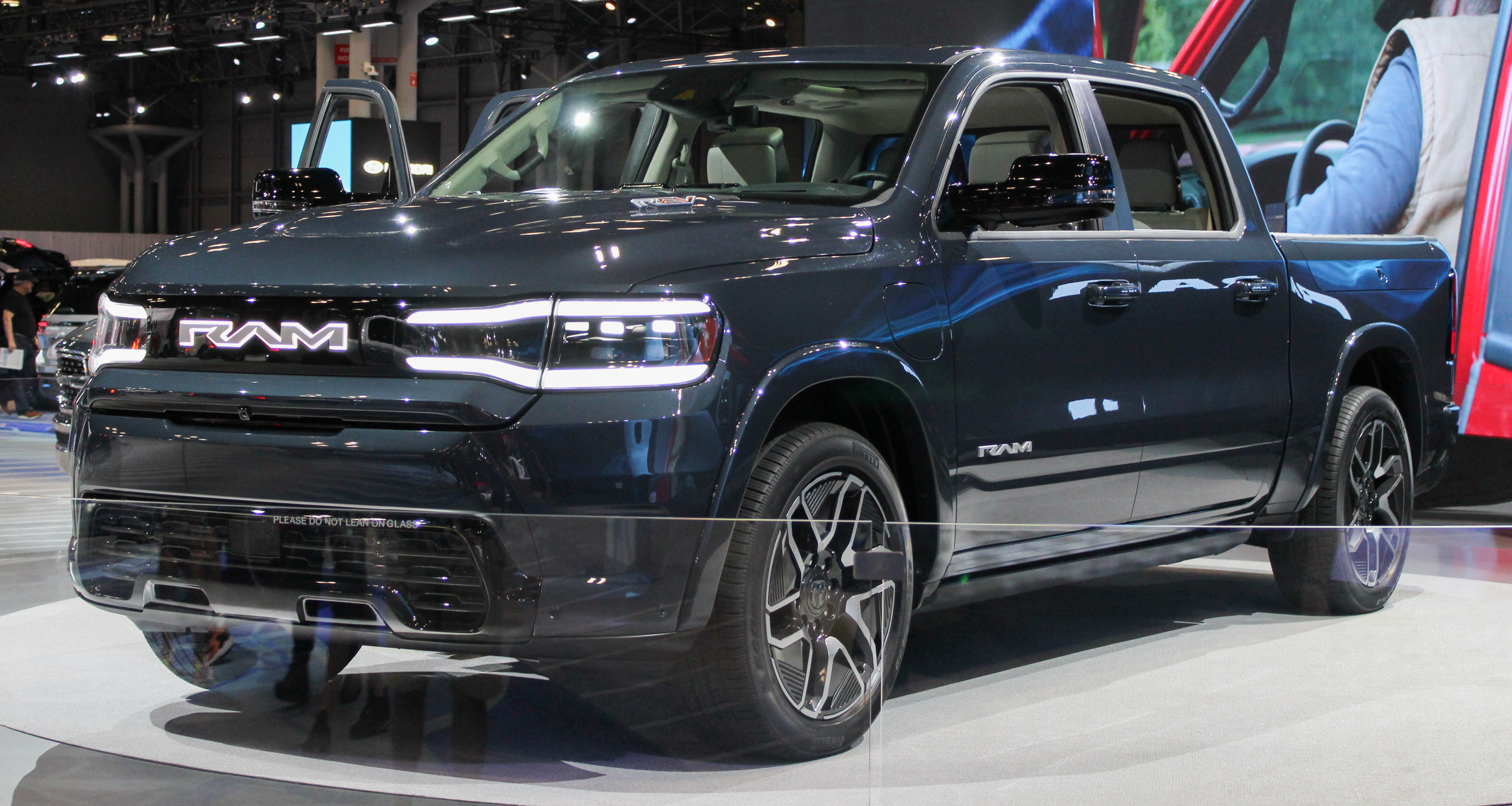
"...this was on a 26 RAM 1500. Anyone else experienced this, right? So maybe a dealer was using a technology to quote insurance..."
The RAM 1500 is a large truck that can be used for work or personal use. It's known for being strong and comfortable, making it a good choice for many drivers.
The RAM 1500 is a full-size pickup truck known for its blend of performance, comfort, and technology. It's popular among both work and leisure users due to its versatility and capability.
Select text to request an explanation
it's on the chopping block.
Welcome to this space where all automotive comes together to learn, to share, and most importantly, to execute.
Thanks for choosing to be here on this Monday, January 26th.
Coming up today, we've got quite a show.
We're getting a once in a lifetime look into an acquisition with David Weiler, president and CEO of the Jeff Weiler Automotive Family.
How you scale luxury in a great culture and turn managers into breakout teams.
Then we expose how we look close with Laura Peretta from New Jersey, C-A-R, on regulation direct to consumer threats.
And what could hit dealers next?
Also, we'll talk auto insurance, how it can be a friction and pivot point, how to overcome that, how to think about automotive insurance in today's world.
If you run a store or want to grow one, this episode is for you as a reminder.
We're streaming live across all CDG social media platforms.
Post your questions for the show, your comments, feedback for our guests.
We'll bring them into today's conversations.
But first, let's hit today's automotive industry headlines.
First up today, have you heard about the fears of China striking a deal with Canada?
Well, Canadian Prime Minister Mark Carney is pushing back on claims over this weekend that his country is cutting a trade-free deal with China saying, quote,
we have no intention of doing that with China or any other non-market economy, this according to the Detroit News.
Carney's comments come after President Trump threatened to slap a 100% tariff on Canadian goods if Ottawa moved closer to Beijing.
Carney says Canada is only easing tariffs in a few narrow areas to undo retaliation from China.
They're not opening the door to a broader trade pact, he says.
For context, last year, Canada had matched the U.S. with steep tariffs on Chinese EVs, steel and aluminum.
But last month, Carney partially rolled those back, allowing a limited number of Chinese EVs into Canada at much lower tariffs
in exchange for relief on Canadian farm exports and promised Chinese investment in Canada's auto sector.
However, Trump is warning that Canada could become a backdoor for cheap Chinese goods into the U.S., calling the move a, quote, disaster.
U.S. officials echo the concern, especially with the U.S.-Mexico-Canada trade agreement up for renegotiation soon.
Next up, we've got a busy stretch on the dealership M&A Front with three separate deals across the Southwest, the Northeast and California.
First up, Guy Automotive Companies is acquiring a large group of dealerships from the Jim Click Automotive Team and Tuttle Click Automotive Group.
The deal includes nine stores in the Tucson area and six more in Southern California.
The rooftops will keep their names, brands and teams.
Next up in New Jersey, Lester Glenn Auto Group has purchased Quality Chevrolet of Old Bridge, renaming it Lester Glenn Chevrolet.
The acquisition marks the group's third Chevy store and helps kick off its 70th anniversary year, expanding the family-owned group into a new local market.
And turning to California, Fletcher Jones Automotive Group led by someone I personally respect, Fletcher Jones Jr.
They've acquired Santa Monica BMW from long-time owner Del Montel, who's retiring after building the store into a standout luxury operation.
The dealership's been renamed BMW of Santa Monica, and advisors say demand for premium California rooftops like this remains strong.
Bottom line, whether it's large portfolios or single-store deals, dealership buyers are being more deliberate in today's economy.
Don't forget you can see this deal announcement and many more throughout the entire year by visiting the CDG Bicell Tracker powered by the Presidio Group at CDGBicells.com.
We love our CDGBicell.com tracker and we love our little jingle that we have as well.
Last up in line with seasonal norms, new vehicle retail sales are forecasted to soften.
This according to JD Powers and Global Data, dealers are expected to sell about 909,000 new vehicles at retail.
That's down nearly 4% from last January, and prices are creeping steadily higher.
The average new car transaction price is nearing 45,900, but profit per unit is slipping, meaning front-end margins are tightening.
But there are a few tools helping deals get done.
Interest rates are lower than a year ago, trade inequity is up, and used car values remain strong.
That all gives some dealers more flexibility on payments.
What's the big picture here? Well, despite a slowest start to the year, the full-year sales outlook is still generally pretty positive.
And that's great news for us in automotive. And that is a wrap on today's industry headlines.
Yui, what's up? By the way, is it not freezing cold?
I mean, we're at basically zero in the Midwest in the Kalamazoo Greater metropolitan area in the Chicago land and elsewhere.
I think it's pretty cold where you are as well.
Pretty icy here by the water in Jersey, yep.
Yeah, yeah. And despite that, all of automotive, we are winning.
A couple of comments from the online crew.
Lauren Klein, longtime listener and often poster, says happy frozen Monday.
And Mark Friga, 8243, wishes us all a good morning.
So we appreciate you all being here and watching the show.
Hey, Mark.
Joining us for today's comment, Igor Kaye, clearing snow from cars, but wanted to stop by and say hello.
Happy busy cold and snowy Monday to everyone.
And he's got that absolutely right.
So, well, you know, what's interesting to me, this whole tiff between Canada and the U.S. over the weekend,
we saw it all across social media.
This whole thing about Trump wanting to levy 100% tariffs on goods from Canada, this whole back and forth.
You know, the news item that not a lot of people I think are talking about,
but we've talked about often on this show is the potential for cheap Canadian EVs to come into the U.S.
either through Canada or Mexico.
And we as an auto industry are going to have to deal with that product.
Is it better? Does it compete? Does it push aside producers and products like Tesla
and other American made EV product?
It's going to be fascinating to see in the coming months.
What happens? Yeah?
Yeah, I agree. And like everything else from last year,
everything seems to whipsaw in either direction just so quickly.
So fascinating to see it goes out.
Yeah, it does.
Mar 48 is the exception to the freezing cold snow, cold pocket lips out there.
He says hello from sunny Arizona.
Thanks for listening and rubbing it in.
Yep. And yoga car says showering and listening from the car.
So hopefully we're not doing both of those activities at the same time, but props to you.
So let's turn to our first guest up today.
Let's turn to Laura Perota, president of the New Jersey Auto Dealers Association.
Laura, welcome to the show.
Hey, Laura.
Hi, Sam. How are you guys doing?
Thank you for having me.
Thank you for being here.
By the way, we love having ATAEs and representatives from state dealer associations
because you have such great insight into what's going on.
Last week we talked with NADA about this act where they're wanting to put marks on catalytic converters
to decrease catalytic converter theft.
And we talked a lot about a lot of other topics that are going on.
So before we dive into the topics we want to talk to you about today,
tell us a little bit about how's biz, who you are, what you do and where you're located.
Laura, thank you.
Thank you again for having me.
So I'm the president of NJ Car.
So we are the trade association that represents 523 dealership locations in the state of New Jersey.
And we focus on advocacy and compliance and making sure that our dealers have the tools they need to succeed in the marketplace.
And just really honored to be in this position.
I took over for Jim Appleton a little over a year ago as the ATAE for the state.
And my background is advocacy.
I worked on Capitol Hill.
At one point I was a lobbyist for the National Automobile Dealers Association.
And I know Charlie, who was on the show last week, happened to watch that and lobbied on the catalytic converter theft legislation as well.
So I have some federal experience, but now I dive in deep into New Jersey and enjoying every second.
Yeah.
Well, one topic that we talked a little bit about last week, and Charlie deferred because he's like, hey, there's others that know more about this,
is Volkswagen's fight with the different states to go direct to consumer.
So Tesla obviously is direct to consumer.
They didn't exist.
They had no franchise relationships with any franchise dealers in the country before they came in.
Dealers still fought it.
Now Volkswagen's coming in under the scout label and saying, hey, you know what?
We don't want to respect the U.S. franchise system.
We're going to go direct.
They succeeded in changing law in Colorado.
As my friend Don Halls told me, they've also changed the law in Utah and several other states.
What's your take on this?
And what are you doing from your chair to help auto dealers and protect their interests in the franchise model, Laura?
Yeah, scout is an extreme challenge as far as we're concerned.
And I feel every dealer association feels the same way across the country from our conversations.
It's totally unacceptable for a legacy manufacturer to try and undermine the dealer system and sell direct on a model that was promised to the Volkswagen dealers a few years ago.
It's just they pulled it out from under the dealers completely.
We have to fight this tooth and nail.
It's unacceptable.
You know, right now there are lawsuits, as you know, in California and Namaste recently in Colorado and Florida.
And we are vigilantly watching this and seeing, you know, what the right path forward is for the New Jersey dealers, but we aren't going to take it standing down.
And we're going to educate every single stakeholder in the state of New Jersey why this is untenable and not allowed in the state of New Jersey.
And it's a complete violation of our franchise law.
So for your constituents in New Jersey and elsewhere across the country, I'd love to ask you what dealers should be doing today.
But before we ask that this question, we posted the social media, many clips of our conversation last week, and there was actually a strong counter current.
So a lot of the automotive buying public said, well, wait, why should dealers say that they can only buy through a car dealership or through the franchise model?
If a manufacturer wants to go direct, they should be able to go direct.
And that was a strong theme in response to the clips we posted last week.
What do you say, what's your response to that?
How does the consumer benefit from the franchise model versus direct?
And why should the OEMs be required to stay in the direct channel?
So there are so many consumer protections built into the motor vehicle franchise practices acts across the country.
You know, they are there to be the advocate for the consumer.
They really promote competition.
You know, you're competing against your dealer down the street, but then also the other brands.
So into brand competition, we make sure that the consumers protected when the vehicle becomes comes under recall or needs warranty work.
You know, there are so many protections that the average individual wouldn't know anything about unless they were involved in the franchise system.
But it is our job to educate the public on the benefits of the current system.
You know, we actually just got our franchise law strengthened to ensure that the consumers recalls are prioritized here in New Jersey so that the technicians get paid the same amount for working on a recall or warranty job as they do for customer pay.
This was something that we fought for very hard.
There are so many nuances to these, these laws that the average person wouldn't know.
But it's our job to educate folks on it and make sure it's very clear that it's of every person's every individual who buys a vehicle is protected under the franchise system just as much as a small business dealers.
This is just as much about the consumers.
And one other thing we got done in our franchise practices act that got signed along September a new bill.
We also made it very clear in the legislative intent that these, these laws, these franchise laws are in place for the consumer.
You know, that was the focus.
We actually changed the legislative intent, but it wasn't just about right sizing the big OEMs relationship with the small business dealer, but it's also about the consumer.
Yeah, you know, it's an interesting, it's an interesting perspective.
And I saw this in a lot of the comments that were posted last week.
So consumers would say, hey, we want as much competition we can get franchise model direct to consumer.
We don't care.
Whatever's going to be the least expensive we want to go there.
I think what most people that aren't in this industry don't appreciate is OEMs have tried the direct to consumer model in the past, many different places in my own home state in Utah.
They tried it in the 90s with the Ford experiment and it just didn't work.
One of the unique elements of the franchise system today is OEMs can require franchise dealers to build facilities, invest a lot of money, which is an investment to them.
They need to get a return on and then they hold them accountable to providing a certain level of service back to the consumer.
And in that ebb and flow between who makes the cars and who sells the cars is the competitive tension that helps deliver the absolute best product to the consumer.
So in any given metro area, you and Yuli would know better being there in New Jersey.
How many Ford dealers are there?
There are a ton of Ford dealers and they're all competing for that consumer and that competition is great, right?
Laura, I'm not going to put you on the spot and ask you how many Ford dealers there are, but there's not one.
It's not just Ford selling direct to that consumer. It's a bunch of dealers.
Well, fair, Laura. The consumer wins in that competitive marketplace.
And I think some people fail to see that by saying, hey, direct to consumer by Volkswagen is not fair and it's not the way that they should be allowed to go to market.
They see less competition, not more, but it's actually more through the franchise system, Laura. Fair?
Oh, absolutely. There's no question.
You know, we have four dealers throughout the state of New Jersey, for example, on your on your example, competing against each other.
They want to make that final sale there at their dealership.
And then their whole teams are focused on trying to make sure that that customer comes back for service every single time that they have a wonderful experience,
that they are interests are directly aligned the dealers and the consumers.
Whereas if you have a factory that's out in Michigan, you know, that's where the headquarters are.
They're not providing the local jobs. They're not providing the local tax revenue.
All the things that these dealerships provide to the economy.
We have a $43 billion auto industry based from the dealers in New Jersey alone, $43 billion, just the, the jobs, the tax, taxes we are folks pay.
It's 70,000 jobs directly and indirectly through the dealership model in the state of New Jersey.
You cannot compare the economic footprint and then also the competition to any factory that might be headquartered in South Carolina or Michigan or Tennessee.
You just cannot compare the footprint.
Yeah.
All right.
Transitioning to another item that you dropped and you dropped a breadcrumb of you talked a little bit about New Jersey's motor vehicle open recall notice and fair comp act is a big win for dealers.
What changes in the service lane will the consumer see and dealers April 1, 2026 in New Jersey.
And by the way, who decided April one to make this go into effect?
April one, we would have liked, yeah, we would have liked the day it was signed, but you can't have everything.
No, this legislation was huge for multiple reasons. Number one, it enhances recall notification of the consumers that you can go and get your vehicle fixed free of charge at your local dealership.
So we're really trying to increase recall completion rates. And then on top of that, from a auto dealer and a technician perspective, it finally forces the manufacturers to pay the dealers and intern the technicians fairly for their recall and warranty work.
So now going forward, the dealer has the choice to submit 100 customer pay orders to the manufacturer to actually establish their own unique rate for labor time.
So this is a big deal. You don't have to rely on the manufacturers labor time guides, which we all know unfortunately aren't always accurate.
And we can actually have the customer pay be equal to what the manufacturers are paying for for their work at the dealership, which is extremely important.
So the manufacturers have said that this will cost them roughly $148 million to implement annually. But from our perspective, that's $148 million that should rightly be paid to the dealers and their technicians for the work they're doing.
So what we're going to do is make sure that when the work is in the shop and you have some warranty work, recall work, and you have customer pay that they're all treated fairly and that no one's getting compensated less for the same amount of time they're working.
I love it. And ultimately that results in a better customer experience. Dan C says 64 dealers in New Jersey. So to the point about the distribution, you know, that's not one entity trying to sell cars to everybody in New Jersey.
That's 60 different franchise dealers trying to provide a great experience and they are competing in that props to you for passing the law that gets the pay for those technicians through this. That is awesome.
So as you think about some of the other threats in the franchise model over the next year or two, what concerns you? What do you see on the horizon from your position as head of the NJCR Association there, Laura?
Yeah, for NJCR, I mean, number one, we're most concerned about direct sales and what we already talked about in this Scout situation. You know, if Scout could be successful, this would be really catastrophic.
So that is where we're focusing a lot of our attention. Also on a positive front, in addition to being so pleased that we got this recall legislation passed with the warranty time work that we've been working on for years, we also are working on training more auto technicians.
I saw that.
And what we do here is we bring to a dealership who's raised their hand in 18 week training program. We recruit the students. It's free for the students and they are learning the basic skills to come in to a technician role with a little bit of skills under their belt.
You know, it's Monday through Thursday from four to eight, they have in classroom theory for about an hour, and then they go over to the service base and work on the vehicles. So it's hands on training. It's really exciting.
So as an NJCR that provides the training, I mean, obviously you bring in a trainer, but you're okay. So here's a question I have as a state association, who gets the best texts that come out of that training?
Like how do you decide how to distribute those texts? Because right, like a trained technician is a rare commodity. Everybody wants to win in that space. Is it Rand Robin? Is it like Kias Bitter? Is it like, once they're graduated, how does that happen, Laura?
Oh, great question. Yes, it is very competitive. I will say if you raise your hand and volunteer to host a TAP program, you'd get your pick of the litter.
You get the first two texts, go to your dealership. And then after that, we go to, we try and find, figure out where the student lives currently and find out what their business is for where they want to work.
There's so much demand for this because it's free. Again, the student doesn't pay a thing. Actually, they get paid $200 a week stipend just to show up. And they get $3,000 worth of tools upon graduation.
So this is such a wonderful program that the students are just so hungry. They are commuting up to an hour and a half just to come to the class. So we have, it's exciting.
How many technicians will you graduate annually out of the program?
So we are just scaling up now. The first 18 month grant will have 60 students graduated in place. They're small classes because they're extremely hands on.
Yeah. Have you thought about what's the value of each technician graduated from that into the marketplace? Because that's pretty significant value, right? They've got some basic training.
They can now walk into a dealership with a set of tools and a basic understanding. And they can be a productive employee. That'd be an interesting thing to calculate.
It would be. I don't have that stat on me, but we'll have to look into this. This would be good for our next grant application.
It's all good. So good comments online. Eager case says unfortunately it's a matter of time and some states will cave to VW with Scout direct to consumer sales.
And that's all you need to open up the Pandora box for other states to follow. So Eager, I actually agree with you a little bit.
But here's the other thing is we have already seen this experiment in some other states. Alan Hague said it when he was on the show in the past.
You know, if we're as good as we think we are an automotive in the franchise system, they can try, but ultimately they're probably going to fail and they're going to come back to the back to the franchise distribution system.
But I do think it's everybody's responsibility. Laura Dawn, all the other great industry experts to help defend the franchise system so that all the wasted dollars doesn't have to be spent.
And then candidly, if we fail, if we're not great at what we do, then then you're going to see this more, you know, viable, Laura.
Like what's your take on how does how do franchise dealers need to up their game in today's world to make this ploy or this attempt by Scout less likely to succeed, even if legislation state by state prevails?
I think that just showing our value, you know, whether it's to the state legislature to the Motor Vehicle Commission to your consumers, you know, making sure that the customers know that we are your advocates, we are your partners,
we will be there for you every step of your car ownership experience, and we are going to put you behind the wheel of a good car and we're going to keep you behind that wheel.
So I think there's just so much we can show that we have tremendous value. And again, we're local think of all the charitable contributions the dealerships make into their local communities.
We have to tell these positive stories, so that folks are realizing this is so much more than just about direct sales versus, you know, dealerships, this, there's a whole ripple effect to the economy.
To your point, though, Laura, this is, I mean, only pertinent to people in automotive, right? So I guess the billion dollar question would be, how do we convey that message better to consumers?
Because I don't want to, you know, draw a parallel here, but you ever watched the Olympics and have no point of reference as to what a normal human being would do next to, you know, an Olympic athlete?
It's almost like this, you have a lot of people out there that are very passionate, hate dealers for no reason, and are willing to buy at full price with no negotiation by clicking a button, and are completely missing the point of that tremendous value that the franchise system brings to automotive,
protects the consumer in more ways than we would have to discuss on this show. Like, how do we connect that to the public better?
You know, I think we have to do a lot as far as being public facing and making the story simple and compelling. You know, I'm a big believer in using videos, using social media, using whatever tools do you need.
I know that we're looking at making an investment in this right now as far as getting the word out about the value of the franchise system. I think you can make it funny, you can make it fun.
There are so many ways to do it. We worked with a great PR firm on our recall legislation, and I think there are the certain people that know how to message this and know how to get the word out.
And we just have to figure out how to tap into folks like that, and we're going to probably have to spend some money to do it too.
So Laura, we appreciate you being on the show. Last question, because I'm getting pressure from the producers to move on here. But last question, we don't want to leave you without getting your take on another distribution model.
So we've talked direct, we talked the franchise system. Brokers are a big deal in New Jersey. What's the deal with that? Is it good for the market, bad for the market? What are you doing as a state association to help move it to benefit the market best?
Brokers have been a challenge. I'm new to New Jersey, but from what I understand, various brands have had challenges with that over time. Right now, we're hearing a lot from our Nissan and Volvo dealers.
But it sounds like it's been a constant game of whack-a-mole. From what I'm hearing from some of these dealers is that they're afraid of the brand damage that brokers are doing.
And that it's unregulated and that there's potential fraud here. So right now, we're really trying to get the Motor Vehicle Commission to enforce our regulations that are actually on our books right now.
We had some revisions to our regulations a couple of years ago that said, you know, it was illegal to use brokers for a fee in the state of New Jersey.
But the Motor Vehicle Commission hasn't been enforcing the rules and really hasn't even educated the automotive community in the state of New Jersey and what this all means.
So we have a new governor and we have changing cabinets and changing leadership. So I'd say it's fluid right now, but we're hopeful that the new government will actually be more vocal and enforce what's currently on our books.
What's the benefit to the federal or to the state government to enforce that, right? So it is a fascinating conundrum, right? Somehow brokers got into the economy.
They provide a benefit to somebody. It sounds like in some cases to OEMs and others to dealers just wanting to move vehicles out, but not necessarily to the consumer.
What's the motivation to a new governor coming in to enforce this? And then what would be a penalty that would be significant enough to actually get brokers and dealers and OEMs to listen and live by the rules that are in place?
Yeah, you know, I think that if, unfortunately, if one dealer got fined for using brokers, that would probably be a wake up call to many others. I don't want any of our dealers to be in that position.
I do think the manufacturers put tremendous, tremendous pressure on the dealers to utilize brokers because they would have to hit their quotas and they have to hit their sales targets.
And unfortunately, I think it's about moving the metal and not necessarily about what's best for the consumer or even what it does to the value of the franchise that, you know, these small business owners should have invested vast amounts of money to build this dealership up and these locations up and the brand up.
And then you can let some fly by night broker really come in and look like they're a dealer, you know, use all the branding and no one, the manufacturer never cracks down on it and says, hey, this is wrong.
You know, you don't have the legitimacy or license to utilize our brand in this way. So I do think a lot could be done if the manufacturers would step in and say, hey, is this, is this really what we want?
Do we want a totally uncontrolled sales force out there?
Rob does wrong here in New Jersey is just that there is even more regulation on being, you know, a new car franchise, but these use car stores can advertise any new car lease they want on their banners out front.
You drive down them in certain cities in New Jersey, you see them all over the place.
I mean, advertising, like you just said, new Nissan kicks leases at use car stores. I mean, it seems so blatantly obvious, but the OEM is not doing anything about it.
And we all know, Sam, you know better than anyone, any deal that a customer can get from a broker, they can get a better deal right from the dealer because they're not paying the middleman, the broker.
So like, I don't know, it seems like one of these issues here that we just have to wrap our arms around.
All right, so Laura, in a coming episode, we are going to come back to the topic, but not in general, we're going to come back to whether specific OEMs are doing brokering.
We'd love to have either you be in that conversation or Don Hall. We may let you and Don rock, paper, scissors. And by the way, Don's a pretty passionate advocate.
I wouldn't want to rock, paper, scissors against Don for fear of potentially losing that particular deal.
But Laura, we absolutely appreciate you being on today's show, sharing your perspectives on all things.
And thanks for telling us a little bit about what you're working on in the state of New Jersey, including franchise protections and ways to help dealers enhance the way they show up for customers.
So Laura Perota, president of NJ car. Thanks for being on the show.
Thank you. Thanks for having me.
OEMs could put an end to it. They just got to do it. They just got to do it. And it's not something that is super. Yeah, it's not something that's super easy to do.
And we got to find the leverage point. Why? What is the thing that would motivate everybody to say, Hey, I'm okay doing that.
And I don't know that the right leverage point has been found yet because if it had, it would be done, right? So there's enough benefit to different parties, OEMs, dealers, brokers that that segment is still filling a niche.
But here's what I do know happens in New Jersey. You have people from different counties and communities that drive around looking to see if you have an illegal sign in your window, but no one is cracking down on use car stores advertising new car leases.
Yeah. Yeah. All right, let's talk stream companies.
Today's episode is brought to you by Stream Company's dealer. Stop chasing incentives. Retail Ready from Stream Company's update your offers in as fast as four hours and keeps them compliant.
Stay current, beat out competitors and drive more leads headed to NADA. Well, visit us at booth 3113W or learn more at streamcompanies.com slash retail ready.
Stream companies, we appreciate you supporting today's contact, including that fascinating conversation with Laura there at the top of the show as we talk about all things distribution model and everything else.
So Stream companies, thanks for being here. And if you're at NADA next week, go check them out. We'll be there. They'll be there. And you can see what they're doing in the world to help you as dealers.
So thank you, Stream Company. And just a little show note update. We've had a little bit of an IT challenge bringing Jeff Weiler, bringing the Weiler group on.
We were super excited today to have a conversation with David Weiler, CEO of Jeff Weiler Automotive Company. We're going to bring him back onto a future show.
But as I understand, we've had just a little bit of an IT challenge. So we're going to dive straight into the next conversation, which I got to tell you something, Julie.
One of the biggest friction points in all of automotive right now is the skyrocketing cost of auto insurance.
It is more expensive for consumers to get auto insurance coverage. That one single decision because of the way auto insurance costs have escalated over the past three, four, five years, that can either help a deal or that can hurt a deal, depending on how that one friction point is handled.
And in my role in our auto group, I see it every single day. Finance deals with it. Sales deal with it. Sales managers deal with it. And it's something that we probably don't talk about enough.
So we decided to have today on Chris Prez VP Automotive Distribution of Poly on to talk about that particular topic. Chris, welcome to the show.
Guys, thank you so much for having me today.
All right, before we dive into that topic, which I kind of set the stage for a little bit, tell us a little bit about how's biz and then who are you and what do you do in the world?
Yeah, so my name is Christopher Press, Vice President of Auto Distribution here at Poly. And what Poly does is simply we help dealerships elevate the customer experience by helping them sell more cars.
We do this by helping customers save money on their insurance. We help them by getting the proper insurance coverage so they can drive the car off the lot. We help dealerships increase their FNI.
And ultimately, we're there to make sure that they build longer lasting customer relationships. At the end of the day, we also pay dealerships for the for the leads that they sent to us.
So you have a product and you offer that product in the world. We'd love to have you talk to us today as a subject matter expert. You have done a study, a 2026 study talking about buyer attitudes and how car insurance plays into those attitudes.
And Julie and I, multiple times throughout the course of this past year have reported on the drastic rise in insurance rates. And in fact, last week, we reported that interest, or I'm sorry, that auto insurance has kind of flattened except for five or six different states where in those states this year alone, they're projected to increase another 10%.
So auto insurance just keeps going up. So what did you find in your 2026 survey you could share with us about buyer attitudes on insurance?
Yeah, so insurance has become a huge part of the buying process of a new car. Customers more and more are researching insurance before they go to the dealership, which is really an important factor for dealerships because you may not even know a customer decided not to move forward with the deal because of insurance.
And so really need to be proactive with providing customers a solution and options. So the interesting thing is when inflation really took off in 2022-2023, we also saw car insurance rates increase significantly as well.
The good news is we've recently within the last couple of quarters seen insurance rates level out in case, you know, last quarter has actually went a little bit lower, which is great news. But we all know when it comes to inflation, things never go back down.
The best you can hope for is to is to flatline, right? And so that's what we're seeing right now. And we're hoping that that it stays pretty steady going into 2026. But that represents an opportunity for dealerships to help their customers to reshop their insurance.
Because as we know, customers really haven't shopped their insurance recently. And there could be a huge opportunity for savings. And that's what we're seeing today.
So one of the biggest objections I hear that even thinking about insurance and finance for most customers is, look, don't bring it up there for heaven's sakes, you're going to kill the deal, right? Like the customer is going to re maybe the customer doesn't realize how expensive insurance has gotten over the past few years
and finance is the last place with the limited shelf space and time you have with a customer to bring that up. What a great way to sabotage the deal. Is that true or fake? Is that truth or fiction?
Yeah, so I think today it's fiction. And so what we're seeing is our top dealerships introduce insurance to the customer at the point of finalizing the deal with the salesperson, right? You want to have the insurance taken care of, bound in place prior to going FNI.
Because at that point, it just needs to be, you know, everything needs to be in a row and you don't want to be searching and calling insurance brokers, so on and so forth.
So where we're finding is when our salespeople or when the salespeople we work with introduce insurance at that point in the process, 63% of customers are seeing savings through the Poly platform on their insurance.
That's a huge opportunity to help make more room in the deal for ancillary products to afford, you know, bigger cars, those sorts of things.
And then the 37% of customers that don't see savings, at least you're validating for them that they've got the right coverage, they've got the right price in place and they're with the right carrier.
And there's a lot of value with that. When the customer goes into the FNI office, you want them to have confidence in their finances, right? You don't want them to be questioning, can I afford this or am I doing the right thing?
By having that confidence and insurance, they can walk into the FNI office knowing that they've got a good handle on their finances, and that opens up a wealth of opportunity to buy additional FNI products.
So you say own it by being transparent about it. Transparency will create better connection with the consumer and better adherence to the vehicle long term.
Paul Salisman agrees with you in the comments. So Paul says, I've used car insurance to sell my brand against another, for instance, Tesla insurance is really high.
And this has dissuaded many people away from them and to my product at the time, which is interesting if you're aware of what general rates are on vehicles, you can understand a little bit better.
Lauren Klein also says in the comments, are sales reps still calling with the customer for the insurance binder while waiting for the box? I'm seeing this less and less nowadays.
So you talk about the process being, you know, bring it up before the customer goes into finance. Does technology allow the customer to get a binder on the new vehicle as they're going through that process?
Or are you seeing more customers calling their own agent in the finance box?
Yeah, I mean, today's, yeah, today's the edge. You need a fast, a fast way to get customers quotes, because otherwise it can take half hour to get in touch with your broker, get the proper documentation or even calling each carrier yourself could take 20, 30 minutes per carrier until you finally find the right, the right coverage.
And that's time lost in the deal and the potential for things to go wrong. So what we have is a tech enabled platform that allows customers to get quotes within two to three minutes, so they can already see what the savings look like, and an easy way to either connect with an agent to buy in that
coverage, or they can even buy online. And that's the that's the option that customers really love nowadays. Just go online, get it done. They take all sorts of payment options. And it becomes really quick. So all in, if the customer does it through a buy online feature by 20 minutes, if they call an agent is 30 minutes.
But at that point, you know, after that 30 minutes, they're going to have the coverage that they want, and if they need, and they're ready to drive the car off the lot. You know, even better in our in our platform, we actually provide a copy of the binder for the dealership. So they also have access to that technology.
They can just download it and put it into their CRM so they have copy of the record so they can make sure that the qualify for the loan that they have everything in place and that they have the proof they need to get the customer in the car.
So Chris, how does technology such as yours in the marketplace which is becoming more common right because of AI because of API's technology APIs and whatnot.
How do you sit from a competitive standpoint with other companies and carriers you know as a finance manager I go out and I can look at 10 different lenders and I can find the best one and match the customer up to the vehicle up to the lender and then make sure we still get our part in the insurance world.
How does that work if there's 10 different carriers? How do you place that policy? How do you price it? How do you find that best match?
Yeah, that's a great question. So that's why our model works really well. So if you work directly with an agent in a brokerage, you know, they may or may not have all the carriers that your customers need.
They may not be available holidays, weekends, off hours. And then if you work directly with one carrier, again, they're limited in what they can offer because they only have one product to offer in that state.
What our platform does is we have over 40 carriers available to the customer, including the top carriers that we see the middle market and lower middle market customer want to purchase from.
But we have options for really for everybody for them to get the insurance they need. And so making it simple that the sort of concept that you just mentioned of having multiple options available for the customer in one spot is exactly what we bring to the table right there at the buying process when it makes the most impact on the deal with the customer.
So insurance is at its heart an insurance product, right? There's a lot of licensing required to be able to offer insurance and bind insurance. And in fact, way back when all state made a big push in dealerships, I think there's probably still agencies that sit in dealerships.
You had to have a licensed agent on site and you can only quote if that person, you know, was involved in the process because there's a lot to consider you could bind a policy do it incorrectly and then the customer is going to have a claim against somebody.
How do you deal with that part the licensed part and then how do you ensure that the customer gets the correct coverage when it's a finance manager with little to no insurance expertise or knowledge.
It's either finance or it's a sales manager binding it. How do you how do you work with the licensing requirements and then the liability created with binding the wrong policy?
Yeah, I'm glad you asked that question. So majority of our dealerships are not licensed and the reason why is because they're not actually selling the insurance. All they're doing is introducing insurance to the customer and then referring them over to Polly who is licensed and we have licensed agents and we handle all that for the customer.
You know, we say that, you know, we talk to dealerships and they say, I don't want to get involved with insurance. Well, great, you know, this this prevents you from having to get involved with insurance.
Let us handle the insurance part, right? You're trying to sell cars. That's challenging enough as it is. Let us handle the insurance part for you. So you never have to worry about getting licensed, you know, insurance, any of those, you know, state state type regulations.
We handle all that and make sure you have a fully compliant solution for your customers.
So Lauren Klein has a great question. She says, how are you quoting rates? Does it include a soft poll, driving history? How are you calculating the rates and the discounts? So using the technology, how does that all pull in to offer the customer a proposal, a quote, and then ultimately bind that coverage?
Yeah, so what we provide customers is with an initial indication of what the price will be, which is generally accurate. We do ask the customer to provide claims history or any type of violations they had to give a more accurate rate.
And then if they like what they see or if they want to speak more about their options, they'll call and speak to an agent. At that point, all the reports will be will be pulled and that's where we'll get a finalized rate.
What we found is our rates tend to be very accurate. Clearly, there's going to be some variations once all those final reports are pulled. But you don't see massive gaps in prices from what's quoted to what ultimately they bind because we want to make sure the customer feels good about that experience.
And then there's no, there's no major differences. And so what we found is that quoting is extremely accurate, but we'll take a little bit more work once they speak to an agent.
So curious, you know, auto insurance, you and I, we've reported are going up. It's interesting in most other areas when you get greater transparency and greater competition, rates go down. What's driving the increasing cost of insurance and at what point can we expect to see some easing of that?
Yeah, so the main point is inflation, right? So it's, it costs more to fix cars these days. You know, in some areas, you've got more risk when it comes to the vehicle, more urban areas. And then electric vehicles, the cost has gone up significantly for that.
And so you mentioned Tesla insurance previously, they create their own, their own insurance because of that incredible risk when it comes to electric vehicles. So that's really the primary reason that insurance have gone up and really it's going to track what the inflation trends are over the next year or two.
But with that, again, creates a huge opportunity. You know, we talk a lot about how dealerships will use insurance options to help customers that maybe are insurance challenged, maybe they're a youthful driver or they have a foreign driver's license.
But the way we've seen our top dealerships use insurance is more of an offensive capability. So for example, they'll quote the customer's insurance and help them save money, which opens up other areas of the deal that they may not have expected.
Yeah, at the end of the day.
And why I say we help dealerships with the customer experience is ultimately you want the customer to buy the car that they came into the store to purchase with the trim that they want with all the features they want.
And if they can't afford the car and we've seen, you know, our affordability go up, I know that the average new car price is now $50,000.
I saw recently last week, our dealership guy talked about how customers are stretched when it comes to payments. I mean, talk about being open up $90 worth of buying power per month to the customer and the things that you can do with that.
So they walk away in the car they want you allow the customer to purchase additional F&I products. What we found is that when customers just quote with Paulie not even necessarily buy insurance, they ended up the dealership ends up making 20% more gross profit in the F&I.
And the reason why is, yeah, one, if you save money, you might buy more. And then two, if you, you know, if you know you've got the right insurance coverage in place, you're more open to talking about more insurance based products.
And, you know, many F&I products are risk based products, whether it's gap insurance or making sure that you've got maintenance plans going forward.
So getting the customer in the mindset of making sure that they protect their investment yields huge dividends with within the F&I office. And that's not just something that we've seen our largest our largest dealership partners have also done similar studies, and they found the exact same thing which has been a huge gain to them.
So that's what I was also going to go down that road just a little bit in the final probably last two questions here as we get towards time. What's a metric that a dealer or a general manager watching today in January 2026, if they implement insurance as part of their strategy in sales or finance, what
are a couple metrics they could watch improve if it's successful? What should they be tracking?
Yeah, so the F&I is clearly a big one, but you'll see more cars sold. I mean, we, we actually recently launched a dealership that was scheduled to go live on a Tuesday that weekend, they had multiple customers come into the dealership that could not afford the car that they wanted because of the insurance rates.
So they went to poly.co, they quoted on our platform, they didn't have the full system, but you can still quote on our website. And they ended up saving two car deals that that weekend. And so they saved one customer $200 per month, another one $300 per month.
And so when it was time to come training on Tuesday, they said, Chris, we're already sold. We've already saved two car deals and we're really excited to build off of that. So yeah, so just creating more, more room in the deals, you'll see more car sales from the process.
So last two questions, I promise, but I got to get to these. So a yoga cars, longtime listener, longtime poster, fully engaged in the show. Does Polly offer integration with DR tools? So is there anything? How does Polly integrate with existing tools in finance and sales across the dealership?
Yeah, so that's a really exciting question. So, so our current product today, the dealership, the car salesperson enters information into the into our app, it takes two to three minutes. What we're coming out with is a new feature at Neda, where we actually integrate directly where the customer or the dealership can now look up the customer that they just entered into their CRM system, their DMS and they can find the customer and just click on it and it
auto populate with all their information. That's a huge win for us to be able to have that to make that process even even shorter to make the process that much quicker. But some of the other things that were coming out with Neda are really exciting, such as we're implementing a post sale marketing campaign, where we can market to customers after
they leave the dealership and offer them insurance at that point. A lot of times we speak to dealerships who say they want to offer something new and different to their customers and offering them an insurance offer really checks that box. The reason is is that some states or most states don't force the customer to add the new car to their policy until up to 30 days after they drive off the lot.
And so with this, you're giving the customer that opportunity that when they do go to add the car and if they find that it does cost more than they expect, you're providing them with an option that'll make them feel good about, hey, my dealership looked out for me to help me get into a policy that makes more sense. And again, it's all about building lifetime value with that customer so they become repeat purchases.
All right, so final question, just a test to maybe some perceived kind of experiences other dealers have had. So what would you say to a dealer that's tried this in the past? They've had it in the box. Maybe it's deterred customers from buying. In fact, we have Null 1K99 said I had a customer back out of a deal because his insurance was like almost 6K a year. He claims he's got a clean record.
This was on a 26 RAM 1500. Anyone else experienced this, right? So maybe a dealer was using a technology to quote insurance a year or two ago. Have there been developments in technology that made the experience better? What would you say if someone like me has tried it several years ago and it just took up too much shelf space, created too much challenge?
Yeah, I think some of our past competitors had a very manual process behind the scenes. And so what they ended up doing is they had an agent behind the scenes doing all of the quoting, which could take 30, 40 minutes to try to track down the right carrier for the customer. Everything we do is friction point, correct?
And that's what you don't want. And so our quotes two to three minutes, that sounds like a very specialized situation. There must be more going on. But ultimately, what we do is we offer customers all the carriers that would be the best fit for the type of situation, including direct carriers.
So the customer really is being offered the absolute lowest price with the top carriers that should avoid that type of situation where they'll see the lowest price and you won't be priced out of a deal like that.
Awesome. Well, Chris Press, VP, automotive distribution of Polly. Thanks for being on the show and talking to us about all things auto insurance and automotive without, by the way, putting us completely to sleep because I don't know, auto insurance is that that exciting?
I sold it for a long time. It certainly isn't. But it is a hot topic today. So thanks for being here. I look forward to seeing you at NADA.
Yeah, thank you guys. Appreciate it.
Thanks, Chris.
So, Yuli, coming up Friday, we've got an incredible show. So we are going to feature the winning four videos. We're going to show them all from our Cardiola Ship Guy video competition. We will crown a winner. So we're going to have one winner based on the votes, our votes, right? We get a pick who wins.
By the way, they said, you know what, if anybody from Ziggler shows up in this, you can't vote for Ziggler. I am offended by that that I might skew it towards us. But I would, by the way, just so you know, we're going to look at all four videos.
We'll talk about them with CoVideo. What made them great? You know, challenges, feedback. We'll talk to the creators of those videos. And then we will crown on Friday the champion of the Cardiola Ship Guy first ever video competition trophy.
There's cash involved. It's going to be a heck of a lot of fun, not because somebody gets to win, although that's always fun and automotive, but also because we get to learn from the best of the best.
So I am pumped for that. I got to tell you, too, another thing that's interesting. By the way, did you make a video yet? We haven't shown our videos. We may wait a hot minute to show our videos.
And then thinking ahead to NADA, which is coming up, I was on a prep call. I'm going to do, I'm moderating a piece with Cox. There's a big issue in automotive today, Julie, and it is transportation theft.
So you buy a vehicle at auction, you know, the bad guys somehow find out you've bought it and then they try to go steal that vehicle while it's in transport. And Cox is doing some really cool things to help prevent this.
We've seen it in our own automotive world and they're implementing some technology and some other things to help lean into this. So I did, if you can imagine this, I was on a phone call Friday with them prepping for this.
And they're like, all right, we're going to cover this topic in 20 minutes. And I went through the whole script, Julie, do you think I can hold a topic like that to 20 minutes? The answer is no. Not a chance.
Right?
It sounds like no, but it sounds like, I mean, super fascinating. I can't wait to hear it.
Yeah, no, it's going to be a heck of a lot of fun. And then that whole entire week, you've got a bunch of appearances. I'm going to be in different places as well, including the Hague gig, JD Powers.
There's a great finance gig, AFSA on Monday, I'll be there midday. So it's just going to be an action packed week.
The best part, we'll be streaming together shoulder to shoulder, right from the floor.
Yes, yeah, yeah. And then by the way, as if that's not enough, we're going to do three live shows Monday, Wednesday, Monday, Wednesday for sure. And then I think Friday will be, we'll be on the floor there at NADA live, which we've never done that before.
We've tried, but we have not actually pulled that off. So some cool comments as we get towards the end of today's show.
Dancy says, keep bringing on a wide variety of guests. Thanks, Sam and Julie. See you on Wednesday.
And then just to the poly conversation, S3SNM says, best thing to do is to have a solution like Poly or a good relationship with a local insurance agent, better if they work with multiple companies.
And then Lauren Klein chiming in on the theft. These are getting smarter and more techy every day. Dancy says, you should bring on George Saliba for the transportation shipping challenges.
He has plenty of experience. And then back to it, whenever I had this situation in my store, we picked up the phone and called our local agent.
So theft is a big deal. It's going to be a heck of a lot of fun. Somebody needs a timer because if you can get me to keep that to 20 minutes, you know, that'll be a heck of a lot of fun.
So all right, Julie, let's do it. Let's wrap this up. Don't forget, we're here live every Monday, Wednesday, Friday.
So if this is your world, remember, we're back here this Wednesday, 1pm Eastern. Hit like, subscribe, turn on those notifications.
So you never ever miss a beat. Thanks for being here, everybody. See you next episode.
Thanks, guys.
Request an explanation for:
1 cars
1 cars featured
Request an Explanation
Heard something you'd like explained? We'll add it to this episode.
Sign in to request explanations for terms you heard.
Want to learn more?
Browse our glossary for plain-English explanations of automotive terms, jargon, and concepts.
See something that's not quite right? Our annotations are AI-generated and can sometimes miss the mark.
Click the flag icon on any annotation to suggest a correction.