They’re describing Radwood as a big event where people celebrate older car culture from the 1980s and 1990s. It’s not just about the cars—it also includes music and other things from that time.
“Fox Body” is the nickname for a Mustang generation from the late 1970s through the early 1990s. It’s popular because lots of people have built and raced them, so parts and know-how are widely available.
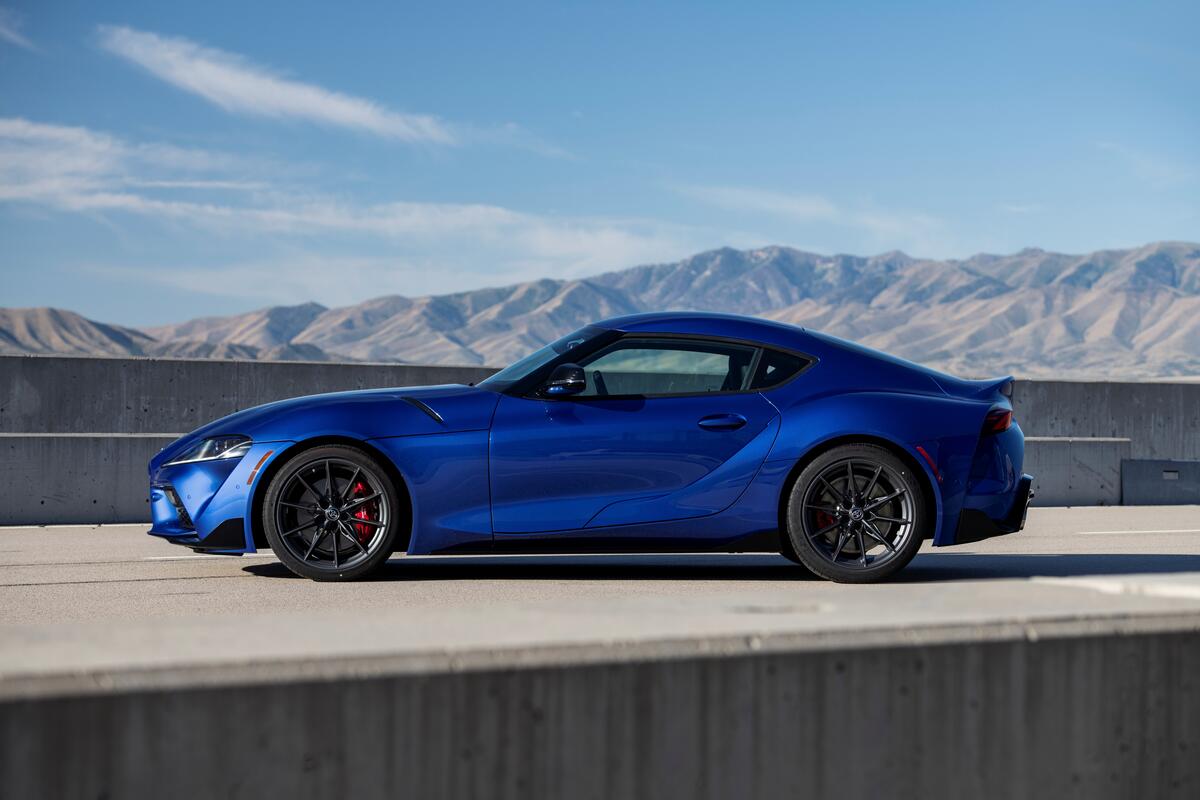
A Supra is a Toyota sports car. The older ones—especially from the 1980s and 1990s—are popular with collectors because they’re fast, fun, and have a big enthusiast following.
“Nostalgia driven” means people are getting into cars because it reminds them of their past. That’s why events can turn someone who just likes the vibe into someone who actually wants to find and own the cars they loved.
A Volkswagen Cabriolet is a Volkswagen that’s designed like a convertible. People often remember them fondly because they were common “first cars” in the 80s and 90s.
“Generational” here means different generations of people get excited about different cars. The 80s and 90s crowd often connects through the same memories and experiences from that time.
Brand
Toyota Super Turbo
The speaker is talking about a specific Toyota they wanted—something described as “Super Turbo.” They’re using it to explain how some people could buy the cool cars new, while they couldn’t.
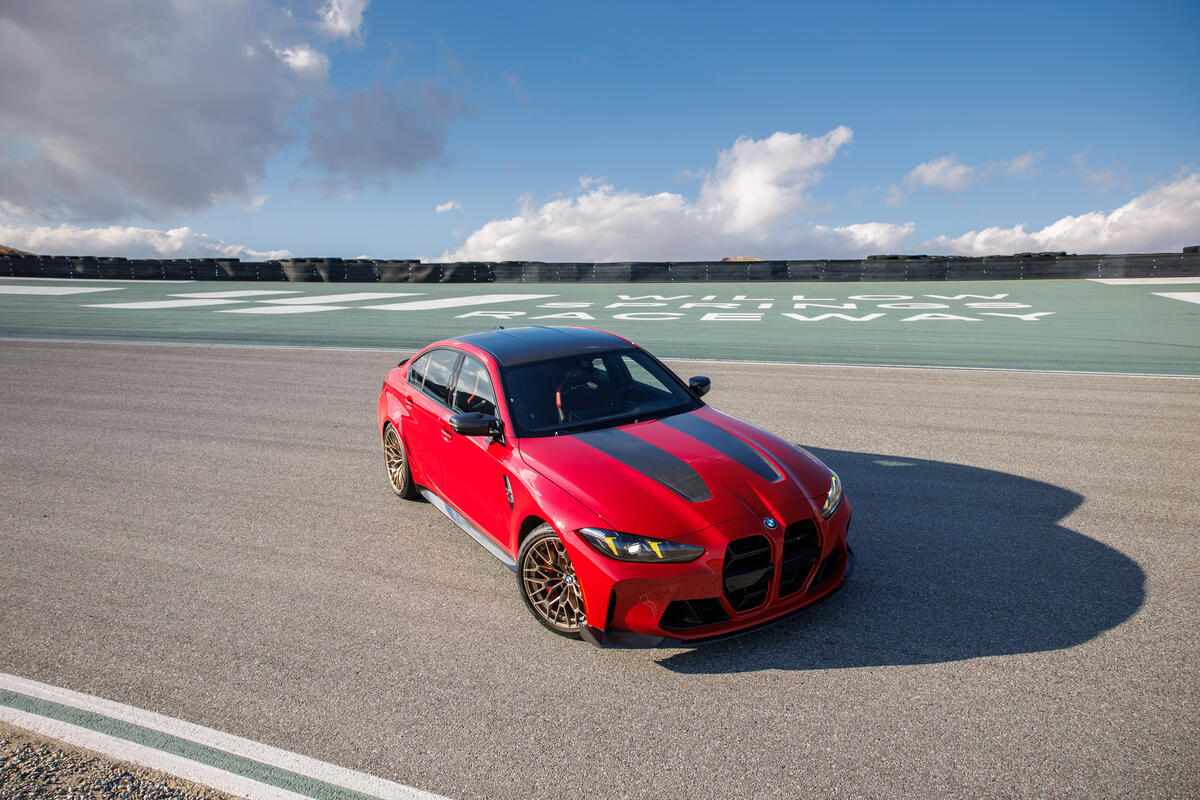
The BMW 3 Series is a very common BMW model line that enthusiasts love. In this episode, they say it’s the most popular type of car at RADwood, including older versions like the E30 and E36.
The Porsche 911 is Porsche’s famous sports car. In this segment, they say it’s the second most common type of car at RADwood, and you’ll see many of them.
The “25 year law” is a U.S. rule that makes it easier to bring older cars into the country. The host is saying that’s why you’ll see European cars at the show that weren’t sold here when they were new.
The Ferrari F50 is a rare, high-performance sports car made by Ferrari. It was built to be a top-level supercar, with strong acceleration and a focus on driver experience. It comes up because it’s an important Ferrari from the early 1990s that many collectors recognize.
The Ferrari F40 is a very fast, rare sports car made by Ferrari. It was designed to be exciting and dramatic to drive, and it’s become famous over time. People mention it because it’s a standout collectible from the 1980s supercar era.
A VCR (Video Cassette Recorder) is a home video player that records and plays movies using magnetic tape in a cassette. In 80s/90s nostalgia events, VCRs are often displayed as part of the era’s “tech” aesthetic.
Cassette tapes are magnetic tape audio (and sometimes video) recordings that were widely used for music and home media from the 1970s through the 1990s. They’re a recognizable symbol of 80s/90s pop culture and consumer electronics.
A “boombox” is a portable, high-volume stereo system—often with a handle—popular for playing music outdoors. In nostalgia-focused events, boomboxes are displayed as a recognizable 80s/90s consumer-electronics icon.
“Daily driven” just means the car is used often for regular errands and commuting. The episode is contrasting that with cars that are kept mainly for events and enjoyment.
Concept
premiere sort of like, insurance treatment
They’re talking about collector-car insurance. The idea is that special cars are covered and handled differently than regular cars because owners treat them like prized possessions.
Here, “componentry” means the car’s individual parts and assemblies. The host is saying companies are now making replacement parts for older cars so owners can keep them in the right configuration.
This refers to tires being made in smaller, period-correct sizes that match the original look and fitment of older cars. Correct tire sizing matters for wheel-and-tire compatibility, steering feel, and maintaining the intended stance and aesthetics.
This means choosing the exact wheel and tire sizes that work together. The right pairing helps the tire fit properly and keeps the car’s look and driving feel closer to what it was designed for.
Tire sizing is the exact measurement code on the tire. It tells you how wide the tire is and what wheel size it fits, so the tire will fit the car correctly and behave the way it’s supposed to.
“Correct aesthetic” refers to matching the visual look of an era-correct car, not just getting it to drive. In practice, that often means using the right tire sidewall proportions and wheel/tire stance so the car visually resembles how it looked when new.
They’re talking about how popular 80s and 90s cars are becoming at auction events. The idea is that a lot of the cars being sold are from that time period.
A “litmus test” is like an early trial to see if something really works. They’re saying their first Radwood event was the first real check of whether the concept would catch on.
“Period correct” means the event tries to look and feel like a specific past time. They try to use the right cars and even the right clothes and music from that era.
Goodwood Revival is a famous car event where the focus is on older cars and recreating the vibe of the past. The host brings it up as an example of a similar “theme” event.
“Cars and coffee” is a casual car meet where people show up with their cars and hang out. The host is saying Radwood feels different because they don’t want cars lined up in tight rows.
They’re creating a new label for the next wave of car culture. Here it means they’re starting to feature cars from around 2010 as the next “modern classics.”
It means the market might be getting “maxed out” for that type of car or event. Once most interested people are already in, it’s harder for prices and demand to keep rising at the same pace.
A 1985 Ford Bronco is a classic Ford SUV from the 1980s. People like it because it looks very “old-school” and it’s a popular choice for car shows and collectors.
They mean the overall feel of the event—more about the people and the community than just the car details. It’s about sharing and enjoying the scene together.
They’re talking about a higher-income group of people. The takeaway is that car events attract that kind of audience in many places, not only one city.
They’re saying car ownership is emotional, not just about money or logistics. People often feel personally attached to their cars, and that affects how they deal with problems and decisions.
“Claims experience” means what it’s like to use your insurance after something goes wrong. It includes how fast they respond and how smoothly they help you get the car fixed.
“Premium product” is a marketing term meaning a higher-end offering—typically with better coverage, service, or brand positioning than a basic option. In this segment, the host uses it to frame Hagerty as higher-end, while still arguing it isn’t as expensive as the listener expects.
A chassis code is a short label car fans use to say exactly which version of a car they’re talking about. It helps avoid confusion because different generations and body styles can feel and drive very differently.
Here, “social media” means websites and apps where people share car videos and pictures. The host is saying it helps connect car fans and owners with similar interests.
Car
80s BMW convertible
They’re talking about an older BMW with a roof that can open. Convertibles feel different because you get more wind and road noise, and the car can sound more “open” while driving.
Here, “coverage” means what an insurance policy will actually pay for. The host is talking about getting insurance that fits enthusiast cars without costing too much.
The Honda Civic is a popular compact car. A lot of enthusiasts restore and modify them, so an older one can be hard to recognize unless you know what to look for.
The host is saying that common ways of pricing cars don’t always match what enthusiasts think a car is worth. If a car has been restored or modified by a passionate owner, the “standard” numbers can be way off.
LIVE
Welcome to The Accelerator, a podcast for insurance agents and brokers who know there's
more to life than bundling home and auto.
Yeah, we're talking collector cars, better sales strategies, and ideas to grow your business
without boring you to death.
This isn't just another industry podcast.
It's the one you're actually going to want to listen to.
Welcome to The Accelerator, a haggardy podcast focused on helping insurance agents and brokers
accelerate growth through the collector enthusiast vehicle market.
I'm John Gessner, alongside my co-host, Bryant Colley.
And yes, today we're talking about one of the biggest shifts happening right now
in the enthusiast vehicle space, the rapid rise of 80s, 90s, and dare I say, 2000s vehicles.
These aren't just niche collector cars anymore.
These vehicles are the major force right now in the market and a growing opportunity for you.
That's right.
Not just those vehicles at the end of last century, but also those at the beginning of this one.
To help us unpack all of that, we're joined by Art Cervantes.
He is the co-founder of Radwood.
And if you've never experienced a Radwood event before, imagine a full-on celebration
of 1980s and 1990s automotive culture.
We're talking BMW E30s, Fox Body Mustangs, Supras, Porsche 911s, Toyota Pickups,
all the good automotive stuff, plus period correct fashion, vintage music, neon colors,
BMX bikes, cassette tapes, VHS, camcorders, everything you can imagine from that era
in one immersive event experience.
And what's really fascinating, it's just not about nostalgia.
As much as I want to drop a Michael Jackson track here now,
but Radwood becoming a window into where the enthusiast market's heading.
Who's buying these cars?
Why they matter emotionally and what agent should be paying attention to?
That's right.
And we get into this quite a bit in the conversation with Art, but the types of vehicles,
the classic collector enthusiast fun weekend cars that we're talking about,
they're just a great fit for that specialty insurance product.
These are not your 60s, 70s, 1950s, 40s vehicles.
Sure, they're those, but it's so much more than that.
So we're going to get into with Art today, why these vehicles from the 80s and 90s are
exploding in popularity.
What today's Radwood era enthusiast looks like?
Who are the people that are really powering this movement?
Why are many owners still don't realize or recognize Hagerty as an option for these vehicles?
And frankly, not just the owners, but agents aren't seeing this every day either.
We want to help you identify these vehicles to place them properly.
So we're going to give you some tools on how you can recognize these vehicles better that
are typically hiding right in plain sight.
And lastly, what this trend could mean for broader account growth opportunities.
We're talking about Radwood's next evolution,
including the introduction of a millennia of term focused on enthusiast vehicles from the
early 2000s.
And honestly, this episode, just a good reminder that enthusiast vehicles don't always look like
six-figure Ferraris.
They don't look like 50s cars with the fins.
It's honestly just the car that somebody dreamed about in high school.
And it could be like mine, a Dramzam, or it could be a Civic, it could be anything.
It's really what the passion from that person and what they have.
Exactly right.
And for agents who know how to recognize those signals,
ask the right questions, and place those vehicles properly,
there's a huge opportunity to build deeper customer relationships.
Let's go!
Art, we are so excited to have you with us on the Accelerator podcast today.
Just want to start off with some gratitude and thank you for joining us.
Brian and I on this call and all of our listeners out there,
primarily our insurance agent partners that are really interested and focused in sharpening their
pencil and the enthusiast auto insurance space and what that can mean for their broader
and agency growth.
And just so excited to have you with us today.
Awesome.
Well, thanks so much for having me.
This is exciting.
Obviously, a topic that is near and dear to my heart, literally my life now.
So it's cool to share this with your audience.
Great.
Just to get us started, we introduced you a little bit before our conversation kicked off.
But for everyone listening, that just might not be as attuned to the auto enthusiast space
and the event space and Hagerty.
Could you just start us off with sharing a little bit about what is Radwood?
What is this?
What does it matter to auto enthusiasts?
Yeah, so it's a celebration of 80s and 90s automotive culture and lifestyle.
So it goes beyond the automotive piece, right?
Yes, at its core, it's an automotive celebration.
But we celebrate the culture, the music, the fashion, all of those elements,
which make it a very interesting and unique experience, right?
Where it's fully immersive and you have people who are your core hardcore car people.
And then you have a lot of automotive adjacent people.
And what's interesting about that is that we've seen a lot of those automotive adjacent people
actually become enthusiasts by coming to our events.
And actually seeking out stuff that they remember, right?
It's like very nostalgia driven.
So I can think of an example of someone who came to our event
as a sort of a fashionista type influencer in the LA area.
And she saw this Volkswagen Cabriolet that she loved.
And she's like, hey, that was my first car.
I totally forgot about these cars.
I would love to find one again.
And like next thing you know, the next event she shows up in her BW Cabriolet
and is showing a car as a non quote unquote car person, right?
And we see that a lot.
We see that story quite a bit.
And it's interesting because automotive culture in many senses is generational, right?
And so I love everything.
I love everything from a 1920s Bugatti to modern supercars.
But 80s and 90s automotive culture and cars are what's most relevant to me, right?
Because of my age.
It's what I grew up seeing.
It's what I grew up seeing at the racetrack when I went to the track.
And then also when I started driving, what was available.
So in some instances, some people were more fortunate than me
and were able to walk into that showroom and get a Toyota Super Turbo brand new.
I was not.
So I just lusted after those cars when I was in high school and early college, right?
And so now that I'm in a position to do so, and a lot of people like me are seeking those out, right?
And so you're seeing that impact in the industry right now,
where values of these cars are skyrocketing because there's a lot of us
who are seeking them out and trying to find the best examples.
And ultimately, you're dealing with limited inventory and a tremendous amount of interest, right?
So that's really in a nutshell what we're up to right now.
So Art, you described of what Redwood is, but I want to dive even deeper
for people that have never heard of Redwood before.
Tell us what the event is like and what kind of cars would they see when they go?
Yeah.
So coming into the Redwood experience, you're going to first of all, music is pivotal, right?
It's sort of like the linchpin for the entire experience
that gets you into that retro sort of mindset, right?
So you're going to hear 80s and 90s music all day.
Sometimes we'll have live entertainment, always have a DJ.
Also the visuals, right?
So colors, outfits, memorabilia, beyond the cars, right?
People are bringing all of those different elements and display them.
And then you have the cars themselves.
So the interesting thing about Redwood is that you have a very wide array of vehicles.
So you're going to find everything from Toyota pickup trucks to, you know,
Ferraris and Lambos and all of the supercars and everything in between.
You know, I can tell you now that our most popular name plate by far is the BMW 3 Series.
And that includes, you know, your E30 and E36 chassis vehicles,
but also all of the different types, right?
So you have everything from a standard 3 Series to Alpina to the M3s of the era.
In addition to that, I'd say that you're going to see a lot of customization
and that's retro themed, which is really cool.
So we're going to see stuff that, you know, with body kits, you know,
pure correct wheels, things of that nature.
And that's really what we celebrate the most, right?
Is seeing sort of like that period correct kind of like aesthetic.
The second most popular name plate is the 911.
You're going to see a lot of Porsche 911s.
And between those two, I'd say your average show has about 450 cars.
You're going to see at least 120 or 150 of those cars.
And then from there, it's going to be a tremendous variety.
You're going to see domestics.
You're going to see JDM imports, European imports that we never got here
that are 25 years and older because of that 25 year law.
And then in addition to that, you're going to see some really kind of unique
and special cars that are one-off types that are more super car centric, right?
We've had vectors at our shows.
We've had concepts at our shows.
Of course, Kuntas, Testerosa, F40, F50, all of those.
That's great.
I was lucky enough to attend a Radwood event in Philly.
I'd say this was maybe 2023.
We did an event there.
I should say you did an event there.
And I just got to attend and enjoy it.
And I was really struck to your point.
You know, I think cars was maybe the third or fourth thing you mentioned
when you were talking about Radwood is.
And that was what really struck me was it was almost like going to
like a cosplay event where people were showing up in costume, period correct,
you know, outfits and hair and makeup.
And I think I saw magazine collections from the 80s and 90s.
I saw, you know, TV, VCR combos that were there with, you know, cassette tapes,
boom boxes were set up and on display.
And it was really just an incredibly fun party like atmosphere, not party,
maybe more festival, but it was really, really cool.
I mean, I also want to make sure we take a minute to think about those cars
that you just mentioned, because Porsche 911, you know,
that maybe speaks really clearly to our insurance agents out there like,
Oh, that's a special car.
That's probably something not daily driven.
But when you see a BMW three series, you know, that feels very much like
a daily driver type vehicle, but depending on the age and the usage
and how folks are caring for these, storing these and using these,
that three series that shows up could be an enthusiast type vehicle
that might be a good fit for, you know, a place like Haggerty.
Absolutely.
And including my personal car.
So I have one of those.
And, you know, the thing is that it's all about perspective, right?
When you walk into an event, I'd say 90 to 95% of the vehicles that you see on display
are not people's daily drivers.
These are cars that are treasured.
These are cars that people feel very passionate about and they're their toys.
They're cared for to a certain level that I think people do want, you know,
that premiere sort of like, you know, insurance treatment or their cars are
brought for sure, you know, and all of those details.
But it's interesting to see also how we have brands now reproducing componentry
for these cars.
And also my favorite that I've seen because I'm a huge tire nerd is I'm
starting to see tire brands produce small sizes in the correct period,
correct aesthetic for these cars so that they have the correct wheels and tire
combinations, right?
Because for a while there, we had no tires and if you're a collector or if
you're an enthusiast, you know that tires in 14, 15s and 16s are really
challenging to find.
And so we have brands like Michelin, like Bratastine now, and Yokohama coming out
with brands or sorry, sizing that is again, correct size for the cars,
but also the correct aesthetic.
And it's to that level of detail that people are going now.
These folks are definitely an opportunity for us, I feel like.
And especially now you look even at broader auctions, right?
I think without exaggeration can say that 40% of the lots are of this era.
And so at that end, you have that's the very high end, but then you go to bring
a trailer, you're going to see the same.
So this is trending throughout and it's definitely a big opportunity.
Thanks, Art.
I think I've been able to see a couple of these events.
I want to ask two more questions on the event itself and then want to switch
the conversation into why we're talking about this for our agent and B2B audience.
But so you're describing a rock concert, Michael Jackson music, cosplay.
I mean, this is, this sounds amazing, but tell me, tell the audience,
if they've never been to one of these before, but they might have been to a car some coffee,
maybe they went to like a local car show.
What else would you say would be the bigger difference?
And then I think the second question would be,
talked about how these events have changed in size, the types of vehicles,
you know, how many events we're hosting, like give the audience maybe a little bit of a history
of how they've expanded over time.
And then if they used to go into a car some coffee, like,
what would the other difference be for Radley?
Yeah, absolutely.
So I can tell you just to step back and sort of start from the beginning real quick to give
you a sense of kind of how things have evolved from day one, June 2017, we call like our litmus
test event and that was in San Francisco.
And it was a few friends and I, we basically wanted to celebrate this era because there
was no place for it, right?
You know, we were inspired by the Goodwood Revival,
which, you know, can be found online if you're not familiar with it.
And that's a period correct event that's from post World War II to about 1970.
And it's the same idea, right?
It's immersive, it's, you know, period correct, everything, clothing, music,
you know, art, fashion, cars, airplanes, even.
And so we're like, you know what, that's an awesome idea.
But there's nothing for the stuff that we're super into, right?
Like we love 80s and 90s cars.
We love that culture, the music and everything we grew up with.
So we sort of like kind of spun off our own version of that and created this experience.
And the thing is that the first event ever had one element that has stayed consistent
through the entirety of the history of Bradwood.
And it's something that I wanted to do because I am a photographer as a hobby,
you know, a hobbyist and I've been a photographer since I was like 14.
And I really don't like that when you go to a car show, they're all parked in grids,
really tight next to each other, like a cars and coffee, like most car shows.
Flat, concrete, lot, right?
And that's not the most compelling space.
So the first thing is I want a compelling venue.
I want cool backdrops.
I want it to be a really interesting environment, really cool ambiance,
whether it be super industrial, whether it be right on the waterfront,
whether it be among buildings, there's different angles to this, right?
So that's the first thing.
The second thing is we want to have a curated section of the show, which is hyper curated,
you know, in this instance, the first event, I think we had like 50 cars
that were curated on the waterfront along the San Francisco Bay on the lawn.
And then 100 cars, which we call our standard display,
which would be, you know, a cheaper, more affordable ticket.
But those cars are parked more in that grid pattern that you would normally see, right?
And make sure that more it's inclusive, rather.
And that's a different price point, but you're not going to get that premiere
at a showcase parking.
And the first event was 150 cars, 500 people showed up with it.
Well, we like to say zero marketing, but it was, you know,
something that we just kind of announced in our network among friends.
We had a really good group of people that showed up and that's where we decided,
okay, well, there's something here.
Jalopnik picked it up, a friend of ours shot it.
And so we had plenty of content to share with them.
We decided to put on a quote unquote real event in Southern California.
This is because we were all in the Bay Area.
And that was December of 2017, same year.
At that event, we put quite a bit of marketing into it, right?
We worked with platforms like Jalopnik, you know, automobile magazine.
We invited a lot of the press, a lot of the media,
a lot of the players in the space were there.
And that event kind of was what really kind of set us off in this path of like
massive growth and exposure very quickly because we kind of struck a nerve there
where it was like, all of a sudden, oh, like this is a thing.
I want to be a part of it.
I have cars that I can contribute.
I didn't have a platform.
I didn't have a place.
I want to show with you guys, I want to be part of this culture, right?
The Radwood kind of culture.
At that event, we had 400 cars sold out in about like 2200 people.
And so at that point, I was in the tech industry for a long time.
And, you know, this sort of automotive stuff was a hobby.
And I kind of jumped ship in February of 2018.
I left my last sort of tech job and went all in on this.
Lane Skeleton, who was one of the co-founders, did the same.
And we committed full time to this.
And then we had a few friends who were sort of contributing hard time.
And eventually some of those, you know, jumped ship and left their quote-unquote
real jobs and got involved with Radwood full time.
Warren Matson being one of them who has had Hagerty now
and he heads of operations for Radwood.
So at that point, you know, we decided, okay,
we want to have an element of curation,
an element of like having these cool environments, cool venues.
And then of course, all the things we talked about to celebrate.
And that has remained consistent throughout.
But what we've incorporated is other lifestyle elements too.
It's a kind of wide appeal, right?
So we've had BMX exhibitions, state exhibitions,
you know, things like that, breakdancing, of course.
There's also the fashion contest,
which that's why you have all of those people encouraging,
or encouraged to dress up because there is an award for that.
And the way that we do it is really fun
and how we incorporate it into the award ceremony.
So it is, it is definitely much more festival-like
compared to a cars and coffee.
Cars and coffee is an emal parking lot.
It's not, I mean, it's cool.
It's great for, you know, hanging out with your friends and chatting,
but it doesn't have that sort of vibe of like a fun festival atmosphere.
And also the visuals are not the same, right?
So you're going to see, if you Google any Radwood imagery,
you're going to find really interesting kind of venues
with cool kind of curation and placement of vehicles
and unique places, which of course is visually compelling.
But also when you're there,
it creates a really unique experience, right?
Like you're using the kind of the concourse in a stadium
to place cars or at the top floor of a parking structure
among the LA skyline, you know,
or for some kind of industrial warehouse on a port
or something like that, right?
So all of those things have been part of the Radwood experience.
Had a sense day one.
That's great.
Thank you for catching us up on that history.
Now it's been, if my math is correct,
about eight and a half years or coming up on nine years
since you had that first event.
And, you know, when we think about Radwood as 80,
celebration of 80s and 90s culture music cars,
that was about 30 to 40 years in the past.
And now that we are nine years from that first Radwood event,
you know, as time marches on on kind of expanding
what Radwood looks like or are their thoughts
or are you thinking about, you know,
how do we celebrate cars from the early aughts?
You know, we're seeing that as a big growth on the insurance side
of what people are buying and getting quotes for and insuring.
And I know that moves a little bit outside of the Radwood area.
I'm just curious if you're thinking about that shift
in the market and what enthusiasts are into
and if you have any thoughts or plans
on how to potentially incorporate vehicles
and the culture and music, et cetera,
from that early 2000s.
I just have to ask, what did John just say?
What is a aught?
What is that?
Double O.
Double O.
Yeah, so 2000s, double aughts, or double O's rather.
So we actually are very conscious of that.
And, you know, just as we're talking about
sort of this generational shift, right?
Like naturally, that's going to continue to evolve
and now that we're kind of nine years into this thing.
And so we we've decided to name this this concept millennia.
Basically, we're starting to celebrate cars from 2010
as these kind of modern classics
with a curated class within our shows.
So it's not necessarily a full scale event yet,
but it's sort of an introduction
to kind of get the concept out there.
We'll celebrate the icons,
like the really heavy hitters of this era
to make that impact and then kind of from there grow it.
Right now, I can say that, you know,
at least from my perspective and my approach,
I don't think it will be part of Radwood indefinitely.
It is a different thing, right?
Radwood is rad.
It's it's era specific.
I think millennia will eventually kind of spin off
into a separate brand celebrating this era.
Maybe we'll lump in the future of other cars
deeper into the the 2000s, if you will, in the long run,
but it's going to have its own unique feel,
its own colors, its own vibe, right?
And so conceptually, the way that I feel
that this will start to grow initially
is having more of a party kind of atmosphere
as an independent event,
like a mini motor looks kind of, you know,
like that sort of vibe.
I have all sorts of ideas,
but I feel like that would be more impactful
and hyper curated, you know,
like going from a 10 car class within Radwood
to maybe a 50 car hyper curated display
in a super rad venue, you know, like,
and then so it's a different approach to it.
And I feel like that would do really well,
but no doubt, like right now those that era vehicles,
and I hate to say this term,
I don't want to freak out Ferrari or Ferrari friends out there,
but it's on fire because I know that that can happen
quite literally, but it's right now,
though the growth is unbelievable,
especially with like some of these icons
in the really high end segment of the market.
I was just seeing the 360 challenge Stradale,
you know, which is a Ferrari five years ago,
that was a $300,000 car all day.
Now they're a million dollars.
It's unbelievable.
And you're seeing that trend a lot
among, you know, that era of vehicles.
So no doubt that's an opportunity.
The Radwood era is still growing.
And I feel like I know within our realm,
as much as we like to think it,
we feel like we've reached peak saturation,
but there's still a tremendous amount of people
who don't know what Radwood is,
even within that hardcore, poor enthusiast market.
So we have quite a bit of growth to do there.
And even just wider mass appeal, right?
So that's where we're heading.
I can't quite announce just yet
what we're up to this year,
but we've been working really, really hard
on kind of Radwood 2.0.
It's expanding on this kind of festival experience
with a lot more going on,
and really kind of creating more experiential elements
within the shows for people.
Thanks, Art. I think, so millennia,
that's a new term.
I know what that means because I'm a millennial.
But arts was a new term.
I just never heard that.
So 00s, 2000s vehicles.
All right.
We're going to take this conversation
in a different direction
because I think you've painted a fantastic picture
of what a Radwood event is,
the types of cars, the experiences.
And so I want to encourage our audience
to go to one of these events,
and I want to talk about why I matters to agents.
So Art, tell us a little bit about who is attending
and who's bringing their cars.
And I want to set that up as what could be
the opportunity for an agent
to maybe connect with some of these people.
So tell us about who's there,
who's bringing these types of cars.
How old are they?
Are they high net worth?
Are they mass effluent?
Are they just normal people?
Like talk just a little bit about that.
Yeah, absolutely.
On average, you're looking at about a 41-year-old
kind of age among all of our participants,
I should say, not necessarily attendees.
I think attendees skew younger.
We have a big chunk that's in their late 20s into 30s
that is there to celebrate,
that likes the atmosphere,
that's more of a festival goer type of personality
that's rowing.
But in terms of participants,
on average, you're looking at about a 41-42 age
across all events.
Household income is about 50%
in the 175 to 220k range.
And that's pretty average across the board.
Obviously, some regions are a little more affluent than others,
but I think that's a good number to work off of.
And as I have these conversations,
and I have had these conversations with agents,
and this is my personal experience,
there's this vision of like,
oh, it's just like a $15,000 Honda,
like maybe that's not in our real house.
And it's like, well, no, it's actually no,
we're talking about a lot more than that.
And as a matter of fact,
that guy with the $15,000 Honda might have XXX
sitting next to it in the garage
that we're not aware of,
that might show up at the next event
or that we want to dig into.
Because that's pretty typical at our events.
And so I can tell you right now,
off the top, I have 10 collectors
that come to our events in the Austin area
that will show up in a 1985 Ford Bronco,
but have about $10 million worth of cars in their warehouse.
So it's more about the vibe that they want to have at the event,
what they want to share at the show, that sort of thing.
So it's very interesting to see that.
And this is very normal, but knowing that
an upper middle class kind of overall group
is a good opportunity.
And this is consistent across the board,
not just in LA or Austin or Philly,
all over our stops, at least.
Yeah, and I think that's a good point that you make
on folks that maybe have one of these vehicles
that's $15,000 Honda or Toyota pickup.
I mean, I wish those were only 15,
they're probably a little bit more.
Because I've wanted one since I first saw it back to the future.
It's like a two-year-old, so it's still on my list.
But not only do these folks potentially
have additional vehicles in the garage
or maybe a boat on their own business,
they might have another second property.
And as much as we love these high-end vehicles,
we're also here to help protect those folks
that do just love a car, whether it's $5,000, $10,000, $15,000,
$30,000 in value.
Those are still have a great home at Hagerty.
And just because it's not a six-figure or seven-figure
plus vehicle, it doesn't mean that it doesn't
have a high emotional attachment to the owner.
Doesn't mean that they don't want it fully protected
for the value that it's at.
And those values can be really difficult to pin down
if you're just looking at Kelly Blue Book
or the used car market.
Because a 1987 Toyota pickup truck
maybe doesn't show a really high value
on those types of platforms.
But when you look at it from the collector market perspective,
they are worth quite a lot.
We just want to make sure that those vehicles
are fully protected for their total value
and how these folks are using them.
So I think that's just a really important point
that you called out.
And one thing in particular that is very crucial
because as we know as enthusiasts,
it's like an automotive purchase and ownership
that that is all a very emotional thing, right?
And so I'm thinking of Jason Camisa in particular,
a very well-known high-profile automotive journalist
who is a colleague.
But he's also a really good friend of mine.
And I know personally if he was to get turned down
for his Volkswagen Cheraco, which is maybe,
he is like one of the nicest in the world.
So it's like, let's hit 30 grand, whatever it is.
If he were to yet have that experience,
he wouldn't give you any of his other business, right?
And like he has a Ferrari in his garage.
He's got other I&E stuff.
So it's really important to like make sure that,
as you're saying, this is an emotional thing
that people treasure.
And there are opportunities usually beyond that.
Nothing always has to be the case,
but like it's important from a relationship standpoint
to really be cognizant of that
because it could be detrimental.
And I kind of feel the same way, right?
It's like you want to have that sort of relationship
with your agent and your partner in that sense, right?
It's like, hey, like I want all of my toys covered.
Like this is equally as important to me,
not just because it's 15 or 20 grand.
Doesn't mean that it's not less important, right?
There's nostalgia there.
There's history.
There's a lot more than just the value itself.
Yeah, I'm glad you mentioned that.
I literally was just speaking at a conference yesterday
and I want to pause on this for a second
because I think I just want to hammer this point home
that you made.
Someone was asking like,
hey, I can find cheaper coverage with the general.
I would say the name of the company,
but it was a company like the general.
And not the wrong with the general, they served their purpose.
But he had a couple of 911s that he's the agent talking to.
He had a couple of the 11s with the company like the general.
He's like, oh, it's just the guy just cares about price.
I was like, all right, let's just pause here.
If he's got a couple of 911s, what else does he have?
And he starts going through.
He's got a house on a lake here and a house there
and he's got a boat here.
And I was like, wait, wait, time out.
I was like, I'm not thinking about this the right way.
He's telling you he cares about the price.
But this type of client,
think about the type of claims experience
he's going to have with his 911 at X company.
I'm telling you right now, you're going to lose that call
because of what you just said are like,
he has these cars because there's something
that appealed to him.
There's a passion there.
And when you mess with people's passions,
I don't care if it's cars, sports, video games,
like you name it is going to come back.
And so I think he had an appreciation of like,
wait a minute, you know, like maybe I should
put those vehicles with Hagerty.
And I think he's also going to be surprised, by the way,
of how our price is compared.
I don't think it's as expensive as he thinks.
We're a premium product,
but I don't think we're as expensive as he might think.
But I just want to,
the really dry point at home, like,
if you guys in the audience think that these types of cars
because they're 10, $15,000 are fine,
just on a normal policy,
in the event of a claim, I'm guaranteeing you,
you're going to lose that client
because they're not going to put the types of parts
on the vehicle or paint the vehicle.
We're just going to try to total it
because it's worth more than that in the client's eyes.
And literally a windshield could literally total one
of these cars from this type of era.
So, all right, I'm glad you mentioned that
because I just want us to pause and drive that.
Now, kind of thinking in the Radwood context,
and we're seeing the same thing in the insurance side,
there's growing interest and participation
in vehicles from this era.
So you mentioned, you know,
the growth that you've seen
with the event series over these last eight years.
We've seen really similar trends,
you know, kind of happening in the insurance side,
just in terms of like the total vehicles
that are out there in the enthusiast space
and the types of quoting that we're seeing
come through on the insurance side.
So I'm just curious, like,
if we could put it into context for our agent audience,
like, how do you see this growing interest
and participation in Radwood?
And do you see this continuing to grow?
Like we mentioned, the millennia event potentially expanding
and as time marches on, you know,
people will be talking about the cars from the 2000s.
We don't have to call it the ox, right?
About the cars from the 2000s.
Do you still foresee a future
where there's going to be continued,
not just sustained, but continued growth
in interest and participation
with vehicles from the 80s and 90s?
Yeah, absolutely.
There's still a lot of opportunity,
especially because, as I mentioned,
we have this sort of younger demographic
coming in, initially coming in from an angle,
like the lifestyle side of things,
but then getting interested in these vehicles.
And you see that I'm not actively on TikTok,
but like I see all the content
and all the tags that come out after every event.
And it's kids in their 20s, you know,
early 20s that are coming out here
and are super stoked on these cars.
And it's also interesting because it's all,
there are parallels among not just the cars, right?
There's a lot of different elements in the world right now,
like, for example, technology and photography
that are paralleling what we see in cars.
And so it's sort of this kind of movement
of the analog, you know, kind of going back to the simplicity
and like, and it's stuff that I'm aware of
and that I feel as well.
But I'm seeing, you know, the younger demo saying,
hey, like, I don't want my entire interior to be an iPad.
I want this like pure analog experience, you know,
I want a key to start my car
and I want that emotional, like a sort of like
feedback and connection with a car
that like is not basically me driving an iPad, right?
And it's like, you know, I get it.
I know from a utilitarian standpoint, like as a tool,
like, modern cars are phenomenal, right?
Like they're quiet, they're comfortable,
they drive themselves, whatever.
Like that's great as a tool to give me a round.
I want to be in the capsule, you know, too.
But when I want to go enjoy something and engage with it,
you want the engagement, right?
You want those knobs, you want to turn things,
you want to feel buttons.
And so all of those things are, they're picking that up,
you know, that younger demo.
And a lot of the content that I'm seeing out there
is folks being interested in this era.
And it's a perfect combination of ingredients, right?
Because it's not carburetors, it's not too far back
where it's like, you know, it's smelly and it's destructive
and it's like all this.
And so it's more like, these are things that are,
like I can interact with, but are still retro
and like they're fuel injected, they fire up every time
and they have these cool graphics on them
and like the gauge clusters are trippy and like,
so it's like this, all of those things, right?
Like even, and again, the music,
like there's like the cassettes, the CDs,
like this is a novelty, right?
And these are all things that you interact with
that are different than just a playlist.
So photography, same thing.
I mean, the resurgence of film cameras is unbelievable.
Like I was just talking to someone,
I was at an event this weekend
and like I saw multiple people shooting with film.
And I'm like, where do you guys develop this stuff?
Because like, I thought like CVS stopped doing that 15 years ago.
They're like, oh, there's like a whole cottage industry
right now that is like sprouted up to like,
you send your stuff in, they scan your negatives,
they send your digital and they give you the analog prints.
So like all of that is in line with what we're seeing, right?
And so like it's that interest in this sort of like retro thing
that is going to continue to grow.
And like without naming any names,
like I'm also very aware of the original car shows
that we're doing the hot rod stuff, right?
And so they're still around.
They're trying to tap into our era,
but like they're still celebrating that 50s and 60s and 70s.
And that's been around since like, they were like the mid 80s,
like a lot of these shows.
And so there's still a lot of room for not only growth,
but for this to kind of to continue to survive and thrive,
especially as we start to kind of,
we keep an eye on the industry and what's kind of relevant.
And as we start incorporating these newer generations,
you know, like there's a lot to do here
and still a lot of opportunity.
Yeah, I think it's funny, my 14 year old daughter
for birth, they wanted records like vinyl.
That's funny.
I didn't know how to even play it.
So I was a watch a YouTube video,
like how to play vinyl, but it was cool.
I'm like, well, this is actually cool, you know,
because up in the, the between world,
I grew up with them, but I never did it.
So wherever we're getting towards the end,
I want to ask you how we,
and what tips and tricks do you have for our audience?
You know, the agencies that are trying to identify
Radwood vehicle, Radwood era vehicles,
you know, 80s, 90s, early 2000s,
what would you recommend they listen to look for?
How they can they identify some of them?
I might have one of these cars because
they're really passionate about it, or, you know,
maybe they just have the car because their grandma
passed away and they just got it,
treating it like a normal car.
Like what should they look for?
You know, what do you guys look forward
when you're trying to identify these type of owners as well?
Yeah, well, social media is super helpful.
That's kind of like our biggest tool right now
because you're going to see content and naturally,
I don't know, in terms of building pipeline,
how that works from an insurance side,
that's not my wheelhouse, but like just seeing
what's out there, right?
And attending events is super crucial
because you're going to really,
whether it be cars and coffee or whether it be our events,
you're going to see that.
And if it's not our shows, like I would look at,
there's different classes at events, right?
And seeing if there's a class for 80s and 90s cars,
that's also helpful in interacting with those folks there.
As opposed to the guy that just inherited it,
or like I'd say you start with kind of like
the low hanging fruit being people
who are already passionate about these things
and actually want to take good care of them
and want to be insured well.
Naturally, those are the people
that are going to be proud of them.
They're going to be showing them off on social media
and or at an event.
On the social media side,
I mean hashtags are kind of the way to go, right?
So in terms of cataloging and seeing
where those people end up, right?
So let's say if you search the hashtag 9-11 or whatever,
you're going to get a mix of everything
because it's all eras,
but if you can get more specific with like 80s,
Porsches, or in the case of BMWs,
it helps a little bit to study up on like chassis codes
because that's how a lot of car people speak, right?
So hashtag E30, which is the 80s series,
like that will naturally take you
to a lot of content from that era.
And then you can see, oh, well,
these folks are going on a drive
in the Smoky Mountains
and they're going to end up at this winery
and they're going to have an event there.
So it's like, okay, like now you know where to find them
or like consistent content.
You know, you can even, you know,
I don't know if you guys do cold outreach on social media,
like just being like, hey, I see that you have all these cars.
Like we'd love to talk to you.
So I feel like social media is a really powerful tool for this
because people are sharing it
at least the folks that are very passionate about this stuff.
And I see it popping up a lot.
Most recently, there was a woman in LA
who got an 80s BMW convertible.
And she's like not necessarily knowledgeable about the car,
but she just likes the way it looks.
It was in 90210.
And that's what she grew up watching.
And she likes the experience of driving the car,
the way it looks, sounds.
And it's kind of become her whole channel now.
It's like her driving to get coffee
and like, oh, I needed to make this repair.
And so she's kind of learning as she goes.
And other people are commenting on it
and people who are owners of said vehicles.
And so it's kind of like an easy way to find those folks, right?
But events are a big part of that.
So understanding where they're going to be,
the cars and coffees, the gatherings, the festivals,
things like that.
To be honest, though, going to Radford
is like the fish in the barrel thing, right?
Because that's where they all end up.
So if you want to see all these cars and those owners,
that's where you're going to find the bulk of them.
That's great.
Yeah, thank you.
I think one, if a customer ever talks to you using chassis codes,
that is a clear signal that they are auto enthusiast.
And there's probably worth a couple more questions
to understand their insurance needs.
Another tool we have available, I just want to plug here.
Two tools I actually want to want to plug here.
One is a content series that we ran in 2025
and is still available on HaggertyAgent.com,
as our cars you should know, where we highlighted
some of the most popular and beloved enthusiast car model,
makes and models through 10 different manufacturers
over the course of the year.
Great place to even get a gut check
if this is an enthusiast vehicle or these collectible.
And then also you mentioned social media
and completely agree that it is a great prospecting channel
for agents.
And we actually create and make available
social media post content and photography
that our agents can come in and grab and use
on their own channels and however they see fit.
So we do make some of those tools available
because we do see that, as Art said,
just a huge potential prospecting tool and channel
for agents to connect with and talk to owners
of these really special cars.
One thing I was going to mention that I feel is really crucial
is that I'd say a very large percentage of the folks
that I interact with that ask about the Hagerty brand,
like what is it when they're on site
because we have a Hagerty presence there
through our other products.
A lot of them don't know one what Hagerty is
or that Hagerty ensures cars of this era.
They just assume it's all very high end
or if it's for it's all hot rods.
And so that knowledge, they're not being informed,
which is really interesting to me.
So as we move forward with this,
figuring out ways to reach them and inform them
of this being a thing.
Because when I'm up on stage and when I do the awards
and I call out like, oh, you should swing by X,
like Hagerty ensures the Radwood era is what I say.
And it's like, people know that the Radwood era
has become a thing in the automotive Lexicon.
It's funny to see how that gets a reaction, like really?
Like, oh, I thought it was just,
you know, grandpas hot rod and super cars.
So it's interesting for me to see that.
So I think we have quite a bit of work to do there.
Completely agree.
And I think that right there is a really valuable piece
of advice for all of our listeners out there
that if you can be the person
that can educate your customer on great coverage
for their, you know, loved prized possession
that they have this high emotional connection to,
you know, to your point, they might not know
or be aware of what Hagerty is.
Or if they do know what Hagerty is that we offer coverage
for vehicles from this era and newer
has a huge value add that you as an agent
can provide to that customer.
And as RU mentioned earlier in our conversation,
if you and Bryant as well,
if you handle that particular policy well,
if you understand the customer need
and you present a great solution,
that opens the door to so many more conversations
and opportunities, not only with that one customer,
but their friends and their network
within the car community where, oh, I got great coverage,
it's actually really affordable.
I didn't know Hagerty could do this.
My agent pointed me in the right direction.
You should reach out to them.
He could hook you up with the exact same thing
or she could set you up with great coverage at Hagerty as well.
I think that is a really valuable insight
that you just shared.
Awesome. And I've been a little Eurocentric
with some of this, the chassis codes and the cars,
but I mean, the Foxbody crews out there,
the Foxbody, you know, clubs massive, right?
And they're very serious about their cars.
They take really good care of them.
You know, the Camaro F bodies and Chevy trucks,
the K5 Blazers are now very valuable
and people, you know, are very serious about them.
You know, we're talking 50 to 60 grand now for a good truck.
So all of those are opportunities.
So it's not just the European exotics and all that.
It's a lot of domestic stuff that we see at our events.
All right, Art, thank you so much for your time today
and for sharing all of your expertise
and insight and perspective.
Want to give you the floor if there's anything else
that you want to mention before we, you know,
end our time today.
Anything that you want to cover from Radwood,
vehicles from this era, you know,
anything else on your mind?
Check us out on radwood.com.
We have some big announcements coming.
Right now it looks a little empty
because we're working behind the scenes on some big things.
And for social media, Radwood official
is where we'll find us everywhere.
And that's where you're going to see a lot more content
and also a lot of the communications about what we're up to.
All right, thank you, Art.
We'll make sure that we link to those in the show notes as well.
So folks, we'll have an easy access
to go and check out radwood.com and Radwood on all the socials.
But again, really valuable insight,
really very cool event series that you and the team are putting on,
really serving this community of car enthusiasts,
but even beyond that, you know,
the folks that are really interested
and love to celebrate the Rad era of the 80s and 90s
and just super grateful to you for joining Brian and I
on the accelerator today.
Oh, thanks for having me.
Wow, I feel like I say, wow,
coming out of every single conversation we have with our guests.
But man, what a cool conversation we just had with Art.
And what a great job that this guy has.
It sounds like a blast traveling around the country,
putting on these super funny events, celebrating
really the era from his childhood,
as well as mine and yours as well, BK.
Just big thanks to Art.
Really appreciate you joining us and sharing your perspective
on where the enthusiast market is headed.
Yeah, and I think my biggest takeaway for agents listening to this,
enthusiast vehicles are evolving.
So it's not just 50s, 60s, 70s muscle cars anymore.
The enthusiast market now is 80s, 90s and early 2000s.
Like we talked about every single vehicle from the 1990s
is now 26 years old and older, the traditional 25 years plus term.
But that doesn't matter.
We can do newer vehicles like Radwood's talking about
in this term millennia.
And the other term that I learned about, the odds.
That's right.
Bryant learned today, as you all heard,
that the odds refers to those early 2000s from 2000 to 2009.
So hopefully you all learned something as well as Bryant did today.
So another thing that we learned is that sometimes these vehicles,
especially from this era in newer,
they don't always announce themselves clearly.
You don't look at a deck sheet or you hear 1950s and say,
oh, that is clearly a classic.
They're a little bit more challenging to pick out.
Sometimes it's a Porsche 911.
Sometimes Porsche right raises that flag for you.
Sometimes it's a Toyota pickup truck.
Sometimes it's an E30 BMW, a Fox body Mustang,
or could be a Honda Civic that somebody has spent years
restoring, upgrading, modifying and or preserving.
So these are often vehicles that standard rating tools,
and valuations, and traditional assumptions
just simply don't fully understand.
And that really matters,
because when a client feels like their passion is understood
and properly protected,
it changes the whole relationship you have with them.
It's not just to lowest price anymore.
It's about what is important to them.
And almost all of these clients don't just own one enthusiast vehicle.
In fact, they've got really broad insurance needs.
John, we should actually do an episode on this,
but our research shows they own five cars,
and they own other vehicles besides those cars.
They own boats and motorcycles and vacation homes.
They need umbrella insurance.
A lot of these people are younger millennials
that are just starting to get into these types of situations.
And maybe they're with a company
that doesn't have those current needs for them.
And I think the opportunity is just massive
for the agency force right now
to go after this type of client.
That's right.
And if we were to break it down,
and especially how you can partner with Hagerty
to find success here,
there's really three big key takeaways
that we can wrap up here pretty quickly.
First, learn to recognize the signals.
Listen for enthusiast language.
Pay attention to the vehicle age, yes,
but any modifications that they put in,
how the vehicle is stored or used.
Are they going to events with their car
or to general car enthusiast events?
What type of emotions do you hear from this person
when they're talking about their car?
Second, place that risk with Hagerty with confidence.
Many customers and frankly, many agents,
they still just don't realize Hagerty
is built to ensure vehicles
from the Radwood era and beyond,
all the way to 2026 model years
for certain types of vehicles and how they're used.
And third, think beyond the car itself.
This is much more than an accommodation
or a single policy opportunity.
These enthusiast relationships,
and as Bryant mentioned earlier,
when you're protecting that passion,
the relationships often go deeper.
And so it can open the door
to much broader account conversations
and long-term customer loyalty.
Yeah, the best way to go understand this market
is go experience it.
So attend a Radwood event, go to radwood.com,
take a look.
They're all over the country.
They're not just in California and Texas.
Go to Cars and Coffee.
Pretty much every city has a Cars and Coffee.
You'll see these types of vehicles.
Go spend time where enthusiasts gather.
You know, back in the day,
agencies would go get country club memberships
to go talk with golfers.
This is the same concept, but much, much cheaper.
And once you start seeing those patterns,
you realize these vehicles, they're everywhere.
That's right.
So we wish you well and your efforts to go out
and look for these vehicles, have those conversations,
and really using the collector classic
and enthusiast vehicle market as a door
that opens you up into many more opportunities
beyond that single risk.
Want to thank Art Cervantes again for joining us today
and sharing his experience and his insights with us.
And for everyone listening, you can learn more
about Radwood and upcoming events at radwood.com.
You can also follow Radwood official on social media
for all the latest happenings.
As always, thank you for listening to The Accelerator.
Oh, gosh.
We're definitely leaving that in there.
And if you enjoyed Brian's Michael Jackson impression
and you found today's episode helpful or insightful,
or you just want to show everyone Brian's Michael Jackson impersonation,
share it with another agent or broker who wants to get better.
And you can find more episodes from The Accelerator on Apple Podcasts,
on Spotify, and until next time, never stop driving.
About this episode
RADwood is framed as an immersive, nostalgia-driven celebration of 1980s and 1990s automotive culture—music, fashion, and even cosplay-like styling included. Art Cervantes explains how remembered cars pull people into the hobby, while limited inventory and intense interest help push values higher. The show’s era-correct curation (BMW 3 Series E30/E36, Porsche 911, period-correct aesthetics, and 25-year import rule) also ties into practical details like tire fitment and insurance needs. Growth, demographics, and “Radwood 2.0” round it out.
Discover why vehicles from the 80s, 90s, and early 00s represent one of the hottest segments in today's collector car market. Art Cervantes, co-founder of RADwood, explains how nostalgic passion drives purchasing decisions and why these seemingly ordinary vehicles often hide extraordinary business opportunities for smart agents who know what to look for.
Art Cervantes is an automotive enthusiast, photographer, and co-founder of RADwood, the nationally recognized event series celebrating 1980s and 1990s automotive culture, fashion, music, and lifestyle. Since launching RADwood in 2017, Cervantes has helped transform the brand from a grassroots enthusiast gathering into one of the most influential movements in the modern collector car community, helping spotlight the growing popularity of RADwood-era enthusiast vehicles. Prior to co-founding RADwood, Cervantes worked in the tech industry while building a reputation within automotive and photography circles as a passionate advocate for analog driving experiences and enthusiast culture.
Here’s what we’ll cover in this episode:
(00:27) Introducing the collector car market opportunity
(01:05) What makes RADwood events unique and immersive
(06:03) Most popular vehicles: BMWs, 911s and hidden gems
(09:22) Why enthusiasts treasure period-correct modifications and details
(13:53) Event evolution from 150 to 450+ cars per show
(16:24) Introducing Millennia: celebrating early 2000s vehicles
(22:22) Demographics: 41-year-old average, $175k-220k household income
(26:35) Why emotional attachment matters more than vehicle value
(30:11) Growing younger demographic discovering analog driving experiences
(33:31) Tips for agents to identify RADwood-era enthusiast vehicles
Links mentioned in this episode:
RADwood: https://www.radwood.com/
RADwood Instagram: https://www.instagram.com/radwoodofficial/
RADwood Facebook: https://www.facebook.com/RadwoodOfficial/
Send your questions and feedback to Bryant and John at [email protected]