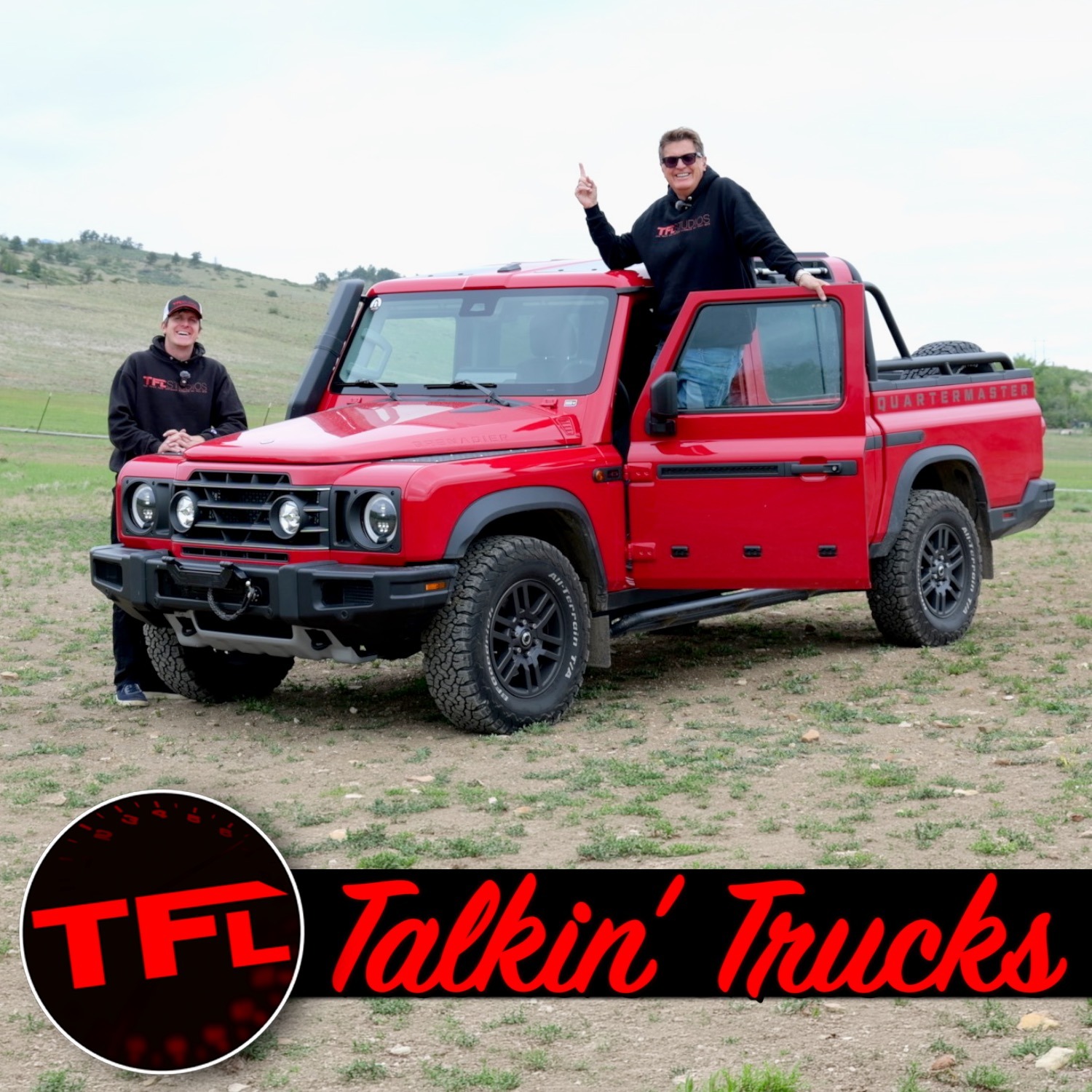
Real Talk - The Good, Bad, & Ugly After Living With The Ineos Grenadier! | Ep. 333
About this episode
Hosts break down the Ineos Grenadier/Quartermaster after living with it, starting with why US pricing is so high—import duties and the “chicken tax”—and what’s under the hood: BMW’s B58 inline-six. They praise the overbuilt solid-axle underpinnings, lockers/winch, and off-road modes, but call out cramped rear seating, steering/turning quirks, and intrusive European ADAS behavior. They also compare value versus alternatives and share Colorado/Utah/Moab trail planning tips.
Plan your next big trip with onX Offroad, now available for Apple CarPlay/Android Auto enabled vehicles. Available in the Apple App Store or Google Play Store. Download it now! Click the link to use promo code “TFLOFFROAD” and save 20% on an annual membership: https://www.onxmaps.com/purchase/offroad/membership?promo=tfloffroad
Is the highly anticipated Ineos Grenadier Quartermaster the ultimate heavy-duty overlander, a hidden gem, or just a wildly overpriced midsize pickup truck? In this episode of TFL Talkin' Trucks, Roman and Tommy give their completely unfiltered, unabridged review of what it is actually like to live, tow, and off-road with this rare, six-figure European rig. Built in France and heavily penalized by the US "chicken tax," their custom-spec Quartermaster crosses a staggering $101,000 price point—forcing a tough question: can it possibly compete with a built Ford F-250 Tremor or a pair of Ranger Raptors?
Later in the episode, the guys head into the studio to break down some of their favorite local off-road trails on the Colorado Front Range using the OnX Offroad app. They share real-world trail reports, terrain details, and historical context for iconic trails like the historic Switzerland Trail, the steep climbs of Cliffhanger 2.0 (Knob Hill), the rocky terrain of Pennsylvania Gulch, and the somber, technical trek up to the 1965 T-33 military jet crash site on T-33A Plane Crash Trail.
Advertising Inquiries: https://redcircle.com/brands
Privacy & Opt-Out: https://redcircle.com/privacy

quartermaster
"Tell me, is this inEO's going to be your quartermaster, the most over-priced pickup truck you could buy or is it a hidden gem that most people don't know about? ... The corridor master means that it's a Ford or pickup, and this one is far more rare than the SUV, partly because it's a lot more expensive because that any of us pays the chicken tax for every single one of these trucks they bring in."
They’re talking about the Ineos Quartermaster pickup. It’s a rarer, pricier version compared with the SUV, and part of the reason is the taxes you pay when importing commercial vehicles.
The hosts refer to the Ineos “Quartermaster,” a pickup truck variant of the Grenadier platform. They explain it’s rarer and more expensive than the SUV/wagon, largely due to import duties when bringing commercial vehicles into the US.
chicken tax
"The corridor master means that it's a Ford or pickup, and this one is far more rare than the SUV, partly because it's a lot more expensive because that any of us pays the chicken tax for every single one of these trucks they bring in."
“Chicken tax” is a US import tariff that makes certain imported trucks cost more. The hosts are saying that tariff is one reason the Ineos pickup ends up with a very high price in the US.
“Chicken tax” is a nickname for US tariffs that historically targeted imported light trucks. In this segment, the hosts say it adds cost to importing the Ineos Quartermaster pickup, helping explain why its US price is so high.
25% duty
"Yes, so these are actually built in France, and whenever you import a commercial vehicle, you have to pay a 25% duty on it, on top of the extra duty that's already there. And that's why the price point on this is... Hi, this one aspect is 101,000 dollars."
A “duty” is an import tax. They’re saying that when you bring a commercial vehicle into the US, you pay a 25% import tax, which pushes the final price up a lot.
A “duty” is a tax charged by a country when goods are imported. Here, the hosts say importing a commercial vehicle triggers a 25% duty, which stacks on top of other costs and helps drive the Ineos truck’s six-figure price.
power train
"why do you say we talk about the stuff we love and the stuff we don't love let's start with the stuff we love and i think what i love the most is under the hood so i'm gonna pop it and you show them what's under the hood because it is a surprising power train i think it's a two-pole oh it is BMW like isn't it you know reason so"
“Powertrain” is what makes the vehicle move. It includes the engine and the parts that send power to the wheels, and the hosts are saying this truck’s setup is unexpected.
“Powertrain” is the combined set of components that make the car move—typically the engine plus the transmission and drivetrain parts that deliver torque to the wheels. The hosts say the Grenadier/Quartermaster has a “surprising powertrain,” and they’re about to explain what’s under the hood.
B58, 3 liter inline 6
"So this is the B58, 3 liter inline 6, source from BMW."
They’re saying the truck uses BMW’s B58 engine. It’s a 3.0-liter engine with six cylinders in a straight line, and it’s designed to make good power without being wasteful.
The BMW B58 is a turbocharged 3.0-liter inline-six engine family used across multiple BMW models. “Inline 6” means all six cylinders are arranged in a single straight row, and the B58 is notable for being a modern, efficient design that still delivers strong power for an off-road truck application.
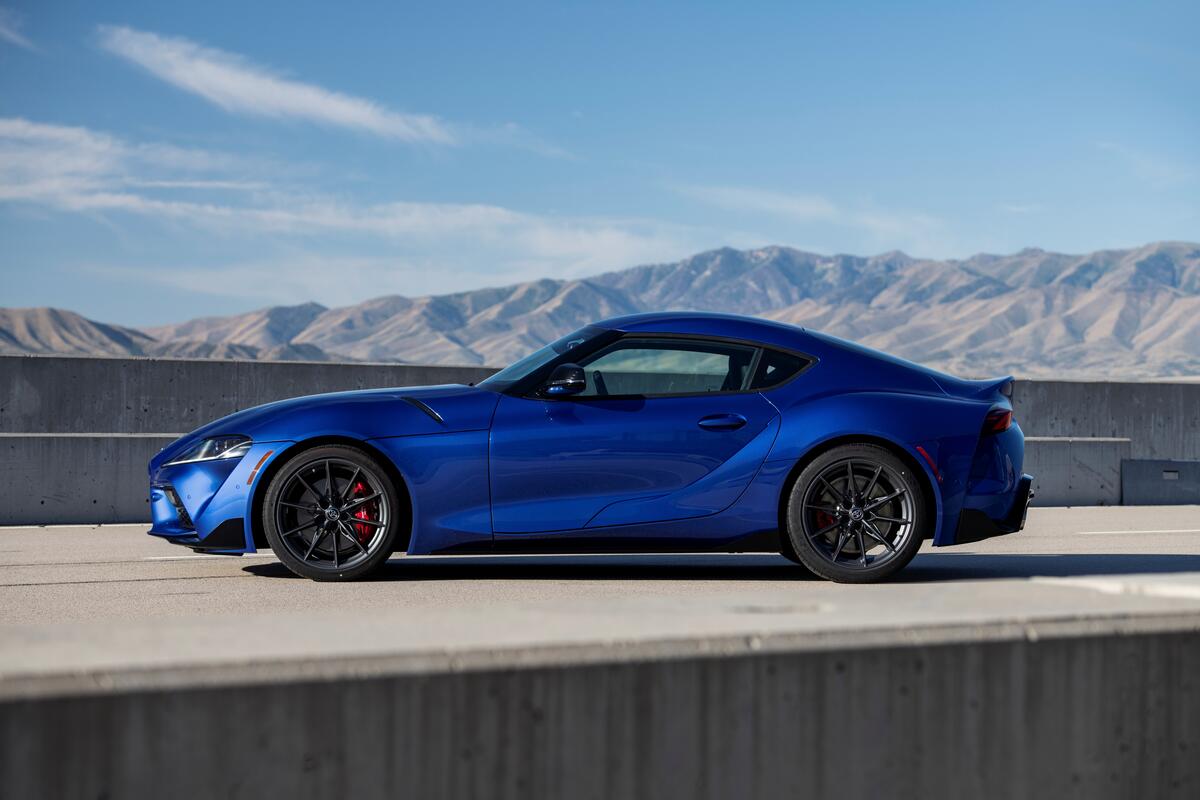
Toyota Supra
"...it's also in a lot of different vehicles like the Supra. [SPEAKER_00]: That's exactly right."
The Toyota Supra is a sports car made for fast driving. It’s known for quick acceleration and a sporty feel. People mention it because it’s a well-known example of a performance car.
The Toyota Supra is a performance sports coupe known for its strong acceleration and driver-focused design. It often comes up in conversations about cars that share similar platforms or engineering ideas, which is why it may be mentioned alongside other vehicles. In a truck-focused podcast, it’s likely used as a reference point for how certain performance traits show up in different contexts.
twin turbos
"So when people think of BMW engines with turbochargers, they think of the old one. with the twin turbos, the n-series engines, those were really problematic, but the B58 is an excellent power train, 282 horsepower, 332 pound feet of torque."
Twin turbos means there are two turbochargers helping the engine make more power. The host is saying older BMW engines with this setup had more issues than the newer engine they’re praising.
Twin turbos means the engine uses two turbochargers to force more air into the cylinders. The speaker contrasts “twin turbos” on older BMW “n-series” engines (called problematic) with the newer B58 approach they consider excellent.
torque
"but the B58 is an excellent power train, 282 horsepower, 332 pound feet of torque."
Torque is the engine’s pulling force. It’s what helps the truck get moving and feel strong without needing to rev as high.
Torque is the twisting force an engine produces, which strongly affects how easily a vehicle accelerates and pulls at low to mid speeds. The speaker cites torque (332 pound-feet) alongside horsepower to characterize the engine’s real-world strength.
half ton
"It isn't quite small enough to be a midsize truck, but it isn't quite big enough to be a full size, in other words, a half ton, which is kind of an interesting size."
“Half ton” is a way people categorize pickup trucks by how much work they’re meant to handle. The host is saying this truck is in-between smaller trucks and full-size pickups.
“Half ton” is a common North American truck class label that roughly corresponds to a light-duty pickup’s typical payload/capability tier (historically tied to 1/2-ton ratings). The hosts use it to explain where this truck sits in size and capability relative to midsize and full-size trucks.
back seat
"Yeah, the back seat is really really tight. Yeah, so let me show you, not only do you have the issue where kind of the back of the seat is straight up, but you're going to force me to get in there."
They’re talking about how the rear seat feels. Their complaint is that it’s cramped—especially for legroom—and the seat shape makes it uncomfortable.
The “back seat” is being evaluated as a packaging and comfort issue, not just a generic rear seat. The hosts specifically call out tight legroom and a very vertical seatback, which are common ways designers reduce space for rear passengers.
Ricardo front seats
"I'm pretty much stuffed up against these Ricardo front seats."
Ricardo is the brand of the front seats. The host is saying that, because of how the seats are packaged, a tall driver ends up with very little space in the back.
Ricardo is a brand name used here for the front seats in the truck. The speaker is using it to describe fitment—at 6 feet tall, they feel “stuffed up” against these seats, which highlights how tight the cabin packaging is.
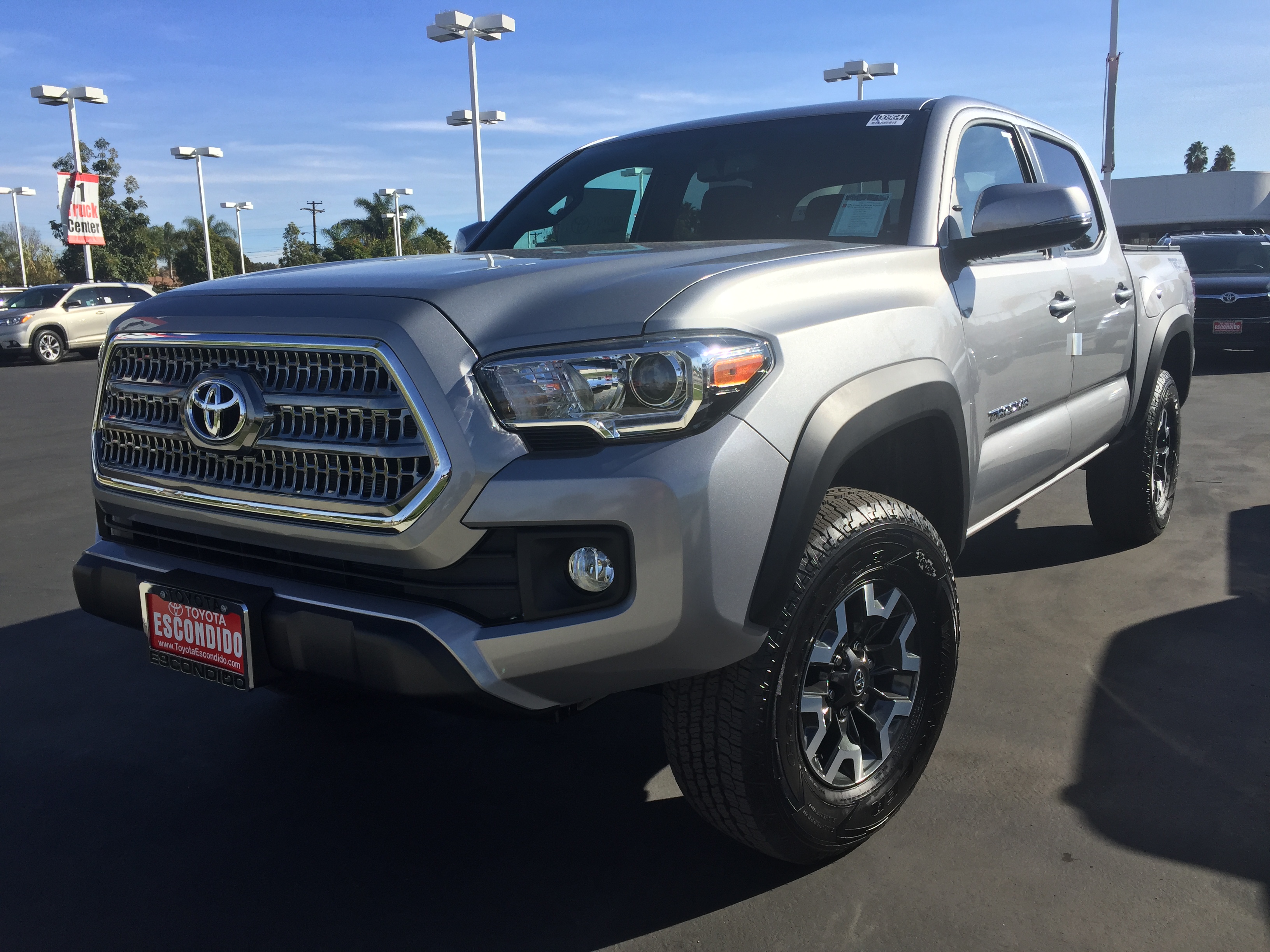
Toyota Tacoma
"...onsidering the size of this truck, this is like a Tacoma back seat and it just doesn't have to be. [SPEAKE..."
The Toyota Tacoma is a midsize pickup truck. It’s designed to carry people and gear while still being capable on rough roads. It’s mentioned because it’s a common reference point for truck size and comfort.
The Toyota Tacoma is a midsize pickup truck built for everyday use and off-road capability. It’s frequently used as a benchmark for size and practicality in truck discussions. In the podcast context, it’s referenced to describe how a vehicle’s rear seating and overall packaging compare to a Tacoma.

Ineos Grenadier
"Yeah, now, good thing about this truck is I actually think the bed is pretty well thought out... I think it's cool."
The Ineos Grenadier is a tough, off-road truck built for practical use. Here, they’re talking about how its cargo bed and storage features work when you’re actually hauling things.
The Ineos Grenadier is a rugged, off-road-focused truck/SUV built around a simple, utilitarian layout for overlanding and hard use. In this segment, the hosts are evaluating how its cargo/utility design works in real life—especially the bed and storage layout.
tailgate
"one of the pros is you do have a properly massive tailgate. So if you are looking to haul long item..."
A tailgate is the back door of a pickup truck bed. Opening it makes it easier to load and unload stuff, especially long items.
A tailgate is the hinged door at the back of a pickup bed that you open to load and unload cargo. Here, the hosts praise the Grenadier’s “massive” tailgate because it makes loading long items easier and increases usable access to the bed.
composite bed liner
"This is a composite bed liner, but it is a steel bed underneath the liner."
A bed liner is a protective cover inside the truck bed. “Composite” means it’s made from engineered materials, and they’re saying there’s still a steel bed underneath for strength.
A composite bed liner is a protective layer installed inside the pickup bed to resist scratches, dents, and corrosion. The hosts note it’s composite on top, but there’s a steel bed underneath—meaning you get protection from the liner while still having the strength of steel.
spare tire location
"What do you think of the spare tire location? You know most American pickup trucks... have an underneath the bed. Here they've mounted it to the side of the bed."
This is about where the spare wheel is stored on the truck. They’re saying most pickups keep it under the bed, but this one mounts it on the side, which changes how the truck’s space is used.
“Spare tire location” refers to where the backup wheel is stored on the vehicle. The hosts compare typical American pickups (spare under the bed) to this truck’s side-mounted approach, and they discuss how that packaging affects storage space and usability.
cubby hole
"Oh, you want to show them a little cubby hole?... So they're using that space to actually give you some more storage space..."
A “cubby hole” is a small hidden storage space. They’re saying this truck has a clever, lockable little compartment that can also help secure a motorcycle during transport.
A “cubby hole” is a small enclosed storage compartment. In this segment, the hosts describe a lockable recess/cubby created by the spare-tire packaging that can be used to secure items—like fitting the motorcycle’s back tire into the opening to keep it from moving.
solid axles
"So it's solid axles for an impact manufactured by a company called Coraro, which is sort of the Dana of Europe, but Coraro is known for doing heavy-duty application axles for box trucks, for tractors, so they're incredibly beefy."
Solid axles are a suspension setup where both wheels are connected by a single sturdy axle. It helps the truck stay strong and keep traction when the ground is rough or uneven.
Solid axles are an off-road suspension design where the left and right wheels are connected by a single rigid axle beam. That typically improves durability and wheel articulation on uneven terrain, which is why they’re common on heavy-duty trucks and serious 4x4s.
Coraro
"So it's solid axles for an impact manufactured by a company called Coraro, which is sort of the Dana of Europe, but Coraro is known for doing heavy-duty application axles for box trucks, for tractors, so they're incredibly beefy."
Coraro is a company that makes heavy-duty axle parts. The host is basically saying it’s the kind of supplier you’d expect for tough commercial trucks, not something lightweight.
Coraro is described here as a heavy-duty axle manufacturer used for the Grenadier’s solid-axle hardware. The host compares it to “Dana of Europe,” implying Coraro is a specialist supplier known for robust axle applications in commercial vehicles.
drive shafts
"Other than maybe some of the drive shafts, which have had some failures, especially if you try to lift them too high, these trucks don't like to be lifted, but if you keep them stock height and just put a little bit bigger tire on them, they are really overbuilt."
Drive shafts are the rotating parts that send power from the drivetrain to the axles. The host is saying lifting the truck too much can make those parts work harder and fail more easily.
Drive shafts (driveshafts) transfer torque from the transmission/transfer case to the axles. The host notes failures can happen if the truck is lifted too high, which changes angles and stresses on the driveline.
the bad
"All right, so let's talk about the bad now we've done the good and that is of course the price point."
This is where the hosts switch from talking about what they like to what they don’t like. It’s basically the “downsides” part of the review.
This marks the transition into the downsides of the Ineos Grenadier after discussing the positives. It’s a structural “good vs bad” segment cue for listeners.

Ford Ranger
"...PEAKER_00]: Well forget the F-250, what about two Ranger Actors? [SPEAKER_00]: Yeah, right."
The Ford Ranger is a pickup truck that’s smaller than the biggest Ford trucks. It’s meant for hauling and driving both on regular roads and rougher terrain. It comes up when people talk about choosing a more manageable truck size.
The Ford Ranger is a midsize pickup truck that’s typically discussed as a smaller alternative to larger full-size trucks. In the episode, it’s brought up in a humorous comparison about “forgetting” bigger trucks and focusing on the Ranger instead. That kind of mention usually points to how size, capability, and practicality change as you step down in truck class.

Ford F150
"You could be what about an F-150 Raptor on 37s, right? I mean, there are, there's just so much truck you can buy for the dollar."
The Ford F-150 Raptor is a pickup built to handle off-road driving better than a normal truck. In this conversation, it’s mentioned as an alternative people might think about.
The Ford F-150 Raptor is a high-performance off-road version of the F-150 pickup, known for its suspension tuning and trail-focused hardware. Here it’s used as a comparison point for what buyers might consider instead of the Ineos Grenadier.
locking this front and rear
"This really is a specialty vehicle for someone that loves this form factor that has to have locking this front and rear and has to have a vehicle that's very overbuilt underneath."
Locking differentials help prevent a wheel from spinning uselessly when it loses traction. With the front and rear locked, the truck can keep moving more reliably in mud, sand, or on rocks.
“Locking” the front and rear refers to locking differentials, which force the axle(s) to rotate together. That helps maintain traction when one wheel loses grip on rocks, mud, or uneven surfaces.

Ferrari F50
"[SPEAKER_00]: This really is a specialty vehicle for someone that loves this form factor that has to have locking this front and rear and has to have a vehicle that's very overbuilt underneath. [SPEAKER_00]: That doesn't want the luxuries of like a Lexus GX or the luxuries of a nice F-50 platinum, right? [SPEAKER_00]: I mean, it's it's a very specific buyer and there's no doubt the value really isn't here if you look at the competition But it kind of is a one of one in terms of what it accomplishes."
The Ferrari F50 is a very expensive, high-performance sports car. It’s designed for serious driving and strong engineering rather than everyday practicality. The podcast mentions it as an example of a specialized, purpose-built vehicle.
The Ferrari F50 is a rare, high-performance supercar built for drivers who want a very focused, track-oriented experience. The podcast description emphasizes its specialized nature and the need for robust engineering underneath. It’s mentioned because it represents an extreme, purpose-built form factor rather than a practical off-road or truck alternative.

Lexus Gx
"...KER_00]: That doesn't want the luxuries of like a Lexus GX or the luxuries of a nice F-50 platinum, right? [..."
The Lexus GX is a luxury SUV that’s also capable on rough roads. It’s meant to feel comfortable inside while still being able to handle off-road situations. The podcast mentions it because it represents a “luxury” choice.
The Lexus GX is a luxury SUV that blends comfort with off-road capability. In the podcast context, it’s referenced as an example of someone wanting “luxuries” rather than going for a more stripped-down, hardcore setup. That makes it relevant when discussing different priorities—comfort versus maximum trail focus.
triple lock
"…either a Colorado or Canyon with the AEV package, right, where you get triple lock, you get the bison, you get the fenders, you get all of the off-road goodies…"
“Triple lock” means the truck can lock more than one part of the drivetrain so power keeps going even if a wheel starts slipping. It’s an off-road traction feature.
“Triple lock” typically refers to a setup where multiple differentials are lockable—often both axles plus an additional locking function (commonly the center differential in 4WD systems). The goal is to maximize traction when wheels lose grip.

GMC Canyon
"Yeah, the closest truck to this I think price wise and ability wise would be either a Colorado or Canyon with the AEV package, right, where you get triple lock, you get the bison, you get the fenders..."
The GMC Canyon is another midsize pickup. The hosts are comparing it to the Grenadier by saying an off-road package can get you similar capability for less money.
The GMC Canyon is a midsize pickup that the hosts pair with the Chevrolet Colorado as a price-and-ability comparison. They mention an AEV package that bundles off-road upgrades like locking hardware and body/armor-style additions.

Chevrolet Colorado
"Yeah, the closest truck to this I think price wise and ability wise would be either a Colorado or Canyon with the AEV package, right, where you get triple lock, you get the bison, you get the fenders, you get all of the off-road goodies..."
The Chevrolet Colorado is a smaller pickup than full-size trucks. They’re saying you can buy one with an off-road upgrade package (AEV) and still come out cheaper than the Grenadier.
The Chevrolet Colorado is a midsize pickup that’s being compared here as a more affordable way to get off-road capability. The hosts specifically mention an AEV package, which adds off-road parts and upgrades to improve trail performance.

Jeep Wrangler
"...hen have money left over for, let's call it a use wrangler. [SPEAKER_00]: Yeah, for sure."
The Jeep Wrangler is an off-road SUV designed for driving on trails and rough roads. It’s known for being tough and capable when roads get difficult. The podcast mentions it because it’s a common choice for off-road adventures.
The Jeep Wrangler is a compact off-road SUV famous for its rugged design and trail-ready layout. It’s often used as a baseline for serious off-roading because it’s built to handle rough terrain. In the podcast, it’s referenced as a vehicle people might choose when they want to spend money on a capable off-road platform.
built-in winch
"But I mean, there's so many cool things on this truck like I love the built-in winch, the winch. Yeah."
A winch is like a heavy-duty pulling tool with a cable. If you get stuck off-road, you can use it to pull yourself out—or help recover another vehicle.
A winch is a motorized cable/rope system used to pull the vehicle out of trouble or to recover another vehicle. A “built-in winch” means it’s integrated into the truck from the factory, usually with a dedicated mounting and wiring.
full synthetic winch
"You've got a full synthetic winch there. I like how they also incorporated the license plate bracket into the winch..."
They’re talking about the winch rope being made from synthetic material instead of metal cable. It’s usually lighter and easier to manage when you’re using the winch.
“Full synthetic” here refers to the winch line material—synthetic rope instead of traditional steel cable. Synthetic rope is lighter and can be easier to handle, though it still needs correct care to avoid damage.
pivot up your license plate
"…incorporated the license plate bracket into the winch, so that you can both have your winch and your license plate bracket. Yeah, there's a way I haven't actually used this yet, but I think if you pull out, you can this, yep, you can pivot up your license plate for when you're off road."
They’re saying the license plate can be flipped up when you go off-road. That way it doesn’t get in the way when you’re using the winch or doing recovery work.
This describes a practical off-road design detail: the license plate bracket can be moved out of the way when off-roading. It’s an example of packaging that supports winch use and recovery without blocking access.
anti-test lock
"Yeah, I mean... This is kind of the anti-test lock."
“Anti-test lock” sounds like a joke about how the interior feels different from what you’d expect in a normal test-drive or typical setup. The exact meaning isn’t fully clear from this snippet.
“Anti-test lock” sounds like a playful phrase contrasting this interior experience with a “test lock” concept—likely referring to a more gimmicky or conventional infotainment/lock-and-key feel. Without more context, it’s probably a joke about how the interior doesn’t feel like a typical test-drive setup.
rear locker, front locker
" [617.7s] [SPEAKER_00]: rear locker, front locker, offer mode, waiting mode, downhill assist, stability control."
A locker is an off-road traction feature that helps both wheels on an axle turn together. That way, if one wheel starts slipping, the other wheel can still keep moving.
A locker is a differential feature that forces the left and right wheels on an axle to rotate together. A rear locker and front locker let the Ineos Grenadier manage traction in different off-road situations by reducing wheelspin when one tire loses grip.
downhill assist
" [617.7s] [SPEAKER_00]: rear locker, front locker, offer mode, waiting mode, downhill assist, stability control."
Downhill assist helps you control your speed when going down a steep hill. It can automatically apply braking so you don’t have to constantly feather the brakes.
Downhill assist is a driver-aid system that helps control speed when descending steep grades. It typically uses engine braking and/or brake control to keep the vehicle from accelerating too much on loose or slippery surfaces.
stability control
" [617.7s] [SPEAKER_00]: rear locker, front locker, offer mode, waiting mode, downhill assist, stability control."
Stability control helps keep the car from sliding out of control. If the car starts to lose traction, it can brake individual wheels and reduce power to help you stay on your intended path.
Stability control is an electronic system that helps prevent skids by detecting loss of traction and then selectively applying brakes and/or reducing engine power. It’s designed to keep the vehicle pointed in the direction the driver intends, especially during sudden maneuvers or slippery conditions.
aim your headlights
" [622.7s] [SPEAKER_00]: You can also aim your headlights, which is something you can't do in a lot of new vehicles."
Headlight aiming (adjustment) lets you change the vertical aim of the lamps so the beam hits the road correctly. Being able to adjust it manually is less common on newer vehicles, where aiming is often fixed or handled through more limited calibration.
sunroof slash dual sunroof
" [640.2s] [SPEAKER_01]: sunroof slash dual sunroof."
A dual sunroof means there are two roof openings instead of one. It can let in more light and air, but it’s more parts than a single sunroof.
A dual sunroof setup means the vehicle has two separate glass openings (or two sections) in the roof, rather than a single sunroof. This can increase airflow and light, but it also adds complexity and potential leak points compared with a single opening.
central screen with no real screen in front of the driver
" [666.5s] [SPEAKER_01]: Yeah, so now that we've done a good list of the bad and the bad has to be the central screen with no real screen in front of the driver."
They’re saying the main display is in the center, not right in front of the driver. That can make it harder to quickly check important info while driving.
This describes a dashboard layout where the main infotainment is centralized, while the driver’s instrument cluster is minimal or absent. It can feel cumbersome because the driver may have to look farther away from the steering wheel for key information.
hand drive
"And I kind of think that was to save money and going left to right hand drive. Right, you don't have to redesign the instrument cluster."
This is whether the steering wheel is on the left or the right side of the car. Different countries require different setups, and that affects how the dashboard and controls are arranged.
“Left-hand drive” vs “right-hand drive” describes where the steering wheel is located relative to the driver. The speaker suggests the design choice helps avoid re-engineering the dashboard layout when building for different markets.
instrument cluster
"Right, you don't have to redesign the instrument cluster. But it isn't a little bit annoying."
It’s the dashboard screen/gauges you look at while driving, like your speed and warnings. The point here is that if you change left-hand vs right-hand driving, you might not need to redesign that whole dashboard display.
The instrument cluster is the set of gauges and displays behind (or in front of) the steering wheel, like speed and warning lights. In this discussion, they’re talking about how the layout can be reused without redesigning it for different steering-wheel setups.
driving position
"How about driving position, comfort, all that? Well, it is good. I think that the steering wheel is nicely positioned."
Driving position is how you sit and how far/where the steering wheel and controls are. If it’s set up well, you can drive comfortably and see where you’re going without stretching.
Driving position is how the seat, steering wheel, pedals, and visibility are arranged so the driver can reach controls comfortably and see the road clearly. The hosts evaluate it by mentioning steering-wheel placement and overall ergonomics.
two horns
"I love the two horns. Yeah, let's say that's my favorite."
It means the truck has two separate horn sounds instead of just one. They’re saying it’s a cool or memorable feature.
Having “two horns” means the vehicle uses more than one horn tone/feature, often to create a more noticeable or distinctive sound. The hosts treat it as a standout design detail, comparing it to a “favorite” feature.
BMW
"Which like the BMW shifter?"
They’re comparing the truck’s shifter to BMW’s shifter style. It’s basically a “this feels like a BMW” comment about how the control works.
BMW is being used as a reference point for the feel or design of the shifter. The speaker is implying the truck’s shifter resembles BMW’s typical shifter layout/behavior.
turning radius
"I'm missing the elephant in the room, which is a steering, and the turning radius, which is better than it used to be ... This is improved."
Turning radius is how tight the vehicle can turn. If it has a smaller turning radius, it’s easier to park and do U-turns.
Turning radius is the tightest circle a vehicle can make at low speed, usually measured as the radius or diameter of the path the vehicle’s center follows. A smaller turning radius generally makes parking and U-turns easier.
steering feel
"It definitely has impact on steering feel, and then they also didn't dial any caster angle into the development of this truck..."
Steering feel is how the steering wheel “feels” when you turn—like how responsive it is and how much effort it takes. Two cars can turn similarly but still feel very different.
Steering feel is the subjective feedback a driver gets through the steering wheel—how heavy or light it is, how quickly it responds, and how much road/terrain information it transmits. Even if two vehicles have similar turning radius, steering feel can differ a lot due to geometry and steering system design.
recirculating ball steering setup
"So this uses a recirculating ball steering setup, which shouldn't have really any impact on the turning circle."
Recirculating ball steering is a type of steering mechanism used on many trucks. It can be strong for rough driving, but it may feel a bit less precise than other steering designs.
A recirculating ball steering system uses a gearbox with ball bearings that recirculate through a threaded mechanism to convert the steering wheel’s rotation into wheel movement. It’s common on body-on-frame trucks because it can provide durability and good off-road feedback, though it often feels less direct than rack-and-pinion steering.
caster angle
"they also didn't dial any caster angle into the development of this truck, so it doesn't self-centered."
Caster angle is the way the steering axis is tilted. It affects whether the steering naturally straightens itself after you turn, which makes driving easier and more stable.
Caster angle is the fore-aft tilt of the steering axis, measured in degrees. More positive caster typically helps the steering self-center after you turn, improving straight-line stability and reducing how much you have to “hold” the wheel.
quicker ratio off-center
"But the steering does have a quicker ratio off-center, so it is more responsive than it's ever been, which is really good."
It means the steering is tuned so small turns feel quicker and easier to control. That helps you steer precisely without having to move the wheel a lot.
This is describing steering gear ratio behavior: the steering turns more (or less) per degree of wheel movement depending on where you are in the steering range. A “quicker” off-center ratio makes the truck feel more responsive when you’re making small corrections around straight-ahead driving.
BFGs
"I mean, first of all, you've got BFGs, which, you know, I think is kind of gold standard."
“BFGs” are BFGoodrich tires. People mention them because they’re a popular off-road tire brand, and the exact tire model can change how well the truck grips off-road.
“BFGs” refers to BFGoodrich tires, a well-known off-road tire brand. In off-roading discussions, the specific model matters because tread design and sidewall construction affect traction and durability.
BL2s
"The wrong BFGs, though, it's got BL2s, you know, for 101 grand, I kind of want KL3s."
“BL2s” sounds like a specific tire model. Different tire models are designed for different off-road conditions, so choosing the right one can make a big difference.
“BL2s” appears to be a specific BFGoodrich tire model the hosts are comparing for off-road use. Tire model names usually correspond to tread pattern and intended use, so swapping models can change traction, noise, and how the tire performs when aired down.
KL3s
"The wrong BFGs, though, it's got BL2s, you know, for 101 grand, I kind of want KL3s."
“KL3s” is the tire model they wish the truck had instead. The right tire model can help the truck grip better and feel more capable off-road.
“KL3s” is referenced as the preferred alternative tire model to the “BL2s.” In off-road tire talk, model-to-model differences typically come down to tread design and sidewall strength, which affect grip and confidence over rocks and uneven terrain.
ground clearance
"Yeah, and considering the ground clearance isn't like huge."
Ground clearance is how much space there is between the truck and the ground. More clearance means you’re less likely to hit rocks or the trail with the undercarriage.
Ground clearance is the distance between the lowest part of the vehicle and the ground. More ground clearance helps prevent the truck from scraping or getting hung up when crossing rocks, ruts, and uneven trails.
32-inch tall tire
"We was unbelievable what they're able to do with essentially a 32-inch tall tire."
A 32-inch tire is bigger than stock, so it can roll over obstacles more easily. Bigger tires can also help the truck clear rocks and ruts better.
A “32-inch tall tire” is a tire size that directly impacts how much obstacle clearance you have and how the tire can climb over rocks. Taller tires also change gearing feel and can improve approach/departure angles depending on suspension setup.
portals
"And so that's why some folks are doing portals Right. Oh, now you're talking money."
Portals are a lift-style modification that raises the wheels higher to get more clearance under the truck. It can make off-roading easier, but it usually costs a lot.
“Portals” are a suspension/axle modification that raises the wheel mounting point relative to the axle centerline, effectively increasing ride height and off-road clearance. They’re often used to gain clearance without needing extremely tall tires, but they’re typically expensive and can add complexity.
European ADS
"And we sold it because it had an infuriating feature, which was the European ADS. The speed bunk."
“ADS” means the car’s driver-assist tech—systems that try to help you stay in lane or follow speed rules. In this case, the hosts say the European version of that tech was annoying enough that they sold the truck.
“ADS” here refers to an advanced driver-assistance system fitted to the vehicle. The hosts say their Grenadier had a European version that behaved in an infuriating way, which they later tried to get corrected via software.
speed bunk
"The speed bunk. Where it would bunk every time you exceed the speed limit by one mile an hour. Let's clarify."
They’re talking about a speed warning/limiter behavior that gets triggered even when we’re only going slightly over the posted limit. It sounds like the car was constantly nagging them, which they found obnoxious.
“Speed bunk” is the hosts’ description of a speed-related driver-assistance behavior that triggers whenever the vehicle exceeds the speed limit. They say it would “bunk every time you exceed the speed limit by one mile an hour,” making the truck’s alerts feel intrusive.
lane keep
"So I go to turn that off, think, okay, that's done. And then I turn the truck off, and the lane keeps stuff comes back on every time. So they fix the speed-bong, and then they'll have given it this annoying lane keep system."
Lane keep is the car’s feature that tries to keep you from drifting out of your lane. Here, the hosts say it has both a warning and an active “help” mode, and they can’t easily keep it from turning back on.
Lane keep is an ADAS function that helps keep the vehicle centered in its lane. In this segment, the hosts distinguish between lane-keeping warning (alerts) and lane-keeping assist (active intervention), and they complain that the assist behavior returns every time they shut the truck off.
warning and then there's the assist
"And the way the lane keep works is there's the warning and then there's the assist. And the assist uses the rear brakes I grabbed, of course, you need to say these does that, too."
Lane-keeping systems often work in two steps: first they warn you, and then they may actively correct the car. In this case, the “assist” part is what the hosts find disruptive.
This describes two levels of lane-keeping ADAS behavior: a warning mode that alerts the driver, and an assist mode that actively intervenes. The hosts later explain that the assist uses braking, which is why it can feel like a sudden, jarring correction.
rear brakes
"And the assist uses the rear brakes I grabbed, of course, you need to say these does that, too. And it feels like you just got into a minor car accident. Every time the grabs the rear brakes."
They’re saying the lane-keeping system can actually slow the car down by braking at the back wheels. That can feel harsh or surprising, especially if it happens repeatedly.
When lane-keeping assist “uses the rear brakes,” the system applies braking to help stabilize or steer the vehicle back toward the lane. The hosts say it feels like a minor accident because the braking intervention is noticeable every time the assist triggers.
ADAS
"It's where no nonsense, no frills, and yet they've got the stupid ADAS stuff, which just ruins the truck for me."
ADAS is the car’s “driver assist” technology. It can warn you or take action to help you stay safe, but the hosts say it was annoying in their Grenadier.
ADAS stands for Advanced Driver-Assistance Systems—electronics that monitor the road and help with tasks like lane keeping and speed-related alerts. In this segment, the hosts argue that the Grenadier’s ADAS behavior undermined the truck’s appeal for them.
off-road mode
"For example, I put an off-road mode. It's two pushes. And now what it's going to do..."
Off-road mode is a driving setting that helps the vehicle handle dirt, rocks, and uneven ground. In this case, it also turns off some warning beeps so you can focus on driving.
An off-road mode is a vehicle setting that changes how the truck behaves for low-traction surfaces. It often coordinates throttle/gear behavior and, as mentioned here, can disable driver-assistance alerts like parking sensors so they don’t beep constantly while maneuvering on trails.
parking sensors
"It disables the parking sensors. Which is great."
Parking sensors are the little sensors that warn you when you’re getting close to something. Turning them off can stop annoying beeping when you’re off-road and the sensors might not be accurate.
Parking sensors are proximity sensors that alert you when you’re close to obstacles, usually with beeps or a display. Disabling them in off-road mode can reduce nuisance alerts when you’re creeping over rocks or moving in tight spaces where the sensors may misread distance.
seat belt shine
"And it disables the seat belt shine. Which is also great."
This sounds like the seat-belt reminder light that tells you to buckle up. If you’re constantly climbing in and out off-road, turning it off helps you avoid constant warnings.
“Seat belt shine” here appears to mean the seat-belt reminder light/indicator. Disabling it in off-road mode prevents the reminder from distracting you while you’re repeatedly getting in and out during trail stops.
traction control intervention
"Now, the traction control intervention in this thing is pretty mild, I find."
Traction control is a safety feature that helps prevent the wheels from spinning when the road is slippery. If the “intervention” is mild, it means the truck doesn’t interfere much and lets you keep more control of how much the wheels spin.
Traction control is a stability system that reduces wheel slip by cutting engine power and/or braking individual wheels when it detects the driven wheels losing grip. Saying the intervention is “mild” means the system doesn’t step in aggressively, letting the truck use more available traction before it intervenes.
low range
"Are we low range? We're low range."
Low range is a setting that makes the truck “geared down” for slow, tough driving. It helps you crawl over obstacles with more control and more pulling power at low speed.
Low range is a low-geared mode in a 4x4 that multiplies torque for slow-speed crawling. It’s used for steep grades, rocks, and other situations where you want maximum control and pulling power at low speeds rather than highway-like gearing.
center locker
"Oh, I got to do center locker first. You gotta get the order right then."
A center locker locks the connection between the front and rear axles. That helps when one end of the truck is slipping, because both ends can share traction instead of one spinning away.
A center locker locks the center differential (or equivalent driveline coupling) so front and rear axles rotate together. This is especially useful in loose or uneven traction because it prevents one axle from spinning faster than the other.
full-time-foil drive system
"This is a full-time-foil drive system as well. But look at, I mean, look at that control."
This sounds like they mean the truck is full-time AWD, which powers all four wheels all the time. That generally helps traction because you’re not waiting to “turn on” 4x4 when conditions get slippery.
This appears to be a transcription error for “full-time four-wheel-drive system.” A full-time AWD system continuously powers all wheels, typically using a center differential (or coupling) to manage speed differences between front and rear axles.
Overland Journal
"So our friend Scott Frady from the Overland Journal, up all of Africa actually."
Overland Journal is a publication that covers long-distance off-road travel. Here it’s used to back up the hosts’ point with real trip experience.
The Overland Journal is mentioned as the publication Scott Frady is associated with. In this context, it signals that the discussion is grounded in real-world overlanding reporting rather than just spec-sheet talk.
Scott Frady
"So our friend Scott Frady from the Overland Journal, up all of Africa actually."
Scott Frady is an overlanding writer mentioned here as someone who has taken this kind of vehicle on very long trips. The hosts are using his experience as evidence that it can handle tough, remote driving.
Scott Frady is referenced as the host’s “friend” and as someone who writes for The Overland Journal. The hosts use his long-distance overlanding experience to support the idea that the vehicle is robust enough for extended travel.
GT3 RS
"This is kind of like the GT3 RS of the off-road space, right? It's built to be as good as it can be off-road, and therefore you get a lot of compromises."
GT3 RS is a Porsche model line that’s made for track driving, not comfort. When they say it’s like the GT3 RS of off-roading, they mean it’s built to do one thing really well, even if it’s not perfect for daily life.
GT3 RS is Porsche’s track-focused “RS” variant line, known for being tuned for maximum performance and driver feedback rather than comfort. Using it as a comparison here means the Ineos Grenadier is being framed as the off-road equivalent: purpose-built and willing to sacrifice everyday convenience for capability.
compromises
"It's built to be as good as it can be off-road, and therefore you get a lot of compromises. Some of which valid, some of which could be fixed."
A “compromise” is when improving one thing makes another thing worse. They’re saying the Grenadier is built for off-road first, so you lose some convenience or value compared to a more everyday setup.
In vehicle design, “compromises” refers to trade-offs you accept when optimizing for one priority. Here, the hosts argue that maximizing off-road ability leads to downsides like less-than-ideal packaging and cost.
spare tire situation
"I think that the compromise backseat, the weird spare tire situation and the added cost makes this a much worse vehicle than the station wagon version."
“Spare tire situation” refers to how the vehicle packages and carries its spare wheel, which can affect usability and interior cargo space. The hosts imply the Grenadier’s SUV configuration makes this worse than the station wagon version, contributing to their overall complaint.
exclusivity
"Yeah, there is exclusivity there. And when you go to Moe, you're not going to be seeing, you know, gladiator after gladiator after gladiator, but you're going to be seeing one of these and that's probably it."
“Exclusivity” here just means not many people have this vehicle. So you’re more likely to see it as a rare sight on your street.
In a vehicle context, “exclusivity” means relatively few people own the model, so you don’t see many of them in your area. The hosts connect this to the Grenadier’s high price and limited number of buyers.

Jeep Gladiator
"... to Moe, you're not going to be seeing, you know, gladiator after gladiator after gladiator, but you're going..."
The Jeep Gladiator is a pickup truck that’s designed for off-roading. It blends the usefulness of a truck bed with the kind of rugged design Jeep is known for. It’s mentioned because it’s not as common as some other off-road vehicles.
The Jeep Gladiator is a midsize pickup truck built on Jeep’s off-road SUV platform, combining truck utility with trail capability. It’s mentioned as something you may not see “after gladiator after gladiator,” implying it’s less common than other popular off-road choices. That makes it a notable option when discussing variety in what people actually drive on trails.
use prices
"Yeah, I mean, the other good news of which I'm seeing on mine, unfortunately for me, is that the use prices aren't really coming down that much. You know, like the cheapest ones I've seen are still $60,000 for two-year-old grenadier."
They’re talking about what used Grenadiers cost on the market. Their point is that even used ones are still expensive.
“Use prices” appears to refer to used-vehicle prices, i.e., what buyers pay for pre-owned examples. The hosts are saying the Ineos Grenadier’s used market pricing hasn’t dropped much, citing examples around $60,000 for a two-year-old truck.

Toyota Land Cruiser
"...an talk about your experience with driving an old land cruiser in Moab, now that we're, you know, dedicated in a..."
The Toyota Land Cruiser is a large SUV made for both everyday driving and tough off-road trips. People often talk about older ones because they’re known for being able to handle rough trails. In the episode, it’s mentioned because someone drove one in Moab.
The Toyota Land Cruiser is a full-size SUV known for long-distance durability and serious off-road ability. It’s often discussed in the context of real-world trail driving, including older examples that people take to places like Moab. In the podcast, it’s specifically tied to someone’s experience driving an older Land Cruiser in that kind of terrain.

Chevrolet Onix
"...SPEAKER_01]: partner, sponsored that we work with Onix Offroad, and they're having a memorial day sale e..."
The Chevrolet Onix is a small car. In this episode, it’s mentioned because there’s an off-road-related group or promotion connected to it. That’s why it shows up even though it’s not a pickup or SUV.
The Chevrolet Onix is a small car that’s being discussed in the context of off-road events or off-road-themed sponsorship. The mention of “Onix Offroad” suggests a specific off-road program or community activity tied to the model. In a truck-focused show, it likely serves as an example of how even smaller cars can get involved in off-road culture.

Ford Bronco
"...le, this guy who just ran it a few weeks ago in a Bronco, says it's so much steeper than any pictures can ..."
The Ford Bronco is an SUV designed for off-road driving. It’s built to handle rough terrain, including steep trail sections. The podcast mentions it because someone recently drove one and found the climb steeper than expected.
The Ford Bronco is an off-road SUV built to tackle steep trails and challenging terrain. The podcast reference to it being “steeper than any pictures can” highlights how real-world driving angles and grades can surprise people. That kind of comment typically comes up when discussing trail difficulty and vehicle capability in practice.

Jeep Cherokee
"...: Yeah, and I would become dribbled taking like a Cherokee on the Switzerland trail, you know, any any kind ..."
The Jeep Cherokee is a compact SUV. It can go on rough roads, but it isn’t the most extreme off-road vehicle by design. The podcast brings it up to point out that taking one on a tough trail can be difficult.
The Jeep Cherokee is a compact SUV that can be used off-road, but it’s not primarily built as a dedicated trail machine like some other Jeep models. In the podcast, it’s mentioned in a scenario about taking a Cherokee on a difficult trail, emphasizing how challenging that can be. That’s why it comes up—people are contrasting what a smaller SUV can realistically handle.
Kelly flats
"So if you're going up to Foko, if you've got friends going to the University of Northern Colorado, there is a pretty good off-road area there called Kelly flats."
Kelly Flats is a local off-road area in Colorado near the Denver region. The hosts are saying it has tough trails that can be pretty intense for off-road vehicles.
Kelly Flats is an off-road area referenced in the Denver/Front Range region of Colorado. In this context, it’s described as having challenging trails suitable for serious off-road rigs.
long wheelbase lifts
"This is a really, really steep trail. And definitely long wheelbase lifts, kind of, locking differentials all needed on this stuff."
A lift raises the truck so it can clear rocks and ruts. A longer wheelbase can make the truck feel more stable on tough trails, but it can also make tight turns and narrow paths harder.
A lift kit raises the truck’s suspension for more ground clearance and usually bigger tires. A longer wheelbase setup (or “long wheelbase” builds) can help stability on steep, uneven trails, but it also changes how the vehicle fits through tight obstacles.
locking differentials
"And definitely long wheelbase lifts, kind of, locking differentials all needed on this stuff."
On rough trails, one wheel can lose grip and just spin. A locking differential makes both wheels on an axle turn together so you keep moving instead of getting stuck.
A differential lets the left and right wheels rotate at different speeds, which is helpful for normal driving. A locking differential forces both sides to rotate together, improving traction when one wheel would otherwise spin on loose or uneven ground.
snow wheeling
"…you're doing snow wheeling which has its own drawbacks and it's own pleasures…"
Snow wheeling means taking an off-road vehicle out on trails covered in snow. It’s harder because the ground is slippery, so you have to drive carefully and be ready for getting stuck.
Snow wheeling is off-roading in snowy conditions, where traction is limited and the vehicle may need different driving techniques than on dry dirt. It’s often done on prepared routes or with appropriate tires and recovery gear because getting stuck is more likely.
Idaho Springs
"Yeah, so up by 70, I think the very first interesting trail that you hit is at Idaho Springs."
Idaho Springs is a Colorado town near the Denver area. The hosts are using it as a starting point for finding off-road trails that get more exciting as you drive farther out.
Idaho Springs is a Colorado town used here as a waypoint for off-road trail access from the Denver area. The hosts mention it as the first “interesting trail” you hit when heading toward higher terrain.
Wrangler Rubicon
"...s. [SPEAKER_01]: I think it's more, I've done the Rubicon. [SPEAKER_01]: I mean, you've done it a bunch of ..."
The Wrangler is an off-road SUV (the Jeep Wrangler) made for driving on trails. The podcast mentions the Rubicon to show that the vehicle is used for real off-road routes. It’s brought up because it’s a well-known trail-capable choice.
“Wrangler” in this context refers to the Jeep Wrangler, a compact off-road SUV known for its trail-focused design. The podcast mentions doing the Rubicon, which is a famous off-road route, to highlight real off-road experience. That’s why the Wrangler comes up—its reputation and capability make it a common choice for serious trail driving.

four-runner
"I don't want to leave the Toyota guys out, so a four-runner. I mean, you technically could do it if you were bold enough and like a lifted Subaru..."
The “four-runner” is the Toyota 4Runner. It’s a rugged SUV that’s commonly chosen for off-road trails.
“Four-runner” is the Toyota 4Runner, a body-on-frame SUV built for off-road use. The host brings it up as the Toyota option in the same off-road lineup as Jeep Wrangler and Ford Bronco.

Subaru Just Subaru
"...m all the time. [SPEAKER_01]: And overall look, I just Subaru just did a commercial. [SPEAKER_00]: So I think S..."
The Subaru Justy is a small car. It’s generally known for being practical and efficient for everyday driving. The podcast mentions it because it came up in a commercial and general discussion.
The Subaru Justy is a small, fuel-efficient car that’s typically associated with practical, everyday driving rather than hardcore off-roading. In the podcast, it’s mentioned alongside a commercial and general impressions, suggesting it’s being used as a light, relatable example. That fits a truck conversation where the hosts may compare how different vehicles are marketed and used.

Honda Passport
"Honda has done a commercial there with the Passport Trail Sport. I think Toyota has done some stuff out there."
The Honda Passport Trail Sport is a version of the Honda Passport meant to handle dirt roads and light trails better than a basic trim. Here it’s just being name-dropped as another vehicle used for filming.
The Honda Passport Trail Sport is a trim of the Honda Passport aimed at light off-road and trail driving. The host mentions it in the context of vehicles used for commercials at the same scenic off-road location.

outback
"That's why all of these you could take an outback on it, but you'd be miserable That's my that's my estimate because there's a lot of rock crawling this to the outback is not gonna love"
The Subaru Outback is a Subaru model people often take on trips and rougher roads. The host is saying it can technically go there, but the trail is so rough that it won’t be comfortable.
The “Outback” refers to the Subaru Outback, a crossover/wagon that’s popular for road trips and mild off-road use. The host says you could take an Outback on the route, but you’d be miserable because the trail involves lots of rock crawling.
rock crawling
"That's my that's my estimate because there's a lot of rock crawling this to the outback is not gonna love [SPEAKER_00]: Yeah, I mean, and you can see like if you look at the trail reports, it's all saying obstructed and closed."
Rock crawling means driving very slowly over rocks and ruts. It’s hard on a car because you need good grip and enough ground clearance.
Rock crawling is slow, technical off-road driving over rocks and uneven terrain where traction and vehicle clearance matter more than speed. The host uses it to explain why a typical crossover like an Outback would struggle on that trail.
trail reports
"Yeah, I mean, and you can see like if you look at the trail reports, it's all saying obstructed and closed. Uh, it's expected to reopen July 4th."
Trail reports are like condition updates for a specific trail. They tell you what’s blocked, what’s closed, and when it’s expected to reopen.
“Trail reports” are updates (often from land managers or local trail communities) that describe current trail conditions, closures, and obstacles. The host points to them to show the route is frequently obstructed/closed and only reopens seasonally.
Taliride
"This whole area around Taliride is just probably some of the best offering in Colorado. Some of my other favorite ones out here, Engineer Pass is really, really, really fun."
Telluride is a mountain area in Colorado. The host is saying the trails around there are some of the best in the state.
“Taliride” is the host’s reference to the Telluride area in Colorado, known for rugged mountain scenery and off-road routes. They’re using it as a selling point for why the region is so good for trail driving and filming.
Engineer Pass
"Some of my other favorite ones out here, Engineer Pass is really, really, really fun. I've done that trail a whole bunch of times."
Engineer Pass is a tough, scenic off-road trail in Colorado. It’s known for steep and rocky sections, and the host really likes it.
Engineer Pass is a well-known high-elevation off-road route in Colorado, famous for steep grades and rocky terrain. The host says it’s “really fun” and that they’ve done it many times, framing it as a standout trail in the area.
Toyota specific event
"Well, it's like an event. It's a Toyota specific event that happens in the middle of July. So if you own a Toyota, you can register and then..."
They’re talking about a Toyota-only trail event in July. If you drive a Toyota, you can sign up and join the ride.
The hosts describe a Toyota-only trail event that happens in mid-July. It’s presented as a way for Toyota owners to participate in a guided or organized ride through the area.
shelf roads
"SPEAKER_01]: ...I hate shelf roads and this is the ultimate shelf road because the drop-offs are like 2,000 feet straight down..."
A “shelf road” is a road that’s basically carved into a mountainside with a big drop right next to it. It feels scary because there’s not much margin for error if you make a mistake.
A “shelf road” is a road cut into the side of a cliff or mountain, where the roadway is narrow and the drop-off is immediate. In off-roading terms, it’s especially intimidating because a small mistake can put the vehicle into a fall, and the driver often has to manage tight turns while exposed.
serpentine turns
"SPEAKER_01]: ...there are parts where you have to do one of those serpentine turns and you have to do it in... like in 4 or 5 or 6 or 10 depending on long your vehicle is attempts."
Serpentine turns are the kind of winding zig-zag turns you see on steep roads or trails. They’re harder because you’re constantly changing direction while going downhill.
“Serpentine turns” are winding, back-and-forth switchbacks that follow a zig-zag path down a slope. On steep trails, they increase the challenge because the vehicle’s weight shifts repeatedly, and drivers must place the tires precisely to keep traction and clearance.
Teliraid
"SPEAKER_01]: ...So they will be looking down into the town of Teliraid, which is like I said, a two to three thousand foot drop."
They’re talking about the town you can see far below on the trail. The scary part is that you’re looking down at a huge drop toward where people live.
The speaker references the town of “Teliraid” as the visible drop-off below the trail. This matters because the trail’s fear factor is tied to how far down you can see—thousands of feet—so the town becomes a key visual reference point.
bucket list trails
"SPEAKER_01]: ...this is not a great trail to do, but it is one of those bucket list trails..."
A “bucket list trail” is a trail people really want to do at least once. It’s famous or memorable enough that it becomes a goal for enthusiasts.
“Bucket list trails” are routes that many off-roaders consider a must-do because of their reputation, scenery, or difficulty. The term here is about motivation and expectation-setting: even if a trail is technically manageable, the visuals and consequence can make people overthink and take risks.
Request an Explanation
Heard something you'd like explained? We'll add it to this episode.
Sign in to request explanations for terms you heard.
Want to learn more?
Browse our glossary for plain-English explanations of automotive terms, jargon, and concepts.
Help improve this episode
See something that's not quite right? Our annotations are AI-generated and can sometimes miss the mark. Click the flag icon on any annotation to suggest a correction.