“Electrified vehicles” means cars that use electricity in some way to cut down on gas use. That can include hybrids, and sometimes plug-in hybrids or fully electric cars, depending on how the numbers are counted.
The Dodge Ram is a large pickup truck designed to carry cargo and tow trailers. People buy it for work needs like hauling and towing, but it can also be used like a regular truck for daily driving. It shows up in sales updates because pickup trucks are a big part of the market.
The Jeep Wrangler is a type of SUV made for off-road driving. It’s known for having a removable roof and doors, which makes it feel more open and flexible than many other SUVs. It’s mentioned in sales talk because a lot of people specifically want this kind of off-road style.
It means people are still interested in buying cars, not stopping completely. But the sales momentum is stronger for some brands and models than others.
A down payment is the money you pay upfront when you buy the car. If it gets smaller, you usually have to borrow more, which can make the loan harder to manage.
“Long-term financial strain” means the loan setup may be hard to sustain over the years. Even if the monthly payment is lower, the overall situation can become stressful later.
Refinancing means you swap your current car loan for a new one. People do it to try to lower their costs or monthly payment, but it can also change how long they’re paying.
Concept
tier two, the localized or regionalized buying groups
Dealers sometimes team up with other dealers in the same area. That lets them combine money and effort to run bigger marketing campaigns than they could alone.
Concept
tier three is the actual bricks and mortar
This is talking about the physical car dealership buildings you can visit. The local store then runs promotions using money or incentives it gets from the manufacturer side.
OEM is the car company itself—the manufacturer that makes the vehicles. Dealerships may get promotional incentives from the OEM to help them advertise and sell cars.
An “incentive push down” is when promotional money or sales incentives are distributed from manufacturers or larger groups down to individual dealerships. The goal is to align local advertising with broader manufacturer campaigns.
Company
Stream Company
Stream Company is a business involved in automotive marketing/advertising. The host is saying it works with many car brands (OEMs) and has a big presence in New York.
Dealerships often split their business into areas. “Fixed operations” usually means the service and parts work that customers book, not just selling cars.
This is dealership business language for the parts of the operation that change a lot depending on how many cars are being sold. It’s usually contrasted with service/parts work.
Here, “compliance” means making sure the dealership follows the rules—especially those related to advertising and selling cars. The point is to handle it on purpose, not at the last minute.
FTC is a U.S. government agency that protects consumers. They can investigate and push rules so car ads don’t hide the real price or add surprise costs.
It’s a phrase meaning “there’s a mess that needs to be fixed.” In this context, it’s about cleaning up confusing or misleading car pricing so shoppers know the real deal.
The advertised price is the price you see in the ad. The issue is whether that number is truly what you can pay, or whether extra fees and eligibility rules make the real price different.
Rebates are discounts that can lower the price, but you often have to meet certain requirements to get them. If you don’t qualify, the final price can be higher than the ad suggests.
Term
Reg 5, Section 5
This is a reference to a specific rule in the regulations. The point is that the requirement to be transparent about pricing has been around for a while.
A dock fee is a charge related to moving the car from where it arrives (like a port) to the dealership. The point here is whether it must be included in the price you see in ads.
A licensing fee is what it costs to register the car and get the paperwork/plates handled. The host is saying regulators want it included in the advertised price so buyers aren’t surprised later.
APIs are how software systems “talk” to each other. In this case, they’re part of the digital tools that had to be updated so the online advertised price is accurate.
Out-the-door price is the final total you pay for the car, not just the sticker price. It includes the extra costs like taxes and fees so you can compare offers fairly.
Generative AI is a computer tool that can write or generate content for you (like messages or ads). Dealers may use it to create things faster, but they still have to follow advertising and compliance rules.
The “three-legged stool” is a way to describe the three sets of rules dealers have to follow at the same time. If you break any one of them, your advertising or sales process can get you in trouble.
Meta Ads are ads you see on Facebook and Instagram. Dealers use them to reach potential buyers, but the ad wording and disclosures still have to follow the rules.
Programmatic ads are online ads that are placed automatically by software. Instead of manually picking every placement, the system targets people and shows the ad, but dealers still need to keep the ad compliant.
An approval process is a step-by-step check that decides what gets approved before it’s used publicly. In car sales, it helps ensure ads and offers follow the rules.
Retail Ready is a software tool dealers can use to help keep their marketing and incentives in line with the rules. It’s meant to reduce mistakes when setting up offers.
Reg Z is a set of rules for how financing terms must be disclosed to customers. If a dealer is advertising or offering financing, they need to follow those disclosure requirements.
Mia Labs is a company that helps car dealerships handle customer phone calls and texts using AI. The idea is that it can answer questions and set up appointments so dealers don’t miss leads.
GM is creating a specific category for AI tools that can talk with customers. The point is that dealers can choose from approved options in that category.
A “co-op program” is when the carmaker shares some of the cost with the dealer. In this case, GM is described as reimbursing dealers for using the approved AI phone solution.
An “AI phone solution” is a tool that uses AI to answer dealership phone calls. It can help respond to questions and schedule appointments so customers don’t get ignored.
Co-op eligibility means the dealer may qualify for money back from the car manufacturer for certain costs. If you qualify, the manufacturer reimburses part of what you spent, which can make the dealership more profitable.
Fixed ops is dealership money from the service department and parts sales, not from selling new cars. It tends to be steadier because people keep needing repairs and maintenance.
Call leakage means some callers slip through the cracks—like nobody answers or they don’t get followed up. That can cost the dealership appointments and sales.
This is a tool that automatically reaches out to potential customers using things like texts or calls. The goal is to contact people quickly and consistently so more leads turn into appointments.
Variable ops is the dealership side that depends more on selling cars. It can go up and down more than service and parts because it’s tied to sales volume.
Speed to lead means how fast the dealership reaches out after someone shows interest. Faster follow-up usually leads to more appointments and sales because the customer hasn’t cooled off yet.
Conversion rate is how many leads end up doing what the dealership wants, like booking an appointment. Higher conversion rate means the process is working better.
They’re talking about using AI and data to make car dealerships work better for customers. The goal is to help dealers respond faster and provide more accurate information so shoppers feel confident.
They mention NADA as an industry gathering where people in car retail may have started warming up to AI. It’s used as a reference point for when the conversation changed.
It means the dealership runs more of its work through software and AI, like handling customer messages. Instead of trying AI once, they build it into how the dealership operates every day.
It means one dealership can do better than others because it has an advantage—here, using AI and software to get better results. The claim is that this difference will show up in performance.
A “silver bullet” is a magic one-step solution. The point here is that AI won’t automatically fix everything the moment you install it—you have to set it up and use it the right way.
Term
trust on the AI
It means letting the AI do real customer work instead of double-checking everything. The claim is that if you trust it enough to use it more, it can still help even when it’s not 100% accurate.
ROI means “did it pay off?” It’s a way to judge whether spending on AI brings back enough benefit. They’re saying the more you let it handle, the better the payoff tends to get.
Auto theft is car stealing. The discussion also points out that thieves aren’t just breaking in anymore—they’re using more steps and tactics to get access to cars.
This means crimes connected to cars that go beyond just stealing a vehicle. The episode is using it to describe the wider problem auto theft is part of.
Social engineering is when scammers trick people into doing something they shouldn’t—like handing over access, documents, or money. It’s basically a “confidence scam,” but aimed at getting you to trust the wrong person.
Deep fakes are AI-made videos or recordings that can look and sound real. Scammers use them to pretend to be someone else and get people to trust them.
A transport transaction is the part of the deal where the car gets shipped or moved by a carrier. Scammers may try to fake the shipping details so the car ends up with them instead of the buyer.
Point of sale (POS) is the moment and system where a transaction is completed—like payment processing and deal paperwork. In fraud scenarios, criminals may target POS workflows with AI-generated materials or impersonation to make a deal appear legitimate.
Telematics is the car’s built-in tracking system—think GPS and a connection to a service. Here, the tracking didn’t work when the car was stolen, which is why the owner used an extra backup tracker.
This is a hidden GPS tracker that someone adds to the car after it’s built. The idea is that if the car’s normal tracking doesn’t work, this hidden tracker can still help find it.
Term
KYCAs
They mention “KYCAs” as an analogy, but they don’t spell out what it stands for. The takeaway is that the hidden tracker approach is meant to work reliably when the normal tracking system fails.
Here “fleet” means a company’s set of vehicles it manages as a group. The point is that businesses should protect all those cars, because stolen vehicles can be flipped and resold.
Concept
bin laundering scheme
They’re describing a scam where stolen vehicles get moved through channels that make them harder to trace. The concern is that the car could eventually show up for sale at a dealership.
Ziggler Auto Group is the dealership business the speaker works with. They’re using their own experience to explain how vehicle theft is affecting auctions and dealers.
They mention “Mannheim” as a company they work with for auctions or vehicle logistics. The discussion is about theft prevention in that process.
Term
iScan
They mention “iScan” as a tool auctions use to help stop theft. They don’t explain exactly what it does in this clip, but it’s part of the security process.
This is car theft that happens while a vehicle is being shipped or transported. It’s a big risk for cars that are already bought at auction but haven’t arrived at the dealer yet.
This means organized theft of valuable shipments, where criminals pick the right targets and timing. In this context, it’s about stealing cars and other valuable cargo.
Term
fraudulent pretents
Fraudulent pretents (likely referring to fraudulent pretexts) are fake reasons or identities used to trick people into releasing or shipping vehicles. In dealer logistics, this can show up during the handoff after an auction purchase—when someone tries to redirect shipment or access the vehicle.
Enhanced inspections mean taking extra time to double-check details before a car moves forward. It helps catch mistakes or fraud before the vehicle is shipped.
Authentication is the process of proving that something is genuine—here, verifying that the vehicle and the shipment/transaction details are what they claim to be. The host frames it as the core countermeasure against fraud and theft in the auction-to-shipping pipeline.
This means scammers are using AI tools to make their lies harder to spot. They can use it to create fake documents or identities so a dealership doesn’t catch the scam.
Fake IDs are fake or altered driver’s licenses or other ID cards. If a dealership accepts one, it can lead to fraud because the person may not be who they claim to be.
Forged documents are counterfeit or altered paperwork presented as if it were genuine. In dealer theft/fraud scenarios, forged documents can be used to support a false identity, false ownership, or a fraudulent sale process.
This is when someone makes a fake copy of a driver’s license that looks real. If staff rely on quick visual checks, it may be hard to notice it’s fake.
A layered approach means you don’t just check one thing and call it done. You use several different protections so scammers can’t easily slip through one weak point.
Motor vehicle theft is the official way police describe stealing a car. It’s the category used for reporting and statistics.
Concept
part one crimes
This is a category police use when reporting certain types of crime. The point here is that auto theft gets tracked in a specific way in crime statistics.
LIVE
We're doing better as a result of social media presence.
It doesn't do those three things, then it's on the chopping block.
It's in return on investment discussion.
Hey, everybody.
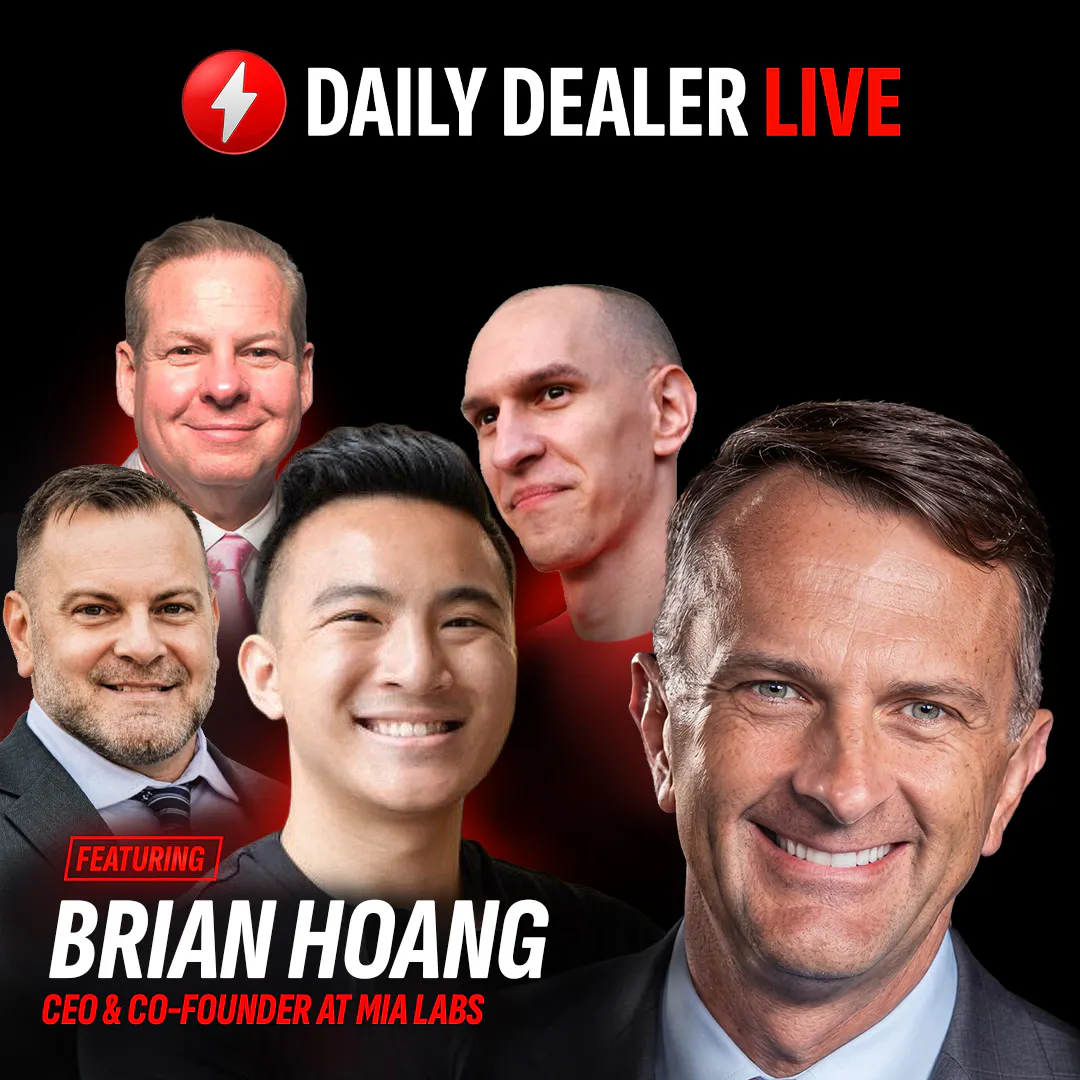
Welcome back to another episode of the Daily Dealer Live.
I'm your host, Sam Darkin.
Thanks for joining us this Monday, July the 6th.
Hey, happy birthday, America.
You're 2.50 now.
And to everybody out there watching, stay safe.
There's crazy weather out there across these United States.
Our own Michelle has been without power over the weekend.
Storms, weather, NASCAR was even impacted
in a significant way going into the weekend.
And by the way, Carson didn't manage the poll,
but he sure tried hard.
So we're excited to kick off this first full week in July
here as part of Daily Dealer Live.
What do we have coming up today?
Well, the FTC, they don't want you to claim your complaint anymore.
They want you to prove it.
Brian Baker, Zach Slabinski from Stream Companies,
they're here to show us how fraud, AI, compliance,
three fights every dealer is in right now,
whether you know it or not.
Then a first in the industry, Brian Huang of MIA Labs
is here to break news.
The first AI provider ever approved by General Motors
in a brand new category, 45,000 appointments,
$26 million in revenue.
And now, well, GM dealers, we can pay for it with co-op money.
Plus later, criminals aren't breaking windows anymore.
They're walking vehicles right out your front door
with a fake ID and a forged document.
We've seen a lot of that as an aside.
Today, the VP of the International Association
of Autothept Investigators, George Ripley,
tells us how to stop them.
This is Daily Dealer Live, streaming
as we always are across all CDG social media platforms.
Post those comments into the chat.
We'll bring them into today's show.
I'm sure it'll be a robust conversation, as it always is now.
Let's get into today's auto industry headlines.
Leading out today's news, first quarter buy-sell reports,
well, they keep rolling in.
The market is staying busy.
Kerrigan advisors, for example,
tallied 478 transactions in the trailing 12 months.
They say that's the highest level they've ever recorded.
And that's 114% above the pre-pandemic five-year average.
Hague partners, well, from their view,
counted 139 rooftops changing hands in Q1 alone.
That's up 39% from the same period last year.
Almost looks like a competition.
With multi-year dealership transactions rising 54% year
over year, both firms expect the pace to hold.
Kerrigan's OEM survey found 88% of executives expect buy-sell activity
to increase or hold over the next 12 months.
As Alan Hague said on a recent podcast, quote,
we're still in the best of times era.
Speaking of on the deal front, we've got some M&A activity
straight from the CDG buy-sell tracker.
Ken Garf Automotive Group acquired Volkswagen.
We love our tracker.
Ken Garf Automotive Group acquired Volkswagen South Town
in South Jordan, Utah from Susan Watkins.
That deal transacted on June 8th.
This was the group's first acquisition of the year,
notable for its family ties.
Watkins late husband Tom purchased the store in 1989.
And her father raced out, managed Ken Garf Ode's Mobile Store,
and worked directly with Ken and Bob Garf.
Separately, Bob Johnson Auto Group purchased Fucillo Imports,
Fucillo Imports in Watertown, New York from William Fucillo on June 8th.
The dealership, which sells the Hyundai and Subaru brands,
was the last of the dealerships that were originally owned
by the late William Fucillo senior, a charismatic leader known
for his ads that put several syllables in the word huge.
I need to see that ad.
I want to see that ad.
Next up today, June was a strong month for several manufacturers.
Industry-wide data compiled by Stevens pointed to a get this 7.6%
jump in sales compared with June 2025.
How did you fare?
Toyota led with a 10% increase and a record month for electrified vehicles
at 110,627 units.
Stellantis finished 10% ahead of last year,
with RAM pickup sales up 14% in the second quarter.
Jeep Wrangler arose by 11% in the first quarter,
and Honda, they spiked 17%.
Nissan also posted a 9.6% gain this quarter.
Kia and Mazda both had their best Junes on record.
Ford, however, was the notable exception, posting a 10% decline in June.
GM also finished the second quarter down 4.2%,
though Traverse sales were up 26% in the first half,
and Cadillac EV sales, they had their best second quarter.
Cox Automotive analyst, Karen Keating, said the strength is concentrated, quote,
demand is holding up, but the strength is concentrated in brands and products
that are giving consumers the right mix of affordability, utility, and efficiency,
she said.
Semi-related to our next story shows that while the June sales numbers look good
on the surface, Edmunds' second quarter financing data tells a complicated story.
Want to know what the average monthly payment hit this month?
$777.
$777.
That marks the third consecutive quarter at a new high.
Nearly one in four buyers took on loan terms of 84 months or longer,
and the average amount finance jumped 17.68 from last year to 44,156.
Down payments, meanwhile, fell to just 11.6% of the total purchase price.
That's the smallest share since Q3 2020.
Jessica Caldwell, who is head of insights for Edmunds,
said the data reflects how stretched consumers are, quote,
when you see loan terms extending to record lengths,
down payments shrinking, and monthly payments hitting all times,
all highs, you're looking at a clear recipe for long-term financial strain.
Until incentives increase meaningfully,
Raidstrop or the vehicle makes shifts toward more affordable options,
Caldwell said consumers will keep walking that financial tightrope.
And now, probably the most important story in my opinion of the day,
one last note on the numbers.
More consumers are finding relief through refinancing.
There's about 111,000 vehicle owners refinance their auto loans
in the first quarter of this year.
That's double the numbers from two years ago,
and this comes as refi rates fell below those for new vehicle purchases
following the Fed's 2024 rate cuts.
Refinancing reduced borrowers' interest rates by an average 2.24%.
In Q1, and consumers with higher monthly payments
lowered their cost by an average $81 per month.
Chase relaunched its consumer-facing auto refinance program
in May 2025 after discontinuing it in 2020,
and many consumers, they say, are discovering the option
through credit apps for the first time.
And that is a wrap on today's auto industry headlines.
And look, as an aside, I think that refi story
is one of the most important stories you'll hear on this show
this week, today, this month, whatever you want to count it.
The refi demand is high, and I don't think there's enough captive finance lenders
that are helping out with it.
I see credit unions standing up saying, hey, we'll participate in refis,
and I've engaged with many lenders in my role at CEOs at Ziggler to say,
hey, we need a good refi option to take our customers.
And haven't seen anyone run into that.
However, Chase did, customer-facing portal.
Cap one may have a customer-facing portal, I think.
But these captive lenders and lenders who do indirect lending
should respect the dealer-consumer relationship
and help provide us a way to refinance those contracts
so that we don't lose them to credit unions and competitive other lenders.
That doesn't help any of us.
That doesn't help the dealership.
That doesn't help the dealer group.
That helps no one.
One shocking stat in all of that, this was the 84-month play.
We're seeing so many more vehicles getting financed to 84 months,
which if you watched the show with Brian Benstock several months ago,
he said, hey, he outlaws 84 months in his store,
and he'll cut his finance pay by half at 72 months
should they elect to finance customers at that rate.
So we need help in the auto industry at finding great refi options,
and I would hope lenders would do that.
Igor Kay comes into the chat today.
Welcome, Igor.
Says data shows over 64% of all Americans
don't have an extra 500 bucks in savings for any type of an emergency.
That's horrible.
Paul Salisman comes in, says happy Monday.
Looking forward to a strong, solid week,
and Igor Kay also says happy Monday.
So we're happy to have as many of you as are out there watching
and joining the show today.
So let's dive into the conversation.
We're going to hit the FTC topic today.
What a way to start July.
Brian Baker, President Automotive at Stream Companies,
and Zach Slabinski, Director of Retail Ready at Stream Companies.
Welcome to the show, both of you.
Appreciate you having us on.
Yeah.
We're excited to have you here.
So before we get started, why don't you just tell us, Brian,
what does Stream Companies do out there?
What do you do?
Yeah.
So Stream Companies is one of the largest tier three automotive agencies
in the space and marketing technology.
So we essentially are taking at the tier three level
and on up the chains, marketing messages, helping them formulate them,
and ultimately put them to market to get in front of the consumer.
So we play a pretty pivotal role in guiding our clients through that process
and ultimately what I call trying to create opportunities to do business for our dealerships.
All right.
So we are auto specific.
There's dealers, GMs watching.
But when you say tier three, tier two, define those if you would force
for our audience that may not know that.
Absolutely.
So basically we look at it as in the majority of framework is three tiers in the automotive space.
Tier one being the OEM, the Fords, the GMs, the Hyundai's, KIAs, et cetera.
Tier two, the localized or regionalized buying groups that exist out there.
So in certain markets, dealerships will pull their money together in order to put a joint message
to market to help promote specific thrust months or messages that they could put out.
And then tier three is the actual bricks and mortar at the dealership level
in which they typically will take an incentive push down from OEM or tier one
and put that out to market to advertise their own specific dealership or dealership group.
Yeah.
Very good.
So Stream Company, Ad Company, one of the biggest in automotive in New York with a lot of the OEMs.
The letter came out a couple months ago and it was sort of a shot over the bow of automotive.
When you read that letter, what was your first thought and then what was your response in the marketplace?
Yeah.
You know, and Sam, when I've had the opportunity over just over 22 years in the space to visit
thousands of dealerships, one thing that because we're in that pivotal role between the dealership
and the consumer is that it's really something that we've been talking about for a long time.
And what I mean by that is I always try to go into the dealership groups and explain,
hey, we've got people in charge of fixed, we've got people in charge of variable operations,
inventory, et cetera, every key department in the dealership.
Compliance should never be locked out as an afterthought.
And it's something that we've been firm believers in that it's critically important,
especially once this letter came out that they do, they look at it and ultimately develop a
process in a way in which they can show and validate that they are taking compliance seriously.
So putting somebody that ultimately owns that at the store is in place.
And I do look at it too, this is really great opportunity for dealerships to sort the level
of trust with the consumers and sort of be in the front of it to say, we really do want to give
transparency to customers. It is a trust factor that we've been spending a long time in this
business trying to build and work off of. So I find it really an opportune time to take this as
a space to be able to rebuild, build opportunity of trust.
So famously, one of the objections the FTC has with the auto industry, and Bernie
Reynolds has been on this show, he calls it a cleanup on aisle nine.
One of the objections is just simply knowing what the price is. So you advertise the price,
the price is the price, your mom, your friend, somebody you go to church with,
you go to school, if they can come in and they can buy it at that price. What's the biggest
obstacle in automotive in 2026 that led to this letter in just knowing what that true
advertised price is, Brian? Well, I think it comes down to available rebates.
There's groups that have different philosophies in which they can go to market at and say,
hey, let's push the lowest possible price out there to draw on a consumer and then ultimately
determine after the fact what incentives they qualify for. And that calls us
friction in the transaction and lack of transparency. So as we moved forward and again,
Reg 5, Section 5 has been around for a very long time. Ultimately, even though the
media is that we go to market with have advanced a long way, you're still ultimately saying,
let's just be transparent to the consumer. But it was driven by the fact that there are,
there's just a lot of rebates available and consumers don't understand if they qualify for
certain ones. And when they come in to actually make the purchase, they find out perhaps that
that there was a rebate that was included in the price that they don't qualify for. So that's,
you know, a tribes up the cost. Yeah. So but technology does complicate the issue a little
bit, right? So when when word of this came out and they clarified, hey, dock fee and your licensing
fee have to be part of that advertised price, dealer groups contacted vendor partners, digital
lead providers, technology, APIs and people that funnel into it and said, hey, we need you to make
sure that this advertised price includes both of those. And in some cases, the programming wasn't
quite there. And it took a while to get the programming consistent across the industry.
Technology is a challenge in today's world, making sure that they all communicate the right way to
give a consistent message that doesn't change from one platform to the next, Brian Fair.
Absolutely, fair, Sam. And when you, whether it's a third party provider that's pushing new
vehicles and pricing out to it or website providers or digital retailing, you can go down the list of,
you know, your CRM communication templates that go out. They you're on a percent right,
they weren't all built to pull in different fields and be able to in a just clean, easy fashion,
just say, hey, flip a switch and have everything corrected and compliant within 24 hours of this
letter going out. It did take some reprogramming and it took some effort. So Brian, let's get,
so Zach, let's get your perspective on this. Dale in process is a viewer of the show and
he just posted and he said, hey, shouldn't the website allow you to put in some basic information
to tell what you qualify for and just give you an out the door? Like with all the technology
that's available, shouldn't websites just be programmed based on who you are, where you are
and everything that technology knows about you? They should just be able to give you a price, Zach.
Well, it absolutely should. I think the issue is the technology is not there, right? Because,
sure, we can say we know where you are. We know what you drive. But how am I going to know that
you're taking community college courses and maybe you qualify for a college degree? Right? So there's
a lot of personal information that the web platforms don't pick up, right? And even then,
we also see, hey, you want to go figure out this price, right? See your price on any DDC
or dealer on site. When you go in to select the price, here's a lead capture for. Yeah. And that
gets in the way of saying, well, what am I going to expect? Realistically, until you actually sit
down in the dealership and they start desking out that deal for you, you're not really going to know
what you qualify for. If you're talking, what are the different conditional rebates that I could
qualify for? Yeah, but does the customer really, in 26 act, do they really want to come in the
dealership all the time before they get that out the door? They don't want. The old school
automotive is, and in fact, we had this conversation with Tommy from Delivered. He was on the show and
our audience went crazy to hear that customers were paying a thousand or two grand to actually buy
a car from a dealership. But he's like, hey, I don't want to go into a dealership. I just want to
be able to buy it remote. The customer should be able to figure out what they do, don't qualify for
even before they come in. And we have an obligation to provide tools to give them that calculation,
Zach. Fair. Fair. Yeah. Again, it just comes down to how do you get that information? How do you
really walk a consumer through all of the different applicable rebates? It might vary
based on the region. There might be something the state is providing as some sort of bump.
So Brian, what's the solution? You were going to come in. Yeah. Yeah. So Sam, I think the,
taking a little bit of a contrarian approach here and saying, do we have the opportunity to get that
granular after the communication begins and we pull that consumer in and someone posted a good
stat earlier about over 60% of the population does not have a $500 financial fund to cover an
emergency. Yeah, you're okay. We're talking about the majority of the population can be impacted by
an amount of money that may not seem that significant. So when it comes to taking that
second step of saying, are there conditional rebates that the consumer could qualify for,
100% that is something that the industry is moving towards and has,
you know, at some point will have the information be able to do that. The bigger challenge is,
is what is the original message that goes to market to be, that's what they're looking for.
They're looking for to say, am I pulling a consumer in that on a hope? And then ultimately,
they end up leaving with conditional rebates they didn't qualify for. So I think, you know,
when I look at it as really that first step is the thing that's being critiqued right now is what
are we doing at the tier three level to either, you know, function in a overly aggressive or
trying to gain a competitive advantage that is not fair to the consumer versus, you know,
basically going out and saying, hey, everybody, we know that in order for the biggest price on the
page, it needs to be set up in a way that they can leave the majority of the people coming in here
can leave at that price. Well, and you say unfair to the consumer, actually, some of those games
are unfair to the industry because it uses the race to the bottom. And, you know, I'd say props to
car gurus, I'd also say props to auto trader, they came out with policies over the last two weeks
where they said, look, we're going to require these elements are in the price. Speaking of dock
fee, the CVR, the licensing fee, and that rebates calculate correctly, or we'll actually remove
your ability to pop to the top of the rankings, where it used to be what led you to the top was
the lowest price, right? And then some things for condition that there was actually a race to the
bottom with the digital lead providers. What are you seeing, Brian, among the lead providers as
you're advertising as you're pushing that advertised price out? Are you seeing a greater run to
compliance as they're trying to help dealers become compliant with this, even though it may not serve
them to not dish up the cheapest, best looking price, they get less traffic on that, Brian?
Yeah, I think holistically, the opportunity that's created right now is that when the pricing is done
right, it allows the dealership to control trust and actual customer reviews. And I think for me
right now, one of the, I would say playing not even long ball, but really looking at this holistically
is that with generative search, it is aggressively pulling in reviews into your search results.
And if we as an industry, including third parties, don't all realize that we have to work together
in order to prevent, you know, essentially damaging the trust in the relationship that
these reviews that can get posted out there, it does not take a significant amount to damage
your reputation. And to me, the opportunity again is about being able to take this time to do it
right so that we can have our reputation protected in the marketplace. So by the third parties doing
this, it may seem like short term inconvenience, but it's actually helping us as dealers and,
you know, and our belief in our trust with the consumer.
By doing this, you're referring to this forcing the correct advertised price, right?
Absolutely. And by the way, the other thing that it does is it levels the playing field.
Like I think in automotive, this is going to end up being the thing that not saves us,
that's dramatic, right? But this is going to be the thing that really changes the way we sell cars
for everybody that lives up to this. Because now we get a focus on the experience, we get a focus on
meeting the consumer or they want to be met. We can run towards providing them all this data
information out the door price, all the other things. And then let's focus to your point, Brian.
Generative AI is an important touch point for where a customer goes today. And it does pair up
experience and rates and what the customer, what it knows about you. Tell us more about what
Generative AI does in your world and what are you doing to help dealers prepare for this on the
heels of the FTC letter and looking forward to it becoming more of an element of consumer buying?
Yeah, absolutely. So there's multiple things. One is being able to provide customers with
the piece of tool that's a utility tool. It's not just let's add another technology stack into our
world. And over the years, the challenge, regardless if we go back to the days where it was newspaper
and direct mail and radio and television, ultimately you still had to comply with really what I
call the three-legged stool, which is the OEM compliance, the state compliance, and the federal
compliance. And as we advanced through and our touch points grew so rapidly into digital media
and marketing, and the pace at which it happened, we looked at it and said, how can we help consumers
ultimately still tackle the three-legged stool and keep it standing by being OEM, federal, and
state compliant, but also turn so that your time to market is shorter. And that became a really
big opportunity and challenges exist because everybody wants to be first to market. And at
some point, the easiest thing to do is just say push it live and we'll deal with the consequences
versus is there something that is out there and we believe strongly enough to invest into it was that
there is, with AI and the ability to generate and understand all of the matrix of these three
different pieces, you can get to market quickly within the specs of all of the different, whether
it's meta ads or just standard programmatic ads, you can get to market quickly and still be compliant.
So if for a dealer watching today, July of 2026, what are a couple tips
to doing that, to getting to market quickly, accurately, and providing information to the
customer as fast as we can? How do you do that, Brian? Yeah, and really it comes down to, I'll
take one step back to take a step forward. There's really four things that I say should exist inside
a dealership right now. There's one who has true and total ownership of compliance. Again,
you have people in charge of that. Who do you recommend for that? Who do you recommend? Is it
a sales manager or is it a separate role? Yeah, it ultimately comes down to the size of the group.
If it's a single point, typically that would fall either on the sales manager or the GM.
As you grow in group and rooftop size, there's usually a marketing director that plays a very
pivotal role in being able to get the OEM offers, figure out what they have in inventory, figure
out what the opportunity to push is, and then create the offers from that. So as, and again,
that ultimately determines on the size of the dealership. So who owns it? Second thing is,
is there a defined approval process, a workflow process, whether it's using a tool like retail
ready or whether it's a simple checklist that says, here's where I'm running my ads, here's what I
need to be compliant. So that would be the second biggest thing in order to be ready and have in
place if I were a dealership today. The third part of this, which again, traveling the country and
seeing this time and time again, is what is the training and educational process that goes on
inside the dealership? Are we keeping them up to speed on all of the different items that are needed
for the different platforms that seem to be evolving every single day? And can we say that we are
helping educate not only the people in charge, but the sales team? You talk about how dealers can
lose days trying to bring incentives and make sure they're accurate, but they have to be accurate,
in order to comply with FTC guidelines. How does the retail and ready incentives platform
help with that? And for dealers that don't have that, how can you navigate to a similar place
as well? And let's ask Brian that, since you're on screen. I don't know how it happens.
I don't know how it happens, Zach. Yeah, all good. So really, I believe where AI plays one of the
greatest benefits to us is when there are known variables to comply by. And whether it's, again,
whether it's Reg Z, Reg M, any of those factors, the tool gives you the ability to interact directly
from the dealership to basically walk you through and hold your hand to say, I want to advertise
this vehicle. Then it says, okay, well, it doesn't appear that you have enough in stock. Or I want
to do, I want to put a payment offer on it, or I want to put a lease offer on it. And it begins to
request and require the information in effort to bring that offer to market. And it will not
let you move forward until you have provided it. And it takes that information and again,
lucks it all the three legs of that stall and creates the required disclaimer. That then goes
to our team automatically. And AI is generating the ads based off of all the required pieces to
that ad in order to be compliant. And the nice part is when it's connected, and you again at the
store are putting it, putting in the information, it can be lied within four hours. That could be
across the website, that can be across the meta, that could be across to, again, programmatic the
and I see Zach's able to speak a little bit. So Zach, we gave you an assignment. It was to
calculate instead of the I qualify for on a vehicle and you had to go away for five minutes to
calculate that. AI and technology could help do that better, Zach Fair. What does retail ready
do for us? So that I mean, I'm sure Brian's kind of touched on a lot of this, but you know, we
originally were starting from, well, how can we manage compliance at all the different three levels,
right? And then as we kind of went along and dug into things, we started to see that
huge delays started to happen because beginning of the month, you get your
incentives from the OEM, and then there are multiple handoffs, lots of back and forth. I want
this offer. I don't have all the information I need. Hey, I want to change the creative, right?
So we kind of approached it from the perspective of not just a tool, right? The incentive platform
helps with ensuring that you're going to be compliant, that we have all the information
and that we don't have to do the back and forth because it's not going to let you move forward.
But there's also a mindset to it, which is being proactive, planning out your events and any of
your creative campaigns months in advance. Sure, you can change your mind, you know, right up until
the day before, but if you're able to be proactive, that means that once you have those new incentives,
whether you're utilizing our tool or not, you can get all of your creative and your assets put
together. You can get your messaging out into those channels a lot faster. And with our platform,
we are able to not just remove those extra handoffs, but also proactively push that creative
and directly publish it to the website. We can send out to social ads, you know, you want
extra Pmax, things like that. So, Zach and Brian, are you both, are you seeing,
in the months that have happened since the letter went out, are you seeing a significant drive
towards using technology to get to the consumer faster with better, more accurate information?
Like anecdotally, how has the automotive industry responded, Brian, to this?
Well, you know, at first, they come and say, well, we've talked about this before, right?
Well, now it's kind of time to act on it. And then the discussion start to happen, is it something
that we can do for them, is it something they should be doing on their own, you know, meaning
that they should be utilizing the tool. And at this point, this has now reached a stage where
it needs to become ingrained in your operation and your standard work procedure versus...
You got to be able to show it, right, Brian? You got to be able to say, hey, here's to your point,
the three steps, step one, step two, step three, we've done them all, right?
Yeah. And Sam, you mentioned earlier about the activity within the buy-sell world of the stores.
And to me, I feel that when you're able to show it right now, that predictability and compliance
drives enterprise value, you know, so that as somebody's coming in and doing their due diligence,
and they left and they said, hey, do you have proof of documentation on what your approval
workflows look like, meaning that your sales are going to market quickly and that they're all
legit, and we're not going to have any issues with it? Well, yes, I do. Is there audit trails?
Are there training records? And if you put those into play, it builds a level of confidence. And
to our belief, you know, it really, ultimately, this tool should become part of your operational
process. Yeah. Well, to both of you and Zach, I apologize, we lost you for a minute under the
tech issues, but we appreciate your perspectives. We appreciate your expertise. In about a 45
second as we wrap up here, I have a question. So one of our stores, this came up in the past
several weeks, Google popped up out of nowhere and did a ban on it and took them offline for seven days.
We actually weren't even told by the ad company for seven days that it had happened,
which is crazy. We found out and then very quickly, I was told that Google just doesn't
tell you the why. Is that accurate? And how could, if that is, how could that possibly be in a place
of increased transparency? And then if it's not accurate, how do you find out the reason for
something like that happening? Yeah, Zach, I don't know if you want to feel bad or you'd like me too,
but I've definitely heard many reports of Google kind of banning out accounts and not giving reasons.
Do I know what the purpose of that is? Not really, because how are you supposed to correct it?
Yeah, I get a different one. Or prevent it going forward, but I think in light of the ongoing
transparency, while we may see that happen more, because again, looking at the FTC letters and
looking at RAG5, you are going to be at risk as long as you have any touch point on that piece
of marketing. It's not just the dealership. It's not just their agency. It's the different channels
that you're delivering it through. So Google AdWords could be at risk to those same fines that
stream companies or any of our dealers might be. And I think that might be then taking
undue precaution even if they notice anything a little fishy. And it just, it's proof positive
that we are in an interconnected world. I vouch for that store 100%. There was nothing,
you know, odd about the way that store went to market. But it does prove that there are so many
systems that all work together to deliver that message ultimately to the consumer,
that if it is something like that, which again, you have no idea how, why,
it just shows the importance of dotting eyes, crossing T's all the way top down. So to both of
you, we appreciate you being here. Zack Slabinski, director of Retail Ready at Stream, Brian Baker,
president, automotive stream companies. Thank you both for being on the show to share your
perspectives on compliance in this FTC world. Appreciate you both being here.
Thanks for having us, Sam. Appreciate you. Thank you.
Ton of great comments in the chat. But before we go there, let's talk Hague Partners. We talked
M&A. We talked Bicell in the very front of the show today. Today's episode is brought to you by
Hague Partners. When it comes to selling your life's work, reputation and experience matter,
Hague Partners has built a reputation for helping family-owned dealerships maximize value and is
the only team to achieve record-setting results across multiple major franchises. Learn more at
HaguePartners.com. By the way, Hague Partners, their report is incredibly helpful, very insightful
when you want to look into the trends. Their NADA session that they do before NADA starts is always
a fascinating listen. And then of course, we appreciate Alan Hague for being on our July 4th
episode this past Friday. And props to Hague Partners for supporting Tee's content, including
that conversation we just had with Stream Companies on all things FTC. So thanks, Hague Partners,
for joining the show today. And then there is a ton of comments in the chat. We don't have time
to bring them all in, unfortunately, but keep it up and we'll bring them as we go throughout the
show. This next guest actually was on last Wednesday to break some news. The news has been
broken, but I'm excited to have Brian Huang back on, CEO and co-founder of Meal Labs,
to talk about this latest news point. Brian, welcome to the show.
Sam, good to be back. And you have way more pixels today than you did last week.
Good. Yeah. That was quite a deal. So we had the ultimate two things going on at once. One computer
blew up and then I forget what the thing was with the other, but it took us off air and you were
truly patient. So thank you for that. And Brian doesn't approve. We are in a tech-driven world and
tech does sometimes fail and part of automotive is trying to figure out how to innovate through
some of the challenges. And we're forced to learn that in automotive, Brian.
That's right. And it was really fun backstage. And I think it was a really interesting conversation
you had just now. And I think if you were to expand on that a little bit, all the discussions
around how do dealers build trust and relationships in the world where that's going to be increasingly
more so like their modes, right? As like the consumer experience expectations rise, I think
it's important to call out to that AI as a means to help with that is going to advance, not just on
the dealer side, but on the consumer side as well. And so kind of like how you just discussed, like
there needs to be a compliance owner at each dealership. There's an analog here where it's like
even if you do invest in dealer trust and reputation transparency, it's like in a world where
consumers will increasingly use AI to help shop for cars and compare options and dealerships,
how do you invest in transparency and reputation in a way that's also going to be
AI, radio, and machine readable? Like how do you do it in a way that's going to be structured,
verifiable? And again, like agent legible as well. And so kind of how compliance is going to
continuously need to be its own discipline. I think so will data. Yeah. Give us a solution.
You know, I love having founders and CEOs of large tech companies, particularly those that are so
richly AI infused as yourselves. I think in automotive, we think about the car sale a lot of
times older school, it's somebody in brick and mortar, it's person to person, it's creating
that connection. And you know, I would say a younger generation wants a little different. And
then to your point, agentic AI completely turns what we know upside down. What are some tips
to achieve what you're talking about? Credibility with the consumer and also things that are
machine readable that will help build my database so that when consumers do come look for me,
AI serves it up, whether it's Claude, chat, GPT or what, co-pilot, Brian.
Yeah, definitely. And I think you touched on this a little in the last conversation here.
But I think we're already seeing good work done from the vendor side to help this cross industry.
Like someone mentioned car grooves and the recent policies around pricing transparency. I think
another good example is with Zach Scherf's work over at CarEdge with their dealer transparency
index as well. And so obviously, like there's a lot of nuance and especially on a regional,
state and federal level as well. It's hard to come up with a blanket solution here. But I think
providing a standardized industry wide way to structure and measure these trust signals,
that's really going to be key in an increasingly AI native world.
Yeah, I love it. Well, thank you for your perspective on that and being pulled into a
conversation that you weren't necessarily originally here for. So I appreciate your
perspectives on it. So Brian, you have big news inside of me. Tell us what the news was that
was released and announced last week. By the way, folks can catch Scott on the Car
Dealer Ship Guide podcast this week as well with Yossi. So what's the news?
Absolutely. So to contextualize it and as a reminder for the audience, I'm with Mia Labs.
Mia is the leading AI communications platform for dealerships. So we power your phone calls and
texts across sales, service and reception, both inbound and outbound. So like imagine
having a super employee who's answering questions and booking appointments for you 24
seven, 365 with a great attitude. And that way you give your customers the best digital experience
and never miss a lead again. So with that, Sam, the news is that Mia is the first approved
provider in General Motors new AI and conversational intelligence category. Now,
that was a mouthful. Thank you. And it basically means that GM dealers can choose Mia. You can
sign up with us as your AI phone solution and you can get reimbursed through GM's co-op program.
And ultimately, it's really exciting for me and my team because it's huge
validation of not just our products, but also our people and our impact from America's number
one automaker. And we're so honored to have earned your trust. Yeah, that's a big approval.
What does it mean to be vendor OEM approved? And how did you achieve that first ever
distinct title? I mean, that's a big deal, Brian. Yeah, absolutely. So being OEM approved
basically means for a dealership that the OEM has already vetted the vendors so that you don't
have to. So they've checked and done very deep diligence on not just the product, but also
the integrations, the contracts, the compliance so that you can trust that you're choosing the
right provider. So it's essentially like a stamp of approval where the OEM says, hey, like we surveyed
the whole landscape. We looked into this, this vendor, we did very deep diligence and we trust
this and therefore so can you. And oftentimes, like these OEM programs typically come with
favorable terms for dealers too. Things like pre-negotiated pricing and many cases like this one,
co-op eligibility, which again, like I mentioned, basically lets you get reimbursed for a certain
percentage of your investment. So Brian, where are you seeing the biggest ROI at GM stores? Is it
sales service? Is it another area? Where are you seeing the biggest ROI? There are two really big
interesting use cases for that right now. I'll kind of like divide it between sales and service.
On the fixed ops side, we're seeing a lot of inbound from an inbound standpoint. So basically
customers calling and texting into the dealership. Most of our call volume is for the fixed ops
department and so we're booking all these very, these high margin service appointments on behalf
of the dealership to keep the service drive forward all times. And that's where you typically will
find the biggest leakage in calls as well. When you think about like the industry wide,
30 to 40% of missed calls. Most of that is going to be on the service side. And on the variable ops
side, we're seeing a lot of strong ROI on the outbound aspect here where with our automated
outbound feature, VIA is basically reaching out, mostly texts, but also call in some cases as well
on new leads that the dealer just received. So it's really about minimizing that speed to lead
or minimizing the time, maximizing the speed and basically reaching out to the customers on behalf
of the dealership and booking those appointments. So on there, we see upwards of
50% response rate, 20% appointment booking and conversion rate. And that's often in the first
time that MIA reaches out too. We've seen a lot of cases where other solutions, you'd have to
reach out about four times to achieve about the same results. Wow. Wow. So I'm curious,
we talked about trust in the prior segment and that's a thread that we pull commonly through
Automotive. How does AI outreach in 2026 establish trust with a consumer for a dealer?
Yeah, totally. I think the first thing it establishes when we think about,
but how does a dealer stay differentiated with the rise of both consumer expectations and AI,
a lot of it is around convenience and just how modern and streamlined that buying experience
is and how digital-first it is in an increasingly digital-first world. So I think the first thing
it establishes is immediate dealer responsiveness. And that is trust and that is credibility. You
respond, you do exactly what you say you do and you don't have an employee necessarily dependent
on whether or not they feel like making that call. That's trust, Brian. Right. And it's both
during and after hours. So again, like Mia is answering your call as being your first line,
the defense and offense, like 24, 7, 3, 6, 5, including on holidays, during rush, shower,
you know, like after hours, when no one's going to be there to answer the call, the phone. Anyway,
in an increasingly AI native world, like that, it just, that doesn't matter to the consumers. They
call a dealer, you miss a call for whatever reason at whatever time their first instinct is going to
be to call the next available dealer that they see. And so, yeah, there is trust via responsive.
And it's also just the quality of the data of the dealership as well. Like there are a lot of
variables, as you know, that feed into the trust and reputation of a dealership. And they come down
to things like, you know, like is the pricing transparent, which we've discussed, is the inventory
data accurate? Do consumers feel that they have a trusted partner and advisor in their dealers?
And that's really what AI and data is going to serve to optimize.
So Brian, it's interesting, in automotive, we've gone from like skeptical of AI
to embracing and some groups really being industry leading in it. What was kind of the
trigger between going from skeptical and sort of, hey, I'm not sure, like I almost felt like it
even happened during NADA this year. Like there was kind of a barrier that was breached. Is that
backed up in the numbers or is that just something I'm feeling that's not right?
Yeah, there's always going to be a natural adoption when it comes to new and disruptive
technologies. It always comes in stages and the market is typically broken up across those stages
as well. You know, like you're always going to have like the super early progressive adopters
versus you know, the late adopters. And so it's really been more of a gradual movement. But
what we're seeing is one like there's undeniable momentum in the industry and ultimately
dealers listen to other dealers. Like it's hard to go to like a 20 group meeting or any
like an automotive or a better conference and not hear about it. And we're seeing more and more
use cases where like that's one of the things I love about AI and automotive industry. It is a very
productive, tangible use case and impact in a critical industry. And so not only is the adoption
at a point of no return in the industry, but there's so much irrefutable data right now on AI
improving your performance for the dealership and how like already now, but especially as time goes on,
dealers that use AI that embrace becoming more of an AI and software driven dealership are going to
have a material competitive advantage against dealers that don't. So talk to me about the
difference between dealers that are getting results that are doing well with AI and those who don't.
What are the characteristics of dealers that are embracing it and winning it with AI in July of 26,
Brian? Yeah, definitely. I think the biggest advice I have there and from what we've seen now that we
have a lot of this data around best practices and success stories with our dealers is that the
best performing dealers that we have tend to lean in and partner with us, the vendor. And so I would
say it is generally a mistake to view AI as an overnight silver bullet. Now, like, can you deploy
an AI out of the box and have it start capturing calls? Yeah, you can with some nuance there.
But ultimately, like, if you think of Mia as a super employee, and if you kind of like draw a
comparison across like thinking of AI as sort of like onboarding a human employee, nobody expects
to hire a human employee and just throw them into the dealer. All right, good luck. It doesn't happen.
It doesn't. Like, can they figure some stuff out? Sure. But it's really about investing in making
Mia the Mia for your specific dealership. And so, and that's a role that we love to play as well,
not just from an educational standpoint, but here are the best practices. And generally, you do want
to lead with trust on the AI. It's even if it's not 100% perfect, it's almost always a net positive
and use the more volume that you trust the AI to handle and to like phone calls and texts,
the more compound ROI you will get from it. So, Brian, as we wrap up here, what advice would you
give to dealers about creating trust, not only in AI with the consumer, but also among other
employees? So, I know that there's still an old notion, hey, it's going to take my job, it's going
to replace me. I haven't seen that as we've deployed it in several use cases. It typically just levels
up what you can deliver back to the consumer. But what are some of the best practices with
dealer groups that are using AI to develop trust among other employees as well as customers?
Yeah, I think there needs to be a strategic plan and reassurance to the staff that AI, obviously,
is not meant to wipe out all these jobs. If you think about it in the framework of an industrial
revolution, what AI is helping accelerate is the evolution of the automotive retail workforce.
And so, it's not that the job should all go away, it's that they evolve. You think about it,
dealers miss 30% to 40% of calls on average. They'll typically miss, they'll miss handle 43%
of leads that come in too, which could mean either they don't answer the lead at all or they might
touch it once and forget to follow up after the fact. And it's like, not only is it mathematically
impossible to keep up with the records of a CRM and DMS with the human staff, but this work is
stuff that people don't want to be doing anyway. But how do you fundamentally evolve the workforce
beyond this type of work unless you find a way to scale that mundane and repetitive load that
people just should not be focusing on anymore in an age of AI. And that's the role that AI plays.
And so, it's important to understand what is the plan for your specific dealership as this happens.
And again, we think about how our dealership is going to evolve to stay relevant, to compete. It
comes down to the trust and relationships. It's in the convenience on how catered and modern and
streamlined of an experience can you provide to these end consumers. And who has
control over the data pipeline and the right understanding of it, both in terms of the households
and the vehicles. And so, investing more in the data and being the people to orchestrate and manage
the AI and focus on the very human parts of the job, building those relationships and that trust.
That is where I believe the workforce will go. Well, Brian Huang, CEO and co-founder at Meal
Labs, congrats on this co-opable with GM and 100 dealers onboarded in June. That's a big feat.
That's a heavy lift. And I wish you luck as you continue to... It is interesting today. I learned
utilizing AI to help create trust. You can probably get there faster in some cases than even with
traditional employees as long as you onboard it correctly. So, Brian Huang, thanks for being on
the show and sharing your perspectives. Thanks, Sam. Pleasure. Thanks for being here.
And we got that one done this time. That's awesome. So, yeah, he was with us this past Wednesday. So,
all right, let's keep it going. You know, we talked FTC, then we talked better call handling and
communication with consumers and even it being co-opable on the Meal side. We're going to dive
into auto theft as we come out of the 4th of July weekend. So, joining me next, George Ripley, VP
at International Association of Auto Theft Investigators. George, welcome to the show.
I appreciate being on. Thank you. Hey, we're thrilled to have you. So, what do you do? What is the
International Association of Auto Theft Investigators? And why should we in automotive care what that is?
Yeah, so the International Association of Auto Theft Investigators specifically,
it's a parent chapter, right? The IATI and then I'm part of the Northeast chapter,
which is Northeast USA and Eastern provinces of Canada. It is a collective membership, a group of
from comprises of law enforcement, insurance investigators, automotive industry professionals,
and anybody that investigates like auto fraud, just generally speaking, the goal is
of the organization is to investigate and prevent auto theft and auto related crimes throughout
the United States, way throughout throughout the world, if we can. I mean, we want to have a global
footprint, obviously. So, we want to have an impact in creating awareness as a 501 3C and reducing
its impact across the industry. I mean, that's everybody from dealers to consumers. So, it used
to be George and we knew this through COVID that auto theft meant somebody breaking into a car or
breaking into a building, stealing a bunch of keys and they would drive off. And some states were
more aggressive at pursuing and prosecuting others were less and where there was less,
there was more and where there was, you know, but now it's not the break it,
steal the keys and drive off in the car. How are we seeing auto theft evolving today, George?
Yeah, none of all, like, you know, look, it's a layered approach to to commit it by criminals. Also,
it requires a layered approach by auto dealers and really the industry as a whole to go ahead and
reduce its impact. Criminals steal cars, right? But first now, the trend is they're stealing your
trust and they're doing that through social engineering methods and et cetera. So, it's
important, you know, they're leveraging AI, they're leveraging the technology to steal and gain your
trust. George, you said social engineering. What does social engineering mean? How what is social
engineering? Yeah, I mean, to simplify it, it's just tricking another person with, you know, like
a confidence scam, you know, but tricking another person through, I like to always reference illusions,
yeah, like deep fakes, you know, yeah. Yeah, which are becoming easier with AI and whatnot, right?
Exactly. They're extremely easier. And again, criminals who are engaged in an auto theft,
keep in mind, like auto theft, and you touched on it, it's not just happening now through
breaking the window I'm going in. They're stealing, they're stealing through trust now
and online platforms, retail auto dealers are selling cars in the digital environment. And
that's where there's the most exposure for criminals to go ahead and get in and go ahead and penetrate.
So, George, walk us through what a social engineering play against a dealership looks
like in July of 26. How do criminals use stolen identities, fake docs to get a high value vehicle
out of the door during a transport transaction?
Yeah, no, I can give you an example too. I thought there was a slide maybe on
transportation for all that I can. The producers will pop it up here. Okay, here we go.
Yeah, so this here, this is actually a video of like point of sale, strictly AI generated,
like and it's, if you're using her, you got to verify it, but that is an example of how it's
created. Typically though, in a scheme, a lot of these fraudsters will go ahead and create
fake identities, fake logistics, transportation companies don't enter into a large marketplace,
a central marketplace, an auto marketplace, post a load, they'll look for loads that are posted,
and the fraudsters will come in, okay, and they'll come in to steal those. I'll give you an example
of one that actually occurred if I can, because it just highlights that step by step, right, of this
BMW, it actually just happened in May, you can find it in the news, it's one that I have direct
knowledge of, that being said, somebody goes in, a criminal creates, you know, a fake, a fake identity,
or steals identity, they go on to an auto marketplace, right, they look for the typical,
the type of vehicle they want, they'll bid on it, they'll get it, okay, through that process then,
especially in this particular one, there was a load that was scheduled a BMW from North Dakota,
that was scheduled to go to New Jersey, never made it, right, because fraudsters intercepted it,
once the owner realized, right, as you see on your screen, that it was gone, then, you know,
they notify the transporter, admits that it's taken, but it's gone, right, so then they're relying
on telematics, okay, the telematics, criminals are smart, the telematics fail, so the owner was
smart enough to install a kicks, aftermarket covert tracking device, and this one ended in a
success story where the vehicle was recovered because telematics failed, and those covert
tracking devices work like KYCAs, so the reason that works on products like that, especially
is because the owner took the extra step to go ahead and secure their fleet, secure their inventory,
without that, the vehicle is out there in the central marketplace, it gets resold, it potentially
comes part of a bin laundering scheme, and ends up possibly being on your dealership lot, if you're
trying to source inventory. So you recommend a secondary device that's either hidden or
or not, in addition to the telematics that are factory installed, is that part of your recommendation,
George? It's always part of my recommendation, I mean, especially, you know, if you're,
it's your business, these are for-profit businesses, theft of vehicles are disruptive,
time, money, cost, it affects law enforcement, insurance, the community, the lenders, it's just
a broad reach and impact, always recommend, always recommend a covert tracking device, you know,
because it just protects your assets, you want to protect your assets, most, first and foremost.
So transportation theft from auctions is something we're seeing on the rise, many auctions are
actually taking pretty aggressive action, so at the Ziggler Auto Group, we work with Mannheim,
we work with Cox, we were seeing a rise in theft, and they've actually done some things through the,
through their auctions with iScan and other things to help prevent that, but tell us what
you're seeing in the auction space, how are the bad guys getting vehicles from auction,
and how can we help prevent that, George? Yeah, this is where the auto transport theft comes in,
keep in mind statistically, you know, strategic cargo theft has increased 1500%,
1,500% since 2021, that's staggering, right? And so as part of that statistic is also
auto's being stolen, right, by fraudulent pretents, and that happens a lot of times when you're
arranging after the auction purchase for the shipment of that vehicle from point A to point B.
I've seen that personally in a couple dozen cases, just this past year in 2025, you know,
another statistic just real quick, from quarter four 2025 to quarter one, the auto theft and the
auto parts thefts, according to Overhaul, the US Cargo theft report spiked 142%. So this is the
trend that's occurring and it's exploding. And so it requires vigilance, you know, and it's a layered
approach, train your employees, okay, teach them the fraud indicators to what to look out for,
you know, you want some good cybersecurity, look out for social engineering schemes, you know,
or the email account takeovers, and then have an extra layer of covert tracking
device that you can install maybe for an extra insurance on your vehicles.
Yeah, so you're telling dealers to start enhanced inspections and then verification on
high risk vehicles within the next seven days. What makes a vehicle high risk in the first place,
George? Yeah, look, look, we're not talking, we're not talking low value cars, right?
Yeah. This is exploding. This is especially of significance and what I've seen personally with
your high, your luxury end vehicles, right? Your hot, your in demand vehicles,
your Rolls Royce, your Mercedes, your BMWs, these cheap track clocks, like these cars that are more
in demand in this industry, everybody on this who's watching this know the cars, they're worth a lot
of money, right? So just understand if you're purchasing one, you're trying to source your
inventory and just verify that you're getting what is represented that you should be getting.
So AI and the schemes create more work, right? It's not, the sky's not falling, it just requires
more vigilance and more work to authenticate. Authentication is the name of the game 20,
and this today moving forward, you got to authenticate what you're receiving. So you
don't circulate it back out there, because then maybe that problem becomes somebody else's
problem on their lot, and then it sold vehicle, the police find it, they recover it, and you have
a lot of impact there that already happened if that happens. By the way, the police are covered
off your lot as a stolen vehicle, you're out the vehicle, right? That's an insurance claim because
they're not going to go back and say, hey, John Doe sold this to you, they're the bad guy,
they're going to take that stolen vehicle, George Farrell. Right, they're going to take the stolen
vehicle because remember, when an auto theft is reported, it's the original victim of the crime,
who's still a victim of the crime, so it goes right back to that person as the victim.
So we've talked a little bit about this, this AI-enabled fraud, and you've said in places,
George, it's the biggest threat to automotive over the next 12 months, this AI-enabled fake IDs,
forged documents, and there's actually some really good replicas. AI is capable of creating great
duplicates of a driver's license as an example. What's one thing you tell every dealer principle
watching to do today to help protect against AI-enabled fraud, George?
Yeah, look, it requires a layered approach. Again, criminals are committing crimes and
layers. We got to, dealerships need to have a layered approach. There's fantastic,
a lot of security out there. There's already security professionals. Authentic, train your staff
because the weakest part of any security chain is the human beings, and human beings trust
is being exploited to commit these thefts by fraud. And remember, auto theft is tracked as,
for part one crimes and statistics, motor vehicle theft. Carjacking is a robbery,
but a car ended up going, so you have a property, property crime reported,
but auto fraud by false pretence, this auto transport theft, it's categorized as fraud.
In regardless if somebody makes a way with the car, so vigilance. If you're a dealer,
train your staff, invest in your people, just teach them the fraud indicators,
get ahold of your local law enforcement expert or somebody who's investigating this.
The International Association of Auto Thief Investigators can offer some training in
that regard as well as a 5013C9 nonprofit. We want to educate consumers. We want to educate
our automotive industry partners because it's a collective problem. Yeah, yeah. Well, I'll tell
you, George Ripley, thank you so much for being on the show to share this issue with us, which
we're seeing everywhere right now with all the AI tech that's out there and all the advantage we get
using it to help deliver better to our customers. The bad guys and gals who are out trying to
steal our stuff are doing a pretty cool, good job trying to get it. And we see it. We see it
from auctions. We see it consumers coming in trying to buy something that seems a little bit too good
to be true and is, do you think, you know, it's interesting as good as some of the AI stuff is,
you got to believe we can do better at creating AI tools to help uncover this. Is there anybody
in the industry, George? I hate to put you on the spot that's doing a great job of uncovering using
AI tools from a banking standpoint, inventory, something else. Anybody else? Anybody you like,
George? Well, in terms of using AI, look, there's an arms race, if you will, right? For arms race,
criminals using it to commit the crime and then really the good guys, if you will, or you're
trying to use it to combat that, you're going to need to leverage that to go ahead and do that.
The problem with the investigative community, and that goes for law enforcement and insurance
investigators, is that there's this thing called regulatory compliance, right? That's our, you
know, the joke, but we're governed by rules and regulations, whereas criminals aren't.
The bad folks aren't. They do whatever they want, yes. Exactly. And that makes, and that's
frustrating because we're playing by the rules and they're doing whatever they want. So that slows
down our reaction, if you will. However, with that being said, a lot of this is really goes back to
good old just authenticating, authentic, because there's no, there's no silver bullet solution
that's going to detect AI. You know, there's platforms that'll do it. It's a whole, it's
probably, I could talk about it for two hours and I can give you some recommendations, but
it really goes to authentication and then putting that work, putting that extra time in
to verify that you got what you needed. Your inventory is what it's supposed to be,
and people are who they say they are, you know, and because you verified it.
And that extra step of validation could almost be an addition to a job description to a finance
manager, a sales person, a controller, because it happens all the way across
the group. So George Ripley, VP, International Association of Auto Theft Investigators. Thanks
so much for being on Daily Deal Alive. Share your perspectives.
Now, I appreciate it. Thank you very much.
Thank you. Dan, Dan C comes into the tech, says fascinating topic, Sam. Glad you're finding
experts in the field to being guests, to bring guests into the show. And we bring you the best
of everybody in the industry. So Dan, thank you for watching. And by the way, I've seen this whole
back and forth. You know, I love the conversation that our audience has, but you know, be nice for
heaven's sake. So I've also seen some, some, some people are getting chippy in the text today. So,
but we've had a great conversation today. I appreciate everybody being here on this Monday,
July 6th to our audience. Thanks for watching Daily Deal Alive, where we break down the biggest
moves in the car business as they happen. Don't forget we're here live every Monday, Wednesday,
Friday, 1pm Eastern. So if this is your world, hit like, hit subscribe, turn on those notifications
to see our never ever miss a beat. And we'll see you next episode. Thanks for being here, everybody.
About this episode
Dealership Guy Podcast’s Daily Dealer Live kicks off with busy buy-sell numbers, strong June sales for most brands, and a cautionary financing reality: average monthly payments hit $777, down payments are shrinking, and more buyers are stretching to 84-month terms. The show highlights rising auto loan refinancing (111,000 owners in Q1) as rates fall. The main segment tackles FTC pressure on dealer advertising/complaints—requiring proof, not claims—while Stream Companies explains how compliance and fraud/AI risks impact marketing. George Ripley discusses theft trends shifting from window-breaking to vehicle walk-offs using fake IDs and forged documents. Brian Huang of MIA Labs shares GM approval for a new AI provider category and co-op payment eligibility.
Today's show features:
- Brian Baker, President Automotive at Stream Companies
- Zach Slabinski, Director of Retail Ready at Stream Companies
- Brian Hoang, CEO & Co-founder at Mia Labs
- George Ripley, VP at International Association of Auto Theft Investigators
This episode is brought to you by:
Haig Partners – When it comes to selling your life’s work, trust the only advisors who have built a reputation for maximizing value for family-owned dealerships. The team at Haig Partners has achieved record-setting values across multiple franchises and has represented more owners in the sale of their Toyota dealerships than any other firm. If you are considering a sale, divestiture or looking to grow, begin a confidential conversation at http://haigpartners.com/
Check out Car Dealership Guy’s stuff:
CDG Circles ➤ https://cdgcircles.com/
CDG News ➤ https://news.dealershipguy.com/
CDG Jobs ➤ https://jobs.dealershipguy.com/
CDG Recruiting ➤ https://www.cdgrecruiting.com/
My Socials:
X ➤ https://www.twitter.com/GuyDealership
Instagram ➤ https://www.instagram.com/cardealershipguy/
TikTok ➤ https://www.tiktok.com/@guydealership
LinkedIn ➤ https://www.linkedin.com/company/cardealershipguy/
Threads ➤ https://www.threads.net/@cardealershipguy
Facebook ➤ https://www.facebook.com/profile.php?id=100077402857683
Everything else ➤ dealershipguy.com