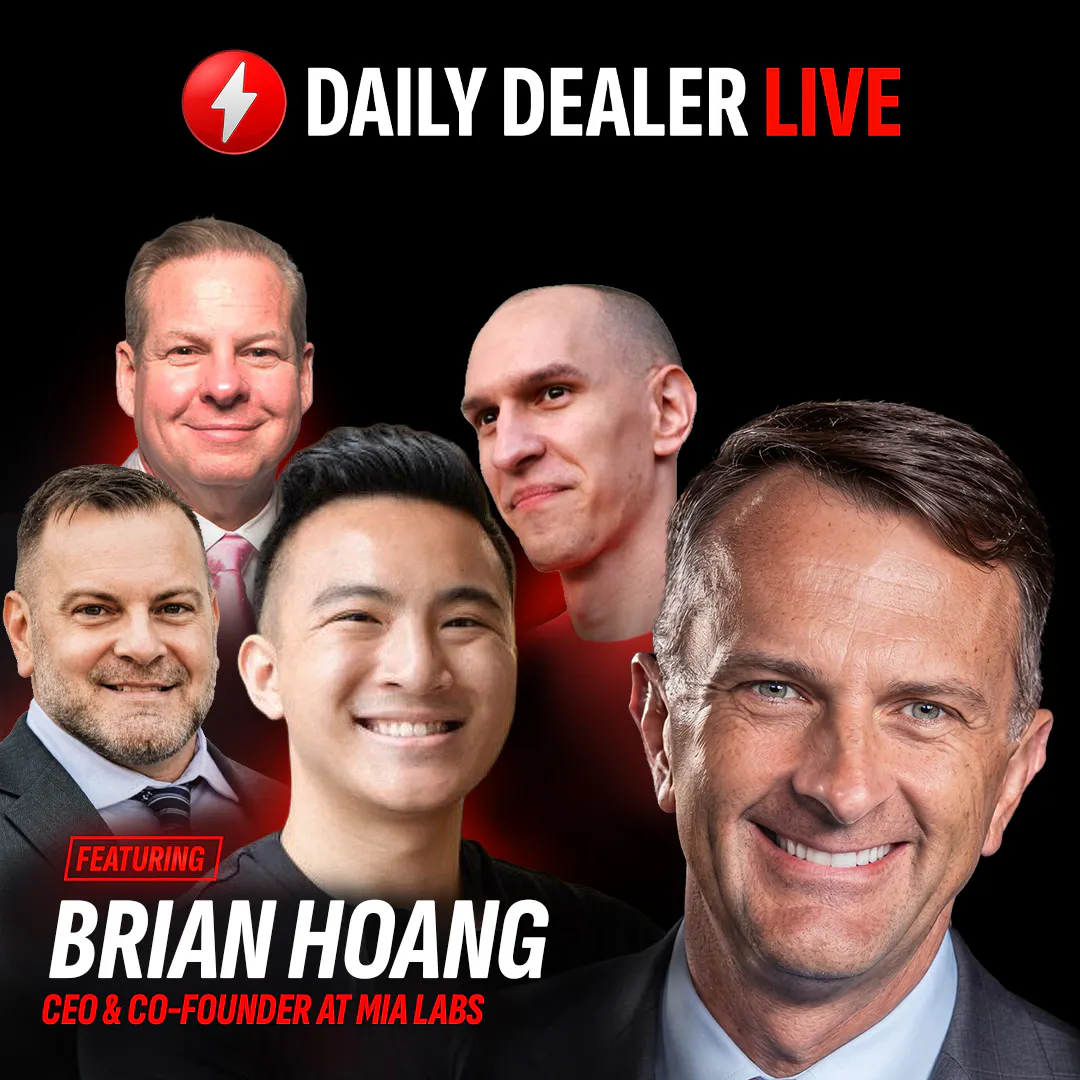
Ripley on Theft, Hoang on GM Approval, Stream Companies on FTC | Daily Dealer Live
About this episode
Dealership Guy Podcast’s Daily Dealer Live kicks off with busy buy-sell numbers, strong June sales for most brands, and a cautionary financing reality: average monthly payments hit $777, down payments are shrinking, and more buyers are stretching to 84-month terms. The show highlights rising auto loan refinancing (111,000 owners in Q1) as rates fall. The main segment tackles FTC pressure on dealer advertising/complaints—requiring proof, not claims—while Stream Companies explains how compliance and fraud/AI risks impact marketing. George Ripley discusses theft trends shifting from window-breaking to vehicle walk-offs using fake IDs and forged documents. Brian Huang of MIA Labs shares GM approval for a new AI provider category and co-op payment eligibility.
Hyundai
"The dealership, which sells the Hyundai and Subaru brands,"
Hyundai is a car company that makes lots of different models. In this segment, it’s mentioned because the dealership sells Hyundai cars.
Hyundai is a major automaker that sells passenger cars and crossovers in the U.S. The host mentions Hyundai because the dealership in question sells the Hyundai brand.
Subaru
"The dealership, which sells the Hyundai and Subaru brands,"
Subaru is a car brand that makes cars and SUVs. Here, it’s mentioned because the dealership sells Subaru vehicles.
Subaru is an automaker known for its lineup of cars and SUVs, including many models built around all-wheel-drive. The host references Subaru because the dealership sells the Subaru brand.
William Fucillo senior
"by the late William Fucillo senior, a charismatic leader known for his ads that put several syllables in the word huge."
William Fucillo senior is the person the host says originally owned the dealership. They also describe him as well-known for his distinctive ads.
William Fucillo senior is described as the late original owner of the dealership. The host highlights his reputation as a charismatic advertising figure, including memorable ad phrasing.
electrified vehicles
"Toyota led with a 10% increase and a record month for electrified vehicles at 110,627 units."
“Electrified vehicles” means cars that use electricity in some way to cut down on gas use. That can include hybrids, and sometimes plug-in hybrids or fully electric cars, depending on how the numbers are counted.
“Electrified vehicles” is an industry umbrella term for vehicles that use electricity to reduce fuel consumption—most commonly hybrids (and sometimes plug-in hybrids and EVs, depending on the reporting definition). In this segment, it’s used to describe Toyota’s record month and unit count.
Toyota
"Toyota led with a 10% increase and a record month for electrified vehicles at 110,627 units."
Toyota is a major car brand. In this segment, it’s singled out because it had the biggest sales increase and strong demand for electrified models.
Toyota is an automaker mentioned as leading overall sales growth in June. The segment also ties Toyota to a record month for electrified vehicles, indicating strong demand for its hybrid/EV-related lineup.
Stellantis
"Stellantis finished 10% ahead of last year, with RAM pickup sales up 14% in the second quarter."
Stellantis is a big group that owns multiple car brands. Here, it’s mentioned because their sales results were strong compared with the previous year.
Stellantis is the automaker group formed from the merger of Fiat Chrysler and PSA. The host mentions it because the company’s overall sales finished ahead of last year, and it also references RAM pickup performance.

Dodge Ram
"Stellantis finished 10% ahead of last year, with RAM pickup sales up 14% in the second quarter. Jeep W..."
The Dodge Ram is a large pickup truck designed to carry cargo and tow trailers. People buy it for work needs like hauling and towing, but it can also be used like a regular truck for daily driving. It shows up in sales updates because pickup trucks are a big part of the market.
The Dodge Ram is a full-size pickup truck line built for work and towing, with versions commonly used for hauling, towing, and everyday driving. It’s significant in sales reporting because pickup trucks are a major segment, and quarterly changes in Ram sales can reflect overall truck demand. Dealership-focused podcasts often mention it when summarizing brand performance and consumer buying trends.
RAM pickup
"Stellantis finished 10% ahead of last year, with RAM pickup sales up 14% in the second quarter."
RAM is a truck brand. The host is pointing out that RAM pickup sales were up a lot in the second quarter.
RAM is a brand focused heavily on trucks, and “RAM pickup” refers to its pickup lineup. The segment uses RAM pickup sales growth as a specific example of where Stellantis strength came from.

Jeep Wrangler
"...M pickup sales up 14% in the second quarter. Jeep Wrangler arose by 11% in the first quarter, and Honda, the..."
The Jeep Wrangler is a type of SUV made for off-road driving. It’s known for having a removable roof and doors, which makes it feel more open and flexible than many other SUVs. It’s mentioned in sales talk because a lot of people specifically want this kind of off-road style.
The Jeep Wrangler is a rugged, off-road-focused SUV known for its removable roof and doors and its ability to handle rough terrain. It often comes up in sales discussions because it’s a distinctive model with a loyal customer base, so shifts in its quarterly performance can signal broader consumer demand. In a dealership or market update, it’s a common benchmark for how off-road and lifestyle SUVs are trending.
Honda
"Jeep Wrangler arose by 11% in the first quarter, and Honda, they spiked 17%."
Honda is a car brand. The host says Honda’s sales jumped 17% in the timeframe they’re talking about.
Honda is an automaker mentioned for strong sales growth in the period being discussed. The host uses Honda’s “spiked 17%” result as part of the broader manufacturer comparison.
Nissan
"Nissan also posted a 9.6% gain this quarter."
Nissan is a car brand. The host says Nissan’s sales were up about 9.6% for the quarter.
Nissan is mentioned as posting a sales gain for the quarter. It’s part of the host’s roundup of how different automakers performed.
Kia
"Kia and Mazda both had their best Junes on record."
Kia is a car brand. The host says Kia had its best June ever.
Kia is mentioned as having its best June on record. The host uses it as another example in the broader sales-performance comparison across manufacturers.
Mazda
"Kia and Mazda both had their best Junes on record."
Mazda is a car brand. The host says Mazda also hit its best June ever.
Mazda is mentioned alongside Kia as achieving its best June on record. The segment uses both brands to show which automakers were outperforming expectations.
Ford
"Ford, however, was the notable exception, posting a 10% decline in June."
Ford is a car brand. In this segment, the host says Ford was the exception because its sales dropped in June.
Ford is called out as the notable exception with a June sales decline. The host contrasts Ford’s performance against the other brands that were up.
GM
"GM also finished the second quarter down 4.2%, though Traverse sales were up 26% in the first half,"
GM stands for General Motors, one of the biggest car companies. The host says GM’s overall sales were down in the second quarter.
GM is the common abbreviation for General Motors, an automaker group. The host notes GM’s second-quarter results were down overall, while highlighting specific model strength later in the segment.
Cadillac EV sales
"GM also finished the second quarter down 4.2%, though Traverse sales were up 26% in the first half, and Cadillac EV sales, they had their best second quarter."
Cadillac is GM’s luxury car brand. The host is saying Cadillac’s electric-vehicle sales were especially strong in the second quarter.
Cadillac is GM’s luxury brand, and “Cadillac EV sales” refers to sales of its electric vehicles. The host says Cadillac’s EV sales had their best second quarter, signaling momentum in that segment.
Karen Keating
"Cox Automotive analyst, Karen Keating, said the strength is concentrated, quote, demand is holding up, but the strength is concentrated in brands and products that are giving consumers the right mix of affordability, utility, and efficiency,"
Karen Keating is an analyst who works at Cox Automotive. The host quotes her to explain why some brands are doing better than others.
Karen Keating is identified as a Cox Automotive analyst in the segment. Her quote frames the sales discussion by arguing that demand is holding up but is concentrated in specific brands and products.
Cox Automotive
"Cox Automotive analyst, Karen Keating, said the strength is concentrated, quote, demand is holding up, but the strength is concentrated in brands and products"
Cox Automotive is a company that tracks and analyzes the auto industry. In this segment, one of its analysts is explaining what’s driving sales.
Cox Automotive is a data and automotive services company that produces industry analysis. Here, it’s referenced through an analyst’s interpretation of sales strength and demand patterns.
demand is holding up
"Cox Automotive analyst, Karen Keating, said the strength is concentrated, quote, demand is holding up, but the strength is concentrated in brands and products"
It means people are still interested in buying cars, not stopping completely. But the sales momentum is stronger for some brands and models than others.
This phrase describes a macro sales condition: shoppers are still buying, so overall demand hasn’t collapsed. The quote then adds that the strength is uneven—concentrated in certain brands and products that match what buyers want.
84 months
"Nearly one in four buyers took on loan terms of 84 months or longer, and the average amount finance jumped 17.68 from last year to 44,156."
“84 months” means the loan is paid back over about 7 years. It can make the monthly payment smaller, but you often pay more interest overall.
“84 months” is an auto-loan term length—about 7 years. Longer loan terms usually lower the monthly payment, but they can increase total interest paid over the life of the loan.
down payments
"Down payments, meanwhile, fell to just 11.6% of the total purchase price. That's the smallest share since Q3 2020."
A down payment is the money you pay upfront when you buy the car. If it gets smaller, you usually have to borrow more, which can make the loan harder to manage.
A down payment is the upfront cash paid when buying a vehicle. When down payments shrink as a share of the purchase price, borrowers typically finance a larger amount, which can raise monthly payments and total borrowing cost.
long-term financial strain
"Jessica Caldwell, who is head of insights for Edmunds, said the data reflects how stretched consumers are, quote, when you see loan terms extending to record lengths, down payments shrinking, and monthly payments hitting all times, all highs, you're looking at a clear recipe for long-term financial strain."
“Long-term financial strain” means the loan setup may be hard to sustain over the years. Even if the monthly payment is lower, the overall situation can become stressful later.
“Long-term financial strain” describes the risk that stretched loan structures (like very long terms and low down payments) make it harder for households to handle payments over time. Even if monthly payments look manageable, the overall cost of borrowing and vulnerability to rate/expense shocks can rise.
refinancing
"More consumers are finding relief through refinancing. There's about 111,000 vehicle owners refinance their auto loans in the first quarter of this year."
Refinancing means you swap your current car loan for a new one. People do it to try to lower their costs or monthly payment, but it can also change how long they’re paying.
Refinancing is replacing an existing auto loan with a new one, often to get a lower interest rate or better terms. The segment suggests more borrowers are using refinancing as “relief,” which can reduce payments but may extend the time you’re paying the loan.
tier two, the localized or regionalized buying groups
"Tier two, the localized or regionalized buying groups that exist out there. So in certain markets, dealerships will pull their money together in order to put a joint message"
Dealers sometimes team up with other dealers in the same area. That lets them combine money and effort to run bigger marketing campaigns than they could alone.
This describes a dealership marketing/ purchasing structure where multiple dealers in a region coordinate together. The idea is to pool resources so they can run shared campaigns aimed at specific time periods or themes.
tier three is the actual bricks and mortar
"And then tier three is the actual bricks and mortar at the dealership level in which they typically will take an incentive push down from OEM or tier one"
This is talking about the physical car dealership buildings you can visit. The local store then runs promotions using money or incentives it gets from the manufacturer side.
“Bricks and mortar” refers to physical dealership locations. In this context, tier three is the on-the-ground dealership level that runs marketing using incentives provided from higher up in the chain.
OEM
"in which they typically will take an incentive push down from OEM or tier one and put that out to market to advertise their own specific dealership or dealership group."
OEM is the car company itself—the manufacturer that makes the vehicles. Dealerships may get promotional incentives from the OEM to help them advertise and sell cars.
OEM means “original equipment manufacturer,” the automaker that builds the vehicles. Here, the speaker says dealerships often receive an “incentive push” from the OEM to support local advertising and sales promotions.
incentive push down
"in which they typically will take an incentive push down from OEM or tier one and put that out to market to advertise their own specific dealership or dealership group."
An “incentive push down” is when promotional money or sales incentives are distributed from manufacturers or larger groups down to individual dealerships. The goal is to align local advertising with broader manufacturer campaigns.
Stream Company
"So Stream Company, Ad Company, one of the biggest in automotive in New York with a lot of the OEMs. The letter came out a couple months ago and it was sort of a shot over the bow of automotive."
Stream Company is a business involved in automotive marketing/advertising. The host is saying it works with many car brands (OEMs) and has a big presence in New York.
Stream Company is referenced as a major automotive player in New York with relationships to multiple OEMs. In the discussion, it’s positioned as part of the dealership marketing/advertising ecosystem.
fixed operations
"hey, we've got people in charge of fixed, we've got people in charge of variable operations, inventory, et cetera, every key department in the dealership."
Dealerships often split their business into areas. “Fixed operations” usually means the service and parts work that customers book, not just selling cars.
In dealership terminology, “fixed operations” typically refers to the service and parts side of the business (work that’s planned and scheduled). It’s contrasted with “variable operations,” which is more directly tied to sales volume.
variable operations
"hey, we've got people in charge of fixed, we've got people in charge of variable operations, inventory, et cetera, every key department in the dealership."
This is dealership business language for the parts of the operation that change a lot depending on how many cars are being sold. It’s usually contrasted with service/parts work.
“Variable operations” is dealership jargon for revenue streams that fluctuate more with sales activity, often tied to new and used vehicle sales. It’s used as a contrast to “fixed operations” like service and parts.
compliance
"Compliance should never be locked out as an afterthought. And it's something that we've been firm believers in that it's critically important,"
Here, “compliance” means making sure the dealership follows the rules—especially those related to advertising and selling cars. The point is to handle it on purpose, not at the last minute.
In this dealership context, “compliance” means following rules and regulations that govern how dealers advertise, price, and conduct transactions. The speaker emphasizes it shouldn’t be treated as an afterthought and should be actively managed with a defined process.
FTC
"So famously, one of the objections the FTC has with the auto industry, and Bernie Reynolds has been on this show, he calls it a cleanup on aisle nine."
FTC is a U.S. government agency that protects consumers. They can investigate and push rules so car ads don’t hide the real price or add surprise costs.
FTC stands for the Federal Trade Commission, the U.S. agency that enforces consumer-protection and advertising rules. In auto retail, it can challenge practices that make advertised pricing misleading or hard to verify.
cleanup on aisle nine
"So famously, one of the objections the FTC has with the auto industry, and Bernie Reynolds has been on this show, he calls it a cleanup on aisle nine."
It’s a phrase meaning “there’s a mess that needs to be fixed.” In this context, it’s about cleaning up confusing or misleading car pricing so shoppers know the real deal.
“Cleanup on aisle nine” is a metaphor for fixing a common, recurring problem in a specific area—here, misleading or confusing auto pricing. The host is framing FTC concerns as something that needs to be corrected in the car-buying process.
advertised price
"One of the objections is just simply knowing what the price is. So you advertise the price, the price is the price... What's the biggest obstacle in automotive in 2026 that led to this letter in just knowing what that true advertised price is"
The advertised price is the price you see in the ad. The issue is whether that number is truly what you can pay, or whether extra fees and eligibility rules make the real price different.
Advertised price is the number shown in marketing for a vehicle, which shoppers use to compare offers. The FTC concern discussed here is that the advertised price may not include all required fees or may assume rebates the buyer can’t actually get.
available rebates
"Well, I think it comes down to available rebates. There's groups that have different philosophies in which they can go to market at and say, hey, let's push the lowest possible price out there to draw on a consumer"
Rebates are discounts that can lower the price, but you often have to meet certain requirements to get them. If you don’t qualify, the final price can be higher than the ad suggests.
Available rebates are manufacturer- or program-funded discounts that may require eligibility (like financing, residency, or specific purchase timing). Because rebates can be conditional, the “advertised price” can differ from what a buyer actually qualifies for.
Reg 5, Section 5
"So as we moved forward and again, Reg 5, Section 5 has been around for a very long time. Ultimately, even though the media is that we go to market with have advanced a long way"
This is a reference to a specific rule in the regulations. The point is that the requirement to be transparent about pricing has been around for a while.
“Reg 5, Section 5” refers to a specific regulatory rule section being discussed as already existing for a long time. The host uses it to argue that transparency requirements are not new, even if marketing and digital tools have evolved.
dock fee
"So when when word of this came out and they clarified, hey, dock fee and your licensing fee have to be part of that advertised price, dealer groups contacted vendor partners"
A dock fee is a charge related to moving the car from where it arrives (like a port) to the dealership. The point here is whether it must be included in the price you see in ads.
A dock fee is a dealer-added charge tied to getting a vehicle from the port/rail yard to the dealership. It’s often included in the dealer’s cost structure, and regulators may require it to be disclosed as part of the advertised price.
licensing fee
"So when when word of this came out and they clarified, hey, dock fee and your licensing fee have to be part of that advertised price, dealer groups contacted vendor partners"
A licensing fee is what it costs to register the car and get the paperwork/plates handled. The host is saying regulators want it included in the advertised price so buyers aren’t surprised later.
A licensing fee is the charge associated with registering the vehicle and handling required paperwork/taxes for plates and registration. In this discussion, it’s singled out because it may need to be included in the advertised price under pricing transparency rules.
APIs
"dealer groups contacted vendor partners, digital lead providers, technology, APIs and people that funnel into it and said, hey, we need you to make sure that this advertised price includes both of those."
APIs are how software systems “talk” to each other. In this case, they’re part of the digital tools that had to be updated so the online advertised price is accurate.
APIs (Application Programming Interfaces) are software interfaces that let different systems exchange data. Here, the host is saying digital lead and pricing systems needed updates so the advertised price includes required fees.
out the door price
"We can run towards providing them all this data information out the door price, all the other things."
Out-the-door price is the final total you pay for the car, not just the sticker price. It includes the extra costs like taxes and fees so you can compare offers fairly.
Out-the-door price is the total amount a buyer pays to purchase the car, including the negotiated vehicle price plus taxes, registration, and dealer fees. It’s important because it’s the most “apples-to-apples” number shoppers compare across dealers.
generative AI
"Generative AI is an important touch point for where a customer goes today. And it does pair up experience and rates and what the customer, what it knows about you."
Generative AI is a computer tool that can write or generate content for you (like messages or ads). Dealers may use it to create things faster, but they still have to follow advertising and compliance rules.
Generative AI is software that can create new content—like text, images, or ad copy—based on patterns it learned from data. In a dealership context, it can help produce customer-facing messages and marketing materials faster while still trying to follow required rules.
three-legged stool
"ultimately you still had to comply with really what I call the three-legged stool, which is the OEM compliance, the state compliance, and the federal compliance."
The “three-legged stool” is a way to describe the three sets of rules dealers have to follow at the same time. If you break any one of them, your advertising or sales process can get you in trouble.
The “three-legged stool” is a metaphor for the three overlapping compliance layers dealers must satisfy: OEM rules, state laws, and federal regulations. The idea is that if one leg is ignored, the whole marketing/sales process becomes noncompliant.
meta ads
"you can get to market quickly within the specs of all of the different, whether it's meta ads or just standard programmatic ads, you can get to market quickly and still be compliant."
Meta Ads are ads you see on Facebook and Instagram. Dealers use them to reach potential buyers, but the ad wording and disclosures still have to follow the rules.
Meta Ads are paid advertisements run through Meta’s platforms (commonly Facebook and Instagram). In dealership marketing, they’re used to target shoppers and drive leads, but ad content still needs to meet compliance requirements.
programmatic ads
"you can get to market quickly within the specs of all of the different, whether it's meta ads or just standard programmatic ads, you can get to market quickly and still be compliant."
Programmatic ads are online ads that are placed automatically by software. Instead of manually picking every placement, the system targets people and shows the ad, but dealers still need to keep the ad compliant.
Programmatic ads are automated digital ad buying and placement, where software targets audiences and serves ads in real time. The speaker is framing them as a channel where dealers can launch quickly while still trying to stay within compliance constraints.
approval process
"Second thing is, is there a defined approval process, a workflow process, whether it's using a tool like retail ready or whether it's a simple checklist..."
An approval process is a step-by-step check that decides what gets approved before it’s used publicly. In car sales, it helps ensure ads and offers follow the rules.
An approval process is a defined workflow that controls who can review and approve marketing and sales actions before they go live. The host ties it to being “ready and have in place” so the dealership can stay compliant when running ads and offers.
retail ready
"whether it's using a tool like retail ready or whether it's a simple checklist that says, here's where I'm running my ads..."
Retail Ready is a software tool dealers can use to help keep their marketing and incentives in line with the rules. It’s meant to reduce mistakes when setting up offers.
“Retail Ready” is referenced as a tool dealers can use to manage compliance-related workflows, especially around advertising and incentives. The host suggests it helps dealers stay accurate and compliant when creating offers.
Reg Z
"whether it's, again, Reg Z, Reg M, any of those factors, the tool gives you the ability to interact directly"
Reg Z is a set of rules for how financing terms must be disclosed to customers. If a dealer is advertising or offering financing, they need to follow those disclosure requirements.
Reg Z is a common shorthand for Regulation Z, a set of U.S. rules that governs consumer credit disclosures—especially for financing terms. The host groups it with other “known variables to comply by,” implying it affects how dealers structure and present financing-related offers.
Reg M
"whether it's, again, Reg Z, Reg M, any of those factors, the tool gives you the ability to interact directly"
Reg M is a set of rules for how leasing terms must be disclosed to customers. If a dealer offers leases, they need to present the details correctly.
Reg M is shorthand for Regulation M, which relates to consumer leasing disclosures in the U.S. The host mentions it alongside Reg Z as part of the compliance variables that tools can help manage when dealers create offers.
Mia Labs
"Absolutely. So to contextualize it and as a reminder for the audience, I'm with Mia Labs. Mia is the leading AI communications platform for dealerships."
Mia Labs is a company that helps car dealerships handle customer phone calls and texts using AI. The idea is that it can answer questions and set up appointments so dealers don’t miss leads.
Mia Labs is described as an AI communications platform for car dealerships. In this segment, it’s positioned as providing dealership phone and text automation across sales, service, and reception.
AI and conversational intelligence category
"Mia is the first approved provider in General Motors new AI and conversational intelligence category."
GM is creating a specific category for AI tools that can talk with customers. The point is that dealers can choose from approved options in that category.
This refers to GM’s labeled category for AI tools that handle conversations, such as customer interactions via phone or messaging. The segment frames it as a formal marketplace area where dealers can pick approved AI providers.
General Motors
"So with that, Sam, the news is that Mia is the first approved provider in General Motors new AI and conversational intelligence category."
General Motors is the car company behind the GM dealer network. In this segment, GM is the one approving certain AI vendors that dealerships can use.
General Motors (GM) is the automaker whose dealership ecosystem is discussed here. The segment says GM created a new AI and conversational intelligence category and approved Mia as a provider in that category.
co-op program
"You can sign up with us as your AI phone solution and you can get reimbursed through GM's co-op program."
A “co-op program” is when the carmaker shares some of the cost with the dealer. In this case, GM is described as reimbursing dealers for using the approved AI phone solution.
A “co-op program” is a cooperative funding arrangement where an OEM helps reimburse or support approved dealership marketing or sales-related initiatives. Here, it’s described as GM reimbursing dealers for using Mia’s AI phone solution.
AI phone solution
"You can sign up with us as your AI phone solution and you can get reimbursed through GM's co-op program."
An “AI phone solution” is a tool that uses AI to answer dealership phone calls. It can help respond to questions and schedule appointments so customers don’t get ignored.
An “AI phone solution” is software that uses AI to manage phone calls—typically answering questions, routing calls, and/or booking appointments. In the segment, Mia is positioned as handling dealership calls and helping prevent missed leads.
co-op eligibility
"co-op eligibility, which again, like I mentioned, basically lets you get reimbursed for a certain percentage of your investment."
Co-op eligibility means the dealer may qualify for money back from the car manufacturer for certain costs. If you qualify, the manufacturer reimburses part of what you spent, which can make the dealership more profitable.
Co-op eligibility refers to whether a dealership qualifies to receive manufacturer-backed reimbursement for certain marketing or sales-related expenses. In practice, it can help offset part of what the dealer invests, improving profitability and cash flow.
fixed ops
"There are two really big interesting use cases for that right now. I'll kind of like divide it between sales and service. On the fixed ops side, we're seeing a lot of inbound"
Fixed ops is dealership money from the service department and parts sales, not from selling new cars. It tends to be steadier because people keep needing repairs and maintenance.
Fixed ops (fixed operations) is dealership revenue from ongoing service and parts work, rather than selling new cars. It’s often where dealerships can earn higher-margin, repeatable income because customers need maintenance and repairs over time.
leakage in calls
"booking all these very, these high margin service appointments on behalf of the dealership to keep the service drive forward all times. And that's where you typically will find the biggest leakage in calls as well."
Call leakage means some callers slip through the cracks—like nobody answers or they don’t get followed up. That can cost the dealership appointments and sales.
Call leakage refers to potential customers who contact the dealership but don’t get successfully handled—often because calls are missed, unanswered, or not followed up quickly. Dealerships track it because it directly impacts lost service and sales opportunities.
missed calls
"When you think about like the industry wide, 30 to 40% of missed calls. Most of that is going to be on the service side."
Missed calls are calls the dealership doesn’t answer. If a dealership misses too many, potential customers may move on to another place.
Missed calls are calls that come in but aren’t answered or handled in time. The segment cites an industry-wide share of missed calls to emphasize why faster service-side response matters for revenue.
automated outbound feature
"we're seeing a lot of strong ROI on the outbound aspect here where with our automated outbound feature, VIA is basically reaching out, mostly texts, but also call in some cases"
This is a tool that automatically reaches out to potential customers using things like texts or calls. The goal is to contact people quickly and consistently so more leads turn into appointments.
An automated outbound feature is software that proactively contacts leads using channels like texts and calls without a human manually dialing each time. In dealership operations, it’s used to reduce response delays and improve follow-up consistency.
variable ops
"And on the variable ops side, we're seeing a lot of strong ROI on the outbound aspect here"
Variable ops is the dealership side that depends more on selling cars. It can go up and down more than service and parts because it’s tied to sales volume.
Variable ops (variable operations) is dealership revenue tied more directly to sales activity, like selling new vehicles. Unlike fixed ops, it can fluctuate more with inventory, promotions, and market demand.
speed to lead
"So it's really about minimizing that speed to lead or minimizing the time, maximizing the speed and basically reaching out to the customers"
Speed to lead means how fast the dealership reaches out after someone shows interest. Faster follow-up usually leads to more appointments and sales because the customer hasn’t cooled off yet.
Speed to lead is the time it takes a dealership to contact a customer after a lead comes in (like a form fill, call, or text). Shorter speed to lead generally improves conversion because the customer is still engaged and the dealership appears responsive.
response rate
"we see upwards of 50% response rate, 20% appointment booking and conversion rate."
Response rate is how many people actually reply after the dealership reaches out. If it’s higher, it usually means the outreach is landing well.
Response rate is the percentage of contacted leads who reply or engage after outreach. In dealership marketing, it’s a key KPI for judging whether messaging and timing are effective.
conversion rate
"we see upwards of 50% response rate, 20% appointment booking and conversion rate."
Conversion rate is how many leads end up doing what the dealership wants, like booking an appointment. Higher conversion rate means the process is working better.
Conversion rate is the percentage of leads that ultimately reach a desired outcome—here, booking appointments and moving them toward a sale or service visit. It’s a core metric for evaluating marketing and outreach effectiveness.
appointment booking
"we see upwards of 50% response rate, 20% appointment booking and conversion rate."
Appointment booking means the lead agrees to set a date and time to come in. It’s a practical measure of whether outreach is turning into real visits.
Appointment booking is the conversion step where a contacted lead agrees to schedule a service visit or sales appointment. It’s often used alongside response rate to measure how well outreach turns interest into real scheduled time.
MIA reaches out
"And that's often in the first time that MIA reaches out too. We've seen a lot of cases where other solutions, you'd have to reach out about four times to achieve about the same results."
MIA sounds like the dealership’s automated helper that contacts leads. They’re saying it can get results with fewer follow-ups than other tools.
MIA appears to be the name of the dealership outreach system or AI assistant doing follow-up contact. The speaker is comparing how many outreach attempts are needed to get similar results.
AI and data
"And it's also just the quality of the data of the dealership as well. Like there are a lot of variables, as you know, that feed into the trust and reputation of a dealership... And that's really what AI and data is going to serve to optimize."
They’re talking about using AI and data to make car dealerships work better for customers. The goal is to help dealers respond faster and provide more accurate information so shoppers feel confident.
The hosts discuss how artificial intelligence and data can be used to improve dealership operations and customer experience. In this context, it’s about optimizing responsiveness and improving the quality/accuracy of dealership information consumers see.
NADA
"What was kind of the trigger between going from skeptical and sort of, hey, I'm not sure... like I almost felt like it even happened during NADA this year?"
They mention NADA as an industry gathering where people in car retail may have started warming up to AI. It’s used as a reference point for when the conversation changed.
NADA is referenced as a moment where attitudes toward AI in automotive may have shifted. The discussion frames it as an industry event where skepticism could have been replaced by broader acceptance.
super early progressive adopters
"It always comes in stages... you're always going to have like the super early progressive adopters versus you know, the late adopters."
They’re describing how new tech usually rolls out in waves. Some people try it first, and others wait until it’s proven.
This describes a diffusion-of-innovation pattern: some dealers adopt new technology very early, while others wait. The hosts use it to explain why AI adoption in automotive happens in stages rather than all at once.
AI and software driven dealership
"And so not only is the adoption at a point of no return in the industry, but there's so much irrefutable data right now on AI improving your performance for the dealership... dealers that use AI that embrace becoming more of an AI and software driven dealership are going to have a material competitive advantage"
It means the dealership runs more of its work through software and AI, like handling customer messages. Instead of trying AI once, they build it into how the dealership operates every day.
This describes a dealership that uses AI and software tools as a core part of daily operations, not just as a side experiment. The idea is that AI helps with tasks like customer communication and call/text handling, and the dealership becomes more data-driven over time.
competitive advantage
"dealers that use AI that embrace becoming more of an AI and software driven dealership are going to have a material competitive advantage against dealers that don't."
It means one dealership can do better than others because it has an advantage—here, using AI and software to get better results. The claim is that this difference will show up in performance.
A competitive advantage is a measurable edge a business has over rivals—something that improves results like sales efficiency, customer response times, or cost structure. In this context, the host claims AI-enabled dealers will outperform dealers that don’t adopt it.
silver bullet
"it is generally a mistake to view AI as an overnight silver bullet. Now, like, can you deploy an AI out of the box and have it start capturing calls? Yeah, you can with some nuance there."
A “silver bullet” is a magic one-step solution. The point here is that AI won’t automatically fix everything the moment you install it—you have to set it up and use it the right way.
“Silver bullet” is a metaphor for a single fix that instantly solves a complex problem. The speaker argues AI shouldn’t be treated as an overnight solution; it needs setup, tuning, and ongoing process changes to work well in a dealership environment.
trust on the AI
"generally, you do want to lead with trust on the AI. It's even if it's not 100% perfect, it's almost always a net positive"
It means letting the AI do real customer work instead of double-checking everything. The claim is that if you trust it enough to use it more, it can still help even when it’s not 100% accurate.
This refers to the operational practice of allowing AI to handle customer interactions (like calls and texts) with confidence in its outputs. The speaker frames it as a key adoption step: even if the AI isn’t perfect, using it more can still produce net-positive results.
ROI
"the more volume that you trust the AI to handle and to like phone calls and texts, the more compound ROI you will get from it."
ROI means “did it pay off?” It’s a way to judge whether spending on AI brings back enough benefit. They’re saying the more you let it handle, the better the payoff tends to get.
ROI stands for return on investment, a way to measure whether the money spent on a tool (like AI) produces enough benefit to justify the cost. The speaker suggests that trusting the AI with more call/text volume increases the “compounding” ROI over time.
auto theft
"We're going to dive into auto theft as we come out of the 4th of July weekend. ... auto theft meant somebody breaking into a car or breaking into a building, stealing a bunch of keys and they would drive off."
Auto theft is car stealing. The discussion also points out that thieves aren’t just breaking in anymore—they’re using more steps and tactics to get access to cars.
Auto theft refers to stealing vehicles and, increasingly, stealing the means to steal them (like keys or access). The host frames it as evolving from simple break-ins to more complex, multi-step criminal methods.
auto related crimes
"anybody that investigates like auto fraud, just generally speaking, the goal is of the organization is to investigate and prevent auto theft and auto related crimes throughout the United States"
This means crimes connected to cars that go beyond just stealing a vehicle. The episode is using it to describe the wider problem auto theft is part of.
“Auto related crimes” is a broad category that includes offenses connected to vehicles beyond straightforward theft. In this context, it’s tied to the organization’s mission to investigate and prevent theft and related wrongdoing across the U.S.
social engineering
"[3271.5s] George, you said social engineering. What does social engineering mean? How what is social [3276.6s] engineering? Yeah, I mean, to simplify it, it's just tricking another person with, you know, like [3282.3s] a confidence scam, you know, but tricking another person through, I like to always reference illusions,"
Social engineering is when scammers trick people into doing something they shouldn’t—like handing over access, documents, or money. It’s basically a “confidence scam,” but aimed at getting you to trust the wrong person.
Social engineering is a fraud technique where criminals manipulate people into taking actions or sharing information. In auto-dealer theft schemes, it often means convincing staff or customers using fake identities, convincing stories, or AI-generated impersonation.
deep fakes
"[3282.3s] a confidence scam, you know, but tricking another person through, I like to always reference illusions, [3287.8s] yeah, like deep fakes, you know, yeah. Yeah, which are becoming easier with AI and whatnot, right?"
Deep fakes are AI-made videos or recordings that can look and sound real. Scammers use them to pretend to be someone else and get people to trust them.
Deep fakes are AI-generated audio or video that can convincingly imitate a real person. Fraudsters use them to impersonate dealership staff, customers, or logistics contacts to gain trust and push transactions through.
transport transaction
"[3322.6s] like in July of 26. How do criminals use stolen identities, fake docs to get a high value vehicle [3328.6s] out of the door during a transport transaction?"
A transport transaction is the part of the deal where the car gets shipped or moved by a carrier. Scammers may try to fake the shipping details so the car ends up with them instead of the buyer.
A transport transaction is the logistics step where a vehicle is moved—typically involving carriers, pickup/drop-off details, and documentation. Auto-theft fraud can target this stage by using fake logistics identities or documents to redirect or extract a high-value vehicle.
point of sale
"[3340.1s] Yeah, so this here, this is actually a video of like point of sale, strictly AI generated, [3346.2s] like and it's, if you're using her, you got to verify it, but that is an example of how it's [3352.1s] created."
Point of sale (POS) is the moment and system where a transaction is completed—like payment processing and deal paperwork. In fraud scenarios, criminals may target POS workflows with AI-generated materials or impersonation to make a deal appear legitimate.
telematics
"they're relying on telematics, okay, the telematics, criminals are smart, the telematics fail, so the owner was smart enough to install a kicks, aftermarket covert tracking device"
Telematics is the car’s built-in tracking system—think GPS and a connection to a service. Here, the tracking didn’t work when the car was stolen, which is why the owner used an extra backup tracker.
Telematics are vehicle-tracking and communications systems (often using cellular/GPS) that let owners and service providers monitor location and status. In the segment, the theft recovery depends on the fact that the criminals’ interception caused the telematics to fail.
aftermarket covert tracking device
"so the owner was smart enough to install a kicks, aftermarket covert tracking device, and this one ended in a success story where the vehicle was recovered because telematics failed"
This is a hidden GPS tracker that someone adds to the car after it’s built. The idea is that if the car’s normal tracking doesn’t work, this hidden tracker can still help find it.
An aftermarket covert tracking device is a hidden GPS tracker installed outside the factory system. The segment frames it as a backup when factory telematics fail, improving the odds of recovery after theft.
KYCAs
"and those covert tracking devices work like KYCAs, so the reason that works on products like that, especially"
They mention “KYCAs” as an analogy, but they don’t spell out what it stands for. The takeaway is that the hidden tracker approach is meant to work reliably when the normal tracking system fails.
KYCAs is referenced as a comparison point for how the covert tracking devices work, but the transcript doesn’t define the acronym. In context, it’s being used to explain why the tracking approach is effective for protecting vehicles and inventory.
fleet
"is because the owner took the extra step to go ahead and secure their fleet, secure their inventory, without that, the vehicle is out there in the central marketplace"
Here “fleet” means a company’s set of vehicles it manages as a group. The point is that businesses should protect all those cars, because stolen vehicles can be flipped and resold.
In this segment, “fleet” refers to a group of vehicles managed together for a business, such as dealer inventory or transport assets. The speaker argues that securing fleet vehicles with extra tracking reduces the chance they get resold after theft.
bin laundering scheme
"without that, the vehicle is out there in the central marketplace, it gets resold, it potentially comes part of a bin laundering scheme, and ends up possibly being on your dealership lot"
They’re describing a scam where stolen vehicles get moved through channels that make them harder to trace. The concern is that the car could eventually show up for sale at a dealership.
A “bin laundering scheme” is described as a way stolen vehicles can be processed and reintroduced into legitimate-looking channels. The speaker’s point is that without extra tracking, a stolen car can be resold and potentially end up on a dealer lot.
Ziggler Auto Group
"so at the Ziggler Auto Group, we work with Mannheim, we work with Cox, we were seeing a rise in theft"
Ziggler Auto Group is the dealership business the speaker works with. They’re using their own experience to explain how vehicle theft is affecting auctions and dealers.
Ziggler Auto Group is the dealership group the speaker represents while describing theft trends and anti-theft practices. It’s relevant because the segment ties tracking recommendations to real auction/transport operations.
Mannheim
"So transportation theft from auctions is something we're seeing on the rise, many auctions are actually taking pretty aggressive action, so at the Ziggler Auto Group, we work with Mannheim"
They mention “Mannheim” as a company they work with for auctions or vehicle logistics. The discussion is about theft prevention in that process.
Mannheim is mentioned as a partner the Ziggler Auto Group works with in the auction/transport ecosystem. In this context, it’s part of the supply chain where theft prevention measures are discussed.
iScan
"they've actually done some things through the, through their auctions with iScan and other things to help prevent that, but tell us what"
They mention “iScan” as a tool auctions use to help stop theft. They don’t explain exactly what it does in this clip, but it’s part of the security process.
iScan is mentioned as an auction-related tool used to help prevent transportation theft. The transcript doesn’t define it, but it’s presented as part of the anti-theft workflow alongside other measures.
auto transport theft
"George? Yeah, this is where the auto transport theft comes in, keep in mind statistically, you know, strategic cargo theft has increased 1500%..."
This is car theft that happens while a vehicle is being shipped or transported. It’s a big risk for cars that are already bought at auction but haven’t arrived at the dealer yet.
Auto transport theft is when thieves steal vehicles while they’re being moved—typically during pickup, loading, transit, or delivery. In dealer/auction workflows, it often targets cars that have already been purchased but haven’t reached the dealer yet.
strategic cargo theft
"keep in mind statistically, you know, strategic cargo theft has increased 1500%... since 2021..."
This means organized theft of valuable shipments, where criminals pick the right targets and timing. In this context, it’s about stealing cars and other valuable cargo.
Strategic cargo theft refers to organized theft of high-value goods (like vehicles) where the timing and targets are chosen to maximize profit and minimize detection. The host uses it to describe a broader trend behind vehicle theft in the supply chain.
fraudulent pretents
"And so as part of that statistic is also auto's being stolen, right, by fraudulent pretents, and that happens a lot of times when you're arranging after the auction purchase..."
Fraudulent pretents (likely referring to fraudulent pretexts) are fake reasons or identities used to trick people into releasing or shipping vehicles. In dealer logistics, this can show up during the handoff after an auction purchase—when someone tries to redirect shipment or access the vehicle.
email account takeovers
"look out for social engineering schemes, you know, or the email account takeovers, and then have an extra layer of covert tracking..."
This is when hackers get into a person’s email and pretend to be them. They can then send messages that trick others into shipping or releasing a car.
Email account takeovers happen when attackers gain control of someone’s email inbox, then use it to impersonate the account owner. In vehicle logistics, that can enable fraudulent shipment instructions, invoice changes, or approval requests.
enhanced inspections
"Yeah, so you're telling dealers to start enhanced inspections and then verification on high risk vehicles within the next seven days."
Enhanced inspections mean taking extra time to double-check details before a car moves forward. It helps catch mistakes or fraud before the vehicle is shipped.
Enhanced inspections are more thorough checks than normal—used here to verify identity, paperwork, and vehicle details for shipments that have higher theft risk. The host connects it to dealer processes for preventing fraud after auction purchases.
verification on high risk vehicles
"start enhanced inspections and then verification on high risk vehicles within the next seven days. What makes a vehicle high risk in the first place?"
This is extra checking for cars that thieves are more likely to target. Dealers confirm the car and the shipping details are correct before it leaves.
Verification on high risk vehicles means applying stricter confirmation steps to cars most likely to be targeted—such as luxury or high-demand models. The goal is to ensure the vehicle and shipment instructions match what was purchased and authorized.
authentication
"So AI and the schemes create more work, right? It's not, the sky's not falling, it just requires more vigilance and more work to authenticate. Authentication is the name of the game 20,"
Authentication is the process of proving that something is genuine—here, verifying that the vehicle and the shipment/transaction details are what they claim to be. The host frames it as the core countermeasure against fraud and theft in the auction-to-shipping pipeline.
AI-enabled fraud
"So we've talked a little bit about this, this AI-enabled fraud, and you've said in places, [3696.2s] this AI-enabled fake IDs, forged documents, and there's actually some really good replicas."
This means scammers are using AI tools to make their lies harder to spot. They can use it to create fake documents or identities so a dealership doesn’t catch the scam.
AI-enabled fraud is when criminals use artificial intelligence to make scams more convincing or scalable. In this context, it’s tied to using AI to create fake identities and forged paperwork to get vehicles or bypass dealer checks.
fake IDs
"...this AI-enabled fake IDs, forged documents, and there's actually some really good replicas. AI is capable of creating great duplicates of a driver's license as an example."
Fake IDs are fake or altered driver’s licenses or other ID cards. If a dealership accepts one, it can lead to fraud because the person may not be who they claim to be.
Fake IDs are counterfeit or altered identification documents used to impersonate someone else. For dealerships, the risk is that staff may accept the document as legitimate, enabling theft or fraud before the sale is properly verified.
forged documents
"...this AI-enabled fake IDs, forged documents, and there's actually some really good replicas."
Forged documents are counterfeit or altered paperwork presented as if it were genuine. In dealer theft/fraud scenarios, forged documents can be used to support a false identity, false ownership, or a fraudulent sale process.
driver's license replicas
"AI is capable of creating great duplicates of a driver's license as an example."
This is when someone makes a fake copy of a driver’s license that looks real. If staff rely on quick visual checks, it may be hard to notice it’s fake.
Driver’s license replicas are high-quality copies of a real driver’s license created to pass verification checks. The key risk is that modern AI can generate duplicates that look convincing enough to defeat basic visual inspection.
layered approach
"Yeah, look, it requires a layered approach. Again, criminals are committing crimes and layers. We got to, dealerships need to have a layered approach."
A layered approach means you don’t just check one thing and call it done. You use several different protections so scammers can’t easily slip through one weak point.
A layered approach means using multiple independent safeguards rather than relying on a single check. The idea is that criminals attack the weakest link—so dealerships should combine staff training, verification steps, and security resources to reduce fraud success.
motor vehicle theft
"...for part one crimes and statistics, motor vehicle theft. Carjacking is a robbery, but a car ended up going..."
Motor vehicle theft is the official way police describe stealing a car. It’s the category used for reporting and statistics.
Motor vehicle theft is the formal category for stealing a vehicle, used in crime statistics and reporting. The speaker contrasts it with other categories like carjacking and fraud to clarify how incidents are recorded.
part one crimes
"And remember, auto theft is tracked as, for part one crimes and statistics, motor vehicle theft."
This is a category police use when reporting certain types of crime. The point here is that auto theft gets tracked in a specific way in crime statistics.
Part one crimes is a law-enforcement classification used in crime reporting statistics. The speaker is using it to explain how auto theft is tracked in official data, which can affect how dealers interpret risk trends.
Request an Explanation
Heard something you'd like explained? We'll add it to this episode.
Sign in to request explanations for terms you heard.
Want to learn more?
Browse our glossary for plain-English explanations of automotive terms, jargon, and concepts.
Help improve this episode
See something that's not quite right? Our annotations are AI-generated and can sometimes miss the mark. Click the flag icon on any annotation to suggest a correction.