S11 Ep4: Theo Paphitis: I Got Arrested Doing Donuts In A Ferrari!
About this episode
Theo Paphitis mixes business lessons with car stories, from the importance of cash flow and the public boost he got from Dragon’s Den to the scrappy early days of driving and buying his first Mini for 50 quid. He talks through company-car perks, his Jaguar collection, and the appeal of EV charging at home. The chat also veers into European road trips, ending with a Ferrari stunt in Budapest that got him arrested.
front-wheel-drive
"It's a front-wheel-drive car, kind of normal it was, and he made an absolute god himself."
Front-wheel-drive means the front wheels do the work of both steering and moving the car. It’s a common layout, and it can make the car handle a bit differently than cars where the rear wheels drive.
Front-wheel-drive (FWD) means the engine’s power is sent to the front wheels, which handle both steering and propulsion. It’s common because it packages the drivetrain efficiently, but it can change how the car feels in cornering compared with rear- or all-wheel drive.
Adrien Flux
"Fueling Around is powered by Adrien Flux as the UK's largest specialist insurance broker. Adrien Flux will tailor a quote to your exact needs, helping save you money on your car, your bike, or even your home insurance."
Adrien Flux is an insurance company/broker. They’re mentioned because they sponsor the podcast and offer customized insurance quotes.
Adrien Flux is presented here as a specialist insurance broker in the UK. The hosts mention it because it’s sponsoring the show and offering tailored insurance quotes.
fiberglass front
"“There's a mini. … It's fiberglass front. Sweet. Because obviously the front had been damaged at some stage…”"
A fiberglass front means the car’s front panel was replaced with fiberglass. The host used it as a cheap fix after damage, but it didn’t last long.
A fiberglass front is a body panel or front-end replacement made from fiberglass rather than steel. In the transcript, it’s used as a budget repair after the Mini’s front was damaged, and it only lasted a few months.
MOT
"“And so I drove it to the end of the MOT. [808.5s] So you got good value out of it?”"
MOT is the UK’s mandatory car inspection. If it’s “running out,” the car can’t legally be driven until it passes the test again.
MOT is the UK’s annual vehicle inspection that checks roadworthiness and emissions. When the speaker says the MOT was running out, they mean the car would soon fail the legal requirement to be driven on public roads.
clutch
"“...try and do that as we're going uphill because the clutch didn't really have anything left in it.”"
The clutch is the pedal/part you use to connect and disconnect the engine from the gearbox in a manual car. They’re saying the clutch was worn out, so it wasn’t working properly anymore.
A clutch is the driver-controlled connection between the engine and the transmission in a manual car. The speaker says theirs “didn’t really have anything left in it,” meaning the clutch was worn and likely slipping or not fully engaging.

Alfa Romeo
"“Hey, this is an Alfa Romeo. Alfa, what? Second car? … And then when this blue and brown one had its own idosyncrasies about starting, not starting. And the rust was…”"
They’re talking about Alfa Romeo, the Italian car brand they owned multiple times. The stories focus on the car’s quirks—especially rust and problems with starting—so it wasn’t just a normal “buy and forget” car.
Alfa Romeo is the Italian brand the speaker repeatedly mentions as their “lineage” of cars. They describe multiple Alfa Romeo ownership experiences, including starting issues and rust, which are the kinds of traits enthusiasts often associate with certain older Alfas.

Alfa Romeo Sud
"“Because there's got to be a lineage or a lineage. … Hey, this is an Alfa Romeo. Alfa, what? Second car? [839.9s] Sud. So you bought with emotion this time?”"
They say their second car was an Alfa Romeo Sud. They describe it as having rust (the “brown”) and also some annoying starting problems, which is why they later moved on to newer cars.
The speaker’s second car is an Alfa Romeo Sud, a model line from Alfa Romeo that’s often remembered for its character and for being prone to rust if not cared for. In the transcript, they specifically connect the “blue and brown” color scheme to rust and mention starting issues.

Vauxhall Chevette
"[946.2s] Vauxhall Chevette. Oh, I shove it. Love it. In Russ Brown. 1.3L. Why? Well, I was going to say now [956.2s] but the reason I say why is because that feels like it comes in the wrong part of the story ... [973.5s] The other three cars were mine. Okay. The Chevette [979.1s] four door, not the four door, right? Practical."
The Vauxhall Chevette was a fairly ordinary, affordable British car. Here it’s mentioned as the kind of car someone might have when they’re working and trying to keep costs down.
The Vauxhall Chevette is a British compact car that was common in the UK from the mid-1970s into the 1980s. In this story, it’s used as an example of a practical, affordable “company car” era vehicle before the speaker moved up to more expensive cars.

Austin Marina
"[973.5s] The other three cars were mine. Okay. The Chevette [979.1s] four door, not the four door, right? Practical. Yeah. Four door Chevette. The other one was [986.2s] I changed job and I got a company car. Okay. And my level was Chevette. Next was a Marina. [996.0s] Yeah. Then if you from the Marina, you went to the Cortina."
The Austin Marina was a common, practical British car from that era. Here it’s mentioned as the “next” car in the speaker’s timeline.
The Austin Marina is a British compact family car from the late 1960s into the 1970s, known for being a mainstream, practical choice. The transcript places it in the middle of a progression of cars the speaker owned as their job and circumstances changed.
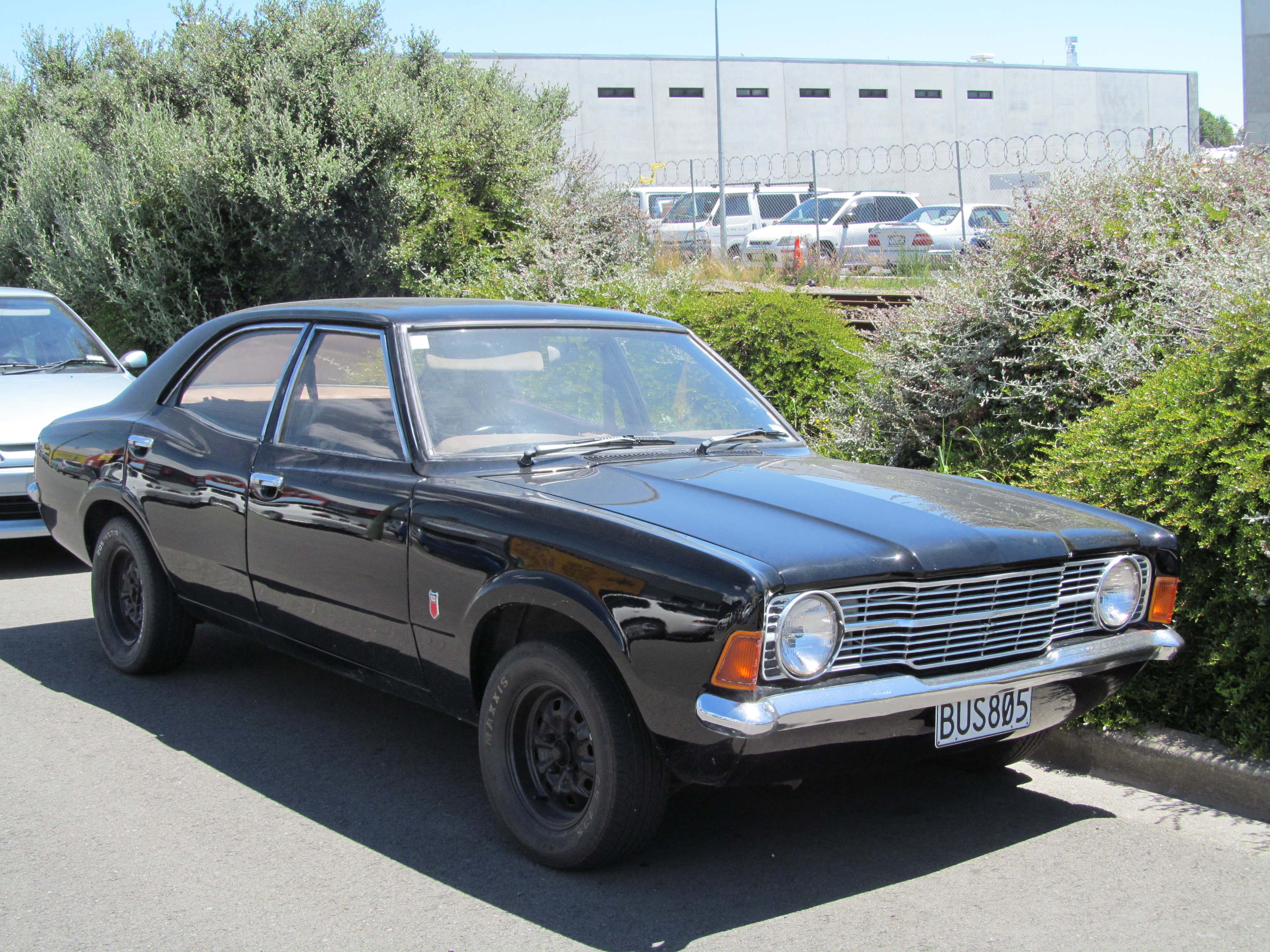
Ford Cortina
"[986.2s] I changed job and I got a company car. Okay. And my level was Chevette. Next was a Marina. [996.0s] Yeah. Then if you from the Marina, you went to the Cortina. [1009.0s] What was the wedge shaped one? Oh, the Princess."
The Ford Cortina was a popular British family car. The hosts are using it to map out the speaker’s car history over time.
The Ford Cortina is a long-running British family car line, especially associated with the 1960s–1970s era. In the segment, it’s mentioned as the next step after the Marina, continuing the speaker’s progression through period-appropriate UK cars.
LNG
"[1016.1s] Cortina or Princess. So I was got the lowly grade. What job did you do? So I went to work for LNG [1023.5s] and going around insurance brokers working for LNG."
“LNG” is the name of the employer mentioned in the story. The speaker says working there came with perks like a company car.
LNG is mentioned as the employer the speaker worked for when they were “going around insurance brokers.” In this context, it’s tied to the benefits of employment (including a company car and mortgage support).
company car
"[1016.1s] Cortina or Princess. So I was got the lowly grade. What job did you do? So I went to work for LNG [1023.5s] and going around insurance brokers working for LNG. So you got that and I got an expensive [1028.5s] account. But more importantly, the reason I went to work there is I'll come back to the company [1035.2s] car in a minute. But the company car meant I didn't have HP to pay on a car..."
A company car is a car your employer gives you to use. The speaker is saying it made car costs easier because they didn’t have to finance a car themselves.
A company car is a vehicle provided by an employer for an employee to use, often with tax and benefit rules that can make it cheaper than buying a personal car. In the segment, the speaker says the company car helped them avoid paying HP on a car.
HP
"[1035.2s] car in a minute. But the company car meant I didn't have HP to pay on a car, which was like [1040.1s] expensive because I always bought cars I couldn't afford."
“HP” here means hire purchase—basically buying a car by paying it off in installments. The speaker says the company car meant they didn’t have to do that.
HP usually means hire purchase, a financing method where you pay a deposit and then make installment payments until the car is fully paid off. The speaker contrasts having HP payments on a personal car versus not needing them when they had a company car.
subsidized mortgage
"[1050.3s] and working for LNG gave you a subsidized mortgage in those days before the tax man [1056.2s] decided to knock all that out of the window. So if mortgage rates were like 10, 11% in those days [1060.9s] and my mortgage was like 2%. Right."
A subsidized mortgage is a home loan with help that makes the cost lower than normal. The speaker is saying their rate was much lower, so they could afford a bigger house.
A subsidized mortgage is a home loan where the effective interest rate or terms are improved by a subsidy (often through an employer or government program). The speaker contrasts high mortgage rates (10–11%) with their much lower subsidized rate (about 2%), explaining how that changed monthly payments and borrowing power.
garage princess
"what's a garage princess? The princess. What doesn't come out? I've got quite a few cars,"
A “garage princess” is a car that mostly sits in the garage and doesn’t get driven much. It’s kept in good condition, often for show or collecting.
“Garage princess” is car-enthusiast slang for a vehicle that’s kept primarily for looks or collecting and doesn’t get driven much. It’s the opposite of a daily driver—more show than use.
electric Jag
"But would you add an electric Jag or any electric to your fleet? Yes."
An “electric Jag” means an electric Jaguar car. The host is basically asking if they’d add an EV version of Jaguar to their collection.
“Electric Jag” refers to an electric Jaguar vehicle—Jaguar’s electrified models. The host is asking whether they’d add an EV to their existing mix of classics and modern cars.
EV charger
"the van came round with a clipboard to talk to me about installing my EV charger and explain to me the differences."
An EV charger is what you install to charge an electric car at home. It can vary in speed and setup, which is why it can feel confusing.
An EV charger is the equipment used to charge an electric vehicle’s battery. The host mentions installing one and being confused by the “differences,” which likely refers to charger types, power levels, and installation considerations.
kilowatts
"and then different and then the kilowatts. So I might be one of those 22 kilowatts... So 22 kilowatt does what compared to a seven?"
Kilowatts (kW) tell you how much power the charger can send to the car. More kW usually means faster charging, as long as the car can handle it.
Kilowatts (kW) measure how much electrical power an EV charger can deliver. Higher kW generally means the car can accept more power, which can reduce charging time—but the car’s onboard charging limits still control the real-world rate.
three-phase
"They said the 22 is a three-phase. Most people have a seven at home."
Three-phase is a way of supplying electricity using three streams of power. For EVs, it can let the charger deliver more power, so charging can be faster.
“Three-phase” refers to an electrical power setup that uses three alternating-current (AC) phases. In EV charging, three-phase power is often used to deliver higher charging rates than typical single-phase home setups.
EV charging
"because not all cars can take a faster charge. So I could put a 22 in for you, but I'm not sure what you're going to use it for."
EV charging speed isn’t only about the wall box—it also depends on what the car can accept. Some cars can’t take the highest power, so they won’t charge as fast even with a stronger charger.
EV charging rate depends on both the charger’s output and the vehicle’s ability to accept that power. The hosts discuss “not all cars can take a faster charge,” which is about the car’s charging hardware and limits.
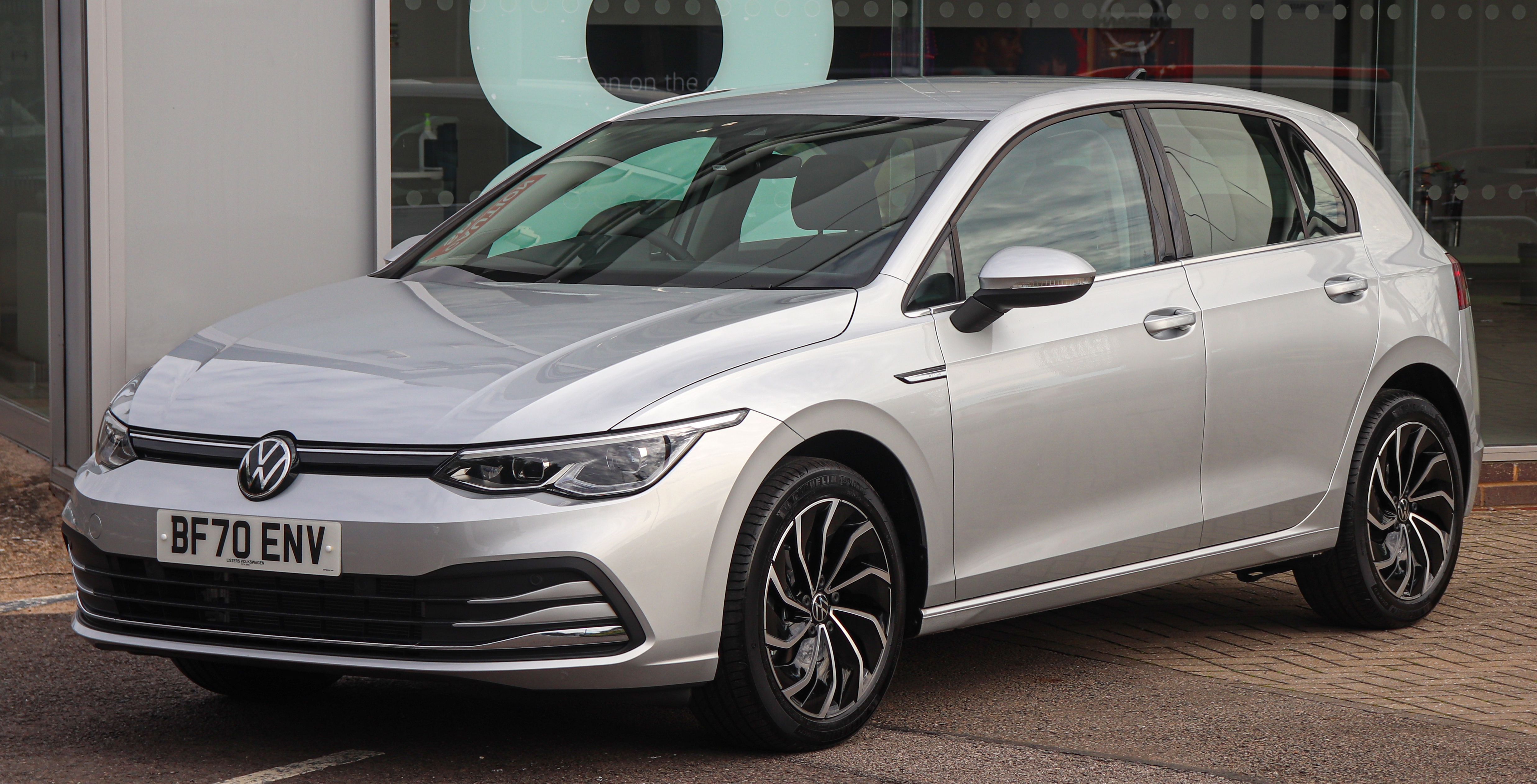
Volkswagen Golf R
"But I said, what takes you to Waitrose? And he said a Golf R. And I thought, it's really interesting what people buy. Great car."
The Volkswagen Golf R is a sporty version of the regular Golf. It’s meant to be quick and grippy for daily driving, not just weekend fun.
The Volkswagen Golf R is a performance version of the Golf hatchback, built around a turbocharged engine and all-wheel drive for quick, confident everyday driving. In the episode, it’s used as an example of what a “normal” person with a car collection might still choose for routine errands.

Land Rover Defender
"Now, there is, and you're on a mini jumping around, running around. The Defender is a workhorse. And it does all sorts of rubbish."
The Land Rover Defender is a tough SUV designed for rough use. In this story, it’s treated like a practical vehicle for hauling and getting things done.
The Land Rover Defender is a rugged, off-road-capable SUV known for its utilitarian, workhorse character. Here it’s described as being used for hauling “rubbish” and carrying bulky gear, highlighting its practical, no-nonsense role.

Jaguar XK150
"Obviously, you've become something of a Jagman. No, not a Jagman at all. Well, you've got Jag, you've got Jagman. You know, that is that that is all by accident. So XK150, play misty for me..."
The Jaguar XK150 is a classic Jaguar from the XK lineup. It’s famous for being a stylish, fun-to-drive old-school sports car.
The Jaguar XK150 is a classic British grand tourer from the XK series, known for its elegant styling and lively straight-six performance. The host brings it up as a pivotal “first Jag” moment, framing it as a genuinely cool, desirable classic.

Jaguar E-Type
"And then I got offered a E-Type by a friend of mine... In 1974, it was, he said, the only problem is, it says, it's sort of lavender. Oh, unusual. I said, lavender. He said, lavender. He said, he's got a hardtop."
The Jaguar E-Type is a legendary classic sports car. People love it for its design and driving feel, and the conversation here is about a specific one owned for a long time.
The Jaguar E-Type is one of the most iconic classic sports cars ever made, celebrated for its looks and performance in a lightweight, driver-focused package. In the episode it’s discussed as a friend’s long-held car, with details like the color and the presence of a hardtop.
Barn find
"fuel that's still been in it since. Oh, gosh, I love finds like that. Barn finds like that. [1598.5s] It wasn't a barn find price."
A barn find is a car that’s been sitting unused for a long time, usually in storage, and then gets discovered. People often restore it after finding it.
A barn find is a vehicle that’s been stored away for a long time—often neglected—then rediscovered and brought back to life. In this segment, they’re describing a car that sat for years and needed work after being found in storage.
Monaco Historic Grand Prix
"Drove that to Monaco. Monaco had a, went on a driving, driving trip and we drove it to [1689.3s] me and Miss P to Monaco Historic Grand Prix, which was cracking event. I mean,"
The Monaco Historic Grand Prix is a classic-racing event in Monaco. The host is saying they drove their car there for the trip.
The Monaco Historic Grand Prix is an event in Monaco focused on historic racing cars and classic motorsport. The host mentions driving their car to this event, which helps frame the car as part of classic-enthusiast culture.
British touring cars
"[1856.6s] British touring cars, drivers elbows elbows out in a front wheel drive car. Right. And he's spending [1865.8s] his weekends at the back of the grid."
“British touring cars” is a UK racing series where cars that are based on normal road cars race each other on tracks. The racing is usually very close and competitive.
British touring cars refers to touring-car racing in the UK, where production-based cars race on circuits with close, wheel-to-wheel competition. The key idea is that the cars are based on models you can buy, but they’re heavily modified for racing and endurance-style race weekends.

Toyota Corolla
"And with this season, we've just launched our new car. We've got two cars now, Toyota's, Corolla's, front-wheel drive, so clearly Mark's nowhere near them. And we're really looking forward to the season. And JP's got a team as well."
The Toyota Corolla is a small car made for everyday driving. It’s front-wheel drive, which means the engine sends power to the front wheels to help with traction and simple handling. People often talk about it because it’s meant to be dependable and practical.
The Toyota Corolla is a long-running compact car known for being practical and widely used as a daily driver. In the podcast context, it’s mentioned as one of Toyota’s front-wheel-drive cars, likely highlighting its role as a straightforward, easy-to-live-with choice. It may come up because it represents a common, reliable baseline in a lineup.
0-60
"Before we do, we need you to take part in our quick fire round, if that's okay. It's called 0-60, cleverly, because you're going to have almost exactly 60 seconds on the clock to answer"
“0-60” is how fast a car can go from standing still to 60 mph. Lower time usually means the car feels quicker off the line.
0-60 refers to the elapsed time it takes a car to accelerate from 0 mph (or km/h) to 60 mph (or 100 km/h). It’s a common quick metric for how quickly a car gets moving, often used in performance comparisons.
hot hatch
"Which car did you first fall in love with? Half a sud. Who's your favorite spice girl? Don't be ridiculous. Hot hatch or supercar? Hot hatch. I did have a Golf GTIY with little rabbits in the back."
A hot hatch is a regular hatchback, but tuned to be faster and more fun to drive. It’s the “sporty everyday” kind of car.
A hot hatch is a performance-oriented hatchback—typically with a more powerful engine, sportier suspension, and quicker steering/braking than a regular compact hatch. It’s a distinct enthusiast category because it blends practicality (hatchback usability) with real driving excitement.
donuts
"...you taught me how to do my first wheelies, spins, donuts. I did them in Hero Square..."
“Donuts” means spinning the car in a circle so the tires slide and the car rotates around. It’s usually something you do in a safe, controlled place, not on public streets.
“Donuts” are a driving maneuver where the car rotates in a tight circle, typically by spinning the rear tires to break traction. It’s often done in controlled areas (like closed tracks), but doing it in public spaces can lead to legal trouble—like the arrest mentioned here.
wheelies
"...you taught me how to do my first wheelies, spins, donuts. I did them in Hero Square..."
A “wheelie” is when the front of the car lifts up so it’s basically riding on the rear wheels. It usually happens when you accelerate very hard, and it can be dangerous if you do it in the wrong place.
A “wheelie” is when a car lifts its front wheels off the ground during hard acceleration. It requires enough traction and power to overcome weight transfer, and it’s a stunt that can be risky without proper space and vehicle setup.
spins
"...wheelies, spins, donuts. I did them in Hero Square..."
Here, “spins” means making the car rotate on purpose, usually by getting the tires to lose grip. It’s the kind of stunt you’d only do where it’s safe and legal.
In this context, “spins” refers to intentionally rotating the car—often by breaking traction—so the vehicle turns around its axis. It’s related to drifting-style behavior and is typically done only in controlled environments.
Adrian Flux
"...powered by Adrian Flux as the UK's largest specialist insurance broker, Adrian Flux, would tailor quite your exact needs..."
Adrian Flux is an insurance company/broker in the UK. They sponsor the show and advertise that they can help with insurance for vehicles and homes.
Adrian Flux is a UK insurance broker. In the outro, they’re described as “powered by” the show, with a pitch that they can tailor insurance for cars, bikes, or even home coverage.
Request an Explanation
Heard something you'd like explained? We'll add it to this episode.
Sign in to request explanations for terms you heard.
Want to learn more?
Browse our glossary for plain-English explanations of automotive terms, jargon, and concepts.
Help improve this episode
See something that's not quite right? Our annotations are AI-generated and can sometimes miss the mark. Click the flag icon on any annotation to suggest a correction.
1 community members have helped improve this episode.