A dry clutch is a part of the motorcycle that helps change gears. Unlike other clutches that use oil, this one works dry, which can make a unique sound and feel when you ride.
A 90 degree V twin is a type of motorcycle engine with two cylinders set in a V shape at a right angle. This design helps the bike run smoothly and sound special.
Car
Ducati 1098
The Ducati 1098 is a fast motorcycle made by Ducati with a strong engine and sharp design. It came after the 999 model and is popular for its speed.
An air-cooled engine is a type of engine that stays cool by air blowing over it, not by using water or liquid. This makes the engine sound different and sometimes louder.
Car
Ducati S2R 1000
The Ducati S2R 1000 is a motorcycle from 2006 with an older style engine that makes a special sound many people like. It is air-cooled and has two valves per cylinder.
Car
Ducati Scrambler
The Ducati Scrambler is a motorcycle that looks a bit old-fashioned but has modern parts. Some older versions had air-cooled engines and dry clutches, but newer ones use different technology.
A wet clutch is a part of the motorcycle that helps change gears and is covered in oil. This makes it work smoothly and quietly.
Car
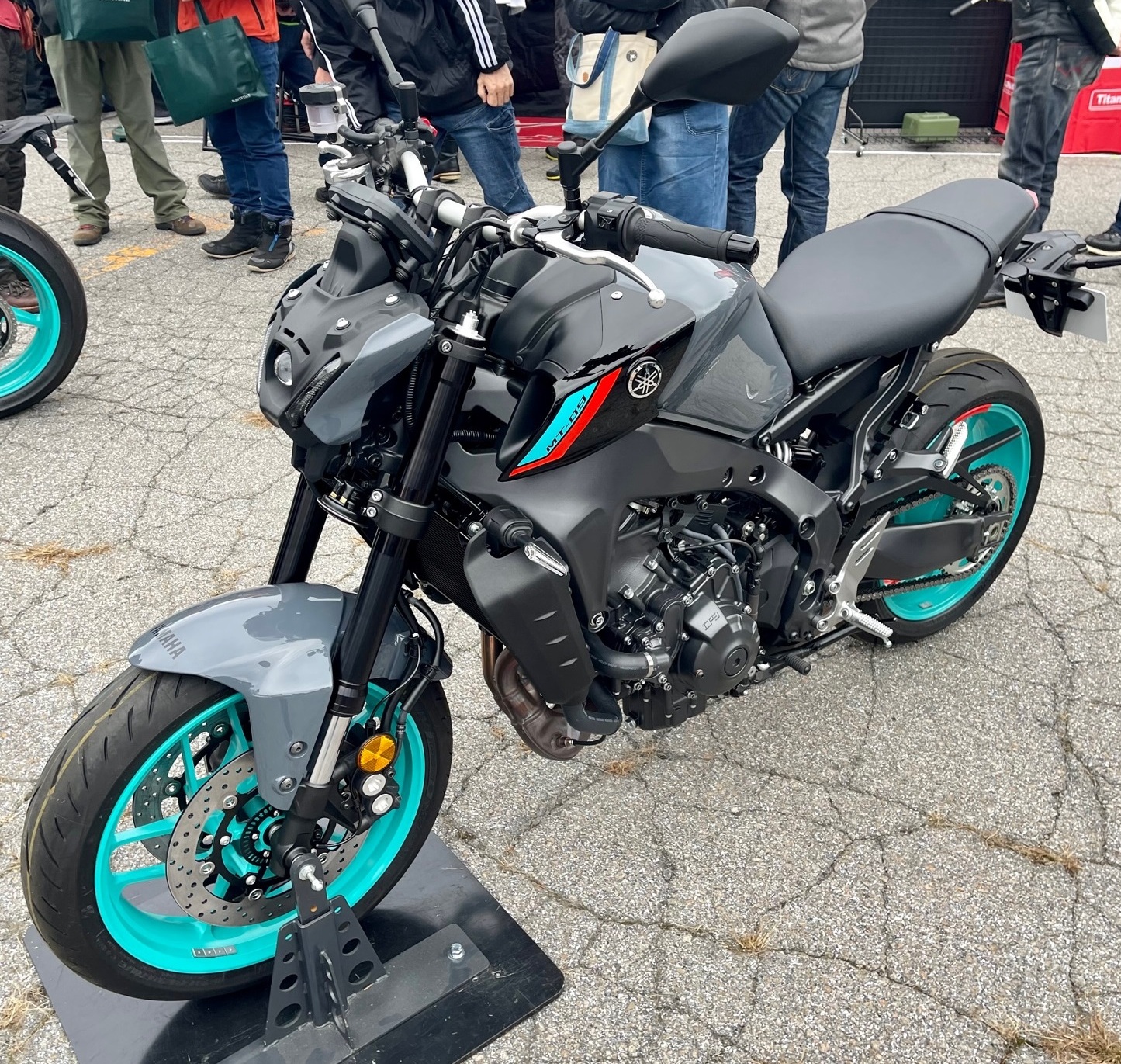
Yamaha MT-09
The Yamaha MT-09 is a motorcycle with a three-cylinder engine that makes a unique sound. It's known for being fun to ride and is sometimes confused with other bikes that have similar engines.
A triple engine means the motorcycle has three cylinders in its engine. This setup helps the bike have good power and a special sound that many people like.
Car
Triumph Rocket 3
The Triumph Rocket 3 is a big motorcycle with a strong three-cylinder engine. It was one of the first bikes that showed off Triumph's special engine style.
Car
Honda CB750
The Honda CB750 is a famous motorcycle that changed how bikes were made. It had four cylinders and was very powerful for its time.
Vedder fairings are special covers for motorcycles that help protect the rider from wind and make the bike look cool. They were designed by a man named Craig Vedder.
An inline four engine means the engine has four cylinders lined up in a row. This type of engine is common in many motorcycles and cars and runs smoothly.
Engine displacement is how big the engine is, measured by how much space the cylinders take up. Bigger numbers usually mean more power. Triumph uses engines around 765cc and 800cc in some of their bikes.
Car
Triumph Tiger Sport 800
The Triumph Tiger Sport 800 is a motorcycle good for both sporty riding and longer trips. It has a three-cylinder 800cc engine that gives it good power and smoothness.
Car
Triumph Bonneville
The Triumph Bonneville is a famous motorcycle that has two cylinders side by side in its engine. The 2005 version kept the classic style but added some modern features.
MV Agusta is a company from Italy that makes fast and special motorcycles. They are known for using three-cylinder engines that sound and perform differently than others.
A T-plane crank is a special part inside some motorcycle engines that makes the engine run and sound in a unique way. It changes how the engine's power comes out.
Liquid cooling means the engine uses a special liquid to keep it from getting too hot. This helps the engine work better and last longer.
LIVE
Welcome everybody to high side, low side. This is season 11, Zach and Spurge coming at you this time with iconic
motorcycle engine sounds. There's gonna be vroom-vroom's and duck-a-duck-as and ring-ding-dings coming out every doorway.
Also, what soy sauce and Yamaha motorcycles have in common, and should you put your kid on a motorcycle, all that and much, much more,
coming right up, stick around.
So you've noticed that your motorcycle brakes aren't providing as much stopping power as they once did,
and you've watched Ari Henning's shop manual video on how to bleed your motorcycle brakes,
but now, now you need brake fluid. Well, Motul has you covered with a full line of brake fluid. From riding around in the street to
ripping around on a racetrack, Motul has got the right brake fluid for you. And to figure out which one that is, head over revzilla.com
slash Motul, that's revzilla.com slash M-O-T-U-L. And when you're over there on revzilla.com,
just keep in mind that every time you make a purchase with a revzilla, a little bit of that money goes back into funding the programs that you enjoy.
Whether it's Zach and I sitting here talking with you on high side, low side, or the shenanigans that people get into when you're out riding for a
CTXP episode, or maybe you just appreciate the gear reviews and the product information.
Revzilla gives back to riders because that's who we all are, riders.
So keep that in mind next time you need to make a purchase for your motorcycle from cruisers to sport bikes to adventure bikes and everything in between.
We've got you covered at revzilla.com.
Here we go, everybody off to the races yet another episode of high side, low side. Spur Joe, I'm excited about this one.
I gotta say, I just accidentally threw my pen down out of excitement and I had to retrieve it.
No, this is going to be so we'll obviously get into a little bit of the what, the where, the why we're doing this.
But I think it was fun trying to pick out engine sounds that were inspirational to me or in general.
I'll be interested to see which ones you get.
But it's also quite terrifying because we're normally playing the game together where we're helping each other out.
And you're usually pretty good at this and I'm not always as good as you are.
So I'm interested to see how this plays out for both of us.
The guessing game is going to be a quick fire, as you all will see.
But first we want to we want to talk about something that that our buddy producer Chase found on the social medias as the kids call it these days.
Friendly reminder, we often start the show with some random thing we found on the internet or a query from you.
Am I the a-hole?
Something like that.
Please do send us funny classified finds or any moral quandaries you have for us to start an episode of high side, low side with.
But this time around, Spur Joe Dunbar, we're talking about Mr. Kenji Ekuwan.
Why is Kenji Ekuwan a name that everyone should know?
So Kenji Ekuwan, I'm going to I'm going to go into my history teacher mode for a second.
Everybody listen up.
Pencil's down.
Was a Japanese industrial designer born in 1929 and was actually a teenager away at the Japanese Naval Academy in 1945.
When Hiroshima was bombed, he came home.
His sister had perished.
His father later perished from radiation poisoning.
And he decided that at that moment he wanted to dedicate his life to creating things and not destroying things.
And he eventually formed GK Design, which was this huge design firm in Japan.
And of notable things that he designed, if you've ever gone out for sushi with a loved one, the Kikuwaman soy sauce bottle, that little soy sauce bottle with either the green or the red cap.
We're showing it on screen right now, I'm sure.
He designed it and it's actually on display in the Museum of Modern Art.
So like this soy sauce bottle form function, beauty.
He designed the Komachi bullet train because he believed that all classes of people deserve beautiful things.
And he is responsible for designing the Yamaha V-Max.
And that's where this ties in to motorcycling.
So this is what producer Chase kind of brought to us.
He's like, Oh, it'd be kind of cool to talk about this individual.
Well, through my research then, I found out that the design group that he that he founded in the 1950s, GK Design, essentially designed all Yamaha motorcycles from like the first Yamaha motorcycles of the 1950s through 2014.
And it was in 2014 that Yamaha finally developed their own in-house design agency.
But up until then, while he is credited for the V-Max, it's really been his design firm has led design for probably a lot of you listeners' favorite Yamaha designs over the years.
Interesting.
Yeah.
Well, super fun little tidbit to learn and TikTok or Instagram or wherever.
Well, Chase spends his time.
But yeah, certainly I did not.
I like how you phrased the bullet train thing because he believed all classes of people deserve nice things.
Is that what you said?
Something like that.
There's a real tie in there.
You know, there's the soy sauce bottle that you see at so many restaurants around the world is iconic.
And the V-Max from Yamaha is nothing if not iconic.
And what is the bullet train?
I suppose one of my favorite quotes about him.
And I failed to write down the name of the individual, but it was it was taken from the president, the current president of GK Design, I believe, who said the thing about
Aqowan was that he believed that design had no limit in its ability to solve human problems.
And because of that, he made design the soul, his soul life mission.
And I think it's interesting in the fact that like, you know, regardless of where you're at in the world, like, you could probably say that this is a pretty, you know, turbulent time.
And the fact that we have somebody to kind of like look to as he came out of, you know, the bombing of, you know, Hiroshima, he lost everything.
You know, that was one of the things that wasn't just his family, but he lost everything.
He had nothing.
And he decided to look, you know, towards the beauty of the world and to really dedicate his life to solving human problems through design.
I think it's probably just a good takeaway.
And we can probably wrap it up there.
But, you know, really just something to kind of hold with you.
Quite a quite a story, Aqowan-san.
You go ahead and impress your family with that trivia there from from the from the ashes of, you know, witnessing the atomic bomb drop to shredding tires on V-Max's.
And maybe maybe that's to say that motorcycles can solve all of humans problems.
You know, so there we go.
Speaking of which, talk about a segue.
Speaking of which, today we're talking about engine sounds, as you know, by now.
This was inspired by a few long conversations, a couple of colleagues, and not least of which we need to tip our caps to Jonathan and Carly Worsler, who sent an email in some time ago.
I don't know when and said, we want to hear, you know, a favorite engine sound episode with with you guys to some degree.
And so what you will hear in the next hour or so is what we came up with.
And we hope that you like it.
Well, it's interesting yet.
So the, you know, the pre-production part of this is, you know, Zack and Chase and I were kind of going through figuring out how we wanted to segment this, you know, and how we wanted to break this down.
And kind of the intro question that producer Chase, through Zack and myself is, what makes a good engine sound?
Obviously, it's very subjective.
And I want to know, I want to know your answers, man.
What is it?
Is it impact on society?
Motorcycle, large what?
One of my favorite answers comes from Lemmy.
For those of you that might be newer to the podcast, Lemmy was a long time host here at RevZilla.
He was a founding member of the podcast, as well as many other videos.
And Lemmy and I went to find a colony on Mars, fun fact.
Exactly.
There you go.
You never, you can never travel too far.
But one of my favorite things that he had said over the years was around engine sounds.
And he goes, man, he's like, you know, people talk about Harley Davidson, you know, and they, they'll ask me why, like, I have so many Harley Davidson's.
And, you know, so much of it comes back to the sound and it just sings the song that I like to hear.
And I think, you know, with my, you know, love of music, I always love that quote.
I think for an engine sounds on a motorcycle, you know, we all have our different perspective on which one you like.
But it's really, it sings the song that we want to hear.
And to me, I think that's, that's what makes up a good engine sound.
That's deep.
That's heavy.
I wasn't expecting that.
I was expecting you to have some more history teacher vibes and say, like, well, it has to have had an impact on the world of
motorcycling or the world of racing or, you know, this, that and the other thing.
But instead, you just, it's all coming from the heart.
I appreciate that.
I think it's simple, you know, and we, and that's probably why there's so many different kinds of engines out there.
And I, what about you?
Do you have any, do you have any differing opinions on, to you, what makes a good engine sound?
It sings the song you want to hear is a good way to put it.
I think that encapsulates a lot of what, what I was reaching for when I sort of picked my, my sounds.
And, and, you know, because sometimes it's sort of the, the engine, you hear the engine and you are taken to a place, to an
experience, right?
Whether that's like a performance engine on a racetrack or a cruiser engine, you know, bopping down a twisty road, something like that.
I think that that's, that's ultimately, that does encapsulate what people are always reaching for, right?
The sound is, it, it, it transports you a little bit to the place that you want to be.
It sings the song that you want to hear.
So that's, that's, I think that's largely what I did.
I mean, I was, I think I was affected to some degree with, I don't know, I ended up having more picks than I mean, we each had
three picks here, but I had so many more, but some of them felt a little bit too kind of esoteric and weird and kind of like not, I
don't know, just like, I think they're special, but, but they're also sort of, some of them were kind of by
gone and, and maybe not that interesting.
Whereas I tried to pick ones that I felt like were relevant, both in motorcycling history and now I suppose.
Anyway, I probably, I probably split the difference a little bit.
And depending on how far we get into our picks, I think that there were some that were probably more relevant to me personally, but
then there were also some that were a little bit more relevant, you know, historically, but all of them, all of them, I would say, at
least on my side, are sounds that I do enjoy listening to.
Well, let's get into it, shall we?
You wanna, I want you to go, I want you to go first.
Yeah, we're going first.
We're going, we're going with, with my pick first for no reason aside from that's the way Chase organized the document.
So let's take a listen, Spurge, and see if you can tell what it is.
I think I like your chances here.
Okay, so I have, I have a guess.
So for those of you listening at home, is there any, is there anything you want to give me before I start guessing away here?
I forget, no, no, no, fire away.
The guessing game is not going to take very long.
We got to get through this here.
We got a lot of bikes to talk about.
Do I hear a dry clutch?
You hear a dry clutch.
Okay.
So the rattling that you hear there, for those of you that are not familiar, that rattling is a dry clutch.
The most famous dry clutches in my mind, it's going to be a Ducati.
Am I hearing a Ducati engine?
You're hearing a Ducati engine.
It sounds, it sounds relatively big.
Nice.
But I also, I could either like, I'm thinking like a 999 because that was such a controversial designed looking motorcycle.
But I have a feeling that you're probably going a little bit earlier than that because you're probably thinking like 916 is, is my, my guess, like a Ducati 916.
Okay.
That's wrong.
99, 99, 996, 996.
Nope.
Nope.
I went air cooled.
I think the air cooled.
Okay.
90 degree V twin from Ducati from approximately the nineties is the, that to me is a very, very iconic engine sound.
And that's, I think I actually don't, this is a either a monster.
I think this is a monster that you're hearing.
I think it's a monster 900 from mid to late nineties, something like that.
So, you know, I was thinking, I was thinking you were going to go like full faring sport bike.
That's, yeah.
Well, well, you know, I think that I am tempted by, you know, perhaps a more modern Ducati.
Well, not a modern Ducati between, but something between 2004 and 2010, something like that.
Like a, like a 999 or even a 1098 or something like that.
1198.
But I think the air cooled Ducati's of that era that the 900 CC or the 900 SS or a monster 900, that, that engine to me has a lot of this sort of like base and, and I don't know, sort of legendary kind of rumble of old Ducati V like bevel drive V twins of the seventies.
You know, that's kind of velvety sound to it, but it also has the clatter of the dry clutch, which is kind of cool.
And it has a whiff of performance about it, even though they weren't hugely fast motorcycles.
And I think modern Ducati V twins have gotten away from a lot of the sound that those air cooled bikes produced, whether it's, you know, modern wet clutches.
And obviously liquid cooled bikes just make a little bit less noise because the cylinders surrounded with liquid and it's like less noise gets out.
You hear a little more valve train, a little bit less intake and combustion with modern systems, blah, blah, blah.
The point is, I think that bike is really the balance of, of sort of Ducati heritage and also the, the thing that it's still clinging to today, basically.
I love that.
I think, I know we've talked about this in the podcast before, but one of my favorite all time bikes, specifically, I think it's just because it was when I was graduating from college and I was buying motorcycles for the first time with the Bible.
But the, the 2006 S2R 1000 monster, which is the two valve air cooled engine.
Like that's, that's essentially the engine that you're talking about here.
It's, it's just that quintessential sound of what a Ducati should be.
Yeah.
Yeah.
Yeah.
And that the air cooled engine, the air cooled engine lasted a long time.
I mean, it's like, they're still selling scramblers, right?
Scramblers still in air cooled 800 CC.
It's like the remnants of that are still around.
Is that, is the, is the new scrambler a wet clutch though?
Or is, I don't think it's, yeah, I think all the, I think it went away from dry clutches a while ago.
I don't remember that happen.
Anyway, but I just think that, yeah, that, that, that sounds to me.
And I think I'm, I'm affected by the, you know, like this monster and the, the monster, the 900 SS, those, those big, the sort of like big bore air cooled dry clutch Ducati's were around and new and, and you know, sexy and making a splash, whatever.
When I was 10, 15 years old, and that's like such an impressionable time, right?
So I remember like my dad really liked those bikes and I was sort of like, oh, wow, they're really cool.
And so I think that's probably one of the reasons it has an imprint on me.
Well, let's, let's, let's listen one more time because you have a second part here for your sound clip, Zach.
Let's listen one more time for the audience, just to leave them with a, with a whiff of what this Ducati sounds like.
You can't have too much Ducati between.
I mean, that makes you want to go on a ride, doesn't it?
It's so good.
And it's, it's funny.
So for those of you listening at home, um, if you're a newer rider and you've never heard a dry clutch before, you know, I, yeah, my, my, my first, my first time hearing a bike, I was like,
bro, there is something really wrong with your motorcycle.
And the gentleman I was riding with was like, no, it's just a, it's just a dry clutch.
And it's, it's such a, but it's become such an iconic sound for, for me.
And like, it sounds so good.
Like it just, it just sounds so good.
Yeah.
I think, I think there's something about the, like it obviously does sound a little bit brokeny, but I love that the, that the it's rhythmic, right?
You know, like it, it, it always matches the beat of the engine in a way that's, that's, um, uh, I don't know.
It just, it has this sort of like such an interesting jingle to, to, to lay beside that, like, uh, really, um, yeah.
Kind of like bassy and heavy V twin sound.
Anyway, well, I'm, I'm re-listening to my clips.
I feel great about choosing that as an iconic engine sound.
And, uh, but now I'm eager to hear your picks, Bert.
All right.
Well, speaking of, um, iconic jingles, uh, Zach.
Why don't you go ahead and take a listen, uh, to what I've got teed up for my first pick.
Well, if I know my buddy, Spurge, that's a Triumph Street triple.
Well, in fairness, I realized as I made this pick, um, I also was on a video call with you the day as we were walking through the halls and I was showing you one of the, the new bikes that we had acquired, uh, in, in, there was talking to Chase on Google me, yeah, I, I actually did not put that together, but as soon as I heard it, I could tell it was a triple.
And, um, and I thought, my first thought was like Spurge picked an MT-09.
That's weird.
But then once it revs up a little more, you can hear that sort of like water pump whistle that the, uh, Triumph has that sort of, um, slightly high pitched, uh, noise in the, in the, in the rev.
So this is a, this is a, it's a new way.
Is this a seven, six, five?
Yeah.
This is seven, six, five.
Yeah.
So, yeah, I tell everyone why it's an iconic pick.
I didn't have to convince me, but tell everybody what you think.
I, I picked this, um, really because I think the, the triple sound is just iconic.
And there's a lot of triples within, um, Triumph's lineup.
But if you, if you go back to, um, they really introduced a triple engine back when it was, it was Triumph and BSA and they had the, um, the, uh, it was the rocket three and the trident, and then the trident eventually, yeah.
And then the trident turned into the X 75 hurricane, which I have a fun fact about in a second, but they were, they were trying to create something more modern.
And, and those bikes were eventually just kind of like overshadowed.
They were released in 68.
They were overshadowed when Honda released the CB 750, which obviously, you know, changed the world.
Um, but, uh, before like the, the interesting fact there was they brought on Craig Vedder, um, who, if you remember, we talked about in the Goldwing episode for, for like issuing in like the Vedder fairings.
The fairings.
So he was the, like redesigned it, um, Triumph eventually goes out of business.
The triumph that we know today.
So all of, you know, younger writers or writers that are just starting out might not be aware of this triumph went out of business in 83.
John Bloor buys the rights to the Triumph name and arguably the most iconic engines in Triumph's line were the twins, but he didn't bring the twins back when he reintroduced the brand.
Um, when he introduced the new Triumph, he introduced it with triples and inline fours and inline fours eventually went away, but the triples became this iconic engine that helped to reestablish Triumph in the modern era, which I just think is, is cool.
And there's obviously a lot of variations.
Uh, the most recent one is the, the six or not even the most recent one, but one of the more, you know, uh, notable ones is the, the new six, seven, 65 engine that's in the street triples.
Right.
It's good, good synopsis.
And I think for the kind of the same reason that the, that the, that nine hard CC air cool Ducati, you know, uh, resonates, if I may use a audio term with me is kind of the same reason this one does with you.
Right.
Like it's not just that that's a great engine, the seven, six, five street triple engine that's in current street triples.
But what it represents is the, the, the, the, the speed triple line and the eventual street triple line and like all those bikes that were, they're so kind of, I don't know, buoyant and iconic for, um, for Triumph in general.
And it's sort of like, this is the most recent iteration.
And I do think also it's interesting.
I did a daily writer video on, uh, something, it was on a Triumph.
Gosh, which Triumph was it?
Boy, am I bad at this.
Anyway, a friend of mine, um, convinced me to talk about the different engines that Triumph offers these days.
And, uh, there was even a comment on my Instagram feed, something like, oh, you know, which Triumph engine, and, and someone said something like, oh, they're all just triples that, you know.
And I was like, no, actually my buddy was right in, in saying that the engines are so different.
They're really different.
There's, they're different sizes of triple that you think were kind of the same.
Like there's a, there's an 800.
That's what it was.
It was this Tiger sport 800 drive.
Glad I came around to that and you'd see the seven, six, five engine and 800 engine.
You'd be like, oh, they probably just call that bike in 800, but it has the seven, six, five engine.
Cause it was the same thing, but it's actually two different engines.
And then there's the, the bigger, the 900 and the 1200 have T plane cranks, which is a whole different ball wax.
And so it's, you know, the, the, the three cylinder thing in, in Triumph or the three cylinder sort of tree has sprung
many branches in Triumphs, even in modern lineup, much less it's, it's history going back, you know, 20 or 30 years.
It's super interesting.
Well, you mentioned the T plane crank and I remember I was, you know, my first real modern, you know, motorcycle that I
bought was the Tiger 800 back in like 2015, I want to say.
I mean, I've had, you know, before that, I think the VFR was my most modern bike and that was a nineties.
So like, you know, for me, it's got a special place in my heart.
And I remember going to Morocco when they launched the new Tiger 900 and they're talking about this T plane crank and
they're like, oh, it's going to provide more traction.
And I remember thinking like, what a bunch of marketing malarkey.
There's no way that, you know, by changing the crank, they're going to get more traction at the rear wheel.
And by God, it worked.
Like compared to like, compared to like the old Tiger 800, I mean, it's such a different engine.
Especially for an adventure bike, it's a pretty big step forward, I feel like.
And I think, you know, for me personally, because, you know, you're talking a little bit of the personal anecdotes here,
like I bought the Bonneville in 05, which was a parallel twin engine.
But then I remember going back to a, to like a dealer demo day and they had a Sprint ST 1050.
And I had only been riding motorcycles for a year and they're like, take it out for a spin.
You might like it.
And I remember spending like 20 minutes on that bike thinking like, what is this?
Like this is this is just this is this is everything I want in a motor like this.
Like, and just like in the engine characteristics, it's just such a unique engine.
And other than other than Yamaha, you know, MV Agusta, if you want to think about MV Agusta,
like who there's really no one else making triple engines.
Am I wrong?
Like it's a really unique, you know, engine for a motor has that.
Anyway, yeah, it is historically speaking, though, it's a unique engine, not for.
Yeah, not a lot, not a lot of them.
And, you know, Yamaha's double way back when and revitalized them with the M two
or nine line of bikes and CP three, as they call it.
But yeah, it's a great pick, great engine and and all it's, you know, all the all
it's sort of variants and all the things that it that it means.
I wish we had a T plane crank we could play as little clip.
We got a clip for that?
No clip. OK.
All good.
All right, I'm I'm I'm actually kind of especially eager to share my second pick
with you, Spurge, because I don't really remember what it is.
So let's listen together.
We're both guessing together.
I think when I hear it, I'm going to know, but I don't remember what it is.
So.
I have no idea. No idea.
Hold on. Hold on.
Hold on. I rarely do this, but I need to listen.
I need to listen a second time.
Listen one more time.
Got it.
Does it does it sound does it sound racy?
Does it sound fast, Spurge?
Sounds fast as hell.
It sounds very racy, but you all like you also have a long history of racing
all kinds of different types of bikes.
I want to say it's an inline four.
OK.
Am I close? Am I wrong?
You're wrong, but you can keep on.
You know, again, we can't we can't we can't drag out the guessing too much,
you know, I would say just fire away.
In some ways, you're not that far off with inline four, but it is wrong.
Technically.
Am I is it in line or is it V?
It's a V. It's a V.
Is it a V four?
It's a V four.
Oh, no, no, he says, no, I'm just I'm wondering, because like my
I, too, have something that might be.
OK, I'm not going to give my yeah.
This is a is it an Aprilia?
It's an Aprilia V four round of applause for Spurge.
Oh, everybody.
You know, you needed a couple hints, but but yeah, you got it.
You got it.
It's an Aprilia V four.
It's it's a predictable pick.
Is it to one or is it the RSV?
It's a to one, I think.
But same basic architecture, you know, same basic engine.
And same same sound because it's a it is a I believe a 65 degree V four.
If memory serves, I hope that's right.
And and I just think, you know, there are.
I think more iconic bikes.
There are more iconic engine designs, but we're talking about sound.
Yeah.
And when it comes to sound, it is awfully hard to beat that.
That that Aprilia V four.
It just like it just sounds like a fire breather.
It sounds like a race car, you know, like it sounds like it's so kind of.
Easily excitable.
It's like it's quick to rev, but it has all this sort of like force behind it.
It's really kind of severe.
I just think it sounds really terrific.
And I think that the engine itself is kind of noteworthy and fun to my eye
because it's not an engine that I I just don't think you can.
Defend it as an engine that makes any kind of sense.
It doesn't get good gas mileage is a gas mileage.
It's not easy to manufacture.
It's not easy to work on.
It it's just bad ass is what it is outright, you know, it's complex.
It's difficult.
It's expensive and it sounds flip and amazing.
So I'm laughing because I'm going to I'm going to change the rules of the game
here a little bit.
So because before we just continue down this road, go ahead and play
my engine sound for pick two.
Your engine sound for pick number two.
Yes, I'm on it right now.
It's is it a liquid cool twin?
No, is it a VFR?
Close. I mean, essentially, yes.
Is it you wrote before you wrote this bike?
I wrote this bike.
Yeah, you wrote an article for Common Tread and you did a daily writer on it.
Oh, is it an RC 30?
It's an RC 30.
So how are RC 30?
So this is a 90 degree V for it is and I picked the RC 30.
So our friend Abhi from by Curious and iconic motorbikes auctions had
an RC 30 that he led Zach ride.
But to me, I picked this one because the Honda V fours in general,
you know, kind of like what we're talking about, like it's a representation
of all the V fours that Honda has made going back to like 1979.
Yeah, with the NR 500.
But like, to me, you know, the same thing you're talking about with
and this audio clip wasn't didn't sound nearly as vicious as the Aprilia that you
know, it sounds like the stock pipe and yeah, yeah, yeah, not quite as.
Yeah, yeah. But like, it's the same like that V fours sound
in the V the V fours that Honda makes.
Yeah, it's the song that I want to hear.
It just sound it can sound so vicious and naughty.
And yet it can sound kind of polite and refined at the same time.
Like and and to call back to your segue here from from the Aprilia V four
to this one, this is a perfect example of an engine that.
Wasn't built because it made sense.
This was a Honda show of force, right?
When Honda built that V four gear driven cams, I think, right?
Yeah, 90 V four.
I mean, it was the RC 30 was a was an extreme and ridiculous
motorcycle to build.
It was something that like really only Honda maybe maybe in addition
to a couple other companies would ever be so bold as to try, you know,
just just really sort of flex the the the muscle of HRC.
And I believe if I'm getting my history right, this bike was built for
World Tour Bike Championship, a homologation machine for,
you know, racing championships around the world.
And Honda was sort of like, well, if it has to be a street bike that we race,
then we're going to build the sickest street bike that we can.
And they built an RC 30.
And it it was just that it's unbelievable.
It's such such a cool motorcycle.
A little of the history for you, Honda aficionados out there or for maybe
the people that aren't Honda, Honda aficionados like Honda, you know,
really introduced the V four and production bikes in 82.
You had, you know, the cruisers, you had the Saber, you had the Magna,
the VFR interceptor comes along in 83.
But the reason that I like the RC 30 is that like while there's a couple
of variations throughout the 80s, when the RC 30 comes around to all of
Zach's points, it is a race bike that then trickles down into all the other,
you know, V four platforms.
So like when when Honda then this was the RC 30 was introduced in 1988.
And then by 1990, they introduced a new VFR 750 F, which has all of this
trickle down, it's got the the the gear driven cams.
It's got the the the the frame.
It's got the single sided swing arm.
So like, you know, all those times on this podcast where I've talked
about how much I loved my 1999 VFR, it all trickles down from this bike.
Like this bike changed the way those VFRs performed on the street
for all the models that came afterwards.
And yeah, I mean, it was just it was a in in riding that quick shout out
to common tread story, by the way, I wrote a story about riding this RC 30.
And there's also a daily rider episode as Spurgeon mentioned.
And one thing that I that trickles back in my mind as we have this
conversation is I've also ridden a 1986 Suzuki GSXR 750, largely credited
as the first sport bike, you know, and that thing feels weird.
It feels dumpy and low and you stretch out to the handlebars and it's got
weird kind of blob of motorcycle that you're like, I guess it was a sport bike.
But when you ride a 1989 RC 30, not that much later, it feels like
you're riding a sport bike, like a not not a sport bike of today's Elk,
but it feels so modern and so much more kind of precise and severe in a way
that just goes to show how like wide open the companies were in in sport
bike development in that era.
Even even when I was doing the research for this, like I was, you know,
I was drooling over examples of like, I need to buy another 90s VFR.
Maybe I'll get a 750.
I've had the I've had the 800.
Maybe I'll go buy like, if you if you go, if you go Google,
or actually we'll have pictures up, if you look at a picture
of a 1990 VFR 750 F, it looks so cool.
It looks like they took the RC 30, which is much more expensive and hard to get.
And they just they just carried it over to a street design.
So yeah, I think it's really a testament to how far Honda was ahead of the game.
This engine is an incredible platform that has a legacy that, you know, continued on.
But, you know, I feel bad because we kind of I didn't mean to cut your
Aprilia section short, but we're talking about VFRs.
And they are two different types of VFR engines to like the 90 degree
versus the 65 degree V fours.
You mean V four engine?
Sorry. Yeah. Yeah. Yeah.
Yeah. I mean, you could say, I don't know.
You I think I'm not sure how how well you'd be able to make the case.
But but you could argue, I think that that, you know, the RC 30 V four
and VFR V fours and, you know, any any.
You know, sort of performance based engine like that inspired Aprilia, right?
They must I don't know when Aprilia was designing that V four,
when it was 2009, did that come out?
Or I'm not sure if I'm getting that right.
But sometime around then I think that they must have looked at those bikes,
right? They must have sort of had a Honda or two in the in the factory
in Nuali there in Italy and like, you know, how can we do this better?
How do we how do we do it differently?
Like how do how do we want to make this engine?
I don't know. So there's got to be some, you know, tenuous connection there.
Oh, but even you you mentioning earlier the viciousness of the Aprilia.
Like I love the Honda and what it was for its time and what it still is
is a great, you know, all around motorcycle to have in the garage.
But it does not compare to the vicious attack that Aprilia has really turned
the V four platform into, you know, and that's that's where I give a credit
to Aprilia because kind of Honda kind of like let it, you know, fizzle out
in the latest iteration of their their VFR with the V tech.
And, you know, it just was overweight and under performed compared to
what Aprilia turned it into. Yeah, true. And I mean, Honda, you know,
Honda is sort of famous for always moving on to the next thing, you know,
Honda's not afraid to crumple up a design and throw it in the bin
and then move on to something else, which is admirable.
But but it is it is cool when when a company clings to something that they've
you know, a recipe they've landed on, that's really good.
I would just suggest maybe we go the second the second of my of my
Tuono engine sounds, let's just give a listen to that.
Just give people or at least give me what I want.
Oh,
makes me want to go on a ride, makes me want to go to racetrack.
And I do want to I do want to thank I do want to thank Abbey for
finding and helping us source the audio clip for the RC 30.
But, you know, the the audio clip of an RC 30 with, you know,
that was recorded there.
It doesn't do it doesn't do justice to what I think we both like about that
bike, but also next next to the Tuono V4 audio clip.
Like it's it's really kind of lackluster.
Yeah, I mean, it does sound kind of tame compared to the compared to the Tuono.
But but but, you know, the as many as many racing championships
as as that really V4 has won that Honda RC 30 and eventually RC 45.
Were prolific winners.
And I don't think they don't need us propping them up, you know,
in in history, I don't think a Honda Honda V4.
I'll remember that every time I call out the VFR and, you know, subsequent episodes,
I was like, I don't need to keep propping this brand up.
Speaking of propping up brands, though, let's get in a word from our sponsor,
Motul, and then we'll carry on with more engine sound picks.
It's hard to believe that high side, low side has been around for 10 seasons.
It's truly remarkable to take a minute and look back and see how far we've come.
So much of which wouldn't have been possible without the sponsorship of Motul,
who has supported us since season three.
Not only has Motul been an amazing supporter of this podcast and
motorcycling in general, but they've given me free reign to come up with wacky
ads as I see fit.
They never balked when I referred to a Stallone classic over the top to let folks
know that their oil tasted like s***, or when I researched neon green drinks
like the Fuzzy Leprechaun and Hammered Hulk to drive home the dangers of
confusing their 300V oil for a cocktail.
They weren't phased when I found a way to work in British Prime Minister
Margaret Thatcher's nickname of Thatcher the Milk Snatcher to promote lubricants.
And they should have cringed, but they didn't, at my poem about bugs to
introduce their line of cleaning products.
So please take a minute to join me in giving the old high side, low side tip
of the cap to Motul for everything they've done to help us make it through 10
seasons of this podcast and for everything they do for all motorcyclists out
there, we thank you.
All right, so we are back.
We've got more engine sound picks for you.
Zach, do you want to give me any hints before we play your next one?
Anything I should know here?
Thank you for asking me.
Do you remember?
Do you remember what engine sound?
I think I remember this one.
Yeah, I think I remember this one.
And I don't think it's going to be very hard for people to recognize.
I, whatever.
Let's just listen to it and we'll see where it takes us, shall we?
Let's see where we go.
Because if it is hard, then you'll feel really...
All right, you can be nice and broad with this one.
Two cylinders.
Nice.
Uh, air cooled.
Nice.
Uh, German made.
Uh, no.
No.
Oh, okay, okay.
All right.
So I was, I was going with a boxer twin.
Um, so I'm clearly wrong there, but it's, it's, so we know it's air cooled.
It's twin.
I can give you a nice big hint if you want.
Go for it.
Let me.
Oh, so it's a knucklehead.
Uh, it's a big twin.
It's a big twin Harley.
It's a Harley.
Yeah.
Okay.
This I think is an XR 750, um, from about the seventies.
Um, let me see if I have more information on this particular bike.
They're probably Harley guys out there that are like, oh, that's going to be your
thousand CC.
Patrick Garvin's listening right now throwing beer cans at the, uh, at the, uh,
Yeah.
Um, uh, yeah.
This, this, this, I think this bike is a, is an XR 750 replica, um, from
a late seventies, um, thousand CC sports or engine, if I remember correctly.
Um, but the point I was reaching for here is sort of, um, flat track, uh, Harley,
um, you know, air cooled 45 degree V twin, but with a whiff of, uh, racing pedigree,
you know, okay, um, not necessarily the, uh, the sort of like cruiser and touring
machines that Harley's known for, but more the sort of like old school, um, what
would be considered Harley's lineup, small, uh, performance based air cooled V twins.
So for, for those of you listening, when we're talking about an XR 750, um, this is
like their flat track bike.
This is what, what you would have seen on, this was like on any Sunday, right?
Like, that's exactly right.
Spurge took the words right out of my mouth and that's the, the second clip I have, I
think, I think we have a second clip here.
We don't need to listen to it yet, but, um, is like it, it's a, it's a, it's a throw
to on any Sunday.
It's like the sound of this bike going around a flat track is sort of what I find special
about, um, this particular engine.
Cause like the, the sort of potato, potato, potato sound of a Harley V twin is, um, you
know, it crosses many, many lines of models and years and whatever big twins from the
thirties and knuckleheads and panheads and iron heads and water heads and shower heads
and whatever, but the, the sort of like seventies flat track Harley to me encapsulates a lot
of what I think is like beautiful and sort of pure about the sound, um, even though the,
the, the sound is, um, you know, reaches across model lines and decades.
Okay.
So let's do this, um, cause I kind of like how we did this last time.
So go ahead and play sound a of my pick number three.
Okay.
And then we're going to, we're then going to compare and talk about, talk about how each
of these compare.
Okay.
There we go.
Is that a be all it is not a be all, but,
it is close.
You're, you're on the right track.
It's not a, it's not a Harley engine.
Is it a place?
It is.
Yeah.
It's a Harley engine.
It's a Harley engine.
And it's not, but that, that bike itself is not a be all that bike itself is not a
be all.
Okay.
I don't, I don't get it.
Harley.
So it's a, it's an air cooled 45 degree V twin.
Yeah.
I don't know if I can read that engine sounded bigger than what engine, what engine was in
the, do you remember the 1,200, the 1,200 sports door engine.
So what's, what's a little bit smaller than that?
An 883, an 883.
So, first of all, the, the motor company is going to be beside themselves.
So we picked that two of us, who'd have thunk that Spurgeon Zach would go, I mean,
here's the thing, I'm guessing you picked yours with the same reason I picked mine,
which is that how, how, how can you talk about iconic engine sounds of motorcycling
without talking about an air cooled Harley?
How can you do it?
You can't, you can't, you can't do it.
And it's funny.
Like I went, like you, I really like how you went on any Sunday and like historical
racing.
Cause for me, it was like the history tied in here too.
Like I went and I was like, I'm pretty sure that the sportster is the best selling Harley
of all time.
And, and as far as like a line of motorcycles go introduced in 1957,
1956, it's almost 70 years of continuous production of a Harley Davidson sportster.
And it started as an 883, there were variants.
There was an 883 and a 1000.
And up until I think it was 2022, when the 883 was finally discontinued because of,
because it didn't meet Euro standards and they, they couldn't get it to meet Euro standards.
Like you could go out and in 2020 by an 883 sports or that was arguably very different
than the original, you know, 1953, technically different, but sort of like, right.
But it's a V, it's a 45 degree V twin engine that makes that sound.
Yes.
You know.
Yes, indeed.
Yes.
And I think it says a lot that like when I heard your engine sound there, I thought it was a
is, you know, has historically been looked down upon by the, by, by Harley culture or
certainly people who have bigger Harleys than that, right?
Because that's like the little bike, the dinky one, the cheap one, the bike that's not,
but like it's got, it's got that, it's got that rattle.
It's good.
It's great.
I love that sound.
I love that sound.
And I, I think if I was going to, Erin and I were talking about this not long ago,
actually, when we were recording that road trip to Sturgis on, on 30s bikes, we,
we were saying like, if we were going to get a modern Harley, what would it be?
And we both kind of came back to the sports or 1200, like a, you know, a 48 or,
I think, I think the Harley 48 was the one we both kind of came back to.
We liked that style sort of, but like basically it's just, it's the like very elemental, basic
Harley engine that really feels like it speaks to all the pedigree and heritage of,
of the moco without,
yeah, without, I don't know, some of the, the bravado of maybe the lard.
Yeah.
Yeah.
Without, without some of the like, our editor at motorcyclists years ago came back from a
Harley launch and I remember he wrote a caption for a Harley where it was a,
it was a CVO street glide or something like that.
I think, and he said the caption said something like about as subtle as a chrome cod piece
and, uh, or something like that.
And yeah, that's kind of, you know, like, like you said, there's a, there's a,
there's a bit of like over stimulation sometimes with, um, with modern Harleys that I feel like
those, those 12, the 1200 sportsters of around approximately 10 years ago, I feel like they
have that.
They were just like very pure and kind of cool.
I like them.
There was an engine of frame and two wheels, you know, and I think that's what was so
eight gallon gas tank to fill up every two hours, but whatever.
Well, yeah.
And it's interesting now, because if you look at, you know, for, for when we talk about
like the sportster as a line is the, is the longest running continuous line of motorcycles
within Harley's line of arguably probably across, you know, probably one of the longest
running lines of motorcycles out there in general, um, you know, the new sportster,
nightster and sportster S are running the revolution max engine, which is I believe
a 60 degree V twin liquid cooling.
Like there's like a nine 75 variant and then a 1250 variant.
So like arguably really cool engines, but not the same as these engines.
You know, it's the same thing when you listen to Ducati, right?
The Ducati, this like the dry clutch air cooled Ducati is just, yeah, yeah, yeah.
It's just a great sounding motor.
You know, it is.
And I said this when I did the daily rider on that Harley nightster.
I was, I remember saying something to the effect of this is a terrific engine.
I just think this engine's great.
It makes roommates nice power.
It, it sounds pretty cool.
It feels good.
It's like dead smooth on the highway.
I'm like, this engine's great.
However, if I'm going to buy a Harley, I don't want this.
This isn't what I want.
I don't want a, an engine that's dead smooth on the highway.
You know what I mean?
I, it's just, it doesn't do the things that, that I, that I wanted to do.
And I think you could say the same thing about, you know, a river view of the, of a, of a,
whatever the late model Ducati monster last summer sometime.
And, and it's a great engine that the new, the monster engine, you know, like it works well.
It sounds cool.
It's, it, it's good objectively, but it isn't, it doesn't do the same things as that.
And I get, look, I get it.
I understand way.
We all know why these companies are moving away from air cooling and moving toward liquid
cooling and making engines more advanced and quieter and not as apt to pollute.
But, but, but, but especially since we're talking about engine sounds from a, from a,
from a, from an auditory standpoint, something's missing.
Well, it's funny.
Cause you know, we, even with the V force, when, when I'm talking, like what I love,
and you mentioned it, what I loved about my late nineties VFR engine was that it was
gear driven cams that had a different sound to it.
And eventually it wasn't passing emissions.
They went to the V tech didn't have the same soul.
It didn't have the same soul.
And so like when I think about that quintessential sound, I want a bike.
I want that late nineties.
I want the gear driven cams.
I like it just sounds so good as a holistic engine sound.
And you can't fault Harley Davidson or Honda or Ducati for moving into the modern age and
keeping up with, with Euro, with, you know, emissions requirements.
But like when I think about the quintessential Harley Davidson
sound, I can listen to an 83 sports car all day long.
It sounds, and like even you said, it sounds so much bigger than it has the right to.
So again, not, not to get, not to jump away from the XR 750 because I think the XR 750
same thing.
It's like, it's that quintessential air cooled Harley.
There's like the shot of who is the blank on his name, the character, the racer, is it Matt
Lawwell, Murt Lawwell, Murt Lawwell.
And he's rebuilding it in the back of his van, right?
Like it was a simple, it was a simple engine.
And it was just so cool.
Oh, yeah.
Yeah.
Well, on the, on the topic of on any Sunday and flat track, can we give a listen, Spurge?
I think I sourced a kind of a cool, what is it?
So it's my second pick for pick number three.
And it's, it's, it's the sound of an XR 750 on a flat track at full chat, which like
we all know the sound of the Harley, you know, idling in a parking lot.
We know it all too well, if I'm being honest, but, but the sound of a, of a, of an air cooled
Harley flat track or screaming around a track, I think is awesome.
So I'm gonna listen to it.
Let's do it.
Oh,
literally got chills.
It's so flipping cool.
So good.
So good.
Just that, that the sound of someone bailing into a corner at whatever 80 miles an hour
with no front brake and just spinning that thing up.
Oh man, it's so cool.
It's way too cool.
It's awesome.
So we'll give one.
So I have a ride by two.
So if you click on sound B, this is an 883 sportster in, in motion, probably not as
probably not as cool as your XR 750 on a race track, but worth a, worth a listen for the audience.
That's nothing if not iconic, buddy.
Yeah.
I mean, it's an iconic engine sound.
And I know that we get a lot of flag on high side low side for not talking about,
about Harley Davidson's enough, but like it on an episode where, you know,
we're talking about iconic engine sounds.
We each picked a Harley Davidson for, for different reasons, but also for a lot of the
same reasons, but also the same reason.
Exactly right.
All right.
Well, I gotta say, I like your picks a lot.
I like them a lot.
This is fun.
This is a fun, fun, fun game.
Let's, let's ruffle some feathers.
Shall we?
Because for the audience's edification, we each picked one bike that we think makes
the worst engine sound.
And now there are just as with choosing a motorcycle with, you know,
that makes a great engine sound.
Choosing, choosing one that makes the worst is I found a little bit of a struggle,
you know, because I sort of like, I like engine sounds in general.
And, and there are lots of different ways you could take this,
but I'm curious, I'm super curious to, to hear which way you took it, Spurge.
I'm super curious in the fact that like I had a friend of mine send in their engine
sound to producer Chase, because I was like, this friend of mine has the bike that I do
not like the sound of, but I don't know if, I don't know if producer Chase told them
why we were asking.
Why we're asking.
Nice.
Great.
So Spurt, we're going to, we're going to listen to it.
You want to go first this time?
Yeah, let's do, let's do the, oh, we can, Spurge go first.
So this is the sound of, of Spurge's least favorite motorcycle and also coincidentally,
the sound of Spurge and losing a friend, everybody.
And we're about to listen to it right now without further ado.
So I'm about to alienate.
I'm about to lose, not just Jeff Kanairi as a friend, but I'll lose Harry Henning as a friend.
And I'm going to, I'm going to alienate like half of the offered community with this.
What are we hearing, Zach?
It sounds to me like a, well, it's a two-stroke and it sounds like a single.
And air liquid cooled, I don't know.
I guess I'd say liquid cooled because the chances are higher that it's liquid cooled.
And is it a, that's a 125.
Is it 125 two-stroke or is it 250?
Bigger, bigger.
Bigger than a 250.
Is it, wow, interesting.
That's kind of rare.
Oh, is it a, is it a KTM 300?
It is.
Yes.
So, a lot of people, I probably sold more of those motorcycles than they've sold of all
of the motorcycles we've talked about so far combined.
A hundred percent.
And like to your point, it's hard picking the worst engine sound.
I will say this one is really personal to me.
Like it's like so many people, whether it's Harry Henning or one of my closest friends,
Jeff Kanairi, like his wife, Liz, like they love, like they're out there.
They're, Jeff and Liz are racing two-strokes, Aries out ripping across the desert on his
big 300 two-stroke.
Like, I did not pick specifically the KTM 300 two-stroke as a specific.
I picked this because like, there's so many people you talk to, they're like,
I love the sound of a two-stroke and I don't.
It doesn't, it doesn't, like, it's, it sounds like an angry chainsaw, right?
Like, I would much rather listen to a big single four-stroke dirt bike than a two-stroke
dirt bike.
And I'm not talking about street bikes.
I'm talking about single cylinder two-stroke dirt bikes.
Just don't do it for me.
It's just not the sound that I want to hear when I'm out ripping around the woods.
Well, yeah, I, I just, I appreciate you put none of our friends actually listen to this
podcast, so we should be okay.
None of our friends listen to this podcast.
Yeah, I think that that is a bold statement.
And I do like the sound of a two-stroke.
In fact, the one of the sounds that I sourced, Chase will know this, that I, that did not
make the cut because it was one of the ones that I felt like was a little too out there
was a Honda NSR 500 V four two-stroke GP bike from the 90s.
So that's a, yeah, I think that's not what I'm talking about.
I don't want more enemies than I need.
I'm specifically talking about single cylinder dirt bikes.
Okay, just single cylinder dirt bikes.
Yeah.
I think so not even like a, not even a 125, you know, uh, motocross bike, like
hitting a set of jumps or something like that or going through the whoops.
Nothing doesn't do it for you.
I like, I like the sound of a big four, like a big four stroke, big four stroke.
Gotcha.
Okay.
All right.
Well, hey, I apologize to everybody listening to this.
I can, I can hear like the keyboards, clickety clacketing the comments and the emails over
to producer chase right away.
You know what this is going to do?
Actually, I think this is going to bring more people out of the woodwork who also don't
like two strokes.
And they have not felt empowered to say that because everybody loves it.
And they sell candles that smell like two strokes and whatever.
And I was like, Oh, I love two strokes so much.
And now they're going to be like, Spurge, you're my champion.
You're my, you're the people's hero who's finally doing it.
Dude, I can't tell you how many of these like I'm not, I'm never at the front of the pack.
So I'm always like, I'll do these like East coast and Euro association races with,
with Jeffery Liz and I'm always behind everybody.
So like, I'm just sucking down, you're like two stroke exhaust for like half the day.
And I'm just like, it doesn't do it for me.
Not my thing.
Well, mine and one of your sound could not be more different,
but I'm curious if you recognize it when you hear it, Spurge.
Let's give it a listen.
Do you have any friends that you're alienating that are like my hint here?
Anything if I do, we shouldn't be friends.
One cylinder.
No, no, it's twin.
Is it a twin?
360 crank.
180 crank.
180 crank.
Okay. Yeah.
What's, is this a Suzuki?
It's not a Suzuki.
I guess, I mean, just think, think like the most populous,
you talk about alienating people.
Think about the most popular small sport bike you can possibly think of.
The Ninja 300.
Correct.
Okay.
And the Ninja 250, Ninja 300, Ninja 400, Honda CBR 500.
There's lots of 180 crank parallel twins out there, lots and lots.
For as much as I love, for as much as I love the bike, I would agree with you.
It's not a sound that is inspiring.
Like as soon as he started, as soon as like the audio revs up, you're just like,
Oh, I don't like it.
Don't do that.
Put it away.
Yeah.
And this is an aftermarket exhaust on a Ninja 300, I think, I think it's a 300.
Anyway.
Yeah.
And I think that's an interesting dichotomy also.
Like we talked about how the Aprilia Tuono V4 that I call that was a sort of like one of the
most delicious sounds in motorcycling, even if, you know, maybe there are more,
you know, maybe there are bikes that people like better for
riding day to day or riding on a racetrack or whatever, whatever.
But the sound of it is unbeatable.
A Tuono V4, especially in that class of bike, arguably in any bike.
And it's just so interesting.
It's kind of, it's almost the same, that are different side of the same coin or whatever
here.
It's like, I love Ninja, Ninja 300, Ninja 400, Ninja 500.
Just stupendous motorcycles.
So much fun.
Such a great machine for going to a track day, taking on a road trip, whatever, man.
They're just fabulous.
They almost unimprovable.
And the sound of the engine is horrendous.
That's actually a great pick.
I love that.
And it's funny because like I, I've never, I've never put two and two together before,
but it's one of those bikes where everything you just said is true.
Like it's one of my favorite bikes to ride.
We just got a Ninja 500 for the office, you know, in Philly as well.
For a small displacement track bike and like, it's a great bike,
but I do not find anything inspiring about how it makes an exhaust note at all.
Nope.
Nope.
Nothing at all.
It's a playful engine.
It's great to use.
But yeah, the sound is, I'm sorry to tell all you folks out there with your beloved
Ninja 300s and 400s with SC project pipes, melting people's eardrums.
Don't, don't do it.
Stop it.
Don't do it.
All right, Zach, this is a, this is a,
the next category and we're going to kind of wound, wind things down here.
Yes.
This is a personal bike category.
Is that correct?
Yeah.
Well, so, you know, I, I think the way this started was pick a bike that like maybe doesn't,
maybe this motorcycle or this sound of motorcycle isn't iconic in the motorcycling
world in the way that the engines we've talked about thus far are, but to you personally,
you're sort of like, man, that's such a great sound.
Gotcha.
Um, I think that's how it started.
And honestly, I was going to pick a BMW, you, you, um,
you thought that the, that one, you thought it was a BMW twin and that's probably you
looking into my past a little bit because I actually think that a BMW, um,
an air cooled BMW, uh, boxer from whatever, 1962 to 1988 or whatever.
Um, any, like that's a, that's a, that's a sound that to me means a lot.
Like, you know, that's sort of like the sound of my childhood and the sound of, of, of, of,
of, you know, like whatever my dad's race bikes and that kind of thing.
However, objectively, I do not think that that motorcycle sounds good.
So I almost picked that one, but that's not what I picked.
Spurge.
Instead, I picked this, what we are about to hear.
Um, are you prepared to guess?
I, I want no hints.
Let me see what I can figure out.
Is it a V twin?
It is.
Is it, um, large displacement V twin, like right around just shy of a thousand ccs?
Yes.
Is it Austrian made?
It is.
Is this a KTM 950 V twin?
It is.
Sack, what bike do you have in the garage right now for the audience?
I do a 2006 KTM 950 Supermodo.
And, um, if this were a personal bike choice, um, Spurgeon gets very little credit because
I've only really owned one motorcycle for the past 12 years.
So, uh, yes, this is, this is my bike.
And, um, I think poetic actually that we finish on this one and we started with the
Monster 900 because there's some similarities, right?
And the engine sound there, it's like basic V twin.
Oh yeah.
This is a 75 degree V twin.
Yes, it is.
It's actually not far from, I had a, I had a KTM 1050 that to this day, I think is probably,
in my opinion, one of the best sounding engines of all time.
I mean, it sounds damn near identical to yours.
It's just a very, very similar engine.
The 950, um, the 950 KTM engine that I have is carbureted, but it's liquid cooled 75 degree
between 942 ccs and your 1050 was a little bigger, but liquid cooled fuel injected,
but whatever, liquid cooled same.
And yeah, you put it, put a little aftermarket exhaust on there.
Oh boy, that's a nice sound.
You know what it is too?
It's, I was, in listening to this, I was, I was reminded of that, uh, street triple
sound that you played that has that water pump whistle and the, the KTM has a similar
kind of thing.
It has that like little like very, very high-pitched wine or almost whistle with, um,
with the, that sort of like rises with the, with the rev jumps and it kind of like matches the,
I don't know, it's, it's, uh, it accents the, the sort of bassy exhaust tone with a little
sort of mechanical, um, wine, which I think is so cool.
Not only, not only the exhaust sound with this bike, but if you listen to,
I put the Rottweiler intake on mine and I changed the velocity stacks and like it sits
right in front of you when you're riding it.
And it just, the sound of the intake on a big twin KTM, as it's just sucking down air
to ignite and combust into a flame that propels you down the street.
Like it's one of the best sounds, and I love my 890, but it does not sound good compared to,
compared to the big traditional 75 degree V twin that, you know,
kind of kicked off the, that, that adventure KTM motorcycle line.
Agreed, agreed.
That's a great sound, Zach.
I appreciate you picking that one just because I want to, I would listen to that all day long.
Well, while we're on the topic of KTM twins, fun fact that you could spray around your
local bike night if you want, I'm going to try not to screw this up because I don't want to,
embarrass you at your local bike night.
But it's very common for motorcycles these days to have 270 degree crankpin offsets in
parallel twins, right?
Like your Triumph Bonneville is your Honda Africa twin, your Yamaha MT-07.
These are all, these are all parallel twins that, that have crankpin offsets of 270 degrees
to mimic the sound of a 90 degree V twin.
KTM parallel twins, such as your 890 spurge, I believe, correct me if I'm wrong,
has a 285 degree crankpin offset, and that is to mimic a 75 degree V twin, which is
KTM's pedigree here, yes.
And it largely sounds very similar.
I think like a 270 and a 285 degree crankpin offset in a parallel twin sound pretty similar
in to my ear, but if nothing else, kind of a cool nod to KTM's own heritage there.
Well, I think it's interesting in the fact that, you know, when you look at the 270 crank
on a parallel twin, it's become such a popular and iconic sound in its own, right?
Like that, you know, when you used to have like the 180 or the 360 cranks, I mean,
that's what the, all the old Triumph Bonneville's, you know, of the 60s and 70s were that 360 crank,
and we already heard what the, what the Ninja sounds like with a 180 crank on it.
Like it's just, it's not the same kind of lopie sound that you get with the 270 or 285.
270 cranks, pretty good. And it's kind of like one of the things I'm like a little bit baffled.
Maybe Kawasaki's just like sticking to its guns because, because now everyone else seemingly
is transitioning, you know, like other Japanese brands and European brands, they're like reaching
for the sort of like Basie 270 degree crank pin offset with their, with their parallel twins.
And maybe Kawasaki's like, this is the sound that we, like I happen to think it sounds gross, but
it is more and more identifiable as that bike now that other brands all move toward the,
the sort of 270, right? I don't know. So maybe there's somebody who said for that.
Well, let's go ahead and here is a personal favorite pick of mine, Zach. I'm not even,
I'm not going to go any further than the conversation we've just had so far
to let you take a listen to this sound. All right.
So I'm going to guess that that is a 2005 Triumph Bonneville.
Nail on head, Mr. Quartz. I don't know where you pulled that one out of your ass,
but you did it so well. It was so funny. So producer Chase was in a meeting with me earlier
this morning and was like, Hey, just so you know, Zach picked a personal bike that's his favorite
sound as well. So like, I need you to run out to your garage and pick one of your bikes
that you want to record. And I was like, well, well, Chase, the personal bike that I'd like
to record is actually at my parents house because my Bonneville lives in my dad's garage at the
moment. He's been riding it for the last couple years. And he's like, Oh, and then he sent me
an audio clip. He found that audio clip that a listener sent in of like a 2008 T 100. But it had
like, I don't know, it had a different exhaust on it. And it sounded like a pile of garbage.
And I was so adamant. I was like, Chase, I can't, you can't play this sound to represent
does not represent me. Yeah. So this is a this is a 2005 Triumph Bonneville.
It is an 865 parallel twin engine. It does have a Norman Hyde exhaust on it. For those of you
wondering where the actual tone comes from. But the interesting thing here, it's a 270 crank.
And when when Triumph, you know, we talked about Triumph in the beginning with my pick when John
was a 360 crank. Hold on. Hold on. Hold on. Is it really the 865?
Do you read? Go ahead. Zach was the Zach's looking at the screen. Go ahead. Look it up.
I'm trying to look it up. So traditionally, the Bonneville's, the triumphs in the 1670s
were all 360 crank. When this came back out with a, no, wait, I'm sorry, I have this wrong.
Do I sack correct me? What am I now? I'm gonna feel dumb because I have already tried once to
correct you. It was a 360 crank way back then, buddy. And the Triumph scrambler of that era,
the 865 scrambler, I believe, was the first one to use the 270 crank. And then, yes, this is a
three. Yes, I'm sorry, I'm getting this screwed up. So this is the 360 crank. And then when the
when the scrambler came out, it got flack for switching to the 270 crank. So right. Ignore
everything I've set up until this point. I think that, you know, modern Bonneville, the 270 crank
Bonneville is everything post, what was it, post 2012? When did they go through 360? So
it was 790s were introduced in 2000. And then the 865, okay, so let me, let me give a little history
here. So John Bloor did not bring the iconic Triumph frambac with twins. He came out with
the triples as we talked about earlier. You mentioned that. Yeah. 10 years later,
he wanted to, he wanted to put some distance behind the unreliable, you know, kind of history
that Triumph had gotten to by the early 80s. With its rivals. And then he reintroduced the
Bonneville in 2000. In 2000 and one was when the 790s came out. And the 790 was the original
parallel twin. They up to 790 cc parallel twin 790 cc parallel twin copy. Okay, they up the
displacement in 2004 with the introduction of the Thruxton. And then in 2005, with the T 100,
which was kind of like the upper package, better, nicer paint, yada, yada, yada,
had a tachometer. Then the T 100 Bonneville got the 865 engine with the and the 865 engine lasted
a while. That lasted until they I think until Triumph, I think did that whole redesign
with the where the engines got quite a bit more modern and they went to 270 firing order.
And then they and then also there were the sort of small block and big block ones as a T 100,
which were, which were the sort of 900 cc ones and then the T 120s, which are 1200s, right? Is
that right? Anyway, the point is every Bonneville that's been manufactured in the past 10 or so
years with the 270 crank, I do think they sound good. However, when I, when I hear your bike,
I hear that 360 crank, I am kind of taken back. I'm like, that sounds like more like a vintage
Triumph to me, you know, right? And I think that that is notable and is admirable even. That's
one of the reasons I think your bike is kind of special is in the world of Bonneville is that
it's not one of the new engine designs, you know, it's and you know, when we talk about like engine
sounds, there is something that you lose by standing next to it. And there are certain engines that
have a different characteristics even just the way they smell like my like when you fire up the
old 865s and maybe this is the same with like the Ducati's that we're talking about and the old
Harley's that we're talking about like when you have these carbureted engines, not only do they
sound a little bit different, but there's like a there's like a smell you have like some burning
oils and burning gasoline like it just has a really like when I went over my parents yesterday
fired this bike up sat next to it with a recorder like I was it wasn't just the sound it was like
the whole presence of the motorcycle. Alright, we're gonna have to cut it off there. This is a
family friendly program here. We're gonna have to anyway. So cut it off right there. So you mentioned
nope. Sorry, I jumped ahead. We did want to talk about one last thing everybody and that was
everyone's favorite topic in 2025 drumroll please artificial intelligence producer chase was kind
enough to provide us with Google AI's overview of the most iconic engine sounds and can I just
summarize it quickly Spurge what I would love for you to do that what Google AI said was it broke
it down into three categories it said high revving screamer such as Honda six cylinder CBX or Honda
RC 166 Ducati Desmus Edici rr or deep and aggressive engine sounds such as Harley Davidson v twin
Ducati v twin or modern and unique is what Google AI called it such as Yamaha r1 cross plane or
Aprilia v4 so let's give Google AI credit where credits do as far as we're concerned because
it called some of our picks here you did but I will say that mostly mine I will say that like
the most iconic motorcycle sound the one that it kind of picked is like the top of the pack from
like where it was you know cleaning it sources was an inline six Honda CBX and that was the one
that I was like I don't I don't know if I put that at the top of the pack but I can understand why
it wrecked it I did source that Spurge let me tell you did you the I did that was one pick
of mine that did not make it and perhaps now we will play that sound I don't actually know we
don't have it ready but maybe you're hearing it and it is I think iconic to some degree although
it's it's it's surprising to me some of these things that that Google AI picked up like a Honda
RC 166 is a that's a six cylinder 250 cc Grand Prix bike that Honda made in the 60s that's like
way out there I mean it's it's an iconic sound and everything and like it's an iconic engine
I mean it's historically significant and impressive and blah blah blah but like
who's talking about the one of those things at a bike night it's true but it doesn't make not even
me yeah but maybe that's where maybe that's where AI will steal all of our jobs one day
indeed until until then hopefully you like this episode and we're going to round it out
by playing everyone's favorite engine sound guessing game we want to just take a second and
thank Acropovich our friends that have sponsored the engine sound guessing game if you don't know
who Acropovich is they manufacture premium exhausts and from sport bikes to off-road
they've got you covered so if you're you know looking for a way to maybe improve the sound of
your of your humble motorcycle at home then Acropovich exhaust might help you do that. Spurge
you mentioned that your um your 2005 Bonneville has a Norman Hyde exhaust on there is that right
it does yes would you care to guess what type of exhaust my 2006 KTM 950 Supermoto has on it?
I would say an Acropovich exhaust. Hey that's because I'm a company man here I bought that
motorcycle with an Acropipe on it you know 15 years before I even hosted this podcast so I was
Acropovich to thank for that all right as it does um this is the first time we will be guessing
an engine sound that neither one of us knows so it's for this game yeah yeah play play along at
home uh for those of you that have never played the engine sound guessing before please uh you can
play with us by sending us a 30 second clip of your engine firing up idling a few good revs
and shoot an email over to highside lowside at revzilla.com producer chase might pick
your engine sound for the engine sound guessing game without any further ado
dude what the hell was that well I don't like that um I I it sounded
sounded like it was running yeah um it sounded like it burns gasoline perhaps diesel or jet fuel
I'm not sure um what's the what's the displacement you're hearing or not displacement like how many
cylinders you're hearing how many cylinders I had a friggin idea uh uh should we listen one more
time I know we normally wait a second but like normally we wait hey you know what I hang on I'm
gonna I'm gonna I'm gonna throw out a guess here I'm gonna get crazy I'm gonna get crazy with it
zero cylinders spurge I was like I thought maybe it was like a single but like zero cylinders
now you're I think it's like a rotary someone's trying to yes rotary that's what I think I think
someone's trying to stump us with a rotary that's what I think and I think producer chase has had
enough of our antics of guessing and doing well at this and he wouldn't I wouldn't put it past
let's I'm gonna I'm gonna listen again though I'm gonna listen one more time
I don't know if it's a single or not I don't I could be a I'm here in two cylinders if any
two cylinders but it's so weird it's it sounds weird it's also it's kind of I can't tell it's
just the recording or it's like it's a little tinny it's like hard really pick up what's the thing
happening at startup it sounds like somebody put in the bullet in a chamber of a rifle like it's
like a weird it's a weird startup sound it is um anyway let's well I'll get you want to hit
yeah let's do a hint I'm ready uh all right let me open up my little thing here sorry uh first
hint uh first hint is an inline parallel twin okay all right so that that's that's that's okay
fair enough um inline and parallel twin are redundant chase but parallel twin is fine
for future reference all right so called parallel twin because the cylinders are parallel to each
other yes um that doesn't help me at all though I have no idea no it doesn't really help me either
I mean it sounds small I think uh it doesn't sound like a big engine uh uh doesn't sound sport like
it doesn't sound sporty no it sounds like it's kind of slow to rev I'm pretty I'm pretty lost here
man um well let's see we have we have two hands we we already listened to it twice so we did a
final hint uh of the two versions available this particular model comes with spoked wheels
and a skid plate among other upgrades I'll read this one more time of the two versions available
this particular model comes with spoked wheels and a skid plate among other upgrades okay I mean
that's a pretty good hint I like I know it's a parallel twin yes and we know it's probably
adventurary or scramble a lullery so is it a triumph is it a royal end field
it's just like not basic enough to be a 650 twin and that's the only
because the Himalayan is what a 450 single 400 single correct there's a Himalayan 450 which is
those bikes versus x 300 they didn't have variations I don't think you're right
spoke wheels skid plate but I don't think there's a cast wheel option was there there wasn't a
cast wheel option that bike just had you know and I think the skid plate was extra it was just
cat it was just spoke wheels uh what about is there a spoke wheel option for the Honda CB
500 uh sorry the nx 500 now CB 500 not that I'm aware of not that I'm aware of that was always
you could buy that extra and Lance just wrote the article on that for common tread did you read it
no I didn't read it yeah sorry Lance I have always an interest in that bike um
okay but I don't I don't I don't think there's a spoke wheel version for that bike because I know
there's an aftermarket kit you can get right um BMW does it need to be does it need to be something
older like what what if we go way back what if we go way on now they didn't have variations
like there weren't variants I think variance is like a new thing right like what about
what about KLR 650 no it's a single single no yeah it's not that one
Kawasaki KLE 500 the the like the the versus X what would have been have called the versus X if
they had called anything a versus it was like 1992 and there was a parallel twin and they had
spoke wheels but I don't know if there was a cast wheel option it's gonna give me something obvious
like I'm gonna be sad like what about like an f8 no because oh yeah I mean there were there's spoke
wheeled yeah but then it's like an f800 versus an f8 f750 or 900 and that's a 360 crank this sounds
to me like a 180 crank but I thought it was a rotary so what the heck do I know all right man I
think we're stumped I don't know I think we're gonna learn with everyone else right we can keep
guessing I'm having fun but I don't know what's going on it's more time oh Zachary it's a 2024
cf moto ibex 800 t ibex 800 really this is a this is a parallel twin that was derived from
ktm's 790 engine correct um this is their touring or their their their touring that the t is like
touring because it comes with the skid plate it comes with the spoke wheels it comes with the
luggage racks it it looks big and beefy like a big touring adventure motorcycle and I will say
that I was right in so much as chase wanted to watch us twist in the wind and and um and feel
foolish because who spurgeon rode this motorcycle around at get on a venture fest a couple years
ago and then contributed to an article on common tread together who both of us both of us you'll
have to put that what can you put that photo up there there's a there's a lovely picture of uh
spurgeon arian zack out in the mojave desert where we got to ride one of these together
I am I did not I didn't sound like a big sound I mean I didn't realize how quiet that muffler
was maybe it just sounded so kind of tinny and small um but uh that does not necessarily reflect
how I feel about that bike is like yeah kind of cool bike I guess well we can we can shout out
Wesley uh maybe Wesley who uh sent us a a clip of his uh 2024 cf moto ibex 800 maybe
maybe his audio equipment was just malfunctioning that day you know maybe maybe his cell phone
didn't have the the newest ios update on it so thought you had a Suzuki rotary on your hands
there Wesley didn't realize it was an adventure bike well thank you Wesley for contributing again
if you are uh if you are looking to play the engine sound guessing game you can send us a
email to high side low side at revzill.com 30 second clip of your bike we need the year make
model any mods you made and we'll give you a t-shirt so Wesley uh you are the winner of a
new high side low side t-shirt we got new high side low side t-shirt designs you get to pick
which one you want in what size you want shoot producer chase an email uh with your preferred
t-shirt design and size and we will send you a new t-shirt on the topic getting a t-shirt zack
on the topic of t-shirts good segue spurge oh if you um don't have a motorcycle or any
recording device or don't want to send us a sound clip but you still want a t-shirt you can of course
leave a comment on spotify leave a review on apple podcast or send us an email to high side
low side at revzilla.com the last way you can win a t-shirt spurge is by entering your 16 digit
credit card number at revzilla.com and buying one yourself that's another way to win just in case
you can also leave a comment on on youtube we are monitoring the youtube comments as well
but i like your credit card method you know um that's a guaranteed win right there for everybody
is it that that rarely misses um so yeah please do uh send us an email leave us a a comment on
spotify youtube leave an apple podcast review and um we will address one every episode and give away
pretty much as many t-shirts as you want so we encourage you to partake this time around
email comes in from nick dispersion um would you like to read what nick said or shall i take this
one nick said what are your thoughts on kids and motorcycles specifically i'm wondering about the
idea of running kids around town on the back of a motorcycle is that something you think could be
done responsibly any tips or gear recommendations to make sure it's safe and not sketchy or do you
think it's just not worth the risk i live in a relatively large city in utah and commute by
bicycle regularly to work so i feel like i have a great sense of the roads and the associated risk
of course realizing um those change with the speed of motorcycling this is a great question um
it's a good question we have a couple different you know approaches to this answer i'm sure but
zack i'm interested to see we know where does your head automatically go about a kid on a motorcycle
well first of all we're going to have to call out the ctxp episode baby's on bikes testing
motorcycle child seats um which is a tongue-in-cheek look at uh children on motorcycles if we're
being honest but uh it is a look at kids on motorcycles nonetheless also high side low
side season eight episode ten the dad's takeover father's day episode where spurge interviewed
spurge senior and i interviewed uh tim co my father and we talked uh that was not as tongue
in cheek that was i think a more heartfelt and um deeper discussion and exploration of fatherhood
parenthood um and you know encouraging or not encouraging your child to ride a motorcycle
and it was interesting because our parents took different approaches like yes you my dad you know
was not going to have me on a motorcycle until i was old enough to do it myself and your dad
you know kind of let you fall off the back of his bike once or twice he did he did yes and um you
know that's a good segue into answering your your actual question nick which is um this is up
to you you know like there's there's i think there's a case to be made that if you ride around on a
motorcycle and you have a child then you can put your child on a motorcycle and you can put them in
gear and you can do so responsibly and i don't think i think it's defensible for people to say
i get around on a motorcycle and if i'm gonna go somewhere and then i'll take my kid on a motorcycle
and that's how i transport myself and parts of my family that like you're allowed to say that if
you want to if you were to argue that it's just not worth the risk to put a child on a motorcycle
because um it's not risk that they understand and um it's uh too dangerous for a small body to be going
that quickly outside the confines of a car i think that's a defensible standpoint to take too um
spurge what's your gut say i remember when you and i were in india
and you'd see like a family of five where it would be like you know last example yeah someone
riding the scooter there's two kids in between you know the the two parents and then there's
another little kid hanging off the back of the mom like there's five people packed on a scooter and
like they don't think twice about doing that i think in america we've gotten so um safety conscious
in a way that maybe maybe we've gone too far in some in some ways about accepting personal
risk and that gets back to Zach's point like this is a personal decision um you know i i think
about it a lot right now as a father of a 15 month old um i recently bought a kid's ride shotgun seat
and and a mountain bike and i have my kid that comes out in the mountain bike trails with me
and he loves it you know i have a little helmet for him and he sits in front of me and he's harnessed
in and and and he's giggling and and like you know my wife will come out and hike and we have got
great family moments with that and we've already started having discussions around like well what
if we got a sidecar and like we did some trips with that or like when he's old enough to have his
feet reach the foot pegs like right i think i think my wife knows that like you know
motorcycling i'm not going to force it on him but if he wants to take a ride with me i'm not
going to be stupid i'm not going to go on the highway you know and maybe that's to to your
point nick like how do you slowly right you know get them into it and i think spurge i
sent you a video of me doing a wheelie on our city bike with my son sitting in front of me
so good and uh yeah so i mean you know on a bicycle on a bicycle on a bicycle yeah on a
bicycle to be clear yeah on a bicycle um and i did actually this past weekend almost loop a
wheelie out with my three-year-old on the front and my wife wasn't not impressed but that goes to
show how we feel about it to some extent right nick um like we are putting our kids on bicycles
and i think when they're old enough i mean yeah i can speak for my son i think when he's old enough
if he wants to i will put him on the you know sitting at the back of the gas tank and reaching
forward and grabbing the handlebars of a little motorcycle and bop around the neighborhood um
as as my dad did with me i think i have a photo actually um of uh me sitting on the front of
my dad's bike at whatever two three years old um and you know disagreeing with that as a as a
parenting mantra is totally totally fair um there's there's really no um there's no right
answer here there's only the answer that you're comfortable with um and and uh i think you know
your your the questions you're asking are astute nick and i think uh for anyone else out there who
has the same question just make sure that you're considering the risk and considering these questions
that nick has asked about um about the risk of it and um and where it's safe to do it and at what
speeds and um with what safety gear uh that kind of stuff well you're talking about bopping around
and it's like i'm reminded of um so in addition to my my adorable little 15 month old mini-spurge
i have four nephews um on on my side and we've started doing this thing now where my parents
have this big backyard and and of in addition to the bonneville that's living in my parents garage
my wife's um 230 Kawasaki that's right yeah you know dual sport is living over over there as well
and the kids come over and we have stay six in the backyard and then they hop on the gas tank and
like they love it and we'll just ride around figure eights in the backyard or ride around the house
and you know my my brothers and their wives have all been pretty receptive to like oh you know
uncle spurge is over he's going to take him you know around the house on the little 230 um
but we haven't gone out in the street we haven't done that stuff so i think it's all a matter of
like how do you slowly mitigate the risk for yourself and and work up to you know not just
going out and hopping on the highway i think for gear recommendations just to finalize that question
there's a lot of dirt bike gear made for kids there's not a lot of street bike gear made for
kids so what i've seen a lot of parents do is you know getting a like a a dirt bike helmet that
fits properly that is still dot rated for the street get some goggles and then like knee pads under
like a pair of you know jeans and then just like a like a leather jacket or something or maybe even
like like dirt bike armor for kids and then just with like a jacket over top of that is probably
that you want the you want the safety gear to fit as best as possible for for kids so that's
where i'd recommend starting from a service standpoint spurge knows his gear everybody
all right man are we are we done with our iconic engine sounds podcast we we answered a question
about um about kids on bikes we we we failed to guess uh cf moto ibex engine sound and we shared a
whole bunch of iconic noises from over the years spurge out you got any um you got any big takeaways
from this uh episode here i have a takeaway in the fact that um so let's let's rewind for a second
producer chase asks me can you run out to your garage and you know get an audio clip of of your
favorite motorcycle i say no i can't and i have to go over to my parents house i go to my parents
house and i called ahead and i said hey mom i just want to make sure somebody's home i have to come
over and get this recording and my mom said absolutely drive over here and it's like a 15
minute drive it's not crazy and i got there and i'm recording my bonneville on my cell phone and
my mom comes out and she goes i want to show you something and i said okay she goes your father and
i played the engine sound guessing game three years ago we sent in a clip of your bonneville to
producer chase hoping that he would pick it for the show and try and stump you and zack with your
own bike and i immediately called producer chase two reasons one to be like hey man like i'm here
with my mom and she's really upset that you know you didn't pick her to play the engine sound guessing
game with and then two i was like you made me drive all the way over here when my mom sent you a clip
of this three years ago and producer chase was like i never i didn't know i didn't open that email i
forgot about that email whatever his excuse was so well um this is my this is my formal apology
on behalf of producer chase mom and dad i am sorry uh that we haven't had you on the podcast
to play the engine sound guessing game with the clip that you so kindly sent in but in fairness
to my parents um they're getting high side low side t-shirts for christmas so they don't have to
worry they don't have to worry about that wow what about you zack any takeaways good well it's good
to know that that chase isn't perfect because sometimes the way he produces this podcast
by gosh it feels like he's perfect doesn't it no anyway he's too good my big takeaway here is to
is to harken back to the beginning what you said about about our uh everybody let me there saying
that you know the harley's saying the song he wants to hear and i recorded my the clip of my personal
bike um this past weekend i went um or end of last week i went on a little errand and i thought
you know it's 15 20 minutes away i'll take my bike because i miss it and um and i think it's
interesting and perhaps like people talk a lot about how awesome motorcycles sound right and
how much they like the sound of a 20v4 or a racing motorcycle or a harley or whatever um
but i still think it might be an underappreciated aspect of the past time that we all like so much
is is that is what the sound does for us you know that like the the the connective um kind of tissue
that it that it builds between us and the experience is really uh really serious it's like
you know you hear a sound that you whatever the some song that you associate with hanging out with
your friends in high school and you know whatever some experience that you had that was so great
that's what that's what motorcycle sound can do for us when we go on a ride right it can it can
bring you to this place that that only that experience can bring you and yeah ultimately
only that sound the opening scene of days and confused when aerosmith's sweet emotion is playing
in the gto's rolling through the parking lot it's like a quintessential 90s movie based in the 70s but
like i i still remember sitting on ryan kirney's couch getting chills because like we're watching
this movie for the first time and ryan's just a random friend of mine when we were 16 years old
but like yeah there's there's certain moments that take you back and like when i was sitting there
listening when i fired the bono bill up today i'm just like i i love this sound i love it like it
takes me back to all the rides it takes me back to like the first time that i threw the norman
hide pipes on and tuned the carburetor and i was 22 years old all over again getting into
motorcycles you know it's just it's cool right now i'm all i hope we're just all we're just old
people sit around talking about podcasts sit around talking about bikes that we heard one time
before we could anyway um we hope that you all enjoyed um this trip down the the uh what audio
lane audio lane yeah thank you of um of you know motorcycling history and some picks that we had
for iconic engine sounds friendly reminder you can send your thoughts comments and your own engine
sounds to high side lowside at revzilla.com you can leave a comment on youtube um or spotify you
can leave uh an apple podcast review with your question comment query concern even um and i
guess that just about does it spurge right we're um another great episode in the books i'm glad i'm
glad that we had the recommendation for this one um you know this was one that we probably
didn't necessarily uh think of on our own but again a shout out to uh mr and mrs warsler
for their uh for their their suggestion this was a fun episode and maybe we'll do it again sometime
but until then uh thank you for for tuning in to another episode of high side lowside see everybody
you
About this episode
Zach and Spurge dive into the world of iconic motorcycle engine sounds, sharing personal favorites like the Ducati Monster 900, Triumph Street Triple 765, Aprilia V4, Honda RC 30, and Harley XR 750. They explore what makes an engine sound memorable, from emotional connections to historical significance. The hosts also discuss their least favorite sounds, including the KTM 300 two-stroke and Ninja 300 parallel twin. The episode features a guessing game with listener-submitted clips, a thoughtful discussion on kids riding motorcycles, and reflections on the deep bond riders have with their bikes' sounds. The show blends technical insights, personal anecdotes, and a celebration of motorcycle culture.
Zack and Spurg dive into the auditory soul of motorcycling and what makes an engine sound "iconic." From the rhythmic clatter of a Ducati dry clutch to the "vicious" scream of an Aprilia V4, we break down the sounds that transports us to the racetrack and the open road.
We also pay tribute to the legendary Japanese industrial designer who survived the atomic bomb to create the iconic Kikkoman soy sauce bottle AND the Yamaha VMAX.
Stick around for a special Engine Sound Guessing Game and a heartfelt discussion on the risks and rewards of putting kids on the back of a motorcycle.