Zach and Spurge dive into the world of iconic motorcycle engine sounds, sharing personal favorites like the Ducati Monster 900, Triumph Street Triple 765, Aprilia V4, Honda RC 30, and Harley XR 750. They explore what makes an engine sound memorable, from emotional connections to historical significance. The hosts also discuss their least favorite sounds, including the KTM 300 two-stroke and Ninja 300 parallel twin. The episode features a guessing game with listener-submitted clips, a thoughtful discussion on kids riding motorcycles, and reflections on the deep bond riders have with their bikes' sounds. The show blends technical insights, personal anecdotes, and a celebration of motorcycle culture.
Zack and Spurg dive into the auditory soul of motorcycling and what makes an engine sound "iconic." From the rhythmic clatter of a Ducati dry clutch to the "vicious" scream of an Aprilia V4, we break down the sounds that transports us to the racetrack and the open road.
We also pay tribute to the legendary Japanese industrial designer who survived the atomic bomb to create the iconic Kikkoman soy sauce bottle AND the Yamaha VMAX.
Stick around for a special Engine Sound Guessing Game and a heartfelt discussion on the risks and rewards of putting kids on the back of a motorcycle.
"you've watched Ari Henning's shop manual video on how to bleed your motorcycle brakes, but now, now you need brake fluid."
Brake fluid is a special liquid that helps your motorcycle's brakes work when you squeeze the brake lever.
Brake fluid is a hydraulic fluid used in motorcycle braking systems to transfer force from the brake lever to the brake calipers, enabling effective stopping power.
"but now, now you need brake fluid. Well, Motul has you covered with a full line of brake fluid. From riding around in the street to ripping around on a racetrack, Motul has got the right brake fluid for you."
Motul makes special liquids that help motorcycles work better, like brake fluid that helps your brakes stop the bike safely.
Motul is a well-known company specializing in high-performance lubricants and fluids for motorcycles and other vehicles, including brake fluids designed for various riding conditions.
"So keep that in mind next time you need to make a purchase for your motorcycle from cruisers to sport bikes to adventure bikes and everything in between."
Sport bikes are fast motorcycles made for quick riding and sharp turns, with a riding position that leans you forward.
Sport bikes are motorcycles designed for high performance, speed, and agility, often featuring aerodynamic bodywork and aggressive riding positions.
"So keep that in mind next time you need to make a purchase for your motorcycle from cruisers to sport bikes to adventure bikes and everything in between."
Cruisers are motorcycles that are comfortable to ride slowly and look cool, often with a laid-back riding position.
Cruisers are motorcycles designed for relaxed riding with a low seat height, comfortable ergonomics, and often classic styling.
"So keep that in mind next time you need to make a purchase for your motorcycle from cruisers to sport bikes to adventure bikes and everything in between."
Adventure bikes are motorcycles that can be ridden on streets and rough trails, good for exploring different places.
Adventure bikes are versatile motorcycles designed for both on-road and off-road riding, featuring upright ergonomics and long suspension travel.
""Do I hear a dry clutch? You hear a dry clutch.""
A dry clutch is a part of the motorcycle that helps change gears. Unlike other clutches that use oil, this one works dry, which can make a unique sound and feel when you ride.
A dry clutch is a type of clutch system commonly used in motorcycles where the clutch plates operate without being immersed in oil. This design often results in a more direct engagement and distinctive sound compared to wet clutches.
"The most famous dry clutches in my mind, it's going to be a Ducati. Am I hearing a Ducati engine? You're hearing a Ducati engine."
Ducati is a company from Italy that makes fast motorcycles. They are famous for the unique sound their engines make.
Ducati is an Italian motorcycle manufacturer known for its high-performance sport bikes and distinctive engine sounds, often featuring dry clutches and desmodromic valve systems.
"But I have a feeling that you're probably going a little bit earlier than that because you're probably thinking like 916 is, is my, my guess, like a Ducati 916. Okay. That's wrong."
The Ducati 916 is a famous motorcycle from the 1990s known for its cool looks and unique engine sound.
The Ducati 916 is an iconic sport bike produced from 1994 to 1998, famous for its design and the distinctive sound of its 90-degree V-twin engine. It set a benchmark for sport bike styling and performance.
"90 degree V twin from Ducati from approximately the nineties is the, that to me is a very, very iconic engine sound."
A 90 degree V twin is a type of motorcycle engine with two cylinders set in a V shape at a right angle. This design helps the bike run smoothly and sound special.
A 90 degree V twin is a motorcycle engine configuration where two cylinders are arranged in a V shape at a 90-degree angle. Ducati is famous for using this layout, which provides good balance and a unique sound.
"Like a, like a 999 or even a 1098 or something like that."
The Ducati 999 is a fast and sporty motorcycle made by Ducati, famous for its strong engine and cool look. It was made in the early 2000s and is well-liked by motorcycle fans.
The Ducati 999 is a sport motorcycle produced by Ducati from 2003 to 2006, known for its distinctive design and powerful V-twin engine. It is a successor to the Ducati 998 and features advanced electronics and chassis improvements.
"Like a, like a 999 or even a 1098 or something like that."
The Ducati 1098 is a fast motorcycle made by Ducati with a strong engine and sharp design. It came after the 999 model and is popular for its speed.
The Ducati 1098 is a sport motorcycle produced from 2007 to 2009, succeeding the 999. It features a powerful liquid-cooled V-twin engine and is known for its performance and aggressive styling.
The Ducati 1198 is a fast motorcycle made by Ducati that came after the 1098. It has a strong engine and is known for being powerful and quick.
The Ducati 1198 is a sport motorcycle produced from 2009 to 2011, an evolution of the 1098 with increased power and updated electronics. It retains the liquid-cooled V-twin engine characteristic of Ducati superbikes.
"But I think the air cooled Ducati's of that era that the 900 CC or the 900 SS or a monster 900, that, that engine to me has a lot of this sort of like base and, and I don't know, sort of legendary kind of rumble of old Ducati V like bevel drive V twins of the seventies."
The Ducati Monster 900 is a motorcycle with a simple style and a loud, special engine sound. It was one of the first Monster models and is very popular.
The Ducati Monster 900 is a naked bike introduced in the 1990s featuring an air-cooled V-twin engine. It is known for its minimalist design and the characteristic Ducati engine sound.
"But I think the air cooled Ducati's of that era that the 900 CC or the 900 SS or a monster 900, that, that engine to me has a lot of this sort of like base and, and I don't know, sort of legendary kind of rumble of old Ducati V like bevel drive V twins of the seventies."
The Ducati 900 SS is an older motorcycle with a special engine that makes a unique sound. It is famous for being a classic bike that many people love.
The Ducati 900 SS (SuperSport) is a classic air-cooled motorcycle known for its V-twin engine and distinctive sound. It was produced in various forms from the 1970s through the 1990s and is celebrated for its combination of performance and iconic Ducati character.
"But I think the air cooled Ducati's of that era that the 900 CC or the 900 SS or a monster 900, that, that engine to me has a lot of this sort of like base and, and I don't know, sort of legendary kind of rumble of old Ducati V like bevel drive V twins of the seventies."
An air-cooled engine is a type of engine that stays cool by air blowing over it, not by using water or liquid. This makes the engine sound different and sometimes louder.
An air-cooled engine uses air flowing over the engine to dissipate heat instead of liquid coolant. This design often produces more mechanical noise and a distinctive sound compared to liquid-cooled engines.
"I think it's just because it was when I was graduating from college and I was buying motorcycles for the first time with the Bible. But the, the 2006 S2R 1000 monster, which is the two valve air cooled engine."
The Ducati S2R 1000 is a motorcycle from 2006 with an older style engine that makes a special sound many people like. It is air-cooled and has two valves per cylinder.
The Ducati S2R 1000 is a 2006 model motorcycle featuring a two-valve air-cooled V-twin engine. It is known for its classic Ducati sound and character, representing the traditional air-cooled engine style.
"I mean, it's like, they're still selling scramblers, right? Scramblers still in air cooled 800 CC. It's like the remnants of that are still around. Is that, is the, is the new scrambler a wet clutch though? Or is, I don't think it's, yeah, I think all the, I think it went away from dry clutches a while ago."
The Ducati Scrambler is a motorcycle that looks a bit old-fashioned but has modern parts. Some older versions had air-cooled engines and dry clutches, but newer ones use different technology.
The Ducati Scrambler is a modern motorcycle line that retains some retro styling and character. Earlier versions used air-cooled engines, but recent models have transitioned to wet clutches and liquid cooling.
"Is that, is the, is the new scrambler a wet clutch though? Or is, I don't think it's, yeah, I think all the, I think it went away from dry clutches a while ago."
A wet clutch is a part of the motorcycle that helps change gears and is covered in oil. This makes it work smoothly and quietly.
A wet clutch is a motorcycle clutch that operates immersed in oil, which helps with cooling and smoother engagement but reduces some of the distinctive noise associated with dry clutches.
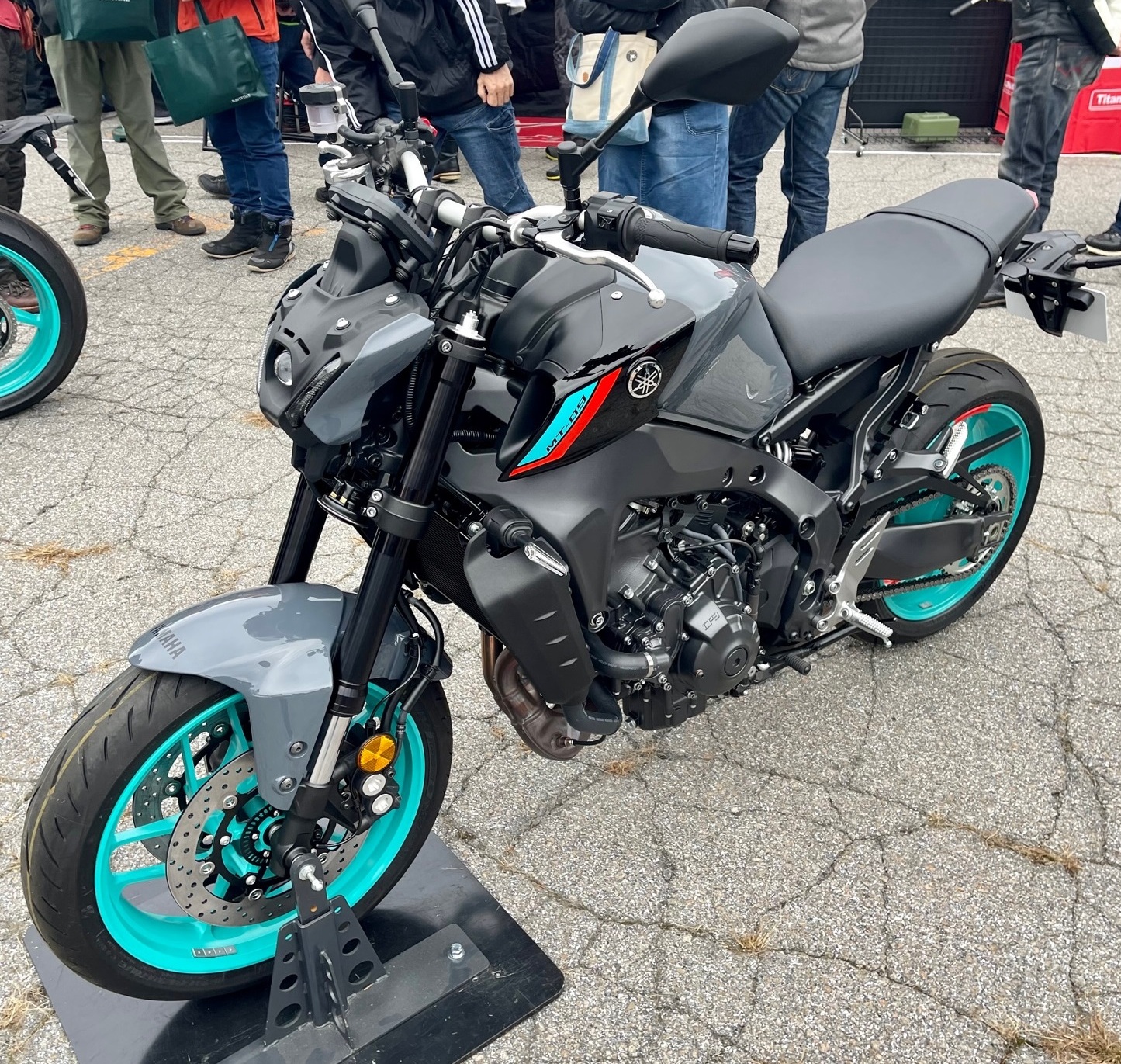
"And, um, and I thought, my first thought was like Spurge picked an MT-09. That's weird. But then once it revs up a little more, you can hear that sort of like water pump whistle that the, uh, Triumph has that sort of, um, slightly high pitched, uh, noise in the, in the, in the rev."
The Yamaha MT-09 is a motorcycle with a three-cylinder engine that makes a unique sound. It's known for being fun to ride and is sometimes confused with other bikes that have similar engines.
The Yamaha MT-09 is a naked sport motorcycle featuring a three-cylinder engine known for its lively performance and distinctive exhaust note. It is often compared to the Triumph Street Triple due to similar engine configurations.
"I, I picked this, um, really because I think the, the triple sound is just iconic. And there's a lot of triples within, um, Triumph's lineup."
A triple engine means the motorcycle has three cylinders in its engine. This setup helps the bike have good power and a special sound that many people like.
A triple engine refers to a three-cylinder engine configuration, which is known for balancing torque, power delivery, and a unique exhaust sound. Triumph is especially famous for using triple engines in many of their motorcycles.
"And there's a lot of triples within, um, Triumph's lineup. But if you, if you go back to, um, they really introduced a triple engine back when it was, it was Triumph and BSA and they had the, um, the, uh, it was the rocket three and the trident,"
The Triumph Rocket 3 is a big motorcycle with a strong three-cylinder engine. It was one of the first bikes that showed off Triumph's special engine style.
The Triumph Rocket 3 is a large-displacement motorcycle known for its powerful triple-cylinder engine. It was one of the early models that showcased Triumph's triple engine technology.
"But if you, if you go back to, um, they really introduced a triple engine back when it was, it was Triumph and BSA and they had the, um, the, uh, it was the rocket three and the trident,"
The Triumph Trident is an older motorcycle with a three-cylinder engine. It was made to compete with other bikes by having a new kind of engine for its time.
The Triumph Trident was a motorcycle produced in the late 1960s featuring a three-cylinder engine. It was part of Triumph's early efforts to compete with other manufacturers by offering a modern triple engine.
"They were released in 68. They were overshadowed when Honda released the CB 750, which obviously, you know, changed the world."
The Honda CB750 is a famous motorcycle that changed how bikes were made. It had four cylinders and was very powerful for its time.
The Honda CB750 is a landmark motorcycle introduced in 1969 that revolutionized the industry with its inline four-cylinder engine, disc brakes, and overall performance. It is often credited with starting the modern superbike era.
"Um, but, uh, before like the, the interesting fact there was they brought on Craig Vedder, um, who, if you remember, we talked about in the Goldwing episode for, for like issuing in like the Vedder fairings. The fairings. So he was the, like redesigned it, um, Triumph eventually goes out of business."
Vedder fairings are special covers for motorcycles that help protect the rider from wind and make the bike look cool. They were designed by a man named Craig Vedder.
Vedder fairings are a type of motorcycle fairing designed by Craig Vedder, known for their aerodynamic shape and distinctive style. They have been used on various motorcycles to improve wind protection and aesthetics.
"Um, when he introduced the new Triumph, he introduced it with triples and inline fours and inline fours eventually went away..."
An inline four engine means the engine has four cylinders lined up in a row. This type of engine is common in many motorcycles and cars and runs smoothly.
An inline four engine is a four-cylinder engine with all cylinders arranged in a straight line. It is a common engine configuration in motorcycles and cars, known for smooth power delivery and high revving capability.
"Uh, the most recent one is the, the six or not even the most recent one, but one of the more, you know, uh, notable ones is the, the new six, seven, 65 engine that's in the street triples... Like there's a, there's an 800. That's what it was. It was this Tiger sport 800 drive. Glad I came around to that and you'd see the seven, six, five engine and 800 engine."
Engine displacement is how big the engine is, measured by how much space the cylinders take up. Bigger numbers usually mean more power. Triumph uses engines around 765cc and 800cc in some of their bikes.
Engine displacement refers to the total volume of all the cylinders in an engine and is measured in cubic centimeters (cc) for motorcycles. The 765cc and 800cc engines mentioned are different sizes of triple-cylinder engines used by Triumph, affecting power and performance.
"Like there's a, there's an 800. That's what it was. It was this Tiger sport 800 drive. Glad I came around to that and you'd see the seven, six, five engine and 800 engine."
The Triumph Tiger Sport 800 is a motorcycle good for both sporty riding and longer trips. It has a three-cylinder 800cc engine that gives it good power and smoothness.
The Triumph Tiger Sport 800 is a sport-touring motorcycle featuring an 800cc triple-cylinder engine. It blends performance and comfort for longer rides and is part of Triumph's modern lineup.
"And I think, you know, for me personally, because, you know, you're talking a little bit of the personal anecdotes here, like I bought the Bonneville in 05, which was a parallel twin engine. But then I remember going back to a, to like a dealer demo day and they had a Sprint ST 1050."
The Triumph Bonneville is a famous motorcycle that has two cylinders side by side in its engine. The 2005 version kept the classic style but added some modern features.
The Triumph Bonneville is a classic motorcycle model known for its parallel twin engine configuration. The 2005 model continued the legacy of this iconic British motorcycle with modern updates.
"But then I remember going back to a, to like a dealer demo day and they had a Sprint ST 1050. And I had only been riding motorcycles for a year and they're like, take it out for a spin. You might like it. And I remember spending like 20 minutes on that bike thinking like, what is this? Like this is this is just this is this is everything I want in a motor like this."
The Triumph Sprint ST 1050 is a motorcycle that is good for both fast riding and long trips. It has a powerful three-cylinder engine that makes it smooth and fun to ride.
The Triumph Sprint ST 1050 is a sport-touring motorcycle featuring a 1050cc three-cylinder engine. It is known for blending sporty performance with comfortable touring capabilities.
"And other than other than Yamaha, you know, MV Agusta, if you want to think about MV Agusta, like who there's really no one else making triple engines."
MV Agusta is a company from Italy that makes fast and special motorcycles. They are known for using three-cylinder engines that sound and perform differently than others.
MV Agusta is an Italian motorcycle manufacturer known for its high-performance sport motorcycles, often featuring distinctive triple-cylinder engines. The brand is celebrated for its racing heritage and unique engineering.
"I wish we had a T plane crank we could play as little clip. We got a clip for that? No clip. OK."
A T-plane crank is a special part inside some motorcycle engines that makes the engine run and sound in a unique way. It changes how the engine's power comes out.
A T-plane crank is a crankshaft design used in some triple-cylinder motorcycle engines, where the crank pins are arranged in a T shape rather than evenly spaced. This design affects the firing order and engine character, giving a distinctive sound and torque delivery.
"It's is it a liquid cool twin? No, is it a VFR? Close. I mean, essentially, yes."
Liquid cooling means the engine uses a special liquid to keep it from getting too hot. This helps the engine work better and last longer.
Liquid cooling is a method of regulating engine temperature using a coolant fluid circulated through the engine and a radiator. It helps maintain optimal operating temperatures and prevents overheating, especially in high-performance engines.
Select text to request an explanation
Welcome everybody to high side, low side. This is season 11, Zach and Spurge coming at you this time with iconic
motorcycle engine sounds. There's gonna be vroom-vroom's and duck-a-duck-as and ring-ding-dings coming out every doorway.
Also, what soy sauce and Yamaha motorcycles have in common, and should you put your kid on a motorcycle, all that and much, much more,
coming right up, stick around.
So you've noticed that your motorcycle brakes aren't providing as much stopping power as they once did,
and you've watched Ari Henning's shop manual video on how to bleed your motorcycle brakes,
but now, now you need brake fluid. Well, Motul has you covered with a full line of brake fluid. From riding around in the street to
ripping around on a racetrack, Motul has got the right brake fluid for you. And to figure out which one that is, head over revzilla.com
slash Motul, that's revzilla.com slash M-O-T-U-L. And when you're over there on revzilla.com,
just keep in mind that every time you make a purchase with a revzilla, a little bit of that money goes back into funding the programs that you enjoy.
Whether it's Zach and I sitting here talking with you on high side, low side, or the shenanigans that people get into when you're out riding for a
CTXP episode, or maybe you just appreciate the gear reviews and the product information.
Revzilla gives back to riders because that's who we all are, riders.
So keep that in mind next time you need to make a purchase for your motorcycle from cruisers to sport bikes to adventure bikes and everything in between.
We've got you covered at revzilla.com.
Here we go, everybody off to the races yet another episode of high side, low side. Spur Joe, I'm excited about this one.
I gotta say, I just accidentally threw my pen down out of excitement and I had to retrieve it.
No, this is going to be so we'll obviously get into a little bit of the what, the where, the why we're doing this.
But I think it was fun trying to pick out engine sounds that were inspirational to me or in general.
I'll be interested to see which ones you get.
But it's also quite terrifying because we're normally playing the game together where we're helping each other out.
And you're usually pretty good at this and I'm not always as good as you are.
So I'm interested to see how this plays out for both of us.
The guessing game is going to be a quick fire, as you all will see.
But first we want to we want to talk about something that that our buddy producer Chase found on the social medias as the kids call it these days.
Friendly reminder, we often start the show with some random thing we found on the internet or a query from you.
Am I the a-hole?
Something like that.
Please do send us funny classified finds or any moral quandaries you have for us to start an episode of high side, low side with.
But this time around, Spur Joe Dunbar, we're talking about Mr. Kenji Ekuwan.
Why is Kenji Ekuwan a name that everyone should know?
So Kenji Ekuwan, I'm going to I'm going to go into my history teacher mode for a second.
Everybody listen up.
Pencil's down.
Was a Japanese industrial designer born in 1929 and was actually a teenager away at the Japanese Naval Academy in 1945.
When Hiroshima was bombed, he came home.
His sister had perished.
His father later perished from radiation poisoning.
And he decided that at that moment he wanted to dedicate his life to creating things and not destroying things.
And he eventually formed GK Design, which was this huge design firm in Japan.
And of notable things that he designed, if you've ever gone out for sushi with a loved one, the Kikuwaman soy sauce bottle, that little soy sauce bottle with either the green or the red cap.
We're showing it on screen right now, I'm sure.
He designed it and it's actually on display in the Museum of Modern Art.
So like this soy sauce bottle form function, beauty.
He designed the Komachi bullet train because he believed that all classes of people deserve beautiful things.
And he is responsible for designing the Yamaha V-Max.
And that's where this ties in to motorcycling.
So this is what producer Chase kind of brought to us.
He's like, Oh, it'd be kind of cool to talk about this individual.
Well, through my research then, I found out that the design group that he that he founded in the 1950s, GK Design, essentially designed all Yamaha motorcycles from like the first Yamaha motorcycles of the 1950s through 2014.
And it was in 2014 that Yamaha finally developed their own in-house design agency.
But up until then, while he is credited for the V-Max, it's really been his design firm has led design for probably a lot of you listeners' favorite Yamaha designs over the years.
Interesting.
Yeah.
Well, super fun little tidbit to learn and TikTok or Instagram or wherever.
Well, Chase spends his time.
But yeah, certainly I did not.
I like how you phrased the bullet train thing because he believed all classes of people deserve nice things.
Is that what you said?
Something like that.
There's a real tie in there.
You know, there's the soy sauce bottle that you see at so many restaurants around the world is iconic.
And the V-Max from Yamaha is nothing if not iconic.
And what is the bullet train?
I suppose one of my favorite quotes about him.
And I failed to write down the name of the individual, but it was it was taken from the president, the current president of GK Design, I believe, who said the thing about
Aqowan was that he believed that design had no limit in its ability to solve human problems.
And because of that, he made design the soul, his soul life mission.
And I think it's interesting in the fact that like, you know, regardless of where you're at in the world, like, you could probably say that this is a pretty, you know, turbulent time.
And the fact that we have somebody to kind of like look to as he came out of, you know, the bombing of, you know, Hiroshima, he lost everything.
You know, that was one of the things that wasn't just his family, but he lost everything.
He had nothing.
And he decided to look, you know, towards the beauty of the world and to really dedicate his life to solving human problems through design.
I think it's probably just a good takeaway.
And we can probably wrap it up there.
But, you know, really just something to kind of hold with you.
Quite a quite a story, Aqowan-san.
You go ahead and impress your family with that trivia there from from the from the ashes of, you know, witnessing the atomic bomb drop to shredding tires on V-Max's.
And maybe maybe that's to say that motorcycles can solve all of humans problems.
You know, so there we go.
Speaking of which, talk about a segue.
Speaking of which, today we're talking about engine sounds, as you know, by now.
This was inspired by a few long conversations, a couple of colleagues, and not least of which we need to tip our caps to Jonathan and Carly Worsler, who sent an email in some time ago.
I don't know when and said, we want to hear, you know, a favorite engine sound episode with with you guys to some degree.
And so what you will hear in the next hour or so is what we came up with.
And we hope that you like it.
Well, it's interesting yet.
So the, you know, the pre-production part of this is, you know, Zack and Chase and I were kind of going through figuring out how we wanted to segment this, you know, and how we wanted to break this down.
And kind of the intro question that producer Chase, through Zack and myself is, what makes a good engine sound?
Obviously, it's very subjective.
And I want to know, I want to know your answers, man.
What is it?
Is it impact on society?
Motorcycle, large what?
One of my favorite answers comes from Lemmy.
For those of you that might be newer to the podcast, Lemmy was a long time host here at RevZilla.
He was a founding member of the podcast, as well as many other videos.
And Lemmy and I went to find a colony on Mars, fun fact.
Exactly.
There you go.
You never, you can never travel too far.
But one of my favorite things that he had said over the years was around engine sounds.
And he goes, man, he's like, you know, people talk about Harley Davidson, you know, and they, they'll ask me why, like, I have so many Harley Davidson's.
And, you know, so much of it comes back to the sound and it just sings the song that I like to hear.
And I think, you know, with my, you know, love of music, I always love that quote.
I think for an engine sounds on a motorcycle, you know, we all have our different perspective on which one you like.
But it's really, it sings the song that we want to hear.
And to me, I think that's, that's what makes up a good engine sound.
That's deep.
That's heavy.
I wasn't expecting that.
I was expecting you to have some more history teacher vibes and say, like, well, it has to have had an impact on the world of
motorcycling or the world of racing or, you know, this, that and the other thing.
But instead, you just, it's all coming from the heart.
I appreciate that.
I think it's simple, you know, and we, and that's probably why there's so many different kinds of engines out there.
And I, what about you?
Do you have any, do you have any differing opinions on, to you, what makes a good engine sound?
It sings the song you want to hear is a good way to put it.
I think that encapsulates a lot of what, what I was reaching for when I sort of picked my, my sounds.
And, and, you know, because sometimes it's sort of the, the engine, you hear the engine and you are taken to a place, to an
experience, right?
Whether that's like a performance engine on a racetrack or a cruiser engine, you know, bopping down a twisty road, something like that.
I think that that's, that's ultimately, that does encapsulate what people are always reaching for, right?
The sound is, it, it, it transports you a little bit to the place that you want to be.
It sings the song that you want to hear.
So that's, that's, I think that's largely what I did.
I mean, I was, I think I was affected to some degree with, I don't know, I ended up having more picks than I mean, we each had
three picks here, but I had so many more, but some of them felt a little bit too kind of esoteric and weird and kind of like not, I
don't know, just like, I think they're special, but, but they're also sort of, some of them were kind of by
gone and, and maybe not that interesting.
Whereas I tried to pick ones that I felt like were relevant, both in motorcycling history and now I suppose.
Anyway, I probably, I probably split the difference a little bit.
And depending on how far we get into our picks, I think that there were some that were probably more relevant to me personally, but
then there were also some that were a little bit more relevant, you know, historically, but all of them, all of them, I would say, at
least on my side, are sounds that I do enjoy listening to.
Well, let's get into it, shall we?
You wanna, I want you to go, I want you to go first.
Yeah, we're going first.
We're going, we're going with, with my pick first for no reason aside from that's the way Chase organized the document.
So let's take a listen, Spurge, and see if you can tell what it is.
I think I like your chances here.
Okay, so I have, I have a guess.
So for those of you listening at home, is there any, is there anything you want to give me before I start guessing away here?
I forget, no, no, no, fire away.
The guessing game is not going to take very long.
We got to get through this here.
We got a lot of bikes to talk about.
Do I hear a dry clutch?
You hear a dry clutch.
Okay.
So the rattling that you hear there, for those of you that are not familiar, that rattling is a dry clutch.
The most famous dry clutches in my mind, it's going to be a Ducati.
Am I hearing a Ducati engine?
You're hearing a Ducati engine.
It sounds, it sounds relatively big.
Nice.
But I also, I could either like, I'm thinking like a 999 because that was such a controversial designed looking motorcycle.
But I have a feeling that you're probably going a little bit earlier than that because you're probably thinking like 916 is, is my, my guess, like a Ducati 916.
Okay.
That's wrong.
99, 99, 996, 996.
Nope.
Nope.
I went air cooled.
I think the air cooled.
Okay.
90 degree V twin from Ducati from approximately the nineties is the, that to me is a very, very iconic engine sound.
And that's, I think I actually don't, this is a either a monster.
I think this is a monster that you're hearing.
I think it's a monster 900 from mid to late nineties, something like that.
So, you know, I was thinking, I was thinking you were going to go like full faring sport bike.
That's, yeah.
Well, well, you know, I think that I am tempted by, you know, perhaps a more modern Ducati.
Well, not a modern Ducati between, but something between 2004 and 2010, something like that.
Like a, like a 999 or even a 1098 or something like that.
1198.
But I think the air cooled Ducati's of that era that the 900 CC or the 900 SS or a monster 900, that, that engine to me has a lot of this sort of like base and, and I don't know, sort of legendary kind of rumble of old Ducati V like bevel drive V twins of the seventies.
You know, that's kind of velvety sound to it, but it also has the clatter of the dry clutch, which is kind of cool.
And it has a whiff of performance about it, even though they weren't hugely fast motorcycles.
And I think modern Ducati V twins have gotten away from a lot of the sound that those air cooled bikes produced, whether it's, you know, modern wet clutches.
And obviously liquid cooled bikes just make a little bit less noise because the cylinders surrounded with liquid and it's like less noise gets out.
You hear a little more valve train, a little bit less intake and combustion with modern systems, blah, blah, blah.
The point is, I think that bike is really the balance of, of sort of Ducati heritage and also the, the thing that it's still clinging to today, basically.
I love that.
I think, I know we've talked about this in the podcast before, but one of my favorite all time bikes, specifically, I think it's just because it was when I was graduating from college and I was buying motorcycles for the first time with the Bible.
But the, the 2006 S2R 1000 monster, which is the two valve air cooled engine.
Like that's, that's essentially the engine that you're talking about here.
It's, it's just that quintessential sound of what a Ducati should be.
Yeah.
Yeah.
Yeah.
And that the air cooled engine, the air cooled engine lasted a long time.
I mean, it's like, they're still selling scramblers, right?
Scramblers still in air cooled 800 CC.
It's like the remnants of that are still around.
Is that, is the, is the new scrambler a wet clutch though?
Or is, I don't think it's, yeah, I think all the, I think it went away from dry clutches a while ago.
I don't remember that happen.
Anyway, but I just think that, yeah, that, that, that sounds to me.
And I think I'm, I'm affected by the, you know, like this monster and the, the monster, the 900 SS, those, those big, the sort of like big bore air cooled dry clutch Ducati's were around and new and, and you know, sexy and making a splash, whatever.
When I was 10, 15 years old, and that's like such an impressionable time, right?
So I remember like my dad really liked those bikes and I was sort of like, oh, wow, they're really cool.
And so I think that's probably one of the reasons it has an imprint on me.
Well, let's, let's, let's listen one more time because you have a second part here for your sound clip, Zach.
Let's listen one more time for the audience, just to leave them with a, with a whiff of what this Ducati sounds like.
You can't have too much Ducati between.
I mean, that makes you want to go on a ride, doesn't it?
It's so good.
And it's, it's funny.
So for those of you listening at home, um, if you're a newer rider and you've never heard a dry clutch before, you know, I, yeah, my, my, my first, my first time hearing a bike, I was like,
bro, there is something really wrong with your motorcycle.
And the gentleman I was riding with was like, no, it's just a, it's just a dry clutch.
And it's, it's such a, but it's become such an iconic sound for, for me.
And like, it sounds so good.
Like it just, it just sounds so good.
Yeah.
I think, I think there's something about the, like it obviously does sound a little bit brokeny, but I love that the, that the it's rhythmic, right?
You know, like it, it, it always matches the beat of the engine in a way that's, that's, um, uh, I don't know.
It just, it has this sort of like such an interesting jingle to, to, to lay beside that, like, uh, really, um, yeah.
Kind of like bassy and heavy V twin sound.
Anyway, well, I'm, I'm re-listening to my clips.
I feel great about choosing that as an iconic engine sound.
And, uh, but now I'm eager to hear your picks, Bert.
All right.
Well, speaking of, um, iconic jingles, uh, Zach.
Why don't you go ahead and take a listen, uh, to what I've got teed up for my first pick.
Well, if I know my buddy, Spurge, that's a Triumph Street triple.
Well, in fairness, I realized as I made this pick, um, I also was on a video call with you the day as we were walking through the halls and I was showing you one of the, the new bikes that we had acquired, uh, in, in, there was talking to Chase on Google me, yeah, I, I actually did not put that together, but as soon as I heard it, I could tell it was a triple.
And, um, and I thought, my first thought was like Spurge picked an MT-09.
That's weird.
But then once it revs up a little more, you can hear that sort of like water pump whistle that the, uh, Triumph has that sort of, um, slightly high pitched, uh, noise in the, in the, in the rev.
So this is a, this is a, it's a new way.
Is this a seven, six, five?
Yeah.
This is seven, six, five.
Yeah.
So, yeah, I tell everyone why it's an iconic pick.
I didn't have to convince me, but tell everybody what you think.
I, I picked this, um, really because I think the, the triple sound is just iconic.
And there's a lot of triples within, um, Triumph's lineup.
But if you, if you go back to, um, they really introduced a triple engine back when it was, it was Triumph and BSA and they had the, um, the, uh, it was the rocket three and the trident, and then the trident eventually, yeah.
And then the trident turned into the X 75 hurricane, which I have a fun fact about in a second, but they were, they were trying to create something more modern.
And, and those bikes were eventually just kind of like overshadowed.
They were released in 68.
They were overshadowed when Honda released the CB 750, which obviously, you know, changed the world.
Um, but, uh, before like the, the interesting fact there was they brought on Craig Vedder, um, who, if you remember, we talked about in the Goldwing episode for, for like issuing in like the Vedder fairings.
The fairings.
So he was the, like redesigned it, um, Triumph eventually goes out of business.
The triumph that we know today.
So all of, you know, younger writers or writers that are just starting out might not be aware of this triumph went out of business in 83.
John Bloor buys the rights to the Triumph name and arguably the most iconic engines in Triumph's line were the twins, but he didn't bring the twins back when he reintroduced the brand.
Um, when he introduced the new Triumph, he introduced it with triples and inline fours and inline fours eventually went away, but the triples became this iconic engine that helped to reestablish Triumph in the modern era, which I just think is, is cool.
And there's obviously a lot of variations.
Uh, the most recent one is the, the six or not even the most recent one, but one of the more, you know, uh, notable ones is the, the new six, seven, 65 engine that's in the street triples.
Right.
It's good, good synopsis.
And I think for the kind of the same reason that the, that the, that nine hard CC air cool Ducati, you know, uh, resonates, if I may use a audio term with me is kind of the same reason this one does with you.
Right.
Like it's not just that that's a great engine, the seven, six, five street triple engine that's in current street triples.
But what it represents is the, the, the, the, the speed triple line and the eventual street triple line and like all those bikes that were, they're so kind of, I don't know, buoyant and iconic for, um, for Triumph in general.
And it's sort of like, this is the most recent iteration.
And I do think also it's interesting.
I did a daily writer video on, uh, something, it was on a Triumph.
Gosh, which Triumph was it?
Boy, am I bad at this.
Anyway, a friend of mine, um, convinced me to talk about the different engines that Triumph offers these days.
And, uh, there was even a comment on my Instagram feed, something like, oh, you know, which Triumph engine, and, and someone said something like, oh, they're all just triples that, you know.
And I was like, no, actually my buddy was right in, in saying that the engines are so different.
They're really different.
There's, they're different sizes of triple that you think were kind of the same.
Like there's a, there's an 800.
That's what it was.
It was this Tiger sport 800 drive.
Glad I came around to that and you'd see the seven, six, five engine and 800 engine.
You'd be like, oh, they probably just call that bike in 800, but it has the seven, six, five engine.
Cause it was the same thing, but it's actually two different engines.
And then there's the, the bigger, the 900 and the 1200 have T plane cranks, which is a whole different ball wax.
And so it's, you know, the, the, the three cylinder thing in, in Triumph or the three cylinder sort of tree has sprung
many branches in Triumphs, even in modern lineup, much less it's, it's history going back, you know, 20 or 30 years.
It's super interesting.
Well, you mentioned the T plane crank and I remember I was, you know, my first real modern, you know, motorcycle that I
bought was the Tiger 800 back in like 2015, I want to say.
I mean, I've had, you know, before that, I think the VFR was my most modern bike and that was a nineties.
So like, you know, for me, it's got a special place in my heart.
And I remember going to Morocco when they launched the new Tiger 900 and they're talking about this T plane crank and
they're like, oh, it's going to provide more traction.
And I remember thinking like, what a bunch of marketing malarkey.
There's no way that, you know, by changing the crank, they're going to get more traction at the rear wheel.
And by God, it worked.
Like compared to like, compared to like the old Tiger 800, I mean, it's such a different engine.
Especially for an adventure bike, it's a pretty big step forward, I feel like.
And I think, you know, for me personally, because, you know, you're talking a little bit of the personal anecdotes here,
like I bought the Bonneville in 05, which was a parallel twin engine.
But then I remember going back to a, to like a dealer demo day and they had a Sprint ST 1050.
And I had only been riding motorcycles for a year and they're like, take it out for a spin.
You might like it.
And I remember spending like 20 minutes on that bike thinking like, what is this?
Like this is this is just this is this is everything I want in a motor like this.
Like, and just like in the engine characteristics, it's just such a unique engine.
And other than other than Yamaha, you know, MV Agusta, if you want to think about MV Agusta,
like who there's really no one else making triple engines.
Am I wrong?
Like it's a really unique, you know, engine for a motor has that.
See something that's not quite right? Our annotations are AI-generated and can sometimes miss the mark.
Click the flag icon on any annotation to suggest a correction.