They’re talking about a road that’s built like a bridge—raised above the water. That kind of design has to be strong enough for cars and trucks and also resist damage from salty air.
JDM means “Japanese cars for Japan,” but people use it to talk about the whole Japanese car scene. This episode is using JDM as the theme for the racing and car culture they’re covering.
They’re talking about the “Midnight Club” as a group/scene behind the early late-night racing culture. The idea is that it wasn’t just about winning—it was also about learning and having fun.
The episode places the Midnight Club’s rise in the setting of Tokyo’s expressways—fast, crowded roads where speed and traffic density collide. That context matters because it explains why “unstructured” high-speed driving could become especially dangerous.
“Sanctioned” racing is organized and approved by an authority. “Street racing” usually isn’t, so there’s no official rulebook or safety framework everyone follows.
Instead of letting everyone jump in immediately, the club starts people at a beginner stage. They learn by watching how experienced members do the runs.
Hazard lights are the blinking lights that make your car very noticeable. In this story, they’re used like a signal so the cars behind can easily see what the lead car is doing.
Auxiliary headlights are extra lights added to a car. They help you see farther ahead than the standard headlights, which matters when you’re driving fast and need more reaction time.
When you go that fast, you have almost no time to react if something changes. Even a small correction can be too late, because you’re covering so much ground every second.
It means you keep about one car length between you and the car in front. At high speed, you don’t have much time to react, so that gap is meant to give you a little warning if something changes ahead.
The Autobahn is a German highway system known for very high-speed driving. Some parts don’t have the same speed limits you’d see in many other countries.
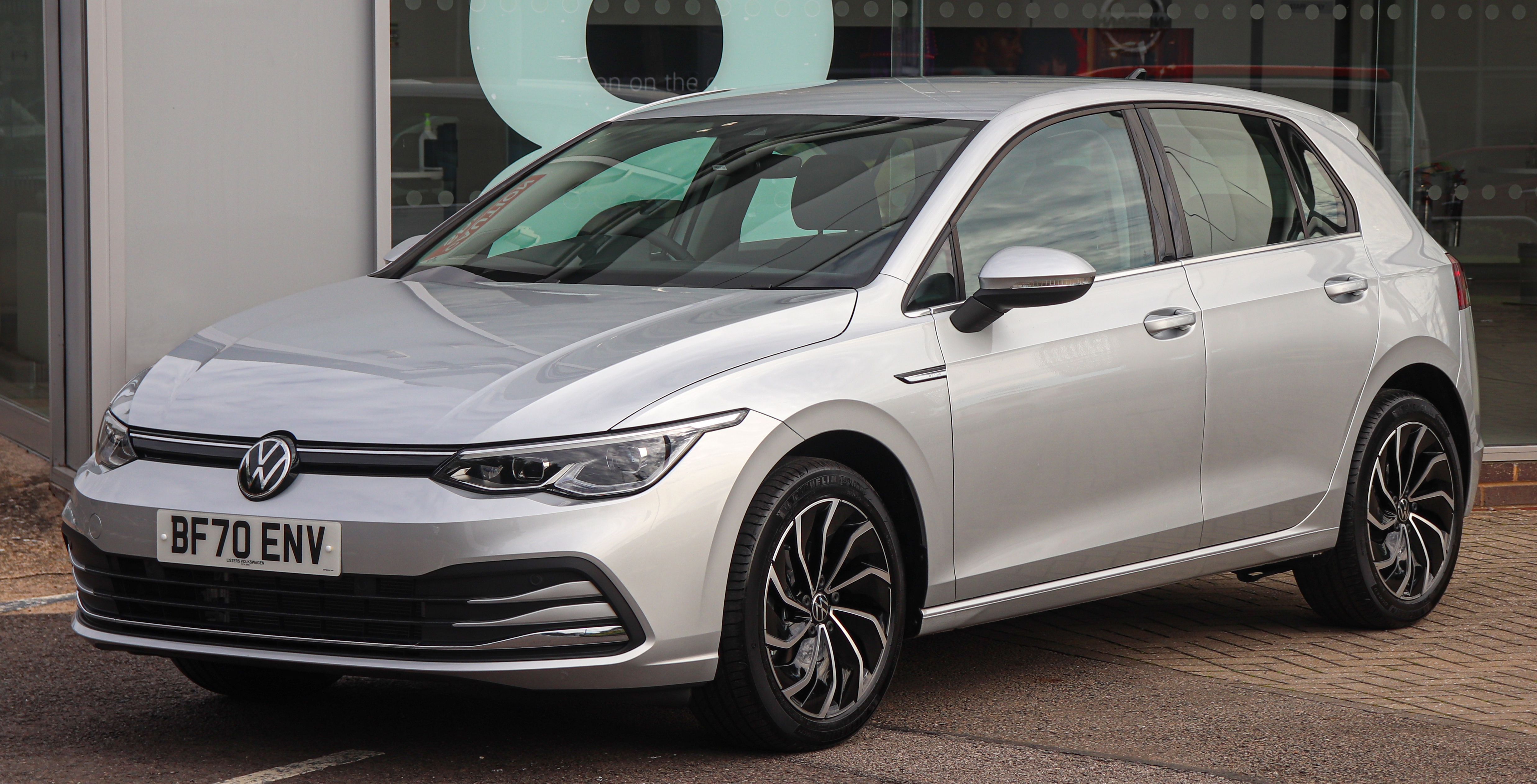
The Volkswagen Golf R is a sporty version of the Golf. The host mentions it because it’s an example of a normal-ish car that can still get very fast on the Autobahn.
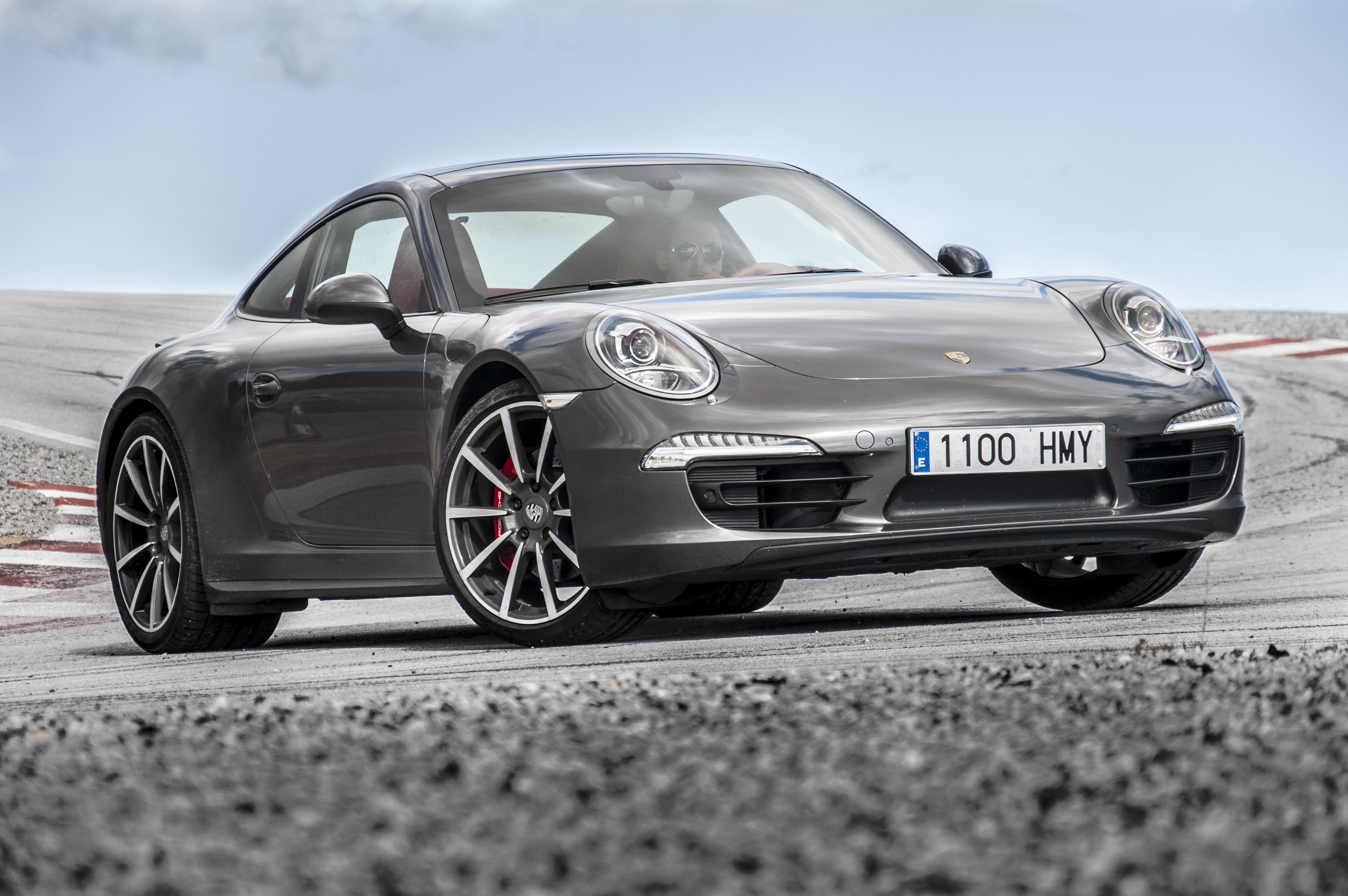
This is a specific Porsche 911 generation: the “930 Turbo.” It’s known for being a strong, turbocharged performance car, and the episode uses it as the foundation for the “Blackbird” legend. The big idea is that this wasn’t a stock car—it was built and tuned for extreme driving.
“Verified top speed” means someone didn’t just guess the car’s maximum speed—they measured it in a way they trust. It’s used here to show the car really did reach an extremely high number, not just that people talked about it.
“Reinforced engine internals” means the inside parts of the engine were strengthened so they can handle extreme stress. If you keep an engine spinning very fast for a long time, weaker parts can wear out or break. Reinforcement helps the engine survive that kind of abuse.
When a car is driven flat-out for a long time, it gets much hotter than normal. Upgrading the fuel and cooling systems helps the engine stay supplied with the right fuel and prevents overheating. That’s crucial for reliability when pushing extreme speeds.
“Thermal load” just means how much heat the car has to deal with. If you drive very fast for a long time, the engine can get hotter than it’s designed for. Upgrades help the car survive that heat instead of overheating.
Aerodynamic adjustments are changes to the car’s shape or add-ons that help it behave better at high speed. They can help keep the car stable and stuck to the road instead of feeling floaty. In this story, the aero is there to make extreme speed safer and more controllable.
The idea here is that they didn’t just drive fast—they approached it like a problem to engineer. They’d plan, test, and improve the car step by step. That’s why the builds could get so advanced over time.
They’re talking about a particular road called the Bayshore route. The idea is that this was the place where the racers would go to drive fast and practice.
Topic
Wongan
In this episode, “Wongan” is basically a fan nickname for the Bayshore Route’s legendary status. It’s meant to signal that enthusiasts all over the world talked about it.
Tokyo has a big network of expressways called the Shuto Expressway system. The Bayshore Route is one specific part of that network, which is why it’s able to move traffic efficiently even in a crowded area.
Reclaimed land is land that’s made by filling in water areas and turning them into usable ground. That’s relevant here because it lets the highway run along the bay instead of being limited by the natural shoreline.
Elevated viaducts are road bridges that lift the highway above the mess below. By avoiding the worst congestion, they help traffic keep flowing, which makes it easier to drive fast for longer stretches.
Concept
headlights stacked like beads of light
It’s just a vivid description of what the road looks like at night—lots of headlights lined up. It helps set the scene for why this route felt special to drivers.
Concept
steady crews rather than jerky bursts
This is describing smoother driving—less lurching and more consistent speed. The road conditions and traffic flow make it easier to keep the car moving smoothly.
They didn’t just write “meet for racing” in an ad. Instead, they disguised the details inside normal ads so only the right people would understand what was going on.
Daikoku Parking Area is a famous spot in Japan where car people meet up at night. It’s set up in a way that makes it less obvious to the public, so it became a natural hangout for underground driving groups.
They point out that the place is only reachable from the expressway. That makes it harder for random people to stumble in, so it feels more secluded for the group using it.
A “midnight run” is basically a secret, planned night drive where people race or run together in a controlled way. Instead of gathering loudly, cars usually leave one at a time and keep things orderly.
They’re saying the expressway wasn’t originally “about racing,” but the Midnight Club changed how people saw it. Since it didn’t have old racing stories attached to it, their actions gave it new meaning.
They were trying to stay anonymous so people couldn’t easily identify who was in the group. They didn’t publish names or rules, which made it harder for outsiders to copy them or for authorities to target specific people.
Counterfeiting here means fake badges or stickers meant to look like the club’s. The club saw it as pretending to be part of them, which could get your car damaged or worse.
A windshield banner is a sticker or strip you put on the front glass of the car. In this story, it’s the recognizable sign that people associate with the Midnight Club.
This is a driving-dynamics idea: at very high, sustained speeds, extra mass can help stability and traction rather than hurt performance. The hosts imply that when the road is flowing fast, the benefits of momentum and composure outweigh the usual downsides of heavier cars.
“Expressway weapons” just means cars that feel really stable and confident on fast highways. The key is staying smooth and controlled over long stretches, not just accelerating hard.
The Toyota Supra is one of Toyota’s best-known sports cars. Here, they’re saying the Supra became especially good at fast, straight, long-distance highway driving—not just quick bursts.
An inline 6 is an engine with six cylinders lined up in a row. It’s long, so it can be hard to fit into a smaller car without changing the front of the vehicle.
A grand touring (GT) platform is engineered to be comfortable and stable over long distances at higher speeds, not just quick in short bursts. In this segment, the hosts tie the GT direction to design choices like a longer wheelbase, which can improve straight-line stability and reduce nervousness at speed.
Wheelbase is how long the car is between the front and rear wheels. A longer wheelbase often makes the car feel more steady when you’re going fast in a straight line.
The Toyota Celica is a smaller, more agile Toyota sports coupe that the Supra was contrasted against. The segment frames Toyota’s 1986 decision to split the Supra from the Celica as a way to target buyers who wanted a different balance—more stability and confidence at speed than pure agility.
“Green Hell” is a nickname for the Nürburgring, a very tough track. The idea is that if a car feels stable there, it’s likely to be solid in real driving too.
The Nürburgring is a famous German test track. It’s so challenging that it can show how a car really behaves when pushed hard, not just in easier conditions.
The Nissan 300ZX is a sports car from Nissan’s Z-car family. The third generation is the version people usually mean when they say “300ZX.” It’s known for trying to be more capable and comfortable than earlier Z cars.
The Datsun 240Z was an early, iconic Z-car that people associated with a lot of excitement. The hosts are using it as a reference point to show how the later 300ZX was meant to be more usable on the street.
A wedge-shaped body is a car shape that looks like it’s “cut” from the front and gets narrower toward the back. It’s often used to help the car slice through air more efficiently.
This is Nissan’s V6 engine family. The point is that Nissan moved to a V6 design and helped make V6 engines common in Japan. It was a big “first” moment for the industry at the time.
A digital dashboard replaces the normal needle gauges with screens. In the 1980s, that felt really high-tech and futuristic. It also lets the car show more information clearly.
Adjustable suspension means you can change how the car rides and handles. It can make the ride softer or firmer depending on what you want. The host is using it as an example of how advanced the car felt.
Voice-warning systems are alerts the car speaks out loud. Instead of just a light or a beep, it tells you what’s going on. Back then, that was a pretty novel “tech” feature.
Tokyo Auto Salon is a big car show in Japan. It’s where a lot of exciting, modified, and futuristic cars get attention. The host is saying the Z31’s debut there helped it get noticed.
Concept
illusion that they were
The host is talking about how people wanted to believe machines were “smarter” than they really were. Cars started to look and act more like gadgets, with screens and warnings. That made the whole experience feel futuristic, even when it wasn’t truly AI-level.
Term
turbocharged warfare
The phrase is basically saying “turbo engines going head-to-head.” In racing, turbo cars can get really hot and stressed because they’re working hard for a long time. The host is saying the car could survive that kind of tough competition.
Nissan’s Z is a sports car line that’s been around for decades and is popular with enthusiasts. In this story, they’re comparing the roof shape of the race car to the Nissan Z’s silhouette.
The Mazda RX-7 is a Japanese sports car known for its rotary engine, which is different from a normal piston engine. People love it because it responds well to tuning and has a strong racing and street-racing reputation.
“Rotary powered” means the car uses Mazda’s rotary engine, which works differently than a normal engine. Instead of pistons moving up and down, it uses a spinning rotor, and that’s part of why RX-7s became so popular to modify.
Ari Amemiya is a tuning business tied to Mazda rotary cars. The hosts are saying it grew from a small shop into a big aftermarket name, helping shape what enthusiasts could build.
The Mazda RX-7 is a small sports car made by Mazda. Some RX-7 models use a rotary engine, which is different from the normal piston engines most cars use. The Turbo II is mentioned because it was popular with people who wanted to modify and drive them hard.
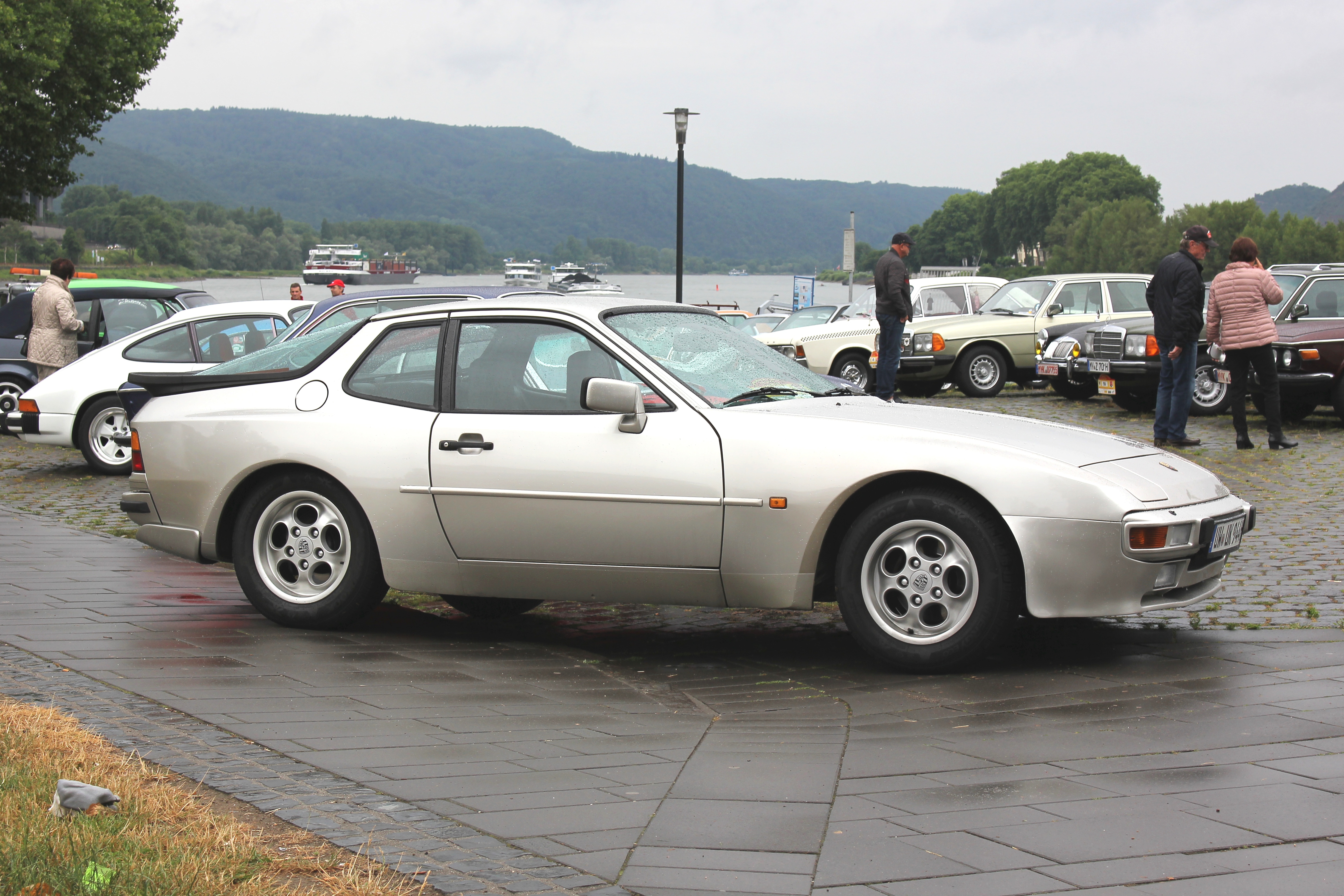
They’re saying the RX-7’s style took inspiration from the Porsche 944. It’s an example of how Japanese car culture in the 1980s looked to European sports cars for design ideas.
The Lamborghini Countach is a famous exotic supercar. The hosts are pointing out that cars like it were popular reference points for the Midnight Club crowd.
The Ferrari Testarossa is a well-known 1980s Ferrari. The point here is that Midnight Club members were into that kind of flashy, high-status European supercar vibe.
They’re talking about being able to go fast for a long time without the car breaking down. That means the car has to stay cool and keep working reliably, not just hit a top speed once.
Drifting is when a driver makes the car’s rear slide while still steering through the turn. It’s not just spinning out—it’s controlled sliding on purpose.
The Toyota AE86 Corolla is a classic Toyota that became famous in drifting. People liked it because it’s light and handles in a way that makes it easier to slide around corners.
Concept
mountain terrain
Mountain roads have lots of twisty turns and changing conditions. Drivers often learn better control there because the road keeps challenging you.
In Japan, “toge” means mountain roads with lots of tight turns. “Osui” is basically a very narrow, tricky part of those roads. Street racers like the challenge, but it’s also where mistakes are unforgiving.
Fuji Speedway is a well-known racing track in Japan. The story is saying he went there because he wanted to witness real racing firsthand. It connects the street racing world to official motorsport.
The Nissan GT-R is a fast, performance-focused sports car from Nissan. The podcast mentions a Skyline 2000 GTR moment, which is part of the GT-R family story. It comes up because it helped shape the reputation for strong performance.
Instead of turning smoothly like a normal drive, the driver lets the car’s back end slide a bit while still steering it. That can help the car rotate and keep speed through a corner. It’s harder to do safely and requires practice.
This is talking about mountain-road driving on regular public streets, not a closed race track. Those roads are narrow and dangerous, so you can’t practice the same way without real risk. The point is he built skill before pushing hard.
Heel-toe shifting is a way to downshift while braking so the engine speed matches the lower gear. It helps the car stay smooth and stable instead of jerking. Drivers use it a lot when they’re braking hard into turns.
Counter-steering means you steer the opposite way to what the car is sliding toward. It sounds backwards, but it helps you regain control and keep the slide going the way you want. It’s one of the key skills for handling a car in a drift.
It means a “fun to drive” car that isn’t super expensive. The hosts are saying the AE86 could be more than just a budget car—it could actually perform.
When someone wins too much, other people sometimes accuse them of breaking the rules. Here, they’re saying Tsuchiya was so dominant that people suspected something unfair.
Option Magazine is a Japanese car magazine that focuses more on car culture and modifications than “safe” mainstream reporting. Here, they’re described as getting involved because drifting needed better ways to show what drivers were doing.
Touge culture is about driving hard on twisty mountain roads in Japan. People focus on skill and style on these roads, and it’s where a lot of drifting know-how grew.
Oversteer is when the car’s back end wants to swing out more than you planned. In drifting, drivers use that behavior to keep the car sliding in a controlled way.
VHS cameras were affordable home video recorders. That meant fans could film what drivers were doing and share it, instead of relying only on photos or magazine stories.
“Subaru Uncharted” doesn’t clearly match a specific Subaru car model name based on the information given. It sounds more like a project or special effort connected to Subaru than a particular car you can buy. If you share the exact model year or the full phrase from the podcast, I can explain the right vehicle.
“Sliding” here means the driver is intentionally making the car lose grip in a controlled way, so the car rotates and moves sideways while going downhill. It’s a dramatic style of driving that became popular in enthusiast circles.
A distribution network is how something gets sold and delivered to people. In this case, the magazine’s ads were used like a built-in way to sell the tapes to fans.
Kala Sports Suspension is a Japanese aftermarket brand tied to suspension work. The segment uses it as an example of how companies partnered with drift media to reach fans.
Carboy Magazine is a Japanese magazine that was especially into drift culture. The hosts mention it because it helped connect the tapes with the people who already cared about drifting.
Tsuchiya Kaichi is the famous drift driver highlighted in these VHS tapes. The hosts are using his name to show that the videos weren’t random—they were built around a key figure in drifting.
Weight transfer is when the car’s weight shifts from one side or axle to another when you turn or change speed. In drifting, that shift affects which tires have grip and which ones don’t. The video showing it makes it easier to understand what the driver is doing.
“Plus B” is the name of the drifting tape series being discussed. The hosts say it was important because it showed driving technique clearly on video, not just as claims. They also explain how it reached more people through magazines and VHS.
This is the name of a drifting video series mentioned in the episode. The hosts use it to explain how people started watching and sharing that kind of driving content.
This is the name of the race track where the drifting scenes are filmed. It helps place the story in a real driving venue.
LIVE
Get that MX gold card ready. I'm way too tired to cook tonight.
You read my mind. With the gold card, we can get up to $120 a year in statement credits.
Are you feeling the Cheesecake Factory? Five guys? Either of those sound good?
Yes.
Which one?
Both.
Pay with the gold card to receive up to $10 a month in statement credits at participating partners.
So you're running out of closet space. The good news? You don't need to stop shopping.
You just need to start selling, with the RealReal.
The RealReal is the world's largest and most trusted resource for authenticated luxury resale,
whether it's that mini bag that can't even fit your phone,
or those boots you never fully broke in.
The RealReal handles everything, from photography and copywriting, to shipping and pricing.
So you can just sit back, get paid, and make room for things that actually feel like you.
And with 10,000 plus new arrivals every single day from top designers like Prada, Selene, Louis Vuitton, and Louis Vuitton,
all for up to 90% off retail.
You're bound to find something perfectly on-brand to fill that extra closet space with.
Plus, right now, you can get an extra $100 to shop when you sell for the first time.
Make room for what feels like you.
Go to TheRealReal.com to start selling and get your extra $100 to keep shopping at TheRealReal.com.
That's TheRealReal.com.
Terms apply.
It's 2.14 a.m.
Tokyo is asleep.
Out over the bay, a stretch of highway sits suspended over the black water below.
Sodium lights hum over the asphalt.
No pedestrians.
No storefronts.
All is quiet.
But in the distance, a Toyota is accelerating well past 160 miles per hour.
Hazard lights blinking.
A Nissan follows, and then a Mazda spaced almost perfectly apart.
Three flagship companies who had risen from the rubble of World War II
are about to be associated with a moment only Japan could have achieved
on their streets and in their mountains.
From the Midnight Club to the Drift King, the Golden Era has begun.
Hello, everybody. Welcome back to PASCAS.
This is episode five of The Golden Age of JDM,
and we are now in it, guys, past four episodes.
It's been really great, really fun so far, but here we are now.
Now we're getting to the stuff that you probably were expecting to hear from the jump with this series,
but here we are.
It is the Midnight Club.
We're going to be talking about all those insane cars that they were racing along.
They were racing, sure, but it was more like research,
or maybe just a way for rich guys to blow off some steam,
but we'll get into that.
And also, we'll talk a little bit about the less regimented
and more outlaw attitude that was happening out there in the mountains
in the birth of drifting in this episode.
So very exciting episode. This is it. Let's get into it.
The 1980s began to take shape, and something was becoming abundantly clear.
Every piece of Japan's car culture was falling into place,
and more and more people were paying attention.
What was once underground was trickling into the mainstream.
You could now definitively point to tuning culture and identify it.
It was now being heavily documented and written about in publications like Option Magazine.
To many, this was to be framed as a victory,
especially those attracted to the spotlight.
But for a certain kind of driver or enthusiast,
the visibility created a problem.
You see, attention brings distortion wherever it goes.
It rewards spectacle over discipline.
It favors the loudest example, not the most competent one.
And in the mid-1980s, Tokyo's expressways were already fast and crowded.
With everyone chomping at the bit to get behind the wheel,
the unstructured speed that had once promised a thrill had now turned dangerous.
This is the context in which the Midnight Club emerged.
Despite what many lay people may think,
the Midnight Club was not an expression of youth culture.
It wasn't a group of kids pushing limits for the sake of being seen or heard.
In fact, the earliest members were of an older crowd.
They were established, men with businesses to protect, and reputations at stake.
They were engineers, tuning shop owners, part suppliers, even auto executives.
Many were people whose livelihoods were tied directly to the machines they drove.
More importantly, they recognized something crucial before everyone else did.
Cars had begun to outpace the infrastructure meant to contain them.
Public roads were now hosting machines capable of sustained speeds
well beyond what their designers had imagined just a decade earlier.
And yet, outside of sanctioned motorsport,
there was no accepted code for what responsible street racing looked like.
The Midnight Club arrived on the scene and filled that vacuum with rules.
Rules that were never meant to be broken.
They were an exclusive club.
For one to join, they would need to earn the respect of those already in.
This was a rare and tedious process.
Those fortunate to be considered prospective members would begin at an apprentice level.
So what did this look like?
Well, if you were someone holding a prospective status, you'd need to attend meetings regularly.
Here, you were expected to learn the protocols.
Not through a dialogue, but through the observation of runs completed by certified Midnight members.
It's hard to give an exact number, but it's estimated around 10% of prospective members were admitted to the club.
Most were rejected due to temperament, even when the passion and talent was clearly there.
To the Midnight Club, being a fast driver or good mechanic wasn't enough.
You needed the ability to tone it down when adrenaline ran high.
Keep your temper in check, kid.
It's a little funny when you consider how we perceive the Midnight Club now.
But these guys weren't chaotic street racers.
And technically, they weren't racing at all.
During Midnight's speedruns, cars were spaced deliberately, at least a full car length apart from one another at all times.
Hazard lights were left on as a constant visual check-in.
To reinforce safety, many members added auxiliary headlights in an effort to see further head down the road.
What often gets lost in the recounting of the Midnight Club's rules is that they were far from arbitrary.
Every guideline was a response to a very specific physical reality.
At speeds north of 160 miles an hour, the margin for error almost completely disappeared.
Steering inputs that would feel minor at regulation speed now feel registered as calculated commitments.
This is why spacing was so important to these guys. It was its own form of etiquette.
A single car length at these speeds gave drivers just enough time to read the road surface and process subtle movements from the vehicle ahead of them.
Even then, there was no guarantee that this distance was enough.
One car's tire failure could still derail the whole experience toppling those behind them like dominoes.
Dude, I've gone 160.
My top speed, my high score is 193 at the Bonneville Salt Flats.
I've driven on the Autobahn. We hit 176, I think, in a Golf R.
There's no way that I would follow someone just one car length behind at 160 miles an hour.
That's when you think, that's fast, dude.
Doing that at like 80 miles an hour here in LA, I mean, that's actually kind of common in traffic.
People do that shit all the time.
I wouldn't even want to do that at freeway speed.
A single car length at twice, you're going 160, they say that it's for safety, but at those speeds, you have no time to react.
If someone did blow a tire ahead of you or hit a wall or something, on one hand, yeah, sure.
GT racers in IMSA, that would not be that crazy.
But these are guys that are having their headlights and their hazard lights on and taking safety super seriously.
That's something you do at the racetrack, not on public roads, following that close.
I don't believe the single car rule. I think it was probably further than that.
But it's interesting how these myths and legends around the club, it's obsequious in a way.
It's like, okay, is this factual or is this like something they put out to like make the club more impressive?
When on its own, it's already impressive that they're doing this because it's still dangerous and very illegal what they're doing.
So, I don't know, isn't that enough?
Temperament was held in high regard amongst the club.
The speeds they were hitting could prove to be lethal.
One infraction against their code meant immediate expulsion.
No questions asked, no court were given.
One of the club's most famous members was a car that would eventually reduce the midnight club's identity to a single silhouette.
And it wasn't a Japanese car.
It was a black Porsche 930 Turbo, simply known as Blackbird.
The legend surrounding Blackbird has grown over time as legends do, but the core facts have remained consistent.
It was driven by a wealthy businessman referred to only as Member Y.
Member Y, letter Y, was known for one thing, pushing his 930 Turbo well beyond what was thought to be possible.
On one occasion, Member Y recorded a verified top speed of just under 187 miles an hour on public roadways.
That's 300 kilometers per hour, the big 300.
How was this achieved?
Well, the rumor mill claims that millions were spent, including work done in Germany by Porsche's own factory mechanics.
There, engine internals were reinforced to withstand sustained high RPM.
Fuel and cooling systems were upgraded to address the thermal load generated during prolonged top speed runs.
Aerodynamic adjustments were also implemented, not just for stylistic effect, but as a way to further stabilize the car at high velocities.
The aerodynamics were functional, and not just for aesthetics, suctioning the car to the Japanese roadways, pushing it into the asphalt.
These insane builds directly reflected Japan's booming economy at the time.
It was an era of excess in Japan, and no car better represented that excess than the Blackbird.
It was iconic not just because it was fast, but because it represented the convergence of three forces.
Mature aftermarket capability, concentrated private capital, and an organizational framework that treated public road speed as a technical problem to be solved.
Blackbird was leading the way, but it wasn't alone.
Surrounding it were other midnight club staples that would go on to further immortalize the scene.
For a club like midnight to operate as smoothly as they did, a space to play was needed.
Somewhere they could really put their speed to the test.
That place was the Bayshore route.
Do you wear glasses? Do you want to simplify the glasses buying process?
It can be a real pain. I've been doing it for over 20 years now.
Well, that's why I'm stoked to talk to you about our sponsor today, Warby Parker.
I am obsessed with Warby Parker. Nothing comes close to the quality, price, selection, and customer service.
Once you buy from Warby Parker, you realize how much easier they've made the entire process.
Their virtual try on is a total game changer.
You can literally try on glasses from your phone before you buy. See how they look on your face.
I've had multiple pairs of Warby Parker glasses and the process was super easy.
I still have a pair of the sunglasses that I use. They've lasted me that long. I got those like five years ago.
When it comes to quality for the price, Warby Parker is the best.
Honestly, it's not even close.
Right now, buy one prescription pair and get 20% off any additional prescription pairs at warbyparker.com.
That's 20% off additional prescription pairs when you go to warbyparker.com.
That's warbyparker.com.
Thank you so much, Warby Parker.
So you're running out of closet space. The good news? You don't need to stop shopping.
You just need to start selling with the RealReal.
The RealReal is the world's largest and most trusted resource for authenticated luxury resale,
whether it's that mini bag that can't even fit your phone, or those boots you never fully broke in.
The RealReal handles everything, from photography and copywriting, to shipping and pricing.
So you can just sit back, get paid, and make room for things that actually feel like you.
And with 10,000 plus new arrivals every single day from top designers like Prada, Celine, Louis Vuitton, and Louis Vuitton,
all for up to 90% off retail, you're bound to find something perfectly on-brand to fill that extra closet space with.
Plus, right now, you can get an extra $100 to shop when you sell for the first time.
Make room for what feels like you.
Go to therealreal.com to start selling and get your extra $100 to keep shopping at therealreal.com.
That's therealreal.com.
Terms apply.
The Bayshore Route was built in the late 1970s and wasn't very well known outside of Japan.
But by the early 80s, it would be a legend among car enthusiasts worldwide known as the Wongan.
The Bayshore Route, officially Route B of the Shuto Expressway system,
stretches roughly 38 miles along the edge of Tokyo Bay, linking Yokohama in the west to Ichikawa in the east.
The route ran over bridges, through tunnels, and along man-made sections of reclaimed land,
skirting the dense urban grid inland and offering long, sweeping vistas of Tokyo Bay at night.
I want to drive this so bad, that'd be cool.
Even at the speed limit.
What many pinpointed early about this route was the elevated viaducts that bypassed central Tokyo's congestion.
This meant traffic could flow unimpeded for miles, a feature that would become essential to the Midnight Club's mythical status.
Picture, if you will, long straightaways punctuated by gentle curves and wide, stable shoulders
that welcomed cars looking to settle into high speeds rather than fight for them.
Night after night, as ordinary traffic waned and the city lights reflected off the water below,
this stretch of highway would transform into a tunnel of opportunity.
Headlights stacked like beads of light.
Engines reached steady crews rather than jerky bursts.
Speed limits, already higher than most urban expressways, became just an initial baseline.
One that was quickly considered conservative by members who knew what the road could really tolerate.
All this is great, but how did anyone know when to meet?
Well, in a pre-internet society, information traveled quickest through print.
Classified ads became the Midnight Club's signaling system.
Messages were coded in the text of mundane listings, handbags for sale, discount prices, available at Daikoku parking area, midnight Thursday.
Only those already in the know knew how to look for and decipher this type of messaging.
Built in the late 80s, the Daikoku parking area sat like an artificial island between looping ramps.
What made it pop as a destination was that it was completely invisible from the street, only accessible by expressway.
In its earliest form, it was considered to be a staging area, a place to meet up before a run.
Little did those people know how much its legacy would grow.
You guys might have seen Daikoku featured recently on Lewis Hamilton's Instagram.
He's like standing next to a Ferrari F40 before the Japanese Grand Prix in Daikoku.
Dude is swagged out, man. Anyway.
From the Daikoku parking area, a typical midnight run unfolded without drama.
Cars ran one by one with spacing established immediately.
Acceleration came in stages.
Speeds climbed smoothly.
If a lane change was made, it was rare and deliberate.
When a run ended, it ended quietly.
Each car exited alone.
No need for regrouping.
No need for celebration.
What was done was done.
And because Bayshore's purpose was movement, not visibility,
it too offered a kind of seclusion that perfectly matched Midnight's ethos.
There really wasn't any room for crowds to gather,
which in theory could protect it and keep the whole operation separate from the rest of the world.
That absence of space is what made the expressway so vulnerable to reinterpretation to begin with.
This was an infrastructure conceived in the most post-war sense of the word.
Built to stitch land together with concrete pylons and an artificial shoreline.
And unlike mountain roads that had already been given decades worth of folklore,
it carried no history.
The whole thing felt neutral and was in that neutrality
that the Midnight Club began to project meaning onto it.
Despite their efforts to maintain anonymity,
it was nearly impossible for the Midnight Club to remain completely invisible.
Car magazines would eventually feature the group heavily,
often using its mystique against them as a way of drawing in readers.
The Midnight Club tolerated the attention, doing their best not to engage with it.
They never confirmed its rosters, never clarified their rules publicly.
But by doing so, they kind of set themselves up in a way.
Once featured in print, it was only a matter of time before imitators began to pop up.
A big trend that occurred involved cars not associated with the club appropriating their insignia.
This included making counterfeits of the now iconic windshield banner
that members wore proudly as they drove.
Little did those posers know, counterfeiting this sticker was one of the worst things you could do.
Apparently, if a driver was caught displaying Midnight falsely,
their car would be vandalized, sometimes even set on fire.
The Midnight Club viewed these stickers as a certification,
and if you weren't certified, you were inviting them to act accordingly.
I'm just imagining like, like an exec at like Toyota who's in the club,
committing arson against the guy who has the wrong sticker on his windshield.
Like that's crazy.
Spotting a phony was relatively easy.
Those who spent enough time out there on the expressway would notice if a certain car didn't look familiar.
Plus, at the sustained speeds the Midnight Club was reaching, only a few could truly hang.
What had emerged from this subculture was a hierarchy of systems.
You see, at 160+, weight stopped being a liability.
The faster the road flowed, the more rewarded cars that could settle rather than react.
Which is why platforms like the Toyota Supra matured so naturally into becoming expressway weapons.
What's interesting is that the Supra didn't begin as a performance statement.
In 1978, Toyota introduced what was essentially a long-nosed Celica known as the Celica Supra or Celica XX in Japan.
Reason being, Toyota had fallen in love with an engine type that didn't fit what they were working with.
An inline 6 engine is long, and the Celica engine bay wasn't.
Rather than redesign everything, Toyota just extended the front end, moved the firewall, and quietly created a different car.
And man, I tell you that Celica Supra is awesome.
Double X. Oh yeah baby, I love those.
Like hatchback styling, this is probably one of my favorite ones.
We got to do a video a few years ago where we drove every Supra.
Second gen, fourth gen are just amazing obviously.
The third gen Celica or Supra is like pretty cool.
But the second gen, both James and I like agreed.
Like that was probably the one that we drive home from that day.
The second gen. The double X.
I mean, just after what I've got to experience in that video.
I definitely understand why it became such a desirable car for these midnight runners.
Inside Toyota, many were excited by what was possible here.
The Supra could become something else, a grand touring platform.
This meant a longer wheelbase and more confidence at speed.
And sure, some buyers might still prefer the agility of the Celica,
but those with taste would recognize exactly what Toyota was offering.
This was the target audience they had in mind when Toyota officially split the Supra from the Celica in 1986.
Their first attempt to fortify its standalone presence came in the form of the A70 or Mark III.
A car that was stable on the highway in a way few Japanese cars were.
Well, why was that?
Well, it was refined in an environment quite far from Tokyo in the Bayshore route.
On a track that has been appropriately nicknamed the Green Hell.
Toyota master driver Hiromu Narase once said, quote,
Japanese circuits only reveal one-tenth of a car's performance,
but the Nurburgring uncovered 100%.
The A70 was pushed through sustained loads in long flowing sections where instability would be snuffed out.
During these trials, chief engineer Isao Suzuki had zero interest in drama.
His goal was to leave Germany with the reason to make the Supra its own platform.
And they did.
If Toyota's engineering ethos was needlepoint precision, Nissan came in with a hammer.
Their third generation Z-car, known to the world as the 300ZX,
looked to elevate itself well beyond the familiar ferocity brought on by the original Datsun 240Z
and take it to the streets.
Underneath its wedge-shaped body designed by Kazumasu Tagagi with Isao Sono,
the Z31 abandoned the aging inline six of earlier Z-cars
and instead adopted the VG series V6,
a decision that would go on to provide Japan with its first ever mass-produced V6 engine.
In turbo form, the Z31 made around 200 to 230 horsepower depending on the market and tuned.
This was plenty enough to push the car into high-speed territory on highways and back roads alike.
What made it even more popular was how the Z31 chose to wear its power.
Nissan was wise enough to double down on the presentation of technology,
which meant digital dashboards, voice-warning systems, and even adjustable suspension.
Everything was so mid-80s with the way it pointed towards the future.
If you're watching this episode on YouTube right now, you'll notice that the dashboard,
the visualizer, is a Z31 dashboard, and that's because Joe has a Z31.
Even the physical exterior ditched edges for curves.
When it dropped at the Tokyo Auto Salon, people loved it.
These styling choices lined up so perfectly with a larger cultural moment.
Computers and other forms of consumer technology were about to become incredibly common in everyday life,
as many were beginning to embrace the concept of machines doing more of the thinking,
or at least the illusion that they were.
You can understand why a car enthusiast at the time might be all over this,
especially if they're working with a little bit of disposable income.
I mean, imagine how cool it must have felt hitting a straightaway,
well into the witching hour behind the wheel of a car that looked like it just got back from the future.
Picture the light orange glow from the dashboard, reflecting against your face as you ripped your way down a tunnel.
Fellow Midnighters might not know your identity,
but they'll never forget the silhouette of your car as you disappear into the night.
Abroad, the 300ZX was being pushed even further.
Its foray into prototype racing with IMSA proved it was capable of enduring turbocharged warfare.
Legendary actor Paul Newman would thrust into a new kind of spotlight
when he used the car to clinch the 1986 IMSA GT1 Championship.
Yeah, I don't even know how to describe how cool this thing is. It's very pointy.
It has the roof of the Z, but pretty much everything else is like totally exaggerated,
very wide body on this thing, very aerodynamic, lots of vents for cooling and such, side exit exhaust.
It seems badass. It has a planter's peanuts like liver.
It's red, white and blue. The blue is all planter's peanuts and stuff. It's awesome.
These two beasts, the Supra and the Z, were faded to exist alongside one another.
But the Expressway, although seemingly exclusive in the late hours,
was big enough to see other makes and models try their hand at top speed.
They joined the RX-7, which had existed since the late 70s.
This trio would define an era of Japanese coupes and usher in the Golden Era.
An enthusiast took them to the streets to see what was possible.
One of those enthusiasts was Mr. M.
Before his personal RX-7 became the first ever midnight club car to be brought over to the States,
it was a mythic vehicle you were more likely to hear than see, known simply as the 7.
No one can confirm who Mr. M was or why exactly he favored Mazda's rotary powered masterpiece,
but maybe we can piece a couple things together by taking a look at another name
loosely associated with the Midnight Club.
You all remember Asami Amemiya, right?
His company, Ari Amemiya, had risen from a small tuning shop that specialized in rotary work
to be a cornerstone of the aftermarket, while allegedly he had a spot in the Midnight Club
after years of being one of the more prominent street racers in Japan.
If true, it's an interesting choice for the club, given how much they favored secrecy.
It wasn't uncommon to find Amemiya all over an issue of Option Magazine popularizing his highly tuned RX-7s.
Whether he was literally participating or not, an Amemiya RX-7 was most definitely present.
Legend has it that when Mazda dropped the FC RX-7, he built one up to kiss 190 miles per hour on the route.
That's insane in a little car like that.
Mazda as a company had come a long way since their days of scrambling to survive MIDI consolidation.
If you remember from past episodes, Mazda developed the rotary to avoid being forcibly merged with the larger company.
By the 80s, the time and effort they put into developing the rotary system and really started to pay off culturally.
Mazda had their finger on the pulse of the underground culture better than most companies.
The RX-7 Turbo II was a street racer's dream. The engine was compact and relatively simple.
Tuners could extract serious gains without having to redesign a car, something that was extremely sought after at the time.
Aesthetically, it also took influence from European cars like the Porsche 944.
Other European cars such as the Lamborghini Countach or the Ferrari Testarossa were also very popular amongst Midnight Club members.
They were the cars that fit the moment.
A very wild moment where the best in engineering could be found out in the streets while most people were fast asleep.
There's something so uniquely 80s Japan about this.
In Western street racing mythology, underground car culture is often framed as anti-establishment.
Think working-class rebellion, junkyard ingenuity, and defiance of corporate norms.
But the Midnight Club, on the other hand, was an anti-industry in the slightest.
These guys were the industry. These guys were Gordon Gekko, but instead of cocaine, they had turbochargers.
And let's be honest, probably cocaine too, but who knows.
Think about what had to exist for the Midnight Club to even function.
The expressway had to be flawlessly engineered. The cars had to be capable of extremely high sustained speeds without disintegrating.
The economy had to produce enough disposable income for people.
Lofty builds didn't come cheap, but in the 80s, they were treated as fun private experiments.
When you think about it, even the ethos cultivated within Midnight was built around discipline standards.
This wasn't Pony Boy and the outsiders looking to stick it to the man.
These were pillars of the industry looking to put the best of the best to the test.
After hours, of course.
So much was happening in the streets during this period.
You could forget that there was a whole other world of competition happening simultaneously up in the mountains, away from the glow of Japan's bustling cities.
Make no mistake though, what was being achieved on winding mountain roads would go on to become game changing in its own right.
You see, while the Midnight Club was working to stay out of the spotlight,
a different breed of driver in the mountains was on the path to creating a new one.
By the end of the decade, Japan wouldn't just be building faster cars.
They'd be revolutionizing the way the world experienced them.
A pair of swim trunks, a pair of shorts, and man, when I put those trunks on, I felt like a whole new guy.
I was like, who is this guy?
I didn't know this guy could be so fashionable.
I didn't know he could look so good wearing some swim trunks.
I got the 5-inch inseam.
They have even shorter shorts available.
I don't know if I could pull those off.
I kept it safe.
Chubby's makes every moment feel like Friday at 5 p.m.
These trunks are supportive, comfortable, and designed to say,
they see you never to chafe.
They dry quickly, letting you go from crushing cannonballs to cold ones in no time.
Hell yeah, brother.
I got the trunks.
They're the black ones with the white trim.
They look sick.
Very sophisticated.
I put those on.
Honestly, I was like, I need someone to invite me to their Beverly Hills mansion pool party.
I'm looking that good.
Chubby's are engineered with a four-way stretch fabric that handles swimming laps,
just as well as handles lounging poolside.
Oh, I'll be poolside for sure.
They fit like you've had them for ages on the first wear.
So, for a limited time, Chubby's is giving our listeners 20% off with code GAS
at chubbyshorts.com.
That's 20% off your order with code GAS.
Give your thighs the VIP treatment they deserve with Chubby's.
Support our show and tell them we sent you.
Thanks, Chubby's.
The 80s also saw the leap of this underground culture into the mainstream.
All thanks to the legendary driver known as the Drift King.
There was no one who understood the Toyota AE86 Corolla and its ability to
maneuver the mountain terrain better than one Kaichi Tsuchiya.
But his path to the Drift King title wasn't one traveled overnight.
No, it was one years upon years in the making.
Tsuchiya was born in 1956 in the small village of Tomi in the Nagano Prefecture,
a region crisscrossed with winding mountain roads that would shape his driving
philosophy long before he ever raced professionally.
Kaichi wasn't born into wealth or a line of drivers.
Tsuchiya got his kicks by surrounding himself with the Hashiriya.
Street racers known for prowling narrow passes like Osui Toge on late night rides.
Among this crowd is fascination with driving deepened.
So much so that when he once discovered a racing event was being held at Fuji Speedway,
he was compelled enough to ride a bicycle more than 100 miles to witness it in person.
Yeah, that's dedication.
You had to be dedicated to stuff back in the day.
These days you can just find a vertical short form video on your phone.
That's insane.
At Fuji, Kaichi watched one Kunimitsu Takahashi hurl a Skyline 2000 GTR through a corner
in a moment that would stick with Tsuchiya forever.
Unlike other drivers, Takahashi would slide his car through the corners
rather than delicately tiptoeing through them.
Tsuchiya had never seen such an inspiring move before.
That being said, it did take Tsuchiya a while to feel truly confident in racing
on public Toge roads.
His love for speed didn't make him oblivious to how tight and dangerous
maneuvering a mountain road actually was.
Instead, he spent four years practicing heel-toe shifting,
counter-steering, and car balance on farm roads and empty stretches,
refining a skill without spectators or risk.
Those years, although silent and unglamorous, were necessary.
They helped build a foundation for Tsuchiya, shaping him into a driver
who understood motion more than speed.
The skills he developed gained attention among other Hasharia,
earning him praise for the quality of his technique.
He had gotten so good behind the wheel that his opponents began seeking him out,
hoping to measure their own ability against his.
Basically the plot to Initial D, which we'll get to in a few episodes,
so stick with us.
Through his own exploration of the craft and exercise and patience,
Tsuchiya had taken himself from spectator to king of the mountain.
Many would have jumped the gun and taken the mountains too early,
but he recognized the value in taking his time to understand what he was up against.
In 1977, Tsuchiya entered his first professional competition
in the Fuji Freshman Racing Series, an entry-level touring car championship.
Here he'd take a Toyota Scarlet and Nissan Sunny and turn in nothing but victories.
Tsuchiya's success would later net him a handful of sponsors
that he would quickly turn to for money.
Despite his stat sheet stating he was a winning machine,
Tsuchiya felt that a new ride was needed, something he could truly call his own.
His sponsors told him that if he won the whole series,
his wish for wheels would be granted.
So Tsuchiya buckled down and won the whole damn thing.
When Kaiji Tsuchiya came across the Toyota AE86, it was love at first sight.
He was drawn to its lightweight design, the way it put the power in the hands of the driver.
It was more than its sports car for the masses title, and Tsuchiya set out to prove so.
Six championships later, his point had been made.
Carrot Flashpoint, as it was nicknamed, was the most dominant car on the track,
so successful that many of his competitors accused Tsuchiya of cheating.
Nothing was ever proven, and honestly, any accusation probably stemmed from the fact
that Tsuchiya let his car talk out loud.
Fans would go crazy over his theatrical driving style.
After making a habit of sliding his car sideways through the turns,
he was nicknamed Drift King by the media.
Then, Option Magazine got involved.
As you hopefully remember from last episode,
Option was founded as an enthusiast-driven alternative to the sanitized automotive journalism.
Option had spent years documenting the margins,
anything from modified cars, illegal races to unsanctioned techniques.
If it happened under the sun and fit their niche, chances were that Option was on the beat.
But when it came to Touge culture and what the Drift King was doing,
Option, and many of its competitors, had run into limitations.
Print could describe drifting.
It could wax on how oversteer worked, how angle was created,
but it had a hard time showing it.
What had been missing was a medium capable of capturing process, motion, repetition, nuance.
The very thing Tsuchiya had been refining for a decade on mountain roads
that no one else had bothered to film.
Now, this is where drifting and car culture as a whole once again met the moment.
By the late 80s, consumer grade video equipment had matured.
VHS cameras were affordable.
Blank tapes were everywhere.
For the first time in history, enthusiasts could now record what they saw
without expensive crews or lofty broadcast deals.
Option saw an opportunity to exploit the medium
and thought they'd be foolish not to take it.
All they needed now was a camera, some tape,
and the right guy to team up with.
The answer to the third need was obvious.
Tsuchiya was already a highly known figure in enthusiast circles.
He had a fan base that knew his name, knew his car,
and that he possessed the definitive skills needed to justify doing something so out of the box.
I mean, as a magazine company, Option had never produced video.
This was uncharted territory for them.
And, let's be honest, most people at the time, because this technology was so new.
I mean, everybody's a shooter now with their phone.
Like, you can start a career just shooting stuff on your phone
and uploading to, you know, Instagram or YouTube or whatever.
But like, I think because of that, most people,
most people maybe have like a basic understanding of framing
and like how to capture video, but it wasn't like that back then.
And not to mention, Japan's consumer video ecosystem was still pretty immature.
By the late 80s, rental stores were spreading, but unevenly.
Shelf space was inconsistent, categorization was crude,
and the idea that a niche enthusiast produced tape
capturing some dude sliding a Toyota down a mountain
could reliably find its audience through retail alone was optimistic at best.
Sure, the infrastructure existed,
but the pathways between creator and viewer were poorly defined.
This was the problem for literally every single independent video creator
in the mid-late 1980s.
Everything felt just a few years out.
But this is where Option founder, Daijira Inada, thrived.
Let me remind you, this is the guy who created the Tokyo Auto Salon.
The guy recognized his potential before anyone knew what to make of it
and willed the whole thing into existence.
If there's anyone who's going to figure this out, it was Daijira.
What Inada quickly realized was that Option magazine was already functioning
as its own kind of distribution network.
In the advert pages of each issue, they could easily market the tapes
as something one could purchase directly from the magazine itself.
In fact, the more magazines these tapes were advertised in,
the more of a chance it had to grow in popularity.
What a concept.
From here, Inada teamed up with Kala Sports Suspension,
as well as Carboy Magazine,
a publication that had really made its name focusing on drift culture.
With the help of Plus Spy Tuning Shop,
who agreed to sell a limited quantity of tapes as part of a bundle with the magazines,
Inada and company set themselves up to change the automotive world forever,
with the Drift King at the center of it.
Two colorized VHS tapes were produced in 1987.
The first was titled Durikin.
Tsuchiya Kaichi, the Toge Part 1, followed shortly after by Part 2.
Each contained roughly 20 minutes of footage,
where Tsuchiya, behind the wheel of his beloved AE86,
with just a camera strap to it,
made his way down the twisting, unforgiving roads of Osui and Gotemba.
It's hard to fully emphasize the significance of these tapes.
No one had ever seen anything quite like it.
Many saw the film to be so pure in its depiction of movement as a language.
Now, for the first time in history,
the technique had been translated into a medium fully capable of illustrating it.
Viewers were given the opportunity to witness weight transfer as it happened.
Choices made not as written claims, but as a visible proof of cause and effect.
Drivers would call it the first time they understood what drifting actually was.
The name of these tapes have been forever immortalized as Plus B,
thanks in part to the Plus Spy tuning shop in Kanagawa
that had provided its customers with the first ever physical copies.
Each one was sold with stickers, one for the Drift King, and one for Plus Spy.
For those who weren't fortunate enough to live near Kanagawa,
the decision to advertise these tapes in magazines was a game changer.
It effectively collapsed the distance between action and audience.
There was no effort to broaden the pitch or translate its significance for outsiders.
The assumption being made was simple.
If you were already reading Option or Car Boy,
you already understood why this mattered.
And people did.
In a moment where VHS was still associated with novelty or entertainment,
Plus B arrived framed as a sort of reference material.
The credibility of these magazines helped stabilize video as a serious medium,
and it wasn't long before it felt like everyone had seen the Plus B series.
The popularity and response was so immediate that everyone involved
quickly greenlit West of Sendai, the third installment of the Dorikin series,
which featured Kaiichi drifting around the H-Land Circuit in the Miyagi Prefecture.
By the time of its release, Tsuchiya had already been made into a superstar,
attracting some unwanted attention from the Japanese Automobile Federation in the process.
When they came across this series, they were terrified.
All they saw was a famous racer driving like a maniac down a public road,
and surely viewers would see this and feel encouraged to do the same.
Not to mention, the tapes were proof of him breaking the law,
and the fact that they were being sold meant that people were also profiting off of it.
I mean man, all they had to do was to say they were doing it in Mexico.
Am I right?
So from there, Tsuchiya's racing license was suspended,
and every unsold tape was taken off the market.
The J-A-F felt they had successfully put out the fire.
But, it was too late.
Enough tapes had been sold for it to have made an impact,
and in 1988, Option Magazine formally expanded into Option Video.
This was a move that acknowledged something Anata had already understood intuitively.
Video was no longer supplemental to print.
It was to become the primary way car culture could express itself.
The shift was framed by Anata not as a disruption of existing media,
but as more of a continuation of the magazine's original function.
What continued to distinguish Option Video was that it doubled down on their methods of distribution.
They didn't need to rely on television or theatrical channels.
Those came with regulatory frameworks and editorial constraints.
They could simply continue to operate through auto shops and mail order catalogs
and reach their audience directly.
This meant street racing, toge runs, and tuning culture weren't just on the mountain.
They were in your living room.
Option was not alone in this evolution.
Taking care of your mental health shouldn't be harder than taking care of your physical health.
If you pull a muscle, you go see a doctor,
but when it comes to finding the right therapist, suddenly, it's frustrating.
You've got long wait lists, you're staring down huge out-of-pocket costs,
and that's what usually stops people from getting help.
And that's where Rula comes in.
Rula makes therapy simple, affordable, and fast.
They work with most major insurance plans,
and the average session co-pay is just 15 bucks.
That's right, $15, basically the cost of lunch.
Instead of a sandwich, you're investing in your own headspace.
And with Rula, you're not just matched and left to figure it out.
They check in and make sure you're actually making progress.
Every therapist on the platform is licensed, vetted, and picked for their expertise,
so you know you're talking to someone legit, not just whoever happens to be available.
Thousands of guys have already used Rula to finally get the care they needed.
Don't keep putting it off.
Go to Rula.com slash past gas and get started today.
That's R-U-L-A dot com slash past gas.
Take the first step, get connected, and take control of your mental health.
Thanks, Rula.
Around the same time, best motoring and hot version emerged as parallel nodes
within the same media ecosystem, both produced by two and four motoring.
Best motoring functioned as the anchor, focusing on new car reviews, professional motorsport,
and comparative testing.
Its authority came from proximity to manufacturers and sanctioned racing.
Hot version, initially a segment within best motoring, would later occupy a different register
through its centering on tuning culture, driving techniques, and informal competition.
The American analog would be motor trend and hot rod magazine, two heads of the same snake.
Altogether, these programs formed a complementary structure.
Best motoring explained what cars were designed to do.
Hot version and option video showed what people actually did with them.
What made it fun was that as these programs grew, the boundary between professional and amateur,
sanctioned and unsanctioned became penetrable.
Permiable, even.
For instance, a driver could appear in one context as an expert evaluator
and in another as a participant in street focused fun.
The best part was that the contradiction didn't need to explain itself.
It was just allowed to be that way.
This convergence really reshaped authority within car culture.
Television had once dictated legitimacy through access and scale.
Now, legitimacy came from repetition and visibility from trusted networks,
founded by people who had fought so hard to give it a platform in the first place.
Not to mention, the influences would have on specific cars themselves
as vehicles were now given meaning on screen,
not just seen through the lens of blatant advertising, but instead through use.
What's interesting is that during this period, a new generation of car enthusiasts was coming of age.
They were a generation that didn't know Japanese car culture without access.
Everything arrived fully assembled.
This was a complete reconfiguration of how culture itself was to be experienced.
For the first time, a person didn't need to be present to participate in the thrill as it was happening.
You didn't need to live near the base shore route
or stumble upon the Daikoku parking area late at night
looking for a handbag for your wife whose birthday you totally didn't forget,
or know the right person at the right tuning shop.
You didn't even need to own a car.
You just needed a VCR.
And this is where power quietly shifted.
I mean, it's interesting to read about this stuff now and talk about it,
but here we are at 40 years, 88.
So yeah, almost 40 years later and, you know, people love to talk about like the democratization of art
and like I mentioned earlier, everybody has a camera in their hand, in their phone.
And it's both easier and harder, I think, than ever to like break into this space
because there's so much competition, because so many people, myself included,
came up in this culture already where like we saw car shows on TV,
we saw the beginnings of YouTube and said, hey, like, I can do that.
I want to do that.
And here we are.
And when I started here, I didn't have any sort of like expertise in this field.
It was like, I had a degree in making television and an insane interest
slash obsession with the scene.
And I wanted to marry those two interests.
And there's like thousands of people like that in this space now.
It could be one of you listening, like, or, you know, you might be thinking about it
or you can just say, Nolan, stop talking.
I don't care about this YouTube space or anything like that.
Please keep telling the story.
But I don't know.
It's just interesting to think about like because of consumer grade electronics,
it's just launched so many careers and allowed all of us to, you know,
make a living talking about what we're interested in.
Soon, cars like the Nissan Sylvia and Mazda's FDR7 would follow in the footsteps of the A86,
becoming pop culture legends distributed within the confines of videotape.
From here, culture would experience a phenomenon.
Instead of just trickling down through mentorship and firsthand experience,
it would circulate horizontally.
The moving image, repeated, trusted and shared took on its life.
It became its own form of schooling.
Looking back now, it's easy to forget how radical this all was.
We live in a moment where access is a given.
Inspiration is something you find in an algorithm.
But back then in the late 80s, this was all so unproven.
I mean, the concept of a subculture explaining itself visually,
being able to distribute itself independently,
all while shaping a global generation without institutional backing,
it must have felt like a whole new frontier.
So, what was next for Japan?
They would go into the 90s riding high and economic crash was coming.
But the tsunami of Japanese car culture had grown too big to be contained by finances
or even the country itself.
Some of the most legendary cars to ever come out of Japan were about to be unveiled.
They were about to take over the world.
That's next time on Past Gas.
Thank you guys so much for listening.
Let us know how we're doing down in the comments.
I'd really love to hear your thoughts on our series so far.
Give us a good review if you think we deserve it.
How are we doing?
I want to know.
We want to know.
Big thanks to our writers.
Anthony Hardin, Greg Knicks, Audrey Holden.
We got Joe Weber on the freaking recorder here.
Joe's making sure I'm sounding good.
And big shout out to Mark Schroeder,
the man who made this video.
He's choosing what words I'm including here.
Anyway, see you next week.
Bye.
About this episode
Tokyo’s midnight expressways become the backdrop for the rise of the Midnight Club, an exclusive, rule-bound group of older, well-connected drivers who treated high-speed runs like disciplined technical exercises rather than chaos. The episode digs into their strict etiquette, the danger of 160-mph public-road runs, and the legendary black Porsche 930 Turbo known as Blackbird, built with serious money and factory-level engineering. It also connects the club to Japan’s booming economy, the Bayshore Route, and the outlaw mountain scene that helped birth drifting.
Join us in the fifth installment of Past Gas: The Golden Era of JDM, as we dive into the history of one of Japan's most elusive car clubs, The Mid Night Club. What later became a popular video game started as a way for Japan's elite car tuners, enthusiasts and even Automotive Executives to test and tune their cars... on public roads.
Thanks to Warby Parker for sponsoring this episode! Our listeners can buy one prescription pair and get 20% off additional pairs at https://www.WarbyParker.com/PastGas — and using our link helps support the show. #WarbyParker #ad
This episode is also brought to you by Chubbies! Chubbies is here to keep you comfy and looking good year-round. Get 20% off with code GAS at https://www.chubbiesshorts.com/gas #chubbiespod #ad
And also thanks to Rula for sponsoring this podcast! Rula patients typically pay $15 per session when using insurance. Connect with quality therapists and mental health experts who specialize in you at https://www.rula.com/pastgas #rulapod #ad