“Amp hours” tells you how much energy is stored in a battery. More amp hours usually means you can use your setup for longer before the battery runs low.
KC American Venture Lab makes off-road power equipment. Their battery systems are designed to give you reliable electricity for things like lights and camping gear when you’re away from outlets.
Car
Jeep
They’re adding an extra battery setup to the back of a Jeep. That helps run accessories (like lights or gear) without risking the Jeep’s main battery.
Connectors are the plugs and joints that let wires connect to the battery and accessories. If they’re not right, you can get power problems or even wiring faults.
Wires are what carry electricity from the battery to everything you’re powering. The right wire and proper routing help prevent overheating and electrical issues.
An inverter turns your Jeep’s battery power into the kind of electricity that normal electronics use. If it’s 1000 watts, it can run bigger devices, but the wiring has to be done safely.
A smoke test is a safety check for electronics. They turn it on and watch for signs of overheating or short circuits—if it starts smoking, something is wrong.
A charge cycle is when you charge the battery and then bring it back down (or charge it again in a controlled way). Doing this a few times helps confirm the battery and charging system are working properly.
The Dodge Charger is a car known for performance, and it’s usually built to be fast and fun to drive. If someone talks about an alternator charger and calibration, they’re usually dealing with the car’s electrical system—things that help the battery and charging system work correctly. That kind of work can be important after certain repairs or when the car’s electronics act up.
Term
alternator charger
An alternator charger is a way to charge a battery using the car’s normal charging system. It helps keep the battery topped up while you’re using or testing the vehicle.
“Calibrated” means the car’s electronics re-learned how the battery is behaving. After a few charge cycles, it can measure the battery more accurately.
Break-in is the first phase of driving a new or newly built vehicle. The idea is to avoid hard acceleration and extreme loads at first so important parts wear in smoothly.
Overland Expo West is a big event for overlanding—driving and camping in remote areas. It’s where you can usually see vehicles and gear setups up close.
An overlander is someone who goes on long trips, often off the usual roads, and brings what they need to camp and live out of the vehicle. They care a lot about having power for lights, devices, and cooking.
Solar means using panels on the vehicle to make electricity from sunlight. The more sun you get, the faster you can recharge batteries and run your gear.
Amps tell you how much electric current is going into the charging system. Higher current generally means faster charging, assuming the battery and controller can accept it.
A pack-out rack is a mount for modular storage boxes. People use it in trucks/Jeep builds so heavy gear stays fixed and doesn’t slide around when you drive on rough roads.
A compressor is basically an air pump you can run from your vehicle. Overlanding uses it to adjust tire pressure so you can drive on different terrain.
Company
Apex CRS
Apex CRS sounds like a power box/control system for vehicle accessories. Instead of running wires everywhere, it helps you power things safely with proper fuses and switches.
Overlanding means going on longer trips where you’re kind of self-sufficient. You bring the gear you need—like power, food storage, and communication—so you can camp and drive in remote areas.
Additional circuits means adding more separate electrical lines for accessories. It helps prevent blowing fuses or overheating wires when you add things like lights or chargers.
Term
USP ports
USP ports are probably USB charging ports. They let you plug in and charge electronics while you’re out driving or camping.
GMRS is a type of two-way radio service. It’s used for talking between vehicles over longer distances than basic walkie-talkies, and you usually need a license to use it.
A Dometic fridge is a portable cooler/freezer made for camping. It can keep food cold using power from your vehicle so you don’t have to rely on ice.
Term
Kingpin light
“Kingpin light” usually means an extra light you add to your truck for better visibility. People use them for night driving or off-roading, and they’re often wired so you can turn them on separately from the normal headlights.
Term
tailgate table light
That’s a light built into (or mounted on) a rear tailgate table. It helps you see what you’re doing back there when you’re camping or setting up gear at night.
Company
Brit
“Brit” sounds like the company that made or supplied the light. Different brands can mount differently, so knowing the brand helps you understand whether it’ll fit your setup.
“Room for expansion” means the setup is designed so you can add more accessories later. Instead of building a fixed system, they left space and wiring options for future upgrades.
The Ford Bronco is an SUV designed for driving on rough roads and trails. People often choose between two-door and four-door versions depending on how much space they want. In the podcast, it sounds like they’re comparing different off-road SUVs and their layouts.
“Initial tranche” just means the first batch or first group of vehicles getting support. They’re telling you what’s included right now and what may come later.
The Jeep Wrangler is a very popular off-road Jeep. The speaker is saying their setup will work with Wranglers first, because it’s a common platform for this kind of add-on gear.
Topic
SEMA DC rally
SEMA is a big automotive industry group. A “SEMA DC” rally is an event in Washington, D.C. that brings people together around cars and the aftermarket.
The Dakar Rally is a very tough off-road race. Cars and teams have to handle rough desert terrain and also deal with navigation challenges for days at a time.
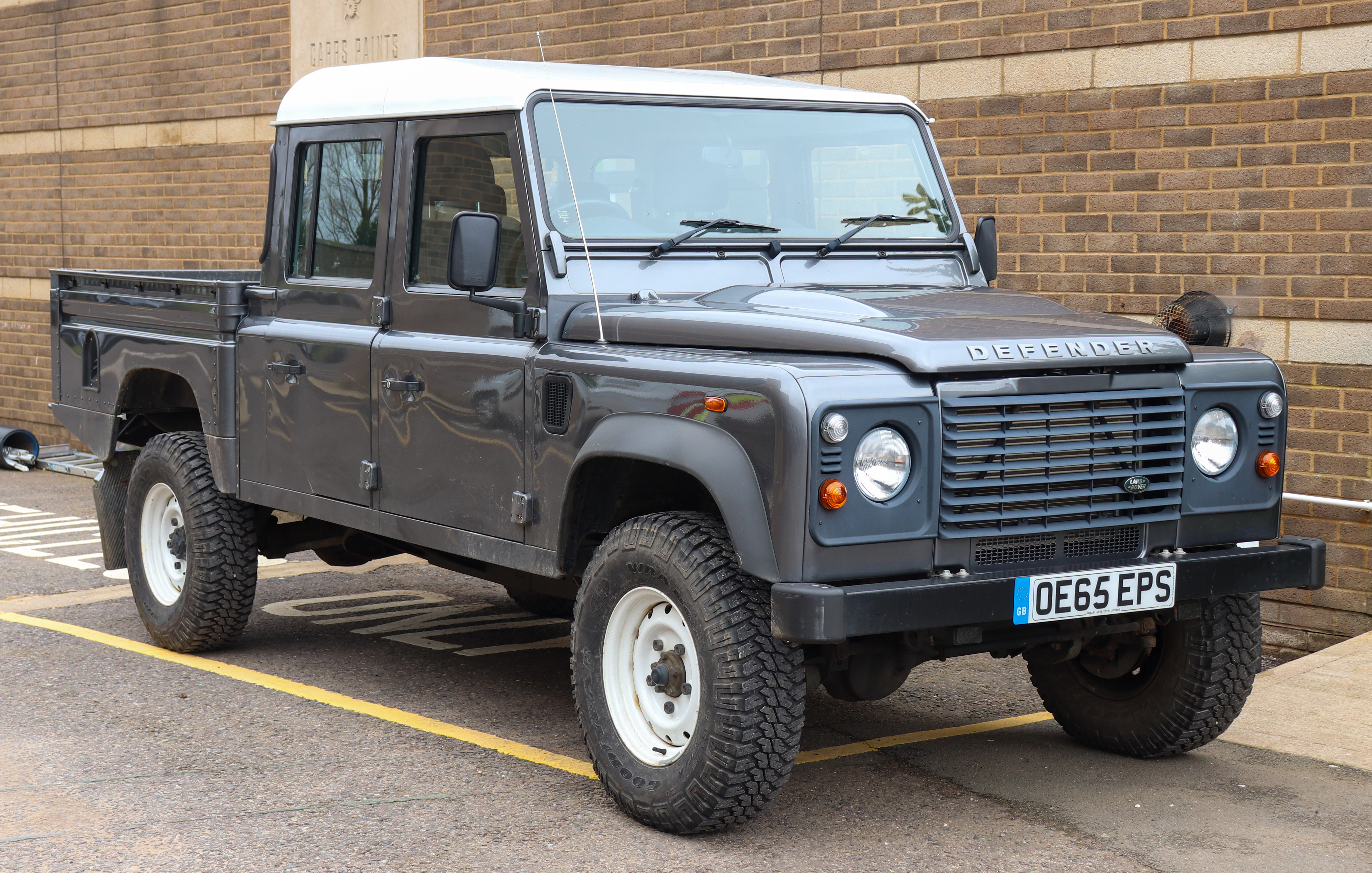
The Defender Octa is a special, tougher version of the Land Rover Defender. The hosts mention it because it was used in racing, showing it’s meant for rough off-road conditions.
They’re talking about going to Saudi Arabia, which is known for harsh desert conditions. Those events are tough on cars because of heat and sand, so the vehicle has to be built to handle it.
Synthetic oil is a type of engine oil designed to last longer and handle high heat better. That can be helpful when you’re driving hard or in demanding conditions.
Lifted means the truck sits higher than normal; lowered means it sits lower. People do this to change how the truck handles and how well it deals with rough roads or off-road trails.
Mercedes Lilianthal is the person the hosts bring back to talk about what she saw and experienced at the Dakar rally. She’s not a car brand here—she’s the guest.
Jaguar Land Rover (JLR) is the company Mercedes says she was with at the Dakar rally. The host is basically saying different automakers sent people to cover the event.
Beadlock wheels are special rims that hold the tire onto the wheel even when you air the tires down. That helps off-road tires grip better and stay seated.
Concept
running low tire pressures
Off-road racers often let air out of their tires so they can flatten a bit on the ground. That makes them grip better over sand and rocks, but beadlocks help keep the tire from coming loose.
They’re saying the plan came together quickly, not months in advance. For covering a race, that usually means scrambling to arrange travel and get access in time.
FIA is the organization that helps make the rules for car racing. When they update regulations, teams have to redesign or adjust their vehicles to comply.
Concept
current based vehicles
This means the race trucks are based on newer production vehicles, not ancient designs. That usually changes what parts and engineering choices the team has to make.
Racing regulations are the rulebook for what you can and can’t change on the vehicle. If the rules say certain parts must stay stock, teams have to build around that limit.
Testing is how teams prove their vehicle can handle the race. They run it through conditions that mimic the event so they can fix problems before competition.
They’re talking about a Land Rover Defender with a V8 engine. A V8 usually means more power and stronger pulling ability, which helps for heavy-duty driving and off-road work.
Extended wheelbase means the car’s frame is stretched longer between the wheels. That typically gives more room inside and can make the ride feel more comfortable.
The hosts mention early issues with Defender “electronics,” which usually points to infotainment, sensors, or control modules that can cause warnings or drivability quirks. Modern vehicles rely heavily on electronic control units, so software updates and diagnostics are often key to resolving these problems.
“Stock class” means the race vehicle has to stay close to the regular production model. The rules restrict big changes, so teams focus on allowed upgrades like suspension tuning and some internal components.
The engine is the main power unit of the vehicle. In some race classes, rules may prevent teams from swapping it so the competition stays more “stock-like.”
The differential housing is the metal “case” that holds the gears inside the differential. Keeping the housing the same helps ensure the car’s basic drivetrain layout stays close to the original.
The gearbox is what controls how the engine’s power gets sent to the wheels. In some racing rules, you can’t swap it freely because it affects how fast and how well the car drives.
The differential is what helps the wheels turn at different speeds. “Internals” are the parts inside it, and changing them can make the truck grip and drive better on uneven terrain.
Suspension is the system that connects the wheels to the body and helps the tires stay in contact with the road. Upgrading it can make a vehicle handle rough terrain much better.
Track width is how wide the vehicle is from one side to the other at the wheels. A wider track can make the truck feel more stable, especially when driving quickly over rough ground.
Bigger tires can help the vehicle clear obstacles and grip better on dirt and rocks. They can also change how the truck feels to drive, so teams usually adjust other parts to match.
They’re talking about BFGoodrich tires made for racing/off-road use. The “35 inch” part is the tire size—bigger tires usually help the truck clear obstacles and grip better on rough terrain.
They’re describing custom brakes built specifically for rally racing. Rally brakes are designed to handle lots of hard braking without overheating and fading.
Vented brake rotors have channels inside them to help cool the brakes. Cooler brakes work better and are less likely to lose stopping power when you brake hard repeatedly.
More pistons usually means the brake caliper can squeeze the pads more evenly. They’re also setting up the front and rear brakes differently so the truck stops hard but stays stable.
They’re adjusting the truck so it can drive over rough stuff without hitting the ground. “Approach” and “departure” angles describe how steep it can go up and down before the front or rear gets stuck on the terrain.
They’re saying they likely switched from air-suspension behavior to a more traditional race shock setup. Race shocks are tuned to control the truck’s movement better over repeated hard hits.
Bilstein makes shock absorbers and suspension parts. If a Dakar truck partners with Bilstein, it typically gets tougher shocks designed to handle rough roads for a long time.
TSD rallies are less about going as fast as possible and more about hitting the right speed at the right time over a route. You’re trying to stay “on schedule,” not just win by fastest driving.
In Time Speed Distance rallying, you have a plan for how long each section should take and how fast you should go. The goal is to match that plan as closely as possible.
Dakar Classic is Dakar for older vehicles, with rules that keep the cars closer to their original era. It’s generally a different vibe than the main Dakar race.
In regularity rallying, you’re not racing to win by going as fast as possible. You’re trying to match a target pace so you stay “on the mark” throughout the route.
Rally co-drivers are the “map and instructions” person in the car. They tell the driver what to do next—like when to slow down or turn—based on the route notes and distance readings.
The odometer tells you how far you’ve gone. In rallying, that distance reading is used to hit the right timing and speed targets for each part of the route.
Stage rally means you race on timed sections of road, then you stop and reset before the next section. Since it’s intense and risky, the cars usually need serious safety gear.
A roll cage is a metal frame inside the car that helps keep you protected if the car flips or gets hit hard. It’s common in race cars because it’s built to handle extreme crashes.
The Baja 1000 is a famous off-road race in the desert of Mexico. It’s a big deal because it’s long, rough, and takes a lot of planning and support to do well.
JLR is short for Jaguar Land Rover, the company that makes Land Rover and Jaguar vehicles. Here it’s being mentioned as a team that builds and supports rally machines.
Side-by-sides are off-road machines with seats for a driver and passenger, made for dirt and rough trails. People often race them before moving up to bigger rally-style events.
Support semis are big trucks that follow the team to carry supplies and spare parts. They help the crew fix cars quickly and keep everything running.
Concept
bivwack
A bivouac (often spelled “bivvy” or “bivwack” in transcripts) is the temporary camp where rally teams park, service vehicles, and prepare for the next stage. It’s where you’ll see crews working on cars, organizing spares, and managing schedules.
In motorsport logistics, consumables are items that get used up during the event, such as fluids, filters, tires, and other service parts. Teams plan consumables carefully because running out can end a campaign or force slow repairs.
Concept
signed up for three years
A multi-year program in motorsport usually means a team commits to a longer development and competition cycle rather than a one-off entry. That allows better planning for vehicle preparation, spares, and driver/co-driver continuity.
Concept
three vehicles
Teams sometimes bring more than one car so they’re not stuck if something breaks. If one vehicle needs work, another can keep the program going.
A mule vehicle is basically a test car. Teams use it to try out new parts in real-world conditions so they don’t risk the main race car before they know what works.
LIVE
Hey there, it's good to see you.
Welcome back to the Truck Show Podcast.
This is your host, Holman,
and we're coming from the Podshed
live in Huntington Beach, California.
And first off, I wanted to say thank you
to everybody who reached out and said,
hey, I can only download 28 minutes of the episode
or something like that for the last one.
And there was a glitch on upload.
So that caused a problem, obviously.
So I uploaded the file again, pushed it out everywhere.
And I know some of you continue to have issues
throughout the week,
even though the correct file was in place.
And a lot of times that has to do with the cash
on your phone, having downloaded the incorrect one
and then not resetting to download the new correct one.
So what you can do in the future is go to another app.
So if you listen on Spotify,
try Apple or vice versa,
or you can restart the app or restart your phone
and it should force a new download.
So anyway, the correct episode's up.
It's been up for a while.
So if you're still having problems or you didn't go back,
please try and go back and listen to that episode.
It's a good one.
But thank you again for reaching out, letting me know,
because as soon as I hear those things from you guys,
I instantly jump on it and within probably,
I don't know, five or six hours it was corrected,
but I know that didn't work for everybody.
So sorry about that.
Hopefully this episode is uncorrupted
and untrunkated for you.
All right, so I have to admit this week,
I had a triumph.
Thank you.
Thank you very much.
All right, that's enough.
I finally got through, I swear it's been like 80 hours.
Finally got the entire KC American Venture Lab
Red Ark 105 amp hour battery system wired
in the back of the Jeep and it is spectacular.
I wish I could tell you the amount of pain, time,
struggles, extra money, how many times a day
the Amazon guy came to my house with like connectors
and wires and things, how many times,
I still can't feel my fingertips,
but the payoff is huge.
And so there's gonna be a video,
we teased a couple of videos and they were over like,
I don't know, 30,000 views between myself
and American Venture Lab and KC
and all these hand raised and how do we get that?
So if you're one of those people, stay tuned.
Hopefully this week I'm gonna be putting out
a new walkthrough video so you can see everything.
It is phenomenal.
The fact that everything's hidden within the shelf,
I was able to get all the wires, all of the battery,
all the controller, everything tucked up out of the way.
I'm really proud of my wiring on it.
Everything's super clean.
And then through the Red Ark Red Vision,
I can control things like lighting, I can dim it.
I can control my Starlink, turn it on and off.
I can control my fridge, which I hardwired into the Jeep.
I can control my Midland radio, my USB auxiliary outlets
that I have in the tailgate,
as well as I have a thousand watt inverter in there.
And I had wired double check, triple check,
started adding fuses and I'm like, all right, here we go.
Hit the power wire, everything fired right up.
No smoke came out, pass the smoke test.
And there's a screen that you go to that says
faults, no faults, no faults.
So throughout the week, I've been driving it.
I got it charged way down.
Then I charged it way up, used solar,
then I brought it back down,
then I left the alternator charger,
went through a few cycles, it calibrated.
Again, no faults, everything's great.
No squeaks, no rattles, just nothing.
It just, everything just works and it's absolutely beautiful.
So I'm really proud of myself
because I'm gonna tell you that I kicked ass.
So good for me, go me.
This has been a massive pain in getting this done.
Not from a standpoint of it's a pain that I had to do it.
No, I wanted this, but we really elevated it
to the next level.
When Casey came out with a flat battery as a prototype
and then they're trying to figure out what to do with it.
And then I saw Britt Shelf
and Britt and I started talking about it.
I said, let's do this.
I worked together with those three with Red Ark.
And to see it finally come together
and it's as awesome as I hoped it would be is great.
And then I'm hoping in June
to potentially go out on a Death Valley trip
and that'll probably be the break-in.
It'll also be at Overland Expo West
at the Casey Open House, I believe on that Wednesday before.
So if you're gonna be a Flagstaff for that.
And then I believe it may also be on display
outside the Orville Lounge in the fairground.
So we're working on that right now.
So there'll be an opportunity to see it in person,
but I'm telling you this thing is so good.
So from an Overlander standpoint,
having that much power, being able to make power
and have solar, I mean, my solar was doing like 175 watts
of input at like 12 and a half amps or something like that.
So super smoking fast.
In the desert where I go a lot
and there's a lot of blue sky and high sun,
I would be topped off by, you know,
basically probably by lunchtime.
And just so stoked because that was like
the last piece of the puzzle.
Now I got a couple of little things I gotta do.
I've got to mount my pack out rack to the shelf in the back
because I've got my compressor inside a pack out box.
And then I got to run the Apex CRS real system
and then do a quick disconnect
so I can plug it into the box when it sits back there.
And then we got to put our drawers in.
Brits got the drawers and everything
that we'll go in after now that we know
everything's working and wired and all that stuff.
So once I'm done with all that,
it's gonna be like back to the old Jeep
and I'm gonna be out on adventures.
And you may not hear from me for weeks
because well, because I'll be out enjoying myself
in the middle of nowhere.
And I have additional circuits too.
So I'm trying to figure out like,
what should I do with all these additional circuits?
And part of me is like, well,
I could wire some more lights in there.
I could do some exterior stuff.
Right now, let's see, I'll go through the list again.
I've got USP ports.
I've got my Midland radio, my GMRS.
I've got my Dometic fridge.
I've got my Kingpin light.
They sent me lights for the inside.
I've got my tailgate table light from Brit.
I've got the Red Ark system as wired for the display.
And I've got like four or five maybe additional circuits.
Oh, I got my Starlink in there.
It's the other one and my compressor.
So there's some other stuff I can toss in there
and I've got room for expansion, which is super cool.
So anyway, stay tuned at Sean P. Holman
and I'll see if I can get it over on Truck Show Podcast,
but you can only do five collabs.
So I'll probably tag Truck Show
and then do the business side of it
on at Sean P. Holman, but that'll hopefully be out
later this week.
That's my goal and it is really cool.
So anybody who's got a JK, a JL, two-door, four-door,
Bronco, two-door, four-door, and I think Brit City
is gonna try and make it work
for some of the Toyota stuff as well.
At least in this initial tranche,
it'll be Bronco and Wrangler.
So it is super rad and I'm stoked
and I can't wait to share it with you guys.
So that was basically my week.
I mean, it was super busy in that
and doing a lot of land use stuff.
I'm sure you guys have,
especially in California have heard of Wemo,
which is the Western Mojave closure,
been working on that,
had meetings with the 29 Palms Marine Base
about Johnson Valley and getting ready
to head out to Washington DC in a few weeks
because I'm gonna be going out there
for the SEMA DC rally.
And hopefully I'll bring you guys,
I've just been cranking lately and keeping busy
and now it's time to get a podcast out.
So I just wanna say thanks for joining us again
and on this episode of the Truck Show Podcast,
our friend Mercedes Lilianthals back on.
She had gone to Dakar Rally,
kind of like what I did last year
except hers was with Land Rover.
So I decided it would be kind of cool to have her back on.
So we have a pretty cool conversation
from right after she returned from the rally,
might've been, I guess probably a couple of months ago.
So this one's been in the bank.
So I've been wanting to get this one out to you guys,
but she was there with the Land Rover team
because they had the Defender Octa out there racing.
And she'll tell you how they did
and her experiences of going out to Saudi Arabia
and all that kind of good stuff.
But before we get started and talk to Mercedes,
we've gotta thank the companies
that make the Truck Show Podcast possible.
So the Truck Show Podcast is proudly brought to you
in partnership with Amsoil.
The maker of the best synthetics
and the same ones we use in our rigs.
Did you know Amsoil is more than just synthetic oil?
They also make some of the finest lubricants,
greases, additives, filters, car care products.
And yes, even awesome merch.
And yes, I am wearing an Amsoil T-shirt right now.
The current Amsoil promotion is a ruggedized tire gauge
spend $100 or more by 5-5, that's May 5th, 26
and use the code Gauge426, Gauge426.
And you can get yourself a free tire pressure gauge
with the Amsoil logo right there on the face.
It's pretty cool.
We use Amsoil products to protect our rigs
and you can do the same
by heading to the TruckShowPodcast.com
and using our special link
under the featured products section.
Do you need a knife?
Then put your browser to Kershaw.chiUSA.com
and explore their line of exceptional pocket knives.
They have a huge selection of quality knives from EDCs
and made in American knives.
And yes, even automatics, score one for yourself today.
And if you want to treat yourself
to the latest in adventure, gear and upgrades
for your vehicle, go to ovrmag.com
and use the code at TruckShow Podcast
for a discount on print
or one year access to our digital library for free.
Please help me to keep the TruckShow Podcast free
by supporting our sponsors or leaving reviews
on Apple or Spotify.
And don't forget to check TruckShowPodcast.com
for the latest deals from our friends and partners.
The TruckShow.
We're gonna show you what we know.
We're gonna answer what the truck,
cause truck rides with the ****.
The TruckShow.
We have the lifted, we have the lowered
and everything in between.
We'll talk about trucks that run on diesel,
electricity and our gasoline.
The TruckShow.
The TruckShow.
The TruckShow.
It's the TruckShow with your host, Holman.
Yep, that's me, week after week bringing you truck stuff.
And again on this show,
I'd like to welcome back our friend,
Mercedes Lilianthal to discuss her experiences
down at the Dakar rally this year.
I hope you enjoy this interview.
All right, we gotta welcome back
our friend, Mercedes Lilianthal.
And you remember her and Andy were on not too long ago,
but Mercedes had a chance to go spectate
and cover the 2026 Dakar rally.
And if you remember, I was there last year with Ford.
Mercedes, you were there with JLR this year.
I was, I was, Jaguar Land Rover.
And it was a pretty darn good showing
considering they had a brand new race vehicle
and all that kind of stuff.
And Americans were involved in this podium
and all sorts of good stuff.
But first, we have to play your jingle.
Hold on one sec.
Well it's that, I've got four big tires
and some beadlock wheels.
It's that, I've got four big tires
and some beadlock wheels.
It's that, I've got four big tires
and some beadlock wheels.
It's that, it's that.
All right, so where was it at this year?
So it was held in Saudi Arabia
and I was there for stage two and three in Alula.
So I was there last year and I went with Ford
and I was there in Beesha
and that was a crazy experience.
And we covered that on the show.
And I'm kind of curious, have you been
to Saudi Arabia before
and what was your experience going there?
Yeah, I hadn't.
I hadn't been to any part of that world.
So the second we started flying over, you know,
Africa and Egypt and seeing the outskirts of Cairo,
I knew I was not in Kansas anymore.
Yeah, that's true.
It was amazing.
You know, my first time being there,
especially as a woman,
knowing that I was gonna be driving in Saudi Arabia,
just all of it, I was very much looking forward
to the experience.
And the second I landed, everybody was still hospitable.
They were helpful, they were kind
and just very, very nice people.
And it was wonderful.
And just, you know, try to immerse yourself
in a different culture
and that's a very much a different culture,
but it just was absolutely wonderful.
It was a great experience.
Yeah, it's completely different than the US.
And it's not, I thought it was different for me
in person than I was expecting it to be.
Not in a bad way or a good way, just different.
And it's one of those things where I'm like,
I'm really glad, I'd never been to the Middle East before.
Either I'd been to Northern Africa,
like Morocco on several trips.
I'd been to Sub-Saharan Africa before.
I'd been to Eastern Europe before,
but never all the way in the Middle East.
So it was definitely one of those bucket list type things
for me and especially being there for the Dakar.
So how did this all come together?
Because it was sort of, I guess maybe more
of a last minute deal, like you wanna come out
and cover our race truck?
Cause they didn't even really announce it
until shortly before the race, right?
Yeah, they had a very quick program
to basically pull together everything.
So it was Defender Rally Team
and their trio of D7XR Rally Rigs.
And when I came into play, gosh,
I think it was maybe even over the holiday weekend
and Thanksgiving where it came together
and they said, hey, we'd like to have you out
to Dakar, right, to cover Dakar.
And I mean, that's been a huge bucket list for me.
I mean, massive for many, many years.
Even before I was a journalist and photographer,
even my previous career.
And they said, we'd like to have you out.
It's a quicker program.
I would be their boots on the ground at Dakar
while they competed for about two days.
But I don't care if I had to fly four days
to get there for 10 minutes.
I would have definitely done it.
So yeah, so it came together.
I think they had less, about 18 months
or maybe a little less than 18 months to pull it all together.
Now I'm talking about the vehicle,
planning the vehicles, testing the vehicles
and also updating the regulations with FIA
with the organization to basically bring in manufacturers
with current based vehicles,
not the ones that were way back when.
So the regulations were old.
So they had to wait with a lot of testing
and things like that until they figured out,
okay, this is what this regulation is gonna say.
This is how we can build this.
This has to stay stock, et cetera, et cetera.
So that all evolved during that whole time.
So it was just fascinating to learn
and peek behind the scenes of that story.
Now, do you know what was different?
So they were based off production Octa,
which is the V8 powered Defender.
I'm assuming they were Defender 110 body styles?
Yes, based off the 110, yes.
Okay, so that's the middle ground, right?
So you have the 90 and then you've got the 130 now
in that lineup.
So it's basically, when they came out,
if you haven't stayed up on the Defender levels,
there's now an extended, extended wheelbase one.
So it's basically the standard one,
the four door of when it came out.
What were they allowed to change?
And we all know that the Defender Octa
is pretty special, really, really well received
in journalist circles.
The V8 powertrain is phenomenal.
Personally, I had some issues early on with Defender
with some of the electronics and stuff,
go figure English company, right?
But overall, the Defender, I think,
has acquitted itself really well in the consumer space.
I mean, it's very capable.
I'm not gonna say it's right up there
with maybe like Ineos or Bronco or Jeep Wrangler
for all out off-roading, but it's really balanced
and you still get a way better on-road manners
and handling and you can still take it down a twisty road.
It's a very balanced vehicle.
Like they've done a pretty amazing job with that chassis.
So to see it push more toward the off-road,
to see what that chassis is ultimately capable of
is pretty cool.
So I'm just curious what all is different,
even just the high level.
Yeah, definitely.
So basically, let me just start with things
that they can't change because they did a lot of modifications,
even though they're technically in the stock class.
Stock class teams can't change things
like production specific items like the engine,
the gearbox, differential housings,
or the external body per se, as far as that is concerned.
They can do different things like they updated
the differential internals, but kept the same housings.
They kept the same points for mounting their suspension,
but they have different upgraded suspension.
They've got larger tires and a larger track width.
And they ran a 35 inch BFG race rubber, for instance.
They have bespoke rally spec brake systems, for instance,
that has vented discs, six piston in front
and four piston rear calipers.
There's a whole host of stuff.
They modified the front and rear a bit
for greater ground clearance
and approach and departure angles.
I mean, there's all sorts of stuff,
but they stayed within spec of the new regulations
that FIA put out, that FIA put out,
and then that's how they ran the stock class
with a trio of D7XRs.
And when you're looking at defendants
and all independent suspension vehicles,
IFS front, IRS rear, typically in the stock setup,
it's gonna be an airbag suspension.
Did they keep the airbags for the race vehicles?
They used the stock locations
that they mounted an enhanced suspension system.
The front was single coil over
and then the rear had parallel twin dampers.
Okay, so it sounds like they used the mounting systems
and then they went to a non-air, more of a race shock,
which is what I would have expected them to do
in that setting, just because of the brutality
of off-road racing over that type of distance.
Yes, yeah.
And it looks like they partnered with Bilstein.
I'm looking at it over a couple of my notes here.
It looks like they partnered with Bilstein on that.
Yeah, which, everybody knows we're huge fans of the show
and I run on my personal vehicles.
Now, I'm kind of curious, you and Andy have done rallies
before and we've talked about Alken
and some of those things that you've done.
You've done a bunch of different, I guess, variations
or disciplines within the rally.
How does that differ from Dakar?
As somebody who's competed as a driver and a navigator
in various rallies, what is so special about Dakar?
That's a really great question.
Coming from the competitive standpoint,
what Andy and I do, my husband Andy and I,
what we do is TSD or regularity rallies
and TSD stands for Time Speed Distance Rallying.
That is very different than what the main part
of Dakar does.
I would akin myself to say that's more like Dakar Classic.
So there's Dakar Classic that is within the main Dakar rally,
but it's kind of run separately
because that's a separate track.
Every day, it's all regularity.
So co-drivers or navigators like I am
when I compete with Andy basically say,
okay, you need to go this fast, you need to go here,
turn here, go this slow, increase your speed,
all that type of stuff based on the odometer reading
and how much mileage or kilometers in that case,
they need to go.
It's almost like an old racing video game
where you're learning a track
but you have to follow the ghost car
and you have to be right where the ghost car is, right?
Like that type of rallying is it's not the fastest,
it's not the slowest, there's a target.
Think of it as a bullseye that you're narrowing in on
and too fast and you go away from it,
too slow, you go away from it, there's a just right
and that's how you compete.
Yeah, exactly.
And so that's how the Dakar Classic series runs.
So for instance, Amy Lerner was an American
that did it in a Porsche
and she I think won at least one of her stages
with that a couple of years ago.
So, but there's a whole host
of different vehicle types for that.
Now, the main part of Dakar is the quickest, right?
So it's blazing speeds,
it's kind of like what you would think
of what stage rally would be here,
and, well, globally, but also in North America.
So that's not what Andy and I do,
although we would love the opportunity
but stage rally is like,
you need to have full, full roll cage, full everything.
And it's like the Baja 1000.
Like it's a full race support, it's like a legit, you know.
How do you make a million dollars racing
start with two million, right?
Like that's the real joke.
Yeah, exactly, right.
It's a huge logistical lift to compete in that level.
Yes, yeah.
And I mean, to see such a finely tuned machine
like JLR with the Defender Rally Team
and the trio of competitors
that came from all over the world,
including to Americans,
Americans Sarah Price, which was a driver
and Sean Bearman, which was her co-driver.
I think they both came from the SSB world
with side by sides.
But to see that all come together
in literally mere months
to see that whole conglomeration,
that whole entity being there
with all the different support semis
and things in the bibwack.
Again, I was there for stage two and three,
which is both in Alula.
So I was there early on,
right as they were just getting started.
But it was so neat to see how many semis,
which semis, what do they have for consumables?
How many engines did they bring?
All that type of stuff.
So it was really neat to peek behind the scenes
and see how they pulled everything together.
Now, I guess it's for this series.
They've signed up for three years
and they've got three vehicles, right?
Yes.
So they have a total of five vehicles,
one including the mule vehicle.
And they told me in an interview that we had
and kind of a walk around
when we were taking towards the bibwack,
they said they have pretty much anything
and everything that they needed to rebuild a vehicle
if they needed to, but it still needs to be that vehicle.
Okay, that would make sense.
I mean, you probably don't know in a race like that
with a vehicle that's unproven just what parts you needed.
So just bring another vehicle
and you can just rob it if you need to.
Right, well, I think they brought all the parts.
I don't think they had a parts vehicle, per se.
They had the mule, they have, I think, one extra.
I think I'm pretty sure that they had said
that they had five total or have made five total.
And mind you, they came off the same assembly line
as the Octa.
So one of the funny stories that they said
is they actually tricked the robots
with specific parts that they needed to put in there.
So they kind of tricked them
and then the robots didn't know any different,
went ahead and did it.
So that was kind of a fascinating bit of a story
to understand, but yeah, I mean, they had the consumables.
Like, oh my gosh, tons and tons and tons
of rolling tool chests in the side of a semi
where the side opens up and you've got everything.
I mean, heck, I know I'm a woman,
but I was just, I was gaga over it.
And all these boxes that had the differentials
that had spare engines that had everything.
And then you had the meeting room.
They had a big conference room,
which was also in another semi.
You had the hospitality suite,
which was also another semi.
And I don't know how many semis they put together,
but literally everybody had their place,
their, what they're doing.
I mean, heck, even for suspension,
they had multiple clean rooms.
So they had a vacuum system.
So there wasn't any dust or anything
or particulars that came in.
I mean, it was fascinating.
That's pretty impressive.
And even more impressive is the stock class,
which included three defenders,
two factory Toyota Land Cruisers,
and then a few privateer entries.
And there were some Nissan patrols,
which have traditionally, you know,
back in the day were really good.
Really good, yeah.
Cut their teeth at the Dakar.
And the Land Rover team did exceptionally well this year
for being a first year, basically team,
new drivers, new vehicle.
Maybe walk us through where they ended up.
Yeah, they dominated.
I mean, I think one of my feature articles I wrote
was something like, you know,
Defender and Dakar Domination was part of the title
because they literally did dominate.
Out of 13 stages.
So the rally itself went from January 3rd to January 17th.
Out of 13 total grueling stages, they won 10 of them.
Wow.
That's huge in that type of sport.
And every one of the teams came away with stage wins.
Obviously some of them had multiples.
So that's absolutely massive right then and there.
I mean, they dominated the whole entire time.
And when I was there for stage two and three,
at the end of stage three, Ruckus,
and I hope I don't butcher his last name,
but Bacuska or...
I think that sounds right.
Yeah, I'm going with it.
But Bacuska, I think is how you pronounce it.
Sorry, Ruckus.
Can you say that 10 times faster us?
Probably not.
I'm German.
I'm not Lithuanian, but I'm German.
So that's the message that I got.
Sorry, Ruckus, but he and his co-driver,
who's a Spaniard, Oriol Vidal, or Vitell,
they...
Try again.
Yeah, right, pretty much.
Can I try it again?
Let's rewind the podcast to take that part out.
I butcher everybody's name on the show, so it's fine.
I try so hard, yeah, I know I try so hard.
So Ruckus is only 26 years old.
And when we got there,
and I started documenting everything,
he had won his class or the stage that day
and basically became the very first person
to win stages across four different categories.
Oh my gosh.
And the guy is only 26 years old, which is insane.
All right, well, I'll never be at that level.
That ship's already sailed.
I'm like, you know, I can take Polgarovs up to you,
I can like interview you,
but I'll never be able to race that well that fast,
especially at 26.
It's amazing.
And the guy was born in 1999,
so he's got a long career ahead of him.
But Americans, Sarah Price and Sean Bearman,
they ended up taking second place in the stock class.
So it was a one-two punch.
Yeah, it was a one-two punch for Defender.
And then Mr. Dakar is what Stefan Peter Hansel is known as.
They were in Car 500 along with his co-driver,
which is Micah Metke.
Metke is his last name and they finished fourth.
So out of seven, eight total teams,
I mean, they pretty much dominated.
Yeah, that definitely sounds like domination.
What was your experience actually covering the race,
like getting out to the race course?
And, you know, I remember for me sitting out there all day,
and it really felt like the Mojave Desert.
And I was just sitting on a rock
and I could have been anywhere in the world, you know,
and you'd hear him coming and you could tell by the engine notes
what was most likely coming over the rise.
And then you were kind of there ready with your camera.
What was your experience like?
Yeah, so we got there in the mid-afternoon
and they were just setting up the Bibwak in Alula.
So I think they were, oh, where were they?
Maybe Ambu the day before.
I'm honestly not sure where the Bibwak came from the day before,
but they were actively setting it up when we got there.
And so we had a chance to get out on course
or next to the course,
right before the finish line for stage two.
So we had maybe, oh, I don't know, 45 minutes an hour.
So out there, seeing everything come through,
whether it's the SSV class, whether it's Ultimate
or the T5 type trucks, like the man trucks.
Oh my God.
Those things are amazing.
They're insane.
It was the first time I had a chance
to actually see them in action.
And they're coming up, they're side sloped on a sand dune,
coming up, cresting right as I was.
And some of them are solid axle from leaf springs
and bypass shocks.
And then you're like, it's such a, like just,
it's the oldest technology
and the most modern technology all rolled into one thing.
And watching those things go by is just,
I mean, it's heart stopping
because they're way so much,
you can feel it in the ground and the vibrations,
but you're like,
something that big shouldn't be doing that.
And here it comes.
And you're like, man, that's so cool.
Yeah, no, well, and I'm in,
especially to see them catch air.
Yeah.
It was nuts coming up and over.
Well, and all of them, they're cab overs.
So you're sitting on top of the front axle.
So when you catch air,
like you're getting a hundred percent right on the air.
You're one to one ratio with that axle coming down.
Yeah, yeah, yeah.
Well, you know, and especially it's like,
you know, roll your own gears, baby, let's go.
Exactly.
But no, it was just insane.
And in mind, Joe was taking a lot of video,
but then I was also behind my camera.
So for 99% of it.
So I've yet to go through and kind of call those images,
but I know I've got some fantastic ones
because, you know, you've got two of them,
for instance, coming through and a ton of dust,
like an absolute ton of dust,
but I'm used to that, right?
I have my Jesse Combs, you know,
buff or actually not buff of bandana on me.
And so I just used it when I needed it.
And I'm just used to always being in the elements
like you are.
But we had narrowly missed the defender teams coming through.
So we just had missed them, which is a bummer,
but stage three, we did see them.
All three of them, trio coming boom, boom, boom,
right after each other and had a chance to see it.
And that was a really interesting day the next day.
For stage three, we did a follow the leader type
of a scenario where we had stock defenders
and then we took our times.
I was with another journalist actually from Motor Trend.
And so then we went out there,
he drove on the way out.
And then on the way back,
we went to the finish start line,
or I'm sorry, the starting line for stage three.
And then that's when I drove in the desert
and also on pavement,
then I ended up driving back to Alula in the city.
So that moment for me to get in the driver's seat
was really surreal,
knowing that women from June 2018 on
were only legally allowed and permitted
to drive in the country.
So that was very special for me to have that moment
and to kind of understand the history of everything.
You know, when we drove back,
stage three basically had to change course
and a lot of things were shifting
and there were police everywhere, literally everywhere.
We had that same experience in B-Show, covered in police.
What was interesting is they had said
that the prince was making kind of an unannounced visit.
And that's why every intersection had police there.
And of course, I'm a woman westerner,
you know, a little white girl being like,
hey!
Were you in Western wear
or did you have any coverings on or anything?
Or were you basically in Western wear?
Yeah, so that was a really good question.
That was the first thing that I asked
when I got the invitation
because I wanted to respect their culture.
And they said it is a Western program.
You know, you can wear Western things,
but I did research
and I just wore plain, darker colors,
looser fitting things, looser fitting pants,
you know, and a big kind of a baggy shirt and whatnot.
And I did ask, should I bring like a, you know,
a headscarf, what color?
I don't want to bring a shmog
because if they're patterned in different colors,
I can bring different things.
Right, so that's how I rolled and it was completely fine.
You know, I did, I think at times,
wear my baseball cap too.
I think it's funny because when I went there,
people were like, hey, you know,
Saudi Arabia, if there's a woman wearing a burqa,
you don't look at them.
Even if you bump in, don't say, excuse me,
you don't talk to them, you don't look at them.
And I'm like, okay, so like,
even if you're on the bus, right?
And you hit a bump and you just don't make contact
because that's somebody who's married.
And I don't know how much of it was real,
how much of it was lore, but it was like,
just mind yourself, right?
So I'm thinking, man, I don't know where to look.
And all the women wearing the burqas,
their eye makeup and eyebrows are on point.
Every last one of them, they were all like, perfect.
It's so funny.
So I'm like, man, you know, I don't know where to look.
I don't even look at the ground or whatever.
I get to immigration and it's all women in burqas.
And she's asking me questions.
I'm like, I don't know what to do here.
I'm not supposed to look at you.
I can't talk to you.
I can't look at you, but you're the immigration person.
Oh my God.
Well, and I guess that's an interesting story
because I never really put myself in a man's position, right?
So they were there as a westerner
and how you reacted with them and whatnot.
And multiple things for me, one of them was,
I never realized until I was there in that culture,
seeing just the thin, slim eyes,
how many eyes are different?
Like the different shapes, the different,
the way that they look and that I'm curious.
And I didn't know that they could wear makeup.
Might be a naive thing, but I had no idea
that they could wear makeup.
And I'm thinking, are they wearing bright red lipstick
underneath?
Who knows?
You can't see it.
I mean, it was fascinating.
It was very, very interesting.
I just thought it was interesting
because the eyes being the only part of the body
that you can really see,
that's how they express themselves.
And so they're on point.
And everyone was like dialed to the nines, right?
I'll tell you, this is probably slightly inappropriate,
but I think funny story.
So I'm at the Riyadh airport and I'm like,
I gotta go to the bathroom.
And so I walk in and it's all just,
like squatty holes in the floor and I'm mortified
because, and they've got like the little nozzle
that people spray everywhere.
It's on the ceiling, on the ground, everything's wet.
And I'm standing there in the sky,
I walk up to him and he goes,
hey, mate, Yankee or Brit?
And I'm like, America, he goes,
last one on the right.
And so some Australian dude saw the horror in my face
of like, I don't know what to do.
And the very last stall was a Western toilet.
And so I don't know who you are, Mr. Australian,
but you saved me and I appreciate you forever going forward.
But that's one of those things like
going to the bathroom is different.
And so you're like, I don't know what to do.
No, like nobody, they're just like,
hey, you need to go to this faraway land.
And here's some like basic rules of etiquette and decorum.
And the rest are just sort of on your own
to figure out, right?
And so it was an adventure for sure.
And at one point, coming there before I met with our group,
I was by myself.
And then after, you know, my European contingent
and Americans flying to different parts of the US were gone,
I was by myself again.
And it was just, I'm like, I'm just in the airport,
the global airport system trying to figure it all out.
Yeah.
Well, and I ran solo.
So, you know, we were actually visiting family
from the Midwest for a couple of weeks beforehand.
And so I flew from Minneapolis,
although we're based in Portland, Oregon, we drove out.
And then I flew from Minneapolis had, gosh,
I stayed at Dallas where I think five hour layover,
six hour layover, and then over to Riyadh
and then Riyadh to Alula.
So in total, I think I had six flights, five airlines,
I don't know, three, four or five different
several hour layovers and an overnight in Dubai
on the way back home.
So, which, you know, to kin to your-
I heard Dubai is pretty awesome.
I'd like to get there someday.
Yeah, well, I never left the airport,
but other than being on the tarmac,
but to add to your colorful toilet story,
I didn't have the luxury of an Aussie telling me where to go.
I just opened the door and went, all right.
All right, here we are.
I went ahead and did it.
Both times are at airport, that's funny, you know?
And then I heard, I get back out,
then I heard the damn flush.
And I was like, how did you get me?
So both times, but I mean, it's fine.
I used it, I just figured it out, all of that.
Yeah, it was really interesting,
but then on the way back home,
I just didn't know what to expect.
Like you, I found myself traveling globally
to literally go all the way around the world
to this event and figuring it out on the fly.
And it was fascinating.
It was really interesting and very different.
And I'll say this again,
and people who listen to the show know I've said before,
America is the purveyor of food around the world.
And I remember when I went to Australia for the first time,
I'm like, I can't wait to get off the plane
and see what they eat here, like what the restaurant is.
It's like Subway, McDonald's, Hungry Jacks,
which is Burger King.
It just has a different name down there.
And so I'm in Saudi Arabia.
I'm like, all right, let's see what's different.
I'm like, Burger King, KFC?
It's still the same stuff.
So, and I went to the, in Riyadh at the airport,
you could get a bacon cheeseburger.
And I'm like, I didn't know you could have bacon.
It's turkey bacon.
And so they had a turkey bacon steakhouse burger there.
And so I had, it was all right.
It was, you know, wasn't weird or anything like that.
So my American taste buds, no matter where I go,
I know I'm gonna be okay.
Yeah, you're gonna be okay with the same kind of food.
Yep, yep, wasn't that?
Yeah, no, we, you know, when I got there
and eventually got with the team,
you know, we had different kinds of foods
that we could try and whatnot.
And I tried to eat as regionally as I could.
And where I was staying too,
had an amazing spread for breakfast.
And so, you know, they love their chickpeas.
They're hummus, they're, you know.
The hummus there is amazing.
I'm not sure if I'm saying that right,
but yeah, everything was just fantastic.
I came in the day before.
And once I connected with JLR,
they said there wasn't any plans for me at all that day.
So they said, well, you're on your own.
Have, you know, have fun, enjoy the place where you're at.
And I thought, oh my gosh, I've got a whole entire day.
What am I gonna do?
And I thought, this is gonna be incredible.
I'll take a walk with the property, which was beautiful.
It was like a crossing between Moab and Sedona
with the big rock walls and whatnot.
And so I started off my day having a fabulous breakfast.
And there were two other Americans, women,
a mother-daughter that was sitting there.
I briefly met them as we were deplanning the night before.
And we all got in pretty late.
I think around midnight or so.
So I think I was traveling for a day and a half straight.
And long story short, they said,
well, why don't you join us for breakfast?
And so we got to talking.
They're both world travelers.
So Alyssa and her mother Nancy,
Nancy's been to, I think, over 125 countries.
Wow.
And they said, well, let's see what we can do here.
If you've got a free day,
they said, let me just talk to our fixer,
our tour guide that we had that was the fixer,
and see if we might be able to add you on this
and come take the day with us.
And it ended up working out.
And it was absolutely fantastic.
They're the most lovely people.
And they're actually based on L.A.
So we're gonna meet up here in the next couple months
and keep on truckin'.
Very cool.
Yeah, I realized in my global travels
that basically the furthest east
that I was able to find to Dr. Pepper was London Heathrow.
And so I was so happy when I was,
Oh, yeah, she likes to diet stuff though.
You know what?
Yeah, yeah, yeah.
By the way, Emmy, let me play this for you
because this is your friend, Emmy.
Oh my gosh, excuse me.
Literally, your friend Emmy belching up Dr. Pepper
while I'm interviewing her.
I was just gonna say, was that Canon number two maybe?
Oh my God, that's probably Canon number five.
Oh my gosh, excuse me.
Like she was so, we were as interviewing her
and she does that and she's so embarrassed.
She's like laughing.
I'm like, that's gonna be a drop on the show.
I don't care.
And she's like, no, it's not.
I'm like, oh yes, yes it is.
Oh yeah, I'm gonna have to ping her afterwards.
Yeah, you're gonna have to.
So I think it was for the last show of the season
or the year last year,
I was talking about how I'm gonna do better this year.
And be a better person and all that stuff.
I said, but it's not next year yet.
So I played the Emmy Belch at the very end of the show,
except I upped the volume by like 20 times
so that whoever's listening was like super gross and loud.
Oh funny, oh funny.
These are the burps of the parts.
Yeah, with her it's both.
I'll tell ya, I've spent a lot of time on trips
and various parts of the world with that woman.
And it's like I tell her,
it's amazing to me that she's not taken.
Oh my God, the worst person I know.
So bad.
She always.
Who are the worst person I know?
I know, I know.
We have a good time anyway.
She'll call me or send me pictures of Dr. Pepper
from time to time or just give me crap, which is good.
So what's next for you?
Are you any chance of going back to Dakar?
Did you get bit by the Dakar bug?
God, I literally have no words how bad that bug bit me.
I will travel to heck and back and go cover it again.
I would love to cover the entirety, which would be amazing,
which would probably be I think two weeks of competition,
moving from Bivouac to Bivouac as you go through Saudi Arabia.
I am very humbled and grateful for the opportunity with JLR
and to cover them especially as a brand new manufacturer
as they're hopefully getting more manufacturers.
They said with the regulations
and how they've changed and whatnot,
they're welcoming more manufacturers and JLR is like,
bring it on, let's do it.
They welcome more people.
I would love to see like a Bronco Raptor or something
out there.
I know they've got the T1R, but I think Ford would excel
with their production vehicles in that environment.
I think it would be pretty cool.
And there's a few other manufacturers
I can think of that would, it would be fun to watch.
And I always love even racing in Baja.
The trophy trucks are awesome.
I've ridden in trophy trucks and spec trucks and they're awesome.
But I always love racing in stock and stock full
because it was relatable.
And to me, it was like you're doing the same thing.
You're on the same race course.
It's a little bit more technical.
It's a little bit more hazardous.
It's a little bit rougher,
but I loved it because it was like the type of off-roading
that I enjoyed doing.
And it was something that wasn't so far.
Yeah, you had bigger tires and shocks
and things like that in a cage,
but it wasn't so far removed from the types of things
that I liked to do.
And so I think with those rules being changed
and more production vehicles,
I bet they will raise that awareness level even more
because I think there's a subset of people
who are enthusiasts who like racing
when it's something they can relate to.
Exactly.
And especially with the stock class,
this revamped stock class.
I mean, think about it.
You know, you buy an octa.
It's based off the octa platform.
And that's absolutely amazing.
And yes, there are things that were upgraded
to make it rally ready,
especially for dock car,
which is like, you know,
if not the most grueling competition of the world
next to Baja 1000 and others.
But, you know, when I was there, you know,
Ruckus took stage one and then Sarah took stage two
and then Stefan took stage three.
And then that was when they did two days,
stage two and stage three.
They all had one, two, three podium first stage
in the stock class while I was there.
That shows something about JLR.
That shows something about the capability of that vehicle
and what it can become,
which was just amazing to see in person,
but then also to see, you know,
some of the things earlier on,
they had some power steering issues.
Sarah hit something really,
I don't know if it was a big boulder or something like that
on the underbody and had some suspension stuff
that they were working through,
but they're constantly learning.
And talking with some of the heads there,
some of the engineering and some of the PR heads,
they're taking those learnings
and putting it back into production.
Racing matters.
I remember back when I raced with Hummer back in the day,
there were several changes to the production chassis
of the Hummers that came directly from the racing program.
And I know GM has been big on that over the years.
I know Ford has been big on that over the years
and it makes better products for us.
It's more exciting when it's a relatable vehicle
and it adds credibility to the brand.
So I'm all for it.
I'm glad you got a chance to get out there.
Where will we be able to see your coverage of it
if anyone listening wants to follow up
and read about your experience?
Yeah, the biggest thing, the biggest single point
I could say would be via our,
and in my channel via crankshaft culture
because we'll be dropping all the different feature articles.
A lot of photos I've taken too.
I have, I think probably 250, close to 300
different videos and Instagram stories
and stuff like that we saved in story highlights.
So you can get the on the ground action as I was there,
how I got there, how I got back.
So all of that all rolled into one.
And as feature articles drop or different podcasts
or even radio show we'll be doing with Don San Diego,
those will all be dropping on crankshaft culture.
So, and then also my LinkedIn page too.
We'll be doing that in addition.
So that's probably the biggest single source
to be able to get all of my coverage.
Awesome.
Well, thanks for coming on and sharing your Dakar experience.
And it's kind of fun knowing, just having been there
last year to kind of be able to relate to
what you went through on yours.
But thanks for sharing and I'm sure we'll have you
or you and Andy back on again soon.
You guys are always up to cool stuff
and we always appreciate your stories telling.
Well, thanks so much and great talking with you
and I appreciate being on the show again.
All right, so thanks again Mercedes
who is always so generous with her time
and appreciate her joining us.
And she's always on some adventure doing something cool.
So I always enjoy having her on
and she's got a unique perspective.
So that was a good one.
All right, before we go, let's check in on some reviews.
Five stars, five stars, five stars, five stars, five stars.
Five stars.
Right back at you, brother.
Ow, that was closer than it usually was.
All right, on Apple, we've got one here
from Little Green Barracuda.
Says super informative and my go-to for weekly
truck news and insider interviews that go beyond just trucks.
It's a must listen for every gear head.
Thank you, Sean.
Well, thank you very much.
T-A-J-K-Y-O-U, thank you, thank you.
And thank you for your five stars on Apple.
Congratulations, you have earned five stars.
So we haven't checked in on the comments
on Spotify in a while, so we should head over there.
And I was just looking, man, we have some
from like months and months ago
and I apologize for not checking in.
We'll start with Rob Kaiser.
Back from when I got my new Jeep and he says,
your red looks great, but the mojito is a great color.
Glad you got your own back.
Finally, I knew it seemed like a long wait.
And Rob is one of my cigar smoking friends
who picked up on the podcast and he's got,
I think his Jeep is high velocity, which is super awesome.
And Joey Rubalcaba says, yes, special guest, LOL.
Just kidding, get to hear you guys together.
That was from our episode back, episode 71
when Lightning checked into the studio.
And Avatar Rapture says, I'm enjoying your podcast
as I'm driving my semi truck, learning lots
and hope to upgrade my own 2025 Gladiator real soon.
Oh, and that was episode 77 with Brad Hunt.
And then episode 79 with Joe Gattis, Shane Hopkins says,
you keep talking about getting a Gladiator now.
Of course, I don't know if you're looking to lease
or with budget is, but I feel like your 392
is too close to that.
You need to get a Ranger Raptor.
You get a fast thing just in my two cents.
And I love the Ranger Raptor.
It's a great truck, one of the best out there.
Price is great, but man, their leases are,
this would be a lease through the business.
So, yeah, it's just, it's too much, too much.
And there's some great re...
And there's some great lease rates on the Gladiator
that I am super attracted to,
but we'll see in a few months down the line.
I've got the Mopar one coming back for some stuff.
So I won't need to worry about that for a little bit.
Hopefully, ZubiGuy AZ on episode 80 says,
weird that the 2023 Grand Wagoneer isn't on that recall list.
I've had mine to the dealer three times
for the same concern and they keep blaming
my 21 travel trailer that has had no issues
with two other vehicles previously,
towing it very concerning, honestly.
And I'm a big fan of the Grand Wagoneer, great vehicle.
And sorry to hear that you're having warranty issues with that.
That might have been one of the early ones, I think.
Was it 22 or 23 when they first came out?
Zack946 on episode 84 says,
who doesn't want a proper go fast Toyota truck?
He's talking about the Tundra, I believe on that one.
And SkyNet 535, can't imagine not investing that money
versus paying $1,000 a month for a car
that loses so much value.
That was from episode 88, have you heard?
That was Truck News talking about
how many people are paying $800 to $1,000 a month
for a car payment, which I agree is insane.
All right, well, thanks for leaving comments on Spotify
and leaving us reviews on Apple.
If you go to Spotify, you can also leave reviews.
And on Spotify, we have a 4.9 rating with 198 reviews,
while on Apple, we have a 4.8 rating with 1,089 reviews.
So please keep them coming, it really does help the show,
helps for potential advertisers
and helps us get new listeners.
So thank you for everybody who's left to review,
left to comment, keep them coming,
we'll read them on the show.
All right, before we go, I had a opportunity to follow up
with a friend of the show, Marco Bonnello,
who has been a listener for a while.
And I don't know, years ago, he invited Lightning and I
out to go have pizza at his pizza place.
But it's up in San Pedro, which is, I don't know,
maybe 40 minutes or so north of me.
And it's kind of, it's in an area
that's not my normal stomping grounds.
So I got to make the effort to go there.
So I've been telling him forever, I'm coming, I'm coming,
I really want to come because I got you glass doctor pepper.
And I'm like, yeah, okay, I'll come.
But then it just never happened.
I got busy and it's just, again, it's not my normal,
place where I hang out or travel to
and it's a little bit out of the way.
So I had an event last week, not too far from him.
In fact, it was, he was sort of on the way.
And I emailed him and I said, hey, Marco,
I'd like to come have some pizza.
And he's like, yeah, I'm going to be working.
Let's do it.
So I went and had some pizza at Benelos,
New York pizza in San Pedro.
And again, this is a podcast listener posted on social.
A lot of you guys were commenting on it.
It was super cool, did a reel.
And the pizza was phenomenal.
I was so stoked.
I'm mad that I hadn't gone there sooner.
And super simple menu.
They've got happy rolls.
They've got torpedo sandwiches.
By the way, the torpedo is awesome.
And he gave me a slice of just regular old pepperoni.
I think every pizza joint in the world
can have whatever pizza,
but they got to be judged on their pepperoni.
And this was like a thinner crust, New York style, crispy.
As Dave Portnoy would say, a good solid undercarriage
where it doesn't flop, no flop.
And super crispy, the sauce was great.
The cheese had nice gooey cheese pull to it.
Man, I'm getting hungry.
I'm gonna have to go up there for lunch this week, maybe.
But it was so good.
And he followed through,
had a couple of glass Dr. Pepper's cold and waiting for me.
So Marco, thank you very much.
And I did a quick interview with him
and just wanted to give him some love.
So here we go.
Quick interview with podcast listener, Marco Benello.
Okay, after what seems like years and years
of trying to get me here, he's finally done it.
And I've met Marco at Benello's Pizza here in San Pedro.
And I've seen you at like with three events.
Yeah, it's been a few.
And you promised me that if I came
that there would be glass Dr. Pepper.
And sure enough.
It was here.
All right, so what did I order?
Torpedo sandwich and a classic slice of pepperoni.
And it did not disappoint, I don't think.
No, if you go to my Instagram, Ashron P. Holman,
you'll see, and probably a structure I'll put on there too,
you'll see my plates and you'll see just how much
I just despise the food.
Basically, if you could lick a paper plate,
I think I did that.
It was, dude, it was so good.
And I'm a stickler about good people.
Like, I don't like Chicago pizza
because it's like tomato bread.
And you guys have New York pizza,
but it's that thin, crispy crust
that when you pick it up, it stays stiff and crunchy.
But then like all the, the cheese is all gooey.
And the, man, I'm getting hungry talking about this.
And I just ate and the sauce is perfect.
And man, so tell everybody how long you've been here
and all that good stuff.
We've been in San Pedro since 1984.
We're going on 42 years now.
Family business still run by the second generation.
My dad started in 84 and we've been going strong since.
All right, so my wife said she is jealous that,
that, you know, I was doing this and she wasn't here.
So I told her I'd take her on a date.
If I brought her here, would you be able to set up
like a candle or something on your benches in here?
Yeah, it might have Jesus on the front of it, you know,
which is, you know.
Hey, that's all good with us.
I'll tell her to do a very romantic setting here
in San Pedro.
So what's the most popular thing on the menu?
Most popular thing, well, pizza for sure,
but the happy roll sandwich,
which you're going to have to try next time.
Okay, so I looked at the happy roll and I was back and forth
but I'm like, no, you know what, I want to do the torpedo,
but that happy roll sandwich looks like it makes people smile.
It does, it does.
It's a hot sandwich, red sauce, cheese all rolled up
in our pizza bread, pizza dough,
and then baked all together in the oven,
but whatever makes you happy inside.
All right, so how long have you been listening
to the podcast?
Ooh, probably at least five years now.
I think you've been around for what, six?
No, this is year number eight.
Number eight?
Well, I went back and listened to a lot of the past episodes,
but yeah, I've been listening to the podcast
for at least five years now.
Well, I appreciate you being a listener
of the Truck Show podcast and I appreciate you feeding me
and I'm going to have to return the favor.
And even though it's a little bit away from me
here in SoCal, it takes a little bit to get to you,
I'm going to try and do my best to come back
and be a customer again and support you.
So love supporting small businesses,
but also love supporting my podcast listeners.
So if people are, you have a website?
If somebody wants to find you here in Pedro?
Yeah, Banelos Pizza San Pedro,
you know, Banelospizza.com, you'll find us.
It's all the menus up on there
and we're on Eight Street and Gaffee in San Pedro.
Come find us.
Yeah, just down the street from the Iowa Battleship Museum.
So if you're familiar with the waterfront
and all that stuff.
So anyway, I've got a meeting to get to,
but I just wanted to say thank you
and give you a little bit of love on the podcast.
And you've given me a cane sugar glass,
Dr. Pepper bottle for the road.
I cannot thank you enough.
Thank you, I appreciate you coming by.
All right, so just a little quick interview on my phone.
So not the greatest audio quality ever,
but so great to see Marco and the guys that work there.
I sat there, I had dinner and it was like,
just hanging out at like your buddy's shop,
but instead of wrenching on cars,
they were wrenching on pizza dough
and everybody was laughing, having a good time,
customers coming in and out, so it was really cool.
So anyway, I appreciate my podcast listeners
and Marco, sorry, it took me so long to get down there,
but thanks for supporting the show and listening to it.
And I will be back down there for some food soon.
So I will, I'll catch you on the next one.
All right, that's gonna do it for this episode
of the Truck Show Podcast.
Send me your thoughts by emailing the show,
truckshowpodcastatgmail.com
or following us on social at Truck Show Podcast
or at Sean P. Holman.
The Truck Show, the Truck Show, the Truck Show, whoa, whoa.
And you can be part of the show
by calling the five-star hotline
and leaving yourself a voicemail.
And we haven't heard as much from you guys lately,
but I always love when you do, whether it's a truck review
or just a comment or something about your truck
or a question or anything you want me to answer on the air
or just talk about, just give us a call, 657-205-6105.
And of course, you can join our Facebook group,
The Podshed Insiders, why not?
If you're already on Facebook wasting time,
why don't you waste some time in The Podshed
because there's always some great discussions going on.
I think maybe next episode we'll dive in
and see what's been going on in The Podshed.
And of course, we're gonna thank our sponsors,
Amsoil, for those of you who love your vehicles
and want the best synthetics, oil change kits,
car care products.
You wanna go to truckshowpodcast.com
for our featured products drop-down menu.
Go to Amsoil and then our special link is in there.
Of course, you go to amsoil.com,
but if you're gonna buy something, use our link.
We sure will get some credit for that.
We really appreciate that.
All right, also before May 5th,
if you buy $100 or more at Amsoil,
you will get a tire gauge, a ruggedized tire gauge
that has the Amsoil logo on it.
It's pretty cool, by May 5th.
Again, that's using the code Gage, G-A-U-G-E 426, Gage 426.
And you can get that, that's their current promotion.
And if you are looking for a great knife,
then head on over to Kershaw.
You can find great knives at a great price,
kershaw.kaiusa.com.
And the best and high quality adventure,
gear, lifestyle, and vehicle reviews.
Well, that's only found in the pages of OVR Magazine.
Yes, a real print magazine,
but we also have a website and a digital library.
So get access to the digital library for free
by using the code at truckshowpodcast.
And that same code will get you a discount
on a print subscription.
Both of those can be redeemed by heading to ovrmag.com.
And if you are a onesie Tuesday kind of guy,
you can find ovrmag across the country,
whether it's at Barnes & Noble, Books of Million,
or hundreds of other retailers out there.
All right, as always,
I hope you enjoyed this episode as much as I did.
And I look forward to doing it again real soon.
The Truck Show Podcast is a production of Truck Famous LLC.
This podcast was created by Sean Holman and Jay Tillis,
hosted by Sean Holman,
and uses production elements by DJ Omar Khan and Jay Tillis.
If you like what you've heard,
please open your Apple Podcast or Spotify app
and leave us a five-star review.
And if you're a fan, there's no better way
to support the show than by sharing it
and patronizing our sponsors.
Some vehicles may have been harmed
during the making of this podcast.
And drink it like he was running out of time.
A witch on the bumper, dirt on the tires,
talking trucks by the oven fire.
Another slice hits the counter,
Holman gets his parameters mounted.
Holman at Bonellos, hey!
He eats some drinks some all day long.
Holman at Bonellos, hey!
Mark wants to know what's hopping on your toe.
Pizza gone, doctor, pepper gone,
but the truck stories just go on.
One more slice, then one more swig.
It's time for Holman to get back in his rig.
One more ice-cold, doctor, pepper.
This one's for the road, but it won't be long
until he returns for a Bonellos happy roll.
A witch on the bumper, dirt on the tires,
talking trucks by the oven fire.
Another slice hits the counter,
Holman gets his parameters mounted.
Holman at Bonellos, hey!
He eats some drinks some all day long.
Holman at Bonellos, hey!
Mark wants to know what's hopping on your toe.
Pizza gone, doctor, pepper gone,
but the truck stories just go on.
About this episode
Holman starts with a quick fix for a prior corrupted upload, then celebrates finishing a massive electrical upgrade on his Jeep: a KC American Venture Lab Red Ark 105Ah battery system neatly hidden in the rear shelf, fully integrated with lighting, Starlink, fridge, radio, USB outlets, and a 1000W inverter—passing “no faults” checks through multiple charge cycles. He teases upcoming videos and future Overland Expo/Death Valley plans. The main interview brings Mercedes Lilianthal back to discuss covering JLR’s Defender Octa at Dakar in Saudi Arabia, including how the FIA stock-class rules shaped the build, the team’s dominant results, and her culture/travel experiences.
Journalist Mercedes Lilienthal shares her experiences covering the 2026 Dakar Rally and Holman pays an overdue visit to a long-time podcast listener. The Truck Show Podcast is produced in partnership with AMSOIL, Kershaw Knives, and OVR Mag. Don't forget to check out truckshowpodcast.com for special offers from our friends and sponsors.