
S3, E89 - Mercedes Goes To Dakar
About this episode
Holman starts with a quick fix for a prior corrupted upload, then celebrates finishing a massive electrical upgrade on his Jeep: a KC American Venture Lab Red Ark 105Ah battery system neatly hidden in the rear shelf, fully integrated with lighting, Starlink, fridge, radio, USB outlets, and a 1000W inverter—passing “no faults” checks through multiple charge cycles. He teases upcoming videos and future Overland Expo/Death Valley plans. The main interview brings Mercedes Lilianthal back to discuss covering JLR’s Defender Octa at Dakar in Saudi Arabia, including how the FIA stock-class rules shaped the build, the team’s dominant results, and her culture/travel experiences.
Journalist Mercedes Lilienthal shares her experiences covering the 2026 Dakar Rally and Holman pays an overdue visit to a long-time podcast listener. The Truck Show Podcast is produced in partnership with AMSOIL, Kershaw Knives, and OVR Mag. Don't forget to check out truckshowpodcast.com for special offers from our friends and sponsors.
AMSOIL
Kershaw Knives
OVR Magazine
Use promo code @truckshowpodcast for a free annual digital subscription or a discount on a print subscription on ovrmag.com.
amp hour battery system
"Finally got the entire KC American Venture Lab Red Ark 105 amp hour battery system wired in the back of the Jeep and it is spectacular."
“Amp hours” tells you how much energy is stored in a battery. More amp hours usually means you can use your setup for longer before the battery runs low.
An amp-hour (Ah) rating is a measure of how much electrical energy a battery can store and deliver over time. In practice, a higher Ah battery can run accessories or an electric system longer before needing a recharge, assuming the same power draw.
KC American Venture Lab
"Finally got the entire KC American Venture Lab Red Ark 105 amp hour battery system wired in the back of the Jeep and it is spectacular."
KC American Venture Lab makes off-road power equipment. Their battery systems are designed to give you reliable electricity for things like lights and camping gear when you’re away from outlets.
KC American Venture Lab is a specialty off-road brand known for electrical and expedition-focused components, including battery systems. When someone wires one into a vehicle, it typically supports camping, recovery gear, lighting, and other power-hungry accessories.

Jeep
"Finally got the entire KC American Venture Lab Red Ark 105 amp hour battery system wired in the back of the Jeep and it is spectacular."
They’re adding an extra battery setup to the back of a Jeep. That helps run accessories (like lights or gear) without risking the Jeep’s main battery.
The host is installing a dedicated battery system in the back of a Jeep, which is a common setup for overlanding and off-road trips. Adding a rear-mounted battery can power accessories without draining the vehicle’s main starting battery.
connectors
"...how many times a day the Amazon guy came to my house with like connectors and wires and things, how many times..."
Connectors are the plugs and joints that let wires connect to the battery and accessories. If they’re not right, you can get power problems or even wiring faults.
Connectors are the electrical interfaces that join battery wiring to other components safely and reliably. Good connectors matter because off-road vibration and heat can loosen poor-quality connections, leading to intermittent power or shorts.
wires
"...with like connectors and wires and things, how many times, I still can't feel my fingertips..."
Wires are what carry electricity from the battery to everything you’re powering. The right wire and proper routing help prevent overheating and electrical issues.
Wires are the conductors that carry current from the battery to the rest of the system. In vehicle installs, wire gauge, routing, and protection (like fusing and abrasion resistance) are critical to prevent overheating and failures.
Starlink
"through the Red Ark Red Vision, [143.4s] I can control things like lighting, I can dim it. [147.1s] I can control my Starlink, turn it on and off."
Starlink is satellite-based internet. The host is saying they can turn it on and off from their setup, which helps manage power when you’re off-grid.
Starlink is a satellite internet system that can be powered and controlled in a vehicle for remote connectivity. In an overlanding setup, you typically manage power draw carefully so the system doesn’t drain the battery.
hardwired
"I can control my fridge, which I hardwired into the Jeep. [153.4s] I can control my Midland radio, my USB auxiliary outlets"
Hardwired means the device is connected directly to the vehicle’s power. It’s usually more secure and permanent than plugging it into an outlet.
Hardwiring an accessory means connecting it directly to the vehicle’s electrical system, usually through a fused circuit and sometimes a relay. It’s more reliable than a temporary plug-in setup, especially for off-road use where connections can loosen.
Midland radio
"I can control my fridge, which I hardwired into the Jeep. [153.4s] I can control my Midland radio, my USB auxiliary outlets"
Midland makes walkie-talkie-style radios. They’re used so people in different vehicles can talk to each other while driving or camping.
Midland is a well-known manufacturer of two-way radios used for off-road and overlanding communication. Vehicle radio installs often include a dedicated power feed and mounting to keep the radio accessible and reliable.
inverter
"my USB auxiliary outlets [156.5s] that I have in the tailgate, [157.7s] as well as I have a thousand watt inverter in there. [161.9s] And I had wired double check, triple check"
An inverter turns your Jeep’s battery power into the kind of electricity that normal electronics use. If it’s 1000 watts, it can run bigger devices, but the wiring has to be done safely.
An inverter converts DC power (like from a vehicle battery) into AC power for running household-style electronics. A “thousand watt inverter” indicates the system can handle higher-power devices, but it also increases the importance of proper wiring, fusing, and battery capacity.
fuses
"And I had wired double check, triple check, [164.9s] started adding fuses and I'm like, all right, here we go. [167.5s] Hit the power wire, everything fired right up."
Fuses are safety devices that stop electricity if something goes wrong. Adding the right fuses helps prevent damage or fires from overloaded wires.
Fuses protect the vehicle’s wiring by breaking the circuit if current exceeds safe limits. In accessory installs (like inverters, radios, and lighting), adding fuses and double-checking connections is critical to prevent melted wiring or electrical fires.
smoke test
"No smoke came out, pass the smoke test. And there's a screen that you go to that says faults, no faults, no faults."
A smoke test is a safety check for electronics. They turn it on and watch for signs of overheating or short circuits—if it starts smoking, something is wrong.
A “smoke test” is a quick diagnostic check where technicians power up an electrical system to see if anything overheats or fails catastrophically. If “smoke” appears, it usually means a short circuit or component failure occurred.
faults, no faults
"And there's a screen that you go to that says faults, no faults, no faults. So throughout the week, I've been driving it."
They’re looking at a screen that tells them if the car’s systems found any problems. “No faults” means it didn’t detect any errors during its checks.
This refers to an onboard diagnostic or monitoring screen that reports whether the vehicle/electronics have detected any errors. “No faults” typically means the system’s self-checks didn’t find active trouble codes or detected failures.
battery charge cycles
"I got it charged way down. Then I charged it way up, used solar, then I brought it back down, then I left the alternator charger, went through a few cycles, it calibrated."
A charge cycle is when you charge the battery and then bring it back down (or charge it again in a controlled way). Doing this a few times helps confirm the battery and charging system are working properly.
Battery charge cycles are repeated charging and discharging (or charging at different levels) used to stabilize battery behavior and validate that the charging system works correctly. In testing, cycling can help reveal faults that don’t show up immediately.

Dodge Charger
"...brought it back down, then I left the alternator charger, went through a few cycles, it calibrated."
The Dodge Charger is a car known for performance, and it’s usually built to be fast and fun to drive. If someone talks about an alternator charger and calibration, they’re usually dealing with the car’s electrical system—things that help the battery and charging system work correctly. That kind of work can be important after certain repairs or when the car’s electronics act up.
The Dodge Charger is a full-size American performance sedan/coupe that’s often discussed for its powertrain options and enthusiast following. In a podcast context, it may come up around maintenance or electrical work—like charging and calibration—because those topics can affect how the car starts, runs, and behaves after service. The mention of an “alternator charger” and “calibrated” suggests the conversation was tied to keeping the vehicle’s electrical system stable during troubleshooting or repair.
alternator charger
"then I left the alternator charger, went through a few cycles, it calibrated. Again, no faults, everything's great."
An alternator charger is a way to charge a battery using the car’s normal charging system. It helps keep the battery topped up while you’re using or testing the vehicle.
An “alternator charger” is a device or setup that charges a battery using the vehicle’s charging system (the alternator) while the car is running or in a controlled charging mode. It’s often used to manage battery state during testing or off-grid operation.
calibrated
"then I left the alternator charger, went through a few cycles, it calibrated. Again, no faults, everything's great."
“Calibrated” means the car’s electronics re-learned how the battery is behaving. After a few charge cycles, it can measure the battery more accurately.
“Calibrated” here likely means the battery-management or charging system learned/updated its parameters after charge cycles. Many modern systems need a few controlled charge/discharge cycles so they can accurately estimate battery health and state-of-charge.
Red Ark
"I worked together with those three with Red Ark. "
Red Ark is a company/team the speaker worked with. They likely helped with the build or testing so the prototype could be sorted out.
Red Ark is mentioned as a partner involved in the project. In a truck/Dakar context, this likely indicates a specialty team supporting development, integration, or testing.
break-in
"And then I'm hoping in June to potentially go out on a Death Valley trip and that'll probably be the break-in. It'll also be at Overland Expo West at the Casey Open House, I believe on that Wednesday before."
Break-in is the first phase of driving a new or newly built vehicle. The idea is to avoid hard acceleration and extreme loads at first so important parts wear in smoothly.
“Break-in” is the initial period after building or acquiring a vehicle where you drive it gently to allow components to seat and stabilize. For off-road and high-load use, following a sensible break-in helps reduce early wear and can improve long-term reliability.
Death Valley trip
"And then I'm hoping in June to potentially go out on a Death Valley trip and that'll probably be the break-in. It'll also be at Overland Expo West at the Casey Open House, I believe on that Wednesday before."
Death Valley is extremely hot and sunny. Driving there is a real test of how well a vehicle handles heat, long days, and demanding conditions.
A Death Valley trip is a reference to driving in one of the hottest, harshest environments in North America. Listeners may appreciate that heat and sun can stress cooling systems, tires, and battery/charging setups, especially on long off-road days.
Overland Expo West
"It'll also be at Overland Expo West at the Casey Open House, I believe on that Wednesday before. So if you're gonna be a Flagstaff for that."
Overland Expo West is a big event for overlanding—driving and camping in remote areas. It’s where you can usually see vehicles and gear setups up close.
Overland Expo West is an off-road and overlanding event where people showcase gear, vehicles, and build ideas. It’s a common place for enthusiasts to see real-world setups in person and compare approaches to camping, power, and durability.
Overlander
"So from an Overlander standpoint, having that much power, being able to make power and have solar, I mean, my solar was doing like 175 watts of input at like 12 and a half amps or something like that."
An overlander is someone who goes on long trips, often off the usual roads, and brings what they need to camp and live out of the vehicle. They care a lot about having power for lights, devices, and cooking.
An “overlander” is someone who travels over long distances—often off-road or remote—carrying supplies and using the vehicle as a base. Power generation and storage (like solar) are central to overlanding because you need electricity away from the grid.
solar
"So from an Overlander standpoint, having that much power, being able to make power and have solar, I mean, my solar was doing like 175 watts of input at like 12 and a half amps or something like that. So super smoking fast."
Solar means using panels on the vehicle to make electricity from sunlight. The more sun you get, the faster you can recharge batteries and run your gear.
Solar refers to using photovoltaic panels to convert sunlight into electrical power for charging batteries and running onboard systems. In overlanding, solar output and charging rate determine how quickly you can replenish power during sunny days.
175 watts
"my solar was doing like 175 watts of input at like 12 and a half amps or something like that. So super smoking fast."
Watts are a measure of how much electricity your solar panels are making. More watts usually means you can recharge your batteries faster.
“175 watts” is a measure of solar power output (how much electrical power the panels are producing at that moment). Higher wattage generally means faster charging of batteries and more ability to run power-hungry accessories during the day.
12 and a half amps
"my solar was doing like 175 watts of input at like 12 and a half amps or something like that. So super smoking fast."
Amps tell you how much electric current is going into the charging system. Higher current generally means faster charging, assuming the battery and controller can accept it.
“Amps” (current) is how fast electricity is flowing into the charging system. When paired with watts, it helps describe charging performance—e.g., how quickly solar can replenish battery capacity under real conditions.
topped off by lunchtime
"I would be topped off by, you know, basically probably by lunchtime. And just so stoked because that was like the last piece of the puzzle."
“Topped off” means the battery is basically fully charged. They’re saying the solar was strong enough that the battery would be ready again by midday.
“Topped off” means the batteries reach a near-full state of charge. The idea here is that strong solar conditions (blue sky/high sun) can replenish energy quickly enough that the vehicle is ready for the rest of the day.
pack out rack
"I've got to mount my pack out rack to the shelf in the back because I've got my compressor inside a pack out box."
A pack-out rack is a mount for modular storage boxes. People use it in trucks/Jeep builds so heavy gear stays fixed and doesn’t slide around when you drive on rough roads.
A “Packout” rack is part of a modular storage system (commonly used with jobsite tool boxes) that can be mounted in a vehicle. In an overland setup, it’s used to secure gear like compressors and keep it from shifting during off-road driving.
compressor
"because I've got my compressor inside a pack out box. And then I got to run the Apex CRS real system"
A compressor is basically an air pump you can run from your vehicle. Overlanding uses it to adjust tire pressure so you can drive on different terrain.
An onboard air compressor is used to inflate tires (and sometimes air tools) during overlanding. It’s especially useful when you air down for traction and then need to re-inflate later.
Apex CRS
"And then I got to run the Apex CRS real system and then do a quick disconnect so I can plug it into the box when it sits back there."
Apex CRS sounds like a power box/control system for vehicle accessories. Instead of running wires everywhere, it helps you power things safely with proper fuses and switches.
“Apex CRS” appears to be a specific electrical power management system used in vehicle builds. These systems typically provide fused power distribution and controlled outputs for accessories like lights, fridges, and radios.
quick disconnect
"and then do a quick disconnect so I can plug it into the box when it sits back there."
A quick disconnect is a plug-and-unplug connection for power or accessories. It makes it easy to remove gear without messing up the wiring.
A quick disconnect is a connector that lets you unplug an accessory or power lead quickly without cutting wires. In vehicle builds, it’s often used so equipment can be removed for storage, maintenance, or rearranging the setup.
overlanding
"it's gonna be like back to the old Jeep and I'm gonna be out on adventures. And you may not hear from me for weeks because well, because I'll be out enjoying myself in the middle of nowhere."
Overlanding means going on longer trips where you’re kind of self-sufficient. You bring the gear you need—like power, food storage, and communication—so you can camp and drive in remote areas.
Overlanding is long-distance, self-reliant travel—often off-road—where you carry gear for cooking, power, and recovery. The electrical “circuits,” radios, and portable fridge described here are typical of builds meant to be comfortable and functional far from services.
additional circuits
"And I have additional circuits too. So I'm trying to figure out like, what should I do with all these additional circuits?"
Additional circuits means adding more separate electrical lines for accessories. It helps prevent blowing fuses or overheating wires when you add things like lights or chargers.
“Additional circuits” refers to adding separate electrical branches (fused power lines) for new accessories. Doing this cleanly helps avoid overloading existing wiring and makes troubleshooting easier.
USP ports
"I've got USP ports. I've got my Midland radio, my GMRS."
USP ports are probably USB charging ports. They let you plug in and charge electronics while you’re out driving or camping.
“USP ports” likely refers to USB power ports used to charge devices (phones, tablets, GPS, etc.) in the vehicle. In overland builds, these are commonly integrated into the accessory wiring so they’re always available.
GMRS
"I've got my Midland radio, my GMRS."
GMRS is a type of two-way radio service. It’s used for talking between vehicles over longer distances than basic walkie-talkies, and you usually need a license to use it.
GMRS (General Mobile Radio Service) is a two-way radio service that’s popular for family and off-road use. It typically offers better range than many consumer walkie-talkies, but it requires proper licensing in the U.S.
Dometic fridge
"I've got my Midland radio, my GMRS. I've got my Dometic fridge."
A Dometic fridge is a portable cooler/freezer made for camping. It can keep food cold using power from your vehicle so you don’t have to rely on ice.
Dometic is a major maker of portable refrigerators/freezers used in overlanding and camping. These fridges are designed to run from vehicle power (often via an inverter or dedicated 12V system) to keep food cold for days.
Kingpin light
"I've got my Kingpin light. They sent me lights for the inside."
“Kingpin light” usually means an extra light you add to your truck for better visibility. People use them for night driving or off-roading, and they’re often wired so you can turn them on separately from the normal headlights.
A “Kingpin” light is an auxiliary lighting setup—typically mounted to a vehicle’s front or roof area—to improve visibility for off-road driving. In truck/overland builds, these lights are often wired into dedicated circuits so they can be switched independently from the factory lighting.
tailgate table light
"I've got my tailgate table light from Brit. I've got the Red Ark system as wired for the display."
That’s a light built into (or mounted on) a rear tailgate table. It helps you see what you’re doing back there when you’re camping or setting up gear at night.
A tailgate table light is lighting integrated with a tailgate table/auxiliary work surface, commonly used on overland or camping-style truck setups. The goal is to illuminate the area where you’re cooking, working, or setting up gear at the rear of the vehicle.
Brit
"I've got my tailgate table light from Brit. I've got the Red Ark system as wired for the display."
“Brit” sounds like the company that made or supplied the light. Different brands can mount differently, so knowing the brand helps you understand whether it’ll fit your setup.
“Brit” appears to be the brand/vendor supplying the tailgate table light mentioned in the segment. In accessory builds, the specific supplier matters because fitment, wiring, and mounting hardware can vary.
room for expansion
"and I've got room for expansion, which is super cool. So anyway, stay tuned at Sean P. Holman"
“Room for expansion” means the setup is designed so you can add more accessories later. Instead of building a fixed system, they left space and wiring options for future upgrades.
“Room for expansion” describes designing an electrical/overland accessory system so you can add more gear later—extra circuits, mounting points, and space for modules. This is a common approach in expedition builds because needs change as you learn what you actually use.

Ford Bronco
"...ybody who's got a JK, a JL, two-door, four-door, Bronco, two-door, four-door, and I think Brit City is g..."
The Ford Bronco is an SUV designed for driving on rough roads and trails. People often choose between two-door and four-door versions depending on how much space they want. In the podcast, it sounds like they’re comparing different off-road SUVs and their layouts.
The Ford Bronco is a rugged SUV built for off-road capability, with multiple body styles such as two-door and four-door. It’s frequently discussed because owners compare different generations and configurations, especially when talking about what fits their needs for trails, daily driving, or space. In the podcast context, the host is referencing a variety of Bronco and Jeep Wrangler setups, which points to a comparison of sizes and layouts.
initial tranche
"At least in this initial tranche, it'll be Bronco and Wrangler. So it is super rad and I'm stoked"
“Initial tranche” just means the first batch or first group of vehicles getting support. They’re telling you what’s included right now and what may come later.
“Initial tranche” indicates the speaker is rolling out compatibility or products in phases, starting with certain vehicles first. For listeners, this matters because it sets expectations about when other models (like Toyota) might be supported.

Jeep Wrangler
"At least in this initial tranche, it'll be Bronco and Wrangler. So it is super rad and I'm stoked"
The Jeep Wrangler is a very popular off-road Jeep. The speaker is saying their setup will work with Wranglers first, because it’s a common platform for this kind of add-on gear.
The Jeep Wrangler is a go-to platform for off-road and overland builds, which is why the speaker is targeting it for the initial compatibility. Wrangler-specific wiring and mounting points make it a natural first choice for accessory systems like auxiliary lighting and power modules.
SEMA DC rally
"I’m gonna be going out there for the SEMA DC rally."
SEMA is a big automotive industry group. A “SEMA DC” rally is an event in Washington, D.C. that brings people together around cars and the aftermarket.
SEMA is the Specialty Equipment Market Association, and “SEMA DC” refers to a rally/event tied to the SEMA organization in Washington, D.C. These gatherings often focus on automotive industry advocacy and bringing enthusiasts/companies together around policy and the aftermarket.
Dakar Rally
"She had gone to Dakar Rally, kind of like what I did last year except hers was with Land Rover."
The Dakar Rally is a very tough off-road race. Cars and teams have to handle rough desert terrain and also deal with navigation challenges for days at a time.
The Dakar Rally is a long-distance off-road race originally held in Africa and now run in other regions. It’s known for extreme navigation and harsh terrain, so teams often prepare specialized vehicles and spares for reliability over speed.
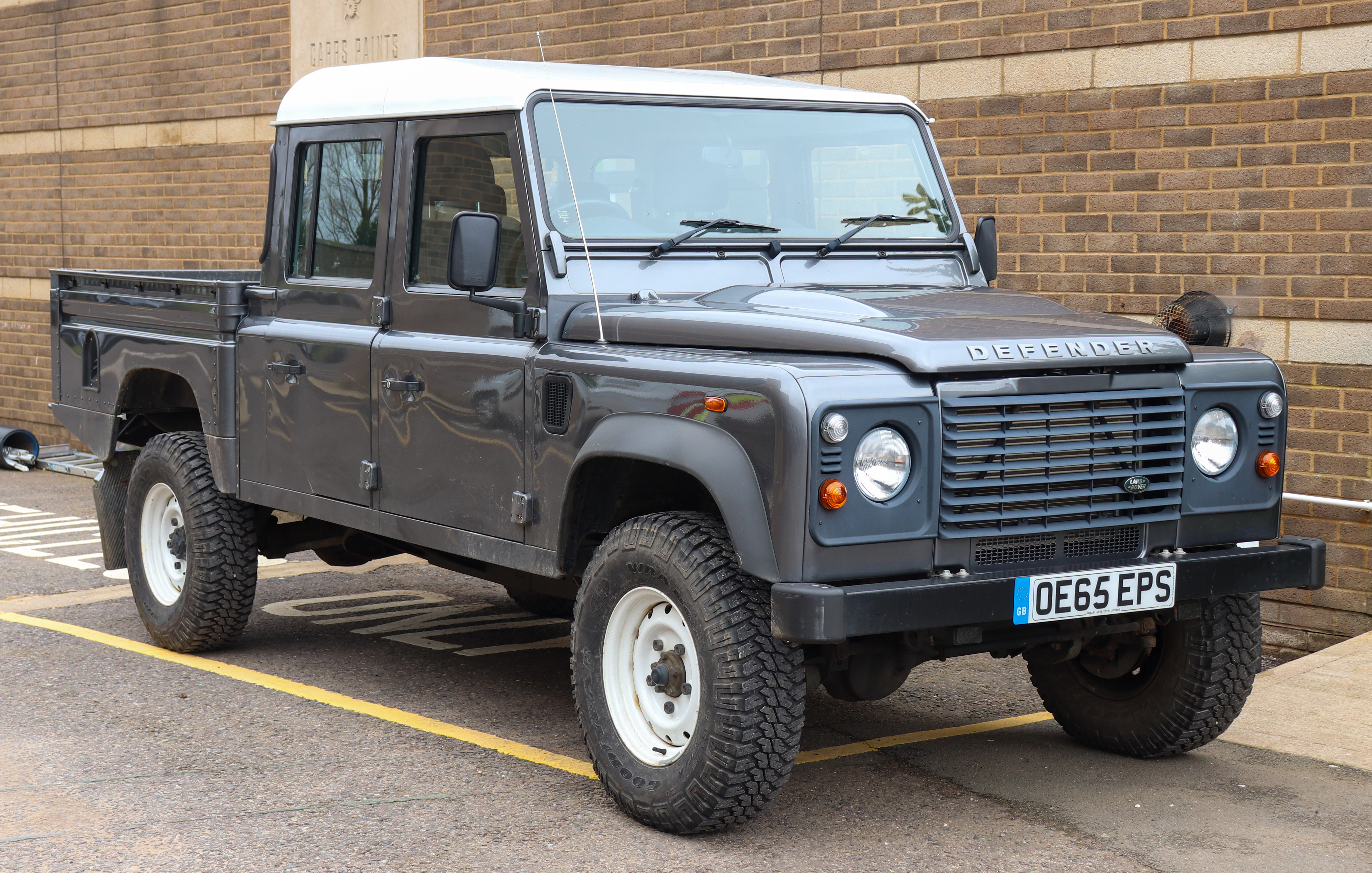
Land Rover Defender Octa
"...she was there with the Land Rover team because they had the Defender Octa out there racing."
The Defender Octa is a special, tougher version of the Land Rover Defender. The hosts mention it because it was used in racing, showing it’s meant for rough off-road conditions.
The Land Rover Defender Octa is a high-performance, off-road-focused variant of the Defender lineup. In the segment, it’s referenced as being “out there racing,” which highlights how Land Rover builds special editions intended for extreme terrain and motorsport-style durability.
Saudi Arabia
"And she'll tell you how they did and her experiences of going out to Saudi Arabia and all that kind of good stuff."
They’re talking about going to Saudi Arabia, which is known for harsh desert conditions. Those events are tough on cars because of heat and sand, so the vehicle has to be built to handle it.
Saudi Arabia is referenced as the location for the team’s experience, which matters because desert rallies and endurance events impose extreme heat, sand, and long-distance stress on vehicles. That kind of environment is a major test of cooling, filtration, tire wear, and drivetrain durability.
synthetics
"...in partnership with Amsoil. The maker of the best synthetics and the same ones we use in our rigs."
Synthetic oil is a type of engine oil designed to last longer and handle high heat better. That can be helpful when you’re driving hard or in demanding conditions.
“Synthetics” refers to synthetic lubricants, which are engineered to resist breakdown better than conventional oils under heat and stress. In off-road and long-haul use, that can help maintain lubrication and reduce wear when engines and drivetrains run hard.
tire pressure gauge
"The current Amsoil promotion is a ruggedized tire gauge... and you can get yourself a free tire pressure gauge..."
A tire pressure gauge tells you how full your tires are with air. Checking pressure helps the tires grip better and wear more evenly.
A tire pressure gauge is a tool used to measure how much air is in your tires, which directly affects grip, ride comfort, and tire wear. The segment calls it “ruggedized,” implying it’s designed to survive frequent use in a truck/off-road context.
lifted, lowered
"We have the lifted, we have the lowered and everything in between."
Lifted means the truck sits higher than normal; lowered means it sits lower. People do this to change how the truck handles and how well it deals with rough roads or off-road trails.
“Lifted” and “lowered” refer to changing a truck’s ride height relative to stock. Lifted setups typically improve ground clearance for off-road use, while lowered setups can improve aerodynamics and handling on-road.
diesel
"We'll talk about trucks that run on diesel, electricity and our gasoline."
Diesel is a type of fuel used in many trucks. It’s known for giving strong pulling power, which is why it’s popular for work and long drives.
Diesel is a fuel type commonly used in trucks because it can deliver strong torque and good efficiency. In heavy-duty applications, diesel engines are often chosen for towing and long-distance durability.
electricity
"We'll talk about trucks that run on diesel, electricity and our gasoline."
Electric trucks run on batteries and electric motors. Instead of burning fuel in an engine, they use electricity stored in the battery to move.
Electric trucks use battery power and electric motors instead of a traditional internal-combustion engine. The episode’s mention signals they’ll compare different powertrains (diesel, electric, and gasoline) for real-world truck use.
gasoline
"We'll talk about trucks that run on diesel, electricity and our gasoline."
Gasoline is the common fuel used in many cars and some trucks. The show is basically saying they’ll cover trucks that use different kinds of power.
Gasoline refers to spark-ignition fuel used in many conventional trucks. The episode’s powertrain lineup (diesel, electric, gasoline) suggests they’ll discuss how each fuel type changes performance, cost, and practicality.
Mercedes Lilianthal
"I'd like to welcome back our friend, Mercedes Lilianthal to discuss her experiences down at the Dakar rally this year."
Mercedes Lilianthal is the person the hosts bring back to talk about what she saw and experienced at the Dakar rally. She’s not a car brand here—she’s the guest.
Mercedes Lilianthal is the guest being interviewed about her experiences covering the Dakar Rally. The episode frames her as a returning contributor with firsthand exposure to the event.
Jaguar Land Rover
"Mercedes, you were there with JLR this year. I was, I was, Jaguar Land Rover."
Jaguar Land Rover (JLR) is the company Mercedes says she was with at the Dakar rally. The host is basically saying different automakers sent people to cover the event.
Jaguar Land Rover (JLR) is named as the organization Mercedes was with during the 2026 Dakar Rally coverage. JLR is a major automaker group, and their presence implies manufacturer involvement in rally-related media or engineering storytelling.
beadlock wheels
"Well it's that, I've got four big tires and some beadlock wheels."
Beadlock wheels are special rims that hold the tire onto the wheel even when you air the tires down. That helps off-road tires grip better and stay seated.
Beadlock wheels use a clamping ring that locks the tire bead to the wheel rim. That lets drivers run lower tire pressures for more traction and ride comfort without risking the tire slipping off the rim.
running low tire pressures
"Well it's that, I've got four big tires and some beadlock wheels. It's that, I've got four big tires and some beadlock wheels."
Off-road racers often let air out of their tires so they can flatten a bit on the ground. That makes them grip better over sand and rocks, but beadlocks help keep the tire from coming loose.
In desert rallying, lowering tire pressure increases the tire’s contact patch and helps absorb bumps. Beadlocks are often used so the tire can stay securely mounted at those lower pressures.
bucket list type things
"So it was definitely one of those bucket list type things for me and especially being there for the Dakar."
A “bucket list” is something you really want to do at least once. Here, it means the Dakar trip was a big dream for the host for a long time.
“Bucket list” is a way to describe a long-desired goal you finally get to do. In this context, the host is talking about traveling to the Dakar and covering it as a career milestone.
last minute deal
"Because it was sort of, I guess maybe more of a last minute deal, like you wanna come out and cover our race truck?"
They’re saying the plan came together quickly, not months in advance. For covering a race, that usually means scrambling to arrange travel and get access in time.
A “last minute deal” here describes how the Dakar coverage opportunity came together quickly, with minimal lead time. In motorsport terms, that often means rapid logistics for travel, media equipment, and vehicle access.
FIA
"...updating the regulations with FIA with the organization to basically bring in manufacturers..."
FIA is the organization that helps make the rules for car racing. When they update regulations, teams have to redesign or adjust their vehicles to comply.
The FIA (Fédération Internationale de l’Automobile) is the governing body that helps set and oversee rules for many forms of motorsport. In rallying, it’s involved in defining technical regulations that manufacturers must follow.
current based vehicles
"...bring in manufacturers with current based vehicles, not the ones that were way back when."
This means the race trucks are based on newer production vehicles, not ancient designs. That usually changes what parts and engineering choices the team has to make.
“Current based vehicles” refers to building rally raid entries from modern production platforms rather than older homologated designs. This typically changes engineering priorities—packaging, electronics, and compliance—while still requiring rugged off-road capability.
regulations
"So the regulations were old. So they had to wait with a lot of testing... until they figured out, okay, this is what this regulation is gonna say... This has to stay stock..."
Racing regulations are the rulebook for what you can and can’t change on the vehicle. If the rules say certain parts must stay stock, teams have to build around that limit.
Motorsport regulations are the technical and sporting rules that define what a vehicle is allowed to be. When rules change—like requiring parts to “stay stock”—teams must redesign systems and validate compliance through testing.
testing the vehicles
"So they had to wait with a lot of testing and things like that until they figured out, okay, this is what this regulation is gonna say."
Testing is how teams prove their vehicle can handle the race. They run it through conditions that mimic the event so they can fix problems before competition.
Vehicle testing in rally raid development is used to validate durability, cooling, suspension behavior, and how the truck performs under the specific stresses of the event. It also helps teams confirm that the car meets the evolving technical requirements.
V8 powered Defender
"So they were based off production Octa, which is the V8 powered Defender."
They’re talking about a Land Rover Defender with a V8 engine. A V8 usually means more power and stronger pulling ability, which helps for heavy-duty driving and off-road work.
This refers to a Land Rover Defender variant that uses a V8 engine. The V8 layout typically provides strong torque for towing and off-road crawling, and it’s often chosen when the goal is performance plus durability.
extended wheelbase
"there's now an extended, extended wheelbase one."
Extended wheelbase means the car’s frame is stretched longer between the wheels. That typically gives more room inside and can make the ride feel more comfortable.
An extended wheelbase means the distance between the front and rear axles is increased. That usually improves interior space and ride comfort, and it can help specialized builds carry more equipment.
electronics
"Personally, I had some issues early on with Defender with some of the electronics and stuff, go figure English company, right?"
The hosts mention early issues with Defender “electronics,” which usually points to infotainment, sensors, or control modules that can cause warnings or drivability quirks. Modern vehicles rely heavily on electronic control units, so software updates and diagnostics are often key to resolving these problems.
stock class
"So basically, let me just start with things that they can't change because they did a lot of modifications, even though they're technically in the stock class."
“Stock class” means the race vehicle has to stay close to the regular production model. The rules restrict big changes, so teams focus on allowed upgrades like suspension tuning and some internal components.
A “stock class” in motorsport means the rules limit how much teams can change from the production vehicle. That’s why they can’t freely swap major components like the engine or transmission, but they may still be allowed to modify certain internal parts and suspension within the rulebook.
engine
"Stock class teams can't change things like production specific items like the engine, the gearbox, differential housings, or the external body per se, as far as that is concerned."
The engine is the main power unit of the vehicle. In some race classes, rules may prevent teams from swapping it so the competition stays more “stock-like.”
In racing rule discussions, the “engine” is one of the major components teams often aren’t allowed to change in stock-based categories. Limiting engine swaps keeps performance closer to what the vehicle is capable of in production form.
differential housings
"Stock class teams can't change things like production specific items like the engine, the gearbox, differential housings, or the external body per se, as far as that is concerned."
The differential housing is the metal “case” that holds the gears inside the differential. Keeping the housing the same helps ensure the car’s basic drivetrain layout stays close to the original.
Differential housings are the structural casings that contain the differential gears and bearings. In many stock-based rules, teams may be allowed to change internal parts but must keep the housing shape/attachment points to preserve the production architecture.
gearbox
"Stock class teams can't change things like production specific items like the engine, the gearbox, differential housings, or the external body per se, as far as that is concerned."
The gearbox is what controls how the engine’s power gets sent to the wheels. In some racing rules, you can’t swap it freely because it affects how fast and how well the car drives.
A “gearbox” is the transmission system that changes engine power into usable wheel torque through different gear ratios. In stock-class rules, the gearbox is often restricted because changing it can significantly alter acceleration and drivability.
differential internals
"They can do different things like they updated the differential internals, but kept the same housings."
The differential is what helps the wheels turn at different speeds. “Internals” are the parts inside it, and changing them can make the truck grip and drive better on uneven terrain.
“Differential internals” are the gears and internal components inside the differential housing. Updating them can improve how the vehicle transfers torque—especially important for off-road traction—while still complying with rules that require keeping the same housing.
suspension
"They kept the same points for mounting their suspension, but they have different upgraded suspension. They've got larger tires and a larger track width."
Suspension is the system that connects the wheels to the body and helps the tires stay in contact with the road. Upgrading it can make a vehicle handle rough terrain much better.
Suspension determines ride quality and how well a vehicle maintains tire contact over bumps, ruts, and uneven surfaces. Even when mounting points are fixed by rules, teams can upgrade suspension components to increase travel, durability, and control for off-road stages.
track width
"They kept the same points for mounting their suspension, but they have different upgraded suspension. They've got larger tires and a larger track width."
Track width is how wide the vehicle is from one side to the other at the wheels. A wider track can make the truck feel more stable, especially when driving quickly over rough ground.
Track width is the distance between the left and right wheels on the same axle. Increasing it can improve stability and reduce body roll, which helps on fast off-road sections and when cornering on uneven surfaces.
larger tires
"They kept the same points for mounting their suspension, but they have different upgraded suspension. They've got larger tires and a larger track width."
Bigger tires can help the vehicle clear obstacles and grip better on dirt and rocks. They can also change how the truck feels to drive, so teams usually adjust other parts to match.
Larger tires increase ground clearance and can improve traction by providing more contact patch and better ability to roll over obstacles. They also affect gearing and steering feel, so teams typically pair tire changes with suspension and alignment adjustments.
35 inch BFG race rubber
"And they ran a 35 inch BFG race rubber, for instance. They have bespoke rally spec brake systems, for instance,"
They’re talking about BFGoodrich tires made for racing/off-road use. The “35 inch” part is the tire size—bigger tires usually help the truck clear obstacles and grip better on rough terrain.
“BFG” refers to BFGoodrich, and “race rubber” means a competition-oriented tire. A “35 inch” tire size is a common off-road rally/truck setup that increases ground clearance and helps with traction over loose surfaces.
bespoke rally spec brake systems
"They have bespoke rally spec brake systems, for instance, that has vented discs, six piston in front and four piston rear calipers."
They’re describing custom brakes built specifically for rally racing. Rally brakes are designed to handle lots of hard braking without overheating and fading.
“Bespoke” here means custom-built for the rally application rather than a standard production setup. Rally brake systems are often tuned for repeated hard stops, heat management, and predictable pedal feel under vibration and dust.
vented discs
"that has vented discs, six piston in front and four piston rear calipers. There's a whole host of stuff."
Vented brake rotors have channels inside them to help cool the brakes. Cooler brakes work better and are less likely to lose stopping power when you brake hard repeatedly.
Vented brake discs have internal channels that move air through the rotor to improve cooling. That helps reduce brake fade during long or repeated high-energy stops typical of rally stages.
six piston in front and four piston rear calipers
"that has vented discs, six piston in front and four piston rear calipers. There's a whole host of stuff."
More pistons usually means the brake caliper can squeeze the pads more evenly. They’re also setting up the front and rear brakes differently so the truck stops hard but stays stable.
Multi-piston calipers clamp the brake pads more evenly and can provide stronger, more consistent braking. Using a different piston count front vs. rear is common because front brakes do most of the work under braking, while the rear is tuned for stability and balance.
greater ground clearance and approach and departure angles
"They modified the front and rear a bit for greater ground clearance and approach and departure angles. I mean, there's all sorts of stuff,"
They’re adjusting the truck so it can drive over rough stuff without hitting the ground. “Approach” and “departure” angles describe how steep it can go up and down before the front or rear gets stuck on the terrain.
Ground clearance and approach/departure angles are key off-road geometry metrics. More clearance and better angles reduce the chance of scraping the bumper or underbody when climbing obstacles or descending steep sections.
IFS front, IRS rear
"and all independent suspension vehicles, IFS front, IRS rear, typically in the stock setup, it's gonna be an airbag suspension."
IFS and IRS mean the front and rear wheels don’t move as one solid unit. That helps the tires stay in contact with the ground when the road is bumpy.
IFS (Independent Front Suspension) and IRS (Independent Rear Suspension) describe suspension layouts where each wheel can move somewhat independently. Independent setups generally improve wheel control over uneven terrain, which is valuable in rally/off-road conditions.
single coil over
"The front was single coil over and then the rear had parallel twin dampers. Okay, so it sounds like they used the mounting systems"
A coilover is a spring and shock combined into one piece. It’s a common race/off-road choice because it helps control how the wheel moves over bumps.
A coilover setup combines a coil spring with a shock absorber into one unit. Using a “single coil over” at the front suggests a simplified, race-oriented suspension arrangement designed for consistent damping and ride control.
parallel twin dampers
"and then the rear had parallel twin dampers. Okay, so it sounds like they used the mounting systems"
They’re using two shocks working together instead of one. That can help the suspension control the truck better when it hits lots of bumps.
“Parallel twin dampers” means two shock absorbers working together on the same axle/wheel assembly. This can increase damping capacity and help manage heat and control during repeated impacts in rally stages.
non-air, more of a race shock
"and then they went to a non-air, more of a race shock, which is what I would have expected them to do"
They’re saying they likely switched from air-suspension behavior to a more traditional race shock setup. Race shocks are tuned to control the truck’s movement better over repeated hard hits.
The discussion contrasts airbag suspension with a “race shock” setup, implying they moved away from air springs for the actual damping/suspension behavior. Race shocks are typically valved and built to handle high-frequency impacts and sustained loads with more predictable performance.
Bilstein
"And it looks like they partnered with Bilstein. Yeah, which, everybody knows we're huge fans of the show and I run on my personal vehicles."
Bilstein makes shock absorbers and suspension parts. If a Dakar truck partners with Bilstein, it typically gets tougher shocks designed to handle rough roads for a long time.
Bilstein is a well-known suspension and shock-absorber brand, especially famous for its monotube gas-pressure dampers. When a Dakar-related project partners with Bilstein, it usually means the truck is using race-focused shock tuning to survive repeated impacts and long-distance heat cycles.
TSD or regularity rallies
"what Andy and I do, my husband Andy and I, what we do is TSD or regularity rallies and TSD stands for Time Speed Distance Rallying."
TSD rallies are less about going as fast as possible and more about hitting the right speed at the right time over a route. You’re trying to stay “on schedule,” not just win by fastest driving.
TSD (Time Speed Distance) rallying is a navigation-focused motorsport where competitors follow a schedule of target speeds over set distances. Instead of racing for the fastest time like Dakar’s main stages, TSD rewards consistency, accurate timekeeping, and precise driving to stay on pace.
Time Speed Distance Rallying
"what Andy and I do, my husband Andy and I, what we do is TSD or regularity rallies and TSD stands for Time Speed Distance Rallying. That is very different than what the main part of Dakar does."
In Time Speed Distance rallying, you have a plan for how long each section should take and how fast you should go. The goal is to match that plan as closely as possible.
Time Speed Distance Rallying (TSD) uses a time-and-distance plan to define how fast you should travel between checkpoints. Drivers and navigators work together to maintain the correct pace, making it fundamentally different from Dakar’s competitive stage racing format.
Dakar Classic
"I would akin myself to say that's more like Dakar Classic. So there's Dakar Classic that is within the main Dakar rally,"
Dakar Classic is Dakar for older vehicles, with rules that keep the cars closer to their original era. It’s generally a different vibe than the main Dakar race.
Dakar Classic is a category within the Dakar event for older, historically significant vehicles, typically with rules that emphasize preservation and period-correct setups. It’s often positioned as a more “heritage” and less cutting-edge competition than the main Dakar field, which helps explain why the hosts compare it to their own rally style.
regularity rallying
"Every day, it's all regularity. So co-drivers or navigators like I am when I compete with Andy basically say, okay, you need to go this fast..."
In regularity rallying, you’re not racing to win by going as fast as possible. You’re trying to match a target pace so you stay “on the mark” throughout the route.
Regularity rallying is a form of competition where the goal isn’t simply to be the quickest. Instead, drivers and co-drivers follow a pace/target based on distance and time, aiming to stay within a narrow “just right” window.
co-drivers or navigators
"So co-drivers or navigators like I am when I compete with Andy basically say, okay, you need to go this fast... all that type of stuff based on the odometer reading..."
Rally co-drivers are the “map and instructions” person in the car. They tell the driver what to do next—like when to slow down or turn—based on the route notes and distance readings.
In rallying, the co-driver/navigator reads the route instructions and pace guidance, then calls out directions and speed changes. Their job is to keep the team on schedule using the odometer and the event’s mileage/km targets.
odometer reading
"...all that type of stuff based on the odometer reading and how much mileage or kilometers in that case, they need to go."
The odometer tells you how far you’ve gone. In rallying, that distance reading is used to hit the right timing and speed targets for each part of the route.
In rally navigation, the odometer (distance measurement) helps the co-driver time and pace the car against the route instructions. Because many events are organized around distance milestones, accurate distance tracking is critical to staying on target.
stage rally
"it's kind of like what you would think of what stage rally would be here, and, well, globally, but also in North America. So that's not what Andy and I do, although we would love the opportunity but stage rally is like, you need to have full, full roll cage, full everything."
Stage rally means you race on timed sections of road, then you stop and reset before the next section. Since it’s intense and risky, the cars usually need serious safety gear.
Stage rally is a format where competitors race against the clock on closed-off sections (“stages”) and then regroup between stages. Because the cars are pushed hard in unpredictable conditions, safety equipment like roll cages is typically required.
roll cage
"but stage rally is like, you need to have full, full roll cage, full everything. And it's like the Baja 1000."
A roll cage is a metal frame inside the car that helps keep you protected if the car flips or gets hit hard. It’s common in race cars because it’s built to handle extreme crashes.
A roll cage is a reinforced metal safety structure inside the cabin designed to protect occupants during rollovers or impacts. In motorsport, it’s part of meeting safety regulations and helps maintain survival space when the vehicle is stressed.
Baja 1000
"And it's like the Baja 1000. Like it's a full race support, it's like a legit, you know."
The Baja 1000 is a famous off-road race in the desert of Mexico. It’s a big deal because it’s long, rough, and takes a lot of planning and support to do well.
The Baja 1000 is a long-running off-road race in Mexico known for high speeds over desert terrain and demanding navigation. It’s often used as a benchmark for how much support, preparation, and logistics are required to compete at a serious level.
JLR
"to see such a finely tuned machine like JLR with the Defender Rally Team and the trio of competitors..."
JLR is short for Jaguar Land Rover, the company that makes Land Rover and Jaguar vehicles. Here it’s being mentioned as a team that builds and supports rally machines.
JLR stands for Jaguar Land Rover, the parent company behind brands like Jaguar and Land Rover. In the context of rallying, it refers to a manufacturer-backed effort to field and support specialized off-road vehicles.
side by sides
"I think they both came from the SSB world with side by sides."
Side-by-sides are off-road machines with seats for a driver and passenger, made for dirt and rough trails. People often race them before moving up to bigger rally-style events.
Side-by-sides (often called UTVs) are compact off-road vehicles built for rough terrain and short-course racing. They’re commonly used as a stepping stone into higher-level rally and desert racing because they’re relatively lightweight and durable.
support semis
"...with all the different support semis and things in the bibwack."
Support semis are big trucks that follow the team to carry supplies and spare parts. They help the crew fix cars quickly and keep everything running.
Support semis are large trucks used to haul equipment, spare parts, tools, and sometimes multiple vehicles for a racing team. In big off-road events, they’re essential for fast repairs and logistics between stages.
bivwack
"...with all the different support semis and things in the bibwack. Again, I was there for stage two and three..."
A bivouac (often spelled “bivvy” or “bivwack” in transcripts) is the temporary camp where rally teams park, service vehicles, and prepare for the next stage. It’s where you’ll see crews working on cars, organizing spares, and managing schedules.
stage two and three
"Again, I was there for stage two and three, which is both in Alula. So I was there early on, right as they were just getting started."
A stage is a timed part of the race. The course is broken into sections, and each section can feel very different from the last.
In rally-style events, a “stage” is a timed section of the route where competitors push for speed. Stages are separated by service or transit periods, and each stage can have different terrain and hazards.
consumables
"So it was so neat to see how many semis, which semis, what do they have for consumables? How many engines did they bring?"
In motorsport logistics, consumables are items that get used up during the event, such as fluids, filters, tires, and other service parts. Teams plan consumables carefully because running out can end a campaign or force slow repairs.
signed up for three years
"Now, I guess it's for this series. They've signed up for three years and they've got three vehicles, right?"
A multi-year program in motorsport usually means a team commits to a longer development and competition cycle rather than a one-off entry. That allows better planning for vehicle preparation, spares, and driver/co-driver continuity.
three vehicles
"They've signed up for three years and they've got three vehicles, right? Yes. So they have a total of five vehicles,"
Teams sometimes bring more than one car so they’re not stuck if something breaks. If one vehicle needs work, another can keep the program going.
Having multiple vehicles in a rally-style series can reduce downtime if one car is damaged or needs major repairs. Teams may also run different setups or keep spares ready for quick swaps.
mule vehicle
"one including the mule vehicle. And they told me in an interview that we had and kind of a walk around when we were taking towards the bibwack,"
A mule vehicle is basically a test car. Teams use it to try out new parts in real-world conditions so they don’t risk the main race car before they know what works.
A “mule vehicle” is a prototype car used to test components, systems, and durability in real conditions before the final race or production-spec vehicle exists. In motorsport, it helps teams validate reliability and logistics—like what parts will fail and what spares are actually needed.
Request an Explanation
Heard something you'd like explained? We'll add it to this episode.
Sign in to request explanations for terms you heard.
Want to learn more?
Browse our glossary for plain-English explanations of automotive terms, jargon, and concepts.
Help improve this episode
See something that's not quite right? Our annotations are AI-generated and can sometimes miss the mark. Click the flag icon on any annotation to suggest a correction.