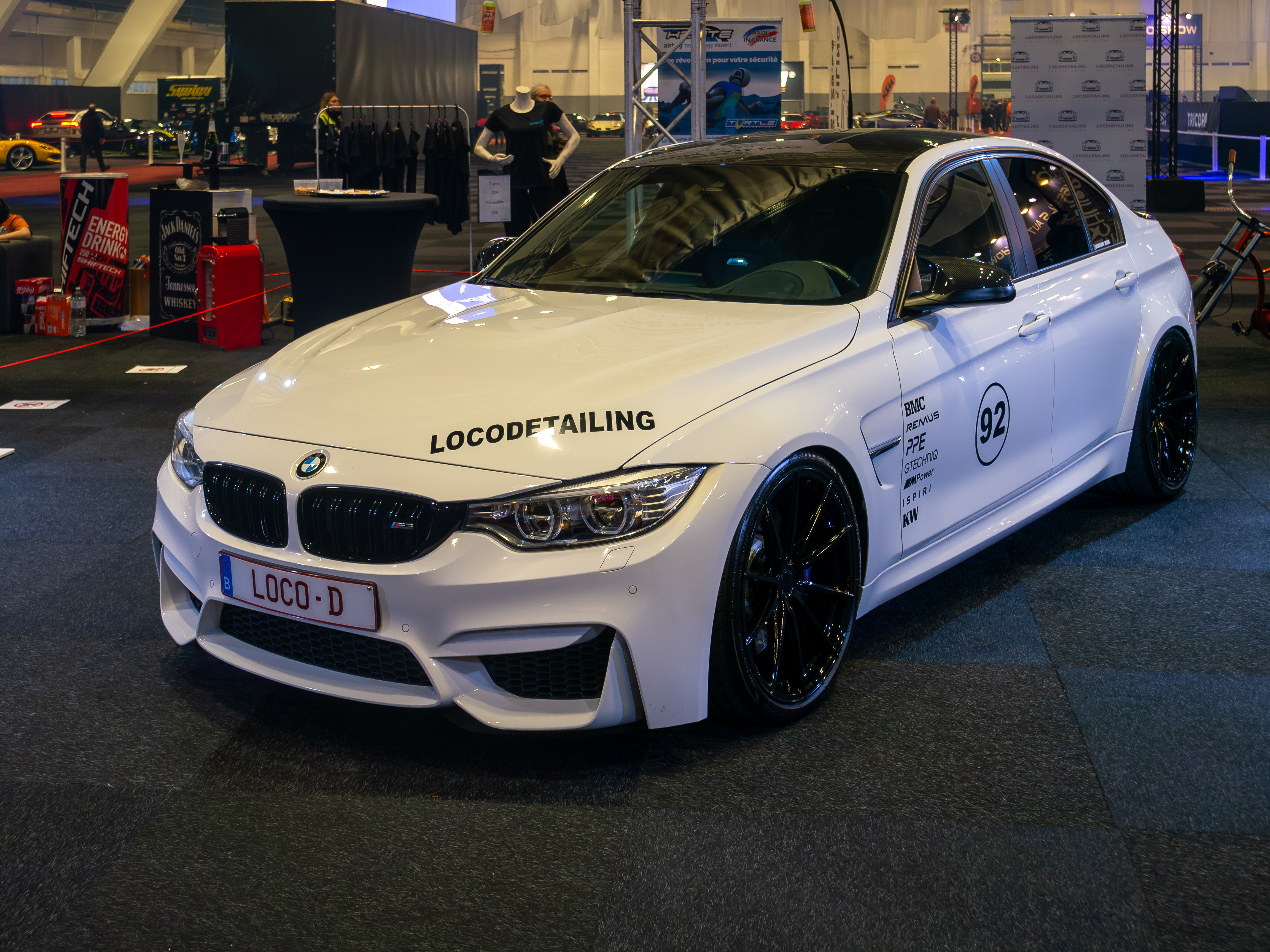
The Dodge Charger is a big car that is famous for being fast and powerful. The new version has a special kind of engine called a six-pack that helps it go really fast.
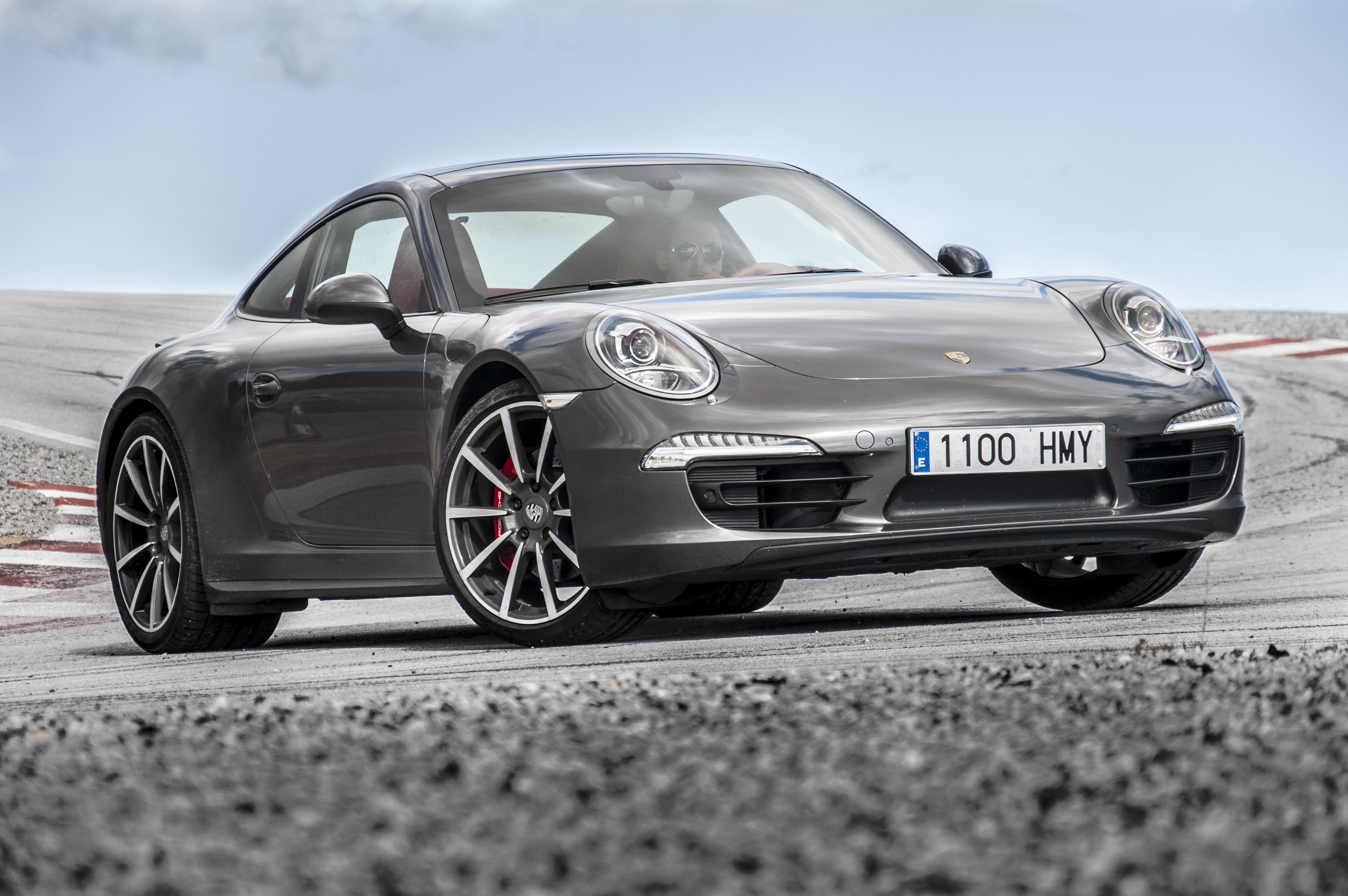
The Porsche 911 is a famous sports car that has a special kind of engine cooling using air instead of liquid. The 1997 version is one of the last to have this feature.
Lightweight engineering means making cars lighter so they can be faster and easier to drive. Instead of just making the engine stronger, they make the car weigh less.
The Triumph TR4 is an old British sports car that people liked to drive because it was fun and looked cool. It was made a long time ago and is still loved by car fans.
A muscle car is a strong and fast car made in America, usually with a big engine that makes it go really fast in a straight line. People like them because they look cool and are fun to drive.
Cars today have small computers inside that help run things like the engine and locks. Sometimes these computers can stop working and cause problems with the car.
Brand loyalty means people keep buying cars from the same company because they like it or trust it, even if other cars are similar.
Car
Mazda Miata
The Mazda Miata is a small, light sports car that is fun to drive. Even though it doesn't have a lot of power, it handles very well and is easy to maintain, making it popular among car fans.
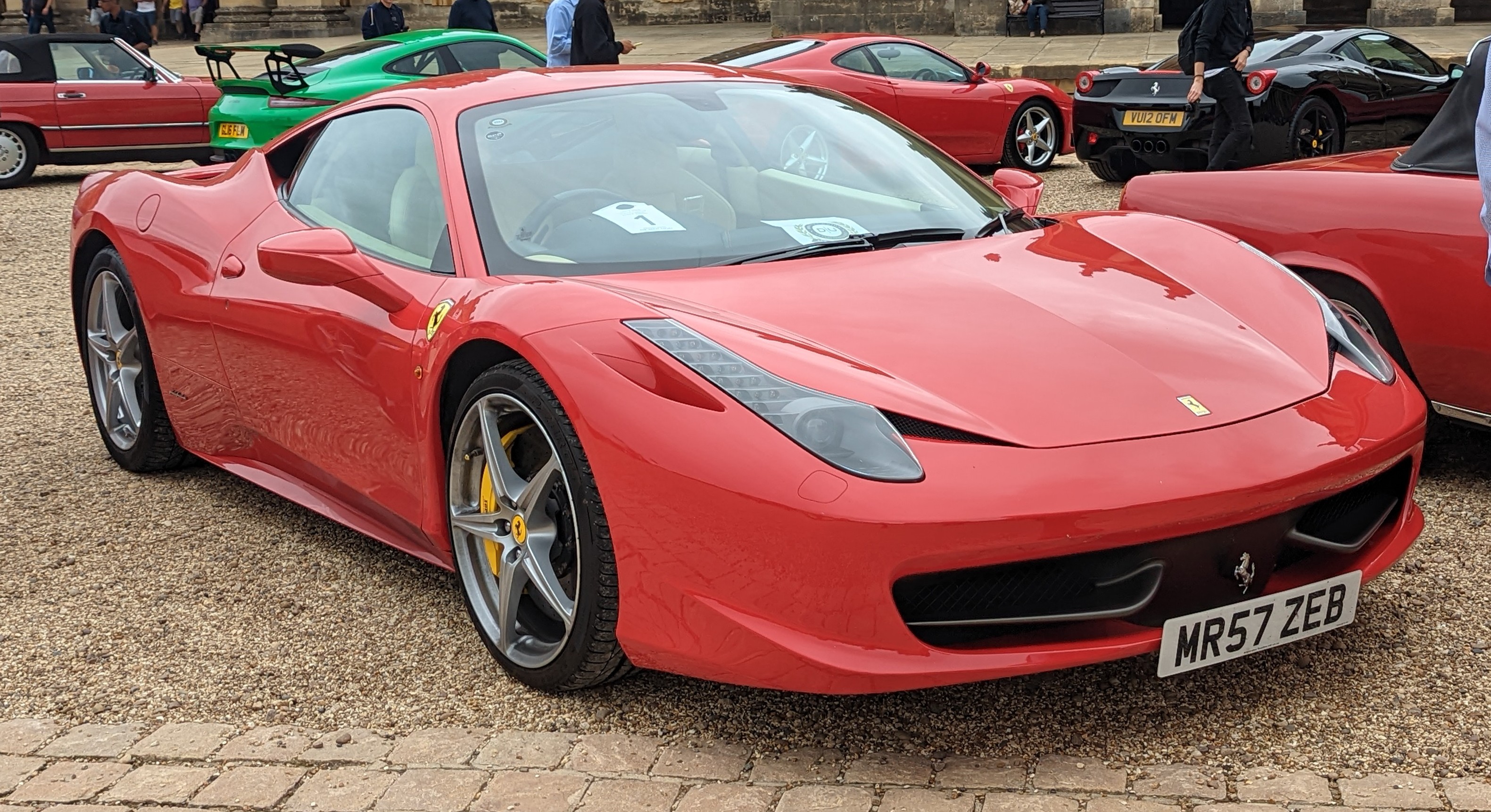
The Ferrari 458 Spider is a fancy sports car that can convert from a hardtop to an open roof. It has a strong engine and is very fast, but it is much more expensive and complex than smaller sports cars.
Regulations are rules that car makers have to follow to keep people safe, like how tall the windows can be.
Car
BMW concept car with sliding door
BMW made a special car design with doors that slide down instead of opening normally. This car was only a test and never sold because of rules about car safety and design.
A concept car is a special car made to show new ideas about how cars could look or work. They are usually not sold to people but help car makers decide what to build later.
The Fiat Abarth 124 Spider is a small convertible car that is fun to drive and looks stylish. It has a special engine that makes it faster and sportier than regular cars.
LIVE
Well, today I'm sitting here in a Dodge Charger, the new generation with a six-pack engine.
And one of my favorite things about my job is that when I'm shooting cars and I get a
new car, somebody approaches me and said, hey, what is that?
And that happened last week, not with this car, but with the Corvette.
And I'm here with Andrés, who I met him there at Marina.
How are you, Andrés?
Yeah, I was asking questions about the Corvette, the new Corvette.
And I'm a car guy, although we had a conversation.
I'm a very different car guy, like I am a car guy that doesn't like computers.
Exactly.
So like you like cars from the 90s?
From the 90s, yeah, from the 90s.
No, from the 90s.
Now, here's the thing I just want to say about that.
I also don't like cars that rust.
Yeah.
And I don't like cars that have vacuum hoses.
All the cars, beyond before a certain age, rust it.
You were, if you owned a new car, you were, you were fighting the rust.
Before they improved the processes.
Before 93.
Yeah, OK.
Before 93 is the date.
And then after that, when the pollution stuff came in, yeah, it was vacuum hoses.
Yeah.
Right.
And then, and then there was a nice, early computer, very, very small, simple.
Simple computers.
And then after that, it's a nightmare of computers, right?
And so I, I have, I collect cars from the 1990s.
OK.
They may be built later, but they were designed in 1990.
Oh, I see.
I see.
They were designed in 1990.
So what's in your collection?
Well, I've got a collection.
I have two German cars.
I have BMW M3, Z3 M3.
OK.
OK.
I have a design in the 90s, and then I have a, I have a Nissan 3300ZX and then I have
a Porsche from 97, the last of the, of the air cooled ones, the really oil cooled, but
air cooled, and then I have a Toyota from that period.
I have a Mazda from that period, an RX7, and I have a Honda.
So I've got 2,000.
Yeah, S2000.
So I have two Germans and essentially five Japanese.
No American cars there.
No Americans.
OK.
And the other thing I wanted to say is that what I love about that period is that the
Japanese were out competing with the Germans.
Yeah.
That was the generation that they wanted to beat the Germans, you know, and so they
really subsidized the cars.
Yeah.
And they succeeded.
They succeeded.
Right away, the S2000, for example, and the Nissan 300, they frightened the Germans.
The Miata was from that era, too.
The Miata was from that era, yeah.
But it was all about, basically, they won the race.
Yeah.
And then the Germans had to update their cars to be oil cooled, to beat the Japanese
on horsepower.
OK.
Because they couldn't beat them.
The Japanese were lightweight engineers.
They didn't need the horsepower.
Well, my two German cars are heavy.
They're heavy cars.
And so they need the horsepower, but the Japanese ones don't.
And I'm just stuck in that period of 1990.
I love it.
And you like the cars for the mechanics of it.
I mean, you're an architect, right?
I understand.
But what attracted you from being an architect?
Maybe the design or what?
I like the look.
I like the look.
I like the lack of bullshit in the interiors.
I don't like the way cars now look like running shoes.
I know what I mean.
Well, yeah, running shoes, you know, zoomie looks.
They were very, they were the last of the classic looks.
The interiors are really simple.
They're rational.
They have a lot of a lot of knobs and buttons, no touch screens.
But they're all sports cars.
I've never had them.
I'm seventy six.
Oh, wow.
And I have never not had a two seat sports car in mind.
Oh, wow.
That's amazing.
Ever since I was 18.
And let's go back to that.
But I wanted to ask you what was the first thing that attracted you to cars
when you were a kid or 18?
Or do you remember like I have a story and maybe you know him?
Alfonso Alvaisa.
Oh, yeah, yeah, yeah.
Oh, yeah, architecture.
Well, the sister and the sister, I don't remember her name,
but her sister right here in Miami, too, she's a very successful architect.
She builds like big, I think, arenas and buildings.
And Alfonso, his brother, her brother is the chief engineer and designer
for Nissan and Infiniti.
He's from Miami.
He has an architect family.
Yeah, the advice is here from Miami, from Cuba.
And so the sister works here.
Alfonso works now in Japan.
He's the head of design.
And he told me the story here in Miami and I very clear.
I remember that his father, the architect that came from Cuba,
had an office here in Coconut Grove and the office had like a balcony
and an entryway for the cars.
And the office was in the second floor and he was a little kid.
And and he heard a roar of a ninja coming in through the
through the through the entrance of the office.
Then he climbed over the fence or the balcony and he saw a jawa.
And he looked like a type E maybe or something like that.
And he heard it and being with his father as an architect.
He said from six, seven years old, whatever he that was, said,
I want to do that.
Not architect, but this time cars.
Do you have an idea of a similar story like that?
No, I don't have a story.
My first car was a was a Triumph TR4.
Oh, OK.
British guy and British sports car.
And so I'm always there's something I'm aware of.
The Japanese cars are narrow and light.
Yeah, the German cars are wide and heavy and heavy.
And I my job is to own all the 90s cars.
But what I love about them is when I wake up in the morning,
I know exactly which car I want to drive and they don't drive the same.
Oh, no, of course not.
I mean, completely different experiences.
Let's go see them.
No, no, no, wait a second.
I want to talk now about the modern cars before we go and see the cars.
So I guess you don't you drive one of the collection every day
or you don't have a modern car?
I don't have a modern car.
No, no, no.
So we're sitting here in the Dutch charger, like this is the last muscle car
at my office.
Yeah, at your office, but outside the office.
And suddenly the car is failing, like the the the key doesn't work.
Brand new Dutch charger.
It doesn't turn on.
So that's the thing with the computers, right?
Like so. Yeah.
And I was reading the story late last night before.
But that's a good thing.
Yeah, my Porsche right now is at the is at the dealer.
Yeah, it has just one little computer, which is the clicker.
OK, that turns off the the security.
Yeah, that broke.
And it's not so it has almost no computers and still tiny little computer
sent it to the shop today.
So the other the story that I was reading last night preparing
for this conversation is that cars because of these, the electronics,
the also the regulations, the infrastructure and all those things
that affect cars nowadays, pretty much every car is the same.
And they're going to become the same.
And they're going to converge.
Exactly.
And we're going to get to a point where there's no difference.
And the difference is going to be like maybe brand loyalty and maybe price.
And then if we include the Chinese factor in it, it's even worse or better.
I don't know what's going to happen is there's a couple of Chinese cars
that are at twenty thousand dollars that are going.
Yeah, it was what the Miata did.
Exactly. The price is going to be a factor.
It said enough of these big German cars were going to go down.
Yeah. The Miata had one hundred and twenty eight horsepower.
Right. Very, very light.
I mean, it was so light that it's super fast.
You're going to see you're going to see a first generation Miata that I have.
Oh, wow. OK. In British racing green, which was the only made eight hundred.
So they were they were fighting the Europeans in every way.
In every way.
Well, what happens is a Miata is really a Lotus that doesn't break down.
Yeah, very, very good.
So the other thing is that I have another story about the Miata.
One time I was in California in the Canyon, Malibu Canyon,
and we were shooting two different cars.
One is it was a Ferrari 458 Spider
and then the next one was the Miata.
So the Ferrari is a Ferrari.
I mean, I'm not going to say it was a bad car.
Unique. It was like something really good.
I got an amazing experience, but then we we drove it for a couple of hours.
And then I tried the Miata for another couple of hours.
And I the Miata, you're right.
It's much more fun because it's light.
You're going 60 miles an hour.
You're feeling you're going 120. Exactly.
You're like driving the manual transmission.
And although for our modern Ferrari, it's like an electronic double clutch,
which is more efficient.
I know that there's no human that can beat a computer like in that sense.
But the feeling of the classic cars is also one of the things.
Which has changed.
If you look at the old British sports cars,
you can see that they scoop down on the side.
Yeah, on the side.
You can put your elbow on the door, right?
The early Miatas also have that low side.
So you can actually see the road.
Lately, all the cars, all of them,
including especially the German ones, are like a bathtub.
Like I'm sitting here in your challenger.
OK. Yeah.
You know where that window ledges at my neck?
That's for regulation.
Yeah, but you think I look good?
Do you think I look good?
No, no.
The girl on the sidewalk.
I look like a stupid little head.
Yeah. OK.
Well, you know, with the other car with my elbow.
Yes. You see my elbow leaning out.
I look really cool. Exactly.
There was, I don't know if you remember, a BMW concept car that had a door
that slid down.
That was a concept car that maybe because of regulation didn't pass
and they never saw production.
But they're like a lot of different things
that are affecting the design of the car, the design of the car,
the performance of the car, everything converges.
So that way, that happens in architecture, too.
And in every other industry, right?
Everything coincides. Yeah. Exactly.
You know, they're, yeah.
So it's not just market preference, fashion.
OK. It's also regulation. Yeah.
So, I mean, is this.
You know, if you want character.
Exactly. You have to go back.
And by the way, there's such bargains, the old cars.
You know why? Yeah.
Because nobody knows how to drive a shift.
I know a shift.
I know that's another thing that is really, really surprising.
They're much less expensive, the shift car.
So there's no hope for the future in automotive, you think,
in this, in that sense, at least?
I mean, what do you think about?
I think every company, every company that makes a sports car
has got to have, I don't know what to tell you,
because I don't know anything about 19 after 2000.
I just don't know anything about after 2000.
Yes. So you lost hope.
If like 25 years ago, I don't have it.
You don't pay attention.
So like, it's not important to you anymore.
The last, the last design car that I might consider buying
is the Fiat, is the is the is the Fiat Abarth.
Abarth. Abarth based on the Biata.
Yeah. Yeah.
Oh, the it was the Spyder one.
Twenty one. I do something like that.
One twenty four. Yeah. One twenty four.
Yeah. But they get a new one.
Yeah. OK. OK.
That's the latest one that I would buy.
And I would recommend getting a whole one of those.
I know. So like now, what are you?
What are you facing with your collection?
I think you're going to get rid of some of them.
I now live in Europe six months. Oh, OK. OK.
And what's happening is in Miami, of course,
the roads are straight there.
There are no red lights. Yeah.
There's nothing to do here.
As soon as my first ship, my first car to Europe,
I was in heaven. I had a whole curvy road.
I know you're the road.
And by the way, you can just go 40.
I know. And again, I enjoy it.
I feel you're in heaven. Yeah. Yeah. Yeah.
But I'm so California is not an option for you.
Like Malibu. No, I live in France six months.
Oh, OK. Here's the thing.
My cars are dying from not driving them.
You know how that happens. Yeah.
They say, I guess. Yeah.
If you're not driving them, they're dying.
Wow. That's that's sad.
Because I don't drive them six months at a time.
So I've got to sell three of them.
You have kids? You have no word.
Oh, I've got to sell three of them.
OK. And then I can get other employees from the office
to drive the others. Oh, OK. OK.
OK. But I got to sell three.
But that's fine. I've had them all for 25 years.
Interesting.
So, I mean, really interesting conversation again.
And like, you never know when when what's going to happen.
But again, this is one of my favorite,
the favorite parts of my job.
Find people like you, not only for the interest in the cars,
but then like, you make start making the connections.
No, you know, the albaisas.
And then, you know, you know who designed the cars.
So now, you know, like, the history.
And if we start going backwards,
probably there's more stories.
I'm not a car nerd, by the way.
But I do like, I have to tell you,
I have to make this on the stage
and follow it with being correct.
Yeah. OK. My office.
We have a beautiful office, by the way.
Beautiful office.
And it's really skillful and it's mostly women.
Oh, OK. And that's because they're better.
I know. I don't have five sisters.
So I understand what you said.
They're just better.
But everyone wants to know, with cars, I'm in male company.
Oh, OK.
You see what I'm saying?
Like, you know, you can talk to them.
Yeah.
And so what I like about these cars,
even when they break down,
I love talking to the mechanics and things.
Yeah. Yeah.
Interesting cars.
So I want to say something like 70% of the,
do you know that in colleges,
if they didn't balance it out,
75% of the students would be women.
Yeah. And it would be better.
And right now, 70% of my office is women.
Well, thank you very much for your time.
I really appreciate the time that you're spending.
A few minutes with you.
I'm trying to get out.
There's so many buttons on the door.
You can't even get out.
There's so many buttons on the door that I can't.
Oh, there it's open now. Yeah.
What did I do to open it?
Thank you.
What did I do?
You just open it here with this little button here on the side.
How am I supposed to know that?
Thank you.
Want to see the color?
That's it for today's AI Auto Podcast.
With Javier Moda.
Hope you enjoyed the ride as much as we did.
Tune in next time for more on how AI
steering the wheel of tomorrow's autos.
Drive safe, stay curious, and catch you later.
About this episode
A passionate car collector shares his love for 1990s sports cars, favoring simplicity and mechanical purity over modern computerized vehicles. He discusses his diverse collection of Japanese and German cars from that era, highlighting the intense competition between manufacturers and the timeless appeal of lightweight, driver-focused designs like the Miata and S2000. The conversation touches on how modern regulations and electronics have homogenized car design and performance, leading to a loss of character. The collector also reflects on the challenges of maintaining classic cars and the joy of driving on curvy European roads.
In this episode, we explore why this car collector draws the line at 1992—the turning point when Computer-Aided Design (CAD) transformed car design. As engineering shifted from hands-on craftsmanship to digital precision, did cars lose some of their analog soul?
Hosted by Simplecast, an AdsWizz company. See pcm.adswizz.com for information about our collection and use of personal data for advertising.