
Salesman OFFERED to Commit FRAUD to Get Me a Better Deal!
About this episode
A live negotiation roleplay turns into a real-time call with an Acura dealer while the host tries to land 10% off an Acura Integra plus any available rebates. The discussion quickly shifts to how inventory varies by region, how dealers verify VIN/stock and trade paperwork for rebate eligibility, and how the host handles pushback from sales staff. There’s also a running debate about “going viral” versus being too aggressive, plus a brief, joking mention of fraud—then a pivot back to legitimate deal structure and rebate rules.
In this video I negotiate an Acura Integra and a Land Rover to prove that being nice to car salespeople gets you a better deal than being aggressive, and the results speak for themselves.One salesman recognized me and folded instantly, and the Land Rover dealer held firm until patience and competition got my client $6,000 off.
inventory
"Today, I want to negotiate on a car that, frankly, there's a lot of inventory on. I'm going to negotiate on an Acura Integra. Now, if you look at the Acura world, people are saying these cars are going over MSRP."
Inventory just means how many cars the dealership has available to sell. If they have a lot of them sitting around, they may be more willing to discount to make sales.
Dealer inventory is the number of cars a dealership currently has on-site (or in its immediate pipeline) that it can sell. In negotiations, more inventory often gives buyers more leverage because the dealer has more units to move.

Acura Integra
"Today, I want to negotiate on a car that, frankly, there's a lot of inventory on. I'm going to negotiate on an Acura Integra. Now, if you look at the Acura world, people are saying these cars are going over MSRP."
The Acura Integra is a small Acura car that’s meant to feel fun to drive. In this segment, they’re talking about negotiating its price because there’s a lot of them available.
The Acura Integra is a compact, front-wheel-drive hatchback/sedan-style performance-oriented model from Acura. In enthusiast circles it’s known for being a “driver’s” small car and for often being discussed in the context of pricing and availability when demand is high.
negotiations
"If I want to negotiate on something different, I want to know before the video starts, what do you guys think? Do you think we're going to get a big discount or are dealerships going to play games? Because that's what dealerships do. Let me know down below and let's get into the negotiations. Okay, let's call."
This part is about negotiating the car price—trying to see if the dealer will give a real discount or try to play games. They’re basically asking viewers what they think will happen.
The hosts are setting up a negotiation segment focused on whether the dealer will offer a large discount or use tactics to protect their profit. The discussion frames the negotiation as a contest between buyer leverage (like inventory) and dealership behavior.
rebates
"A couple of things, because there's some rebates [212.2s] that they have available."
Rebates are discounts the manufacturer (or dealer) gives you after you buy. They can lower the total cost, but they usually come with conditions you have to meet.
Rebates are manufacturer or dealer incentive payments that reduce the effective price of a new car. They’re often tied to eligibility rules like financing method, model/trim, or sometimes the customer’s trade-in situation.
trade it
"What do you currently drive? [214.5s] You don't have to trade it, [215.4s] but they didn't see the copy of the registration."
A trade-in is when you turn in your current car to the dealer to help pay for the next one. The dealer looks at your car and its paperwork to decide what they’ll offer and what deals you can get.
A trade-in is when you give your current vehicle to the dealer as part of the deal toward a new purchase. Dealers use trade-in details—like age, condition, and paperwork—to calculate the offer and to determine which incentives you can qualify for.
registration
"[215.4s] but they didn't see the copy of the registration. [217.7s] Yeah, yeah, of course."
Vehicle registration is the official document showing the car is legally registered to an owner. In sales, dealers may need a copy to verify ownership and eligibility for trade-in or incentive programs.
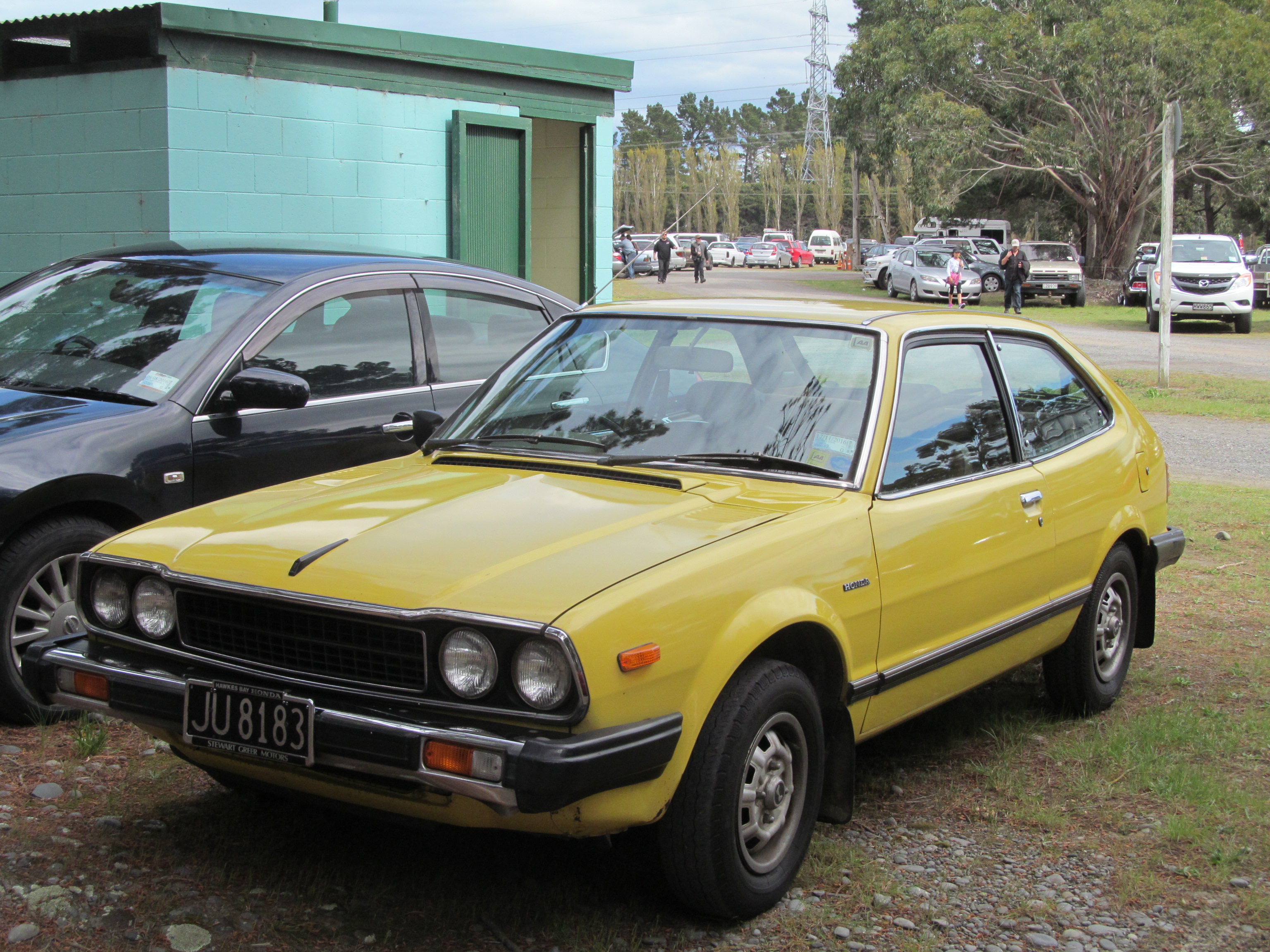
2006 Honda Accord
"So we have a 2006 Honda Accord. [224.0s] It's a Buick."
A Honda Accord is a common everyday car from Honda. Here, they’re talking about a 2006 Accord they currently drive, and the dealer is using that information to figure out what kind of deal or incentives you can get.
The Honda Accord is a long-running midsize sedan from Honda, known for being practical and easy to live with. In this segment, the speaker specifies a 2006 Honda Accord as the current car in the family, which matters because dealers often use the trade-in vehicle’s age and paperwork to determine eligibility for incentives.

Range Rover Sport
"Okay, so we're going to look for a Land Rover, Range Rover Sport, Dynamic P400."
Range Rover Sport is a luxury SUV from Land Rover. It’s the “sportier” version of the Range Rover lineup.
The Range Rover Sport is Land Rover’s performance-leaning luxury SUV, positioned between the brand’s smaller models and the full-size Range Rover. It’s typically chosen by buyers who want Range Rover comfort but with a sportier driving feel.

Land Rover Range Rover
"Okay, so we're going to look for a Land Rover, Range Rover Sport, Dynamic P400."
The Range Rover is a large, luxury SUV made for comfortable everyday driving and also capable of rougher roads. People talk about it a lot because it can be expensive, and the final price changes depending on the options you choose.
The Land Rover Range Rover is a luxury SUV known for its upscale interior, comfort-focused ride, and off-road capability. It’s often discussed in negotiations because it’s a high-demand, high-option vehicle where pricing can vary a lot based on trim and features. The podcast context also suggests they’re considering the Range Rover Sport and a specific “Dynamic P400” configuration, which highlights how performance and equipment choices affect the deal.
Dynamic P400
"Range Rover Sport, Dynamic P400. That is a plug-in hybrid,"
Dynamic P400 is a specific version of the Range Rover Sport. Different versions come with different features and power, which changes the price.
Dynamic P400 is a trim/powertrain designation used on certain Range Rover Sport configurations, where “P400” indicates a specific output class and “Dynamic” describes the equipment/drive character. It’s the kind of label that affects pricing because it bundles particular features and performance tuning.
plug-in hybrid
"Dynamic SE. That is a plug-in hybrid, Dynamic SE."
A plug-in hybrid is part electric and part gas. You can charge it by plugging it in, and it can run on electricity for shorter drives.
A plug-in hybrid (PHEV) is a vehicle that combines a gasoline engine with an electric motor and a battery you can recharge by plugging in. It can often drive on electricity for short trips, then switch to the engine when the battery is depleted.
Dynamic SE
"That is a plug-in hybrid, Dynamic SE. And they want..."
Dynamic SE is a particular trim level. It usually means a specific set of features, so it can change the total deal.
Dynamic SE is another trim/equipment level label for the vehicle configuration being negotiated. “SE” typically denotes a specific package of standard features, so it matters for what you’re actually paying for.
Giolla Green
"Whites, if necessary. Giolla Green, Varendza Blue,"
Giolla Green is a named paint color option. It’s part of the car’s configuration and can affect availability.
Giolla Green is a named exterior paint color option for the vehicle configuration being discussed. Like other named colors, it’s tied to the build and can affect what inventory exists.
Varendza Blue
"Giolla Green, Varendza Blue, or Copperthurn Gray. Green."
Varendza Blue is a specific exterior paint color. Picking a named color is part of the car’s build and can affect availability.
Varendza Blue is a named exterior paint color option used in the Range Rover Sport configuration. Named colors are part of the build spec, which can influence lead times and deal terms.
Copperthurn Gray
"Giolla Green, Varendza Blue, or Copperthurn Gray. Green."
Copperthurn Gray is a named paint color option. The exact color you pick can affect what’s available and sometimes the final price.
Copperthurn Gray is a specific exterior paint color option for the Land Rover/Range Rover Sport configuration. Color choices can affect availability and sometimes pricing because they’re tied to production scheduling and inventory.
fixed side steps
"And they added fixed side steps to the vehicle. Fixed side steps. Okay, walk me through that one."
Fixed side steps are like permanent foot rails on the side of a truck or SUV. They don’t pop out when you open the door—they’re just there all the time.
Fixed side steps are running boards that stay mounted to the rocker panel and do not deploy or retract. Unlike power-deploy “nerf bars,” they’re always visible and typically simpler (and cheaper) to live with.
deployables
"they're not the deployables that open, and when you open the door, they're just like on the side."
Deployable side steps are powered foot rails that come out when you open the door and then go back in. They’re more “mechanical” than fixed steps.
Deployables (in this context, deployable side steps) are power-operated running boards that extend when you open the door and retract afterward. They’re usually more complex than fixed steps, which can affect cost and potential service needs.
running boards
"That adds six grand for some running vessels, but really expensive running boards. Am I missing something?"
Running boards are the step rails on the side of the vehicle that make it easier to get in and out. They’re basically the same idea as side steps.
Running boards (also called side steps) are exterior trim pieces along the lower door area that help passengers step in and out. In the transcript, the host is contrasting them with cheaper fixed steps and calling out the pricing impact.

Mercedes-Benz Mercedesbenz Gls
"What vehicle currently do you drive now? I drive a Mercedes-Benz GLS. GLS, 2026."
The GLS is a big luxury SUV made to comfortably fit multiple passengers. It’s often discussed in price talks because it usually has lots of optional features that can change the total cost.
The Mercedes-Benz GLS is a full-size luxury SUV designed to carry passengers in comfort, with a premium interior and strong on-road refinement. It comes up in car negotiation discussions because it’s typically configured with many options, and the negotiated price can depend heavily on trim level and included packages. In the podcast context, the host mentions driving a GLS (2026), which makes it relevant to how buyers and sellers talk about pricing and value.
welcome credit
"let's see if it qualifies for what they call a welcome credit. Let's see, Mercedes-Benz GLS. Welcome credit, it does qualify for it."
A “welcome credit” is a special discount for new buyers. It’s basically money off the deal, but the dealer may require paperwork to prove you qualify.
A “welcome credit” is a dealer or manufacturer incentive offered to new customers. It functions like a discount applied to the transaction, and in this case it’s tied to documentation like proof of current registration and insurance.
insurance card
"Right, the only thing that we would need to claim that is a copy of the current registration and insurance card."
An insurance card is proof that your car is insured. The dealer may ask for it to make sure you meet the requirements for the discount.
An “insurance card” is the proof-of-insurance document issued by your insurer. In incentive programs, it’s commonly used to confirm you have active coverage, which can be required for eligibility.
trade-in
"You don't have to trade in the vehicle if you don't want to, and all that, so."
A trade-in is when you bring your current car and use it to lower the price of the new one. Here, they’re saying you don’t have to trade in your car to get the discount.
A “trade-in” is when you turn in your existing vehicle as part of the purchase deal, usually to reduce the amount you pay. This segment notes you don’t have to trade in the vehicle to qualify for the incentive being discussed.
service intervals
"Are you familiar with the service intervals on this vehicle? Because they don't need to see you for a long time... Service intervals on this vehicle are every two years or 21,000 miles, whichever of those two things come first."
Service intervals are the recommended schedule for things like oil and inspections. Here, they’re saying you should service the car every two years or when you hit 21,000 miles, whichever comes first.
Service intervals are the scheduled mileage/time targets for routine maintenance on a specific vehicle. In this case, the Land Rover’s schedule is every two years or 21,000 miles—whichever happens first—so you don’t wait too long if you drive more than expected.
21,000 miles
"Service intervals on this vehicle are every two years or 21,000 miles, whichever of those two things come first."
That 21,000-mile number is how far you can drive before the car is due for service. If you hit that sooner than two years, you should service it then.
21,000 miles is the mileage-based trigger for the vehicle’s scheduled maintenance. It’s paired with a time trigger (every two years), so the car can require service sooner if you drive a lot.
dealer discount
"[1944.4s] just to make something happen, because we don't discount these cars [1947.6s] like a Honda or Toyota or something like that. [1963.7s] I get you can't do 5K off, so I'll make it easy for you. [1990.2s] But that amount, we can't discount that amount."
A dealer discount is the price cut a car dealer offers to help you buy. The salesperson is saying they can’t lower the price by as much as you want, so they can only offer a smaller reduction.
A dealer discount is the amount a dealership reduces the selling price from the starting offer to close a deal. This segment discusses how the salesperson claims they “don’t discount these cars” and instead can only move the price by a limited amount, which is a common negotiation constraint in retail car sales.
Toyota
"[1944.4s] like a Honda or Toyota or something like that. [1947.6s] You see, I drive Mercedes-Benz. [1953.0s] I don't drive a thousand Toyotas, but I'll tell you,"
Toyota is a very common car brand. Here it’s used as an example of a brand that dealers might discount more than what they’re offering.
Toyota is a Japanese automaker known for high-volume production and a reputation for durability. In this segment, it’s mentioned as a comparison point for how other brands might be discounted more easily than the speaker’s Mercedes-Benz deal.

Mercedes-Benz My Mercedesbenz
"I don't drive a thousand Toyotas, but I'll tell you, I got a pretty hefty deal on my Mercedes-Benz. I'm a, they call me a crew negotiator."
negotiation constraints
"[1963.7s] I get you can't do 5K off, so I'll make it easy for you. [1966.7s] Let's just do $4,982 off. [1973.6s] That's going to get me fired if I give that off. [1986.7s] which would be like maybe $2,000 to make something happen like right now. [1990.2s] But that amount, we can't discount that amount."
Negotiation constraints are the limits on what a salesperson is allowed to do to lower the price. The speaker is saying they can’t offer the full amount the buyer wants because of rules at the dealership.
Negotiation constraints are limits on how much a salesperson or dealership is allowed to change the price or terms. Here, the speaker implies they have internal rules (and risk of getting fired) that cap how large a discount they can offer, even if the buyer wants more.
upcharged
"and everything is being upcharged now. So we don't have that margin anymore in these type of cars."
“Upcharged” means the dealer is adding extra costs beyond the starting price. Those extra charges can make the deal harder to discount.
“Upcharged” here means adding extra charges on top of the base price. In car deals, these can show up as dealer add-ons or fees that reduce the buyer’s ability to negotiate the final out-the-door number.
margin
"So we don't have that margin anymore in these type of cars. You guys don't have $4,000 a margin on your $105,000 car? We do not."
“Margin” is the dealer’s profit buffer on a car. If that buffer is small, they can’t offer big discounts because they’d lose money.
In car sales, “margin” is the difference between what the dealer (or the selling party) pays for the vehicle and what they sell it for. When the margin gets squeezed, the dealer has less room to discount or negotiate without losing money.
tariffs
"Because tariff and all this stuff, we, the companies ate all of that negative. We still feel the pain of the tariffs. As far as the Supreme Court made a ruling that those were illegal and they refunded."
Tariffs are extra taxes on imported products. If cars or parts cost more because of tariffs, dealers often have less ability to negotiate and may charge more to cover the added cost.
Tariffs are taxes the government charges on imported goods. In the context of car pricing, tariffs can raise the cost of vehicles or parts, which can reduce dealer flexibility and increase “upcharges” or final prices.
stock number
"I have a stock number, if that helps. I am ready when you are."
A stock number is like a reference ID a dealership uses for one specific car. When you give it, they can quickly find the exact vehicle you mean.
A stock number is the dealer’s internal identifier for a specific vehicle in their inventory. It helps the salesperson pull up the exact car’s details (specs, pricing, and availability) rather than searching by vague description.
conquest
"What rebates do you qualify for if you are aware or not? Conquest. For the conquest."
A conquest rebate is a discount meant to get you to switch to a new brand. It usually depends on what car you currently drive (or what you recently drove).
Conquest rebates are dealer or manufacturer incentives offered to persuade you to switch brands. They’re typically tied to having (or recently having) a competitor’s vehicle, and they can stack with other discounts depending on the offer terms.
add-ons fees
"[2427.5s] Do you guys have any add-ons fees? [2429.0s] Anything crazy like that?"
These are extra charges the dealer adds on top of the car’s base price. They can be legit add-ons, or they can be fees that make the final price higher than you expected.
“Add-ons fees” are extra charges added to the sale price beyond the base vehicle price. They can include dealer-installed items or administrative fees, and they’re often where the final “out-the-door” cost changes most.
dog fee
"[2429.9s] Just an $899 dog fee. [2432.2s] I appreciate that. [2432.9s] I know you dealt with $109 when they got this line item, [2435.9s] that line item."
“Dog fee” here is a dealer fee line item being quoted as $899. It’s not a standard industry term, but it functions like an administrative or documentation-style charge that increases the total cost.
electronic title fee
"[2437.2s] It's $899 dog fee. [2438.6s] It's $199 electronic title fee. [2440.6s] That's it."
This is a paperwork fee for getting the car’s title handled through the state electronically. It’s usually small compared to the car price, but it still adds to what you pay.
An “electronic title fee” is a charge for processing the vehicle’s title paperwork electronically. It’s a common dealer/admin fee that can vary by state and dealer, and it affects the final price you pay.
addendums
"[2454.4s] Well, we don't mess around. [2455.4s] We don't add addendums to our cars unless we actually [2458.0s] added a wheel to it or a running board, something significant."
An addendum is extra paperwork that changes or adds to the original agreement. They’re saying they only add it when they actually add real items to the car.
“Addendums” (addenda) are written additions or amendments to the sales paperwork. In this context, the dealer is saying they only change the deal by adding items that are truly added to the car (like a wheel or running board), not by inflating the paperwork with unrelated extras.
out the door
"[2525.2s] How about this? [2526.3s] I'll give you my buyer's order out the door at the two grand [2529.3s] plus the two grand."
“Out the door” means the final total price you’ll pay, not just the sticker price. It includes taxes and fees so you can compare deals fairly.
“Out the door” (OTD) is the total price you pay to take the car home, including the usual taxes and fees. In negotiations, it’s meant to remove ambiguity by rolling everything into one number.
concession
"[2547.9s] They called it a concession. [2549.4s] Weird name to call it, but sure. [2550.7s] A concession, $2,500 plus the $2,000 rebate,"
A “concession” here means the dealer is giving you a discount to help you buy. It’s like an agreed price break, usually combined with rebates.
In dealership pricing, a “concession” is a discount or allowance the dealer is willing to give to close the deal. It’s essentially a negotiated price reduction, often discussed alongside rebates and fees.
taxable fees
"[2549.4s] Weird name to call it, but sure. [2550.7s] A concession, $2,500 plus the $2,000 rebate, [2553.6s] and they have $205 taxable fees, $995 dock fees, $6,247 in tax,"
Some fees get taxed, and some don’t. “Taxable fees” are the ones that add to your total because sales tax applies to them too.
Taxable fees are charges that are subject to sales tax (or similar taxes) in addition to the vehicle’s base price. That means they can increase the final total more than “non-tax” fees.
dock fees
"[2550.7s] A concession, $2,500 plus the $2,000 rebate, [2553.6s] and they have $205 taxable fees, $995 dock fees, $6,247 in tax, [2559.1s] and $452 in non-tax fees."
Dock fees are charges dealers add for getting the vehicle from the manufacturer’s distribution point to the dealership. They’re typically part of the “fees” bucket that can be negotiated or at least compared across offers.
non-tax fees
"[2553.6s] and they have $205 taxable fees, $995 dock fees, $6,247 in tax, [2559.1s] and $452 in non-tax fees. [2561.6s] So I don't think any funny business is going on."
Non-tax fees are extra charges that don’t get taxed. They still raise the total price, but they don’t add sales tax on top of themselves.
Non-tax fees are dealer or administrative charges that are not subject to sales tax. They still add to the total price, but they usually don’t increase tax the way taxable fees do.
MSRP
"[2571.0s] What's your MSRP? [2572.3s] $102,9. [2573.0s] Yeah, this is $104,585, so."
MSRP is the “sticker price” the manufacturer lists for that exact car. The dealer can usually sell it for more or less than that number.
MSRP (Manufacturer’s Suggested Retail Price) is the sticker price a carmaker recommends for a specific trim and configuration. Dealers may sell for more or less than MSRP depending on incentives, demand, and negotiation.
Request an Explanation
Heard something you'd like explained? We'll add it to this episode.
Sign in to request explanations for terms you heard.
Want to learn more?
Browse our glossary for plain-English explanations of automotive terms, jargon, and concepts.
Help improve this episode
See something that's not quite right? Our annotations are AI-generated and can sometimes miss the mark. Click the flag icon on any annotation to suggest a correction.