Indy racing is a type of major American open-wheel race. It’s a different style of racing than sports cars, and the cars are built for speed on tracks like ovals and road courses.
Mecum Auctions is a company that sells cars at big auction events. In this segment, they explain that their goal is to bring car buyers and sellers together, and that it’s run as a family business.
“Fox body” is a nickname for a specific Mustang generation (late 1970s through early 1990s). The point here is that really clean, low-mile examples can sell for huge prices, which raises interest in the whole group.
They’re saying auction prices don’t just reflect demand—they help create it. If one great example sells for a lot of money, other buyers start believing the whole category is worth more.
It means making a car look nicer on the outside without actually fixing the important problems underneath. If you know cars, you can usually tell it’s just a quick cosmetic cover-up.
It means cutting the metal springs to make the car sit lower. It can look good, but it’s a rough shortcut that can make the ride worse and cause extra wear.
They’re talking about a group of Camaros from the Yanco collection. When Camaros are especially rare or in great shape, collectors will pay a lot—especially when multiple great cars are sold together.
The Ferrari 250 GTO is a legendary old Ferrari race car. Because it’s extremely rare and has a strong racing history, collectors will pay enormous money for it.
The Shelby Cobra is a classic American-style roadster known for being very fast. It’s connected to Carroll Shelby and has a strong racing reputation. The podcast mentions a specific Cobra with an important history.
The AC Cobra is a classic, high-performance sports car from the 1960s. It’s famous for being fast and for the Shelby connection that made the Cobra even more iconic.
The Ford GT40 is a sports car made by Ford that was designed for racing. It’s well known for its motorsport history. The podcast brings it up as a rare, important car to have in a collection.
A “survivor” car is one that’s been kept in its original, untouched-ish condition for a long time. When they call it a “museum piece,” they mean it’s basically a rare collectible that people want to preserve.
They’re talking about an old car that could move around on its own, but it was controlled with a remote. It’s the kind of tech that feels futuristic for its time, which is why it’s exciting to see.
The Bel Air is a Chevrolet trim level. The 1957 Bel Air is especially famous, and original cars usually sell for more because they haven’t been heavily changed.
“Factory custom” means the car was built with special options requested from the manufacturer. Those cars can be worth more because the setup is official and uncommon.
Collectors usually prefer cars that are still close to how they left the factory (“original” and “unmodified”). Low mileage generally means less wear, so those cars tend to be more attractive—and often more expensive.
A “chassis” is basically the main body frame of the car. If people suddenly start buying a lot of those frames, it usually means they’re planning to build or restore cars, which can push prices up fast.
Instead of buying a fully finished car, some collectors buy the car’s frame first and then build it up. The idea is that this can be a more realistic way to get into a model that’s otherwise too expensive as a complete car.
“C4 ZR1” is a specific Corvette generation and performance trim. It’s the Corvette’s “top” version from that era, and people treat it like a special, more collectible car.
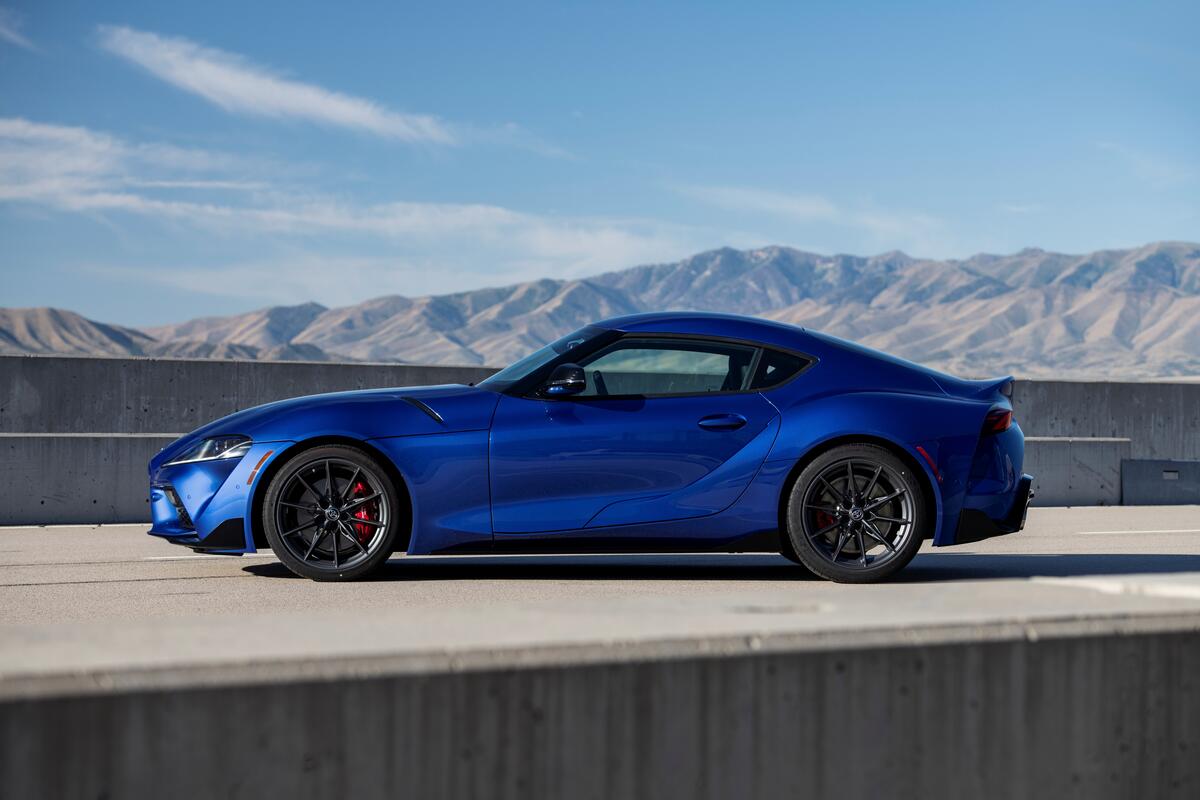
The Toyota Supra is a sports car made by Toyota. It’s popular with car enthusiasts because it’s fast and has a strong reputation. The podcast mentions it as a reference for a certain generation of cars.
“Collectability” means whether a car is likely to become more wanted (and often more valuable) to collectors later. It’s not only about performance—it’s about what makes it special over time.
Ferrari is a famous Italian brand known for high-end supercars. The point here is that some Ferraris are already treated like collectibles when they come out, because they’re special and limited.
The Lamborghini Diablo is a famous older Lamborghini supercar. The conversation is basically about how it went from “can’t afford it” to costing a lot more than people expected.
The secondary market is the market for used cars—prices after the car is no longer brand new. They’re saying some cars get expensive fast, while others drop first and then rise again years later.
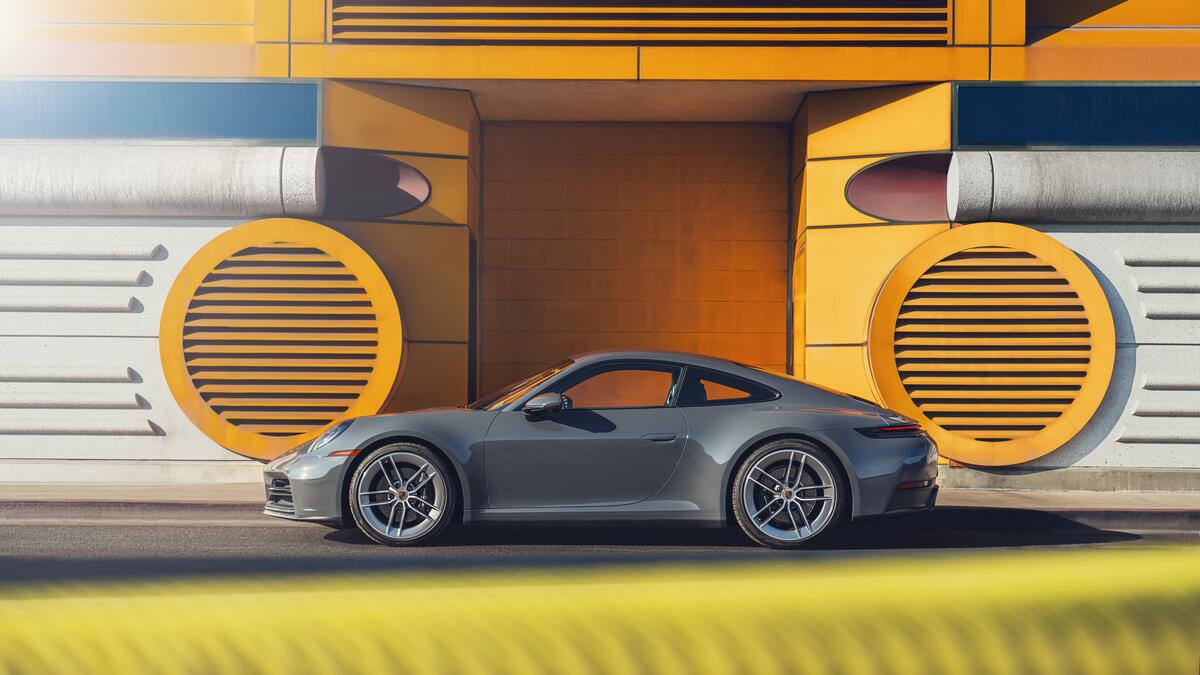
The Porsche 930 Turbo is an older 911 Turbo model. It’s a famous, turbocharged Porsche, and the hosts are talking about how the price has skyrocketed compared to what people expected years ago.
Concept
market value appreciation over time
The hosts are describing how certain collectible cars can appreciate dramatically as they age, especially once supply tightens and demand stays strong. They cite the Porsche 930 Turbo and Lamborghini Diablo as examples of prices moving from “affordable” expectations to very high auction-level numbers.
The Pontiac Aztek is a crossover vehicle made by Pontiac. It’s known for having a very unusual design that many people either love or dislike. The podcast talks about it in terms of how its value might change as collectors become interested.
The Mitsubishi 3000 GT is a sporty Mitsubishi from the late 80s/early 90s. They’re talking about how cars like this can become collectible if you find one that’s been kept in great shape.
The Dodge Stealth is a sporty Dodge from around the same time as the 3000 GT. They’re saying low-mile, well-kept examples are the ones that tend to attract collectors.
The Mitsubishi Eclipse is a well-known sports car from the 90s. They’re saying more of them are likely to show up for sale and could start attracting collector attention.
The Eagle Talon is a sporty 90s car. The hosts are saying it’s another model that could start showing up more in auctions and gaining collector interest.
The Dodge Challenger is a muscle car, meaning it’s built for strong acceleration and performance. The podcast mentions a 2023 Hellcat version that the owner drives in the summer. It’s being used as an example of a practical performance car.
Car
Dodge Hellcat
The Hellcat is a Dodge with a very powerful engine that’s famous for big acceleration. People like it because it feels strong even in normal driving, not just on paper.
The F-150 is Ford’s big popular pickup truck. People often modify it with parts to make it look like the more off-road-focused Raptor.
Concept
power boost hybrid that imitates a Raptor
They’re describing a modified truck that’s been changed to feel more like an off-road Raptor. “Hybrid” here means it’s not just the original engine setup anymore—it’s been altered to add extra power or a second system.
Good Guys is a car event organization. Here, they’re the group running the giveaway and setting the entry requirements.
Car
40 Ford Coupe
This is a 1940 Ford coupe, which is a classic car shape people love to customize. Builders often keep the look but upgrade the mechanical parts so it drives better.
Concept
auction event venues
A venue is just the place where the auction happens. For car auctions, the location can change how the cars are shown and what the event feels like for bidders and spectators.
They’re talking about a future event in Nashville. The idea is to make it feel more like a festival, not just a standard auction.
Topic
Cosimi auction in Florida
They mention an auction in Florida that keeps growing over time. They’re saying they’ve run out of space to expand outward, so they need a different growth approach.
“Grow vertically” here means expanding capacity by building upward or adding layered infrastructure rather than spreading out horizontally. In an auction context, it implies using the existing site more efficiently when there’s no room to expand outward.
They’re talking about a make-believe situation where money isn’t a problem. That usually means the builder can do the most ambitious version of the project without cutting corners.
This is a classic Lincoln luxury car, and the “Convertible” part means it has a removable or retracting roof. People like it because it looks and feels very “old-school American luxury,” and convertibles are usually harder to find.
Concept
customize the crap out of the body
They mean making big changes to the car’s outside styling. That’s the part you can see immediately, but it can also make the car harder to return to original later.
“LS” is shorthand for a popular GM V8 engine family. People like it for swaps because it fits well and there are lots of parts and guides to make it work.
A drivetrain is everything that takes engine power and sends it to the wheels. When people talk about changing the drivetrain, they usually mean swapping the engine and the parts connected to it.
An accessory drive is the belt-driven system that powers components like the alternator, power steering pump, and sometimes the A/C compressor. When fitting an LS swap, packaging the accessory drive is often a major fitment constraint in tight engine bays.
The fan helps keep the engine from overheating by pulling air through the radiator area. When you swap engines, the fan and cooling setup may need to be repositioned to fit.
“Twin-turbo” means there are two turbochargers on the engine. They help the engine make more power, but they take up more space and require more parts to fit correctly.
The firewall is the barrier between the engine area and the inside of the car. It affects how much space there is for parts like the radiator and how everything has to be mounted.
A radiator helps cool the engine by moving heat out of the coolant. If the hood and engine bay are shaped a certain way, the radiator may have to be positioned farther back to fit.
The Buick Grand National is a performance version of a Buick. It’s known for being quick and for having a dedicated fan base. The podcast brings it up because it’s a notable car to own.
“Road rage” means getting angry while driving and acting aggressively toward other people. It’s the kind of behavior that can turn a normal drive into a dangerous situation.
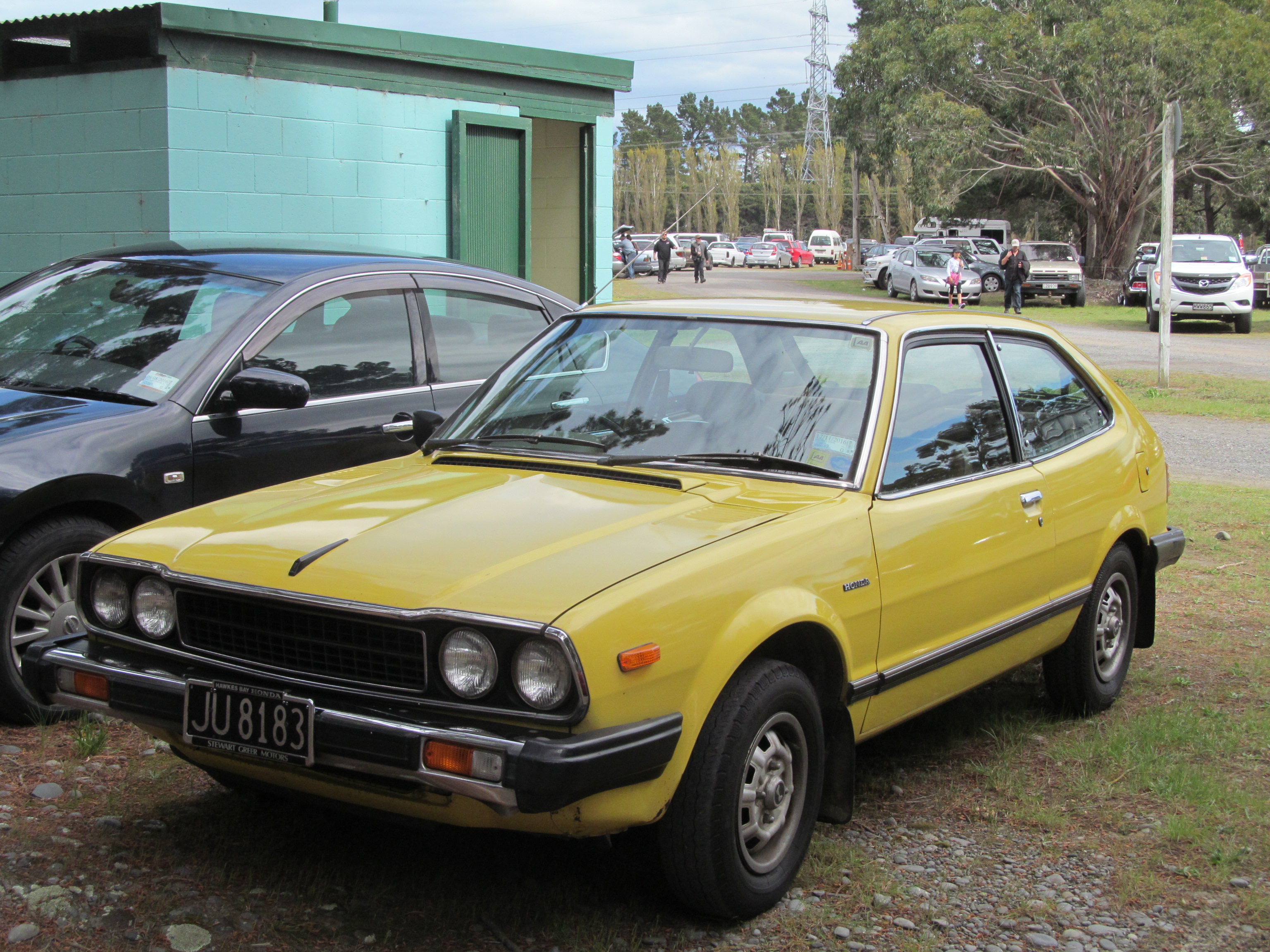
This is a late-80s Honda Accord, and the big thing is the flip-up headlights. Instead of headlights staying fixed, they pop up, which makes the car look more unique.
The Dodge Dakota is a Dodge pickup truck. People mention it because there were multiple versions over the years, and it can be easy to confuse with other similar trucks from the same era.
The Pontiac Bonneville is a large sedan. In the late 1980s, cars like this were part of a family of similar GM sedans, so people often compare them because they look and feel alike.
The Chevrolet Celebrity is a GM sedan from the 1980s era. People mention it with other sedans because some versions were very similar—often just different branding.
The Buick LeSabre is a big Buick sedan. People bring it up with other GM cars because around that time, different brands could be very similar underneath, with mostly styling and badge differences.
The Cadillac Catera is a Cadillac luxury car from the late 1990s/early 2000s. In this story, it’s the specific car the speaker was trying to afford before they ended up buying something else.
Oldsmobile Cutlass is a classic American car name that’s been used for many years. Here, the speaker is talking about the specific car they ended up getting and how close it was to another car they had in mind.
Concept
used-car deal
They’re talking about getting a good price on a used car. The point is that the car was worth more than what they paid because it was in great condition.
“G body” is a nickname for a group of GM cars from the late 1970s/early 1980s that share the same basic design. People use it to talk about how these cars are built and what parts tend to fit together.
Car
Ferrari MC12
The Ferrari MC12 is a very rare Ferrari supercar. It was made to feel like a race car you can drive on the street.
The Maserati MC12 is a very rare, high-performance supercar. It was made in small numbers and is known for being an exotic, expensive collector car. The podcast mentions it as part of a list of top-tier supercars.
LIVE
This episode is brought to you by Ferrero.
Soccer's biggest stage is approaching, and Ferrero is making it easy to go all in.
Pick any two Ferrero brands from Kinder Bueno to Ferrero Rocher, and you could win the one
million dollar grand prize, plus an exciting range of daily and weekly prizes.
Don't miss your shot.
Official rules apply.
Learn more at GoAllInnandWin.com.
It's us helping to try and not necessarily grab the youth and bring them in and make
it easy.
That's really where I sort of entered the classic world.
I really wasn't involved in it in any way until him, and started hanging out with him
and started to just get to know the classic stuff, get involved there, and one day he
decided he was going to sell some cars and said, I'm going to take a couple cars to this
Mekam auction in Kansas City, and I was like, what's a Mekam auction?
So I went down in there and helped him keep the cars sail ready and get ready for the
auction block and whatnot, and just kind of went through the experience as a seller there.
And it was pretty cool.
I had a great time.
I was enamored by the process of what was taking place.
I'd never been to a car auction before, and this is back probably 2004-ish.
So yeah, he bit the bug, auction bug, this guy, and then he kept wanting to
go more and more, and then all of a sudden he was going to everyone, and then he started
buying and selling instead of collecting, and kind of bit the bug, right?
Yeah, he got drawn right in.
So it's addictive.
It is.
And so I got to go with him, and I started becoming regular and really learned, I got
to know the Mekam family really well from that side of the business, and just kept getting
more and more involved.
And as I continued to do my own thing, I started my own detailing, my detailing company turned
into more of a collection management company, as I saw that people are accumulating these
cars, but when you get past a certain amount, it's very difficult to take care of them yourself,
you know?
Yeah.
I think for me, that number is one.
When you get past one, you don't want to clean it or detail it anymore.
Yeah, I'm with you on that.
Yeah, definitely one.
So anyways, one day as I was doing that, I started doing some work for Dana on his personal
collection, and after getting it all through the car, auctions and whatnot, then one day
he just asked me what I was doing, and I said, you know, I'm kind of just trying to figure
out my own thing, get my own business going.
It really wasn't taken off per se, and he said, well, why don't you come to work for
me?
So I said, I'll continue to struggle and try and figure out my own stuff out or go to
work for a paycheck every week.
The paycheck sounded really good at the time and took it, and that's kind of how I got
started with Mekam.
Got hired to take care of Dana's personal cars and his personal collection, and then
kind of just kept learning the ropes and growing from there, and it kept giving me more and
more responsibility, and I kept trying to do the best I could in every area that I could
and learned every aspect of it, and here we are about 18 years later, and now I'm the
COO.
Damn.
I have to imagine Dana's car collection has evolved a little bit since then.
Yeah, Dana's personal collection has evolved numerous times.
It's ever-evolving, but also very focused at the same time.
Yeah.
Mekam auctions were in the volume auction business.
We have 13, 14 events a year.
Kissimmee is four to 5,000 cars in one event, so we're doing a lot of things at scale, and
that's all due to Dana's vision.
I think he applies some of that sometimes to his collection.
His collection, he absolutely is the most passionate car lover I've ever met in my life.
He is a car man through and through.
This auction business is a byproduct of his car passion, honestly, at the end of the day.
Well, it's a great business to be in to get first crack at some really good stuff.
Well, and to see, very much like how I kind of got bit the automotive bug, touching all
these daily driving cars and kind of got into it that way, him being able to see so
many different cars and learn along the way, as he's buying and selling these things, he's
developed a true passion, and he's really become a lot more focused now, but he loves
all of it.
What's his focus now?
He's pretty into Ferrari at this point.
He's got some pretty good special cars.
He's got a 410 Spider that was originally driven by Carroll Shelby back in the 50s.
He's got a 250 Monza, super Monza, really rare car, like a pontoon Fender Mazda.
Monza and a variety of other ones.
He's got quite a few.
He's also big into Indy racing, Indy cars.
He's got a lot of old Miller race cars.
Oh, that's cool.
Yeah, some open wheel stuff.
Yeah, really cool.
And those engines are something that Miller motors are super cool.
So those are probably his two biggest passions at the moment.
You mentioned it's due to Dana's vision and his idea for the auction.
What is Mekam's mission statement?
Or what is it you want to be in the world of one automotive events, number two, even
more specifically, auctions?
Yeah, well, I mean, at its core, it's bringing buyers and sellers together and on a platform
and in a community environment.
We're family owned and operated.
Dana started this thing in 1988.
He's been in the car business his whole life.
His father was a car dealer.
And so it's all he knows, his cars, that life.
But bringing his whole family, all four boys are involved with the company.
And so that family is really what the company is all about.
And that really bleeds out to all of our staff, our employees.
And we really try and make everybody feel like they're part of that when they come
and participate at our events and whether you're buying or selling or both.
And I think that's really our main thing is to really make everyone feel like they're
part of that family.
How do you think you guys approach things differently than others out there?
Because I mean, let's face it, again, this is coming from manufacturing and
car building background of, we've got a different vision for stylistically,
or we're going to take it the drivability to this level,
or we're going to manufacture, engineer, and design the best.
That's a little more quantifiable than it's an event-based thing of like,
no, we're going to connect with our enthusiast in a different way because of this.
Right.
Well, I think that, you know, because of the way we present our events and our,
you know, our television presence and what, you know, we started on TV back in 2008,
and that's, that became a pretty big driver for us in building our brand.
But really what it's turned into, from my perspective, is really we're helping to
keep our hobby, the collector car hobby, the classic and custom cars,
building all the things you guys are doing and what everyone else is doing out there,
front and center, top of mind, and showing that there's this marketplace,
that there is this community to get engaged and be involved with and introduce
new people to this, whether they do it in buying and selling cars at our auctions,
or end up, you know, get inspired by something they saw on television that ends up prompting
a phone call to you guys and say, hey, I want to build this, whatever, because I saw this there.
All that type of thing is really what I think,
what, not necessarily from a business perspective, but from a community perspective
of what we're helping to kind of aid and fill the pipeline, so to speak, of people and keeping
people engaged in this, in this world that we live in, you know, as everything continues to
change and evolve and as, you know, there's, you get in conversations a lot about, you know,
what are we doing to keep the youth involved or get the young guys involved and whether
that's mechanical or, you know, no one wants to work these days and you hear all that stuff that,
you know, when we were kids talking about, oh, nobody wants to listen to the Beatles,
that's, you know, that's what is that, you know, that kind of thing, like, are we in that world?
Like, what are we trying to do here, you know, so I think us helping to try and not necessarily
grab the youth and bring them in and make them participate in the auctions, but just keep
in front of them, keeping it relevant, you know, and I think, you know, it's,
television's not doing that as more as much as, you know, social media and what you guys are
doing here with the podcast and things on YouTube and the digital world is where everything's at
and as, and we've evolved right with that, you know, with our, we've got a 24-7 TV channel on
Roku and Prime Video now where we're, you know, constantly pumping our content out and,
you know, that gives people a chance to see what are, what are cars selling for, what's hot,
what's exciting, what am I inspired to want to, you know, build and or buy or whatever.
Are you seeing more first-time buyers enter in the market as a result of all that or you
have kind of your core group of guys that have big collections and keep coming back?
You know, our core is just very, very slowly, always incrementally evolving, right? So as, as the,
as people age out, you know, they're sell out or they're done or they accumulated 100 car
collection or a five car collection or the two cars or whatever, but then as they get to the
point in the age where they're done with it, they're done messing with it or, you know,
they pass away or something becomes an estate situation, right? As those, as those are sort
of, as people are winding out, there's, there's others that are winding in. So it's kind of that
core is continually evolving, but, but yeah, there's, there's definitely, there's a,
what is the younger generation? Is that, you know, I'm 48, is that me? Or is that, you know,
the guy that's 22 and flush, you know? I think, I think we're all sort of now the older guys
is sort of what I'm feeling. So I'm looking at like big time, like you said, the younger generation
guys in their 20s and 30s. Yeah. Interesting to see if those are the guys out there and this
and the bleachers bidden if there's more of them. Yeah. I mean, what, you know, we saw in, you know,
there's definitely that gen, those generations coming in, coming after,
you know, the stuff that was new when we were, you know, in high school, say, you know, I mean,
that, that's 80s, 90s, 2000 stuff. And, you know, obviously in that, there's that pocket where
what's cool is very slim. I think, you know, and there was a, it was a tough era for cars.
Are you guys, are you gearing the auctions at all towards hitting more of that 90s based car?
You know, it, yes, yes. I mean, it really, it's, you know, as, as people are bringing stuff to us
to sell, that's, it's sort of, we're evolving with where the markets go, you know, we're not
necessarily dictating it from to steer it. We're accepting of what's coming and we're,
we're promoting what, what's there and we're, and running right with it. So,
yeah, something more like a promotion standpoint. Yeah. Put more of those cars front and center
and focus on the Irox and the Fox body mustangs to help develop that next audience and next market
or, sure. Well, I think that, you know, the, the prices start to dictate what that, what that
becomes. You get one, you know, one good Fox body that brings crazy money because it was,
you know, really low miles and really clean and then they come out of the woodwork and then they
I got one of those things worth a lot of money. Yeah, mine's nicer than that one.
I say we keep the Fox body pricing down for another year or two, which came out with new
chassis for those of the Irox. So we want to have a good base guys can build them a starter
project and let them kind of start to take Irox are still good, good prices. The Fox bodies are
getting crazier every day. Yeah. I'd say, you know, the opportunity is definitely with the Irox
compared to the without letting on too much inside baseball or inside secrets, but
geographically speaking with all the auctions that you've got, what are some just like, I know
you said it involves, but as of right now, what are some hard facts of like this style or type of
car needs to go to this geographical location of this auction? This does really, really well
historically or this does really poorly at this?
That's a good question. I think the only real
matters less and less, you know, with within the age of the internet and, you know,
folks that are into pickup trucks are going to find a pickup truck regardless of where it's at
because they can find it online, whether they, you know, come to the event to see it touch it
and feel it in person and bid there or just bid online. Right. So the accessibility has sort of
changed that game. That probably was, you know, it might have been different 15 years ago, but you
definitely see, you know, when we're, we have two auctions in Texas, one in Houston that we just
had a couple of weeks ago and then one in Dallas, Fort Worth in the fall. And you definitely see
that there's a definitely a bigger presence of pickup trucks, custom trucks, like trucks definitely
dominate down there compared to anything else. You know, you get all of it, but, you know,
you can definitely see a heavier concentration of pickups down there than you do anywhere else.
What, um, your, what's the makeup of on the seller side of all the sellers that you have,
bringing vehicles there, what's the percentage of this is their, these are repeats, this is their
job, this is their business, whom they're rolling through. And the guy that's got one or two that
he's wanting to move through and go on to the next thing, you know, the novice or, you know,
car collector, that's just, I'm utilizing this to, to move to the next car.
Right, right, right. Dispose of one, get another one or something. Yeah. So it's probably,
it probably varies between 60, 40, 70, 30 in that range, 70 to 60 to 70% are probably
either in the business, trying to be in the business
or think they want to be in the business.
I don't want to be in this business.
That business has had to have changed. The full time I, you know, I flip cars at auctions business
is significantly different, I would assume now than it was 20 years ago.
We've watched it evolve sort of in front of our eyes with certain people that lock onto a recipe.
I think it's almost, you'd know, obviously way better than I would, but what I see is that
it's actually gotten better, that there's, people are more in tune now and it used to be pretty easy
to just put lipstick on a pig, roll it through an auction and like Sayonara, if that thing
burns to the ground 30 minutes later, as long as it crosses the auction block, right? You're
seeing more and more guys that are sort of making a, what I would consider a career out of building
nice cars, well equipped, spending the money to put the right parts on them.
And they build a pedigree around them.
Yeah, it seems like people are more in tune and want to chassis under the car.
They want the right motor under the car where it used to be. You still have exceptions,
like you see some Lincoln's go through some certain auctions that go for astronomical numbers
and you're like, Jesus, but you know, otherwise it seems like it's evolved from where I'm sitting.
I think the, I think it had to, because I think the buyer has become a little bit,
has become more sophisticated as far as what they're after and what they're looking for.
You know, they can, to your point, they can see through the lips, they're kind of pig,
especially when you're comparing that to something that's done to a level of quality.
It's, it's, it's night and day and easy to spot, you know, and I think during that trend,
I would say there was kind of a custom car, transitionary phase and like the, I don't know,
mid 2000s maybe, right? I'm not if I'm on that or no, you're 100%.
And so during that phase, I think there was a lot of people sneaking stuff through to your point
where it's, you know, put some cool looking wheels on it, you know, save you to the suspension,
maybe that, you know, they're clipping coils to make it look like they did.
And then to your point, and then, you know, it's like bad experience, right?
Well, you know, that doesn't do us any favors either. As far as, you know, people bought,
we don't want people buying cars and having a bad experience of where they got it. So
thankfully that sort of evolved itself out due to, you know, guys, you know, guys that are doing
what you're doing and building, you know, that bringing that quality to play at kind of at scale
too. And even that opportunity, it was, it wasn't as easy to acquire, you know, something with,
I think you guys have a good example of helping to make it easier to do it, right?
Yep. Yeah. On the memorabilia side, you know, with signs and all the other memorabilia are
is there events that you're having to get out in front of it and having to go hunt some stuff?
Or do you always have more than you need coming to you?
Well, I mean, as a, as a business model, we're, we don't, we're not, we're not cold callers.
That's never been the Meekam way. You know, our way is to, you know, promote what's out there,
show our, that here we are, you know, give us a call kind of thing. And then nurture relationships
through them. You know, if we, if we call called on you to say, Hey, you know, I really want to
sell that, that, that gold GTO in your showroom. And all of a sudden I'm making, I'm making a
promise or a commitment that I'm going to get that done for whatever you think it, you know,
versus if you want to bring it to us, we're going to help become your partner and help you
try and get the most money for your car. And, but, you know, if we, if we just try and
tell you we want to sell it, you know, that, yeah, you said, well, I, I mean, it's made more on
if you're, if you know, you're going to be maybe a little lighter than what you'd want as far as,
you know, numbers of memorabilia in one place or you shifting from another place like guys, like
you know, your signs are going to do really good at, you know, Kissimmee versus wherever
or anything like that. Or is it, are you really just your benefit, you know, you're, you're blessed
to have enough at all of them and you take what you get and promote it in the best way you can.
I mean, we, yeah, we're, we're, we're blessed in the sense that we've got a lot of incoming
opportunities that are coming our way, which is great. At the same time,
want to be cognizant of, you know, when it comes to memorabilia, you know, that stuff is pretty
labor intensive. Yeah, that's my next question. I would say it's, you know, it's a lot easier to,
you know, turn a key in a car, roll it on a truck and see a later. But when you got a,
you know, from, even from just promoting it, you know, from inventorying that stuff to
photographing it to packaging it to shipping it. And I would just have to imagine based on our,
you know, history with great customers, I'm sure all of them are fully prepared to receive the
thing that they just bought in the most efficient manner as possible, right? Of course. Yeah,
absolutely. Oh yeah. I've got the 18-wheeler. I already planned ahead, right? You don't have to do
anything. It's the, wait, that thing is how big? It weighs how much? Yeah. How much? Well, that's
a floor jack with a bunch of two by four stacked and I'm sure there's been thousands. You, you
guys can hang on to this thing for, for a little bit on me, right? I've got to figure this out.
Yeah. I mean, so much so we've had, we have, you know, we have shippers on site now that
where it's just like, Hey, you know, if you want to make your own arrangements, fine. But if not,
you need to, you know, make a plan with these people because it's leaving. We're renting this
facility. We have to leave too. You know, that stuff's got to be tough. I mean, because you're,
it's an eggshell too. Very fragile. Very fragile. Especially you're talking about, you know, old
milk glass, you know, gas globes and stuff like that. I mean, you got to be really,
neon has got to be like, you look at it wrong and it pops. Yeah, especially the old original stuff.
So that's, it's, the cool thing is, I mean, there's a, there's a crazy market for that
stuff or the other quality original stuff is really blown up, you know, and, you know, we,
we tend to focus the, the high end quality investment grade stuff for our Kissimmee auction
in January. And then our Indie auction coming up next week, starting next week in Indie.
You know, then depending out from a collection standpoint, if you're in Pennsylvania and you've
got a good collection, we've got an auction in Harrisburg, Pennsylvania,
regionality comes in and plays sometimes too, depending on what it is, just to kind of
save on all that transit logistics. Yeah, for sure. Yeah, that's an auction that we were just
talking about knowing that you got all that memorabilia, something I'm going to be watching
closely. Again, they just put a bunch of outlets in for some neon signs that I don't have. So I
need some neon signs. Yeah, we actually just, we're not selling it till January, but there's a
collection, a gentleman by the name of Brian Lang. We're selling his collection in Kissimmee. It's
probably, I don't know, five, 600 pieces, really, really quality high end stuff. He's been accumulating
that stuff for a long time and it's, it's the best of the best kind of stuff. So that would be
something worth, you know, if you're really wanting to dial your garage in something special,
that'd be stuff to wait for. How do those collections always come up? It's like,
is somebody just done with that specific hobby, want to change into something else,
that style of car? You see regularly, there's pretty big massive collections that someone has
amassed for quite some time. Yeah, of course. Lawyer bills. Yeah, there's a
all the above. Yeah, There's a lot of reasons, right? I mean, you know, the,
aside from, you know, the divorce, the financial situations, all those aside, that the,
you know, from a collector that's sort of continually evolving, we see a lot of guys that,
even the guy that I used to work for way back in the day,
they bite a bug, whether it not necessarily auction bug, but car bug, and then it's like,
I want that, this, I want that. And all of a sudden it's like, they got,
they just bought, and I got 20 cars. Well,
they may not take in their time and do it, done the right. They really haven't refined themselves
yet, right? So they got to transition the quality, the quantity, tend to quality. Yeah. And sometimes
keeping the quantity, but increasing the quality. And sometimes it's like, okay, maybe instead of
20 Chevelles, maybe I just need three or four of the right ones. Yeah. We've been to,
we do a lot of road tours and have done them for the last 20 years and gone to
all kinds of collect private collections, you know, big name ones, you know, to holy crap,
I can't believe I've never even heard of this thing existing, you know, and they're everywhere.
Huge collections, hundreds and hundreds of cars, private collections at house.
And there's been those times, sometimes more often than not, that you're like,
if he would have just stuck to 20, 25, even 30 cars, he would have had 30 of the best there is.
And, but like you said, you get to that thing and it's, well, I gotta have,
I gotta have it in every color. I gotta have 66, you know, I gotta have 67 to 72 of the trucks I
gotta have. And you're just checking the boxes, you know, and it's like, I get it or teach their
own. I mean, we've all got our own hobbies and collect. I mean, we've all got too much whiskey,
right? And we could just buy six good bottles and just scales with wealth. It's like, you
know, we're going to have to get a free weller bottle. Do you really need everyone? No,
which is the same. Like we went to that one collection that the guy is every tri-five Chevy
in every color. Like that's, it's a little much, you know, what do you do with them? It's,
it's interesting. But nobody else does. Nobody else has it. When you see them all lined up. But
yeah, it's the same car. It's just a different color. But I would like, I guess there's a lot
of that where you, where you get to the point of like, okay, now these need to be gone to the next
person. Yeah. Well, move to the next one. You've got to the end of that. And now there's nothing
left to connect. So you got to start the new one. Collecting also is a lot of times it's about
the haunt, the mission defined, right? And so once the mission is complete, it's like, okay,
now what? There's all the colors. Now I want to do something. It was like, now I want all the
motors, but I want original motors. So maybe you switch it up and go after that and re-hunt.
Kind of, I think collectors just kind of find, find their justification to feed that,
would that need to hunt something special down, you know?
Pool day is called for cookouts and lots of laundry. This Memorial Day loaves. Save $80 on a
charbroil performance series for burner gas grill. Now just $199. Plus get up to 45% off
select major appliances to keep dishes, clothes and food fresh. Having fun in the sun is easy
with us in your corner. Our best lineup is here at Lowe's. Battle to 527. While supplies last,
selection varies by location. See associate or loes.com for details.
Send help is no streaming on Hulu and Hulu on Disney Plus. We're somewhere in the Gulf of Highland.
Getting us out of here should be your focus. I'm your boss. You work for me.
You're not in the office anymore. It's bold, relentless and endlessly rewatchable.
Discover why critics give it 93% on rotten tomatoes. You're so fired. Oh, am I? No help is coming.
Send help rated R. Now streaming on Hulu and Hulu on Disney Plus. How do you handle the
incoming curating process? How do you tell somebody maybe that it's not on the, it doesn't
need to go on the day they think it needs to go on? It's a Tuesday card, not a Saturday night card.
Well, we do our best to position the days by established value, right? I mean, the best
cars sell best, whether whatever price category they're in, if it's if it's an entry level
something or, you know, the Ferrari 250 GTO all the way in between, right? There's segments that
cars sell best within when they're surrounded by cars of like value, because that's where
that particular buyer is going to focus their time and attention. So if a buyer is looking for
$20,000, $30,000 cars, entry level stuff, maybe project, whatever the case might be,
it needs to be there because the guy that's wanting the $10 million car
isn't going to pay attention to your, it's not going to make your $30,000 car bring 100
if it's next to a million dollar car. You know, and that's that's the hardest thing to really
help people understand. But they have to believe that their cars only worth $30,000. So that's
sure. Well, yeah. But they think it could bring, you know, the more often than not cars bring fair
market value at the auction. Sure, you have the moments where you know, man, they're going to be
so excited. All it takes is two, all it takes is two, which is true. And it does happen. You see
it. I mean, I've been part of those bitter battles where, and it's exciting. And it's like, Oh,
my gosh, I can't believe this car just sold for that, right? But the car went away. It was about
winning at that point. It wasn't so those value of the car, but people always remember that. Well,
my car should have a chance to do that. Well, you know, it could. Yes, it does happen. Right. It
is possible, but more often than not, they bring farm fair market value. And so putting cars in
the right position and having that conversation can be tough. What people should do, I might start
offering my service that I'll go out there. I'm sure this is going to be a banger because everything
I've tried to buy just goes through the fucking roof. I'll go out there and like bid on a Wednesday
car. And I guarantee you, I'm not getting a deal. It is going. That'll be the one Wednesday car
that goes through the roof. Yeah. Some people I think are cursed when it comes to auctions and
bidding. And I think I'm one of those people. You did not too long ago. Yeah. It was at the
Cassini auction, wasn't it? Yeah. Anything that I want, it just happens to be. Maybe it's my
taste. I think I've just got really good taste. If I want it, there's a lot of other people that
must want it. I think it has to do with it. I think we leave it at that. It's an interesting spin,
whether it's a Monday car or a Saturday car. He was so excited about this one too for like three
days. I mean, I've done some digging and talked to people. I've looked at some pictures. This
thing's gonna be nice. I don't think it's gonna go that crazy. I think I can get this thing.
The next day, it's like, yeah, I'm feeling pretty good about this thing. And then each day too,
we were at a wedding and each day it was like, I'm not going any more than this, right? And then
at the evening time or whatever, he's like, obviously I'll go a little bit more, right? And
the next day, it's like, I think I'm gonna get this. Well, then I was like, oh, how's that thing
going? I'm out. I was like, how much? He said four bids. It was done. It was way past my top,
limit. That one went sword quick. Yeah, it had to be the most expensive sob ever sold, though.
Well, it was a convertible.
R&D for new chance. Yeah, the Kissimmee auction brought some good money and that seemed like a
success. Yes, that's an understatement, I think. I mean, Kissimmee as a whole was,
I knew it was going to be good, but it blew away my expectations in a good way, but it was pretty
wild. Do you think that's an indication of the actual market or was that, was that a fluke? Was
that a just people going crazy? The timing was right? Or is that where the market's at? Because
that you have the right cars. Yeah, the numbers, man, were wild. Yeah, they were. I mean, there was,
you know, there was probably the two, the two biggest moments. Number one was that Bachman
Ferrari collection that we sold. That was, you know, that was pretty crazy. But then right before
that was the Cliff Ernst Yanco Camaro collection, you know, small group of Yancos, but really great
cars that did crazy. I mean, you know, a million dollar Camaro's. That was, that was a pleasant
surprise, you know? And so, but even if you take, you know, and obviously we had the 250 GTO sell
for 30 and a half million dollars, which is good. It's a whole other story, probably not enough
time on this thing to talk about it. But even if you pull those, those crazy, you know, numbers
out of those three things that the auction in total was, was well above what we were the year
prior. So I don't, it definitely wasn't a fluke. I think it definitely was indicative, indicative
of where the market is at the moment. And I think, but there was a dominant theme there. And that was
the level of quality of car was, was higher than ever before. And then back to what you said
earlier about quality, I think that people are smelling that out. That's what they want. And
when it's there, people are not afraid to pay what it takes to get that quality. That's what
it's important as it should be. Yeah, absolutely. When you're doing these, you know, like hero cars
and some of these, you know, you talk about that Ferrari that sold for 38 something million bucks,
how do some of those cars come to be? I can't imagine that's just a guy randomly reaching out
that's like, Oh, hey, I've got this like 500 mile original AC Cobra that Kerry Carroll Shelby drove,
or I've got this original GT 40 that's been hanging around in the garage and the wife said,
I got to get rid of it. Those wild, wild cars. How are those coming to you? What's what are some
of the stories behind them? I want to hear about the 38 and a half million dollar one. I know it's
a long story, but I keep hearing everyone's like, you're not going to believe the story. But I've
never heard the story. I mean, it's not like unbelievable. It's just the fact that it, you
know, it's not just about yourself and what it sold for and where it, you know, where it went and,
you know, the guy that bought it did really enjoyed it and having fun with it and bragging
about on social media and showing it off and, you know, taking it to golf courses. It's really
cool. It's fun to see a car like that go down that path, you know, and not just like screw it. I
want to use this. This period of hole. Yeah, it's just really fun. Sorry, D-roll. No, no. Yeah,
these survivor crazy museum pieces. How did they come about? Well, I mean, just, you know, a lot of
it's via all the relationships that the me comes in. Our guys have built over many years and it's,
you know, whether it's people we know that have been holding onto those or we're aware of them and,
you know, just keeping in touch with people or, you know, a good customer of ours knows a guy who
knows a guy that, you know, brings it in that way or, you know, it's, there's no one way it
happens. It just kind of keeps. Is there any particular story or one that stands out where
like you're not going to believe this comes walking? It's like, you're not going to fucking
believe this. Look at this. And it's, you know, like, I didn't even know that thing exists.
I was the, the back, I don't think it was probably kind of pre COVID, maybe 2018, 2019,
not necessarily sure, but we sold an indie back that around that period. If you guys remember the
Golden Sahara in Kooky's car that was tucked away forever in Ohio. That was an interesting
story. Dana was aware of those cars for a long time and just through, you know, folklore word of
mouth and hearing people talking to people at shows and that. And then one day that was at
Jim Street was his name. And he, he would, him and Dana would, would converse every once in a
while, just, but then he would disappear into the shadows again. And then so it wasn't necessarily
that Dana was chasing that thing, but it kind of, the scenario seemed to be chasing him. And so
one day he got an opportunity to go out there and look at the cars. And I went with Dana
to Ohio and looked at the Golden Sahara. And at that point I was learning about it, you know,
the old, you know, self driving car with the remote controls and stuff, right? Which I guess,
you know, back then pretty cool deal. So we went and saw it and it was, it had been in this garage
that it lived with like 20 or 30 cats. Oh, wow. And just sat there with these cats for who knows
how many decades. The car was actually, I think it was just the, you know, the car was painted with
some fish scale paint or something like that. So the car turned kind of orange. We joked around
that it was just full of cat piss. But both things could be true. Yeah. But it was really
cool to kind of like, you know, find that and, you know, kind of the way it, the way it transpired
and got to that point. And, you know, things like that happen. There's just kind of, there's,
there're cool stories that just kind of evolve, the kind of thing, thing like we're going to see
this Golden Sahara, like what? And there it is. There it is. And when something like that comes
along and you, you know, secured it and you know the place is going to be it. How do you start
dropping that out to the public to get the, or is it just, boom, we're going to tell everybody
about it. And hey, it's out there. No, I mean, we strad, I know things like that. We strategize
and, you know, create, create a campaign, create a marketing campaign, how we're going to release
it, how we're going to announce it, where we're going to, you know, first look at, and, you know,
how we're going to keep, obviously, depending on, you know, time, timing is right. I mean, if you
announce something six months from now, we're selling it. We got to hold,
we got to hold that, that ball up in the air for six months, you know, to keep it relevant.
But it all comes down to, you know, it's storytelling, just like everything else. I mean,
you know, there's a lot of cool history with a lot of this stuff and really, you know, that,
like that Golden Sahara, I'd never dove in and learned about it. You know, once I heard about it,
I was like, this sounds really cool. And once I learned about this history, that's a really cool
story to share and tell. And I think, you know, more people would want to know about it. So really,
you know, educating people on some of that, those historical aspects of, of the car business is,
is fun and aids in our marketing as well. And, you know, it kind of works hand in hand.
What's, what's not something, what's something that's not as prevalent now that you wish still
was that was maybe a pretty common place in the auctions, you know, 15, 20 years ago.
Style wise, car wise, you know.
You know, I think there's, you know, when I was, when I first got into it back mid 2000s, you know,
50 stuff was super hot, 57 Chevys, you know, stock stuff, not necessarily custom that's still kind
of, you know, it's popular now, but you know, original 57 Bel Airs were still on the, you know,
increasing in value or 57 T birds, things like that, that, that era, I think there's a lot of,
there's a lot of gold in that era that I think that, you know, I hope doesn't,
doesn't fade away. I think there's a, there's a lot of cool. I think the custom world is doing
a good job of keeping those cars relevant. But I think at the same time there's,
I hope that that doesn't disappear as, you know, I think that, you know, much like the Model A is
now, you know, and I don't think it, there's a lot more going on in that era that, that I hope
doesn't just, you know, continue to, you know, that doesn't get lost. What's, what's valuable now
that is surprising to you that you guys didn't see coming? Yellow Ferraris with green interiors.
Yeah. That was, that was an interesting, interesting color combination.
But yeah, that's a good one. Very interesting. I don't know anybody that's seen that and
liked it, but they brought some insane money on all those cars. Yeah. Well, no, it's that,
it's that uniqueness. It's that even though it's, you know, one could say, I'll call it an
interesting color combination. That's about it. But the uniqueness of it and the fact that you
can't, I mean, the Ferrari was making custom stuff for him from the factory that no one else could
get. So, and they didn't have anybody there that was like, yeah, they're pretty protective of,
but what about, what about this? Hear me out. Black interior. He was a really good customer.
If he kept by and they were like, whatever you say, green, love it. That sounds great.
Perfectly contrast the other. Yeah, that was an interesting one.
I'm sorry, I forgot the question. Oh, what? What is your surprise? Is there surprising value and
stuff now, styles or types of cars that you're like, man, I can't, can't believe those are done
what they've done. We didn't, nobody saw that coming. Really, not that anything that I can
think of off the top of my head. I mean, I'm kind of happy to see some of the some cars that I
thought should have been starting to get a little bit more valuable. I mean, it's the catch 22,
right? As a, as a collector or someone that wants to own something, you don't want it to be valuable.
Yeah. But at the same time, till you own it. Yeah. So, you know, it's,
you know, I'm happy to see some of the like Toyota Supers from the 90s that are really
picking up a lot of steam, especially, you know, it's hard to find original,
unmodified ones that with low miles, I think those are fun ones to see just because I mean,
that's stuff I thought was cool when I was in high school, you know, things like that.
I'm upset that Lincoln Continental Convertibles, the early 60s stuff are
seemingly as valuable as they are because that was one that I always was going to get. I used
to detail Richard Dent had a big collection of those cars back in the day when I was a kid
detailing. So he would bring them in and I would detail them for them. And I fell in love with
those cars back then. I was like, I always want to own them forever. They were 25, 30 grand.
Yeah. Now they're a million. We actually, interestingly enough, correct me if I'm wrong,
but we saw a spike in chassis sales on those. Oh, 100%. Shortly thereafter.
After that happens, people see it and it's just like, that's the new recipe. Those cars are bringing
in a million bucks. I got to build one. I mean, the thought is, it's like, well, you know, that
was probably a fluke. But even if I get 650 out of this one, I'll be doing good. It's like, well,
and it's a car we do. You absolutely should buy a chassis. That's the best way to get there.
It's always been popular. Everybody loves that car. It's just a gorgeous car. We probably sell
half a dozen chassis a year. Yeah. Not more than that. Even when it was popular, it wasn't,
it never went crazy value. I mean, unless you had like just, you know, a
banger customer that was every way top the, but even just, I'm talking about an original,
you know, non modified, not customized yet type, you know, they were pretty accessible.
And now even those are, yeah, they're getting up there. Yeah. The one that shocks me. It's a car.
I really like it. And I'd be tempted to, but I'm always sort of on the lookout for one is the
C4 ZR1. And it never seemed to take off. That car just sits flat at like, you buy a really nice one
for like 30. Go to bed on one, see what happens. Well, one just ran across an online deal that had
84 miles and it sold for like 60 something, which, you know, that's, that's, that's the ceiling.
Right. And that's a museum piece. It's never going to be driven, but they find a great one for
for 40 grand.
I wonder what the deal is with that.
It's a good question. I mean, I, I, I hear, I, I agree with you. And I think,
I don't know. The only thing I'd say is that, you know, that, that generation
Corvette kind of came through a time when style and design of American cars kind of sucked.
Yeah. Yeah. It was our era, you know, we grew up with all that crap. It's coming around, but like a
Supra, it's same era, a little, a little earlier, I guess, but just don't seem to launch. Yeah,
they will eventually. I suppose they will at some point soon as you give up on trying to buy one.
Yeah. Yeah. Any other hidden gems out there that you think should be bringing more, you could still
be purchased affordably and have some future value. Yeah. It's the million dollar question.
I mean, it's,
I still think there's, I don't know. I mean, style, I think design wise, everybody really woke up,
you know, kind of in the, you know, 2010s and forward. So I think it's,
you know, the manufacturers really woke up and really started doing some things out of the box
that, that are a lot better than they were as far as, you know, but also at the same time,
as they've sort of embraced customization and modernization or, you know, modification themselves
too, I think that, I don't know, I'm not sure what that, what our kind of last 15 years is going to
do from a collectability standpoint, but at the same time, things like the Ferraris and that,
that were, you know, those tailor made Ferraris and things like that are, are, are already
collectibles. They're coming out of the manufacturer collectible. So those aren't necessarily hidden
gems or kind of, but it's, I don't know, it's tough.
Yeah, I think they have. Yeah. You know, they're settled in.
Right now, 33 quarters of a million range, some a little less, depending on miles,
right? So it seems like everybody's sitting with them now, too. Used to see them popping up,
especially if you bought it for 17 Yeah.
Now I'm just going to wait a little while. I think this is going to come back around. Yeah.
You see that with everything, though, you know, they, they, they drop and then you sit and then
they, yeah, I mean, years later, they'll come back. Yeah. Yeah. Like the demon 170s have all
settled down. Like all the, you know, the, the new stuff that was coming out, that was
instant secondary market is that's tough. Now's your chance.
You keep talking about the demon.
Maybe a car. Yeah. Yeah. We always just miss on them. Like I've loved, like the Diablos were
awesome. I love the 930 turbos and all that stuff. And I'm like, man, we should snag.
This would be a fun car. It was right at the era. 60 grand. Yeah. Where the car was like 60 to 80
grand. You're like, I don't know, man. It's just like an old car. It's like, and then those things
all just took off. The 930 turbo now is a $280,000 car. Right. The Diablos went through the route.
I mean, that was like 600 grand. That was like overnight. Yeah. The Diablos was, they were like
125. Yeah. Yeah. And it's still a kicker. Yeah. Yeah. Looking at some like the underneath pictures
on those, we bounce a bunch of them back and forth and you're just like, holy shit, like a
manufacturer built that. Yeah. Looks like a go cart. It is funny though, like just specifically
going to Diablo, right? Because as a kid, you're right, you held that at a certain level. I just
like talking about that car so I can hear you call it a Diablo. Yeah. Okay. Diablo. It's a Diablo
burger, right? So you see that, you know, you have that held up in a pedestal. It's a hero car,
right? As a kid. And then you see, you know, your first couple in person, whatever. Oh, wow,
that's great. Here's that point. Like you said, holy crap, I can't afford it, but it's way more
affordable than I ever thought this thing would be. You know, it's just right out of, right. Fuck,
that's not that bad. You know, like you said, 100. Then you start looking at it at that point with
the thought process of like, well, maybe, maybe I could, I could do this and I could do that. And
then you start scrutinizing it. You're like, what? It's still kind of like a shit box, right? It's
like, I remember it from back then, but then you start looking at stuff. Then a year and a half
later, it goes to 600 and you're looking at it like, well, damn, it was a shit box, but it would
have been a shit box. It would have appreciated in value. Like it doesn't change the, it doesn't
change the quality perception of the car, but it changes your attitude of like, well, at least
it would have been an appreciating asset. I know it would have been a horrible choice.
It's a hard thing to predict the market. And, you know, we talk about a lot is
you really got to focus on buying what you like and what you love know and what
you're into and enjoy it. And the byproduct is hopefully appreciating an asset. You know,
if not, then you at least have a car you love and enjoy. So I mean, it's, it's tough. It's tough
to speculate. You know, when do you think the Ford probe is going to start to take off in value?
Keep laughing. Probably as soon as the Pontiac Aztec does.
You put those two in the same fighting words. Whoa.
Never know that. Those two aren't even in the same. The Aztec had some unique styling.
One of a kind. There's nothing like it.
Oh, probes. The probe? Yeah. Widely regarded. No, I don't think, I think, I think I'm, you know,
like from that area, why, you know, Mazda RX-7s really haven't blown crazy. They've crept.
Crept because it's a science project under the hood. Like that's interesting. I mean,
if I'm talking probes, I mean, if we're getting into kind of that sized car, you know, we have seen,
you know, Mitsubishi 3000 GTs and Dodge stealths. Dodge stealth. You know, if you can find,
you know, someone else that thought in that time period, they should put no miles on it and hold
on to it as collectible. The next ones that are coming is the eclipses and talents. The Mitsubishi
Eclipse and the Eagle Talons. They'll be coming up for sale. I don't know at what value. No,
there is none to be had. They were completely wiped off the face of the earth, right? They don't
exist. Yeah. So when those good ones start coming out, I'm telling you the value of those are going
to be crazy. It's going to be super level. And you don't think all those hairdressers. I'd buy that.
You don't think those hairdressers are all retired? No, you think. They didn't have the turbos.
The base models. Yeah, they had the base models. I'm talking about the good turbo.
Yeah. All wheel drive. Well, the talent, everybody modded the hell out of them.
The eclipses too. Same car. More so on the talent, though, because it was a,
I don't know. It was attainable, maybe. It was just exact same car. Were there more
Eagles than there were Mitsubishi's? We had way more eclipses in the south than talents.
Did you? Yeah. I can't recall if I have so. I don't know. My memory doesn't remember if it's.
I just saw more Eagles than I had. It was a game changer of a car when it came out. It was,
you know, very sporty styled for its time. It was a very big enthusiast car. And then,
you know, you don't see a lot of supers, but you see them. You don't see a lot of RX-7s,
but you see them. You don't see a lot of 3000 GTs, but you see them. Civics and Tegras, obviously,
those things have gone crazy in value. The thing that you don't ever see in the wild,
for sale in any type of publication, on Instagram, anything, is Mitsubishi eclipses or Eagle
Talents. When those do come out of the woodwork, I'm just, I'm making the prediction. They're
going to be some. And you're, and you're talking about that hatchback, whatever that. The rounded
one, the 90. Yeah. With the haze. The 798. They almost, that headlights hazed. Oh, instantly.
Yeah. You pulled it off a lot and they yellowed. Inspiration for the mother's powerball.
Yeah. Quite an era. Yeah. You'll see it. You're already seeing it on like the Civic,
what the SI and the Type R and Tegras. Integrated going nuts. Sort of specialty.
Do those come with a different color hood? Like factory? Because everyone I've seen
has got a different color hood. No, factory was white. It was just a common mod, you think?
Yeah. That's not a real Type R if it's got a different color hood. Nobody,
it's an enthusiast that's keeping that Type R. Personal interest on vehicles. What are you drawing
to? Or what do you have? Or what do you want to have? Currently, well, for the last seven years,
I've had two kids in college, which has prevented me from doing most things. It'll do that.
But I do drive, I've got a 23 Hellcat that I drive in the summer. And then my daily
driver's an F-150 that I've kind of turned into a fake Raptor with some fenders and wheels and
stuff like that. So it's actually a power boost hybrid that imitates a Raptor. It's kind of,
I don't know, it's fun. It's been a fun project. That's all I have currently in the stable. I've had
a couple Broncos. I've had a 76 El Dorado convertible that I loved floating around in.
That's cool. My lifestyle has not been set up for car collecting up to this point.
You said you got two kids in college? One just finished and one is, I got one finished as one
just longer. I've got two. And my plan was I picked early on.
That was only before college for one. So I just picked the one that we nurtured and made smart.
And the other one we just, it worked out. You know, I don't think I'm going to go to college.
Yeah, I know that was the plan. I'm glad you found your way there.
I'm sure he's going to love hearing that. He's doing all right.
As you'll see in just a minute when we get to standard questions, standard questions are going
to be brought to you once again by good guys Rod and Custom. This episode, we are promoting
specifically their 25, 26 grand prize giveaway, that 40 Ford Coupe that Roseville Rod and Custom
built. It's been road tested. They've been driving the thing all around.
Yeah, great theme, great deal with the whiskey in the back and all stuff. You can learn more
about it at good guys.com and enter by May 31st, 2026. You got to be an active good guys member
as of June 1st and have a car registered on site at the Southeastern Nationals in Georgia,
Heartland Nationals in Iowa, or the Summit Racing Nationals in Columbus,
and be present at the award ceremony to have your lucky ticket pulled.
So pretty that's where the good guys, it's giveaway program. Be there at Columbus when
they give that 40 Ford away and yeah, kill a car by that's it. That's a hell of a car. It's amazing
to see the evolution of quality and the good guys give away cars too because they are,
they're not really giveaway cars. These are full blown high end custom cars that the builders sort
of try to one up each other. Yeah, they've got their selves of that. I mean, I'm watching the
next one and the they just keep getting more detailed and better and this is some
really high end well built stuff. Somebody's must be pretty lucky to get their hands on that one.
Yeah, check it out. Good guys.com. All right, next up, going to on the Mecom side, what is
the five year plan for Mecom? What's the next thing moving into different avenues,
perfecting what you're doing or just more of the same?
Well, we're always trying to evolve, you know, that refining our processes and making it easier
for people to do business with us is definitely something we're in tune to and have a lot of
there's a lot we could be doing. How much easier can it get? Well, I mean, we're going to find out.
You know, so, you know, again, we're constantly trying to evolve. We've got some, we just
evaluating a few new event venues, different cities. We just announced Nashville this year,
we're going to be going down there in September. We're really excited about that. We're doing it
super speedway. So we're going to try and build out more of a
festival like atmosphere inside the speedway and do some experiential things around and
around the track and things like that. So you guys kind of create something new and exciting
there. So, you know, things like that. We'll continue to build and evolve our Cosimi auction
in Florida and trying to keep building on that. That thing is just continues to evolve and grow
year after year. It's just, it's, you know, so really got to start with, we've run out of room
to grow. So now it's, you know, we got to start growing vertically, as they say, as opposed to
keep spreading out with the volume. So we've got a lot of things going like that. We got doing a
lot of, we've got a lot of digital projects in place that, you know, not, I really want to
talk about here, but some, some cool things coming down the pipeline there and, you know,
continue to expand our, our digital media and where we're, where people can find us and doing,
you know, different content on our, our fast channels and things like that. So
what's the vendor situation at the Mekum auctions?
You know, it's a good question. Actually, a topic we talk about, you know, we've,
we've never historically made it a point to build that into its own sideshow, so to speak,
as vendors go, you know, there's being in the real estate business, as they say,
you know, for renting out space, which really hasn't, hasn't been our, hasn't been historically
been our focus. I mean, we have vendors, we, you know, we welcome them, we like having them,
but as far as building that out too far beyond, I think we can refine it and make it better than
what it is now, as far as how we treat it. I think we could have better, more relevant
vendors, which we're, we're putting some work towards now, but, you know, I don't know that we'll
ever turn into this big, huge vendor show. You know, it's just, you know, when it costs, you
know, the venues that we rent, they're not cheap to rent and, you know, the cost per square foot
pays for itself a lot better with cars than we sell them, than just, you know,
rent a space for X thousand dollars, you know what I mean? So I don't mean that to sound like we
don't care about vendors because we do, which is, you know, we've, with our sponsors, we've tried
we've tried to remain relevant, relevant with the, the relatable
brands and businesses that, that go along with what we're doing. So, you know,
insurance partner, tire sponsor, oil and gas, things like that, and kind of keep it, you know,
instead of just getting into the whatever business and deluding it beyond that,
if that makes sense. Yeah. Standard question time. Standard questions are brought to you by,
what did I say? If you're, were you paying attention earlier? Yeah. So whose standard
question is brought to you? I wasn't paying attention to what you were saying. I was
listening to the guest. I thought this was a test. I didn't know if I was coming to my way.
Yeah. I had listened to very little that comes out of your mouth. Okay. Except for Diablo. Yeah,
Diablo. Yeah. What do you, what do you, slips up? I catch it. Yeah. Good guys,
Rod and custom association is who's bringing us standard questions once again today. First,
I feel like there was more impact from that, you know, get a little more hype out of it.
I think so. Yeah. Work well. Yeah. It seems to be what the listeners enjoy.
Glad we rehearsed that beforehand. First up on standard questions, a favorite car movie?
Am I answering these? You are. Oh, we're not. Yeah, these are quite, no.
Yeah, we've answered a lot. We've got on the guests. Yes. Favorite car movie.
Um, off the dome, I'd say gone in 60 seconds. Good one.
I, we talked about, it gets brought up. It's probably, uh,
It's far and above. Probably 25%, 25 to 30% of the answers.
We talked about it a couple of weeks ago. I got to go back and watch it. It's been
a long time. I've watched most of the movies that come up as suggestions and for some reason.
And also, I don't know who owns it or what, uh, it doesn't come up in circulation. Like a lot of
the other movies do, right? It's not, you know, there's some of these or whatever that every two
weeks it's on, you know, something 24 seven on USA. Yeah, exactly. For being such, you know,
a massive like grownups on two TBS grownups on TBS every day. Such a big hobby. There's very little
actual car movies available on any of the streaming services, right?
Or maybe you got to dig in and search for them, but they're not promoted. I mean,
that's a great movie gone. Is it forward verse Ferraris live there on either prime or Netflix,
one of those promotes, right? It's a great, great movie. But beyond that, you don't,
you just don't see much. No, I did side note. I did try it. My son and I, as he grew up,
I did take him to all the fast and furious movies as they come in the theaters just because
the rest of my family would make fun of us because they're, you know, cheese balls hell,
but right. They're fun. They are fun. Yeah. Everybody likes them. Yeah. They're getting
the more and more they come out, the more and more far fetch they get. The original, the first
several were fantastic. I mean, the number one's great. Yeah. For sure. It's as good as it gets.
The one more coming. I thought I heard heard there's another, the final, what are they after
you've gone to space, do you go beyond and do another galaxy? Is that what happens then?
What else is there to do? Can they rhyme that many times with fast or furious?
Wouldn't it be funny if they do like they decided they've heard, they've listened to all the bullshit,
right? The fast and furious organization. Just make it like bullet or vantage point.
No, no. They've had just ludicrous. driving for two hours. They've had enough of all
the, of the bullshit, right? And they've amassed, you know, obviously tons of money from all this
and they're going to put the money into budget and fast and furious is going to finally shove
it to everybody that's giving them a shit. They're that movie franchise is going to actually
land on the moon. They'll do it before the US does. They'll, they'll actually land on the moon
and do it. They've probably got the capital to make it happen.
Don't get me on the move. What did I say recently? We've been sending the,
do you guys have moon conversations? Josh is a major opponent to the landing
on the moon. No, I'm, I'm, I, opponent as if we've never been there. There's a question mark around
it. Yeah. All right. We have that. We have a conversation in my house from time to time. Yeah.
Big question mark around it. Yeah. Where do you stand on it? Spring just hits different.
One day cold mud, the next warm sunshine, but the hardworking men and women in car heart don't
wait for the forecast to get to work, patching roads, clearing trails, planting crops.
Their hands turned this season's uncertainty into possibility. So get out there, spring into
action. We've got you covered for whatever the season throws your way. Car heart made possible.
This episode is brought to you by Redfin. You're listening to a podcast,
which means you're probably multitasking, maybe even scrolling home listings on Redfin,
saving homes without expecting to get them. But Redfin isn't just built for endless browsing.
It's built to help you find and own a home with agents who close twice as many deals.
When you find the one, you've got a real shot at getting it. Get started at redfin.com own the dream.
I go both. I kind of bounce back and forth. Like some points is like, you know what,
that's what happened. I need to believe that that's history. That's what we did.
I'll tell myself that to shut the, the thinking down and have to move on to something else.
I don't, I don't think I'm much of a conspiracy theorist type guy, but like there's some things
it's fishy. That recent Instagram video is the best.
At some point, we'll have to pull that up when you're prepared. That's one worth watching.
It made all the sense in the world. I mean, it's a couple of the highlights he was talking about,
you know, the things that were happening in, uh, uh, you know, in 1669, right?
It was like, it was like 64.
It was closer to boy, it must not have happened.
Anyway, it was like, we're, we're rolling up our windows, right? In a car, right?
Right. And he's going through all the other things and he's like, but land on the moon,
guys already there filming, right? To get the first step. And then they show the video of,
Nixon, Nixon calling him up. Hey, you guys on the moon is like, I can't get service.
I thought it was 69. Uh, I can't get service in some bad neighborhoods, right? And yet,
and yet they, no waiting, no problem. No delay. Where did that, where's the line? Right? Yeah.
There's a lot of, uh, there's, there's fishiness. There's fishiness and then this
most recent NASA incident or not incident, but this whole push of,
why are you making this such a big deal? And all you're doing is doing a drive-by.
Yeah. I couldn't figure that one out. What are they scoping out to make sure that there was
a spot they could land or what were they doing for it to be such a thing? Right? It's probably one
of the, there's, there's three or four things that you think about in American history, right?
There's World War I, World War II, right? There's a Statue of Liberty, there's the
Declaration of Independence, there's the Constitution, there's the Mood Landing, right?
For it to be one of those pillars, there was kind of like a,
well, we don't have to do that again. We did it. Yeah. No, no, no more. And then,
how many statues of Liberty are there? There's one Declaration of Independence.
In 2026, in 2026, the private sector can shoot a rocket,
turn it, do a U-turn and land it back in itself. And all we can do in the entire federal government
with all the money that they take from us is do a, do a drive-by. Just do a loop around it,
take a couple pictures and come back and everyone's like, oh my gosh, I can't believe
you heroes and what you did. You saw it? You saw it again? It's crazy. You know we landed on there
60 years ago, supposedly. Sorry. Anyway, did the pictures help you prove that the earth is round?
I know the earth is round. That's, now that's, that's one I can't get on.
All right, next up. Best piece of advice you've ever received?
Boy, I've received a lot of it.
Came from Mr. Rogers when I was a child.
If you get that uh-oh feeling, you're probably right.
It's solid.
That is good. That's the first Mr. Rogers reference in 400 episodes.
Oh, glad to be the first.
Yeah, you win. First, cheers.
Let's see. We've got a standard one. We'll tweak a little bit. I think you're more of a purist
on a stock vehicle kind of guy. Maybe not.
I'm googling years right now. Make sure I get the right one. You got something.
Oh, you're going to that. I'm going to go to car build first.
All right, but then we're coming back to there.
I think I'm thinking the same thing as you.
Unlimited budget. You can purchase any vehicle and or have someone build it.
What's the vehicle and if you have somebody build it, who is it?
Okay. Unlimited budget.
Unlimited budget.
Can I have a couple different people build it?
Yes, we've had Dream Team before.
Okay. I'd probably do the Lincoln Continental Convertible only because I've been
thinking about it since I was 16. So it's one thing I would want to hunt down and accomplish,
but build it better than anyone. Obviously, with an unlimited budget to be the badass one of the
planet, I wouldn't want to customize the crap out of the body. However,
I'm a big fan of what Rick Dorr does. And I think I'd like to have his DNA on it without
going over the top Rick Dorr, if that makes sense.
That could be cool.
Like a Rick Dorr light.
It also could be fun talking Rick Dorr into doing Rick Dorr light.
No, I would not. And to be clear, I would never ask him because
that would scare me to even ask the question.
Like, oh, yeah, I see what you're saying.
So we're thinking about homeboat tail, right?
I've just always appreciated his artistry is wild.
He does.
So that's a kind of figure that in.
I think I'd probably want to work with you guys locally.
And, you know, I've never, obviously, I don't deserve my first foray into any type of relationship
with you guys as far as personally goes. But, you know, me growing up here in Mundelein,
you guys being in Mundelein, me being from Illinois growing up and I think that, you know,
just observing even what you guys got downstairs in the showroom and what I've seen at
various shows and even some of the stuff we've sold that has, you know, your DNA on it
is extremely impressive.
So I think that we appreciate that.
I definitely do that, too.
What do you do for drivetrain and something like that?
That's always a tough one on a.
That's a tough one for that car.
Not a coyote.
No, I've seen it.
For some reason, people always associate that car with just ridiculous horse power.
That's true.
It's a city.
I don't care about quad turbos.
I love fast.
Don't get me wrong, but I love just like smooth clean.
You know, like I don't.
It doesn't have to be a bazillion horsepower.
Just something that's sexy.
You get one for like a V10 beamer swap or, you know, or even the V12 LS.
It needs something.
Yes, something.
Yes.
It's got a lot.
Fill that hole.
I don't.
That's one.
Wild.
I don't like a huge engine bay with nothing filling it in.
Stop looking at me like that.
He was pissed off with that one.
I don't like the way you're looking at me like that.
What would you do for a drivetrain?
I'd put a fucking LS in it.
LS just looks disappeared.
It looks lost in that car.
It's a little built.
No.
He put the cooling on.
I think it's that's not that big of an engine bay under the hood.
It's a big engine.
It's not that big.
It is.
The hood just kind of absorbs a little bit when it hinges.
And when you put, when you put a chassis under it and you build under fenders and you do all
that stuff, you throw an LS in there.
There's not any room left to right and there's barely enough room in the front.
When you're doing an accessory drive and an intake, I mean, in a fan.
Were you working with Maury Faff on the one that you worked on?
It's like a three-quarter scale, two-thirds short.
I'm just telling you, look.
If he was selling me on my build, I would have said those are really good points.
You're just, I mean, you would have.
Make, it can still make, you know, 550 horsepower and be really smooth and sound really good.
And doll that thing up to, you know, look like a, you know, FV Lincoln, whatever it would have been
and thing and do, you know, make it nice.
Okay.
But, uh, I don't think that you need the extra, the extra cylinders to fill anything up.
I don't think it's going to look small in there.
I mean, looking when we packaged like twin-turbo coyote stuff or whatever,
and there's just no room for any of it, front or back.
I just, I don't think it's as big as what you're envisioning under the hood.
Link, uh, firewall to a radiator.
A radiator has to sit back so far because of that hood.
They could change that, change the hood line, make the hood open traditional.
When he gets ready to build it, we'll figure it all out.
Yeah.
It'll be a minute.
The thing about putting a bitch in firewall in there, right?
Yeah, cool.
I was loving on that.
That gold GTO downstairs, your showroom was killer.
It's a cool car.
That is killer.
Appreciate that.
That's a local guy, Scott Rosenbach.
That's a, it's right down the street from here.
That's his, and his grand national next to it.
Yeah, that GTO is sick.
That came on a very, very just elegant looking car.
Did you guys do that old car?
Yeah.
Yeah.
That's killer.
Yeah, he's had it.
Was it uncle bought it new?
Yeah.
He's had it for quite some time.
Wow.
Yeah, it's killer.
I mean, it's, you guys did that one right.
Thank you.
Thank you.
Was that his vision or was that yours?
Little of both.
He's got, Scott's got great, he's got a great car collection.
He's got great vision on everything.
And I think we might have, maybe we might have pushed him
on the vinyl top.
Yeah.
That was a great move.
Other than that, he's got good style.
Like wanted that original kind of look.
Wanted to feel like a muscle car.
Yeah, totally.
That's what I love about it is just, you know, it looks
like it, that should have been the, that's the factory of today
from yesteryear.
Yeah, that's, that's a cool car to see going on the road.
Need about those two cars is with him living locally.
You get to experience them seeing them when you're not
prepared for it.
Yeah, yeah.
Because I'll be driving and all of a sudden, like, holy shit.
And then, oh, yeah, that's the, that's the GTO.
It's such a good feeling.
It's been striving road rage.
Like, what is that?
Oh yeah, we built that car.
It's like, oh man, it's really great.
Those are cool when they're local like that.
Yeah.
Yeah.
Because usually the times you're like, oh man, just leave.
Go, go be happy with your owner.
Just, I don't want to see you anymore.
And then, yeah, it's like kids hang with your grandparents.
You have the summer off.
All right.
Now we do a thing around the first car of the guest.
Now, we don't want you to tell us what that first car is,
but we're going to ask some questions to possibly lead us
in a direction of a guest.
Okay.
I think you guys, because of this very similar geographic and time,
an era, you guys are going to have a significant advantage on this.
Because there's just things that were,
things that were here in the late 90s, early 2000s,
were different in the South in the late 90s and early 2000s.
Like electricity, running water, paved roads, airports.
Yeah, I'm telling you what.
There's a lot of fans out there listening to you right now.
You would have got your license around what, 92?
It would have been.
Ish.
Yeah, right around 92-ish.
Yeah.
That screws up my original thought,
but I'm going to back it off a couple of years,
and I think I'm still good.
Was your first vehicle a gift, or did you purchase it?
I purchased it.
Was it something that you aspired to have,
or was it a mode of transportation?
Mode of transportation.
Oh, I'm going flip-up headlight accord.
So this would have been 87 or 88 Honda Accord 2-door
with the flip-up headlights.
I see it as white, but it might be a maroon.
But that's my guess.
I'm blocking it in.
Probably wrong.
That's just the first.
We've learned long enough you got to go with the thing that just pops into your head.
Trust your gut.
You go ahead, Phil.
I'm going.
Surprised that you didn't ask me more questions.
It seems like.
Sometimes you get it.
We feel like we're cheating a little bit.
If you can get too many questions.
You can lead somebody into it.
And you can narrow it down to like a pickup truck or, you know.
If you go Dakota again.
I'm not.
I'm not.
I felt it on the last one.
I see Dodge Dakota again.
You had a good one.
It's just, I think it was going to go earlier generation.
And late 80s.
Pontiac Bonneville or Chevy Celebrity or or Buick Le Sabre is where I was.
I was in the same though.
All over.
They were just rebadged.
Same car.
Yeah.
That's exactly.
I saw it in that four door.
Four door trunk car.
But I also see late you threw me with the 92 because somehow I see a Cadillac
Catera somewhere in your early in your early.
Go back to the original question of that.
I purchased it with a gift that are purchased and purchased.
So figured, you know, throws the number down from up, you know,
Cadillac Catera back then still would have been.
Yeah.
And that was an expensive car.
That's why it came later.
You got a little taste of success.
You saw that.
You saw some Coupe DeVils and stuff.
I wouldn't get manager of the turtle.
I could swing this thing.
Finally afford my Catera.
Nope.
Never owned a Catera.
What was what's the what's the car or truck?
It was an 85 old will be a cutlass.
Yeah, in the in the wheelhouse.
Really close.
I was going to throw it as a cutlass.
I honest to God was really what it's the same car.
Yeah.
It was my neighbor across the street.
My dad did some basically they were talking about I need to buy a car
in the neighbor across the street.
She took it to me.
He came over and they sold it.
I got to buy it for 500 bucks, which I mean really time.
I didn't realize how much of a deal he gave me.
But yeah, you know, seven year old car for 500 bucks is a pretty good deal.
Keep boiling those things forever.
Two weeks after I bought this thing was pristine.
The guy took really good care of it.
Two weeks after I bought it, I was driving down south on 45 and got
it was like two lanes and I got someone was coming out.
I was in the left lane.
The one on the right lane did the stop.
So they come out, boom, right in the corner.
Still was drivable, but I drove it for the rest of its career with a busted corner.
Yeah, honest to God, the cutlass was the first thing that popped in my head.
You've got to go through gut.
But by goal, I was I was using 88 was still a G body style.
I was using 85.
85.
Right.
I was using my experience of those style cars like the the Oldsmobile, the pint.
They were always off from Chevy.
They were in the GM family.
But because it was usually around here, it was always like a grandmother's car
that had just passed away or something in the family was getting rid of it.
And the Chevy was beat to shit.
And they usually didn't survive.
But the Pontiacs, the Oldsmobiles, the nicer one.
Those prevailed, you know, and they'd go on to they had like a second,
third lease on life.
They made it through a family.
Yes, mine was white with gray interior.
And I've never been I've always just I've ever seen a white gray interior
when I was just going by it.
Because I never see why would I hold that?
Most memorable law enforcement interaction story.
Well, I've never been arrested.
OK, to clarify.
Been close, but never happened.
The funnest one was beating a police officer in court,
pleading not guilty to a traffic violation.
That was awesome.
I felt like a million bucks.
I like put my lower head on.
Just give me a little look when it was cross examined him.
And is in this.
Oh, you went solo.
Oh, yeah, I went solo at it.
Speeding or no, for blowing a stop sign.
And I just went to court for principle because I knew I saw
who actually blew the stop sign and he pulled me over.
I was turning left on that that four way and he was coming this way and whatever.
He pulled me over and said it was me.
I said it wasn't me.
It was the guy in front of me.
I saw him do it.
He gave me the ticket anyway.
So I just wanted to prove a point.
So then it was just your word against his.
And my word against him.
It took well because he so as he was giving his statement to the judge.
Explaining where he pulled me over and on what road.
I then realized that all I had to do was tell the judge
my route to work that I had been doing every day for five years was the same way.
And at that four way stop, I make a complete stop and then I turn left
onto whatever the road was Main Street, whatever.
And so it couldn't have been me because I wasn't on that road till I turned left.
So the judge believed me and dismissed the case.
And so that was my favorite.
Yeah, that's good.
Let's see.
Bring back some bangers we haven't gone to in a while.
Go back to it.
We haven't done in a while.
I'm just going to see his archives.
I think he's probably going to go with you guys.
Okay.
What do you got?
Based on the again, the geographical.
Oh, okay.
Yeah, we.
Yeah.
All right.
Bert Reynolds or Sylvester Stallone.
Going Stallone.
You're right.
Yeah.
Midwest just rain supreme.
I gave you the win because I know it's so we've done this now for.
Um, shit, I don't know.
Maybe a couple of years, a year and a half some.
And, uh, this has been a question we've asked just about everybody.
And it's funny.
It seemed it was funny when it started.
It was a listener that kind of proposed it.
Uh, and I can't, I can never give credit to the actual person that came up with the idea
because I forgot, but it seemed very simple as a question.
And then when you have some detailed conversations, whatever, it's actually
pretty nuanced, right?
It's pretty complicated.
And there's lots of, there's lots of wins and losses in both categories.
And you, everybody's got their own little unique take on it.
What I've also come to find out is I can almost now, I would say 95% accuracy.
As we do an episode, you can learn things about the person and I can pretty much guess
which direction they're going to go with that.
And it's, it's funny because it seems like such a simple thing, but it's a very telling, uh,
you know, not in a bad way or whatever, but it categorizes kind of like, oh,
that's a Stallone person or that's a Bert Reynolds person, right?
Somebody who's like super accomplished, very intelligent, uh, you know, well kept, articulate
with, you know, and you're like, that's probably a Stallone guy.
Somebody who's just like articulate, maybe not so much.
Somebody who's just like, you know, just easily stimulated, maybe, uh, not that complex.
80% of our fans.
So I want you to continue down the path that you're taking.
Do you have to hear them speak to be able to make this,
or can you just visually know Stallone or Reynolds?
It's also regional.
It's definitely regional.
A lot of regional things.
Very, very regional.
So it's like, roll through the grocery store and you're looking at people and you're just
going Stallone, Reynolds.
Yeah, you could do that.
Yeah, I could do that.
I'd say you'd have about 80% accuracy on that.
Yeah, but we have a unique skill set on that though.
We can also tell what they're driving.
And we'll see still, it should be, I'd say sometime this season,
Stallone's coming on the podcast.
It's got to happen.
It's got to make it happen.
Dude, you don't think Stallone, you're such a big fan.
You don't think he's hearing about this.
People are probably like, oh man, you know, you lost last night.
Yeah, he's got a, he's got a tally up on his neck.
He's currently training.
He's doing a, he's filming a montage.
He is.
It's coming.
Trust me, it's coming.
It's fine.
Brain man, we'll get a booster seat for him to sit on.
We can adjust the camera angles.
Yeah, definitely not coming.
You had him, then you lost.
Oh, Sam, it's been great.
Yeah, it's been fun, man.
I appreciate you coming up.
Really appreciate you guys having me here.
It's cool.
Like I said, walking around down your showroom,
I think it's, you know, you guys got a good story
for what you guys have built and what you're building.
And thank you.
You know, it's really cool to see.
I appreciate it, man.
Mecom.com for all the things.
All the things, mecom.com.
Coming up.
Middle of May.
Next starts next Friday.
That's right.
Yeah, head out of town Wednesday, getting ready for that.
I think runs for like 27 days straight, doesn't it?
Nine days.
Nine days.
That's close.
Nine days.
So yeah, we've got some really great stuff.
We've got a main attraction collection.
It's a collection called the M Group Collection.
That's like 41 cars.
You know, F40, F50 Ferrari, MC12 that's in there,
250 short wheelbase California spider that's in there.
That's going to, there's some really high end stuff.
Some great muscle car collections.
You know, Indy's historically been a muscle car auction
so that DNA is still ringing true down there,
but we're still catching some momentum
from what we did in Kissimmee
that's kind of coming carrying North.
Well, we might swing down.
It's close enough to home.
Yeah, it should.
Definitely.
Might check it out.
Yeah, if you do, let me know.
So we can all come up, connect down there when you're there.
Right.
That sounds good.
All right, we'll see you again next week.
Hey, you.
What you doing?
Scrolling.
Doomscrolling.
Looking at other people's vacations.
Miami, San Diego, Cancun.
Okay, what about you?
What places will you go?
Expedia is the one place you go to go places.
Your trip can earn rewards,
which you can use towards your next eligible stay.
Soon people will be doomscrolling you.
You'll be that friend's friend, but with rewards.
What are you waiting for?
Expedia, the one place you go to go places.
Terms apply.
About this episode
Sam Murtaugh of Mecum Auctions traces how he got pulled into the classic-car world—helping prep cars for a Mecum auction in Kansas City—and how that work turned into a career. They unpack Mecum’s scale and mission, from family-owned roots to high-volume events and TV/digital growth. The conversation also digs into what’s driving prices: buyer sophistication, lineup curation, and shifting demand toward specific generations like Fox body Mustangs, plus how collectors move from quantity to quality.
This week on Oil and Whiskey, we’re joined by Sam Murtaugh, COO of Mecum Auctions.Sam sits down with the guys to talk about his path from detailing cars at Turtle Wax to working with Dana Mecum’s personal collection and eventually helping lead one of the biggest names in collector car auctions. The conversation gets into the evolution of Mecum, what makes the auction world tick, how buyer behavior has changed, and why quality builds are bringing serious money.They also dive into the current state of the collector car market, the rise of ’80s, ’90s, and early 2000s cars, hidden gems that may still have room to grow, massive auction moments like Kissimmee, the stories behind rare collections, and what it takes to keep younger enthusiasts engaged in the hobby.