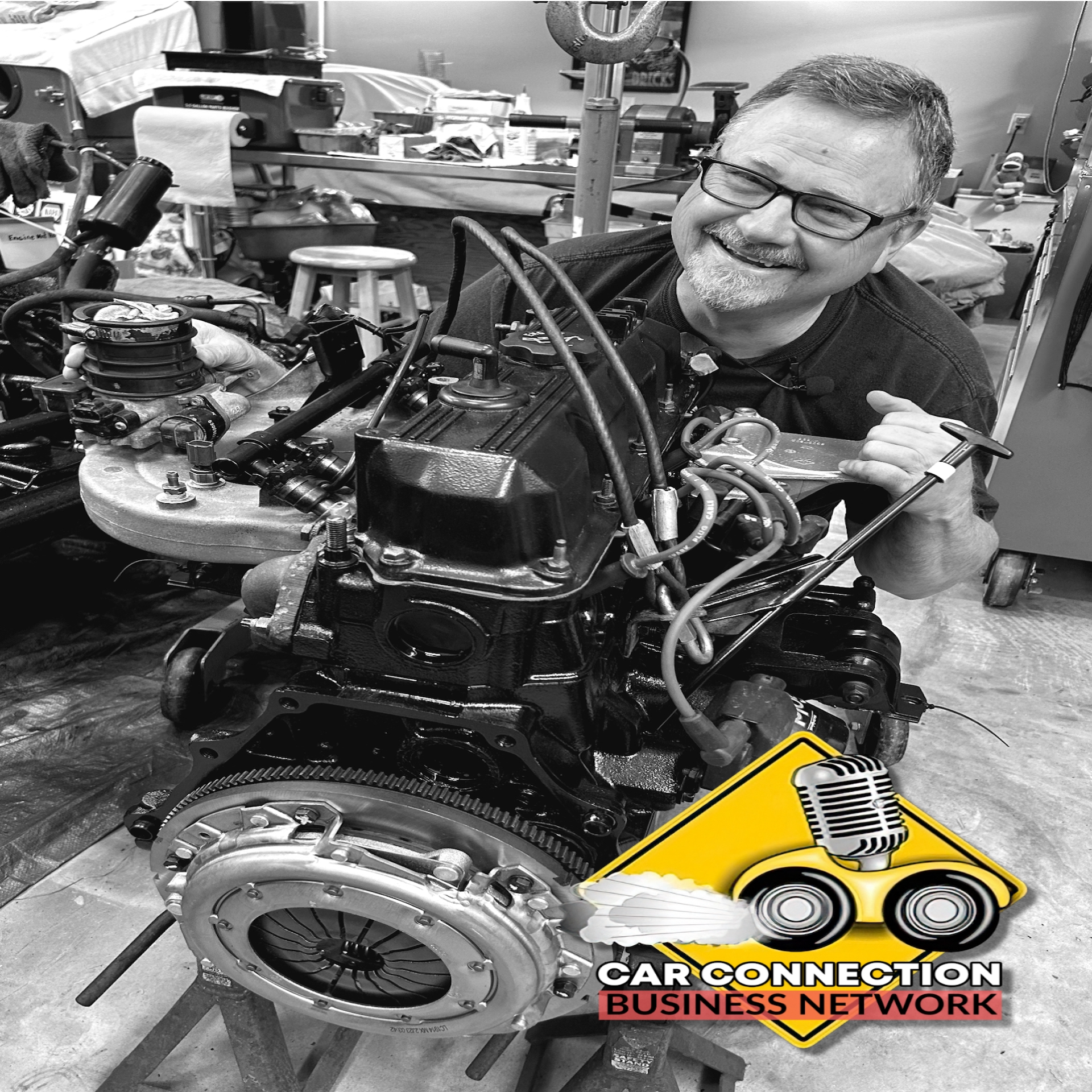
Saturday Q&A #214 | 3 Warning Signs Your Car Doesn't Want You To Ignore
About this episode
A fast-paced Saturday Q&A session mixes shop talk, community updates, and practical “don’t ignore it” vehicle advice. Host Niall Motormouth Jenkins kicks off with listener questions and a reminder to check basics (even drive-through orders). The show highlights ongoing production work and tech tips, then pivots to safety-focused maintenance—especially cabin air filters and how neglect can invite mice into the HVAC intake area. The discussion also touches on storage prep for vehicles and general housekeeping to keep systems running smoothly.
" don't Ignore the warning signs your vehicle is giving you"
Three great listener questions all point to one important lesson: your vehicle is always communicating -you just need to know how to listen.
This week on the Motormouth Morning Drive Saturday Q&A, Nile answers:
✅ Why does the engine make a different noise when the air conditioning is turned on?
✅ Are spots on the driveway something to worry about or simply normal?
✅ What causes a scraping noise only when backing up, and is it safe to keep driving ?
Learn how to recognize common warning signs before they become expensive repairs. Practical advice, plain language, and over four decades of real-world automotive experience to help you drive with confidence and save money.
Thanks to April, Ellen, and Sandra for sending in this week's excellent questions!
#MotormouthMorningDrive #CarMaintenance #AskAMechanic
Support the Show: If you enjoy what we do, fuel the next episode with a coffee ☕️🍩 buymeacoffee.com/motormouthnile A gift of any amount is so appreciated👍❤️
Motormouth Merch: wear the Brand with pride-every purchase from our online merch store supports Total Freedom Addiction Campuses Canada & USA where lives are changed one at a time. Together we can make a difference Friends. ❤️💕 Thank You for Joining us👍
Car Connection Maintenance Schedule: 🛑 STOP Guessing and start preventing breakdowns . Order our CC Maintenance Schedule Today while supplies last, visit the review page online at ccbusnet.com fill out the order form and Wah La you'll have a great start to saving money and keeping your car reliable for years to come. Mileage Does Not Matter....Maintenance Matters. Subscriber - Only Savings💰💰
Email Motormouth: Have a question, a repair story, or a Podcast idea? we'd love to hear from you-send us an email anytime [email protected] or [email protected]
Road to 1,000 Subscribers: Like, Subscribe, Share ,and Invite a fellow car enthusiast to join the Motormouth Community. every NEW SUBSCRIBER gets us closer to our first 1,000!
HELP US REACH OUR GOAL FRIENDS, Skippy and I are so excited, THANK YOU❤️
Happy Healthy Motoring Friends, Peace Patience Kindness Always❤️🚘NMJ
We'll see you in the net one👍🚘

Jeep Wrangler
"...rs, we live them, whether it's a 25 year old Jeep Wrangler getting a second chance at life or a Nissan Rogue..."
The Jeep Wrangler is a type of SUV made for off-road driving. People often buy older Wranglers and fix them up, so it can be a common car to talk about when discussing repairs and keeping a vehicle going.
The Jeep Wrangler is a rugged, off-road-focused SUV known for its simple, durable design and strong aftermarket support. In a podcast context, it often comes up because older Wranglers are popular candidates for restoration or “second chance” projects, and because owners tend to keep them running for a long time. That makes it a natural topic when discussing maintenance, repairs, or bringing a neglected vehicle back to life.
cabin air filters
"[770.3s] right now talking about cabin air filters please don't ask a question about cabin air filters for [775.8s] at least another week just change it that's it it's all finalized certified it's clean there's"
A cabin air filter is the filter that cleans the air coming into your car’s inside. If it gets dirty, the air can smell bad and feel stuffy. In this segment, they also warn that the filter area can be a place where pests like mice get in.
A cabin air filter is the filter that cleans the air entering the passenger compartment through the HVAC system. If it’s clogged or contaminated, it can reduce airflow and let more dust, pollen, and odors into the cabin. This episode also connects cabin air filters to pest access, since the filter housing can be a pathway for animals.
biohazard removal products
"[804.0s] anyways I was in there doing the final scrub out with the biohazard removal products I could [811.5s] definitely certify it's clean it smells really good in there and I sprayed the carpets as well"
These are special cleaning chemicals meant to disinfect and remove biological contamination. In cars, they can be used when there’s evidence of pests or droppings. The point is to sanitize the area, not just make it smell better.
“Biohazard removal products” refers to cleaners/disinfectants formulated to break down and kill biological contaminants. In an automotive context, they’re used when there’s contamination from things like animal droppings or nesting material. The host describes using these products as part of a decontamination process around the cabin air filter area.
n15
"[818.3s] with the n15 yesterday that way if there's any bacteria growing anywhere I killed it overnight [826.2s] then you just go through and clean the car normally so when you put a vehicle in storage"
“n15” is mentioned as a chemical sprayed on the carpets to kill bacteria overnight. The transcript doesn’t spell out what n15 stands for, but it’s being used as an antimicrobial/disinfectant step in the cleaning process. Listeners should treat it as a product name and follow the label directions for safe use in a vehicle interior.
vehicle in storage
"[826.2s] then you just go through and clean the car normally so when you put a vehicle in storage even if it's [832.9s] at home while you're you know if you're snow birds and you go away for the winter"
When a car is stored for months, it can develop problems that don’t show up during normal driving. This segment says that the cabin air intake/filter area can become a way for mice to get in. So you should prepare the car before you leave it for the winter.
“Vehicle in storage” refers to preparing a car for long periods without regular use, such as when snowbirds leave for winter. The host emphasizes that cabin-air-filter-related issues can worsen during storage, especially if pests can enter through the HVAC fresh-air intake area. Proper storage planning helps reduce contamination and damage while the car sits.
side vents
"[862.0s] then you just go through and clean the car normally so when you put a vehicle in storage even if it's [868.3s] there there's not much we can do about those side vents where you pull in fresh air"
These are the openings where your car pulls outside air in for heating and cooling. The host is warning that pests can use the area around the air filter and then get into the fresh-air intake paths. Once they’re in, it’s harder to fix than just changing the filter.
Side vents here refers to the fresh-air intake vents that bring outside air into the HVAC system. The host says mice can enter through the cavity where the cabin air filter sits and then reach “everything else,” including these intake paths. Because the intake openings are described as a “wide open hole,” they can be difficult to fully block after the fact.
air conditioning compressor
"it could be the compressor clutch itself is beginning to seize up it could be the system is low and what you're hearing is the compressor ac compressor kicking in and out rapidly"
Your car’s A/C compressor is the part that “moves” the refrigerant through the system. If it starts making weird sounds, it can be a sign something inside the A/C system isn’t working right.
In a car’s A/C system, the compressor is the pump that pressurizes the refrigerant so it can move heat out of the cabin. When it starts making abnormal noises, it can mean the compressor clutch is sticking or the system pressures/refrigerant level are out of range.
compressor clutch
"it could be the compressor clutch itself is beginning to seize up it could be the system is low"
The compressor clutch is what turns the A/C compressor on and off. If it sticks or starts failing, the A/C can make loud noises and may not cool properly.
The compressor clutch is the engagement mechanism that connects the A/C compressor to the engine when the system calls for cooling. If it begins to seize or chatter, you may hear grinding/scraping or see the A/C cycling oddly.
refrigerant level
"that would indicate that the refrigerant level is not low enough for the low pressure cutouts"
Refrigerant level is how much “A/C fluid” is in the system. Too little refrigerant can make the A/C behave strangely and may stop it from running normally.
Refrigerant level is how much A/C fluid is in the system. If it’s too low, sensors and pressure cutoffs may prevent the compressor from running steadily, which can cause rapid cycling and reduced cooling.
low pressure cutouts
"that would indicate that the refrigerant level is not low enough for the low pressure cutouts which to shut the system down and protect itself"
Low pressure cutouts are safety shutoffs that turn the A/C off when pressure gets too low. That helps prevent damage to the compressor.
Low pressure cutouts are safety controls that shut the A/C compressor off when refrigerant pressure drops too far. The goal is to protect the compressor and prevent damage from running under unsafe conditions.
refrigerant lines
"we have the switches in the system that control and monitor pressures in the refrigerant lines"
Refrigerant lines are the tubes that carry the A/C refrigerant around the car. Sensors watch the pressure in these lines to help the A/C run safely.
Refrigerant lines are the hoses/tubes that carry refrigerant between the A/C components. Pressure sensors and switches monitor these lines so the system can control compressor operation and protect itself.
serpentine belt
"the serpentine belt broke and if it's the size of the one like [2251.5s] on the fj cruiser ... and when it breaks it's a whip underneath the hood"
A serpentine belt is a belt in the engine that powers several important parts. If it snaps, it can swing around like a whip and smash things under the hood.
A serpentine belt is the single long belt that drives multiple engine accessories (like the alternator and water pump) using pulleys. If it breaks, it can whip around under the hood and physically damage nearby components—exactly what the host describes happening to the Taurus.

Toyota FJ Cruiser
"...broke and if it's the size of the one like on the fj cruiser if you watch the uh the spring evaluation on our ..."
The Toyota FJ Cruiser is an SUV that’s designed to handle rough roads better than a typical everyday car. The podcast mentions it to help describe size or fit, and it’s also a vehicle people often keep because it’s built for more adventurous driving.
The Toyota FJ Cruiser is a rugged, off-road-capable SUV with a distinctive retro styling and a body-on-frame heritage. The podcast context references the vehicle’s size and compares it to something “like on the FJ Cruiser,” which suggests it’s being used as a reference point for fit or dimensions. It’s also a common car to discuss because many owners treat it as a weekend/off-road vehicle and keep it for years.
crankshaft
"because it's still the engines running and the belt is wrapped around [2272.5s] the crankshaft and the engines running and that thing is whooping around under the hood"
The crankshaft is a key rotating part inside the engine. In this story, the belt ends up wrapped around it, so when the engine is running the belt can thrash around and cause damage.
The crankshaft is the main rotating shaft in an internal-combustion engine that converts piston motion into rotational motion. The host explains the broken serpentine belt wrapping around the crankshaft, which is why it can whip violently while the engine is running.
radiator
"on this torus it grabbed the upper radiator holes ripped it right off the radiator pulled [2284.0s] the radiator into the engine and ripped it right off its moorings"
The radiator helps keep the engine from overheating. Here, the snapped belt grabbed the radiator and tore it loose, which is a big problem for cooling.
The radiator is the cooling system component that sheds heat from the engine coolant to the air. The host describes the broken serpentine belt grabbing the radiator’s upper area and ripping it off its mounts, which can quickly lead to overheating.
windshield washer bottle
"the washer windshield washer bottle [2291.3s] was non-existent anymore"
The windshield washer bottle holds the fluid you spray on your windshield. In this case, the belt failure destroyed it, showing how much damage can happen.
The windshield washer bottle stores fluid used by the windshield washer system. The host notes that after the belt failure, the washer bottle was effectively destroyed, illustrating how far-reaching a belt-whip incident can be.
prop rod
"and i got the prop rod on there because it even grabbed the pop the prop rod off the [2366.6s] clip under the hood and it bent it up like a freaking pretzel"
A prop rod is what you use to keep the hood propped open. The host is saying the broken belt was so aggressive it even knocked that support out of place.
A prop rod is the support piece used to hold the hood open while you work under it. The host says the belt even grabbed the prop rod off its clip and bent it, emphasizing the belt’s violent motion.
AC compressor
"if it's the ac compressor starting to say good night ireen or we have a serpentine belt that's not quite happy ... april we need to you know discover is that an ac compressor has it got anything really to do with the air conditioning"
The AC compressor is the part that makes the air conditioner work by pumping refrigerant. If it’s going bad, it can make loud noises and make the engine work harder.
The AC compressor is the pump that pressurizes the refrigerant so your air conditioning can cool the cabin. When it starts failing, it can create unusual noises and increased load on the engine, and it can also contribute to belt stress if the system is belt-driven.
drive belt
"it's stretched out because when you turn the air conditioning on folks it puts a ton of stress on that serpentine belt if you don't have a separate drive belt for air conditioning most vehicles today it's one belt drives all the accessories"
A drive belt is how the engine turns other parts. Some cars have one belt for everything, while others have a separate belt for the air conditioner.
A drive belt is a belt that transfers engine power to an accessory. Some cars use separate belts for the air conditioning, while many modern vehicles use one serpentine belt to drive multiple accessories at once.
accessories
"most vehicles today it's one belt drives all the accessories power steering water pump um air conditioning alternation all of it is on one belt"
In this context, accessories are engine-driven components that are not the main engine itself—like the power steering pump, water pump, air conditioning compressor, and alternator. They’re often powered by the serpentine belt, so a belt failure can disable several systems quickly.
alternator
"most vehicles today it's one belt drives all the accessories power steering water pump um air conditioning alternation all of it is on one belt ... like alternator power steering and uh the water pump"
The alternator is the part that makes electricity for the car and keeps the battery charged. If the belt driving it breaks, the car may start acting up or not start.
The alternator generates electricity to run the car’s electrical systems and recharge the battery. Because it’s commonly driven by the serpentine belt, a belt failure can quickly lead to electrical problems and a no-start condition.
water pump
"most vehicles today it's one belt drives all the accessories power steering water pump ... like alternator power steering and uh the water pump"
The water pump moves coolant around to keep the engine from overheating. If it stops because the belt fails, the engine can overheat fast.
The water pump circulates engine coolant through the cooling system to prevent overheating. If the serpentine belt breaks and stops driving the water pump, the engine can overheat quickly and suffer serious damage.
power steering
"most vehicles today it's one belt drives all the accessories power steering water pump ... like alternator power steering and uh the water pump"
Power steering helps you steer with less effort. If the belt that powers it fails, steering can feel heavy or difficult.
Power steering is the system that reduces the effort needed to turn the steering wheel. On many belt-driven setups, the power steering pump is an accessory driven by the serpentine belt, so belt issues can affect steering feel.
horsepower
"as soon as you flick that switch you pull horsepower away from the engine and you lose fuel economy because the engine has to work harder to run that compressor"
Horsepower is how much power the engine can produce. Turning on the AC makes the engine work harder, which can reduce fuel economy.
Horsepower is a measure of engine power output. When the air conditioning turns on, the compressor adds load, which can “pull horsepower away” from the engine and reduce fuel economy.
fuel economy
"as soon as you flick that switch you pull horsepower away from the engine and you lose fuel economy ... fuel economy drops just so you know"
Fuel economy means how efficiently the car uses gas. When the AC is running, the engine uses more power, so you may get worse gas mileage.
Fuel economy is how efficiently a vehicle uses fuel, often expressed as miles per gallon (or liters per 100 km). Extra engine load from the AC compressor can lower fuel economy while the system is running.
EV fire
"[2588.5s] another ev fire burns the service center right to the ground just saying we're going to cover"
An EV fire is when an electric car catches fire. Electric cars have a big battery, and if that battery is involved, the fire can become very dangerous very fast.
An EV fire is a vehicle fire involving an electric vehicle. Because EVs typically store energy in a high-voltage battery pack, these fires can be harder to manage and can spread quickly if the battery is involved.
service center
"[2588.5s] another ev fire burns the service center right to the ground just saying we're going to cover"
A service center is a repair shop. The concern is that if a car catches fire there, it can damage more than just the vehicle.
A service center is a facility where vehicles are repaired and maintained, typically with bays, storage, and equipment. The speaker’s point is that a vehicle fire can spread beyond the car itself and damage the surrounding facility.
plastic under the hood
"[2633.2s] you'll be able to research till you drop just like me so anyways we have a lot of plastic under the hood and i asked this question"
“Plastic under the hood” means the plastic parts in the engine area. If something leaks and catches fire, those plastic parts can help the flames spread quickly.
“Plastic under the hood” refers to the many plastic components in the engine bay—covers, ducts, wiring housings, and reservoirs. If a leak or ignition source is present, plastic can contribute to rapid fire spread because many plastics are petroleum-based.
petroleum
"[2675.6s] three minutes in the car is done because that plastic it is petroleum it's basically gasoline"
Petroleum is a fuel source made from ancient organic material. The point here is that some plastics are made from petroleum, so they can burn like fuel once they catch.
Petroleum is the fossil-fuel source of many flammable materials, including gasoline and many plastics. In the context of fires, the speaker is linking petroleum-based plastics to faster ignition and more intense burning.

F-150
"[2711.6s] of the truck saw some smoke under the hood it's just a f-150 or an f-something series pickup truck"
The Ford F-150 is a popular full-size pickup truck. The host is using it as an example of how fast a fire can get out of control once smoke starts.
The Ford F-150 is a full-size pickup known for being widely sold and commonly used for everyday hauling and work. In this segment, it’s used as a real-world example of how quickly a vehicle fire can escalate after smoke appears.
spotting
"any fluids that you're seeing [2760.6s] spotting on the driveway you need to be investigated immediately ... [2838.4s] if you've got some [2843.2s] spotting going on underneath your vehicle"
In this context, “spotting” means seeing fluid leaks or wet spots under or around the vehicle. Fluid leaks can indicate problems in systems like cooling, fuel, or oil, and they’re worth investigating quickly because modern cars have many components and can fail in ways that lead to fires.
car gone
"because with all the plastic [2771.0s] it doesn't take long folks and that's it it's car gone and you don't want to do that"
“Car gone” is slang for “the car is basically ruined.” After something bad like a fire or major damage, it may be too expensive to repair, so you end up replacing it.
“Car gone” is a casual way of saying the vehicle is effectively totaled or beyond practical repair after a serious incident. In insurance terms, it often means the damage is severe enough that replacing the car is cheaper than fixing it.
insurance battle
"especially if [2777.9s] you're in financial cramp that uh if you know you lose the car that means they're gonna insurance [2785.4s] you're gonna battle it out with the insurance and it just gets ugly"
An “insurance battle” is when you and the insurance company don’t agree on the claim. You might feel like they’re offering too little, and you have to argue with paperwork to get a fair payout.
An “insurance battle” refers to the dispute process between you and the insurer after a claim—especially when you disagree about the value of the vehicle or the amount they’ll pay. It can become stressful because you may need to negotiate documentation and repair/replace costs.

Mercury Grand Marquis
"...an't remember what it was now um i think it was a mercury marquee a grand marquee yes it was a grand marquee it was..."
zarky's test
"so he decided to create something called the zarky's test ... so we uh we adopted that and it works extremely well ... so ellen you need the zarky's test so we need to uh you can do it yourself get a cardboard box cut it open mark on the uh where the front of the vehicle is on the box slide it under"
The “Zarky’s test” is a simple way to figure out where a car is leaking fluids. You put a marked cardboard box under the car, let it catch the drips, and then you can tell your mechanic exactly where the leak is coming from.
The “Zarky’s test” is a DIY diagnostic method for identifying fluid leaks under a parked car. By placing a marked cardboard box under the vehicle and letting it collect drips, you can see where the leak is coming from (front, driver/passenger side, or rear of the engine) and then show it to a technician.
fluid leakage
"so he decided to create something called the zarky's test ... at the end of the story is any leakage is serious leakage because that could be the be all and all of your vehicle"
“Fluid leakage” refers to the unintended escape of automotive fluids (like oil, coolant, transmission fluid, or brake fluid) from the vehicle. The episode frames any leakage as potentially serious because it can indicate a failing component and can lead to damage if the fluid level drops.
rear brake system
"it could be in the brakes on the rear the rear brake system has an issue where either you've got a brake pad that sticks..."
The rear brake system is everything that makes the rear wheels slow down. If something in the rear brakes is sticking, you can get rubbing/scraping noises and uneven wear.
The rear brake system is the set of components that generates stopping force at the rear wheels, typically including calipers, pads, and hardware that allows the pads to slide and release. If the rear system binds, it can cause dragging and scraping noises that appear when reversing and disappear when moving forward.
disc brake rotor
"pad scraping the overnight rust that builds up on a disc brake rotor that could be what we're dealing with but if you have not had a full brake inspection..."
The disc brake rotor is the metal “disc” your brake pads squeeze to stop the car. If the car sits overnight, a light rust film can form on the disc, and normal braking usually wipes it off quickly.
A disc brake rotor is the metal disc the brake pads clamp onto to slow the car. When the car sits, moisture can leave a thin layer of rust on the rotor surface, which is usually scrubbed off after the first few brake applications.
brake pad
"either you've got a brake pad that sticks or the pad what you're hearing is the pad scraping the overnight rust that builds up on a disc brake rotor..."
Brake pads are the parts that squeeze onto the disc to slow the car. If one pad doesn’t release and keeps rubbing, you can hear scraping and it can wear out faster.
Brake pads are the friction material that presses against the disc brake rotor. If a pad “sticks” or doesn’t release properly, it can drag on the rotor, causing scraping noise and extra wear.
full brake inspection
"but if you have not had a full brake inspection and a service performed to your brakes that's what i would highly recommend at this point..."
A full brake inspection is a detailed check of the brake parts to find out why you’re hearing scraping. The mechanic looks for worn parts, stuck components, and issues that need cleaning or lubrication.
A full brake inspection is a hands-on check of the brake components to find the cause of symptoms like scraping, sticking, or uneven wear. It typically includes measuring pad thickness, checking rotor condition, and inspecting caliper/pad hardware for binding or lack of lubrication.
brake service
"you're looking at a full brake service at this point an evaluation and a service to determine again what needs to be cleaned lubricated..."
A brake service is work done to fix and maintain your brakes. It can include cleaning and lubricating parts and replacing anything worn so the brakes work smoothly again.
A brake service is maintenance work performed on the brake system to restore proper operation—often cleaning, lubricating the moving parts, and replacing worn components. In this context, the host is recommending a service to determine what needs cleaning, lubrication, repair, or replacement.
sunshades
"summer tech tip for you sunshades not just for looks now if you were to stroll on by the car connection workshop you'd see a number of vehicles out there and they all have sunshades"
Sunshades are covers you put in your car to block the sun. They keep the inside cooler and help prevent the dashboard and seats from getting damaged by sunlight.
Sunshades are interior or windshield covers used to block sunlight when a car is parked. They reduce cabin heat buildup and help protect interior materials from UV damage, which can lead to cracking, fading, and premature wear.
in-car temperature
"if you buy quality sunshades here's here's what's going to happen for you it reduces the in-car temperature by 15 to 20% prevents the dash and the material in your vehicle from getting sunscorched"
In-car temperature is how hot the inside of the car gets when it sits in the sun. Keeping it lower helps protect the dashboard and other parts from heat damage.
In-car temperature is the heat level inside the cabin while the car is parked in the sun. Sunshades can reduce it by limiting solar radiation, which also reduces heat stress on plastics, leather/vinyl, and electronics.
sunscorched
"prevents the dash and the material in your vehicle from getting sunscorched especially the dash and all the electronics that are in there"
“Sunscorched” means the sun has cooked and damaged the car’s interior materials. It can make things crack, dry out, or fade over time.
“Sunscorched” describes UV and heat damage to interior materials from prolonged sun exposure. Over time, it can cause cracking, drying, fading, and deterioration of surfaces like dashboards and seat fabric.
window tint
"i'm a huge fan of window tint big time i would never have a vehicle without window tint even the the nisa and rogue is tinted the on the back half is fully tinted where you know the back glass is big"
Window tint is a film on the windows that blocks some sunlight. It helps keep the car cooler and protects the interior from sun damage.
Window tint is a film applied to glass to reduce sunlight entering the cabin. It lowers heat buildup and can protect upholstery and interior trim from UV exposure, which helps prevent fading and cracking.

Nissan Rogue
"i'm a huge fan of window tint big time i would never have a vehicle without window tint even the the nisa and rogue is tinted the on the back half is fully tinted"
The Nissan Rogue is a common family SUV. The host uses it as an example of how the rear glass area gets lots of sun and why tint can help protect the interior.
The Nissan Rogue is a popular compact crossover, and the host mentions it specifically to illustrate how rear glass and hatch-area sun exposure can be significant. They point out that the Rogue’s rear side windows/back glass are tinted to help reduce sun damage to the interior.

1998 Honda CR-V
"i had to change the seats and the sun the sun visors and the headliner on the the 1998 honda crv"
The 1998 Honda CR-V is an example of a car whose interior got damaged by sun exposure. The host had to replace parts like the headliner and sun visors because the materials deteriorated.
The 1998 Honda CR-V is used as a specific example of how heat and UV can damage interior components. The host says they had to change items like the headliner and sun visors after sun-related deterioration.
headliner
"the sun visors and the headliner on the the 1998 honda crv"
The headliner is the material on the inside of the car’s roof. Sun and heat can break it down, so it may need replacing if it starts to fail.
The headliner is the interior fabric or panel covering the roof of the car. Heat and UV can cause it to sag, discolor, or deteriorate, which is why the host mentions replacing it after sun damage.
sun visors
"i had to change the seats and the sun the sun visors and the headliner on the the 1998 honda crv"
Sun visors are the flaps you pull down to block glare from the sun. The host says sun can damage them over time, so they may need replacement.
Sun visors are the hinged panels above the windshield that can be flipped to block glare. The host includes them among interior parts that can be damaged by sun exposure, especially if the materials dry out and lose structure.

Honda Civic DX
"the sun just bake the material where you touch it it just crumbled right off"
The Honda Civic DX is a Civic trim level. The host is saying that sunlight can ruin the interior materials—especially on surfaces you touch—until they crumble.
The Honda Civic DX is a trim level of the Civic, and the host cites it as an example of how sun exposure can destroy interior materials. They describe the sun “baking” the surfaces people touch, causing the material to crumble.
wrecking yard
"and it was amazing because i was in a wrecking yard in in buffalo that i know of where you can go in and pull your own parts"
A wrecking yard is a place where old cars are taken apart for usable parts. People can often buy or pull the exact parts they need for a repair or restoration.
A wrecking yard (often called a salvage yard) is where cars are dismantled for usable parts. The host describes going there to pull parts themselves, which is a common enthusiast approach for finding specific interior components or trim at lower cost.
Wrangler Tj Wrangler
"i pretty much rebuilt the whole 97 jeep tj wrangler from another jeep tj from 2006 from austin texas"
The 1997 Jeep TJ Wrangler is a well-known Jeep model. The host rebuilt one and uses it to show how sun exposure can cause real wear, including damage to interior pieces and sun-baked exterior areas.
The 1997 Jeep TJ Wrangler is a classic Jeep generation known for its simple, rugged design and removable top/doors in many configurations. The host discusses rebuilding one after finding parts in a wrecking yard, and they connect the story to sun damage—showing how UV can affect exterior and interior materials.
front bumper
"on that rocket i'm going to show you in a in a video we're getting close to getting that done now is uh the top of the front bumper got all sunscorched"
The front bumper is the part at the front of the car that helps protect it in minor impacts. The host says the sun can damage the bumper’s surface and make it look dried out.
The front bumper is the exterior impact-protection component at the front of the vehicle. The host notes the top of the front bumper is sunscorched and dried out, affecting the paint/finish and suggesting surface-level restoration is needed.
rattle can
"going to do that with a $35 custom blended rattle can with the factory painted and it's one stage"
A rattle can is a spray paint can you shake and spray yourself. It’s often used for small DIY paint jobs or touch-ups.
A rattle can is a small aerosol spray paint can used for quick, DIY touch-ups. In this context, the host is talking about using it to repaint over factory paint with a simple, one-stage approach.
base
"so the clear and the base is all in the can so yeah you're going to get bird's eye view on that"
Base coat is the colored paint layer that gives the car its color. The clear coat goes on top to protect it.
Base coat is the colored paint layer that provides the car’s actual color. Here, the host says the base and clear are combined in one aerosol product, which changes how you apply and finish the paint.
clear
"so the clear and the base is all in the can so yeah you're going to get bird's eye view on that"
Clear coat is the transparent protective layer on top of the paint. It helps the paint look shiny and protects it from sun damage.
Automotive clear coat is the transparent top layer sprayed over the color (base coat) to add gloss and protect the paint from UV rays and minor abrasion. The host is describing a paint system where the clear and base are handled together in the same can.
electronics
"you're saving your fabric you're saving your dash and all the electronics that are in there from getting cooked"
In cars, electronics refers to the computer modules and electrical components that run infotainment, sensors, and other systems. The host’s point is that excessive heat can stress these components and shorten their lifespan.
dash
"you're saving your fabric you're saving your dash and all the electronics that are in there from getting cooked"
The dash is the dashboard area in front of you. Sun and heat can damage it, making it fade or crack.
The dash (dashboard) is the front interior panel that houses controls, vents, and often displays. Heat and UV exposure can cause dashboard materials to fade, crack, and degrade over time.
sun and heat
"and heat is the enemy when it comes to electrical and electronics so grab yourself a sunshade"
Sun and heat are what make car interiors fade and wear out faster. They can also stress the car’s electrical parts over time.
In car-care terms, sun and heat are the main drivers of interior degradation like fading, cracking, and accelerated wear. The host frames them as especially harmful to electronics and cabin materials.
windshield sunshade
"grab a windshield sunshade it ain't just a style move it keeps your interior cooler and protects your dash from cracking"
A windshield sunshade is a cover you put in your windshield to block the sun. It helps keep the inside of the car cooler and can protect the dashboard from sun fading and cracking.
A windshield sunshade is a reflective cover placed inside the windshield to block solar heat. The host argues it reduces interior temperatures and helps protect the dash and other cabin materials from sun damage.
convertible
"small thing big comfort in fact i saw a vehicle uh just this week real cute looking two door convertible Mercedes top was down"
A convertible is a car with a roof that can open up. When it’s open, the sun heats the seats and interior much faster.
A convertible is a car with a roof that can be lowered or removed, exposing the cabin to direct sunlight. In this segment, the host uses the convertible’s open-top exposure to explain why seats and interior surfaces get much hotter.
black leather seats
"orange crush has black leather seats you put the top down and leave it down in the sun you ain't sitting on that seat"
Black leather seats are seats covered in dark leather. Dark colors soak up more heat from the sun, so they can feel scorching when the car sits outside.
Black leather seats are upholstery made from leather in a dark color. Dark materials absorb more heat from sunlight, which is why the host says leaving a convertible top down can make the seats painfully hot.
Request an Explanation
Heard something you'd like explained? We'll add it to this episode.
Sign in to request explanations for terms you heard.
Want to learn more?
Browse our glossary for plain-English explanations of automotive terms, jargon, and concepts.
Help improve this episode
See something that's not quite right? Our annotations are AI-generated and can sometimes miss the mark. Click the flag icon on any annotation to suggest a correction.
1 community members have helped improve this episode.