The Jeep Wrangler is a type of SUV built for off-road driving. Some versions let you remove parts like the doors or roof. People often keep them for a long time and restore older ones.
Car
2003 new Beetle convertible
This is a Volkswagen Beetle from 2003, but it’s the newer “New Beetle” design. The convertible means the roof can come down, which makes it feel more open and different from a normal Beetle.
The Passat is another Volkswagen model, generally a bigger and more practical car than the Beetle. Here it’s just being mentioned as an alternative they didn’t want.
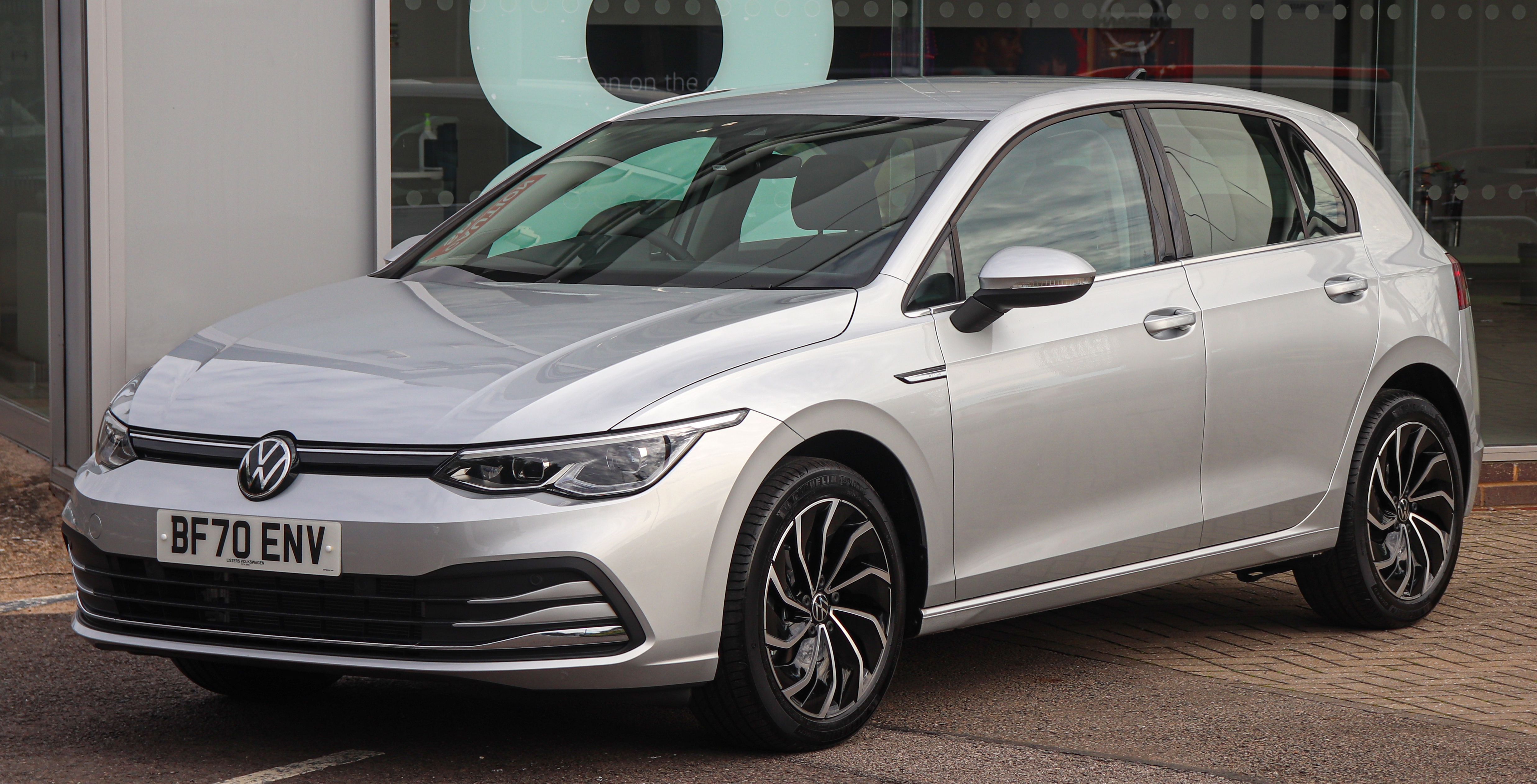
The Volkswagen Golf is a small car meant for normal daily driving. It’s known for being practical and easy to live with. The podcast mentions it as a car the speaker is not choosing.
The Volkswagen Beetle is a small car with a very recognizable rounded design. People choose it because it has a classic look and a simple, practical size. The podcast mentions it as the specific car the speaker wants.
The Toyota FJ Cruiser is a rugged, old-school-looking SUV. Here, the host is talking about one that’s been cleaned up and slightly modified so people at the event will react to it.
“Retro” just means a design that looks like it’s from an earlier time. The host is saying they’re trying to keep that classic FJ look in a newer version.
Chlorofluorocarbons are chemicals that used to be used in air-conditioning systems. If they leak into the air, they can harm the ozone layer that protects us from the sun’s stronger rays.
The ozone layer is a protective layer high in the atmosphere. It helps block harmful UV radiation from the sun, so damaging it is a big environmental problem.
“Top up” means adding more AC fluid because the system is low. A good repair usually finds the leak first—otherwise you’re just adding more and it can keep leaking out.
The Kyoto Accord is an international agreement between countries about limiting pollution. The point here is that refrigerants aren’t supposed to be released into the air because of their environmental impact.
Refrigerant is the special fluid in your car’s A/C that makes it cool. If you use the wrong type—or mix types—you can mess up the system and even create dangerous conditions.
“134a” is a specific type of refrigerant used in many older car A/C systems. If your car isn’t actually using that refrigerant, adding it can cause problems and make the A/C harder (and more expensive) to fix.
An A/C machine is the shop’s tool for handling refrigerant—pulling it out and putting the correct amount back in. If the refrigerant type isn’t confirmed, it can contaminate the machine and add to repair costs.
A sealant is a product people add to try to stop a leak. With car AC, it can sometimes cause new problems or make the system harder for a mechanic to fix.
“Buyer beware” means you should be careful and do your homework before buying something. The warning here is that some products can cause problems instead of fixing them.
Watkins Glen is a well-known race track in New York. The speaker mentions it because they were there during their car trip and had an experience with their tinted windows.
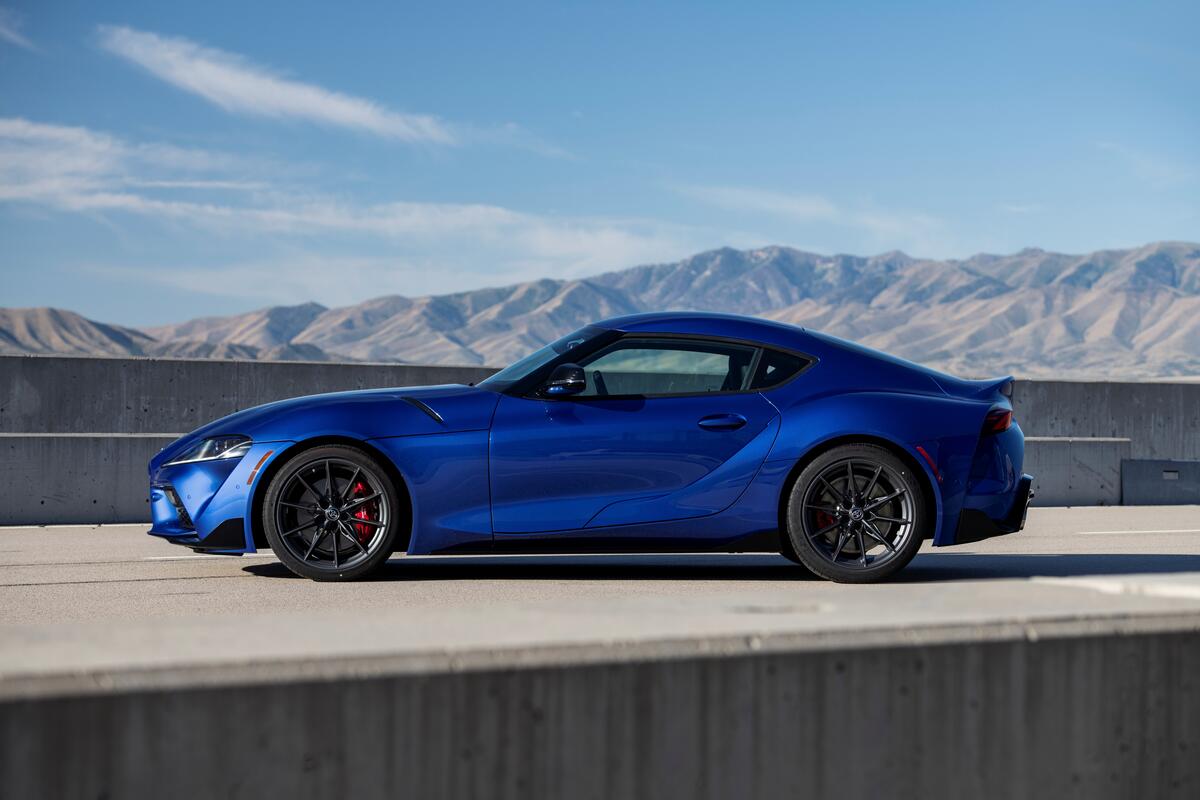
The Toyota Supra is a sports car made for driving enjoyment. People often restore older Supras and customize them. The podcast specifically talks about a restored 1982 model.
Place
Kyuga Park
This sounds like a park near the Watkins Glen area. The speaker is telling a travel story about a storm that happened while they were there.
A leak test is how a technician finds where the A/C is losing its cooling fluid. They check, fix the problem, and then check again to make sure it’s really sealed.
A die pack is a special dye added to the A/C so the technician can see where it’s leaking. They use a light to find the dye and track down the problem area.
“Engine noises” is a broad term for abnormal sounds coming from the engine bay. The host emphasizes that without hearing or diagnosing the noise in person, it’s hard to identify the cause, so describing it carefully matters.
Term
smells bad
If your car smells bad, it can be a sign something is wrong—like something overheating or leaking. It’s worth taking seriously instead of waiting.
Engine oil is what keeps the engine’s moving parts from grinding against each other. If the oil level or condition is wrong, it can make the engine sound bad, so checking it is an easy first step.
They mean the problem could get so bad that it causes serious damage. If the engine sounds wrong or you notice warning signs, the safest move is to stop driving and have it towed so it doesn’t turn into an expensive breakdown.
They’re using “do not resuscitate” to mean “don’t keep trying to fix this by driving it.” If something is seriously wrong, you should stop and get it checked so it doesn’t turn into a much bigger repair.
Tread depth is how much “grip” is left on the tire. If it’s too low, the tire can’t grip well—especially in wet or hot conditions—and it’s more likely to fail.
The production date tells you when the tire was made. Tires age with time, and older rubber can crack and fail even if the tread doesn’t look brand-new.
Premature wear means your tires are getting worn out sooner than they should. That often suggests something is off with the car’s alignment or suspension.
A steering tire is the front tire that helps control where the car goes. If that tire fails on the highway, it can be much harder to keep control of the car.
Changing tires in pairs means you replace two tires on the same axle. That helps the car handle more evenly instead of having one “new” tire and one “old” tire.
LIVE
good morning friends you're tuned to car connection where the coffee strong the
stories are real and the wrenches they just never stop turning I'm your host
Niall Motormouth Jenkins coming to you from the car connection workshop where
the smell of fresh oil little elbow grease is all part of a balanced
breakfast around here we don't just talk cars we live them whether it's a 25
year old Jeep Wrangler getting a second chance at life or a Nissan Road getting
its brakes back in order or even a mystery leak that's got everyone
scratching their heads this is where we roll up our sleeves and get it done with
a little wit little wisdom and a whole lot of fun car connection workshop isn't
just about nuts bolts and diagnostics it's about connection the connection to
our vehicles to the people who drive them and to the community that keeps
Niagara rolling because when you fix a car you're not just turning a wrench oh
no you're restoring someone's confidence freedom and maybe maybe even
their sanity we're here every week Monday through Saturday helping you keep
your ride safe reliable ready for whatever road lies ahead so whether
your weekend wrench your daily commuter or someone who just wants to understand
what that strange rattle really means welcome aboard and good morning stick
around for shop talk expert advice few good laughs maybe a story or two of flash
a shop flashback that happens periodically but most of all it is Q&A
Saturday here in the car connection workshop with motormouth's morning drive
now car connection has more ways for you to watch listen and engage so come and
join us Monday through Saturday right here for motormouth's morning drive 8
a.m. yes today is today is our first of
2026 fundraising events and yesterday was a very busy day and you've made it to the
weekend so for all of you who do have a weekend what is a weekend anyway two
weekends out of the year I have a weekend but it just doesn't it doesn't even
feel right if you know what I mean because when you work weekends and I
have I've worked weekends for 32 years now so I'm not here to tell you my story
this morning unless you really want to know that but we need to jump in and
take on Q&A because I have three amazing questions have come through and we've
got some amazing videos coming up on our YouTube channel so you won't want to miss
any of those automotive tech tips showing you how to do stuff how to get into
situations and how to get back out of it so when things go wrong let the water
hold you up I think I've heard that somewhere before I think I just heard
that yesterday as a matter of fact yeah just let the water hold you up here on
the south shore is a lake here you go and have a dip I think it's cold still but
the apparently beaches are open next week and something I'm just on the tail
end of or should I say just on the beginners in the beginnest is it's
beach day on the north shores of Lake Ontario and on the south shores of Lake
Erie I will bring you a follow-up on that because I'm I just heard it mentioned
yesterday as I was working on Orange Crush I don't think you've seen that I
built that car from it was kind of an abused automobile just kind of left to
its own and nobody wanted to buy it because it's a stick shift and it's a
lovely little snap orange 2003 new Beetle convertible and I worked for
Volkswagen and my company car I had to fight for it actually I said I don't
want to jet a golf or Passat or anything like that just a Beetle that's all I
want I would just want a Beetle because at the end of the day when the day's been
rough I don't know I can only speak for myself you know when you walk up to the
front of a Beetle it's always seems like it's smiling it's kind of like your dog
meeting you at the door and your day just absolutely sucked from the moment you
walked in at work till the moment you left you ever have one of those days let
me know in the email motorbike.jankins.gmail.com anyways so he's a
pretty vehicle now and we take it out there and let the kids and mostly the
moms want to have their picture taken in to show all their buddies the kids kind
of go no wait here sweetheart you know yeah just stand out of the way there I'm
getting my picture taken you know one lady she says can I can I hold up the
car keys okay I said but yeah don't put them in your pocket okay no keys in
pockets she wanted a picture of making it look like that was her car and then
that same show we were at that was at Safari Niagara in that yeah that's where
we're gonna be today not Safari Niagara but we're gonna be in Stevensville from
10 to 4 I'm in the dunk tank so I'm taking the the 19 and a three-quarter
year old Toyota FJ Cruisers already I've given a bit of a tidy up and added a
little bit of extra something something to the front of it we're gonna see what
the reaction of the crowd is yeah just paying respects to the original version
of the FJ look it up you'll see what I mean and they're gonna be they're doing
a retro so I paid homage to the retro upcoming FJ I think it's out already I
believe it is so yeah miss that boat let's dive in this morning if you're just
joining us for the first time if you're if in there if you're in the queue going
through the drive-through this morning we're praying for you and make sure you
check your order it is weekend it's weekend shift we knows that we know
what that can look like things get missed so check your order I've got mine
ready I got my vitamins my my vitals ready to go get your crayons get your
leaf bag get it all in order so that you can take some notes this morning get
your favorite beverage going and we like to say thank you to Niagara Block at
5,000 Montrose Road Niagara Falls for making this Saturday's Q&A questions
and answers available to you on all podcast platforms Amazon Apple Spotify
Podbean wherever you pull your podcast from we're there just type in car
connection workshop so thank you to Kathy Dave and Dan Grimo next Jen at
Niagara Block 5,000 Montrose Road Niagara Falls building Canada since 1931 they
don't look a day over 29 I'm just saying and they're doing really really well so
they don't they don't look old at all so building Canada since 1931 it agrees
with them providing building supplies every block known to mankind I think
they make it there they literally make blocks right there I've seen it with my
very own eyes amazing it is amazing and they built all the equipment themselves
over the years that is crazy good I really respect that because I think when
you see things how they're there used to be a program called how it's made I
would wait with bated breath to watch that program to see how things were made
it would just I'd be in shock and awe going who comes up with that stuff well
that's how they make the building supplies they came up with that stuff to
make blocks of all designs they have steel they have girders they have rebar
but most of all they can help build that dreamscape that hardscape landscape you've
always wanted they got everything from soup to nuts to create an amazing
backyard oasis you will never want to leave it'd be like vacation no right
here I'm staying right here I got everything I need right here and I know
some people that have done that they invested in their in their their
dreamscape they don't go away they got a pool they got everything why would we
spend money to go elsewhere they go we got everything we want here I need
something to go in the house and get it and I hang here so if that's what you
would like to create you need to check in with Kathy Grimo she has a list of
contractors that she can refer you to and we can get that going for it and make
it happener all right so let's jump in this morning let's have our morning
swiggy together you got yours ready we count it down on 321 and then
we get rolling all right we got weekend weather coming up in just a moment thank
you to the fellers Tony Mele and Larry T troll certified financial planning
professionals these guys are waiting to sit with you and answer your questions
they want to help you so take advantage of their knowledge 50 years experience
they work with one of the biggest wealth companies in the world IG wealth
management and they can walk you through your portfolio and explain it out and
make sure that it's working properly for you if you're drowning in debt like
about 78% of Canada right now we need to stick together we are Canadians we are
resilient amen estate planning so you need to know all about the six pillars
and making sure that you are health proxies for your kids that are at home
so that you can instruct doctors for procedures and arranging a mortgage I
don't do bank mortgages anymore you know why because I just felt like you guys
just treat me like poo on the bottom of your shoe or on my sidewalk out front
from the dog walkers like take all your poo with you not just some thank you they
have life insurance critical illness insurance and here's the thing don't
get me going on insurances because I'll need to go for treatment and I don't
have time it gets me wound up but it here's the deal when you need it it may
seem like a very very thing that takes money out of your pocket that it's an
expense but when you need it folks it's a very wise investment so the guys are
there for you put your wall away in your person just go and get that discovery
meeting done and ladies if he won't do it you do it if she won't do it guys you
do it sit down at the table put all the cards there and hide nothing these guys
will not condemn you for anything we all make stupid mistakes don't we I'm
speaking on this more so because there's a lot of hurting people that think the
sky is falling and the media does not help that circumstance whatsoever just
go and have an hour sit down watch what happens the hour in the coffee will
change your life no one's gonna ask you for any money it's a discovery meeting
to see where you're at where you want to go so on 321 let's go I bought
you a bit of time there so you can get through the drive through queue you know
what that can be like some mornings man you burn off a quarter tank of gas before
you get your coffee your coffee is like 23 dollars 321 I can
taste the earples in there this morning they're just lovely but bring on the
coffee that's what I say bring on the coffee alright let's take a look at the
weekend weather I already peaked outside it's wet here on the south shores of Lake
Erie I'm not sure where you are let me know in the in the email motormouth.chankins at
gmail.com let me know where you're from where you're listening to stay where
you're at till I come where you're to 63 degrees right now whoo yesterday was a
steamer it got going it really did and it's raining wind is making it feel
cooler about 59 degrees cloudy conditions from 8 till 9 with windy
conditions expected around 9 a.m. great yeah I'm supposed to be going in the
dunk tank great I better take a five point harness today's temperature range
is going to be 62 to 74 gonna feel more like 57 how do they figure this out to
72 here in the south shores in the Niagara region the rain accumulation could
it be an accumulation well I'll tell you Lake Scott is out there this morning
point three of an inch there's definitely more than that here the last 24
hours we've seen point 05 of an inch shall we take a look at Sunday and
see if that's going to bring us anything better let's have a look it is
weekend weather brought to you by the fellas CFP's certified financial
planning professionals Tony Miele Larry teacher I've known these guys 20 years
and I'll tell you they're like my brothers from other mothers and they can
be the same for you you will love these guys they get down to business but you
can have fun with them Sundays low will be 58 between 5 a.m. and 6 a.m. the high
will be 74 between 4 and 5 p.m. temperature range gonna feel like 57
to 76 and it feels it'll feel a little warmer than the actual temperature so
any precipitation tomorrow we got a zero on the meter but today gonna be a
bumpy ride folks gonna be a bumpy ride it's all I can say I heard some
thunderstorms a possibility I don't see them on there the radar just yet but
that's what I heard all day yesterday thunderstorms for Saturday and I'm like
I ain't going to know would you go in a dunk tank during a thunderstorm today a
hundred percent today they're promising 100% chance of rain and it's raining
right now I'm just saying I'm not trying to poo anything but you know what's the
sense of going in the dunk tank if you're already wet before you get in
there I don't know yet not my not my bowl not my fish not my circus not my
monkey all right let's dive in this morning I thank you to all those who
fired over their questions you guys are amazing and gals mostly I'm gonna say
guys the gals are smoking your butts clean off so that tells me one of two
things that takes me back to about 1996 whoa that was a flashback yeah trip
through Dundeeville I can tell you that story sometime it was the first day on
radio in Buffalo was a very interesting drive in that morning scooting
through Dundeeville Ontario I'll tell you that story sometime it was it was
crazy it was a crazy morning let me tell you to get to the network I didn't
think we were gonna get there on time because radio does not wait it doesn't
things go on thank you to the city auto sales and leasing if you or someone you
know is in the market for a pre-owned vehicle you've got to connect with their
own Louise Grant husband and wife team for over 25 years now greater Toronto
area's premier pre-owned auto store they don't sell any junk there folks you'll
be treated like you you won't even believe it you you won't want to leave
because Louise will just hug you all day long and Earl he's the car guy and they
have a lot of resources to find whatever vehicle looking for and he won't
pick something that's gonna be a pile of hoopty if you know what I'm saying they
provide low mileage quality vehicles at fair prices in-house leasing and
financing and if you go wanting to if you're thinking of going in way over
your head on a car payment mama Louise is going to have a little sit and chat
with you I mean it's your ultimate decision to do what you want to do what
she's gonna go you know this might not be a good time to do that and there's a
lot of folks right now going there they're in way over their heads on car
payments and they're defaulting and vehicles are being repossessed so let's
keep it bright and light and cheery this morning but that's the reality it's I've
been through this kind of economy this would be round number three for me round
number three because when we started our business our car connection it wasn't
car connection workshop at the time it was Jenkins automotive and repairs we
did cars trucks and equipment and we started I started in like 1991 at my
house and my neighbors loved it and we had a little thing going there and that
was you know they could drop their car off after I finished work I'd fix it
through the night put it back in their driveway and you know they take care of
me I take care of them they'd be like if you need more room and now I got room in
my driveway just you know let me know and you can park some stuff over there
but please keep the auto I called it the auto salon the only way you could get
in was by invite and then it got out of control I had to open the shop so that's
how that happened back in the early 90s and we're just coming out of a huge 80s
recession at 17.93 percent interest fact check me on that yeah I had a mortgage
at 17.93 percent I had a car loan at almost 23 percent mm-hmm just do the math
every car payment how much went to interest how much went to principal and
I still have the vehicle that I bought I was 22 years old at the time thereabouts
give or take a hair and I still have it and it's mole but the Mojave that was
11200 dollars if I could have paid for it the day I bought
it and I paid over 22000 dollars for that truck with interest so
if you want to know how to keep an older vehicle going as long as you want and I
did the first break job rear brake job on that truck not last winter the winter
before I went through the whole thing 169,000 kilometers I dare you to beat me
on that and how did I get to 169,000 kilometers without problems break
inspections break service mm-hmm that's what I just finished on the FJ we have a
problem Houston on the right rear wheel but I discovered how the problem
happened and I'll share that with you in in our YouTube channel so again Friday
at noon your questions have to be in by noon that gives me the time to sift
through them pluck out three what I think are the best and share the answers
with all of you and I don't just give you a bum fluff answer I give you the answer
I break it out for you so we can really understand what it's all about and why
do I do this well it's it's a lane I've been carving out for many years as I've
been blessed with the trade that I'm in I had some fantastic instructors over the
years including I think the MVM department at Mohawk College in Hamilton
what a great college that is and you know it wasn't a cakewalk they made you work
for it you had to work for your license and work through all the years that I
had to go there and you either knew the material or you failed that's right
there were winners and losers at that point and if you didn't know your stuff
and if you didn't show up for class you got a CT cease training now you got to
go back to your boss and tell him why your butt your butt got fired from
college yeah it was a great school and I'm grateful to all the guys that I've
worked alongside that have taught me some fantastic tips of the trade and my hat
goes off to the old fellas I used to sit with all the time at Mack trucks those
guys were they they had a lot of information they left school and they
worked for Mack trucks of Canada so how much knowledge did they have decades and
decades that's when you sit and you listen I didn't sit with the young guys
because they only talked about girls and the Sun page and all that kind of stuff
but I talked and sat and listened to the older fellas and that's where you
learn stuff so if there's any young people listening you get a chance to sit
down with someone who's walked a thousand miles before you sit and use what
you have two of more and one of less and you will learn amazing tips and tricks
things that you would never have known or learned and I remember a gentleman
there we go flashback for you I wanted to learn how to build carburetors and I
had my first boss was fantastic at carburetors but I just my skill level
wasn't quite there yet but it was I was very intrigued about that like I mean I
would see all the pieces and go wow that's like ginormous jigsaw puzzle but
that you can't screw up otherwise it won't run right and then I worked with a
gentleman Bill walk Billy Walker and if anybody knows him let him know I was
talking about him he looked like a character out of Dick Tracy a kid you
not and he always had this cigarette in his mouth was about 10 feet long that's
just as exaggerating was eight and he would rebuild carburetors in the shop I
worked at top of the Jolly Cut Sherman access we called it the Jolly Cut right
at Sherman and Crockett was a little garage there and I worked
managed to get a job there just after the 80s recession apprentices were nowhere
to be found I was working in an automotive warehouse just to keep food on my
table and pay my rent so anyways I met this gentleman and worked with him Billy
Walker he was an amazing lineman alignment rack mechanic he could dial
him right in in fact you know he I could tell you a story but I won't share that
one today but it is really funny and anyhow he could rebuild carburetors he'd
stand there and he'd have the radio on just lightly and smoking his cigarettes
and having a beverage and building carburetors and I said Billy could you
teach me how to do that with a big cigarette hanging out in the Nash hanging
off the end of it he'd go well why would you want to do that I said I just think
it's so interesting will you what have I got to do to he goes okay you really
want to learn okay listen to me now he takes the cigarette out and now it's
hanging there smoking away he goes tomorrow night you get a stool out of
the showroom you sit it by the bench here and you shut up don't say a thing
just watch I do the talking if I want to I go okay okay I can do that so I took
extra food I had my lunch and then Billy went out and had something to eat and he
came back when he came back I sat there till like 1130 till midnight until
almost midnight watching him do this and setting it all up on the bench it was
that's how I learned it and he said to me one night he looked at me and he said
you really want to do this don't you I go oh yeah I said I want to learn as much
as I possibly can I want to be able to share it with others you know later on
in life okay no right you say I'm gonna give you a piece of advice since you're
wanting to learn any article you can read that has automotive in it you need
to sit quietly and read it and the reason is because none of the other guys are
that serious about their trade so if you're really serious about your trade
then every magazine that has automobiles in it you need to sit and read the
articles because that will make you a better technician than any of the other
sitting and watching sports and television there'll be a tech but not a
season tech and that's how I learned to build carburetors Billy Walker got me
through it and I can still do it today I have six carburetors that have to be
done and I just got to find that quiet time to do one a week for six weeks that's
what I need to do to get them all cleaned up all right the questions are in it is
Q&A Saturday and as you can have some fun and just some banter and if you have
questions that you would like to get on the air on Saturdays then you got to
have them in by noon motormouth.jankins at gmail.com don't forget that our
homepage of our website is where everything is located if you'd like to
follow the build and repair work that we do and connect with our program
partners you just click on their logo and meet them and thank you for those who
are supporting them because we would not be here able to do this our YouTube
Facebook Instagram even our merch store we wouldn't be able to do any of that if
it wasn't for the the program partners that came over with us as we left
radio and launched here on full digital we wouldn't be able to do it because you
don't get monetized overnight on a YouTube channel you got to pay the
Piper friends that's why we put out three good videos every single week every
time we shoot we we work towards getting better and
bringing you more information in less time so we don't take up too much of
your valuable time so those are the things where I'm always and Skippy's
always thinking about is how we can bring you the best that we can that
teaches you five things that's our YouTube channel what it is where it is
how it works how you broke it and what you could have learned that would have
helped you from costing yourself additional money in repairs when all
you need to do was know some stuff just like Billy Walker said you get the
automotive magazines car and driver and he read them all off road and track and
you read every single article in there and keep the magazines for reference
and so I did and here I am sharing with you so if you haven't subscribed to our
YouTube channel you're missing out on so many automotive tech tips that I share
there and in the descriptions of the podcast and the YouTube channel I put a
lot of little bullet point nuggets in there that aren't in the videos and
aren't on the podcast so do not just scan them like you do emails you're
missing out on a lot of information I put it in there myself
everything's there for you to connect with us if you haven't subscribed we're
at about 83 percent we're trying desperately to get to that thousand
sub mark if you can do something to help that
Skippy and I would be over the moon let me tell you because we're working
80 plus hours a week to put all the bits and pieces together
for the YouTube channel and the podcast I take care of the podcast 100
percent and Skippy helps me with the videoing and
editing and uploading and then I take off and do the rest of the
editing on the videos and do the titles descriptions
pinned comments I take care of all that so
it's a huge undertaking it really really is there's moving
pictures every single day of the calendar to make it all happener
so if you do us a huge favor we really need that push we're over 400 now
and I believe we can get to a thousand by the end of June if all of you who are
enjoying the videos are part of that 83 percent and you're not
subscribed you know what that would do for Skippy and I
we'd be able to have breakfast and make somebody else pay for it
that's how that would be exciting for us the early bird six dollar 99 cent
breakfast that would be so cool we do have a donation
page now Skippy put that all together and said go and get this done
online I don't know how you do it but you need to do this
and it says buy me a coffee dot com forward slash
motormouth nile nile motormouth buy me a coffee
forwards dot com forward slash motormouth
nile nile and let me tell you it's safe to donate there because they have all my
banking information in order to set up that page that donation page because
they manage it for you and the money goes directly
into the car connection account immediately so thank you to all those
who've been doing that every dollar counts so thank you thank you
thank you question number one this morning again
phenomenal questions and the dumbest question is the one that's
never asked you own an automobile and right now if it's an older automobile
you hang on to that puppy you wash it you clean it you take it for a walk
you gas it you oil it you check the fluids
you do the maintenance because mileage does not matter
it's maintenance that matters and I don't care what salesman says it
is an 84 year old car salesman all his life said
motormouth you don't want a salesman lying
I go no when their lips are moving
and he was laughing I thought that was so cool he was 84 years old he goes
you know just take what they're saying with a grain of salt
and he walked away great advice so great questions
ask your questions watch our youtube channel it is a teaching channel
not a building monster trucks and and dragsters and whatnot no
that's next year we're going to build and give away
a muscle car one a year once we got the monetization happening and it puts us
in good economic standing I have two vehicles
muscle cars that I'm going to put up for you to have the chance to win it
so how how cool would that be and then the pros proceeds go
to non-profit faith-based organizations
helping the the public and the community and families
one at a time in the Niagara region in our very
own backyard okay William asks my AC is cool my air conditioning is cool
and I read it as they as they sent it to me so that way
if there's spelling errors or whatnot I read it the way they sent it to me so
that way you know it's their language not mine
so William says my AC is cool but not cold
can it just be topped up or so what's the answer to that one
the the short answer is no it can't no it cannot just be a top up and down the
road you go audio done no we are not allowed to do that
and the reason being is you can fact check me on all this anytime you want
you go for it check out the Kyoto Accord okay
the Kyoto Accord tells us that we cannot release
any chlorofluorocarbons into the atmosphere to burn a hole
in the ozone layer so that we fry ourselves like a
piece of beef jerky or crispy bacon yeah we don't want to be punching holes
there we leave that up to the commercial AC guys
that are dumping tons and tons of refrigerant when your automobile
just holds like a little thimble full that's it
they they've been releasing tons and
and I'm not exaggerating you can fact check me on that
top of skyscrapers they can't capture the air conditioning
refrigerant in those huge AC units on the top of skyscrapers like in
Arizona and in um um Sin City
yeah Vegas so in the automotive world we are not
to just top up a system that'll get us a 10000 dollar fine as the tech
a 100000 dollar fine for the shop that you're working for
so we love you but not that much so the Kyoto Accord states that we're
as refrigerant tax we are not to release any chlorofluorocarbons
into the atmosphere poking holes in the ozone layer
so unless you're more important than the Kyoto Accord which we had to
memorize it because it was like half of the exam at Fanshawe College
up in London and I had to renew that you got to have an
ODS ozone depleting substance license they've since finally
let us off the hook with that it was a money grab we had to pay it for a
license every year yeah and then go all the way up to Fanshawe College for a
redo and write in it write the exam again it was anyways don't get me going
on that was too bizarre so no we can't just top it up and
send you down the road we have to tag bag gag the system
with our ODS number or ozone depleting substance number goes right on there
so if your vehicle is discovered to be leaking
by somebody else and they blow us into the snitch line to the ozone
ozone snitch line we get busted for 10 G's the shop gets busted for 100 grand
I probably don't have a career anymore so no we top ups are not done
and I totally disagree with here's the here's the thing last time I wrote the
exam at Fanshawe College you had to have that ODS number to handle any kind of
refrigerant whatsoever automotive or other and now you can buy these kits in
the in the automotive stores the the jobbers I disagree with that 210
percent because number one if you don't know what you're playing with
you could freeze your eyeballs out and I'm not I'm not joking you freeze your
eyeball solid with refrigerant if it gets in your face
and you know what you're done you're done and if it catches fire well it's toxic
so there you really should not be playing with it that's my point so if you think
you're going to save yourself some money fellas and just buy one of those kits and top it up
first of all do you know what's in the system you have to be able to identify the refrigerant
that's actually in your car you go well it's 134a well we're not on 134a anymore
we're not we're back to the r series of refrigerant so give your head a shake you
cannot combine the refrigerants because then you have a cocktail in your ac system and I'll
tell you if I can't identify what's in your ac system to work on it it's not getting hooked up
to my $10,000 ac machine I can tell you that for nothing no I love you but not that much
so if I can't ID what is in here in your ac system I'm not contaminating my machine
and it now makes it damaged so that costs money to fix that and you might as well just go get
another machine so that's the other reason I disagree with going well I can you know I can
go to the parts store and I'm gonna buy a kit with gauges and everything else well you know what
hey power to you man if that's what you want to do you do that but if when you're when you screw
up your ac system completely on your vehicle don't call me lose my number don't send me a
postcard I'm not interested in touching it at that point I'm out totally that was me it's not
but apparently thunder is coming that ought to be good dunk tank Stevensville
lightning bolts I'm I'm thinking I did go through the years of having permanent wave hair
yeah permanence yeah tighter in coil spring so William great question don't mess with it
that's what I'm that's my suggestion to everybody don't think you're gonna save yourself some money
and go buy one of those kits you could harm yourself and your vehicles air conditioning system
and you will not have saved a single penny my friends not a single penny and don't be that goo
has some kind of sealant in it and let me tell you it can't be any good for the system and it's
going to ruin your system anyway they don't tell you that part and they go well you say well why
do they sell it it's buyer beware caveat emptier buyer beware hey you got to do your homework they
sell vehicle window tint that's so dark you can't even see the occupants can use can you pay somebody
to put it on yeah do they sell it yeah you get busted in the United States or any of the states
going through the US because your window tint some states don't even allow window tint into the area
I'm speaking from
um yeah Watkins Glen Finger Lake area drove our I I built a restored a 1982 black on black Toyota
Salica Supra six speed and I had the windows tinted and I was down in Watkins Glen for
but at the Glen at that time the NASCAR race and went down a week early to go cramping
in a place called Kyuga Park it was nice it was beautiful but the thunderstorm that came through
the first night took the tents to a new state yeah it was interesting I can tell you a story
about that night sometime it was interesting anyhow I'm at a yard sale and my cars parked in
there's like 50 cars along the road and I'm just wandering through the yard sale and the
troopers got his hat on the whole nine yards hand on his gun and he's going who owns the black car
and the people that had the yard sale knew it was me
and they were looking at me and just slightly nodding their head like to say don't say anything
so I'm just standing there and the troopers wandering back and forth who owns the black car
because he knew it was from Canada had the white plates on it yeah we had too much snow on the
plates at that time that's what they would say and uh the lady's looking at me and just shaking
her head again going no no no don't say anything well it shouldn't be down here
with that window tent on I could tag you for enough things to put your car in jail for the
rest of its life I'm going okay say nothing and he walked off it needs to be moved it was in line
with everybody else's car but it was the one that needed to be moved so he picked on it because
I had window tent in a state that doesn't allow it there you go so you gotta know what you're doing
so with your air conditioning leave it to a pro to if if the here's the thing if the refrigerant
is low did your neighbors steal it your refrigerant no is there a leak somewhere yes so if you had a
bolt sticking out of your tire and the tires flat do you want me just to pump it up and leave the
bolt in there or would you like me to remove the bolt fill the hole plug the hole and then put the
air in the tire it's common sense right air conditioning is exactly the same way if the
refrigerant's low our job as it as a ac tech is we need to leak test the system put a die pack in
the system let it run increase the pressures so that we can find the leak fix then drain it out
drain the refrigerant out quickly and fix the leak then we can pump it up do a second leak test
and then down the road you go that's how that works so great question William I hope I didn't
hurt your feeling it didn't mean to but that's how we got to do it so don't go playing with that
stuff at the store I would not recommend that whatsoever uh Kate asked my engine sounds really
noisy and it used to be quiet help well here's the thing with engine noises and we don't know
what it is I mean I if I'm not there I I don't know what it is you could try and describe it to me
I might pick it up in a live question but here in a written question here's what I would say to anyone
if something smells bad there's a smell coming from your car like orange crust yesterday
I'll share that in a video you'll want to know this one uh definitely you're gonna want to know
this one what happened it smelled like death yeah so anyhow before I skip on a tangent
noises rattles bangs thumps thuds rattles and if the if you fire the engine up and it doesn't
sound normal it's probably because there's something not normal going on so if we check the engine
oil and the engine oil is good and it's still when it fires up it's it's loud we need to get into that
so that's the short story on that one anytime there's there's indicators like that and Kate
you're all over it by by recognizing and I give you big kudos for that that you you notice something's
not quite right that the engine sounds really noisy when it used to be really quiet so something
is going on and engines are expensive so we don't want to be messing with that because you could be
16 to 24 thousand dollars in the hole uh if your vehicle needs an engine so we don't want to play
with that one too long whatsoever so Kate get it into the shop uh if it's really really noisy
my suggestion would be get Auto Club to haul it in don't run it anymore until we know what we're
dealing with because that's where again a $200 repair could turn into thousands and thousands
of dollars in a brief moment so if it sounds if it's sounding like the engine is noisy then
something is going on let's get to the bottom of it ASAP and cut it off before it goes into
something catastrophic we don't want to go there so Kate good ear good ear on that and you're asking
the right question so if it's really noisy don't drive it anymore get it towed to the shop let's
have a look you see what's going on so that if something's developing we can get after it before
it turns into something catastrophic so good call way to go I thought that was it's a it's an easy
question for me but it's a question that I thought would bring a lot of benefit so if you smell
something hear something and the engine doesn't sound quite right shut it off get it towed in
let's see what's going on before while you're driving it something catastrophic happens that
ends up costing you a bundle of money of money to fix it or it's it's it's dnr do not resuscitate it's
over and if you're not in a position to replace the automobile that really makes it tough and I've
seen those conversations many of them and my heart just breaks when I have to watch a husband and
wife and the wife is crying and they don't know how they're going to pay to get the car going and
they don't have the money and the credit cards are backed up like a bad toilet and um they're in a
tough spot and you know a lot of times you know I'm not patting myself on the back I just say you
don't want could you pay for the parts I'll do the work after after hours not on shop time
and help them out get them going get them out of a tight spot but the thing is that you know
feed a fish feed a man for a day with a fish teach him to fish he feeds himself for lifetimes you
gotta be careful that you know you're you're not just throwing gasoline on the fire that you want
to teach them how to fish and if things don't change if nothing changes then nothing changes
and they'll be right back in the same problem a month or two down the road so um it's it's
it's a tech it's using discernment to say okay if I give up an evening uh with my family and um
fix this is this going to help them to move forward or not yes or no and sometimes I'd
have that conversation and just say you know if I did the labor are you going to get yourself back
in this position again in another couple of months six months a year or what have you learned from
this what like if I supply the labor what have you learned from this to prevent backing yourself
in a corner changing some things at home changing your spending habits I would have to have that
conversation for me to feel good about saying okay you don't want to throw good good money after bad
and if I'm investing my time and and doing it the labor for free and letting them pay for the parts
I don't want them to go one lap around the mountain again so any house that's that's the
thing there number three is sandy that's a pretty name sandy how you don't hear that name much anymore
how do okay I got it how do you know when you need tires great question not a lot of us pay a whole
lot of attention to what I call the your insurance that keeps you on the road because if you can't
steer it and you can't stop it nothing else really matters condition of tires is of utmost
important because you need to be in control of the car not the car in control of you that's how
that doesn't work is the tail doesn't wag the dog if the tires are in bad shape it doesn't matter
about the rest of the mechanicals on the car the tires aren't going to get you the grip and aren't
keeping you safe so we need to measure the tread depth we need to take a look at the production
date on the tires because they should if after six years they should come off so from the date
they're born six years take them off because the rubber decays that's what happens it
degregates it rots tires rot and the uv rays certainly help that to happen drives the rubber
out and they start to develop cracking in the threaded surface and that's where you get a blow
out for sure so if the sidewalls are showing dryness and cracking and you got you got cracking in
the treads themselves those are done if you have like 330 seconds of tread depth left
that's like the thickness of a bologna skin when you peel it off that's not enough meat
against the road surface so tires to me i don't things i don't skip on at all steering brakes
and tires i have actually given away tires to families that had bald tires with wire hanging out
that i took off my own vehicle because i was able to have the funds to replace them
and pass them on to somebody who's riding on baldini's now in that case you know what
having some meat is better than steel belts hanging out of the tire and the tires are
splitting open if you know what i'm saying so i would usually set my old set of tires
up in my mezzanine and tag and bag them the date they came off and if we heard of someone who
was in bad a bad way we in those tires fit we'd put them on for them and keep them going
so we want to look at production date how old are they are they showing where wear and tear in
the tread surface how much meat how much tread depth is left and are is there any cracking is
there any premature wear we want to take a really good close at a close look at tires this time of
year as we're heading into the hot season where the black top is hotter than a pepper sprout
i've heard that somewhere before and uh you don't want to have a blowout trust me
you will pee your pants or other you do not want a steering tire to blow out when you're on the
highway you you will be screaming you'll probably let go of the steering wheel in the car will just
do its own thing you go that's a natural reaction trust me so we want the tech to measure your tires
and inspect all four tires all four we don't just change one you change them in pairs ultimately
it's best to do a set of four ultimately that way you've got same grip same traction same performance
on all four corners of the vehicle so it keeps everything
equal that's the that's the secret is a vehicle becomes a weapon when it's not maintained right
because that vehicle goes into a skid or something and you've got steering you got brake problems you
got tire problems that cars the tail's wagging the dog you're just along for the ride so having a
safe vehicle is insurance against somebody else's blunder where you got a pull and what we call an
invasive maneuver to avoid being part of somebody's nightmare you want to be able to do that and do
it quick and do it safely and go that was a close call you want to be able to steer clear and get
that heck out of dodge so here's how you can check it yourself if you have something that we don't
usually have anymore a penny right a penny you want a penny with the queen's crown on the back
under her head now place the crown so the top of her head towards the tire surface and slide the
penny in there if you're seeing more of her crown then you should then the tires worn out it's done
it's done that tread depth then you're you're below the 332nd so you want to see more of her head
than of her crown got it yeah and you can do the same thing with an American penny on Lincoln's
head you if you're seeing more of it the top of his head and his hat then his head is actually
actual face then the tread depth is about as thick as a peeling off a baloney skin on a slice of
German baloney garlic lots of mustard yeah I'm getting there hunger is coming so that's what you
need to do remember these three rules if you can't steer it you can't stop it nothing else
matters you gotta be able to steer it stop it nothing else matters so remember mileage doesn't
matter maintenance does we'll see you bright and early Monday morning for another edition
of motor mouths morning drive thanks for staying with me today I appreciate each and every one
of you very very much everything you need to connect with us is on the homepage of our website
that's the biggest drawer in our toolbox top right hand corner or all the platforms that we're
involved in our youtube channels there there's well over 400 items for you to watch and listen to
and three new videos come up every week so like share follow subscribe most of all leave a comment
I love reading your comments and always try and remember to do a pinned comment to get the
conversation going because I want to know what's in your head some of the experiences you've had
and ring the notification bell so that you get all the notifications when new videos come up so
you don't miss a single automotive tech tip because they're always different and so thank you to each
and every one of you our donation page buy me a coffee dot com forward slash motormouth dot
motormouth motormouth nile so that's buy me a coffee dot com forward slash motormouth
nile my first name nile and we'll see you in the next one thank you so much for being with us today
have yourself a fantabulous weekend and we'll see you in the car connection workshop for another
edition of motormouth's morning drive bright and early monday morning it's your turn to buy the coffee
we'll talk to you soon love y'all bye for now
About this episode
Saturday Q&A on Car Connection Workshop ties together three “don’t ignore” vehicle problems: A/C issues, warning signs from engine noise/smells, and tire safety. The host explains why you can’t just top up an A/C that’s “cool but not cold,” stressing refrigerant identification, ODS rules, and proper leak testing. For engines, they urge towing when things sound loud or off. For tires, they emphasize control—check tread/age and replace unsafe tires.
Welcome to the Motormouth Morning Drive Saturday Q&A for June 6, 2026
This week we're tackling three common automotive questions that every driver should know the answers to.
🚗 William asks: My air conditioning is cool but not cold. Can it simply be topped up? We discuss why adding refrigerant isn't always the answer, what proper diagnosis matters.
🚗 Sandy asks: How do I know when I need tires? We cover tire age, tread depth, sidewall cracking, uneven wear patterns, and a simple tread depth check using both Canadian and American pennies that you can perform right in your driveway.
🚗 Kate asks: My engine sounds much noisier than it used to. What should I do? When your vehicle starts making new or unusual noises, it's trying to tell you something. We explain when to act immediately, when to stop driving, and why delaying repairs can lead to much bigger problems.
At The Car Connection and Motormouth Morning Drive, we don't just give quick answers-we unpack the "why" behind automotive problems so drivers can make informed decisions and avoid costly mistakes.
If You'd Like to Donate to our Channel, you can safely: buymeacoffee.com/motormouthnile ☕️🍩
Thank You So Much Friends We Love You All❤️ Skippy & Motormouth.
Yes we have merch, visit our online store at (ccbusnet.com) all proceeds go to Total Freedom Addiction Campuses Canada & USA, helping those ready to deal with their addiction for good, join our crew in helping to get them there🚗 together we can change a life one at at time..Thank You Friends So Much❤️ Skippy & Motormouth.
Our FLEET MAINT SCHEDULE is ready for you to review and order online from our web site, a full review page available at (ccbusnet.com) order yours today shipped right from our studios, Special Discount if you're subscribed to our YouTube Channel , while quantities last! 👍
Our channel needs your PUSH to get us to our first 1000 subscribers if you have not subscribed yet please consider doing so 👌 Thank You❤️ Skippy & Motormouth.