Saturday Q&A : 3 Vehicle Problems You Should Never Ignore
About this episode
Saturday Q&A on Car Connection Workshop ties together three “don’t ignore” vehicle problems: A/C issues, warning signs from engine noise/smells, and tire safety. The host explains why you can’t just top up an A/C that’s “cool but not cold,” stressing refrigerant identification, ODS rules, and proper leak testing. For engines, they urge towing when things sound loud or off. For tires, they emphasize control—check tread/age and replace unsafe tires.
Welcome to the Motormouth Morning Drive Saturday Q&A for June 6, 2026
This week we're tackling three common automotive questions that every driver should know the answers to.
🚗 William asks: My air conditioning is cool but not cold. Can it simply be topped up? We discuss why adding refrigerant isn't always the answer, what proper diagnosis matters.
🚗 Sandy asks: How do I know when I need tires? We cover tire age, tread depth, sidewall cracking, uneven wear patterns, and a simple tread depth check using both Canadian and American pennies that you can perform right in your driveway.
🚗 Kate asks: My engine sounds much noisier than it used to. What should I do? When your vehicle starts making new or unusual noises, it's trying to tell you something. We explain when to act immediately, when to stop driving, and why delaying repairs can lead to much bigger problems.
At The Car Connection and Motormouth Morning Drive, we don't just give quick answers-we unpack the "why" behind automotive problems so drivers can make informed decisions and avoid costly mistakes.
#SaturdayQA #CarMaintenance #MotormouthMorningDrive
If You'd Like to Donate to our Channel, you can safely: buymeacoffee.com/motormouthnile ☕️🍩
Thank You So Much Friends We Love You All❤️ Skippy & Motormouth.
Yes we have merch, visit our online store at (ccbusnet.com) all proceeds go to Total Freedom Addiction Campuses Canada & USA, helping those ready to deal with their addiction for good, join our crew in helping to get them there🚗 together we can change a life one at at time..Thank You Friends So Much❤️ Skippy & Motormouth.
Our FLEET MAINT SCHEDULE is ready for you to review and order online from our web site, a full review page available at (ccbusnet.com) order yours today shipped right from our studios, Special Discount if you're subscribed to our YouTube Channel , while quantities last! 👍
E-Mail Anytime to: [email protected] or [email protected]
Our channel needs your PUSH to get us to our first 1000 subscribers if you have not subscribed yet please consider doing so 👌 Thank You❤️ Skippy & Motormouth.
We'll see you in the next one friends👍✅
Happy Healthy Motoring, Peace Patience Kindness Always🙌 NMJ

Jeep Wrangler
"...cars we live them whether it's a 25 year old Jeep Wrangler getting a second chance at life or a Nissan Road ..."
The Jeep Wrangler is a type of SUV built for off-road driving. Some versions let you remove parts like the doors or roof. People often keep them for a long time and restore older ones.
The Jeep Wrangler is a rugged, off-road-focused SUV known for its removable doors and roof options and its ability to handle rough terrain. It often comes up in conversations about long-term ownership because many Wranglers are kept for decades and restored. That makes it a common “second chance” story when someone brings an older one back to life.

2003 new Beetle convertible
"as I was working on Orange Crush I don't think you've seen that I built that car from it was kind of an abused automobile just kind of left to its own and nobody wanted to buy it because it's a stick shift and it's a lovely little snap orange 2003 new Beetle convertible"
This is a Volkswagen Beetle from 2003, but it’s the newer “New Beetle” design. The convertible means the roof can come down, which makes it feel more open and different from a normal Beetle.
The Volkswagen New Beetle (2003) is a modern reinterpretation of the classic Beetle, built on Volkswagen’s contemporary platform rather than the original air-cooled design. In convertible form, it’s a top-down version that changes the car’s structure and driving feel compared with the coupe.
stick shift
"and nobody wanted to buy it because it's a stick shift and it's a lovely little snap orange 2003 new Beetle convertible"
A “stick shift” is a manual gearbox. You use a clutch pedal and a gear stick to choose the gears yourself instead of letting an automatic do it.
“Stick shift” refers to a manual transmission, where the driver selects gears using a clutch pedal and gear lever. Enthusiasts often prefer it for direct control, but it can also make a car harder to sell to people who want automatic convenience.

Passat
"I had to fight for it actually I said I don't want to jet a golf or Passat or anything like that just a Beetle that's all I want"
The Passat is another Volkswagen model, generally a bigger and more practical car than the Beetle. Here it’s just being mentioned as an alternative they didn’t want.
The Volkswagen Passat is a midsize sedan/wagon platform that’s often chosen for comfort and practicality. In this context, it’s mentioned as a fleet-style alternative to the Volkswagen New Beetle.

Volkswagen Golf
"...ight for it actually I said I don't want to jet a golf or Passat or anything like that just a Beetle tha..."
The Volkswagen Golf is a small car meant for normal daily driving. It’s known for being practical and easy to live with. The podcast mentions it as a car the speaker is not choosing.
The Volkswagen Golf is a compact car that’s popular for everyday driving and practical size. It’s frequently discussed because it’s a mainstream choice that can be found in many model years and trims, making it a common reference point when people talk about what kind of car they want. In the podcast context, it’s mentioned as a model the speaker doesn’t want to “jet” (i.e., doesn’t want to choose).

Volkswagen Beetle
"...jet a golf or Passat or anything like that just a Beetle that's all I want I would just want a Beetle beca..."
The Volkswagen Beetle is a small car with a very recognizable rounded design. People choose it because it has a classic look and a simple, practical size. The podcast mentions it as the specific car the speaker wants.
The Volkswagen Beetle is a compact car with a distinctive, classic shape that’s recognizable worldwide. It’s often discussed because it has a strong identity and a loyal following, and people seek specific years or styles when shopping. In the podcast context, the speaker is specifically asking for a Beetle instead of other Volkswagen models.

Toyota FJ Cruisers
"I'm in the dunk tank so I'm taking the the 19 and a three-quarter year old Toyota FJ Cruisers already I've given a bit of a tidy up and added a little bit of extra something something to the front of it we're gonna see what the reaction of the crowd is"
The Toyota FJ Cruiser is a rugged, old-school-looking SUV. Here, the host is talking about one that’s been cleaned up and slightly modified so people at the event will react to it.
The Toyota FJ Cruiser is a retro-styled SUV known for its boxy, off-road-inspired look and simple, rugged character. In this segment, the host mentions a specific “19 and a three-quarter year old” FJ Cruiser that’s been cleaned up and modified for an event, highlighting how people keep these trucks looking and feeling period-correct.
retro
"they're gonna be they're doing a retro so I paid homage to the retro upcoming FJ I think it's out already"
“Retro” just means a design that looks like it’s from an earlier time. The host is saying they’re trying to keep that classic FJ look in a newer version.
In car culture, “retro” usually means styling or design cues that deliberately reference an earlier era. Here, the host talks about paying homage to the original FJ Cruiser look and the idea of a newer “upcoming” FJ that keeps that retro vibe.
interest
"we're just coming out of a huge 80s recession at 17.93 percent interest fact check me on that yeah I had a mortgage at 17.93 percent I had a car loan at almost 23 percent"
Here, interest is the extra money you pay for borrowing—like the cost of your loan each year.
In this context, “interest” is the cost of borrowing money on a mortgage or car loan, expressed as an annual percentage rate. The speaker is using it to explain how much of a car payment goes to interest versus principal.
rear brake job
"and I did the first break job rear brake job on that truck not last winter the winter before I went through the whole thing 169,000 kilometers"
A rear brake job is work done on the back brakes—usually things like pads (and sometimes the rotors) so the car can stop safely.
A “rear brake job” means servicing the rear brakes—typically replacing brake pads and/or shoes, and often inspecting or replacing rotors and related hardware. It’s a maintenance task that can directly affect stopping performance and safety.
brake inspections
"and how did I get to 169,000 kilometers without problems break inspections break service mm-hmm that's what I just finished on the FJ"
Brake inspections are checks of the brake parts to make sure they’re still in good shape and not dangerously worn.
Brake inspections are periodic checks of brake components (pads, rotors, calipers, and brake lines) to catch wear or defects before they become a failure. They’re especially important on older vehicles that are being kept long-term.
brake service
"and how did I get to 169,000 kilometers without problems break inspections break service mm-hmm that's what I just finished on the FJ"
Brake service is the actual work on the brakes—like replacing worn parts—after a check shows they need attention.
Brake service is broader than an inspection; it includes the work needed to restore brake function, such as replacing worn pads/rotors, cleaning and adjusting components, and checking fluid condition. It’s often done when inspections show wear or when symptoms appear.
chlorofluorocarbons
"any chlorofluorocarbons into the atmosphere to burn a hole [2045.8s] in the ozone layer so that we fry ourselves like a"
Chlorofluorocarbons are chemicals that used to be used in air-conditioning systems. If they leak into the air, they can harm the ozone layer that protects us from the sun’s stronger rays.
Chlorofluorocarbons (CFCs) are older refrigerants that contain chlorine and fluorine. When released into the atmosphere, they can damage the ozone layer, which helps block harmful ultraviolet (UV) radiation.
ozone layer
"in the ozone layer so that we fry ourselves like a [2049.5s] piece of beef jerky or crispy bacon yeah we don't want to be punching holes"
The ozone layer is a protective layer high in the atmosphere. It helps block harmful UV radiation from the sun, so damaging it is a big environmental problem.
The ozone layer is a region of Earth’s atmosphere rich in ozone (O3) that absorbs much of the sun’s harmful UV radiation. Refrigerant leaks that damage ozone increase UV reaching the surface, which is why regulations target ozone-depleting substances.
top up a system
"so in the automotive world we are not [2098.9s] to just top up a system that'll get us a 10000 dollar fine as the tech [2103.9s] a 100000 dollar fine for the shop that you're working for"
“Top up” means adding more AC fluid because the system is low. A good repair usually finds the leak first—otherwise you’re just adding more and it can keep leaking out.
“Top up a system” refers to adding refrigerant to an AC system to restore cooling when the system is low. Proper service typically requires finding and fixing the leak first; otherwise, repeated top-ups just keep venting refrigerant.
Kyoto Accord
"so we love you but not that much so the Kyoto Accord states that we're [2115.1s] as refrigerant tax we are not to release any chlorofluorocarbons"
The Kyoto Accord is an international agreement between countries about limiting pollution. The point here is that refrigerants aren’t supposed to be released into the air because of their environmental impact.
The Kyoto Accord (Kyoto Protocol) is an international agreement that set greenhouse-gas reduction targets and helped drive regulations on ozone-depleting and climate-impacting substances. The host is using it to emphasize that refrigerant releases are legally restricted.
ODS
"you got to have an [2137.3s] ODS ozone depleting substance license they've since finally [2143.2s] let us off the hook with that"
ODS means “ozone-depleting substance.” It’s a type of chemical that can damage the ozone layer, so handling and licensing rules are stricter for it.
ODS stands for ozone-depleting substance—chemicals that can destroy stratospheric ozone. The host mentions an ODS license requirement, reflecting how regulated refrigerants are treated differently from non-ODS fluids.
refrigerant
"so if your vehicle is discovered to be leaking [2174.8s] by somebody else and they blow us into the snitch line to the ozone [2178.6s] ozone snitch line we get busted for 10 G's the shop gets busted for 100 grand ... [2246.3s] first of all do you know what's in the system you have to be able to identify the refrigerant [2252.2s] that's actually in your car"
Refrigerant is the special fluid in your car’s A/C that makes it cool. If you use the wrong type—or mix types—you can mess up the system and even create dangerous conditions.
Refrigerant is the chemical used in a car’s air-conditioning system to absorb heat and move it outside. Different refrigerants (like R-134a or newer R-series blends) require compatible equipment and procedures, and mixing the wrong ones can cause contamination and performance or safety issues.
134a
"that's actually in your car you go well it's 134a well we're not on 134a anymore [2259.0s] we're not we're back to the r series of refrigerant so give your head a shake you [2265.3s] cannot combine the refrigerants because then you have a cocktail in your ac system"
“134a” is a specific type of refrigerant used in many older car A/C systems. If your car isn’t actually using that refrigerant, adding it can cause problems and make the A/C harder (and more expensive) to fix.
R-134a (often said as “134a”) is a common refrigerant used in many older automotive A/C systems. The host emphasizes that some cars are no longer on 134a, so topping up without confirming the correct refrigerant can lead to contamination and service-machine damage.
ac machine
"tell you if I can't identify what's in your ac system to work on it it's not getting hooked up [2278.2s] to my $10,000 ac machine I can tell you that for nothing no I love you but not that much [2286.5s] so if I can't ID what is in here in your ac system I'm not contaminating my machine"
An A/C machine is the shop’s tool for handling refrigerant—pulling it out and putting the correct amount back in. If the refrigerant type isn’t confirmed, it can contaminate the machine and add to repair costs.
An A/C machine is the service tool used by shops to recover, recycle, and recharge refrigerant. The host argues that if the technician can’t identify the exact refrigerant in the car’s A/C system, connecting the wrong refrigerant to the machine can contaminate or damage the equipment.
ac system
"hey power to you man if that's what you want to do you do that but if when you're when you screw up your ac system completely on your vehicle don't call me lose my number"
Your car’s AC system is what makes the inside of the car cool. If it gets damaged or contaminated, it may stop cooling and can be expensive to fix.
The AC system is the car’s air-conditioning circuit, which moves refrigerant and controls airflow to cool the cabin. If you “screw up” the AC system, it can stop working correctly and may require professional diagnosis and repair.
sealant
"has some kind of sealant in it and let me tell you it can't be any good for the system and it's going to ruin your system anyway they don't tell you that part"
A sealant is a product people add to try to stop a leak. With car AC, it can sometimes cause new problems or make the system harder for a mechanic to fix.
In automotive AC context, “sealant” refers to stop-leak products added to the refrigerant circuit to try to seal leaks. These products can clog passages or interfere with proper refrigerant flow, making the system harder to repair later.
vehicle window tint
"they go well you why do they sell it it's buyer beware caveat emptier buyer beware hey you got to do your homework they sell vehicle window tint that's so dark you can't even see the occupants"
Window tint is the dark film you put on car windows. Some states have rules about how dark it can be, and you can get ticketed if it’s too dark.
Vehicle window tint is a film applied to glass to reduce heat and glare and improve privacy. In the U.S., legality varies by state, including limits on how dark the tint can be and where it’s allowed.
buyer beware
"it's buyer beware caveat emptier buyer beware hey you got to do your homework they sell vehicle window tint"
“Buyer beware” means you should be careful and do your homework before buying something. The warning here is that some products can cause problems instead of fixing them.
“Buyer beware” is a caution that consumers are responsible for understanding what they’re buying and the risks involved. In this episode, it’s used to warn that some aftermarket products (like AC stop-leak kits) may not be suitable for the system.
Watkins Glen
"I'm speaking from um yeah Watkins Glen Finger Lake area drove our I I built a restored a 1982 black on black Toyota Salica Supra six speed"
Watkins Glen is a well-known race track in New York. The speaker mentions it because they were there during their car trip and had an experience with their tinted windows.
Watkins Glen is a famous road-racing venue in New York, best known for hosting major motorsport events. It’s referenced here as the location where the speaker’s tinted windows were affected by a storm.
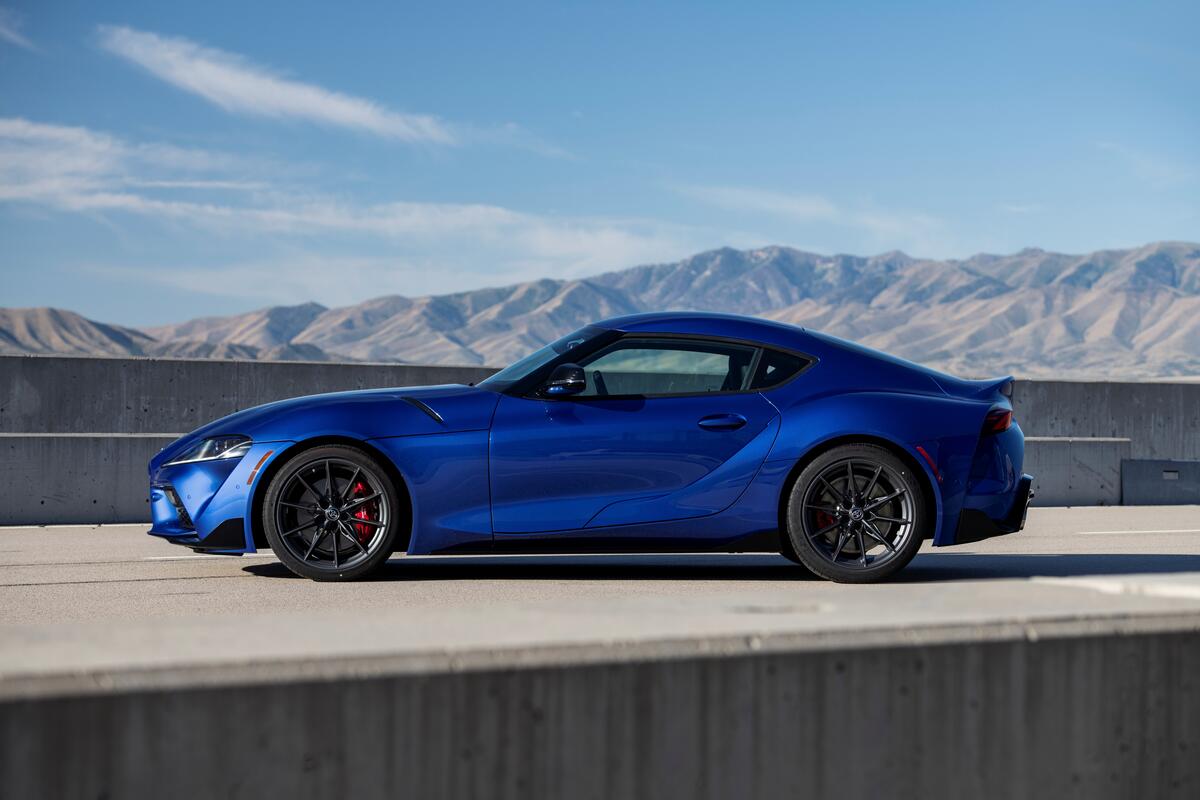
Toyota Supra
"...lt a restored a 1982 black on black Toyota Salica Supra six speed and I had the windows tinted and I was ..."
The Toyota Supra is a sports car made for driving enjoyment. People often restore older Supras and customize them. The podcast specifically talks about a restored 1982 model.
The Toyota Supra is a performance sports car known for its strong driving feel and enthusiast appeal. It’s a frequent topic in car culture because many owners restore and personalize them, including older examples. In the podcast context, the mention of a restored 1982 black-on-black Supra highlights that kind of preservation and customization.
Kyuga Park
"but at the Glen at that time the NASCAR race and went down a week early to go cramping in a place called Kyuga Park it was nice it was beautiful but the thunderstorm that came through"
This sounds like a park near the Watkins Glen area. The speaker is telling a travel story about a storm that happened while they were there.
Kyuga Park appears to refer to a park in the Finger Lakes region near Watkins Glen, used here as part of the speaker’s travel story. The key point is the timing: a thunderstorm damaged or affected the window tint during the trip.
leak test
"our job as it as a ac tech is we need to leak test the system put a die pack in the system let it run increase the pressures so that we can find the leak fix then drain it out quickly and fix the leak then we can pump it up do a second leak test"
A leak test is how a technician finds where the A/C is losing its cooling fluid. They check, fix the problem, and then check again to make sure it’s really sealed.
A leak test is the diagnostic process used to confirm where an A/C system is losing refrigerant. The host describes pressurizing the system, using detection dye, fixing the leak, then repeating the test to verify the repair before recharging.
die pack
"we need to leak test the system put a die pack in the system let it run increase the pressures so that we can find the leak fix then drain it out"
A die pack is a special dye added to the A/C so the technician can see where it’s leaking. They use a light to find the dye and track down the problem area.
A “die pack” refers to adding fluorescent dye to the A/C system so technicians can locate the leak using UV light. It helps pinpoint the exact spot where refrigerant is escaping.
engine noises
"uh Kate asked my engine sounds really noisy and it used to be quiet help well here's the thing with engine noises and we don't know what it is"
“Engine noises” is a broad term for abnormal sounds coming from the engine bay. The host emphasizes that without hearing or diagnosing the noise in person, it’s hard to identify the cause, so describing it carefully matters.
smells bad
"if something smells bad there's a smell coming from your car like orange crust yesterday"
If your car smells bad, it can be a sign something is wrong—like something overheating or leaking. It’s worth taking seriously instead of waiting.
A “bad smell” from a car is treated as a warning sign because it can indicate overheating, electrical issues, or fluid leaks. The host’s advice is to pay attention to what the smell suggests and address it rather than ignoring it.
engine oil
"so anyhow before I skip on a tangent [2676.6s] noises rattles bangs thumps thuds rattles and if the if you fire the engine up and it doesn't [2687.2s] sound normal it's probably because there's something not normal going on so if we check the engine [2692.6s] oil and the engine oil is good and it's still when it fires up it's it's loud we need to get into that"
Engine oil is what keeps the engine’s moving parts from grinding against each other. If the oil level or condition is wrong, it can make the engine sound bad, so checking it is an easy first step.
Engine oil is the lubricant that circulates through an engine to reduce friction and carry heat away from moving parts. Checking it is a quick way to rule out low or bad oil as a cause of unusual engine noise.
catastrophic
"so Kate get it into the shop uh if it's really really noisy [2739.9s] my suggestion would be get Auto Club to haul it in don't run it anymore until we know what we're [2746.8s] dealing with because that's where again a $200 repair could turn into thousands and thousands [2752.9s] of dollars in a brief moment so if it sounds if it's sounding like the engine is noisy then [2760.2s] something is going on let's get to the bottom of it ASAP and cut it off before it goes into [2767.3s] something catastrophic we don't want to go there so Kate good ear good ear on that"
They mean the problem could get so bad that it causes serious damage. If the engine sounds wrong or you notice warning signs, the safest move is to stop driving and have it towed so it doesn’t turn into an expensive breakdown.
In this context, “catastrophic” means a failure that can quickly cause major engine damage and expensive repairs. The host recommends cutting off driving and getting the vehicle to a shop ASAP when noise or smells suggest something is developing.
do not resuscitate
"let's see what's going on before while you're driving it something catastrophic happens that [2815.8s] ends up costing you a bundle of money of money to fix it or it's it's it's dnr do not resuscitate it's [2825.1s] over and if you're not in a position to replace the automobile that really makes it tough"
They’re using “do not resuscitate” to mean “don’t keep trying to fix this by driving it.” If something is seriously wrong, you should stop and get it checked so it doesn’t turn into a much bigger repair.
“Do not resuscitate” is used here as a metaphor for when a car problem has progressed too far to keep trying to drive or “save” it. The host’s point is to stop driving and get it diagnosed before the damage becomes catastrophic.
tread depth
"keeping you safe so we need to measure the tread depth we need to take a look at the production date on the tires"
Tread depth is how much “grip” is left on the tire. If it’s too low, the tire can’t grip well—especially in wet or hot conditions—and it’s more likely to fail.
Tread depth is how much rubber is left in the tire’s grooves. More tread helps the tire grip the road and evacuate water; too little tread reduces traction and increases the risk of a blowout.
production date
"date on the tires because they should if after six years they should come off so from the date they're born six years take them off"
The production date tells you when the tire was made. Tires age with time, and older rubber can crack and fail even if the tread doesn’t look brand-new.
The tire production date is the manufacturing week and year printed on the sidewall. Tire rubber ages over time—especially from heat and UV—so age matters even if tread still looks okay.
tires rot
"they're born six years take them off because the rubber decays that's what happens it degregates it rots tires rot and the uv rays certainly help that to happen"
Tire rot means the rubber is breaking down over time. Heat and sunlight can make the tire crack and become unsafe.
Tire rot is the aging and breakdown of the rubber compound. It’s often driven by heat and UV exposure, leading to surface cracking and loss of structural integrity.
blowout
"that's where you get a blow out for sure so if the sidewalls are showing dryness and cracking... you don't want to have a blowout trust me"
A blowout is when a tire suddenly fails and loses air fast. It can make the car pull or spin, so it’s very dangerous—especially at speed.
A blowout is a sudden tire failure where the tire loses air rapidly. It’s especially dangerous on the highway because it can cause immediate loss of control, particularly if it happens to a front/steering tire.
cracking
"they start to develop cracking in the threaded surface and that's where you get a blow out for sure so if the sidewalls are showing dryness and cracking"
Cracks in the tire are a warning sign that the rubber is worn out. A cracked tire is more likely to fail, especially at highway speeds.
Cracking in the tread or sidewall indicates the rubber has aged and lost flexibility. That can lead to sudden failure, including tread separation or blowouts.
sidewalls
"so if the sidewalls are showing dryness and cracking and you got you got cracking in the treads themselves those are done"
The sidewall is the tire’s outer “wall” that you can see on the outside. If it’s cracked or dried out, the tire may not be safe anymore.
The sidewall is the tire’s outer rubber surface between the tread and the wheel. Sidewall cracking or dryness is a serious sign because it can indicate the tire’s structure is failing.
premature wear
"how much meat how much tread depth is left and are is there any cracking is there any premature wear"
Premature wear means your tires are getting worn out sooner than they should. That often suggests something is off with the car’s alignment or suspension.
Premature wear means the tire is wearing out faster than expected for its age and mileage. It can point to alignment issues, suspension problems, or an incorrect tire setup.
steering tire
"you don't want a steering tire to blow out when you're on the highway you you will be screaming"
A steering tire is the front tire that helps control where the car goes. If that tire fails on the highway, it can be much harder to keep control of the car.
A steering tire is a front tire that directly controls the car’s direction. If it blows out, the driver can lose steering authority immediately, making the situation more dangerous.
change them in pairs
"inspect all four tires all four we don't just change one you change them in pairs ultimately"
Changing tires in pairs means you replace two tires on the same axle. That helps the car handle more evenly instead of having one “new” tire and one “old” tire.
Changing tires in pairs means replacing two tires at the same axle (typically left and right). This helps keep tread depth and grip characteristics balanced side-to-side for more predictable handling.
Request an Explanation
Heard something you'd like explained? We'll add it to this episode.
Sign in to request explanations for terms you heard.
Want to learn more?
Browse our glossary for plain-English explanations of automotive terms, jargon, and concepts.
Help improve this episode
See something that's not quite right? Our annotations are AI-generated and can sometimes miss the mark. Click the flag icon on any annotation to suggest a correction.