Daily Dealer Live tackles policy, pricing, and operational pressure. Sen. Bernie Moreno argues the FTC’s dealer letters target the “last 5%” of deceptive advertising, but he pushes for clearer, practical rules—especially around doc fees, lead-provider pricing, and in-transit inventory ads. NADA’s Mike Stanton previews a Friday FTC webinar, defends the franchise model against “middleman tax” claims, and calls the study misleading. The show also covers Nissan’s lineup/AI plans, EV search and gas-price-driven shopper shifts, and a logistics segment on speeding inventory while preventing damage and transportation fraud.
Today's show features:
- Sen. Bernie Moreno, (R - OH)
- Mike Stanton, President & CEO of National Automobile Dealers Association
- Samira Jusupovic, Founder of 4Evermomentum
This episode is brought to you by:
Stream Companies – How much revenue is slipping through the cracks at your dealership? Stream Companies’ Missed Opportunities Report analyzes your strategy and highlights where you can drive more sales, faster. Request your free report today at https://www.streamcompanies.com/MissedOpportunitiesReport/
4Evermomentum – We help dealerships move inventory faster by bringing visibility, control, and efficiency into the logistics process, from acquisition to frontline. By focusing on speed to sale, reducing delays, and improving how information is managed throughout the shipment lifecycle, we help dealers protect margins and operate with more confidence. Learn more at https://www.4evermomentum.com and start gaining more control, move inventory faster, and partner with a team that brings accountability and control.
My Socials:
X ➤ https://www.twitter.com/GuyDealership
Instagram ➤ https://www.instagram.com/cardealershipguy/
TikTok ➤ https://www.tiktok.com/@guydealership
LinkedIn ➤ https://www.linkedin.com/company/cardealershipguy/
Threads ➤ https://www.threads.net/@cardealershipguy
Facebook ➤ https://www.facebook.com/profile.php?id=100077402857683
"We also have Igor Kay saying Nissan finally dumping CVT transmissions in some models for 2027 model a year."
A CVT is an automatic transmission that can change ratios smoothly instead of using set gears. The host is saying Nissan plans to stop using CVTs in some cars starting around 2027.
CVT stands for continuously variable transmission, a type of automatic that can smoothly change gear ratios without fixed “gears.” The segment says Nissan is “dumping” CVTs in some models for 2027, which implies a shift to other transmission types or powertrain strategies.
"...e vehicles, hybrid e-power models, the returning XTERRA and continued V6 options in mid and full size SU..."
The Nissan XTerra is a type of SUV that’s built for both everyday driving and tougher roads. It’s known for having a more rugged look and, in many versions, a V6 engine. The podcast mentions it because it’s coming back and some buyers still prefer the V6 style of power.
The Nissan XTerra is a midsize SUV known for a more rugged, off-road-friendly design and the option of V6 power in many model years. In the podcast context, it’s discussed as returning and continuing with V6 options, which matters to buyers who want traditional engine feel rather than hybrid-only choices. It also represents a segment of SUVs that people still shop for when they want capability and space.
"The first from cars.com is reporting a roughly 25% increase in combined new and used EV searches from late February to late March..."
Cars.com is a website where people shop for cars online. In this segment, it’s being used to measure how many people are searching for EVs.
Cars.com is an automotive marketplace and media site that tracks vehicle listings and consumer activity. Here, it’s the source of the EV search trend used to illustrate shifting shopper behavior.
"late March driven by rising gas prices tied to the Iran conflict and the troubles in the Strait of Hormuz. Top new EV searches include the VW ID, Buzz, Chevy Equinox EV and Silverado EV. While Tesla models dominate the use side,"
The Volkswagen ID. Buzz is an electric van meant for carrying people and everyday family use. Instead of using gas, it uses a battery and an electric motor. It’s being mentioned because people are searching for it more when gas prices rise and more EV options become interesting.
The Volkswagen ID. Buzz is an electric version of the classic-style people-mover, built as a practical, family-oriented EV. It’s significant in EV search trends because it offers a different body style than typical sedans and crossovers, which can attract buyers looking for more space and utility. The podcast mentions it alongside other EVs as interest rises during periods of higher fuel prices.
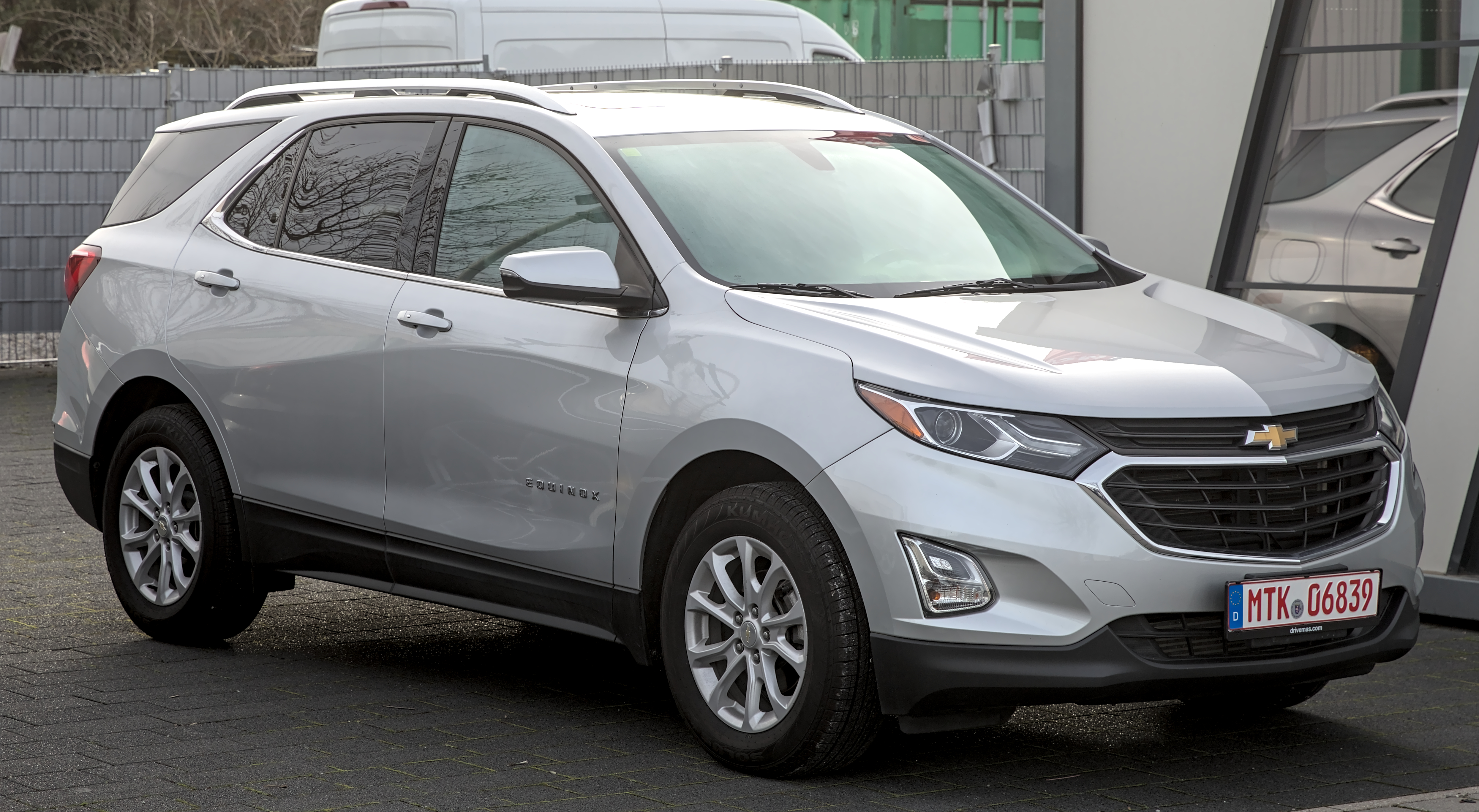
"Top new EV searches include the VW ID, Buzz, Chevy Equinox EV and Silverado EV."
The Chevrolet Equinox EV is an electric SUV. The podcast is using search data to show people are looking it up.
The Chevrolet Equinox EV is GM’s electric version of the Equinox nameplate. It’s mentioned as one of the top new EV searches, indicating strong online interest.
"At the same time, Navy Federal Credit Union's cost of car ownership index hit a record high in March."
Navy Federal Credit Union is a bank/credit union. They track and publish a report about how expensive it is to own a car, and the podcast uses that to explain why shopping is changing.
Navy Federal Credit Union is a financial institution that, in this segment, publishes a “cost of car ownership index.” The index is used as evidence that affordability is worsening, influencing EV/hybrid research behavior.
"Mori's auto group of Minnetonka, Minnesota closed on three family owned Nebraska dealerships."
Mori’s Auto Group is a company that owns and runs multiple car dealerships. The podcast is talking about them buying several dealerships.
Mori’s Auto Group is a dealership group mentioned as closing on multiple family-owned stores. The segment uses it to illustrate dealership consolidation and ownership changes.
"And right now you're the one of the loudest voices in Congress on the issue sitting dealers artist, FTC enforcement, Chinese vehicles, affordability. We want to hit a few of those. So when when the FTC letter dropped last month to 97 dealer groups, what was your reaction to that, Senator?"
The FTC is a U.S. government agency that protects consumers. When it talks about car dealers, it’s usually about making sure ads and pricing aren’t misleading.
The FTC (Federal Trade Commission) is the U.S. agency that enforces consumer protection and antitrust laws. In car sales, FTC actions and letters often target misleading advertising, deceptive pricing, and unfair business practices.
"If you go back to the 80s, when I first was in college, think, you know, thinking about going into the car business, we all know the bait and switch and all that nonsense."
“Bait and switch” is when a dealership advertises a good deal to get you in, but then tries to change it once you’re there. The final deal is often not what was promised in the ad.
“Bait and switch” is a deceptive sales tactic where a seller advertises an attractive offer (“bait”) but then steers the buyer to a different, less favorable deal (“switch”). In dealership discussions, it’s commonly tied to misleading pricing, payment quotes, or availability claims.
"Doc fee is an example. We've had some attorneys say they're excluded because they're state regulated. Others say they have to be in the advertised price all the way down to the bottom."
A “doc fee” is a dealer’s charge for handling the paperwork to sell the car. The debate here is whether dealers have to include that fee in the advertised price or can list it separately.
“Doc fee” (documentation fee) is a dealer charge for paperwork and administrative processing tied to selling a vehicle. The controversy is whether it must be included in the advertised price or can be shown separately, depending on FTC/state rules and how the ad is structured.
"[632.1s] documentation fee, $30,495 and font that's just a slightly smaller and
[638.1s] certainly not at the bottom way at the bottom of the page and, you know, one"
A documentation fee is an extra charge a dealership adds for paperwork. The question is whether websites should show the price including that fee, instead of making it look cheaper until you click or scroll.
A documentation fee (often called a “doc fee”) is a dealership charge meant to cover paperwork and administrative costs. It’s typically added on top of the advertised vehicle price, and the debate here is whether it must be included in the upfront price shown on online listings.
"But I think there's a lot of noise paid right now to dog fees. I think on tier three ads, I think this the what I just laid out to you would most likely pass muster. It's crystal clear. $2,995 with mandatory dog fee $30,495."
“Dog fees” are extra charges added by a dealer that can make the final price much higher than what you first see in the ad. The complaint here is that some ads hide or bury those fees until you’re already committed.
“Dog fees” refers to dealer add-on fees that are often disclosed late or in a way that makes the advertised price look lower than the true out-the-door cost. In this segment, the speaker criticizes ads where the buyer sees a low price but then encounters a large mandatory fee at checkout.
"It's crystal clear. $2,995 with mandatory dog fee $30,495. Obviously, you know where the problems are."
A mandatory dog fee is an extra charge you have to pay. The concern is that ads may show a low price first, but the required fee makes the real total much higher.
A mandatory dog fee is a required dealer add-on that must be paid by the buyer, even if it isn’t clearly reflected in the advertised base price. The speaker’s example contrasts a low advertised amount with a large mandatory fee, which can mislead consumers about the true cost.
"We're in a world of Carvana and CarMax and large automotive groups that sell all across the country."
CarMax is a large used-car seller that operates in many states. The point is that when big companies sell nationwide, confusing fee practices become a bigger problem.
CarMax is a large used-car retailer with stores and sales across many states. Mentioned alongside Carvana, it highlights how national sellers make it harder for consumers if pricing/fees are handled differently by state.
"We're in a world of Carvana and CarMax and large automotive groups that sell all across the country."
Carvana is a big company that sells cars online and ships/sells across many states. Because they operate nationwide, the rules about how they advertise prices matter more.
Carvana is a major online used-car retailer that sells vehicles nationwide, which increases the importance of consistent advertising and fee disclosure. The segment uses Carvana as an example of companies operating across state boundaries.
"...Honda Toyota General Motors Ford can compete with any individual car company in China."
GM is another major U.S. automaker. They’re saying GM can compete with other companies, but they’re worried about a different kind of competition from China.
General Motors (GM) is cited as part of the Western automakers that can compete with individual foreign rivals. The speaker’s point is that the threat isn’t normal competition—it’s tied to government support and export pressure.
"...Honda Toyota General Motors Ford can compete with any individual car company in China."
Ford is a big car company in the U.S. The speaker is using it to show that Western brands already compete, even if they’re worried about Chinese competition.
Ford is one of the major Western automakers the speaker uses as an example of established competition. Mentioning Ford frames the argument that Western brands already compete with each other, but the speaker claims Chinese state-backed competition is different.
"...Honda Toyota General Motors Ford can compete with any individual car company in China."
Toyota is named as an example of a Western automaker that already competes globally. The speaker contrasts that with the claim that China’s government-backed approach changes the competitive landscape.
"Australia as well. Australia as well. Yeah. Yeah. Direct to consumer. Scout made an effort to go around Volkswagen dealers."
Direct-to-consumer means the car maker sells to you without using the usual dealership middlemen. The speaker is saying that when companies try this, dealers often get hurt rather than helped.
Direct-to-consumer (DTC) is when automakers sell cars directly to customers instead of relying on the traditional dealer franchise network. The segment argues that DTC efforts have hurt dealers in other markets too, so fighting for the franchise system is framed as protecting the existing sales channel.
"What's your take on the dealer franchise system and defending that against OEMs trying to go direct to consumer?"
OEMs are the actual car makers—like Honda or Volkswagen. They’re the ones deciding whether cars are sold through dealerships or sold directly to customers.
OEMs (original equipment manufacturers) are the automakers that produce the vehicles and set the rules for how they’re sold. In this segment, OEMs are portrayed as pushing direct-to-consumer strategies that threaten the dealer franchise model.
"And the other thing that this study doesn't even approach is just the capital investment requirement to build the facilities, to buy the land, to buy the equipment..."
The “capital investment requirement” refers to the upfront money needed to build and equip facilities—like buying land, constructing buildings, and outfitting showrooms and service areas. The speaker argues these costs are a major part of the dealer business model that some studies may overlook.
"You know, they've got a youth car operation for the trade ends. They've got F&I to get the customer financed. Service, parts, some have a body shop."
F&I stands for “finance and insurance,” the dealership department that arranges auto loans and sells related products like extended warranties or insurance add-ons. The transcript frames F&I as part of how dealers finance customers and manage the overall sales process.
"They've got F&I to get the customer financed. Service, parts, some have a body shop."
“Service” and “parts” refer to the dealership’s after-sales operations: maintenance/repairs and selling replacement components. The transcript highlights these as additional revenue streams that make the new-car dealership model viable beyond just selling vehicles off the lot.
"Today's episode is brought to you by Stream Companies. How much revenue is slipping through the cracks at your dealership? Stream Companies Missed Opportunities Report analyzes your strategy..."
Stream Companies is sponsoring the show. They’re advertising a report that helps dealerships find missed sales opportunities and improve how they sell cars.
Stream Companies is the sponsor in this segment, promoting a dealership analytics/reporting product. The “Missed Opportunities Report” is positioned as a way to identify where revenue is being lost and how to improve sales execution.
"Like we see things where missing gate passes, missing releases."
A “gate pass” is an authorization document needed for a vehicle to enter/exit a facility (like an auction yard or logistics site). Missing paperwork can stop movement entirely, creating delays that cascade into pickup and delivery problems.
"...in a condition where it's in the same condition as when it left? And how do we help make sure that vehicle doesn't get stolen"
The transcript ends by raising theft risk during the auction-to-lot/transport process. This is a key operational concern for dealers and logistics providers, because delays and weak controls can increase exposure.
"what are some tips and strategies you could give us in April of 2026 to help avoid theft and damage in transportation April of 2026, Samir? Yeah. I definitely want to hit on the fraud part."
The segment frames transportation risk as two categories: theft and physical damage. The speaker’s strategy focuses on documentation and process controls to reduce both types of risk during transit.
"And one thing we were able to do for them is provide those pictures up front like, Okay, this is what your customer is buying, right? Like here, you can use these photos to advertise and actually identify any damage or recon work or anything that's needed up front."
They’re talking about taking pictures of the car early—before it’s sold or shipped further. That way, everyone can see the car’s condition and it’s easier to spot damage that needs fixing.
“Photos up front” means capturing condition images before the vehicle is delivered or advertised, so both the dealer and customer have a clear baseline. This helps identify existing damage and supports faster, more accurate recon work decisions.
"I did a thing on this NADA, like it's a facial recognition where there's a facial picture being taken of dealer or the transport companies, they come in and out of the lot."
Facial recognition is a biometric verification method used to confirm a person’s identity at entry/exit points. In logistics, pairing it with lot access helps strengthen identity checks and supports chain-of-custody for vehicles.
Select text to request an explanation
Hey everybody, welcome back to another episode of the Daily Dealer
Live. I'm your host Sam Darkin. Thanks for choosing to be here with us on Daily
Dealer Live this Wednesday, April 15th, 2026. It's tax day. If you're a dealer GM
or automotive vendor partner, you don't want to miss today's show. Why? Well, we've
got a US senator, Senator Bernie Moreno, who's saying last month's letter from the
FTC to 97 dealer groups is the FTC coming to clean up the last 5% of bad actors,
cleanup on aisle nine, as he puts it. The question is, who decides who that 5% is?
Bernie Moreno joins today. Then a new study claims dealers are slapping $5,000 of
what's called middleman tax on to every cardio. Joining today is the president of
NADA, Mike Stanton, with his opinions on that article. And if you think your biggest
problem is pricing, you're already losing because right now your inventory is aging.
It's stalling and quietly bleeding profit margin before it ever hits the lot. Today's
about policy. It's about profit and pressure, all colliding in real time. And we invite
you to join the conversation, post your comments into CDG social media platforms
everywhere we're broadcasting live today. And we'll bring those comments into the
show. Paul Salisman is quick to come in saying happy tax day. We also have Igor
Kay saying Nissan finally dumping CVT transmissions in some models for 2027 model
a year. Igor Kay always giving us the industry auction report every day. Thanks
Igor for that. All right, let's get into today's auto industry headlines.
All right, first up today, Nissan laid out its long term strategic vision this week
centered on a leaner lineup and smarter vehicle technology. The headline move is
cutting models from 56 to 45, organized around four categories, heartbeat, core
growth and partner to sharpen product positioning and simplify dealer inventory
management. On the tech side, Nissan plans to roll out its AI drive system across
90% of its global lineup over time with the first application coming to the new
Elgarand this summer. For the US specifically, the focus is on large
vehicles, hybrid e-power models, the returning XTERRA and continued V6 options
in mid and full size SUVs with a goal of reaching one million combined US and
Canada units by the end of fiscal year 2030. Up next, two connected data points
were flagging together this week. The first from cars.com is reporting a
roughly 25% increase in combined new and used EV searches from late February to
late March driven by rising gas prices tied to the Iran conflict and the
troubles in the Strait of Hormuz. Top new EV searches include the VW ID, Buzz,
Chevy Equinox EV and Silverado EV. While Tesla models dominate the use side,
hybrid searches are also up, though more modestly. At the same time, Navy
Federal Credit Union's cost of car ownership index hit a record high in
March. It's up 4.7% for the month and 47.6% since January 2020. That's with a
21% month over month jump in gas prices as the primary lever. The two data points
tell the same story. Gas prices, they're pushing more shoppers to research EVs
and hybrids, but the broader affordability squeeze means not all of that
interest converts. But the dealers with the right inventory mix and payment
options, they're the best positioned to capture what does. More on that as we
follow, continue to follow the affordability study and project within
automotive over the next episodes. Finally up today, we turn to the CDG
Bicell Tracker. Q, our little jingle here. There we go. Love it. Mori's auto group
of Minnetonka, Minnesota closed on three family owned Nebraska dealerships.
Beardmore Subaru, Beardmore Hyundai and Beardmore Chevrolet. And they're all in
Bellevue from fourth generation owners, Kerry and Brian Hamilton. The stores have
been renamed Bellevue Subaru, Mori's Bellevue Hyundai and Mori's Bellevue
Chevrolet. Some background on the deal. Kerry Hamilton became a Chevrolet
dealer at 29 and built a reputation in the community that extended well beyond
the lot. It's another succession driven deal in a consolidation wave that
shows no signs of slowing. For more on this M&A activity and others, follow all
the activity on our full tracker at cdgbicell.com. And that's a wrap on
today's industry headlines. And back into the comments, see your case as
you're welcome, Sam. By the way, I was at auction today and values are still
going up and we're definitely seeing that as supply chains become constrained
and continue to become constrained. Joshy D says, can you touch on buy center
acquisition teams? What can be done differently to purchase more inventory?
We'd love to talk that. And then eager K gives us a little bit of an update on
Model 3 and why is being bought out fast at auctions. Dealers who normally don't
buy used EVs and PH EVs are now buying them for their inventory. And I think
that is an obvious result of the gas prices going up. And I've often
wondered, we all remember in 08, gas prices hit five bucks a gallon. Everybody
started dumping everything that wasn't fuel economic. That $5 is now a much
higher number, but there is a number. It'll be interesting to see what that
number is in the marketplace that ends up pushing from gas to more EVs. So
quick note before we dive into our next segment today, we've got a sitting U.S.
Senator joining us. And to make schedules work, we agreed to record this
conversation with Senator Bernie Moreno earlier this week on Monday, to be
exact. This interview is a big one. Senator Bernie Moreno dives into the
FTC letters to dealers, what he calls a cleanup on aisle nine advertising
compliance and the future of the franchise model. So in a CDG first, this
interview with Senator Moreno are second on the live show. Let's turn to that
interview now, Bernie Moreno. Senator Bernie Moreno, you're a former
Cardiola turned U.S. Senator, you spent years on the retail side before winning
Ohio's Senate seat in 24. You're one of the few people in Washington who knows
what a doc fee is. And right now you're the one of the loudest voices in
Congress on the issue sitting dealers artist, FTC enforcement, Chinese
vehicles, affordability. We want to hit a few of those. So when when the FTC
letter dropped last month to 97 dealer groups, what was your reaction to that
letter, Senator?
Well, first of all, let me just full disclosure to the Andrew Ferguson as a
friend. Obviously, I voted to confirm him. I'm going to see him tomorrow. We've
had many conversations about this. My point of view on this is simple. We
want to clean up the last 5% of the car dealership business. If you go back to
the 80s, when I first was in college, think, you know, thinking about going
into the car business, we all know the bait and switch and all that nonsense.
And I'd say it was probably like 90 bad 10 good. And now it's 95% good and 5
bad. So let's just get rid of the last 5 bad. We know, we know what needs to be
done. I think when it comes to advertising and how we treat clients,
these dealership entities are no longer a little mom and pop shop. So there's
still a few of those left there, but these are sophisticated, really well run
businesses that are, by the way, worth a lot of money. So let's treat them as
such. And so I think what the FTC is doing is, I call it the last of the
cleanup on all nine. And I think that's good. I think all of us should celebrate
that. Look, there's dealers listening to this that know exactly what I'm talking
about. You sold the car to a friend. They had a great experience. They get home.
All of a sudden see an ad from a competitor that is complete nonsense. The
price is absolutely not attainable at that, at that payment or price. That
customer who was happy 5 minutes ago is now absolutely incensed. And you have
to do a lot of explaining. Nobody wants that. Let's put end of the nonsense.
Yeah. And actually we're all in favor of that. We want everyone working off
the same rules and working towards creating a great customer experience
for customers. But it's interesting, Senator, because not all is ordered on
aisle nine. Not everyone understands exactly what is and isn't required.
Doc fee is an example. We've had some attorneys say they're excluded because
they're state regulated. Others say they have to be in the advertised price all
the way down to the bottom. We had a couple lawyers on this show several
weeks ago and asked independently. They gave varying answers. Roll up your
doc fee freight into the advertised price. Where is the line on doc fee? Because
it's not clear. Some of those items aren't clear.
First of all, if you have to listen to an attorney as a card, you know, you
know, the answer, you know, the question already. They're all attorneys.
Yeah, let's just look forget the attorneys. Just do the right thing. If I
don't look, I don't control the FTC. But again, Andrew's a good guy. He he's
certainly not somebody who's a lunatic like like who was there before, you
know, the well named in Gingis Khan is what I call there. Yeah. So what I
would say is this, if I were in the car business today, so this is not
disclaimer. This is not legal advice to car dealers. I would advertise the
car without the doc fee and then just below it, like not way down at the
bottom, but right next to it was slightly smaller font. I would put
including mandatory documentation fee and then add that into the price of the
car at $29,995. The doc fee is $500. I would still advertise $29,995 because
that is the price of the car, but I would put including mandatory
documentation fee, $30,495 and font that's just a slightly smaller and
certainly not at the bottom way at the bottom of the page and, you know, one
point font.
So, but there's been vigorous debate on this show and elsewhere over the past
month since those letters came out. There's a thought process that says that
bottom line price needs to be the one that's pushed to the digital lead
providers. So we all have great partners in CarGurus, dealer.com,
cars.com, true cars and others. Does the price that shows on those leads, which
competes for the least expensive price, or the most expensive, depending on how
they serve it up, should that be inclusive of the doc fee? Or as you
say, it is the $29,995 plus doc in the fine print once you click into it.
It's not clear, Senator.
So not fine print. No, that's what I'm saying. So the $29,995, that's the
price of the car would still be the main viato price, the populated
price, et cetera. But that disclosure, when you're looking at it, not without
scrolling, you would still see right below it, including mandatory
documentation fee, $30,495. So you'd still push out the $29,995. I still
believe that again, this is personal, my personal opinion. I don't know that
the FTC has weighed in one way or the other. What they are saying, what you
cannot do is have $29,995 be the price that's advertised. A one point
font disclaimer, seven scrolls down. They have the doc fee, that's $2,500.
And really, and have that $29,995 be contingent on financing, buying an
extended warranty, trading in a car, having a military discount, a fleet
discount, an employee discount, right? A mother's with three children
discount, that only applies if you were birthed in Northern North
Dakota. I mean, those are the kinds of things that cracking down on it. We
know that's bad.
But you can say that and it's satire, right? We say it tongue in cheek
because obviously that behavior so far in the wrong, it's tough to
stomach and you're right. Those are the bad acts of the automotive decades
ago that should not exist in 2026. But there are dealer groups who
received, we've interviewed one car dealership guy has who spends a
million dollars a month on compliance that is really striving to do all
the right things, be fully transparent. And they say they're
concerned they received a letter. Was the letter sent as a wide swath or
was it a targeted message to dealers that they saw were doing things they
shouldn't be doing?
My understanding is the letters went out to the largest generators of
complaints of the federal government. But look, for example, there's a lot
of there's look, I got a lot of calls. Here's the calls went for me, by
the way. Hey, I didn't get a letter, but a friend of mine did a good
friend of mine, who I won't say who it is.
Right.
What is the thing nobody wants to talk about?
Right, exactly. So but I actually did research that particular dealer that
called me. And they have a lot of cars on their websites that say call for
price or see dealer for price, or in the fine print, must have a trade in
must finance must have, you know, X, Y, Z things. So they, so I think there's a
lot of still work to be done. I think, like I said at the beginning, we know
what the right thing to do is. And again, we don't need to check with a
lawyer. I use the mom test, show them, show your mom the ad. And if your mom
says this is a good ad, that it makes sense. And I think those are the
things we got to clean up. But I think there's a lot of noise paid right
now to dog fees. I think on tier three ads, I think this the what I just
laid out to you would most likely pass muster. It's crystal clear.
$2,995 with mandatory dog fee $30,495. Obviously, you know where the
problems are. Is it where it's state regulated, like in Ohio, $398 for
every dealer in Ohio, and you either charge it to everybody or nobody. So
that's easy. The problem is states like Florida, where it's become the
wild, wild west where dealers advertise cars for two grand losers. So two
grand behind net net net, but then have a $2,500 dog fee. That's nonsense.
So in a Republican administration under Trump, would you advocate for a
national standard as it relates to automotive advertising? Should there
be differences between states in the ways that prices are advertised or
dog fees are disclosed or even dog fees are charged? We're in a world of
Carvana and CarMax and large automotive groups that sell all across the
country. Should there be one standard senator?
Well, I think the dog fee issue is going to be a state by state issue that I
don't know that the federal government has a constitutional role to play
there. We obviously regulate interstate commerce, not intrastate
commerce. So I think that that part of it is not our role, but I will say
this. We can certainly have advertising standards because these ads do cross
state boundaries. And when it comes to ads that cross state boundaries, we
should have good ads that people can actually buy the car for the price
that's advertised. They don't get any surprises when they come to the
dealership. And by the way, sometimes we haven't even talked about this. The
car is not even available. Like there's no car that exists that's at that
price. So what about that? Without going to the attorney, we live in a
Titan supply chain. Dealers can't get enough of Toyota. Even GM has supply
constraints right now. Dealers want to be able to advertise that inbound Toyota
Highlander that's high demand hybrid while it's enroute to the dealership. Is
it fair play to advertise that prior to its arrival on the lot and indicate it
in transit somehow? Or should it actually be physically on the lot?
No, I think, okay, again, this is my personal opinion. If I were running a
dealership, I would be just crystal clear, just disclose it all up front. And
again, not in one point font down at the bottom, just put in transit arriving
soon, those types of things or in stock now, subject to availability. Because
that's also true. You may see an ad for a car that's legitimately available,
but then five hours after you place the ad, that's our wish, by the way, the car
sold. We don't want to keep them. The goal is to have them just so we can
advertise them. We actually want to sell them, but be quick about taking them
offline. But I think as long as you're using common sense, like I said, if you're
having to go to a lawyer, we're probably both in bad shape, the government and the
dealer. We want to have a cleanup on L9. Let's make sure that we have
common standards that are transparent, that are easy to understand.
So with FTC being the governing board for this standard and the cleanup and
process in certain areas of L9, should there be a mechanism, formal or informal,
for dealers to submit pricing processes, pricing, sample advertising,
sample web displays to the FTC for review before they get investigated so they get
proactive clearance? Or could there be some sort of a feedback loop with the FTC to get
feedback on it? Yeah, I don't want to get ahead of things that I'm working on,
because again, they're all, they only exist here right now. But I will be talking to
Andrew tomorrow. I have a meeting with him. I'm going to meet with the staff.
Just a sense, look, what is it that we want to accomplish? For me, it's straightforward.
I think what the president would say is straightforward. He wants to make certain
that consumers are given the right information, that it's transparent, that it's logical,
that there's no surprises, that some of the nonsense that we had in the car business from
30 or 40 years ago is completely gone. So there's lots of ways to get there.
Really having this conversation with Ferguson, while at the same time letting NADA do its thing,
because obviously the association is extremely important. You have great leadership there with
Mike Stanton. So I don't want to interfere with what they're doing. But let's just say that I'm
NADA adjacent right now, being patient. Because for me, look, we don't have a lot of time.
What I don't want is we don't do anything at all. We keep this era of confusion for the next three
years. And then we have President Ilhan Omar and Vice President AOC. And now you have a total
collective punishment of car dealers that sets us back dramatically.
We're better codifying the standard today under the current administration than the future. So
maybe you're previewing something potentially you're working on. So speaking of NADA and being
NADA adjacent, Mike Stanton's great. He's done great work to further our understanding of this.
But the webinar they did on April 6th was a complete flop. And he would admit that.
The FTC refused to take questions and ended the call with more questions than answers.
They're doing another webinar this Friday. What does the NADA need to walk out of that room with
Chris Mufaraj on the call for dealers to actually have clarity and feel like they've got the tools
to march forward with confidence doing the right thing? Well, let me just say none of that blame
falls on NADA. NADA is doing its absolute best. They don't control what the FTC is saying. I think
Chris is a good ally. Obviously, he works directly for Andrew. I think they're working on developing
these things. And again, the lawyers get in the way because what happens is when you start giving
advice, is that legal advice that somebody would say, oh, look, here's a clip from a seminar and
later that's used to defend in action. So everybody gets paranoid when lawyers are involved.
I obviously, as you can see, do not worry about that. Thank you. I think we I think if we use
common sense, common sense, and you can defend it in public among your peers, your mom, I think
you'll be fine. And again, that's what I that's the purpose of my meeting tomorrow. The Andrews
is just to sit down and say, look, what is it that the administration wants to accomplish?
And that could be on the same page. The goal we can agree with. We want to have clean ads.
We want to have transparent pricing. We don't want to surprise our clients. And we want to
protect the integrity of the dealer model. There's a lot of people taking shots at the dealer model
and they use this as the excuse. And it's all BS, by the way, because we haven't even talked about
tier one ads. Tier one ads are where the bigger problem is because they advertise a national ad.
And that national ad certainly doesn't talk about documentation fees. No.
Well, the FTC pursue that with a single standard. I mean, that's what needs to happen. I said,
I like the idea of clarity during the current administration, get everybody working on one
set of rules and and everybody goes to market to serve the customer where they live the best
way they possibly can, right? Amen. Amen. And we just got to get there. And it's going to be
there's going to be some ugly messes in the kitchen while we make the sausage.
And I think you saw that with the webinar last week. And we're just trying to land the plane
to get to a place where everybody can leave there. And we don't have surprises. Look,
I feel for the dealers that got that letter because for the most part,
the dealer principals want to do a good job. I mean, like I said, they have hundreds of millions
of dollars in a lot of cases invested in these very sophisticated organizations. They don't want
to see that thrown to the curb. And by the way, the reputation destroyed. And of course,
by the way, writing that big check also sucked. So I think we got to get there. We'll get there.
We're just at the beginning of this process. I'm hoping we get this solved by the end of summer.
It would be great just as a side note as you meet with him. It would be great to have some sort of
a feedback loop with the FTC. So if dealers had questions, they wanted to get feedback again to
your point, wanting to do the right thing, but just needing clarity on finer points. There are
dealers today that are working to put that dock fee above the bottom line and then having that
bottom line sent to the lead providers, they're disadvantaged by that dock fee sitting there.
If the FTC's direction is that dock fee could be below that line, that changes the calculus. And
look, it's a small thing, but a small thing plus a small thing plus a small thing creates a big
thing. And I think there's some dealers out there, Senator, that saw the FTC webinar with the NADA
as good faith as the NADA was and trying to put on the best program they possibly could.
And they were at once terrified, but then also shocked at kind of the inability to get questions
answered. I mean, too many lawyers in the room, Farrah. So, yeah. Hey, before we have to let you
go, Chinese vehicles, we've talked a lot about it on this show. You were on the show six months
or so ago and you said, Chinese vehicles will never come into the US. Trump famously talked
about Chinese vehicles in Detroit and said he's kind of open to it. What's your take and where
should US policy lean as it relates to Chinese automobiles in the US? Look, my point of view
hasn't changed at all. We will absolutely hermetically seal the US market from Chinese automobiles.
And that's not just the final product. That's hardware, that's software, that's joint ventures,
that's partnerships. We'll see about how licensing deals can fit in there, but absolutely not.
Look, we got to get this done. I think we will get this done. I urge everybody watching to lobby
your member of Congress, my fellow senators and congressmen to support my bill. We're going to
introduce it this week. It's gone through a lot of hands. I think there's a lot of support behind
this bill. Then I think what happens is like I talked about New York, the other Western countries
are going to look at this and go, we have to echo that. Look, the Chinese auto industry was not
created to compete with Ford or GM or Toyota or Honda. They were built to destroy those companies
and Honda Toyota General Motors Ford can compete with any individual car company in China. That's
not the problem, but they can't compete with the country. Nobody can. Nobody can compete with a
country that subsidizes its labor, has no environmental standards whatsoever, subsidizes the
capital that goes in there. And by the way, builds 95 plus brands to absolutely destroy each other.
And in that process of destruction, destroy the Western auto industry, their massive exporters
of automobiles doesn't make any sense. Look, it's happening in Europe. It's happening in Latin America.
We're not going to let it happen to the US. I come from a philosophy of problem avoidance,
not problem identification. And the way we're going to avoid this problem is this bill that
I'm introducing this week. I hope to get you guys supporting it. I hope to get everybody
on the ecosystem supporting this bill. And that's what will help it get across the finish line.
What do you say to the dealer that feels a little uncomfortable about not having to compete against
those Chinese vehicles and feeling and hearing the footsteps coming from the six saying, hey,
eventually it'll come. You'll be forced to sign a dealer agreement with a Chinese OEM.
Would we be better competing against that, learning from it and becoming better? Or is
the fight just crazy because of the reasons you stated it's a state sponsored company or companies
and, you know, US automotive versus state sponsored, state sponsored will win.
Well, look, we got to beat Godzilla down and get that to a normal place. And I think that will
happen, by the way. I think the Chinese will actually retreat back and say, look, let's make
cars for domestic production. Let's calm things down a little bit. And by the way, there's plenty
of competition in the car business. I mean, you talk to Ford and see if they don't think GM is a
competitor. Ask GM or they don't think Toyota is a competitor. Aspercities of BMW is not a
competitor. Right. So there's lots of healthy competition in the Western auto industry already.
It's not like they're going to be complacent and we're going to turn every Western auto company
into Lada. Okay. There's lots of competition. It'll be fine. But the Chinese have one aim in mind,
which is to destroy the Western auto industry is 10% of our GDP. I'm not going to let that happen.
And I know some dealers out there in the dark parts of their mind say, well, but if I get the
whole franchise for BYD in Florida, aren't I going to be like the Jim Rann of BYD? And the
answer is no, you will not be. Look what happened in Europe. Look what happened in Europe. The
dealers were just as destroyed too. And by the way, they'll want to go direct or reference that.
Australia as well. Australia as well. Yeah. Yeah. Direct to consumer. Last question that we're
going to go direct to consumer. Scout made an effort to go around Volkswagen dealers. Honda
as well. They recently called that plan off. What's your take on the dealer franchise system
and defending that against OEMs trying to go direct to consumer? I absolutely thank Honda
for making a decision that they did. I think it was the right one, not just for the industry,
but specifically the Honda dealers that stuck with them for 60 years. So thank you to Honda
for making that decision. And to Scott Keough and Oliver Bloom, just follow, follow suit.
Look, your dealers are struggling. Your Volkswagen dealers are not where they should be.
They certainly don't feel like Toyota dealers. I'll tell you that. And why have that fight?
Like what's the point? What are you trying to accomplish? They're starving for good product.
They've gone through scandal after scandal with Audi, scandal after scandal with Volkswagen,
and yet persevered, built you great facilities. They take a lot off your plate. The dealer model
works. It's a great, great system. Honor it and respect it. Look, the most successful car
company on earth is Toyota. Nobody disputes that. Accio starts every Toyota dealer meeting
by bowing and saying thank you. And that's what Scott Keough should do. That's what Oliver
Bloom should do. And I think you'll find his dealers will be very quick to forgive.
Car dealers at the end of the day have very short memories about things like that,
but don't go into this fight. Makes no sense. You need a lot more capital and juice here in
Washington, DC, given the tariff situation, what you're going through in China. Don't fight that
fight. It's totally ridiculous. And again, let me just say one last time, thank you to Honda
for making the right decision. Yeah, props to them. US Senator Bernie Moreno,
thank you so much for being on Daily Deal Alive and sharing your perspectives again
on this show. Look forward to having you back soon. You got it. Thank you.
Well, what'd you think? Our comments are a light on social media everywhere. There's not enough time
to bring them all in. And as they came up during the interview, they were coaching at certain points
throughout the interview, but some really good comments. I'll bring up just a couple. Sergio
says, like Bernie says, if you look at your ad and you wouldn't let your family buy a car like that,
most likely your ad shouldn't be out there. A big discussion online and surrounding the
dock fee, the amount, what should be okay, what shouldn't be. And then I thought a quote from
Eager, a longtime poster, sort of reflects what I think. He says, if we don't compete referencing
the Chinese vehicles, at some point we'll get left behind. DNC comes in says, Sam, looking forward
to Friday's NADA webinar with the FTC. Hopefully the second session goes way better than the first
and that take questions so everyone walks away with better clarity on the subject matter. Huge
props to NADA for their leadership in putting this together, executing on it and advocating for
dealers as we go through the process. So special thanks to Senator Moreno for being on the show.
We look forward to another visit from him very soon. And it's always great to get his perspective,
which is unique as a former dealer and now a sitting senator advocating for dealers in so many
different ways. Paul Salisman says the senator couldn't have said it any better
regarding direct sales. Let's go straight into our next segment. Now President and CEO of National
Automobile Dealers Association, Mike Stanton. Mike, welcome to the show. Hey, Sam, thanks for
having me. You know, as a segue from Senator Moreno, he mentioned the webinar that's coming up
on this Friday. Will you just tell our audience a little bit, what is the webinar? How can I
sign up for it? And given the participant in that, I think this is going to be
a very, very good productive webinar for dealers to watch, Mike. Yeah, this one will be the real
webinar. The last was a duress rehearsal that we had miserably. And by we, I mean the FTC,
very frustrating. We had over 4,000 people on that webinar, probably more listening in
complete waste of everybody's time. We had submitted questions to the FTC and they told us
they would answer them on the webinar and it just didn't happen. And we were notified just 10 minutes
ahead of the actual event. So our apologies. We've got a different team from the FTC that's
going to be with us three o'clock Eastern. Just coming Friday, go to nada.org to enroll for that
webinar. And we were told that we would get our questions answered and that anything that they
can't get to, they will follow up with the FAQ. Mike, is there a way dealers can submit questions
to you if they have things that they'd like to get answered or clarification on? Yeah, of course
they can, but it's too late. We already have an exhaustive laundry list of questions. I would be
shocked if we don't come out of this webinar with say 80-90% of that done with a little bit of cleanup
work to do. You know, my colleagues in the state are submitting questions. They're hearing from
dealers. We're hearing from dealers. The FTC's got quite a list. And I would share, well, a couple
things. First, Bernie's the best. He has been an absolute champion for dealers, a partner with
the NADA. We're all in it for what's best for dealers. And what we're doing, our role right now,
is we're seeking clarification. At the meeting that we had with the FTC, it was very clear that
people have asked us, well, what about the Trump administration? And this seems, they said they
weren't going to be in the rulemaking business and get out of the regulatory arena. And that is
what they're doing. They are not talking about new rules. This is not the FTC cars rule. That's
the rule we defeated last year. That was a laundry list of things that the bureaucrats in D.C. wanted
dealers to do to radically change the way we sell cars. This is about just a small piece. This is
that sees a price on the internet or wherever should be able to go into that store and get the
vehicle for that price. So that's their point of view. And they're going to enforce what they see
as a law that's currently on the books. This is section five of the FTC Act. And it all sounds so
simple. But as you were talking with the senator about before it, as we know, it's not that simple.
We need clarification. And the NADA will continue to push for clarification. You mentioned the feedback
loop. That's part of our role here is to get clarification. For example, just a couple of
examples. We have states, I think three, maybe four that require a doc fee to be
positioned separately from the actual out the door price. So this is what the FTC is asking
is in direct conflict with state law. We need to get that sorted. We need to get the third party
situation sorted. And you mentioned as well, our car companies, we've got to get those situations
addressed. So there's a lot of cleanup work to do, but I'm confident that we'll get there.
And when we get there, I do think a year from now, we'll look back and we'll say this is something
that helped our industry improve our customer experience, something that the NADA is always
working on. And I sense in my interview with the senator, too, he's sort of pointing to we're
better off clarifying a lot of this during the Trump administration than during another
administration. In fact, just as an aside, I thought it was interesting. He said, hey,
it's better to do it now than when we have President Ilhan Omar and VP AOC. I hope that's
not a preview of what he anticipates the next administration to look like. But worst case scenario,
we could be in a more aggressive, challenging administration. We're better clarifying it today,
some of these items, right, Mike? Yeah, absolutely. And we have a great relationship,
you know, with the with the FTC. Okay, we're not I say great relationship. It's not like we're
going to dinner and no, you know, it's a good faith. It's a good faith. And we can actually have a
dialogue with them with the Trump appointees in Andrew Ferguson and Chris Muffard. We've had
good dialogue. We did not have any dialogue with Lena Khan and the previous group at FTC. So we'll
work through it. We just got to continue to press for information. And then we as NADA will get that
information out to our states, out to the dealers, and it will keep going and we'll have that feedback
loop. You did mention the 97 letters, those were told, those were sent to people that were in violation
and in kind of in a big way. So we look to have those dealers hopefully jump on this right away
and with the rest of the country, we will get clarification and we can start to run the process
of getting us to where we need to be on this. Mike, as you talk to the FTC, is it there? Did
you get the sense that those letters sent were precursors to something to further action that
was impending that was going to happen? Or do you think there's a shot over the bow to give
dealers a chance to come in line? Well, I think it's a shot over the bow for dealers to come in
line. But I had, I mean, I don't want to be overly dramatic. But at our Washington conference,
we had the FTC commissioner, Andrew Ferguson, present and he was very firm. And when I went up
to him afterwards just to thank him for being there, he kind of put his finger in my chest and
he said, Mike, you guys, you got to get this cleaned up. The Trump administration, their directive
has been to clean up pricing, you know, deceptive pricing and not just our industry. You look at
healthcare, you look at ticket sales, you look at the hotel industry. And now their view, their
view, some of the, as Bernie said, 5% bad actors out there, we need to get that cleaned up. And
through enforcement, I think that'll happen. But we do need to know the rules. And again,
we're pushing for clarification. And we'll have it, we'll have more on Friday.
If you had to guess the doc fee thing, because I think that is a super curious element of it,
does doc fee end up being required? And then is it part of the total or can it be a disclaimer
disclosure in the print below the total? Do you have any guests on that?
So I don't like, I don't like to guess. Yeah, I will tell you what I heard. Okay. What I heard
was the price is the price. And that the doc fee, the FTC has no issues with the doc fee. But the
doc fee should be included in the advertised price. That's what the FTC told us. Everything should
be in that price with the exception of governmental fees. And then there's some details that we need
to sort. So lots more to come. But I don't want to speculate or guess, there's just too much on
the line here. We are a conduit. We are not the FTC don't shoot the messenger, but we are a conduit
to make sure that that dealer concerns our concerns that they're addressed. And we know exactly what
we do. Well, not to be dramatic, Mike, but I think the full faith and hopes of the auto industry
sits on you and on this webinar Friday. I hope everybody tunes in and watches. Thanks for not
having a conflict with daily deal alive. So I'll be able to do both on Friday as we do it live. But
I think three strikes you're out, right? So we get our second shot at it. We've got 3000 people
that have already have enrolled. So we are, you know, we're, I think we're getting the benefit
of the doubt here. And it will not be a waste of time. I'm convinced. A clear win for the entire
industry would be very clear answers to many of these questions. So that the entire industry
moves forward on the same page, same set of rules and then goes, runs towards the consumer. The
thing that came across my mind as you talked about ticket sales, all of us have been on an online
app trying to buy a concert ticket. And we put in for $200 and then it ends up being 350. And
you're like, how could that be? We don't want auto customers to have that experience. We don't
want it. And ticket sales auto is higher stakes because of the price. So I agree with you. This
industry, which is a key leading economic indicator of health in the US deserves the very best from
everyone. And we get that with success in your webinar on Friday. One last selling point and we
don't charge for these webinars. But Chris Mufaraj is a Trump appointee. He's the number two, the
director at the FTC. We had a legal staffer that was set up for the next one. So we've got commitments
and we've got horsepower. And our own Paul Mitre, our head of public policy, will be on the webinar
as well. I love it. We'll all be there. You'll be there looking forward to it. All right, let's
transition to an article that I saw you sent. It's astonishing to me. There's this nonprofit
think tank that published an article. And it says that the franchise dealer model adds up to five
grand to every new car purchase, the drive. And it calls it a middleman tax. From an NADA standpoint,
we hear a lot of attacks. The senator mentioned it on the franchise model. What do you think of
this allegation that there's this middleman tax in automotive, Mike? Well, I don't know,
Sam, if you read the whole thing, it's flawed in so many ways. It is. If you think about just two
of the biggest points, and then we can go as much time as you want to dig into some of these details,
the two main points are this study conflates two things. It talks about state franchise laws and
dealers, but all of the costs that they cite are production related in terms of complexity and
quantity and inventory holding and advertising incentives. All those things, our car company
go to market strategies. They have nothing to do with which channel one would decide to go to
market. So you've got a total conflation. The car company decides what to make. They decide
how many to make. If they make too many, they need to incentivize those cars so that they can
sell on dealer lots, and so they can send more to dealers. And so production in that manner,
we've always been in a push market with very, very few exceptions. It's going to require
incentives. It's going to require advertising, and it's going to require discounting, and
all those things are good for the consumer. So point number one is a huge conflation,
and we could talk point by point if you want, but number two is Oliver Wyman has done a study
that contradicts all this. It talks about the conflation. There's no doubt there is a cost
associated with distribution of automobiles. There's no doubt. It's who bears that cost.
And the other thing that this study doesn't even approach is just the capital investment requirement
to build the facilities, to buy the land, to buy the equipment, the furniture, and that's all
before you even get the doors open. That'd be $25 to $45 billion for a mass market OEM.
I was at a brand new Honda store yesterday. Beautiful. Took this dealer two years to build,
tens of millions of dollars, bought 10 acres, and yes, designed to build.
Honda. So this dealer built this great facility at Honda's design because he wants a couple things.
He wants to grow his business. He wants to take care of his customers. I mean, the facility,
everything in it is new. It's beautiful, but he would never do it if he didn't think he wouldn't
be able to get a return on his investment over time. And that's where state franchise
laws comes in. That's where the model comes in. That's what's lost in this study. The consumer
gets to experience a first-class operation at the dealer's dime, not the manufacturer's dime,
but that dealer needs to know that the manufacturer is not going to compete with him directly or put
a store right down the street. So bottom line is you've got entrepreneurs out there that are
willing to take on all the risks and build a business that supports the sale of new cars.
You know, they've got a youth car operation for the trade ends. They've got F&I to get the customer
financed. Service, parts, some have a body shop. It's a very, very valuable date, very cheap date,
but very valuable date for the manufacturer and the vast majority of them agree with us. I mean,
look, we sold 96.2% of the new cars in this country last year. Franchise dealers did.
It's interesting because articles like this are in many ways clickbait. They trend with the populist
because it's a message that feels good. And it sort of aligns with some of the public perception
about automotive, which I think to Senator Moreno's point, cleaning up the last 5% will help strengthen
the model in and of itself. But Paul Salisman comes into the comments and says, without the
franchise model, consumers suffer, especially after sale. The perception of the public is
otherwise. The industry needs better PR. And Paul asks Mike, he says, would NADA lead a PR campaign
to improve the perception? And I agree with Paul. I think he makes a great point. We as franchise
dealers need to do a better job of selling the benefit of competition in this model and how it
better serves up to the customer rather than be kind of the brunt end of the joke.
Yeah, no doubt. And we've got to do a better job. But the focus right now is we as an industry,
customer experience need to do a better job as well. I mean, we have two primary functions at NADA.
Our overall arching mission is to strengthen the franchise system. We do that two ways.
We help dealers get better through our educational programs. And we also advocate
on their behalf. And part of that advocacy is telling the dealer's story. And we all know what
those talking points are. I mean, the consumer wins when dealers compete. Without intra brand
competition, it would be much, much different situation, much different situation for consumers.
So the competition is a good thing. We need to get better as dealers. And we also need to get
better messaging out there. And we need to win in the marketplace. And look, 96.2%.
It's better than it was last year. We're up a percentage point, but we want to be at 100%.
And that we won't, you know, we'll never rest. But that's where that's where our ultimate goal is.
Yeah, Igor K comes into the comments as a lot of OEMs require their dealer partner to update their
rooftops to new standards to every dealership store. So that every dealership store looks alike.
And that is absolutely the case. As Mike mentioned, dealers make significant investments. The study,
just to break it down, I want to give this article too much credence, because to your point,
it's crazy in a lot of different ways, but it is out there and people believe it.
It's got to be disputed. It cites $1,100 in inventory carrying costs. That's flooring expense.
The manufacturer would have that regardless. 1900 and overhead, which that's fixed expense
in sales and other things. Whether you're buying a Tesla or you're buying a car from a Ziggler
auto group store in the Chicago land, you have those carrying costs in inventory. You have that
overhead expense. But I would argue that there is an interesting competition between OEM and dealer
that allows us to advocate better for the consumer when we're at our best. And that is the franchise
model in the United States of America, Mike. And we just need to message that to the best
forability publicly, Mike. Yeah, I agree. And I think the group that wrote the study was challenged
to justify a bill to order model, which has never worked. And it's not what consumers want. I mean,
maybe it'd be what consumers want if everybody had a perfect credit score, if everybody had equity
in their trade, if financing was just an option to consider. If everybody could wait a couple,
you know, three, four months for a car, they knew exactly what they wanted. If people didn't
need to test drive vehicles ahead of time, we know 88% of people want to test drive before
they buy. People want to buy today. So they want selection, and dealers provide an incredible
buffer. And they buy all this inventory, and then it's available for consumers to experience.
And then oftentimes when there's too many consumers benefit from that intra-brand
I keep saying it wrong, intra-brand competition. And dealers fighting to earn a customer's
business. It's a very, very hyper competitive situation. And, you know, customers don't always
understand that, but dealers, it's certainly the most competitive model out there. And going to
build the order would do nothing but drive selection down and drive costs up. And as
Reino mentioned in his piece, the Honda pulling back from the scout model was a big win. Many
states advocating for that, that Honda distribute only through the franchise model. The VW
debate continues, and it'll be interesting to see over the coming months how that goes, because
truly these OEMs, the franchise model is set up and delivers well in the U.S., Mike.
We hope in common sense we'll come to Volkswagen AG and to Scott Keough. But I do want your
listeners to know, we have been in the fight since day one. We went to Japan to meet with Mr.
Mibe at Honda to express our concerns. We have talked to everybody at VW that'll talk to us.
We have been declined meetings with Dr. Bloom in Germany. But we are in the fight, we're in the
fight legally with the CNCDA regarding a FILA, that's the California Dealers, and ADA was in that
fight financially. We're in the fight with the CNCDA's challenge with Scout, and we're also
in the challenge in Florida. So we have written letters, we've had meetings, and now it's time
to fight, and Honda made the right decision and hopefully Scout will as well. The VW Dealers,
the Audi Dealers, they deserve it, they need it. We've got to put this behind us and get back to
focusing on great products and a great customer experience and winning in the marketplace.
Mike Stanton, President and CEO, National Automobile Dealers Association, thanks so much
for being on the show today. As a final wrap-up to Friday's webinar, would you just remind everybody
how to register for that coming up this Friday? NADA sits down with the FTC to get clarity on the
letters sent out this past month. I wish I had the precise link, I do not. NADA.org, yeah.
NADA.org, you go out there and it's somewhere out there. I haven't registered yet.
Webinars. All right, I've registered. I'll be there. Mike Stanton, thanks so much for being on
the show. Appreciate it. All right, Sam, thanks for having me. All right, we are going to talk
very briefly. We'll go to some of the comments, but before we do that, we'll go to Stream Companies.
Today's episode is brought to you by Stream Companies. How much revenue is slipping through
the cracks at your dealership? Stream Companies Missed Opportunities Report analyzes your strategy
and highlights where you can drive more sales faster. Request your free report today
at streamcompanies.com slash ddmor against streamcompanies.com slash ddmor. We appreciate
Stream Companies supporting today's comment, including the fantastic interview with Senator
Moreno and then the insights with Mike Stanton, president of NADA. Thank you so much for that.
I love the comment here from Sergio. We as dealers have done things in a way that we
push consumers to question if there's a better way to buy. Again, to Bernie's point,
we need to clean up the slack and do things better. I like the mom test. That's a fun test
from him and Mike leaned into that as well, but looking forward to Friday. All right, next up,
Samira, founder of Forever Momentum. Samira, welcome to the show.
Thank you. It's a pleasure to be here. Thank you for having me.
Thank you. So, hey, before we dive in, tell us a little bit about who you are, what you do,
and how's business April of 2026? Yeah, so a little bit about me. So,
Forever Momentum was founded about eight months ago, but prior to launch, I did work for another
large broker in the industry for about nearly a decade. So, that's where a lot of my knowledge
and extensive expertise in the matter comes from. And just working right now to help dealers really
gain full visibility and understand where they're losing margin and really help them see why they
need full visibility into their logistics. I would say right now, it's definitely a very
cautious environment. There are a lot of different key factors. You mentioned earlier,
you made a great point, margins are a lot tighter, right? And dealers are focusing on
efficiencies that quickly impact how quickly they're able to get inventory to a frontline.
What I'm really hearing consistently, what I have been, I have a very strong operational
background, but I've been more customer focused and sales driven these last eight months.
And what I've been hearing a lot of is that obviously speed, communication, and reliability,
they matter more than ever really. All right. So, when you talk logistics,
you're talking transportation, right? So, you are, you, your company, you broker,
and you move vehicles from auction to dealer lots, from dealer lots, maybe even consumer
drop offs, dealer lot, intra lot, you handle all of that. And you broker that. We've had these
discussions a couple times on the show and they're definitely cogent. You talk a lot about vehicle
life cycle time. Give us a real number. How many days are dealers typically losing between
acquisition and frontline? So, we buy that vehicle at the auction and the time it takes to get to
the lot. Where's the waste there in this increasingly competitive market?
Yeah. So, just for a little more explanation, we do service a lot of the POV deliveries as well,
residentials. We work with enterprise locations and as well as like banks. So, we're, we're very
broad when it comes to the business types that we do service. And I would say it's not uncommon to
see your, we're looking about four to five days from purchase to frontline. And it's not one big
issue, right? That shows up in a many different ways such as how quickly you're able to communicate
how long buyers are actually taking to put in an order, right? Having those kind of efficiencies
in place to make sure you didn't buy the car. The car wasn't bought on Thursday and it's Tuesday
and it's just now being input into the system, right? Pick up and delivery delays. You see it
show up in driver cancellation, driver delays. So, there are a lot of different factors and a lot
of different parts of the life cycles where you can experience those delays. Okay. And so, there's
honestly a rule of thumb, but there can be delays in a lot of different areas.
Yeah. And that's where we focus on bringing visibility to a lot of different parts, right?
Like how long did it take for the buyer until we got the order ready, right? And it doesn't always
go straight from purchase. Oh, it's ready. The car's ready to be picked up, right? Like we see
things where missing gate passes, missing releases. The person who has some cars isn't there, right?
I'm on it. I'm on it. Yeah. So, I'm going to tell you something.
On the location specifics and identifying where these areas are.
So, let's talk about this a little bit. So, I'm COO of an auto group and we've got 41 stores Midwest.
Yeah. We sell 4,000 units a month. And I'll tell you, one of the issues that continually pops up
in front of me is the issue of not only transport, but also buying a used vehicle at auction, ensuring
that is what we say it is. In the condition we say it is, and then by the time it gets to the lot,
can we get it there fast enough to beat the ARB? And can we get it there in a condition where it's
in the same condition as when it left? And how do we help make sure that vehicle doesn't get stolen
while it's en route, either before it leaves the auction or until the moment it hits our lot? So,
what are some tips and strategies you could give us in April of 2026 to help avoid
theft and damage in transportation April of 2026, Samir? Yeah. I definitely want to hit on the fraud
part. I think we have some questions coming up towards the end. So, I'll definitely go into how
that's happening on the ground today and what we're doing differently in the perspective that we're
looking at it from to be able to prevent that. As far as the damage piece goes, that's actually a
great topic and it really hits on the core message of our model, right? And what I'm trying to
portray here, it all comes down to having that full visibility on the damage part. You need to
understand where it's happening, right? You need to, was it before it ever picked up? Did the driver
pick it up and damage it maybe and picked up? And we do provide full visibility as well,
making sure that you do have photos that pick up and delivery. So, you're able to go back and track
exactly the movement of this car, what conditions it left in, what condition it was there.
And also just that quality of carriers, right? You want to make sure that you're using quality
carriers that will actually follow like Mannheim has rules. And I know that's different Mannheims.
They do have different rules, but it's usually you want to notate the damage on the gate pass,
right? You want to make sure that you're using the same carrier, sending the same guys back
that do know these protocols out there. They're able to cover you and these risk factors as well.
So, play this game with me. So, let's say you buy a vehicle. It doesn't show any damage at the time
of purchase. The transport company picks the vehicle up from auction, sees that there's
damage. They take pictures of it and they take the vehicle and you try to appeal it later,
but you're outside the arb time because transport took so long. Who should pay for that damage?
At the time of inspection at the auction, it's not there. It shows up between time of
inspection and the moment it leaves. You know it happened before it left because there's a photo
from the transport company. Who should be paying for that in April of 26, in your opinion?
I would say who's liable for that. So, when the driver touches the vehicle,
the driver becomes responsible for that, right? So, the driver should be completing his inspection
before he ever does anything. He probably shouldn't even move the vehicle, right? So,
if he is given those keys to move the unit, that is when his liability starts. That is exactly
where, again, and that's when we got to go back and we're able to track that, right? Like, you
know when he took pictures of the keys and you're really able to track those metrics and photos
and be able to tell the timeline. So, we're showing a picture up here on the screen. I think the next
picture will show photos of the vehicle at time of pickup. And so, that's a great tool to be able
to track, hey, is the vehicle in the condition that it was said it was at the time of the condition
report. Igor Kaye comes into the comments and makes a great comment. He says,
Mannheim PA in New England, they have great transportation options and for the most part,
I've never had any issues for decades. And I agree, they've got, they do a good job of ensuring that
during the transport piece, the condition remains the same. But it, it's just, it hits me. We're in
such a competitive marketplace on used cars today in April of 26. The margin can be in damage either
at auction or in transport. You could spend that margin away on the used vehicle in recon that
doesn't end up getting, you know, allocated for. And we're going to have to get better as an industry
at figuring out how do we do a correct condition report at the time of sale at the auction,
ensure that the vehicle is transported without damage back to the dealership. And the dealerships
say we're going to validate that it is what it is. And I would predict that if there are systems
and processes in place that help ensure that use dealers and new dealers are going to be able to
pay more for inventory, get more aggressive, and they're going to need to be able to buy
more inventory. So I would love to see auctions do an even better way and transport companies like
yourself do a better way of documenting condition as it goes through the life cycle than not. So
props to you and your company for having this tool where you've got these photos that dealers
can go back to and say, Hey, at pickup, this is what it looks like at drop off. This is what it
looks like. That's an important part of chain of custody as a broker and finding transportation
in 2026. Is it not Samira? Yeah, absolutely. One selling point that we were able to one of
our first dealers that we brought on, we visited their website and they had coming soon photos a
lot right, but they were already marketing the vehicle. And one thing that we were able to help
them with because they actually who were buying in high volumes, they were growing, I want to say
like a 19 rooftop dealership or auto group. And one thing we were able to do for them is provide
those pictures up front like, Okay, this is what your customer is buying, right? Like here, you can
use these photos to advertise and actually identify any damage or recon work or anything
that's needed up front. So it's definitely critical. And yeah, you want to preserve as much margin as
you can, right? You want to be able to identify these things that are happening and hopefully drive
profitability and speed to sale. Alright, so to that point, you've said something in the past,
you've said, Hey, spending more on transport can actually make you more money. Talk to me about
how that's the case. Obviously, avoiding transportation damage, having a transport company
that'll stand behind that damage, that's part of it. But what does that look like?
Yeah, again, we absorb the risk and accountability, right? That's the number one factor is just
protecting your assets. But if spending another $100 up front gets the vehicle delivered even
three to four days sooner, you have already preserved way more than you've lost.
And when the vehicle is delayed, you mentioned earlier, you do face appreciation and
misarbitration windows. And then that essentially just, you know, accrues more cost in the end.
So another key factor of that is cheap attracts low quality carriers, right? One
thing that we were just talking about, if you pay a cheap rate to a carrier just because you
can, they might not follow the right processes, they might not take photos, they might deliver
outside of the business hours where things aren't documented properly. So essentially, you do get
what you pay for. The other part of that that I really want to hit on is from studies that we've
done and just things that we've analyzed, I've been in the industry for a very long time with
different brokerage firms. And now my own one thing that I really been trying to see how much
we can hone in on this fraud thing, because it has grown about 60%. I want to say overall
across cargo, which is a big percentage. So one thing that we've been able to identify is that
these fraudsters, they usually go for the cheap freight, right? They don't care about $400. They
so that's really essentially where all that lies in. So if you pay it a little bit sooner,
you get a little bit sooner, you're able to front line it, you're able to sell it sooner and
essentially that makes you more margin and profitability.
All right. So the fraud is coming up more and more on how vehicles are moved and information
is handled. Where are you right now seeing the most fraud? It sounds like part of it is,
if you pay less, it takes longer, there are more weaknesses in that supply chain and bad actors
are able to jump in and grab vehicles. I think to your point, you mentioned Mannheim having some
very high standards. I think they've done a nice job on gate passes. They're testing right now.
I did a thing on this NADA, like it's a facial recognition where there's a facial picture being
taken of dealer or the transport companies, they come in and out of the lot. So it just helps support
that chain of custody and prevents theft. What else are you seeing that fraud that
dealers need to think about preventing as it relates to transportation? Is these high value,
increasingly high value vehicles are being transported across the country?
Yeah. So if we take a step back and we actually look at how fraud is happening today,
it's very sophisticated, right? It's not fake information anymore where they're able to fake
an MC number or a DOT number. It's much more sophisticated. It's real information that is
being exposed and carriers are being hacked. So these nefarious actors, they have real information,
real MC numbers, real DOT numbers that they're stealing, right? Essentially,
they're getting into emails, they're getting into load boards. There's a lot of information that
they're able to access and that's with real information. Companies today, they only focus
on onboarding, right? And it's trust the process after. There are a lot of new companies I have
recently came out and they are very heavily honed in on the monitoring, the driver activity,
or verifying the insurance and tracking behaviors and compliance, right? But they're all focused
on the onboarding part. So once a carrier is onboarded with the system, it's free visibility
to all, right? So what we're not doing in the industry, we're not focusing on actually
focusing on the vetting of the carrier even after the fact, you know, driver activity.
So it's continual vetting, continual vetting. Exactly, right.
So you certify them once, just because you can certify them once doesn't mean you're going to be
able to maintain that certification. So are you able to do that? Do you have a strategy to
continue that verification process throughout the lifespan of your relationship with those
different carriers? Yeah, so that's something that we're heavily focused on, right? We recently
did partner with a third party company that focus on vetting even after that initial onboarding
process. They're focused on the driver and carrier vetting. So they make sure that the carrier you
actually do send and they do track activity and the driver activity, they focus on and make sure
that they're really protecting your information and your assets, right? So more to come on that,
but we have partnered with a third and we just wanted to share this perspective of thinking,
right? We're very on top of confirming insurance, driver activity, tracking them. We do have an
API with FMCSA, right? So as far as that part, that's always necessary, but it's that driver
activity after the fact to really make sure that who says they're coming to pick up the car actually
picks up the car. Alright, so as we wrap up, if a dealer wants to get serious about this tomorrow,
not just buy anything, just fix how they're thinking about it, where do they start in April of 26th?
Yeah, I think a common misconception is that transport is just the cost to minimize. And I
think that dealers should start by shifting their mindset instead of treating it as logistics or
costs just to minimize. They should start using it as a lever to first speed and profitability.
Look at your level of visibility. Do you know how long it's taking to pick up a car? Do you know
how long it's taking to deliver a car, right? Like these inconsistencies, do you know your
carriers SLA percentage? What percentage are they performing at? Are they performing at your
standard? Just making sure that you have the proper visibility. And if you're not able to tell
the different days and are not able to really tell that story, how we talk about tracking
damage and where it happened, if you're not, if you don't have a centralized system to be able to
track really for all your stores, all your inventory, being able to track it at a corporate
level and a dealer level, I would say that's a great place to start just seeing what analytics
you're missing and where these opportunities are. Samira Jusapovic, founder of Forever Momentum.
Did I get your last name right, by the way? You did. Cool. Yes. Even the first name. I love it.
Founder of Forever Momentum, thank you so much for coming on Daily Deal Live to discuss all
things logistics. And I agree with you. Like in 2026, success in used car sales and automotive
period is speed, transparency, and security of all things transportation. And this could be an
entire episode, not just a segment. So thank you. Communication. Thank you so much for having me.
Yeah, thanks for being here. Igor Kay says, I was actually thinking about investing in my own
semi-trucks so I can transfer my own inventory from auctions. Saves a bunch if you're buying in
large bulk weekly, which I think that's true, Igor, but the problem is, is you're just transferring
a lot of that nightmare to yourself, right? So the security piece is a big problem in 2026.
How about hitting three big topics all in one day? FTC, franchise model, direct to consumer
and transportation fraud, you get it only here on Daily Deal Live. So you are a listening audience.
Thanks for watching Daily Deal Live where we break down the biggest moves in the car business
as they happen. Don't forget we're here live every Monday, Wednesday, Friday,
1 p.m. Eastern, which means we'll be back this Friday at 1 p.m. Eastern. So if this is your world,
hit like, hit subscribe, turn on those notifications so you never ever miss a beat.
And we'll see you next episode. Thanks for being here, everybody.
Request an explanation for:
3 cars
3 cars featured
Request an Explanation
Heard something you'd like explained? We'll add it to this episode.
Sign in to request explanations for terms you heard.
Want to learn more?
Browse our glossary for plain-English explanations of automotive terms, jargon, and concepts.
See something that's not quite right? Our annotations are AI-generated and can sometimes miss the mark.
Click the flag icon on any annotation to suggest a correction.