When the U.S. and China have disagreements over trade, they may put taxes on each other's goods. This can make it harder for car companies to get parts from China.
Service recon is when a shop fixes up an older or used car so it’s ready to sell. They check for problems, replace worn parts, and make sure it runs well before it goes back on the lot.
A DMS is like a digital filing cabinet for car dealerships, keeping track of all the cars they sell and service. It helps staff find information quickly when a customer asks about a car.
A DOHC engine has two camshafts on top of the engine that open and close the valves. This setup lets the engine breathe better, which can make it run smoother and faster.
Third‑party validation means getting an outside company to check how much a car is worth or if it’s in good shape, instead of relying only on the seller’s estimate.
Dealer Track makes it easier for car dealers to sell cars online by giving them tools to show inventory, take orders, and manage customer information on a website.
Digital retailing means buying or selling cars over the internet, where you can look at cars, get prices, and even buy them online instead of going to a dealership in person.
Route 1 helps dealerships sell cars online by providing tools that let customers browse inventory, get quotes, and complete purchases from their computers or phones.
Service scheduling lets car owners book times to get their cars fixed or checked, so the dealership can plan when mechanics will work on each vehicle.
LIVE
Hey everybody, welcome back to yet another episode of the Daily Deal Alive.
I am your host, Sam Dark.
Thanks for choosing to be here on this Friday, November 14th for a special roundtable featuring,
it's a much promised long awaited roundtable featuring Brian Benstock where today he'll
deliver on that promise he made last episode of 900 plus unit sales in the service drive,
what some call the quote, new physics of acquisition.
That's an interesting thing to think about.
But before we go to Brian and we jump into that, let's go into today's industry headlines.
First up today we have an update on the Nexperia saga.
For those out of loop, Nexperia is the Chinese-owned semiconductor chip producer with facilities
in the Netherlands currently under Dutch control, if that's not dizzying, think of the chips.
And back in October, Dutch authorities seized operations at those facilities
over national security concerns.
They obviously upset China, which relies on fabricated metals to be sent over from the Netherlands
so that China can complete the full semiconductor component and export it.
As a result, China ended up banning the exports entirely, putting the automakers on high alert.
But just recently, China lifted the ban in certain situations and some automakers report
that chips are flowing again, this according to Bloomberg.
However, it might not be enough.
The Netherlands is still refusing to ship out wafers, a crucial part of the overall
semiconductor component.
Bottom line here?
Well, industry associations are still saying that until a wider resolution is reached,
the threat of disrupted supply chains is very real.
We've talked this in the past with Brian Bendstock.
I'll be interested to ask him a couple of questions when we get to that point today.
Next up, General Motors is amping up the pressure on its parts suppliers
to move their supply chains out of China.
According to a new report from Reuters, GM has been nudging suppliers in the direction since
last year but ramped things up as U.S.-China trade tensions escalated.
The automaker is now asking partners to find alternate sourcing and in some cases
to be fully out of China by 2027.
GM is also trying to limit exposure to Russia, no-brainer, and Venezuela.
Interesting, but China is by far its biggest dependency and as vehicles get more tech heavy,
the company wants its supply chain to be more resilient and ideally closer to where its vehicles
are built.
This move could make the next few years bumpier, that's the bottom line,
but over time it sets up a more stable parts pipeline.
Next up today, a new survey is putting a spotlight on one of the biggest pain points
in the car buying journey.
Auto insurance.
According to the mobility data firm, Airity, 70% of drivers say they feel unfairly judged
or stereotyped when shopping for insurance and almost 90% believe they were treated
differently because of misconceptions that have nothing to do with the driving record.
On top of that, a third respondent said they felt negatively judged based on their age,
gender, or other personal traits.
What's the problem here?
Well, dealerships often become the first place where buyers bump into this complexity
and sometimes it does and can derail a deal that was on track to close.
However, dealers that explain options thoroughly set realistic expectations
and steer customers toward insurers that price on real driving behavior
will likely build more goodwill with their customers.
And finally up today, we go to the CDG Recall Tracker bought to you by Busycar
for a Toyota Recall.
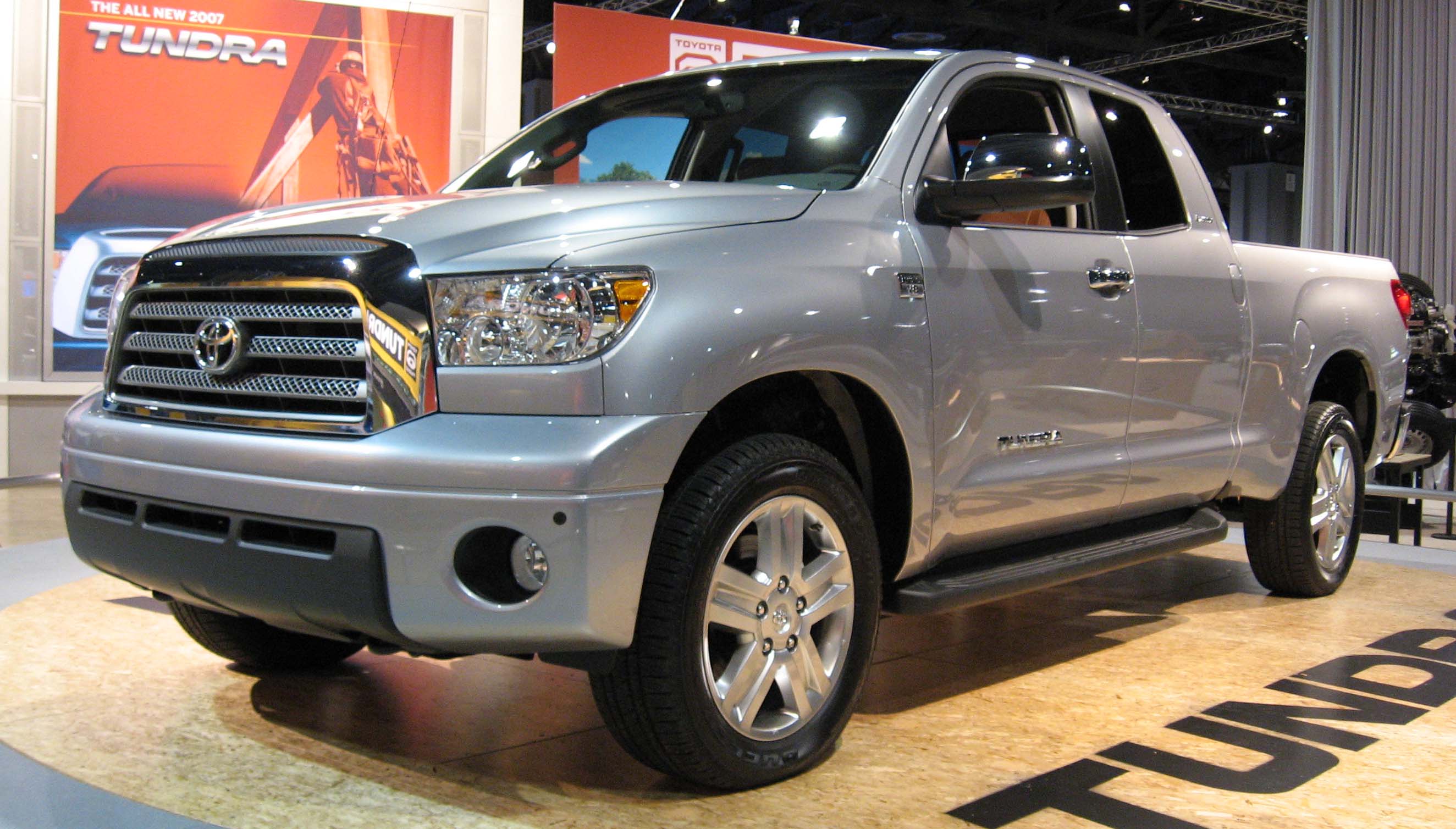
Toyota is issuing another major recall this time for just over 126,000 Tundra and Lexus models.
This after federal safety regulators found matching debris left inside engines.
The recall covers 2022 to 2024 Tundras, the same year for Lexus LX600s,
as well as 2024 Lexus GX550s.
And according to regulators, leftover debris in the engine
can lead to rough running shocker, stalling, or not starting at all.
Is that serious?
Yes, it does.
Toyota plans to start notifying owners in December and as always the fix will be free of charge.
Meanwhile, Toyota is already managing a much larger rear camera recall,
affecting more than a million vehicles.
To see more recalls, head over to the CDG Recall Tracker
powered by Busycar at cdgrecalls.com.
And that's a wrap on today's industry news.
All right, so long promise panel today with Brian Benstock.
So we've talked long about it.
Service lane sales, buying that used car, selling that car.
We're in an environment right now in automotive where dealers everywhere are
feeling the pressure.
Inventory sourcing is expensive, unpredictable, inconsistent,
and truly we've heard over and over again on this show.
The service lane is the most under leveraged acquisition channel
and retention tool in the dealership today.
So today, let's talk about that.
Let's talk about why and let's unveil a possible solution.
Joining me today, Brian Benstock, Vice President and General Manager
of Paragon Honda and Paragon Acura.
Brian, welcome to the show.
Good to see you, Sam.
How are you doing?
Oh, fantastic.
I'm excited to just finally get this unveil.
We've been teasing this now for a couple of weeks.
So I want the details, but Brian, before we go into it,
you got to give us some background.
You saw a problem that was broke.
What is broken about service lane acquisition?
Well, I think it takes too long.
Customers don't want time is the most valuable commodity to all of us.
We've got a limited, a finite amount of it.
And we're talking at an event recently in Kansas City,
where let's say you want to appraise a customer's car
in the service lane that individual,
the salesperson or whoever it is you have doing that,
has got to go find the appraiser to take a look at the car.
And my God, that's a process in and of itself.
And then you've got to sit there and beg and pray
and hope that you get the right number,
that the number is market time and relevant
to that particular car in your particular market.
Then once you've got that,
you've got to go to somebody else, presumably,
and that person is going to give you some proposals
on a replacement or a new vehicle.
And that process I think has been too cumbersome.
Certainly the problem that we were looking to solve back in 2008
when we started sales and service at our dealership
was acquisition of cars.
As the industry was going through some financial difficulties,
there was a natural pivot to use cars.
When you went to the auction,
there were a bunch of people that looked like me,
they were their hand up in the air,
driving up the price of those used cars.
So you could acquire them,
but only if you paid the most and that wasn't going to work.
But then we realized all the customers in the service department
were all driving Hondas, interestingly enough,
and we needed Hondas.
And so we started making proposals to the customers
in the service lane,
and something really magnificent happened for us.
And Sam, I'm going to give you the math as I start back then.
We were selling about $300 a month,
and we had about $100 a day.
And I said, if we could talk to 100 customers a day,
and if we can sell 3% of them a day at first blush,
that would be three-unit sales per day.
And then if we took the other 97 that we missed
and we put them into this BDC funnel
and the BDC did a good job following up with those 97,
that we could probably get another three sales,
squeeze another three sales out of that.
And out of that day's book of business,
we thought we could grab six sales and six 30s, 180 units.
So we set a target to sell 180 units,
and we thought we would also acquire 180 trades
on those 180 customers that we took out of the cars,
and again, do the same math, six times 30,
180 times whatever gross we were averaging at the time.
And let's use 3,000 a car, easy numbers.
It's about 540,000 and use car gross.
It's about 540,000 and new car gross.
And of course, you've got to run those cars for the shop.
So you've got another 180 cars in service recon.
And for us, it's about $1,800 a certified car.
You keep 72% of that, so it's 1,500.
Call that another couple of $100,000.
And altogether, you had about a million two or so
per month out of the service lane.
And that was the math.
The reality was somewhat different,
although at that time, when I told everybody,
hey, the number's 180, they looked at me like I was crazy
because we were selling about a car to a day.
And lo and behold, we did get to the 180 cars,
but not the path that I thought we'd get to.
We were never seeing quite 100 cars a day in the service lane.
Now, we had 100 customers coming in,
but we never got to make a proposal or praise 100 cars.
There's no single day that we were able to do that.
But we were able to do that with about 30 customers.
And we were able to close about 10% of those 30 customers.
And that resulted in the same three cars.
Of the 30, the 27 that we missed,
we were able to squeeze out of those 27
that we missed an additional two to three sales,
giving us where we are at now between five to six cars
per day sold out of the service lane.
My thought that we were going to sell,
I'm taking 100% of the trades, that's wrong.
We're taking about 67% of the customer's trades.
Some people keep the car themselves.
Some people's cars you can't take in,
whether it be the bank or circumstances.
So we're taking about 67% of the customer's trades,
so between selling 150 new cars
and taking in about 120 cars,
we got a pretty sizable amount of revenue
that's generated every month out of our service department.
And try as I may, we could really never get beyond
seeing 30 customers.
So I went to meet my friends at Vincue,
and I flew out to Kansas City.
I brought a business associate of mine.
I said, hey, can you build this for me?
Here's what I'd like to do.
I'd like to get, I use the term gun.
And they said, we're gonna build a gun.
And a scanner.
I want to be able to scan the bin number of the car.
And I want to be able to have that scan,
tell me the equity position instantaneously.
Can you do that?
And I want to be able to also get an appraisal on that car,
on the spot.
And I want to get that appraisal instantly.
And I want to be able to present an offer to the customer.
I want to do all that within 30 seconds.
Can you do it?
Can you do it?
Can you do it?
Can you build it?
Can you build it?
Can you build it?
And their answer was?
Chris Hoke of Vincue said, I can build it.
I need about 12 days.
Now, Chris is a good guy, but it was no 12 days.
It's been a lot longer than 12 days.
But he did have a prototype for me to look at after 12 days.
And it was really fantastic to get to see.
He got what was in my head.
But we were missing a couple of components there.
But wait, let's back up for a minute.
So prior to you developing these tools with these vendors,
which we'll talk about, we'll bring them in and actually
make them part of the conversation,
what was stopping you previously?
Like what was the technology stop to be able to do what you wanted?
You wanted to be able to scan a van.
You wanted to be able to get instant figure.
You wanted instant data.
Why wasn't that available in the marketplace then?
Do you know Steve Greenfield?
Automated Ventures, it's the idea.
He's a super sharp guy.
He's got this slide that shows all the vendors that we are
in our ecosystem, our as an industry.
And there's about 500 of them.
So what was stopping us is the fragmentation,
right?
The fragmentation that you've got to use one vendor
for one part of the process, another vendor.
Here we go.
Now you're speaking my language.
It's insane, right?
Then you've got to go to your DMS and you've got to beg them,
please, may I have my information?
And all three or all four of these components seem to have
disparate objectives.
So they're holding their cards close to their chest.
And it's our data.
These are our customers that we're in charge of.
And we have the option opportunity, I should say,
to reach out and get that PII, which is so valuable, right?
We have that relevant data there,
but we can't get that to go seamlessly.
So the thought was to sit down with a couple of these
executives, CEOs of the companies.
And I'm blessed to be able to talk directly with them and say,
hey, guys, here's what I'd like to do.
I'd like you to work together.
And I have a little bit of an ability to strong arm them
because I say, if you don't, I'm going to get somebody that will.
Because Brian, for whatever reason, an automotive,
it's a crazy truth that if you want to get something done,
sometimes if it involves multiple tools,
they'll point their fingers at each other and say it's your fault.
It's their fault.
You got vendors to talk together and to work using their data and your data
and have it interact.
What was the biggest objection initially when you brought this idea?
Because this is a huge problem in all of automotive.
I'm going to tell you this.
I didn't have objections.
The objection was, I'm not sure that they'll work with us.
And you've got it.
And the other guys, I'm not sure that they'll work with us.
And I was able to say, hey, you don't have what they have.
And they don't have what you have.
And you're in no danger of figuring out somebody else's business.
Why don't we figure a way?
Why don't you figure a way that you can serve me the client better?
And if we can do that, I think the upside's crazy.
And you know what they did?
They actually believed in the math that I shared with them.
They believed in what that outcome could look like, not only for my store,
but perhaps they could use that at other stores.
I'm sure they intend to do that.
First, me first.
Me first.
Our team first.
And so we were able to integrate the Apollo platform,
which gives us the ability to price customers,
to be able to give them an offer, to be able to send that offer to them.
In addition to that, to be able to track what activities the customer
does on their own personal website.
And it follows in the tradition of Google,
know me better, serve me faster, wow me everywhere.
And so we're able to take a look at what the customers are doing
so we can serve them better, serve them faster, and wow them everywhere.
When a customer builds a car and we get that KPI into our inbox,
we can call them and say, hey, let's assist you with what you're trying to accomplish.
And so my goal was to be able to have a scanner
where we could scan 100% of the customers going through the service lane.
So that was step one.
Number two, to be able to get a retail or a wholesale number on every single trade
going through the service lane.
And appraisal.
Number three, to be able to make an offer on 100% of the customers cars coming in
and for a vehicle exchange to take them out of that current car,
put them into a new car at a reasonable monthly payment.
The other thing, there's an AI component here that I love that Team Velocity's got.
They also know the other cars that they might consider
with the statistical highest probability, right?
If you're driving a CRB, most likely you're going to replace it with a CRB.
Interesting, based on preference.
Right, but people that don't choose a CRB, what are the most likely secondary cars?
And that may be an HRB and an Accord.
And so you're able to give them a proposal on the three cars
with the highest statistical probability of them transacting.
So if you can imagine, what would happen if we're able to give a proposal
to every single customer in the service lane every single day?
And the math, I can walk through the math with you if you'd like.
Yes, yes.
But wait, before we do the math, let's do this.
Let's bring these guests in.
But before we do that, I just want to remind everybody,
everybody watching across the CDG social media network,
we'll bring in all of your comments, comment on the post today.
Yoga cars, Brian has already said, you don't have to beg the DMS for your info.
You have to pay for your data.
Well, yeah, there's a toll bridge.
It's also insane, right?
There's a toll bridge and multiple toll bridges.
And you've dared break the toll bridge and ask everyone guarding the moat to come together
to help focus and serve one problem, which it's interesting.
I'd love your take later on, is this the future of working together?
Data is so important.
It's so valuable today.
It seems to me, GM, we read in our headlines,
GM's pushing back on the new Apple Play.
Yet Apple does an incredible job with the integration and the infotainment system.
Why can't, to quote a guy from LA decades ago,
why can't we all get along with our data, right?
Integration is evolution's new frontier.
And the more we integrate, the less participants we need in the game.
Because we're doing workarounds and endarounds for everything.
And if you just take, you know, one of the, I won't mention the name,
one of the DMS, one of the major DMS companies has this,
what they call open source platform.
It's open source like my ass in January.
It's not open source.
They're just different toll collectors at the toll booth.
And truly open source allows that information to flow back and forth to make it simple.
Sam, I've had this conversation.
I always imagine I'm sitting in a restaurant that I go to
and Elon Musk walks in and I ask him, hey, Elon, how you doing?
He goes, I know you.
And I said, of course you do.
Hey, Elon, who's your DMS provider?
And when you say that in front of a group of people, they laugh at you.
It's ridiculous.
Elon, who's your CRM company?
Who are you using?
You're using E-leads.
And of course, it's preposterous, right?
He's got a single hub solution for everything.
He owns his entire world.
He owns his entire universe.
That's the future of automotive.
Sam, why don't we do the same damn thing?
Forget about Musk.
You go in, you're an Apple customer.
Whether you bought a phone, an iPad, an iPod, it doesn't matter.
You're in the system and information is free flowing.
We should have the same opportunity here, not have this fragment.
And I think integration beats fragmentation every time.
I agree 100%.
And how much of a complexity do you think it brings into it,
the OEM dealer relationship?
And that's a topic for a completely separate show.
Hannah, take note, right?
Because there's an OEM with their database.
There's us with our database.
And then there's all these other disparate databases.
And we're all supposed to work together.
The customer suffers at the end.
Yeah, 100%.
Yeah.
All right, before we bring our panelists in,
I got to take one moment and give props to ready stream companies.
Be first to market with retail ready from stream companies.
The proprietary platform that gets
custom designed compliance specials live on your site within four hours.
Learn how at streamcompanies.com.
You can click the QR code.
If you're in the record after live, you can go back,
click the show notes and find out more information there.
Appreciate Stream Company for supporting today's content,
including Brian Benstock's view on how to absolutely supercharge
your service drive with these used car sales.
So let's get back at it.
Introducing our special guest today, Danny Slavsky,
co-founder and president of VINQ, David Boyce,
founder and CEO of Team Velocity, and Sanjay Varnwal,
co-founder and CEO of Spine AI.
Gentlemen, welcome to the show.
Thank you for having us.
Thank you.
So Danny, David, Sanjay, when Brian brought you this challenge,
what was the aha moment for your piece of the solution?
And I have no idea how to organize this and who to go to first.
Let me just say this.
I know David Boyce since 2008, 2009, right?
I know Danny about a year.
I know Sanjay a couple of months.
So this is not like a bunch of homers.
Some of the guys, I like to think that I can see things pretty clearly.
I got a glimpse of Danny's product, VINQ, and I love Dale Pollock.
Dale's great, but Danny's product was really where I thought the future was.
Dave Boyce, I've been beating him up for years saying this is what I need.
Work with me.
They've been great.
And Sanjay, he had a little task for us.
He did the backgrounds for our photos.
But what was really cool is I was able to get to Sanjay and say,
hey, can you build an AI agent for me?
And I'd gone to several AI companies and I was getting this like out of a box.
Everyone's had the same kind of a thing.
And I like being able to deal one-on-one with a CEO of a company.
And he said, sure.
And in a week's time, he got back to me with something that was really neat.
So then I brought that to David and to Danny and here we are.
Which Brian, I think that's a best practice in all of vendor management
and relationship management.
At your level, at our level, you've got to deal with CEOs with presence of companies
and ask big things because together we can do big things.
So Danny, why don't you start us off?
They're partners in your business.
Yeah, they are.
They're partners in your business.
So I'll say that this is very special.
VinQ set out to solve supply chain management,
data back, science back, choose supply chain management.
I mean, I walked into a target one day, bought something, pulled it off the shelf,
went to go buy it, realized customer services and sitting there trying to decide
what to replace that shelf space with.
But in a car business, it's sometimes the way we behave.
And so in order to do that, you've got to be able to put real numbers that are specific
to the store that's buying it, specific to the appetite that they can ingest
and digest that vehicle really profitably.
And so what makes this really special is me being a dealer myself,
I've always known innovation happens on the front line.
That's where it happens.
Technology only scales process.
So Brian coming to us to say, we know that gross and churn is best on customers
that we either buy directly from or trade out of.
And return to market is the number I'm trying to increase.
For those of us with an iPhone, that's two years or newer.
Congratulations, you're in Apple's trade cycle.
And so we couldn't do this alone.
The ability for Team Lossy to come to us and say,
let's co-develop a system that brings in customer data, equity data, AI data for
scoring the customer to create a process and a journey for that customer to be able to work
with Sanjay and his team to do all that and scale it with conversational AI,
regardless of where the customer is, and help those teams be able to create those offers
so that we can not just track the customer, follow the customer,
but then follow through with the customer.
So Danny, that insight exists, right?
Your tool delivers on that currently.
What component did Brian come to you and say you need to innovate,
to help create, to make this partnership work?
Service drive acquisition has existed.
However, the numbers have been small, 3% to 5% of total RO2 transactions.
And most dealers can't even execute on that at scale,
because there's limitations all over the place.
But when you expand that to owner base as well,
meaning anybody who's ever purchased a car from you,
we're trying to make sure that we can now go after those customers,
keep them in the loop, and do it with technology that opens up variable to that opportunity
and fix to that opportunity, where now the whole company is marching to the same song sheet,
that's where it becomes special and scalable.
Okay, so this is not just a service lane acquisition,
you're expanding it to everything, database, forward, front, current, at all, right?
Okay, Brian doesn't want to share that part,
because that's the tool to the 2K.
Who created the scanner tool?
We did.
Okay, so you did.
Yeah, so our superpower is knowing how to put a number on a car.
Our superpower is knowing how to put the right data
insights in order to win that vehicle and increase gross return.
And what's the trick?
How are you putting the number on the car?
Yeah, so we answered questions like V-Rank and Viotto only looked at adding odometer.
We looked at things around how do we bring in data around not just build data but options,
but mileage, but color.
How do we look at future-facing numbers like predictive days to sale instead of market
day supply?
When you take that kind of data, we've worked for eight years to accumulate the country's largest
repository of build data, so we don't have to guess how something is being decoded,
but we're decoding not just the car we're praising, but everything in the comm set live.
Now we can be surgical and not guess, but people that are new to automotive can put numbers like
pros, like the best of us.
Now you have to scale that.
That's where it gets fun.
So do you use as a competitive set just the geography or do you go out more broadly?
How do you play with Carvana CarMax data?
That was a big topic in a prior show with Brian Kramer.
Yeah, the good news is we have Carvana data.
We have CarMax data.
We understand the placement of those vehicles.
And more so, we're getting into understanding is the vehicle virtually online in that market
or is it physically online in that market?
Because you're also competing with virtual inventory now.
Being able to remove vehicles that shouldn't be in your comm set.
As an example, in other systems, they don't run history on the comm set.
So to be able to understand if there's salvaged title vehicles in there, if you've got bad actors
like potentially by-year pay-hers that have a different objective than you do,
we can make sure that comm sets clear.
It's having those kind of weapons in the system.
All right.
David Boyce, what was your piece of the puzzle that you solved with Brian Benstock called you and said,
I want to achieve and accomplish something that's never been done before in automotive.
I want you to work with three other CEOs and I want you to help me deliver on
extraordinary results of my service drive.
What was your answer?
Well, Brian and I, as he mentioned, have known each other since 2008.
So we've been part of the journey together from Paragon.
It's gone from where they were, which is great to where they are today, which is top of the class.
So we've had conversations like this over the years.
And you know what it reminded me of?
I hadn't seen him this excited since we worked together on a very similar project,
which took two companies to build, which was pick up and delivery.
And Brian had a vision to pick up and deliver thousands of cars,
and everyone thought he was crazy and it didn't make sense.
But the two companies, in this case, it was Red Cap,
who had a tremendous operational capability of delivering vehicles.
And us, who had a tremendous ability to market that and schedule service
and to make it come to life for the consumers.
And we put that Red Cap Solario, right?
Red Cap is now owned by Solario at the time they were privately held.
And Brian was so excited about that.
And we built that with that company and it took a long time.
And this was another aha moment where when I saw what VinQ had,
I'm like, they could put a number on a car like that.
And it's all the things Danny just said.
Once we get a number on a car, look out.
Team Velocity really has the rest of it.
We can integrate it.
And what do you do?
You work into that customer.
We work into that customer.
And we have to present those offers, right?
And those offers have to live somewhere.
And they can't live in some other side load system.
They have to live on ParagonHonda.com.
So what most dealers do is they'll take a company like VinQ
and they'll put it on their website.
Brian said, I want it in my website.
Big difference, big difference.
Integration.
Integration.
You want it in your website.
Yeah.
I framed in.
So when it's integrated, you keep your eyes on the customer
journey throughout that journey.
If it's iframed in, you lose that there's a scatoma, a blind spot.
So we're able to see from the ad unit to the completion
of the transaction every step during the way.
Why wasn't this done prior, David?
Why is this new?
Because this is something that should have been a long time ago.
Let me tell you why it wasn't ready.
Because nobody wants somebody else going through their sock drawer,
their underwear drawer.
And that's really what these guys did.
And I'm sorry for being graphic.
But Danny's got to say, hey, here, here, take a look.
And Dave's got to say, hey, take a look.
And these APIs, the information's got to go back and forth.
So there's a certain trust element.
But these guys got it.
And that's that's the magic.
So Lara got it.
Redcap got it.
And Sam, a year and a half after we started with Redcap,
Paragon Honda was delivering more cars through their firm
than Lincoln Mercury was throughout the entire nation.
So, you know,
Well, this is that's it.
That that is a great masterclass, again, on how people come together
and sort of drop their own self interest.
I'd be curious.
So to get the rest of that question, David,
why hasn't the way the vehicle show up on the website happened in the past?
Why did it take this ask to get it?
And then I want to ask what message you guys have for other dealers.
Sure.
Well, look, it takes companies sometimes to get together and not be
collaborative to actually work together to build something.
So we had to build a peanut butter and jelly sandwich.
We don't have the ingredients for the actual car values and the scanner
and the service lane.
That's what Vincu's good at.
But we've got a lot of other stuff that they don't do at all.
There's not that's just not what they do.
We put it together and we built a peanut butter and jelly sandwich
and Brian said to Mark to see how from a financial perspective we could do it.
We've all invested in it.
But let me tell you the real reason why it hasn't been done before.
That's what I want.
I'm not like go to this question until you get to it.
Here's the real reason.
We want the truth.
Here's the real reason.
I won't name the other companies.
You can't handle the truth.
Oh, come on, Brian.
I can handle it.
I can handle it.
This is a world I know well.
I've lived in this ecosystem my whole career serving dealers and work
and other vendors.
And the part that you don't see is you say,
why couldn't you build Dave something like this with another company?
Maybe not Vincu, but somebody else.
Go look at who owns those companies.
And if you start to say, well, who owns that company?
Who owns that company?
Who owns that company?
They either directly or indirectly compete with us.
So instead of them saying, let's help Brian.
They're like, we're not helping team velocity.
They're a competitor.
And every one of us have these disparate objectives, as Brian says.
And so most of us, most of them don't work or don't play nice in the sandbox.
Brian has kind of a rule, a golden rule.
And I know it because I've been around probably the longest of this group,
which is if you don't want to play, if you don't believe in what I'm doing,
then you best be leaving.
It's real simple.
Believe or be leaving.
It's real simple.
So we've had the privilege of being in this collaborative environment for a long time.
It benefits dealers.
This is one of the things that I think we've worked on.
This pickup and delivery, that might have been nice for about 1,000 dealers.
What we've done with VinQ is good for 17,000 dealers.
That's a universal problem that picking up a delivery is an issue in Manhattan.
Maybe it's not in Schedectady.
But it is in Manhattan, a big issue we've ever been there.
So I'm excited.
VinQ has been a tremendous company.
I think they're an up and comer.
The second aha moment for me was when I had five other dealers call and say,
we just bought VinQ.
What do you know about them?
And I said, stand by.
Stand by because we're developing something great.
So I'm very excited.
Brian, you've got something to add before you go to Sanjay on his piece.
What did Steve Jobs do by putting a camera in the iPhone?
He made every single one of us a photographer.
And as a result, five plus billion photos have taken a day.
That's more than in the entire history of film photography.
He made it easy for people to take pictures.
Imagine if every person in the dealership's ecosystem becomes an equity, a data minor.
Imagine if every person in the dealership has the ability to scan
and to be able to determine instantly a customer offer,
not only for their car, but for the replacement car.
And I'm talking about from the porter to the general manager in the store
to be able to scan the car and all of a sudden get the customer
turned on by hearing, we've gamified it, right?
Chris hopes to see this text and I'm trying to pull it up for you.
And I asked him, hey, Sam, make this easy for people to use.
And of course, my phone is not, I can't see.
And all you have to do is take a picture of the Vin number.
And it gives you the instant equity position.
Three offers for cars that they can buy.
And what's great is we can turn the porters into salespeople.
We can turn the receptionist into a salesperson.
We can turn the lot boy into a data minor.
So Brian, is that part of your strategies you go to market with this in the drive?
Like is everybody incentivized to go take a picture to scan it,
to start the process, to kind of initiate or execute it?
How are you treating your teams in store?
I think the more people doing it,
the more results you're going to get out of it.
And again, wouldn't it be great if the, again, the porters.
Boss, he's in equity.
I got one.
And he's incentivized.
Okay.
And you're bringing him right to the front of the line.
And then the next customer coming into the shop and it's the same thing.
Boss, I got another one, another one, another one.
And you're sitting there, it's dialing for dollars.
It's a math problem.
It's a math problem.
It's a math problem.
It's a math problem.
And the entire math problem exists in the walls of your dealership.
Now, let me tell you where we bring.
Those are customers already there.
Let me bring Sanjay into this and tell you how.
All right.
Sanjay, tell us.
Wait, wait, wait, wait, wait.
Let me set it up.
Let me set it up.
You go for it.
Here's the vision.
We're now seeing 170 customers a day in the service department, right?
And let's say we have the same 10% closing ratio.
Be amazing, right?
17, that's 17 first blush.
That means we missed 153.
153 have to get followed up with AI agents.
Yeah.
AI agents.
So I said, Sanjay, I need you to build me an AI agent that can do follow-up for the
customers in the service department.
And he said, just like Chris Hogue said, no problem.
I can do that.
Give me the script.
We gave him the damn script.
And you know what he did?
He freaking built it.
What's your name?
Eve.
And then there's Sophia.
And then there's Sonya.
And we've got AI agents calling, dialing for dollars.
It's beautiful.
So Sanjay, what was your take when Brian came to you and said, solve this,
create an AI agent?
How long did it take?
What was your biggest challenge?
Yeah.
Thanks, Sam.
And I've been listening to all the things that Brian, David, and Danny were speaking about.
So I'll give you a context of how we started and then how we converge to this particular
problem.
So we started as a merchandising company where we started helping the dealers with,
hey, can we get you online in the fastest possible manner with the premium quality merchandising?
Right at the time of acquisition, can we get you live with the premium quality?
So we worked on this particular problem.
We got good engagement happening on the VTPs of the dealers.
So we started asking, what next?
What can we do next on top of it, which can provide additional value to the dealer?
So one of the key problems that we identified was that the vehicle was up and running with
very premium quality merchandising.
But the customers were kind of stuck at what do we do next?
I like the vehicle.
I can send my details via the form to the dealer.
And I can wait for the dealer to interact with me next day, possibly.
So can there be an effective system that can solve that particular customer's query right away?
So we built an AI agent that was deployed at the VDP stage itself, which was multi-modeling
nature.
It was chat.
It was email.
It was voice, all combined.
And it can answer the customer queries about the vehicle details instantly by going deep
into the car tracks, by going deep into the VINQ reports, deep into the CRM reports.
It can connect everything and can get information to book the appointment for the customer.
This is how we started.
And then we brought up another question.
Hey, this agent is so exciting.
Sam.
Yes, Brian.
When we were asking Sanjay to build this, we asked him to put it on the VDP page.
One of my managers said, why on the VDP page?
And it reminded me of that old story about Willie Sutton.
They said to Willie Sutton, hey, Willie, why do you rob banks?
And he says, because that's where the money is, right?
And where else would you put the agent?
Where the money is?
And the great thing, whether they call or they text or they email, the AI agent responds.
And then the cooler part of that is that the AI agent aggregates all of the historical information
about that customer to know them better, to use that in a conversation with the customer.
So to me, it's the trifecta.
Tell all the other vendors, disappear.
I don't need you.
Bye-bye.
We're good.
We've got the ecosystem built.
How many vendors does this remove from your e-mail?
All of them.
In your tech stack.
So now you're to three.
How many were there prior to this consolidation?
It's less about how many.
It's more about the fragmentation.
It's the fragmentation because the vendors, although when they're speaking to me,
they say the right thing.
When they're speaking to each other, they tend to fight, right?
And it slows the process down.
And not only that, you've got separate tools.
It literally is just a question of scanning the barcode on the car,
and you're going to get that information.
And we know all that information is living in the DMS.
But the DMS is like a book on a shelf that nobody reads.
It's useless until it gets mixed with intelligence.
That's a really good point, Brian, what you just said.
So when Brian introduced us to Sanjay to work on making his AI agents more intelligent,
we were able to feed him price and availability, build data.
We were able to feed him any information around the car window stickers
so that when the consumer asked the question,
it was available to them to get the answer live.
What does that do?
If they're going on the website to get that information,
the AI agent notes it instantly.
Danny, I'm test driving one of the AI agents, and she says something like,
and it's got a four-cylinder DOHC, and I said, excuse me, I don't know.
What is a DOHC?
She says, well, it's a dual overhead cam or a double overhead cam, depending on what.
And I sat there, and I said, how many BDC reps in the country would be able to answer that?
And then we started firing questions.
How much time is left in the original factory warranty?
She's got all the hysterical data of the car, historical data of the car.
So she turns around and says, you've got 13 months or 1,200 miles left on the original
factory warranty, and it's accurate to the mile.
And so this is where we can serve the customer better.
Now, AI is not there to replace my people.
We're going to take those BDC reps and turn them into super sales people
to go after the unsolds in the service line, those 153 a day in the service line.
So they're being deployed for a higher use.
Selling a car, to me, is more important than answering phone.
Both are critically important.
So Brian, you've brought together these three companies, right?
These three separate companies to achieve and accomplish this one goal.
For other dealers who are looking to replicate or copy this,
is the integration proprietary between the three companies?
Can it be replicated?
Is there a product?
Or do I have to go to three separate companies to contract for this?
Like, what does that look like on that side?
I don't know.
I'm not really a part of that.
I'm part of that for me.
But I would assume that you could contact at least David or Danny,
and they can help you.
Sanjay, too.
But for me, it's like, I don't want to know how electricity works.
I don't really care.
When I flip the switch, I want the lights to go on,
and these guys are making the lights go on.
And let's get the cash register ring.
I think there's a real opportunity here.
Sam, it's easy.
It's easy.
This has to be a customer of Team Velocity and VINQ.
Obviously, you have to, because it's our two ingredients
that put this joint package together.
But there's no charge for it.
If you were a client of Team Velocity and VINQ, you just get it.
We want, and I think also, too, there are companies out there
that just charge dealers for every damn thing.
Everything's $2,500 or $9.95, and you just get it to death.
And really, at the end of the day, our costs are sunk,
huge costs and development for both of us.
But now we have it, and it's at Brian's store.
There's more integration that we're not talking about today
that we've done for VINQ that's equally exciting.
The service lane, though, is the sexiest part of what we've done
and put together something.
I want to add, actually, David, you just said something
that's quite important.
This was an aha moment for me about a year ago.
So if you go to Carvana and you want to sell your car,
they're not giving you third-party validation,
like Kelly Blue Book or any other market.
They're using their numbers.
And that's really important because for too long,
me as a dealer, what would I do?
I'd give some third-party validation number.
I'd say, don't worry, that's not my number.
That's their number.
Let me tell you how my number is going to be better
than their number, and then you'd peel them off the ceiling
and then you'd share that lead with five other dealers,
and it's a bad customer experience,
and it's a low-converting opportunity.
In our world, we want it to flip down its head.
When we understand the true nature of the biplane of the dealership,
when we understand the true nature of the value of the vehicle,
we're able to convert and create better experiences.
That's what scales.
That's what David and Team Velocity has allowed us to scale.
That's what Sanjay and Spine is allowing us
to inform the agents to do at scale,
including Sanjay, the other day I was talking to one of your agents,
and I said, perfect, I'd like to come in at three.
Your agent texted me location and set the calendar on my calendar.
How crazy is that?
Well, we're all business people,
and we know the value of consistency, right?
And so we're going to get the consistency from the AI agents.
We're going to get the consistency in the scanning,
100% of the customers, 100% of the time.
We all know that rule as it relates to finance, right?
100% of the customers, 100% of the customers, 100% of the time.
And you get the outcome.
I think we can apply this at a much larger scale.
And I think the part that really excites me,
it's the most valuable transaction in the dealership, right?
Because we made a formula many years ago.
P equals E, an exchange equals a profit opportunity.
E equals PO squared.
An exchange equals a profit opportunity squared,
because you're going to sell a new car.
You're going to sell a used car.
You're going to get a bucket of service,
which is going to give you parts.
It's going to be multiple bytes of the apple of finance.
And not only is it great for us, it's also great for the OEM.
And I think Danny talked about retention.
And Paragon, we're proud in a metro area
to have very high retention.
We're about 50%.
But let's step outside of our industry,
and let's talk about retention when it comes to Amazon.
What's Amazon's retention?
Like 98%.
98% for 100%.
And so let's stop looking at 50%,
meaning we lose half of our customers,
and we consider that a good job.
How do we retain a higher level than that?
And every point up in retention has a significant impact
on the bottom line store.
So Brian, how long have you had this integration
and this partnership fully functional in your stores?
What have been the early results?
The paint is still wet.
OK.
The paint is still wet.
We are building, we're not rushing into it, Sam.
I think a guy, we all know, I think,
a David Spiesak talk about something,
about many vendors that go in.
It's hit and run.
And we want to make sure we don't do that.
We want to make sure that we're training the process.
We're building training modules so that we really
have each step down.
Pat, the product is ready.
The teams will be in our dealership training next week.
We're going to spend a lot of time on the training,
because right now, we have a very good result
at Paragon Honda.
We want to get a better result.
And I think that's to get the optimal output,
we want to make sure that we've got this buttoned up
where we can measure the results
and then improve upon the results that we're getting.
So I'm not rushing in here.
But your vision, Brian, is many of your employees
throughout the store would have a scanner,
would be able to kind of initiate the process
as a customer comes in through the door.
So you go from 30%, 40% hit rate to 100%
just because you're surrounding it
with so much attention and focus.
So if we can talk to five times as many customers,
it stands to the reason we can sell five times as many cars.
Yeah.
And that prospect gets us to about 900 cars a month.
So Brian, you mentioned Steve Greenfield.
Greenfield, yeah.
Greenfield.
So he came on our show and he actually talked about
the future of automotive is in tech and AI isn't the solution
because the solutions are easy to build today.
They're easier.
It is the problem.
And he challenged CEOs of tech companies and AI companies
to sit down with dealers and identify the problems
then quickly innovate to create the solutions.
Brian, do you think this is the future of automotive
partnering with CEOs and large companies
to create solutions for problems and asking them
to really put down their borders and defenses
and work together rather than against each other?
Wayne Gretzky said, I don't skate to where the puck is.
I skate to where it's going to be.
I think this is where the puck is going to be.
And I can't speak any louder with words than my actions.
My actions were to get people in the room that can make this happen.
And I agree.
AI is a tool to help us.
It's not to replace us.
And so we're going to integrate AI solutions
throughout the process.
It still boots on the ground.
Men and women greeting customers with a smile on their face,
giving them great alternatives to what they're driving.
And the thing I also like that I think Dave missed
is we're going to have a tether with the customer.
If you have a home, you can monitor the value of the house
and change the way you do.
And you can monitor the mortgage
thereby monitoring the equity almost at all times.
If you have a stock portfolio, you do the same thing.
But you haven't really been able to do that with your car
effectively.
You could get the payoff, but not necessarily the value.
We're going to be able to give the customers.
We're going to make the customers into salespeople
because they're going to be able to see their equity position
at any time and get a proposal at any time
for a replacement of what they're driving.
Turn the customers into salespeople.
Turn the salespeople into salespeople.
Turn the porters into salespeople.
Turn everybody in the darn place into a salesperson.
And again, I think the results are going to be outstanding.
They thought we were crazy when we set a target for 180 cars
we got there.
And I think we're crazy again at 900.
But by one way or the other, we're going to get there.
David is founder and CEO of Team Velocity.
What message do you give to other CEOs and presidents
of companies about working creatively with dealerships
and putting down defenses and working with other companies
to achieve and accomplish goals like you did with Brian here?
It was a big step.
Are you willing to do this in other situations as well?
Not only are we willing to, we have.
We've integrated with great companies like Dealer Track
and Route 1 for stuff we do with digital retailing.
We've integrated with some really good service scheduling
companies like Xtime and another one we're working on.
We've integrated with multiple other facets of the business.
So Team Velocity has this in our DNA already,
which I think that's why Brian, there was no moment for me anyways
of doubting whether this was a good idea or not.
I just think it's in your DNA.
VinQ it is as well, but we can't integrate
with every single company.
So you need an RK, I have about 10 or 15 dealers
that I personally have deep relationships with
that I think are brilliant.
And I run all this stuff by them and we're bored and we discuss it.
And they're the ones who are telling me about some hot companies.
That's why I knew VinQ was a hot up and comer
even before we were involved because I had other dealers,
Justin Hansel and JJ down at Coral Springs.
And we have some incredible dealers on our platform
and they're really driving development in our company.
So for me, it's a frame of mind.
Look, most of the companies, let's face it,
that are in our space that dominate,
do you know 14,000 of the websites in this space
are done by three companies?
And that's supposed to be competition.
By the way, and I don't want to name them,
but you know who they are and why.
You see yourself, wow, they're incredible.
No, they just have the OEM certifications
for all the OEM certified.
We have a lot of them.
We don't have all of them yet, but we will.
So sometimes, Danny, what I like is these guys,
Danny's got that startup mentality, sleep on the couch.
Sanjay's got that.
And boys, boys is an old dude like me
and he still has that startup mentality.
I saw this guy bouncing off the walls with,
you can't believe how great this thing is.
Wait till you see, wait till you see.
He was so excited.
And so to be our age and to be excited
and passionate about it is really special.
Danny's a startup, the team at VINQ,
these guys are just pretty amazing.
And I was glad that Danny was able
to get together with David.
And I brought them together and they did the rest.
I introduced the people and they did the rest.
And I think the great thing is I did a good job
in sharing the vision.
They got the vision.
That's really the magic.
Yeah.
So Danny, to that question, just as we wrap here
in the last couple of minutes,
as one that handles customer data and dealer data,
what message do you have to OEMs or to CRMs or DMSs
that are selfish with that data unwilling to share
to help achieve and accomplish a problem?
I mean, are you throwing the gauntlet down
that we're into a new age, as Brian talks about?
It's an AI arms race and it's going
to be solving that problem, not having the technology.
Here's what I like about AI.
It requires real time.
And real time is what we've been waiting for
for a really long time.
The days of an FTP file or your data
will update in the morning is quickly, quickly going away.
And real time is critical for decisioning
when it comes to valuation, when it comes to making deals,
when it comes to conversion.
It's what is making all of this possible.
I loved what Brian said around integration
is the new frontier.
It has quite frankly been the weapon
that we've used to scale ThinQ.
We just had our big user conference here in Kansas City.
We were proud to have partners like Techion here with us,
DriveCentric here with us, RapidRecon here with us,
CarMax here with us.
These are all real time integrations that we have
that are solving a major problem in some part
of the vehicle lifecycle process.
Thanks to these partners that were able to do these things.
And the last thing I'll say is enough with the toll booths.
There shouldn't be a reason why you cannot have your data.
So we are not a toll booth company.
I'm not interested in charging just to push data back and forth.
We have a responsibility, but it belongs to our dealers.
I like that.
That's a great thought.
Brian Benstock, final closing comments.
You brought us all together.
What a great conversation as it relates to AI.
You've shown us today that the future isn't about one tool.
It's about connected intelligence and finding partners.
Having a hub, I think intelligence changing a DMS to an IMS
is really where it's at.
Having that intelligence management system.
And if we can build a little bit of an IMS,
I think we can do some pretty special things.
What patterns can the IMS see that a DMS could never see?
What patterns can an IMS see that a dealer,
even an experienced dealer could never see?
And I think those are some of the challenges
that we want to propose solving.
We've got a large number of customers going to our website
and we're converting about 10% of those.
What would happen if we converted another 5%?
What impact would that have on the bottom line?
It'd be huge and we've already paid for the customer.
So how do we get more out of it?
We're hoping that the intelligence combined with these gentlemen
can help us solve for that X.
Well, Brian, Ben Stock, it's absolutely fascinating conversations.
Danny Slavsky, David Boyce and Sanjay Varnwal.
Thanks for being on the show and sharing your perspective
on all things service drive, customer retention,
utilizing AI and tech to absolutely crush the results.
And Brian, thanks for delivering on the promise of $900,000.
I told you, I told you it's special.
I told you it's special.
It's very cool.
We appreciate you guys joining the show.
Thanks for your perspectives today.
Thanks, guys.
Thank you.
Thanks, everyone.
What a fun conversation today.
And to our daily dealer audience, just a few comments
that come in.
Igor K says, data shows that most customers want you
to avoid BDC department and get transferred to sales department
or sales managers.
Data doesn't lie.
Every person at a dealership must learn your ABCs,
always be selling.
He agrees a thousand percent.
Yoga Cars comes in.
Oh, I love OEM certifications.
A little sarcastic there.
And a message to OEMs from Igor K is to support your dealers
instead of making your jobs harder.
Paul Salisman, AI is the inflection point,
allowing a lot of new real solutions to see reality.
And then one of my favorite comments from today,
Jay Hanley, step aside, Sam.
Brian Benstock is moderating today.
That was awesome.
We appreciated having Brian's energy, enthusiasm,
and excitement for all things automotive here on the show today.
So for everybody watching daily dealer live today,
we appreciate you being here.
As a reminder, we're back here every Monday, Wednesday, Friday,
1 PM Eastern.
Hit like if you subscribe.
So you never ever miss a beat or an episode.
We'll be back here on Monday and we'll actually unveil
our special holiday year end schedule as well.
So thank you, everybody, for watching daily dealer live.
See you Monday.
Thanks, everybody.
About this episode
Brian Benstock joins a roundtable discussion on revolutionizing service lane sales in automotive dealerships. He shares insights on leveraging technology to streamline car appraisals and customer interactions, aiming for significant sales increases. The conversation highlights the integration of AI and data management systems from partners like Team Velocity and VINQ, emphasizing collaboration among tech companies to enhance dealership operations. The episode also touches on industry challenges, including supply chain issues and the evolving role of AI in customer engagement.
Today's show features:
Brian Benstock, Vice President & General Manager of Paragon Honda and Paragon Acura
David Boice, Founder & CEO of Team Velocity
Sanjay Varnwal, Co-Founder & CEO of Spyne.ai
Danny Zaslavsky, Co-Founder and President of VINCUE
This episode is brought to you by:
Stream Companies – A full-service, fully integrated, tech-enabled advertising agency that drives measurable results through performance marketing, creative and content development, and proprietary AdTech solutions. Our innovative platforms, including the Retail Ready platform and Integrated Marketing Cloud, empower brands to optimize performance and accelerate growth. To learn more, visit https://www.streamcompanies.com/
VINCUE – The company behind the innovative VINCUE Vehicle Lifecycle Management platform, unifying and streamlining the inventory Plan, Buy, Manage, and Sell process for higher efficiency and more profit in every car. VINCUE is designed exclusivel to help dealers modernize operations, acquire the perfect inventory mix, and price and merchandise with precision. https://vincue.com
Team Velocity - Team Velocity helps dealerships deliver faster, smarter, and more connected customer experiences through fully integrated platform technology. From websites and advertising to retention solutions and a native CDP, Team Velocity provides the tools dealerships need to succeed in every stage of the customer journey. Visit https://teamvelocitymarketing.com/ for more information or to request a demo.
Spyne.ai – Meet Vini by Spyne — your dealership’s AI-powered Conversational Agent. Vini answers every call and chat, engages customers instantly, and uncovers hidden revenue in your CRM and inventory. Every missed opportunity? Found and converted. Learn more at http://spyne.ai/vini-cdg
CDG Circles – A modern peer group for auto dealers. Private dealer chats. Real insights — confidential, compliant, no travel required. Visit https://cdgcircles.com/ to learn more.
Car Dealership Guy is back with our second annual NADA Party—happening in Las Vegas on Thursday, February 5th. It’s the hottest ticket at NADA 2026. Spots are limited and unfortunately we can't invite everyone —so RSVP today at https://carguymedia.com/cdglive and we hope to see you in Vegas!
—
Check out Car Dealership Guy’s stuff:
CDG News ➤ https://news.dealershipguy.com/
CDG Jobs ➤ https://jobs.dealershipguy.com/
CDG Recruiting ➤ https://www.cdgrecruiting.com/
My Socials:
X ➤ https://www.twitter.com/GuyDealership
Instagram ➤ https://www.instagram.com/cardealershipguy/
TikTok ➤ https://www.tiktok.com/@guydealership
LinkedIn ➤ https://www.linkedin.com/company/cardealershipguy/
Threads ➤ https://www.threads.net/@cardealershipguy
Facebook ➤ https://www.facebook.com/profile.php?id=100077402857683
Everything else ➤ dealershipguy.com