
SnailMail: Make Your Vehicle Stand Out
About this episode
The hosts and callers kick off with listener interaction, then circle back to the episode’s theme: making your rig stand out. They discuss how common “bolt on kits” can make vehicles look similar, and why custom fabrication and smarter differentiation matter. Along the way, they cover suspension and traction choices (coilovers, lockers, spools), plus real-world build and shop updates—like diagnosing drivetrain failures and sourcing hard-to-find parts. The show also leans into community and audio-first storytelling.
- Caller 1/2: Richard from Atlanta talks about Forms and fanny packs
- Caller 3: Brady Camancho Motorsports, tell us about e-lockers for Nissans
- Caller 4: Jason OCD Innovations give a “live” update on Fiona
- Caller 5: OCD Jason gives a shout out to MF’er Ryan
- Caller 6: Scott from Pine Grove says that Unimogs are huge
- Caller 7: OCD Jason gives another update about test driving Fiona
Join Our Discord: https://discord.gg/yFyFFkQbuy
Come hang out with us on the SnailTrail4x4 Discord — it’s the easiest way to connect with Tyler and Jimmy directly, chat with fellow offroad enthusiasts, and get first access to Group Buys and Treasure Hunt token drops.
CALL US AND LEAVE US A VOICEMAIL!!!! We want to hear from you even more!!! You can call and say whatever you like! Ask a question, leave feedback, correct some information about welding, say how much you hate your Jeep, and wish you had a Toyota! We will air them all, live, on the podcast! +01-916-345-4744.
An alternative method would be sending us an email at [email protected] or at [email protected]. You can also find us on Instagram at SnailTrail4x4 or 4x4ToyotaTyler
Listener Discount Codes:
SnailTrail4x4 –SnailTrail15 for 15% off SnailTrail4x4 Merch
MORRFlate – snailtraill4x4 to get 10% off MORRFlate Multi Tire Inflation Deflation™ Kits
4WheelUnderground – snailtrail 10% off
Ironman 4×4 – snailtrail20 to get 20% off all Ironman 4×4 branded equipment!
Sidetracked Offroad – snailtrail4x4 (lowercase) to get 15% off lights and recovery gear
Spartan Rope – snailtrail4x4 to get 10% off sitewide
Shock Surplus – SNAILTRAIL4x4 to get $25 off any order!
Mob Armor – SNAILTRAIL4X4 for 15% off
SummerShine Supply – ST4x4 for 10%
Backpacker’s Pantry – Affiliate
Four wheel underground
"Four wheel underground is making some big changes... What's really cool about what they're doing right now is they're kind of changing the way the business is set..."
Four Wheel Underground sells off-road upgrade parts for 4x4 trucks and SUVs. Here they’re talking about making it easier to buy single suspension pieces instead of only full kits.
Four Wheel Underground is an off-road parts company focused on suspension and drivetrain upgrades for 4x4 vehicles. In this segment, they’re described as changing their business model so customers can buy individual components instead of only complete suspension kits.
a la carte system
"they're kind of changing the way the business is set in the sense that you get to now buy things all a cart... So if you want the upper frame bracket, you can just buy that."
An a la carte system means you can buy just the specific parts you want. Instead of purchasing one big package, you can pick individual suspension pieces.
An a la carte system means you can purchase individual suspension components (like specific brackets or links) separately rather than being forced to buy an entire kit. For off-road builds, this helps you match parts to your exact setup and budget.
upper frame bracket
"So if you want the upper frame bracket, you can just buy that... Absolutely."
An upper frame bracket is a mounting piece that attaches suspension components to the vehicle’s frame. In lift/link suspension systems, the bracket location and strength matter because they control how loads are transferred during off-road articulation and impacts.
integrated bump stop
"If you want the lower link bracket because it has the integrated bump stop and it's super stout..."
A bump stop is like a safety cushion for the suspension. If the suspension compresses too far, the bump stop helps slow it down so it doesn’t slam into the rest of the suspension.
An integrated bump stop is a suspension travel limiter that’s built into a component (here, the lower link bracket). It cushions the suspension near the end of its range to reduce metal-to-metal contact and protect other parts during hard compression.
lower link bracket
"If you want the lower link bracket because it has the integrated bump stop and it's super stout and it looks really good too."
A lower link bracket is the part that holds the lower suspension link to the frame. If it has an integrated bump stop, it also helps prevent the suspension from traveling too far and slamming into the end of its range.
A lower link bracket is a mounting point for the lower suspension link(s) in a link-style suspension. The mention of an integrated bump stop suggests it includes a built-in limit/impact cushion to help control suspension travel and reduce harsh bottoming.
cartridge joints
"you can buy those all a cart from cartridge joints, rebuildable Johnny joints, hymes, offsets, all sorts of different ones."
Cartridge joints are sealed connection joints used in suspension links. They let the suspension move while trying to keep off-road dirt and water out of the wear surfaces.
Cartridge joints are sealed suspension ball joints or rod-end style joints used to connect links while allowing controlled movement. “Cartridge” typically implies a replaceable, sealed internal bearing/ball assembly that helps resist dirt and moisture compared to open designs.
rebuildable Johnny joints
"you can buy those all a cart from cartridge joints, rebuildable Johnny joints, hymes, offsets, all sorts of different ones."
Johnny joints are special suspension link connections that allow movement. “Rebuildable” means you can refresh the worn parts later instead of replacing the whole joint.
Rebuildable Johnny joints are adjustable, serviceable spherical joints used in off-road suspension linkages. Because they’re rebuildable, you can replace internal wear parts instead of replacing the entire joint, which can reduce long-term maintenance cost.
hymes
"cartridge joints, rebuildable Johnny joints, hymes, offsets, all sorts of different ones."
Hymes are spherical joints used in suspension links. They help the suspension move through angles, and they can wear over time depending on dirt, water, and how they’re maintained.
“Hymes” refers to Heim joints (spherical rod ends) commonly used in off-road suspension. They provide strong, low-deflection articulation for link suspensions, but they typically require attention to sealing and wear depending on how they’re set up.
offsets
"cartridge joints, rebuildable Johnny joints, hymes, offsets, all sorts of different ones."
Offsets are small geometry changes in suspension parts. They’re used to adjust how the suspension sits and moves so it works better with your specific lift and tires.
Offsets in suspension hardware are spacers or geometry changes that shift the effective mounting position of a joint or link. That can be used to fine-tune alignment, driveline angles, or suspension geometry for a specific lift and tire/wheel setup.
Aluminum links
"Do you know what else he brought in-house? Aluminum links... He found a way to source aluminum links so that there's no extra charge on the suspension kits."
Aluminum links are the metal bars in a link-style suspension, made from aluminum. They can help reduce weight, and in this case the host says they’re included without extra cost.
Aluminum links are suspension links made from aluminum instead of steel. Using aluminum can reduce unsprung weight and may improve ride/response, while the segment also claims these links are sourced so they don’t add extra cost to the suspension kits.
link suspension kit
"So if you want to move your Toyota from Lee Springs to a link suspension kit, check out four-wheel underground."
A link suspension kit is an upgrade that changes how the suspension is built. It uses link bars to help control how the wheels move over rough terrain.
A link suspension kit is a conversion that uses suspension links (instead of simpler leaf-spring or basic strut setups) to control wheel position and travel. These kits are common in off-road builds because they can be tuned for articulation, ride quality, and clearance.

Wrangler Rubicon
"...e a part of and use to do some maintenance on the Rubicon Trail too. They have an elite partnership."
The Wrangler is an off-road SUV made for driving on rough trails. The podcast mentions doing maintenance while using it on the Rubicon Trail, which is a sign that people rely on it for serious off-roading. It also has a lot of parts and support available, so owners can keep it running and improve it.
The Jeep Wrangler is a rugged off-road SUV known for its strong aftermarket support and trail-focused design. The podcast references maintenance on the Rubicon Trail and mentions an “elite partnership,” which highlights how Wrangler owners often plan for repairs and upgrades when using it on demanding trails. It’s a common choice for off-roaders because it’s built to handle rough terrain and is easy to customize.

Ford Mustang
".... I used to go to yellow bullet dot com and herbo mustangs and, uh, you know, some local forms and all that."
The Ford Mustang is a sporty car made by Ford, usually a coupe or convertible. People talk about it a lot online and in car meetups because it’s known for performance and customization. The podcast mentioned Mustang websites and forums, which is where owners share info and parts.
The Ford Mustang is a popular American sports coupe/convertible known for its performance-focused design and large enthusiast community. It often comes up in car forums and local groups, which fits the podcast’s mention of Mustang-related websites and forms. It may be discussed as part of the broader “car culture” that overlaps with off-road and truck owners who also follow performance cars.
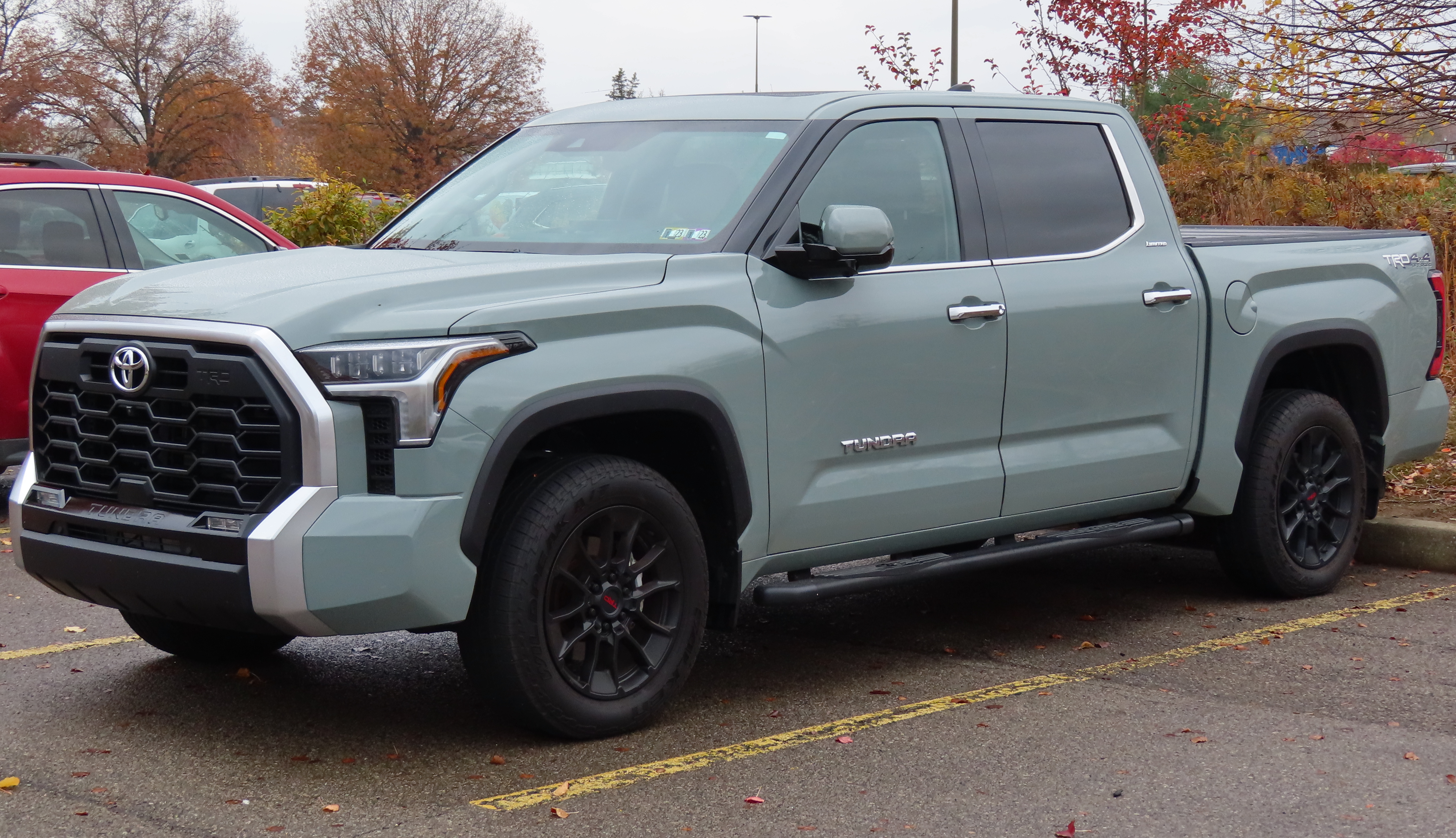
Toyota Tundra
"...ample, like Trail 4 Runner or Trail Tacoma, Trail Tundra, those kind of things are, are more stable or mor..."
The Toyota Tundra is a large pickup truck. It’s meant for carrying things and towing, and some versions are set up to handle rough roads better. The podcast groups it with other “Trail” trucks, likely because they’re more stable and capable on tougher routes.
The Toyota Tundra is a full-size pickup truck built for towing, hauling, and everyday driving, with off-road capability depending on trim and setup. In the podcast, it’s mentioned alongside other “Trail” models, suggesting a discussion about stability and suitability for rougher routes. It’s relevant because a lot of off-road travelers rely on full-size trucks for gear, recovery, and long-distance trips.
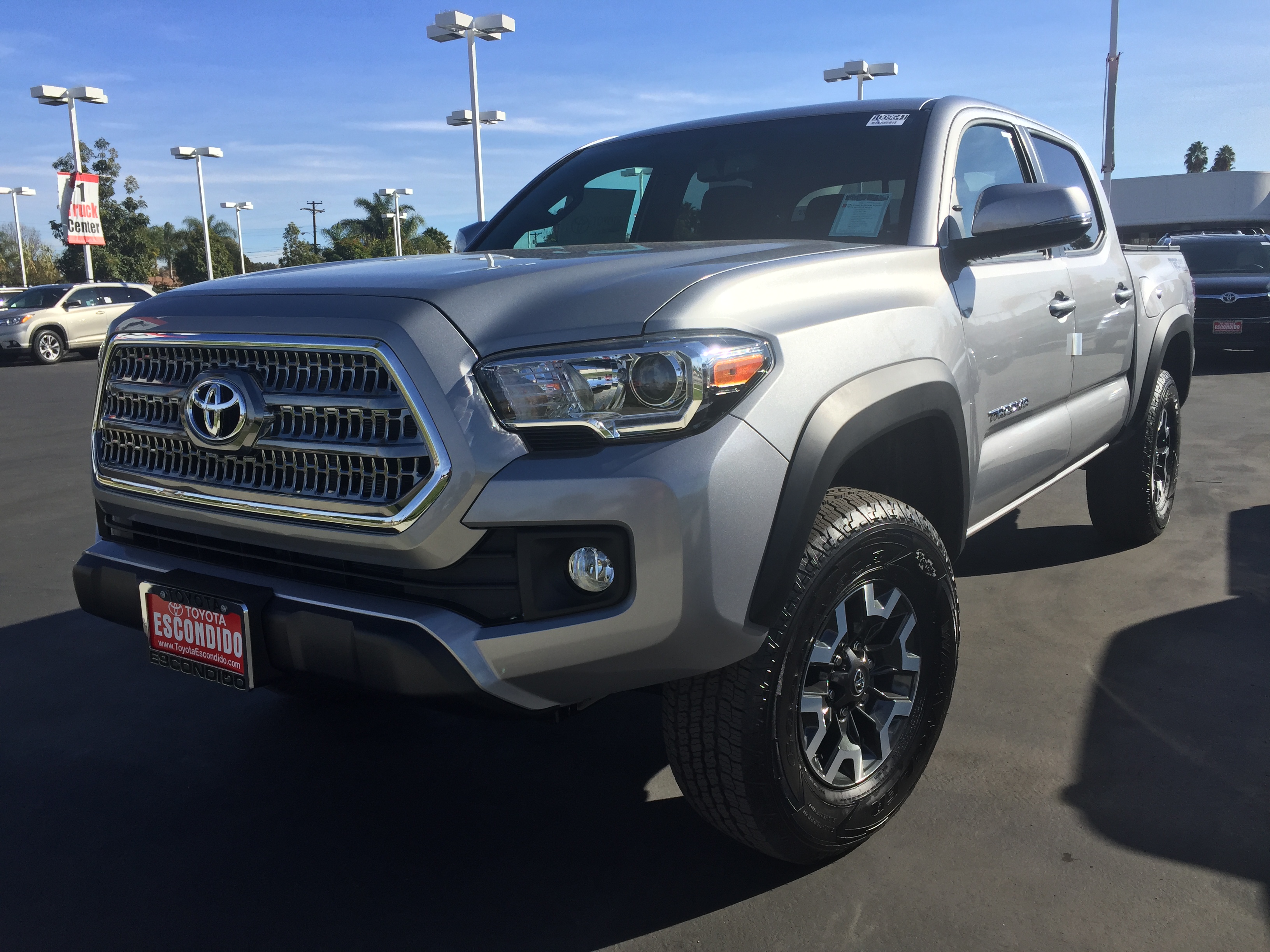
Toyota Tacoma
"Although I would argue that a lot of late model Toyotas, like if you go to an Overland Expo and see third gen, fourth gen Tacomas, fifth gen, four runners,"
A Toyota Tacoma is a popular pickup truck. People often modify it for off-roading, and the hosts are saying that newer Tacomas can start to look alike when they’re built with similar off-road parts.
The Toyota Tacoma is a midsize pickup that’s become a major platform in the overland and off-road community. In the segment, the hosts mention multiple Tacoma generations as examples of how newer models can look very similar once outfitted for off-road use.
bolt on kits
"But I think once we got to the era of bolt on kits for sure. [1111.1s] Then everything started looking the same."
“Bolt-on kits” are off-road upgrades that attach using bolts and brackets instead of custom welding or major fabrication. The point here is that if lots of people use the same bolt-on parts, their trucks and SUVs start to look alike.
“Bolt-on kits” are aftermarket off-road parts designed to install with minimal fabrication—often using existing mounting points. The hosts are arguing that once the market shifts toward these standardized kits, many vehicles end up looking the same because the same components get used across many builds.
rock sliders
"There are different bumpers. [1116.2s] They're different rock sliders, but you know what?"
Rock sliders are heavy-duty bars along the sides of a truck or SUV. They help protect the doors and body if you scrape against rocks, and the hosts are saying that many builds use similar-looking sliders.
Rock sliders are reinforced side rails (usually steel or aluminum) meant to protect the vehicle’s body and doors when driving over rocks. The hosts note that even if rock sliders differ in details like shape or “kick out,” they can still look similar—especially on black builds.
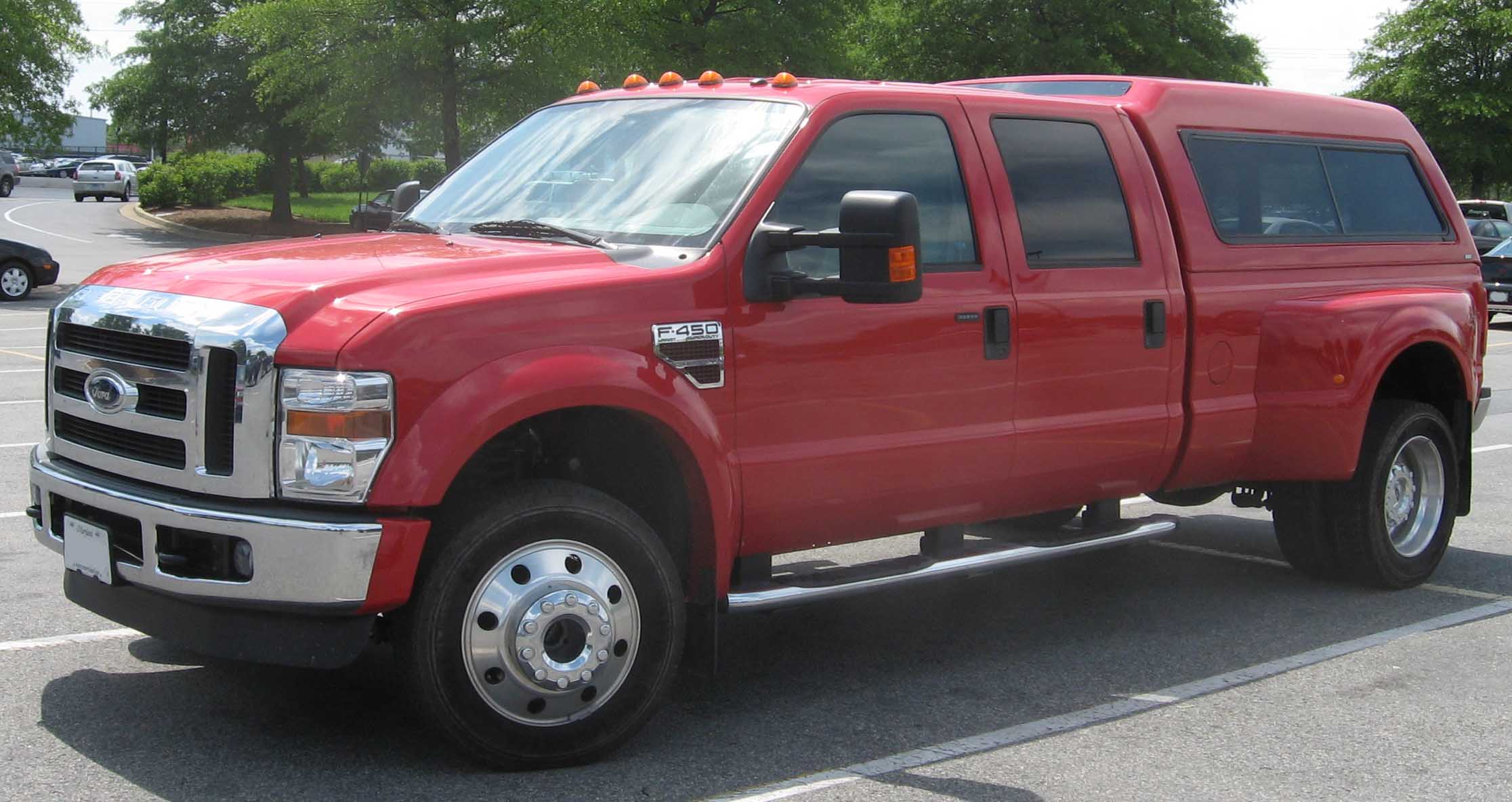
Ford F450
"...ere was a bunch of Jeeps. And then there was this F450 that had a completely custom undercarriage setup...."
The Ford F-450 is a heavy-duty pickup truck built for big jobs like towing and carrying heavy loads. The podcast mentions one with a custom undercarriage, meaning the parts underneath were modified for protection and off-road use. That’s important because the undercarriage is what can get damaged on rocks and uneven trails.
The Ford F-450 is a heavy-duty pickup truck aimed at serious towing and work use, with a stronger chassis and higher capacity than typical half-ton trucks. The podcast specifically calls out an F-450 with a completely custom undercarriage setup, which indicates it was heavily modified for off-road capability and durability. That kind of build is often discussed because the undercarriage and protection are critical when driving in rough terrain.
rear steer
"All hoses was a dodge, which had, you know, rear steer and cantilevered suspension. And then there was your forerunner."
Rear steer is a suspension/steering system where the rear wheels can turn, improving low-speed maneuverability and off-road turning. On custom 4x4 builds, it’s often paired with a carefully designed link/steering geometry to keep stability while articulating over obstacles.
cantilevered suspension
"All hoses was a dodge, which had, you know, rear steer and cantilevered suspension. And then there was your forerunner."
Cantilevered suspension is a design where the wheel’s motion is controlled through a lever (cantilever) that transfers forces to the shock/links mounted elsewhere on the chassis. It’s common in high-travel off-road setups because it can package the suspension better and tune ride/handling characteristics.

forerunner
"And then there was your forerunner. That's completely custom on the underside, you know, with a rear triangulated four link setup."
“Forerunner” refers to the Toyota 4Runner, a body-on-frame SUV that’s popular as a base for off-road builds. Here it’s singled out because the host says it had a completely custom underside with a rear four-link setup, which is a major suspension change aimed at controlling wheel movement.
rear triangulated four link setup
"That's completely custom on the underside, you know, with a rear triangulated four link setup. And I'm pretty sure Glenn Plake called it a buggy at one point."
A rear four-link setup uses four suspension links to locate the rear axle, controlling how it moves under braking, acceleration, and bumps. “Triangulated” indicates the links are arranged in a geometry that improves axle control and reduces unwanted axle steer or lateral movement during articulation—common in serious off-road fabrication.
buggy
"And I'm pretty sure Glenn Plake called it a buggy at one point. He called it a buggy at one point and then he called it a hot rod at one point."
In off-road culture, a “buggy” typically means a purpose-built lightweight vehicle with an exposed or minimal body and a chassis designed for high suspension travel. It’s often used as a category label for tube-frame or heavily modified trail/rock-crawling machines rather than a stock SUV or pickup.
hot rod
"He called it a buggy at one point and then he called it a hot rod at one point. Yeah."
“Hot rod” is a broad term for a vehicle that’s been modified for more aggressive performance or a more extreme driving character. In off-road discussions, it can be used loosely to describe a highly customized build rather than a specific factory model.
shocks, those coilovers
"I know those joints. I know those shocks, those coilovers. I was like, well done sir."
Coilovers are suspension parts that help your truck handle bumps. They combine the spring and the shock in one unit, and they can be adjusted so the ride height and stiffness match what you’re doing off-road.
Coilovers are a type of suspension shock where the spring (a coil) and shock absorber are packaged together. They let off-roaders tune ride height and how stiff the suspension feels, which can improve control over bumps and washboard roads.
tracks
"Well, I still need to stretch Bobcat out and get my measurements of the rear of how much tracks and then look at to talk to Will and Mike over there..."
Here “tracks” likely means the vehicle uses a track system instead of (or in addition to) normal tires. Tracks help the vehicle stay on top of soft ground like mud or snow because they spread out the weight.
In an off-road context, “tracks” usually means a tracked setup (or track system) rather than tires. Tracks can spread the vehicle’s weight over a larger surface area, helping it move through mud, snow, or soft ground where tires might sink.
metal cloak
"I'm not, I'm not knocking metal cloak in any way, shape or form. I love the company. Love the guys. Love their products."
Metal Cloak is a company that makes off-road upgrade parts for trail vehicles. The host is basically saying they’re a fan of the brand, but they see a lot of them on the trails.
Metal Cloak is an off-road parts brand known for suspension and vehicle accessory upgrades, especially for Jeep and other trail-focused builds. The speaker is saying they like Metal Cloak’s products but notice them frequently on the trails, implying the brand is popular in that community.
lockers
"Camacho Motorsports, the Nissan guys, uh, listen to six 98. They do make lockers for Nissan's. However, our older four car does not have any some axles."
A locker is a traction device that makes both wheels on an axle work together. When one wheel starts slipping, the locker helps keep the other wheel from spinning freely.
In off-road 4x4s, lockers are drivetrain devices that lock the differential so both wheels on an axle rotate together. That improves traction when one wheel would otherwise spin, like in mud, rocks, or deep sand.
60
"Uh, the front today is 60 out of a super duty, the rear of the 14 bolt."
“60” is a common shorthand for a heavy-duty front axle used in many off-road trucks. It’s popular because it can handle rough terrain better than lighter axles.
“60” here is shorthand for a Dana 60 front axle (often swapped into 4x4 builds). The Dana 60 is a heavy-duty axle known for strength, which is why it shows up in off-road and trail builds.
14 bolt
"However, our older four car does not have any some axles. Uh, the front today is 60 out of a super duty, the rear of the 14 bolt."
“14 bolt” is a nickname for a certain rear axle setup. People like it for off-roading because it’s built to handle hard use and is easier to work on.
“14 bolt” refers to a specific rear axle differential housing used on many GM trucks/SUVs, commonly called the GM 14-bolt. It’s popular in off-road builds because it’s known for being strong and rebuildable.
super duty
"Uh, the front today is 60 out of a super duty, the rear of the 14 bolt."
“Super Duty” is Ford’s heavy-duty truck line. Off-road builders use parts from them because those parts are built to be tougher.
“Super Duty” refers to Ford’s heavy-duty truck line (F-Series Super Duty). In off-road builds, people often source axles from these trucks because the components are designed for higher loads.
selectable
"Uh, the front today is 60 out of a super duty, the rear of the 14 bolt. Uh, our first year we ran a school in the front and a selectable ARB in the rear. However, our older four car does not have any some axles."
Selectable means you can turn the traction help on when you need it and turn it off when you don’t. It’s like having two modes: normal driving and maximum grip for tough terrain.
“Selectable” refers to lockers that can be turned on or off by the driver, rather than being permanently locked. This lets you use normal open/limited-slip behavior for everyday driving and switch to full lock when you need maximum traction.
ARB
"Uh, our first year we ran a school in the front and a selectable ARB in the rear. Uh, the second year we decided the school went into hard of turn. So we ran in Detroit upfront and stuck with the ARB selectable rear."
ARB here refers to an off-road locker system. It uses air to lock the axle when you want extra traction, and you can switch it off for easier driving.
ARB is a brand of off-road air lockers and related traction components. In this context, “selectable ARB” means an air-actuated locker you can engage to lock the differential for better traction.
Detroit
"Uh, the second year we decided the school went into hard of turn. So we ran in Detroit upfront and stuck with the ARB selectable rear."
“Detroit” is shorthand for a type of automatic locking differential. It helps when one wheel starts slipping by locking the axle so both wheels keep pulling.
“Detroit” most likely refers to a Detroit Locker—an automatic locking differential used to improve traction. Unlike selectable lockers, Detroit-style lockers typically engage automatically when wheel slip occurs.
double transfer case
"one in a double transfer case in that rig. Our race truck on Atlas three to one."
A transfer case is what sends power to both the front and rear wheels. A “double” setup means there are two of them, usually to get much lower gearing for slow, controlled crawling over tough terrain.
A transfer case splits power from the transmission to the front and rear axles. A “double transfer case” setup uses two transfer cases (often in series) to provide extra gear ranges and very low crawl ratios for rock crawling and heavy off-road use.
Atlas three to one
"Our race truck on Atlas three to one. But anyway, uh, Tyler, I sent you a picture of the race truck progress."
Atlas is a popular transfer-case brand for off-road trucks. “Three to one” is a gearing ratio that makes the truck move slower but with more pulling power—great for crawling.
“Atlas” here refers to the Atlas transfer case brand/model used in off-road builds. “Three to one” is the gear ratio, meaning the transfer case multiplies torque and reduces output speed for better low-speed control.
pinion was welded with bearings to the housing
"And when he said that he, uh, when they open up the diff cover that the pinion was welded with bearings to the housing and everything. And I don't remember if he remembers if there was oil or why it got welded."
The pinion is part of the axle’s gear system that helps transfer power to the wheels. If it gets overheated or loses lubrication, the gears/bearings can seize and effectively lock up, which can stop the whole truck.
The pinion is a small gear in the differential/axle gear set that meshes with the ring gear to transfer torque to the axle. If the pinion becomes “welded” to the housing (often due to extreme heat, lack of lubrication, or catastrophic bearing failure), it can lock the drivetrain and stop the vehicle.
diff cover
"And when he said that he, uh, when they open up the diff cover that the pinion was welded with bearings to the housing and everything."
The diff cover is a panel you can remove to look inside the differential. It’s used to check the gears and bearings when something goes wrong.
A “diff cover” is the removable housing cover on a differential (the gear unit that allows left/right wheel speed differences). Removing it lets you inspect internal gears and bearings when diagnosing failures.
spool
"[1569.0s] I would do a spool with my uneducated experience primarily because it's [1575.4s] simple and strong it would work."
A “spool” is a way to lock the two drive wheels together inside the differential. It helps the truck keep pulling when traction is uneven, but it can make turning on the street feel awkward.
In off-road and racing talk, a “spool” usually refers to a spool-type differential where the left and right wheels are mechanically locked together. That eliminates the differential action, so both sides turn together for better traction under load, but it can make tight turns harder and increase driveline stress on pavement.
locked
"[1579.3s] And I don't know why you would ever not need, um, locked, locked [1584.3s] suspension for an off-road race environment."
“Locked” means the differential is set up so both wheels on an axle turn together. Off-road, that can help you keep moving even if one wheel starts slipping.
“Locked” here is shorthand for a locked differential—meaning the axle forces both wheels to rotate together. In an off-road race environment, that can improve traction when one wheel loses grip, because torque is still delivered to the wheel with traction.
Panhard
"[1605.8s] Record pace. [1606.6s] And so far, everything has been awesome on it except for the Panhard. [1609.9s] I need to, I need to air chisel those jam nuts back together, but, um,"
A Panhard bar helps keep a solid rear or front axle from shifting side-to-side. If someone says the Panhard is the only problem, they’re talking about that bar or the parts holding it in place.
A Panhard (bar) is a lateral link used on many solid-axle off-road vehicles to control side-to-side axle movement. If the speaker says the “Panhard” is the only issue, they likely mean a problem with that bar or its hardware, such as looseness or alignment.
jam nuts
"[1606.6s] And so far, everything has been awesome on it except for the Panhard. [1609.9s] I need to, I need to air chisel those jam nuts back together, but, um,"
Jam nuts are extra nuts that “lock” an adjustment so it doesn’t move over time. They’re commonly used on suspension parts so vibration doesn’t loosen the setup.
Jam nuts are secondary nuts used to lock an adjustment in place so it can’t loosen from vibration. On suspension links like a Panhard bar, jam nuts help maintain correct alignment and geometry during hard off-road use.
air chisel
"[1609.9s] I need to, I need to air chisel those jam nuts back together, but, um, [1614.4s] everything's been awesome."
An air chisel is a tool powered by compressed air that can break loose stuck metal parts. Here it sounds like it’s being used to deal with jam nuts that need to be reset.
An air chisel is a pneumatic tool that uses compressed air to drive a chisel tip for cutting or breaking apart stuck hardware. In this context, it’s being used to separate or re-seat jam nuts that have likely loosened or become difficult to adjust.
Dana 60
"“...Dana 60 is about geared wrapped up. Brexthor all done.”"
“Dana 60” is the name of a rugged axle used on many off-road trucks. People like it because it’s strong and there are lots of parts available to upgrade the gears and differential.
“Dana 60” refers to a specific heavy-duty axle model made by Dana. It’s commonly used in off-road builds because it’s designed to handle higher loads than many lighter axles, and it’s popular for gear and differential upgrades.
ring pinion
"“...we got to do some paint. Uh, we got to get to the rear end update on the rear ring pinion.”"
The ring and pinion are the big gears inside the axle that determine the truck’s “gear ratio.” Getting them set up right helps the truck pull correctly and reduces drivetrain stress.
The ring and pinion are the main gear pair inside a differential/axle that sets the final drive ratio. Changing or setting them correctly affects how the truck accelerates, how it cruises, and how much stress the drivetrain sees.
gear set
"“...I actually have a 538 gear set sitting on the shelf...”"
A “gear set” here means the axle’s main gears that change the final ratio. Different ratios can make the truck pull harder or run at lower RPM on the highway.
A “gear set” in this context means the ring-and-pinion gear pair (the final-drive gears) used to achieve a specific axle ratio. Swapping gear sets changes torque multiplication and engine RPM at a given speed.
E locker
"“...And with Tyler wanting to go E locker, it's better that we just change the bearings...”"
An “E locker” is a device that can lock the differential so both wheels on an axle turn together. It helps when you’re stuck or one tire is slipping, but it can feel different when turning.
“E locker” is an electronically controlled locking differential that can lock both axle shafts together. That improves traction when one wheel loses grip, but it also changes how the vehicle behaves in turns and on high-traction surfaces.
crush leave
"“...the failure on the 10 and a half did actually come from a failed crush leave, which is common and it is why we, uh, change out the crush leave on these things.”"
“Crush leave” sounds like a “crush sleeve,” a small part used to set how tightly the axle’s bearings are squeezed. If it fails, the gears can start wearing badly or even break.
“Crush leave” appears to refer to a “crush sleeve,” a component used to set the correct bearing preload on some axle setups. If the crush sleeve fails or loses its intended thickness, the pinion bearing setup can become unstable, leading to gear noise or failure.
Loomis
"I had them checked over at Greg's shop at Rockhound off road in Loomis. So with all that done, I think we're on pretty good turns with the extensive, all the damage that we had out of this thing."
Loomis is a place in California mentioned as where the shop is located. It’s basically the location of the work being done on the vehicle.
Loomis is a city in California, referenced here as the location of an off-road shop. For listeners, it helps anchor where the suspension work and inspections were done.
make bars
"So we're, we're pushing through make bars are done. We're going to shoot some paint on this stuff."
“Make bars” sounds like the metal bars being installed or rebuilt as part of the repair. The host is saying they’re getting the vehicle back together after fixing damage.
“Make bars” appears to be a shorthand for fabrication/installation of metal bars used to reinforce or protect parts of an off-road vehicle. In context, it’s part of the work after damage repair before paint and reassembly.
shoot some paint
"We're going to shoot some paint on this stuff. So it doesn't rust in a couple of days and, uh, keep going through it."
“Shoot some paint” means spraying on new paint. They’re doing it to help prevent rust on the repaired parts.
“Shoot some paint” refers to applying fresh paint using a spray process. The host’s goal is to protect the repaired metal so it doesn’t rust quickly after the work is finished.
slop
"where the rear opinion was having slop that he found, which was amazing because there, none of the problems ever came from the rear end."
“Slop” means there’s extra looseness—like a delay or wiggle—before the vehicle responds. In a 4x4, too much slop can be a sign that parts in the rear are worn or not set correctly.
“Slop” is loose, free play in a drivetrain or suspension component—movement you can feel before the vehicle actually responds. Excess slop in the rear can indicate worn or misadjusted axle/hub parts (like bearings/preload), which can worsen under load and vibration in off-road driving.
crush sleeve
"Because we've, you did find, or he found that the crush sleeve in the rear had gone being crushed even more. Yup."
A crush sleeve is a small spacer that gets tightened down to the right tightness. If it gets crushed too much, the wheel bearings can end up loose or out of alignment, which causes wobble and wear.
A crush sleeve is a sacrificial spacer used in some axle/hub setups to set and maintain bearing preload. As it “crushes” under tightening, it helps keep the bearings correctly loaded; if it gets crushed too far, the bearings can end up misaligned and develop excessive play.
San Hollow
"Can you imagine if we were ripping around the dunes at San Hollow and two wheel drive with that much slop in the pigeon?"
“San Hollow” is an off-road desert area. When you drive hard over rough sand, any looseness in the vehicle—especially in the rear—can turn into bigger problems fast.
“San Hollow” refers to a desert off-road area where vehicles are driven aggressively over sand and uneven terrain. Conditions like that amplify the consequences of drivetrain looseness (slop), because repeated impacts and wheel articulation stress bearings and axle components.

Unimog
"And I see on the back, it's a Unimog. Um, so, and I wasn't very, um, in tune with Unimog. So when you said you acquired one, um, I had to look it up."
A Unimog is a special kind of off-road truck made by Mercedes-Benz. It’s designed to handle tough terrain and heavy work, so when you see one on the road it can look huge—especially with big off-road tires.
The Unimog is a Mercedes-Benz off-road truck platform known for extreme versatility—it's built to handle rough terrain, towing, and specialized work. In off-road circles, people often run them as “rigs” with big tires and heavy-duty setups, which is why it can look enormous on the highway.
35s
"It looked like it was on 35s. Uh, didn't get a good look at it because I passed them. But, um, yeah, it's a sweet, sweet rig."
“35s” means the truck is running very large off-road tires—about 35 inches tall. Bigger tires help it roll over obstacles and get better grip off-road, but they can also make the truck harder to steer and may require extra clearance or suspension work.
“35s” is off-road slang for 35-inch tires. Bigger tire diameter increases ground clearance and helps with traction over rocks, ruts, and soft terrain, but it also affects gearing, steering feel, and clearance around the wheel wells.
KOH
"Also, um, you guys will probably hear this after Trail Hero X, but, uh, Jimmy, when you did the interviews during KOH, I enjoyed that episode."
KOH is an off-road event where people bring their trucks and rigs to show them off. The speaker is saying they liked the interviews that happened there.
KOH refers to a major off-road event where builders and drivers show off trucks and rigs. The host is referencing interviews done during that event, implying the Unimog conversation ties into off-road community coverage.

Bristol 406
"..., the 404s in my opinion are tiny compared to the 406s. Okay."
The Bristol 406 is an older, classic luxury car from Bristol. The podcast is talking about how it compares to the Bristol 404, especially in terms of size. It’s mentioned because enthusiasts often compare these similar models to understand what’s different.
The Bristol 406 is a classic British luxury grand tourer, known for its distinctive styling and limited production. The podcast compares the 404 and 406, saying the 404s are “tiny” compared to the 406s, which suggests they’re discussing size, presence, or how the cars feel in person. It’s the kind of niche classic that comes up in enthusiast conversations because owners and collectors often debate differences between closely related models.
bench tested
"the starter, we pulled the starter and bench tested it and it works."
Bench testing is when you take a part out and test it on a table to see if it works. They tested the starter that way and it worked, so the issue is likely elsewhere in the wiring/electrical control.
Bench testing means removing a component (like the starter) and testing it on a workbench with proper power and connections to verify whether it works. In this case, they bench tested the starter and confirmed it functions, pointing the fault toward the electrical path between the 24V and 12V systems.
24 volt system
"power is not getting from the 24 volt system into the 12 volt system to turn the starter."
Some trucks run on 24 volts instead of 12. In this case, the 24-volt power isn’t reaching the 12-volt part that’s needed to operate the starter.
A 24-volt system means the vehicle’s electrical power is supplied at 24 volts, which is common on heavy-duty trucks because it can deliver strong starting power and reduce current for the same power. Here, the issue is that power isn’t getting from the 24-volt side into the 12-volt side.
12 volt system
"power is not getting from the 24 volt system into the 12 volt system to turn the starter."
Most cars use 12 volts. The problem described here is that the truck’s 24-volt power isn’t properly making it to the 12-volt side that controls the starter.
A 12-volt system is the lower-voltage electrical side used to run accessories and, in many vehicles, the starter circuit. This segment describes a failure where the Unimog’s 24-volt system isn’t correctly feeding the 12-volt system that ultimately engages the starter.
push start button
"there's a specific button that is on the dash. That's the push start button."
A push start button starts the vehicle electronically. In this Unimog, they’re saying that button also helps manage the electrical conversion from 24 volts down to 12 volts for starting.
A push start button is an electronic switch that triggers the vehicle’s starting sequence rather than using a traditional key-based mechanical start. Here, the hosts say this specific button performs multiple functions, including converting power from the 24-volt system down to a 12-volt system.
converts it with in that button
"one of the main things that takes the 24 volt system and next it down to a 12 volt system converts it with in that button"
They’re saying the start button isn’t just a switch—it also changes the electrical voltage. If that voltage conversion fails, the starter won’t receive the right power to crank.
This describes an internal power-conversion function inside the dash push-start button (or its circuitry), stepping voltage down from 24 volts to 12 volts. The key takeaway is that the starting system depends on that conversion module, and if the button fails, the starter won’t get the correct voltage.
contacts essentially pads
"And the buttons are known to go out because they're, they're just contacts essentially pads from like the 1960s."
They’re saying the button works like simple electrical contact pads. Over time those contacts can wear out or stop making good electrical contact, so the button may fail.
The hosts are describing the push-start button as having contact pads (a basic electrical contact design) rather than a more modern sealed electronic switch. Contact-pad designs can wear, corrode, or lose conductivity over time, which can cause intermittent or total failure of the button’s functions.
after market part
"Um, and so because nobody's made a replacement after market part, you have to get the original like buttons..."
Aftermarket parts are replacements made by companies other than the car’s brand. They’re saying that for this specific older setup, aftermarket replacements don’t exist, so they need the original parts.
An aftermarket part is a replacement component made by companies other than the original vehicle manufacturer. The host is saying that for this older Mercedes Unimog application, nobody has produced a replacement aftermarket version, forcing them to hunt down original equipment parts.

Ford Expedition
"...e number one guy that has all those is in Vallejo expedition imports. So I need to contact him and get a new b..."
The Ford Expedition is a large SUV made for carrying people and gear, and it can also tow. In the podcast, it’s mentioned in the context of finding parts and getting help from a specialist. That usually means owners keep them running and sometimes modify them for tougher use.
The Ford Expedition is a full-size SUV designed for family hauling, towing, and long-distance comfort. The podcast mentions “Expedition imports” and needing to contact a specific person to get a new part, which points to it being a platform people maintain and modify for their needs. It’s often discussed in off-road circles because it can be configured for rugged use while still functioning as a daily driver.
starter
"...see if that at least gets the starter turning so that then we can start doing compression tests..."
The starter is the part that turns the engine over when you try to start the vehicle. They’re trying to get power to it so the engine will crank and they can test what’s going on next.
The starter is the electric motor that cranks the engine to get it turning for ignition. They’re troubleshooting electrical supply to the starter so the engine can crank enough to run compression tests.
compression tests
"...get a new button to put that in and see if that was all that it is before fires it up, see if that at least gets the starter turning so that then we can start doing compression tests..."
A compression test checks how well an engine’s cylinders are sealing and building pressure. It’s a way to see if the engine itself is healthy before they spend time rebuilding other systems.
A compression test measures how much pressure an engine’s cylinders can build during cranking. It helps diagnose internal engine health (like worn rings or valves) before deeper work, and here they plan to run it once the starter issue is resolved.
fuel system
"we're probably going to have to drop the whole fuel system and rebuild the whole fuel system, clean it all out, everything."
The fuel system is how the vehicle gets fuel from the tank to the engine. They think they may have to take it apart, clean it thoroughly, and rebuild it if the problem isn’t just electrical.
The fuel system is the set of components that stores, filters, pumps, and delivers fuel to the engine. They’re expecting they may need to drop the whole fuel system and rebuild it—cleaning everything—if the electrical fix doesn’t resolve the no-start problem.
test driving
"We are adjusting coil overs and test driving the meal today. That is our update because I forgot to update you since the last saga."
Test driving is when you drive the vehicle after you make changes to see if everything feels right. It’s how you catch problems that you can’t notice just standing still.
Test driving is the step where the driver checks how the vehicle behaves after changes—like suspension adjustments—under real-world conditions. It helps confirm ride quality, steering feel, and stability before the vehicle sees more demanding use.
Request an Explanation
Heard something you'd like explained? We'll add it to this episode.
Sign in to request explanations for terms you heard.
Want to learn more?
Browse our glossary for plain-English explanations of automotive terms, jargon, and concepts.
Help improve this episode
See something that's not quite right? Our annotations are AI-generated and can sometimes miss the mark. Click the flag icon on any annotation to suggest a correction.