
SNETTERTON BTCC 2026 PREVIEW
About this episode
Snetterton BTCC weekend gets a full preview, from weekend logistics and timing around an F1 race to what qualifying and the sprint-to-pole format could feel like. The hosts break down the circuit’s 2.97-mile length, 12 corners, and key overtaking zones, arguing that a small temperature window, slipstreaming, and boost into the Ss and hairpin will shape the action. They also look at who’s likely to lead—especially Audi—while noting the championship picture and spectator viewing spots.
WE TAKE A LOOK AHEAD AT THE WEEKEND AT SNETTERTON AND WHO THE RUNNERS AND RIDERS WILL BE AT THE TOP OF THE GRID.
Snetterton track preview (length, corners, records)
"so SNET, and then 2.97 miles is the longest circuit on the calendar... It's got, no, there you go. Let's answer that then. 12 corners, straight that goes on for basically a mile, and it debuted in 1959... Would you like to tell me who has the quantifying lap record around here?"
They’re giving a quick rundown of Snetterton—how long it is, how many corners it has, and what the fastest laps have been. Then they talk about whether this weekend could be quicker.
This segment previews Snetterton by discussing its layout (length and number of corners) and comparing qualifying and race lap records. It sets expectations for how the weekend’s pace might evolve.
qualifying lap record
"However, would you like to tell me who has the quantifying lap record around here? I believe it was Camish last year. It was."
Qualifying is when drivers try to set their fastest lap to earn a good starting position. A qualifying lap record is the quickest lap anyone has managed in that qualifying session at that track.
A qualifying lap record is the fastest single lap time set during the qualifying session. In BTCC, qualifying times help determine the starting grid, so lap-record pace is a strong indicator of outright speed.
wet times
"Oh, okay. So, I was thinking of wet times. 232.1s He's thinking of wet times. Would you like to guess or tell me, as you know, the race record around here?"
Wet times are lap times done on a wet track. Cars have less grip in the wet, so laps are usually slower than in dry conditions.
“Wet times” refers to lap times set when the track is wet or damp, typically with reduced grip. Because tires and traction are different, wet lap times are usually slower and less consistent than dry qualifying or race laps.
race record
"Would you like to guess or tell me, as you know, the race record around here? That was Sutton in 2023. It was. Guess on the time? No, no guess on the time. 154.9."
A race record is the best lap time someone has done during the race itself. It’s different from qualifying because the car and conditions are changing during the race.
A race record is the fastest lap time set during an actual race, not qualifying. Race conditions (fuel load, tire wear, traffic, and strategy) can make race-lap pace different from qualifying pace.
operating window
"There is a really small operating window, which we could, in fairness, be in this weekend. We could. We could very well be, especially if we get a little bit of cloud cover, no direct sunlight, but plenty of warm ambient temperature."
Racers talk about an “operating window” because tires and car setup only work well within a certain temperature range. Outside that range, the car doesn’t grip as well and can feel hard to drive.
In touring-car racing, an “operating window” is the narrow range of conditions where the car (and especially its tires) works best. If it’s too cold or too hot, grip and consistency drop, making the car feel fragile or unpredictable.
slipstreaming
"As you said, two of the longest rates in the UK as well for race circuits. So, possibly some slipstreaming and I think there'll be plenty of passes."
Slipstreaming (drafting) is when a car follows closely behind another to reduce aerodynamic drag. The trailing car can carry more speed into braking zones and set up passes.
boost
"We'll see on the boost going down into the Ss as well. There'll be a lot of boost passes and that's straight 100%."
Boost is extra “push” from the engine—usually from a turbo—that helps it accelerate harder. How and when it comes on can matter a lot for passing.
“Boost” is the extra air pressure a turbocharger (or turbo system) provides to the engine. In BTCC-style racing, boost strategy and how consistently it’s delivered can strongly affect acceleration and overtaking.
infield
"I think that has really helped it and really improved it because you get that infield section where a lot of people can spectate from and you can see quite a lot of action."
The infield is the area inside the track’s main outer edge. It’s where some corners are located, and depending on the layout, it can be harder or easier to pass there.
The infield is the portion of a racetrack inside the main loop/outer boundaries. It often changes spectator visibility and can affect racing flow, especially if the infield sections are tighter and offer fewer overtaking opportunities.
hairpin
"I still think that, yes, you can overtake into the hairpin. Is it Agostini the hairpin? Yep. And you can, but that's basically the only part of the infield you see overtaking on."
A hairpin is a very tight corner that you usually have to slow down a lot for. Because it’s so slow, it often becomes one of the best places to try to pass.
A hairpin is a very tight, slow corner that forces heavy braking and low-speed cornering. In many circuits, hairpins are key overtaking points because drivers can attack the braking zone and then use traction on corner exit.
overtaking areas
"And that's in my world how a race circuit should be, [379.8s] that the majority of the corner should be overtaking areas. It seems bonkers in my mind that you hear"
These are parts of the track where it’s realistically possible to pass another car. They’re usually places with good braking or good acceleration out of a corner.
“Overtaking areas” are sections of a race track where cars have enough speed difference and room to pass each other safely. Track design, braking zones, and corner exits all determine where overtakes are realistic.

Vauxhall Corsa
"it is amazing how narrow it is when you're actually driving it. And I have a Vauxhall [419.3s] Corsa, it's not particularly wide, but it is when you're behind the wheel in some of those [423.5s] infield sections, it is really tight."
A Vauxhall Corsa is a small everyday hatchback. The point here is that even a car like this can feel really tight and narrow when you’re driving through certain track sections.
The Vauxhall Corsa is a compact hatchback that’s often used as a reference point for how small cars feel on tight circuit sections. The host is using it to explain how narrow Snetterton’s infield can feel from the driver’s seat.
tires
"It's tires had a big influence last season. Absolutely. And then race three, [448.5s] Dobal took his maiden win"
In touring car racing, tire performance and tire management can swing results because grip changes as the tires heat up and wear. A “big influence” usually means the tires affected pace, consistency, and how well drivers could defend or attack.

Opel Astra
"...al took his maiden win from Sutton from... In the astra. Sadly, no more. From Sutton from Cook. So Sutton..."
The Opel Astra is a compact car that’s made for normal road use. In the podcast, it’s mentioned because a driver had a notable race result while using an Astra. That’s why it comes up in a racing discussion.
The Opel Astra is a compact car line from Opel, commonly used in everyday driving and also seen in motorsport and club racing contexts. In the podcast context, it’s mentioned as the car associated with a driver’s result, linking the model to real race outcomes. That makes it relevant to listeners who follow how production-based cars perform on track.
grunt
"I think we could actually see the Mercedes [479.2s] run quite well this weekend. Agreed. As long as it's got the grunt down the straights, [483.6s] which we believe it probably has,"
“Grunt” just means the car feels strong when you put your foot down—especially when accelerating out of corners. It’s about how much push you feel, not a specific number.
In racing talk, “grunt” is a casual way to describe strong low- to mid-range acceleration and torque feel—how quickly a car pulls when you’re exiting corners or accelerating down straights. It’s not a technical spec, but it points to usable driveability.
qualifying session
"mind the interesting thing on the qualifying front will be, it was only 10 minutes. It's a long lap. It's nearly a two-minute lap. You're only really going to get maybe three fast laps in."
Qualifying is when drivers try to set their best lap times to decide where they start the race. If qualifying is short, there’s less time to fix mistakes and try again.
A qualifying session is the part of a race weekend where drivers set their fastest laps to determine starting positions. In BTCC, the session length and lap time matter because teams have only a limited number of attempts to get clean, fast laps.
track limits
"They're not going to have time to mess about if they get track limits and stuff like that. That is going to be a little bit of a peril this weekend."
Track limits are the rules about staying inside the marked edges of the track. If you cut too much, your lap may not count, which can hurt your qualifying time.
In touring-car racing, track limits are the boundaries drivers must stay within (usually defined by curbs and painted lines). If a car crosses them, the lap can be invalidated or the driver can be penalized, which is especially risky during short qualifying sessions.
slipstreams
"They should be able to spread themselves out nicely and possibly even pick up long slipstreams to help them in there."
Slipstream is the effect of drafting behind another car. By following closely, you can get pulled along a bit faster and make your lap quicker.
A slipstream is the aerodynamic “draft” a car gets when it follows closely behind another car. In qualifying, using slipstreams can reduce drag and help a driver carry more speed into the next section, improving lap times.
flying lap
"I think you're going to be looking at four minutes for a flying lap and a quick lap, which means you're probably only going to get two, maybe three quick laps in"
A flying lap is a timed lap where you’re already moving fast when the clock starts. It’s used to get the best possible lap time during qualifying.
A flying lap is a timed lap where the driver is already at speed before the timing point, rather than accelerating from a standstill or slow corner exit. This makes it a key strategy in short qualifying windows because it helps maximize the number of competitive laps.
race to pole
"because of the length of the circuit, though, being split into two different groups... I think that there are some circuits where you don't necessarily feel the boost as much as anywhere else. I think here with that straight... I think that the race to pole situation that we have this season benefits them more at a circuit like this"
“Race to pole” means the competition to earn pole position, which is the best spot on the grid. They’re saying this season’s situation makes pole-winning more important at this track.
“Race to pole” describes the season-long battle for the best starting position, typically by scoring strong qualifying results. The hosts are arguing that this season’s points/format rewards drivers who can secure pole more effectively at a circuit like Snetterton.
race trim
"grid for the Sunday. Yes, because they've got a good chance to come through the field in [617.8s] race trim if they qualify a bit further down."
“Race trim” just means the car is prepared in the way it’s meant to run during the actual race. It’s usually different from how it might be set up for practice or qualifying.
“Race trim” means the car is set up and prepared in the configuration it will use for racing, not its qualifying or practice setup. In touring car series, that can include specific aerodynamic settings, cooling choices, and mechanical setup aimed at race pace and durability.
traction zones
"And then what we've always known is there are plenty of traction zones here at [722.3s] Stetson."
“Traction zones” are sections of the track where tires either grip well or struggle. Those areas can make a big difference to who’s fast and who spins or falls back.
“Traction zones” are parts of the track where the car is most likely to lose or gain grip—typically heavy-braking corners, tight exits, or areas with changing surface conditions. In BTCC previews, mentioning traction zones suggests the circuit’s grip demands can strongly affect lap times and race outcomes.
podium places
"And yeah, I think that he will also be looking this weekend to try and push his way, certainly to the podium places."
Podium places means finishing first, second, or third. It’s the best result you can aim for in a race.
In touring car racing, “podium places” means finishing in the top three positions. It’s a key performance benchmark because it typically brings the most points and visibility.
restart
"The Jack Sears is really interesting because that's turned on its head after the first week as well. And I think the restart Hyundai is, again, really difficult to grade at this point"
A restart is when the race starts again after it was paused. The conditions can be different, so it can be a big moment for gaining positions.
A restart in BTCC-style racing refers to the field being re-launched after a stoppage (like an incident or safety car period). Restarts often change tire temperature, grip levels, and strategy, so they can strongly affect who gains or loses positions.
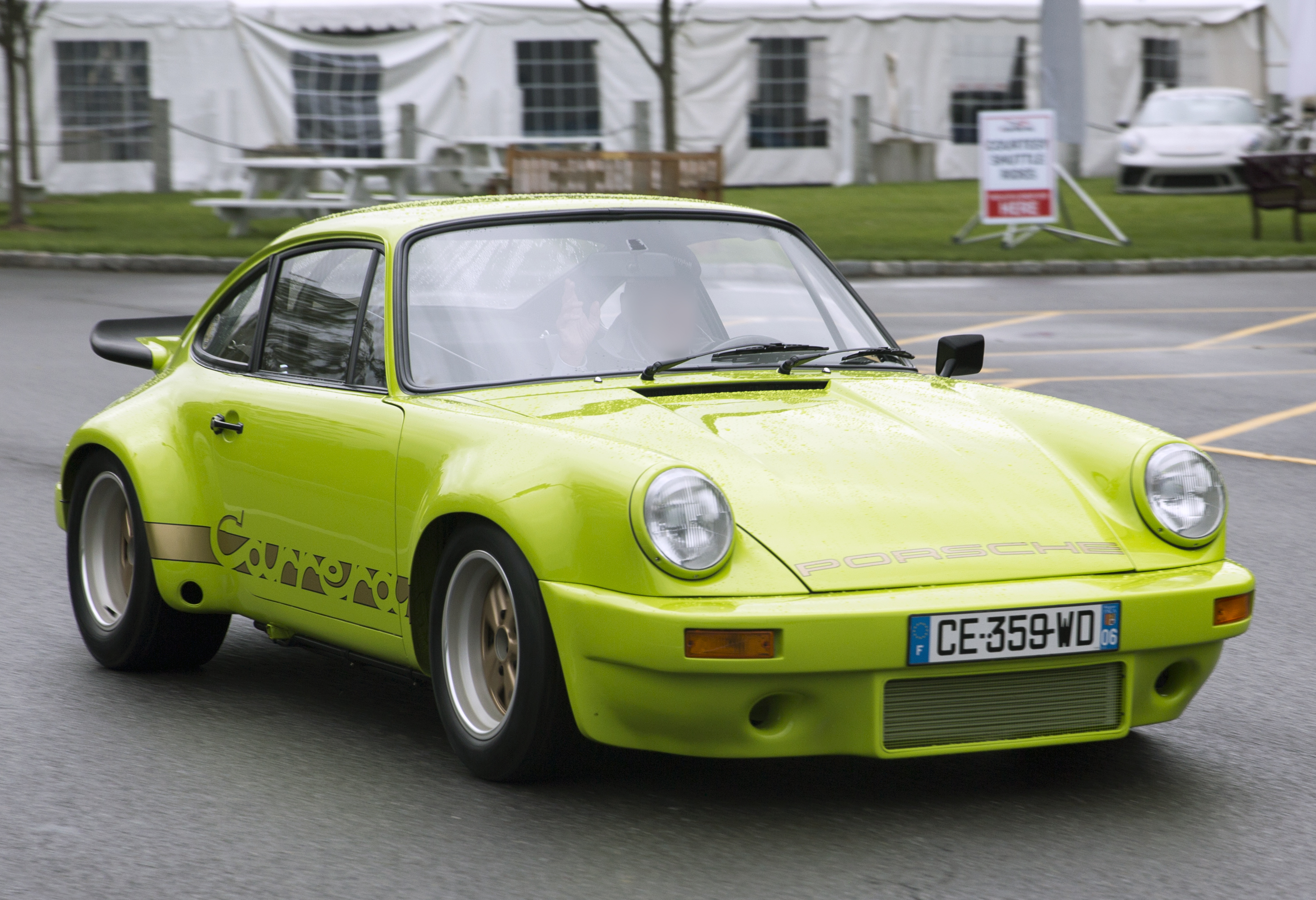
Porsche Carrera
"...we have the mini challenge with us. We've got the Porsche Carrera Cup Great Britain, obviously the F4s. Just that m..."
The Porsche Carrera RS is a special, performance-focused version of the 911 sports car. It’s designed to be faster and more track-ready than a regular road version. People mention it because it’s closely tied to Porsche racing history.
The Porsche Carrera RS is a high-performance, track-focused version of the 911, built to deliver strong lap times with a more stripped-down, motorsport-oriented setup. It’s significant in racing history and often comes up when discussing Porsche’s performance heritage and the kind of cars that inspire modern touring and one-make racing series. In a podcast about British motorsport, it’s a natural reference point alongside other Porsche-based racing categories.
pit lane walkabout
"The pit lane walkabout then hopefully will be [1032.1s] about 10 to 1 to 20 past 1, followed by another touring car race at 230"
A pit lane walkabout is when fans get a chance to get near the teams and race cars in the pit area. It usually happens between race sessions and depends on the event rules.
A pit lane walkabout is a scheduled period where fans can enter or approach the pit lane area to see teams and cars up close. It’s typically organized around race-day sessions and is subject to circuit and event rules.
safety car
"all of which are scheduled to be 12 laps as long as we don't see any safety car and have laps [1045.3s] added on."
A safety car comes out when something unsafe is happening on the track. Drivers slow down and follow the safety car until the track is clear again.
A safety car is deployed when there’s a hazard on track (like an accident or debris) and the race is temporarily run under controlled speeds. Laps may be added or race timing adjusted depending on the series’ rules.
sprint race
"And then the race, the sprint race [1056.7s] to pole event will be five minutes past three, which is eight laps long."
A sprint race is a shorter race than the main one. With fewer laps, getting a good start and staying out of trouble can be extra important.
A sprint race is a shorter race than the main event, often used to add extra competition and points. Because it’s fewer laps, track position and clean starts can matter even more.
pole event
"the sprint race [1056.7s] to pole event will be five minutes past three, which is eight laps long."
The pole event decides who gets pole position, meaning the best starting spot on the grid. It’s usually a short session that sets up the race order.
The pole event is the session that decides who starts from pole position—first on the grid. In many touring car formats, it’s a short race or shootout that sets the grid for the next race.
pole sitter
"We'll start at the top with our sprint or qualifying pole sitter. That makes sense to you all."
The “pole sitter” is the driver who starts first on the grid. Qualifying fastest earns pole, which usually gives a big advantage at the start.
A “pole sitter” is the driver who qualifies fastest and starts the race from pole position (the front of the grid). In BTCC, starting up front can be crucial because it reduces traffic risk and helps you control the early race pace.
outright podium
"then that's touch and go. [1227.2s] And just for clarity, that is the outright podium, [1231.5s] because they are both independents."
They mean the real top-three finish in the race overall. BTCC also has separate categories, so they’re making sure listeners understand they’re talking about the overall podium, not just a category podium.
“Outright podium” means finishing in the top three overall in a race, regardless of any sub-category rules. The hosts clarify this because BTCC also has separate standings for “independents,” so a car can be a podium finisher in one sense without being top-three overall.
independents
"because they are both independents. Yes, no greed. Okay, I've gone for the race one winner. [1236.5s] We'll finish outside of the top 10 in race two. So if it wins race one, won't finish inside the [1241.5s] top 10 for race two. ... [1277.5s] independent and Jack Sears leader by the end of the weekend."
“Independents” are teams/drivers not backed by the main factory program. They’re still racing for overall race results, but they also have their own points/championship fight.
In BTCC, “independents” refers to drivers/teams that compete outside the main manufacturer-backed works structure, and they’re scored in a separate independent classification. The hosts discuss how independent cars can still achieve strong overall results, but their championship standings are tracked separately.
top 10
"Okay, I've gone for the race one winner. [1236.5s] We'll finish outside of the top 10 in race two. So if it wins race one, won't finish inside the [1241.5s] top 10 for race two."
They’re talking about finishing positions that earn points. In BTCC, being in the top 10 usually means you score, so it’s a big deal for the championship.
“Top 10” is used here as a shorthand for the points-paying finishing positions in BTCC. Because BTCC awards points based on where you finish in each race, predicting whether a car lands inside or outside the top 10 is essentially predicting its points haul.
Request an Explanation
Heard something you'd like explained? We'll add it to this episode.
Sign in to request explanations for terms you heard.
Want to learn more?
Browse our glossary for plain-English explanations of automotive terms, jargon, and concepts.
Help improve this episode
See something that's not quite right? Our annotations are AI-generated and can sometimes miss the mark. Click the flag icon on any annotation to suggest a correction.