Before you push hard, you do a few easy laps to get the car ready. Tires need heat to grip well, and the engine and other fluids work better when they’re warm.
They’re talking about a group challenge where everyone has to pick and buy a dream car within a time limit. Then they bring those cars to an event to show them off.
“Cars and coffee” is a common informal car-meet format where enthusiasts gather in the morning to talk about cars and show them off. The hosts are using it as a reference point for the kind of public event they’re planning.
This is a car event/show in Pinehurst, North Carolina. The hosts are saying it’s a fun change of pace from the biggest, most crowded concours weekends.
Topic
Woodward End
They mention an event called Woodward End in August. It’s part of the bigger list of car events they’re planning to go to.
Northville Concourse is a smaller car show in Northville, Michigan. What makes it special here is that the judging is done by young people, with adults mostly mentoring.
“Mentor judging” is a structure where experienced adults guide the process, but the actual judging decisions are made by youth. This can change how cars are evaluated—often focusing on enthusiasm, learning, and peer perspective rather than purely traditional judging.
They’re talking about a car show built like a friendly rivalry: Porsche people and Corvette people judge each other’s cars. It’s meant to be fun and competitive, but not hostile.
The Dacia Duster is a small SUV/crossover. It’s made to be practical and usually costs less than many other SUVs. The podcast mentions it while joking about how people “duster down,” meaning they use it like a rugged everyday vehicle.
Topic
Hilton Head Island Concorde
They’re mentioning another event on Hilton Head Island. It’s basically a heads-up about where the next car-related gathering might be.
Pitt Race is a motorsports facility that the hosts mention as having changed ownership. They’re discussing whether it will remain a racetrack after the sale, which matters to anyone planning track days or racing events.
They’re saying the track’s sale is official and talking about the money involved. When a track gets sold, it can change whether people can still drive there.
The FTC (Federal Trade Commission) is a U.S. government agency that enforces consumer protection laws, including rules around advertising and deceptive business practices. In this context, it sent warning letters to dealer groups about how prices and deal terms are presented to consumers.
Some car ads look like a great deal, but the fine print means you can’t actually get that price. This is about rules that stop dealers from hiding extra costs or requirements.
The advertised price is the number you see in the ad. The issue is when the dealer makes you pay extra things that weren’t clearly included, so the real cost ends up higher.
Dealer financing is when you have to use the dealer’s loan setup to get the advertised deal. Sometimes the “good price” only applies if you finance through them.
A down payment is money you pay upfront when buying a car. Sometimes ads show a low price, but you only get it if you also pay a bigger down payment than you’d expect.
Add-on products are extra items or packages the dealer tries to sell with the car. The unfair part is when they’re not really optional—you have to buy them to get the advertised price.
A dock fee is a dealership charge for moving the car from where it arrived (like a port) to the dealer. It’s usually not huge, but the debate is whether it has to be included in the advertised price.
A trade-in is when you exchange your current vehicle as part of the deal, applying its value toward the purchase price. Ads can be misleading if they show a low price that only applies when you trade in a vehicle.
“Mid-engine” means the engine is closer to the middle of the car instead of the front. That can make the car feel more balanced and responsive, but it also changes how it behaves when you’re driving hard or something goes wrong.
Sometimes, after an accident, emergency vehicles block lanes to help. The scary part is that other drivers still hit those vehicles, usually because they aren’t slowing down or paying attention.
Some fire departments now keep special trucks whose main job is to block lanes safely. The idea is to create a protected buffer so other drivers and the responders are less likely to get hit.
They’re a company that transports cars for people who have expensive or hard-to-move vehicles. The hosts mention them as handling pickup and delivery with care.
The Chevrolet Express is a large van. It can be set up to carry people or haul cargo. The podcast mentions it as a kind of “luxury” vehicle in a joking way.
An auto transport brokerage matches customers with carriers rather than operating the trucks directly. The hosts frame brokerage work as a key part of “due diligence,” because the customer’s risk depends on how well the broker vets carriers.
They’re talking about a news story where a trucker allegedly stole a high-end Porsche. Then they explain why they think better checks during transport could prevent incidents like that.
The “911” is Porsche’s famous sports car model line. It includes high-performance versions like the GT3. The podcast mentions it because someone is talking about a theft involving a Porsche GT3.
This is basically a camera-based system that watches for traffic violations and automatically issues tickets. Instead of an officer pulling you over, the system records evidence and the ticket gets processed.
Speed cameras are cameras that measure how fast cars are going. If you’re over the limit, they can trigger a ticket—so the debate is whether they’re mainly for safety or for making money.
Red light cameras watch intersections for cars that run red lights. If the system detects a violation, it can generate a ticket based on the recorded evidence.
Parking tickets are fines for breaking parking rules, like expired meters or illegal parking. The point here is that automated enforcement can generate a lot of money.
They’re saying the speed limit might be set lower than what the road actually calls for. So even if you’re not trying to break the law, the limit can feel unfair or unrealistic.
They mention the IIHS, a group that studies road and vehicle safety. The point here is that the hosts think it may have a bias because it’s connected to insurance companies.
Instead of just posting a speed limit or writing tickets, you can change the road itself so it feels safer and encourages slower driving.
Concept
road feels safe vs posted speed limit
They’re saying drivers don’t just look at the speed sign—they react to how the road feels. If the road looks and feels smooth and open, people tend to drive faster.
That’s how long the yellow light lasts before it turns red. If the yellow is shorter, drivers have less time to decide whether to stop or go, which can lead to more risky situations.
Concept
driver behavior changes (trying not to get tickets)
The idea is that when people worry about getting caught, they may drive in a more panicked or last-moment way. That can actually make crashes more likely, even if fewer people are intentionally breaking the rules.
Concept
ticketing discretion vs automation
Police officers can sometimes use judgment about whether to ticket someone based on the situation. Automated cameras don’t really do that—they follow the rules mechanically, which can feel less fair.
The Tesla Semi is an electric truck meant for hauling freight. It’s designed to move goods over long distances without using diesel fuel. The podcast mentions it while comparing its size and weight to a regular car.
Stopping distance is the total distance a vehicle travels from when the driver begins braking until the vehicle comes to a complete stop. The hosts use the idea to argue that a faster vehicle (or a different vehicle class like a semi) may require more distance to stop, so “safety” claims based only on speed limits can be misleading.
Sometimes enforcement doesn’t trigger a ticket until you’re over a certain amount. The hosts are saying that makes it feel inconsistent rather than truly safety-focused.
A school zone is where cars are supposed to slow down because kids may be nearby. The hosts are saying people may focus on not getting caught instead of actually watching the road.
A no phone zone is a rule (often enforced with signage and sometimes cameras) that prohibits using a phone while driving in a specific area. The hosts propose it as a more direct safety measure than speed-camera enforcement, since distracted driving is a major risk factor.
The segment describes physically obstructing or damaging speed camera equipment to prevent it from capturing usable images. In practice, this is vandalism and can create legal and safety risks beyond just “beating” enforcement.
These cameras don’t just check your speed at one instant. They measure how long it takes you to travel between two points, then figure out your average speed for that stretch.
The system looks at your overall speed through a stretch of road. So if you only slow down at the camera spot, you can still be caught because your average speed stays too high.
Market manipulation means someone might be trying to push prices up or down artificially. In car collecting, people argue whether prices rise because more people genuinely want the cars, or because of tactics that make it look like demand is higher than it really is.
They’re talking about how expensive collectible cars get and why. Prices can jump based on what buyers want and what’s scarce, not just the car’s specs. The debate is basically about whether one brand’s prices can be used to predict another brand’s prices.
Car
Ferrari market
They’re talking about how expensive Ferraris are getting (and how buyers behave). The argument is whether Lamborghini prices should follow Ferrari prices, like they’re connected in the market.
The Ferrari Enzo is one of Ferrari’s most famous supercars. People often cite its very high prices when arguing about what other exotic cars should cost. Here, it’s being used to show that one extreme example doesn’t automatically raise everything else.
The Lamborghini Diablo is a famous Lamborghini supercar. “Six liter” means it has a 6.0-liter engine. The point here is that just because one Lamborghini (or one brand) gets expensive, it doesn’t mean every other car’s value jumps too.
The Lamborghini Gallardo Superleggera is a special lighter version of the Gallardo. The hosts are using it to make the point that even if two cars seem related, their values don’t always move together.
This is a Porsche 911 GT3 RS from the 996-era. It’s a very track-focused, expensive collector car. They’re using it to show that even “similar type” cars can have very different market values.
They’re saying the car market decides the price, not what any one person thinks it’s worth. Even if you think a car deserves more, the market may not agree.
They’re explaining how car dealers make money: they usually buy cars for less than what they sell them for. So if you sell to a dealer, you generally shouldn’t expect the dealer to pay the same price you’d get from a retail buyer.
They mean dealers need to sell cars and replace them regularly. If a dealer buys too many cars hoping prices will rise later, they can get stuck holding inventory that won’t sell.
Collision repairs are the fixes a car gets after it crashes. Even if the work is done well, the car’s accident past can still hurt what it sells for later.
A VIN is like a car’s fingerprint—unique to that exact vehicle. You can use it to look up details about the car and confirm it’s the one you’re interested in.
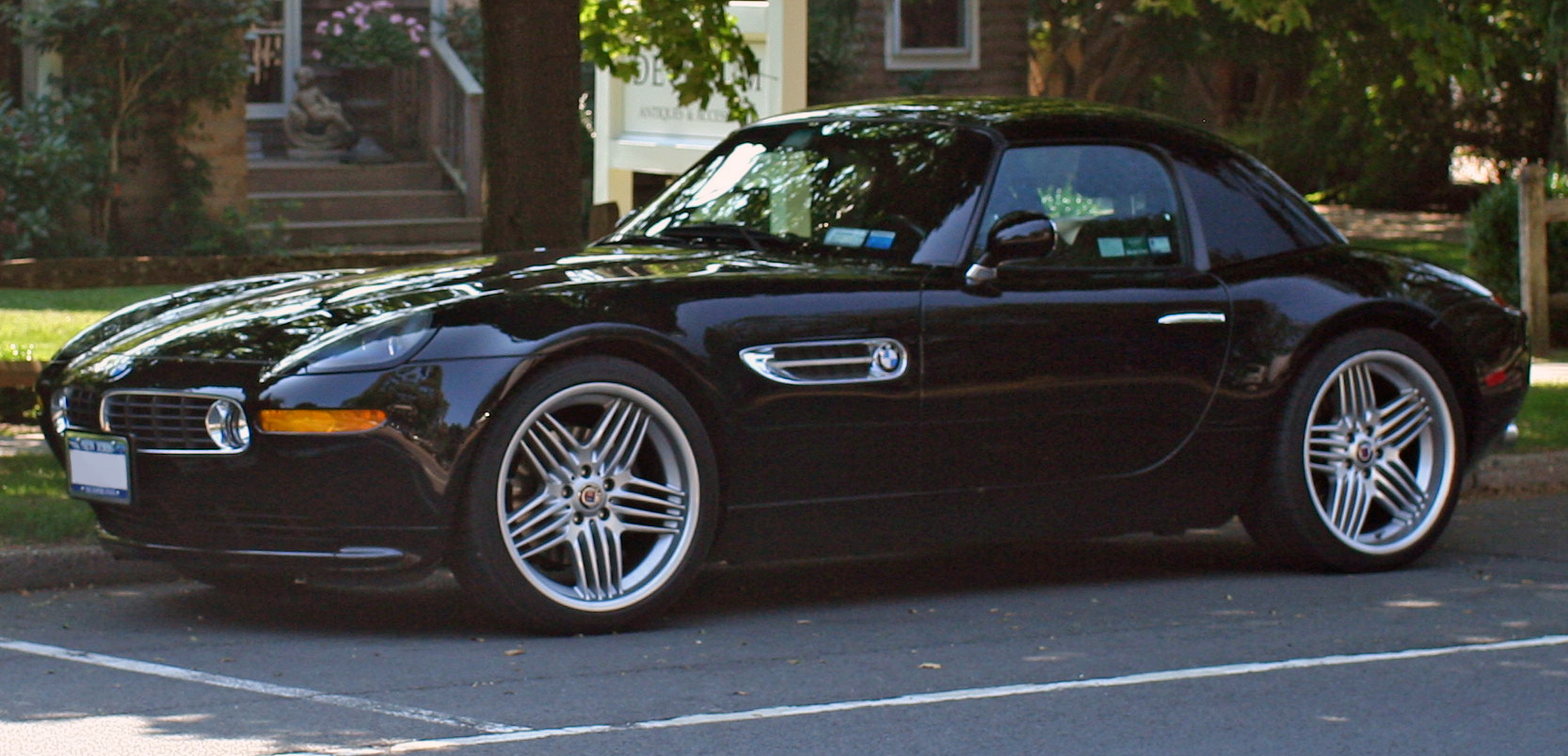
The Alpina Z8 is a BMW Z8 that has been upgraded by Alpina. Alpina is known for making cars feel more special and performance-oriented. The podcast mentions it because someone is searching for one located in Canada.
A big brake kit is an upgrade that helps the car stop better. Brembo is a well-known brake brand, and the host is saying this car had that kind of upgrade.
The out-the-door price is the real total you pay, not just the headline number. Auction fees can add a lot, so it’s important to include them when judging whether a deal makes sense.
Bring a Trailer is a website where car enthusiasts bid on cars online. The host is saying the car was bought at a high point in the auction market, which makes later pricing harder to justify.
A laser diffuser is meant to make it harder for police laser speed guns to get an accurate reading. It’s not a guaranteed shield, and results depend on the exact system and setup.
Some tickets can be handled by taking a class instead of paying right away. If you finish the course, the court may dismiss the ticket, but the details depend on your area.
An acronym is a short set of letters you memorize. The host’s point is that in a real emergency, you can’t realistically stop and remember a memorized phrase—you need instincts and practice.
R-U-A sounds like a memorized “steps” acronym from the course. The host is saying that when something goes wrong, you don’t have time to think through a letter-by-letter script.
In winter, washer fluid can freeze in the tank or lines. Anti-freeze washer fluid helps you keep your windshield clean so you can see, but it doesn’t replace good driving habits.
ABS is a system that helps your brakes work hard without locking the wheels. If your wheels lock, you lose steering control; ABS helps you keep control while braking.
When you speed up, slow down, or turn, the car’s weight shifts. That shift changes which tires have the most grip, and that affects whether the car stays controllable.
Oversteer is when the back of the car starts to slide outward while you’re turning. It can feel like the car is “spinning” around the front, and throttle/brake inputs can change how much grip the tires have.
Tires can only do so much at once. If you’re asking for steering and braking/accelerating at the same time, there’s less grip left for each, so the car can lose control more easily.
Threshold braking means braking as hard as you can without fully locking the wheels. It helps you stop quickly while still keeping the car pointed where you want.
RPM is basically the engine’s speed. Higher RPM usually means the engine is working harder, which can change how the car slows down when you downshift.
Road rage refers to aggressive or hostile driving behavior, often triggered by perceived threats like tailgating. In safety discussions, it’s used to highlight how certain responses (like slowing when tailgated) can escalate conflict rather than improve safety.
LIVE
Welcome officially to Switchcast season seven. I'm your host Doug Tabott here with my co-host
Tyler Sanders and we've got technical advisor Dan Doucette in-house and of course our international
executive producer Ethan Huffnagle. Switchcast is the podcast where we say the quiet parts
out loud. I don't know who put that in there, but that's funny.
Was that you?
I don't know. I was reading prep and I was like, wait a minute, who put that? We're an
atypical automotive show that talks about all things automotive, not just technical
details on cars. In fact, I try to avoid technical details on cars because I'm often wrong.
It's easy to not be called out for being wrong if you don't give specific details.
You know, we get into that later on. A listener contacted me and well, what are they still
a listener? I don't know.
Still a listener, not a fan. If you do enjoy this podcast, please help us out with the
algorithms like subscribe, share, review. It all helps us out with the AI stuff. It helps
purely organically and that is thanks to you as the listeners and we do recognize you have many,
many choices with your time and your brain space. I guess we're not really adding to the brain
space because it's not like filling the void.
No, our listeners don't have voids. I'm saying we're not so, so heady that we're like, oh,
yeah, I got to, I feel like at our age, you have to move things out in order to add new
Oh, 1000%. I have to write things down if it's like something I have to do so I can clear
space in my head to like think about other things.
We're the podcast that is in one ear and out the other and you'll enjoy the the moment.
Yes, we're we're all about living in the moment here on Switchcast.
But also we're here to edify, educate and entertain. So warm up lap because if you are racing, you
must get your tires and your fluids warm first before you before you go 10 tents. Try to set that
track record. And of course, we do that here as well. Get our get our practice jokes out early.
So let's start with what is fueling this podcast.
Alrighty, so we've all got Manhattan's or a riff on a Manhattan here tonight. I had this at a
place called Lucky Day in Buffalo, New York. It is a non traditional Manhattan, but it's a very
citrusy. It's got a an aperteef similar to a vermouth called Bonal. It's got a citrusy Amaro
and some rye whiskey in it. So cheers, boys. Cheers. Another pre episode of season seven.
Excellent. Very smooth. So good. Very smooth. A little bit sweeter, even than a sweet Manhattan.
It's it's quite sweet. I do think I need to cut the Amaro slightly is not a sweet is an old
fashion, though, which I think is a little too sweet. Yes, quite good. Let's talk about events.
It is April. So car season is upon us. Oh, thank gosh, drove my car.
What? No, no, I'm just practicing looking at the camera as if it's on. No, you're going to be so
fired later. It's for our audio listeners. They know when I'm zoned in on the camera that isn't
recording. They can just feel it through their bang and Olufsen in their outies.
So what events are we doing this year? What events are good? I tend to try not to do the same
events year after year. You find ones you like, but also life is short. You want to experience
all sorts of different things. This year is kind of a repeat, though, is right after I said that
I'm not a huge schedule, but first event up is May 9. We are all meeting to bring our challenge
cars. We you've heard us talk about this on the podcast. We had three years to buy a car that we
essentially said this is our dream car. And I still haven't bought mine. So anyway, and if you're
patrons, you can listen to us talking about that last Patreon exclusive episode. And if you'd like
to sign up for Patreon, you can go do that at switchcast.live slash Patreon or patreon.com slash
switchcast. Either way, it'll get you there. So anyway, we all have to show up with our cars. And
before the event, we're going to do a public event. So if you want to come out and see what we
bought in our challenge and congratulate everybody, we'll be doing a Bailey's and coffee, which is
our friend, Bailey Walton. He hosts an excellent informal cars and coffee type gathering. And I
believe it will be at Heartwood Coffee in Hudson. We're going to aim for that to be determined.
Sure. Watch social media, social media here on the
podcast Saturday morning, May 9. The next event up that Tyler and I and our friend Tim from Tim's
enthusiast garage were invited to judge, which we always like judging. I love judging. It's the
Sandhills Motoring Expo in Pinehurst, North Carolina. That is Memorial Day weekend. So that's a new
experience for us. We've come to enjoy small market concor events, a little less crazy, a little
more fun, you can kind of see and do everything. So we're going to be hitting that up. Woodward
End in August. I'm tempted. I actually was sort of when we were all talking in our group chat the
other day, I was noting that day going, Oh, yeah, that's an awesome, awesome event. If you haven't
experienced a lot of hoity toity people haven't because Pebble Beach is always the same weekend,
but there is nothing like going up and watching everybody cruise and then late at night going up
to Pontiac and watching everybody street race burnouts, partying with cars all around. It's
pretty awesome. Yeah, it's a lot of fun. I'm going to take the Corvette up there and do lots of
smoky burnouts. Also, our friend, our friends at Platinum Motor Cars Detroit host a great party.
So we'll be like, that'll be our home base. So if you want to come shake our hands, see our cars,
whatever, that's right off of Woodward Avenue, like half a block. So come on up and see us.
Northville Concourse is another great event. Did that for the first time last year,
Mentor Judging. It's a small concourse up in Northville, Michigan that is run by our friend
David Kibbe and it's all young people started when they were in high school. Many of them are in
college now. All the judges are youth judges. So the adults are only mentor judges. We really
have no say in who's car wins. I mean, it's pretty easy to guide the kids and what. But yeah,
that's a really, really incredible event. I think it's only the fourth year they've done it.
The Northeast Ohio Region PCA and the Corvette Club are putting on their second annual
Porsche versus Corvette show where the Porsche P dance and the Corvette curmudgens
will judge each other's cars. And of course, the flyer is an AI made thing. Yep. It's so
of course. That's May 31st at the Malley's headquarters and on Brook Park Road.
Registration is at 10 a.m. The stop clean is at 11 30 a.m. So the average Corvette owner will be
there at 8 a.m. And I'm going to just show up with my dirty car at 11 29. I will also show up
with you at 11 29 because you went last year and it's it was a good time, wasn't it? It was pretty
fun. Yeah. And it's you know, pretty local. The Corvette guys definitely took it much more
seriously and I give them respect for that. Porsche people, they were just there. The stop wash
kind of kills me. Come on. Everybody car dusters down.
I kind of want to just show up at 6 a.m. with a chair and coffee and just be like, all right,
what is the earliest somebody is going to get just like people watch all morning?
Yeah, just take take a bet on like a over under on when the first Corvette guy gets there.
How many Corvettes will be there before the first Porsche?
We need Kevin Malone here. He'll bet on anything. We just have a whole yeah. All right.
Last one we're playing to do Hilton Head Island Concorde. That is Halloween weekend,
another small market event, which is really, really great. So anyway, some suggestions for
you. And if you have suggestions, we'd love to hear them events we haven't thought about,
haven't experienced yet. So an update on some of the things we've covered in the past. Pitt Race
formerly, well, it's formerly Pitt Race, formerly Beaver Run. The sale has been confirmed
to a data center company and it is disclosed as $50 million, which is less than the 100 to 200
million that was bandied about. I think we quoted 80 or 82 in our video. So we're close,
but we don't know what went on behind the scenes either. But anyway,
I think that and I don't I meant to look up this metric and I didn't apologize. I'm a failure.
Ethan can fire me after the show. Isn't that significantly more per acre than like land?
The land is actually worth still. So even though it's not a hundred million dollars,
like they way overpaid for that land. The land by itself maybe, but the racetrack as a facility,
not necessarily. It has been stated by some who know better than I do that there were other buyers
at or above that $50 million number that would have kept it a racetrack.
Oh, so then who I wonder allegedly. So it would have this been the owners made the decision
on who to sell it to, right? Correct. They made their privately owned rule.
But there may have, yeah, who knows what else, you know, 50 million for the land and
100 million for goodwill. That's taxed better. So who knows? The FTC has warned 97 dealer groups
about deceptive practices and is upping their enforcement on all prohibited practices,
including consumers everywhere will rejoice. One, advertising a price that does not include
all required fees. Two, advertising a price based on rebates or discounts not available to every
customer. Three, advertising a price that emits a required additional down payment. Four, making
the advertised price conditional on the buyer using dealer financing. Five, requiring buyers to
purchase add on products not included in the advertised price. Six, advertising vehicles that
are unavailable or do not exist. These are not new laws, but the FTC sent out warning letters to
97 different dealer groups recently basically saying, Hey, we see what you're doing, stop it.
Slap on the wrist. So of course, all the dealer associations and stuff have been
sending out notifications to dealers saying you need to make sure you are in compliance. The biggest
change for honest dealers because really number two through six don't apply to most dealers unless
they're kind of shady. Number one, the big question is the dock fee, right? Can dealers
add a dock fee over and above their advertised price or do they have to advertise the dock fee? So
auto trader and a number of other platforms are updating their software to essentially help dealers
be automatically in compliance with this. So hopefully you will see more honest advertising
and honestly, even as a customer, the dock fee doesn't bother me like from the customer side.
I know I'm a dealer, but when I buy a car, I'm like, okay, I know I pay a few hundred bucks for
dock fee, I get it. I really don't like the other really deceptive stuff that's like, oh,
this car is for sale for 34 grand, but it's not really. You have to, it's 34 plus a $5,000 down
payment and you're going to finance the 34 grand and or you have to trade in a vehicle or whatever
and they won't actually sell you the car for the price that's in the ad that chaps.
Yes. Is it just a waste of your time?
Correct. Correct.
Smission from a loyal listener, Connie, this is a fatal crash on I-90 in Cleveland.
A Corvette C8 was traveling apparently at a very high rate of speed as it split in,
says in two, but it looks like it was a pie chart here that split up.
Anyway, it landed in a grassy embankment. The driver was unalived and the crazy part is
after they blocked off lanes for the accident,
somebody ran into the fire truck that was blocking the lane. Again, like how many times
have we covered this that people running into fire trucks and emergency vehicles that are blocking
the highway for an accident and I looked at the photo of the highway. It wasn't like a blind
corner or whatever. It was like eight fire trucks, lights everywhere and it was clear,
straight road, line of sight. I'm like, what are people doing? What are people, is that serious?
I've actually seen it now, just sort of knowing a little bit about fire trucks. Over the past
couple of years, some large fire departments in the US have started to actually dedicate trucks
specifically for blocking roads and highways. That's their only purpose. Like old trucks that
are out of service or whatever. Makes sense, better than putting a million-and-a-half-dollar
truck out there for the sacrificial land. That was not a thing even like five years ago.
I just feel like that shouldn't, the fact that we even need to consider the folks that are
doing the difficult jobs to protect and help people need to think about this kind of crap.
Yeah. Well, it is what it is. Our Patreon topic tonight is best driving music.
It's a spicy topic, spicy conversation. We started talking about it a little bit.
Yeah, it wouldn't think it would be, but it is.
You might have thought it would never happen, but Switchcast is endorsing a transport company.
Whether you're moving a rare collectible, a high-end sports car or your personal luxury vehicle,
Shaughnessy Overland Express delivers with precision, privacy, and respect.
This isn't just transport, it's white-glove care from pickup to delivery.
For over 14 years, they've earned the trust of collectors, enthusiasts, dealers, and owners
by offering unmatched service and personalized attention. You'll work directly with their
experienced in-house team, ensuring a smooth and private experience without middlemen or surprises.
Every shipment is protected with up to $3 million in cargo insurance,
offering peace of mind for even the most valuable and rare vehicles on the road.
In addition to their enclosed fleet, they've also established a trusted auto transport brokerage
service, giving you access to a nationwide network of vetted, open, and enclosed carriers.
Whether you need transport on a route they don't currently operate or their carriers are at full
capacity when your schedule demands, they'll still get it done without compromising the Shaughnessy
standard of excellence. Same professionalism, same personal touch, expanded flexibility.
We are proud at Switchcast to endorse Shaughnessy Overland Express as the official
transporter of Switchcast. Visit soexinc.com and tell them Switchcast sent you.
Our main topic tonight was going to be a very hot article right now,
which is where a trucker stole a Porsche GT3 to run errands. But
I'm still doing my research. We are waiting on the report, the police report, from his arrest
because I want to actually research the trucking company because this is of interest to us, right?
99, no, 100% of these trucker thefts I've found could have been avoided with simple proper due
diligence that brokers and people booking transport are not doing. Because we could have
just said, oh, this is what happened. And that's what every other article out in the news is.
It's, you know, two paragraphs of nothing. This guy did this and he did that and he got arrested.
Okay, big whoop. We want to actually dig into it from our perspective as transport industry
experts because that's what we talk about a lot on this podcast. So that's going to be next week
with some great information and proper research. Instead, we are going to talk about this
pretty crazy article. Original article is from Oregon Live, the Oregonian,
man guilty of shooting 10 Portland traffic cameras vowed to, quote, destroy the eyes of
extortion, end quote. So Chase P. Grijalva ex military was sentenced to two years in prison
for shooting out all of these traffic cameras. And apparently he believed that he was waging
a holy war against the all seeing eyes of Portland's automated traffic enforcement system.
And police found a handwritten manifesto replete with biblical references inside his apartment
after his arrest, which I find, well, that's that's odd as as a
Bible follower, but also one who doesn't like speed cameras or speeding laws in general.
I'm not sure I can identify with this guy at all. There's nothing in the Bible that says
if anything, it would condone the Bible says you should be obeying the speed limit or governing
authorities or whatever, you know, to avoid consequence. But you know, I'm an outlaw,
I can't help speeding and feeling oppressed by by speed. I just can't help it. I just can't help it.
Anyway, so but in in the comments section everywhere, he is being hailed as a martyr and
a hero and just being lifted up as a, you know, the the the savior we all needed, not all heroes
wear capes, all the things you could say this is this is definitely a cultural moment here.
Does it accomplish anything, though? Like it gets a lot of I guess nothing that really
goes viral accomplishes much anything. It's relevant here because I've just been reading in
our favorite book on the podcast Why We Drive by Matthew Crawford. I've been reading I was
literally at the chapter about speed cameras and automated traffic enforcement. And this book was
written five years ago. And here's one of the paragraph speed cameras are getting destroyed
around the Western world, not an haphazard acts of vandalism, but in something that more closely
resembles a political insurgency. And it's certainly an interesting point because it seems
like traffic cameras are not about safety, they're billed in the name of safety, but it really is
about revenue. And I think that's why this guy who destroyed these cameras being hailed as a hero.
Back to the book. In fiscal year 2016, the District of Columbia took in 107 million
from its photo radar traffic enforcement cameras, throwing red light cameras and parking tickets
in the figure comes a 193 million, accounting for 97% of all fines and fees collected by the city.
The rationale offered by the police is, of course, safety.
But he goes on to talk about how studies have been done that speed limits are artificially low,
which any cannonball or or car guy in general will agree with anecdotally. But there's actual
studies that are done by people who are not invested in the outcomes will say like the
insurance Institute for Highway Safety, that is not a neutral party. And police departments
certainly are not neutral. So there's, there's been independent studies done that say that
speed limits are way way too low, artificially low. I can help myself from speeding. I don't have
your affliction. But even I feel that so many speed limits are just it feels like it feels
like I'm trapped sometimes. Like sometimes I think it should be a 35 and it's a 25 or,
you know, 45 versus there or whatever. It's like we're one notch too low on what feels
appropriate. And there was some interesting points a long time ago. Matt Farah did a lot of
discussion around like he had some people on the podcast or like civil engineers or whatever.
And it's like if you narrow the lanes in a road, it actually like there are things like narrowing
the lanes or adding potholes, which Ohio does every winter. Yes, that's very effective. But
there's other stuff that you can do that can make it feel that you'd like don't want to speed.
Correct. Like and you ran into this when you were in Scotland where it was like, yeah,
the max speed is 60, but good Lord, I don't want to go that fast. That doesn't feel safe.
Right. And it's like that's where it's as with everything with speeding, it feels like we're
attacking the wrong thing. But the inverse of that is true because we have 14 foot wide lanes
on the highway. We have three of them at minimum typically, and they're smooth. Yeah. And people
still can't stay in them. Well, good gravy. But yeah, you're right. It's like it just welcomes
you to go faster than even if it's not going 150. It's like maybe it's going 90 in a 70. And like
that just feels right because of the condition of the road, your the distance you can see.
And you know, it's not like we're working hard. It's just feels right. Yep. And then
red light cameras too. So that's all part of the automated traffic enforcement system. We've
all seen the studies that show that talk about the amber light duration and how the
red light cameras are placed at intersections, not where they have a high rate of accidents,
but where they think they can get the most amount of tickets. And there's been
scandals where they found that they have actually shortened the amber light duration,
such that they can get more tickets. And they found that accident rates went up at those intersections,
not from people running the lights, but from people trying not to get tickets and then getting
re-rendered. So they say it's in the name of safety, but there's concrete data that says
red light cameras cause accidents. There's more accidents there. And it's about revenue. So
you could argue the same thing about these speed cameras. And I think that's why people are so
up in arms about the speed cameras that are out there inhaling this guy as a hero. Now,
I don't advocate doing what he did, especially not with a firearm shooting up in the air. Like,
if you miss, where does that go? That's a problem. That's something so many people don't think about
is like, it doesn't just evaporate like that falls somewhere. I mean, maybe if he's using
buckshot, then okay, that's more safe. But I love this quote from the book.
Sometimes rules are deliberately formulated to be at odds with reasonableness by parties who have
an interest in the conflict this creates. And I think that's how we all feel generally about
speed limits is we go, these speed limits don't make sense. Even if you're a person who's like,
yeah, I obey the speed limit because it's what I should do. The stats say that 50% of the time
people are going more than 10 miles an hour over the speed limit, not just a little bit
over more than 10 miles an hour over. And only 10% of speed limits have greater than half compliance.
One in 10 speed zones have better than half compliance. So like, speed limits don't make sense.
And they obviously don't work like that. Yeah. And when you automate, when you take the,
you know, say what you will about the ability of a police officer to decide with discretion who
gets a ticket and who doesn't, at least there's some argument for reasonableness. You could,
in theory, make the case to a police officer, okay, well, I'm going 72 and a 60. And that
semi truck that weighs 80 times more than my vehicle is going 68. You didn't give him a ticket,
but you're giving me a ticket in the name of safety. What is really safe for me going 72?
And I can stop in half the distance that the semi can.
Yeah. Or the semi technically obeying, or not obeying, but within the discretionary threshold.
So I can make an argument that speed, the automated traffic enforcement is
like more fair. But it really isn't. And that's only if the speed limits are reasonable to begin
with. And if they're unreasonable, then the whole thing is a wash. Well, and I think something too
that I think is a negative of the ways that we try to enforce or control how people drive is
really apparent in school zones to me. So in a school zone, obviously I'm slowing down because
there's potentially children around. If the school is near the road and there's potentially
children around, not the ones that are half a mile back in the woods. Also, well, that, yes,
that's one thing. But the other thing is what I find myself doing that I didn't notice until
something pointed it out to me a couple of years, some podcast or YouTube videos watching,
I'm paying more attention to the speed I'm going to make sure I'm not accidentally speeding than
I am paying attention to the road in front of me. Because there's oftentimes a cop camping out
for the safety of the children, which I'm all for as long as the children are by the road.
But like, I should be paying more attention to the road in front of me.
Not, oh my God, I'm going 22, I might get pulled over.
What if we just had, hey, it's a school zone, pay attention. How about a no phone zone that
will drive the same speed? Put your phone down. Oh, my God, they're they're gun free zones in
schools. You know, let's make it a phone free zone related to this. Well, we got a text message
from our friend Tony K, another podcast guest occasionally. And he sent us a picture which
we'll put up on the video of what was this Dominican Republic's version of silencing or
making ineffective speed cameras. So there's apparently harsh penalties for destroying them.
Vandalizing them. A lot of people spray paint over the lenses. And so in order to get around
these penalties, what people did was this giant ring toss with tires over the camera pole. So it
just stacked them up, rendering it ineffective. So they're not vandalizing it, they're just
rendering it ineffective. So I, I'm all about that. I think that's very, very creative way to
stop the silly speed cameras. And it's much safer than shooting it. Oh, yes, absolutely.
Let's see. And another article on car and driver, this is new Colorado's new speed cameras can't
be outsmarted by way. So we knew this was coming in our dystopian society at some point. The Colorado
DOT is now installing time speed distance cameras. So they're taking measurements in
between the cameras. So of course, you can't just be like, you know, your ways or your radar
detector, oh, camera's coming up, I'll slow down and then get by it and speed up again. This is
taking your average speed over a certain point of time. So there we go. Officer, I'm sorry,
I had to speed up. I just needed to pass a lot of people that were going very slowly and it
threw off my average time. I just pulled over once for passing somebody. Have I told you that
story for just passing somebody just passing somebody on a road that was 55 miles an hour,
they were going like 45. Okay. So I sped up to, I don't know, the cop says I was going over 70.
I don't know necessarily that I believe that. But if you're going that fast, you kind of got
a scoot to get around somebody. Sure. And they were going very much below the speed limit. I did
not get a ticket, but the cop said, even though I was passing when I go that fast, I'm a part of
the problem. And it was really tough to like choke that down a little bit. I was like, bro,
what are you talking about? There's nobody here. It was like 830 AM on a Sunday morning.
And he just happened to be pulling out of a like street that was right there.
It was ridiculous. I was like, man, he pissed in your Cheerios this morning.
Part of the problem. It is. It is the unassailable moral high ground of safetyism.
Once again, quoting Matthew Crawford. That is a very good book. The middle bit needs
to be taken out. I think there was I got bored in the middle. It kind of went off on a tangent.
He said too many things that weren't relevant. But then at the end with the speed cameras,
it comes comes background. Well, let's get to the shrewd negotiator. We had an interesting inquiry
to switch cars this week directed to me from a fan of the podcast. Well,
a listener anyway, he may not be a fan anymore as we alluded to earlier. Anyway, I don't think he
expected me to have the same level of snark in real life that I do on the podcast. Oh,
do you all think this is an act? This is just us. So he had a Gyro Superlegion snark. I just
noticed your hat up and so distracted. Damn. Yes. And I made him an offer that I it was
I don't know, whatever. My opinion and it was it was fair for a dealer offer. It was higher
than literally another one I could buy right now. But it was low in his estimation and that's fine.
Everybody's entitled to their opinion. But he was basically trying to say that
because the strada he was asking me to look at the stradale and scuderia market, which has gone
bonkers lately, whether it's market manipulation or people just all of a sudden deciding that they
love these cars when they didn't last year, whatever. But he said essentially like the
the Lamborghinis are worth way more because look at what the Ferrari market is doing.
But what are the Lamborghinis selling for? And I said, okay, like an Enzo sold for 15 million,
but that didn't make my Diablo six liter skyrocket in value. And so I was essentially
using his logic back just with hyperbole, which he did not appreciate. I don't think maybe he
didn't understand hyperbole that I thought I was being like super literal, but I feel like it's a
fair response. So he said that my consistent response was my comparisons would score low on
an IQ test. But his of comparing one car to one entirely different. Well, the Gallardo Super
Leger is not entirely different than scuderia. Well, it's a different brand. It's a Ferrari has its
own orb. They do. Well, because you could consider like a 996 GT3 RS as similar to a scuderia,
and those values are dramatically different. Like,
Correct. Ferrari is often its own place. Yep. So,
Yep. Yeah. So I mean, it was all basically to say like, you can't use a Ferrari market.
You can say the Super Leger should be worth more because look at what Ferraris are doing.
And the Super Leger is every bit as special, if not more, because it's more rare.
But I've been saying the Aston Martin market should be higher for years because of its
comparables, but it isn't. It doesn't make it more desirable, like the market is what the market is.
But anyway, I was proud to say, though, I've never gotten a low score on an IQ test because I know
he was directing it at me. It's not my comparisons. I was the one that would score low on an IQ
test, but I've never taken one. No. Oh, hey, yeah. No, that's how I've avoided that. Yeah.
Yep. Anyway, well, did not get that deal done. So I mean, I still listen to people can't just
come back and say, here's what I want for my car. And I can say yes or no. It's because they're
lacking confidence because they feel like they need to validate it and they're reaching for the moon,
which what I don't understand, I will never get this is why you would reach out to a dealer to
try to sell your car and expect to get retail or above like some magical number. You know,
why is because most dealers are paying retail because this is the problem I've expressed for
years is I say my business models, I pay $4 for $5 bill service and recondition and sell it for
$5. That is the wholesale to retail market. However you slice it, whether it's watches,
whether it's cars, whether it's clothes, you pay less than it's worth, you pay wholesale
in order to bring it to market retail and sell it for retail. I have a bunch of competition
that's paying $6 for a $5 bill because they think it'll be worth seven tomorrow or because they're
buying all of the $5 bills and then just marking them all up to seven and thereby going, well,
you have to pay seven or you can't get one. If I don't do that, people then think I'm an idiot
because they're like, well, think about what will be worth tomorrow and tomorrow they call me and
say, you're an idiot because look, I was right. I'm like, okay, but I wasn't an idiot yesterday
because that's what it was worth yesterday. Yeah. If you bought everything on speculation,
you'd be sitting with a warehouse full of cars and you can't then cycle inventory. You're not
thinking about, you're not playing a market, although it seems some dealers might be.
Well, and it works when it works, but when it doesn't, it goes horribly wrong. And I've seen it
go horribly wrong twice in my 21 year career. That's a short span of time to see things tank
massively twice. And then you're buying a $5 bill for like $6 or $7 and spending another
on reconditioning and it's worth like three or four. That math don't math folks.
Imagine two identical vehicles, same year, mileage, options, color, and price. The only
difference, one of them had $15,000 in collision repairs. Which one would you buy? The undamaged
one, of course, because a clean vehicle history preserves value. That's what diminished value
is the loss in your vehicle's value after an accident, even if it's repaired perfectly.
Supercarclaims.com can assist owners nationwide in the recovery of diminished
value and loss of use due to the negligence of another party. When it comes to exotic,
collectible, and high end vehicles, damage history can significantly reduce resale value.
Don't let a dirty vehicle history cost you. They're not just lawyers. They're car enthusiasts
and collectors fighting for your rightful compensation. Supercarclaims.com. Free consultation,
performance based services. You don't pay unless they win for you. Nationwide assistance available.
Call 1-888-5-Million. Attorney advertising. Each case is different and must be judged on
its own merits. Prior results do not guarantee a similar result or outcome. Cases may be referred
or co-counseled dependent on the nature and venue of a particular case. The choice of a
lawyer is an important decision and should not be based solely upon advertisements.
Gordon and Partners, Palm Beach Gardens, Florida.
After we finish, I found three more vins of interest for you. Two Canadian
Topaz over Kramma and one U.S. Stratus over Kramma. So we can... There's three entries on Epic
Vin for the Stratus car. I had a response to... I've chased multiple Z-8s this week.
Dead ends on all of them. I had a response from Canada today. I posted a story, said I'm looking
for Stratus or Topaz Z-8. And somebody messaged me and said, I have one in Canada. I'm like,
great, what color? And I found it on his website. I'm like, that's silver. Oh my god. You've had
that happen multiple times now. I really... I held the snark back. I wanted to be like,
that's not Stratus or Topaz. That's... That is... In your stories, you specifically need to do
in parentheses, not silver. No silver, no black. I've done that. I don't know, whatever.
So we'll see if these lead anywhere. I'm really hoping the Stratus does because it has three
records on Epic Vin and the last mileage is 20,000. Sweet. So we're like heading in the right
direction. Sweet. I looked at a... Somebody messaged me from Florida. They said, I know the car.
Because I said, I want mods, miles are great too. Topaz on Crema had a Meiszerschmitt exhaust.
A Meiszerschmitt. Whatever. I don't know. Is there exhaust like that?
Isn't that a plane? There's a... Eisen Schmitt. Meiszerschmitt made planes. And then they made
cars too. I'm literally googling just like lots of T's and S's and N's. I don't... Meistershaft.
Barely know her.
You should really muffle that one.
Crema mods, Brembo big brake kit, blah, blah, blah. 28,000 miles. I'm like, that's my car.
Tell me how much. And then I found out how much and I was like, never mind. So he bought it at the
peak on bring a trailer. Oh no. So he paid 368K with fees and spent 100K on upgrades and redoing
the interior. I don't know why he put new leather in a 27,000 mile car. But anyway,
like so he's in this car like 475,000 for a Z8. And I'm like, ah, unless the guy's willing to
take like a 50% bath, like I'm not your buyer. And like the last four Topaz over Crema cars
in the last 24 months or 12 months or whatever have sold between 200 and 300. So like there's no
rationale for why that course. I was just bummed because I'm like, this is my car. But it's not.
So speaking of speeding, right? I didn't plan this this week, but it just happened this way.
Talking about speed cameras, but I got a manual speeding ticket by an officer of the law recently.
And you know, I've got the radar detector. I've got the laser diffuser, you know,
eagle eyes for spotting police trained. But when you pass a sheriff on the highway
at 90 ish and continue to go that speed. Did you those devices don't work? Did you
know it was a sheriff? Yes. And you just decided to send it. I'm gonna test this guy. I'm gonna poke him.
Okay. My rationale is police are real people. They don't like, they don't go the speed limit,
and they don't like being stuck in the speed limit. Honestly. Correct. So he was cruising 75 ish,
and I came up behind him at a fairly high rate of speed. He was not running radar, but I'm like,
he saw me come up behind him. So pulling him behind him is literally just admitting guilt and
trying to pretend like I wasn't doing anything. So I'm like, I'm gonna be real and I'm just gonna
slow down slightly and then pass him. And I got past him a bit. And like he was cruising in the
right lane, not the left lane, like most cops, and he would like pass a couple other people and
he was staying probably a half a mile behind me. I'm like, well, I'm just gonna go the speed I'm
gonna go. And then he caught up to me and pulled me over. Oh, he's like, I was doing 90 and you
were pulling away, which is not true. That was an exaggeration. But I'm like, okay, whatever,
you're pacing me from a half a mile back or a quarter mile back. Like, yeah, this isn't going
to hold up in court, but I'm not going to argue with you anyway. But I don't like anything about
me a ticket. And I called the court and lo and behold, you can do a driver safety course to
get your ticket dismissed. Oh, which I did I opted for the remedial course. Would you have
rather just paid the ticket? Yes. Yes, the last one I did was not too painful. It was wrong. There
was a lot of bad information in the last one. But there was far more in this one. And of course,
they have all these like things built in to make sure you're not just like playing it and walking
away. You have to like actively click on buttons on the screen like my IT training at work.
But they read everything to you and it takes them a very long time to read the slide to you.
Can you pick up? Is there an option like speed up the video or whatever?
And you can't click next until they're done reading. Yeah, those are the worst. And there's
probably half an hour at least over the course of the course, where if you added it up all the
different times they explain like here's what you're about to learn. Or here's what you need to do.
Like you have to click this and you have to like they gave me the same instructions before
each quiz and you have when you're done, you have to click next and it was like a minute each time
of just wasted, but they'd read this to whatever. Okay, so what? What? So this is supposed to be
a defensive driving course, but it is literally the most basic level of common sense on the planet
when they're right, which oftentimes they were wrong. I mean, I felt like I was 12 years old
taking a pre driver's ed course. Did they also show you pictures of car wrecks and people?
Yes, it was like a you should be scared of driving course. Everything was dangerous.
Everything. I mean, to be afraid of driving, all I have to do is be in traffic with like any
fraction of the population. Now they wanted you to be scared of yourself. For instance,
if it is bad weather, their advice was that you should not drive unless absolutely necessary
and you are capable of driving and said weather. Well, like what's bad weather?
A rainstorm? Anything that is the tornado warning I drove home from from here once last year.
That was a bad time. I don't recommend it. See, I agree. You shouldn't unless you're capable of
driving. I love for everybody in Cleveland to stay home when it snows because 90% of you can't
drive. Seriously. But let's teach everybody how to drive. Let's make us capable and confident
instead of fearful. That is one thing I really dislike about the approach to this is that you
should be teaching skills and how to become a better driver. So you are prepared for some level
of an interesting situation you didn't expect. They said that this course was giving you the
skills. They said you will have the skills you need at the end of this course. I'm like,
it's not skills. It's head knowledge. There's all these acronyms you were supposed to memorize
like R-U-A for react, understand, apt, or it was like the Michael Scott thing, apt, react.
And I'm like, in the middle of an emergency situation, I'm not going to be going, okay,
R-U-A. You have a quarter of a second to decide what you're going to do and know what to do and
how to do it. Well, there is so much that the body can learn with the feeling of a car. I'm
not a race car driver, but I have been on track a couple of times and I've played a bunch of racing
sims and it is so much easier to drive on a track than it is in the racing sim because you can feel
the car moving around you. The amount of stuff that I don't think any of us truly think about that
is more of an innate reaction that comes from being experienced in driving.
Embodied cognition. Is that what that's called? I like that. It sounds way more fancy than whatever
I was saying. Absolutely. So here's some of the awful stuff that this government endorsed
defensive safe driving remedial propaganda course said. To make sure you can safely drive in bad
weather, you should make sure that you have anti-freeze windshield washer fluid.
Isn't it all? No. Oh, really? You can buy like summer? I don't know. I just like water in there.
Oh, I just buy the jug of the bright blue stuff on the shelf and don't think about it. That doesn't
make you safe. That just like, I mean, I guess ability is important. It's hard to drive if you
can't see, but okay. Next. In order to recover a slide in a car that's not equipped with ABS,
you should one, ease off the accelerator, two, steer in the direction you want the front end
to go and three, pump the brakes. That won't. So you're causing weight transfer? Yes.
To the, oh God, that would be to the front, right? Yes. Well, one, you shouldn't really be causing
any weight transfer when you're already at the limits of traction, although advanced driving
says you should not ease off the accelerator. If you're oversteering, you should slightly add
acceleration because it transfers weight to the rear and gives you a little bit of grip back.
But let's just take that out of the picture and say we're going to go with a when in doubt,
both feet out principle of don't do anything to the pedals because you need all the traction
available for your steering. It's a traction circle principle. The more you do with your hands,
the less with you do, you do with your feet and vice versa. No, you should pump the brakes.
Let's upset the car. Well, yeah, all that's going to do is make you like, like threshold
braking, if anything, is where you should be like, not when you're in a slide. Correct. Yeah.
Because you should be not. You should never pump the brakes in a non ABS car. You should
brake to the point of where they would lock up and hold them there because that is your maximum
braking efficiency. Well, and what do they mean by a slide? Do they mean a slide in the winter,
like when you can't stop and ABS naturally kicks in? Or do they mean you're like initial D like
drifting around a corner? The way it was phrased, it would be an oversteer scenario. Okay. But
yeah, let's see, driving uphill and downhill are considered difficult according to this curriculum.
I'm not kidding you. One thing you should do, one thing you should do when driving downhill
is to consider downshifting your vehicle. If I hand on the Bible, this is what they said,
if you're not sure at what RPM to downshift, consult your owner's manual.
While you're driving, baby, well, let's let me rip this bad boy out and see what
so everybody's driving an automatic, like you can technically downshift. They know that anybody
driving a manual doesn't need to take this course at all. But yes, you should open your glove box,
pull out the owner's manual and see what RPM you can downshift. I know that they mean that before
you drive, but it's phrased in a way that seems really dumb. If you have to, your owner's manual
doesn't tell you what RPM to downshift, it tells you what fuse to change. Like it doesn't have that
information in there. It's how to use the car's functions. Bits and bobs. Okay, quote,
you are driving the posted speed limit and a car is tailgating you. Your appropriate defense is to
slow down. Wait, that's actually what their correct answer was? Yes. That is actively like not what
you should just maintain your speed, if anything, right? Or if like nothing else, maintain your
speed. Right. Well, but they say no, because everything literally every hazard has slowed down
as part of the answer. So that is considered a hazard. So you would slow down, which is going
to incite road rage by the person behind you. That is going to do nothing. Everybody's kind of got
a gun right now. So you know, it's not funny. It's kind of like I don't actively don't want to
participate in road. Your appropriate defense is to slow down. Here's another thing they said. So
use a three second rule for following people. Not two seconds. Oh, not if you drop like some
of your sandwich on the floor and you're like, no, it's five seconds. Oh, that's right, Dan,
sorry. That's right. You shouldn't be eating a sandwich while driving. Especially not a big
Mac or if you're going to eat slow down. Right. Yes. So you should be driving behind people
three seconds for every additional danger, you should add one second to that. So if you're driving
behind a semi truck, can't see around them at a second, if it's raining, limited visibility, poor
weather at a second, if it's a construction zone at a second, but these are cumulative. So in one
scenario, they just said, okay, well, you're driving in bad weather and limited visibility
through a construction zone, you should be six seconds behind the car in front of you.
Anybody out there, go try that. Try being six seconds behind anybody. It is an eternity.
I just had a rental car for a business trip I was on and I set the like radar crews
controlled to the closest zone and I think it was three car lengths behind every car in front of me
and that was almost kind of dangerous. Yeah. Because the amount, especially with the like
field of view that they have, somebody would be in the lane moving out of my way and I would still
be like the cars like pulling me slower as I'm like kind of catching up to them, even though
they're essentially out of the way and it like caused people like kind of really run up behind
me like that's dangerous. Right. They also say that if somebody is tailgating you, you need to add
the following distance ahead of you to account for the three seconds that they're not maintaining.
So if somebody is tailgating you, you need to be following the car in front of you six seconds
because the car behind you is not because they need extra stopping time, which I'm like,
and rush hour is considered a hazard, heavy traffic, so you need to add a second for rush hour.
I'm like, you can't, you literally can't because eight cars will get in and you will never have that
like. You never get anywhere. It is our close following distances in rush hour ideal or safe.
No, they're not, but you can't do anything about it because if you are three seconds behind the car
in front of you in rush hour, you in half a second, there will be seven cars in between you and them.
Also, why is the solution to hazards to do math to like take your focus away from the road? Think
about like, oh, what's my fault? Let's count this. Let's just like look at the owners. Oh, yeah,
consult the owners manual. Yes. Have you ever woken up with a sore neck? You should go see Dr.
Hoover at Soul and Spine. However, according to this course that we're going to plate to
sample, I quote, we are going to play to sample at some point. Yes, we will get there.
Defensive driving techniques for drivers with limited mobility. You should drive vehicles
with power accessories such as windows, steering and brakes. Can you?
I think this course was, somebody said this course was written by AI. I'm like,
this course was written in 1987. Yeah, no, no, my, my thoughts is this course was written by
someone who is reading a textbook from 1972 and updating slightly. Yeah, and updating slightly.
Aren't like hydraulic assisted brakes, power brakes, technically. So we're talking about like,
if your pedal directly applies to the shoes inside of the drum, like, go ahead.
I don't know the last time I did. They didn't make power brakes.
Did I ask you how you need to like adjust the choke in your car? No.
Number two, if you're joking, driving techniques for drivers with limited mobility,
wear seat belts. Number three, should be doing that all the time.
Sit on a cushion to make the seat firmer and more comfortable.
Ah, yes. So that you're at a different thing was so when you get into an accident,
in the airbags maxing in the face here at like,
techniques for drivers with limited hearing include ask passengers to speak at low levels.
So we could never ride with Mark Spence for drivers with reduced vision.
This is, I swear to God, this is what they said. Turn your head completely to check and
recheck blind spots. No, I guess keep your head forward and check your dang mirrors.
You should never be turning your head completely and definitely not multiple times to check
your blind spots. It's literally something that you are in the motorcycle driving course.
You will fail if you do that because guess where your hands go.
The way you're looking. The way your eyes go. So if you're riding a motorcycle and you turn
your head around out of your margin. Yeah. So plus you lose visibility up front,
like that second that you're doing that, if somebody in front of you does something,
you can't react. So your mirrors are very important to have adjusted properly. So you
aren't turning your head around. I think not looking at a road is a hazard.
Producer Ethan has. No, I just, I remember in my driver's ed course,
they talked about the same thing that you should, that's, they said that's why they
call it a blind spot is because your mirrors don't, you can't see it in your mirrors. It's
truly blind and you have to turn your head and look out like your rear, you know, the trunk
window, the passenger side window to see what actually is back there. And you have your mirrors
properly adjusted. There should be very, very minimal if no blind spot. Sure. Also, you should
be paying attention as you're driving down the road because you will know by checking all of
your mirrors consistently what is around you. Correct. It's a good failsafe to like maybe like
to check your mirror, obviously, but you should know what's going on around you. If you're driving
a U-Haul and you can't see in your rear view mirror. Well, that's ascending.
That you just park in the left lane. That's, that's what you do with a U-Haul.
I park in the right lane because I'm, I mean, there's something to be said for a glance using
your peripheral vision to see. That's what I do. A slight glance. I dip my head. You should not turn
your head completely and definitely not multiple times. Let's see. When two vehicles approach
a stop sign, here's a quiz for you guys. When two vehicles approach a stop sign, who has the right of
way? It's the person who was there first or the person most to the right. When it comes to right
of way, the fact is no one has the right of way. Traffic regulations only stote state who must
yield the right of way. That's not going to be pleasant for the audio. What does that solve though?
What exactly that instruction? What is that? Because you're supposed to just wait. Like you just,
it's pleasant, pleasant bill. You just wait. You just, everybody yield to everybody else.
It's just a cold war. More than one person in an intersection is a road hazard.
The hilarious thing is once I completed the course, I emailed the court to say it was done
because I was like, Hey, do you get like an electronic certificate? No, we don't.
And she responded, okay, we'll just mark you down as completed. I'm like, really? Were they not
tracking your, did you have to log into this portal? I did. Yes. Yeah, they know somewhere.
No, but it's, it's a different company that I get sent to. Like I'm no liar, but was that all I
had to do was just be like, yeah, I finished it. All right, that brings us to plate to sample because
you know, a cop runs your plates when he pulls you over. So if you have a great vanity plate,
does it match up with your personality and tell us what kind of car you have? We are going to find
that out. The name of the game is that we read off a vanity plate and the co-host has to guess
what kind of car it's on. This game was given to us by Dr. Hoover of Solon Spine. So Tyler,
while I am finding my folder, you go first.
Alrighty. N-I-T-E-V-X-N. Knight Vixen. Knight Vixen. I feel like that's a black Volvo. I don't know
why. Who? No, this woman woman of the night does not drive a Volvo. Oh, is it a pink Mercedes?
No, that would be way more accurate. This is a Toyota Crown for some reason, like the new
like kind of crossover sedan thing. I didn't like the first iteration of the Crown, but then the
one that's, it's a wagon. I'll call it a wagon. It's kind of okay. I do. I saw one of those
recently. I kind of did it. I appreciate that they're kind of bringing that back. It kind of helps
the body lines because just a sedan is like looks lifted. So if you add, it's like the Volvo XC60
or the sedan XC60. Ethan, how's it real quick? How's the camera time doing? I know this is a
longer episode. Are we good there with storage or heat or whatever? Okay. All right. All right.
This one from Ninersats. Ohio Plate, I am white. I'm white. Is this a Pontiac Aztec because of
Walter White? No. Dang. Is it a white car? No. Okay. Is it a Corvette? No. It's a blacked out,
murdered out Dodge Charger. Well, I think you needed to tell me a little bit of irony there.
All right. Next for you. We have RSK, RWRD, risk reward.
Oh, see RSK, I'm thinking like, oh, it's a Porsche 718 RSK or something or somebody with a 718
boxer that's like, you know, heritage identifying or something like that. Risk reward Chevy Tahoe
slash Cadillac Escalade. He's a real estate guru. No, I like that train of thought, but that is not
it. BMW 7 series. No, this person could probably be in real estate. Jeep Grand Cherokee. Nah,
you're drifting a little further. It is a 992 Carrera 4 GTS. All right. Cool. So successful.
Yeah, I think that's more of the like, I bought this because maybe does it have a
lean on it though? I did not. That's what I always want to know. I bet it is. If they like risk,
it is. They're leveraged. Okay, this one from
come on, Doug Tabott from Chase Macintosh on Mr. Graham. He's going to make me wait.
This is a main plate, which is a little bit of a hint. If you're from there and no,
I love this plate. Sea sick.
Sea sick. Is this like an F 150 or some tow rig for a boat? Yeah, it has a trailer hitch and a
roof rack. Is this a Volvo wagon? Way to go. It's a Volvo XC. No way. Yes. Oh, I feel so good.
Yes. This is a high. I haven't felt in a long time.
Okay, your turn. All right. Next up for you. Oh, I haven't been saying who these are from.
My apologies. Big Tree JG and Carson D on Instagram. Thank you both very much for your
plates. This is from Mr. Father of the Technical Advisor. FNCY VW. Fancy VW Porsche. It is. Is
it a Porsche like an air cooled? No, is it a 356? Because that's really a fancy VW. This would be
a very good plate for 356, but it is not. Okay. A 911 of some variant. It is a Panamera parked
with its wing up on grass. All right. Next one from Yosi. After a couple other plate suggestions
of mine got rejected, he was approved by with this one over rev. Porsche GT car. It's a GT3.
Is it like a 997 or yep? No, nice. Yep. Nice 997 GT3 RS. Nice. I'm missing. Oh, no,
plates at the beginning. Okay. BMW. It is. But like what kind of BMW? It's an up badged.
No, it isn't. No, I that's like a five series or seven series. That's a luxury cruiser BMW.
You you nailed it. That is a 435 I. So it's like close enough. Yeah. All right. That's like a
banker. Yep. Yep. Okay. Here's one. Ask father Corvette. No. Is it like a Thunderbird? It's a
Utah plate. That's any hit plate. Ask father. Oh, this is like an escalator. So like,
God has blessed him with a getting there, getting there, getting there. Is it a limousine? It's
a Bentley flying spur. And you know where I saw this, we were watching a documentary on the FLDS
wackos. Oh, and this is one of the guys with like 17 wives, sister wives and daughter wives and all
the sicko stuff. And he had two Bentley's and the plate on the one he drove his ask father. Oh,
icky, gross. Uh-huh. Sceebies, the heebies and the jeebies. Last one for you, Doug. Full blast.
Shelby GT 500. Not nearly as cool. I think they wish they had one though.
Is it a that's not a hint. It's not a Mustang. Is it like a mini Cooper?
No, it's a Red Bull Mini Cooper. It is a like late model Camaro SS.
I was on the right track with the muscle car with the third brake light has a like
sticker over it that so it lights up Camaro. Yeah, but if they're a real Camaro SS owner,
it will be full blast. Oh, missed opportunity. Missed opportunity. All right. Last one for
you. Ohio plate. C Y G N O T. Signot. Signot. Okay. This is my car, by the way. This is the
reveal. This is the mystery. What was the signal based on? It was a smart wasn't it? No Toyota.
It's whatever the heck the Aston Martin signet was. It's a Toyota, isn't it? Yes. Yes. Oh,
very good. It's rebadged. Signet tribute, but the real signet was a fake signet because it was a
rebadged Toyota IQ rebadged by Aston Martin. Now, do you remember why they made the Aston
Martin signet? That was to satisfy emissions regulations. Wasn't it like their average fuel
mile per gallon? Yeah, not fleet, but they're like the cars they sold. Yes. Yeah, it was their,
yeah, it was the fleet mile per gallon average. Yeah. Yeah. What this had to be free. No,
wait till you see this thing. So I bought it is like a correct replica. Really? The guy
ordered the body parts from Aston Martin wheels. This thing is wide. The whole meal deal. Seriously?
Seriously. He painted an Aston Martin racing green with the yellow grille surround like the
actual racing livery like the DBR2 and DB9R and everything. Oh, this is sick. It's sweet. Oh,
I want to see it. I can't wait. I can't wait. So me and Sebo who has a Nissan Figaro, we're
going to go to car shows with our little clown cars and see which one gets the most attention.
Oh, I love that. Yeah, that's awesome. Yeah, that was worth the wait. That was worth the wait.
Race Tools Direct is your trusted leader in garage equipment and tools for the true automotive
enthusiast. Whether you need a four post lift to add valuable storage space in your garage or shop,
or you're a mechanic looking for professional grade automotive equipment, RTD has you covered.
We offer a wide range of two and four post lifts along with tools all in one place. With decades
of combined experience in the automotive lift and motorsports industry, the team at Race Tools Direct
knows this world inside and out. Whatever you're looking for, they will guide you to the right
solution for you every time. Race Tools Direct, racer tested, racer approved. Make sure to mention
Switchcast when ordering to receive a free RTD gift. So speaking of the Signet, it made me think of,
as I'm driving this thing around, it made me think of the, what I consider the dumbest lines
ever used to sell a car. And the one that I keep reading and hearing from people is,
this thing turns heads everywhere I go. And I'm like, that's not, like, so what?
Like, so does a cop car and a wiener mobile. Yeah, like turning heads does not mean
it's in a good way. There's plenty of stuff on the road. Oh, there's not a camera there anymore.
There's plenty of stuff that turns my head that is not in a positive way. I'm like, who's this
car accident? Rubbernecking. Sometimes a car doesn't need to crash be an accident.
But like, is that what we're buying in this transaction is attention from strangers?
I would like to know about the service history, not about how much attention it gets. Like,
the car, the signet turns heads to not in the best ways. My wife says it's a clown car. My nine
year old says it's the ugliest car he's ever seen. Oh, I mean, that's a lot he likes Challenger
Hellcats and BMWs with giant wings. So that's a nine year old like all nine year olds like that
and people who never meant to leave. No, no, no. M4 GTS is a sophisticated collector car.
No, but like people stare at this thing. I took through the check and the lady was like,
oh my gosh, this is so cute. I love it. I was at a traffic light and a guy in an OBS Chevy
pickup truck, the light turned green for him and he was just sitting there for like 10 seconds
because he's just staring at my car. What the heck is this? Holding up traffic. Oh, I love it.
So I just when I go to sell this car, I'm going to be like, listen, it turns heads everywhere you go.
Submission from Brandon, another loyal listener.
Aston Martin did not take my advice. A few weeks ago, I had the plan for Aston Martin,
which was following in a number of other manufacturers footsteps and essentially
like, you know, leaning into their older cars and recommissioning them, helping them go up in
value, essentially avoiding the depreciation. So people would see value retention in their brand.
Well, Aston Martin did not listen to our podcast. And as a result of not listening to our podcast,
they've unveiled the TKS watch collection inspired by racing and automotive DNA,
according to HypeBeast.com. HypeBeast.com is the type of place that would talk about their flagship
IP podium green model watch features a 42 millimeter case layer dial and lime
essence stripe. So essentially, Aston Martin has done a collaboration of a watch and a bracelet.
Any guess who makes the watch? Bentley has Breitling, Porsche,
Longtime, Tag Heuer, collaboration. Yeah. Well, look, Aston doesn't have a ton of money. Rolex
sponsors the 24 hours of Daytona. So this is a Timex. It is a Timex. Are you serious? I genuinely
didn't know that. The article says Aston Martin is accelerating his lifestyle presence licensed
by Timex says new unveiling introduces a new collection of watches and accessories. It
translates the brand's unmistakable automotive DNA into a sharp visual and technical language.
The price ranges from $240 to $350 USD. And I'm guessing that they will depreciate as fast as
Aston Martin's themselves. I would despise my I would hate my life if I was a marketing guy.
I'm sure they probably super rich who ever came up with this campaign, but just like I would feel
so soulless. Like, yeah, so watches accelerating because they got to use like Google like chat
GPT, what are car terms? I mean, what guy buying a quarter million dollar Aston Martin is gonna
be like, Yeah, I want the $200 quartz Timex Timex. Yeah. No. Yeah. Uh huh. Well, it's because,
you know, their newer cars are hybrids, right? So it's, it's identifying with the battery power.
Oh, all right. They also have a bracelet though, a leather bracelet with a something or other
stainless steel class, which I actually really like. Yeah, stainless steel wing engraved buckles.
I have a confession. I own Aston Martin cuff links. Oh, you do? I do. You got to look real
close though. You got to be like really I know, but I'm a sucker for cuff links. I really want
to be a bracelet person like I saw this bracelet and I'm like, I want that. But like it's try as
hard as I can. I just I like I can't. I can't be a bracelet person Hank. Hank is a bracelet person.
He loves his gold chains, but I just I can't do it like I I'm so anti stuff around my wrist
other than my watch and that took a long time to get used to. I got a tattoo on my wrist to
replace a bracelet because I didn't like having the thing. Well, is it when I would watch like
the grand tour and Jeremy Clarkson's got like a ton of bracelets and he's like constantly
jingling around and like his style like I wish I could pull it off as well as he does. But like
that would bother me so much to just have stuff like moving around constantly. Like I don't sure
well when Rob is around the spectrum, rest his soul was on been wiki a long time ago. Ed's like,
dude, you got to you got to take some of that stuff off because it's messing with the microphone.
Keep moving. It is making noise. Yeah. So there you go. Sorry, Aston Martin. You missed.
Try taking my advice here. This is a perfect time. I owe Doug some things. So I want him to
take a look at this. I can't see. Is this as it's Aston Martin racing green Aston Martin
Formula One team. Glenn Fittich really 16 years. That's awesome. This notice the color is podium
green with lime assets. That's awesome. No, I'm going to say it's Aston Martin racing green. It
matches my Aston Martin signet. Your signal. You know, if speaking of that, this Timex would
have been a perfect collaboration to release with the Aston Martin signet. That's about like the
level of brand panache that this is signaling. Oh, gosh. Yeah. Okay. Well, oh, Lance Stroll's name
is on it. So do we think this is like the Jack Daniels? It's McLaren. It's not collaboration.
It's not just a relay. Or is it like the Alfa Romeo whistle pig one where it's actually more
It's not just the label in case it's a different thing. I mean, it's 16 year Glenn Fittich. It
can't suck. That's going to be delicious. Yeah, you could give me regular 16 year Glenn and
boy, I forgot how light scotch is when it's that old. Bourbon would be like black.
That's awesome. Okay. We didn't plan any of that, but it just flowed. It was all, you know, okay,
well, that brings us because time is of the essence. That brings us to the props and flops
of the week, which are brought to you by our exclusive dealer sponsor, our official dealer
of the podcast, Switchcars. And Switchcars is the enthusiast dealership where we buy, sell,
and consign again, cars that we like ourselves. Check out our handpicked inventory at switchcars.com
and mention Switchcast for special pricing when available. Find more information online at
switchcars.com or come visit our indoor showroom in Twinsburg, Ohio. Normally, I'm asking Doug
what his pick of the week is from a Switchcars inventory, but I have been instructed that it
is my turn. And while I could pick some seats or a Kia Stinger or another 911, I have picked a
1999 BMW M3 coupe that is an E 36 in what is apparently esterill blue. Yes, over dove, great
leather. Oh, my God, the sport seats, the sport seats with the like the BMW
stripes, like just subtly in the corner, like, oh, my God, this thing is I if I could find an
esterill blue Z8, it would be game over. Like, oh, that color is so good. And that car pops in that.
Oh, and even the rear seat, this all back when they didn't plaster the colors and the
badges on everything, like this is just a classy looking sporty, sporty coupe. Yes, love it.
Our flop of the week, WSBTV.com. Douglas County family says a metro Atlanta
cardiorship took advantage of their 83 year old father who they say had dementia and sold him an
SUV he did not understand that he was purchasing. He entered into a $70,000 sales contract with
yep, it's a Chrysler Jeep dealer, Scott Evans Jeep and Carrollton despite what she described as
clear cognitive impairment. So they are taking action to try to get the dealership to unwind
the deal. And as of the time that I read the article, they basically said too bad, so sad,
car dealer, they're not gonna do anything about it. Our prop of the week,
Kansas following some of its neighbors and awesome trend that's happening across the country.
Kansas voted 120 to zero. That's a good speed. Nice. Yeah, to protect racetracks from complaining
neighbors. So I think it was Iowa that we last covered that did this and essentially,
it's the they call it the Motorsports Venue Protection Act. So it prevents
Karen's from complaining about the noise from racetracks if their house was built
after the racetrack. Gee, what a novel idea. So you can't move in and then complain about
something that was already there. I mean, I think of it like I bought our commercial property,
it is downwind from a garbage, like processing plant, a waste management plant.
And I can't really complain if a strong wind kicks up and it smells crappy, right? Like
because you were you weren't there first, I wasn't there first. And even if I was like it's
industrial zoning, so like I can't really say, oh, man, that's stuff's loud or stuff smelly,
like that's what industry is. So thankfully, they actually like have I talked to somebody who
works here and they have like smell suppressing stuff that they process. So rarely does it
actually smell. But I couldn't complain about it anyway. So props to Kansas and we hope
many other states will fall suit, although it almost doesn't matter because they're
all the racetracks are getting bought out by dang data centers anyway. So
uh, whatever, but don't ruin the prop. Don't ruin the positivity. Yeah, I really wish though they
had flipped the article and like, you know, said it was a win zero to 120. No, yeah, like acceleration,
you know, but anyway, we are appreciative of that. Good job, Kansas. Now let's get some of the
rest of the states on board with protecting racetracks.
Thank you for joining us for Switchcast with Doug Tabott and Tyler Sanders produced by
Ethan Huffnagle. Switchcast is an automotive entertainment and opinion show and nothing we
say should be taken very seriously. We do not give tax investment legal emotional or professional
advice and the only licenses we hold are driver's licenses. The opinions expressed on this show are
exclusively held by the people pontificating at that moment and do not reflect the values of our
producers or sponsors. Our theme music is provided by Emily and Ivory. You can stream their full
album on Spotify or SoundCloud. If you like this show, you can stream it in its entirety on your
favorite audio podcast platform. Check out switchcast.live for more info.
About this episode
SwitchCast season seven kicks off with event planning for challenge-car meetups and judging at shows like Sandhills Motoring Expo, Woodward Dream Cruise, and Porsche vs Corvette events. The main debate turns to automated traffic enforcement: a Portland man who shot traffic cameras is framed as a “revenue” backlash, while the hosts discuss why speed/red-light cameras may not deliver safety benefits. They also roast a remedial driver-safety course as overly simplistic and sometimes wrong. The episode mixes in dealer/market talk, vanity plate guessing, and props/flops including Kansas’ track-protection law.
Speed cameras are everywhere, and they're not about safety; they're about revenue. A Portland man took justice into his own hands to handle them. Plus, we break down the driver "safety" courses they make you take to get your ticket dismissed, and why the information they teach is somehow even more insulting than the ticket itself.