A restomod is an older car that gets fixed up and then upgraded with newer parts. The goal is usually to keep the classic style, but make it drive and handle much better than it did when it was new.
Pro touring is a way of building a classic car so it drives better—better steering, braking, and overall control. It’s meant to feel more like a modern performance car, not just a show car.
Subframe connectors are metal braces that connect parts of the car’s frame together. They help the car feel stiffer and more solid, which usually makes steering and handling feel sharper.
The chassis is the car’s main structure—the “skeleton” that everything mounts to. If it flexes too much, the car can feel sloppy; making it stiffer helps the suspension do its job.
Gunther Works is a company that builds very high-end, heavily modified Porsche-style cars. In this episode, they’re described as taking the original car and redesigning a huge amount of it—so it’s more like building a new car than doing a simple refresh.
Carbon fiber is a very light, strong material used in performance cars. In these custom builds, it helps cut weight and can be formed into shapes that would be harder with traditional materials.
A hypercar is an extremely high-end, very fast, very exclusive type of supercar. In this discussion, it’s used to explain why designers started rethinking older car ideas instead of copying them exactly.
Rob Dickinson is associated with Singer and is described here as personally evaluating a specific car and deciding which design elements to keep versus change. The segment uses him to illustrate the “reimagining” mindset—perfecting a car by selectively updating the parts that matter most.
A restomod is an older car that’s been updated with newer technology while keeping the classic look. The hosts are saying that some Porsche builds are changed so much that “restomod” doesn’t really fit anymore.
Singer is a Porsche restomod specialist best known for heavily re-engineered 911s that keep a classic 964-era look. The episode mentions Singer pricing because these builds are boutique, highly customized, and typically cost well into seven figures.
Gunther Works F26 is a very expensive, highly modified Porsche. It’s meant to look dramatic and feel like a serious fast car, not a mild “classic-style” build.
Horsepower is how much power the engine can make. “1000 horsepower” means the car is tuned for truly extreme speed and acceleration—way beyond what most cars can do.
“Air-cooled” means the engine is cooled by air flowing over it, not by coolant in a radiator. The episode uses it to highlight how special (and costly) certain Porsche builds are.
They’re talking about how restomods can range from mild upgrades to very extreme makeovers. Some builders go subtle, others go all-in on both looks and performance.
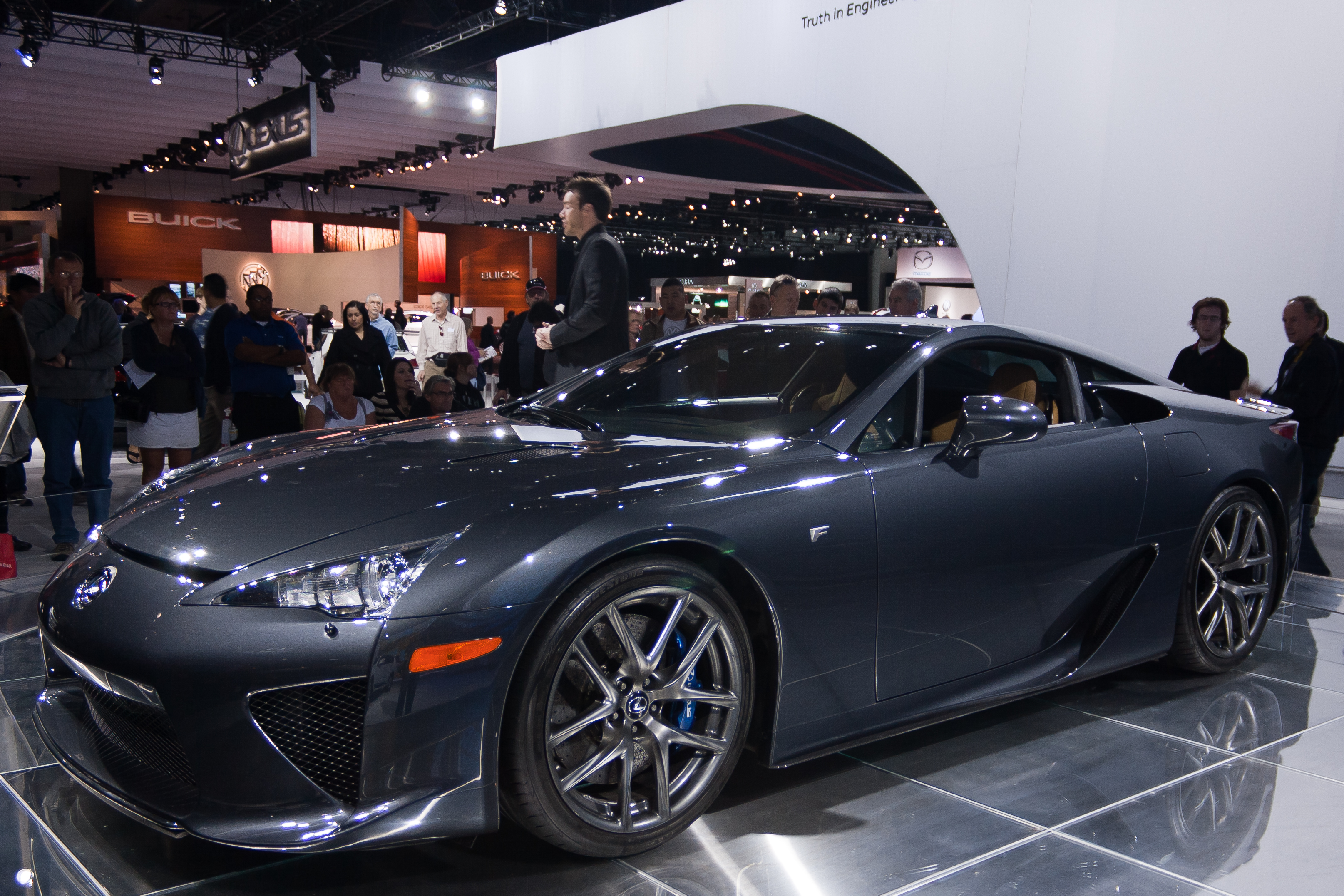
The Lexus LFA is a famous high-end supercar. The host brings it up to say the Singer feels extremely carefully made—like every detail is intentional.
Car
Singer Turbo
A Singer Turbo is a high-end custom version of a Porsche 911 made by Singer. The point here is that the driver controls—like the steering wheel—are designed to feel perfect in your hands, not just to look nice.
The Audi R8 is a high-performance sports car with a supercar look. The podcast is saying it’s impressive and that it has some engineering connection through collaboration. It comes up because it’s one of Audi’s most exciting cars.
The Lamborghini Huracan is a supercar made by Lamborghini. The podcast is saying that the Huracan is very closely related to another car and can feel similar. It’s mentioned because people compare them when talking about how these cars are built and drive.
Residual value is what a car is expected to be worth in the future. If a car is seen as more special or more desirable, people are more willing to pay for it later, so it keeps more of its value.
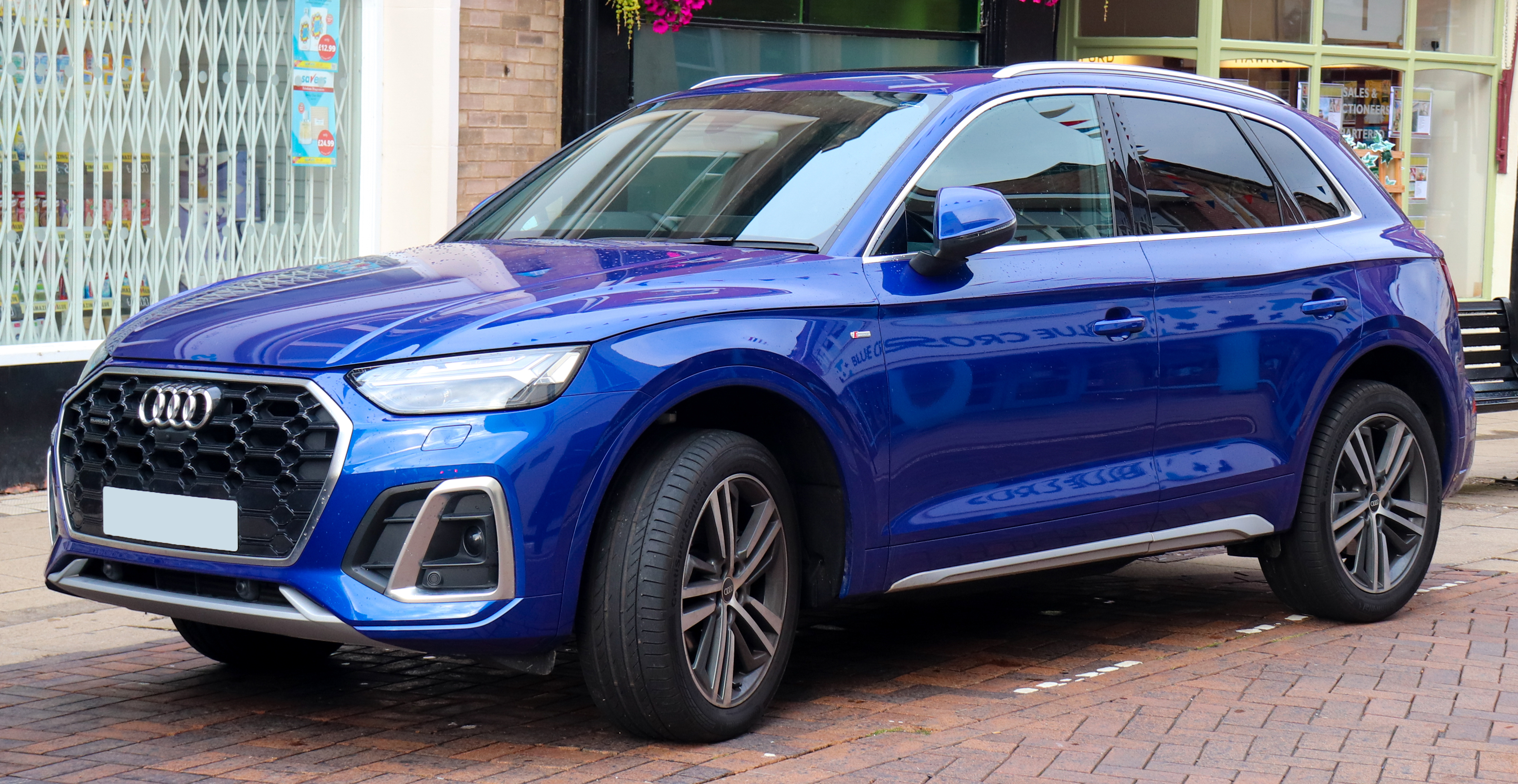
Q3 is an Audi SUV model. The host is using it to make a branding point: the Audi badge can feel “normal” because people associate it with common models, not just supercars.
Q5 is an Audi SUV model. The host is saying that because Audi has many everyday cars like this, people may not immediately connect the badge with an exotic supercar.
The Audi RS 3 is a sporty, performance version of a smaller Audi model. The podcast is saying that Audi’s naming can be confusing, and people might mix up the RS3 with other Audi models. It’s mentioned because the RS3 is specifically the performance trim people recognize.
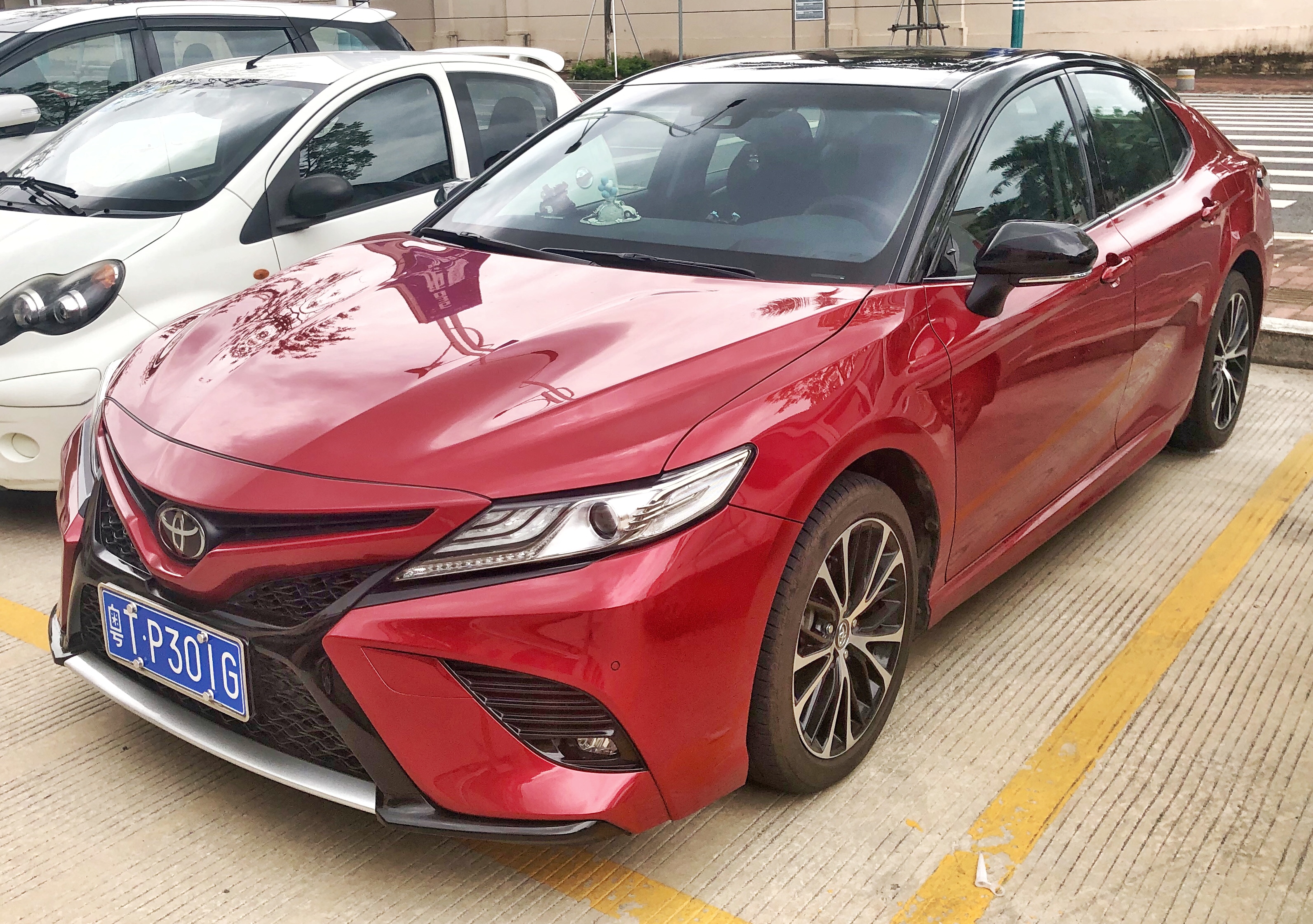
The Toyota Camry is a regular, everyday car in the midsize sedan category. It’s known for being practical and easy to live with. The podcast mentions it as a typical choice for a certain kind of buyer who prioritizes day-to-day needs.
A single-clutch gearbox is a transmission that uses one clutch to change gears. It can feel different from newer “dual-clutch” systems, and the host is saying that Lexus’s LFA tech was hard for typical buyers to understand.
A V10 is a type of engine with ten cylinders. It’s usually found in special, high-performance cars, and the host is saying that the LFA’s big, unusual engine made it harder to explain to everyday buyers.
The Lexus LC 500 is a stylish, upscale coupe that’s powered by a V8. The speaker is saying people really like it, and that it tends to stay expensive even when it’s used.
“Five liter” is the size of the engine. Bigger numbers usually mean the engine can move more air/fuel, which often makes the car feel stronger and sound more impressive.
The Ford Mustang is a sports car with a strong engine and a loud, distinctive feel. The podcast is talking about a version with a large V8 engine that’s known for sounding good and being straightforward to own. It’s basically the kind of car people buy for the driving experience.
A “GT car” is built for long drives, where you can cruise comfortably at steady speeds. The speaker felt it didn’t feel as engaging in traffic, because it’s meant more for highway driving.
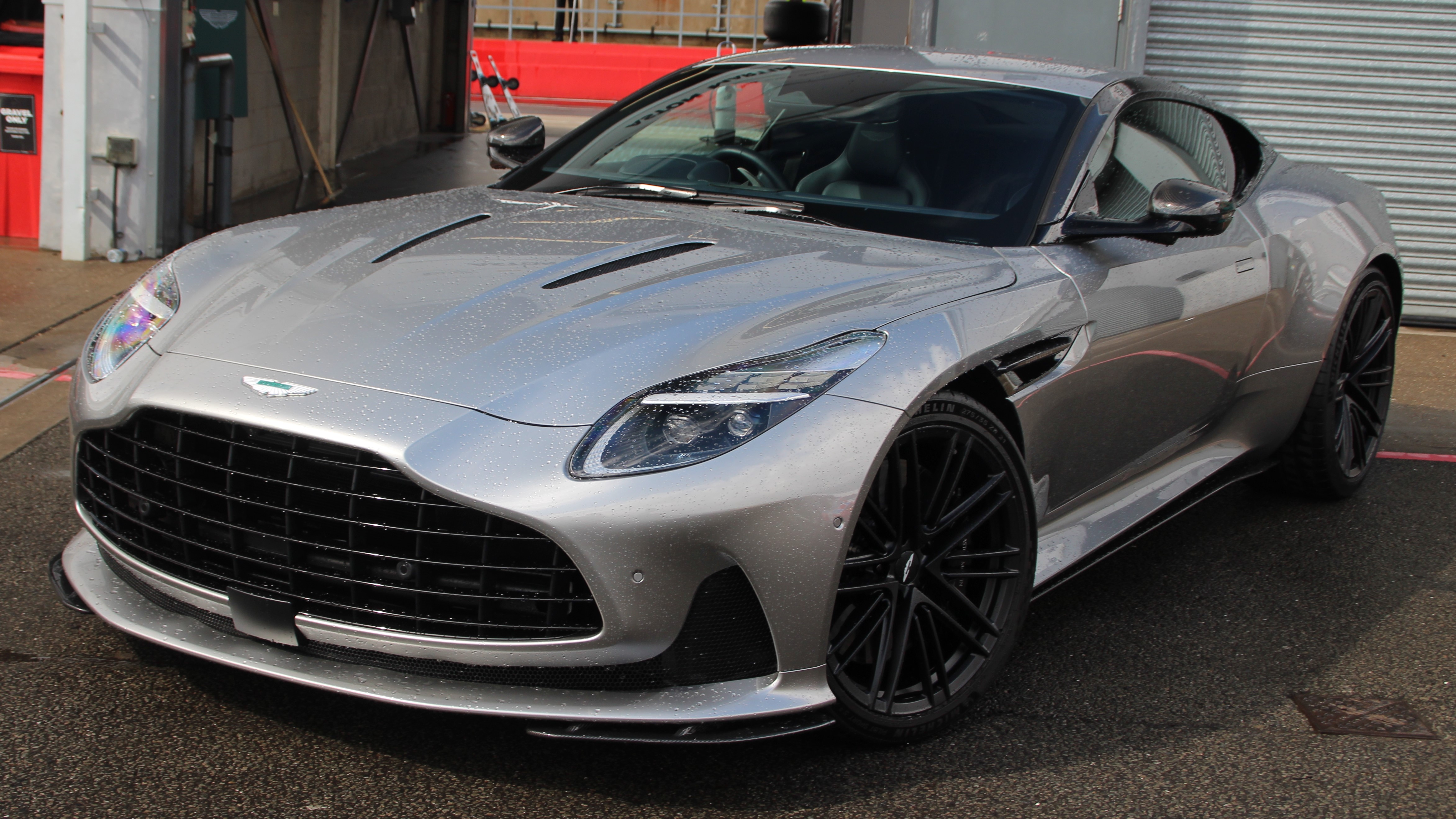
The Aston Martin DB9 is a luxury sports coupe. The podcast mentions it as part of the same “DB” line as the newer DB12. It’s being brought up because it’s a well-known model in Aston Martin’s grand touring range.
The Aston Martin DB12 is a luxury sports coupe. The podcast mentions it in the same context as the DB9, meaning it’s part of the same DB model family. It’s brought up because it’s the newer version of that kind of Aston Martin.
A “Grand Tour” is basically a long road trip. The idea is that the car should be comfortable and fun for hours of driving, not just impressive for a short sprint.
A “manual swap” means converting a car to use a stick shift instead of its original transmission. The host is pointing out that this R8 had been changed so it could be driven with a manual.
Electric power assist is a system that helps you steer with an electric motor, so the wheel takes less effort. The host is saying newer cars make steering feel more refined, so they pay attention to it more.
“Mid-engine” means the engine is located near the middle of the car, not at the front. The host is saying that when a car is mid-engine, steering feel becomes especially noticeable.
A supercharger is a device that squeezes extra air into the engine. More air usually means more power, and it can also change the way the engine sounds.
Hydraulic steering uses fluid pressure to help you turn the wheels. Because it’s a mechanical/hydraulic system, it can feel more “connected” than some electric setups.
Term
Porsche E-Pass
They’re comparing two steering systems: one that uses hydraulic fluid pressure and one that uses an electric motor to help you steer. The big question is which one feels more connected and natural.
Steering ratio is basically the “turning math” between your steering wheel and how much the front wheels turn. The right ratio helps the car feel responsive without needing lots of extra steering wheel movement.
They’re talking about the front tires, because those tires are what actually steer the car. How they turn and grip the road strongly affects how the steering feels.
Here, “E-Pass” means electric power steering. The host’s point is that electric steering can be good or bad depending on how it’s tuned, not because it’s electric by definition.
The Nissan Skyline is a car line known for performance versions. The podcast mentions it while talking about a specific era of cars and features. It’s used as an example of what people were driving or comparing back then.
They mention the Volkswagen R32 because it had an early version of electric power steering. Their takeaway is that early electric steering can feel too easy and not give much “road feel.”
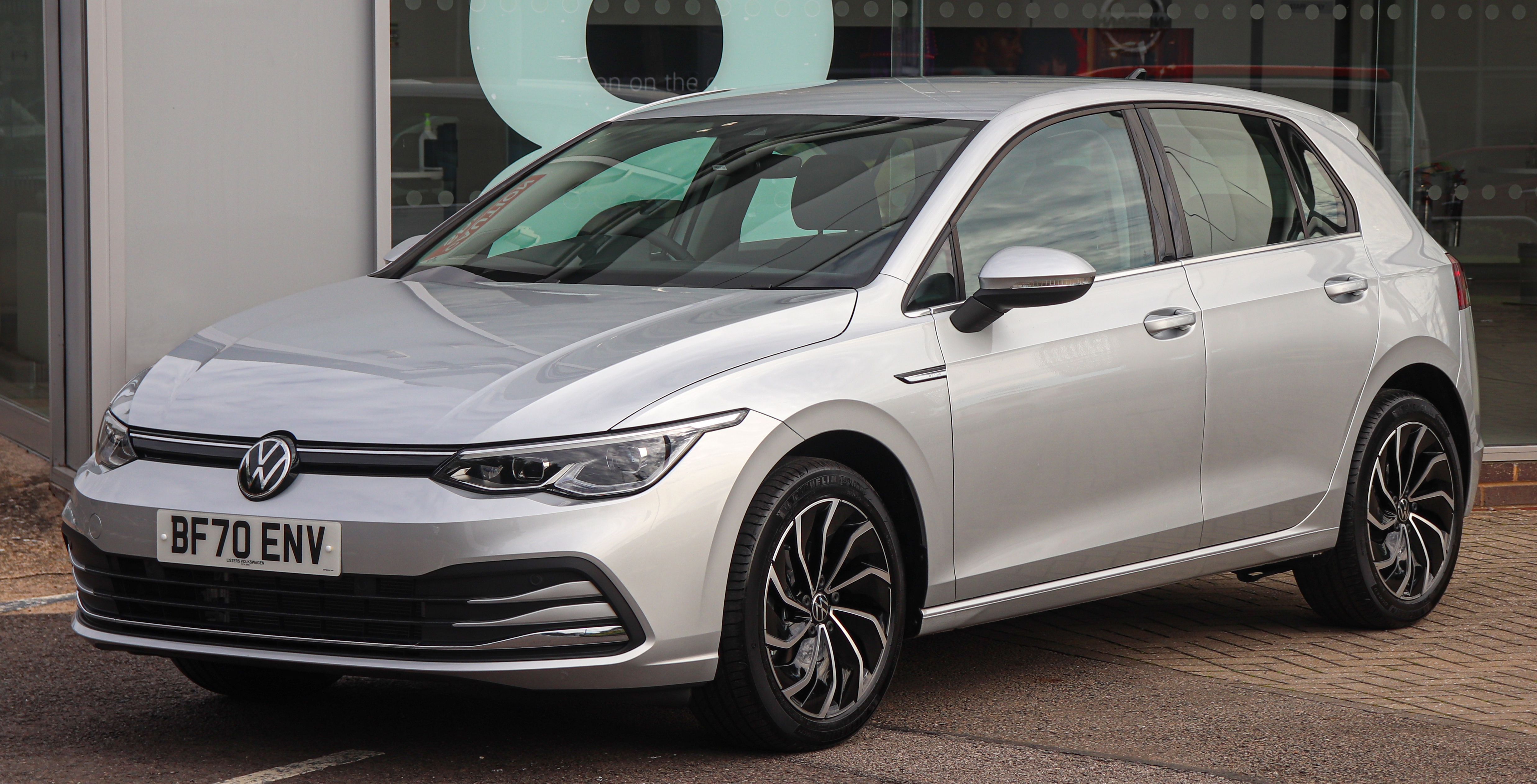
The Volkswagen Golf is a compact car that’s made in many versions. The podcast mentions the Golf R32 and talks about features that were available in that time period. It’s being used as an example of how different Golf models could include more advanced equipment.
PDK is Porsche’s automatic gearbox that uses two clutches to change gears very fast. The point of bringing it up here is that some people still prefer a manual because it feels more connected and engaging.
A water-cooled engine uses coolant (liquid) to carry heat away from the engine and into a radiator. Here, the speaker is arguing about how that change affects the feel and reputation of newer Porsches.
Turbocharged engines use a turbo to push extra air into the engine. That can make more power, and people often debate whether it feels better than naturally aspirated engines.
Naturally aspirated means the engine breathes without a turbo or supercharger. The speaker is saying people often prefer that feel over turbocharged setups.
Direct injection sprays fuel directly into the engine’s firing chamber. Older systems sprayed fuel earlier in the intake, and that helped keep valve areas cleaner. With direct injection, that “self-cleaning” effect is reduced, so carbon can build up on the valves.
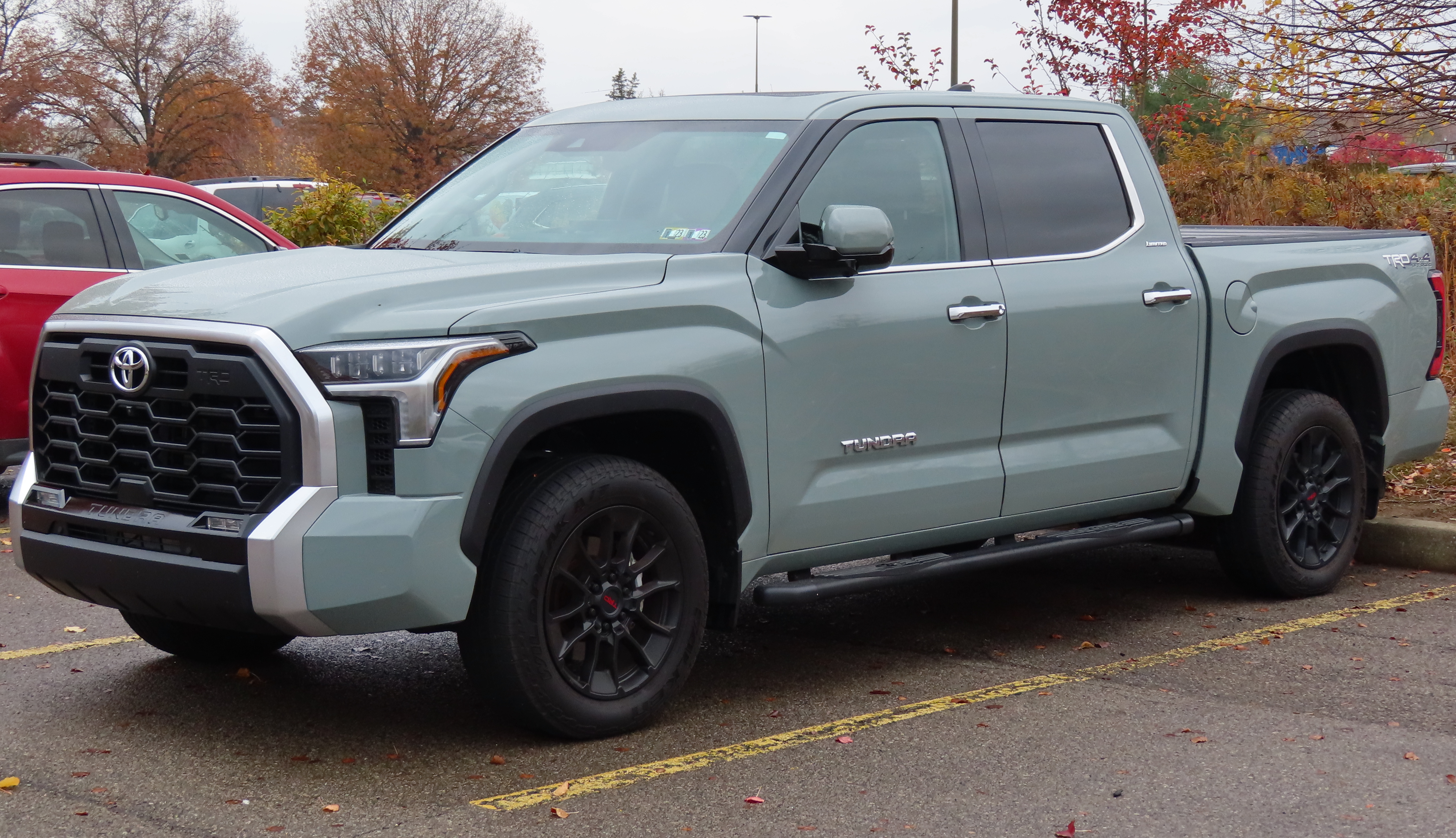
The Toyota Tundra is Toyota’s big pickup truck. The point here is that even trucks known for lasting a long time are now using more complex engine tech. That complexity can change how engines behave and what they need over the years.
The Lexus LS 400 is a luxury sedan the host brings up as an example of a simpler engine that tended to be very dependable. The takeaway is that older tech was less complicated, so it was less likely to cause problems.
Forced induction means the engine gets extra air pushed in, usually with a turbo or supercharger. Because it’s more intense, the car often needs extra cooling and more engine control.
Term
QC
QC means quality control—how a company checks that parts are made correctly. The host is saying if QC isn’t good, the car may not be built to the right tolerances, which can cause problems.
The BMW 535 is a BMW 5 Series car. In this episode, it’s the example the host uses to talk about how early direct-injection engines could feel rough or act up, especially when they’re not in perfect condition.
A direct-injected engine sprays fuel directly into the combustion chamber. Here, the host is saying early versions had a known problem related to wear on the valves.
Bucking is when the car feels like it’s jerking or stumbling when you press the gas. The host is saying his BMW 535 did that right when he tried to accelerate.
Term
coped up
“Coped up” is the host’s way of describing damage or poor surface condition on the valve. If the valve surface isn’t right, it can mess with how air and fuel mix, which can make the engine run rough.
The intake is the part of the engine that brings air in. Here, the shop wants to remove it and clean it to fix the problem.
Term
directed ejection
“Directed ejection” is a way of forcing gases to go where the system wants them to go, instead of letting them spread out randomly. The speaker is saying it’s a big new idea, but they still don’t feel great about it because of past problems.
The Jaguar XK is a sports car that’s meant for comfortable, long-distance driving as well as fun driving. The podcast is referencing a positive review of the XK. It’s brought up because it’s a model people consider when they want a Jaguar sports car.
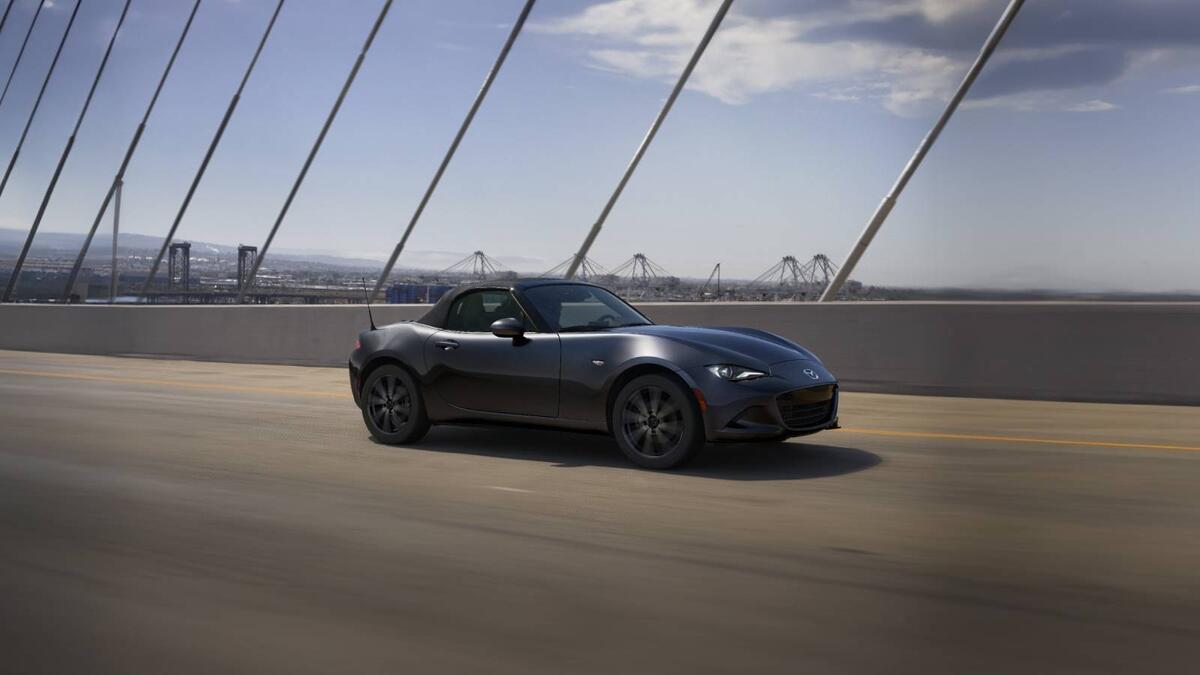
The Mazda MX-5 (Miata) is a small two-seat sports car meant for fun driving. The podcast is saying that even when the Miata wasn’t in great shape, it still felt exciting. It’s an example of a car that can be enjoyable even without being perfect.
This is a fast version of the Porsche 911 that uses a turbocharger to make more power. The host is saying people buy one, then tune it further to make even more horsepower.
“Chip it” usually means a shop updates the car’s computer software to make the engine run differently. The goal is typically more power and quicker throttle response.
“Stage two” is a tuning-shop term for a step beyond a basic ECU tune, typically involving additional supporting modifications (often intake/exhaust and sometimes upgraded turbo-related hardware). It’s a shorthand for a more aggressive calibration and parts package than “stage one.”
The Nissan GT-R is a high-performance Nissan with twin turbo power. People often modify it heavily, and the point here is that even very fast cars can lose some excitement if you can’t use the power often.
Car
Lucid Sapphire
Lucid’s Sapphire is a high-performance electric car. The host is saying that once you’ve experienced the quick launch a few times, it can feel less exciting if you can’t use the full power regularly.
This is a very powerful Porsche 911 with extra performance compared to the regular Turbo. The point is that even with massive power, you can’t always use it safely or often enough.
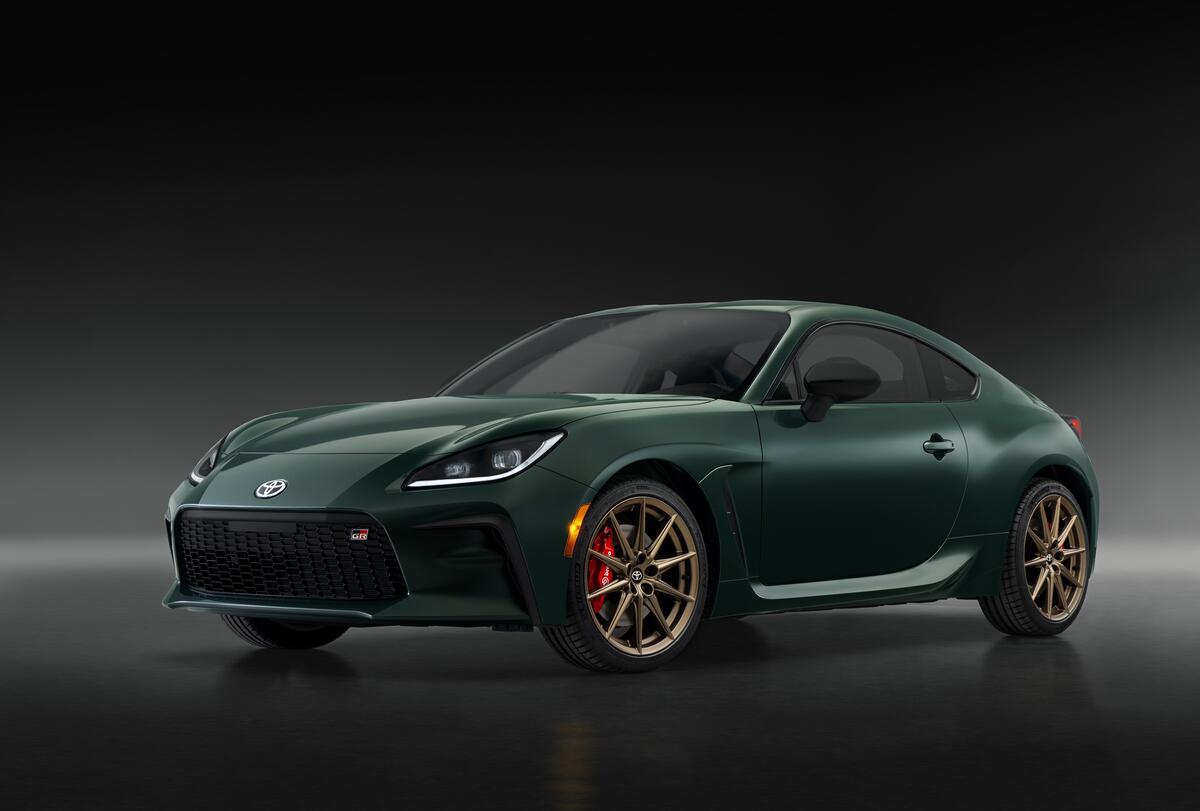
The Toyota GR 86 is a small, lightweight sports car meant to feel fun and connected to the road. In this discussion, it’s the one the speaker keeps coming back to because it steers well, feels lively, and has a great shifter for the money.
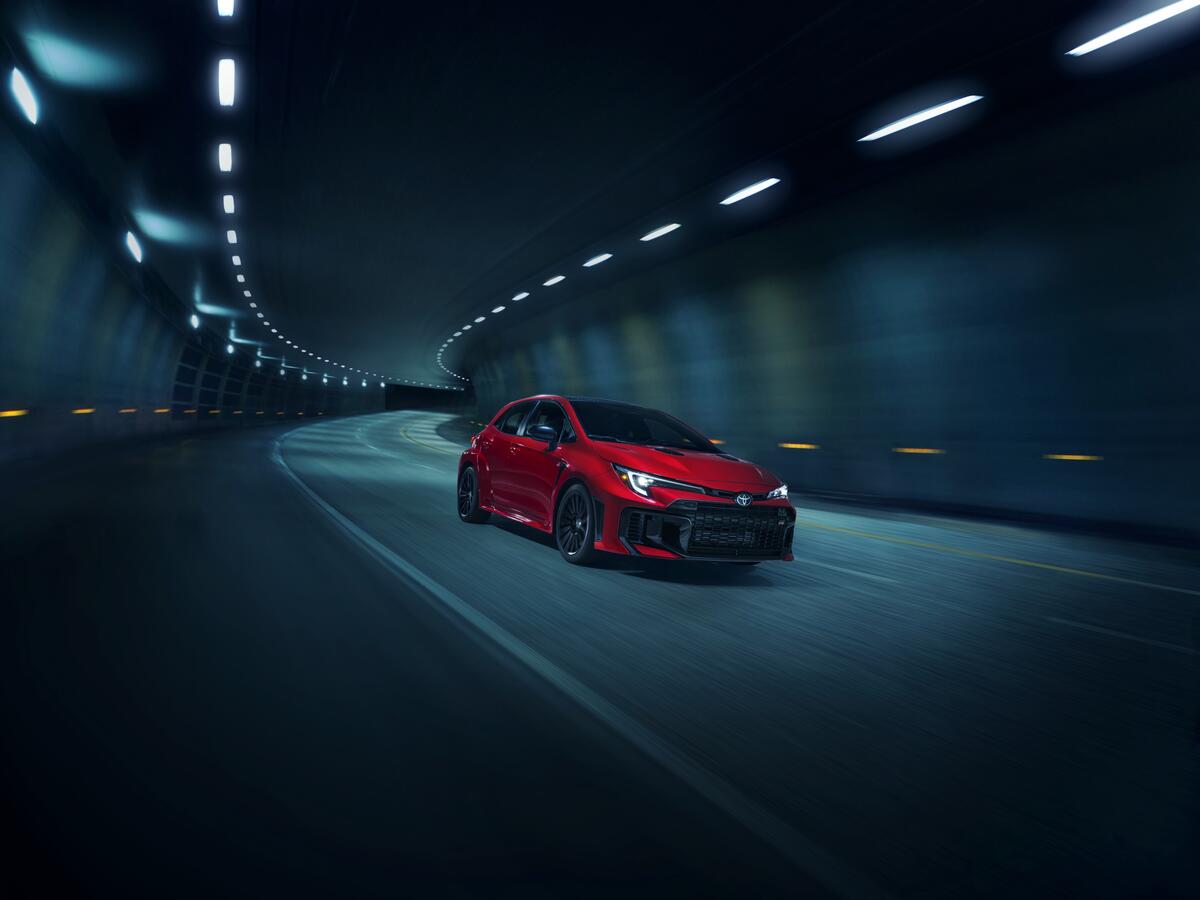
The Toyota GR Corolla is a sporty version of the Corolla. It’s made for drivers who want a more exciting, performance-focused hatchback. The podcast mentions it because it was shown at a Toyota performance event alongside other enthusiast cars.
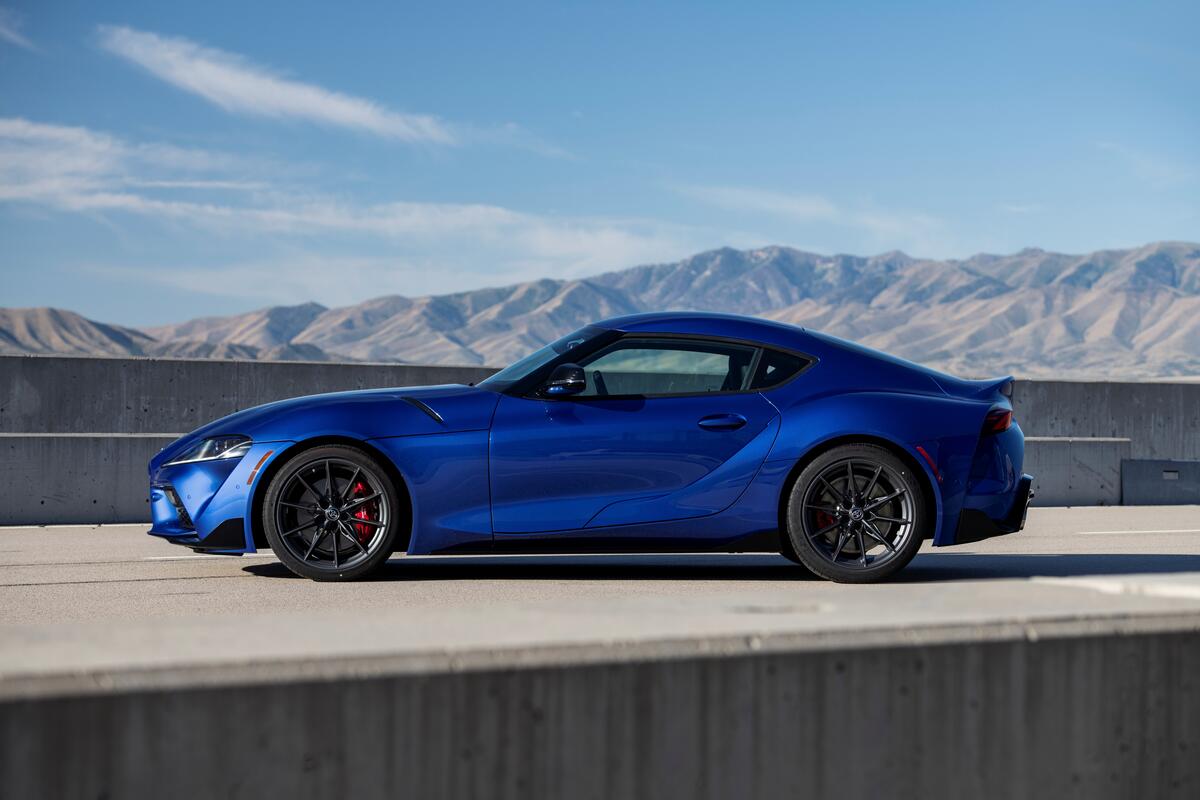
The Toyota Supra is a faster Toyota sports car. The speaker says it’s quicker than the GR 86, but it feels heavier and less sharp, so the lighter car is more fun to them.
Term
torque hold up
“Torque hold up” means the car doesn’t respond with power as quickly or smoothly as you’d expect. The speaker is saying the newer GR 86 version fixed that kind of lag or awkward power delivery.
“Opposed cylinder engine” refers to a boxer engine layout, where the cylinders sit opposite each other and move in and out like a boxer’s fists. The host connects this layout to the Subaru boxer reputation and says it’s “not famous for lasting eons,” implying durability concerns versus the Porsche they’re discussing.
The Cayman GT4 is the more track-oriented version of the Cayman. The host likes it, but they’re honest that they don’t actually use their cars on track often, so they prefer the GTS instead.
The Boxster is Porsche’s mid-engine convertible roadster. The host is talking about driving a special 25th anniversary version and how it was comfortable for everyday driving.
They’re saying they’d pick a Porsche Cayman because it’s a more realistic choice for them. It’s a Porsche sports car that’s designed to handle well and feels more “ownable” than the ultra-expensive dream 911.
LIVE
Hey, everyone. I'm Derek. This is 11 after nine, and I have my good friend Zach Klapman
on the podcast this week. Zach is the host of the sensation on YouTube that is Driver's Test,
which is a game show for automotive gearheads. And Zach, I have watched all of them. He's a
producer. He is a co-host of the Smoking Tire podcast with Matt Fair, which is long running for,
gosh, probably more a decade and a half, I would imagine something like that. Zach, I want to welcome
you to my podcast. Welcome to 11 after nine. Thanks for being back on again, dude. It's really
nice to see you. Yeah, thank you for having me back on. And this is a legitimately clever name.
Thank you. I don't have many good ideas in my life, but I'll take what I can get.
It's a good... It makes it feel like a night show. And granted, it's the light out right now, but
this feels like a Porsches After Dark to night show type of thing.
Talking about sleek German metal with my buddy Zach Klattman. So we are talking restomods today,
Zach. And this was a topic, honestly, I have gotten from quite a few people, not necessarily
looking into buying restomods, but just curious about what they are. On 11 after nine, I would say a
huge portion of the audience are folks that are just coming into owning Porsches. And do they want
to know what are these numbers mean? What's a 993 versus a 997? What's air cooled, water cooled,
stuff like that, all the way up to people that do have a collection, but are still new into what
all these companies are like Singer, like Roof, like Gunther works. But anyways, so what I wanted
to do is bring on my buddy Zach, who has had the opportunity to drive a lot of these cars in probably
the native land in which they were meant to be driven, which is the canyons of California.
Certainly out here, dude, in New Hampshire, I get those cars up to about 3000 RPM and end
up in an oak tree with all the small bumpy roads out here. So I feel like that's the wild
dead there. But welcome, welcome to be on on the podcast, dude. And I was hoping we could do this
just because from the top, you have a general idea of these cars. How would, if I were to say,
what's a restomod for the audience? How would you describe it, Zach?
Sure, it's a very good question, especially as more cars enter the space, as they would say,
and the prices go up. So I gave it some thought and I wrote it down a little bit.
So for me, the restomod term entered my lexicon in the 2010s. And it came from,
again, this is my experience living in SoCal, but working in auto journalism, filming
every genre of car, the term was being used by the muscle car crowd. It was like a pro touring
thing. And so it stands, I mean, it's a contraction of restored, like restoration modified. And so
what I saw is you've got these old muscle cars that are known for big engines looking good,
but they don't stop very well, they don't turn very well. I mean, the handling, the flimsiness
of the construction, etc, etc. So what people would do is they would throw on subframe connectors,
they would make the chassis as rigid as they could without totally changing the shape or
the look of the car. Usually, like, there's a lot more going on underneath the metal than you
realize with some of these expensive cars that would compete at track events and stuff.
They do brakes, they do suspension, maybe a modern engine, maybe leave the engine alone.
Basically, you improve all the things that were known for being terrible. So I think you were,
and you were restoring it, you're gonna make it look good, you could buy a junker and
paint it or whatever. You want it to look good, which I think is the primary job of an old muscle
car, but then you want it to perform as well, so you'd modify it. I don't think cars like
Gunther Works, Singer, the SP40, which we can talk about, these things that are called restomads,
I think they're so far beyond that because they have changed, especially with Gunther Works,
they've changed so much of what the car looks like and modified it. I mean, the price is like
a different discussion, I guess, like once you've spent hundreds of thousands of dollars or more
on a car, are you modifying it or are you building a car? And I think a lot of these have slipped
into they are building a car. So, you know, the Gunther Works, like the bodies are carbon fiber,
half the inside is carbon fiber, the engine is totally insane, like the thing is re-engineered
from the shell. Same with Singer. Yeah, but like it has a vent plate and that's pretty much it,
if you really think about it. Yeah, exactly. So, I think that's where
you move into Singer's legally created term, we should say, which is reimagined. And,
you know, they did that for reasons, but I think also the same way we needed the term hypercar,
once supercars got so fast, is reimagining is a good way to put it because 5001, Gunther,
a bunch of people, they go, well, what would I do with, if I was the designer of this generation
of car with the technology I have today, would I make it exactly the same as they had made it?
Or would I tweak it adjusted just slightly? You know, what aesthetics from the past would I keep
and what would I maybe change because hindsight is 2020? And I think that in that case, you are
literally like Rob Dickinson from Singer, he sat there and he looked at the car and he thought,
I love these pieces and these pieces. I would change these pieces. Like, he's sitting there
imagining what he would build if he could perfect the car that he loves the most.
Yeah, it's funny. I mean, I really think, so Singer, just for the folks out there, is a company
that has been in business for well more than a decade. And essentially, they do a greatest hits
9-11. He took a look at all the different parts of the generations of 9-11s that really resonated
with him. The swoops of the rear glass, the haunches, the overall interior of what he really
thought made the most beautiful parts of the 9-11 and he put it all together in one car. And I feel
like Singer, that is their ethos. Like how to make a physically beautiful car that also can perform
up and far beyond what the old school 9-11s could do. And then like, I feel like you compare that
to a company like Guntherworks and they have a completely different ethos, right? Like with the
993, they think, well, if the 993 had kept being developed from the 90s, what would it be in 2026?
And that's kind of what they came out with with some of their latest creations. Is that about right?
Yeah, yeah, that's accurate.
Yeah, but to your astute point, I mean, the cars are not what they were. They're not,
they might come from a 964 or a 993 body shell, but they've been so
chopped and lightened and added to that they really, you're right, they really can't be called
restomads. Like you said, when I think about a restomad, I think about a car that drives like
a modern car but looks like an old car that was original. They do it a lot with Land Rovers too,
like restomaded Land Rovers are like absolutely the thing. But let's talk about price for a minute
because it's not like you can go and buy one of these cars for the price of a Porsche.
Singer is, I mean, what do they start like over a million dollars now?
I think so, probably with tax at least. I think the Turbo is the quote, the cheap one. And I think
it starts at 750, so. Right. And Gunther Works is in the twos?
I think the one we drove was like 1.2, the F26, 1.5 for F26. Yeah, I mean, that's the seven figure
car. Seven figure cars and they really are like super cars. But let me ask you a question,
getting out of the Gunther Works F26, is that a $1.5 million car to you?
So this is like, I understand the question. I think it's really hard to answer when
you don't have the money. And I say that as someone who doesn't have the money because
like if I had $1.5 million to blow on a car, I guess I wouldn't buy that car is the short answer.
But to say that it's not worth that price is hard because I mean, one, I think they've sold
most of the cars or a bunch of them. So people clearly think it is worth the money to them.
It also, I think Gunther Works has like, they cater to a specific kind of customer who's
like a little bit more aggressive, maybe even a little bit younger speculation
than a singer client because their cars are extroverted. I mean, this singer,
some of them can like, walk amongst the regular 911s, you could park it on the street.
Depending on your spec, it can be a, if you know, you know car where it might just get
passed over and someone will think it's worth 50 grand. Gunther Works cars,
with the size of the wings and the amount of carbon inside and like the cages and whatnot,
I think it'd be really tough to look at it and not realize, not think that this is a very
special thing that is probably really, really fast. So that is to say, I guess it is worth the money
to a certain, to a select group of people who are into 1000 horsepower cars that scare them,
that speak a little bit louder. It's kind of like, I think I said this when we drove it,
it's like the Lamborghini of these reimagined, whatever, Resto Mod cars,
because it's the extroverted family member in that family. Does that make sense?
Yeah, it's loud, it's brash, it's in your face. You can't not look at it when it drives by
and the people that own those cars, they own those cars because they want people to look at them,
for sure. And they're fast and fun. And look, I mean, in terms, if you want to add up numbers,
the engine is from Rossport, the engine is, you know, cost hundreds of thousands of dollars.
And the one we drove is an air cooled car that makes 1000 horsepower.
Doing that is not cheap. I mean, you, anyone listening who owns any Porsche,
it doesn't matter if the cost knows that if you want to try to add horsepower,
even if it's a turbo, it's really expensive. And if it's an air cooled car, I mean, the prices I've
heard out of some of these shops just to build a basically, you know, a slightly quickish
1970s Porsche is astronomical. So, all right, you got a special engine, you got special suspension,
their, their ride is great, the geometry is really good. Like they do a lot of really serious
engineering. And so I think when you look at the car, it looks expensive and it is expensive.
It is probably, if you were going to look at the spectrum of these altered Porsche's,
it's certainly I think about as far out as it can be in terms of how it looks and how it performs,
taking a step back towards the singers. You've had some seat time in those, right? And
what, what's your impression of those? If, if you were going to give that a personality, if, if
the Gunther Works was the Lamborghini of Porsche, like what does a singer strike you as? Like who's
the buyer for that? Is it a driver or a collector? Well, I mean, I think the character, and I hope
this comes across as a compliment to people would be, it's almost like the Lexus of that because
and like Lexus LFA level, you know, their motto, everything's important,
you get in, you drive that car, you close the door, you touch this controller, like literally
everything has been attended to and is feels unique and special and different, but not in a way
that is, that is a poor choice. Like one of the things I didn't like about the Gunther Works
at 26 was the steering wheel design. Like I didn't like, I didn't like the shape of the
knurling on the back of it. I didn't like the design of it. Fine. That's what they wanted to go
with. That's their choice. But yeah, by contrast, when I drove the Singer Turbo, it was the most
perfect steering wheel I'd held. It's like that in a McLaren, like the way they had,
you know, grooved it a certain way. So your thumbs land in it, the size of it, all of these
things. And it was me, I thought this way, Matt has larger hands, he thought this way. So they do
pay attention to everything. And I think the same way, you know, when Lexus made the LFA,
they had to make a new kind of carbon fiber loom to make the car. And it's like, at the time,
the only people or entities on earth that had this kind of loom was them. And I think the
U.S. Air Force, so it showed how serious they were. Yeah, it showed how serious they were
about doing things to their specification, not like to what is acceptable by the, you know,
the people in the dealership. Lexus is like, we want to do this to this level. How do we do that?
Oh, we have to make a new piece of machinery to make the machinery. Alright, we'll make that,
we'll make that, we'll make that thing. So I think Singer does that because everything has been
touched and thought through and is so perfect. And they drive great, and they handle great,
and they're really fast, but they are definitely more subtly styled in a way that I think is pretty
much perfect. So I do too, I kind of feel like they're the, like maybe like the James Bond of
those type of cars, like they'd look, they look like they're in a tuxedo if the colors are right
on the outside, they're so buttoned up and the quality is so amazing. I haven't had the opportunity
to be behind the wheel of the turbo like you, but I've been in the standard classic Singers and
you just want to sit in the driver's seat and just like look at all the buttons and how
to the level of quality that they take the interiors. And I'm not telling anyone anything
they don't know that is familiar with Singer, but for those of you that don't know these cars,
they are, if you took a 911 and you just brought it to its ultimate form of precision
and quality and also looks and they really are fantastic. Question about the, it's funny,
you brought up the LFA. Do you kind of feel like with the LFA when Lexus came out with it, Zach,
that it didn't take off because its audience didn't understand it? Because it was so on Lexus
of Lexus to come out with, and it took like, like what, like 57 years before people came
around and started realizing what it was. I remember like they couldn't sell them.
Yeah, they couldn't and Top Gear gave it a great review and even that couldn't help sell them.
I should preface, I have never driven one of them. I think they sound amazing and like the story
is incredible. It's a good story. I think, you know, any of these companies that have basically
made their bread and butter by selling common pedestrian cars, trying to step up into, let's
just say like, you know, the Ferrari Club is really, really hard. I mean, look, Audi,
the R8 is amazing when they partner with Lamborghini eventually, like that made them even better.
That car, if it had been wearing a Lamborghini badge, and I know that the Huracan and whatnot,
like they're basically the same, but the R8 did some things better. Or if it had a more,
if it had a more exotic badge, they would have been more popular, the residual value would
have been better. But as it stands, like, you can get them pretty cheaply, I use one, and they
don't really go up in value, despite being great cars. And it goes, oh, it's because you see the
four rings, and you think, oh, Q3, Q5, RS3, like there's just too many other
That's a good point models kind of watering it down a little bit from being at that up restaurant.
So I think Lexus, you know, they sell, they sell cars to Camry people who got, you know,
who made more money, like that's who they sell to. It's Toyota owners who invested in the SPY
and just set it and forget it, and then woke up one day and had a little bit more money,
and they want the same car, but it looks a little nicer, and it's a little bit more impressive.
So to try to sell a V10 single clutch gearbox thing made of carbon fiber and explain that to
existing customers, I think is hard. And then to try to pull in other customers from other brands
is also tough. Plus the interior, in my opinion, was a little too close to some of their other
products. And that's just, that's the nature of that beast. Yeah, that's a really interesting
take on that, Zach. And I appreciate you sharing that, because I hadn't quite thought of the fact
that it's a company that makes pedestrian cars. And when they reach for like this F1 sounding
crazy hair on fire machine, you know, people just weren't ready to jump in on that first
iteration of it. I wonder if they had continued that line for a while, if it would have become
something more, you know, instead of kind of having that one run. But the LC 500 is also kind
of like one of those cars, right? Like people love the LC 500, which is like this, like beautiful
kind of like coup-ish thing. I don't know why, but people absolutely are head over heels for it.
I mean, I get it. I think they look like the concept car and was stunning. So I
think, I mean, anytime I see one, I turn my head and I go, man, should I get one of these things?
They, they sound good. It's just got a five liter kind of sounds like a Mustang, fine,
the engine's gonna work forever. But I just feel like it's one of the best designs that's hit the
road in like, I don't know, 30, 40 years. And they, I got a friend of mine bought a used one,
he's been offered like 20 over what he paid for it. Like they, they are holding their value
very well. My father-in-law was looking to buy a used one and they just haven't come down to
where he expected, even after being out for like five years. So they just, they're not a huge supply,
but people like them. Is your buddy's a stack or is it the automatic? No, it's auto. It's auto.
Did they, did they make a stack? I think they did, right? Oh, they didn't. I don't think they did.
Okay. I had, I was staying at a hotel once and they had like this Lexus program where you could
borrow a car and take it for a drive. And I took the LC 500 out and you're right, it's an absolutely
gorgeous car. But I was, I think probably because I was driving it like around, it was, it was kind
of a congested area like along the coast of California. And I don't know, I didn't, I couldn't
really open it up and I was kind of like, I get it. It's beautiful, but it didn't have like, it felt
very isolated. You know, it felt very like, not like engaging. It was much more of like this GT car
that was made to like do these long sweepers at like 90 miles an hour, not like around town.
But that was just my take. I got out of it and I was like, it's gorgeous. And I can understand why
people like to look at it for sure. But to drive it, I just wasn't blown away maybe because it was
automatic. So maybe I need to give it another go. Well, I think if you, if you thought of it like,
you know, Japan's Aston Martin DB12 or DB9, like that's what, because that's what that is,
what it is. You're right, like it's a GT car. They have some firmer versions, you know,
but they're just, it's not, it's just not a good track car. It's not a good like a quote,
driver's car. It does okay. But what it does is looks good, eats miles, works all the time,
sounds good. I think it ticks a lot of those boxes for a proper like long hood Grand Tour
where I think Porsche most, you know, most of their sports cars are sports cars, right? Like,
they're not, that's how they define them. Can you Grand Tour any 911? Absolutely. And it will be
probably pretty comfortable and it'll do a really good job at it. But it's like, you know,
a race car will drive handle stop well. If you drive it on the road, will it do those things
well on the road? Yes, of course it will. So it's just what their, what each company's focus is. The
LC 500 is probably aimed at a slightly older market and, you know, Lexus has their, like they
have their racing in IMSA, but they focused out on the RC. So the LC could be their luxury cruiser,
as it were. It's definitely a car that I think does turn my head too. And I get why people,
you know, and for that matter, it's the R8 too. The R8 is a gorgeous car. First generation R8s
are gorgeous and everyone keeps saying, we're going to pick them up. They're going to explode
any day. And I'm like, I don't know, they've been exploding any day now for like the last 10 years.
And I kind of feel like they haven't come up in value. So maybe they're either the best deal
ever, or at least you'll get your money out of it if you end up buying one.
I don't know. I think about it a lot. I think they look awesome, especially the first ones. And
I drove one a few years ago. This guy had actually manual swapped it, which was pretty interesting.
And the only thing I didn't like about it was like the seating is a little high and the steering is
pretty vague. And when you come out of newer cars where they've perfected, you know, electric power
assist, I just, I pay too much attention to steering, especially when it's a mid-engine
sports car. And that was the only thing I didn't like. But otherwise, man, give me a,
give me a VF supercharged 4.2 Audi engine like any day in the back of that thing. It's just one
of the best sounding cars ever, one of the best sounding engines ever. And, you know, close to
being like one of the greats, in my opinion. Yeah. And it just has this presence. Anytime you
look at a parking lot and one's parked, your eyes immediately go to it with those side blades and
everything. It's sick. It's sick. Speaking of steering though, dude, where do you weigh in on
this, on the whole Porsche E-Pass versus the classic hydraulic steering? Do you think Porsches
kind of come back around where the new steering on the later cars is almost just as good as kind of
the vaunted, you know, 997 hydraulic steering that everyone talks about all the time?
Yeah, I do. I think they figured out, you know, the magic of steering ratio, meaning,
you know, the speed at which you turn when you turn the wheel. So how much wheel input leads to
how much front tire, how much the front tire turns, some cars are too slow. And that can make the car
feel lazy or you have to do too much hand over hand. Pretty rare these days. But
I think Porsches really figured out how to talk to the driver through the hands with a mix of
hardware, software, alignment, tire size. There's so many things that go into steering field.
It's like a really complicated dark art. But yeah, I think saying that any hydraulic steering system
is better than any E-Pass system is just incorrect. Like that's like saying any carbureted car is
better than any fuel injected car or vice versa. So I drove early E-Pass cars. I think the R32
Volkswagen, the Golf had it in a couple cars around that generation. And there's way too much.
The effort's too low. You don't really feel what the front wheels are doing. You know,
when you turn the steering wheel, you see the horizon turn, but you don't really feel that kind
of force back from the tire. And then, you know, 67 years later, it got a little better.
And now I think it's really, really good. And there's hydraulic systems I've driven where
the ratio is too slow. Therefore, I'm having to turn the wheel too much. Therefore, usually effort
is down. And when I start going faster in these cars, it's like, there's just something in my
brain that doesn't work when the amount of turns I have to input are too great for the amount that
the horizon is changing. It's like, I want to be able to steer quickly to move the car quickly.
I don't want to have to, you know, do like a bus driver's turn, even if the car has a ton of grip
and is sticking really well. Just like, I don't know, it just removes a little bit of the confidence
I have in it. And there's plenty of hydro systems that are too boosted. And it doesn't matter what
the ratio is. It's just like, it takes too little effort to turn and you cannot feel the pressure
coming back from the tire. And also, your brain's like, there's no way it's this easy to turn those
giant front wheels to go around this thing. Like, you know, you need, it's weird to me, I guess,
when people can hold manual steering, you know, near the top of the pile, but then say hydraulic
steering is better than E-pass, when hydraulic steering can be over boosted and slow, like any
system can be. Do you have to just look at like, what are those ingredients and how do they add up
and then judge the steering from there? I think in the Porsche world, you have a lot of commudgens
though that always talk about how the good old days were better than what's new, you know, and
listen hand on heart, I do it too. Sometimes I catch myself doing it too. Even with me just
talking about how I would always prefer a manual over a PDK, while I fully acknowledge like how
amazing PDK is, I'm that guy hanging onto my manual saying like, I just, I love those cars.
And I'm sad that they're going away, slowly with Porsche at least, unlike other car companies. But
so I think just like moving away from air-cooled to water-cooled, air-cooled are always better,
water-cooled sucks. And then enough time goes by and everyone goes, okay, well, water-cooled
are pretty good, but manual over PDK. And then, you know, you go a little further and it's like,
naturally aspirated over turbocharged motors, you know, and so it's always something, right Zach?
And I think like, I used to be that person well into my 30s and about everything. And, you know,
when you're, when you're a kid, you're like, I like this band and someone goes, what about this
band? Like that band fucking sucks. And sucks. Like that band could be, I don't know, the Rolling
Stones or whatever. It's like, they clearly don't suck. But subjectively, you prefer this other
thing. So I think when people, it's just like the language of, oh, hydraulic steering is better
than E-pass. You're like, well, no, you might prefer it. And I've driven cars that are old
and have loosey-goosey steering, but there's a charm to that, especially if that suits the
automobile. Like, you know, I go, oh, it's a lazier car. It's more of a cruiser. This is kind of fun.
It almost becomes a bit of a joke. Old 60s cars, dude, like you could steer them with one finger.
You could almost, you could practically like throw the steering wheel, like a frisbee,
and it would just spin and turn the car. Like there was so much boost in the power steering.
Um, you know, is it better? Well, I don't know, it depends on your mood and what you walked out
of a car. So I think, you know, it's hard to use the words best, worst, better, worse when you're
judging something subjectively versus objectively, like, you know, if it's a lap time. And yet the
internet and the forums have no problem doing that. So, of course, I mean, I, again, I used to do it.
I'm sure I still do it from time to time. And I think I'm just privileged because I get to drive
so many things. You just get a lot of perspective on there can be good, good cars and
bad cars from any company, any country. And I think we all grew up with like someone would say
Ford and some Chevy guy would be like, Oh, found on road dead. And then you think, Oh,
are they unreliable? It's like every car company has recalls. Every car company makes reliable
stuff sometimes. You know, you just got to like, you just be like, Oh, I just prefer this. I prefer
hydraulic. I like the way it feels. Yeah, great. Great. Except for GMC trucks, because my I'm
waiting for my motor to fall out the bottom of my GMC pickup truck any day now. Right. Isn't it wild?
Like GM makers of the LS, which are known for being pretty damn reliable engines in certain
applications, they've got this huge problem with their the trucks. And they were doing that weird
stuff with the oil, like making that thicker to try to fix it. And that didn't fix it. Like,
Toyota's had huge numbers of recalls lately with like the Tundra engines, the turbo chargers,
you know, just like last week, they found more metal and more engines, they got to recall more of
them. It's wild. And this is Toyota. It's wild. Exactly. And it flies in the face of what Toyota is.
I wonder, I wonder if it's like, do you think it's that these car companies are under this
pressure to come out every three or four years with a new model and usually a new motor to try to
adhere to emissions requirements? And so they're just like pushing these these
motors out or these designs out? Because certainly like Toyota isn't going to put out a bad product
knowingly. I don't know about the American car companies, but I would believe Toyota wouldn't.
And it's so it's like, how do they get caught out like that? That's kind of crazy.
I don't know if engine development cycles have gotten shorter due to pressure from,
you know, various either countries or regions of the world that, you know, if everyone's got
shifting rules on cafe standards, emissions standards, efficiency standards, like that would
certainly shorten your development time. But I don't know if that was also the case in the 90s.
But what I think is that we know that engines have gotten more complicated
in the last 15 years, right? We've got direct injection came in, everyone made more power,
cars got way more efficient, great invention. But what some people said about it is they said,
well, yeah, but now you don't have gasoline washing the back of your valves. So
for people like for people that don't know, you know, fuel injection used to just inject
before the valve would open, it would go through that valve passageway into the combustion chamber,
compress, boom, you go down the street. And that fuel was basically clean gasoline washing over
the back of your valve. When they go to direct injection, the fuel is shot directly into the
combustion chamber. And now you get like carbon buildup on the back of your valves. So there's
like trade offs with things. I think now we have more cars than ever are turbocharged,
both like direct injection, it was a quest for efficiency, cleanliness, and also the
byproduct of power. Or actually you get power and efficiency. And you have more systems in the
engine. So I think that's what's happening is even Toyota, you know, the makers of the tundra
that went a million miles, the LS 400 essentially that went forever, you know, cameras that went
forever. Well, these engines were simple four cylinder or V six or V eight engines with like
really simple systems that had probably been developed for 60 years in terms of size.
10 miles a gallon. And everyone was okay with that.
Yeah, some of them. I mean, the LS 400, we had got like 20. It wasn't great. I think those
tenders weren't great. But you know, they're bulletproof because they're because they were
simple. But now you've got tons of direct tons of different sensors, forced induction systems,
those have to be cooled. There's also a lot more demand from the consumer for, you know,
gadgets and features. So they have to cool those things down. There's more computing
power going on. So I think everything's just getting way more complicated. And in Toyota's case,
it seems like either their suppliers are screwing up with their QC or the things aren't being made
to a precise enough degree. And that's a that's a big problem for a company like Toyota. But I
think it just comes down to complication. But maybe there's a timeline aspect as well, like you
said. No, I think you hit the nail on the head, Zach. I think I think that makes a ton of sense.
It's interesting. I think back to like that 0809 2010 time period when direct injection was
really coming out. And a lot of different companies BMW came out with it in 09 Porsche,
in 09. And I remember, I think it was like 2012. I can't remember if I mentioned this
before on the podcast, but I bought used a BMW 535. So that was the kind of the first
generation of direct injected motor in a sedan. And I thought, dude, I bought it used. I'll never
forget out of Texas. And I bought it from a guy, it was like a completely loaded car. And it was
from one of those kind of like shady online dealers, like who like you ask questions and they
give you half answers, but like the price was good. And this was before I knew enough to walk
away when things like didn't quite add up. And so I got it on a truck and I got it here.
And I remember driving down the street and within the first 100 yards, of course,
you know, 535, I mean, this thing has all of God's power under the hood. Like you are good to go.
And the minute I stepped on it, it started bucking because it had, yeah, it had that first
generation was famous for on the backside of the valves getting all coped up. And so the air flow
coming in would get all disrupted and the computer would cut power. And so I remember taking it to,
it might have just been under, I can't remember if it was still under factory warranty or not.
I took it to the BMW dealership in New Hampshire and Stratum, New Hampshire. And I remember the
shop manager like was looking at it and he goes, I need to take your engine apart. I need to take
the intake off and I need to use walnuts to clean your intake. And I was like, I'm sorry,
you're going to use walnuts to clean my engine? And he's like, yeah, that's how BMW, because they
were just coming out with like, this is how we're going to fix the motors. And I had to do it twice
more over the course of like 25,000 miles. And I'll never forget that. So when, when I think of
directed ejection, I'm like, I don't have a good feeling in my heart about it, even though I know
it's a huge technological jump. That's, that's pretty wild. And it's funny that it came off of
like the E39, their E39 M5 had a similar issue, but because of a different reason.
Oh, really? Yeah, the walnuts, do they just like, are they essentially media blasting the back of
the valves with something that won't hurt? That's exactly what it is. It won't hurt the metal,
because it's softer than the metal that they're blasting. Like, yeah, that's, wow, that's cool.
It's clever. That's exactly right. Yeah, it is, it is kind of funny. But it was like one of the
and they were like, figuring it out as they went along. I was like their test engine.
And I'm like, boy, BMW quality's really gone downhill. The guy's like, yeah, I don't really
understand this, but we're going to do it anyways. So question for you, you had mentioned about
driving a lot of cars, getting in and out a lot of cars. What's it like getting into a million
dollar car or a, or a 2000000 dollar car and driving it? Do you, do you have to consciously
pretend like it's not worth what it is? Because God forbid something happens to it.
Like, do you have to like, put yourself in a different place to drive a car that
maybe you're, it's writing checks of your body can cash?
Yeah, yeah, you do. And some cars make that easier. Well, some cars are just easier to drive.
But yeah, I mean, effectively, I just try to forget
what the car costs. And like, if I'm doing a video review, I'm going to talk about the price of it.
But I usually try to save that for the end of the review and talk about, you know,
its attributes pros and cons first, partly for video, you know, algorithm reasons,
but also just because I think it's like, talk about the qualities of the thing before it,
you talk about how much it costs to get it.
But yeah, I think if I focused on the value too much, it would probably curb
how I drove the car in terms of like, you know, there's a certain speed and pace I'm comfortable
comfortable with on roads I know. And if I just worried the whole time, like, oh my God,
if I crashed this million dollar car, are they gonna sue me for all I have? And like, you know,
my wife and I will be homeless. And if I did that, then I wouldn't drive it in a way that
I find interesting, the audience finds interesting, that tells me anything like,
I would just be putting up and down, you know, this road and driving it really gently. And then
I think, I think I had to grow into that though, you know, you have to, in this job,
like it's been doing it for a long time. So you have to, you know, you can get jaded and that's
a different story. But I think it's just about compartmentalizing and going, all right, we're
just going to assess this car for what it is. So let's drive it the way we've driven other cars.
And then at the end, I'll think about the price. And then I can think about the whole,
is it worth it? Would I buy it over other things? You know, and whether it's a $3,000 car or a $2
million car. Yeah, just try to, you know, judge it on the content of its character,
so to speak, before you focus too much on just how much it cost to buy one.
What do you mean you have to be careful not to be jaded?
Well, it's hard to not get jaded because, you know, if I think back to how I felt about cars
when I was like 12, 20, even like 30 when this job was new, when I was new to this job,
any press car was the most amazing thing in the world. It was just so cool to be able to drive
the metal that I had read about for so long and stared at and watched videos on and like,
now I get to do that. And so back then, it was too easy for me to be too celebratory about a car.
Like, I mean, Matt and I were joking recently, I wrote a really good review of a Jaguar XK or
something, like a glowing thing because I was driving a shitty Miata at the time. So anything to
me seemed cool. Like I reviewed a Buick, a Buick, whatever. And I was like, wow, this thing's kind
of awesome. And in hindsight, like, no, it isn't. It's not exciting, it's just a car. And so now,
though, I'm on the other side where I get to drive this amazing stuff, carbon metal, some of it's
very expensive, some of it's not. And, you know, the human brain, because of hedonic adaptation,
will get used to stuff. So the same way someone needs hot or hot sauce if they use it all the time,
or insert whatever vice you want, like they're going to want to raise the stakes.
You know, now that I've driven, I don't know, a handful of cars that have 1000 horsepower and
like, a dozen or so that have between 700 and 1000, you kind of get used to it. And so I get a
little jaded to, oh, this is really fast. So is a lot of stuff. This is really expensive. So is a
lot of stuff. And I think that it's like, it's a bummer because sometimes the excitement, like
that little kid excitement goes away and really reinforces what Jay Leno said, which is if your
hobby becomes your job, it's no longer your hobby. But I think the pro, the good side of it is that
it allows me to, you know, assess these cars that have great value or great power. I think
a little more maturely and a little bit more, well, objectively and subjectively,
just with like a clear mind. And then just going, oh boy, gee, this is just like everything's amazing.
And like, well, if you do that, you're not doing a very good job of, you know,
right, you're not a very good car journalist.
What do you think the perfect horsepower is, like for a car? I mean, realistically,
for the driving you do in the canyons or 500, 500 crank, maybe 450.
Okay, I think I don't think anybody needs blah, blah, blah need like for canyons and for tracks
up because that's enough power that I think you could grow with it for a very long time.
And I'm talking about racetrack, like you could always extract more speed out of a car with
better technique. And then when your technique's perfect, you can adjust suspension. And when
your suspension's perfect, you can adjust tires like race car drivers are forever searching for
that perfect lap. If you're listening to this, odds are you're not a professional racing driver
and you haven't had that perfect lap. And so I think there's a lot of people out there,
especially now that power is so accessible with turbo charging and then adding power is so easy.
That it's so easy to go, oh, I bought a 911 turbo, it's got 612 horsepower,
but this shop down the street will chip it and now I have 720. And then if I do stage two,
I'll have 800. And I remember Matt and I years ago on the show called Tuned,
we were filming a guy who had a Nissan GTR that had like 900 horsepower.
And at the time that was a lot, but we were filming with him and we said, hey,
how long have you had this setup? And he had had it for like two months. He had had the 600
before that. And he's like, yeah, I'm already kind of bored of it. I might go for the Alpha 1200.
And I just, and I remember like, I very vividly hearing this guy going, oh,
oh, speed is boring. Like power gets boring. Once you launch your Lucid,
you know, Sapphire five times or your 911 Turbo S or whatever, like you're going to get bored
of that launch sensation. You can't ever use that power at the high speeds that it's capable of,
really, unless you live in Germany. So what are you going to do with it? So you're like,
you know, you're walking around with this giant horsepower number that you can't really explore.
And the faster car I drive, I noticed that, especially in the canyons, like, all right,
I can only use 40% of the throttle most of the time, or I can use 100% of the throttle for
like half a second. But if I have 400 horsepower, I can stay on that loud pedal for a lot longer.
I get to enjoy, you know, up shifts, down shifts more, like I get, I think you just get to use the
engine and experience like the breadth of the engine's abilities a lot more than if you have way
too much power. It's such a good point, Zach. We talk a lot about on my videos, we talk a lot about
how the base model is sometimes really the Pec being with my base Boxster that I have,
I have a base 997 Carrera. And you just you just play on that upper range and you can just use
all of the car. And you're not worried about getting super amounts of trouble. And your speeds
are just more approachable. So you can have time to react and you can get into more technical stuff.
And I just think that was a beautiful point you made, though, going back to the idea of
having a 500 horsepower car that you can continue to iterate and get better and you grow as a driver
instead of just the car just gets stronger and stronger. And that's just what sets your hair on
fire. With that being said, I know you guys talk a lot about the Fizz. In the past year or two,
can you pick like one car that you just got out of and you're like, that's a
freaking good car. I would want to buy that car. Maybe that isn't that maybe is kind of approachable
to some people. Every time I drive a GR 86, I strongly consider selling my car and getting one.
And I was at Sonoma a year ago for a big Toyota event and they had they had a GR Corolla every
year lined up. They had the new Supra stuff and then they had the GR 86. And so I drove
all of the fast things that Toyota makes right now, and all of which are like pretty
red enthusiast cars. But the 86 is the one I always loved and went back to. Supra's faster,
but it feels heavier, feels softer. Power's there. Yeah, but like the GR 86,
like the steering is where I think a lot of other heavier cars would like it to be, but they can't
be because of the weight, you know, just the weight, the lightness of it, but the feedback was
really good. The speed of it's really good. The shifter is a very good feeling shifter for the money.
You know, I think it just does a lot of things like that Miata's got famous for and some of the
things that the GR does even better. So that's something that I think that's just a fantastic
car. Packaging's good. I think it looks great. My seam around town, still seam around town.
I still turn and look at it when I see them and every day. It's not like,
it's not like, oh, there's the new thing. I go, oh, that's that's been out for three years, but
it's awesome. More expensive side power bump. Didn't they get, didn't they give a little power
finally? Yeah. So the version two, they fixed the torque hold up people as they would refer to it.
It just that, that engine, the old engine had this weird thing like right in the middle of,
you know, right in the mid range, you would lose like, it's like 30 pound feet of torque and then
it would come back up, but it was absolutely palpable when you were driving those things and
ruining an otherwise great car. So with the new engine, they fixed that and it's got a lot more
torque and it's a lot better power band and better than a Miata equal to a Miata. If you had to choose
between the two, I prefer it to the Miata. I'm not, I'm not really into convertibles.
I'd rather have a small back seat for backpacks for my dog. If I had to choose,
I think it looks better than the Miata and it does have a little bit more horsepower, which I like.
So a bunch of those attributes. I'm jealous of the Miata's reliability because, you know,
the Subaru opposed cylinder engine, not famous for lasting eons and eons. No, certainly not,
unfortunately. And that is a bummer. If you, it's funny, I feel like this podcast,
we've talked more non-Porsche than Porsche, but it's just fun to talk to a car guy who has your
depth and breadth of experience driving all these cars. But if you could, with your own money,
put a Porsche in your garage, what do you think it would be if you had to pick one?
Sure. I think I would get a Cayman GTS probably.
Which generation? Like an earlier one, like a 987 type of generation with the first GTS or
maybe that like early teens, 981, or would you go with the turbocharged, the 781 GTS?
No, because I want the 4-liter. Like that's what I would go for. So I think, like,
that's a car I look at often and also, you know, think about how I could maybe get one.
I like the GT4. It's just a little more track-oriented and I have to be honest with myself
that despite driving a car with track suspension, I don't really go to the track with my own cars.
So I think the GTS is just such a well-rounded car. I remember when I drove,
this was back when I worked for a production company that worked for Porsche,
but I drove the 25th anniversary edition, you know, Boxster. And I was like,
this is so good, it's so many things. The ride was great around town, but good enough in the
canyons, power is awesome, looks good. And I think the GTS just carries that same torch.
And like I said, I'm not that into convertibles. The Spyder is rad.
I think if I spent more time with one, maybe that could sway me a little bit,
but I don't want to copy Farah too much. So I'll go.
Yeah, yeah, when you have a buddy that has a car, you don't want to get the same one.
Yeah.
And we've got a bunch of friends that have those because they're really good cars,
but I'll go hard top.
People, people really do love them. I need to spend more time with them as well.
I've driven a couple and I can absolutely appreciate them for what they are, but I've
never driven them in anger because they've always been someone else's car. And frankly,
I didn't want to bend it. Do you, do you think that when it comes to the Spyder that you would get
tired of having, not doing it, but the thought process of putting the top up and top down,
depending on where you park it and the weather and stuff? Like with that, where are you?
It would. Yeah, I know me. Like I'm lazy in some ways. I'm not lazy in other ways.
And in that way, I'd go, eh, I don't really want to do it. And when I, I was a different person,
but I had a Miata, I think I put the top down twice.
You know, it's fun. Like it is fun as a cool experience, but if I had to just choose one car,
and I just realized that like I chose Cayman because it's a car I might actually be able to
afford versus like 9-11 ST, like that's the Porsche I'd put in my garage.
Yeah, sure. But not for $600,000.
Um, yeah. Yeah, I'd go, there's like our top car. I also like prefer the way the paint looks,
you know, just keep everything a uniform color. Sorry, what were you gonna say?
Oh, in terms of not being broken up by a convertible top, you mean?
It's very rare that I see a convertible top that I think enhances the looks of a car.
So, yeah.
It's no wonder that like, especially when you talk about Porsche, that the convertibles were
always more expensive when they were new, and they're always a discount to buy them used.
And I think for many, many generations, it's because the convertible just didn't look quite
like the coupe, even though they tried to mimic the lines the best they could. And it's really not
until the last 10, 15 years that they kind of did do it, where I feel like there's more,
like parody in terms of like, used car prices when it comes to the two of them. But I agree with
you 100%. And I think that's why everyone, the coupes go for all the money, more or less.
I do think the Porsche market is softening a little bit. Are you seeing that out in California?
Are you seeing some of the older stuff come down a little bit from the crazy price or things
still nuts? I'm hearing that. I don't think I'm not shopping ever. So, I think that keeps me away
from staring at the marketplace. But I've seen like Doug talk about it and other people like,
things are softening a little bit for who knows why there's so many different factors
at play when it comes to that kind of stuff. Like sometimes car prices, especially collector
car prices are totally resistant to what would seem like macroeconomic forces. And sometimes
they're totally correlated. So, yep, it depends on people's passions. That's the problem. When
you have a passion driven hobby, sometimes it goes counter to what the economy is doing. So,
I hear you, Zach, I have kept you on for an hour, my friend. It has been such an unbelievable pleasure
catching up with you again. You're such a good dude. You're so knowledgeable. You have a great
way of putting these concepts into kind of terms that even a dummy like me understands. So, thank
you for taking the time, man. And I hope to have you back on again real soon. Thank you. I mean,
I am also a dummy. So, I think I speak dummy. So, yeah. Thanks, man. It's really fun. And that was
a really fast hour, honestly. It felt like 10 minutes. So, test it. Yeah, absolutely, man.
Well, when you have a good conversation, that's just how it goes. So,
thank you again, Zach Klapp and everyone. Please check out Driver's Test on YouTube.
Do we have a new episode that's going to be coming out anytime soon?
No, we don't. I need to write season two and then produce season two and it takes a bit of time
with this one. So, there's five episodes up there. All the things I've shot are now up. So,
there's nothing in the can anymore. So, yeah, people want to go watch those.
If you'd like to give a share. Please do. Please go check it out. It is reminiscent of kind of a
British comedy show where the points don't matter and it's everything about how funny you can be
with nonsense answers, which is right up my alley. We just need you to write a Porsche episode.
So, we'll wait for that, Zach. Is Porsche not famous enough? Do you guys really need
more attention? Is that what's happening right now?
There are so many fucking Porsche events and books and things happening and I look,
they're great cars. I came around a long time ago, but I'm just giving you shit.
You're like, enough, enough. All I hear is another get-together, another Cars and Coffee,
another new special edition coming out and it's painted gold. I'm all done.
It's oil and ice. We're having cocktails and talking air-cooled cars. They're oil-cooled.
First of all, but to answer your question genuinely, I don't know if I want to do a
brand specific episode yet just because it would ostracize a lot of people that are into other
brands. So, I try to like, whoever the contestants are, I want to give each of them two questions
that's like, firmly in their wheelhouse. And a lot of it's like, whatever pops in my brain,
but I feel like there's probably been a Porsche question in every show, especially if the folks
drive them, have them, work on them, whatever it may be. So, I try to go around the whole car globe.
It's fascinating stuff, man. I absolutely love them and I feel like your brown suit has become
iconic that you wore in the earlier episodes. And so, thank you very much again for being
on the 11 After 9 Podcasts Act and we'll get you back real soon, okay?
Sure. Thanks for having me, dude. I really appreciate it.
Yeah, man. Absolutely.
About this episode
Restomods get a reality check as Zack Klapman and the hosts sort out Porsche-era basics (like “993 versus a 997” and “air cooled, water cooled”) and then challenge the label itself. They explain how the term entered in the 2010s, what classic restomod upgrades looked like, and why Singer and Gunther Works are “reimagined” or beyond the label. The conversation widens into steering feel, manual vs PDK, modern engine complexity, and what really makes cars fun—plus pricing, value, and Porsche culture repetition.
This week I sat down with Zack Klapman, co-host of The Smoking Tire and the man behind the Hilarious car-nerd game show Driver's Test, to map the whole restomod world for anyone who's new to it. We get into what these cars actually are, what they cost, and whether a one and a half million dollar Porsche can possibly be worth the money.
From there we wander, the way these talks do, into the Lexus LFA, the Audi R8, hydraulic versus electric steering, why modern engines keep grenading, and the most useful thing Zack said all night: power gets boring, and the base model is usually the smarter buy. If you've heard me preach that on this channel, you'll like where this one goes.
Zack has driven the stuff most of us only get to read about, and he talks about it like a normal person, which is the whole point of this show.
Also: Check out The Smoking Tire Live Show with the amazing Christian Hand!!!