A computer program that car dealerships use to keep track of everyone who wants to buy a car or get their car fixed, helping salespeople remember to call or email them back.
The AMC Matador is an older American car made in the 1970s by a company called American Motors Corporation. It was sold as a sedan, station wagon, and two-door coupe, and was commonly used as a police car during that era.
A technology company that makes artificial intelligence assistants for car dealerships to help them text and email customers, answer questions, and book appointments automatically.
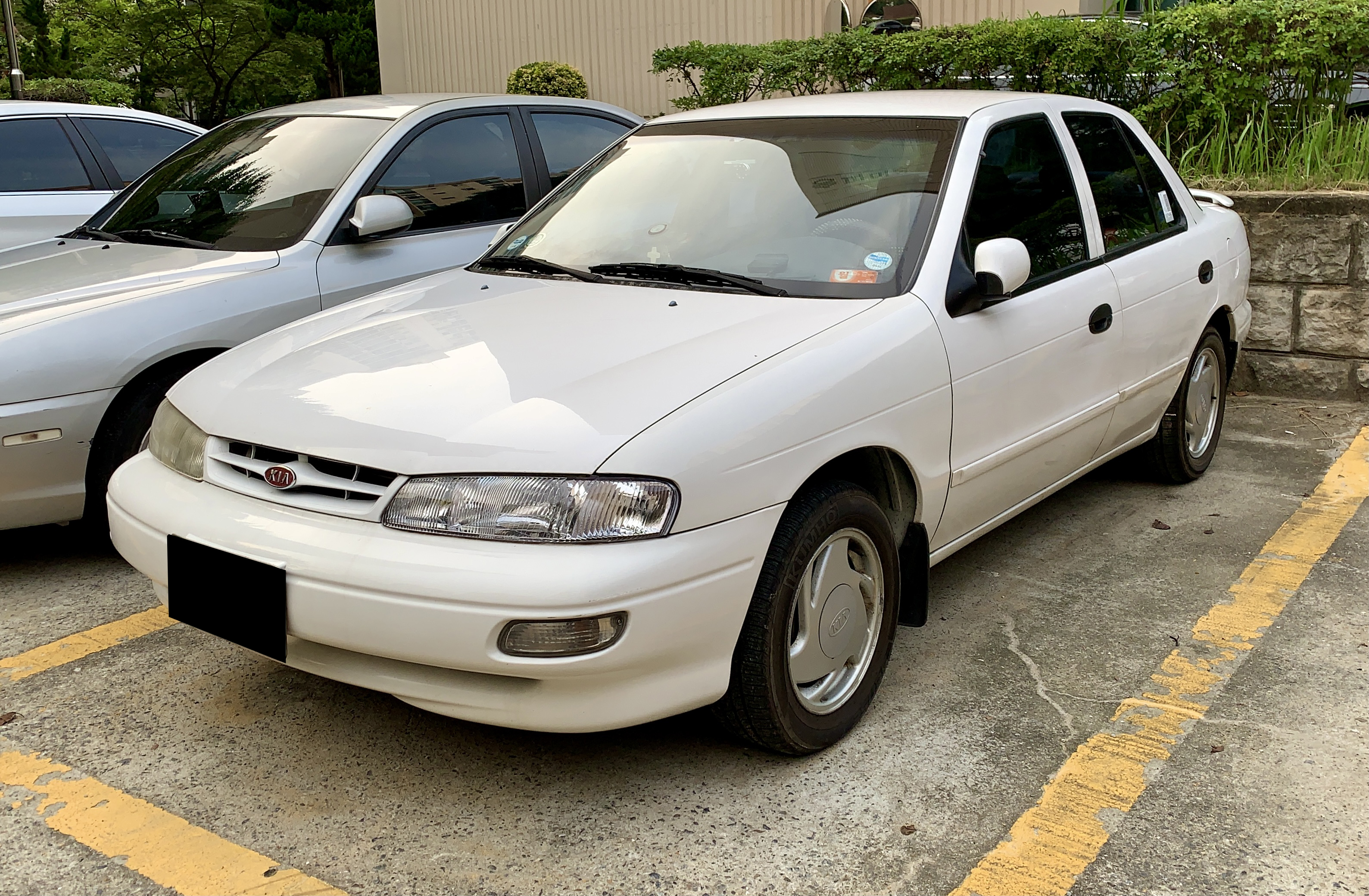
A very cheap compact car that was one of the first models Kia ever sold in America back in the 1990s. It was built to be basic, affordable transportation.
The ability of a car dealership to keep its customers coming back to them for oil changes, repairs, and future car purchases instead of going to a local independent mechanic.
The official paperwork a dealership service department writes up when you bring your car in for service, listing what needs to be fixed and how much it will cost.
A thorough check-up of your car's main parts (like tires, brakes, and fluids) done by a mechanic during an oil change to see if anything else needs fixing.
A former successful car dealership owner who is now a politician, known in the car business for his opinions on dealership regulations and customer trust.
The main computer system that runs a car dealership, handling everything from tracking which cars are in stock to processing the paperwork when you buy a car.
A dedicated team of callers at a dealership whose main job is to answer internet questions, make phone calls, and schedule appointments for customers to come in.
The parts and service departments of a car dealership. They are called 'fixed' because they provide steady, reliable income that keeps the dealership running even when car sales are slow.
LIVE
Hey, everybody, welcome back to another episode of the car dealership guy industry spotlight.
I'm your host Sam Dark and coming up today, the biggest problem in growing car sales today
isn't lead volume.
It's getting salespeople to actually increase outreach when they're already buried in CRM
data entry, follow up calls and scheduling.
The solution led one dealer to double his close rate in a matter of months joining me
today are Mike Martucci, general manager of Kia of Kenesaw and Kevin Esmezian, chief
product officer at Matador AI.
Props to Matador AI for supporting today's content, let's get into it.
So Mike, as we get started, you're at a Kia store.
Tell us who you are, where are your Kia stores, how many units do you sell a month and what
does your, what does life look like at Jim Ellis Kia?
Yeah, absolutely.
We're in Kenesaw, about 20, 30 minutes north of the city, one of the fastest growing parts
of the state.
So our store is pacing right around 1500 units this year and Kia is a hot brand, definitely
exciting, happy to be along for the ride.
How does service look?
It's statistically super reliable.
I know you say Kia and Hyundai and you assume everything needs a motor.
There was a subset there, just like everybody's got something going on, but you know, ultimately
at the end of the day, the car is very reliable.
The clientele is maybe not the most dealer friendly.
So that's been an interesting turn coming from a VW store where that consumer is just
a little more interested in us longterm.
But I think a lot of that is expectations and experiences and that'll just take time.
Yeah.
That's interesting when you say not as dealer friendly, give me an example of that because
I think that really builds on the need to have high service and creating an extraordinary
customer experience.
Ziggler, we have a Kia store as well.
We actually have a Kia and we have two Hyundai stores and it is an interesting, having both
sides of those brands, they are two very different brands.
And just to give you some history on me, in the mid 90s, I sold the first Kias in the
entire U.S. in Utah.
$54.95, you could buy a Kia Sphere, no air, steel wheels, manual steering and whatnot.
But when you say not as customer friendly to the brand, is that retention?
Is that engagement?
What does that look like, Mike?
It's really a retention piece from the dealer body to get that client back for the most
important aspect of their car ownership, which is the repetitive maintenance, understanding
why it's good to have a factory trained technician and a team that's consistent in the process
in the car go over it every time and not necessarily go into whoever is the least expensive down
the street, so to speak.
Yeah.
That's a big industry topic.
Cox recently came out with some data and talking about the defection from franchise dealer
service departments to independence grosses up, RO count is down, and that's something
the entire industry is focusing on.
What are you doing in 2026 to educate consumers better to bring them back to your shop versus
others?
Because there is oftentimes there's a misunderstanding or there's a myth out there that we're more
expensive at a franchise shop than a lot of those independence.
And Mike, my own research has shown that's not always the case.
It's often not.
We are hyper-priced competitive.
We research this just as much as we research a used car price before it goes online.
And at the end of the day, nobody's getting rich doing oil changes, even the independence.
That's something we look at as a retention tool and basically a break-even piece.
I'm not trying to make a bunch of money on a basic service.
Obviously, it's a business.
We're going to make money where we can.
But at the end of the day, I'd rather take care of the client's vehicle long term and be needed
for the tires, for the brakes, for the wipers, for the other things.
I think from an education piece to the most important thing that we've been working on
this year specifically is explaining that our car, along with most product, needs a full
synthetic oil change now.
And what is advertised at the independent starting at is never a full synthetic.
It's a semi-sin best case.
And it's usually court limited, which is also something we do not do.
We offer an oil change price for all of our product at one starting point.
But again, just it takes time.
It takes conversation and it takes that good experience.
When they get their video MPI, when we tell them they do not need this now,
that builds trust in the process long term.
And that's what's in that game.
The challenge, Mike, though, is you got to get them to the video MPI part.
So that means they've got to come in for that first oil change.
And what does that retention number look like at your store?
And versus where do you want to be?
What's the goal?
We were in the 30s.
It was poor.
And this year, we're going to hover around the 50% mark.
A lot of that is including that first service at no charge.
That's a big one, obviously, getting them back.
On some of our product, we include the first two.
And on some of the higher ticket product, we include the first two.
In my opinion, the person that's spending a little more money on their vehicle understands
coming to me.
And getting them back twice is a key part of our retention goal long term,
to get them back 34567 times.
So, Mike, that's a great need in service departments all across the country.
So props to you for filling that need of outreach education to increase your retention
and as you continue to even better that rate.
Let's talk sales.
Does that same need exist in the sales department today, Mike?
Yeah, absolutely.
At this store specifically, we have one of the things we've looked at this year
from a marketing perspective is obviously opportunity.
And when I started at this store, we were light on opportunity,
and we were also light on close rate.
It's a tough combination.
So in growing opportunity and growing the store, we have almost doubled our lead count
month to month, and we've also doubled our close rate on leads.
What was your solution to doubling your close rate?
I mean, the solution is the team, the process, the efficiencies associated,
and Matador is a giant tool within that tool bag.
It does a lot of the heavy lifting.
It handles infinite tasks at once, and it does it all within the guardrails and the
guidelines that we have set up for our business.
Because at JMLS, we are a little different.
We're upfront, honest, transparent, clean, insert all the good things here.
We don't play games.
So I'm here to provide information, help people to make a decision.
And at the end of the day, I need to sell a lot of cars associated
because I'm not trying to pack 23 whatever, thousand on top.
A double close rate is impressive on that.
Kevin and enter Kevin Matador with this.
Kevin, you're chief product officer.
When you got the call from Mike and Mike said,
hey, look, we're in a competitive environment.
We've had great strides in the service department on retention.
We need a way to fuel our engagement and our outreach and our response.
We've got good people.
We're doing the right thing.
We just need to be good or and right or and better.
And we want to help fuel that, Kevin.
What was your solution when Mike called with that?
Well, ultimately, I feel like every dealer is in a unique position.
Automotive is it's an interesting industry.
Overall, you're operating on a 23 percent return on sale.
And a lot of the times dealers are working to optimize their whole process
so that they can go from a 23 percent to maybe a five percent.
And that's great.
But overall, we're a very lean industry in that sense.
And so whenever we work with a dealer like Mike's,
we always work in about their specific situation.
So if you look at similar industries like healthcare, as an example,
people are using AI to become a lot more personal.
You can have five people with the same symptoms,
but their problem needs to be addressed in a specific way.
And so that's kind of how we look at helping dealers.
We use AI to, like Mike said,
make sure that their best performing staff is doing what they do best
and moving the needle when it comes to selling.
And then everything that's repetitive and mundane
and we can use AI to automate, we do automate.
And a lot of the times it's not a kind of a one size fits all single switch.
You can turn on that'll solve the problem overnight.
It's something where Mike chose Matador as his AI partner.
And together we've worked to improve that performance over time.
Okay. So you're saying, look, there's specific use cases for every dealership.
We're just trying to help every dealership meet them where they want to be.
But Mike doubled his close rate.
Like that's impressive.
How did you do that, Kevin at Matador?
How did you help enhance already good people to achieve that double?
So, you know, in Mike's situation, it's a lot of, like you said,
making sure that their best people are focused on the conversations
where they can really move the needle.
So it was on our end, just as simple as taking care of all of the overflow
or answering those mundane questions that AI could answer.
Is this vehicle in stock?
What's the interior color?
What is the mileage on this car?
Can you send me that car fax link?
A lot of these conversations and questions that people are getting,
AI is answering and answering quite well
with the goal of either bringing that customer in or selling that car.
And so we're very much a AI plus human collaborative company.
That's our vision for how people need to use AI, a plus plus rather than a replacement.
So when, you know, we would create a task for someone within Mike's store,
that's something that they can do to actually really move the needle.
Someone is discussing outdoor pricing or wants a better price for their trade-in.
So for us, it's really just understanding as a whole what conversations are occurring
and where we need to make adjustments.
To give you an example, Mike and I were looking at some of the stats yesterday
and we found that trade evaluations were converting slightly less than on average.
So for us, it was just as simple as maybe changing the strategy on how you would accept a trade-in
rather than asking for a win.
Maybe we can pull the value with a license plate.
There are small adjustments like this that are done over time.
And the compounding effect of that is like you said,
you double your closing or you double your sales month over month.
It's not a single switch, but as you activate these various automated messages,
AI working in after hours, answering messages, answering calls,
responding to customers, booking appointments, it just works.
All right. So let's start on transparency and trust.
So something Mike said in the very beginning said,
hey, we're a little different here.
We don't play any of the games or transparent.
By the way, Mike, hopefully every dealer in the country is a little bit different.
Oh, now they will be.
We feel like we're that way.
And you're probably referring to the FTC stuff that came out, the letter.
Bernie Moreno has been on the show.
He said, hey, this is a cleanup aisle 95 percent of the bad actors and automotive.
Absolutely. There's more scrutiny today.
And there's fewer dealers that wouldn't come forward and just Mike say, hey,
but in your market, Mike, what made you say, hey, I'm going to allow AI,
I'm going to trust AI in communications with my customer.
When the stakes with that customer and the trust and the transparency is so crucial, Mike,
what made you say okay with that in the beginning?
Yeah. The biggest thing for me is specifically with Matador is I mean,
I think we all do a lot of research before we bring a vendor on, right?
Yeah.
Especially a vendor that has the ability to guide a customer is more important than like
a website tool or anything like that.
And the biggest thing for me with Matador is the access to the back end to train that system
to be like me. I can tell it exactly what I would like it to do.
And I can tell it what to completely not do.
And in the off chance that it's confused and it's not sure,
it serves it up to my management team to confirm that it's right.
And if it's not right, it educates itself on being right the next time.
What's the format that serves it back up to your management team?
So like a dashboard is a text?
It's a text. It's a task. It pops right on the home screen.
It's integrated into Chrome. And it's real time.
The customer asked this, I think I'm going to say that. What do you think?
And me talking to you nine times at a time, it's right because I've used the tool for so long.
I've got it trained. But you know, initially it was, I wouldn't say that.
I would say this and it serves that up and it remembers the next time this comes my way.
I'm going to try Mike's approach, not my approach.
It occurs to me that the role of a GM in 2026 now includes for the first time ever
leading, managing, developing AI. A good general manager in 2026 needs to understand it,
needs to know how to buy it, needs to know how to articulate ROI,
and then needs to know how to develop it over time. Fair.
Fair. You got to play the game where the ball's at. You know what I'm saying?
Was it a concern to you initially when you said, hey, I'm going to turn this over?
Or did you know enough about the tool to feel pretty confident in how it worked?
Sure. It's a concern. Just like a concern I would have maybe with a new employee that's
absolutely educated. It's the same level of concern, but I had enough experience
with them. I felt comfortable enough with trying it. And once I was able to see the guardrail
approach where it's not just going to answer the question just because that was huge for me.
Because initially there was a lot of, if the customer asks about a price pause,
if the customer asks about a trade pause, and just we had a lot of alerts. And then we realized
over time, hey, it can actually take that off our plate too. And even I spoke with Kevin yesterday,
we're going to allow it to tell the customer what the price is with tax in our state when they ask.
Which you should. Why wouldn't we do that anywhere? Right? What is it about automotive that says,
hey, hold that back. That's going to somehow give us leverage. It doesn't. It creates distrust,
doesn't it, Mike? Yeah. Just get it out there. It's not a secret. surprise. And
at the end of the day, the fact that that's another confidence step I have in the tool
being able to be accurate and correct, I'm okay with it. We've all bought an
automotive, a DMS. We've bought a CRM. We've bought an inventory management tool. And it's a tool
that is in a box and it just does certain things. And you can call a call center and maybe six months
later, they'll innovate it a little bit or they'll change a little bit. Kevin, I think you freaked
a lot of people out by saying, hey, you know what? Over time, we develop additional capabilities,
additional solutions based on Mike's need. And I don't know too many dealers that wouldn't engage
to help create those additional capacities to get a double close rate. So how crazy, how surprising
is it to some dealers to see how you innovate and you'll adapt over time and how that actually
makes the tool better for your individual store, Kevin? Ultimately, you have tech companies and
you have automotive companies. And then you have automotive tech companies. And a lot of the times,
I feel like there might be a bit of a disconnect between the reality of what happens at a store
and kind of the castle that we live in on the tech side. So at Matador, it really doesn't work
that way. We live in the details. We look at real conversations for specific stores, see where we
can move the needle, see if we've dropped the ball. And the outcome of that is getting real
feedback from dealers like Mike and always staying on our feet and quickly adjusting the way the AI
communicates the different features that has access to and the different methods it goes about
booking appointments, re-engaging cold leads, following up with lost customers. And so ultimately,
the outcome of that for a store like Mike's is two thirds of his appointments are booked by AI.
And he has the double the average engagement rate than the national average. So it really works
once a dealer like Mike's is willing to work with us to really make the AI become the brain and
voice of the dealer and really essentially become a clone of Mike. So we have kind of a mini Mike
AI in the background kind of directing how the conversation should be going. And ultimately,
once he's fed that great knowledge and insights and dealer intelligence, then everything customer
intelligence and all of that great work that we do on the data side really just all comes together
into providing an exceptional customer experience. And I think ultimately, when you provide that
exceptional customer experience, which is the goal of everyone in this, right, the the dealer
wants to provide that we want to help the dealer provide that. And the customer ultimately is
craving for that. Once those three things come together, it becomes an unstoppable force.
So Mike, do you have a BDC or do your salespeople directly engage? Do you have a BDC department?
I do have a BDC. How what's the size? 33 Yeah. Three team members handled 696 leads
last month. Wow. It assisted by Matador AI with the double the close. Only way to do it. Yeah.
That 32 members can handle 700 almost 700 leads by themselves.
So for other dealers looking to do the similar 700 leads, three team members fueled by AI,
double close rate. How do you create an environment in that BDC and then on your sales floor where
people aren't competing with AI? They're seeing it as an enhancement to their efforts.
The biggest thing for us at the store is obviously the team understands how important this is to me.
Yeah. It's top down. You know, we were in the newspaper 20 years ago.
Yeah. I mean, it's just. News what? You were in a phone book too, a phone. Yeah. If we're not
utilizing this tool, somebody else is. And I will let you know that that person has an advantage
because it's your borderline, your best employee from I need you to do this perspective and only this.
So just thinking about your increased retention in service, Mike, back into fixed ops, Kevin,
you you threw out a stat in the green room about AI's ability to engage with service customers
and close that appointment. We saw it in sales. What are those numbers look like in fixed operations?
Well, we see numbers close to 90 percent booking rates for service customers. It's a different
conversation for a service customer. They're looking to schedule service for their car,
whether this dealer does it or the dealer down the road does it for them. There really isn't
much of a difference ultimately comes down to two things, price and experience. Now on the pricing
side, obviously that's fully dealer controlled and they can try to stay competitive. But when it
comes to that customer experience, it really comes down to did you miss that call at, you know,
6 30 p.m. for a customer who just wants to schedule their car for an oil change early
tomorrow morning. But, you know, your store is closed. So nobody picked up the call. And then
that customer was never booked. So he goes down the street. Yeah, the matter door, you avoid that
like a lot of the after hours, a lot of the the conversations that, you know, you would have missed
now don't get missed and ultimately do come into your service drive. And when you have the system
spread throughout, you know, on the sales side, whenever you sell a car, you can drive them to
your service drive. Whenever you bring someone into your service drive, maybe you can offer them a
trade in and then bring them into sell a vehicle. So it's a whole life cycle commitment. Yeah,
exactly. And Matador as a whole was built to maintain and help that customer throughout
their journey from the starting point of a cold lead all the way down to a customer who's been
servicing with you for three years and who won't buy a car anywhere else. And I'll tell you what
Mike started with the beginning of the show was that need for the customer to be educated in service.
I also think to Mike's point, we've got to do a better job of connecting faster. We had the
the service manager, we I've talked a lot about it from Longo Toyota, the biggest Toyota dealership
the entire country said, Hey, at the moment, a customer has to call our service department,
we've already done them in this service, we should be able to outreach before. And the fact is,
according to CDK, of all the people who call service 25% get put on hold and the average hold
time for those 25% is nine minutes. And so I think there's so much wisdom behind having some
automation behind that, again, to help level up that place. So Mike, as we wrap up today,
you know, you you made the selection in the company where you went all in on this AI piece.
How could it have gone wrong in the implementation? Educate myself, which I think is kind of where
it starts just when you're looking to make a change like this is the biggest thing for me and and
choosing Matador is the conversational AI aspect of their program. There are a lot of AI tools
out there that are if them, if the customer says this, do that, if the customer says that,
do this, the challenge with those tools is they're not smart, and they don't understand
the context of the conversation. And that's where I feel Matador wins with the escalation to me or
the team regarding, hey, I think this person's asking this, and I think I should say X, Y, Z,
but I'm not sure. Can you check? And then remembering that the next time that comes its way,
it doesn't. It's confused. And that's the that's the biggest benefit, especially in the
remoteable years in is I have a lot of confidence in what I've dumped into the tool with their help
to make it better. Kevin, what do you see as far as, you know, you probably have come dealers who
come to you after onboarding, having a bad experience? You know, one of my theories is the
better the AI, the better the reps you've got to have to help plug that in. Mike, Mike endorses
that. What do you see on that? What tips would you give to dealers in 2026 to find the right AI
and the right representation to plug it into your store? Well, you hit the nail on the head, Sam.
Um, software like Matador will help a dealer go from having maybe 100 conversations a day
to having now thousands. And so when you're now dealing with such a high volume and you have a
kind of a group of people who now are having to sell one car to 10 people who are interested,
it's a bit of a learning curve. So what we like to do is we like to go through a crawl,
walk, run approach where when we start working with a dealer, we go through this onboarding
period where they work closely with an AI engineer to set up the system. We'll set up a few of these
automated messaging workflows that, you know, kind of help push the customer further along
that journey. And like Mike was saying in the beginning, you know, there's a lot of questions.
Do you have dealer freeze? Do you sell cars out of state? Do you offer out the door pricing
before someone walks in this information that will naturally collect over time? But it's a bit
front loaded, right? We go through that learning period right at the beginning. And so for dealers,
I feel like the pitfalls that they can fall into is they'll see AI and they'll think of it as a
kind of a solution to all of their problems. And they just want to activate it and activate as
much as they can as quickly as they can. And so it really takes a partner to work with the dealer
to say, Hey, let's look at your business. Let's see where you're dropping the ball where we can
help the most right now. And then lift up a plan to scale you up over the next three months.
You've got to stay engaged as you go throughout the process. Otherwise, it just thought out won't
work. You can't abdicate any of that. Well, Mike Martucci, General Manager Jim Ellis,
Kia and Kevin Esmezian, Chief Product Officer, Matador AI. Thank you both for being on the show.
And Mike, props on that double close rate. Then thanks for sharing this great solution with us.
Thank you, Sam. Appreciate it. Thanks, Sam.
About this episode
Kia of Kennesaw General Manager Mike Martucci and Matador AI Chief Product Officer Kevin Esmezian join the show to discuss how dealerships can double their close rates and boost service retention. Martucci shares his experience managing a high-volume Kia store, tackling the challenge of customer retention, and transitioning to synthetic oil education. Esmezian explains how Matador AI automates repetitive customer queries—like vehicle availability and trade-in valuations—allowing sales teams to focus on high-value interactions. It is a fascinating look at the practical, trust-building applications of AI in modern automotive retail.
In this episode of the Industry Spotlight, joining host Sam D'Arc are Mike Martucci, General Manager at Jim Ellis Kia, and Kevin Esmezyan, Chief Product Officer at Matador AI to discuss how conversational AI is turning a three-person sales team handling 700 leads a month into a machine that doubles close rates and books service appointments at nearly 90% — while most dealers are still missing after-hours calls and watching customers drive to the competition.
Mike walked into a store with a light lead count and a low close rate and used Matador AI to nearly double both.
Today, three team members handle 696 leads a month, two-thirds of all appointments are booked by AI, and his service retention rate has climbed from the 30s to 50%.
Kevin explains how a crawl-walk-run onboarding process builds an AI that learns a dealer's specific playbook, and why the compounding effect of small adjustments over time is what actually moves the numbers.
This episode of the Car Dealership Guy Podcast is brought to you by Matador AI.
Topics:
05:00 Service Retention From 30% To 50%.
06:20 How One Dealer Doubled Close Rate.
07:50 Auto's 2% Profit Margin Problem.
11:35 Why Mike Trusts AI With Customers.
12:50 The AI That Learns To Think Like Mike.
13:45 The GM's New Job In 2026.
15:50 Why Auto Dealers Hide Pricing.
17:10 AI Books Two-Thirds Of Appointments.
18:20 Three BDC Staff Handle 700 Leads.
19:10 The Phone Book Lesson Every Dealer Needs.
21:20 The AI That Covers Customer Lifecycle.
23:20 Why Most AI Tools Fail Dealers.
Matador AI - Most dealerships are losing leads in the follow-up. Matador AI fixes that. It's not generic automation. It's dealership-trained AI, built on millions of real conversations and optimized around what converts. In a thin-margin business, every conversation matters.
Book your demo today and get your first month free @ here.
Check out Car Dealership Guy’s stuff:
For dealers:
CDG Circles ➤ https://cdgcircles.com/
Industry job board ➤ http://jobs.dealershipguy.com
Dealership recruiting ➤ http://www.cdgrecruiting.com
Fix your dealership’s social media ➤ http://www.trynomad.co
Request to be a podcast guest ➤ http://www.cdgguest.com
For industry vendors:
Advertise with Car Dealership Guy ➤ http://www.cdgpartner.com
Industry job board ➤ http://jobs.dealershipguy.com
Request to be a podcast guest ➤ http://www.cdgguest.com
Car Dealership Guy Socials:
X ➤ x.com/GuyDealership
Instagram ➤ instagram.com/cardealershipguy/
TikTok ➤ tiktok.com/@guydealership
LinkedIn ➤ linkedin.com/company/cardealershipguy
Threads ➤ threads.net/@cardealershipguy
Facebook ➤ facebook.com/profile.php?id=100077402857683
Everything else ➤ dealershipguy.com