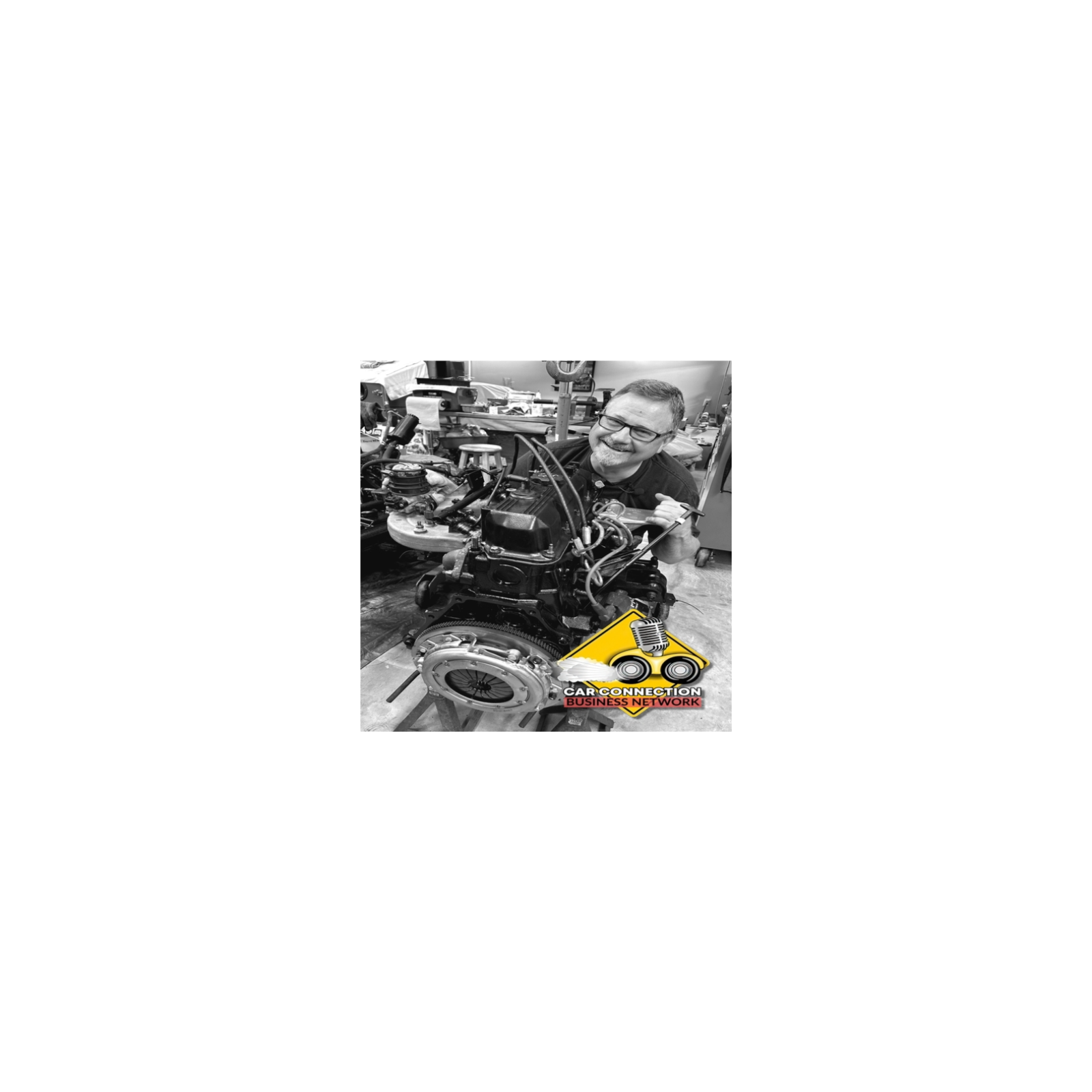
"Stop Throwing Parts at Your Car! Why Intermittent Problems Cost You BIG "
About this episode
A lively workshop-style show that mixes weather, community shout-outs, and a deep dive into real-world car problems. The main focus is on why intermittent faults are so hard to diagnose and why “throwing parts” at a vehicle wastes time and money. The host also warns about widespread reliability issues in newer GM vehicles, diesel injection pump failures, and serious concerns about EV battery fires, insurance, and safety. Practical maintenance and doing your own homework are recurring themes.
Ever brought your car into the shop for a noise...and suddenly it disappears?
In this episode of the Motormouth Morning Drive Podcast, we break down one of the mlost frustrating realities in the automotive world-
intermittent problems. Noises that come and go, random no-starts, issues that refuse to show themselves when it matters most.
Here's the truth:
👍 If we can't duplicate the problem, we can't diagnose it properly
👍 And if we can't diagnose it, we're NOT throwing parts at your vehicle.
We dig into:
1) Why intermittent issues are so difficult to fix
2) The danger of the "parts cannon" approach
3) Why patience between technician and customer matters
4) Real talk about modern vehicle quality ( especially domestic vs. older platforms )
5) Current concern in the auto industry, including EV battery safety discussions NHTSA
This is the side of automotive repair most people never hear - until it costs them money.
If you've ever said, " It was just making that noise yesterday!"...this one's for you.
#CarRepair. #AutoDiagnostics #Motormouth
Motormouth Merch Available in our online store at (ccbusnet.com) proceeds to Total Freedom Addiction Campuses Canada & USA Where a New Life Awaits those ready to kick their addiction for good! ❤️ Your Support Is Amazing Friends Skippy & Motormouth.
👍 "95% of you watching aren't subscribed-don't miss out.
Hit LIKE,SUBSCRIBE, ring the bell so you don't miss the next rescue, real-world repair, and no -BS car advice."
More Episodes and.... project Details & Links are available at Car Connection Business Network .com (ccbusnet.com) you'll find everything on our home page if you'd like to follow the build & Repair work & connect with our program partners. Appreciate your support of our sponsors friends, Nile Motormouth Jenkins.
Happy Healthy Motoring Friends, Peace Patience Kindness Always.
E=Mail Anytime to: [email protected] or [email protected]
See You in the Next One, Skippy & Motormouth
Car Connection Workshop
"so I'll be working on thumbnails for those almost 200 podcasts... so wherever you're pulling your podcasts from, Car Connection Workshop and the search bar..."
They’re talking about where to find the podcast and related content online. It’s basically a “where to listen/watch” and community update.
This segment is mostly about the show’s online presence—where listeners can find podcasts, videos, and community links. It’s not a technical automotive discussion, but it frames how the hosts distribute content for the episode.
COVID disaster
"after the COVID disaster, we'll just pull over and leave that parked right on the side of the road..."
They mention that COVID caused problems for their plans, and they’re rebuilding now. It’s not about car tech.
The hosts reference the COVID period as a disruption that affected their operations and rebuilding efforts. This is a general life/business context mention rather than an automotive concept.

Toyota Fj
"“but today, do you know what today is? Today is Toyota FJ day, today is the day when we get everything back, I get everything back in under the hood…”"
They’re talking about a Toyota FJ Cruiser. It’s a rugged Toyota SUV, and the host is using this “FJ day” to fix problems they found while working on the engine area.
“Toyota FJ day” refers to the Toyota FJ Cruiser, a rugged off-road SUV known for its simple, durable design. In this segment, the host is working “under the hood” on an FJ and troubleshooting issues that show up during service.
power steering reservoir
"“and one more thing, the power steering reservoir looks kind of tardy inside… it’s very difficult to read the depth of the power steering fluid”"
The power steering reservoir is where the fluid for your power steering lives. If it looks dirty or the fluid level is hard to see, you can’t tell if the system has enough fluid or if something is going wrong.
The power steering reservoir is the container that holds power steering fluid and supplies it to the steering system. If the reservoir is contaminated or hard to read/inspect, it can make leaks and fluid level issues harder to diagnose.
power steering fluid
"“it’s dark and kind of tarnished… very difficult to read the depth of the power steering fluid… fired it up, turned the steering wheel and all I heard was… there’s this big stream of power steering fluid spewed across the parking lot, going well, we have a leak”"
Power steering fluid is what makes it easier to turn the wheel. If fluid suddenly sprays out when they start the car or turn the wheel, that usually means there’s a leak somewhere in the power steering system.
Power steering fluid is the hydraulic fluid that helps the steering system apply assist. When the host describes a “big stream” of fluid spewing out after turning the wheel, it strongly suggests a leak in the hoses, reservoir, or related fittings.
stainless line
"“so I’m going to knock that off, take it out, pull the hoses off before I put the new stainless line in there…”"
They’re talking about replacing a power steering fluid tube/line with a stainless one. Stainless is chosen because it resists rust and tends to last longer.
A “stainless line” refers to replacing a power steering fluid line with a stainless-steel version. Stainless lines are often chosen for corrosion resistance and durability compared with some older or less corrosion-resistant tubing.
flush it out with some mineral spirits
"“is take the reservoir off, flush it out with some mineral spirits, clean it all up, put it back on and then we can build it back better”"
They’re cleaning the reservoir using mineral spirits before putting everything back together. That helps remove leftover grime so the power steering system works properly after the repair.
Flushing with mineral spirits is a cleaning step to remove residue/contamination from the reservoir and related components before reassembly. The goal is to get rid of gunk so the new fluid and system operation aren’t compromised by debris.
intermittent problems cost you BIG
"...Stop Throwing Parts at Your Car! Why Intermittent Problems Cost You BIG ..."
If a problem comes and goes, it’s harder for a mechanic to catch it while it’s happening. That can lead to replacing parts that don’t fix it, which costs a lot more money.
The episode’s core point is that intermittent failures are expensive because they’re hard to diagnose and often lead to repeated “parts swapping” instead of finding the real root cause. When the problem isn’t happening consistently, technicians may chase symptoms rather than the underlying fault, which drives up labor and parts costs.
throwing parts at your car
"...Stop Throwing Parts at Your Car! Why Intermittent Problems Cost You BIG ..."
It means guessing and swapping parts instead of figuring out what’s really wrong. When the problem is random or intermittent, guessing usually costs more and fixes nothing.
“Throwing parts at your car” describes replacing components without a confirmed diagnosis. With intermittent issues, this approach often wastes money because the replaced parts may not be related to the actual failure mode.
replace parts vs diagnose
"...Stop Throwing Parts at Your Car! Why Intermittent Problems Cost You BIG ... so receiving emails saying this is what I'm going through..."
The episode’s theme is that “throwing parts at a car” without proper diagnosis is costly—especially with intermittent issues. A better approach is to gather evidence, confirm symptoms, and verify the root cause before replacing components.
flatbed
"...third motor, there it is being loaded up on a flatbed, almost a hundred thousand dollar vehicle..."
A flatbed is a tow truck where the vehicle is loaded onto a platform. It’s used when the car isn’t safe to tow normally.
A flatbed tow truck is used when a vehicle can’t be safely driven or when towing it normally could cause damage. For cars with major drivetrain or electrical issues, flatbed towing is often the safest option.
EV disaster
"...so you might want to take a secondary, I say all that to say this and now you got the EV disaster that I knew was coming..."
The host is saying EVs can still have serious problems that get expensive. Even though they’re different from gas cars, you still have to stay on top of maintenance and get issues diagnosed correctly.
The host is referring to EV reliability/ownership challenges that can show up as expensive failures or recurring issues. The key takeaway is that EVs still require careful maintenance and troubleshooting—especially when problems are intermittent or hard to reproduce.
EV challenge
"...but it's happening, so if you have an EV it's gonna be a challenge for you, I'm just saying this is the issue folks that I've talked about..."
Owning an EV can be tough if something breaks and it takes a long time to fix. The point is to catch problems early and don’t just guess at what part is bad.
EV ownership can be challenging when failures are difficult to diagnose, parts are specialized, or repairs take longer than expected. The host frames it as a need for better “alarm bell” awareness and more disciplined troubleshooting rather than random parts replacement.
oil filter plugs up
"...don't pack miles on and see how far you can go before that $3 oil filter plugs up..."
If the oil filter gets clogged, the engine may not get enough clean oil. Without oil, parts can overheat and wear out fast—sometimes causing major engine damage.
When an oil filter plugs, oil flow can be restricted, starving engine components of lubrication. That can rapidly lead to overheating and catastrophic engine failure if the restriction isn’t corrected.
blow off valve
"...before that $3 oil filter plugs up because it doesn't have a blow off valve and blows the filter right off the oil filter housing and blows the motor..."
A blow-off valve helps control pressure in turbo engines when you lift off the gas. If the system isn’t set up right, pressure can build up and cause big problems.
A blow-off valve is used on some turbo setups to vent pressure when the throttle closes, helping manage boost and protecting the system. If a vehicle lacks the correct valve/strategy, pressure and oil-control issues can contribute to severe engine damage.
oil filter housing
"...and blows the filter right off the oil filter housing and blows the motor..."
The oil filter housing is the part that holds the oil filter in place and channels oil through it. If the filter clogs or pressure gets weird, it can cause leaks or even damage the filter setup.
The oil filter housing is the component that holds the oil filter and routes oil through it. If oil pressure/flow issues occur (like a clogged filter), the housing and filter can be stressed, potentially leading to leaks or filter failure.
engine protection
"then you're gonna pay down for it but it's okay, it's cheap form of maintenance to protect your engine, so here we are folks, the lid is off Pandora's box with these EVs bursting into flames"
They’re saying using the right filter helps keep the engine safe from dirt and debris. A cheap or wrong filter can let contaminants through and cause damage over time.
The segment starts by arguing that using a proper filter is a form of maintenance to protect the engine. While the exact filter type isn’t specified, the underlying concept is that filtration affects how much contamination reaches the engine.
EVs bursting into flames
"then you're gonna pay down for it but it's okay, it's cheap form of maintenance to protect your engine, so here we are folks, the lid is off Pandora's box with these EVs bursting into flames and there's nobody excluded, it's Volvo, it's BMW, it's Mercedes, it's Ford"
They’re talking about electric cars that catch fire. When the battery gets too hot, it can keep worsening fast, so it’s important to get people out immediately.
The hosts are discussing rare but high-impact incidents where an electric vehicle catches fire. These events are often tied to battery thermal runaway, which can escalate quickly and be difficult to stop once it starts.
Volvo
"and there's nobody excluded, it's Volvo, it's BMW, it's Mercedes, it's Ford with their Maki, thank goodness we only have one in the neighborhood here"
Volvo is mentioned as one of the automakers whose EVs are included in the discussion about battery fire risk. The point is that no brand is immune to the underlying battery safety challenges.
BMW
"it's Volvo, it's BMW, it's Mercedes, it's Ford with their Maki, thank goodness we only have one in the neighborhood here"
They mention BMW as another EV maker in the conversation. The takeaway is that this kind of problem can happen across different brands.
BMW is called out alongside other automakers in the context of EV fire incidents. The hosts use it to reinforce that battery-related safety issues can affect multiple brands.
Ford
"it's Volvo, it's BMW, it's Mercedes, it's Ford with their Maki, thank goodness we only have one in the neighborhood here"
They mention Ford as another company that makes EVs. The takeaway is that EV-related safety incidents can happen to many brands.
Ford is mentioned as part of a group of automakers discussed in the context of EV fires. The hosts are emphasizing that the issue can show up across the industry, not just one niche brand.
Mercedes
"it's Volvo, it's BMW, it's Mercedes, it's Ford with their Maki, thank goodness we only have one in the neighborhood here"
They bring up Mercedes as another brand making EVs. The point is that EV fire risk isn’t exclusive to one brand.
Mercedes is included in the list of automakers whose EVs are discussed in relation to battery fires. This supports the broader argument that EV safety concerns aren’t confined to a single manufacturer.
thermal runaway
"you only have three seconds once it bursts into flames to get it into the lake to shut it down, yeah it's just it's crazy, yeah you go online you will find real life videos where when one of these EVs bursts into flames you literally have, the firefighters say you literally have three minutes to get out"
Thermal runaway is when an EV battery starts overheating in a way that can’t easily be stopped. Once it begins, it can spread inside the battery and the fire can grow very quickly.
Thermal runaway is the battery failure mode where one cell overheats and triggers neighboring cells, releasing more heat and energy. In EV fires, this can make the situation escalate rapidly, which is why the hosts emphasize extremely short escape windows.
battery fire escape window
"you only have three seconds once it bursts into flames to get it into the lake to shut it down, yeah it's just it's crazy, yeah you go online you will find real life videos where when one of these EVs bursts into flames you literally have, the firefighters say you literally have three minutes to get out"
They’re talking about how fast an EV fire can get serious. The important idea is to get people out right away, not to focus on the car.
The hosts stress how quickly EV fires can become dangerous and reference emergency guidance about how much time people have to escape. This is a safety concept—prioritizing immediate evacuation over trying to save the vehicle.
BYD
"right now I knew this part was coming because these batteries are made by a company in China called BYD, they're still trying to put out a fire at their plant where they stored all their test EVs"
BYD is a company that makes EV batteries. The host says BYD had a fire at a plant where test vehicles were stored, which is part of why they’re talking about battery safety.
BYD is identified as the company in China making the batteries used in the EVs being discussed. The host claims BYD was dealing with a fire at a facility storing test EVs, tying the incident to battery safety and manufacturing/testing practices.
thermal takeoff
"...just launched themselves into thermal takeoff and what that means is the cells and the batteries are failing... so the batteries are defective... your insurance company is going to give you a notification of the EV... it better not be within 50 feet of the house, because when they burn in your garage takes the whole house down"
Thermal takeoff is when an EV battery starts overheating in a way that keeps getting worse. If it can’t be controlled, it can lead to a serious fire, which is why the hosts are warning people about parking and insurance.
“Thermal takeoff” is a runaway battery failure where heat accelerates internal damage, which can lead to smoke or fire. It’s often discussed in EV safety contexts because battery cell failures can cascade if the system can’t stop the heat buildup.
cells and the batteries are failing
"...thermal takeoff and what that means is the cells and the batteries are failing because of foil inside the battery..."
An EV battery is built from many smaller battery units (“cells”). If those cells start failing, the battery can overheat and become unsafe.
EV packs are made of many individual battery cells, and a failure at the cell level can compromise the whole pack. The segment suggests the issue is internal to the battery construction, leading to defective cells and subsequent overheating.
foil inside the battery
"...the cells and the batteries are failing because of foil inside the battery, it's supposed to insulate the cells of the battery are folded over..."
They’re saying there’s a thin insulating material inside the battery (“foil”) that’s supposed to keep parts from touching. If it’s folded wrong, it could contribute to a short or overheating.
The hosts claim a “foil” component inside the battery pack is involved in insulation and that it may be folded incorrectly. In battery design, insulation layers help prevent short circuits between parts of the cell.
EVs and containers on the container ship
"remember the fire on the ship, do you know what caused that, EVs and containers on the container ship... how does that fire get started and how's it going to burn out, they couldn't put it out..."
They’re connecting a past cargo-ship fire to EVs being shipped in containers. The point is that once a battery fire starts, it can be hard for responders to put out quickly.
The segment ties a prior ship fire to EVs being transported in shipping containers. The key idea is that EVs (and their batteries) can be difficult to extinguish once a fire starts, and containerized cargo can complicate response.
insurance companies jumping on this with policy underwriting
"so now insurance companies jumping on this with policy underwriting that just wait for it, you're going to get a letter that says you can't park..."
Insurance underwriting is how an insurance company decides if they’ll cover you and what rules they’ll require. The hosts are saying insurers may restrict where EVs can be parked if they think the fire risk is too high.
Underwriting is how insurers decide whether to cover a risk and on what terms. The hosts describe insurers responding to EV fire risk by changing coverage conditions (like where the vehicle can be parked) after incidents or safety findings.
underwritten
"I've said this for a long time now, it's going to be underwritten if these things can't behave and they burst into thermal takeoff..."
Underwritten means the insurance company is deciding the risk and setting the rules for your coverage. The hosts imply EVs with safety concerns may come with stricter parking or coverage conditions.
“Underwritten” refers to the insurer’s risk assessment that determines coverage terms. Here it’s used to suggest EV coverage will depend on whether the vehicle behaves safely and whether it’s associated with thermal runaway events.
NHTSA
"...you sold me an unsafe vehicle because NHTSA is involved now, the National Highway Traffic Safety Act has been watching very closely..."
NHTSA is a U.S. government agency that looks into car safety problems. If they investigate and find an issue, it can lead to recalls. It’s a sign the problem may be taken seriously beyond just a complaint.
NHTSA is the U.S. National Highway Traffic Safety Administration, which oversees vehicle safety and can investigate defects. When NHTSA gets involved, it can lead to recalls or enforcement actions. Mentioning it signals that alleged safety issues may become formal and public.
recalls / safety investigations
"...you sold me an unsafe vehicle because NHTSA is involved now... so has the insurance companies, so get ready..."
The transcript implies that safety investigations by regulators and scrutiny by insurers can escalate when problems are widespread. In practice, this often leads to recalls, warranty extensions, or legal pressure on manufacturers. For owners, it changes what’s covered and how quickly issues get resolved.
General Motors
"...engines are dropping like flies on domestics, especially I'm particularly, particularly general motors..."
General Motors is one of the big car companies. The speaker is saying GM vehicles have been having reliability problems. If you own one, it’s worth checking recall and service history.
General Motors (GM) is a major U.S. automaker, and the host is specifically calling out GM vehicles for reliability issues. When a brand is singled out like this, it’s usually about recurring failures or widespread complaints. Listeners may want to connect this to known defect patterns and how to check for recalls.
C4 injection pump
"...the C4 pumps, you better do your homework on the C4 pumps on the Fords you guys because that's a $6,000 disaster waiting for you, so there's a tip for you this morning, the C4 injection pump..."
An injection pump is part of the diesel fuel system that pressurizes and delivers fuel to the engine. The host is warning that this particular pump can fail in a very destructive way. If it breaks apart, it can damage the rest of the engine too.
The “C4 injection pump” is described as a diesel fuel-injection component that can catastrophically fail. In the transcript, the failure mode is severe: it “explodes” and sends metal shrapnel through the engine. This is a high-impact failure because it can destroy multiple internal parts, not just the pump itself.
replacement batteries
"...they don't have a fix because the batteries built by China and their BYD factory and Google that BYD China you'll then you'll catch up they don't have replacement batteries ding ding ding"
“Replacement batteries” refers to the cost and availability of swapping out a failed battery pack, which is a major factor for electric vehicles. If a manufacturer doesn’t have a clear replacement-battery supply plan, owners can face long waits or high costs. This also ties into how quickly a safety or defect issue can be corrected.
Q&A
"Saturday is Q&A one hour of Q&A I usually have time to cover three questions..."
Q&A means the host takes questions from listeners and answers them. It’s usually where you get practical advice for real car problems. If you’re dealing with a weird, on-and-off issue, this is the kind of segment where you can ask for next steps.
Q&A indicates a structured segment where the host answers listener questions. For car owners, these segments often cover diagnosis, repair decisions, and “what should I do next?” guidance. It’s a useful format for intermittent-problem troubleshooting because it invites specific symptoms and context.
City Auto Sales and leasing
"I'm going to tell you I won't tell you how long so thank you to City Auto Sales and leasing Earl Louise Grant the husband and wife team out there in greater Toronto areas pre-owned premier pre-owned auto store you'll always get a low mileage quality vehicle at a fair price there"
They’re talking about a specific used-car dealership and why they trust it. The point is that you should be able to buy a used car there without getting tricked.
The host is promoting City Auto Sales and leasing as a dealership option for buying a used vehicle. They emphasize “low mileage quality” cars and a “fair price,” positioning the shop as trustworthy for pre-owned purchases.
pre-owned auto store
"Earl Louise Grant the husband and wife team out there in greater Toronto areas pre-owned premier pre-owned auto store you'll always get a low mileage quality vehicle at a fair price there"
They’re talking about buying a used car. The emphasis is on choosing a place that sells decent used vehicles instead of risky ones.
The host frames the dealership as a “pre-owned” auto store, focusing on used-car buying. This is part of the episode’s broader theme of making smarter purchase decisions rather than taking risks.
headlight
"...the other tech changes the headlight with the right hand as long as the job gets done"
A headlight is the front light on a car. The point is that even a simple replacement should be installed correctly so it works and stays secure.
A headlight is a lighting assembly that can be replaced as a service item, but proper installation matters for alignment and secure mounting. The host uses it as an example of how apprentices can work differently as long as the final result is correct.
right and tight
"...as long as the job gets done and it's done well and it's finished and it's right and tight doesn't matter"
“Right and tight” means everything is put back the right way and tightened properly. It’s about doing the job correctly so nothing comes loose later.
“Right and tight” is shop talk meaning the job is completed correctly and fasteners are properly tightened to spec. It’s a reminder that even simple tasks (like replacing a headlight) can create problems if components aren’t secured correctly.
mysterious noise
"...we get into an area where we feel we're a bit packed in the corner when we have a mysterious noise or an intermittent problem with an automobile those are the two pet peeves that I have as well"
A “mysterious noise” refers to an unexplained sound that may be hard to reproduce and may have multiple possible causes (suspension, brakes, driveline, body mounts, etc.). The host emphasizes that these are especially challenging because you need to identify the exact moment and conditions when the noise occurs.
road test with the customer
"I would much rather uh if I could go for a road test with the customer and we you know the the client can point out the noise and it's there to hear it and it's continuous"
A road test with the customer is a diagnostic technique where the owner helps reproduce the symptom while the technician listens and observes. This improves accuracy for noises and intermittent issues because the technician can correlate the sound with driving conditions and timing.

2010 dodge grand caravan
"...that I like because I know we can nail it I know so because we just did it on the 2010 dodge grand caravan yeah it was thumping and banging in the right rear so you have to watch"
A Dodge Grand Caravan is a minivan. The point here is that when a weird noise shows up, the best way to fix it is to hear it for yourself during a drive, not guess from the symptoms alone.
The Dodge Grand Caravan is a minivan platform that’s common in family fleets and daily driving. In this segment, the host uses a 2010 example to illustrate diagnosing an intermittent noise—specifically a thumping/banging from the right rear—by confirming it during a road test.
no start
"...the flip side of that coin is an intermittent no start is enough to put any service tech... if you drop the vehicle off... it was a no start... but when you started in the morning it fired right up"
“No start” is when your car won’t turn on. If it happens only sometimes, it can be extra confusing for the mechanic because it may work fine when they try it.
A “no start” means the engine won’t start when you turn the key or press the start button. Intermittent no-starts are particularly tricky because the car may start normally after sitting, but fail under specific conditions like heat soak, battery voltage drop, or sensor/relay behavior.
heat/condition-dependent failure (heat-soak style behavior)
"...it wouldn't start come out of work and it wouldn't start... come out of the grocery store it wouldn't start but when you started in the morning it fired right up"
They’re describing a problem that changes depending on the situation—like after a short trip it won’t start, but later it does. That usually means it’s not a simple “always broken” part, so the mechanic has to test it under the same conditions.
The transcript describes a symptom that depends on when you try to start the vehicle—failing after one trip, then starting normally later. This pattern often points to condition-dependent electrical or sensor behavior (commonly heat-related or related to how long the car sits), which is why technicians try to reproduce the exact circumstances.
towed in
"when we get an intermittent no start if the vehicles at the shop you it got towed in we go out to check it and it fires up..."
“Towed in” means the car was too broken to drive and had to be hauled to the shop. Sometimes the car starts once it’s there, even though it wouldn’t start before, which makes it harder to find the cause.
When a car is “towed in,” it means it couldn’t be driven to the shop due to a failure like a no-start. Towing often increases the chance the problem may not reproduce immediately, which can complicate diagnosis and lead to misleading “it starts now” moments.

Hyundai Accent
"I just went through this you can watch the video the 2009 Hyundai Accent it's called the J-Beam... so that was last summer it was an intermittent no start automobile..."
They’re talking about a real example: a 2009 Hyundai Accent that wouldn’t start sometimes. The point is that intermittent problems can be tricky because the car might act normal when the mechanic tries it.
The host uses a specific example: a 2009 Hyundai Accent with an intermittent no-start. This kind of case study helps illustrate how intermittent failures can be hard to diagnose because the car may start during checks even when it failed earlier.
fuel pump buzz
"so I I had out on a service call I get there I turn the key I don't hear the fuel pump buzz"
When you turn the key, the fuel pump usually makes a short buzzing sound. If you don’t hear it, the car may not be getting fuel, which can prevent starting.
A “fuel pump buzz” is the sound the fuel pump makes when you turn the key to the ON position (before cranking). If you don’t hear it, it can indicate a fuel delivery problem such as a failed pump, relay, wiring issue, or power/ground concern.
fuel pump relay
"so I checked the relay under the hood and you have to watch the video on that one because you [2886.6s] can cheat a little bit and I did a little sneaky Pete to make sure that if it's a fuel pump relay [2893.2s] I can test that and verify it in less than two minutes so I head into the relay box"
The fuel pump relay is like a power “gate” for the fuel pump. When it works, it lets electricity reach the pump so the car can start. If it’s bad, the pump won’t run, and the car may crank but not start.
A fuel pump relay is an electrically controlled switch that sends power to the fuel pump when the car needs fuel pressure. If the relay fails, the pump may not run at all, causing a no-start condition. Swapping it with an identical relay from another circuit is a quick way to isolate whether the relay is the culprit.
relay box
"so I head into the relay box [2901.6s] and there's usually relays that are exactly the same that run something else so I take it [2908.4s] from the something else and pull the fuel pump relay out and put in the same exact relay"
The relay box (often called the fuse/relay center) is where multiple relays are packaged together for different systems. Because many relays are the same type, technicians can swap a suspected relay with an identical one to test quickly. This reduces diagnostic time when dealing with intermittent or no-start issues.
power and ground
"it's a great idea so I get to the electrical connectors I test I got power I got ground I [2969.3s] turn the key the car starts you know what I'm saying"
“Power and ground” testing checks whether the circuit has the correct voltage supply (power) and a proper electrical return path (ground). Many no-start issues come down to missing power, a bad ground, or a corroded connector. Verifying both helps isolate whether the problem is upstream (wiring/relay) or downstream (the component).
rodent damage to wiring
"but what if it's [3028.5s] none of that and it's just a wiring problem a little rodent has caused a a nibble through because [3034.1s] wiring now has soybean in it so guess what that's why they eat the wiring is that brilliant [3040.2s] let's change the insulation compound on vehicle wiring to a menu that rodents like to eat because"
Sometimes animals chew on car wires. When they do, the wires can stop carrying electricity correctly, and the car may not start. It can be intermittent, meaning it might work sometimes and fail other times.
Rodents can chew through vehicle wiring insulation, causing shorts, open circuits, or intermittent connections that lead to no-start conditions. The transcript describes a “nibble” that damages wiring and notes that wiring insulation can be targeted by animals. This is a common real-world cause of intermittent electrical failures, especially in parked vehicles.
parts cannon
"...how much money would you like me to throw at it in parts with the parts cannon and if it doesn't work somebody's not going to be happy..."
A “parts cannon” is when someone guesses and just replaces parts hoping it fixes the problem. With intermittent problems, that usually wastes money because the real cause might be something else.
“Throwing parts at it” (the “parts cannon” idea) is replacing components without a confirmed diagnosis. It often fails on intermittent issues because the root cause may be an electrical connection, sensor logic, or condition-dependent fault that the replaced parts don’t address.
no win
"...it's a no win yeah it's like you're your spouse or your girlfriend saying does this dress make me look fat..."
Sometimes the shop can’t reproduce the problem, so it looks like nothing is wrong. That can make it feel like nobody can win—because you can’t prove the fault while it’s acting up.
The “no win” framing describes the diagnostic trap where the customer expects a definitive fix immediately, but the symptom can’t be reproduced. In intermittent cases, even doing the “right” diagnostic work can feel like failure if the car behaves normally during the test.
can't duplicate the issue
"...what do you fix if we can't duplicate the issue i'm not going to spend your money my what i am going to say is look this is going to be a challenge..."
If the mechanic can’t get the problem to happen while the car is there, it’s harder to know what to fix. In that situation, they may need more info from you about when it happens and do targeted checks instead of guessing.
“Can’t duplicate the issue” means the mechanic can’t reproduce the symptom during diagnosis. Without reproducing the fault, it’s difficult to test hypotheses, so the best approach is often careful observation, electrical checks, and asking for when/how the problem occurs.
engine analyzer
"all we can do at that point really is put our engine analyzer on there take a look if there's any clues whatsoever pointing us towards a possible suspect"
It’s a computer tool that plugs into the car. It can tell the mechanic what the car’s sensors and computers are reporting, instead of guessing.
An engine analyzer is a diagnostic tool used to communicate with a vehicle’s control modules and read stored trouble codes and live data. It helps technicians move beyond guessing by showing what systems are acting up when the problem occurs.
the four c's
"there's the concern the cause the correction the confirmation those are the four c's the concern cause correction road test for get the confirmation the vehicle's fixed"
It’s a step-by-step way mechanics diagnose problems. They figure out what’s wrong, fix it, and then confirm the car is truly back to normal.
The “four C’s” is a structured diagnostic workflow: concern, cause, correction, and confirmation. It emphasizes not only finding what’s wrong, but verifying the fix actually resolves the original issue.
fuel pressure
"so i could monitor fuel pressure i could see on my screen on my on my laptop what's going on with all the sensors and controls"
It’s how strongly the fuel system pushes gas to the engine. If it’s too low or unstable, the engine may not start or may shut off.
Fuel pressure is the amount of pressure the fuel system maintains to deliver gasoline (or diesel) to the engine. If fuel pressure drops or becomes unstable, the engine may crank but not start, stall, or shut off while driving.
wiring that had been eaten through
"it was wiring that had been eaten through under the back seat in behind the carpet rodent ronet damage that's what it was"
Sometimes animals chew the car’s wires. That can cause weird electrical problems, including the car not starting or cutting out.
“Eaten through” wiring points to damage from rodents, which can chew through insulation and conductors. This can create intermittent electrical faults—like no-start conditions or systems shutting down—especially when the damaged section moves or heats up.
intermittent issues
"it's just as frustrating for you as it is for us as techs that we tear our hair out when we get intermittent issues with automobiles"
These are problems that don’t happen every time you check the car. They can be frustrating because the mechanic can’t always make the problem show up during a test.
Intermittent problems are faults that come and go, making them hard to reproduce on demand. Because the car may behave normally during testing, technicians often rely on live data, event patterns, and structured troubleshooting to catch the failure mode.
0-60 time
"... owning an automobile can be a very stressful thing ... you can pack the mileage that you want on that vehicle because it doesn't matter mileage"
This episode isn’t really about acceleration numbers. It’s more about whether a car can last a long time with good maintenance.
The transcript emphasizes mileage and long-term reliability rather than performance metrics. If you hear “0-60 time” in other episodes, it’s a measure of acceleration from a stop, but it’s not the focus here.
structural integrity
"as long as the structural integrity is solid on the vehicle everything else can be reworked serviced repaired and cared for"
Structural integrity means the car’s main body/frame is still strong. If that’s good, you can usually repair other problems; if it’s not, the car may not be worth fixing.
Structural integrity refers to the condition of a car’s body and frame (or unibody structure). If the structure is solid, many other issues can be repaired, but if the structure is compromised, the car can become unsafe or uneconomical to fix.
mileage
"everything else can be reworked serviced repaired and cared for and you can pack the mileage that you want on that vehicle because it doesn't matter mileage"
People assume high mileage automatically means a car is worn out. The point here is that maintenance matters more than the number on the odometer.
Mileage is often used as a proxy for wear, but the transcript argues that what matters more is how the vehicle was maintained and whether key components remain in good condition. With proper service, high-mileage vehicles can still be reliable.
GM's blunders
"the one fellow i watch on youtube ... following the story on uh gm's blunders with their product line they're not the only one in the in the soup"
They’re talking about General Motors having some bad decisions or problems with certain vehicles. The takeaway is that some older cars may be more reliable because their issues are already known and fixed.
The host references “GM’s blunders” as an example of a brand/product-line that had reliability or quality issues. This is used to contrast newer problems with the idea of buying something older that’s proven and easier to maintain.
fleet maintenance system
"once we understand the power behind fleet the fleet maintenance system once you get it and the light switch goes on folks you'll now be winning the car game for the rest of your life"
Fleet maintenance is how companies keep lots of vehicles in good shape. Instead of waiting for problems, they check and service cars on a schedule so they don’t fail unexpectedly.
A fleet maintenance system is a structured approach to keeping many vehicles running—typically with scheduled inspections, routine service intervals, and standardized repairs. Fleet operators focus on preventing breakdowns rather than reacting to them, which is why they often achieve very high mileage.
prevention vs reaction (maintenance mindset)
"once we understand the power behind fleet the fleet maintenance system once you get it and the light switch goes on folks you'll now be winning the car game"
The idea is to keep up with maintenance so problems don’t keep happening. It’s better than waiting for something to break and then trying random fixes.
The transcript frames success as understanding maintenance and preventing failures, rather than repeatedly reacting to problems. This mindset reduces intermittent breakdowns and avoids unnecessary repairs.
Request an Explanation
Heard something you'd like explained? We'll add it to this episode.
Sign in to request explanations for terms you heard.
Want to learn more?
Browse our glossary for plain-English explanations of automotive terms, jargon, and concepts.
Help improve this episode
See something that's not quite right? Our annotations are AI-generated and can sometimes miss the mark. Click the flag icon on any annotation to suggest a correction.