The Chevrolet Corvette is a sports car made by Chevrolet. It’s designed to be fast and fun to drive, and it’s been around for a long time. People often talk about their first Corvette because it’s a well-known performance car.
The Volkswagen Beetle is a small car made by Volkswagen. It’s known for its rounded, easy-to-recognize design and it has been produced for many years. The episode mentions one that was ordered from Germany and shipped overseas.
The Ford Capri is a sporty two-door car made by Ford. In the podcast, it’s mentioned through a personal story about someone’s father and his love of cars. The connection is more about the person’s background and memories than about specs.
The Alfa Romeo GTV6 is an older Italian sports coupe. It’s the kind of car enthusiasts talk about because it has a distinctive engine and driving personality.
The Alfa Romeo GTV is a sporty coupe made by Alfa Romeo. The GTV6 is a specific version that’s known for being a performance-focused model. The episode mentions it as a lucky, personal car in someone’s history.
Car
Fiat X19
The Fiat X19 is an old Italian sports car that’s known for being light and entertaining. Even though it doesn’t have much power, it can teach you how to drive smoothly and place the car well.
The Fiat X1/9 is a small sports car made by Fiat. It’s designed to be fun to drive and has a classic, old-school character. The episode mentions it as the person’s first car and describes it as both great and frustrating.
Momentum just means the car’s motion—how it keeps rolling even when you’re not adding power. If your car is slow, you learn to keep the car moving smoothly and plan ahead.
Sterling Moss was a famous race car driver from the UK. People still talk about him because he was incredibly fast, even though he never won the Formula 1 championship.
Bahamas Speed Weeks refers to a motorsport event series held in the Bahamas, where racing and related activities drew drivers and spectators. In the segment, it’s used as a personal memory hook for how the speaker’s family encountered racing culture.
Formula One is the highest level of professional race car driving. It’s the kind of racing where teams build specialized cars, and fans can watch the races on TV.
Nigel Mansell was a well-known British Formula 1 driver who won the world championship. He’s remembered for being very competitive and exciting to watch.
NASCAR is a popular kind of race in the U.S. where cars are built to look like regular cars, but they’re made for racing. The speaker is saying they didn’t seem exciting at first because they felt too “normal.”
“Stock cars” are race cars that are based on regular cars you could buy. The speaker is saying they didn’t feel as cool because they seemed too similar to normal cars.
Chrysler is a major American automaker that has participated in NASCAR through manufacturer-backed efforts. The speaker says they worked for Chrysler and did NASCAR with it, implying direct involvement in racing marketing and/or team support.
The Dodge Viper is a sports car made by Dodge. It’s known for being very powerful and having a loud, dramatic driving feel. The episode uses a playful description to capture how it “bursts” into action.
Car
Volkswagen New Beetle
The Volkswagen New Beetle is a newer version of the famous Beetle. The host is talking about keeping a model/toy version of it as a collectible.
Concept
automotive marketing materials
They mean the brochures and other sales handouts car companies used to give out. The point is that older ones had a lot more details about what you could get.
A cassette player is a radio/audio system that plays music from tape cassettes. It was common in older cars, before CDs and streaming became standard.
Term
Tess-A-Syle door handles
These are a special kind of door handle design meant to help the car be more aerodynamic. The downside is some people don’t like how they work or how they feel compared with normal door handles.
Here, “Arrow” sounds like a name for a design style or direction the company is aiming for. The point being made is that efficiency rules can influence how similar cars look.
Fuel economy standards are government rules that push car companies to build cars that use less fuel. To comply, companies may redesign cars to be more efficient in real-world driving.
It’s a rule that looks at how efficient a whole car company’s lineup is, not just one specific car. If some models get better mileage, the company can “make up for it” with other models that are less efficient.
The host is saying that rules about fuel efficiency can make car designs look more similar. Instead of each model having a very distinct style, companies may use the same efficiency-focused design tricks across many cars.
Sometimes a car’s design looks weird at first, and people don’t like it right away. Over time, once they see it more and get used to it, they start to think it looks better.
The Ferrari F430 is a high-end supercar made by Ferrari. It’s designed to be very fast and exciting to drive, and it’s also known for its dramatic presence. The episode mentions seeing one at a car meet.
Here, “business case” means the reason a company thinks a decision is worth it. It’s basically: does keeping manuals help sales or the brand enough to justify the work and cost?
This means whether car fans trust the company. If Subaru keeps offering manuals, enthusiasts may feel the brand genuinely cares about how they like to drive.
An automatic transmission changes gears by itself, without you using a clutch or shifting manually. The host is saying today’s automatics are much better than they used to be, including for fuel economy.
The “engagement factor” means how connected and involved the driver feels. Here, it’s the reason people choose a manual—because it feels more interactive than an automatic.
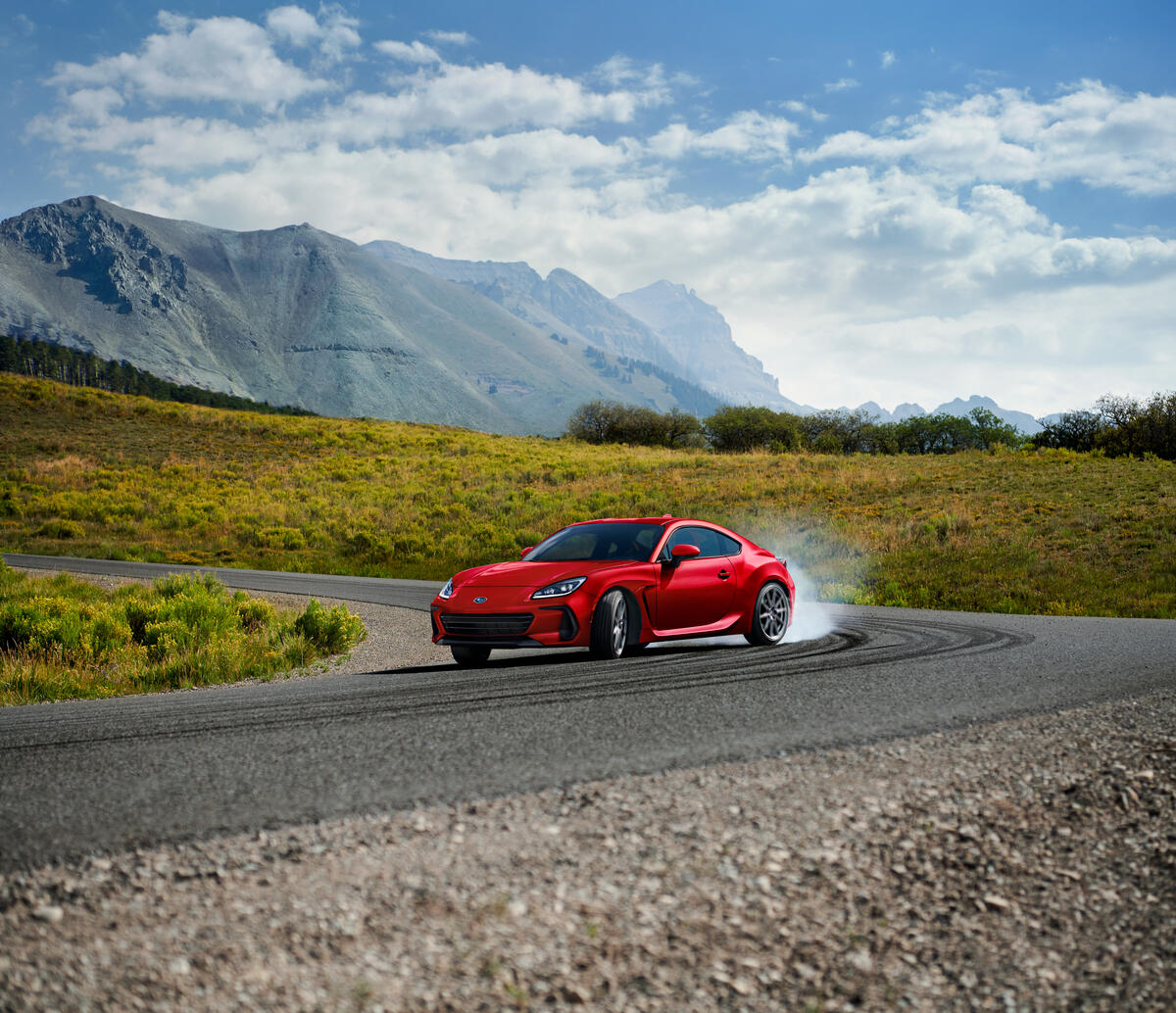
The Subaru BRZ is a small sports car that’s fun to drive, and you can get it with a manual gearbox. The host is saying most BRZ buyers choose the manual because it feels more engaging to drive.
A “flat engine” is an engine where the cylinders lay out left and right instead of standing up in a line. Subaru and Porsche are well known for using this kind of engine.
PDK is Porsche’s automatic transmission that shifts gears very fast. It uses a system that keeps the next gear ready so the car can change gears quickly.
Term
numbers decline
“Numbers decline” here refers to declining adoption of manual transmissions over time. The host’s point is that fewer drivers learn to drive manuals, which further reduces demand and makes manuals increasingly rare.
When people say a car is “safe,” they usually mean it’s designed to protect you in a crash and help you avoid accidents. The speaker is saying Subaru aims to be safe no matter which model you buy.
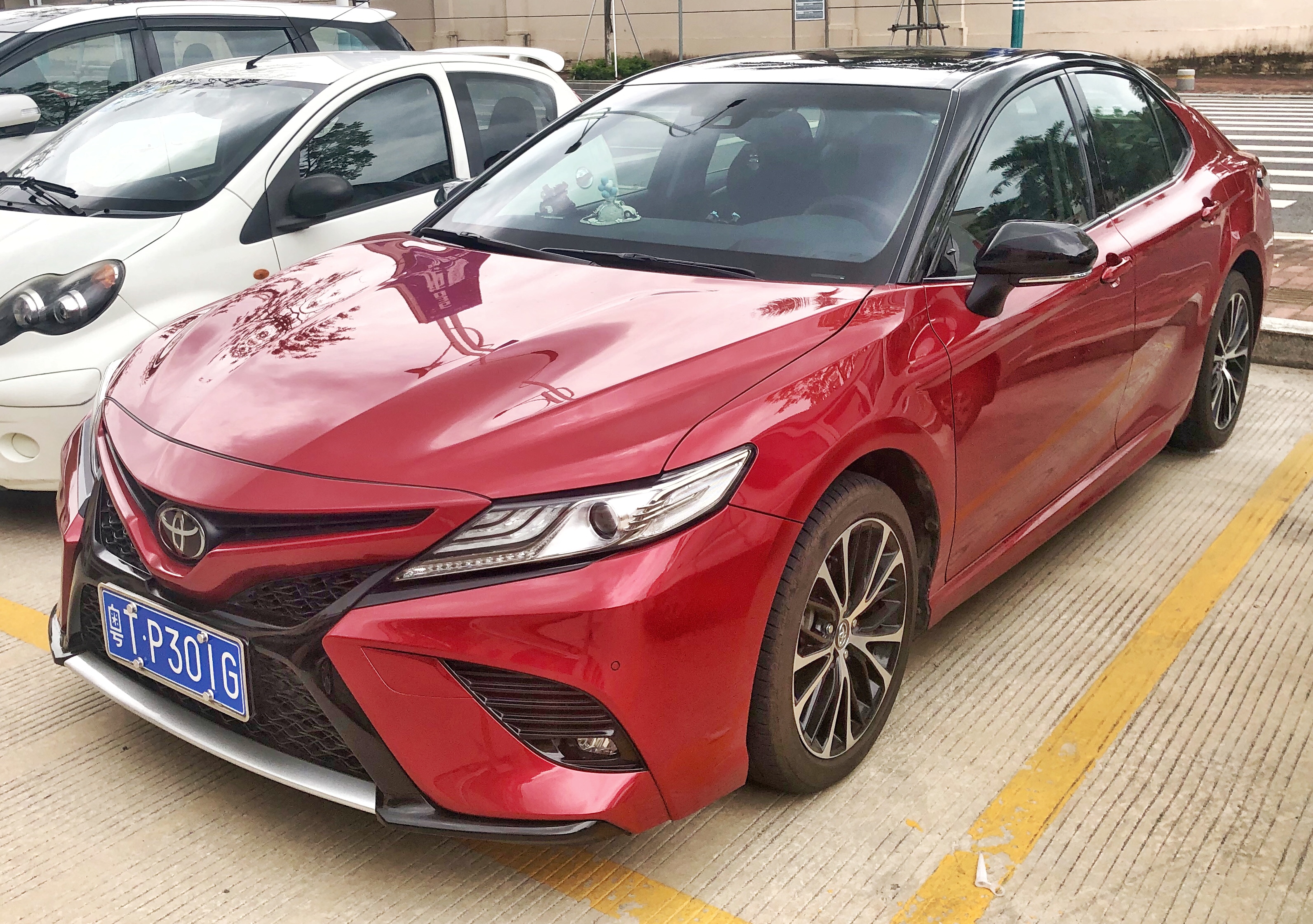
The Toyota Camry is a common family sedan. Here it’s mentioned to show how driving a front-wheel-drive car feels different from driving an all-wheel-drive Subaru.
This is talking about all-wheel drive (AWD). Instead of sending power to just the front wheels, it sends power to more wheels so the car can grip the road better, especially when turning.
Front-wheel drive (FWD) means the front wheels do the work of moving the car. In this conversation, they’re saying an FWD car feels different from an AWD car when you’re turning and pushing.
Mechanical grip is basically how well the tires can grip because of the car’s setup—things like suspension and weight position. It’s the “real” grip you get from the car’s design, not just computer controls.
Curb weight is basically how heavy the car is when it’s ready to drive. More weight can change how it pulls during towing and how hard it hits in a crash.
Concept
crash dynamics
Crash dynamics is how the car’s movement and forces work during a crash. The car’s weight can change how much energy is involved and how the impact loads the vehicle and people.
This means making a heavy car feel easier to drive. Even if the car weighs a lot, engineers can adjust how it steers, rides, and responds so it still feels fun.
A “platform” is the shared base that multiple cars are built on. It’s like using the same main design and engineering layout, so the company learns how to build and improve it across different models.
“Chassis work” means changes or tuning to the car’s underbody and how the wheels/suspension are set up. It affects how the car rides and handles, not just the looks.
Term
AC
Here, “AC” means the car’s air conditioning. The point is that the controls are easy to find so you can start driving without fumbling around.
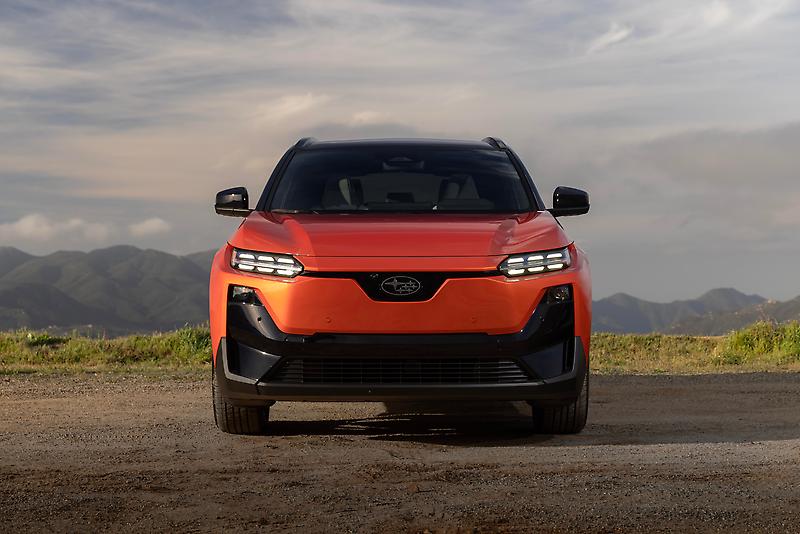
The Subaru Uncharted is a Subaru vehicle that the podcast says is quick and fun to drive. It’s mentioned as a recently introduced model. The discussion focuses on how it drives rather than on specific engine or feature details.
The Crosstrek is a compact crossover vehicle made by Subaru. It’s meant to be practical for daily driving and has a higher stance than a typical car. The episode mentions it as a smaller option in the lineup.
Concept
cross track size
“Cross track size” is basically a way of talking about how big the car is across the ground. The host is using it to say the Uncharted is a smaller, more compact option.
It’s an electric car with enough seats for three rows of passengers. People usually want this for families because it can fit more people than a typical two-row SUV.
They’re describing a “two-in-one” idea. The car is meant to be normal enough for daily life, but also capable enough for fun trips and rougher roads on weekends.
“Snow” here is shorthand for winter traction conditions, where tires, drivetrain behavior, and vehicle stability become critical. Subaru’s reputation in snow typically comes from how its drivetrains and traction systems help maintain grip on slippery surfaces.
Dirtfish is a place where people test and learn driving on dirt and other rough surfaces. Here, it’s where the host gets to try the Subaru on an off-road course.
Street tires are the kind of tires most cars come with for normal roads. The host is saying the car still did great on the dirt course even though it wasn’t running special off-road tires.
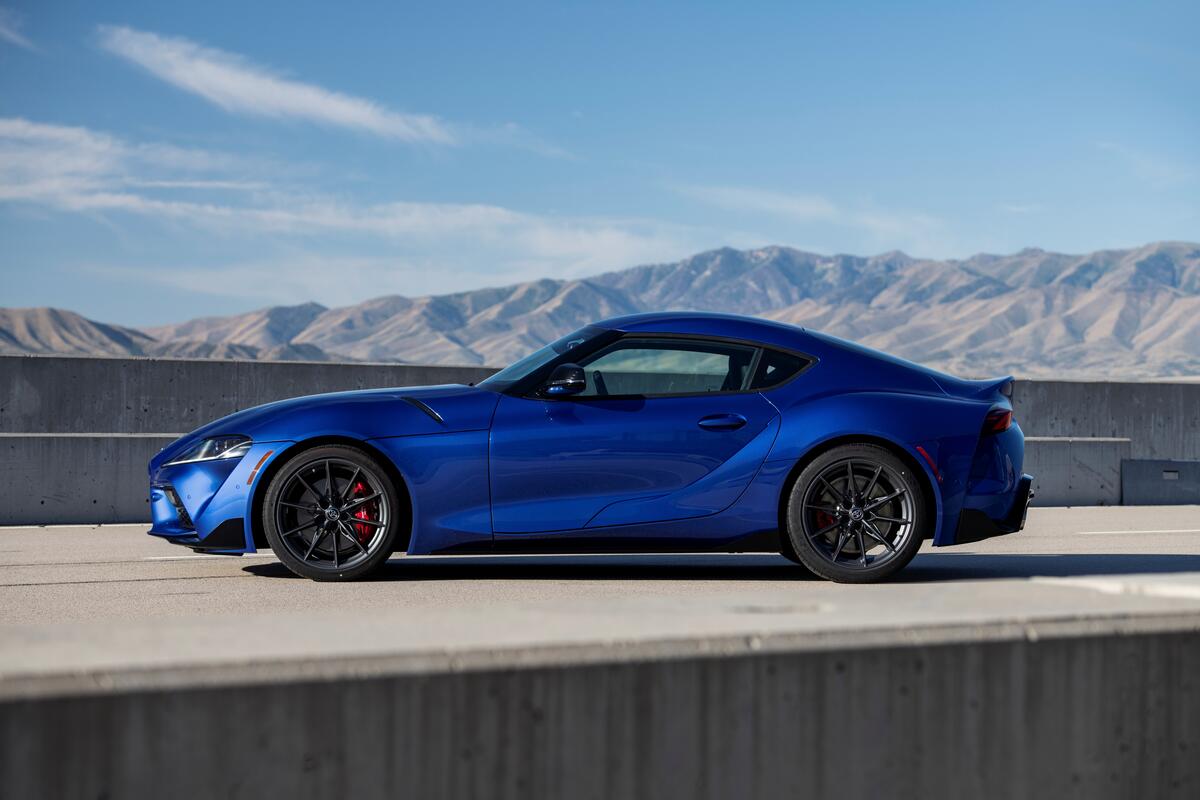
The Supra is a Toyota sports car that most people think of as a street car. Here, the host is saying they were still able to do surprisingly well on an off-road course.
Articulation is how well the suspension can flex when the road is uneven. If one wheel goes up or down, articulation helps the other wheels stay planted so you don’t lose traction.
Body-on-frame means the car’s body is mounted on a separate heavy frame underneath. Many off-road trucks use this because it can handle big bumps and suspension movement better.
Term
off-road Jeep style suspension system
They’re talking about a suspension setup meant for off-roading—more ability for the wheels to move up and down over obstacles. The goal is to keep tires gripping when the terrain gets rough.
Moab is a well-known off-road area in Utah. People use it to test cars on tough terrain like rocks and steep climbs.
Term
Wilderness packages
A Wilderness package is an upgrade on certain SUVs that’s meant to make them better for rough trails. It usually adds things like tougher tires and suspension changes to help the car handle dirt and rocks.
Suspension is what helps the wheels move and absorb bumps. For off-roading, better suspension helps the tires stay on the ground, but some setups can be harder or more expensive to maintain.
Traction is tire grip—how well the tires can hold the road. On snow, better traction means the car can accelerate and turn without the wheels spinning.
The Audi Quattro is about a car’s all-wheel-drive system. It helps the car grip the road better, especially when conditions are slippery. In the episode, it’s brought up as a point of comparison for another brand’s all-wheel-drive system.
Ground clearance is how much space there is between the ground and the bottom of the car. In snow, more clearance can help the car avoid hitting snowbanks or getting stuck.
The Subaru Forester Wilderness is a special version of the Forester made for outdoor trips. Here, the big point is that it can hold a roof tent, so you can camp from the car.
Pike's Peak is a well-known mountain in Colorado with a very steep road to the top. The story here is about driving up in winter and getting stopped because of snow.
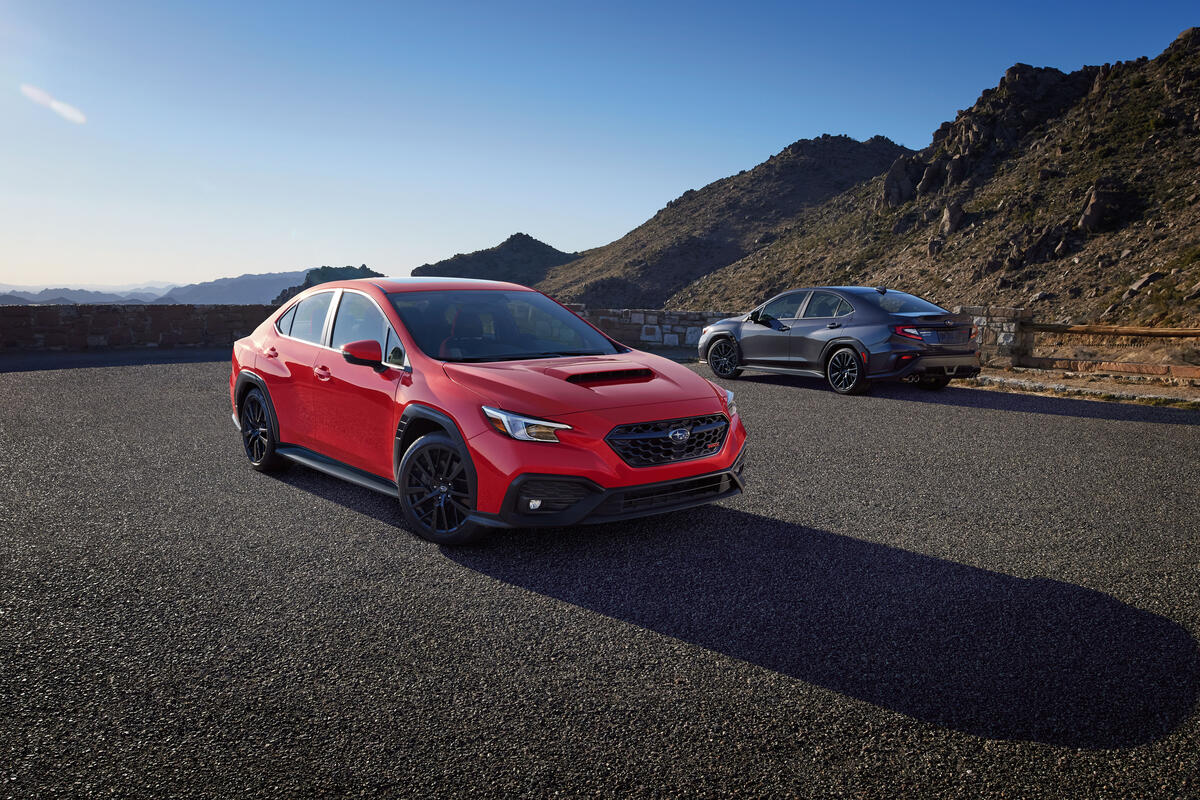
The WRX is Subaru’s performance version of the Impreza, usually with a turbo engine and strong traction. Here it’s used in a comparison on Pike’s Peak—pavement driving versus dirt driving—to show how the cars behave.
The Subaru WRX is a sporty version of a Subaru car. It’s made to drive more aggressively than a normal everyday model, and it’s known for having all-wheel drive. The episode references the WRX from the mid-2000s timeframe.
“Sliding” means the tires aren’t gripping as well as you want, so the car starts to move sideways or rotate a bit. On dirt, that can happen more easily, and good drivers learn how to control it.
Term
14,000 foot drop off
A “drop off” is basically a huge steep drop next to the road. The host is saying the situation was terrifying because if you lost control, the consequences would be extreme.
The cylinder head is the top part of the engine where combustion happens. If it’s aluminum, it’s lighter and can help the engine run cooler than a heavier iron head.
They’re talking about the car’s manual gearbox. It’s a five-speed, and in this case it’s paired with a shifter setup that makes the car feel a little awkward compared to modern cars.
Term
triple 45 weathers
Those are carburetors—devices that mix fuel and air for the engine. “Triple 45” means there are three of them, each with a 45mm size, which is a common setup on classic performance cars.
The Jaguar C-Type is an old Jaguar race car. It’s known for being built for competition, not everyday driving. The episode also mentions a special version described as being made with all-aluminum parts.
The Mercedes-Benz SL-Class is a luxury roadster, meaning it’s a comfortable car meant for open-top driving. The episode mentions an SL model the speaker owns, emphasizing that it’s a car they like. These cars are known for being both premium and enjoyable to drive.
A Range Rover is a luxury SUV made by Land Rover. The host is talking about an older, two-door version from the 1980s, which is less common than the four-door ones.
The Goodwood Members’ Meeting is an event at Goodwood in the UK, known for motorsport history and a strong focus on classic and enthusiast cars. It’s a context marker here for why the host was seeing rare vehicles like the two-door Range Rover.
A restomod is an older car that’s been updated with newer parts and improvements. The goal is to keep the classic look, but make it nicer to drive and more dependable.
A turbo diesel is a diesel engine with a turbocharger. The turbo helps it make more pulling power, but it can be more complicated than a simpler diesel.
Term
VM
“VM” is the name of an Italian company that makes diesel engines. The host is saying that engine has a reputation for not being the most liked or trouble-free.
LIVE
Um, I've always preferred people lie to me, uh, look,
and now we know, please say I'm good looking.
I don't want to hear the truth.
Today on that car show, it's Subaru of America's director of
communications, our pal Dominic and Fonte.
We touch on everything from Subaru's unique space in the
American automotive landscape to their commitment to manual
transmissions, to their unique approach to EVs.
Dominic's the real deal with an interesting backstory and some
real insight into the business of cars.
Oh, and he's got a secret garage full of old British stuff too.
Stay tuned.
It's Subaru's Dominic and Fonte and it's that car show.
Welcome back to this week's episode of that car show.
I'm Lindsay and I'm here with Ryan.
And this week we are joined by our friend Dominic and Fonte, the
director of communications for Subaru North America.
Dom and I met at the Goodwood revival actually a few years ago
during a record heat wave that saw them lift the period correct
costuming dress code for the first time ever in the history of
the event.
It was a memorable time for sure.
And we've been friends since then.
We've been lucky to meet up when we're in the same town, which is
often at an auto show.
Dom has had roles at the University of Miami and at Chrysler
before coming to Subaru more than 14 years ago.
He is a real enthusiast and a driver.
He is known for putting together truly memorable press trips,
which really showcase the capabilities of Subaru's cars.
And he has quite a unique collection himself.
We love Subaru here on that car show and we're excited to welcome
Dom to the show today.
Hi, Dom.
Hello.
Hey, good to see you guys.
Yeah.
First, I'm happy to have you.
So you are like truly, you know, you live the enthusiast life.
You have a great Instagram feed.
It's always fun to follow along on your adventures.
So can you tell us a little bit of how you got into cars?
Were you always a car guy?
And then talk about a little bit of your career path and how you
found yourself where you are today at Subaru?
Yeah, sure.
I mean, yeah, I was always a car person.
I don't know why.
You know, my parents told me I made car noises before I spoke.
And I can genuinely remember seeing my first E type, first Corvette,
things like that.
Those are in my memory.
And for some reason, cars always spoke to me.
My parents weren't car people.
They did own a few interesting cars, but I think by accident, you know,
I don't think my dad owned an old cord, coffee nose cord, 810.
But literally he drove it in New York City as a beater car.
It was probably like 30 or 20 years old or something.
And then my mom had a Cinquecento when they when she lived in the Bahamas.
And we had a mini, mini-moke in the Bahamas as well.
I grew up in the Bahamas.
Okay.
Born and raised in the Bahamas, which is a little weird,
but ended up moving to the U.S. when I was about 12.
So, but I was in the cars over there and, you know, it was just one of the
things I was always a big fan of cars.
And I think the only car my father was really into.
He, he custom ordered a Volkswagen Beetle from Germany.
Be sent to the Bahamas with the big sunroof.
And so that was like, I think that was remained.
His favorite car that he ever owned, but not a car person.
And I just got into it.
And then, you know, I think like many people reading car magazines, I grew up
in South Florida, so there were always interesting cars.
And I was very lucky that a good friend of mine, Marcello, his father is Italian.
Obviously, I'm kind of Italian too, but his father is actually from Italy.
He's from Capri and he was a real car maniac and he was always getting new cars.
He owned, he's a very famous chef.
He owned all these restaurants.
And so he was, and he knew all the car dealers, so we always got a new car.
So it was always something interesting at his house.
And then Marcello, we get his hand me downs, you know, so we started off with
it, Marcello had a 280Z and then Alfa Romeo GTV6.
I was very lucky.
My first car was a Fiat X19, which was, which was as wonderful and awful as
they are known to be, literally, hilariously fun to drive.
It was a great car to learn on because you had zero horsepower and you
learned about momentum.
You learned to pick lanes.
You could tell who's slowing faster, who's accelerating faster than anybody else.
So it made me really think through driving.
And from there, after many accidents, within about a two month period,
getting my license, we suddenly, I had to use Honda Civic.
I had a good run there for a few months.
I was pretty cool.
And then Brown Honda Civic, which was actually a great car.
Actually, I'm not going to say anything bad about that.
That was a great car.
And that really, you know, really, I was very fortunate.
I was a Formula One fanatic before you could really watch Formula One all the
time because I could read about it and road and track and which I did.
And he's a great writer as Rob Walker and Dennis Ireland, who used to
write about Formula Drivers.
And it's funny, I'd read about these things and thought it was just great.
But I had no idea who Sterling Moss, Fondio, all these people were.
My father maybe had a little bit of knowledge, but he didn't really know.
He wasn't really into, into cars or into racing, but they would know them
because they would, they would happen to go to Bahamas Speed Weeks, right?
Because you had great guys.
We'd come down here in the early sixties when my parents were living there.
And so they, I think you just went to the races because that's what you did.
There's only, it's an island.
There's only so many interesting things that you can do.
And then you're bored and you're like, Oh, something's going on.
Let's go to that.
So they were there, but they don't remember any of the drivers.
But yeah, anyways, that's how I kind of got really into cars and into the
motorsport side of it was through reading about it.
And in magazines, probably like a lot of young people.
And then, you know, all of a sudden we could watch stuff on TV.
I'm like, this is incredible.
I can watch every Formula One race, you know, before it's loved.
So they became super popular.
But yeah, so they were always kind of, kind of what I looked up to was, you know,
the drivers of the Jilville News and Nigel Mansel and stuff and dating myself.
But, you know, those were the guys I remember being really into.
And, uh, and it's funny because I really, it was in my mind, it was the NASCAR was
not a, not a draw for me because the cars weren't as cool because they were
still stock cars back then.
Right.
So they were Fords, but they were like the ones your parents drove.
Right, right.
You know, I look at Formula One and they're like, Oh, Ferrari, you know,
Aston Martins and, you know, all these, you know, it seems way cooler.
Why am I not watching this?
But now, yeah, now I learned a little bit.
I worked for Chrysler and we did NASCAR with Chrysler.
Obviously back then with Dodge for a while when they were still in it.
And, uh, got, I was very fortunate to get to go to some NASCAR races and eat a
giant turkey leg and see some of that stuff in person.
Uh, you know, so it's been, it's been fun.
Yeah.
And then, and then to Subaru, I, you know, you got into rally, you know,
there was so many rallies, rallies to go to, you know, and following
Pat or Saul Birkenau.
So I actually, I've been with, uh, with Subaru for 21 years, actually, not 14.
Uh, so it's been a while.
Even better.
Yeah.
And I just want to say, though, that, you know, as a Florida Gator, I did
work for University of Miami, but I did not do a good job on purpose.
But I was, I design, right?
No worries.
I got you.
No, it was a great place to where I actually started off as a journalist.
Um, excuse me, you know, how I got into it, uh, kind of always was kind of a
writer and, um, wanted to go into being, I don't know, maybe road and track
car and driver or something like that was trying to figure out, couldn't
really see a path towards that.
So I ended up getting a job with a business magazine.
I became a business writer and, uh, was doing that and finally convinced the
editor of the publisher to let me write about cars.
I'm like, look, we can sell a car ads if I write about cars.
Right.
So that's how I started reviewing cars.
And then I learned about the world of automotive PR and I'm like, well, that
looks actually really cool.
And so I asked a couple of people and they're like, yeah, just get some PR
experience.
So I got a job with the University of Miami.
I got a job, uh, that became the head of, became the director of communications
for the school of business there, um, and started doing PR and then an
opportunity that almost became a career path.
And then an opening, um, came, uh, with, with Chrysler to work for, uh, doing
regional PR and then I went to, went to the Kremlin, as I say, had to go to
Detroit, move to Detroit.
You had to go do your time.
Yep.
My time in Detroit, uh, it's actually great because, you know, when you get
there, you have access, you, you know, you can talk to the engineers and then
talk to the designers and you go to this giant design studio and you're
seeing cars that are 10, 20 years out that they're working on, like future,
future stuff.
Um, and for a car, for a car geek desk was just to see all of that and to know
it and get to know the designers and see what they're doing.
And they're so far thinking in the way that they had to attack and approach
everything.
It's just so great.
And then had wonderful engineers to, you know, who are explaining, you know,
the, the, the smallest pinpoints on a car and, and how much effort goes into
creating a car.
And like there are guys who do nothing, but work on the motors for
windshield wipers, you know, but they're trying to make it the best, you
know, it's really fun to see all that insider stuff.
And then, you know, I think what shocked me about the auto, auto industry was I
was like, look, this is such a gift to be a part of this.
This is so wonderful.
How can you not be a car enthusiast?
And, and they weren't, and what you understand is like for a lot of people,
yeah, there were car guys in there, but these were just good jobs in Michigan.
And that's why they wanted to work there.
And, uh, you know, so that's, it was kind of a revelation to me that, you
know, not everyone's an enthusiast in the industry.
There are some, there are some who it's just like, it's just cool, but they
could have worked for someplace else.
And, you know, for me, I don't think it would have been quite as cool as if I
was doing PR for Whirlpool, um, or not, it's not a wonderful company, but, you
know, in, in my mind, I'm like, I get to talk about and work with cars on a
regular basis.
This is great.
Right.
And then, then, and then took an opportunity to come to, uh, to come to
Subaru and, uh, can I kind of have been there ever since and that's been fun.
Just because, uh, you know, it was, uh, you know, a little bit, a little bit
smaller company, but you could do a little bit, a little bit more creative
things because you were doing with like a smaller groups and things like that.
So it became a great asset.
And then, you know, I really, you know, kind of bought into the, the
philosophy of the company, which is, you know, so philanthropic and, and so, uh,
so into giving back to the community and doing things like that.
We actually, you know, we're part of our goals, you know, one of our goals is
like, it's essentially called our love promise goals.
Our, our old CEO, Tom doll came up with this thing called the love promise,
which is, you know, trying to live your life a certain way and, and to give
back to communities.
And, and, and through that, one of our goals, like we have to go do some good
deeds, you know, because without that, I'm actually a terrible person.
This makes me be good for like, at least a day or half an hour until I'm, you
know, where I could go do something.
We, you know, we, we donate locally to the Phil abundance.
We, we actually grow vegetables at our, uh, very Subaru, but we have like a
garden and we actually grow vegetables and, and through the employees.
And we actually donate them to a, to food shelters.
And, you know, we, we do a lot of things like that.
And, you know, we, we're always allowed to volunteer.
So you can, you know, take work time to go volunteer and then we'll do things
here, we'll pack boxes and things like that around the holidays for people.
And not just around the holidays.
I mean, uh, we do a lot of that.
And like I was just saying, we just did our impact report.
We did, uh, our employees donated 15,000 hours to local communities.
You know, uh, you know, that's just our employees.
It's not, and that's not any of the giving that we actually do.
You know, we donated 26 million through our, uh, share the love event.
So we, we, we donate every year on a basis like that.
So for a small company, we are giving back a lot.
And, uh, so that actually, you know, you do feel good about that.
It is a genuine vibe and I hope people actually understand that, you know,
it's not just advertising, you know, the company really, that we do try inside
as well.
And I think that helps, you know, hopefully the way we deal with our customers.
When we go, well, that's all well and good dumb, but tell us about the dogs.
Yeah, yeah, because that thing, that is a stroke of marketing genius.
You know, you, you know, you're at the LA auto show and all of a sudden
there's a pen of puppies up for adoption.
I mean, how do you not stop by the Subaru?
It is, and it's, it's funny.
You know, it's just one of those things that where we really trying to
redefine ourselves.
So we looked at our customers and, um, our customers gave us a lot of feedback.
So, uh, you know, a lot of times, you know, when you're in industry, you know,
you get hate mail, like my car, it stinks.
It broke down on me, blah, blah, blah.
We were getting all these, these, these letters from customers that they
loved their cars and they bonded with them.
And, you know, they were, and they always gave us advice on what we should
do with the cars, that the car, but they were taking the time to write in and
tell you how happy they were.
Every single thing that they think we should change on the car.
They wanted us to do, you know, so, you know, it's like, it's like being in a
family.
I, I can criticize my sister, but you can't, right?
You know, so they're very protective in that way.
But they also do tell us what they want.
But when we looked up here, like, well, okay, who really are our customers?
Because we had always chased this customer at that point.
I think there was like a sentiment that, you know, inside it, people were trying
to make it, the Subaru was a little bit slicker, wanted to be almost like a German
car company, wanted to be a BMW.
And we looked at our customers and that's what they wanted.
You know, when we looked at them, what we did, you know, we saw like a
psychographic, right?
We know you call it through the marketing folks.
And one of the things they noticed was that 80% of our owners, like they own pets.
And then when we looked into that a little bit deeper, the majority own dogs.
So not the dark cat owners, and they do reach out.
They don't let you just go a cat in an improper light.
We do get complaints if we ever, we did do an ad a few years ago where we had the
Barclays, the dogs who drive the cars, their pet was a cat.
And they went to a rest stop and said no pets allowed.
And they had to leave their cat in the car.
Now we checked with ASPCA, everyone.
The windows were down just to right amount and everything.
That's hilarious.
That's right.
You got to think about these things.
Shadows owners were not happy and they were like, how dare you leave the cat in the car?
It's like, well, it says no pets, but also these scenarios aren't real.
These dogs aren't really that big.
This is magical.
It's been really fun with that advertising, but it did kind of look and we did more dogs
in the ads even because it was so organic.
It's so natural for our brand to be involved with pets that way.
And then when we were looking at things to do, we designed a way we do the auto shows
a few years ago, about eight years ago.
And we were looking at what we could do.
I would say my brilliant part in that was give people some place to sit down and they'll stay
longer because if you've ever been to an auto show, you're walking around, your feet are dead.
If I could sit down somewhere, I would just stay here.
I would hang out.
We talk about that all the time here of like,
Subaru has created a true respite in the middle of the auto show and it's delightful.
So yeah, I'd love to hear more.
That was the idea.
Once you come in there, it's an oasis from the rest of the show.
And we actually, at one of our, we call them a retailer meeting, our dealer meeting every year,
we worked with a local shelter and we thought it'd be a neat thing to adopt some dogs.
And I went very, very well, so much so that people were renting cars to drive home.
They were taking the dogs, you know, was in Vegas, they're taking the dogs
and they drove home to Colorado and they drove home wherever because they were,
you know, because we had an area where they could bond and play with a dog,
not just see it, you know, sadly, can't stop or whatever.
Right.
Play with an adoptable dog.
And we're like, well, we should do more of this.
And the auto show was the natural progression from that.
And we started doing that and it became a thing like everyone knows.
And, you know, when you go there on media days, as you guys know, when you're,
when you're there, I'll talk to the folks from other car companies and they're like,
God, we love coming over to your, it's always just great.
We get a smile.
They come over here and it's so smart, you know, we love that you're doing this.
And so it's part marketing, it's part, it's part intelligent marketing, I would say,
but it's also partly true to the brand.
Yeah, yeah.
The artificist isn't really that much in a sense.
And we work with every single auto show we do in the US, big or small,
we do, we work with local, with local shelters.
We pay them for their time and for the cost that it would take to bring the dogs over.
And we do get a lot of dogs adopted, you know, thousands of dogs that get adopted.
And it's just, it's just a nice piece of the show, right, that we get to add on.
And everyone's happy.
You come and you'll see a line of people that pet dogs, the people who want to go see the cars,
they're happy, they're looking at cars.
And the people who don't necessarily, you could drag there and kids, they're over there playing.
Yeah, yeah, yeah.
It's, it's a nice day out, you know, hopefully a little bit, a little bit fun.
Everybody wins.
And I mean, and like you said, it's not an artifice.
Like you guys are quite literally putting your money and your intention where your mouth is,
and you're actually living this, you know, like you said, the love promise and the focus on giving
back and improving the community.
And it is, and it's such a treat to go to the show and see the dogs and spend time in the,
you know, Subaru National Park and just make you want to hang out.
Well, that was, you know, that's another one of the things when we were looking,
we created this share of the love.
So everyone has a sales event around the holidays.
And when we looked at what our customers were doing, you know, giving back in philanthropy,
we were a big part of what they were doing, part of their interest when we went and so we're like,
well, okay, what if we do that?
But instead of providing a discount, we'll take the discount, we'll donate it to a charity.
So we came up with six charities and we, you know, what are they, what we let,
once again, we kind of reached out and wanted to see what our, what our customers would do.
And national parks were a big part of that.
So National Park Foundation, then ASPCA because of the pets.
Right.
You know, so we started with these initial, these initial charities and then we said,
okay, but that doesn't mean everyone's going to want that.
So we allowed our retailers to localize it in their towns.
So if there's a particular, you may live in Sandusky, Ohio, and there might be a particular
charity that does a lot of great work there, you could nominate that to be part of that.
And so the retailer can then put sales from his store can go towards that.
But you, the customer always has a choice.
They can select that, but you would add that to that town because of the local charity that
you may have been impacted by.
So once again, it was like a kind of a national, a natural growth of what we were kind of already
doing and kind of bringing that down.
And then of course, then after that, the retailers get behind it and then they start getting
involved and then they're like, they're holding dogged options at their stores.
And so it kind of was one nice thing.
I kind of grew out of it.
And like I said, a lot of this was from our CEO, Tom.
Tom, he was the person that was very big for him to give back.
And then, you know, I joke, I've been here for 21 years and I'm still kind of a newbie at Subaru.
And so our current CEO is the same.
You know, he's been here for over 30 years when he got the job.
And, you know, he had kind of come up with Tom as well as he'd spent his own time in the field.
And so he saw how important that was as well.
So we're carrying it forward.
So it's great.
I mean, and then we're, you know, we're named, you know, part of Forbes's, you know,
we're like the top three brands for social impact, things like that.
So it does pay off.
And it's, it's difficult.
You know, you don't see it initially advertised all the time or anything like that.
We don't really focus on a lot of that.
But we are, we are living that life rather than just kind of making an ad and saying,
okay, here you go.
Yeah, yeah, I love that.
And so for the people who haven't had a chance to see the auto show
presence, kind of the display, can you just talk quickly about what it looks like and
how you came up with that setup?
Because it is so unique and notable and it really sticks with you.
Yeah, we wanted you really to feel like when you're at a, especially the big show,
where you have the big kit.
So LA, Chicago and New York, you are stepping into Subaru land.
So it feels like you're in a forest.
We have a TV showcasing, you know, beautiful vistas of national parks.
You pump and sense.
So it smells like you're in kind of in the wild kind of a thing.
There are, there are park benches, you know, there are things like that.
There's a little fire, you know, cookout fire pits and things, you know.
So it feels very like you're gone.
You've gone camping or you're going out to the trail dead, all that feel to it.
Yeah, it, it, it really is unique.
It's an oasis inside a show.
Like you're in the, you're in New York City.
You're at the show.
You're in the Javits Center, but then there's this little oasis of just like
this greenery and it's just beautiful.
It's a beautiful thing.
And it's like, it really feels really nice and, uh, you know, it's a great place.
Sit down, you know, your feet are sore.
Look at a Subaru.
Yeah.
Hopefully by a Subaru, you know.
With the fire pit, I'm like, we need some, you know,
marshmallows and graham crackers.
Yeah.
And in a little corner, uh, we still have a more sports stuff too.
Yes.
Yes.
And that's what I was going to say.
The rally, the rally history and activities are well represented as well.
It's, you know, and I mean, it's kind of brilliant on your part because you guys
spend your time there during the show and you've created this beautiful space to
spend time there.
I know it's, you know, but I, I've been going to outer show since I was like 12.
And, you know, they were like sometimes in the middle of a mall, sometimes in
wherever.
And, you know, and it was great with, I was able to, when I started with Chrysler,
Chrysler did some pretty cool stuff, um, for media days for the Detroit outer show.
And, you know, it's really weird, you know, in my mind, you know, then when I kind of
can't start taking over the audios and in my mind, it was like, you know, we're
doing all of this work and then the public never sees it.
So we do these incredible, we build these incredible fissades and, and create these
great things.
I know we did like, you know, like with the Dodge Viper, it was a giant box,
jack-in-the-box and it burst open and snakes came out and there's a car in it.
These are really wonderful, cool things, um, uh, that unfortunately also may be
injured some people, but that's fine.
But, you know, that's another story for another time.
That's a story.
Um, but like, wow, wouldn't it be great to have this for the public?
So everything you see in a media day now, like for a Subaru, the car comes up,
like it's coming up on a, a volcano, like we did a few years ago, things like that.
That happens all the way through for the, uh, the rest of the week.
So you're not missing out on what the media saw.
Right.
Just for that one day.
It's like, well, why don't we just use it for the whole time?
And, and, and then that way, you know, make sense, re-amortizing your costs a little bit
better.
And I shouldn't be saying any of this because our competitors always think of you.
No, but this is what we like to bring our audience.
And even for us, like I'm learning, you know, I didn't realize that that was
something that would typically have been done just for the media day.
And I think that's so smart.
Like it's, this is, this is why I wish that people on.
I wish every young car enthusiasts could go back to those old Detroit dollars.
No, I know.
They were, you would, uh, the money that was spent on those things was just,
was crazy.
But man, it was cool.
Mercedes created an ice rink and had professional ice skaters.
The Olympic ice skater is skating on an ice rink.
You know, you, you build these incredible, um, auditoriums that would just be torn down.
So you had like a coliseum in the round and all these really,
really amazing things.
It was a really fun time and, uh, it was great.
I know the economies have gone away and then, you know, uh, you know,
put everyone says auto shows are, are, are dying.
You know, they're not as big as they were, but it's, it's really when the corporate side of it
looks and they're saying, you know, they were looking at more from the media, um, dates aspect.
So yeah, Detroit isn't what it used to be.
And people aren't doing as many intros as all the shows, but
you're still forgetting the consumer, the person wants to walk in there.
We don't think that we're, you know, for some of the brands,
like, you know, for Mercedes or a Porsche, you know,
you're such an established brand and those customers are so established.
We still think we need to be out there on the floor.
And we want you to hopefully be surprised by how nice the car is.
And I think that people always like, you know, very sensible Subaru and the other safe, but,
you know, but, but like, yeah, they're actually a lot nicer than you think.
Get in there, try one out.
Hopefully you'll see it.
Hopefully you'll, you'll be gravitating towards buying one.
Can I suggest that you bring the giveaways back?
And the reason I mentioned that is yeah,
I was one of those kids back in the day at the Chicago auto show.
I still have my metal scion key chain.
I still have my injection molded new beetle, you know, Volkswagen.
You know, I still have them.
I'm 50, you know, I can't, I can't throw those away.
So I would love to see some sort of giveaway, uh,
from the next super or is that in the works?
I know I, we don't, we haven't really done giveaways so much like that.
Uh, in a long time, I, I know that that was a thing.
And also the brochures are gone away.
I used to collect all the brochures, you know, it's like, oh, I got the, I don't know.
Yeah.
We were just talking to John Tildenco about that because he was saying that
shaped his writing a lot.
He would go to the automotive, like go to the auto shows
and collect all of the marketing materials.
And it was, we, one thing we were commenting on was like the amount of text that used to be present.
Yes, yes.
You know, there was a lot to read.
And for now, like you would look at the old BMW brochures and the, you know, the,
the options that you could actually get would be a manual sunroof and a cassette player.
You know, we're sure we're huge, but I'm like, that was a lot of crafty writing going into that.
Right.
The advertising guys were working overtime because there's only so much you could say
about the car.
And then when you start getting into all the options, it was, there was nothing.
It's like, ooh, custom formats.
You know, hey, wow.
That's right.
That's right.
But you walk around the, you know, the, the hall with that bag, like it was, you know, Halloween,
right?
You're collecting your booty and then you bring it home and spread it out on your bed.
And I remember chopping up those.
They're really, there were some nice, you know, oh yeah, some nice work done by some of the,
the manufacturers and then the, we would see the press kits wind up on eBay days later.
Really?
You're kidding.
You're stuff like Corvettes and Vipers and there was a secondary market of people who
really wanted to buy it.
And Ferrari, anything Ferrari?
Yeah.
Yeah, I bet, I bet.
That makes sense.
Yeah.
Well, I mean, we talked about that a lot.
Like that's one of the reasons that we share a lot of the events that we go to is because
not everybody has the chance to attend.
So we like to take our audience along with us.
So that's kind of another illustration of.
Yeah, you need to provide the content, right?
You know, and now it's all about content and we, we consume content in so many different
ways, but you know, but now it's so much more visually, you know, received.
So you're like, okay, you need to make room for someone who's going to be shooting video
for Instagram or for whatever.
Right, right, right.
So it's kind of a new, you know, that wasn't part of the, we used to do long
leads and short leads, which were long leads for the car magazines and then the buff books,
you know, and then you would do the short leads would be for more like newspapers and
things like that.
Sure.
In the old, old days.
Yeah.
Yeah.
Things have changed so much.
It was like the, so the whole cycle of how you do reveals of cars, that's changed.
You know, it's much faster.
It's much closer to the on sale date.
All those things are different now.
Let me, let me ask you down.
So in your role, I assume that you monitor what automotive journalists write about your
products, what create content creators create around your products.
We saw something very interesting, of course, play out recently with the launch of the
E.V. where, where journalists were so afraid to say anything bad about the thing that they
stooped to praising like the door handles.
Yeah.
So in your position, do you, do you value honesty or flattery is a sweet spot somewhere
in the middle?
But I, I assume you monitor this and you, you know, you kind of know what people are saying.
I've always preferred people lie to me.
And now we know.
Please say I'm good looking.
I don't want to hear the truth.
You know, I, I, you know,
you know, there's, it is, it works for you in many ways when you get criticism.
So, you know, if, if you think something should be different on a car, you know, or,
or maybe we know the consumer is doing it, but there's always, you know, when you work
for a car company, the truth is at some point you've got to, you've got to cost out things.
And there's things you want, but it's like, okay, we think there might be more value in
this or whatever.
So if the media pick up on things and say, oh, it really should have this,
it does, it does often help us sway, you know, the engineers and the, and the product planners
and things like that.
We'll start like, okay, we should consider this.
Maybe it is, and maybe something that will be a value to the customer.
And then you can then, you know, you know, we'll leave that to the marketing guys, but they can,
they can then take that to a focus group and say, okay, if we did this, we think this would improve.
You know, because there's, there's, there's so much of the industry and the design that's
inspiration and what you think people are going to want in the future, but you can't always get
everything, right?
So it's great to say, okay, you know, you're hearing a lot about these, you know, about
Tess-A-Syle door handles.
People don't like them.
You know, why do we have those?
Well, it's all, we know why it's Arrow.
You know, fuel economy standards are, are what they are.
Then they go forward and you have to meet a corporate average standard.
And so you're always trying to, you know, it makes, it makes cars sometimes be less individual
in terms of individual looking in terms of their styling, but you know why it's, it's always going
to be for Arrow or for something like that to try to improve economy.
But so like the, like I said, but criticisms in certain areas, yeah.
And I don't know that the criticism of the Luce will make it style differently.
It may sell perfectly.
I haven't driven it.
So, you know, and then there's always someone who likes something that, you know, you know,
we used to have this, this, uh, this guy that would talk to us.
He was a brand expert.
And he said, you know, it's actually, if everyone likes something right away,
it's actually not a good product.
You need a certain amount of people not to like it.
Because otherwise it's not interesting.
If everyone says, yes, that's nice, you know, right?
So it's, you know, it's a lying or you miss the mark.
Yeah.
You know, you know, good as the enemy of great, right?
So you, it's, it's fine.
It's fine, but you're not striving to be a little bit different.
Right, right.
You should be a little bit of a turmoil in a design, you know, to look and like,
okay, we're super.
We've always had a turmoil in our designs, right?
So, you know, um, we didn't get by our looks.
We got by because we were great vehicles, you know, because, and then, you know, and
like I said, we're, it's almost like a family thing.
So, you know, when the bug eye WX came out, you know, everyone criticized the styling
until we changed it.
And there was, whoa, we love the bug.
Right, exactly.
Why did you do the Hawkeye?
And we changed the Hawkeye.
I was like, whoa, the Hawkeye was great, you know.
So there's always that, you know, there's always that, uh, that changed the market
where, you know, you need to let, where people will start getting used to a design
and then, and then liking it.
And if you go back long enough, you know, they're really old.
I say how old I am.
I can remember the Bengal, but on the BMW seven series, which it was like, oh,
this is like, what is this?
A spaceship?
It's crazy.
Right.
So everything I've ever seen.
And then like three years later, you're like, looks pretty good.
I'm like, all right, you know what I mean?
Yeah, yeah.
Well, like you said, turmoil.
I mean, you could, you could look at that too.
It's like turmoil creates discussion.
It creates engagement.
If people are talking about you, a lot of people have the philosophy.
That's not a bad thing.
Yeah.
It's interesting.
It was interesting to watch that design knowing.
I mean, uh, you know, there's a lot of, it was a lot of interest around that car.
That for a lot of interest, the interior to a lot of interest.
Just, um, so we'll see where it goes and, you know, but then at the same time, you know,
how many are they going to, going to really sell?
You know, and, and, and at that level, at that cost, what is that customer looking for?
I don't know.
I don't really see that.
That I don't know.
We necessarily work for Ferrari.
I don't work for, for our dealership.
I don't know what that person's really going to want.
You know, um, I remember there was a beautiful, uh, F430 at, uh, cars of coffee I went to.
And the guy, it was red and the guy had specced the entire interior in blue Alcantara.
Oh, wow.
And I mean the entire interior, every single surface, except for the carpet was covered in
blue Alcantara.
And, uh, and he's like, we tried to do the carpet.
They said no.
Like he had a, there was a optional fire extinguisher that was in a blue Alcantara holder.
Like it was, it was insane.
The whole thing was just like this and like, I know that you, uh, you wouldn't slide around
in the seats like, you really got it all, you know, you want to sit down and not slide in
because you just like stick.
I was very interesting.
I wouldn't have chosen it probably, right?
But somebody did.
And that's the great thing about cars in my mind.
You know, there were, there were people whose dream car was a Lincoln continental, right?
Or a Ferrari 250 GTO or 275 GDB, you know, or an Aston Martin or whatever.
Everyone, it's all individual.
And I, I've always liked that.
And now I say, it's fine.
You should like whatever you want.
Like I can see a car and I would hate a car.
And I'm like, why would they, what would make you buy that?
Like, what is wrong with you?
But that person worked hard.
Then they bought that car.
And I'm like, hey, he's happy in that.
Okay. Whatever.
Right.
You know, she wanted that.
So it's like, okay, fine.
You know, that's at least our car people in their own way.
And I approve of, right?
I, I'm happy that there are car people out there and people who really enjoy
their cars because it's a, you know, look at next to a house, right?
That's like the biggest.
That's, that's it.
So if we, you really like that product and you, you really operate,
super operates in a really unique space.
I think you touched on this before, but there's this sort of duality, right?
Where you're sort of like the every man, every woman car, right?
With all this goodwill, but you're also an enthusiast brand.
And that is that, you know, that's a bloodline that runs strong through the years.
And there's been a lot of talk about manual transmissions lately.
I think there was an announcement by Subaru about some, you know,
some future commitment to the manual transmission.
Can you touch on that a little bit because I'm curious about what
Subaru's business case is, you know, as much as us enthusiasts love the, the manual,
what's the, what's the business case for keeping a manual?
Is it, is it the credibility with enthusiasts?
Is it?
Yeah, I mean, there's that part of that's the engagement with the vehicle, right?
It's a little bit, when you're shifting your own gears a little bit more to it than that.
And that aspect, that was like a JDM announcement.
That wasn't really Subaru America, but it is interesting in how people
perceive their cars and want their cars to be, but, you know,
automatic transmissions work great and they've gotten better and
and they get better fuel economy.
And it used to be in the old days, you'd have a manual, it got better fuel economy.
Right.
That's not true anymore where it's kind of flipped around.
So it's really there for the enthusiasts because it was always, it was, it was cheaper
and I got better fuel economy if you got a manual.
And now it's like the engagement factor.
So it's really interesting when we look at Subaru BRZ,
almost 80% of the buyers choose manuals.
That's awesome.
It's one of the highest take rates of manuals.
WX and BRZ are both very high take rates for, for manual transmissions,
even though we offer automatics on both.
And then when we look at the Toyota sales, you flip it.
The majority want 80% are automatic.
Interesting.
And it's the, so they're, you know, basically the same cars.
Some minor differences on the GRD6 and the, but it's just whatever reason,
maybe it's our rally heritage or whatever.
The Subaru customer is looking for the manual and wants the manual.
You know, and you, when you look at Porsche, also who make flat engines,
maybe that's what the, the link is, you know, they're, you know,
all of a sudden Porsche was like, you know what, our, our, our buyers in America really want manuals.
You know, even though we can show that this PDK is faster, faster shifting, it's more efficient,
you know, it's better in every way, but they want a manual.
And, you know, there is something to that.
Like they're, you know, you're controlling your car in a different way.
You know, you're, you're interacting with the car.
Maybe there's something to it.
You know, but, you know, you, the writing's on the wall.
You can see it's, you know, numbers decline and then people aren't learning, you know, like.
Yeah.
Valley, Valley Park, WX, TS recently and.
Yeah.
You know, they're like, oh, sorry, sir.
Would you mind parking yourself?
The, the guy who knows how to drive one of those isn't here.
Gladly.
Right.
It's funny though, because even Ferrari is now, uh, teasing a manual again.
And of course you're going to have to buy 10 luches to, to get one.
But you know, it's, I feel like, you know, it'll turn into really a niche product.
The Ferrari, right?
You had the gated shifter, right?
It was, it was.
The coolest part.
You could make click, click noises.
I mean, it's pretty darn cool.
That's right.
Doesn't get better than that.
No, no, no.
And, and it's, it, it then, it's also, I think, in that rarefied world of the hypercar and a
supercar, you know, what separates them from something else, you know, and what was always
a symbol of Ferrari.
Well, was that, that get it?
Now, I don't know what we're going to do about the left knees of the people who are
old enough to afford the, are they going to be good enough to, to actually, you know,
press it down, but hey, I don't know, you know, but I remember the, you know, the fight
for the Viper Viper, there was every now and then some people were like, you should make
it automatic.
And I remember the Viper team being very adamant to the hell of like, get the hell out
of this meeting.
You know, they were, you it was going to be, it was going to be a manual,
you know, but I guess at the end of the day, you know, the consumer is always right.
Yeah.
You know, manual fryer would be really cool.
It wouldn't support that.
Yeah.
Well, it's such an inherent part of Ferrari, at least for, you know, our generation, I'd
like to thank people younger than us too.
Like that's just, and like you touched on, it makes it a much more engaging driving
experience.
So, you know, it just depends on what you want.
Yeah.
I think you're in such an enviable position with Subaru right now because it's just,
you know, it just, no one's got a bad word to say about Subaru, right?
Everyone loves Subaru, whether you're an enthusiast, whether you're a regular person,
it's just, and I know it's earned, right?
It's hard earned through your programs and all this.
Hopefully, we get complaints here, we get criticism, you know, that, you know,
we know our cars aren't perfect, but like I can always promise you that no matter
what Subaru you drive, it will be safe.
Yeah, yeah, yeah.
It will be put together well.
You know, those were not always things I could convince you about other cars,
right?
But I know that, you know, about our products, you know, we're confident, at least in that
standpoint, you know, we do make a good car.
You may not like it's performance, you may want this or that, but it will inherently be a good
automobile.
Yes, or yes.
And, you know, you know, the all will dry.
I remember, you know, after driving Subaru's for a while, I drove my ex-mother-in-law's,
I drove her, her Toyota Camry, and I was just like, you know, shocked at the way that it's
so different.
Uh-huh.
She went in and was so different.
Everything was different about it.
And I'm like, oh, I'm like, I've been so used to all will drive now.
Yes, yes.
Front will drive.
And I kind of forgot how a front will drive car drove.
Not that we don't test those cars.
We do competitive products, you know, here and there.
But it was the first time kind of driving around in an older one.
And I was like, oh, yeah, yeah, yeah, yeah.
I've kind of gotten used to the way our cars will handle.
And, you know, because it's always a bit, you know, I don't know where all of our customers
go, but I mean, those of us who drive a little faster and push, like even an outback, you know,
will, you know, it'll set properly in a corner.
It's got a low center of gravity and it's got all will drive.
Once it gets into that corner, it will hold that grip.
It's got a great mechanical grip.
And that's inherently part of the design of the, of the all will drive system and that
flat engine, keeping that weight down low.
Now, like now we're seeing that going into EVs, you know, much easier to keep the weight
down low, but the weight is much higher, you know, something we've been very good about
is our, our EVs are very lightweight for EVs.
Yes.
Which is one of the design aspects of it.
It's keeping that mass down.
Yeah.
When you get into some of these newer EVs, man, they are, they are heavyweight.
They are really heavy.
I never thought about it until I was having one of my cars towed as I have a lot of old
English cars and they, they like riding on the back of a flatbed near and near.
I was talking to a guy and he's like, yeah, I guess I had to get a, I was picked up a Tesla
and he's like, he was like the whole car was, his whole truck was just trying to yank it up there.
All of a sudden, you know, it looks like a normal car, but it's like almost 7,000 pounds.
You know, it's, it's, it's a lot of, a lot of weight out there.
That used to be like a truck weight.
Well, it translates differently into the impact it has when you, when you do have an accident,
when you do hit it.
Yeah, yeah.
Sure.
Weight is, you know, it's good and bad in terms of, in terms of crash, right?
Too much is a bad thing.
Yeah.
Right.
Interesting.
And it's just a different world we're moving into with, you know, and there, there are, you know,
some great engineers out there who are able to mask the driving dynamics of that weight
and make the car feel very light and fun.
You know, and I think that's something, you know, we'll look forward to as we're going into,
and progressing into more and more EVs in terms of our brand, we're looking, okay,
how do we make the car still have that feel of a Subaru have that feel of a lighter car
and a more fun to drive car rather than being, you know, there's this heaviness that the EVs bring.
Well, we both, Lindsay, we both really liked as the trail seeker.
Oh yeah.
Oh, we thought that we both drove it independently, but thought it was fantastic and
yeah, we both got to drive them at the different press kind of guild events that we have in our
regions.
I was at Mudfest with Carly, who is wonderful, by the way, from Dog's team.
He's great.
I was with Miranda.
Yeah.
Who is also wonderful.
We love your whole team, really.
I have to say hi to Erin too.
And we'll give them a pass today.
Yeah, great team.
And I mean, that's, you know, hopefully they're, they're, they're, they're fun to be with.
But yeah, that, I just
the weekend in a, in a long weekend at a trail seeker.
And it is about that, about the event and everything that you guys were doing.
Well, actually, I was just, that was just me on my own, but I, uh,
just freaking, but the thing with the, I hope the people will pick up, you know, we designed
those cars in conjunction with Toyota and we really did share the design work.
And that was important to us.
You know, we shared engineers, you know, they all worked on the platform together because that's,
you know, going forward, that's the kind of, you know, intelligence you need to gather.
So just buying something from them wouldn't have helped us get that knowledge.
But, you know, it was, and you can, you know, then the trail seeker, we did a little bit more of the
chassis work on that car and it feels a bit more to me like a, like more of a Subaru.
It looks a bit more like a Subaru.
Definitely.
And it's just so usable.
And that's why I think we do well with those products is so many EVs out there
are trying to show you how, um, futuristic they are.
You know, so that when you, but you shouldn't get in the car and be like, all right,
how do I start this?
How do I put this into drive?
At least with our products, you can get in, okay, that's the AC.
That's why I put it in drive.
That's the start button, you know, you can get in and just drive away.
And it's usable in a sense that, you know, maybe some of the earlier products weren't,
I just think that, especially the trail seeker, which has all that room in the back,
you know, super comfortable.
It's very quick.
It's, uh, uh, just, I think that I really, I really enjoy the car.
We just came out with the Uncharted, which is also really quick, really fun to drive.
That's a smaller, a smaller product size, cross track size.
And then we have, uh, the getaway coming out.
That's the three row EV.
So I'll be towards the end of the year.
And that's going to be, uh, probably one of the, the fastest Subaru's ever made.
It's going to be really quick.
Who does your team?
Cause that's a great name for a car, a great name for a Subaru, the getaway.
I was a critic.
I didn't like the name at first and, uh, and then, and I'm not making this up,
but I really, I've really warmed to it after we actually, as we got closer and
closer to the reveal of that car, I was like, you know what it's growing on me.
I think it's actually pretty cool.
You know, and then with the power aspect of it, you know, and it makes sense.
It's like, you know, that's what our owners do.
Right. You know, a Subaru has to be in the, a Subaru's are an everyday car that can do
a little bit of extraordinary things on the weekend.
Right. So you can go off-roading.
You can do these things on the weekend.
Yeah. Drive it through a car wash on Sunday night, Monday morning.
It's going to work, taking kids to school.
It's doing all the things that the car needs to do.
And that's the great duality.
I've always enjoyed about our products.
Yeah. They're really, really good in snow.
Yes.
Yes. I got to, I got to put, I had the Forester Wilderness for the Avantz women's off-roading
event up here at Dirtfish and it snowed the day that I got it in mid-March, which we were not
expecting. So I got to put it to the test and it was fantastic.
And I think I told you, because I got to take a Forester Touring to the event a year ago this
March, so March of 2025.
And like you were commenting on sort of the multipurpose-ness
and the extreme capabilities of the cars, because when I finished the first off-road day
with the Forester, a couple of the corner workers came up to me and they said,
you know, we have loved watching this car do the course. It's so good.
And we're not going to lie that when you first pulled up,
you looked like a soccer mom that had made a wrong turn and somehow found herself
on the off-road course. But I mean, it, they're phenomenal. And the, you know,
the wilderness was even more so because it's designed for off-roading.
But I think it really speaks to the fact that the touring also did it no problem.
And that's the street tires, higher end street tires, the whole thing.
So I have loved sort of surprising and delighting people
on the off-road days with the Supras.
They are shocking. And that's like one of the things that, you know, my background
when I joined the company, I'd come from truck and Jeep.
I did GPR Chrysler. And so the, the launches were very different than everyone else.
Like we were trucks going to show how it tows, like you tow something,
they have all wheel drive. I mean, four wheel drive, you're going to take them off-road,
you're really going to do something. So I came into it with that mindset.
And then when we started doing some of the stuff, I was like, let's see if we can do some off-road,
you know, create an off-road course. And the car was always better than I thought it would be
to the point where we took it to, we were, and this is very early on when I started,
they were doing something in the Forester and this hotel we went to had
a course that was set up by Hummer, just the Hummers, you know, the old Hummers.
And now they were just not really using it for something.
Jeep people would come and use it. And I remember the guy going, he's like, you know,
this is a 05 Forester or 06 Forester or something.
He's like, you, you can't bring that thing. I'm like, well, it's fine.
Like we're just here to test it. You know, let us just go out there on the course.
And there were, there was only one thing, there was a, there was a test for articulation,
which is obviously the one thing, you know, you, you don't do without a buy on frame and this all,
you know, that, you know, off-road Jeep style suspension system.
Other than that, he was just like, I can't believe it went up that. I can't believe it did that,
blah, blah. You know, we were just out at Hollyoaks out in Detroit this week, just two days ago.
And we took a Forester, just a regular Forester up one of the Moab. They have a,
they have a Magna designed a climb out there. And it's an exact duplicate of a,
of a climb that they do in Moab. Really? And you know, and the guy was like,
he's like, that made it look easy. He's like, I'm very surprised by that. We've had
other cars out here, Brantz, I'm not going to mention that I've not done that. And I'm like,
yeah, they've always been a little bit, and they've always had better ground clearance,
you know, even stock, like, you know, now a package had, sure, most everything else,
then you, you throw the wilderness packages onto them and they really do have a tremendous, but it's
also, you know, a lot of, a lot of companies will use very sophisticated, very expensive
suspension systems to achieve that off-roading. And that's kind of the great thing about the
Subaru is like, you know, we're, we're doing it, but much more simply, much more expensively.
And, and also then that means much easier to repair and change and all that stuff. So,
you know, they are, they all adjust them is really good. I remember the first time I drove one in
snow because I, you know, being from Florida, I had moved to Michigan. I may or may have not
gone off the road in snow before. And I remember driving in a forest or in a massive snowstorm
and I'm like, oh my God, this thing is absolutely amazing. It really is better. I think people
have a friend who's gotten, you know, working here and he's just, he'd finally drove in a really
big heavy snowstorm. He's like, this really is better. And I'm like, boy, you think lying to
you for all these years, man, guy, you know, come on, like, this is what I'm telling you.
It's, it's, it's a great system. I think the reason people love Subaru is they are,
Subaru is everything most people need in a car, right? And it's done really, really well. And I
think even, even bigger thing is that authenticity is just missing in so many avenues anymore.
And Subaru's just feel authentic, right? Like what you see is what you get, right?
You know, that, that, that traction with your all wheel drive system, that's because of mechanical
reasons, right? It's not necessarily software, right? Like you get that feel in some cars,
right? So yeah, it's just, it's, it's, it's, they're wonderful. One of the best all wheel
drive systems I've ever driven in snow. I'm midwesterner. I mean, people swear by, by Subaru's.
I think it's a better system than Audi's Quattro to be honest. So anyway, my two cents, but
also, you know, like I said, once again, um, you know, like with an Audi, most of the cars
until recently, they've always been sedans. Yeah. So they didn't have the ground clearance
where we've always had that ground clearance, which actually makes a big difference in snow.
You know, and you know, look, I apparently, I'm a terrible, pure person because I took me a long
time to convince my niece to buy one, but actually she lives out in Portland. Um, and they're very
outdoorsy people and, uh, and she and her husband, um, um, are what I would call, uh, say the nice
version is fiscally conservative, very, very fiscally conservative. Sure. Uh, they hold onto
their cars for a long time and they'd, they'd moved out there and they got, you know, the guys you
need like, you know, like Subaru's are everywhere, but we don't need one. And they're funny, right
for their wedding. They were going to go look at a venue that's really looking at hood, at
Hood Mountain or Mount Hood and really pretty, but they couldn't get up there. They got stuck.
They had a lot of fit because it was, uh, a very affordable product, which I'm good. I'm glad she's
very sensible, but, um, but they're so outdoorsy. He rock climbs, they camp all the time. And so
finally they're like, and, you know, obviously she was with my sister and a, a forester goes right
by him climbing right up, zipping right past him. And so funny. Maybe we should get one. And so
we got her into, and the, what sealed the deal though was that the, the forester wilderness,
it could carry a roof tent roof top. There you go. And, uh, so they were just using that this
week. And I saw she was posting, um, they were out, they took, uh, their, their one-year-old, uh,
Walt, a very cute little kid for his first camping trip. And, uh, in the Subaru, they're using the
tent and everything. And they're like, just right out of one of our ads, you know, uh, they've got
the dog, they've got the baby, whole thing. It's like, yep, yep, that's kind of,
that's kind of who we are. You know, it makes me smile every time I drive along and I'll see
a, uh, an older Subaru and it's completely covered in stickers. Yeah, yeah, yeah.
Marks and all that stuff. And I was like, hey, you know, it's okay. We're, we're, we're cool with
who we are, you know, we're not trying to impress anybody. And that's a great thing. Like, you know,
you take any Subaru, it looks way better dirty. Yeah, yeah, yeah. Yeah. You know, I see it looks
better. You see a forester covered in mud after you're done with it. It looked way cooler than
the. I know, right? That's like, yeah, that looks, that looks right.
Tom, I got a story for you real quick. I had a forester wilderness press car, um, early this
spring. So there was still snow, you know, in the mountains here in Colorado. Of course,
we all know Subaru is the official state car of Colorado, but I was doing a piece for Autoblog.
And I, the idea for this piece was to drive to the top of Pike's Peak in winter. Well,
what I didn't realize is that they stop you about two thirds of the way up right where you hit the
snow. But in this adventure, I was the only crazy person up there that day. I got to meet a lot
of the people that actually work on the mountain, right? The, the, the, uh, Pike's Peak Rangers and
the people that work. And, uh, I told them what I was doing and they said, well, we all drive
Subaru's. This is what we all drive, our personal vehicles and what we wouldn't give to have our
work vehicles Subaru as well, right? Because they just think so highly. I'm thinking there might be
a marketing opportunity there to be the little co-branding with America's Mountain, but, uh,
but these are people that drive these conditions every day. And if we're up to them,
that's what they would be driving, would be a Subaru. I thought that that was priceless.
Great to hear. I do have a, a good Pike's, Pike's Peak story. We, um, we're introducing the 06
STI and WRX, which is the Hawkeye, right? You know, and we did it at Pike's Peak. And as you know,
like Pike's Peak is a public road. Other than the actual race, they will not shut it down,
but we wanted to do this event. So you basically, we had to get there at 4am
and only half of it was paved at that point. So we met, you stopped in the middle,
you drove WRX down and back up on the pavement, but STI, you drove all the way to the top and
back down on dirt. And, uh, I don't know, I'll tell you, nothing will help you focus,
like driving it down in an STI on dirt, sliding and looking at a 14,000 foot drop off with no
wheels. One of the most terrifying things I've ever done, but, uh, but a very,
very memorable press trip. And in the whole thing, we were done by 930 in the morning,
heading back down. But I mean, that, that was, uh, like I said, that will focus the mind.
You know, you're not thinking about anything else while you're doing it. And, you know, and it
looked, that's partly why we love cars, right? I mean, you can, it is escapism. You can jump in
go to a pretty area, go to the woods, go to a park, do something like that,
and try and get rid of whatever your problems are for the day.
Right. Yeah. It's, it's the freedom to
Scare the living hell out of yourself truck.
You're ahead of the game. I know. Well, so I have one last question for this visit.
You mentioned old English cars. I would love to hear, because you always have such an interesting
collection. I would love to hear what's in your garage these days.
Well, you know, some of them aren't in the garage because they're getting, getting worked on.
But, uh, yeah. Yeah. Well, I have, um, I've been often healing 3000 that I've had for
many years now. Um, I, uh, yeah, every day I look at bring a trailer and I just watch the,
the prices plummet on, on that car, knowing how much money I've put into it.
Right. Actually, you know, knock on what it's actually running pretty well right now. But,
that's got a, uh, an aluminum head. It's got, um, uh, triple weathers,
triple 45 weathers on it. It's a Tremac five speed. So it's a very early Healy. So it had a
side shifter, maybe Healy fans are out there. They know how, how bad that transmission was.
That was a transmission that came out of a truck and it hung off the side of the transmission
because like, you know, how much more reader can you get? Because the transmission really
made it a pain to drive, you know, but it looks so cool because it had this shifter was out of the
side of the transmission. So you're like, why is this happening? Yeah. Yeah. Very, very cool. Um,
so that car is pretty, pretty set up. It's got, uh, some other stuff done, suspension and, and
things like that. And I'll never, ever get the money out of it, but that's fine. I don't care.
It's, it's, it's your fun car. It's an authentic driving thing. It's got that great. Now, uh,
there's a Jaguar C type race car, a Proteus. It's all aluminum. That is, uh, currently leaking
even more oil than it normally does. And it's actually trying to figure out what, uh, we know
they also have a big cat in Marxist, Marxist territory. So it's definitely been doing that.
And then, um, the one of the more normalized cars would have been the, this is my, uh, I have an
88, 560 SL, which is the German antelope. Uh, so I, I, like I said, I was reenacting the Battle
of Britain here with, uh, and that's, uh, that's actually not going, that's pretty, pretty solid.
It needed some stuff when I got it, but, uh, you know, they're, I, I, I personally, they're in a
tremendous value, um, for what you can get into what those cars are. And they, they feel so unique.
They smell differently. They're great. And I used to work at a Mercedes dealer in the 80s,
you know, uh, and, uh, those were like such cool cars. Uh, I think I bought one specifically
because I wasn't allowed to drive it. Like I could shuttle other cars around, but I wouldn't
let me in that. And the first time I went, I'm like, what's, actually the coupe is better. But
anyways, but if they, that was like, no, they were, they wouldn't do that. And then, um, I, uh, I just
bought a, um, someone's seen yet because I'm having worked under it. Obviously it's English,
uh, a, uh, an 80s two-door Range Rover. Oh, no. We never got the Range Rover,
the two-door Range Rovers. Right. And I tell you, my, my, the child, one of those,
there was an early one of those in the Bahamas near where I lived. I remember seeing
a white two-door and the guy, I don't know where it had come from, you know, but it had
a box air conditioner on the roof. So it was just, no, I was sitting on the roof of this thing
that I think just had air vents going down and it was a very striking vehicle. I remember
seeing it all the time and going, that is so cool. And I think it was just in there in my
reptilian brain. And the one day I was in, uh, I went earlier this year to the Goodwood members
meeting, which I'd never done. I was like, I just want to kind of go see what the members meeting
is like. Um, and it was really cool. It was great. But the day before I went to a car show
and Kingsley is a company that makes customized high-end Resto mod, basically, uh, Range Rovers,
and they had a bunch of the two doors out there. And I'm like, man, those are so good looking.
And I saw, you know, and it was still not very expensive. And it's because it has the,
the least loved engine, the, the VM, the majority, the Italian has got the Italian turbo diesel,
which is interesting. It's supposed to be awful, but it's really interesting. And it,
it has four individual cylinder heads. It's a straight four turbo diesel,
but it's got individual cylinder heads. So you get to repair them individually at a time. I don't
know. Uh, like you should probably swap that engine. I want to give it a shot. The guy before
me had spent a lot of money, uh, getting that car running and, and going. So, but it looks
cool. It's going to be, it is like super cool. Cause I just sold, I had this, I had a Land Rover
Series three, which I sold right ago that I had had, which is actually a great car, but
I don't have a farm or anywhere to really off-road in it. And just wasn't, you know,
it, I was the coolest guy picking up Chinese food in the car. Everyone loved it.
I mean, what more do you want? It was wonderful, but like I said, it's like driving,
you know, it's like driving an old aluminum shant down a mountain.
Yeah, yeah. Cool car, I think rustic is the word.
So is the Range Rover right hand drive? No, it's left hand drive.
They didn't have a diesel for Spain and Italy and that's why they marketed with these and they
eventually moved the TDIs their own. Interesting. TDI into them. Uh, and, but for whatever reason,
for tax reasons in Spain, Italy is, you know, having a diesel was a big deal. Uh, so I kind
of want to drive around and see how slow it is. And then my, when you get the air conditioner
for the roof, I have a, yeah, well, I have the guy who did the other Land Rover for me.
And he's already telling me what we should swap it with. He's like, I'm like, no, no, no, it runs.
It's like, it's in, we don't want, you don't want to, to kill a horse that can still
run. Sorry about saying killing horses, but we love animals here. You know, I would obviously
take it off the track. I would, would have it put into a, a, a splint and let that
like you. That's, that's, that's right. That's what you're going to do with the car. Horses.
Like the next auto show, right? There's an idea. Adopt a horse. I got to see one of the,
you've kind of been intrigued by it though. Yeah. I got to see one of those two door range
rubbers at car week last year. I had never seen one in person and they're so cool. So
I'm excited. You'll have to come back and tell us once you get a chance to really experience it.
If you're going to keep it the way it is, what you're going to do is let me down to,
you know, and I, and I like to keep telling myself, you know, I need to get something into,
get, get back into something, you know, more reasonable like an Italian car.
I don't have a car. So like, I really need an old Italian car. It'll look,
it'll look so reliable next to these other cars. Oh, wow. Right. We could all use an old Italian car.
Yeah, exactly. Just good advice. Yeah. Spiders are cheap. Get them out. Get out there and buy one.
Totally. I think we have, we have Dom's two answers for the BS market list is,
because we, Hagerty does the bull market list. So we do the, that car show BS market list,
as you know. So the Mercedes and the Alpha. I'm, I'm, I'm great with that because like,
I can tell you exactly will not make you money in future. I can tell you which car to choose,
you know, but also I feel there's, I don't know if other people do this. I go on,
bring a trailer and or I'll look at the car ads all the time and I'll see a car that I have
no use for whatsoever. Like there was for sale the other day, it was on 1994 Jaguar XJ12 sedan.
And it was just perfect. And it was like $16,000, you know, and I have no place to put it. I don't
need it. I don't need it at all. But I'm like, I just like, I want someone to save that. I don't
have it. You know, when you don't, don't ruin that. Take care of that car. Give it, give it the
support it needs, you know, and pay the, but $3 million will cost to try to get to 200 miles,
getting nine miles per gallon. Yeah. Yeah. So cool. You know, cars in different places,
wonderful. Yeah, that's true. It's, it's going back in time. And I think we can all relate to
like, okay, but like you said, I have no use for this. I have no space for it, but I want to care
take it. Like I want to make sure that it is shepherded well. And a lot of us have fallen
into the trap of like, all right, I have to mind it. I've always said, if I was in that
kind of where I was like a billionaire, you know, when you have access to all this stuff,
it'd be very difficult for me to buy like something like a Bugatti Veyron or something
as wonderful and as cool as they are as an engineering and they're fast and so quick.
But I could have like 80 other that would probably give me way more joy than just,
you know, hitting 200 miles an hour, which I can't really do. No, they look cool and
nothing to be wrong. I, you know, if anyone's out there waiting to give me one, I would totally
take it. But yeah, I'd have way more fun buying a $35,000, you know, perfect alpha GTB
Yeah, buying little cars like that. I would rather do a bunch of goofy cars than maybe the
one crazy car for sure. Well, because you can actually drive them. And that's something that
we talk about. And I think that's something we've all connected on is like we are drivers and
enthusiasts. And so something that you can actually use in your daily life, like you said,
to pick up the Chinese food, that's a lot more valuable to me. And like you said,
it brings me a lot more joy if I can get in it and drive it, you know, even just to the store to
get eggs or whatever. Like that's, you can do that every day. So being able to use it, that
means a lot more to me. And if you can, you know, if you can convince a young person to get into
cars because of it, that's just better. Hopefully they'll put down their phones at some point and
be like, hey, you know what? I know. I just think the other day from we were just working with car
and driver and they have one of their young guys who's on the team there. He's one of their car
gophers and, you know, he's got like 15 cars all in parts. Neons, he's got Subarus, he's got
old cars, he's building and renting on them. Like that is awesome. I'm so happy to see this,
this really young kid, you know, getting in and being enthusiasts at that level.
I love that. That's awesome. Well, we really appreciate you joining us this week. Obviously,
we barely scratch the surface. You have so many stories. So we will have to do this again.
But for now, we will say thank you to everyone. Thank you to you especially for joining us and
thank you to our audience for joining us this week on that car show. We appreciate you being here
and we appreciate you sharing the show with your enthusiast friends. Please consider liking,
subscribing and leaving five star review. Remember to always be driving and we'll see you back here
next week. Thank you.
About this episode
Dominic Infante, Subaru of America’s director of communications, shares his enthusiast origin story—from growing up around cars in the Bahamas and learning to drive on quirky low-power machines, to reading Formula 1 and eventually working in automotive PR. He explains how his career moved from business journalism to communications roles at the University of Miami, then Chrysler in Detroit, before landing at Subaru for over two decades. The conversation also highlights Subaru’s culture: manual-transmission commitment, distinctive EV strategy, and the company’s “Love Promise” community focus, plus a peek at his secret stash of old British cars.
Today, on That Car Show, it’s Subaru of America’s Director of Communications, our pal Dominick Infante. We touch on everything from Subaru’s unique space in the American automotive marketplace, to Subaru’s commitment to manual transmissions, to Subaru’s unique approach to EVs. Dominick’s the real deal, with an interesting backstory and some real insight into the business of cars. Oh, and Dom’s got a secret garage full of old (mostly) British stuff. Stay tuned. It’s Subaru’s Dominick Infante and it’s That Car Show.