Subaru of America's Dominick Infante
About this episode
Dominic Infante, Subaru of America’s director of communications, shares his enthusiast origin story—from growing up around cars in the Bahamas and learning to drive on quirky low-power machines, to reading Formula 1 and eventually working in automotive PR. He explains how his career moved from business journalism to communications roles at the University of Miami, then Chrysler in Detroit, before landing at Subaru for over two decades. The conversation also highlights Subaru’s culture: manual-transmission commitment, distinctive EV strategy, and the company’s “Love Promise” community focus, plus a peek at his secret stash of old British cars.
Today, on That Car Show, it’s Subaru of America’s Director of Communications, our pal Dominick Infante. We touch on everything from Subaru’s unique space in the American automotive marketplace, to Subaru’s commitment to manual transmissions, to Subaru’s unique approach to EVs. Dominick’s the real deal, with an interesting backstory and some real insight into the business of cars. Oh, and Dom’s got a secret garage full of old (mostly) British stuff. Stay tuned. It’s Subaru’s Dominick Infante and it’s That Car Show.

Chevrolet Corvette
"... genuinely remember seeing my first E type, first Corvette, things like that."
The Chevrolet Corvette is a sports car made by Chevrolet. It’s designed to be fast and fun to drive, and it’s been around for a long time. People often talk about their first Corvette because it’s a well-known performance car.
The Chevrolet Corvette is a performance sports car built by Chevrolet, known for its strong engine options and long-running history in American car culture. It often comes up in conversations about “first” iconic sports cars because it’s been a mainstream benchmark for speed and style for decades. In this episode, it’s mentioned alongside other classic sports cars as a memorable early sighting.

Volkswagen Beetle
"...s really into. He, he custom ordered a Volkswagen Beetle from Germany. Be sent to the Bahamas with the big..."
The Volkswagen Beetle is a small car made by Volkswagen. It’s known for its rounded, easy-to-recognize design and it has been produced for many years. The episode mentions one that was ordered from Germany and shipped overseas.
The Volkswagen Beetle is a compact, air-cooled-era icon that became famous for its distinctive shape and long production run. It’s often discussed as a classic that’s easy to recognize and has a strong enthusiast following. In the podcast context, it’s specifically referenced as a custom-ordered car shipped from Germany to the Bahamas.

Ford Capri
"... but his father is actually from Italy. He's from Capri and he was a real car maniac and he was always ge..."
The Ford Capri is a sporty two-door car made by Ford. In the podcast, it’s mentioned through a personal story about someone’s father and his love of cars. The connection is more about the person’s background and memories than about specs.
The Ford Capri is a sporty coupe that was popular in Europe and is often remembered as a classic “car maniac” type of vehicle. In this episode, it’s tied to a personal family story—someone’s father being from Capri, Italy, and being deeply into cars. That makes it more of a remembered, sentimental reference than a technical one.

Alfa Romeo GTV6
"And then Marcello, we get his hand me downs, you know, so we started off with it, Marcello had a 280Z and then Alfa Romeo GTV6."
The Alfa Romeo GTV6 is an older Italian sports coupe. It’s the kind of car enthusiasts talk about because it has a distinctive engine and driving personality.
The Alfa Romeo GTV6 is a classic Italian grand touring coupe known for its 2.5L V6 and characterful driving feel. In the transcript, it’s mentioned as part of Marcello’s hand-me-downs, placing it in a “car-enthusiast family” context.

Alfa Romeo Gtv6
"...started off with it, Marcello had a 280Z and then Alfa Romeo GTV6. I was very lucky."
The Alfa Romeo GTV is a sporty coupe made by Alfa Romeo. The GTV6 is a specific version that’s known for being a performance-focused model. The episode mentions it as a lucky, personal car in someone’s history.
The Alfa Romeo GTV is a sporty coupe from Alfa Romeo, and the GTV6 is a well-known variant associated with the brand’s classic performance era. In the podcast, it’s mentioned as part of a personal lineup—someone had an Alfa Romeo GTV6 after earlier cars like a 280Z. That context makes it a memorable enthusiast car rather than a general recommendation.

Fiat X19
"My first car was a Fiat X19, which was, which was as wonderful and awful as they are known to be, literally, hilariously fun to drive. [254.4s] It was a great car to learn on because you had zero horsepower and you"
The Fiat X19 is an old Italian sports car that’s known for being light and entertaining. Even though it doesn’t have much power, it can teach you how to drive smoothly and place the car well.
The Fiat X19 is a small Italian sports car famous for being a quirky, wedge-shaped, mid-engine-ish design with a very “toy-like” feel. The host highlights how it’s “fun to drive” despite being underpowered, and how it teaches driving fundamentals like momentum and lane positioning.

Fiat X1/9
"I was very lucky. My first car was a Fiat X19, which was, which was as wonderful and awful as t..."
The Fiat X1/9 is a small sports car made by Fiat. It’s designed to be fun to drive and has a classic, old-school character. The episode mentions it as the person’s first car and describes it as both great and frustrating.
The Fiat X1/9 is a small, lightweight Italian sports car known for its compact size and classic mid-engine layout. It’s often described as fun and characterful, even when it’s not perfect in every practical way—exactly the tone used in the podcast. The host calls it both “wonderful and awful,” reflecting that it’s a memorable enthusiast car.
momentum
"[254.4s] It was a great car to learn on because you had zero horsepower and you [257.9s] learned about momentum."
Momentum just means the car’s motion—how it keeps rolling even when you’re not adding power. If your car is slow, you learn to keep the car moving smoothly and plan ahead.
In driving terms, momentum is the vehicle’s stored motion energy—how the car keeps moving through turns and between speed changes. With low power (as the host says the Fiat X19 had), you rely more on carrying speed and planning rather than accelerating out instantly.

Honda Civic
"after many accidents, within about a two month period, [272.5s] getting my license, we suddenly, I had to use Honda Civic. [277.3s] I had a good run there for a few months. [279.8s] And then Brown Honda Civic, which was actually a great car."
The Honda Civic is a common, practical car. In this story, it’s the car the host used for a period right after getting their license.
The Honda Civic is a mainstream compact car that’s often used as an affordable, easy-to-live-with “learning” vehicle. Here, it’s mentioned as what the host had to drive after getting their license and then again with a specific dealer-associated phrasing (“Brown Honda Civic”).
Sterling Moss
"But I had no idea who Sterling Moss, Fondio, all these people were."
Sterling Moss was a famous race car driver from the UK. People still talk about him because he was incredibly fast, even though he never won the Formula 1 championship.
Sterling Moss was a legendary British Formula 1-era driver known for his speed and consistency. He’s especially famous for winning many races without ever winning the Formula 1 World Championship, which is why his name comes up in motorsport history discussions.
Bahamas Speed Weeks
"because they would, they would happen to go to Bahamas Speed Weeks, right?"
Bahamas Speed Weeks refers to a motorsport event series held in the Bahamas, where racing and related activities drew drivers and spectators. In the segment, it’s used as a personal memory hook for how the speaker’s family encountered racing culture.
Formula One
"I'm like, this is incredible. I can watch every Formula One race, you know, before it's loved."
Formula One is the highest level of professional race car driving. It’s the kind of racing where teams build specialized cars, and fans can watch the races on TV.
Formula One (often shortened to F1) is the top tier of open-wheel racing, with teams developing highly advanced cars under strict technical rules. When the speaker says they could watch every Formula One race, they’re describing the sport’s global TV era and how it helped new fans connect to racing.
Nigel Mansel
"the drivers of the Jilville News and Nigel Mansel and stuff and dating myself."
Nigel Mansell was a well-known British Formula 1 driver who won the world championship. He’s remembered for being very competitive and exciting to watch.
Nigel Mansel (likely referring to Nigel Mansell) was a British Formula 1 champion known for aggressive driving and strong results in the late 1980s and early 1990s. His name is often used as a shorthand for the kind of high-intensity, front-running driver fans looked up to.
NASCAR
"And, uh, and it's funny because I really, it was in my mind, it was the NASCAR was [369.4s] not a, not a draw for me because the cars weren't as cool because they were [373.4s] still stock cars back then."
NASCAR is a popular kind of race in the U.S. where cars are built to look like regular cars, but they’re made for racing. The speaker is saying they didn’t seem exciting at first because they felt too “normal.”
NASCAR is a U.S. stock-car racing series where teams race purpose-built cars that resemble production models. In the early days the cars were often closer to what people could buy, which is why the speaker compares them to “stock cars.”
stock cars
"not a, not a draw for me because the cars weren't as cool because they were [373.4s] still stock cars back then."
“Stock cars” are race cars that are based on regular cars you could buy. The speaker is saying they didn’t feel as cool because they seemed too similar to normal cars.
“Stock cars” refers to race cars that are based on production vehicles (or at least designed to resemble them). The speaker’s point is that earlier NASCAR cars felt less exotic because they looked and conceptually matched what everyday drivers had.
Chrysler
"But now, yeah, now I learned a little bit. [389.4s] I worked for Chrysler and we did NASCAR with Chrysler."
Chrysler is a major American automaker that has participated in NASCAR through manufacturer-backed efforts. The speaker says they worked for Chrysler and did NASCAR with it, implying direct involvement in racing marketing and/or team support.
Dodge
"Obviously back then with Dodge for a while when they were still in it. [395.0s] And, uh, got, I was very fortunate to get to go to some NASCAR races"
Dodge is a car brand. The speaker is saying they also did NASCAR with Dodge during a time when that brand was still participating.
Dodge is a Chrysler brand (historically under the Chrysler umbrella) that has competed in NASCAR, including periods when Dodge was an active manufacturer. The speaker notes they did NASCAR with Dodge “for a while,” referencing that era of manufacturer involvement.
Saul Birkenau
"there was so many rallies, rallies to go to, you know, and following [410.8s] Pat or Saul Birkenau. [411.7s] So I actually, I've been with, uh, with Subaru for 21 years, actually, not 14."
Saul Birkenau is another rally-related person the speaker mentions. They’re saying they followed him (or Pat) as part of their rally interest.
Saul Birkenau is referenced alongside Pat Birkenau as someone the speaker followed in rallying. The speaker’s Subaru/rally context indicates he’s likely a rally competitor or rally figure familiar to the audience.
Pat Birkenau
"there was so many rallies, rallies to go to, you know, and following [410.8s] Pat or Saul Birkenau. [411.7s] So I actually, I've been with, uh, with Subaru for 21 years, actually, not 14."
Pat Birkenau is a rally-related person the speaker says they followed. The context implies he’s connected to rally racing Subaru events.
Pat Birkenau is referenced as a rally figure the speaker followed while working with Subaru. The mention suggests the person is associated with rallying and is notable enough to be named without further description in the conversation.

Dodge Viper
"...I know we did like, you know, like with the Dodge Viper, it was a giant box, jack-in-the-box and it burst..."
The Dodge Viper is a sports car made by Dodge. It’s known for being very powerful and having a loud, dramatic driving feel. The episode uses a playful description to capture how it “bursts” into action.
The Dodge Viper is a high-performance American sports car famous for its aggressive styling and big-engine character. It’s often described in dramatic terms because it was built to feel raw and powerful rather than refined. In the podcast, it’s compared to a “giant box, jack-in-the-box” burst, emphasizing its sudden, punchy performance feel.

Volkswagen New Beetle
"I still have my injection molded new beetle, you know, Volkswagen."
The Volkswagen New Beetle is a newer version of the famous Beetle. The host is talking about keeping a model/toy version of it as a collectible.
The Volkswagen New Beetle is a modern revival of the classic Beetle, built around a similar rounded, retro body shape. In the episode, it’s mentioned as a collectible item (“injection molded new beetle”), highlighting how enthusiasts keep branded memorabilia from specific model eras.
automotive marketing materials
"John Tildenco about that because he was saying that shaped his writing a lot. He would go to the automotive, like go to the auto shows and collect all of the marketing materials."
They mean the brochures and other sales handouts car companies used to give out. The point is that older ones had a lot more details about what you could get.
“Automotive marketing materials” refers to the brochures, spec sheets, and other printed or promotional items used to sell cars and explain available features. The host contrasts how much text and how many option details used to be included versus today.
manual sunroof
"the options that you could actually get would be a manual sunroof and a cassette player."
A manual sunroof is a glass roof panel you open by hand. It’s different from a power sunroof that opens with a button.
A manual sunroof is a roof panel that opens using a hand mechanism rather than an electric motor. The host uses it as an example of older cars having clearly listed, specific options in brochures.
cassette player
"the options that you could actually get would be a manual sunroof and a cassette player."
A cassette player is a radio/audio system that plays music from tape cassettes. It was common in older cars, before CDs and streaming became standard.
A cassette player is a car audio unit that plays music from magnetic tape cassettes. The host brings it up to illustrate how older brochures listed now-obsolete tech as selectable equipment.
Tess-A-Syle door handles
"[1752.88s] Tess-A-Syle door handles. [1754.2s] People don't like them."
These are a special kind of door handle design meant to help the car be more aerodynamic. The downside is some people don’t like how they work or how they feel compared with normal door handles.
“Tess-A-Syle door handles” refers to a specific door-handle design (likely an aero-focused or flush/hidden style) that’s intended to reduce aerodynamic drag. The host is discussing why some people dislike them—typically because of usability, feel, or visibility compared with conventional handles.
Arrow
"Well, it's all, we know why it's Arrow. [1758.7s] You know, fuel economy standards are, are what they are."
Here, “Arrow” sounds like a name for a design style or direction the company is aiming for. The point being made is that efficiency rules can influence how similar cars look.
In this context, “Arrow” appears to be shorthand for an automaker design direction or styling theme aimed at improving efficiency. The host is linking it to how regulations can push manufacturers toward more uniform, efficiency-focused design choices.
fuel economy standards
"Well, it's all, we know why it's Arrow. [1758.7s] You know, fuel economy standards are, are what they are."
Fuel economy standards are government rules that push car companies to build cars that use less fuel. To comply, companies may redesign cars to be more efficient in real-world driving.
Fuel economy standards are government regulations that require vehicles sold in a market to achieve certain average efficiency levels. Automakers often respond by changing designs, powertrains, and even styling cues to reduce drag and improve efficiency across their sales mix.
corporate average standard
"Then they go forward and you have to meet a corporate average standard."
It’s a rule that looks at how efficient a whole car company’s lineup is, not just one specific car. If some models get better mileage, the company can “make up for it” with other models that are less efficient.
A “corporate average standard” is a fleet-wide fuel-economy or emissions rule that applies to an automaker’s overall lineup, not each individual model. The idea is that manufacturers can meet the requirement by balancing more efficient cars with less efficient ones across the brand’s sales mix.
cars sometimes be less individual in terms of their styling
"And so you're always trying to, you know, it makes, it makes cars sometimes be less individual [1771.1s] in terms of individual looking in terms of their styling, but you know why it's, it's always going"
The host is saying that rules about fuel efficiency can make car designs look more similar. Instead of each model having a very distinct style, companies may use the same efficiency-focused design tricks across many cars.
This is the idea that regulatory pressure (like fleet fuel-economy requirements) can reduce how unique each model looks. When companies optimize for efficiency, they may converge on similar aerodynamic shapes and design cues across multiple vehicles.
good as the enemy of great
"Yeah. [1820.9s] You know, good as the enemy of great, right? [1823.4s] So you, it's, it's fine."
It’s a saying that means if you stop at “good enough,” you might never reach “great.” People use it to encourage pushing beyond the easy compromise.
“Good as the enemy of great” is a general proverb meaning that settling for “good enough” can prevent achieving something truly excellent. In automotive discussions, it often gets used to argue against complacency in design or engineering decisions.
letting people get used to a design
"And there was, whoa, we love the bug. Right, exactly. Why did you do the Hawkeye? And we changed the Hawkeye. I was like, whoa, the Hawkeye was great, you know. So there's always that, you know, there's always that, uh, that changed the market where, you know, you need to let, where people will start getting used to a design"
Sometimes a car’s design looks weird at first, and people don’t like it right away. Over time, once they see it more and get used to it, they start to think it looks better.
This is a discussion about how car styling acceptance often follows a “familiarity curve”: people may dislike a new design at first, then start to like it once it becomes more common and recognizable. The speaker frames Subaru’s design changes as responding to that market reaction over time.

Ferrari F430
"...u know, um, I remember there was a beautiful, uh, F430 at, uh, cars of coffee I went to. And the guy, it..."
The Ferrari F430 is a high-end supercar made by Ferrari. It’s designed to be very fast and exciting to drive, and it’s also known for its dramatic presence. The episode mentions seeing one at a car meet.
The Ferrari F430 is a mid-engine supercar from Ferrari, known for its high-performance layout and distinctive sound and driving feel. It’s the kind of car that often shows up at events like Cars and Coffee because it’s visually striking and immediately recognizable. The podcast mentions seeing a beautiful F430 at such an event.
Alcantara
"And the guy, it was red and the guy had specced the entire interior in blue Alcantara. Oh, wow. And I mean the entire interior, every single surface, except for the carpet was covered in blue Alcantara."
Alcantara is a fancy, suede-like fabric used inside cars. It’s soft and grippy, so it can feel more “premium” than regular cloth or plastic.
Alcantara is a synthetic suede-like material used on car interiors for a soft, grippy feel. It’s often used on seats, door panels, and headliners because it looks upscale and can help reduce sliding compared with smooth leather or vinyl.

Lincoln continental
"You know, there were, there were people whose dream car was a Lincoln continental, right? Or a Ferrari 250 GTO or 275 GDB, you know, or an Aston Martin or whatever."
The Lincoln Continental is a luxury car line from Lincoln. People often associate it with big, comfortable, classic American style.
The Lincoln Continental is a long-running luxury sedan/large car line from Lincoln (Ford’s luxury brand). In enthusiast discussions, it often represents classic American comfort and styling rather than track-focused performance.

Ferrari 250 GTO
"there were people whose dream car was a Lincoln continental, right? Or a Ferrari 250 GTO or 275 GDB, you know, or an Aston Martin or whatever."
The Ferrari 250 GTO is a legendary old Ferrari from the 1960s. It’s extremely rare and famous, so many car fans dream about owning one.
The Ferrari 250 GTO is a famous 1960s-era Ferrari race car/track legend, known for its rarity and iconic design. It’s widely regarded as one of the most desirable classic Ferraris, so it often comes up as a “dream car” even among non-racers.
manual transmissions
"And there's been a lot of talk about manual transmissions lately. I think there was an announcement by Subaru about some, you know, some future commitment to the manual transmission."
A manual transmission is a car where you shift gears yourself. You use a clutch pedal and move the shifter, instead of the car doing it automatically.
A manual transmission is a gearbox that the driver controls by using a clutch pedal and shifting gears by hand. The discussion here is about whether Subaru will keep offering manuals and why that matters to buyers who prefer driver involvement.
business case
"Can you touch on that a little bit because I'm curious about what Subaru's business case is, you know, as much as us enthusiasts love the, the manual, what's the, what's the business case for keeping a manual?"
Here, “business case” means the reason a company thinks a decision is worth it. It’s basically: does keeping manuals help sales or the brand enough to justify the work and cost?
In this context, “business case” means the justification Subaru uses internally to decide whether to keep investing in manual-transmission development and sales. It’s about weighing costs, market demand, and brand positioning against the effort required to offer manuals.
credibility with enthusiasts
"Is it, is it the credibility with enthusiasts?"
This means whether car fans trust the company. If Subaru keeps offering manuals, enthusiasts may feel the brand genuinely cares about how they like to drive.
“Credibility with enthusiasts” refers to how believable and authentic a brand feels to people who care deeply about driving feel and traditional hardware. For manuals, the idea is that offering them signals respect for enthusiast preferences rather than treating manuals as a throwaway feature.
JDM announcement
"And that aspect, that was like a JDM announcement. That wasn't really Subaru America, but it is interesting in how people perceive their cars..."
JDM means “Japanese Domestic Market.” It’s basically the version of a car or the news about it that’s meant for Japan, not the U.S.
JDM stands for “Japanese Domestic Market,” meaning products, trims, or marketing aimed at Japan’s market. The host uses “JDM announcement” to suggest that a manual/enthusiast-focused message may have originated from Japan rather than Subaru of America’s own strategy.
automatic transmissions
"automatic transmissions work great and they've gotten better and and they get better fuel economy. And it used to be in the old days, you'd have a manual, it got better fuel economy."
An automatic transmission changes gears by itself, without you using a clutch or shifting manually. The host is saying today’s automatics are much better than they used to be, including for fuel economy.
An automatic transmission shifts gears on its own, using hydraulic/electronic control rather than a driver-operated clutch and gear lever. The host’s point is that modern automatics have improved and can even deliver better fuel economy than older setups, changing the traditional “manual is more efficient” assumption.
engagement factor
"And now it's like the engagement factor. So it's really interesting when we look at Subaru BRZ..."
The “engagement factor” means how connected and involved the driver feels. Here, it’s the reason people choose a manual—because it feels more interactive than an automatic.
In this context, “engagement factor” is the idea that a manual transmission makes the driver feel more involved in the driving process. The host frames it as the main reason enthusiasts still choose manuals even when automatics have improved.
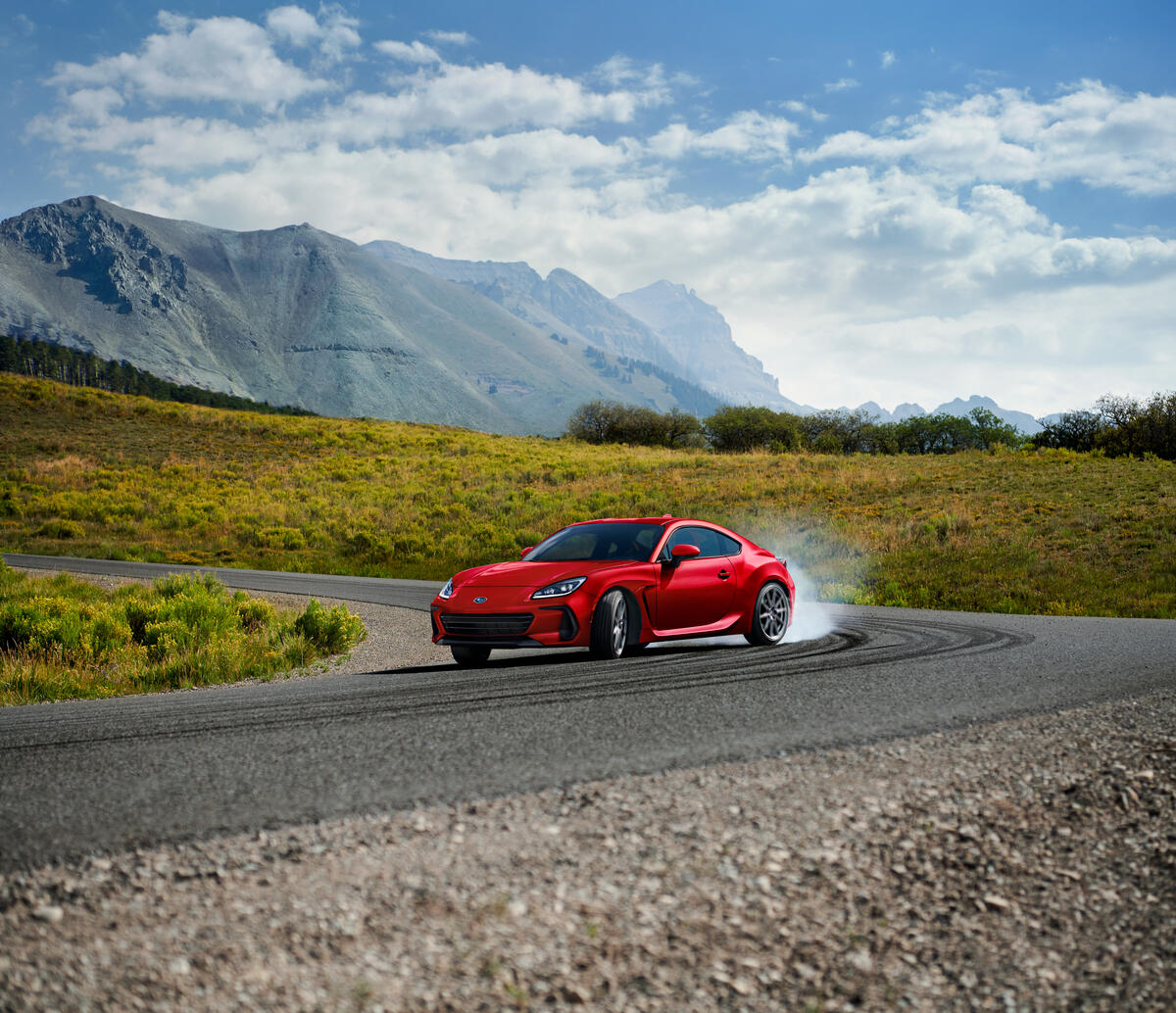
Subaru Brz
"So it's really interesting when we look at Subaru BRZ, almost 80% of the buyers choose manuals."
The Subaru BRZ is a small sports car that’s fun to drive, and you can get it with a manual gearbox. The host is saying most BRZ buyers choose the manual because it feels more engaging to drive.
The Subaru BRZ is a performance-focused sports coupe from Subaru (co-developed with Toyota) that’s especially known for being offered with a manual transmission. In this segment, the key point is that Subaru BRZ buyers strongly prefer manuals, which the host frames as an “engagement” choice.
take rates
"It's one of the highest take rates of manuals. WX and BRZ are both very high take rates for, for manual transmissions..."
A “take rate” is just the percentage of buyers who choose one option. In this case, it’s the percentage choosing manual transmissions.
“Take rate” is sales jargon meaning the percentage of buyers who choose a specific option or configuration. Here, it’s used to quantify how many customers pick manual transmissions versus automatics.
flat engines
"You know, and you, when you look at Porsche, also who make flat engines, [2149.7s] maybe that's what the, the link is, you know, they're, you know,"
A “flat engine” is an engine where the cylinders lay out left and right instead of standing up in a line. Subaru and Porsche are well known for using this kind of engine.
“Flat engines” refers to horizontally opposed (boxer) engine layouts where cylinders sit on opposite sides of the crankshaft. This design can help with balance and packaging, and it’s strongly associated with brands like Porsche and Subaru.
PDK
"even though we can show that this PDK is faster, faster shifting, it's more efficient, [2164.5s] you know, it's better in every way, but they want a manual."
PDK is Porsche’s automatic transmission that shifts gears very fast. It uses a system that keeps the next gear ready so the car can change gears quickly.
PDK is Porsche’s dual-clutch automatic transmission. It uses two clutches to pre-select the next gear, which is why it can shift very quickly and often feels more responsive than a traditional torque-converter automatic.
numbers decline
"Maybe there's something to it. [2176.6s] You know, but, you know, you, the writing's on the wall. [2179.6s] You can see it's, you know, numbers decline and then people aren't learning, you know, like."
“Numbers decline” here refers to declining adoption of manual transmissions over time. The host’s point is that fewer drivers learn to drive manuals, which further reduces demand and makes manuals increasingly rare.
safe
"Hopefully, we get complaints here, we get criticism, you know, that, you know, [2318.2s] we know our cars aren't perfect, but like I can always promise you that no matter [2324.5s] what Subaru you drive, it will be safe."
When people say a car is “safe,” they usually mean it’s designed to protect you in a crash and help you avoid accidents. The speaker is saying Subaru aims to be safe no matter which model you buy.
In automotive talk, “safe” usually refers to crash protection and crash-avoidance systems (like stability control and driver-assist features), not just how the car feels. Here, the speaker is emphasizing Subaru’s safety reputation as a selling point across their lineup.
all-wheel drive
"And, you know, you know, the all will dry. [2352.9s] I remember, you know, after driving Subaru's for a while, I drove my ex-mother-in-law's,"
All-wheel drive means the car can send power to all four tires. That usually helps it grip better on wet, snowy, or rough roads.
All-wheel drive (AWD) sends power to all four wheels, improving traction when roads are slippery or uneven. The segment’s “all will dry” appears to be a transcription error, but the context is about Subaru’s driving confidence and safety across conditions.
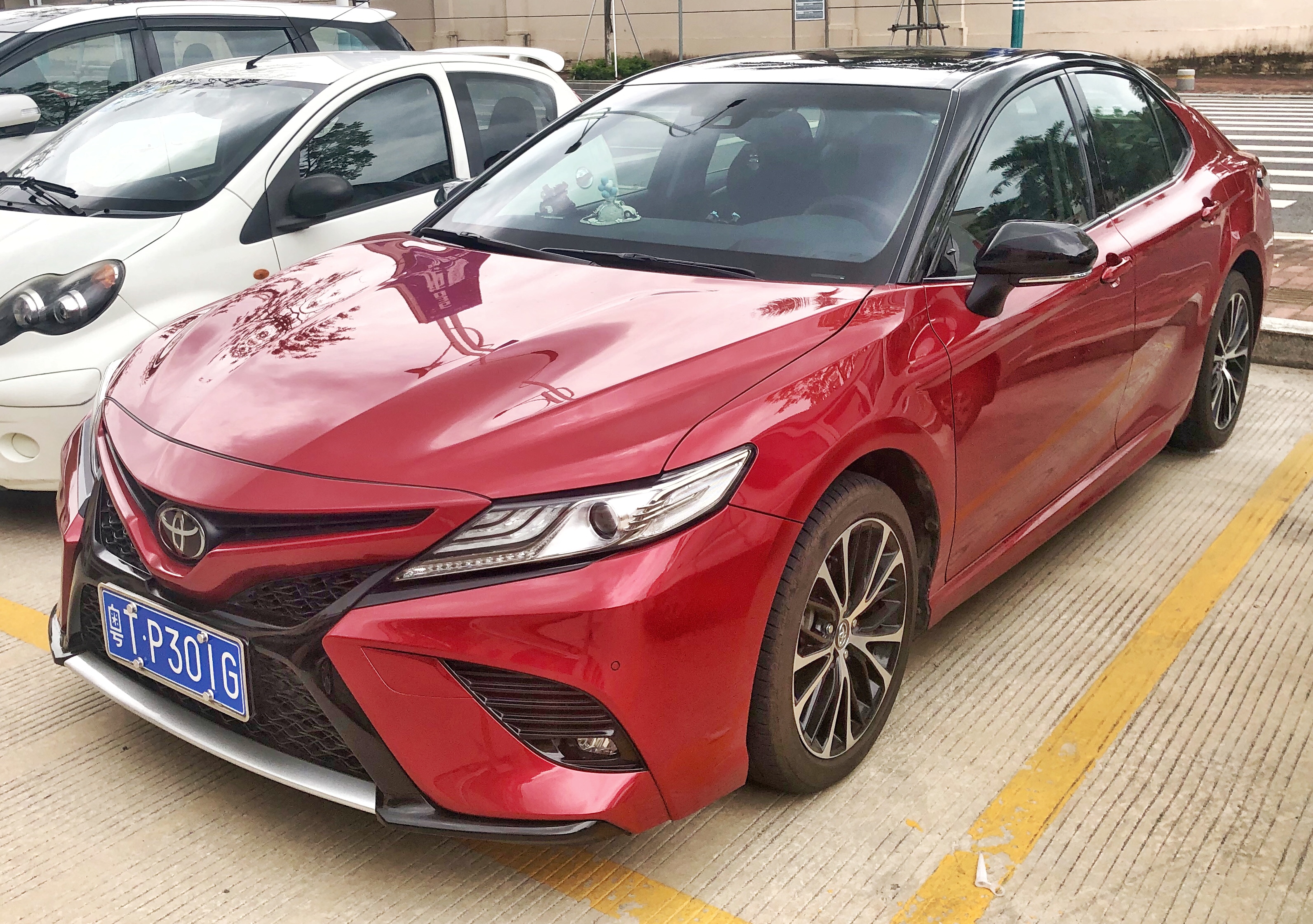
Toyota Camry
"I drove her, her Toyota Camry, and I was just like, you know, shocked at the way that it's so different."
The Toyota Camry is a common family sedan. Here it’s mentioned to show how driving a front-wheel-drive car feels different from driving an all-wheel-drive Subaru.
The Toyota Camry is a mainstream midsize sedan that’s typically front-wheel drive (or available with all-wheel drive on some trims). In this segment, it’s used as a comparison point to highlight how a front-wheel-drive feel differs from Subaru’s all-wheel-drive setup.
all will drive
"And I'm like, oh, I'm like, I've been so used to all will drive now. Yes, yes. Front will drive."
This is talking about all-wheel drive (AWD). Instead of sending power to just the front wheels, it sends power to more wheels so the car can grip the road better, especially when turning.
“All will drive” here refers to an all-wheel-drive (AWD) system, where power is sent to more than one axle to improve traction. The host contrasts it with front-wheel drive, emphasizing how AWD can help the car maintain grip when cornering and accelerating.
Front will drive
"Yes, yes. Front will drive. And I kind of forgot how a front will drive car drove."
Front-wheel drive (FWD) means the front wheels do the work of moving the car. In this conversation, they’re saying an FWD car feels different from an AWD car when you’re turning and pushing.
“Front will drive” means front-wheel drive (FWD), where the engine sends power to the front axle. The host says they’d gotten used to AWD behavior, and that driving an older FWD car felt noticeably different—especially in how it sets and holds grip through a corner.
low center of gravity
"it'll set properly in a corner. It's got a low center of gravity and it's got all will drive. Once it gets into that corner, it will hold that grip."
A low center of gravity means the car’s weight sits lower. That helps it feel more stable in turns and keeps the tires gripping the road better.
A low center of gravity means the car’s mass is concentrated closer to the ground. That reduces body roll and helps the tires stay loaded and working effectively, which supports stronger cornering grip.
mechanical grip
"It'll hold that grip. It's got a great mechanical grip. And that's inherently part of the design of the, of the all will drive system"
Mechanical grip is basically how well the tires can grip because of the car’s setup—things like suspension and weight position. It’s the “real” grip you get from the car’s design, not just computer controls.
Mechanical grip is the traction a tire generates through the car’s suspension geometry and chassis dynamics, not from electronic aids. The host links it to AWD design choices, arguing that the drivetrain and packaging help the car keep the tires loaded and gripping in corners.
EVs
"When you get into some of these newer EVs, man, they are, they are heavyweight. They are really heavy."
EVs are electric cars. They use batteries to power the engine, and the batteries can make the car weigh more than many gas cars.
EVs means electric vehicles—cars powered primarily by electric motors and large battery packs. Because the battery is heavy, many EVs end up with higher curb weight than comparable gas cars, which affects towing/handling feel and crash outcomes.
curb weight
"You know, it's, it's, it's a lot of, a lot of weight out there. That used to be like a truck weight."
Curb weight is basically how heavy the car is when it’s ready to drive. More weight can change how it pulls during towing and how hard it hits in a crash.
Curb weight is the weight of a vehicle as it sits ready to drive, typically including standard fluids and a full set of basic equipment. In the segment, the discussion ties that mass to how the car behaves during towing/loading and how it influences accident impact severity.
crash dynamics
"Well, it translates differently into the impact it has when you, when you do have an accident, when you do hit it. Yeah, yeah."
Crash dynamics is how the car’s movement and forces work during a crash. The car’s weight can change how much energy is involved and how the impact loads the vehicle and people.
Crash dynamics refers to how a vehicle’s motion and forces play out during a collision—things like impact energy, deceleration, and how the vehicle structure and occupants are loaded. The host’s point is that extra mass can be “good and bad” depending on how it changes the forces involved.
mask the driving dynamics
"there are, there are some great engineers out there who are able to mask the driving dynamics of that weight and make the car feel very light and fun."
This means making a heavy car feel easier to drive. Even if the car weighs a lot, engineers can adjust how it steers, rides, and responds so it still feels fun.
“Mask the driving dynamics” means tuning the car so it feels agile and responsive even if it’s heavy. Engineers can use suspension tuning, steering calibration, power delivery, and chassis control systems to make a high-mass vehicle feel lighter than its weight suggests.
platform
"You know, we shared engineers, you know, they all worked on the platform together because that's, you know, going forward, that's the kind of, you know, intelligence you need to gather."
A “platform” is the shared base that multiple cars are built on. It’s like using the same main design and engineering layout, so the company learns how to build and improve it across different models.
In car development, a “platform” is a shared set of engineering underpinnings—like the chassis architecture, mounting points, and major systems—that multiple vehicles use. Dominick Infante is saying Subaru shared engineers and worked together on that shared foundation so they could build and retain know-how, not just buy a finished product.
chassis work
"then the trail seeker, we did a little bit more of the chassis work on that car and it feels a bit more to me like a, like more of a Subaru."
“Chassis work” means changes or tuning to the car’s underbody and how the wheels/suspension are set up. It affects how the car rides and handles, not just the looks.
“Chassis work” refers to engineering and tuning the car’s structure and running-gear—things like suspension geometry, mounting, and how the body and wheels work together. Here, the host credits extra chassis development for making the Trail Seeker feel more like a Subaru.
AC
"At least with our products, you can get in, okay, that's the AC. That's why I put it in drive."
Here, “AC” means the car’s air conditioning. The point is that the controls are easy to find so you can start driving without fumbling around.
In this context, “AC” means the vehicle’s air conditioning controls. The host is contrasting confusing EV interfaces with a more straightforward setup where you can identify key functions quickly before driving away.
start button
"That's the start button, you know, you can get in and just drive away."
A “start button” is the button you press to get the car ready to drive. The host is saying it’s simple and intuitive compared with some earlier EVs.
A “start button” is the control used to initiate the vehicle’s ready state (common on modern cars, including EVs). The host uses it to emphasize usability: you can get in, press start, select drive, and go without learning a complicated procedure.
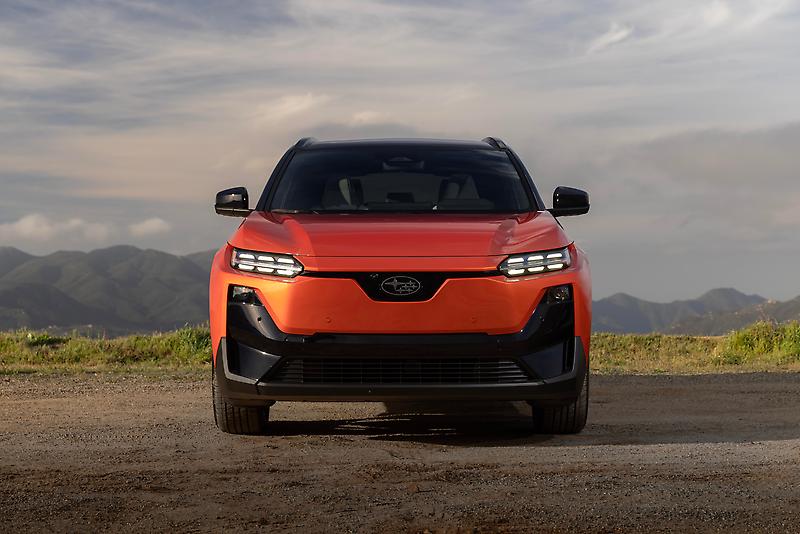
Subaru Uncharted
"...I really enjoy the car. We just came out with the Uncharted, which is also really quick, really fun to drive...."
The Subaru Uncharted is a Subaru vehicle that the podcast says is quick and fun to drive. It’s mentioned as a recently introduced model. The discussion focuses on how it drives rather than on specific engine or feature details.
The Subaru Uncharted is a newer Subaru model mentioned in the podcast as being “really quick” and “really fun to drive.” It’s discussed in the context of Subaru’s product lineup and what’s coming out, suggesting it’s meant to deliver a more exciting driving experience. The episode doesn’t provide deeper technical details, but it frames the Uncharted as performance-oriented and enjoyable.

Crosstrek Cross Track
"... drive. That's a smaller, a smaller product size, cross track size. And then we have, uh, the getaway coming ou..."
The Crosstrek is a compact crossover vehicle made by Subaru. It’s meant to be practical for daily driving and has a higher stance than a typical car. The episode mentions it as a smaller option in the lineup.
The Crosstrek (commonly spelled Crosstrek, from Subaru’s Crosstrek line) is a compact crossover designed to be practical with a higher ride height for everyday driving. In the podcast, it’s mentioned as part of a “smaller product size” category, contrasting it with other vehicles in the lineup. The context suggests the speaker is discussing where it fits in terms of size and use.
cross track size
"That's a smaller, a smaller product size, cross track size. And then we have, uh, the getaway coming out."
“Cross track size” is basically a way of talking about how big the car is across the ground. The host is using it to say the Uncharted is a smaller, more compact option.
“Cross track size” appears to be the host’s way of describing a compact crossover-like packaging dimension—essentially how big the vehicle is across its footprint. It’s used here to differentiate the Uncharted’s size category from the larger Trail Seeker.
three row EV
"That's the three row EV. So I'll be towards the end of the year. And that's going to be, uh, probably one of the, the fastest Subaru's ever made."
It’s an electric car with enough seats for three rows of passengers. People usually want this for families because it can fit more people than a typical two-row SUV.
A “three-row EV” is an electric vehicle (EV) built with seating for three rows, usually targeting families that need more passenger space. The “EV” part means it’s powered by an electric motor and battery instead of a gasoline engine.
off-roading
"Right. You know, a Subaru has to be in the, a Subaru's are an everyday car that can do a little bit of extraordinary things on the weekend. So you can go off-roading."
Off-roading means driving on rough or unpaved roads, like dirt trails or gravel. It’s where tires and traction matter more than on normal streets.
Off-roading is driving on unpaved or rough surfaces like dirt trails, gravel, mud, or snow where traction and ground clearance matter more than on-road comfort. It’s often used to describe how a vehicle handles low-speed obstacles and variable grip.
duality
"It's doing all the things that the car needs to do. And that's the great duality. I've always enjoyed about our products."
They’re describing a “two-in-one” idea. The car is meant to be normal enough for daily life, but also capable enough for fun trips and rougher roads on weekends.
In this context, “duality” means the idea that the same vehicle can do two different jobs well: everyday commuting during the week and more adventurous activities on the weekend. It’s a positioning concept Subaru often leans on—practical daily use plus capability when you want it.
snow
"Yeah. They're really, really good in snow. Yes. Yes. I got to, I got to put, I had the Forester Wilderness for the Avantz women's off-roading"
“Snow” here is shorthand for winter traction conditions, where tires, drivetrain behavior, and vehicle stability become critical. Subaru’s reputation in snow typically comes from how its drivetrains and traction systems help maintain grip on slippery surfaces.
Dirtfish
"event up here at Dirtfish and it snowed the day that I got it in mid-March, which we were not expecting."
Dirtfish is a place where people test and learn driving on dirt and other rough surfaces. Here, it’s where the host gets to try the Subaru on an off-road course.
Dirtfish is an off-road driving and driving-instruction facility/event venue known for putting cars through dirt, snow, and mixed-surface courses. In this segment, it’s the setting where the host tests Subaru vehicles in real off-road conditions.
street tires
"But I think it really speaks to the fact that the touring also did it no problem. And that's the street tires, higher end street tires, the whole thing."
Street tires are the kind of tires most cars come with for normal roads. The host is saying the car still did great on the dirt course even though it wasn’t running special off-road tires.
“Street tires” are tires designed primarily for pavement use, typically prioritizing comfort, tread life, and dry/wet grip over deep off-road traction. The point in this segment is that the Forester Touring still handled the off-road course well even without dedicated off-road tires.
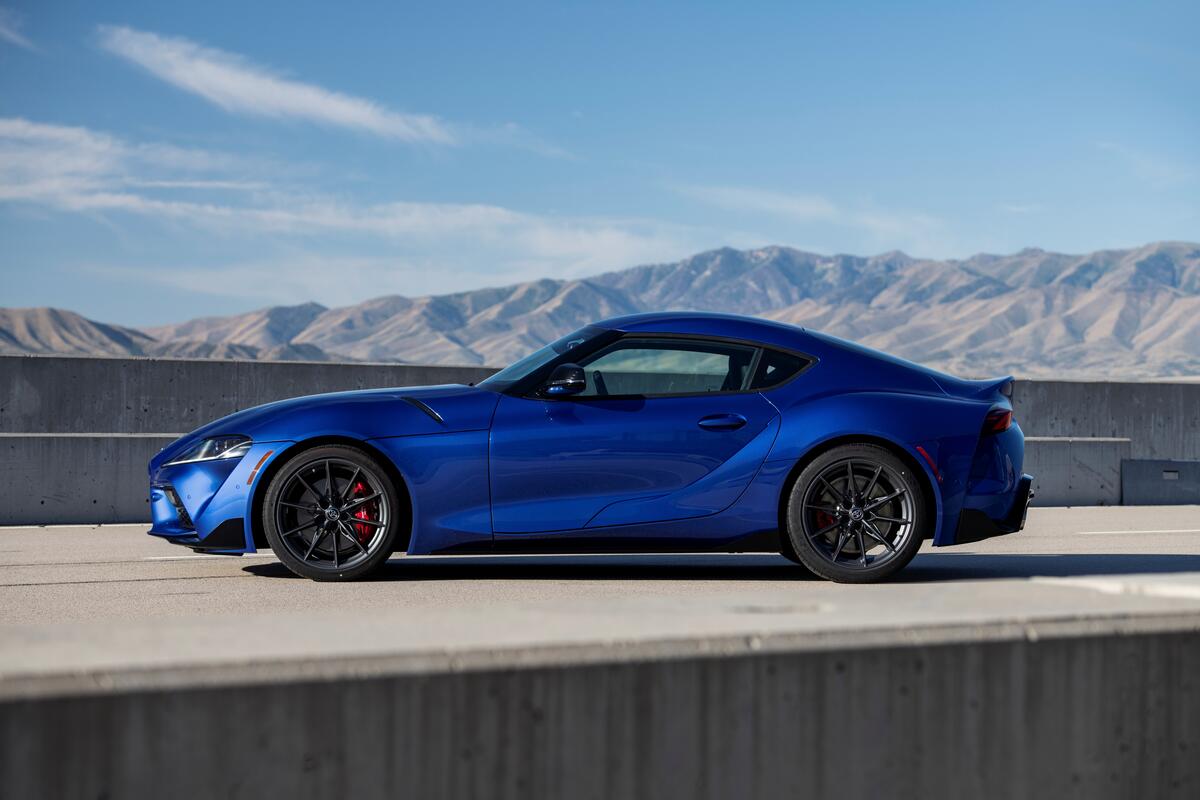
Toyota Supra
"So I have loved sort of surprising and delighting people on the off-road days with the Supras. They are shocking."
The Supra is a Toyota sports car that most people think of as a street car. Here, the host is saying they were still able to do surprisingly well on an off-road course.
“Supras” refers to the Toyota GR Supra (the modern Supra line), which is typically known for performance on pavement rather than off-roading. The host says they used Supras to surprise people on off-road days, highlighting how unexpected the results were.
four wheel drive
"like you tow something, they have all wheel drive. I mean, four wheel drive, you're going to take them off-road..."
Four-wheel drive powers all four wheels, which helps the car move better on dirt, snow, or other slippery surfaces.
Four-wheel drive (4WD) is a drivetrain setup that powers all four wheels, usually to improve traction for off-road or low-grip conditions. Here it’s used to explain why the host’s “truck/Jeep” background made them expect the cars to handle off-road courses.
articulation
"there was only one thing, there was a, there was a test for articulation, which is obviously the one thing, you know, you, you don't do without a buy on frame and this all, you know, that, you know, off-road Jeep style suspension system."
Articulation is how well the suspension can flex when the road is uneven. If one wheel goes up or down, articulation helps the other wheels stay planted so you don’t lose traction.
In off-roading, articulation is how much the suspension can move so the wheels stay in contact with the ground over uneven terrain. More articulation helps a vehicle keep traction when one wheel is higher or lower than the others.
body on frame
"there was only one thing, there was a, there was a test for articulation, which is obviously the one thing, you know, you, you don't do without a buy on frame and this all, you know, that, you know, off-road Jeep style suspension system."
Body-on-frame means the car’s body is mounted on a separate heavy frame underneath. Many off-road trucks use this because it can handle big bumps and suspension movement better.
Body-on-frame is a vehicle construction method where the body mounts to a separate ladder-like frame. It’s common on traditional off-road vehicles because it can support suspension travel and durability for rough use.
off-road Jeep style suspension system
"you, you don't do without a buy on frame and this all, you know, that, you know, off-road Jeep style suspension system. Other than that, he was just like, I can't believe it went up that."
They’re talking about a suspension setup meant for off-roading—more ability for the wheels to move up and down over obstacles. The goal is to keep tires gripping when the terrain gets rough.
This refers to suspension setups typically associated with Jeep-style off-road vehicles, designed to allow more wheel travel and better compliance over rocks, ruts, and steep climbs. The key idea is suspension geometry and travel tuned for articulation and traction rather than just smooth highway ride.
Moab
"we took a Forester, just a regular Forester up one of the Moab. They have a, they have a Magna designed a climb out there."
Moab is a well-known off-road area in Utah. People use it to test cars on tough terrain like rocks and steep climbs.
Moab is a desert region in Utah famous for off-road driving, including rock-crawling trails and obstacle climbs. Automakers and media often use Moab routes because they’re a repeatable way to stress-test traction, suspension, and ground clearance.
Wilderness packages
"they've always had better ground clearance, even stock... then you, you throw the wilderness packages onto them and they really do have a tremendous"
A Wilderness package is an upgrade on certain SUVs that’s meant to make them better for rough trails. It usually adds things like tougher tires and suspension changes to help the car handle dirt and rocks.
A Wilderness package is an off-road-oriented trim option that typically adds equipment aimed at tougher terrain, such as increased ride height, more capable tires, and suspension tuning. The speaker is contrasting how these packages improve off-road ability compared with stock versions.
suspension systems
"a lot of companies will use very sophisticated, very expensive suspension systems to achieve that off-roading. And that's kind of the great thing about the Subaru is like, you know, we're, we're doing it, but much more simply"
Suspension is what helps the wheels move and absorb bumps. For off-roading, better suspension helps the tires stay on the ground, but some setups can be harder or more expensive to maintain.
Suspension systems are the components that connect the wheels to the vehicle and control how the car absorbs bumps and maintains tire contact. In off-road context, more advanced suspension designs can improve wheel travel and traction, but they may be more complex to service.
traction
"You know, that, that, that traction with your all wheel drive system, that's because of mechanical reasons, right?"
Traction is tire grip—how well the tires can hold the road. On snow, better traction means the car can accelerate and turn without the wheels spinning.
Traction is how well a tire can grip the road surface without slipping. In snow, traction depends on tire grip plus how the drivetrain manages power to the wheels.

Audi Quattro
"...ubaru's. I think it's a better system than Audi's Quattro to be honest. So anyway, my two cents, but also, ..."
The Audi Quattro is about a car’s all-wheel-drive system. It helps the car grip the road better, especially when conditions are slippery. In the episode, it’s brought up as a point of comparison for another brand’s all-wheel-drive system.
The Audi Quattro refers to Audi’s Quattro all-wheel-drive system, which became a defining technology for the brand and is strongly associated with rally-style traction. In the podcast, the speaker compares it to Subaru’s system and suggests their opinion that Subaru’s setup is better. The mention is about drivetrain design and traction performance rather than a single body style.
ground clearance
"So they didn't have the ground clearance where we've always had that ground clearance, which actually makes a big difference in snow."
Ground clearance is how much space there is between the ground and the bottom of the car. In snow, more clearance can help the car avoid hitting snowbanks or getting stuck.
Ground clearance is the distance between the road and the lowest part of the vehicle’s underbody. More ground clearance helps prevent the car from scraping or getting stuck when snow piles up or when roads are uneven.

Subaru Forester Wilderness
"And so we got her into, and the, what sealed the deal though was that the, the forester wilderness, it could carry a roof tent roof top."
The Subaru Forester Wilderness is a special version of the Forester made for outdoor trips. Here, the big point is that it can hold a roof tent, so you can camp from the car.
The Subaru Forester Wilderness is a trim built for outdoor use, with styling and capability aimed at rougher adventures. In this segment, the key detail is that it can carry a roof tent, which makes it practical for camping without needing a separate vehicle.
roof tent
"it could carry a roof tent roof top. There you go."
A roof tent is a camping tent that sits on top of the car. Instead of sleeping on the ground, you sleep up on the roof tent.
A roof tent is a tent mounted on top of a vehicle, typically on a roof rack or dedicated mounting system. It’s popular with overlanding and camping because it keeps you off the ground and can be set up quickly at a campsite.
Pike's Peak
"The idea for this piece was to drive to the top of Pike's Peak in winter. Well, what I didn't realize is that they stop you about two thirds of the way up right where you hit the snow."
Pike's Peak is a well-known mountain in Colorado with a very steep road to the top. The story here is about driving up in winter and getting stopped because of snow.
Pike's Peak is a famous mountain in Colorado with a steep drive up to the summit, often used to test how well vehicles handle winter conditions. In this segment, the host describes being stopped about two-thirds of the way up due to snow.

WRX
"So you basically, we had to get there at 4am and only half of it was paved at that point. So we met, you stopped in the middle, you drove WRX down and back up on the pavement, but STI, you drove all the way to the top and back down on dirt."
The WRX is Subaru’s performance version of the Impreza, usually with a turbo engine and strong traction. Here it’s used in a comparison on Pike’s Peak—pavement driving versus dirt driving—to show how the cars behave.
The Subaru Impreza WRX is Subaru’s turbocharged performance model, typically paired with rally-style all-wheel drive for traction. The host contrasts how the WRX was driven on pavement versus the STI being driven to the top and down on dirt, using Pike’s Peak as a real-world traction test.
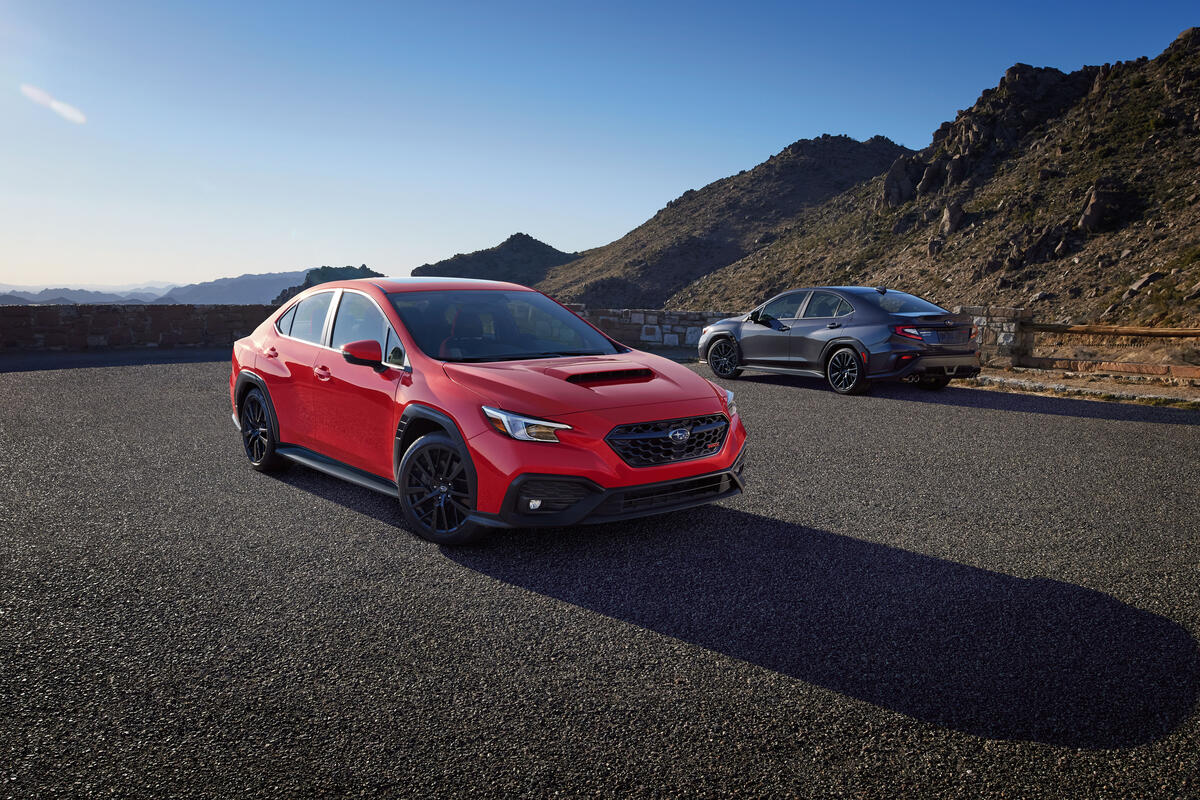
Subaru WRX
"...k story. We, um, we're introducing the 06 STI and WRX, which is the Hawkeye, right? You know, and we di..."
The Subaru WRX is a sporty version of a Subaru car. It’s made to drive more aggressively than a normal everyday model, and it’s known for having all-wheel drive. The episode references the WRX from the mid-2000s timeframe.
The Subaru WRX is a performance-focused compact sedan/wagon line from Subaru, built for drivers who want everyday usability with rally-inspired handling. It’s frequently discussed because it’s closely tied to Subaru’s all-wheel-drive identity and has a reputation for being engaging. The podcast mentions the “06 STI and WRX,” referring to that era’s models.
sliding
"nothing will help you focus, like driving it down in an STI on dirt, sliding and looking at a 14,000 foot drop off with no wheels."
“Sliding” means the tires aren’t gripping as well as you want, so the car starts to move sideways or rotate a bit. On dirt, that can happen more easily, and good drivers learn how to control it.
In performance driving, “sliding” usually means the tires lose grip and the car rotates or drifts while still being controlled. On dirt at steep elevation, sliding is a key part of how a rally-inspired all-wheel-drive car can be driven quickly and safely.
14,000 foot drop off
"like driving it down in an STI on dirt, sliding and looking at a 14,000 foot drop off with no wheels."
A “drop off” is basically a huge steep drop next to the road. The host is saying the situation was terrifying because if you lost control, the consequences would be extreme.
A “drop off” describes a steep edge or cliff-like fall-off next to the road, which dramatically increases the consequences of any loss of traction or control. The host uses the height to communicate how intense the traction and focus demands were during the press drive.
aluminum head
"But, uh, yeah. Yeah. Well, I have, um, I've been often healing 3000 that I've had for many years now. Um, I, uh, yeah, every day I look at bring a trailer and I just watch the, the prices plummet on, on that car, knowing how much money I've put into it. Right. Actually, you know, knock on what it's actually running pretty well right now. But, that's got a, uh, an aluminum head."
The cylinder head is the top part of the engine where combustion happens. If it’s aluminum, it’s lighter and can help the engine run cooler than a heavier iron head.
An aluminum head is the cylinder head made from aluminum instead of cast iron. Aluminum helps reduce engine weight and can improve heat management, but it also changes how the engine wears and how it needs to be maintained.
Tremac five speed
"Right. Actually, you know, knock on what it's actually running pretty well right now. But, that's got a, uh, an aluminum head. It's got, um, uh, triple weathers, triple 45 weathers on it. It's a Tremac five speed. So it's a very early Healy. So it had a side shifter, maybe Healy fans are out there."
They’re talking about the car’s manual gearbox. It’s a five-speed, and in this case it’s paired with a shifter setup that makes the car feel a little awkward compared to modern cars.
A “Tremac five speed” is a five-speed manual transmission the speaker associates with this Healey build. The key point is that the car’s gearbox is an older, less refined unit, and the speaker later explains it’s awkward to drive because of how the shifter is mounted.
triple 45 weathers
"But, uh, yeah. Yeah. Well, I have, um, I've been often healing 3000 that I've had for many years now. Um, I, uh, yeah, every day I look at bring a trailer and I just watch the, the prices plummet on, on that car, knowing how much money I've put into it. Right. Actually, you know, knock on what it's actually running pretty well right now. But, that's got a, uh, an aluminum head. It's got, um, uh, triple weathers, triple 45 weathers on it."
Those are carburetors—devices that mix fuel and air for the engine. “Triple 45” means there are three of them, each with a 45mm size, which is a common setup on classic performance cars.
“Triple 45” refers to three 45mm carburetors, and “Weathers” is the carburetor brand/model the speaker is using. Multiple large carburetors are common on classic performance builds because they can deliver strong throttle response and airflow.
side shifter
"It's a Tremac five speed. So it's a very early Healy. So it had a side shifter, maybe Healy fans are out there. They know how, how bad that transmission was. That was a transmission that came out of a truck and it hung off the side of the transmission"
Instead of the gear lever coming up from the middle, it’s mounted off to the side. That can make shifting feel strange, even if the setup looks cool.
A side shifter is a manual-transmission shifter mounted to the side of the gearbox rather than coming up through the center console. In this build, the speaker says the transmission was adapted from a truck and the shifter placement makes it awkward to drive.

Jaguar C Type
"...ng thing. It's got that great. Now, uh, there's a Jaguar C type race car, a Proteus. It's all aluminum. That is, ..."
The Jaguar C-Type is an old Jaguar race car. It’s known for being built for competition, not everyday driving. The episode also mentions a special version described as being made with all-aluminum parts.
The Jaguar C-Type is a classic Jaguar race car from the 1950s, celebrated for its lightweight design and motorsport heritage. The podcast specifically mentions a “Jaguar C type race car” and calls out a “Proteus” that’s described as all aluminum. That points to a special, race-focused build rather than a standard road car.

Mercedes-Benz 560 Sl
"...ould have been the, this is my, uh, I have an 88, 560 SL, which is the German antelope. Uh, so I, I, like ..."
The Mercedes-Benz SL-Class is a luxury roadster, meaning it’s a comfortable car meant for open-top driving. The episode mentions an SL model the speaker owns, emphasizing that it’s a car they like. These cars are known for being both premium and enjoyable to drive.
The Mercedes-Benz SL-Class (R231) is a luxury grand touring roadster, built for comfortable high-speed driving with a premium interior and strong performance. The podcast mentions an “88, 560 SL,” which is a different generation than R231, but the SL-Class name is still the key reference point: it’s a personal favorite in the speaker’s lineup. SL-Class cars are often discussed because they blend everyday usability with classic Mercedes roadster appeal.

Range Rover
"Obviously it's English, uh, a, uh, a n 80s two-door Range Rover. Oh, no. We never got the Range Rover, the two-door Range Rovers."
A Range Rover is a luxury SUV made by Land Rover. The host is talking about an older, two-door version from the 1980s, which is less common than the four-door ones.
The Range Rover is Land Rover’s iconic luxury SUV line, known for its off-road ability and distinctive, upscale styling. In this segment, the host is specifically talking about an 80s two-door Range Rover, which is a rarer body style than the more common four-door versions.
Goodwood members meeting
"I went earlier this year to the Goodwood members meeting, which I'd never done. I was like, I just want to kind of go see what the members meeting is like."
The Goodwood Members’ Meeting is an event at Goodwood in the UK, known for motorsport history and a strong focus on classic and enthusiast cars. It’s a context marker here for why the host was seeing rare vehicles like the two-door Range Rover.
Resto mod
"Kingsley is a company that makes customized high-end Resto mod, basically, uh, Range Rovers, and they had a bunch of the two doors out there."
A restomod is an older car that’s been updated with newer parts and improvements. The goal is to keep the classic look, but make it nicer to drive and more dependable.
A restomod is a modified classic car that blends original styling with modern upgrades—often for drivability, reliability, and safety. In this segment, the host says Kingsley builds customized high-end restomods based on Range Rovers.
Kingsley
"the day before I went to a car show and Kingsley is a company that makes customized high-end Resto mod, basically, uh, Range Rovers, and they had a bunch of the two doors out there."
Kingsley is a company that custom-builds modified classic Range Rovers. In the story, that’s why the host saw several two-door examples at the event.
Kingsley is described as a company that builds customized, high-end restomods based on Range Rovers. The mention matters because it frames why multiple two-door Range Rovers were present at the car event.
turbo diesel
"because it has the, the least loved engine, the, the VM, the majority, the Italian has got the Italian turbo diesel, which is interesting."
A turbo diesel is a diesel engine with a turbocharger. The turbo helps it make more pulling power, but it can be more complicated than a simpler diesel.
A turbo diesel is a diesel engine that uses a turbocharger to force more air into the cylinders. That typically improves torque (pulling power) and efficiency compared with a non-turbo diesel, but it can also add complexity and stress to components.
VM
"because it has the, the least loved engine, the, the VM, the majority, the Italian has got the Italian turbo diesel, which is interesting."
“VM” is the name of an Italian company that makes diesel engines. The host is saying that engine has a reputation for not being the most liked or trouble-free.
“VM” here refers to VM Motori, an Italian engine manufacturer whose diesel engines were used in some Range Rover applications. The host is calling it “least loved,” implying it has a reputation for being troublesome or at least not universally liked.
Request an Explanation
Heard something you'd like explained? We'll add it to this episode.
Sign in to request explanations for terms you heard.
Want to learn more?
Browse our glossary for plain-English explanations of automotive terms, jargon, and concepts.
Help improve this episode
See something that's not quite right? Our annotations are AI-generated and can sometimes miss the mark. Click the flag icon on any annotation to suggest a correction.