
Pebble Beach Concours d'Elegance president Vince Finaldi
About this episode
Vince Finaldi, the new president of the Pebble Beach Concours d’Elegance, explains how he went from trial attorney to running a European collector-car restoration and sales shop—and why Pebble’s standards, authenticity, and longevity keep it ahead of the crowd. The conversation also covers car-week strategy, the event’s charitable impact, and how Pebble plans to expand displays for the Miura’s 60th anniversary. Along the way, hosts dig into collector-market shifts, mileage anxiety, and why driving matters more than just viewing.
This week, on That Car Show, it’s Vince Finaldi, the new president of the Pebble Beach Concours d'Elegance. This is the 75th year of the Concours—and it’s just four weeks away—so there couldn't be a better time to have him on. Vince shares his unique path to Pebble, talks about the cars that shaped him, what goes into pulling off an event like this, and, where he sees the collector-car world heading next. All roads lead to Pebble… and it’s Vince Finaldi, on that it’s That Car Show.
Please take two minutes to follow us and leave a review on your platform of choice!
https://www.pebblebeachconcours.net/
@pebblebeachconcours
@vincefinaldi
@ryanbahrke
@lindseymjesch
@d9nnyp
@thatcarshowpodcast
Vince Finaldi
"This week on that car show, it's Vince Finaldi, the new president of the Pebble Beach Concours Delegance... Vince is a trial attorney who in 2022 decided to retire from practicing law to open Finaldi Incorporated a shop like those run by his father and grandfather."
Vince Finaldi is the person leading Pebble Beach’s big car show as its new president. Before that, he worked as a lawyer and later started a business that deals with European collector cars.
Vince Finaldi is the new president of the Pebble Beach Concours d'Elegance. The host also describes his background as a trial attorney who later opened Finaldi Incorporated, a shop focused on European collector cars.
Pebble Beach Concours d'Elegance
"And this week on that car show, it's Vince Finaldi, the new president of the Pebble Beach Concours Delegance. This is the 75th year of the Concours."
Pebble Beach Concours d'Elegance is a famous car show for collectors. It’s where rare and important cars are displayed and judged, and it’s considered a big deal in the hobby.
Pebble Beach Concours d'Elegance is one of the most prestigious concours events in the collector-car world. It’s known for judging and showcasing historically significant cars, often with major brands and high-end restorations.
Finaldi Incorporated
"Vince is a trial attorney who in 2022 decided to retire from practicing law to open Finaldi Incorporated a shop like those run by his father and grandfather."
Finaldi Incorporated is the European collector-car restoration/service/sales shop Vince Finaldi opened after retiring from law. The episode frames it as a continuation of the family’s automotive business tradition.
Porsche
"His personal collection has included Mercedes Benz, Porsche, Ferrari, Lamborghini."
Porsche is a German brand known for sports cars. Many Porsche models are popular with collectors and show up at major car events.
Porsche is a German sports-car brand famous for engineering-focused performance and iconic models. It’s a frequent presence at concours events because many Porsche cars have strong enthusiast and historical followings.
Mercedes-Benz
"His personal collection has included Mercedes Benz, Porsche, Ferrari, Lamborghini."
Mercedes-Benz is a well-known German car brand. Collectors often like it because it has a big history and many models are considered important or desirable.
Mercedes-Benz is a major German luxury and performance brand with a long history in both road cars and motorsport. In collector circles, Mercedes-Benz models are often sought after for engineering, design, and historical significance.
Italian sports cars
"they specialize in Italian sports cars. So at our house, while growing up, we always had Italian sports cars coming and going..."
They’re talking about the Italian sports cars they saw growing up and how those cars influenced them. It’s basically explaining what made them fall in love with cars.
The host discusses how Italian sports cars were the core of the speaker’s childhood car exposure. This frames why Italian marques resonated most strongly, shaping the speaker’s car identity.
Alfa Romeo
"Italian sports cars coming and going, you know, Alfa Romeo, Maserati, Ferrari, Lamborghini."
Alfa Romeo is an Italian car brand that’s famous for sporty, stylish cars. People who love cars often associate it with classic performance models.
Alfa Romeo is an Italian automaker known for stylish design and sporty engines, especially in the classic “Italian sports car” era. In enthusiast circles, Alfa Romeo often comes up for models that balance character with performance.
Ferrari
"Italian sports cars coming and going, you know, Alfa Romeo, Maserati, Ferrari, Lamborghini."
Ferrari is a famous Italian brand known for very fast, high-end sports cars. It’s also strongly connected to racing, especially Formula 1.
Ferrari is an Italian supercar and racing brand best known for high-performance road cars and Formula 1 heritage. When someone says “Italian sports cars,” Ferrari is one of the most recognizable names in that category.
Lamborghini
"Italian sports cars coming and going, you know, Alfa Romeo, Maserati, Ferrari, Lamborghini."
Lamborghini is an Italian car brand known for wild-looking, very powerful supercars. Car people often mention it when talking about the most exciting Italian performance cars.
Lamborghini is an Italian brand famous for dramatic styling and high-output engines, often associated with the most extreme end of the supercar spectrum. It’s a key name when enthusiasts talk about “Italian sports cars.”
Maserati
"Italian sports cars coming and going, you know, Alfa Romeo, Maserati, Ferrari, Lamborghini."
Maserati is an Italian brand that makes sporty, upscale cars. Car fans often talk about it alongside other famous Italian performance brands.
Maserati is an Italian luxury-sports brand that has historically focused on performance, often with distinctive engine sounds and grand-touring character. It’s frequently grouped with other Italian marques when people talk about “special cars.”
Corvette
"In addition to American muscle cars, primarily Corvettes."
Corvette is a sports car made by Chevrolet. It’s known as an American performance car that’s been popular with car fans for decades.
Corvettes refers to Chevrolet’s sports car line, known for a long-running American performance tradition. In enthusiast talk, “Corvette” often implies a relatively affordable way to get into V8-powered performance.

Chevrolet Corvette
"...d. In addition to American muscle cars, primarily Corvettes. Okay. And some German cars, some Porsches, some ..."
The Chevrolet Corvette is a sports car made in the U.S. It’s designed to be fast and fun to drive, and it’s been around for many decades. People bring it up a lot because it’s one of the most well-known American performance cars.
The Chevrolet Corvette is an American sports car known for its performance and long-running history. It often comes up in conversations about “American muscle” because it blends strong engine output with a purpose-built sports-car layout. It’s a common reference point in car podcasts when discussing iconic cars and what makes them special.
Jaguar
"Yeah, Jaguar, MG, mainly those, you know, a lot of Jaguars."
Jaguar is a British car brand that’s known for sporty, stylish cars. It’s one of the classic names people associate with British performance.
Jaguar is a British automaker known for sporty grand touring cars and classic performance models. In the transcript, it’s part of the speaker’s “British cars” exposure alongside other marques.
MG
"Yeah, Jaguar, MG, mainly those, you know, a lot of Jaguars."
MG is a British car brand that’s known for classic sports cars, especially older lightweight roadsters. It’s a name car fans recognize from British performance history.
MG is a British brand historically associated with affordable British sports cars, especially in the mid-20th century. Enthusiasts often mention MG when discussing classic roadsters and lightweight performance.

Lamborghini Countach
"I remember so vividly the first time I saw my first Lamborghini Countach, right? And I had my dad chase it in our Chrysler minivan, right?"
The Lamborghini Countach is a legendary supercar from Lamborghini. People remember it for its wild, angular design and its powerful V12 engine, and it became a symbol of what a “dream car” looks like.
The Lamborghini Countach is an iconic 1970s–1980s supercar known for its wedge shape and dramatic styling. It’s especially famous for its high-revving V12 character and the way it became a pop-culture symbol of “dream cars.”

Chrysler minivan
"I remember so vividly the first time I saw my first Lamborghini Countach, right? And I had my dad chase it in our Chrysler minivan, right?"
They’re talking about a regular Chrysler minivan—basically a family car. It’s mentioned to show how surprising it was to see a Countach in the real world.
A Chrysler minivan is a family-focused vehicle used here as a contrast to the supercar. The point is that the speaker’s dad used a normal, practical car to chase a Lamborghini Countach.
road races
"It started in 1950, along with the road races in Pebble Beach."
Road races are competitive motorsport events held on paved circuits or road-course layouts. In this segment, the speaker notes that Pebble Beach’s concours tradition began in 1950 alongside road racing, linking the event’s prestige to motorsport roots.
rigorous and strict judging standards
"It's always had very rigorous and strict judging standards, very strict standards about which cars are accepted and which ones are not."
They’re describing how the show has very strict rules and judging. Some cars get accepted, and others don’t, based on those rules.
Concours events often use rigorous judging standards to score cars consistently and to enforce rules about what qualifies for display. In this segment, the host emphasizes strict criteria for which cars are accepted versus rejected.
authenticity
"We talked a lot with folks about authenticity and how that's just what everyone wants these days, right? And, and that, you know, that's Pebble, right?"
In car-show terms, authenticity means the car is true to its original look and history. Judges and fans care whether it’s been kept or restored in a way that matches how it should be.
In concours culture, authenticity means the car is presented in a way that matches how it was originally built or historically correct for its make, model, and era. The discussion ties authenticity to what modern audiences “want these days,” implying it’s a key judging and acceptance factor.
convertibles
"[617.5s] 70s and 80s when they were shopping, you know, Ferrari [620.4s] Daytonas and the convertibles. And I know the shop where that [623.2s] was going on, it was down, down the street from one of my dad"
A convertible is a car where the roof can be opened up so you can drive with the top down. Collectors often care a lot about convertibles because they can be rarer and more desirable than the same model with a fixed roof.
A convertible is a body style with a roof that can be folded down or removed, turning the car into an open-top vehicle. In collector circles, convertibles are often treated as a distinct “variant” because the open-top configuration affects desirability, rarity, and value.
collector car market
"“...I've seen that the progression of the [631.2s] collector, whatever you call it, the hobby, the, the business, [637.6s] the [638.9s] Just sort of the whole realm.” ... “there's a [663.5s] lot of fine art principles that have been applied to the [667.1s] collector car market.”"
This is the market where people buy and sell classic or special cars. The point here is that it’s changed: instead of being just cars people use, many buyers now treat them more like art or collectibles that can grow in value.
The collector car market is the ecosystem of buying, selling, and valuing classic and special-interest vehicles. The hosts describe how it has shifted toward “fine art” principles—meaning buyers treat provenance, condition, and cultural significance as investment drivers rather than just personal transportation.
fine art principles
"“...now the way people look at them, the way they buy them, the way they [656.8s] use them, the way they [659.1s] invest in them is, is more akin to fine art. You know, there's a [663.5s] lot of fine art principles that have been applied to the [667.1s] collector car market.”"
They mean the way art is valued—things like rarity and history—are now being used to value collector cars too. So some cars are treated more like investment collectibles than everyday vehicles.
“Fine art principles” refers to valuation ideas borrowed from art collecting—like scarcity, provenance (where it came from), and condition—applied to cars. In this context, it explains why certain cars can be bought and held like investment-grade collectibles.
unbroken provenance
"shift towards more original, more complete cars with, with, with unbroken provenance that you can, you can trace all the way from day one"
Unbroken provenance means the car’s history is fully documented from the beginning, with no missing records. It helps buyers trust that the car is real, original, and not a mix of parts.
Unbroken provenance is a documented ownership and history trail with no gaps—who owned the car, where it lived, and what records exist. For high-end collector cars, that paperwork helps prove originality and supports auction and concours credibility.
generational shift
"we're seeing that generational shift now. It's happening right in front of our eyes"
A generational shift means the kinds of buyers in the collector-car world are changing. Younger people are now buying the cars they used to just dream about.
A generational shift in collecting refers to younger buyers entering the market and changing what gets valued. In this context, it’s about collectors wanting to buy and drive the same “poster cars” they admired when they were younger.
Mika auction
"we could say it started in January with the, with the Mika auction, you know, that the huge auctions for some of these, these halo supercars"
They’re talking about a specific auction called the Mika auction. The point is that it kicked off a wave of big, attention-grabbing sales for rare cars.
The “Mika auction” is referenced as a starting point for a run of high-profile sales that influenced collector behavior. It’s mentioned as a catalyst for the surge in prices and attention around certain top-tier cars.
halo supercar
"that the huge auctions for some of these, these halo supercars that happened at the beginning of this year."
Halo supercars are the headline-grabbing, ultra-rare, high-status cars that set the tone for a brand or market. Their auctions and publicity can pull attention (and money) toward the broader collector ecosystem.

Ferrari Enzo
"like starting, you know, the Enzo, the Enzo is pretty surprising. Yeah, you know, it's, it's yeah, that's one that caught me off guard"
The Ferrari Enzo is a famous, high-end Ferrari supercar with the engine behind the driver. The point here is that it’s been around for a while, but people are suddenly treating it like a must-have “hot” collectible.
The Ferrari Enzo is a halo supercar from Ferrari built around a mid-engine layout and a race-bred approach to performance. In this segment, the hosts call it surprising because it has recently become a “hot car,” even though it’s not new in the usual sense.

Ferrari F50
"you know, the F 50, I can understand a lot more. Yeah, it's a manual, it's 12 cylinder, it's naturally aspirated."
The Ferrari F50 is a classic Ferrari supercar with a big V12 engine and a very “old-school” feel. Here they’re saying it makes sense that people would get excited about it because the car’s setup is the kind enthusiasts recognize right away.
The Ferrari F50 is a mid-engine, naturally aspirated V12 supercar known for being a driver-focused, analog-feeling machine. The hosts mention it as easier to understand in the “generational shift” because it has a straightforward, enthusiast-friendly spec: manual gearbox, 12-cylinder, and naturally aspirated.
naturally aspirated
"Yeah, it's a manual, it's 12 cylinder, it's naturally aspirated. Formula one technology, I get that one."
A naturally aspirated engine doesn’t use a turbo or supercharger to force air in. It relies on the engine’s design and revs to make power, which often feels more direct and “linear.”
“Naturally aspirated” describes an engine that draws air in without forced induction like a turbocharger or supercharger. It typically changes how power is delivered—often emphasizing throttle response and higher-rev behavior compared with boosted engines.
Formula one technology
"it's naturally aspirated. Formula one technology, I get that one."
“Formula one technology” refers to engineering ideas borrowed from Formula 1 racing—often lightweight construction, advanced aerodynamics, and high-performance powertrain design. In this context, the hosts connect F1-derived tech to why certain Ferraris make sense as “hot cars.”
Ferrari 280 GTO
"Yeah, 280 GTO, I get that one as well. The Enzo caught me off guard a little bit."
The Ferrari 280 GTO is an older, legendary Ferrari that’s closely tied to racing. In the conversation, they’re saying it makes sense that people would want it because its reputation is already well established.
The Ferrari 280 GTO is a classic Ferrari race-bred grand tourer associated with the brand’s late-1960s/early-1970s racing era. The hosts say it’s easier to understand why it would be “hot,” implying its pedigree and story are more obvious to collectors.
hot car
"it's just a hot car. It's here. Yeah. Yeah. So yeah, also, I still think of that as like a new car or newer"
A “hot car” is one that suddenly becomes very popular and desirable. In this segment, they mean the Enzo feels like it’s “arrived” as a top pick even though it’s been around for years.
A “hot car” is a vehicle that has recently surged in desirability—often among collectors or enthusiasts—so demand rises quickly. Here it’s used to describe how the Ferrari Enzo went from lingering interest to suddenly being treated as a must-have.

Porsche Carrera GT
"...wroom in what 2005 or whatever. And then also the Carrera GT kind of caught me off guard a little bit as well...."
The Porsche Carrera GT is a very high-end, very fast Porsche supercar. It’s built in small numbers and is meant for serious performance. People talk about it because it’s rare and memorable to drive or own.
The Porsche Carrera GT is a high-performance supercar known for its extreme driving character and limited production. It’s the kind of car that stands out in enthusiast conversations because it’s rare and technologically impressive for its era. The podcast mention suggests it left a strong impression when discussed.
suspension upgrades
"“[904.6s] there are definite reasons for it. I think the the the suspension upgrades and the upgrades and tires really improve the drivability and the safety of that car”"
Suspension upgrades are modifications to the parts that control how the car rides and handles bumps and turns. The goal is usually to make the car feel more stable and easier to control.
Suspension upgrades are changes to a car’s suspension components (like springs, dampers, bushings, or geometry) to improve how it handles. On a high-performance car, better suspension tuning can reduce instability and make the car more predictable at speed.
tires
"“[908.6s] suspension upgrades and the upgrades and tires really improve the drivability and the safety of that car”"
Tires are what actually grip the road. Better tires can make a fast car feel more controllable, especially when braking or turning hard.
Tires are the car’s only contact patch with the road, so they strongly influence grip, braking, and cornering stability. The segment links tire improvements to better drivability and safety for the Carrera GT.
drivability
"“[908.6s] suspension upgrades and the upgrades and tires really improve the drivability and the safety of that car”"
Drivability is how easy the car is to drive day-to-day and in normal driving situations. A car with good drivability feels smooth and predictable instead of surprising you.
Drivability is how easy and predictable a car is to drive in real conditions—how smoothly it responds to inputs like steering, throttle, and braking. For high-performance cars, drivability often depends on suspension tuning, tire choice, and how stable the car feels at the limit.
safety
"“[912.3s] improve the drivability and the safety of that car”"
Here, “safety” means how controllable the car is when you drive it hard. The hosts are saying setup changes like suspension and tires can make it less likely to get out of shape.
In this context, safety refers to how likely the car is to behave in a controlled, non-threatening way during aggressive driving. The hosts connect safety improvements to suspension and tire changes, implying better stability and reduced risk of loss of control.
Fontana
"“[926.2s] between a Ferrari and a Carrera GT at a track in Fontana, which is actually not there anymore.”"
Fontana is a place in California tied to a famous crash mentioned in the episode. The hosts say that incident affected how people viewed those supercars afterward.
Fontana refers to a track location in California where a widely discussed crash involved a Ferrari and a Porsche Carrera GT. The hosts note the track is no longer there, but the incident is remembered locally and influenced perceptions of the cars.
twitchy car
"“[951.9s] incidents with that car. It's, it's, it's, it's, it's, it could be a twitchy car, you really have to know what you're doing.”"
A “twitchy car” is one that feels a little too sensitive—small inputs can cause big reactions. It usually means you have to be careful and skilled to keep it stable.
A “twitchy car” is a car that can feel jumpy or overly sensitive to small steering or throttle inputs, especially at higher speeds. That kind of behavior usually points to a setup that’s harder to control, where the driver must be precise to keep the car stable.
legend that comes with it
"And I think that car has something in it has an intangible and that's it's got a legend that comes with it, right?"
The host is talking about a car’s reputation—what people think of it because of its history and fame. Even if you improve the car with modern parts, that “special status” still matters to owners and buyers.
This refers to a car’s reputation and cultural status—how its history, racing/ownership stories, and design impact make it feel special beyond measurable specs. The host argues that even if modern upgrades change the performance picture, the “legend” still influences perceived value.

Porsche 918 Spyder
"you see the Carrera GT and then the 918 Carrera GT is the one that's really moving, you know, which, you know, the 918 is kind of the upgraded version"
The Porsche 918 is a top-tier supercar from Porsche that uses a hybrid system. In the conversation, they’re saying it may be newer and more advanced, but it doesn’t always grip the road in the same way as the older car.
The Porsche 918 is a high-profile plug-in hybrid supercar that’s often discussed alongside other Porsche halo cars. Here, the host contrasts it with the Carrera GT, saying the 918 is an “upgraded version” but doesn’t deliver the same kind of traction feel.
traction
"the 918 is kind of the upgraded version, but it's not really the same kind of traction. Yeah, you see the same thing with the with the four GT"
Traction means how well the tires can grip the road. More traction usually means the car can accelerate harder and feel more stable instead of spinning or sliding.
Traction is how much grip the tires have against the road before they start slipping. In performance-car comparisons, traction strongly affects how quickly a car can accelerate, how confidently it can put power down, and how stable it feels under load.
condensation
"burn off that condensation. It gets on all the parts. It gets [1243.0s] in electronics. It gets in the engine. It gets in the exhaust."
Condensation is water that forms when warm air cools down. In a car, that water can show up on cold parts and even get into sensitive areas like electronics.
Condensation is water vapor that turns into liquid when temperatures drop. In a car, it can form inside the engine bay and on cold metal surfaces, then migrate into places like electronics and exhaust areas.
heat cycles
"And so, you know, going through the heat cycles using the cars [1249.3s] is a good thing. You know, getting, getting everything, [1253.2s] you know, in the internals oiled up"
Heat cycles are just the car getting hot and then cooling down again. That repeated process helps dry out moisture and lets fluids and parts settle into normal operating conditions.
Heat cycles are repeated warm-up and cool-down periods that bring different parts of the car up to operating temperature and then back down. Doing this helps dry out moisture and can stabilize fluids and seals, which is why the speaker suggests running the cars through heat cycles.
preservation cars
"but I'm also a huge fan of preservation cars, [1262.0s] you know. Yeah. You know, I kind of grew up in the business [1265.3s] where we're fixing cars and, you know, repairing them"
Preservation cars are cars that are kept in their original, mostly-unmodified condition. The goal is to keep the car’s history and originality, even if it isn’t flawless.
Preservation cars are vehicles kept as close to their original condition as possible, with minimal changes, even if they’re not perfect restorations. The idea is to maintain originality and the car’s history—often valuing “original ones” over fully rebuilt, cosmetically perfect examples.
barn find cars
"It seems like every year, whether [1295.8s] it's on the grand or auctions or, or wherever it is, where do [1299.2s] these barn find cars keep coming from?"
A barn find is a car that’s been sitting unused for a long time and then gets discovered. People like them because they can be surprisingly original, but it also makes you wonder where new ones keep coming from.
Barn find cars are vehicles discovered after long periods of storage, often in barns, garages, or similar places. Their appeal is that they may be low-mileage and original, but they also raise questions about how they keep showing up and what happens when the supply of undiscovered cars runs out.
Tom Shaughnessy
"that's a phenomenon that, that started way back in like [1318.0s] the eighties. I think, I think Tom Shaughnessy was with the [1321.0s] first barn find guy that said, let me just pull it out and,"
Tom Shaughnessy is mentioned as an early barn-find figure. The host is saying he helped kick off the idea of pulling old cars out of storage and turning them into finds.
Tom Shaughnessy is referenced here as an early figure associated with the modern “barn find” discovery culture. The speaker credits him with one of the first “barn find” approaches—pulling a car out from storage.

Porsche Boxster
"...sses away or something, you know, to them, it's a boxster, right? They might not know any better. And so, I..."
The Porsche Boxster is a Porsche sports car with the engine in the middle and a convertible (open-top) design. It’s made for driving enjoyment, especially on twisty roads. People often talk about it because it’s a well-known Porsche model.
The Porsche Boxster is a mid-engine roadster from Porsche, built around the idea of balanced handling and open-top driving. It’s frequently mentioned because it’s one of Porsche’s most accessible models while still delivering the brand’s driving feel. In a podcast, it may come up when discussing how people recognize Porsche models by name.
barn finds
"And so, whenever I'm out on my bike or walking the dog, I make a point of going down the alley... it's a boxster... And I guess they're still making barn finds, at least a few of them."
A “barn find” is a car that’s been sitting unused for years, usually hidden away in storage. People only find out about it later, and then it becomes a big deal.
A “barn find” is a car that’s been stored away for a long time—often in a barn, garage, or similar space—before being discovered or brought back into the public eye. The hosts use it to describe how even modern, valuable cars can still be hidden away and “resurface” later.

GT3
"another friend with a GT3, a four liter, right? An RS four liter, a 997, you know, it's just, it's a point where, you know, unless you're really, really wealthy, it becomes a lot of money"
“GT3” usually refers to a Porsche 911 that’s built to be more track-capable than a normal 911. The point here is that when a car is that valuable, it can make you more nervous about using it.
Porsche 911 GT3 is a track-focused version of the 911, known for its high-revving performance and motorsport-derived setup. In this segment, the host uses “GT3” as an example of an expensive 911 variant that owners may hesitate to drive regularly.

997
"another friend with a GT3, a four liter, right? An RS four liter, a 997, you know, it's just, it's a point where, you know, unless you're really, really wealthy, it becomes a lot of money"
“997” is Porsche’s generation code for a particular era of the 911. The host is using it as another example of a 911 that can become so valuable that it makes owners more cautious about driving it.
Porsche 997 refers to the internal generation code for the 911 produced roughly from 2004 to 2012. In this discussion, “a 997” is grouped with other high-end 911 variants to illustrate how rising values change owner behavior.
high value car
"there's more stress, you know, involved when you're driving a car that's really, really high value. Number one, because the value itself and you can't just, you know, completely disconnect yourself from it."
This segment describes how owning a very high-value car changes the emotional experience: owners can’t fully “disconnect” from the car’s worth, and they feel more stress while driving. It also notes that higher market value increases public attention, which can make owners less comfortable leaving the car unattended.

Lamborghini Murcielago LP640
"Yeah. Yeah, I just, I just didn't, you know, I didn't, I had one car, it was a, it's a Lamborghini Murcielago LP640. And it was a manual trans car, you know, they only made 20 of them."
This is a special, high-power Lamborghini supercar. The “LP640” is the version name, and in this case it’s the manual-transmission kind—something that’s rare and therefore more collectible.
The Lamborghini Murcielago LP640 is a high-performance V12 supercar variant known for its 640-horsepower-class output and the LP640-specific tuning. In this story, the key enthusiast detail is that it was a manual-transmission example, and the speaker notes Lamborghini made only 20 of that manual configuration.
manual trans
"And it was a manual trans car, you know, they only made 20 of them. So the last of the manual trans cars, Ithaca Green, Ithaca Green, Green, Q-Chinturas, and Interior,"
“Manual trans” means you shift gears yourself using a clutch pedal. Some collectors prefer manuals because they’re less common and can be more desirable.
“Manual trans” means the car uses a traditional clutch-and-gearbox setup where the driver selects gears. In collectible cars, manual versions are often rarer than automatics, which can affect desirability and resale value.
Ed Bullion
"and 8,000 miles. So this was, this was Ed Bullion's old car. Oh, sure. Oh, that's awesome."
Ed Bullion is referenced as the prior owner of the Lamborghini Murcielago LP640, which matters in the collector world because prior ownership can add provenance. Provenance is often used to support authenticity and desirability for high-end, rare cars.
collectability
"once you go from eight to 10,000 miles and over 10, a big, big change happens with the price and the collectability for some of these people, right?"
“Collectability” is how much collectors want a particular car. In this case, the speaker says mileage changes how collectible it is—there’s a range where it’s especially valuable.
In car collecting, “collectability” refers to how desirable a specific car is to buyers because of rarity, condition, provenance, and configuration. The speaker ties it to mileage, saying that at around 8,000 miles the car sits in a “sweet spot” for value.
sweet spot
"You're 8,000 miles, you're in a sweet spot. And I kind of found myself not using the car as much."
A “sweet spot” means the best balance point. The speaker is saying there’s a mileage range where the car is still seen as special and valuable, without being too heavily used.
A “sweet spot” is the range where the trade-off between use and wear is best for value. Here, the speaker claims that around 8,000 miles is ideal—enough to show it’s not a museum piece, but low enough to preserve collectible appeal.
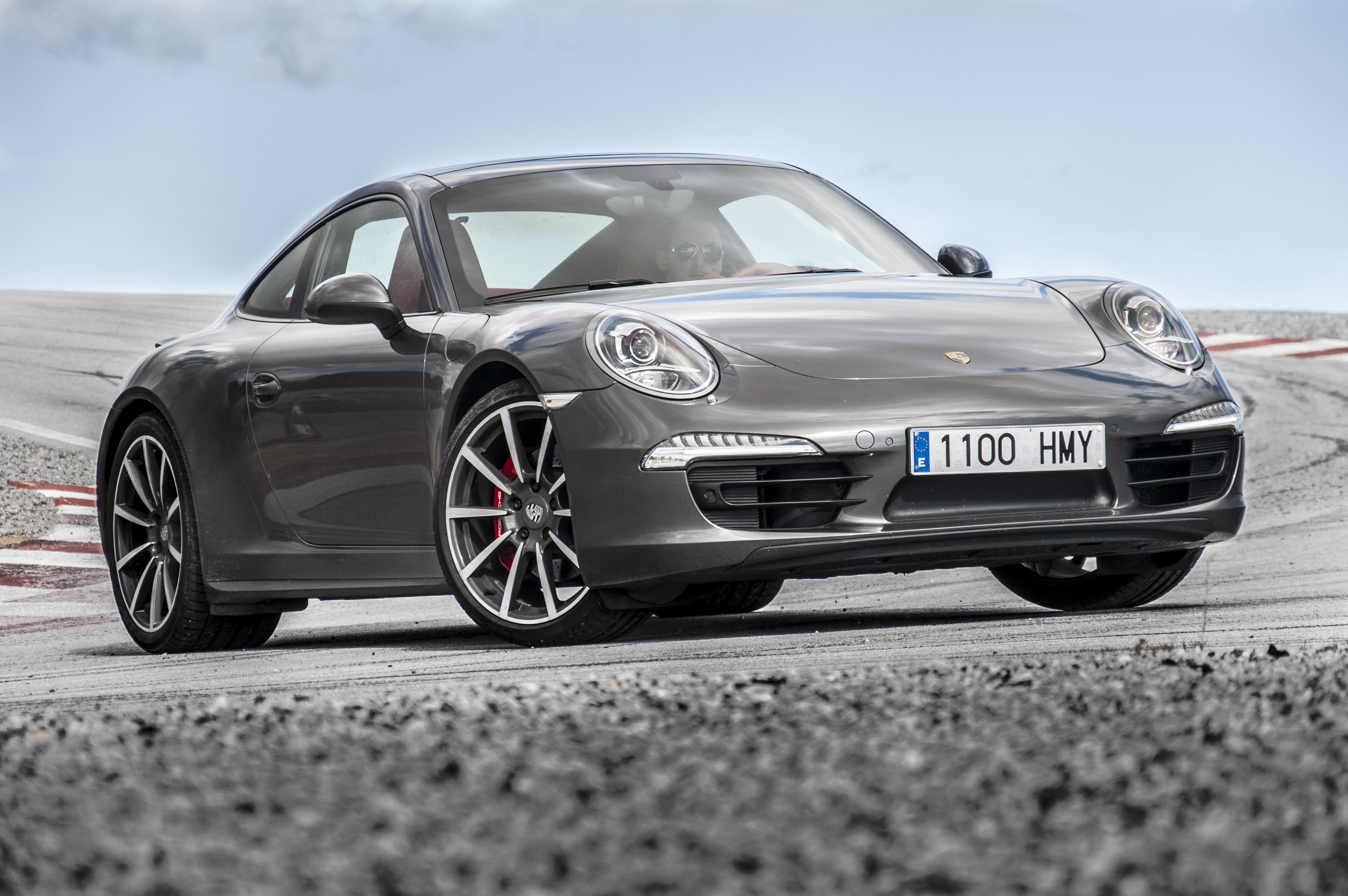
Porsche
"you know, I'm like, well, I've driven one. No, but, you know, these Porsche guys are all the same... ...finally, you know, a couple of years in to the friendship, he bought a Porsche, right?"
Porsche is a brand that makes sports cars. The speaker is saying that once people start owning Porsches, they often end up buying more because the cars are well-made and easy to live with compared to some other brands.
“Porsche” refers to the German sports-car brand known for engineering-focused cars like the 911 and Boxster/Cayman lines. In this segment, the host is talking about why Porsche ownership tends to be predictable and repeatable—buying one often leads to buying more.
Vinstradamus
"watch out, because if you buy one, I guarantee you, you know, the Vinstradamus is going to say you're going to buy another, you know, you're going to buy another, you're not just going to buy one."
“Vinstradamus” is a joke name for a prediction. The host is basically saying that Porsche owners often can’t stop at one car—they end up buying more.
“Vinstradamus” is a playful nickname for a prediction based on vehicle identification numbers (VINs) and Porsche-owner behavior—here, the idea that if you buy one Porsche, you’ll end up buying another. It’s not a real technical term; it’s a humorous way to describe a pattern the speaker has seen.
finicky
"especially if they're older cars, because they're finicky. They're, they're beautiful, wonderful cars, but they're also, you know, a little bit of a pain in the neck sometimes."
“Finicky” means the car can be a bit difficult. The speaker is saying some older Italian sports cars may need more care and can be less trouble-free day to day.
In car talk, “finicky” means the vehicle can be temperamental—sensitive to maintenance, setup, or conditions—and may not behave consistently without attention. Here it’s tied to older Italian sports cars being “a little bit of a pain in the neck sometimes.”

Porsche 356
"I started with 356s. You know, I, I think they're just a classic car. I think they're, they're, they're wonderful for what they are."
The Porsche 356 is an early Porsche sports car. It’s famous for being light and fun to drive, and the speaker says they started owning them because they’re just a classic.
The Porsche 356 is the brand’s early sports car, known for its classic, lightweight feel and air-cooled flat-four layout. In this segment, it’s presented as the speaker’s starting point and a “classic” that’s enjoyable even at modest speeds.
beehive lights
"Okay. Cause I love the beehive lights. And it's kind of the most upgraded one you can have. We'd still have in the beehives, uh, speedsters."
“Beehive lights” is what people call a specific headlight style on some early Porsches. The lights have a shape that looks like a beehive, and it’s a recognizable detail.
“Beehive lights” is the enthusiast nickname for the Porsche 356’s distinctive headlight/turn-signal housings that resemble a beehive shape. It’s a visual cue that helps identify certain 356 variants and eras.
MFI engine
"The, uh, the MFI engine. Yeah. Yeah. I've owned about 10 of those."
MFI means mechanical fuel injection. It’s a fuel system that delivers fuel in a more direct, mechanical way, and the speaker thinks it’s a big part of why these older 911s feel special.
MFI stands for mechanical fuel injection, a Porsche-era fuel system that meters fuel mechanically rather than using modern electronic control. The speaker highlights the MFI engine as a major reason they love these 911s, implying a more direct, enthusiast-focused response.
Euro Carrera
"Uh, so for nine 11s, I'm a huge fan of the 74 to 76 Euro Carreras."
“Euro Carrera” means a Porsche 911 Carrera that was built for the European market. The speaker likes these because they can be set up a bit differently than U.S. versions.
“Euro Carrera” refers to Porsche 911 Carrera models sold in Europe, which can differ from U.S.-market cars in equipment and tuning due to regulations and homologation. In this segment, it’s tied to the speaker’s preferred 1974–1976 era cars.
G-body
"Uh, it's got the upgraded G body, which is a little stiffer. Um, and the interior is a little bit more plush, no chrome bumpers, exact same weight."
“G body” is a way enthusiasts refer to a specific generation of the Porsche 911’s body/chassis. The speaker’s point is that this version is a bit stiffer, which helps the car feel more solid and responsive.
“G body” is an enthusiast shorthand for the Porsche 911’s mid-1970s body/chassis generation (the “G-series” 911). In this segment, the speaker says the RS has an “upgraded G body” that’s “a little stiffer,” meaning improved rigidity for better handling.
no chrome bumpers
"Um, and the interior is a little bit more plush, no chrome bumpers, exact same weight."
“No chrome bumpers” just means the car doesn’t have shiny chrome bumpers. The speaker mentions it as a recognizable difference between versions.
“No chrome bumpers” is a specific visual/trim detail used to distinguish certain Porsche 911 variants. It matters to collectors because bumper style often correlates with era, market, and equipment differences.
car week
"“...the funny thing about car week is that every single year, my friends and I... we start saying, uh-oh, you know, Monday is coming.”"
“Car week” is the annual stretch of time when a bunch of car events happen in the Pebble Beach area. People look forward to it all year, then feel a little down once it’s over.
“Car week” is the informal name for the busy cluster of automotive events around Pebble Beach, where collectors, drivers, and manufacturers converge for shows and auctions. It’s become a yearly ritual, and the hosts describe the emotional rhythm of anticipation building through the week and then “post-car-week depression.”
Pebble Beach race car class
"“...we've got the Pebble Beach race car class, which is cars that actually raced in the races in the 50s...”"
This class is for race cars that really competed in Pebble Beach races decades ago. It’s about the cars’ racing past, not just their style.
This is a named Pebble Beach Concours class focused on race cars that actually competed in Pebble Beach races back in the 1950s. The key idea is authenticity of competition history, not just “looks like a race car.”
Vignale classes
"“We've got the Vignale classes, both non Ferrari and Ferrari.”"
These are special Pebble Beach categories for cars associated with Vignale. In this year’s lineup, they’re separated into Ferrari and non-Ferrari.
The “Vignale classes” are Pebble Beach Concours categories dedicated to coachbuilder/designer Vignale-bodied cars, split here into Ferrari and non-Ferrari groups. It’s a way to spotlight a specific design lineage and body style heritage.
pre-war streamliners
"“We've got pre-war streamliners... If you can go to the show and just see the streamliners...”"
This class is for streamlined cars from before World War II. They’re known for very aerodynamic shapes, and the host says they’re especially impressive to see in person.
“Pre-war streamliners” is a Pebble Beach class for streamlined cars from the pre-World War II era, emphasizing aerodynamic bodywork and period engineering. The host frames it as a standout category where the visual impact is hard to match compared with other shows.
shooting brake style
"“...the French cars... pre-war... 30s that are kind of like a shooting break style, if you will.”"
A “shooting break” is a car body style with a long, elegant shape—kind of like a wagon, but styled more like a sporty coupe. The host is saying some of these pre-war cars look like that.
A “shooting break” is a body style that blends the long-roof practicality of an estate wagon with the more elegant, sporty proportions of a coupe. The host uses it as a visual shorthand for the long, flowing pre-war French designs in the streamliner class.
third fairway
"[2197.5s] we've actually given the [2197.5s] third fairway out. So the entire third fairway is going to be filled with Lamborghinis this year."
They’re using more of the golf course to show cars. A “fairway” is one of the main playing areas on a golf course, and adding a third one means more cars can be displayed.
At Pebble Beach, the concours uses the golf-course fairways as display areas for car manufacturers and entrants. Expanding to a third fairway changes the layout and how many cars can be shown at once.
world record
"[2216.1s] but it's gonna be well above the prior world record, which was 27 Mura's that was at, [2223.4s] you know, an event back, I think, in 2016."
A “world record” here refers to an official attempt to set a Guinness-style record for the number of a specific model/brand present at once. The host compares the planned count to a prior record of 27 cars in 2016.
technical aspects of the show
"[2284.4s] and you've got to sponsor it. You've got the manufacturers. car show. You've [2288.9s] got the judging. You've got, you know, the technical aspects of the show that, you know, [2295.4s] you really need someone who's a business person and also a car person,"
In concours judging, the “technical aspects” refer to how well a car’s engineering details match expectations—such as correct components, period-appropriate specifications, and restoration accuracy. It’s part of what distinguishes a concours from a casual car show.
attract young collectors
"carry this, this thing called Pebble into the new generation to attract young collectors and to grow the hobby"
“Attract young collectors” refers to the strategy of bringing newer generations into the classic-car hobby. In concours culture, that often means updating programming, outreach, and the kinds of cars and stories highlighted to keep the scene growing.
lineage, um, and the history of the event
"and also respected the lineage, um, and the history of the event and also all of the wonderful cars that are part of the event"
He’s talking about the event’s background and traditions—what it’s known for and where it came from. The challenge is changing things without losing what makes it special.
“Lineage” here means the event’s heritage—its established traditions, reputation, and historical continuity. In concours terms, that’s the part organizers try not to break while still modernizing the experience.
pinnacle event
"not much. It's, it's, it's a great event. It's a pinnacle event. Anyone that gets in there"
He’s calling Pebble Beach one of the biggest, most prestigious car events. That means changes have to be careful so it doesn’t lose its top reputation.
“Pinnacle event” means the top-tier, most prestigious event in its category. In classic-car circles, that framing matters because it implies the organizer must protect the event’s status while making only measured updates.
living, breathing event
"but that being said, it is a living, breathing event. It needs to change."
He’s saying the event can’t just stay the same forever. It has to change gradually so people still care about it year after year.
A “living, breathing event” is a way of saying the concours can’t stay frozen in time. It needs ongoing evolution—without losing its core identity—to remain relevant to both collectors and the broader car culture.
Sports Car Market
"get, get a catalog, you know, like sports car market has a really good catalog they put out that, that shows all the different events going on."
“Sports Car Market” is a car-enthusiast guide that lists events and auctions. The point here is to use it like a schedule so you can plan your trip.
“Sports Car Market” is a well-known enthusiast publication and events guide that tracks auctions, shows, and other happenings in the classic and performance-car world. In this context, the host recommends using its catalog to plan which events to attend.
Mille Miglia
"“Next year, I'm looking at doing either the Colorado Grand or the Millimilia. Okay. I know it's the 100th year… it was a huge deal… I've got a car that actually raced in the Millimilia in 1954…”"
The Mille Miglia is a legendary Italian race. It’s especially famous for historic cars, so bringing a period Ferrari there is a big deal in the collector world.
The Mille Miglia is a famous Italian endurance road race historically run on public roads. It’s a major concours-and-collector talking point because period race cars and their provenance matter a lot to enthusiasts.

Ferrari Mondial
"... to bring over. So what is that, Vince? It's a 54 Ferrari Mondial, 500 Mondial. Yeah, it raced the race there. And ..."
The Ferrari Mondial 3.2 Cabriolet is a Ferrari convertible with a 3.2-liter V8 engine. It’s a road car designed to be driven on regular roads, but still has Ferrari performance and design. It can come up in stories about specific Ferraris and their history.
The Ferrari Mondial 3.2 Cabriolet is a convertible version of the Mondial lineup, powered by a 3.2-liter V8. It’s notable because it represents a specific era of Ferrari road cars that combined everyday usability with Ferrari styling and performance. It may be discussed in the context of collecting or bringing particular Ferraris over for events or history.
Carmel Highlands
"“I get to do it all the time. I live in Carmel Highlands, which is if you drive south from Carmel towards Big Sur…”"
Carmel Highlands is a place in California. He’s using it to explain the kind of scenic, low-traffic driving he gets from his home.
Carmel Highlands is a coastal area in California that the speaker uses to describe his local driving route. It’s relevant here because the conversation is about favorite drives and where he can go for scenic road time.
PCH
"“So when I leave for my house, I make a left on PCH and there's no houses…”"
PCH means Pacific Coast Highway. It’s a famous road along the California coast, and he’s describing how his drive starts right on that route.
PCH is shorthand for the Pacific Coast Highway, a well-known California coastal road. In car culture, it’s often associated with scenic drives and driving routes that feel more “motoring” than commuting.
Request an Explanation
Heard something you'd like explained? We'll add it to this episode.
Sign in to request explanations for terms you heard.
Want to learn more?
Browse our glossary for plain-English explanations of automotive terms, jargon, and concepts.
Help improve this episode
See something that's not quite right? Our annotations are AI-generated and can sometimes miss the mark. Click the flag icon on any annotation to suggest a correction.