
About this episode
“Slated to Win?” follows That Car Show as the hosts bounce from “the slate launch” to a bigger question: what counts as “American” when cars are built across borders. They dig into Cars.com’s American made index, a Jeep Wrangler fire-risk recall, and why Japanese-spec expectations can clash with U.S.-built fit-and-finish. The conversation then returns to Slate’s modular, customizable, budget-minded EV pickup concept—complete with range, pricing, and a “people’s car” vibe.
This week, on That Car Show… it is a crew show, with friend of the show (and Lindsey’s husband…) Tory Alonzo sitting in for Dan. The most “American” cars you can buy in 2026, what the Japanese market thinks about the quality of JDM cars built in the US, and yes, the Slate Launch. Grab a drink, sit back, and enjoy. It’s That Car Show.
This is an audio-only episode.
Do us a favor and rate us ⭐️⭐️⭐️⭐️⭐️ on your platform of choice!
American made index
"Obviously the American made index. And I was shocked to see, I guess the top three... We're talking in terms of like manufacturing then. Manufacturing then also content, right?"
The “American made index” is a list that tries to measure how much of a car is made in America. It’s different from just thinking of an “American car” as a certain brand or style.
An “American made index” is a ranking that tries to quantify how “American” a vehicle is by looking at manufacturing location and the origin of parts/content. In this segment, the hosts contrast that measurable definition with the more cultural/identity-based idea of what people think an “American car” should be.

Ford Mustang
"I would guess the Ford Mustang. There's not anything more American apple pie than the Ford Mustang."
The Ford Mustang is one of the most famous American cars ever made. Here, the host is saying it feels like the most “American” choice, even though they haven’t read the article yet.
The Ford Mustang is a classic American pony car, and it’s often used as a shorthand for “American” car culture. In this segment, it’s mentioned as the speaker’s guess for the most “American” car based on brand identity and production/parts assumptions.
Fremont, California
"Number one is the Tesla Model 3, which makes sense, right? Fremont, California."
Fremont, California is where the Tesla Model 3 is assembled. The hosts are using it to explain why the list can call a car “American” based on where it’s made.
Fremont, California is referenced as the Tesla Model 3 assembly location. In the context of the “American made index,” the point is that cars can rank as “American” when they’re built in the U.S., even if the brand isn’t what you’d expect.

Tesla Model 3
"Number one is the Tesla Model 3, which makes sense, right? Fremont, California."
The Tesla Model 3 is an electric car. In this episode, it’s ranked as the most “American” by a list that looks at where the car is built and where parts come from.
The Tesla Model 3 is an electric sedan, and it’s presented here as the #1 on Cars.com’s “American made index.” The key point in the discussion is that the index weights manufacturing location and content, not just the car’s “American” cultural vibe.

Tesla Model Y
"And then number two is the Model Y. It assembled in either Fremont or Austin, Texas."
The Tesla Model Y is an electric crossover. The hosts say it ranks highly because it’s assembled in the U.S., depending on the plant.
The Tesla Model Y is an electric crossover, and it’s ranked #2 in the same “American made index” discussion. The hosts connect its ranking to assembly location (Fremont or Austin), reinforcing that the index is about manufacturing and parts sourcing.
Austin, Texas
"It assembled in either Fremont or Austin, Texas."
Austin, Texas is where some Tesla Model Y cars are assembled. The hosts bring it up to show that the ranking is tied to where the car is built.
Austin, Texas is mentioned as one of the assembly locations for the Tesla Model Y. The segment uses this to show how manufacturing plants in the U.S. can drive “American made” rankings.

Jeep Gladiator
"And then number three, the Jeep Gladiator, which makes a lot of sense, right?"
The Jeep Gladiator is a pickup truck. It’s ranked near the top on the list they’re discussing, and the hosts say it matches what many people think of as an American truck.
The Jeep Gladiator is a midsize pickup truck, and it’s listed as #3 on the “American made index.” The hosts treat it as intuitive because it fits the “American truck” mental image, while the ranking is still driven by manufacturing/content criteria.
ethos represents America
"Like physical components, as opposed to what is like the ethos represents America."
They’re talking about the “ethos,” meaning the car’s image or what it represents culturally. The point is that a car can feel “American” to people, but a data-based list might rank something else higher.
The hosts use “ethos represents America” to describe the cultural meaning people attach to certain cars—like “apple pie” American symbolism—separate from hard manufacturing metrics. The segment argues that an index can disagree with those expectations because it’s based on parts and assembly rather than vibe.

Ford Expedition
"I've seen the Ford Expedition and the Ford Explorer. They're probably about 10 and 12."
The Ford Expedition is a big SUV. The host says it shows up somewhere in the middle of the list, which helps illustrate how the rankings don’t always match people’s expectations.
The Ford Expedition is a large SUV, and it’s mentioned as appearing around #10–#12 on the index. It’s used to show that some mainstream Ford models do rank, but not necessarily the ones people would guess first.

Ford Explorer
"I've seen the Ford Expedition and the Ford Explorer. They're probably about 10 and 12."
The Ford Explorer is a popular SUV model. The host mentions it with the Expedition to show that some Ford vehicles do rank, but not always the ones you’d expect.
The Ford Explorer is a midsize SUV, and it’s cited alongside the Expedition as ranking around #10–#12. In the segment, it supports the theme that the “American” label depends on the index’s manufacturing/content criteria.

Toyota Corolla
"It's the Toyota Tundra. It's the Toyota Corolla."
The Toyota Corolla is a common compact car. The host is pointing out it shows up on the list, which suggests the ranking is based on where it’s built and what parts it uses.
The Toyota Corolla is a compact car, and it’s included in the index list of “American made” surprises. The discussion implies that even non-traditional “American” brands can rank highly if their production and parts sourcing are U.S.-heavy.

Acura Integra
"It's the Toyota Tundra. It's the Toyota Corolla. It's the Acura Integra, the Kia EV9."
The Acura Integra is a smaller sporty car from Acura. The host is saying it’s on the list of cars that are considered “American” by the index, even though it doesn’t fit the usual Mustang/truck stereotype.
The Acura Integra is a compact performance-oriented hatchback/sedan depending on generation, and it’s named as another unexpected high-ranking model. The host uses it to emphasize that “American” can be determined by production location and component sourcing rather than brand identity.
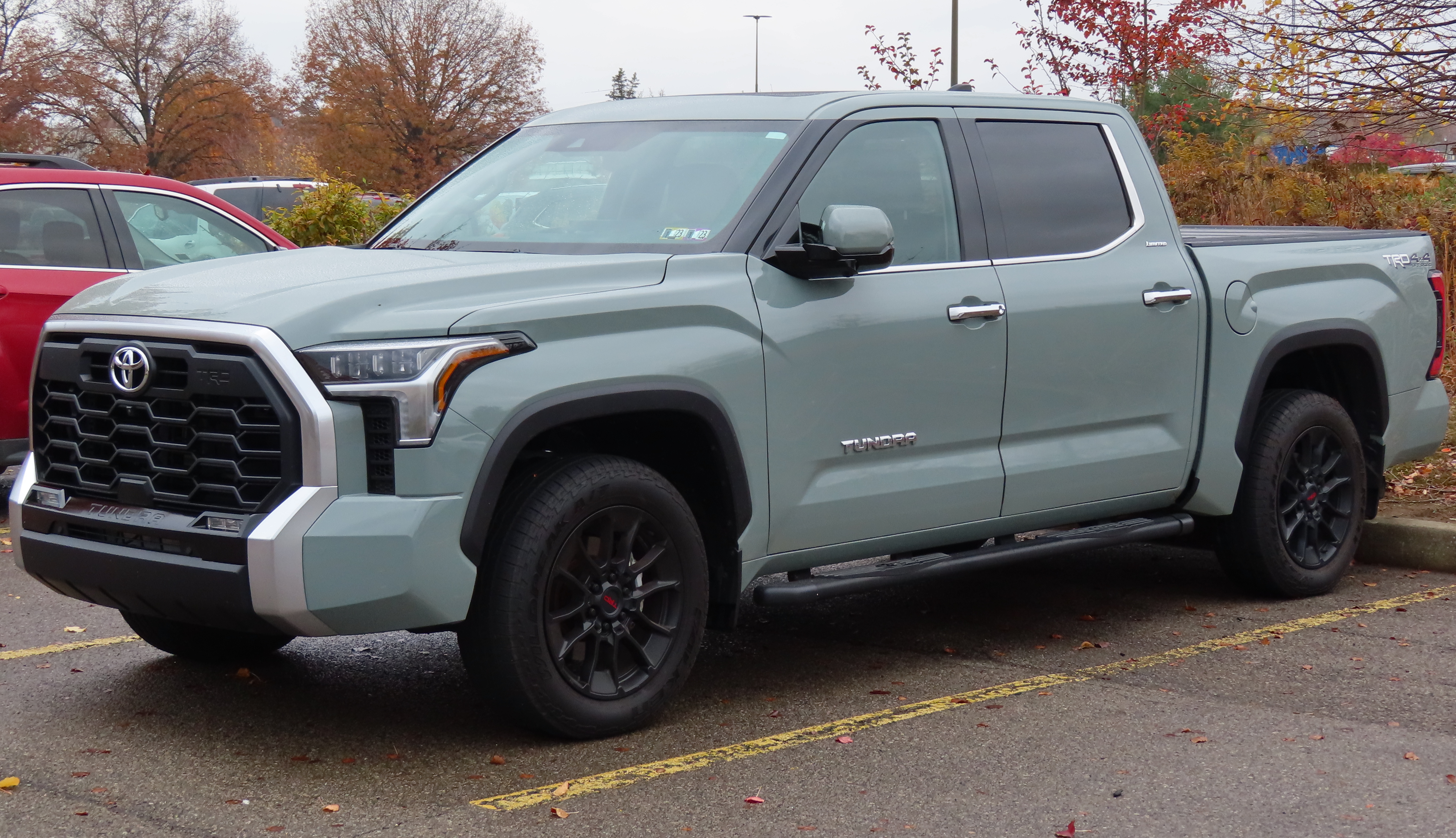
Toyota Tundra
"It's the Toyota Tundra. It's the Toyota Corolla."
The Toyota Tundra is a pickup truck. Here it’s mentioned as a surprise on the list, because it’s apparently built with enough U.S. content to rank highly.
The Toyota Tundra is a full-size pickup truck, and it’s listed as one of the surprising entries on the “American made index.” The host’s point is that the index can elevate models people don’t associate with American manufacturing.

Kia EV9
"It's the Toyota Tundra. It's the Toyota Corolla. It's the Acura Integra, the Kia EV9. Made in Georgia."
The Kia EV9 is an electric SUV. The host includes it in the list of cars that rank as “American” because of where they’re built and where parts come from.
The Kia EV9 is an electric SUV, and it’s mentioned as part of the surprising set of vehicles ranking on the “American made index.” The segment ties its ranking to U.S. manufacturing, reinforcing that the index is content/assembly driven.

Lincoln Aviator
"Made in Georgia. I didn't know that. Lincoln Aviator is on here."
The Lincoln Aviator is a luxury SUV. The host says it’s on the list too, which supports the idea that the “American” label here is about production and parts, not just brand image.
The Lincoln Aviator is a luxury SUV, and it’s mentioned as being on the index list. It’s part of the “you wouldn’t think” group of cars, illustrating that the ranking is based on manufacturing/content rather than what people associate with American brands.
Georgia
"It's the Acura Integra, the Kia EV9. Made in Georgia. I didn't know that."
Georgia is mentioned as a place where some of these cars are made. The host is surprised because it changes what “American” means in this ranking.
Georgia is referenced as the manufacturing location for some of the cars in the index list (e.g., the Kia EV9). The host’s surprise underscores the episode’s theme: “American” can be defined by assembly location and parts sourcing, not just by brand heritage.
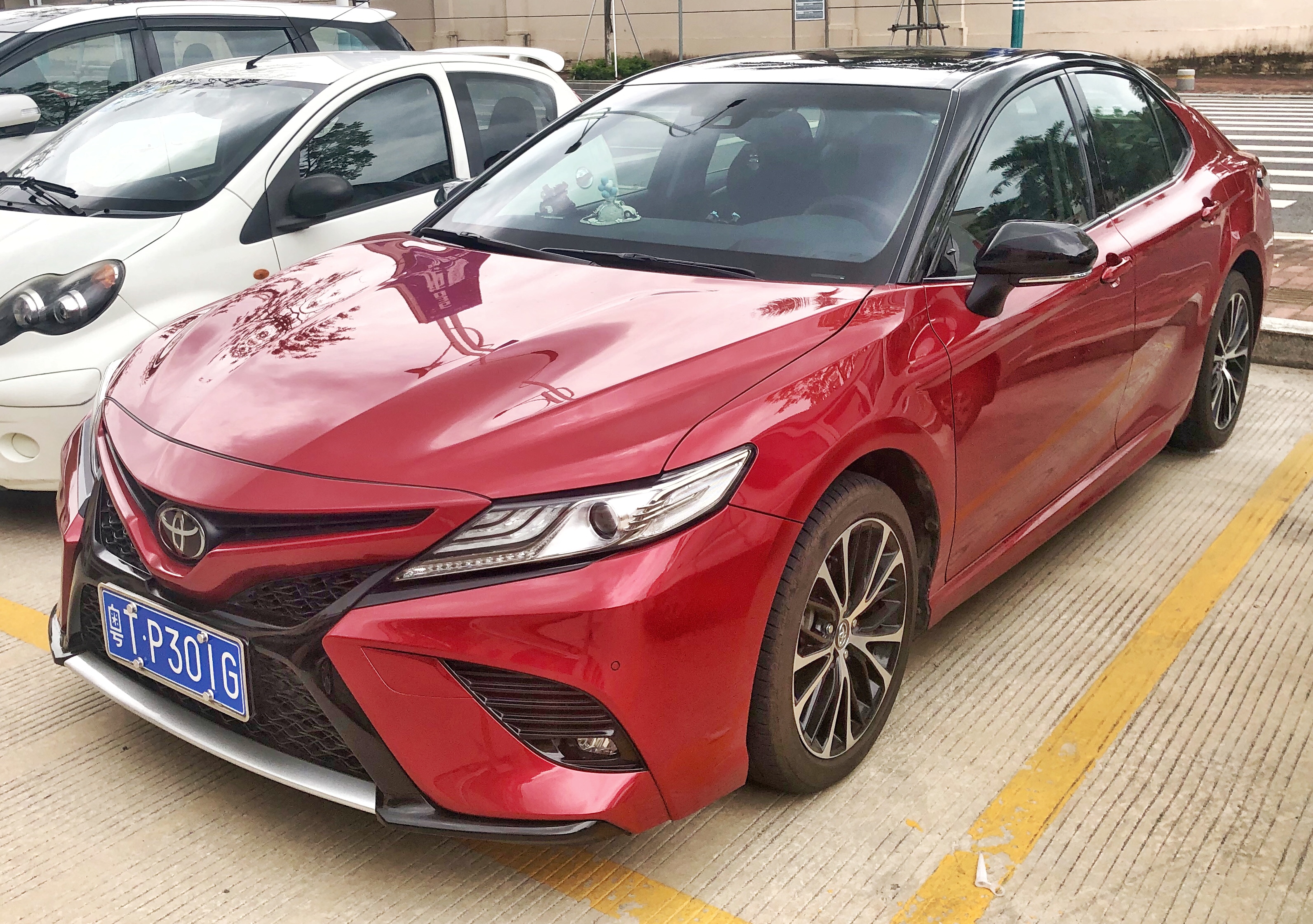
Toyota Camry
"...e. But it's a lot of cars you wouldn't think. The Camry is on here. The Mustang actually is at number 22,..."
The Toyota Camry is a regular passenger car (a mid-size sedan) made by Toyota. It’s known for being a common, everyday choice. In the podcast, it’s mentioned as one of the cars included in the discussion.
The Toyota Camry is a mid-size sedan that’s been a long-running, high-volume model for Toyota. It’s discussed in the podcast as part of a list of cars that are “on here,” which suggests it’s being used as a recognizable example in the conversation. Its inclusion helps ground the topic with a mainstream, widely known vehicle.

Lincoln Aviator
"...the Kia EV9. Made in Georgia. I didn't know that. Lincoln Aviator is on here. But it's a lot of cars you wouldn't t..."

F-150
"Would it be a Mustang? Would it be an F-150? Would it be a Bronco?"
The Ford F-150 is a very common American pickup truck. It’s mentioned here as one of the candidates for the car that best represents the country.
Ford F-150 is a best-selling full-size pickup truck known for its capability and mainstream popularity in the U.S. The host lists it as a possible “represent the nation” car alongside other iconic American models.
dumpster fire is not a car
"A reminder, a dumpster fire is not a car. But what would you pick?"
“Dumpster fire” is slang for something that’s a total mess. The host is joking that the answer should be an actual car, not something that’s just a disaster.
“Dumpster fire” is a slang phrase meaning something is chaotic or disastrously bad. The host uses it as a humorous reminder that the question is about a real car that represents the nation, not a metaphorical disaster.

Bronco
"Would it be a Mustang? Would it be an F-150? Would it be a Bronco? Like if you had to pick a car to put in a Fourth of July parade"
The Ford Bronco is a rugged SUV model. The hosts are debating which car best represents America, and the Bronco is one of the choices.
Ford Bronco is a modern revival of a classic American off-road SUV nameplate, built around rugged capability and a strong enthusiast following. In this segment, it’s brought up as another patriotic “parade car” option.

57 Chevy
"Oh, I've got mine. Yeah. Of course you guys with the Bronco. I would go with the 57 Chevy. I don't think there's anything more Americana than 1950s."
The “57 Chevy” is a famous 1957 Chevrolet from the classic American-car era. The host thinks it’s the most “American” choice for a patriotic parade.
The “57 Chevy” refers to the 1957 Chevrolet, a classic American car strongly associated with mid-century styling and “Americana” culture. The host uses it as the pick for a Fourth of July parade because it’s iconic and strongly tied to the idea of cars made in the U.S.

Jeep Wrangler
"and to me, I think it's a car that is on that list. And it's the Jeep Wrangler. You know, I had one recently for a couple of days. I enjoyed that thing so much. I think I need a Wrangler in the house."
The Jeep Wrangler is a Jeep that’s famous for being able to take the roof and doors off. The host likes it because it’s fun to drive open-air and still feels old-school with features like roll-up windows.
Jeep Wrangler is known for removable doors and a removable roof, plus strong off-road capability in a very recognizable, open-air package. The host specifically praises it for being easy to enjoy with the top off and for having simple, traditional controls like roll-up windows.
roll up windows
"I think it's the last vehicle that you can buy still get roll up windows, right?"
“Roll-up windows” means the windows go up and down in a more old-school way, not just with buttons. The host is saying the Wrangler still has that traditional feel.
“Roll-up windows” refers to manual-style window operation (crank/slider style) rather than fully power-operated windows. In this context, the host is pointing out the Wrangler’s more traditional, less gadget-heavy feel.
JT and JL lines
"they have recalled every Jeep Wrangler made of the JT and JL lines with every engine and transmission combination..."
JT and JL are shorthand codes for different generations of the Jeep Wrangler. They help identify which Wrangler versions are included in a recall.
JT and JL are internal model-line codes for different generations of the Jeep Wrangler. They’re used by manufacturers and enthusiasts to distinguish which Wrangler platform/era is being referenced in recalls or technical discussions.
2.2 liter turbo diesel
"from the 2.2 liter turbo diesel, found in international markets to the Wrangler 392 and the Hemi V8 here in the U.S."
This is a diesel engine that’s 2.2 liters in size and uses a turbocharger. The turbo helps it make more power, and this engine version is included in the recall being discussed.
A 2.2-liter turbo diesel is a diesel engine with a turbocharger, meaning it uses compressed air to improve power and efficiency. The hosts mention it as one of the engine options included in the Wrangler recall across different markets.
Hemi V8
"to the Wrangler 392 and the Hemi V8 here in the U.S. All part of this recall 1.1 million Jeeps are being recalled due to fire risks..."
A “Hemi V8” is a V8 engine design associated with Chrysler that uses a specific shape inside the engine for combustion. In this story, it’s one of the engine types affected by the Wrangler recall.
“Hemi” refers to Chrysler’s hemispherical combustion-chamber engine design, which can improve airflow and combustion efficiency. Here, the hosts use it to describe one of the Wrangler V8 options included in the recall.
JDM
"differs in quality standards applied to vehicles destined for the Japanese domestic market, JDM."
JDM means “Japanese Domestic Market.” It refers to cars made for Japan, and the hosts are saying Japanese buyers expect a different level of fit-and-finish than some American-built cars provide.
JDM stands for Japanese Domestic Market, meaning vehicles built and sold specifically for Japan. The segment contrasts JDM expectations with what American-made vehicles may look like when sold in Japan (e.g., paint and panel-gap differences).
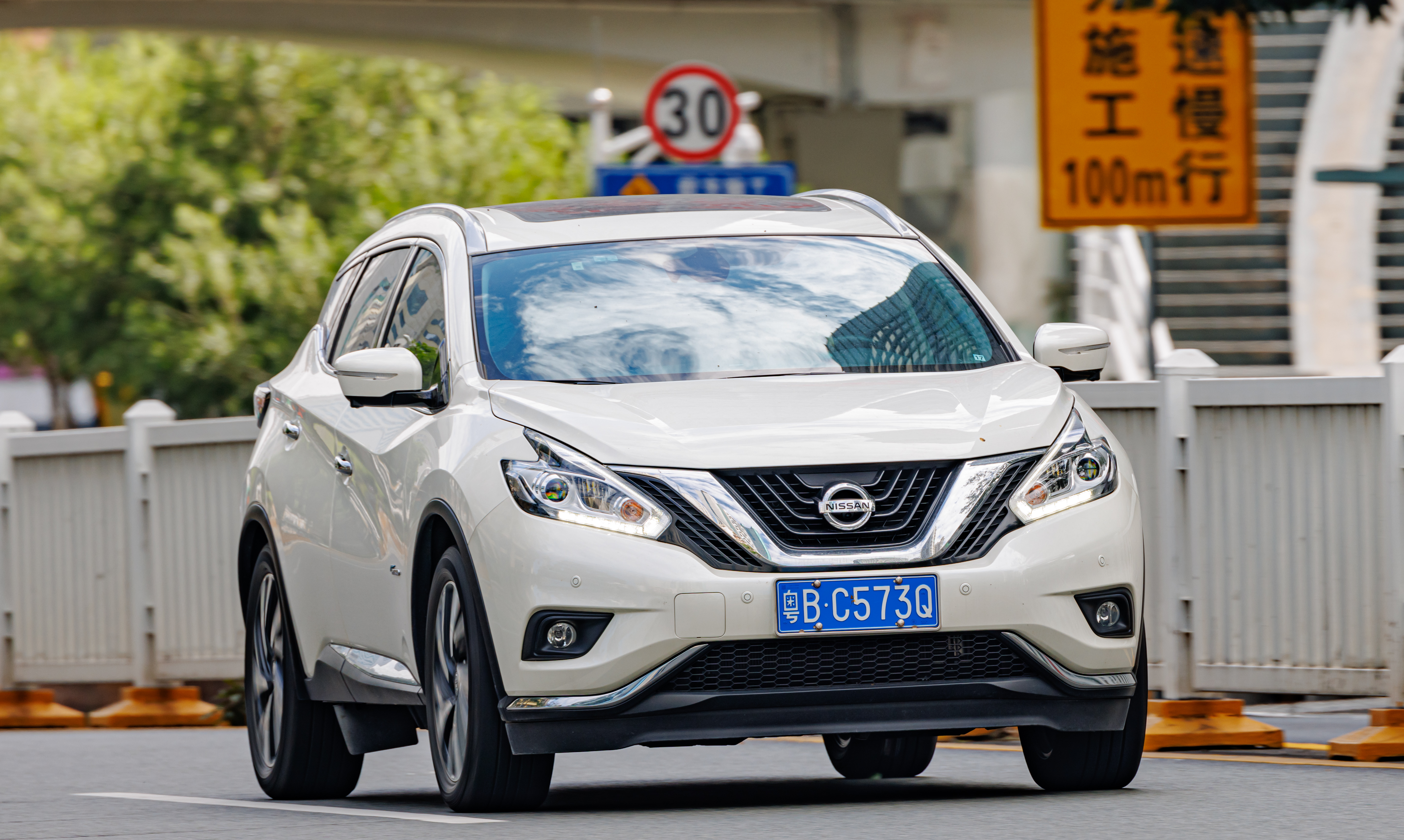
Nissan Murano
"...ng sold in Japan. The notice on the American made Murano states through translation that quote, this vehic..."
The Nissan Murano is a mid-size SUV made by Nissan. It’s the kind of vehicle that’s built for regular driving but has the higher seating position of an SUV. The podcast mentions it because of a translated notice related to the car’s information.
The Nissan Murano is a mid-size crossover SUV made by Nissan. The podcast references a notice on an American-made Murano that’s translated from Japanese, which suggests the conversation is about documentation, labeling, or manufacturing details. It’s discussed as an example of how information is presented across markets.

Highlander
"And Toyota has a similar warning on the tundra in the Highlander saying that the paint finishes are designed for"
The Toyota Highlander is a family-sized SUV. The hosts mention it because Toyota also includes a warning for Japan buyers about cosmetic finish differences tied to overseas production specs.
The Toyota Highlander is a mid-size crossover SUV. In this segment, it’s mentioned alongside the Tundra as another Toyota model sold in Japan with a notice about paint/finish specifications intended for overseas markets.
thin paint color variations
"overseas markets and that customers may notice thin paint color variations, polishing marks and [598.9s] dents."
Sometimes cars of the same model can have slightly different paint color. That can happen because of differences in how the paint is mixed or applied at different factories.
This refers to small differences in paint appearance that can show up between batches or production locations. Even when a car is the same model, variations in paint mixing, application, or curing can cause noticeable color shifts under certain lighting.
polishing marks
"overseas markets and that customers may notice thin paint color variations, polishing marks and [598.9s] dents."
Polishing marks are tiny visible streaks or swirls left on the paint after someone buffs it. They show up when light hits the surface at the right angle.
Polishing marks are visible surface artifacts left behind after paint correction or detailing. They can appear as swirls or haze when light reflects off the clear coat differently than intended.
dents
"[598.9s] dents. Dents. A dent is a bridge too far on my new car. I'll put up with [607.4s] a little thin paint, you know, depending on, you know, but a dent is how embarrassing is that?"
A dent is when the metal or body panel gets pushed in. Fixing it usually takes more work than just touching up paint.
A dent is a localized deformation of a body panel, typically from impacts during transport, parking, or handling. Unlike paint issues, dents often require more involved repair methods to restore the panel’s shape.
margins or whatever, tolerances
"So it was not the screaming [656.3s] deal he wanted you to believe it was, but they were acknowledging like this is outside of the [661.2s] normal, you know, what do they call it, margins or whatever, tolerances."
“Tolerances” means what problems are considered “acceptable” before it’s a bigger issue. The host is also talking about dealer pricing—how much profit they make—when they discount a car for issues like hail damage.
“Tolerances” in this context means acceptable limits for variation—like minor cosmetic differences or shipping-related imperfections that a dealer may still consider within normal bounds. “Margins” refers to dealer profit, and the host is implying the discount is partly tied to how much damage or variation is being accepted.
Stellantis Jaguar Land Rover collaboration
"Yeah. Yeah. You know, I mean, and it calls to mind the recent [704.6s] Stellantis Jaguar Land Rover collaboration where if all things go forward, then Stellantis will [711.9s] helping manufacture the defenders here or however, you know, the details of that workout."
Stellantis and Jaguar Land Rover are working together on production. The host is saying that could mean some Land Rover models get built in the U.S., not just in the UK.
This refers to a manufacturing and business collaboration involving Stellantis and Jaguar Land Rover. The host is connecting it to the idea that vehicles like the Defender could be built in the U.S., which affects how “where it’s from” works for buyers.
carpool lane
"And you're like, what was the meeting where they decided that like when I was a new mom, I was in the carpool lane and obviously infant seats are not always visible, right?"
A carpool lane is a special lane on the road meant for cars with multiple people inside. It’s there to encourage people to share rides instead of driving alone.
A carpool lane (also called an HOV lane) is a dedicated roadway lane reserved for vehicles carrying a minimum number of occupants. The goal is to reduce traffic and encourage ride-sharing by making it faster to drive with more people in the car.
DOT pamphlet
"I got a pamphlet in the mail, official pamphlet mailed to my home. And it was an official Washington state like DOT pamphlet."
DOT refers to a Department of Transportation, the government agency that sets and enforces transportation rules. A DOT pamphlet in this context is an official guidance document explaining how to comply with specific traffic regulations (here, carpool lane behavior).
HOV lane behavior
"And there was an entire pamphlet about appropriate carpool lane behavior."
HOV lane behavior just means the rules for using the special lane that’s meant for cars with enough people. The story is saying people can get confused about eligibility, and officials respond with official guidance.
HOV (high-occupancy vehicle) lane behavior is the set of rules for who qualifies to use the lane and under what conditions. The episode highlights that enforcement can be specific enough to generate formal guidance when drivers misunderstand eligibility.

Mazda Cx50
"It's, so I had a CX-50, a Mazda CX-50 for a week [1060.4s] rental, not a press car, rental. Spent my own $400 on this thing, but we had our, [1066.7s] we had our big Samoid mixed dog..."
The Mazda CX-50 is a small SUV meant for everyday driving, with a slightly more rugged vibe. Here, the host talks about renting one for a week and using it for a long trip, then compares it to a bigger SUV option.
The Mazda CX-50 is a compact crossover SUV positioned for buyers who want a more rugged, outdoorsy feel than typical family crossovers. In this segment, the host describes a week-long rental of a CX-50 and compares it to the Chevrolet Traverse for cross-country driving and fuel cost considerations.

Chevy Traverse
"and it stunk. Perfectly good car. It was that or a new Chevy Traverse and, you know, with gas as [1086.8s] expensive as it, as it is, I figured the smaller vehicle would be better."
The Chevy Traverse is a bigger family SUV with more space. In this story, it’s mentioned as the alternative to the Mazda CX-50, but the host picks the smaller car because gas costs are high.
The Chevrolet Traverse is a larger three-row crossover SUV compared against the Mazda CX-50 in this segment. The host weighs it as an alternative for a long drive, but chooses the smaller vehicle because fuel is expensive and he expects it to be a better fit for the trip.
two-lane roads
"driving back from the Twin Cities to Colorado. And so I got to drive on some of these back roads [1108.2s] and things and realized like Nebraska is actually quite beautiful once you get off I-80, right?"
Two-lane roads are roads with one lane going each direction. The host is saying that taking these smaller roads made the drive more interesting than staying on the big interstate.
Two-lane roads are highways with one lane for each direction, typically without a physical barrier separating opposing traffic. In the segment, the host emphasizes that driving on these back roads (instead of interstates) changed the experience and scenery during the trip.
I-80
"and realized like Nebraska is actually quite beautiful once you get off I-80, right? [1113.9s] You know, there's a lot to see."
I-80 is a big highway that people use to drive long distances quickly. The host is saying the trip is more scenic when you get off that highway and take smaller roads.
I-80 is a major U.S. interstate highway running across the country, and it’s commonly used for fast, direct travel. Here, the host contrasts it with slower back roads, saying Nebraska looks much better once you leave I-80.
North Platt
"and drove through a town called North Platt. I don't know if you know North Platt. It's one of [1134.6s] these farming towns, railroad towns, you know, all these towns are like this."
North Platte is a town in Nebraska. The host brings it up to describe the kind of small-town scenery and roads they drove through on their trip.
North Platte is a town in Nebraska that the host uses as a reference point while describing driving through rural areas. The mention helps listeners visualize the route and the kind of small-town, railroad-and-farming scenery the host experienced on the way back to Colorado.

Ford Cougar
"...t elevators and this and that. But very like John Cougar Mellon camp, right? And I just happened to be the..."
The Ford Cougar is a car name that Ford has used. In the podcast, it sounds like it’s mentioned more for the name and a joke than for detailed car features. The conversation doesn’t provide enough detail to describe it beyond that reference.
The Ford Cougar is a nameplate associated with Ford, but it’s not a widely used model name in the way many other Ford vehicles are. In the podcast, it appears to be referenced through a wordplay or sound-alike connection to “John Cougar Melloncamp,” rather than as a detailed vehicle discussion. Because of that context, it’s likely being used as a quick reference to a name rather than a technical topic.
cruising
"the local people were in their cars, you know, basically going back and forth cruising on the main drag, you know?"
“Cruising” here means people drive around slowly together, usually to hang out and show their cars. It’s more social than racing.
In car culture, “cruising” means driving slowly through a strip or main road, often as a social activity where people show off their cars. The host uses it to describe the local scene’s vibe before getting into specific cars and modifications.
lifted 70s Ford pickups
"And there certainly was that there was some really cool, like lifted 70s Ford pickups and things."
“Lifted” means the truck sits higher than it did from the factory. People do it for looks, bigger tires, and more clearance for rough roads.
A “lifted” pickup has been raised higher than stock, usually to fit larger tires and to improve ground clearance. In the context of “70s Ford pickups,” it’s a visual and stance modification that’s common in truck culture and local cruising scenes.

BMW three series
"because I, you know, there's everything from these old trucks to there was a tuned beat mini, right? There were a couple of older BMW three series."
The BMW 3 Series is a popular BMW model line. The host is pointing out that the crowd had a mix of different car types, including BMWs.
The BMW 3 Series is BMW’s compact executive sedan/driver’s-car line, often associated with a sporty driving feel. Here it’s mentioned as part of the event’s variety—alongside trucks and other older American models.

Dodge Charger
"...ke terrible exhausts, you know, fart can exhaust, charger civics, you know, Dodge and trepids, if you remem..."
The Dodge Charger is a sporty four-door car made by Dodge. People often talk about it in terms of performance and how it sounds. In the podcast, it’s mentioned because of comments about exhaust noise and sound.
The Dodge Charger is a performance-oriented sedan that’s often associated with a sporty look and engine options. In the podcast, it’s brought up in a discussion about exhaust sound and “fart can” style exhausts, which is about how the car sounds when driven. That makes it relevant to conversations about modifications and exhaust character.
fart can exhaust
"There was a convertible, like terrible exhausts, you know, fart can exhaust, charger civics, you know, Dodge and trepids, if you remember those."
“Fart can exhaust” is slang for a loud, obnoxious exhaust. It usually comes from an aftermarket muffler that makes the car sound more like a “rasp” than a refined growl.
“Fart can exhaust” is a slang term for an aftermarket exhaust setup designed to be very loud, often with a small muffler or resonator. It’s typically associated with a raspy or obnoxious sound rather than a performance-focused exhaust note.

Honda Civic
"There was a convertible, like terrible exhausts, you know, fart can exhaust, charger civics, you know, Dodge and trepids, if you remember those."
They’re talking about a couple of different popular car models—one sounds like a Honda Civic and another sounds like a Dodge Charger. The point is that the cars at the event weren’t all the same.
This appears to be a mis-transcription or word mix-up, but the host is clearly referring to a “Civic” and also to “Charger” in the same breath. The key automotive point is that the host is listing multiple distinct nameplates showing the event’s car diversity.

Chrysler Concorde
"Oh my gosh. Yeah, because it was what it was the, the Dodge and trepid, the Chrysler Concorde. And then there was the Eagle something or other."
The Chrysler Concorde is an older Chrysler sedan. The host is listing it as one of the older cars they saw at the event.
The Chrysler Concorde is a late-1980s/1990s full-size front-wheel-drive sedan from Chrysler. In this segment it’s mentioned as part of the “old car” lineup the host saw, highlighting how the local show included mainstream family sedans alongside trucks.
Dodge Chrysler Jeep and Eagle
"And without thinking, I went Dodge Chrysler Jeep and Eagle. Oh, that's amazing. [1310.6s] And I'm like, and yes, I did grow up in the eighties."
Dodge, Chrysler, and Jeep are car brands you can still buy today. Eagle was another brand from the same family, but it’s gone now.
Dodge, Chrysler, and Jeep are major U.S. automaker brands under the Stellantis umbrella. Eagle was a smaller Chrysler-era brand (especially known for rebadged models) that’s no longer sold in the U.S.
Fiat Chrysler
"And one of the people on the call said, well, which brands is, you know, Fiat Chrysler or [1303.3s] Stellantis?"
Fiat Chrysler was an earlier version of the company that eventually became Stellantis. It’s part of the same corporate family as today’s Dodge/Chrysler/Jeep brands.
Fiat Chrysler Automobiles (often shortened to Fiat Chrysler) was the predecessor company that later merged into Stellantis. The speaker is using it as a reference point for which brands fall under which corporate umbrella.
Chrysler LH cars
"I think those are called the Chrysler LH cars. I think that's what they called those. And I [1324.9s] remember when those came out, they, you know, they were like God's gift."
“Chrysler LH” is the name for a shared car design used for several Chrysler/Dodge models. It’s why different cars from that era could feel similar in shape and engineering.
“Chrysler LH cars” refers to the Chrysler LH platform, a front-wheel-drive car architecture used in the late 1980s/1990s. It underpinned models like the Chrysler Intrepid and Dodge Intrepid, which the speaker describes as having a very distinctive, aerodynamic “wet” shape.

Dodge Dynasty
"We had a Dodge Dynasty, I remember, for a long time as well. And when's the last time [1374.3s] you saw a Dodge Dynasty? I mean, it's been years. That was the real boxy one, sort of like a LeBaron, [1378.3s] right?"
The Dodge Dynasty is an older Dodge sedan with a very boxy, old-school shape. The host is describing it as the kind of car you don’t see anymore.
The Dodge Dynasty is a late-1980s/early-1990s full-size sedan known for its traditional, boxy “land yacht” look. The speaker contrasts it with later, more aerodynamic Chrysler designs and notes features like the vinyl roof and overall upright styling.
cup twos
"Well, I just got a new windshield in my car and four new cup twos. Any, any guesses on what that total was?"
“Cup Two” is a specific brand/model of performance tire. They’re grippy tires, and the host is saying they installed a set of them along with a new windshield.
“Cup Two(s)” refers to Michelin Pilot Sport Cup 2 tires, a performance tire line known for high grip and track-oriented behavior. In this segment, pairing Cup 2 tires with a windshield replacement highlights how performance tires and spirited driving can increase exposure to road debris.
windshield
"Well, I just got a new windshield in my car and four new cup twos. Any, any guesses on what that total was?"
The windshield is the front glass you drive through. Replacing it can cost a lot because it has to be installed correctly and may involve extra work beyond just swapping the glass.
A windshield is the front glass panel that also plays a structural role in modern cars, especially for crash safety and roof integrity. Replacing one can be expensive because it often requires precise fitment, adhesives, and sometimes calibration for driver-assistance sensors.
sticky tires
"Especially when you're chasing a Spyder RS with sticky tires, but shout out to everybody, Eric."
“Sticky tires” are tires that grip the road really well. When you drive more aggressively with tires like that, you can end up dealing with more road debris—like rocks hitting the windshield.
“Sticky tires” means tires designed to provide high grip, usually from a softer rubber compound and/or performance tread patterns. Higher grip encourages harder cornering and acceleration, which can also increase how much debris gets thrown up and how often windshields get damaged.
Porsche Colorado Springs
"But yeah, that was a shock to the system. I've bought cars cheaper than that. But shout out to Porsche Colorado Springs despite the price."
That’s a Porsche dealership/service shop in Colorado Springs. The host is giving them a shout-out for handling the expensive windshield job.
“Porsche Colorado Springs” is a Porsche dealership/service location referenced by the host while discussing the cost of windshield replacement. It’s relevant mainly as the service provider in the story, not as a technical automotive subject.
Pikes Peak
"All the Pikes Peak drivers were there [1538.7s] because this was the Friday before the race, right? With the Friday before the."
Pikes Peak is a well-known race where cars drive up a mountain road. The speaker is describing what it was like right before the event, with race cars coming in for checks.
Pikes Peak is a famous hill climb event in Colorado where cars race up a mountain road. The segment references race cars arriving without license plates and the busy pre-race atmosphere at the dealership.

Master Techs
"...t to Jason Schmidt down there, who's one of their master techs. And he works on a lot of these Pikes Peak cars. ..."
In the podcast, “Master” seems to refer to a highly experienced mechanic (a “master tech”). It’s not a specific car model. The point is that the person has a lot of experience working on cars used in events like Pikes Peak.
“Master” in the podcast context appears to refer to a person described as a “master tech,” specifically Jason Schmidt. That’s a role title for an experienced technician, not a car model. The mention is relevant because it ties the discussion to hands-on expertise working on high-performance vehicles like Pikes Peak cars.
slate
"And all right. So you are festooned in all this slate stuff. And I've heard a lot of buzz on Instagram and through friends and stuff today [1621.9s] about the slate launch. I don't know a whole lot about slate other than this has been a long time coming."
Slate is the name of a company/EV pickup truck being launched. The speaker says it’s meant to be cheaper and simpler than many other electric trucks.
Slate is the EV pickup truck brand being discussed, positioned as a budget-friendly alternative. The hosts frame it as a long-awaited launch and focus on the idea that it’s “very basic” to keep costs down.
budget friendly EV pickup truck
"They have promised this really budget friendly EV pickup truck, which is very basic, [1635.3s] but I think that's what appeals to me."
The speaker is talking about an electric pickup truck that’s designed to cost less. The idea is that it keeps things simple so the price stays down.
This describes a strategy for EV pickups that prioritizes lower cost and simpler equipment. In the segment, the hosts connect “budget friendly” with the truck being “very basic,” implying fewer features to hit a target price.
entry level EV
"We intend to produce an entry level EV that... we want to make EVs accessible to many more people who have been locked out because of price so far."
An entry level EV is a cheaper electric car meant for more people. The idea is to make EVs easier to buy than the expensive ones.
An entry level EV is an electric vehicle positioned as more affordable and accessible than a brand’s higher-priced models. The host frames it as a way to broaden EV adoption by targeting buyers who have been priced out so far.
customizability
"And one of the hallmarks of their vehicles is the versatility and sort of customizability..."
Customizability means you can make the vehicle your own. Here, it’s about choosing different looks and options like colors and accessories.
Customizability refers to how easily a vehicle can be configured or personalized—visually and/or functionally—after purchase. In this segment, it’s tied to the idea of offering multiple body styles and lots of color/accessory choices using the same underlying platform.
same platform, same footprint
"because there are it's the same platform, you know, same footprint, but you can have it be a pickup truck, you can have it be like kind of a Bronco looking with a slope roof."
They’re saying the company will use the same basic “car skeleton” for different body styles. That helps them offer different-looking vehicles (pickup, SUV) without redesigning everything.
Using the same platform and footprint means the manufacturer designs one underlying vehicle architecture and dimensions, then builds multiple body styles on top of it. This can reduce development costs and make it easier to offer different variants (like pickup vs SUV) without starting from scratch each time.

Defender
"And then they also have a square back SUV that looks like a baby defender... it really does look like a defender."
The Defender is a rugged Land Rover SUV with a very recognizable boxy shape. The host is saying the EV’s back end looks similar.
The Land Rover Defender is a classic off-road SUV with a distinctive upright, boxy silhouette. The host says the EV’s square-back SUV looks like a “baby Defender,” especially from the rear.
wraps
"they're making their own wraps, they're going to offer... the colors that they're going to offer."
A vehicle wrap is a large vinyl graphic applied over the car’s paint to change its color or add designs. The host mentions the brand making its own wraps as part of the personalization/accessory plan.
EV
"I am not Mr. EV at all. I love old cars. I love noisy, you know, I'm not, ... Ironically, the last couple of weeks, all of her press cars have been EVs."
EV means electric vehicle. Instead of burning gasoline, it runs mainly on electricity from a battery.
EV stands for electric vehicle, meaning the car is powered primarily by an electric motor and a battery rather than a gasoline engine. The speaker contrasts being an “EV guy” with liking “old cars” and “noisy” vehicles, which highlights how EVs change the driving experience and sound profile.
Porsche Experience Center
"So we're driving to Gardena. It was actually right near the Porsche Experience Center across the freeway from there."
This is a Porsche-run location where people can go for special driving events and car experiences. The hosts mention passing it on the way to their event.
The Porsche Experience Center is a branded Porsche facility used for driving experiences, events, and media activities. In this segment, the hosts are traveling to Gardena and pass the center, then visit a nearby venue that’s been repurposed for the event.
modular
"When I saw it in person and all the different configurations, I was like, okay, I can see now. It's almost like a Lego set and it's very modular and you can customize it."
“Modular” means the product is made from parts that can be changed or rearranged. Here, the speaker is saying the vehicle can be configured in lots of different ways.
In automotive context, “modular” means the vehicle is built from repeatable sections or components that can be rearranged or swapped to create different configurations. The speaker compares the truck to a Lego set, emphasizing that multiple “configurations” and color options are possible.
configurations
"When I saw it in person and all the different configurations, I was like, okay, I can see now."
“Configurations” just means different versions or setups of the same vehicle. Like different options and layouts you can choose.
“Configurations” refers to different ways a vehicle can be specified—such as different exterior setups, interior options, or trim/feature combinations. The speaker uses it to explain why the truck looks impractical in photos but makes more sense when you see the variety of options in person.
out of the box thinking
"They literally have a spot on the dashboard where they have these little charms that you can customize the car. And it's like, this is, it's so, it's so out of the box thinking that it just might work."
They mean the idea is unusual compared to normal car design. Instead of a car that’s basically the same for everyone, this one is built so you can change parts and personalize it easily.
In this context, “out of the box thinking” means the company is approaching car design and ownership in a radically different way than traditional automakers. The host is describing a modular, highly customizable approach that’s meant to feel more like consumer products than a fixed vehicle.
on the ground floor
"This is me getting in on the ground floor of something that I think could be revolutionary."
“On the ground floor” is a metaphor for joining a new product or company early, before it’s widely proven. Here, the host frames Slate as being at an early stage where early team members believe it could become a major shift in how cars are built or sold.

Volkswagen Beetle
"And I can't help but draw parallels between this and the Volkswagen Beetle when it must have come to the US source for the first time because it's such a funny looking little car."
The Volkswagen Beetle is a famous small car made by Volkswagen. The host is comparing it to today’s “people’s car” idea—something affordable and practical that lots of regular people could actually buy and use.
The Volkswagen Beetle is a compact, air-cooled rear-engine car that became a global icon for being affordable and easy to live with. In the U.S., it arrived as a stark contrast to the big, luxury-leaning American cars of the era, and it helped popularize the idea of a truly mass-market “people’s car.”
EVs
"me personally not being a huge fan of EVs, I've always thought they were like an appliance."
EVs are electric cars. They run on electricity from a battery instead of gasoline, and the host is saying they usually feel a bit boring or “appliance-like” to them.
EVs means electric vehicles—cars powered primarily by electricity stored in a battery, rather than by burning gasoline. The host contrasts EVs with the “appliance” feeling they associate with many EVs, before saying this particular car feels more engaging.
crank windows
"It's kind of cute to look at. It's got crank windows. It's very no frills."
Crank windows are side windows that you raise and lower manually using a handle (a mechanical crank), rather than using power switches and electric motors. They’re often associated with older designs or simpler, more analog-feeling interiors.
self parking
"you've got all these companies trying to out do one another on bells, whistles, wireless, this self parking"
Self parking is a feature that helps the car park itself. The host is saying other companies focus on gadgets like this, while this car feels more focused on basic driving.
Self parking is an advanced driver-assistance feature that can steer the car into a parking spot with minimal input from the driver. It’s part of the broader trend toward automated convenience features, which the host contrasts with the car’s simpler, more “root of driving” approach.
customize it and personalize it and make it your own
"you have these, these limitless ways to customize it and personalize it and make it your own, I don't see that with other car makers."
This is about the idea that a car can be personalized beyond just performance tweaks—through styling and visual identity. The hosts connect that to “what gives a car soul,” treating customization as part of the ownership experience rather than a purely mechanical change.
liveries
"showing nothing but different liveries that different people had created. There were like 1980s trapper keeper looking plates. There were futuristic cyberpunk looking liveries."
A livery is the car’s “look”—the colors and graphics on it. Here, they’re showing lots of different custom designs people made for the same kind of car.
A livery is the specific visual design on a vehicle—often including colors, graphics, and patterns. In this segment, the hosts are talking about custom paint/graphic themes created by different people, shown in a slideshow at the event.
affordable and accessible
"but that's not accessible to most people. This is something that is affordable and accessible."
They mean the car is priced and offered in a way that more people can actually buy it. It’s contrasted with special programs that only some people can use.
“Affordable and accessible” here is a market strategy concept: designing a vehicle so it fits typical household budgets and reaches people who otherwise couldn’t consider that brand or powertrain. The segment contrasts this with programs that are not widely available.
engineering team
"Like we could talk to one of the people on the engineering team. And he said when this idea was first coming to shape for the company..."
The engineering team is the group of people who design the car. In this story, they’re saying those engineers thought about how to make the EV easier for more people to afford.
An engineering team is the group responsible for designing and developing the vehicle—turning product goals into real hardware and systems. The speaker uses it to emphasize that the affordability and accessibility goals were part of the original planning.
configurator
"And then you customize it from there. You can, I believe there is a configurator, you know, much like Porsche's like we all do late at night..."
A configurator is a website or app where you pick the options you want for a car. It helps you build a specific version you can actually order.
A configurator is an online (or in-showroom) tool that lets you choose options for a car—like trim, wheels, and accessories—before ordering. It’s basically how manufacturers turn a “build your own” idea into a real, orderable package.
aftermarket
"And what's really cool about them is they're beating the aftermarket to the punch. They're designing all of this stuff."
The aftermarket is everything made by companies other than the car brand itself—like extra accessories or replacement parts. “Beating the aftermarket” means they’re offering those options first.
The aftermarket is the ecosystem of parts and accessories made by companies other than the vehicle’s original manufacturer. When a brand “beats the aftermarket to the punch,” it means it’s releasing personalization options or parts before third-party makers do.
3D print parts
"They're going to invite people to 3D print parts for this car. So they're really embracing like, whereas anyone else like say, Porsche..."
3D printing is a way to manufacture parts by building them up from a computer design. For cars, it can make it easier to create custom accessories or special parts.
3D printing parts means making components by building them up layer-by-layer from a digital model. In automotive personalization, it can speed up custom accessories and small-batch parts compared with traditional tooling.
proprietary
"Whereas they're like, Hey, have fun with it. Go crazy. We're putting this out to the world. This is your blank canvas."
Proprietary means the company controls the design or technology. Here, it implies some brands don’t want outside companies making parts that fit their cars.
Proprietary means something is owned or controlled by the original manufacturer—often with access restricted to their approved parts or systems. In this context, it suggests some brands prefer keeping personalization parts “locked down” rather than letting anyone make compatible components.
arrow trim rings
"I mean, they have different arrow trim rings that can go on the wheels. They have different wheels."
Trim rings are decorative pieces that go on a wheel to change how it looks. They’re the kind of add-on you can swap to personalize the car’s style.
Trim rings are decorative rings that mount around a wheel feature (often around the center cap or rim area) to change the look without changing the wheel’s core function. “Arrow trim rings” here refers to a specific style of wheel decoration offered as part of the customization options.
Westphalia pop top tent
"They have different wheels. They had a like a Westphalia pop top tent, like what was on old BW buses that you could put on."
Westfalia pop-top tents are camper add-ons for vans where the roof lifts up to make room to sleep. It’s a classic “van life” setup people associate with older VW buses.
A Westfalia pop-top tent is a camper setup used on certain Volkswagen vans, where a roof section lifts (“pop-top”) to create sleeping space. It’s a recognizable piece of van-camping culture and is being referenced here as a modular accessory for a new customizable vehicle.
plastic composite
"Are the body panels plastic? They are. Yeah, it's like a plastic composite. But then like the door frames, he was saying, actually are bonded to a metal inner structure."
It means the car’s outer body parts are made from a strong plastic material, not steel. That can help the car weigh less and not rust, but it can affect how expensive or tricky repairs are after damage.
A plastic composite is a body panel made from plastic materials reinforced with other fibers or fillers to improve strength. In car terms, it can reduce weight and resist corrosion compared with traditional steel panels, but it also changes how the panel is repaired and how it handles impacts.
bonded
"But then like the door frames, he was saying, actually are bonded to a metal inner structure. It's a five, it's a five star crash rated vehicle."
Here, “bonded” means the plastic parts are glued or chemically attached to the metal frame. That can make the structure feel more solid, but repairs may need special materials and steps.
In this context, “bonded” means the plastic outer parts are attached to a metal inner structure using adhesives or bonding methods rather than relying only on traditional welding or mechanical fasteners. Bonded structures can help distribute loads and improve stiffness, but they also require specific repair procedures if the panel is damaged.
five star crash rated
"It's a five, it's a five star crash rated vehicle. So they are safe. But I mean, I don't think we've seen this in Saturn, right?"
“Five star crash rated” means the car scored at the top level in crash tests. It’s a sign that the vehicle is designed to protect people well in crashes.
A “five star crash rated” vehicle refers to a top safety rating from a crash-testing program (commonly the U.S. NHTSA or similar organizations). It indicates the vehicle performed very well in multiple crash scenarios, including frontal and side impacts, with good protection for occupants.
direct order
"they're not dealers because it's a direct order, you know, set up just like Tesla, you order it online. But then you can go to these certified slate centers and they will either you could have them do the work if you wanted or they will help you."
“Direct order” means you buy the car straight from the company instead of going through a typical dealership. That can affect how you order it and where you go for add-ons or installation.
“Direct order” describes selling the vehicle straight from the manufacturer to the customer rather than through a traditional dealer network. This can change pricing transparency, ordering flow, and how services like customization or installation are handled.
certified
"But then you can go to these certified slate centers and they will either you could have them do the work if you wanted or they will help you."
“Certified” means those centers are officially approved by the company to do the work. That matters because doing a wrap correctly affects how it looks and how long it lasts.
“Certified” here implies the service centers are approved and trained by the manufacturer to perform specific work (like installing wraps) to an expected standard. Certification matters because wrap installation quality affects how well the film adheres, lasts, and looks.
smog
"And especially here in California, you know, the engineer had a great point. He's like, you know, with smog and everything, he was like, this is this is a good option for everybody in Southern California."
Smog is dirty air caused by pollution. In California, it’s a big issue, so cleaner vehicles can be easier to live with day to day.
Smog refers to air pollution—especially in places like Southern California—that can be caused by vehicle exhaust and other sources. The speaker is connecting smog regulations to why a “clean car” matters for local use.
short wheelbase car
"They took us down a purposely bumpy road because it's like, OK, it's kind of a short wheelbase car. Like how's it going to handle?"
Wheelbase is the distance between the front and rear wheels. A short wheelbase can make a vehicle feel more nimble, but it can also react more quickly over bumps and in turns.
A short wheelbase car has a smaller distance between its front and rear axles. That usually makes it feel more “twitchy” or responsive on uneven roads and in tight maneuvers, which is why the host is curious how it would handle on a purposely bumpy route.
range
"So tell me about the powertrains because I have heard that range can be an issue, but I also assume that much like the roll up windows, you can option up to other other things, right?"
Range is how far a vehicle can travel before it needs to be recharged or refueled. In electric or plug-in contexts, range is often a key concern because it affects real-world usability for daily routes and work schedules.
powertrains
"So tell me about the powertrains because I have heard that range can be an issue, but I also assume that much like the roll up windows, you can option up to other other things, right?"
A powertrain is what makes the car move—like the engine or electric motors and the parts that send power to the wheels. They’re discussing what kinds of setups might be available.
Powertrain is the vehicle’s propulsion system—typically the engine (or motor), transmission, and related components that deliver power to the wheels. The host is asking about powertrain options and whether range will be an issue.
preordering
"And when they started looking at the data of what people were, [2815.0s] I guess, preordering or putting reservations in for everyone was opting for the bigger, [2820.5s] you know, obviously with the EV range is everything."
Preordering means you put your name down to buy a car before it’s delivered. It helps the company estimate how many people want each version.
Preordering is when customers place an order (or reservation) before the vehicle is officially available. For EVs, it’s often used to gauge demand for specific battery/range configurations.
all wheel drive option
"So will there be an all wheel drive option? [2856.1s] So they are famously mum on that a little bit. It was kind of a never say never."
All-wheel drive means the car can send power to all four wheels. That can help it grip better on slippery roads.
An all wheel drive (AWD) option means power is sent to all four wheels, improving traction in low-grip conditions like rain, snow, or loose surfaces. Whether an EV offers AWD often depends on how the drivetrain is packaged and how much additional hardware it adds.
starting price
"And so as of today, they have done that they're announcing that, like Tori said, [2911.1s] they've added 50 miles to the range. And he said they had taken pre-orders. And then before the event this morning, they opened up the actual reservations where you could get a spot in line. [2926.0s] And by the time he was speaking at the event on the West Coast, which was shortly after nine o'clock,"
The starting price is the cost of the car in its basic form. Options you add later usually make it more expensive.
Starting price is the base MSRP-like figure for the entry trim before optional equipment is added. In EV discussions, it’s often used to show how the manufacturer balances battery/range upgrades with affordability.
Request an Explanation
Heard something you'd like explained? We'll add it to this episode.
Sign in to request explanations for terms you heard.
Want to learn more?
Browse our glossary for plain-English explanations of automotive terms, jargon, and concepts.
Help improve this episode
See something that's not quite right? Our annotations are AI-generated and can sometimes miss the mark. Click the flag icon on any annotation to suggest a correction.