Lyn Woodward Rides Again. Part 1
About this episode
Kelly Blue Book’s Lynn Woodward returns for a long, laugh-heavy chat about what makes cars worth the hype—and what doesn’t. The crew debates the new Jeep Cherokee, praising the surprisingly upscale-feeling base interior while questioning how it drives in sport mode, including a transmission calibration issue Lynn flagged to engineers. They also explore why Toyota’s no-nonsense reliability keeps the fifth-gen 4Runner winning, compare it with Land Cruiser, Bronco, and Wrangler tradeoffs, and touch on other recent news and oddities.
This week, on That Car Show, it’s one of our favorite people: Kelly Blue Book’s Lyn Woodward.
This one’s got of laughs and goes really, really. long… as we tend to do when Lyn is on. So, we split this one in to two parts. Make sure you download both.
We have mixed opinions on the new Jeep Cherokee, Lyn shares her own unique take on SLATE, we give the 5th-generation 4Runner some love, celebrate the surprise of the year in the Subaru Trailseeker, and bemoan how poor Polestar got the Showtime at the Apollo hook. Also, Lyn faces the Black Death with The Dream Academy as soundtrack.
It’s Lyn Woodard. And it’s That Car Show.
@lyn__woodward
@ryanbahrke
@lindseymjesch
@d9nnyp
@thatcarshowpodcast

Jeep Cherokee
"...r ratings. We have mixed opinions on the new Jeep Cherokee. Lynn shares her only unique take on Slate."
The Jeep Cherokee is an SUV, meaning it’s a taller vehicle meant for both city driving and light off-road use. People often have different opinions about it because different model years and versions can feel and perform differently. A podcast might cover it when reviewing how the latest one stacks up.
The Jeep Cherokee is a compact SUV known for its mix of everyday usability and off-road capability. It’s frequently discussed because it has had multiple generations and configurations, which can lead to mixed opinions depending on the year and trim. That’s why a podcast might talk about “mixed opinions” around the newer version.

4Runner Forerunners
"...nique take on Slate. We give the fifth generation forerunners some love, celebrate the surprise of the year in ..."
The 4Runner is a larger SUV that’s designed to handle rougher roads and outdoor trips. It’s known for being tough and practical for long-term use. When a podcast mentions the fifth generation, it’s usually referring to a specific set of years and how that version stands out.
The Toyota 4Runner is a midsize SUV built around durability and off-road readiness, with a reputation for being a long-term ownership vehicle. In podcast discussions, it often comes up when people talk about standout models or “surprise” picks in a lineup. The mention of the fifth generation suggests the conversation is focused on that era’s strengths and appeal.

Subaru Trailseeker
"... celebrate the surprise of the year in the Subaru Trailseeker in Bimone. How poor Polestar got the showtime at ..."
The Subaru Trailseeker is a version of the Subaru Outback that’s meant for people who want a more outdoorsy setup. It’s still a regular wagon-style car, but with extra features and styling for trips. It gets called a “surprise” when someone thinks it’s a better pick than expected.
The Subaru Trailseeker is a trim/package of the Subaru Outback aimed at adventure-oriented buyers, typically adding more off-road styling and convenience features. It’s discussed as a “surprise” because it may offer a compelling mix of capability and everyday comfort for people who want to get off the beaten path. The podcast mention ties it to a specific standout moment in the lineup.
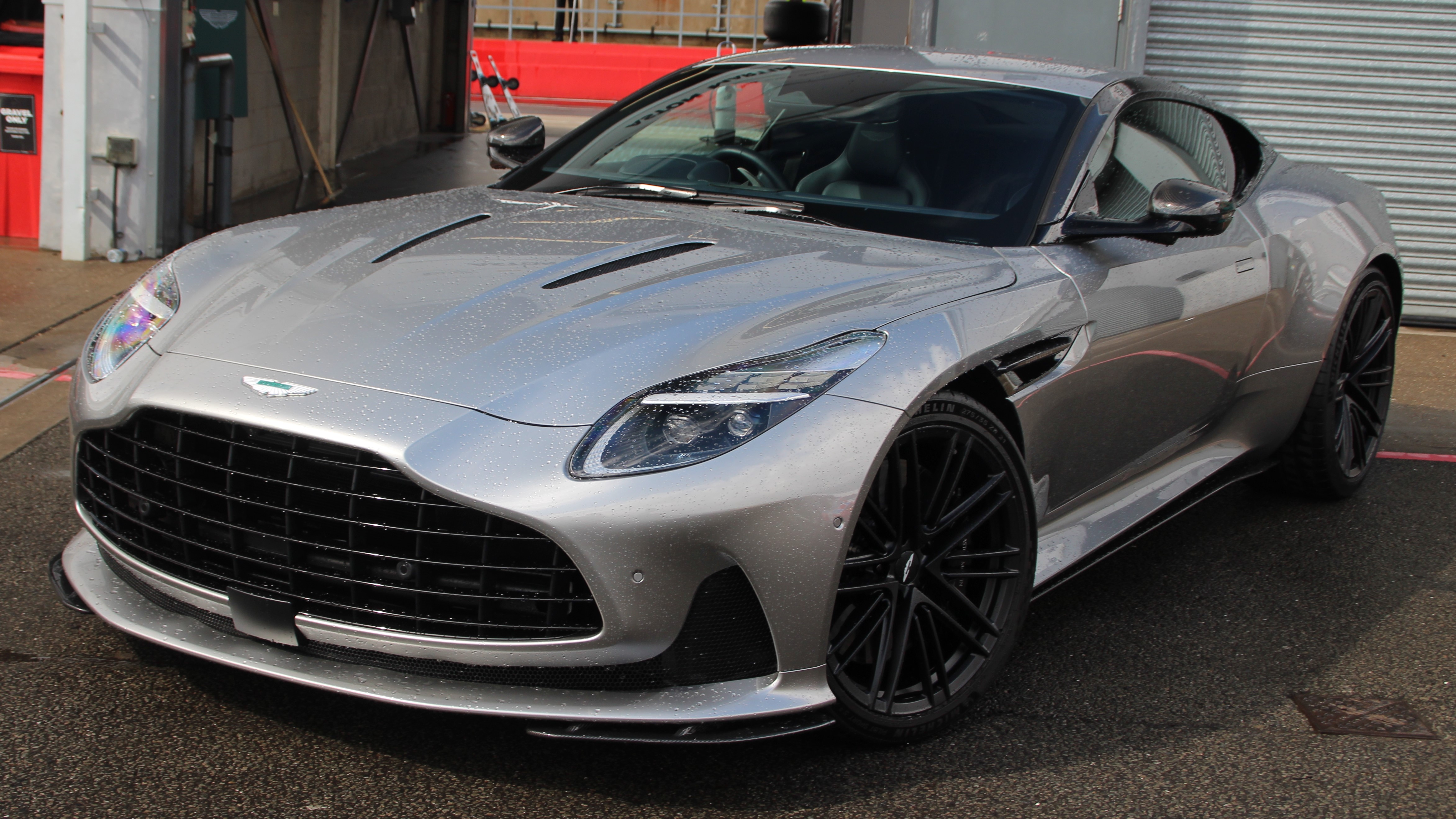
Aston Martin DB 12 S
"There's piano black on the on the center console [182.1s] of Aston Martin DB 12 S. [186.2s] There's not a stitch of piano."
The Aston Martin DB 12 S is a luxury sports car from Aston Martin. The hosts are talking about the center console trim—“piano black” is a shiny black finish that looks expensive and stands out in the cabin.
The Aston Martin DB 12 S is a modern Aston Martin grand tourer, known for its luxury interior and performance-focused character. In this segment, the hosts point out the center console’s “piano black” trim, which is a glossy, high-contrast finish that can make the cabin feel more upscale.
piano black
"There's piano black on the on the center console [182.1s] of Aston Martin DB 12 S. [186.2s] There's not a stitch of piano."
“Piano black” is a very shiny black interior trim. It looks upscale, but it can get smudges and marks pretty easily compared to less glossy finishes.
“Piano black” is a glossy, mirror-like black trim finish used on dashboards, center consoles, and other interior surfaces. It’s popular because it visually reads as premium, but it can show fingerprints and scratches more easily than matte or textured plastics.

Jeep Grand Cherokee
"No, I came very close in high school to a grand Cherokee. [207.7s] Gray with a boyfriend who had a two door sport. [211.7s] The two door sport. Oh, yeah. Yeah. [214.1s] Was it a manual in the."
The Jeep Grand Cherokee is a popular SUV model from Jeep. In this conversation it’s used as a reference because the hosts are comparing interior look and materials to other cars.
The Jeep Grand Cherokee is a mid-size luxury SUV line known for mixing off-road capability with more upscale interior appointments. Here, it’s mentioned as a comparison point for interior materials and trim quality versus the Aston Martin DB 12 S.
sport mode
"So I had it in sport mode and I was going up a hill up this up. [284.3s] The the snake on Mulholland."
Sport mode is a setting that makes the car feel more eager. It usually changes how quickly it responds and how it shifts when you’re driving harder.
Sport mode is a driving setting that changes how the vehicle responds—typically making throttle mapping more aggressive and adjusting shift behavior to hold gears longer. The host mentions using it while climbing a hill, so they’re linking the mode to how the car felt under load.
calibration of the gearing
"Oh, yeah, snake in sport mode and trying to the calibration of the gearing [296.7s] on the transmission, it wasn't in manual."
This is about how the car decides what gear to use and when to change gears. The speaker is saying the way it was set up didn’t feel right to them.
Gearing calibration refers to how the car’s control software matches engine speed and gear selection to the driver’s inputs and driving conditions. In an automatic, it affects when the transmission upshifts or downshifts and how “busy” the engine feels.
transmission
"on the transmission, it wasn't in manual. [301.3s] I just left it in automatic the way that the lag was combined with the gear"
The transmission is what changes the gears in the car. The speaker is talking about how the automatic shifting felt while they were driving up a hill.
Transmission is the drivetrain component that selects gear ratios to keep the engine in a usable speed range. Here, the host is specifically discussing how the transmission’s automatic shifting interacts with lag and revs during a climb.
lag
"[301.3s] I just left it in automatic the way that the lag was combined with the gear [307.8s] selection and the and how high was revving and where it was shifting gears."
Lag means there’s a delay between your foot going down and the car actually pulling. The speaker thinks the delay was connected to the way the car was shifting.
Throttle lag (or response lag) is the delay between pressing the accelerator and the car delivering the expected acceleration. The host ties this delay to how the automatic transmission chooses gears and how high the engine revs before shifting.
powertrain
"I can't speak to the reliability of those things. There's a brand new powertrain, you know, that there is to consider."
A powertrain is the car’s “moving system.” It includes the engine (or motor) and the parts that send power to the wheels, so it strongly affects how the car drives and how dependable it is.
A powertrain is the car’s main set of components that make it move—most commonly the engine plus the transmission and drivetrain elements that deliver torque to the wheels. When someone says a “brand new powertrain,” they usually mean a major redesign that can affect performance, smoothness, and long-term reliability.

Jeep Wrangler
"Like so many things right now at the Jeep Wrangler, they've recalled every Jeep Wrangler. Have you heard about this?"
The Jeep Wrangler is a popular off-road SUV. Here, they’re talking about recalls—meaning the manufacturer has to fix a problem on some Wranglers.
The Jeep Wrangler is a rugged off-road SUV known for its removable doors and roof and its strong aftermarket support. In this segment, it’s mentioned in the context of recalls, which is a real-world ownership concern that can affect specific model years and components.
push for trying to really become more efficient
"there's been this push for trying to really become more efficient and like really trying to sort of push that that envelope a lot."
This refers to automakers’ drive to improve fuel economy and reduce emissions, often through downsizing, turbocharging, and other efficiency-focused engineering. The segment argues that pushing these limits can increase development and validation complexity, which can lead to recalls if issues slip through.
turbos
"there's been this push for trying to really become more efficient... But I think that when you have those turbos and and display it like the displacement"
A turbo is a device that helps the engine make more power by pushing extra air into it. It can be great for performance, but it also adds complexity that engineers have to get right.
A turbocharger (often shortened to “turbo”) forces more air into the engine, letting it make more power without using a larger engine. The tradeoff is that turbos add complexity and can be harder to calibrate and manage reliably, especially when paired with low-displacement engines.
displacement
"and and display it like the displacement and you're trying to like force like a lot of power"
Displacement is basically how big the engine is internally—how much space the pistons move through. Smaller displacement engines are common today, often paired with turbos to keep power up.
Displacement is the engine’s total volume swept by the pistons, usually expressed in liters (or cubic inches). It’s a key way people describe engine size, and in modern downsizing strategies it’s often reduced while power is maintained using turbocharging.
fifth gen forerunner
"but he said one of the greatest things on that I [582.9s] could ever hear because I have a fifth gen forerunner and they were talking about [586.5s] what is the best, like, what are the best like SUVs to have?"
The Toyota 4Runner is a tough, off-road SUV built on a sturdy frame. “Fifth gen” just means the newer version of that model, and the speaker is saying it’s the best SUV they’ve seen.
The Toyota 4Runner is known for its body-on-frame construction and rugged, off-road-focused layout. In this segment, “fifth gen forerunner” refers to the 5th-generation 4Runner, which is a popular choice for people who want a traditional SUV platform rather than a unibody crossover.
Body on frame
"It's funny. I mean, there's there's so many things now you put me on the spot. [623.7s] Body on frame stuff. [625.2s] I mean, there's just not a whole lot left."
“Body on frame” means the car’s body sits on a separate heavy-duty frame. It’s a common design for trucks and rugged SUVs because it’s built to handle rough roads and tougher use.
Body-on-frame is a vehicle construction method where the body mounts to a separate ladder-like frame. It’s commonly used on rugged SUVs and trucks because it can better tolerate heavy loads and rough-road use, and it often supports easier suspension and drivetrain packaging for off-road setups.

Toyota Land Cruiser
"So the forerunner is really the forerunner. [626.9s] So the forerunner is really the forerunner. [629.3s] The Land Cruiser to me are really are really kind of the the mainstays."
The Toyota Land Cruiser is a long-running, body-on-frame SUV famous for durability and off-road capability. Here, the speaker calls it a “mainstay” and contrasts it with the 4Runner, suggesting it fits a different kind of buyer who wants a more sophisticated take on rugged use.
overlanding
"general aura is, you know, a little more overlanding than it is sort of, you know, ruggedness, I'm more of a Land Cruiser person."
Overlanding means taking long trips with your vehicle, usually to remote places, and being able to camp or travel self-sufficiently. It’s less about looking tough and more about being practical for the whole journey.
Overlanding is long-distance, self-sufficient travel—often with camping gear—where the vehicle needs to be comfortable for hours on pavement but also capable on rough roads. It’s more about sustained usability than just short bursts of off-road “ruggedness.”

Ford Bronco I
"You know, Ford Bronco, I think, has a lot of really good things going for it. To me, on-road drivability is exceptional when it comes to that kind of vehicle. Off-road, it's also tremendous. It has a lot of great features. My only issue with it is build quality and interior noise."
The Ford Bronco is an SUV meant to handle both city driving and off-road trails. The host likes how it drives on the road and off-road, but worries it may get noisy or start rattling over time.
The Ford Bronco is a modern off-road SUV designed to be capable both on pavement and on trails. The host specifically calls out its on-road drivability and off-road performance, then flags concerns about build quality and interior noise.
on-road drivability
"To me, on-road drivability is exceptional when it comes to that kind of vehicle. Off-road, it's also tremendous."
On-road drivability is how good the car feels when you’re driving on regular roads. The host is saying the Bronco is especially easy and pleasant to drive on pavement.
On-road drivability describes how easy and pleasant a vehicle is to drive on pavement—steering feel, stability, ride comfort, and overall effort. The host uses it to praise the Bronco’s behavior in everyday driving and road-trip conditions.
interior noise
"My only issue with it is build quality and interior noise. It's very loud in there. I don't know how long it will take for things to start rattling and making,"
Interior noise is the annoying sound you hear inside the car, like rattles or wind noise. The host is worried that after rough off-road use, parts might start coming loose and making more noise.
Interior noise refers to unwanted sound coming into the cabin—such as wind noise, vibration, or rattles—that can make a vehicle feel less refined. In this segment, it’s tied to the host’s concern that things may loosen when the Bronco is driven hard off-road.
build quality
"My only issue with it is build quality and interior noise. It's very loud in there. I don't know how long it will take for things to start rattling and making,"
Build quality means how solidly the car is put together. If it’s not great, you can get rattles and loose parts, especially after rough driving.
Build quality is how well a vehicle is assembled and how durable its components are over time—often reflected in panel fit, fasteners, and resistance to rattles. The host links build quality to the likelihood of parts “sneaking loose” if driven aggressively off-road.

Defender Octa
"If money was no object and people wanted a car in that category, [785.6s] I would unequivocally say the Defender Octa. [791.4s] Yes, I second this choice."
The Defender Octa is a special, higher-performance version of the Land Rover Defender. It’s meant for people who want a serious off-road vehicle, and the hosts are saying it would be their top choice if cost and repairs weren’t a concern.
The Land Rover Defender Octa is a performance-focused variant of the Defender, built to deliver more power and capability than the standard off-road models. In this conversation, it’s framed as the “if money were no object” pick for someone who wants an unapologetically capable off-roader.
British bad teeth
"You know, we always, it's like British bad teeth. [809.9s] You know, we always make the funny joke of like, oh,"
“British bad teeth” is an old-style joke that means “there’s a stereotype that this group has a problem.” In this segment, they use it to talk about the common (and often exaggerated) idea that certain cars—especially British ones—have reliability issues.
“British bad teeth” is a cultural joke used to imply a stereotype—here, that British cars are prone to certain problems. The host immediately connects it to a similar stereotype about “electrical problems” and “leaks,” using humor to talk about perceived reliability.
suspension
"I love the sensation of that, of that suspension, though. I just felt like I was spinning around at top in that. OK, I was like, this is like a mid-engine sports car feeling to me."
Suspension is what helps the car ride over bumps and rough ground. Good suspension keeps the tires planted and makes the ride feel smooth and controlled.
Suspension is the system of springs, dampers, and linkages that controls how the tires stay in contact with the road over bumps and uneven surfaces. When the suspension is well-tuned, it reduces harshness while keeping the car stable and predictable.
top
"I love the sensation of that, of that suspension, though. I just felt like I was spinning around at top in that. OK, I was like, this is like a mid-engine sports car feeling to me."
Here, “top” likely means the car is open—like driving with the roof down. With the roof gone, you feel more of the wind and movement.
In this context, “top” refers to driving with the car’s roof down (or an open-top configuration), which changes airflow and how the cabin feels. Open-top driving can make motion and body sensations feel more intense.
mid-engine sports car feeling
"OK, I was like, this is like a mid-engine sports car feeling to me. I was so crazy."
A mid-engine car has its engine placed near the middle of the car. Because of that, the car often feels more balanced and “connected” when you turn or drive quickly.
A “mid-engine” layout puts the engine near the car’s center, typically behind the driver but ahead of the rear axle. That usually improves balance and steering feel, which can make the car feel like it’s rotating and responding more directly during fast driving.
Encino
"[1146.1s] But, you know, Lindsay and I at least grew up, you know, when when Land Rover [1150.1s] dealerships had like the technical courses at every dealership and this kind of. [1154.2s] They had one in Encino that I loved."
Encino is a neighborhood in Los Angeles. The speaker is recalling that a Land Rover dealership there had training courses they really enjoyed.
Encino is a neighborhood in Los Angeles, California. The speaker mentions an Encino Land Rover dealership that hosted technical courses, tying the location to their early hands-on learning about vehicles.
Camel Trophy
"[1204.2s] And the thing that I love about this Defender Trophy [1208.4s] challenge that they're doing, which is definitely the next iteration of Camel [1212.1s] Trophy is they really are leaning back into that part of their heritage,"
The Camel Trophy was a well-known off-road adventure event. It’s remembered for tough routes and teamwork, and the hosts are saying Land Rover is bringing that spirit back.
The Camel Trophy was a famous off-road adventure competition that became known for rugged navigation, challenging terrain, and team-based endurance. In this segment, the hosts say the Defender Trophy is the “next iteration” of that heritage.
highly customizable
"But the troupies, those things, they're highly customizable. So you can they come gutted on the inside. You can put as many rows of seats in there as you want."
They mean these safari vehicles can be modified a lot. People can change how many seats they have and how the inside is laid out for different passenger groups.
In the context of safari “troopies,” “highly customizable” refers to how these vehicles are modified for passenger transport—changing interior layout, seating rows, and sometimes roof/door configurations. The host highlights that owners can reconfigure the cabin to fit different group sizes and safari setups.

GMC Safari
"...arious sleeping arrangements. And then we had our safari truck and we did we did hire a guide. And I thoug..."
The GMC Safari is a large van made to carry people and gear, often for family trips. Because it has lots of space, it can be set up for road trips and camping-style use. That’s why it might come up in a story about “sleeping arrangements” and travel.
The GMC Safari is a full-size van that was designed to handle large groups and family travel, including options for different seating and cargo layouts. It’s brought up in a “safari truck” style story because vans like this can be configured for camping-like road trips. Podcasts often mention vehicles like the Safari when discussing practical space and flexible use.
transport truck
"we would just leave the transport truck there. We could put six people into the safari truck."
A transport truck is basically a work vehicle for getting people or supplies from one place to another. In this story, they left it behind while using the safari truck to go see animals.
A transport truck is a vehicle used primarily to move people or gear between locations rather than for a specific driving experience. Here, it’s contrasted with the safari truck used for daily animal-viewing drives.
re-body the old chassis
"our guide, he's so smart, he said, sometimes they just re-body the old chassis. Don't make it look like it's a new truck, but it's not a new truck."
It means they keep the truck’s main frame underneath, but put a different outer body on it. So it can look newer, but a lot of the important stuff underneath is still old.
This describes a common practice in truck and classic-car circles where the original chassis (the main frame) is kept, but the body is replaced or reshaped. The goal is often to update the look while retaining the underlying structure and components.
Le Mans
"Emmy was Emmy was the first person that I saw when I landed in Paris for Le Mans last year."
Le Mans is one of the biggest long-distance race events in the world, held in France. People who talk about it are usually into serious racing.
Le Mans refers to the famous endurance race held in France, where teams race sports cars over long distances. It’s a major event in motorsport culture, so references to it often signal serious car enthusiasm.
gravelly dirt roads
"It was what you would expect. Long kind of, you know, gravelly dirt roads."
It means the road wasn’t paved—more like loose rock and dirt. That kind of surface makes tires slip more easily and the car can feel bumpy.
“Gravelly dirt roads” describes unpaved surfaces made of loose rock and dirt. These surfaces reduce tire grip and can make the ride feel bouncy, which changes how a vehicle handles compared with smooth pavement.
Baja driving
"And it was just kind of fun like Baja driving, which is my favorite kind of driving."
“Baja driving” is off-road driving over rough, bumpy terrain—like the famous Baja races. It’s about keeping control on loose dirt and rocks, where the car bounces and grip changes a lot.
“Baja driving” refers to off-road driving over rough terrain in the style associated with the Baja races (like Baja 1000). It emphasizes controlled speed over bumps, loose surfaces, and washboard roads where suspension travel and traction matter most.
rattly
"our vehicles were the older variety Truby, and so they were kind of rattly and and a little bit, you know, by the end of it, you're sort of like, I've got bruises all over me."
“Rattly” means the car makes a lot of vibrating or shaking noises. On bumpy roads, older cars can feel looser and rattle more.
“Rattly” describes interior or body vibrations and loose-feeling noises that can show up on rough roads. On off-road trips, repeated impacts and chassis flex can make these sounds more noticeable, especially in older vehicles.

Renault Wind
"... you have that safari tent open and you just, the wind is in your hair and you're just looking at, you'r..."
The Renault Wind is a small car that’s meant to feel more open to the air, like a convertible. When the top is open, you can feel the wind while driving. That’s likely what the podcast is describing with the “wind in your hair” moment.
The Renault Wind is a small, open-top car designed to deliver a more airy, convertible-like driving experience. It’s the kind of vehicle that gets mentioned in conversations about wind-in-your-hair motoring and casual, fun driving. The podcast context suggests the discussion is focused on the sensation of having the top open.
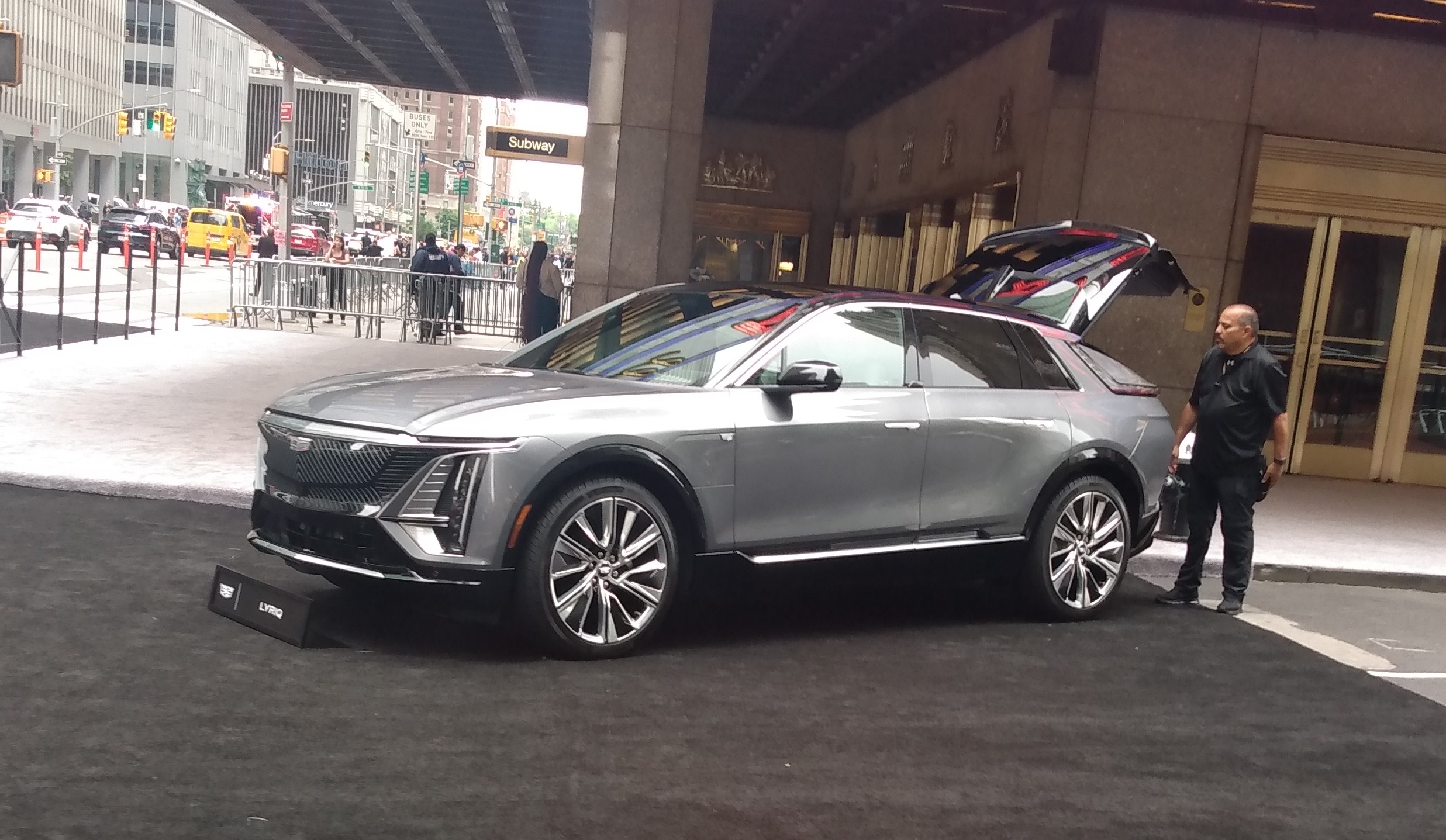
Cadillac Lyric
"Please, please. Yeah, yeah, yeah, cool. The lyric is just like for once in my life, like give me wh..."
The Cadillac Lyriq is an electric SUV, which means it runs on electricity instead of gasoline. It’s a luxury vehicle, so it’s designed to feel comfortable and upscale. The podcast is reacting to it as a notable option that stands out.
The Cadillac Lyriq is an all-electric luxury SUV from Cadillac, built to provide a premium experience with electric power. It’s discussed in the episode as a standout because people react to how it looks and feels, including the way the name and overall presentation come across. The mention suggests the conversation is centered on first impressions and the car’s appeal.
camber
"And there were all kinds of little modded things with like the tiny little wheels that have a little camber on them and like have a kind of a coffee can muffler."
Camber is how much a tire is tilted inward or outward. Some car owners change it to help handling in turns, and others do it mainly for the look.
Camber is the angle of a wheel relative to vertical when viewed from the front or rear. Negative camber (top of the tire tilted inward) is often used to improve cornering grip and is also a common “stance” modification on show cars.
coffee can muffler
"that have a little camber on them and like have a kind of a coffee can muffler."
A “coffee can muffler” is a nickname for a small, round muffler. People use it when the exhaust looks like a can and often sounds louder than stock.
A “coffee can muffler” is a slang term for a small, cylindrical aftermarket muffler that resembles a coffee can. It’s commonly associated with louder, more free-flowing exhaust setups and a distinctive look.
JDM cars
"Those kind of non-descript JDM cars that you're like, I don't know enough to know."
JDM means “Japanese Domestic Market.” It’s a way people talk about Japanese cars that were made for the Japanese market, and the culture of modifying and importing them.
JDM stands for “Japanese Domestic Market.” It refers to cars, trims, and parts that were originally sold in Japan, and the term often gets used for the style and community around importing or modifying those cars.
car culture
"But it was really neat to see that there was still even in Arusha, there was a look like car culture, it was that part was really cool, too."
Car culture just means people in an area are really into cars. That can show up as local car meets, custom builds, and people talking about what they drive.
Car culture is the community and shared enthusiasm around cars—how people meet, modify vehicles, and celebrate automotive styles. It can exist even outside major car markets, showing up in local shows, meets, and distinctive builds.
TSD
"And then there was a track day where we did some TSD on track, which was so much fun."
TSD means Time-Speed-Distance. It’s a rally style where you’re supposed to hit specific timing targets for certain stretches of road, not just drive fast.
TSD stands for Time-Speed-Distance. In a TSD rally, drivers follow a schedule that specifies target times for given distances at set speeds, and accuracy matters as much as driving skill.
road rally
"This is like a road rally."
A road rally is an event where you drive a planned route and follow the rules. It’s usually about doing it correctly and consistently, not just racing to the finish.
A road rally is an organized driving event on public roads where navigation and adherence to rules are central. It’s typically less about outright racing and more about completing the route correctly and consistently.
Golden Gate Bridge
"But this thing was we started up. We started up at the Golden Gate Bridge."
The Golden Gate Bridge is the famous bridge in San Francisco. Starting a drive there usually means the event begins with a big, scenic landmark and a Bay Area route.
The Golden Gate Bridge is the iconic suspension bridge connecting San Francisco to Marin County in California. Using it as a rally start point signals a scenic, high-visibility route right at the heart of the Bay Area.
Mendocino
"And we drove from there up some of the most amazing roads up to Mendocino."
Mendocino is a scenic part of Northern California on the coast. People like driving there because the roads are beautiful and twisty.
Mendocino is a coastal region in Northern California known for dramatic scenery and winding roads. It’s a common destination for driving events because the route offers lots of elevation changes and scenic viewpoints.
Sonoma Raceway
"And then we went from there over to Sonoma and we ended on Sonoma Raceway."
Sonoma Raceway is a famous race track in California. It has challenging turns and hills, so driving there is a big deal for track enthusiasts.
Sonoma Raceway (in Sonoma, California) is a road course used for major motorsport events. It’s known for its elevation changes and technical corners, making it a meaningful venue for track driving.
Sears Point
"I'll always think of it as Sears Point just because when I was living up there, Sears, Sears Point, but."
Sears Point is an older name people used for the same track that’s now called Sonoma Raceway. It’s basically the track’s previous identity.
Sears Point is the former name of the Sonoma Raceway facility. Many long-time fans still use the old name, so it’s a nod to the track’s history and branding changes over time.
accuracy on the track
"We came in second overall on accuracy on the track, which I don't even have a"
In rally-style events, “accuracy” usually refers to how precisely you follow the required timing/speed/distance targets rather than how fast you can lap. The speaker’s “second overall on accuracy” suggests scoring based on meeting the event’s exact schedule.
speedo
"speedo on my car that works how we managed to do that."
“Speedo” means the speedometer—the dashboard gauge that tells you how fast you’re going. If it works, it’s showing your speed properly.
“Speedo” is short for the speedometer, the gauge that shows how fast the car is traveling. When it “works,” it means the instrument is reading and displaying vehicle speed correctly.
horn
"So at one point by the last day, every time I turned left, the horn would honk. Oh, really? So I had to pull the horn like I had to disconnect the horn."
The horn is the sound-maker you press to warn other drivers. Here, it was going off by itself when the car turned left, so they had to disable it.
The horn is the car’s audible warning device. In this story, a fault caused it to honk automatically when turning left, and the speaker disconnected it to stop the issue.
windshield wiper
"when I first walked, went up there, I had one windshield wiper that worked. And then this one was like. It was sort of like like it was like a lame thing by the end of it. And neither of them worked. They were just like and then they broke. So I had no windshield wipers."
Windshield wipers are the blades that wipe the front windshield so you can see. In this case, one wiper worked briefly, and then both failed so they had no wipers.
Windshield wipers clear rain, snow, and debris from the front glass for visibility. The speaker describes a wiper system failure where only one wiper worked at first, then both stopped by the end of the event.
Mud Fest
"And I was at an event in the Pacific Northwest called Mud Fest and Scott Brown from Stilentus was there and he knows Sarah and he had helped get her into the Pacifica for the rally."
Mud Fest is the event the hosts are talking about. It’s where they saw the rally setup and learned more about the Pacifica they later drove.
Mud Fest is an event name the hosts reference as the place where they encountered the Pacifica rally effort. It’s relevant because it frames the vehicle choice as being tested in a real-world, off-road themed setting.
Pacific Northwest
"And I was at an event in the Pacific Northwest called Mud Fest and Scott Brown from Stilentus was there and he knows Sarah and he had helped get her into the Pacifica for the rally."
The Pacific Northwest is a region in the U.S. The hosts mention it to say where the event happened, which matters because weather and terrain affect how vehicles perform.
The Pacific Northwest is a U.S. region (typically including states like Washington and Oregon) that the hosts use to locate where Mud Fest took place. It helps listeners understand the climate and terrain context for a rally-style event.
Denver press fleet
"That's amazing. That green Pacifica they were in ended up in the Denver press fleet. And so we actually got to drive that same Pacifica..."
A press fleet is a group of cars that the media gets to drive. The speaker is saying that the same Pacifica later became one of the cars available to reporters in the Denver area.
A press fleet is a set of vehicles provided to journalists or media outlets for coverage. The speaker notes that the specific green Pacifica ended up in the Denver press fleet, which signals it was used for media driving and evaluation.
plug-in hybrid
"More one of the more underrated vehicles, not just minivans, but one of the most underrated vehicles, the plug-in hybrid is even better because you can get some crazy, crazy gas mileage in that thing."
A plug-in hybrid is a car that uses both gas and electricity. You can charge it from a plug, and it can drive on electricity for a while before switching to gas.
A plug-in hybrid is a hybrid vehicle with a battery that you can recharge by plugging it in. It can drive on electric power for a limited range, then uses the gasoline engine when the battery is depleted or when more power is needed.

Chrysler Pacifica plug-in hybrid
"I had a long term I had a long term car my first year at Kelly Blue Book, a long term Pacifica plug-in hybrid. I at first I was like, oh, thanks, guys, give the new girl the fucking minivan."
The Chrysler Pacifica plug-in hybrid is a minivan that can run on electricity for a limited distance, then uses gas when the battery runs low. Because the electric motor gives quick power, it can feel responsive, and it can also be very efficient if you charge it regularly.
The Chrysler Pacifica plug-in hybrid is a minivan that pairs a gasoline engine with an electric motor you can recharge from an outlet. That lets it run on electricity for short trips and then switch to gas, which is why the host talks about strong off-the-line response and very high fuel economy.
instant torque
"You kind of haul some butt in that when you're off the line because you've got a lot of instant torque there working with you."
Instant torque means the car can give you strong pulling power right away. Electric motors can do this quickly, so the car feels responsive when you start moving.
Instant torque is the idea that an electric motor can deliver twisting force immediately when you press the accelerator. That’s why plug-in hybrids can feel quick off the line even without waiting for the engine to build revs.
hyper mile
"I could hyper mile that thing like crazy. I mean, there was one time I got a thousand miles because I was trying really hard to see how long I could go before having to fill up the tank."
Hyper-miling is when someone drives in a very fuel-saving way to squeeze the most efficiency out of the car. In this case, the host is saying they tried to stretch the gas and/or electric range as far as possible.
Hyper-miling is an aggressive fuel-economy driving style where you try to maximize miles per gallon (or per charge) by minimizing throttle, using coasting strategies, and planning acceleration. The host is describing how they pushed the Pacifica plug-in hybrid to see how far they could go before refueling.
electric range
"And, you know, if you're a local person, you have, I guess it's what, 33 miles of range of electric range in that in the plug-in motor."
Electric range is how many miles the car can go using electricity alone. After that, it typically switches to using gas to keep you moving.
Electric range is the distance a plug-in hybrid can travel using only its electric motor and battery. The host mentions “33 miles of range,” which is the approximate distance you can expect before the vehicle needs to rely more on the gasoline engine.

RAV four of GR Sport
"Yes, the the the RAV four of GR Sport. I've not driven that."
The Toyota RAV4 GR Sport is a more driver-focused version of the RAV4. It’s meant to feel a bit more sporty, with extra features and tuning compared to the regular model.
The Toyota RAV4 GR Sport is a sport-oriented trim of the RAV4, Toyota’s compact SUV. “GR Sport” typically adds styling and tuning aimed at making the driving feel more engaging than the base model.
PHEV
"It's it's the PHEV so you can only get it as a PHEV. And it was a blast."
PHEV means a plug-in hybrid. It runs on gas and electricity, and you can charge the battery by plugging it in like an EV.
PHEV stands for “plug-in hybrid electric vehicle.” It uses both an internal-combustion engine and an electric motor/battery, and you can recharge the battery by plugging it in.
Subaru Trail Seeker
"Because I feel like that is even more of a than if you just go in, you know, you're like, yeah, I'm expecting them to be OK and it blows you away. You're like, yeah, but I was already positive about it. If you're skeptical or you don't know what to think and it blows you away. That's an even stronger review, I think. The other thing that I really enjoyed was the Subaru Trail Seeker."
The Subaru Trail Seeker is a Subaru made for outdoor and off-road style driving. It’s meant to be more capable and rugged than a typical commuter, and the host says it was a highlight.
The Subaru Trail Seeker is a Subaru off-road–oriented model/trim aimed at outdoor use, with styling and equipment meant to handle rougher roads and trail conditions. In this segment, the host specifically calls it out as something they enjoyed driving.
Request an Explanation
Heard something you'd like explained? We'll add it to this episode.
Sign in to request explanations for terms you heard.
Want to learn more?
Browse our glossary for plain-English explanations of automotive terms, jargon, and concepts.
Help improve this episode
See something that's not quite right? Our annotations are AI-generated and can sometimes miss the mark. Click the flag icon on any annotation to suggest a correction.