SVG Dominance, Double Legge, 48 Rumors, HOF Picks, Chicago Back, All-Star Preview!!!
About this episode
Road-course dominance takes center stage as the hosts debate whether SVG is “the best we've seen,” credit telemetry like SMT for repeatability, and compare his adaptability to drivers coming from F1/IndyCar. They also dig into Watkins Glen and other road-course win-rate talk, then pivot hard to broadcast/race-control gripes—missed wrecks, odd Fox coverage, and even audio glitches. Later, the show turns to schedule rumors (Dover, Chicago) and an All-Star preview, then closes with NASCAR Hall of Fame voting picks and modern-era ballot chatter.
road course wins
"That's no longer something that Chase could hold on to himself. And we might want to talk about Chase later because he does not look like the same guy at all on a road course."
A road course is a track with lots of turns (more like a regular road than an oval). A “road course win” just means winning one of those races.
A “road course win” is a race victory on a road course layout—tracks with turns that are more like a road than an oval. In NASCAR, road-course performance is tracked separately because it depends heavily on braking, cornering, and traction management.
Cup Series
"He's now tied Chase Elliott for the most road course wins by an active Cup Series driver."
The Cup Series is NASCAR’s main top-level racing series. The discussion is about who’s winning the most road-course races at that top level.
The “Cup Series” is NASCAR’s top national touring-car series. The speaker is tracking road-course wins among active Cup Series drivers, which is why Jeff Gordon and Chase Elliott are being compared.
Sonoma
"He wins the next two road courses, San Diego and Sonoma. And he's right there with Jeff Gordon."
Sonoma is a well-known road-racing track in California. The host is predicting SVG will win there too.
“Sonoma” refers to the Sonoma road course (Sonoma Raceway) in California, a staple NASCAR road-course venue. It’s a track where braking stability and corner exit traction often decide results.
San Diego
"He wins the next two road courses, San Diego and Sonoma. And he's right there with Jeff Gordon."
San Diego is being used as the name of the next road-course race location. The speaker thinks SVG can win that event.
“San Diego” here refers to a NASCAR road course event at a San Diego-area track. The point is the speaker’s prediction that SVG can win the next two road-course races, starting with the San Diego stop.
circuit to America's
"Todd, he can't take it this year because his kryptonite is circuit to America's apparently, but he's going to, he's probably, I'm just going to say, he's going to tie Jeff Gordon this year."
Circuit of the Americas is a famous road-racing track in Texas. The host is saying this driver has trouble there compared with other tracks.
“Circuit of the Americas” (often shortened to COTA) is a road course in Austin, Texas, known for elevation changes and complex corner sequences. The speaker calls it a driver’s “kryptonite,” meaning it’s a track where they struggle relative to others.
road courses
"I think you genuinely have a bunch of really good drivers and some really great drivers at road courses. And he's still making them look like JV team drivers, which is just that that's what's impressive to me is that like,"
A road course is a type of track with lots of turns, not just one big oval. Cars have to brake and turn differently, so the driving style and setup matter a lot.
In NASCAR, “road courses” are tracks built with turns of varying radius and braking zones, unlike the mostly left-turn oval layout. Driving a road course demands different setup choices and skills, especially braking stability and corner exit traction.
winning strategy
"I think they just wound up on the winning strategy as much as it was an impressive drive. But Michael McDowell is a great road course racer and we see him get close from time to time."
A “winning strategy” in NASCAR road-course racing usually means the planned approach to tires, pit timing, and on-track decision-making to maximize position and speed over the whole event—not just one fast lap. The hosts are crediting both the drive and the strategy working together.
SMT
"but the technology, namely things like SMT being able to see exactly what Shane is doing with his inputs lap after lap corner after corner."
SMT is a kind of performance data system. It helps teams track what the driver is doing—like how they steer and apply throttle and brakes—so they can see patterns from lap to lap.
SMT here refers to a data/telemetry system that can monitor and interpret a driver’s inputs lap after lap—like steering, throttle, and braking—so teams can compare performance precisely. The point being made is that SMT lets the team “see” what Shane is doing with high repeatability.
inputs
"SMT being able to see exactly what Shane is doing with his inputs lap after lap corner after corner."
“Inputs” means what the driver does with the car controls. Think steering, gas, and brakes—how consistently the driver makes those moves.
In racing telemetry, “inputs” are the driver’s control actions—steering angle, throttle position, brake pressure, and sometimes gear selection. The discussion implies that Shane’s input consistency is a major reason he’s hard to replicate.
tire that got cut down
"The fact that he was even there at the end of it, you know, ultimately most delayed, most derailed by the, by the tire that got cut down when he was, was he battling Todd Gibbs?"
A tire “cut down” means the tire was damaged—often by debris or contact—so it loses pressure and traction. That typically forces a driver to slow, pit, or change their driving line, which can derail a strong run even if the car was fast earlier.
delayed
"The fact that he was even there at the end of it, you know, ultimately most delayed, most derailed by the, by the tire that got cut down when he was, was he battling Todd Gibbs?"
“Delayed” here means his race got slowed down by something that interrupted his momentum. Even if he was fast, that kind of problem can keep him from finishing strong.
In racing talk, “delayed” usually means the driver’s progress was slowed by an interruption—like a damaged tire, traffic, or an incident. It’s often used to explain why a car that ran well for stretches didn’t finish where it “should have.”

Alpine A106
"when it comes to ratings and the poll. The cup race scored a 1.06 rating and 1.9 to 8 million viewers, not a direct comp with last year,"
The Alpine A106 is an older sports car made by Alpine. It was designed to be light and fun to drive. It may be mentioned because it’s part of the brand’s early racing and sports-car history.
The Alpine A106 is a classic small sports car associated with the early history of the Alpine brand. It’s often discussed by enthusiasts because it represents a lightweight, performance-focused era of European sports cars. In a podcast, it may appear in historical or technical comparisons when talking about ratings, viewership, or the broader racing timeline.

Dodge Ram
"... he's at least, at least in that position that if Ram and then, and you know, with Dodge and this goes ..."
The Dodge Ram is a large pickup truck made for work and towing. It’s the kind of vehicle people use for hauling things like tools, equipment, or trailers. It may be mentioned in racing talk because the brand is involved in motorsports and marketing.
The Dodge Ram is a full-size pickup truck line known for hauling capability and everyday usability. It comes up in motorsport and racing discussions when people talk about brand presence, team support, or how manufacturers market vehicles beyond the track. In a podcast, it may be mentioned as part of a broader conversation about which brands are showing up and performing in their respective arenas.
super speedway win
"I think you should spend at least, I think you need to have more than just one super speedway win in any of now."
A “super speedway” is one of NASCAR’s biggest, fastest tracks. Winning there is a big deal because the racing is more about high-speed strategy and car setup than just short-track driving.
A “super speedway” is a very large NASCAR track (typically 2 miles or more) where cars run high speeds for long stretches. Winning there is often treated as a bigger credibility marker than winning on shorter tracks because setup and drafting strategy matter a lot.
Arco
"He doesn't have any Arco wins. He doesn't have any truck wins."
ARCO is an energy brand. Here it’s being used as sponsorship-style shorthand for a NASCAR context, not a car part.
ARCO is an energy brand that has been used in NASCAR-related sponsorship naming. In this segment, “Arco wins” is shorthand for wins in a branded series/event context, not a specific vehicle component.
truck wins
"He doesn't have any Arco wins. He doesn't have any truck wins."
“Truck wins” means wins in NASCAR’s Truck Series. It’s a step below the Cup Series, so the discussion is about whether someone has proven they can win at the top level.
In NASCAR context, “truck” refers to the NASCAR Camping World Truck Series, a national series below the Cup level. Comparing “truck wins” to Cup or super-speedway wins is about whether a driver has proven themselves in the right kind of competition.
Talladega
"He's got one O'Reilly win and it was Talladega."
Talladega is one of NASCAR’s biggest tracks. Races there can be wild and strategy-heavy, so a win is a notable accomplishment.
Talladega Superspeedway is one of NASCAR’s most famous super-speedway tracks, known for pack racing and frequent strategy swings. Winning there is often seen as a strong indicator because the races can be chaotic and highly dependent on drafting.
O'Reilly
"He's got one O'Reilly win and it was Talladega."
O’Reilly is an auto-parts company that sponsors NASCAR. The mention is about the race sponsorship branding, not something installed on the car.
O’Reilly is a major U.S. auto-parts retailer that sponsors NASCAR events and teams. When the hosts mention “O’Reilly wins,” they’re referencing the branded race context rather than a car part.
Cup racing
"Like at least Connor Zillich, he was 18 years old when they announced he's going cup racing."
“Cup racing” is NASCAR’s top-level series. The point here is that moving up to the top tier is a big jump, and it’s not guaranteed to go smoothly.
“Cup racing” refers to NASCAR’s Cup Series, the sport’s top national division. The hosts are emphasizing that success in lower series doesn’t automatically translate to the Cup level, especially for very young drivers.
pavement races
"Like at least he'd won like 20 pavement races."
“Pavement races” are on asphalt instead of dirt. Cars grip and wear tires differently on asphalt, so it’s not the same as dirt racing.
“Pavement races” means races run on asphalt rather than dirt. In NASCAR and related series, asphalt and dirt demand different setups and driving techniques because traction, surface consistency, and tire wear behavior change significantly.
dirt races
"Corey Day's won a lot of dirt races."
“Dirt races” happen on dirt tracks. The surface changes as cars drive on it, so the car and driving style have to adapt.
“Dirt races” are events run on dirt ovals, where the track surface evolves lap by lap. That changes traction and requires different car setup and driving inputs compared with asphalt racing.
jumping straight from a sprint car to a cup car
"That's great, but you're not jumping straight from a sprint car to a cup car at 20 years old and having any sort of success."
They’re talking about going from sprint cars to NASCAR’s top-level Cup cars. Even though both are race cars, they handle very differently, so it’s hard to succeed right away.
This describes moving from sprint-car racing (usually short, dirt-focused oval racing with different vehicle dynamics) to NASCAR Cup Series cars (heavier, higher-speed stock cars with different aerodynamics and tire behavior). The point is that the driving skills and car feel don’t transfer instantly, especially at a young age.
automatically qualify
"She's, I think she's probably going to automatically qualify for both races because there's no bump day for Indy car."
It means she gets a guaranteed spot in the race without having to fight for it at the last minute. That can make the weekend less stressful and more predictable.
In IndyCar, “automatic qualification” usually means a driver earns a spot in the race without going through the usual bumping/qualification battles. That changes the strategy and pressure compared with series that have a “bump day” where late qualifiers can be displaced.
bump day
"She's, I think she's probably going to automatically qualify for both races because there's no bump day for Indy car."
Bump day is when the last qualifiers can knock other drivers out of the race. It’s basically a last-chance scramble to get into the field.
“Bump day” refers to a qualification session where additional cars try to qualify late, potentially replacing (“bumping”) cars that were already provisionally in. It’s a big deal because it can drastically reshuffle the starting field right before race day.
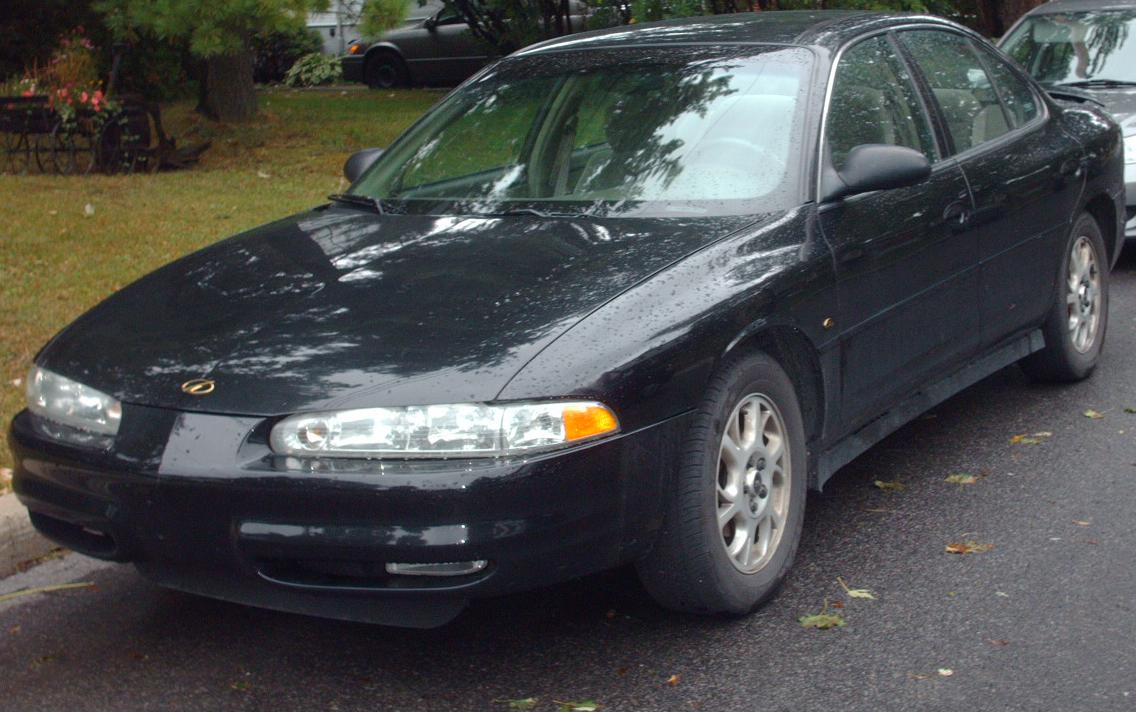
Oldsmobile Intrigue
"They mainly get 40 entries. So, you know, that intrigue is not going to be there like it was for Larson a..."
The Oldsmobile Intrigue is a mid-size sedan, meaning it’s a family-sized car meant for comfortable driving. It’s not a race car by design, but its name can come up in stories about teams and entries. In the podcast, it likely refers to how often something shows up or performs.
The Oldsmobile Intrigue is a mid-size sedan that was produced by Oldsmobile, a brand known for comfort-focused cars. It’s brought up in conversation when someone is talking about a specific driver’s situation or “entries” and how often a car or team shows up. In this podcast context, it sounds like the name is being used as a reference point for expectations and participation rather than a deep technical discussion.
miles
"So I hope she's able to complete most, if not all the miles. That would be really special."
Here, “miles” means how much of the race distance she actually gets through. Finishing more of the total distance usually means the car stayed healthy and the driver kept going strong.
In endurance-style racing contexts like the Indy 500, “miles” is shorthand for how much distance a driver actually completes during the event. Completing more miles (and thus more laps) generally correlates with staying on track, avoiding mechanical issues, and managing pace.
Indy 500
"I was looking her Indy 500. She's made four Indy 500 starts before her best career finishes 20 seconds."
The Indy 500 is a famous IndyCar race run over 500 miles at Indianapolis. It’s a long, tough race, so finishing well and completing lots of laps are big indicators of performance.
The Indy 500 is a 500-mile IndyCar race at Indianapolis Motor Speedway, and it’s one of the most prestigious events in American open-wheel racing. Finishing position and total laps completed are often used to judge how well a driver handled the long-distance demands.
complete more laps total
"The real question, will she complete more laps total than Guy Larson? Honestly, that won't be that hard."
This is comparing how much of the race each driver actually finished, lap by lap. Completing more laps usually means fewer problems and better staying power over the whole event.
“Complete more laps total” is a performance metric focused on total distance covered, not just finishing position. In long races, a driver can have a poor finish but still complete many laps, while reliability and consistency often show up in lap totals.
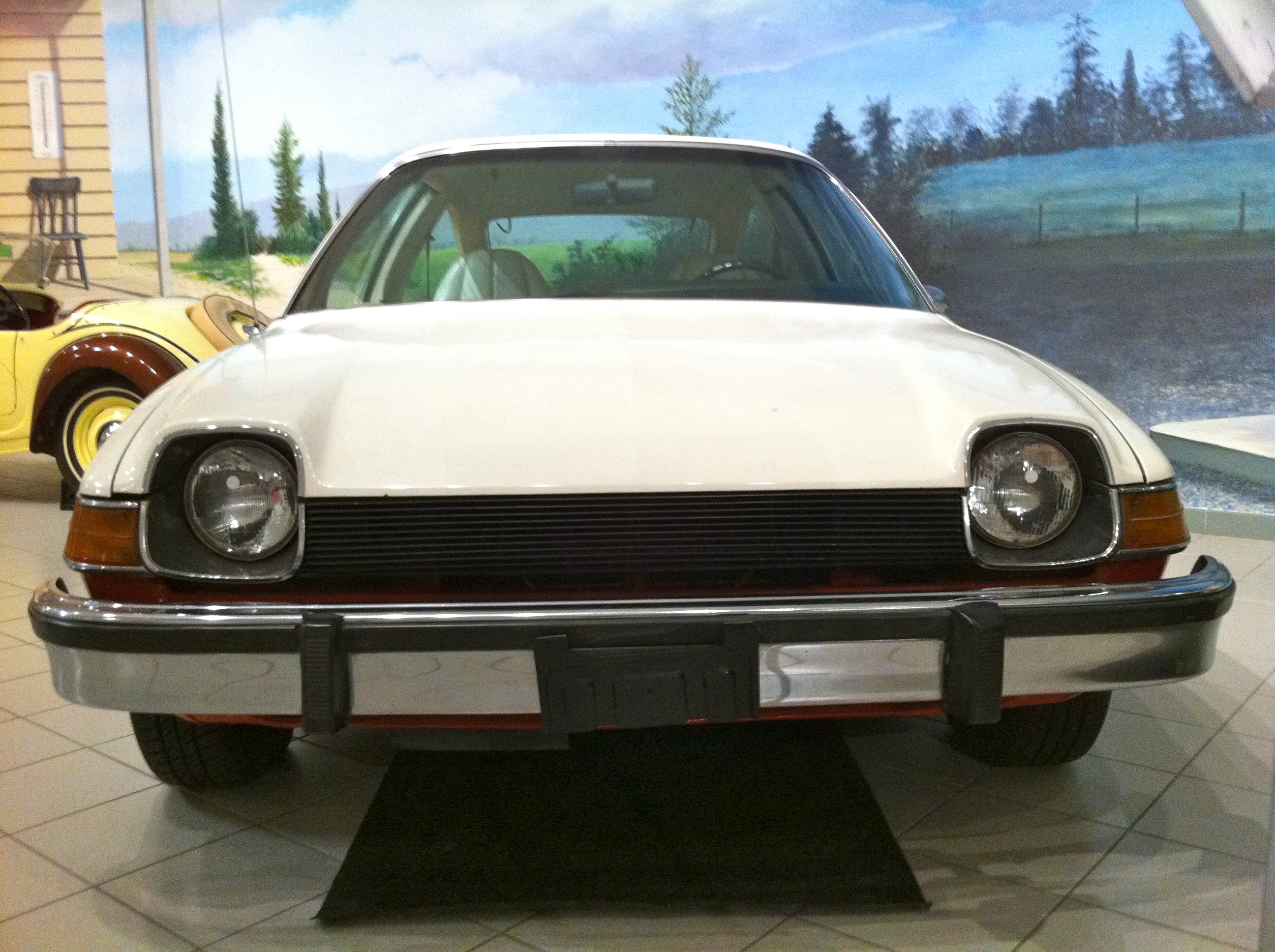
AMC Pacer
"Oh, fuck me. That sounds like the start of the Pacer test. The fitness brand Pacer test will begin wit..."
The AMC Pacer is an older compact car made by AMC. It’s known for its unusual, boxy shape and the fact that it tried to fit a lot of space inside. The podcast likely mentioned it because the name sounds like something being referenced in the moment.
The AMC Pacer is a distinctive compact car from AMC, known for its unusual styling and roomy interior for its size. It’s often discussed because it’s a memorable example of how automakers tried bold design ideas. In a podcast, it may be referenced as a quick, recognizable example—especially if the conversation is about “tests” or starting points.

Ford Dark Horses
"All right. As for dark horses, I am going to go with. Hugs Bowman."
The Ford Mustang is a popular sports car from Ford. It’s known for being fun to drive and for having a strong racing history. The podcast mentioned it because it’s a well-known car that could be a surprise contender.
The Ford Mustang is a long-running American sports car known for its performance and huge fan base. It’s significant in motorsport because it’s been a common platform for racing and brand identity over many years. In this podcast, it’s likely being brought up as a “dark horse” or a vehicle associated with a driver or team that could surprise people.
live telemetry
"Took a good person. Live telemetry should be restricted to teammates. I mean, I'm fine with everyone not knowing what everyone is doing with their SMT there..."
Telemetry is race-car data that gets sent out while the car is running. “Live” means it’s updated in real time, so teams can adjust strategy quickly—but sharing it widely can give rivals an advantage.
Live telemetry is real-time data sent from a race car to teams—things like speed, throttle/brake use, temperatures, and sometimes tire or suspension data. In racing, it can be used to help teams react quickly, but it’s also sensitive because it reveals strategy and performance details.
the chase
"but we saw the real reason NASCAR wants to blunt SVG's influence by confining his wins to the first half of the season, but it's back in the chase. I don't, yeah, I don't, I don't know if I..."
In NASCAR, “the chase” is the part of the season where the championship is decided. Points and race results matter most there, so the hosts are talking about how NASCAR wants the title race to stay exciting.
“The chase” refers to NASCAR’s playoff-style championship phase, where results determine who advances and ultimately who can win the title. The discussion suggests NASCAR may want a driver’s wins to be spread out earlier in the year so the championship battle stays tighter once the chase begins.
Request an Explanation
Heard something you'd like explained? We'll add it to this episode.
Sign in to request explanations for terms you heard.
Want to learn more?
Browse our glossary for plain-English explanations of automotive terms, jargon, and concepts.
Help improve this episode
See something that's not quite right? Our annotations are AI-generated and can sometimes miss the mark. Click the flag icon on any annotation to suggest a correction.