The Volkswagen ID. Buzz is an all-electric van. It’s designed to carry people and gear, similar to a traditional van, but with an electric powertrain. The podcast mentions it because Volkswagen is bringing it back or expanding its presence in the US.
“Plaid” is Tesla’s name for a top, high-performance version of certain models. The hosts are using it to talk about the kind of customers who might be interested in Tesla’s next vehicle.
Term
next gen roaster
“Next gen roaster” sounds like they mean a future Tesla Roadster. They’re talking about rumors and timing—when Tesla might announce it and who would be most interested.
Full Self-Driving is Tesla’s advanced driver-assist software. When Tesla updates it, the car’s automated driving behavior can change, so people track the new version.
Over-the-air updates are software updates that get sent to the car wirelessly. So the car can change how it drives after an update, without you going to a shop.
FSD is Tesla’s software that tries to help the car drive more on its own. When the driver has to take over, Tesla asks the driver to report why, so it can get better at that situation later.
Disengage is when you stop letting the car’s autopilot/FSD handle the driving and you take over. In this case, the car then asks you to say why you had to take control.
Telemetry is the car’s recorded data about what it was doing and what it sensed. Tesla uses it along with video to figure out why the driving system had to be overridden.
Navigation data is the information about your route and planned turns. The concern here is that using it to debug driving behavior also means the system knows your destination and route.
A voice command is what you say to the car to control it. The host is describing a trick: double-clicking the voice button sends a blank request that makes an annoying prompt go away.
Term
Rebel taxi
This sounds like the host is talking about Tesla’s self-driving taxi plans. The point is that they want Tesla to share more real-world updates and numbers, not just promises.
An autonomous driving system is the car software that’s supposed to drive by itself. The hosts are saying that regulators treat these systems differently than simpler “help the driver” features.
Waymo is a company that builds self-driving cars. The hosts mention it to compare how many crashes have been reported and why the numbers might differ.
Mileage here just means how much the vehicles have been driven. If a system drives a lot more, you’d expect more crashes to show up in the raw numbers.
ADS system means the car’s self-driving system. The hosts are comparing crashes caused by the system’s behavior versus crashes caused by other drivers.
In-car supervisors are safety monitors inside the car that keep an eye on the driving system. If something looks wrong, they can step in or trigger emergency actions.
A kill switch is an emergency control that shuts things down right away to prevent harm. Here, it’s the system that stops the car’s automated actions if danger is coming.
Term
WIMO
WIMO here means a remote-help process. When the car gets stuck, people offsite can step in to help it get going again.
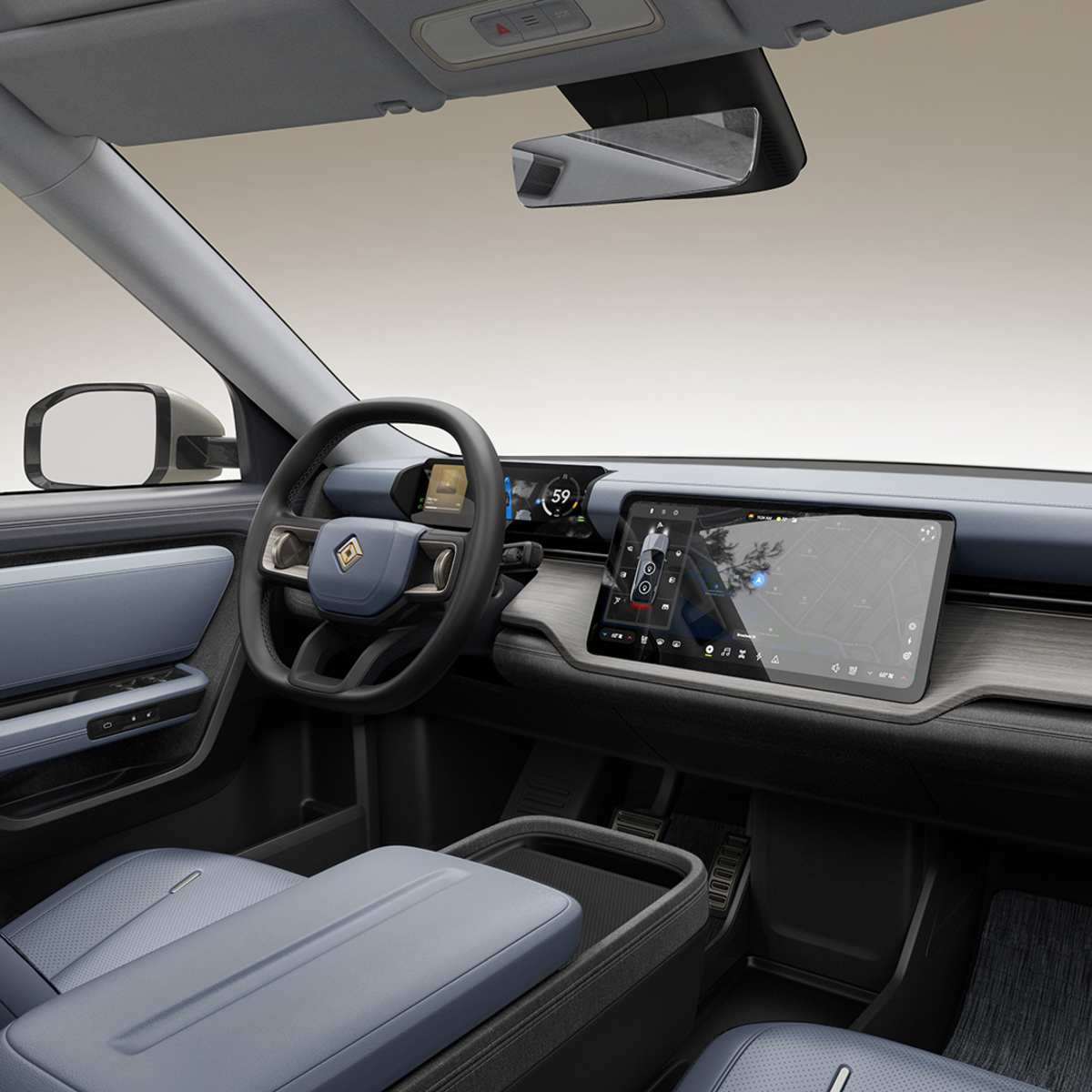
Rivian R2 is an upcoming electric SUV from Rivian. Here, the hosts talk about the online tool where you pick options and turn your reservation into an order.
A configurator is the website tool where you customize a car—like picking colors and options—before you place a real order. Rivian is using it to collect exact R2 orders.
Autonomy Plus is Rivian’s name for an upgraded set of driver-assist features. The hosts are saying it’s included with the R2 Performance launch package.
A launch package is a bundled set of features/options offered when a new model first goes on sale. Here, the hosts mention the R2 Performance “with the launch package,” implying it includes additional equipment beyond the base configuration.
All-terrain tires are made to work well on both regular roads and rougher surfaces. Here, the host says the smaller 20-inch wheels come with all-terrain tires.
All-season tires are meant to be a good all-around choice for most weather. In this segment, the host says the bigger 21-inch wheels come with all-season tires.
A compact spare tire is a smaller temporary spare meant to get you to a repair shop. The host says it’s the biggest add-on accessory option right now for the Rivian R2, and it costs $755.
The Tesla Model Y is Tesla’s electric SUV. The hosts are comparing it to the Rivian R2 to explain who might shop for both, and they describe the Model Y as more “sporty” in style.
Off-roading is when you drive on rough dirt trails or uneven ground instead of normal paved roads. The point here is that the Rivian R2 is being positioned as capable of that, not just street driving.
Gross profit is basically how much money is left after you pay the direct costs to build the product. The host is saying Rivian needs the R2 to be profitable in that basic production sense to keep the program alive.
An economic downturn is when the economy is doing poorly and people tend to buy fewer expensive things. The host is saying that could hurt demand for a new EV like the R2.
GM Energy is a GM program focused on home backup power. They’re talking about systems that can store electricity and help keep your home running when the power goes out.
Vehicle-to-home means your electric car can act like a backup power source for your house. If the grid goes down, the car can send electricity to keep key things running.
The Fiat 500 is a small car designed for city driving. Because it’s compact, it’s easier to maneuver and park than larger cars. It’s mentioned in the podcast in the context of comparing costs for a car purchase.
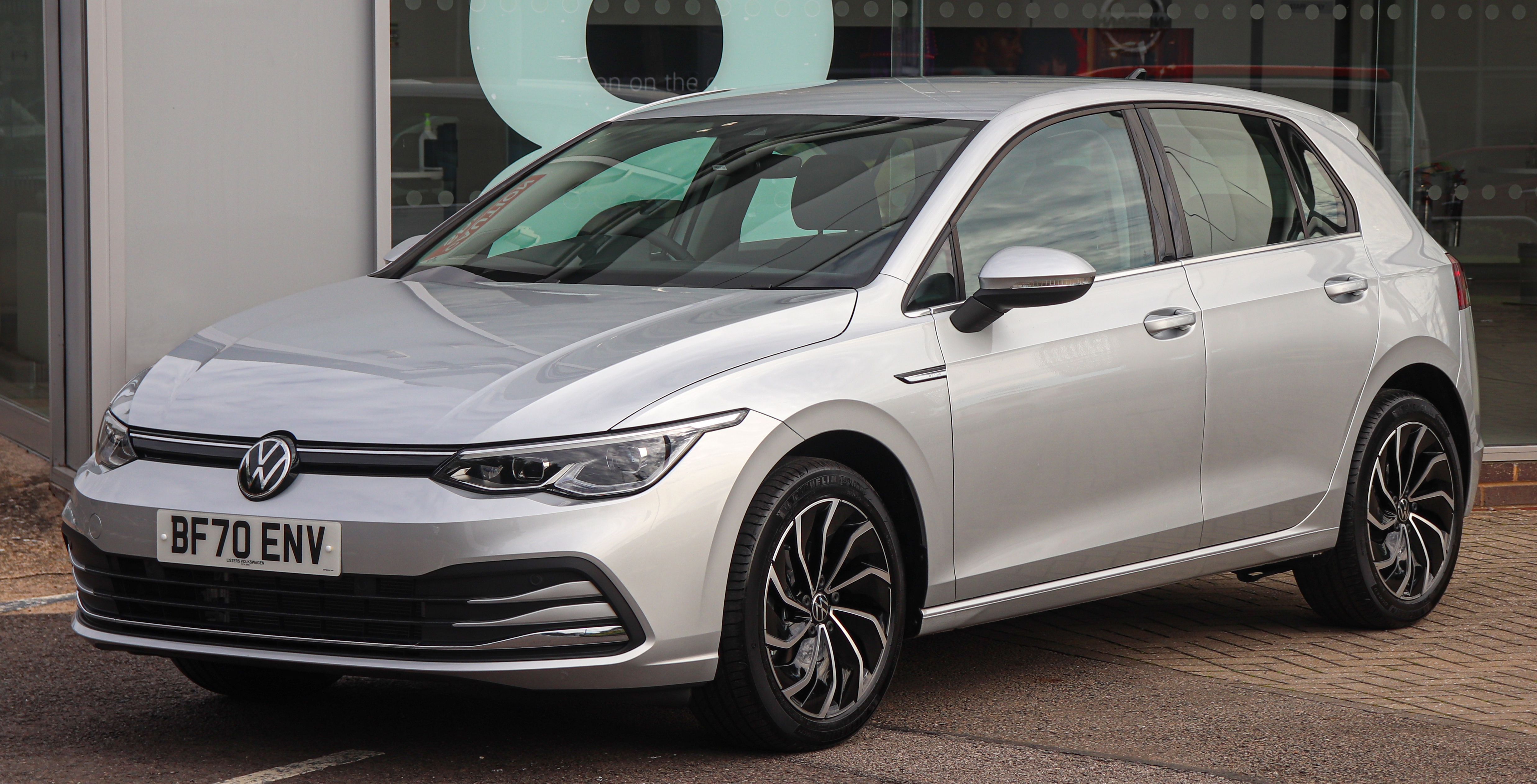
The Volkswagen Golf is a compact car that’s made for everyday driving. The podcast mentions it in connection with an electric performance version, sometimes described as an “electric GTI.” That means the idea is to combine the Golf’s size with an electric powertrain and sportier intent.
This is a traction feature that helps both front wheels work together. If one wheel starts slipping, it can help the car keep moving instead of spinning in place.
This is a suspension system that can automatically change how stiff or soft the car feels. The goal is to make it handle better without making the ride miserable.
Progressive steering is about making the steering wheel “feel” different depending on speed. It helps the car be easier to maneuver in tight spots and steadier when you’re moving faster.
The battery pack is the big battery in an EV that stores the electricity. A bigger battery usually means more range, but it can also affect weight and charging behavior.
The Polo is a smaller Volkswagen car. The host is saying the electric GTI’s battery is similar to what you’d find in the Polo, which affects how much range it can realistically deliver.
WLTP is a standardized testing method used to estimate how far an electric car can go. Real range can be lower depending on driving style and conditions.
Charging speed tells you how quickly the battery can refill at a fast charger. Even with a fast charger, the car may slow down as the battery gets fuller.
The instrument cluster is the screen(s) behind the steering wheel that show your important driving info. They’re talking about switching it back to the standard display layout.
The Volkswagen Polo GTI is a sporty, compact Volkswagen hatchback. Here, they’re using it as a reference point to say the electric version has more room inside.
Term
pre-sell
A pre-sell is an early sales process where customers place orders or deposits before the car’s official pricing is finalized. The hosts note it’s “pre-sell this fall,” meaning the number they’re discussing may not be the final, confirmed price.
The Volvo EX30 is Volvo’s smaller electric car. They’re comparing it to the other electric Polo discussion—talking about how it drives and how much it costs.
Horsepower is a way to describe how strong a car’s motor is. They mention it as a basic spec, but they’re saying it doesn’t tell the whole story about how the car feels to drive.
BYD is a Chinese company that makes electric cars. In this discussion, they’re looking at buying a factory from another automaker to expand EV production.
They’re talking about a specific factory in Chattanooga and whether it will build the ID Buzz for the US market. That determines when the van shows up for buyers.
Oversupply means too many cars were made compared to what people wanted to buy. Companies then adjust production so they don’t have too much unsold inventory.
A solar roof is a roof that also makes electricity. Instead of mounting solar panels on top of a normal roof, the roof tiles themselves are designed to generate power.
A power optimizer is a small device used with solar panels to help each panel perform better. If part of the roof is shaded, it can reduce the energy loss compared to a system that treats all panels the same.
A micro inverter is a small box for each solar panel that helps turn the panel’s electricity into usable power. Because it’s per-panel, it can help the whole system lose less energy when only part of the roof is shaded.
GPS navigation is the car’s route guidance based on satellite positioning and map data. The speaker says FSD can disagree with GPS navigation, which can lead to awkward or unsafe driving decisions if the system’s planned path doesn’t match the intended route.
Here “parking” means the car’s help with maneuvers to park. The host is saying the self-driving system can sometimes struggle or not match what you want.
Potholes are holes or damaged spots in the road. They can be expensive to hit, and the host is saying the car’s self-driving system is starting to detect them and react—sometimes differently than the driver would.
Lane preference is how the car decides which lane it wants to stay in. The host is saying the car keeps choosing the left lane and doesn’t switch out when they expect it to.
Term
AI
AI here means the computer “learning” how to drive based on what it sees. The host is proposing that the car should learn from your corrections so it makes fewer similar mistakes next time.
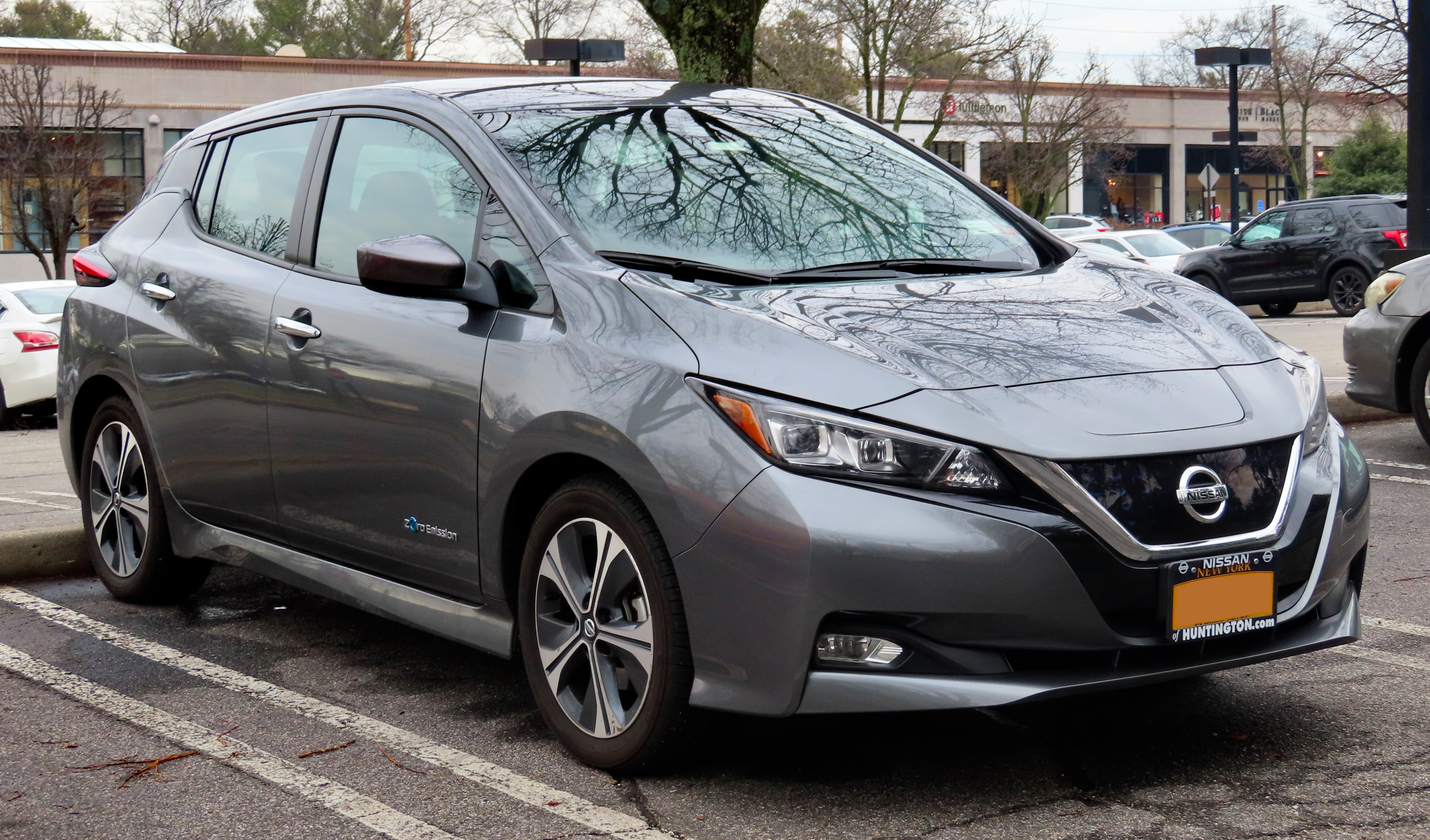
The Nissan Leaf is an all-electric car made by Nissan. It’s meant for everyday driving, especially in cities, and it doesn’t use gasoline. People mention it because it’s one of the more common EVs you can find used or on the road.
Here, “mapping” means using detailed digital maps to help the car know where it is and how to drive. The hosts are saying Tesla’s system doesn’t depend on mapping in the same way, but it can still behave differently depending on your location.
“Edge cases” are rare or unusual traffic situations that automated driving systems may not handle well because they don’t fit the most common patterns the software is trained for. The hosts use the term to highlight that even if a system works most of the time, uncommon road users or scenarios can still cause unsafe or unexpected behavior.
Term
BDR1
“BDR1” sounds like a shorthand for a particular version or configuration of the Rivian. The speaker is connecting it to the R2’s pricing and spec level.
Autopilot is Tesla’s driver-assist feature that can help with parts of driving. It’s not the same as a car that drives by itself without you paying attention.
This is a Tesla Model S from 2012. The important detail is that it doesn’t have Autopilot, so it’s a good comparison point for what newer Tesla cars can do with driver-assist features.
The Tesla Model 3 is Tesla’s popular electric car. In this story, the loaner Model 3 has the company’s newer self-driving software (FSD 14.3), which is why it’s being tested and discussed.
ADAS stands for Advanced Driver-Assistance Systems—features like lane keeping, adaptive cruise control, and other automated safety/comfort functions. The speaker frames ADAS as a near-term, widely available capability in consumer cars, distinct from longer-term “unsupervised” autonomy.
“Pure autonomy” here means the goal of a car that can drive itself, not just help the driver. The speaker is comparing who’s ahead at that bigger, harder goal.
This is a way of classifying self-driving capability. Level 2 means the car can help with steering and speed, but you still have to watch the road and be ready to take over.
The speaker is using “99%” to mean the system works almost all the time. The idea is that the last few percent—rare situations—are usually the hardest part.
This means the car drives by itself without you watching it. The speaker is saying that promises about this coming soon have not played out reliably in the past.
This is the typical price people pay for a brand-new car. The hosts are using it to talk about how expensive new cars have gotten recently.
Term
dollar lost 30% of its value
This means the US dollar got weaker compared to other currencies. When that happens, imported parts (and sometimes cars) can cost more, which can raise prices.
Amazon is mentioned as a benchmark in the conversation about who owns shares in Rivian. It’s not about a car part—more about investment interest in EVs.
0-60 time measures how quickly a car accelerates from 0 mph to 60 mph, usually in seconds. It’s a common performance metric used to compare how “quick” different cars feel in everyday driving.
The Chevrolet Bolt is a mainstream electric car. They’re comparing how quickly it accelerates versus other cheaper EVs/hatches to judge whether those cars feel exciting enough.
CATL (Contemporary Amperex Technology) is a leading Chinese battery supplier. The hosts mention it in the context of battery supply and partnerships, implying that battery makers’ priorities and relationships can determine which automakers can compete.
An LFP battery is a type of EV battery. The big idea is that it can handle cold weather better and can charge faster, which makes the car easier to live with day to day.
Brand
LG
LG (LG Energy Solution is commonly referenced in EV battery discussions) is a well-known battery supplier brand. In this segment, the hosts question whether LG is strongly associated with LFP batteries, contrasting it with Chinese suppliers.
“Hardware 3” is the computer inside a Tesla that runs the self-driving/driver-assist features. If the computer is different, some features may work differently or later than on newer hardware.
“Run red lights” means the car goes through an intersection when it shouldn’t. In this discussion, it’s used as an example of how driver-assist can make mistakes.
Term
V14
“V14” is a named version of Tesla’s self-driving/vision software. They’re saying Tesla may not update older cars until the newer version is fully ready.
“Hardware 4” is the newer computer inside some Teslas. They’re saying the self-driving software version they’re discussing will be finished and tested on Hardware 4 first.
Term
Tune software
“Tune software” means the settings/software that can change how a car operates. They’re saying the owner isn’t personally running custom software that would affect how the car behaves.
Term
IREA
“IREA” is an acronym mentioned in the context of Tesla software control. The hosts imply it’s something the driver isn’t directly managing, but the exact meaning isn’t spelled out here.
A “context window” means the AI looks at a short recent history before deciding what to do. Here, they’re saying it uses the last part of the drive to affect future choices.
The Pontiac LeMans GTO Convertible is an older American car from the muscle-car era. It’s a convertible, meaning the top can be opened, and the “GTO” name is tied to performance versions. The podcast brings it up as part of a list of classic models.
The Geo Metro was a cheap, small car that GM sold under a separate brand name. The hosts bring it up as an example of GM reusing brand identities for different markets.
LIVE
And we are live in the episode of the electric podcast. I'm Fred Lambert, your host. As usual,
I'm joined by Seth Winsch. How are you doing, Seth? Good. All right. Quick thank you to
today's sponsor GM Energy. If you want to experience more resilience and control over
your home energy, the GM Energy Home System adds stationary battery power for always ready
backup energy for your home. And GM Energy PowerBain takes in energy from the grid and stores
it when you need it the most. Learn more at GMEnergy.GM.com. We're going to have a little
bit more to say about them and their latest offering later on on the show. So stay tuned
for that. What we're going to discuss today, we got a little bit of a test and use a little
postponing. We're a little postponing of the Model S and X signature event. We're going
to talk about the latest FSD Rebel taxi stuff. Then the R2 Configurator just went live today.
Big step, big step in the right direction. That means deliveries are, I mean, they literally
say a week to six weeks. So it's going to happen pretty, pretty fast. Then the Volkswagen
GTI Electric was on sale and it's, I have my doubts, but we'll take a look. Then not
one, but two Chinese automakers are reportedly, and I actually, I think the ID confirmed it
today, but the two Chinese automakers separately are looking to buy up existing car plant in
Europe right now. So this is major stuff going on inside. It's the shift is happening outside
of China beyond just export. This is a big step. And then Volkswagen ID Buzz, we got
discussed its US comeback. Well, let's start with the last weekend. Not great news for some Tesla
owners that were already booked in, everything ready to go for the May 12 event in Fremont,
where they're going to take delivery and have a little party for a little send off for the
Model S and X program, the end of the program. Tesla put this event together for everyone that
ordered a signature were invited to the factory for this event. I mean, I'm not sure if it's
everyone, but I mean, it's like, I would imagine if you're paying $160,000 for a car, you can get it.
You should at least get an invite. It's not like anyone can come anyway, like not everyone's
gonna go. But yeah, plenty of people did, you know, book hotels, book plane flights, some people
took off work to make this work. And yeah, it's the three days before the event, they postponed
it. So it was supposed to happen this week on Wednesday, and it didn't. Now apparently it's
just pushed to the 20th. So it's going to be next week. So again, you know, stay tuned for that.
I don't know why what happened. The production seemed to have happened. This
week. So or last weekend around the time, but where they postponed this. So I don't think the
production was the actual issues. Maybe the CEO had to go to China or something.
Yeah, I don't even know if Elon was confirmed to be at that event, it would would would be nice
for him to go. But that that could be a good point, actually. Yeah, that matches. And anyway, he
went, you see his priorities, because you also went to the Chinese trip. While he was still
supposed to be in court, he was told by the judge that he's not dismissed with his court case
against open AI, which is another thing that's pretty nuts. But yeah, it's a bummer, like it's
not just a great look for Tesla, these are like your most hardcore customers ever. And you're like,
yeah, I mean, screw your plans. And now if you want to come, it's going to be a week later. And
you have to rebook everything. And if you're not being rembursed for anything, it's that's on you.
Whoops, you got must. Yeah, you screwed up, you trusted us. Yeah, the only good, I mean,
good potentially good thing that came out of this is like, there's some rumors and I want to
emphasize that these are just rumors that Tesla might have pushed the event to combo
this event with the roaster, you saw me coming from a mile away with that one.
I mean, these are very much rumor right now. I don't, you know, don't take my word.
The timing makes sense. The customer base makes sense. If you're going to be buying a plaid and
signature SNX, you probably on them, you know, you would be on the top potential customers for
the next gen roaster. So I don't know, maybe it makes sense. Maybe it doesn't. We'll have to see
next week. So stay tuned. All right, this this is a weird one that I realized happened, apparently
that happened like two weeks ago, but I, you know, I was in China. So I didn't realize it. But Tesla
has made a weird update to FSD in the latest 12 14.2.3. And let me know said if it's the same
thing on order three stuff, but now I assume it's not because Tesla doesn't think that is as
valuable. But every time you intervene on FSD now, Tesla forces you to give you feedback,
to give feedback about the intervention. So this this a version of this alert, and I'm
showing on the screen right now has been for more than two years now, I think maybe three years
even has been part of the FSD, where when you take over when you disengage,
it pops up and it tells you give us feedback. Why did you get disengage? And for the most part,
you didn't need to click on anything, you just press on the voice control button and you will
give Tesla verbal feedback about, Hey, I just had to take over because you change the lane into
one way traffic, like something like that. Like I'm, I'm sure I'm sure like thousands of people
have said that I've said that to Tesla myself included. But you know, that's if you didn't do
that, it just goes away after like two or three seconds, which is normal, like, fine, that's,
you know, it's part of the FSD experience. You're the paying customers are also quality assurance
workers on paid quality paying quality insurance workers. But now it's, it's mandatory.
The pop up that I'm showing right now shows up when you disengage and you have to click something
or you have to send verbal feedback. Otherwise it just stays there forever, which is, you know,
I mean, I understand where Tesla is coming from with this because it is super valuable data to
have it already, you know, labeled to a certain degree, instead of just the video, like every time,
you know, you do an intervention and Tesla already like snaps the video of it, the telemetry to
understand what happened and to improve. But, you know, sometimes it can be difficult to understand
why just from the video, the telemetry, there was a disengagement. The first one, you know,
and you get an idea of like the priority of each one of them, the critical is the last one.
But navigation is like one of the main ones, probably the top disengagement reason I would
assume at this point in D14. And, and you might not know exactly why I guess you can know if you,
Tesla is also access to the navigation data itself, which I don't know if it should have access to
that because that's, you know, you should Tesla really know everywhere you're going all the time.
I don't know. But anyway, if, if for example, like one of the main disengagement I get, there's a
highway next to, so I have a place in Shaouen again, and when you're coming from Montreal to
Shaouen again, when you arrive at the highway, the 40 ends and splits into you go, you know,
south on the 55 or north on the 55. And I need to go north on the 55 to go to Shaouen again.
So there's just two lanes on the highway and one lane goes there and the other lane goes there.
And, you know, the car, most of the time will put me into the left lane, which I need to go to
go north at the right time. But then at the last second, sometimes it just, it wants to go back
into the right lane as if like I'm just passing. But like, I'm there now, I need to be in the right
lane. And if I'm not like I'm, I'm going to the wrong spot. And so I have to correct it every
time that. So if Tesla knows where I'm going, and it knows why, but if not, I need to clean navigation
and the yeah, your car wants put me in the wrong lane and things like that. But yeah,
people are not happy about the fact that it's obligatory, especially if it's a critical
disengagement, because if it's a critical one, you can just you just save your own ass for a
second. And now you're like, yeah, you have to give feedback to Tesla, you might be like stress,
you might be in the particular situation. It's like, it's not ideal. People have quickly found
a hack around it. So if you double click the voice command, it's basically it sends out an
empty voice command, and it kills the prompt that literally like this is the problem, it hides like
half of your visualization screen on your Tesla. So you just you want it to go away.
But yeah, so it's not it's not like a function to dismiss it by clicking it twice. It's just
it's a hack because it sends Tesla and empty one just kind of done.
All right, moving on. Walk up to a nice little surprise this morning. So if you've been following
my Rebel taxi coverage for you know, the past year, you know that, you know, and my FSD coverage,
one of my main criticism of Tesla for the longest time has been the lack of transparency about
improvement about progress in both FSD and Rebel taxi. You just don't share any kind of
valuable data or on par nowhere near on par with the rest of the industry.
And one of the big ones is that since this last lunch, Rebel taxi in Austin, it's the only
Rebel taxi and now I guess Dallas and Houston, or that are considered, you know, autonomous
driving system, they're not driver assistance system like like FSD. So Tesla any kind of crash,
Tesla has to report to NHTSA. And so we had 17 crashes now to date. And Tesla does redact a lot
more data than anyone, including even the crash context. So the what really gives you what happens
specifically in plain English rather than like some pieces of evidence like some telemetry data,
for example, very valuable. And I've always said, if Tesla releases data, it would
show that, you know, a lot of them even even probably even most of these crashes are not
actually Tesla's fault. We've seen that with other companies developing those system, especially
Waymo. Waymo has more crashes than anyone because it also has more mileage than anyone
with truly autonomous system. And it's now up to like 700 crashes. But I think over 80% of them
are clearly not their fault. It's like people rear handing them and everything. And, you know,
that can be a concern in itself, some degree, like if if Rebel taxis are getting rear ended
more than the average car, we probably should look into that. Why is that happening? There's
probably an underlying root cause to this. But for the most part, at least it's not, you know,
the ADS system just veering off road and crashing into something. But yeah, Tesla has always hidden
all this data for almost a year now. We're in May, lunch in June of last year. While all the other
companies just tell you exactly what happens. Tesla today had to report two more crashes that
happened in March, we're like a month and a half behind on the data with these reporting. And
but so these two other, you know, small crashes that happened on Rebel taxi in Austin.
What we learned is that this side, I don't know if it decided, I don't know, maybe because there's
no update on this, maybe they were forced to, because, you know, we've been hammering on this
for a while. So I don't know if it's a regulatory reason or if it's Tesla, you know, out of, you
know, change of mind, decided to unredact all the context for all the crashes that happened
over the last year. And sure enough, I think at least half of them looks like they're not Tesla's
fault. However, there are some more concerning ones, including 22 of them actually happened
while there was a teleoperation of the vehicle, like a remote operator of the vehicle took over
and crashed a car. And what's interesting with that is like, if I understand this correctly,
like this happened this morning, I had to sparse through all the data, but I think I have
a good understanding of it. If I understand correctly, those are both crashes with in-car
supervisors, too. So it looks like Tesla is also like, even with the in-car supervisors,
they are testing the remote teleoperation system. So if, so obviously the in-car supervisors will,
you know, get the kill switch if there's imminent danger or anything on that. But if it's just a
car, like getting stuck somewhere, like not knowing what to do, they do what WIMO has been
doing for a while, where they, you know, contact the remote supervisors and they try to unstuck the
car. But twice when they did that, they actually were crashes, not like most of the crashes are
very low speed because it's just that's how those vehicles operate. They operate with
not on highways, within cities and traffic and all that. So they hit the construction barricade
at nine miles per hour, so not the end of the day and at the end of the world. And the other one
was actually the most severe one based on an injury. So there was an injury apparently,
but it was a two miles per hour crash on the right turn slip lane when it was re-rendered by an SUV.
So again, not exactly that Tesla's fault, but the safety monitor inside the vehicle later
complained of pain and saw medical evaluation. So that was the only hospitalization so far that
we know of. But yeah, I posted on electric, all of the crash contacts that Tesla provided for each
one of them. So you can actually, we know what happened now. So and again, I think about half
of them, I would say, you know, you could give some fault to Tesla. The other one that Tesla's fault,
which is trailing behind WIMO, because I think when most loads are like, you know, one in four,
is their issues, their problem. But yeah, I think this is interesting context. I would
really like to know those set. I would really like to know, were they forced to do that
for a regulatory reason, where NHTSA is like, hey, you cannot be the only one that hides all their
context. Or did Tesla just woke up and like, oh, that probably doesn't look good for us to do that.
It's hard to say. It could be either, it could be both. Yeah.
Yeah, you're right. No idea. All right, let's do
Rivian, one more news item, and then we get a pause. And also, you guys, we're live. I see a lot
of people are commenting already. We see LUTech. We see Dean is in the house, Antonio. If you guys
have questions for us, you can put it in the comment section. And when they get to it at the
end of the show, it can be about any topic that we're discussing today that in the show notes
that you're seeing right now, if you're watching live, or any other topic in the EV world or the
clean energy world that you would like to set our nice take on it. And yeah, you can put it
YouTube comments, Facebook comments, X, we're going to get to it. And if you do enjoy the
edgy podcast, we would appreciate if you give us a like, a thumbs up, a subscribe, whatever it is
on the app you're watching, it helps the show more than you think, and we appreciate when you do it.
I'm sus pushed us to the algorithm and whatnot. And yeah, takes a second and it's free to do
same thing. If you're listening on your podcast app right now, you can give us a five star rating
only if you think we deserve it, of course. And doing that helps the show quite a bit also.
So yeah, Rivian this morning wakes up and was like, yeah, now's the time. Now's the time we
launched the R2 configurator. You know, the car has been production since last month. So they've
been, you know, testing validating their production units built to the production process. And now
they're like, we're ready to actually deliver this thing or in this case, take orders, you know,
change your orders and change your reservation into orders in order to build out this order log
in the next few weeks to months. No big surprise. They already confirmed it that they started with
R2 performance. Not only that, the R2 performance with the launch package with adds autonomy plus
into it. That's a pretty good deal, to be honest. Yep. Yeah, because it's just a little bit over
premium. And you get a lot more speed. And then obviously you're going to want to take the purple
one. So that's a weird color. Oh, I can I click on it? I put the purple color here. Yeah, there's a
the purple one is a I think is yeah, that's a 2000. Oh, no, you cannot do it.
That technology is too new. So Rivian, it has to manage the different production builds right
now. So that's for first of all, that's why there's the R2 performance launch package is the only one
that you can order for now. The R2 premium at $54,000 is coming late 2026. But there is also
color options, wheel options. And well, we'll option is not big of a deal for production.
But there's also an interior. So there's only two interior options.
Black creators signature, which is included our premium coastal cloud signature, which is
lighter tone interior. But the colors is you have plenty of choice. So the silver is the base one.
Then you can have in white, glacier white for $1000, half moon gray, or 1500 midnight for
2000, or the Kettle not getting a glow cove, which is blue for 2000. And then so the lunch
green is the one that the spatial color that you can get right away. So the boral is the other
special color with $2000 color is coming next year. But the lunch green, which is the one I
think I put on top here. Yeah, that's a $2000 extra, but it's the exclusive color for the launch
package. So yeah, they're limiting to 12345 so six color option at lunch is
actually unless I didn't get all these availability correctly, it's actually pretty damn good.
Yeah, I said two wheel option, you have a 21 inch and a 20 inch option, the 20 inches on
all terrain tires, the 21 is on all season tires. You have limited number of accessories that you
can add on. Rivian is known for its accessories, I'm sure they're gonna add more. Biggest one
right now is the compact spare tires for $755. Yeah, I mean, this is so all you tech here says,
I hope I'm wrong, but I fear the R2 miss its moments. You know, it's not impossible. But
personally, I don't see that right now because look at this, this is, you know, $1000 cheaper
basically than the Model Y performance. It's extremely competitive with it on all metrics.
I don't see it as big of it like, you know, a lot of people want a fan size that like it's a
Model Y competitor because you know, it's both midsize electric SUVs. And the Model Y is the
best in the car in the world, roughly. So that's something EV for sure. So of course, you kind
of want to aim high and look at that. But I don't know how many people are actually going to be on
the market for a R2 and the, you know, cross shopping with the Model Y, because it's a very
different beast, I think. If you look at the spec themselves, yes, they look somewhat, you know,
similar competitive in the similar range. But when you look at the form factor at what the R2
can do, like it's a real off-road vehicle too, you can actually go off-roading with that thing.
I don't know if it's not like a giant market off-roader, but it's still, you know, something
you can do. And it's also, it looks very different. It looks very much like an SUV like all the Model
Y is, you know, a lot sportier, let's say. No, I think it's going to do well too, because
also you have to keep in mind that there's a lot of people that are not, you know,
into Tesla for other reasons than the actual products. And they don't have these same problems
with Rivian. And if Rivian, you know, just checks all the other boxes, you know, that market has
to go somewhere. Right. And, you know, what RJ has to do to just keep his mouth shut, like,
don't go down Twitter, don't start talking about politics. And I don't see that happening. No,
why would he do it? And he seems like a pretty mild mannered fellow. So even if he did get on,
it probably wouldn't be saying anything to, I mean, he obviously talks about his company and
everything, but, you know, doesn't get into politics, which you're going to piss off half
the people no matter what you say. So yeah. Now, he seems very focused on the product,
like he's very much a product guy. And then obviously, now, now he has pressure to deliver it
is, you know, profitably, because, you know, cannot survive otherwise. So that's, that's the
goal here. So, you know, that, that I think for me, that that's the main threat to the R2 program,
like he can, can, can they make, you know, decent gross profit on this? And I do think it's achievable.
But in terms of the demand right now, I think, I think Rivian's biggest threat is like, you know,
significant economic downturn would be a problem, obviously. But right now with the high guy,
high gas prices, was gas up to day two? I think it was, right?
I don't follow gas. I haven't looked in years.
Yeah, I don't, yeah, I don't follow it on day to day. Like I know more about like US gas prices
than Canadian gas prices, just because of my, you know, reporting market. But yeah, I keep an eye on
it just, just for like, business reason, more than anything else. And it was still over 100
last time I checked 100 US barrels. So, you know, as long as it stays at those prices.
Yeah, they're gonna, they're gonna do just fine. Other than, like I said, a giant economic
downturn will not be great. All right, let's talk a little bit about our friend at GM Energy,
we're sponsoring this week's episode. All right, today's episode is sponsored by GM Energy. Smart
energy features are no longer just a luxury, they're a necessity. One in four homes experience
power outages each year. From good shutoffs to extreme weather, many homeowners are looking for
new ways to stay powered and connected. Fortunately, home energy systems can offer resilience, style,
and sustainability benefits in one package. A power outage doesn't have to put your life on pause.
GM EV owners can now use GM Energy Home System to beat the blackout. This advanced system allows
vehicle to home capable Chevrolet, Cadillac or DMC EVs to store energy and when needed supply
electricity back to the home, keeping the essentials running and your sanity in check during an outage.
If you really want to experience more resilience and control over your home energy, the GM
Energy Home System adds stationary battery power for always ready backup energy for your home.
The GM Energy Power Bank takes in energy from the grid and stores it for when you need it most.
Learn more at gmenergy.gm.com. Huge thank you to GM Energy for sponsoring the show.
By the way, did you see they're having an event on the West Coast in San Francisco, I think?
At the end of the month? No, I did not. Oh, we'll have to look at that. At the end of the month, though,
I'm in Italy. Oh, I'm going to let you guys guess what I'm doing there. Fiat!
A little bit more exciting than fiat. More upscale, huh? Okay. Yeah, just a little bit.
I got the first letter right. You can probably buy, you know,
the first letter, right? 50 fiat, 500 he for the cost of the car that I'm going to check out there.
All right, let's talk a little bit about the electric GTI. So that has been
teased for a longest time. The electric hot hatch that we have all been waiting for.
I need to drive it. The GTI is a fun car to drive, so that's its thing. So I don't want to
put judgment on it too much, because right now what we have is the look. It looks great.
You know, it looks, it stayed true to the, you know, original GTI,
but spec wise, pricing wise, value wise, I'm like, I just don't get it so far. So 222 horsepower,
you know, nothing too crazy. Not really about that. Not, you know, just a single motor front
wheel drive, 166 kilowatt, 290 Newton torque of max torque, 0 to 100, so 62 miles per hour,
6.8 seconds. So it's not quick. It could have been a lot quicker. Like when you talk about
hot hatch, they're like, they kind of miss the mark there, but it's, it's, the GTI has never
been about initially speed. It's about like handling is just how fun it is to drive. So I have to,
you know, there's, there's front differential lock on this. There's adaptive DCC sports
suspension, progressive steering. So it, it's claimed that you keep the unique GTI feel when
driving it. So if, if that was the goal, they might have achieved it. I don't know. I haven't,
I haven't driven it yet, but yeah. And then there's a few other things there. So it's using a 52
kilowatt hour and MC battery. So that's, so it's the same one as in the base polo.
Might not be a problem necessarily if, if it comes light, it's in an MC. So it might come light,
just 52 kilowatt hours, not too big. You know, they might have him to keep the car as light as
possible, which would also help with the handling of course. So that might be more it, but in
term of actual range on this, you know, a 52 kilowatt hour battery pack, it is a small car,
but they are quoting 424 kilometers, 263 miles on the WLTP, you know, realistically,
this is like a 200 mile range vehicle. So long distance driving, less compelling,
especially then when you add to that 105 kilowatt charging speed. But they say that at 105 kilowatt,
you can charge 10 to 80% in 24 minutes, which is not bad. But again, it's a 52 kilowatt hour
battery pack, so it's not charging that much. Design, they say they stay true to the Golf 1976.
Sure. They say they even have an option to like change the instrument cluster to like,
well, digitally change it, I mean, to the original instrument cluster. That's a nice little touch.
Here you have the dimensions and everything.
They claim that with the electric version, you have 19 millimeters more of interior space
than the gas powered Polo GTI. I mean, that's like two centimeters. Yeah,
it's not even an inch. It's not that big of a flex here. But anyway, so the price,
so the price starts, okay, starting under, okay, so it's not, so it's a pre-sell this fall,
okay, so it's not the official pricing yet. So it's just, that's a little bit reassuring because
the prices was the one that was like, yeah, it's pretty rough. But 39,000 euros, which is about
45,000 USD. But that would include that, I would assume. So closer to like 40, high 30s, low 40s,
depending on the configuration I would guess. I mean, it's not even going to come to the US
anyways, unless I'm mistaken, but unless you box it up and ship it over yourself.
Yeah, that's the other option. So yeah, it's a lot more expensive than the gas version.
So yeah, it's always tough when you do an electric version of an existing model. It's
seeing in Europe right now, they're probably jumping on that thing. Or not even gas prices,
but now we're getting close to some, you know, actual shortages.
How does that compare to the Volvo EX30? Like 220 horsepower, not great. Like, that's like
Chevy bold-ish. I think, I mean, you're going to be a better judge here because you have driven
the EX30, right? Yeah. Yeah. So I think it has everything more to do with the actual driving
experience here. You had fun driving the EX30, you cannot compare it to the GTI, so I'm sure it's
not. Yeah, it's hard to tell. But you're right, though, in terms of, you know, size. Specs, yeah.
Specs, it's comparable, but obviously the EX30 is like, what's the price tag on this? It's...
I can't remember what the EX30 is. It's cheaper, right?
Much cheaper, yeah. All right, another thing that's happening in Europe this week that's
really interesting is that we got two separate reports from two separate Chinese automakers
looking to buy manufacturing capacity in Europe and take it from legacy automaker.
That's a big deal. So Volkswagen right now is downsizing quite a bit in Europe.
If you haven't been following, I think they are, you know, they're constantly... they close their
first factory ever in Europe, first time that they actually like shut down the full factory.
I think it was in December. And now they're looking to get rid of four more of them.
You know, I don't know if I put the exact context on it. When I was researching this article, I was
like kind of astonished by the actual like production capacity of Volkswagen in Europe.
I just put the reduction so they want to reduce it to... okay, they want to remove like
five half a million vehicles. So it's like they're going... I think they're going for like 1.25 to
750. So it's like by 2030. So it's... they add a lot of capacity to start with and now they're
reducing that quite a bit. And they were selling a few factories for that and apparently EXPANG
actually confirmed. It was confirmed, right? It was the... yeah, it was at the conference here. It
was Helvisch Chang, EXPANG Managing Director of Northeast Operation in Europe that said that they
are talking with Volkswagen to actually buy one of those four factories that they might shut down
in the coming years. EXPANG is already producing in Europe with Magnastir in Austria, but apparently
they already maxed out the capacity of there. They're getting a lot of demand for it for the
vehicles. They are exporting also some of them from China, but they are hit with pretty large
tariffs. It's up to 35% tariffs. I don't know exactly what EXPANG is paying because it changes
depending on a bunch of criterias. But yeah, it's significant. So one of the things that EXPANG
don't bring to Europe just yet is their lower end vehicle, the MONA. So they have the MONA 3
and now they just launched the MONA L3, which is smallest SUV and very well specced for the...
I think it's like less than around $20,000 or so in equivalent in China. So it's a very
super value vehicle, great value for it. They just launched that in China, but the MONA 3 has
been in China for over a year, I think. And it's already one of the best selling vehicles for EXPANG.
So if they bring that to Europe, they probably would need to build them there. And it might do
that on a former Volkswagen plant, which is pretty nuts. But what's even crazier is that
BYD is apparently doing the same thing. And so that was Peter's report from two days ago,
but I think this morning BYD actually confirmed it that they want to buy a Stellantis plant.
Actually, I don't even know the exact plant here. Have they named it or they just...
Stellantis is like, which one you want? We want to get rid of all of them because
they're not going well. I guess this is not... I want to get one for you.
Yeah, I don't think they are discussing the exact plant. Well BYD is also already in Europe and
Hungary. So they already... It's a Spain, yes, that's right. So they're looking at a potential
one in Spain is the main contender, the figure real ass plant currently builds the Opel already
builds electric vehicles to the Opel electric SUV and the water bay 10. Okay.
Well, I mean, we'd rather a internal combustion engine plant get sold, obviously.
Yeah, that's less appealing. You're just switching one brand to the other. Also, not a good look for
Stellantis. I would assume that this plant has been refitted like somewhat recently if it's making EVs.
So not a good look. All right, we have one more news item to discuss and then we jump
into the comment section. So now's your time. If you have a question for us,
you can put it in the comment below and we can get to it just in a few minutes.
All right, the ID buzz. So we were kind of bummed out that Volkswagen
said that they weren't producing a 2026 ID buzz in the US at the Chattanooga plant. And
they said at the time they were, you know, trying to reassure us where the buzz is not going away.
We just had oversupply in 2025. So we want to work down on oversupply 2025 and then bring back
the ID buzz in 2027, as a model year 2027 after having gone through the inventory that we build up.
Apparently, it was true because they have officially revealed the 2027 lineup, which
I went through that article a little quick when it came out this week. And I don't think I saw
like any like giant change. There's a tour version that's like that comes with fitted for a sleeper
bed, you know, camping situations. So that's nice. So you have, there was already some solutions for
that, but they were kind of aftermarket. This one is standard. Some software improvement too. So I
think that's probably a welcome change going to come with next. Also a welcome change.
Chad GPT Volkswagen as a Chad as an opening ideal. And they do include those in their latest vehicles.
So that's going to come. The windows are so look at the windows on these things. They're so small.
That was my main complaint about it when I was driving it, like the windshield is like,
it's a weird position is the windows are. Yeah, it's kind of hard to see the ground around you.
The ground or if you're like the first one at a light, like you don't, you don't see the actual
traffic that you have to like, bend over and like, Hey, what's going on? It's a strange.
All right. So these things are going to come to dealership, you know, around the
autumn, I would assume. And we don't have pricing just yet. But hopefully,
hopefully they are competitive with the pricing because that's, I think that's what was holding
them back quite a bit. Yeah. And I think they have some because, because of the inventory
things, they've actually started lowering the prices down to reasonable rates where I think
they'll actually sell. Yeah, but that's my concern is like that was with the
the inventory build up. So what about the new 2027, they're not going to be as incentivized to
but at the same time, if they see that they can sell at a lower price, maybe, I don't know. Yep.
Did we do a giveaway? I guess Patreon had hoodies. Yeah. All right. Tesla continues
to put customer communication at the bottom of its priority list. Yeah, I just did another
report to this week on the Tesla solar roof. I didn't include it in the podcast because it's
not that much news news out of it. It was more like a deep dive into the state of the Tesla
solar roof, which is you know, as I put in the headline on life support as Tesla moves to solar
panels, puts its effort back into solar panels after neglecting the neglecting the entire solar
business for a long time. But that was the top complaint to all the owners I talked to about
were like, you cannot talk to Tesla, the customer communication is just
inexistent. You just reach out to you when you want to sell you something the rest of the time,
it's like super hard to talk to you, talk to anyone. Yeah, I found out somebody local in my
town has to test the solar roof. I'm going to go check it out. Like the actual not the panels,
the actual tiles. Yeah. Yeah, I mean, it's a beautiful product. Like I wrote in the article
that I'm like, I would like Tesla to give us like a full debrief of like what happened with
the solar roof, because the idea always made sense for me, like, you know, the roofing material
and solar cells have roughly a similar lifespan. So if you can combine both product
for a new construction or new roofs, it makes more sense to me than just making a full new roof
and then covering it and solar panels. I think that's that that makes sense. But
obviously, there's a bunch, I'm simplifying everything. And there's a bunch of bottlenecks
to make that happen. But none of them seem unsurmountable, in my view. Another main
complaint that people have, by the way, is like, there's no power optimization and my or micro
inverter. So the shading problem is a lot more significant than the latest, you know, all
all new solar product nowadays of power optimizer and or micro inverter either or and the the
use that to optimize, you know, that's not even that new. I mean, my yeah, yeah. Yeah. As I'm
saying, I like that. Eight years standard now, like everyone has it, but they don't. So I guess
they kind of get around that by designing, you know, they have the fake cells and the real cells
things, but that doesn't seem like an optimal solution. No. Alright, Carl's asking what makes
the signature model unique, the $160,000. Is it signed by certified leader?
I think it's got all the options and it's a signature. And I don't know if it's signed.
I do have a signed powerwall. So
nice. Yeah. Maybe it's going to be not seem a my brilliant.
You know, it's weird is all three of those guys are still at Tesla. I think they're like,
I mean, who signed it? JB, Elon, obviously, and France.
Yeah, Roadster.
Possible. I don't know the whole your bread. You know, I wonder if Roadster owners will get an
invite to the next one. Did that already Roadster buyers or winners? That'd be interesting.
Yeah. We have a Roadster owner on staff. I like track.
That's true. Alright, Elon, take the wheel greetings from the Bronx on FSD feedback. So
far knock on wood. I haven't had to click on the critical or discomfort. It's mostly
disagreement with GPS navigation or parking. Yeah, I mean, I would agree with that. I
still have critical disengagement now, even in the latest 14.2.3. It's an incredible update,
by the way, it works extremely well. But I still, you know, I had.
Oh, I don't want to. I'm not sure because I might be confusing one of them with the
previous update. But I recently the last month, and I was like for two weeks, I wasn't in China.
Last month, I had two critical disengagement I had to take over otherwise.
Could have lost control. It's not just navigation and parking. Though the other one big one that's
not necessarily critical. But I feel like it is critical because it could be like thousands of
dollars of damage is potholes. Like it says now that it starts to detect potholes. But
for the most, if it does detect them, it's a lot more willing to drive into big ones than I am.
Like I'll go full like just to get around them. These wheels are not cheap.
Lane preference is also an issue. I don't know if you're still having this problem,
but I always get stuck in the left lane. It really bothers me.
Yeah, that's that's another word three issues that our word for is very good at going back
into the right lane. Yeah.
All right, Tesla should use their AI for being able to adapt to FSD mistakes,
like having the driver tell FSD to always choose a different path or choice the next
time that you are in that place or situation. Yeah, that would be great for getting in my driveway,
be good for potholes. Also your roadway as well.
Yeah, I guess it does that to a certain degree by itself. Like the FSD tries to avoid FSD
rubber taxi specifically to try to avoid areas that they're not good at. They will purposely
try to get around that. Yeah, but it would be nice to be able to more specifically say yeah.
Ian Smith says my first new Nissan on the roads of Seattle today. I saw my first.
I think he's probably referring to a leaf maybe. Yeah, and you'll leave. Yeah.
Yeah, that's right. I don't see a lot of them. I'll get back and I'll see.
Mennonite or Amish buggies are often invisible to FSD. Most recently, I saw one show up as
two bicyclists with pedestrians running in front. This is an odd danger. I have
with it, I guess it's not going to try to run over two pedestrians and
two bicyclists though. Supposed to see them. Yeah, it sees something. I guess that's better than
nothing. Tesla's FSD has never had a local model that learns from your local environment. Never.
FSD is a preset model that has to serve all situations without ever learning your roads.
Yeah, that's true. That's true. It's true that they don't rely on mapping so they
map the local road and everything, but we've seen FSD behavior change your specific location.
So they do adapt, but I think yeah, Tesla has to do something about it so it doesn't learn by itself.
Yeah, there's some edge cases. All right, I hope I'm wrong, but I fear the R2 missed its moment.
You know, I was having a thought about that. Like, you know, there are quite a bit of
vehicles in that space now. I mean, nothing quite like the R2, but just the look of the R2 is,
I mean, it's certainly with the oval lights, distinctively Rivian, but I don't know.
Feels like it would have been a bigger hit a few years ago for sure.
Oh, there's no doubt, but I still think it can have its moment because it's unique.
Well, it's unique. It's a BDR1, but the spec price point makes sense. Design is great.
Like, what else do you need? And for, I know a lot of the Tesla fans are like, yeah,
I cannot buy a car that doesn't have FSD. That's you. And to a degree, that's me too.
Like I do enjoy FSD quite a bit, but talk to real people, like not just like, you know,
your Tesla stock older friends on the X. There's a strong movement against that stuff.
Like there's a lot of people that like to drive and don't want to be
the system to control it and everything. Like my dad is a good example, for example.
So he has my model S and he went to Tesla Quebec to get it fixed, to get the AC fixed,
and they gave him, you know, it's a model S 2012 signature, so there's no autopilot or anything
in it. And he got a loaner and so it's my car, so it's on my app. So I pull up the app when I
see there's a new car, I hide it to my app. So I'm like, let's go see what my dad got for a loaner
at the shop. And I see it's a brand new model three. So as a FSD, 14.3 on it. So I'm like,
hey dad, go try it and everything. And he's like, yeah, no, not really.
Like he has no interest in that whatsoever. And a lot of people are like that, to be honest,
like a lot of people talk to is like, no, I'm just, I'm just gonna drive. And at the same time,
I'm also reviewing as its own autonomy plus now, which is going to be competitive with autopilot
fairly soon, I think. I don't think that the Tesla all-ins are really ready for
what's coming in terms of closing the gap with Tesla's ADAS system.
Autonomy is another thing. I think overall, the other legacy automakers outside of China,
Tesla as a lead on pure autonomy, I think it's behind Waymo and others though.
But in terms of ADAS, like advanced level two system, Tesla has the lead right now,
but I think that leads gonna close quite a bit because right now we are on the march of the
nines, we are at 99% and now we need to get like all the 99 after the decimal.
But once you are at 99%, you have a pretty good ADAS system that you can use.
And I think everyone's gonna get there this year, maybe next year max.
And then after that, it's more about the focuses on autonomy rather than the ADAS system,
which is gonna still be the case in consumer vehicles for a long time.
This idea that unsupervised self-driving is gonna come to consumer vehicles soon is,
I mean, we've been burned many times now.
Yeah. All right, this is supposed to be really an affordable model and they charge $1,000 for
a way to read the room, $440 million CEO. I don't know, like maybe their white is special, whatever.
Yeah, it's a $58,000 lunch vehicle and then $47,000 base price when it comes out next year.
I don't know where you've been for the last few years, Paul, but that's pretty standard for those
prices. I mean, the new average new car price in the US, I think it is now firmly at $50,000.
That's wild. It's the world we live in. The dollar is, the dollar lost 30% of its value,
I think, in the last three years. It's $50,000. It's not what it used to be, $1,000 for an option.
It's not what it used to be. I'm not saying it's a good thing. I'm saying it's reality.
All right, question. Is VW now Rivian's biggest shareholder? I wouldn't be surprised if they
buy many more shares and possibly think of merging. I think they bought a lot of software. I don't
know if they... Yeah, I don't know where is their stake at is right now. I wouldn't be surprised
if it's... I think they beat Amazon today. Oh, maybe. Maybe. I don't know. I'm a little bit confused
now because I'm thinking also, I know that Uber now is Lucid's biggest shareholder outside of
and they also invested in Rivian as well. I think they're not as big into Rivian.
Yeah, I mean, I think Volkswagen is clearly... I don't know. Oliver Bloom that
well, the CEO. I know he was at Porsche and everything, but I'm sure he's a smart guy.
Probably seeing what's happening right now and like he's edging his bit basically. China is coming.
China is already here. They are a force to be reckoned with. They're not going to slow down.
And we want to compete. We want to put out great products out there, but if it doesn't go our way,
at least we're going to be attached to them. So they have also like a big investment in
Expang right now. I think they are also the outside investor, the biggest outside of Expang.
So they went there and then in the US, they have Rivian. So yeah, I think they are positioning
themselves not to be in a too bad position if they turn out that he can compete.
All right. Oh yeah, Rivian did tease the R3 so they do have sites on building an even more
affordable EV. It's true. He has an RPI, an MIT graduate. That's RJ. What's RPI?
I was going to say Rhode Island School, but that's not it.
Rensselaer Polytechnic, I think maybe. That's in Albany, New York. Unfortunately,
high gas prices don't make $65,000 new cars more affordable for the everyday person.
What car are we talking about now? I guess 65 is the premier. Is that 45K price for the
Polo GTI, including VAT? It must be right. I think so, right? Yeah.
All right. We know where you're going. Joe, what are you saying, Joe?
I think he's talking about this. You don't know what you're talking about, Joe.
You didn't get that from me. That's for sure. All right. Specular area says 062 miles per hour
in 6.8 seconds is a lukewarm hatch. Yeah, that's a little bit disappointing number. I mean,
the Chevy Bolt is faster. Chinese autos in all markets are inevitable. People will warm to them
over time, just like they did with Japanese and Korean OEMs. It does feel that way.
It's happening fast because the gap, I don't know. I wasn't there in the 90s, but during the
I think 80s and 90s, where it's like the real boom of the Korean and Japanese OEMs,
I think the gap that was there between the West and them was smaller than the gap that we're seeing
right now between the Chinese. I mean, the blade battery alone, like people don't understand just
how massive an impact it does when you have zero impact on cold weather and five minute
charging. This is huge. They have that in China right now, and BYD is bringing it to Europe and
other places. No one else, unless you buy BYD's batteries, and I'm pretty sure they are prioritizing
their own vehicles right now, you cannot compete with that. You have CATL, but also CATL, prioritizing
is Chinese partners. These innovations are big steps. They're not just manufacturing improvement,
design improvement. They are technological mode, if you will.
All right. Question. Do you know where GM gets the LFP battery for their 2027 Chevy Bolt?
China. Is it a reputable supplier with a proven track record? I'm thinking about pulling the
trigger on the 27 Bolt RT. So GM doesn't have a deal like Ford has with SK, where they build their LFP
in-house, though? I thought they were getting the Bolt from China. In fact, I'm fairly certain.
On the Moroni sticker, the Bolt has batteries from China. It would be nice if their LG partners could
throw some together in the US, but not yet. I don't think LG is really well known for the LFP,
right? No. Glad to see VW trying to make a sporty GTI version of the Polo, but agree that price is
nuts. If they send one to every dealer, they will sell well below MSRP to clear them out.
Yeah. I would like to drive it. I would like to give it a shot. Do a little autocross with it.
It could be fun. Yeah. I had fun doing autocross with the Bolt EV, and I think that's similarly.
What's the power on the Bolt? It's 200 horsepower on the Bolt. Yeah. It's basically the same.
Pretty similar. Yeah. But obviously, better proportion, way better suspension.
All right. They want to sell GTI at insane prices. They need to number them and make them
easier to spot by enthusiasts, the Mini GP version of the JCW. All right. Not a bad idea.
Yeah. Do you think I am wasting my time at this point giving feedback for my Hardware 3 Model Y?
Tries to run red lights. He gets impatient and sometimes tries to go early. Who amongst us
does not do that? Come on. Yeah, but I think you are wasting your time. I think this could
care less. Yeah. It's a whole new architecture. What people don't get, the V14 is a whole new
architecture. Probably no one is reading this because they are working on the V14 light now
for Hardware 3. Sorry, they are not even working on it. They are waiting until they
improve the finished V14 completely on Hardware 4 and then they are going to work on it. I think
there is no point in giving any feedback on Hardware 3. All right. It's 100% true that your Tesla
cannot learn from your driving all sent via the latest model. Otherwise, every Tesla would be
different beast and they would be reset to zero with a new rev. There might be a lapse of understanding
You are not running your own Tune software for your IREA. That's obvious.
We should talk to some experts about FST to confirm this because it's the greatest misconception
myth that Elon has perpetuated. Sorry. That's a very high bar. I don't know that. Yeah.
A good point, Seth. That's nowhere near the greatest misconception that he has perpetuated.
I mean, the guy is literally pushing and tie. I'm missing the word now that the
Jewish-native genocide like the Holocaust. The Holocaust. He is bordering the Holocaust denier
level and so I think he's up there with a lot of other misconceptions.
He's got some competition there. All right. My FST Hardware 3 does try to run long duration
red lights. The Amish buggies are often visible to FST. Unvisible. Yeah. I haven't had that problem
much with Hardware 3. I mean, I'm already forgetting what Hardware 3 was and I had the car for like
three months now. All right. Tesla might argue that the model weighs weights on future releases
depending on training cases captured from people doing actual driving in the Tesla. There's somewhat
of a feedback loop. I guess that's the argument. Yeah. That's true. But it is true. Was it secular
that was doing the point or was Keith, I don't know what was doing the car? Carl was doing that
point earlier. I think it's true that Elon did earlier in the, even before FST, I think it was
autopilot days that he was saying, yeah, you're basically training the car all the time and everything.
So I think, yes, that was more, you know, the nuance that goes towards, you know,
untruth. But to Ludwig's point, yeah, that's true. Technically, you can say you're training
the vehicle to a degree by correcting it and then just using that feedback.
Additionally, FST has the last 30 seconds of driving in its context window, which also causes
its model to make different decisions. Past decisions? I don't know. That's
true.
Yeah, not sure. Let me go back to that one. Additionally, FST has the last 30 seconds
of driving in its context window, which also causes its model to make different decisions.
I mean, it remembers the last 30 seconds of driving. How is that impact? Yeah, of course,
that impacts future decision. But you know, humans also have that when they drive. You
sense future decisions. Yeah, I'm not sure I get it. I'm a little confused.
All right, Joe says, I wonder if GM will bring back Geo or Saturn to ease in global Chinese EVs
under the GM brand. Umbrella US brands did this with Korean cars for a while for Bestiva,
Pontiac Le Mans, etc. I can see them doing that. Yeah, I remember Saturn because we had one when
I was a kid, but a Geo and I don't remember. Oh, yeah, Geo Metro was a really cheap.
There was a Geo Tracker that was kind of like a Suzuki Samurai. It was kind of cool.
All right, just like when you talk to ChatGBT, it knows the conversation you've had so far,
adding context, I guess. It makes it takes that into account on the next reply.
Okay, so what you meant is like the context window is like within your drive only?
Yeah, that's true. I don't think that anyone was suggesting otherwise. I think it's more
to what degree does it learn from its mistake and it doesn't learn live,
within like a current drive, it doesn't learn even during the current update,
but if data is used as feedback and then it's improved from there, I think that's the main point.
Cool. All right. Last thing, FSD also works the same way, but instead of the context being fed
into text, it's the camera feeds. All right, that's it for the Electric Podcast this week.
I hope you enjoyed the show. If you did, please give us a like, a subscribe. All that stuff is
free to do. It helps us show more than you think, and we're going to see you same time,
same place next week. Bye-bye.
About this episode
Rivian’s R2 configurator just went live, with the R2 Performance launch package available first and deliveries pegged at “a week to six weeks.” Tesla news runs alongside a deep dive into FSD/robotaxi: a postponed Model S/Model X signature event, a “weird update” in 14.2.3, and how Tesla collects telemetry and prompts for driver feedback after interventions. The hosts also discuss Tesla crash reporting to NHTSA, plus Europe’s factory shake-up as Chinese EV makers eye shuttered plants, while Volkswagen’s EV plans and pricing realities come under scrutiny.
In the Electrek Podcast, we discuss the most popular news in the world of sustainable transport and energy. In this week’s episode, we discuss updates to Tesla Robotaxi, Rivian R2 configurator going live, China taking over EU factories, and more.
Today’s episode is sponsored by GM Energy. If you want to experience more resilience and control over your home energy, the GM Energy Home System adds stationary battery power for always-ready backup energy for your home, and the GM Energy PowerBank takes in energy from the grid and stores it for when you need it most. Learn more at gmenergy.gm.com
As a reminder, we’ll have an accompanying post, like this one, on the site with an embedded link to the live stream. Head to the YouTube channel to get your questions and comments in.
After the show ends at around 5 p.m. ET, the video will be archived on YouTube and the audio on all your favorite podcast apps:
We now have a Patreon if you want to help us avoid more ads and invest more in our content. We have some awesome gifts for our Patreons and more coming.
Here are a few of the articles that we will discuss during the podcast: