The Tesla Semi is an electric big rig (heavy truck) made by Tesla. The hosts are talking about it handling a tough downhill route that’s hard on brakes and can be dangerous for heavy trucks.
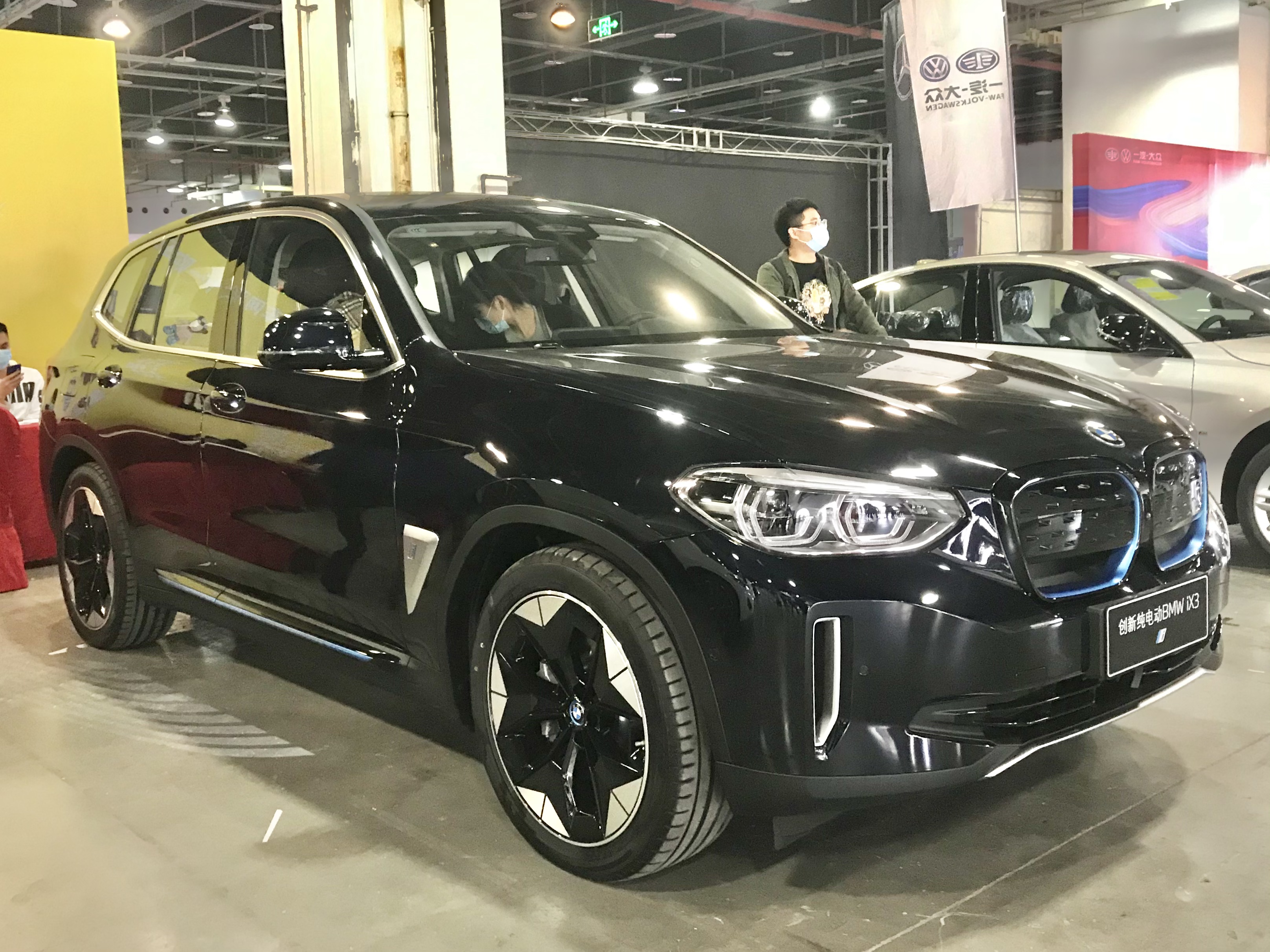
The BMW iX3 is an electric SUV made by BMW. People talk about it when they want to know how far it can go in real driving, not just in lab tests. Range can change with weather, speed, and driving style, so real-world tests are useful.
Place
Great Vines
The “Great Vines” is a tough downhill road area in California near Los Angeles. The hosts mention it because it’s especially hard on big trucks going downhill.
Brake failure means the brakes stop working properly. On steep downhill roads, that can be really dangerous for big trucks because they need the brakes continuously to stay under control.
These are special roadside safety areas for runaway trucks. If a truck can’t slow down, the design helps it stop more safely than crashing into something else.
The Grapevine refers to the steep mountain pass route used by trucks in California, known for sustained climbs and long descents. Because it includes extended downhill braking demands, it’s a tough real-world test for how well a vehicle manages grades and brake/energy management.
A “6% grade” means the road is noticeably sloped—about 6 feet of rise for every 100 feet traveled horizontally. For trucks, that kind of slope changes how hard the truck has to work uphill and how much braking is needed downhill.
“Diesel trucks” are the traditional big-rig trucks that run on diesel fuel. On long downhills they usually have to slow down using the regular brake system a lot.
“Regen” means the truck slows down by turning its electric motor into a generator. Instead of wasting all that downhill energy as heat, it recaptures some of it and also helps the brakes last longer.
Tesla sells software features as a subscription or one-time purchase. In this story, some owners say their “Full Self-Driving” purchase isn’t showing up correctly in their account, so they can’t access it.
The Tesla Model 3 is an electric car. Here, the discussion is about the software subscription owners buy—Full Self-Driving—and how problems can show up with the contract in the car’s account.
“Hardware 3” is the name Tesla uses for the computer in the car that runs self-driving features. Here, the host is saying an owner got frustrated because the promised future capability didn’t match what was expected for their car’s hardware.
This means the car would drive by itself without needing a person to watch and be ready to take over. The hosts are saying Tesla’s plans for that kind of autonomy have changed for some owners.
“FSD supervised” is Tesla’s version of self-driving that still expects you to stay alert and supervise the car. The hosts say Tesla later changed the wording, and that mismatch is part of why some owners feel misled.
“FSD beta” was an early version of Tesla’s self-driving software that only some people could get. In this segment, they’re saying Tesla later rebranded or restructured it, which matters for what owners thought they were buying.
Tesla has software that helps with driving. When it’s described as “supervised,” it means the car can assist, but you’re still expected to watch closely and be ready to take over. The episode is about how Tesla’s contract wording changed what owners thought they were buying.
Here, “subscription” means you pay each month to keep using certain software features. The hosts argue that because it’s subscription-based, owners shouldn’t assume the car will automatically reach whatever higher capability was originally promised.
This means the contract terms from 2019 were changed after people already signed. The hosts are saying that could change what owners thought they were paying for with FSD.
This is the paperwork contract you sign when you buy a car. The episode says the FSD-related terms can be included in that contract, and that changes what owners can view or download later in the Tesla app.
These are wipers made for the car’s cameras. They help keep the camera lens clean so the car’s “eyes” work better, especially when it’s dirty or raining.
A windshield wiper is the part that clears rain and dirt from the front glass. The host is saying front cameras could be cleaned like that, but side cameras can’t.
An ultrasonic wiper is a windshield-cleaning idea that uses very high-frequency vibrations. Instead of just wiping with rubber blades, it tries to help loosen and remove grime more effectively.
WLTP is a standardized test that estimates how far a car can go on a full charge. It’s done in a controlled way, so the real-world range you get can be higher or lower.
Term
air records
The hosts are talking about special range record attempts where the car is set up to be as aerodynamic as possible. Those tests can produce higher range numbers than normal driving.
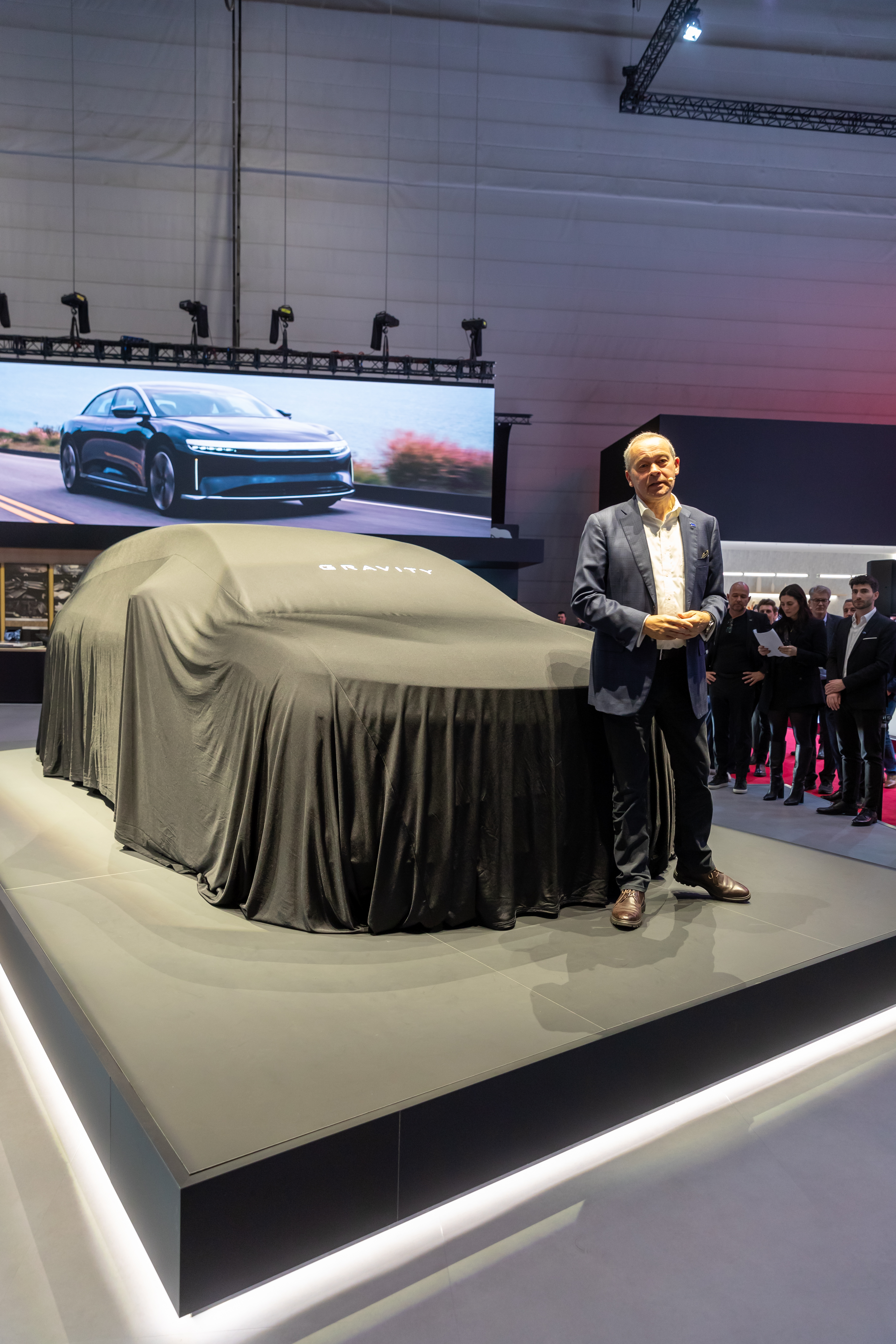
Lucid Gravity is an electric SUV from Lucid. Here it’s mentioned because it has a high estimated range number compared with other EVs in the same list.
Mercedes-Benz CLA is a Mercedes model line that’s usually considered a smaller car, not an SUV. The hosts are arguing about whether it really belongs in an “SUV” range ranking.
The hosts mention an “EQ4” while discussing which cars count as SUVs in their test. The transcript doesn’t clearly identify the brand, so it’s hard to pin down the exact model.
Term
VLA
VLA here refers to a driving system that mainly uses cameras to understand the road. The point is that it’s trying to drive using vision, even if other sensors may still be used for safety.
Brand
XPENX
Xpeng is an EV maker. In this segment, they’re talking about Xpeng’s driver-assistance system and how it uses cameras, but still keeps other sensors for safety.
“Vision-only” means the car mainly uses cameras to see what’s around it. The discussion is about whether cameras alone can handle safety, or whether radar still helps for emergency situations.
Radar is a sensor that uses radio waves to detect objects around the car. In this segment, it’s used to help with emergency braking and other safety features.
Ultrasonic sensors are the “beep” style sensors that use sound waves to detect things close to the car. They’re often used for parking and low-speed safety.
Sensor fusion means combining data from different sensors so the car has a better picture of what’s happening. Here, they’re saying you might not need a complex combined system if radar can act as a backup safety layer.
Here, “override” means the car’s safety system can step in and take over braking if it thinks a crash is unavoidable. It’s like an emergency backup that can act even if the main driving AI is confused.
Term
V14
V14 is just a label for a specific update of Tesla’s self-driving software. Different versions can behave differently, so people compare them to see which one is better.
Term
V13
V13 is another update number for Tesla’s self-driving software. The speaker is using it as a reference point to judge whether competitors are keeping up.
An end-to-end AI system means the car’s computer learns driving behavior as one integrated process. Instead of using lots of separate rules, it tries to go from what it senses to what it should do next.
A neural net is an AI pattern-recognition system trained on lots of examples. In self-driving tech, it helps the car understand what it’s seeing and choose actions.
Level 2 means the car can do some driving tasks like steering and speed control, but you still have to watch the road and be ready to take over. “Advanced” just means it’s more capable than the simplest Level 2 systems.
Here, “liability” means responsibility if something goes wrong while using the car’s automated features. The speaker is saying a company taking responsibility is a sign they’re more confident in the tech.
Term
gut's eye system
The “gut’s eye system” is BYD’s set of advanced driving features. The host is talking about how BYD plans to cover crashes for the first year to encourage people to try it.
“Navigate on the pilot” is an older Tesla feature that helps the car drive along a planned route. The idea is that it’s an earlier version of the more advanced “Full Self-Driving” system.
Term
gut's eye CBA
“Gut’s eye CBA” sounds like BYD’s specific version or package of its advanced driving features. The host is saying it’s not exactly the same as Tesla’s FSD, but it’s meant to do similar kinds of driving help.
A “payout cap” is a limit on how much money coverage will pay for a claim. The host is saying BYD won’t set a maximum limit for the covered costs during the first year.
LiDAR is a sensor that uses lasers to “scan” the world around the car and measure how far away things are. It helps the car understand its surroundings more precisely.
Car
Lexus LFZC
Lexus LFZC was a futuristic electric car idea from Lexus. The company planned to turn it into a real production EV, but they later decided to cancel that project.
A dedicated EV platform is a car “foundation” built specifically for electric cars. Instead of modifying an older gas-car design, it’s designed to fit batteries and electric motors efficiently.
Concept
company ride review
This sounds like an internal business review of the project. If leadership decides the plan no longer makes sense, they can cancel it.
“Tesla insurance” here refers to Tesla’s insurance offering being bundled with FSD usage. The key point is how accident responsibility is handled when the car is operating in a driver-assist mode.
A destination charging program is an effort to place EV chargers at non-highway locations—like hotels, restaurants, and parking lots—so drivers can charge while parked for hours. It’s different from fast-charging networks aimed at quick top-ups during road trips.
Bidirectional charging means your EV can not only charge from a power outlet—it can also send electricity back out. That could let you use the car like a backup power source or share power with a building or the grid.
“Vehicle to everything” is the idea that an EV can interact with more than just the charger. It can potentially share power or information with things like your home, the grid, or charging stations.
Term
AV charger
An “AV charger” in this context is basically a charging station you can use at a place you’re visiting or staying, like a hotel. The host is saying they look for it because it makes EV travel easier.
The Dodge Charger is a sporty car that’s built for quick driving. People might mention it in a conversation about charging because drivers often plan trips around where they can plug in and recharge. Even if you’re not charging at home, it helps to know what chargers are available where you stop.
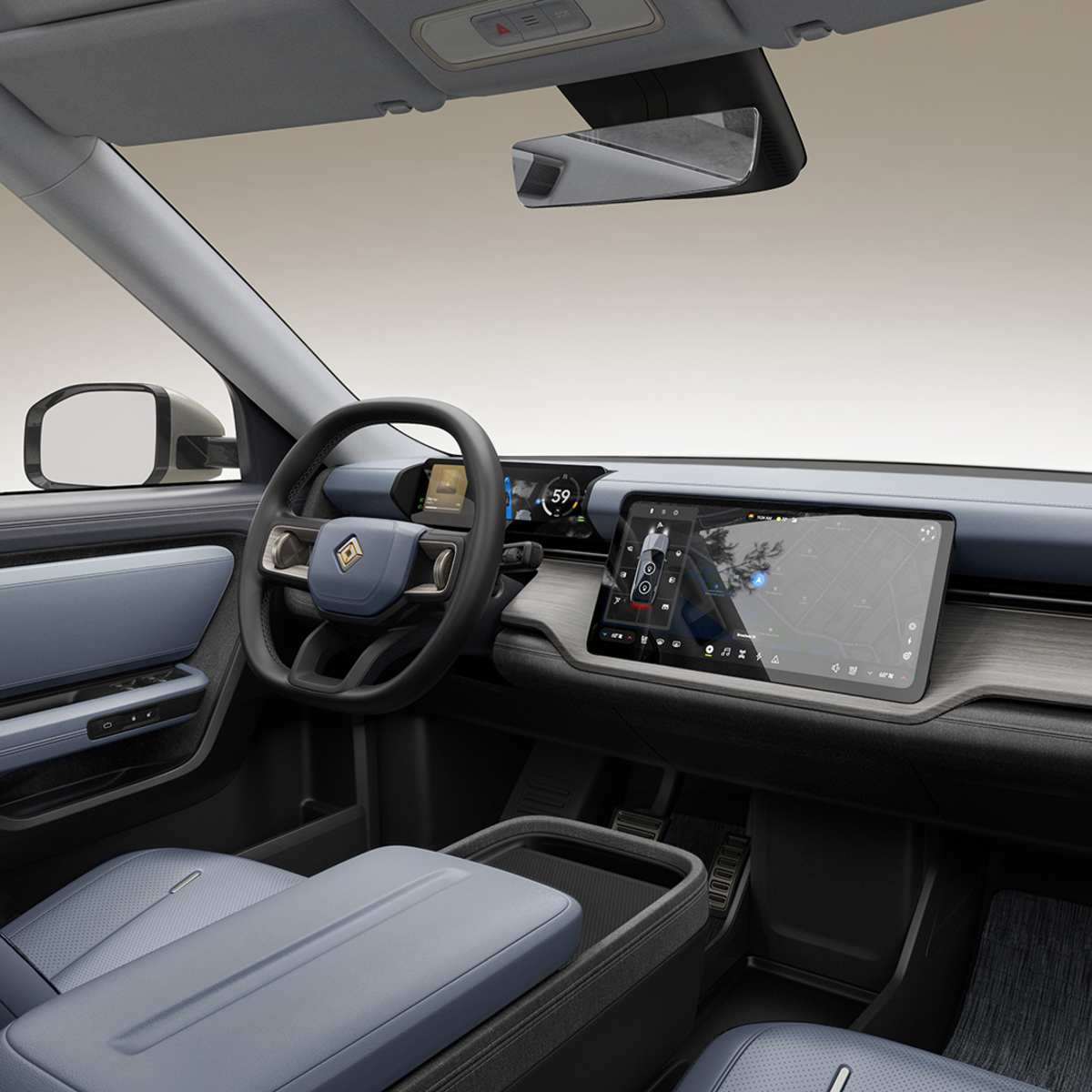
Rivian’s R1 is the company’s main electric vehicle lineup (like the R1T truck and R1S SUV). The speaker is talking about whether that lineup was making money yet, which is a big deal for any EV company trying to grow.
Rivian R2 is the next electric vehicle lineup after the R1. The host is basically asking: should Rivian move on to the next model before the current one is making money?
Term
growth margin
Growth margin is a profitability metric that looks at how much margin a company (or product line) generates as it grows—often discussed in terms of whether revenue growth is translating into improving unit economics. In this segment, the host contrasts growth margin being positive for Rivian’s R1 with the company still not being fully profitable overall.
Term
non gap
“Non-GAAP” means the company is using an adjusted way of reporting financial results, leaving out some items. The host is pointing out that the “profitability” claim depends on which kind of numbers you look at.
The Rivian R1S is an electric SUV with room for more than two people. It’s significant because it’s one of the main vehicles Rivian sells, so discussions about the company’s success and future plans often reference it. It also connects to how the car’s software and updates are handled.
Level 2 chargers are EV chargers that charge faster than the basic ones you might use at home. They’re often installed in places like parking lots and hotels, so you can plug in overnight and wake up with more battery.
Destination chargers are EV chargers at places where you’re parked for a while, like hotels. They’re meant for charging while you’re there, not for fast in-and-out charging.
Super chargers are the fast EV chargers you use when you need to add range quickly. They’re different from slower chargers you might use overnight at a hotel.
“Contract L2 chargers” are Level 2 chargers that a hotel or property pays for and manages through an agreement. That usually affects whether they’re free, how much they cost, and who can use them.
A kilowatt hour (kWh) is the unit of electricity. When you see a price like “50 cents per kWh,” it means you pay based on how much energy your EV takes while charging.
Term
Tesla has some cool features, some cool connectivity features
Tesla’s “connectivity features” are the app and in-car tools that help you find chargers and manage charging. It’s basically software that makes charging less of a hassle.
Level 1 is the slowest way to charge an EV, usually using regular household power. It’s better than nothing, but it won’t add as much range quickly as Level 2.
LIVE
We are live for a new episode of Data Check Podcasts. I am Fred Lambert, your host, and
as usual, I'm joined by Seth Windram. How are you doing, Seth?
I'm good.
All right. Microphone is in. We're locked in, people. What are we going to talk about this
week? No sponsor this week, no sponsor. So I'm going to skip you the ads this week.
We're going to talk about Tesla Semi that went through the Grave Vines, one of the
tougher situations that can get for heavy trucking, and apparently it aced it. So we're
going to talk a little bit about that. We're going to talk a little bit about Tesla changing.
Sorry, I think it's interesting. Being a little bit sneaky, sneaky Tesla with
retroactively changing the FSD contracts to people.
Yeah, yeah, we got to talk about that. It's a wild one. We're going to talk about camera
wipers on Tesla vehicles. That's interesting. The BMW iX3 getting a real world range test
out of Norway and impressive results. Expang, we talked a little bit about just yesterday,
I had a cool interview with the head of AI, Mr. Shaming Leo, the head of AI at Expang,
and I'm going to talk a little bit about that. BYD is doing something very interesting with
their FSD competitor in term of liability. So we're going to discuss that too. And then Toyota
putting the plug on one more EV unfortunate. All right, let's start with the Tesla Semi.
So if you've ever been to the Great Vines, north of Los Angeles in California,
a very common site is a lot of trucks just slowly climbing on the side of the road on the right
lane is it's extremely difficult on on heavier vehicle. And yeah, they can slow down traffic.
And it's just it can be a dangerous situation on the way down also, because you know,
brake failure happened. And it's one of the places where you have you see a lot of those
what they call them the place where the trucks literally crash into like a bank of sand. There's
a name for that. But they're there are embarkments designed specifically for trucks to just you
know, if you're a brake brake, you have to go through that. Yeah, the Great Vines are
run array RAM. Thank you, Dan. And the yeah, it's it's one of the toughest tests out there 4000
feet of elevation. And so a company didn't know them covenant and separately common logistics
are pretty one of the biggest trucking companies in the US, one of the biggest logistic company
they have thousands of trucks. So through one of their customers, they were doing a test that
this is my over the last few weeks, specifically in the Great Vine and VP of sustainability
innovation, Matt, make Leland said that the vehicle it was amazed at the performance that
this is a mine felt a level of confidence that was hard to match in a diesel truck.
So the did they share the efficiency result? They were supposed to share more results in the
coming weeks, but we haven't seen them just yet. So there's just a early early result so far,
but it said that they run through a 6% grade for five miles. So that's the thing with the
the grades are not, you know, some of the grades are pretty steep, but they also very long. So
6% grades not too bad, but still, you know, decent, but over five miles it adds up.
But then on the way down to the biggest advantage is like, you have all that region that just takes
over. So yeah, it's one of the toughest tests to see that this is my just a sit it's very good news
that for the vehicle. We're kind of getting little drips of information when it comes to this
semi because it's supposed to be in production now for a couple months and volume production,
because obviously it's been like low volume productions for three years now. But you know,
we see it getting in the hands of a few more customers more in those type of pilot testing
programs. But it's still it's bearing nothing. And I'm hoping to see maybe like a few hundred
trucks maybe delivered in the second half of the year that would be I think that would be reasonable.
Yeah, that'd be good. One other thing about rejenning down hills, especially as big as the
grapevine is like 11 of those trips will just like destroy some brakes. Like because you know,
diesel trucks have no other way to stop besides, you know, old fashioned brakes. And that's what
goes out all the time. So the fact that Tesla can just regen all that they don't even need to worry
about brakes, that's saving them a ton of money on brakes as well. Yeah, even just the maintenance.
After that, like you go get your maintenance, that's downtime downtime is money you're losing. So
yeah, you're right. It's another win right there. All right, that was a big article this
week that the release where over the last few weeks to months, we received reports of
people having issues exiting their full self driving contracts. So that's that's not exactly
you have heard that before. There's there's ways around it if you if it doesn't work necessarily
in your your Tesla account online. Sometimes it works with on the app. Sometimes it doesn't
burn either. So there's been a growing issue with that. But we had a Tesla owner Oliver
abcarious reached out to us and he noted another problem that goes a little bit beyond just not
be able to access a contract. So Oliver is actually is a 2018 model three owner. So hard
word three. And kind of got fed up with the hardware three situation with Tesla.
With the latest admission that unsupervised self driving will not happen on other word three.
And with the, let's say the lack of clarity around the remedy to the situation from Tesla,
the idea of like the ritual fits and everything without any concrete plans.
And, you know, the big idea that Tesla will give you discounts to upgrade and things like that.
He just he wanted to go for a refund. So start building his refund case for full self driving.
He goes into his dislike and looks at a contract. And he has a 2018 model three,
but he bought it as the aftermarket. So you can buy it as a software update
in August 12, 2019. So he looks at his dislike on and first thing that you notice is that his
contract for it as the is not called full self driving supervised in parentheses,
August 12, 2019. So then he clicks on it and you cannot even access it. You cannot even get
access to his contract. But the more egregious thing here is that
the Tesla didn't use the term supervised in 2019. That that term was introduced in 2024
with Tesla FSD. And this left move from like the FSD beta to FSD supervised wanted to remove the
beta no said that and slowly over the course of 2024 2025, kind of reintroduce full self driving
now as you're not really buying unsupervised self driving in the future, you're buying what it is
right now, full self driving supervised. And yeah, that's it now. Now obviously, it's a subscription
only so it changes even more where you don't have any expectation of future capability in the system
because you're paying monthly for this. But that was not the case in 2019. So 2019, it was full
self driving capability you're buying. And in the actual notes of the system, it will tell you that
I was promising you on supervised self driving in the future to software update, depending on a
regulatory approval and all that. But yeah, the promise was there and the name was full self
driving capability. Now it's been retroactively changed on the 2019 contract to supervise. And
Oliver is not alone in that situation. He noted that his own wife's car, which is a 2020 Molo Y
as the same issue. And actually, the similar issue but not exactly the same because his wife bought
the car with FSD, there's not a separate full self driving contract. The contract is in the
motor vehicle purchase agreement. And that now that isn't what is not accessible that she cannot
download. She can download all the other things just like Oliver, by the way, you can download
the other document that you see here if you're watching on the screen, just not the full self
driving one. In the case of his wife, she can download everything except the motor vehicle
purchase agreement, which happens to be the one to include the full self driving reference because
it was purchased with the vehicle rather than after the fact. Now a bunch of we verify that with
a bunch of other owners, most of them have the exact same issue. Some of them are ever if they
go through the app are still able to access it. The supervisor has been added there. And only the
line item in the contract says capability. So yeah, this is this is a weird one to see the
lease because you know, back editing signed contracts is kind of illegal. It's kind of
getting into the fraudulent realm of things. And it's also it's just it's just going to be a
terrible look at for Tesla. In court, if any of these case actually gets to court, because we've
seen similar, similar examples of this at this in court, where the the lawyers for the plaintiffs
specifically use Tesla, you know, changing its its its verbiage around these contract changing
terms as an example of Tesla not really wanting to to deliver on the promise. And this is probably
the most flagrant example of that. So I'm sure that we will see version of that in court in the
in the future. Moving on, the other Tesla item I wanted to discuss today was the new patent
has been granted for Tesla. Tesla has been granted a patent for camera wipers for for self driving
vehicles. So it's something that we've been talking about for a long time that's been missing in a
Tesla stack or for autonomy is that, you know, the cameras get dirty. And if you want to be
truly autonomous and not rely on someone being inside the vehicle and being able to do these
things, you need to find a way to clean those cameras. And for the front facing cameras, you
know, you have the same solution that is human does you have the windshield wiper. But for the
side facing cameras, you just don't have that. We've seen Tesla finally addressing the issue
with the road taxis in Austin, we've seen them having washer jets that would shoot up water on
the camera. So that was, you know, a solution. But now this is also another lens cleaning solution
that the actually were granted the pattern. So this is not a patent application. This is a full
pattern granted, where you see the camera enclosure here. And there's a wiper directly
on it with, yeah, you see a little bit better here. There's a wiper on it directly with a jet
link to a dispenser fluid dispenser in the back, where it's basically just a tiny little wiper
with washer fluid for your camera lens specifically designed for the side cameras on Tesla vehicles.
Um, honestly, decent technology that looks like it would work. I'm glad that they're working on this.
But the problem is just one more doubt for Tesla owners that have been promised for
sub driving is like, okay, we thought that all the hard work necessary to achieve autonomy was
supposed to be in the course in 2016. We know that the computer was on the case, we know that the
camera was on the case because that's that's the thing that people are forgetting with all the
three stuff. Now, in the last admission, because there's been a couple of mission,
Elon was clear that it's actually not just the computer, the problem, the compute power inside
the car, the hardware three cameras also lower resolution and now does believe that you need
the higher real estate solution to reach this. So to reach on supervised autonomy.
And so these need to be replaced too, we know that's a little bit too complicated. And especially
adding this here, which, you know, you have the
container for the fluid that's attached to this, but this needs to be then attached to
like a bigger fluid container that can be refilled because that's just not practical to be refilled
here. So we've seen that with other solution like the Xiaomi, for example, as as these
washers on the cameras, the YU seven, and it's directly linked to the
washer fluid in the windshield. So you just have to replace it to refill that and it
fills everything. But all these connections needs to happen. There's just no way this is
retrofitable in an existing vehicle. It's just not going to happen.
Wasn't there a patent for like an ultrasonic like
wiper kind of thing? If I remember correctly, it was actually a laser system. I don't know if that
was ever granted that application was like a few years ago. But yeah, it was the Tesla was
talking about cleaning up the windshield with a laser system mounted on the front of the vehicle.
I think you switch microphone maybe again. Yeah, now I hear you a little bit better.
All right, we have moving on from Tesla, we have a few more news items to discuss and then
we can talk to you guys. So I see a few people are in already. But if you guys have questions
for us, you can put it in the comment section below. It can be about any of the topics we're
discussing today or any other topics in the EV world that you would like or take minor or
set stake on. So you can put in the comment section right now live on YouTube, Facebook,
X and LinkedIn. All right, there's the annual Norwegian NAF test. What's NAF? Again, I keep
forgetting it's the Norwegian Association Automobile Federation. They do these yearly,
well by yearly, a summer and then a winter test that are always super useful for each vehicle to
try to get a mainly comparing the real world range with their WLTP. And in this year's test
that was released on Motor Magazine this week, we got a few new entrants and the biggest one,
the most surprising one was the BMW X350 X drive, which based on spec only, we found really
impressive. It looks to be one of the longest range SUVs that you can buy out there. And
while it didn't break all the records, mainly not the elusive air records at 517 miles, 833
kilometers, it did break the SUV record now with 485 miles of range, 781, which I think is also
longer than their WLTP. Do we have the WLTP? No. But here's a top 10. So top 10. The second was
the Lucid gravity. Also, Lucid still always on top when it comes to efficiency, 720 kilometers,
447 miles. Mercedes is also not too far behind with the CLA at 675 and the GLC at 665. You have
the Chinese automakers up there too with X9 at just over 400 miles, the Polestar 3 at 373 miles,
601 kilometers. Yeah, Mercedes is like three times in there on top 10. That's really good.
These SUVs have a pretty decent range. The CLA is considered an SUV.
That can't be right. CLA is like a sedan. Yeah.
Well, is there an SUV version? I don't think so. It's not like the EQS.
Yeah, everything else is an SUV in there. No, the EV4, the EV4 is not an SUV.
Well, that test was just for SUVs, right? Because otherwise, there would be
other cars in the top 10. That makes no sense. Maybe we just type it in there.
My good job on the MWU. We've been impressed with the IH3 so far. It's the next gen from the MWU
is very interesting. All right. Yesterday, I had a very interesting talk. If you're interested
in XPENX AI effort, I had the opportunity to talk to Xiaoming Leo. He's the head of XPENX AI effort.
He was in the US yesterday, well, this week at CVPR, the Computer Vision Conference,
and it was a big deal for XPENX because they were right back to back after a shock from Tesla that
was there too doing a talk. Waymo President VP of Vision was there too. It put XPENX at the
same level to them and they were really excited about that. They wanted to give me some time with
Xiaoming and pick his brain a little bit. It was really interesting talk. I put the video on
YouTube on the electric channel if you want to check it out. I have a little summary of it on
Electric too. A few interesting things that I thought were worth mentioning from that is that
Tesla fans often use XPENX as a validation for Tesla's vision-only approach because XPENX has
done the same and quickly we're able to catch up to Tesla with FSD capabilities through their VLA
system. That's true. XPENX is mostly aiming to a vision-only system, but at the same time,
I was testing out their vehicles in China a few months ago and they still have a radar on them,
still have ultrasonic sensors, things that Tesla removed. I asked Xiaoming what's the
situation around that? Do they do sensor fusion? Did they use these different sensors for?
The answer was very interesting where the AI driving system is an end-to-end vision-only system
much like Tesla. There's differences, but the core idea is the same. The radar and the ultrasonic
sensor are still used for the active safety features. Automatic and emergency braking,
for example, a big one, still use radar. The way they feel about it is the way the system treats
human drivers should be the same way that they treat AI drivers, in this case the VLA system,
the FSD competitor. The radar, the AAB system, using radar, if it detects an inevitable crash,
it will override the AI system and applies the automatic brakes. The thing that should be pretty
obvious is that's the better system. That makes a ton of sense. It feels
like Tesla was definitely too early to remove that from their vehicle and relies entirely on vision.
It seemed very short-sighted to me in that very moment. I asked him, then, then,
okay, do you think there's a world where the vision-only AI system gets so good that you
actually don't need radar and other sensors for the active safety features? He was quite honest
with me. He was like, I don't see that. Maybe it can be perfect, but he doesn't think it's
possible at least in the near future. He thinks that the system will always make mistakes. If you
have a radar system that can operate in different conditions and also have a clearer, long vision
in terms of static objects, specifically at high speed, this is super useful to have.
It doesn't need to be, you don't have to rely on a complicated sensor fusion system. It's just a
separate feature, active safety feature on top of the AI that can override it. That's the ton of
sense to me. I also asked him, if you're following the X-Pen stuff, you might have heard last year
when he made this famous bear, Shamming, with Xiaopang, the CEO of X-Pen, made a bet that if they
don't catch up to Tesla Fsd by the end of August, 2026, Shamming's going to have to streak naked
on the Golden Gate. I asked him, hey, they were coming up on two months now from the goal.
How do you feel about it? He thinks he doesn't have to, because I might have misunderstood
a little bit the bet. I thought the bet was specifically like beat Tesla V14, but apparently
it was to beat Tesla Fsd at the beginning of the year, which was V13. Pretty convenient.
And honestly, having tested the VLA-2, I think that's fair. I think they've got up to be 13 pretty
well. I think they are pretty much in the ballpark of V14. So I think he's fine on that front. But
they also exclusively gave us the news that they are spending 300 million RMB, over 40 million a
month just on training along their system, their neural net, their end-to-end AI system.
That's impressive. It's a lot of money, but obviously, if you've been following the AI
spending of most big companies these days, it's dropping the water really. So I think the
thing to highlight here is that they've been working more seriously towards this in the last
two years or so. Spending roughly half a billion a year, they were able to catch up to Tesla Fsd.
I think it builds up to my point that I think these advanced level-2 system are going to be
completely commoditized by the end of the year. I think Rivian, obviously, is working on its own.
In China, you have BYD, XPAN, Xiaomi, you have all of them just working on similar stuff like that.
I don't think these prices are going to hold up for that. I don't think a hundred dollars a month
is going to be sustainable.
Not when it's commoditized.
No, and not when BYD is doing this on top of it all. That was the big news this week. Last year,
we made a big deal when BYD took responsibility for the first time for its self-parking system.
We thought this is a great direction. I even said back then that I think that going forward,
probably the biggest benchmark, the biggest proof of milestone, of improvement in
advanced driver system, is going to be taking liability for it, being responsible for it.
Them doing that for the self-parking system, the first step. Now this week, they went further than
that for their gut's eye system, but more specifically for the navigate on autopilot
feature. That's the closest one that we know. Your sound is cutting out consistently. Am I cutting
out, sir? Maybe it's me. Sounds okay to me. Yeah, I've been soundifying too. That's strange.
Navigate on the pilot. Is there FSD? Tesla used to have a feature called navigate on the pilot,
which was a predecessor to FSD. BYD has an equivalent in China under its gut's eye system,
which they have gut's eye CBA with a different level of capability. Now they announced that
for the first year of utilization, they're going to take full responsible liability for them.
So BYD will cover all zero economic losses the vehicle is liable for. So refer to the owner's car,
third party property damage, or the other people's car, or you're ramming to wall or something,
and personal injury. They will cover it all with no payout cap, or no need to get separate
insurance on top of it. So with your current insurance system, they will cover everything for
the gut eye A and B, so the two top systems. I think those are the ones that have the
lidar in them. Yeah, this is great progress. Now why only the first year? I would assume that it
is kind of a temporary solution just to get people to use the features, to get people
dip their toes in them. I think in the future, in the more mid to long term future,
they're going to want a specific insurance build around that. So that's something that Tesla has
kind of a lead on in the US at least, where they have their own insurance system and they do start
to include FSD more and more into it. But they don't take responsibility for FSD. Even if you
have Tesla insurance on a Tesla vehicle using Tesla FSD and paying lower, if you do crash on FSD,
Tesla's going to make you pay for it. That is a guarantee based on historical, the recent examples
at least. But DYD, at least for a year now, it will take care of it. So it shows great confidence
for them. Because this has been crashes. I talked to them last year about it. I think it was two
months after the launch, the liability for self parking. Have you guys received some claims on
that? And they're like, yeah, we got a few. Which is not surprising. I mean, there's millions and
millions of DYD now. With the God's eye, it's probably maybe low millions, but still. Yeah,
take any number that we're doing times four. Exactly. All right, we're going to finish on
a little sad news coming from Toyota, but then we're going to jump into the comment section
with you guys. So if you have a question for us, is it data? We'll get to it in just a few seconds.
So this is the Lexus LFZC. It was on Villa a few years ago, the Japan mobility t-shirt. It was a
big hit. People love the design, love the concept. It's just a concept though. But it was one of
those concepts that we did report on because Toyota or Lexus was very adamant that we actually
bring this to production as soon as 2026. We have probably not exactly this, but something close to
it. They're like, this is not the production version, but it's not going to look too much
different than this. We're aiming to bring this to production. It's going to be the next dedicated
platform for electric vehicles for Lexus for the luxury brand of Toyota and bring all electric
vehicle on a ground up basis designed from the ground up. But this week, they announced that
they killed it. So we decided to cancel the LFZC development project as part of a company
ride review of the vehicle development project. The person said the conversation of the specific
development project does not mean that we have given up on developing next generation
VEVs. No, but it is a pattern that we've seen too often, unfortunately, and including from
Toyota. They follow the winds of politics and they've never been super excited about battery
electric vehicles in the first place. They prefer the plug-ins and they floored it with
the hydrogen for a while. So yeah, a little bummer from Toyota. That would have been an
interesting looking car to see on the road, but oh well. Yeah, look cool. All right. What did the
comments say? All right, Dan overseas. Up is the Tesla direction, down is the Nikola direction.
Talking about Tesla Semi there. Yeah. All right. Haven't heard of Nikola in a while. That's
last one in the past. My bike blew up today. I think you're in the wrong podcast, but
we'll hear you next week. Kia up 133% EV sales hybrids, 179% up Equinox EV, hard to find on the
dealership lot. Yeah, it's weird when the cost of gasoline doubles, like EV sales go up. It's
bananas. We've been seeing it quite a bit lately. All over the place, EV sales are through the
roofs. It's hard to secure one. Hopefully it lasts. Hopefully people don't have short memory and
always put the context here. I'm not talking about the war. I'm not talking about gas prices. I hope
these both war stops and the gas prices come down, but I hope that it stays in the mind of the buyers
that like, hey, these things happen and then they happen, they hurt bad and there's an easy way to
get around it in this driving electric. Yep. All right. Next one. What do you to think about
cattle's announcement of upcoming lithium air batteries with a 12 kilowatt per kilogram
theoretical maximum energy density capability? It seems to be more than just R and D hype.
I would just say that our battery BS detectors are very finely tuned. Everything that any claim,
even from cattle, is heavily scrutinized. I know he's talking about theoretical here,
but when you say like the bullshit meter of battery, like 12 kilowatt hours per kilogram,
like going ding, ding. Have you heard about this?
Because I've not lick some hair. I feel like it's like metal hair batteries. I've been
right realize for a long time. I feel like in the early days of electric, we're talking about
it already like 2015, 2016, but I haven't heard about them for a while.
Yeah, it's very interesting. So that sounds good for like an airplane application, like if you're
trying to build an electric airplane, having 12 kilowatts for every kilogram is amazing. But for
cars, that probably isn't quite as important. And for stationary storage, it's almost pointless.
Yeah, you're right. You're getting to a level now. That's
it's like why you start, you need to ask why on this, there's other advantages than energy
densities. Obviously, that's as a case, but right now with five more than R and D or both
are linked anyway. Greetings out there. They have Jake breaks that help a lot. We're talking
about the semis I think at this point. Yeah, that's right.
We found out about the sound. So my house renovation project includes a new Tesla solar roof.
Sadly, it has taken forever. One of the many issues is sloppy work,
which caused the town building inspector to fail inspection.
So you got the roof installed. And you think that the roof itself is what led to
or the installation of the roof led to the building failing your inspection.
Okay, well, I'd be interesting to hear about this. You can always email me Antonio
at Fred at like Trek.co. I'll be curious to hear about your situation, sorry that you're
experiencing that. All right, this was a bold move by BYD. Tesla could make a decent business
case of bundling monthly FSD supervised and Tesla insurance with Tesla taking responsibility for any
accents while using FSD. I think we've talked about that possibility, maybe even Elon's commented on
that. Yeah, but I mean, recently they've been doing moves to reduce your insurance cost
through using FSD more and they had this deal with Lemonade too that's doing the same thing.
I've heard, you know, mixed reviews about both of these offerings. But yeah, there's definitely a
case to be made like if you're very confident about it and do it, bundling the two is not a
bad idea. But I think you need to take responsibility for any accident while using FSD while doing that.
And Tesla doesn't seem interested in that whatsoever right now.
I'm hoping you all visit one of the EOL European one wheel races. I would love to see more news
coverage on their battery engineering. Again, different podcasts, but those one wheel races
are crazy. I don't know if you've seen those. No, they're basically like unicycles.
Yeah, I've seen that people like writing them like in full motorcycle. Yeah.
Yeah, it feels like something that Micah could get into.
We don't want to lose Micah. I mean, as a reporting situation, that's racing.
All right, in theory, we'll be fixed Monday and it'll be online for a few weeks if Seth wants to
take a look. He lives driving distance. He's more than welcome. I will welcome suggestions you might
have. Are we talking about again? That's the solar roof. Yeah. You know,
there's one in Crotonon Hudson as well. I just saw the other day. So yeah, we'll take a look at that.
Yep, the podcast. Have you seen a Cadillac X Fairmount deal? They're offering mystic rides.
Huh? Fairmount? Is that a hotel chain? Yeah, it's the, you know, super fancy hotel
chain. Yeah, good idea. Back in Quebec. Yeah, we've seen those deal now and again like these fancy
hotels. They'll give, I don't know if they get rides that you rent one at the hotel maybe or
something like that, but yeah, that makes sense. All right, Roadster demo. Yeah, they didn't include
that into the podcast because I literally posted it like a few seconds before we went live, but
there's the information that came out with a new report just now that says that the talk to four
people familiar with the matter that says that the demo demonstration, the unveiling of the latest
Roadster has been older bread there said delayed from, you know, it was supposed to be now.
Obviously the latest was like end of May, early June. Now it's apparently end of August or later.
And I mean, at this point, that means nothing like whatever like who cares. But there's a little bit
more information in the report that they say that one of the reasons it's being delayed is that
apparently they are really working with SpaceX to get the cold air thruster on this, which
if that's the reason why they're not delivered, and it's not obviously
I think they just didn't care and they don't want to. Who wants to start a vehicle program where
you owe like 200, 300 million dollars worth of vehicle to start with? It's just not,
I mean, you should do what you said you were going to do, but it's like, I think that's
going to push that thing off as far as they can. And that's the main reason.
But the one that they are sort of using right now is that shortly after the first Roadster was
unveiled, Elon talked about making a flying version and talk about colder thruster working
with SpaceX to have, you know, a compressor inside the vehicle that would, you know, take
ambient air compress it and when the driver wants it can let go of some of it through
thrusters all around the vehicle to add downforce or to add lift, I guess, so you can literally
hover the vehicle into the air for a few seconds. It's ridiculous. Like it would be super loud.
I don't, you won't really be able to use that on the road, on public roads. It would be like for
a track kind of situation. Not ideal in any way, shape or form whatsoever. And if the reason that
it was delayed, it's dumb as hell. But apparently it's still something that they want to do.
And they mentioned a dumbed down version of it. So they would do it and then they would do also
like a regular Roadster, I guess. Which I would also appreciate. I mean, yeah, if you do ever
get one of your free ones, they would, I think you would go with the non-SpaceX version of it,
I guess. Well, I mean, I would probably sell, I don't know, whatever, we'll figure it out. I don't
need SpaceX IPO to get Roadster off the ground. I think that's sort of tongue in cheek. And then
finally, PY Harpens says, do you think that charging at hotels is lacking? Yes, rent Fred,
will you interview somebody at GM Energy? I think they should start a destination charging program.
Well, we did interview someone at Geminergy just a few weeks ago. Yeah.
But it was more about the vehicle to everything situation, bidirectional charging.
Yeah, I mean, to be honest with you, I don't know if it's lacking at hotels now.
Or at least we've been driving you and I electric for so long. And when choosing hotels,
I always look if there's an AV charger is there. If I'm driving, obviously, it's something that's
become like second nature for me. And it used to be difficult. Now it's just not that difficult. So
I don't know if it's just relative to me, like finding it more difficult a long time ago that
now it's easy, but probably, you know, probably is not as it could be easier. Let's put it like that.
But I see a ton of these deals all the time. I think it makes a ton of sense.
All right. Last question is frequent traveler 78749. Aren't you worried that the Rivian
starts R2 without having been profitable with the R1 yet? I think they actually were
like non gap accountable last quarter, right? For a few quarter, they were growth margin
positive on the vehicle, not profitable as a company just selling the R1s. Then the Volkswagen
deal and the software revenue started coming in and that put them in the black for a little bit.
But I think I don't think it's fair to say that the R1 is a profitable vehicle program.
So it's fair on that front. But obviously the profitability Tesla was not also profitable
just with the more SNX. They were a higher growth margin positive on the SNX than the
Rivian is with the R1s. That's fair. But not profitable as a company. You need the scale to
be profitable as a company. And that's what R2 is bringing. So am I worried? The Rivian is not out of
the wet sand like they are. They still have a long road until they own smooth asphalt and just
going full throttle. But a lot of bad things can happen between now and then. But I think they're
doing the right direction and everything we've seen from the R2 right now is just a killer program.
So as long as they can make some money on it, I think they're going to do well because this
thing is going to sell. Honestly, the main thing that I'm worried about when it comes to Rivian
is the timing of the launch. And I don't know if you guys see the markets today, but
if the bubble burst, it can get a lot worse than that. And then new car cells of all kinds
kind of crash during those times. So that timing situation can get worse. But I'm hoping for the
best. What do you think of the theory that everybody's pulling out of their Bitcoin to buy
SpaceX IPO? Elon Musk, one thing is a genius as is like he knows his audience.
If you're buying Bitcoins at $60,000 of Bitcoin, you're probably in the market to buy SpaceX at
$2 trillion valuation. So that makes sense. It makes sense. But obviously, I think there's bigger
there's definitely room to be worried about when you see there's an equity rush right now,
you see like Google raising $80 billion, you see entropic rushing to market. I think Meta just
today, they like a week after seeing Google raise so much money, they're like, Hey, we need to tap
the market to for like a quick $10 billion. Like all of that is happening at the same time.
Right. Normally that that stream like, let's, let's fill up our pocket as much as we can now
before it gets ugly that there's a lot of that going on too. Maybe I'm wrong. Hopefully I'm
wrong. Because I think it would be a hard time for a little bit, but we'll see. I mean, it's not
if it's going to happen. It's when it's going to happen. So on this, unless the singularity
happens before all of this and fixes all issues, that's literally what they're chasing. Like right
now is like, let's just, let's just go as hard as we can and hope that the singularity happens
before it ends. But AI, I'm not one of those AI doomer that says like, it's not impressive. It's
super impressive technology. I use it all the time for like transcript and everything like that.
It's incredible for kind of all data mining and all that. It's incredible, but damn man,
does that mean that it can solve all the world's problem within a few years? I don't know. I don't
think so. I already got a few more. Mount Kisco has a lot of level two chargers in town to get
online. They're public parking lots soon. This is in the context of destination chargers charging
as much as super chargers like hotels and stuff. Most of my overnight EV charging has been included
for free. Some hotels are free. That's the thing. It's, it's a wide variety of situations at hotels.
Dan overseas says most hotels I've been to have contract L2 chargers at 50 cents per kilowatt
hour. That's super. Yeah, that's steep. We're still in this gray zone that some hotels just like
don't even care about it. It's just anyone can just come in and plug in at any time.
But more and more I think are figuring out that like, oh, I do, you're,
it's a valuable service that, that, that you're providing to people. So I think they probably
should charge, especially charging also helps in, in terms of, you know, making sure that the spots
are being used by people charging and hotel customers too. I think that makes sense. But
yeah, Tesla has some cool features, some cool connectivity features, specificity for that,
that makes them a great solution. But yeah, there's, there's other options on there too, obviously.
All right. Last thing is make sense. Thanks for having tough looked up some Paramount got 10 Tesla
destinations, while most don't have powerful and not enough chargers. So we'll need to upgrade to
recharge the sticks and escalate. Well, those are getting the next two. So you can charge there
too. But I guess what you're saying is that probably like bigger batch pack takes a little bit
longer hotels. That's the thing you have overnight charging or any kind of buy with a level one
sometimes. Yeah, yeah, it's better than nothing. But yeah, level two will get you
there overnight. No problem. All right. Well, that's it for us. It's a little bit. Yes, it's a
little bit shorter episode this week. We didn't have that much news, but that gives you the time
like the audio version of the podcast I did the special episode with the expung I think is not
going to be out until Tuesday, I was told. But the YouTube version is on right now. It's on the
channel. If you want to check that out. Shaming is shaming is a great guy was very interesting to
talk to very knowledgeable AI and the physical AI. So if you're interested in that stuff,
I would definitely check it out. That's it. Thanks for listening. See you same place and time next week.
About this episode
Grave Vines becomes the proving ground for Tesla Semi, where the hosts highlight why steep descents are dangerous—especially when “brake failure happened”—and how regenerative braking can reduce brake wear. The conversation then shifts to EV range testing, with real-world results beating WLTP, plus a debate over SUV classifications. Tesla FSD contract wording and supervised access lead into sensor strategy comparisons versus Xpeng, and even Tesla camera-wiper and hotel-charging practicality.
In the Electrek Podcast, we discuss the most popular news in the world of sustainable transport and energy. In this week’s episode, we discuss Tesla Semi nailing a big test, BMW iX3's range impressing in a new test, Xpeng catching up to Tesla, and more.
As a reminder, we’ll have an accompanying post, like this one, on the site with an embedded link to the live stream. Head to the YouTube channel to get your questions and comments in.
After the show ends at around 5 p.m. ET, the video will be archived on YouTube and the audio on all your favorite podcast apps:
We now have a Patreon if you want to help us avoid more ads and invest more in our content. We have some awesome gifts for our Patreons and more coming.
Here are a few of the articles that we will discuss during the podcast: