Tesla Semi nails big test, BMW iX3 range impresses, Xpeng catches up to Tesla, and more
About this episode
Grave Vines becomes the proving ground for Tesla Semi, where the hosts highlight why steep descents are dangerous—especially when “brake failure happened”—and how regenerative braking can reduce brake wear. The conversation then shifts to EV range testing, with real-world results beating WLTP, plus a debate over SUV classifications. Tesla FSD contract wording and supervised access lead into sensor strategy comparisons versus Xpeng, and even Tesla camera-wiper and hotel-charging practicality.
In the Electrek Podcast, we discuss the most popular news in the world of sustainable transport and energy. In this week’s episode, we discuss Tesla Semi nailing a big test, BMW iX3's range impressing in a new test, Xpeng catching up to Tesla, and more.
The show is live every Friday at 4 p.m. ET on Electrek’s YouTube channel.
As a reminder, we’ll have an accompanying post, like this one, on the site with an embedded link to the live stream. Head to the YouTube channel to get your questions and comments in.
After the show ends at around 5 p.m. ET, the video will be archived on YouTube and the audio on all your favorite podcast apps:
We now have a Patreon if you want to help us avoid more ads and invest more in our content. We have some awesome gifts for our Patreons and more coming.
Here are a few of the articles that we will discuss during the podcast:
- Tesla Semi tackles the Grapevine with a loaded trailer, leaves fleet operator ‘amazed’
- Tesla retroactively added ‘supervised’ to FSD contracts owners signed years ago
- Tesla patents camera wiper for self-driving — resulting in more doubts for FSD owners
- BMW’s new iX3 drove 485 miles on a single charge, the longest-range EV in NAF’s test
- Xpeng spends $500M/year on AI training to beat Tesla FSD
- BYD will pay for crashes on its FSD competitor, something Tesla never has
- Toyota pulls the plug on one of its most important EVs
Here’s the live stream for today’s episode starting at 4:00 p.m. ET (or the video after 5 p.m. ET:
https://www.youtube.com/live/Ruhm-twKcmE
Tesla Semi
"So I'm going to skip you the ads this week. [28.7s] We're going to talk about Tesla Semi that went through the Grave Vines, one of the tougher situations that can get for heavy trucking, and apparently it aced it."
The Tesla Semi is an electric big rig (heavy truck) made by Tesla. The hosts are talking about it handling a tough downhill route that’s hard on brakes and can be dangerous for heavy trucks.
Tesla Semi is Tesla’s heavy-duty electric truck, built for long-haul freight and fleet operations. In this segment, it’s discussed tackling a notoriously difficult downhill route (“the Grave Vines”), which matters because heavy trucks stress brakes and traction more than passenger cars.
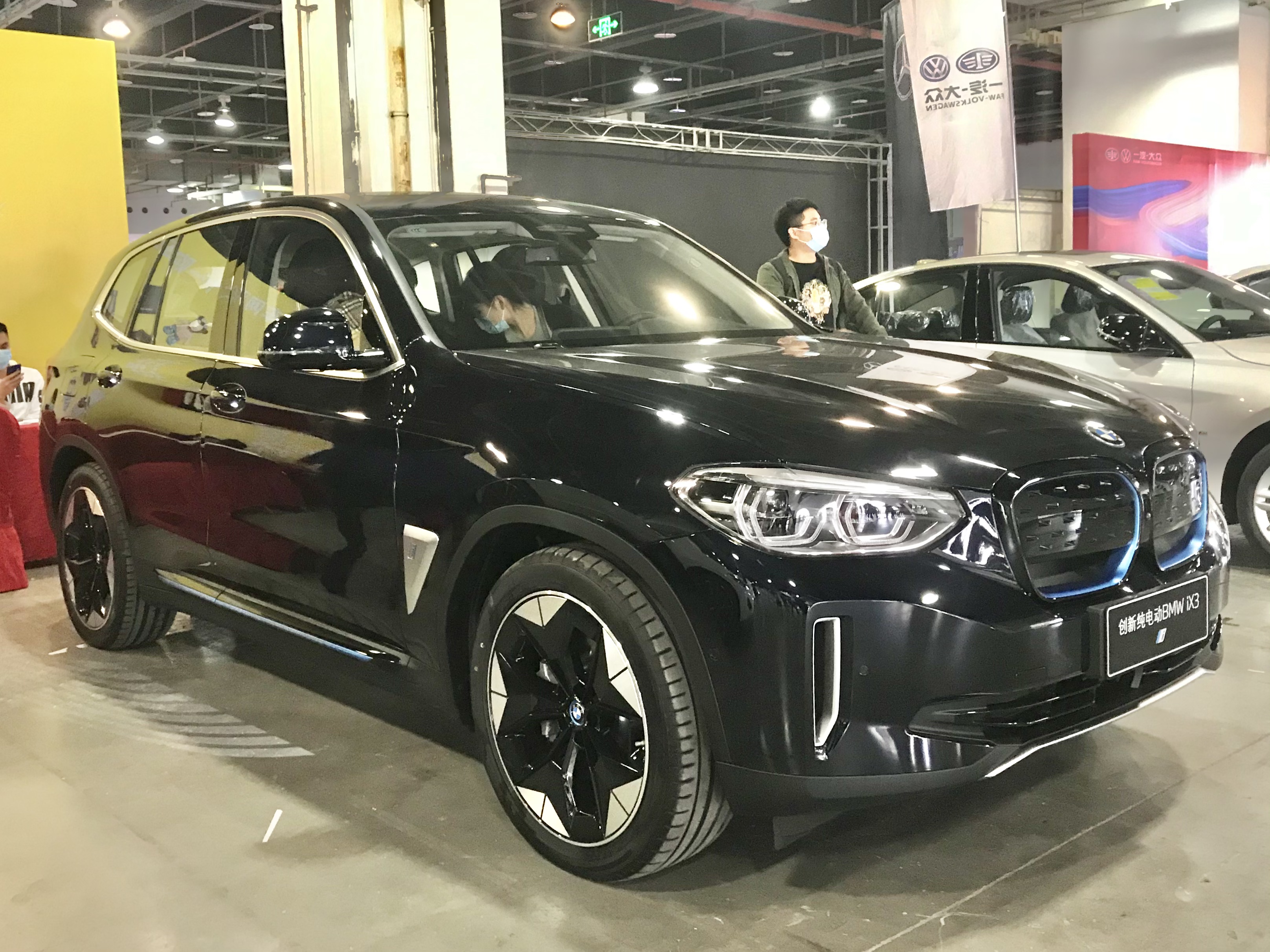
Bmw Ix3
"...wipers on Tesla vehicles. That's interesting. The BMW iX3 getting a real world range test out of Norway and..."
The BMW iX3 is an electric SUV made by BMW. People talk about it when they want to know how far it can go in real driving, not just in lab tests. Range can change with weather, speed, and driving style, so real-world tests are useful.
The BMW iX3 (G08) is an all-electric version of BMW’s compact SUV platform, built to deliver everyday practicality with electric power. It may be mentioned in a real-world range discussion because real driving conditions can differ from official testing, and the iX3’s efficiency is something owners and shoppers want to understand. That’s why it can come up alongside other EVs when comparing range results from specific trips or climates.
Great Vines
"So if you've ever been to the [106.6s] Great Vines, north of Los Angeles in California, a very common site is a lot of trucks just slowly climbing on the side of the road on the right lane is it's extremely difficult on on heavier vehicle."
The “Great Vines” is a tough downhill road area in California near Los Angeles. The hosts mention it because it’s especially hard on big trucks going downhill.
The “Great Vines” refers to a steep, difficult stretch of road north of Los Angeles in California that’s known for heavy-truck challenges. It’s discussed here as a route where downhill braking and runaway risk are major concerns for large vehicles.
brake failure
"And it's just it can be a dangerous situation on the way down also, because you know, [131.0s] brake failure happened."
Brake failure means the brakes stop working properly. On steep downhill roads, that can be really dangerous for big trucks because they need the brakes continuously to stay under control.
Brake failure is when a vehicle’s braking system can’t slow or stop the truck as intended. For heavy trucking on steep descents, brake failure is especially dangerous because the truck can overrun the lane and collide with roadside barriers or embankments.
embankments designed specifically for trucks
"And it's one of the places where you have you see a lot of those [142.1s] what they call them the place where the trucks literally crash into like a bank of sand. There's a name for that. But they're there are [148.2s] embarkments designed specifically for trucks to just you know, if you're a brake brake, you have to go through that."
These are special roadside safety areas for runaway trucks. If a truck can’t slow down, the design helps it stop more safely than crashing into something else.
Truck escape ramps/embankment systems are roadside safety features built to help runaway heavy vehicles slow down if they lose braking. The idea is to provide a controlled way for a truck to stop—often using sand or other energy-absorbing material—rather than crashing into traffic or fixed obstacles.
Grapevine
"this is my over the last few weeks, specifically in the Great Vine... One other thing about rejenning down hills, especially as big as the grapevine is like 11 of those trips will just like destroy some brakes."
The Grapevine refers to the steep mountain pass route used by trucks in California, known for sustained climbs and long descents. Because it includes extended downhill braking demands, it’s a tough real-world test for how well a vehicle manages grades and brake/energy management.
6% grade
"but it said that they run through a 6% grade for five miles. So that's the thing with the the grades are not, you know, some of the grades are pretty steep, but they also very long."
A “6% grade” means the road is noticeably sloped—about 6 feet of rise for every 100 feet traveled horizontally. For trucks, that kind of slope changes how hard the truck has to work uphill and how much braking is needed downhill.
A “6% grade” describes road slope as a percentage: for every 100 units of horizontal distance, the elevation changes by 6 units. In trucking, sustained grades matter because they strongly affect power demand uphill and braking/energy recovery needs downhill.
diesel trucks
"One other thing about rejenning down hills, especially as big as the grapevine is like 11 of those trips will just like destroy some brakes. Like because you know, diesel trucks have no other way to stop besides, you know, old fashioned brakes."
“Diesel trucks” are the traditional big-rig trucks that run on diesel fuel. On long downhills they usually have to slow down using the regular brake system a lot.
“Diesel trucks” here is shorthand for conventional heavy-duty trucks that use diesel engines and typically rely on friction brakes for stopping, especially on long descents. The segment contrasts that with electric trucks’ ability to use regenerative braking to reduce brake use.
regen
"So the fact that Tesla can just regen all that they don't even need to worry about brakes, that's saving them a ton of money on brakes as well."
“Regen” means the truck slows down by turning its electric motor into a generator. Instead of wasting all that downhill energy as heat, it recaptures some of it and also helps the brakes last longer.
“Regen” is short for regenerative braking: when you slow down, the electric motor switches roles and acts like a generator to convert some of the truck’s motion back into electricity. On long downhill grades, that reduces reliance on friction brakes and can improve overall efficiency while lowering brake wear.
full self driving contracts
"we received reports of people having issues exiting their full self driving contracts. So that's that's not exactly you have heard that before."
Tesla sells software features as a subscription or one-time purchase. In this story, some owners say their “Full Self-Driving” purchase isn’t showing up correctly in their account, so they can’t access it.
“Full Self-Driving” (FSD) is Tesla’s paid driver-assistance software package, typically tied to an owner’s account and vehicle eligibility. The segment focuses on contract access issues—owners can’t always view or use what they paid for.

Tesla Model 3
"So Oliver is actually is a 2018 model three owner. So hard word three. And kind of got fed up with the hardware three situation with Tesla."
The Tesla Model 3 is an electric car. Here, the discussion is about the software subscription owners buy—Full Self-Driving—and how problems can show up with the contract in the car’s account.
The Tesla Model 3 is an electric sedan that’s become a major platform for Tesla’s driver-assistance software, including Full Self-Driving (FSD). In this segment, the hosts discuss how Model 3 owners’ FSD contract access and wording changed over time.
hardware three
"And kind of got fed up with the hardware three situation with Tesla."
“Hardware 3” is the name Tesla uses for the computer in the car that runs self-driving features. Here, the host is saying an owner got frustrated because the promised future capability didn’t match what was expected for their car’s hardware.
“Hardware 3” (often written as HW3) is Tesla’s internal computer-generation designation for the vehicle’s self-driving hardware. The segment suggests some owners felt their HW3-equipped cars were promised autonomy that later didn’t materialize as expected.
unsupervised self driving
"With the latest admission that unsupervised self driving will not happen on other word three."
This means the car would drive by itself without needing a person to watch and be ready to take over. The hosts are saying Tesla’s plans for that kind of autonomy have changed for some owners.
“Unsupervised self driving” refers to a level of autonomy where the car can drive without a human monitoring or taking over. The hosts say Tesla has indicated this won’t happen for certain vehicles (in this case, discussed in the context of a 2018 Model 3).
FSD supervised
"But the more egregious thing here is that the Tesla didn't use the term supervised in 2019. That that term was introduced in 2024 with Tesla FSD."
“FSD supervised” is Tesla’s version of self-driving that still expects you to stay alert and supervise the car. The hosts say Tesla later changed the wording, and that mismatch is part of why some owners feel misled.
“FSD supervised” is Tesla’s naming for its Full Self-Driving capability when it still requires human supervision rather than true unsupervised autonomy. The segment argues that Tesla introduced the “supervised” label later, which affected how earlier contracts were described and what owners expected.
FSD beta
"And this left move from like the FSD beta to FSD supervised wanted to remove the beta no said that and slowly over the course of 2024 2025, kind of reintroduce full self driving"
“FSD beta” was an early version of Tesla’s self-driving software that only some people could get. In this segment, they’re saying Tesla later rebranded or restructured it, which matters for what owners thought they were buying.
“FSD beta” refers to Tesla’s earlier, limited-access rollout of Full Self-Driving features to selected customers. The hosts describe a transition away from “beta” toward “FSD supervised,” implying changes in expectations and contract language over time.
full self driving supervised
"right now, full self driving supervised. And yeah, that's it now. Now obviously, it's a subscription"
Tesla has software that helps with driving. When it’s described as “supervised,” it means the car can assist, but you’re still expected to watch closely and be ready to take over. The episode is about how Tesla’s contract wording changed what owners thought they were buying.
“Full Self Driving” is Tesla’s driver-assistance software package, and “supervised” indicates it’s intended to operate with the driver monitoring and ready to take over. In this segment, the hosts argue Tesla changed the wording/contract terms so owners are paying for a more limited, supervised capability rather than the broader promise implied by the original name.
subscription
"right now, full self driving supervised. And yeah, that's it now. Now obviously, it's a subscription"
Here, “subscription” means you pay each month to keep using certain software features. The hosts argue that because it’s subscription-based, owners shouldn’t assume the car will automatically reach whatever higher capability was originally promised.
In this context, “subscription” refers to paying monthly for access to Tesla’s software features rather than buying them outright. The hosts connect that ongoing payment to the idea that owners shouldn’t expect future capability beyond what’s contractually described as “supervised.”
retroactively changed on the 2019 contract
"Now it's been retroactively changed on the 2019 contract to supervise. And"
This means the contract terms from 2019 were changed after people already signed. The hosts are saying that could change what owners thought they were paying for with FSD.
“Retroactively changed” means Tesla updated the terms of an earlier contract after it was signed. The hosts frame this as a dispute over whether owners were promised a certain level of FSD capability in 2019, and whether the later “supervised” wording effectively reduces what was originally offered.
motor vehicle purchase agreement
"because his wife bought the car with FSD, there's not a separate full self driving contract. The contract is in the motor vehicle purchase agreement."
This is the paperwork contract you sign when you buy a car. The episode says the FSD-related terms can be included in that contract, and that changes what owners can view or download later in the Tesla app.
A “motor vehicle purchase agreement” is the contract document used when buying a car, and it can include line items for options or software tied to the vehicle. In this segment, the hosts claim the FSD reference is included in that agreement when purchased with the vehicle, which affects whether owners can download/access the document later.
camera wipers
"Tesla has been granted a patent for camera wipers for for self driving vehicles. So it's something that we've been talking about for a long time that's been missing in a Tesla stack or for autonomy…"
These are wipers made for the car’s cameras. They help keep the camera lens clean so the car’s “eyes” work better, especially when it’s dirty or raining.
Camera wipers are windshield-style wipers designed to clear dirt, dust, and grime off vehicle cameras. For self-driving systems, keeping the camera view clean helps the perception software “see” reliably, especially in bad weather or dusty conditions.
autonomy
"…that's been missing in a Tesla stack or for autonomy is that, you know, the cameras get dirty…"
Here, “autonomy” means the car trying to drive itself. It depends on sensors like cameras working clearly.
In this context, autonomy means the vehicle’s ability to perform driving tasks without continuous human input. The episode specifically discusses how camera cleanliness affects the perception pipeline that autonomy relies on.
windshield wiper
"But for the front facing cameras… you have the same solution that is human does you have the windshield wiper. But for the side facing cameras, you just don't have that."
A windshield wiper is the part that clears rain and dirt from the front glass. The host is saying front cameras could be cleaned like that, but side cameras can’t.
A windshield wiper is the conventional wiper system used to clear the driver’s forward view. The transcript uses it as an analogy for how front-facing cameras could be cleaned, while side-facing cameras need a different approach.
lens cleaning solution
"But now this is also another lens cleaning solution… a tiny little wiper with washer fluid for your camera lens specifically designed for the side cameras…"
This is a system that cleans the camera lens. Cleaner lenses help the car “see” better and make fewer mistakes.
A lens cleaning solution is a system designed to remove contaminants from camera lenses to maintain image quality. For driver-assistance and autonomy, better image clarity can improve detection and tracking performance.
ultrasonic wiper
"Wasn't there a patent for like an ultrasonic like wiper kind of thing? If I remember correctly, it was actually a laser system."
An ultrasonic wiper is a windshield-cleaning idea that uses very high-frequency vibrations. Instead of just wiping with rubber blades, it tries to help loosen and remove grime more effectively.
An ultrasonic wiper refers to a windshield-wiper concept that uses ultrasonic (high-frequency) vibrations to help clean glass. The idea is to improve cleaning efficiency or reduce streaking, potentially with less reliance on conventional wiper motion and fluid.
WLTP
"They do these yearly, well by yearly, a summer and then a winter test that are always super useful for each vehicle to try to get a mainly comparing the real world range with their WLTP."
WLTP is a standardized test that estimates how far a car can go on a full charge. It’s done in a controlled way, so the real-world range you get can be higher or lower.
WLTP (Worldwide Harmonized Light Vehicles Test Procedure) is a standardized lab test used to estimate an EV’s range. It’s meant to be comparable across cars, but real-world driving often differs due to weather, speed, and driving style.
air records
"while it didn't break all the records, mainly not the elusive air records at 517 miles, 833 kilometers, it did break the SUV record now with 485 miles of range, 781, which I think is also longer than their WLTP."
The hosts are talking about special range record attempts where the car is set up to be as aerodynamic as possible. Those tests can produce higher range numbers than normal driving.
“Air records” here refers to range attempts that emphasize aerodynamic conditions and/or reduced drag, which can produce higher numbers than typical driving. The hosts contrast these elusive “air records” with the more achievable SUV record they’re discussing.
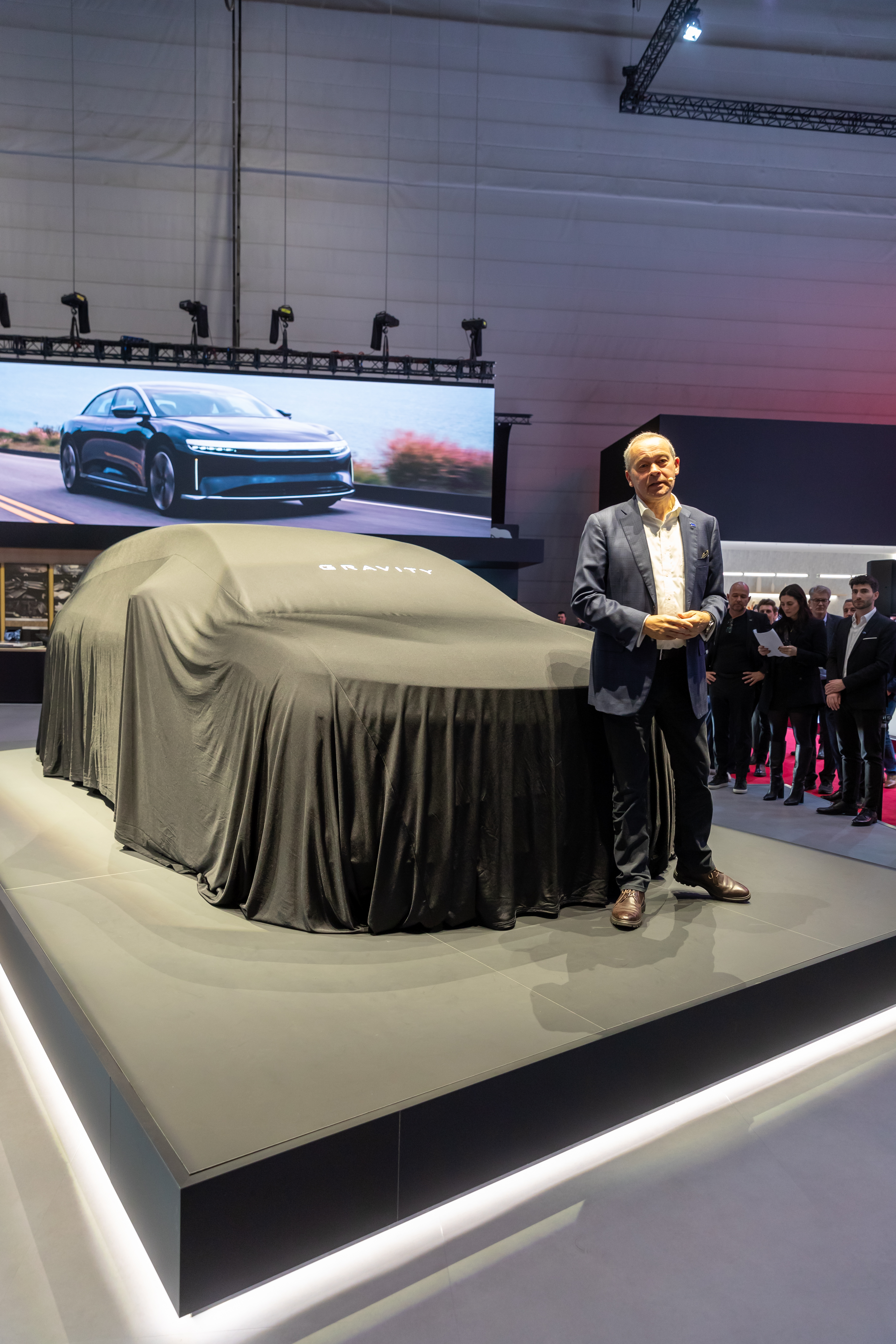
Lucid Gravity
"So top 10. The second was the Lucid gravity. Also, Lucid still always on top when it comes to efficiency, 720 kilometers, 447 miles."
Lucid Gravity is an electric SUV from Lucid. Here it’s mentioned because it has a high estimated range number compared with other EVs in the same list.
Lucid Gravity is Lucid’s electric SUV, and the segment uses it as a benchmark in a top-range list. The hosts cite its range figure (720 km / 447 miles) to show how it stacks up against other long-range EVs.

Mercedes-Benz CLA
"Mercedes is also not too far behind with the CLA at 675 and the GLC at 665. You have the Chinese automakers up there too with X9 at just over 400 miles, the Polestar 3 at 373 miles, 601 kilometers."
Mercedes-Benz CLA is a Mercedes model line that’s usually considered a smaller car, not an SUV. The hosts are arguing about whether it really belongs in an “SUV” range ranking.
Mercedes-Benz CLA is a compact car line (a sedan/coupe-style model), and the hosts specifically debate whether it should be classified as an SUV. They mention it in the context of a “top 10” range list, then question the categorization.

Mercedes-Benz GLC
"Mercedes is also not too far behind with the CLA at 675 and the GLC at 665. You have the Chinese automakers up there too with X9 at just over 400 miles, the Polestar 3 at 373 miles, 601 kilometers."
Mercedes-Benz GLC is a Mercedes luxury SUV. In this segment it’s mentioned as part of a comparison list of EVs with long range numbers.
Mercedes-Benz GLC is a compact luxury SUV, and the hosts include it in the same long-range “top 10” discussion. They use its range figure (665 miles / km figure mentioned) to compare against other EVs in the list.

Polestar 3
"You have the Chinese automakers up there too with X9 at just over 400 miles, the Polestar 3 at 373 miles, 601 kilometers."
Polestar 3 is an electric SUV. The hosts mention it because it has a long range number in their comparison list.
Polestar 3 is Polestar’s electric SUV, and the hosts cite its range (373 miles / 601 km) as part of the same top-range comparison. It’s used to show how competitive the SUV EV segment is across brands.

Kia EV4
"Yeah, everything else is an SUV in there. No, the EV4, the EV4 is not an SUV."
The hosts mention an “EQ4” while discussing which cars count as SUVs in their test. The transcript doesn’t clearly identify the brand, so it’s hard to pin down the exact model.
EQ4 is referenced in the context of whether a test was “just for SUVs,” implying the EQ4 is part of the same EV lineup being categorized. The transcript doesn’t clearly identify the manufacturer or full model name, so the exact car is ambiguous.
VLA
"done the same and quickly we're able to catch up to Tesla with FSD capabilities through their VLA system."
VLA here refers to a driving system that mainly uses cameras to understand the road. The point is that it’s trying to drive using vision, even if other sensors may still be used for safety.
VLA is referenced here as a “vision-only” approach to driving automation, meaning the system relies primarily on camera input rather than radar or lidar for its core driving decisions. The hosts contrast it with systems that still keep radar/ultrasonic sensors for safety functions.
XPENX
"XPENX is mostly aiming to a vision-only system, but at the same time,"
Xpeng is an EV maker. In this segment, they’re talking about Xpeng’s driver-assistance system and how it uses cameras, but still keeps other sensors for safety.
Xpeng (spoken here as “XPENX”) is an EV and driver-assistance technology company whose vehicles are discussed as using an end-to-end vision-only AI driving approach. The segment also notes that Xpeng still keeps radar and ultrasonic sensors for active safety.
vision-only
"The answer was very interesting where the AI driving system is an end-to-end vision-only system much like Tesla."
“Vision-only” means the car mainly uses cameras to see what’s around it. The discussion is about whether cameras alone can handle safety, or whether radar still helps for emergency situations.
“Vision-only” describes an automated-driving design where the primary perception and driving decisions come from cameras. In this segment, the speaker argues that even if the driving brain is vision-only, radar can still be valuable for active safety like emergency braking.
radar
"they still have a radar on them, still have ultrasonic sensors, things that Tesla removed."
Radar is a sensor that uses radio waves to detect objects around the car. In this segment, it’s used to help with emergency braking and other safety features.
Radar is a sensor technology that uses radio waves to detect objects and measure relative motion, which can be especially useful in poor weather or at longer ranges. Here, it’s discussed as supporting active safety functions like automatic and emergency braking.
ultrasonic sensors
"they still have a radar on them, still have ultrasonic sensors, things that Tesla removed."
Ultrasonic sensors are the “beep” style sensors that use sound waves to detect things close to the car. They’re often used for parking and low-speed safety.
Ultrasonic sensors use sound waves to detect nearby objects, typically at short range. In the transcript, they’re mentioned as still being present on the Xpeng vehicles for sensing that Tesla removed.
sensor fusion
"I asked Xiaoming what's the situation around that? Do they do sensor fusion?"
Sensor fusion means combining data from different sensors so the car has a better picture of what’s happening. Here, they’re saying you might not need a complex combined system if radar can act as a backup safety layer.
Sensor fusion is the process of combining inputs from multiple sensors (like cameras, radar, and ultrasonic) into a single, more reliable understanding of the environment. The speaker argues you don’t necessarily need a complicated fusion setup if radar is kept as a separate safety override.
automatic and emergency braking
"Automatic and emergency braking, for example, a big one, still use radar."
Automatic/emergency braking is when the car detects a crash risk and brakes by itself. In this segment, they say radar helps make that work reliably.
Automatic and emergency braking are active-safety features that detect a potential collision and apply the brakes without the driver initiating braking. The speaker specifically says these functions still rely on radar in the system being discussed.
override
"it will override the AI system and applies the automatic brakes."
Here, “override” means the car’s safety system can step in and take over braking if it thinks a crash is unavoidable. It’s like an emergency backup that can act even if the main driving AI is confused.
In this context, “override” means a safety subsystem can take control away from the main AI driving stack when it detects an imminent or inevitable collision. The transcript describes radar-based braking as the override layer that applies automatic brakes if a crash is detected.
V14
"I thought the bet was specifically like beat Tesla V14, but apparently it was to beat Tesla Fsd at the beginning of the year, which was V13. Pretty convenient. And honestly, having tested the VLA-2, I think that's fair."
V14 is just a label for a specific update of Tesla’s self-driving software. Different versions can behave differently, so people compare them to see which one is better.
“V14” is a software version label for Tesla’s FSD stack, used to mark a particular iteration of the system. Version numbers matter because each release can change behavior, capability, and how the system performs in real-world tests.
V13
"it was to beat Tesla Fsd at the beginning of the year, which was V13. Pretty convenient. And honestly, having tested the VLA-2, I think that's fair. I think they've got up to be 13 pretty well."
V13 is another update number for Tesla’s self-driving software. The speaker is using it as a reference point to judge whether competitors are keeping up.
“V13” refers to another Tesla FSD software version, used here as the baseline for a bet about catching up. Comparing V13 vs V14 helps frame how quickly competitors are improving relative to Tesla’s latest releases.
end-to-end AI system
"they also exclusively gave us the news that they are spending 300 million RMB, over 40 million a month just on training along their system, their neural net, their end-to-end AI system. That's impressive."
An end-to-end AI system means the car’s computer learns driving behavior as one integrated process. Instead of using lots of separate rules, it tries to go from what it senses to what it should do next.
An end-to-end AI system is a driving approach where a neural network learns to map inputs (like sensor data) directly to driving outputs, rather than relying on many separate hand-engineered steps. The idea is to improve performance by letting the model learn the full driving pipeline.
neural net
"they also exclusively gave us the news that they are spending 300 million RMB, over 40 million a month just on training along their system, their neural net, their end-to-end AI system. That's impressive."
A neural net is an AI pattern-recognition system trained on lots of examples. In self-driving tech, it helps the car understand what it’s seeing and choose actions.
A neural net is an AI model made of layers of interconnected “neurons” that learn patterns from data. In driver-assistance systems, neural nets are commonly used to interpret sensor inputs and help decide what the vehicle should do.
advanced level-2 system
"I think it builds up to my point that I think these advanced level-2 system are going to be completely commoditized by the end of the year. I think Rivian, obviously, is working on its own. In China, you have BYD, XPAN, Xiaomi, you have all of them just working on similar stuff like that."
Level 2 means the car can do some driving tasks like steering and speed control, but you still have to watch the road and be ready to take over. “Advanced” just means it’s more capable than the simplest Level 2 systems.
“Level 2” refers to SAE driving automation levels, where the car can control steering and acceleration/braking, but a human driver must supervise and be ready to take over. “Advanced level-2” usually means more capable driver-assistance features than basic adaptive cruise/steering, but still not full autonomy.
self-parking system
"No, and not when BYD is doing this on top of it all. That was the big news this week. Last year, we made a big deal when BYD took responsibility for the first time for its self-parking system. We thought this is a great direction."
A self-parking system helps the car park itself. You still supervise, but the car does the steering and control to get into the spot.
A self-parking system is an automated parking feature that handles steering and control inputs to park the vehicle with minimal driver effort. It’s typically limited to certain parking maneuvers and conditions, and it’s often used as a benchmark for how reliable a brand’s driver-assistance stack is in real situations.
liability
"probably the biggest benchmark, the biggest proof of milestone, of improvement in advanced driver system, is going to be taking liability for it, being responsible for it. Them doing that for the self-parking system, the first step. Now this week, they went further than"
Here, “liability” means responsibility if something goes wrong while using the car’s automated features. The speaker is saying a company taking responsibility is a sign they’re more confident in the tech.
In this context, “liability” means who is legally responsible if the automated driving feature causes a crash or damage. The speaker frames it as a milestone because taking responsibility can signal confidence in the system and its risk management.
gut's eye system
"that for their gut's eye system, but more specifically for the navigate on autopilot [1528.7s] feature. ... BYD has an equivalent in China under its gut's eye system, [1560.1s] which they have gut's eye CBA with a different level of capability."
The “gut’s eye system” is BYD’s set of advanced driving features. The host is talking about how BYD plans to cover crashes for the first year to encourage people to try it.
The “gut’s eye system” is how the host refers to BYD’s driver-assistance/automation suite in China. The segment links it to BYD’s “CBA” and discusses how its liability coverage is structured for the first year of use.
Navigate on the pilot
"Navigate on the pilot. Is there FSD? Tesla used to have a feature called navigate on the pilot, [1552.8s] which was a predecessor to FSD."
“Navigate on the pilot” is an older Tesla feature that helps the car drive along a planned route. The idea is that it’s an earlier version of the more advanced “Full Self-Driving” system.
“Navigate on the pilot” is Tesla’s earlier driver-assistance feature that can plan a route and guide the car through parts of a trip. In this segment, the host calls it a predecessor to Full Self-Driving (FSD), meaning it’s an earlier step toward more automated driving functions.
gut's eye CBA
"BYD has an equivalent in China under its gut's eye system, [1560.1s] which they have gut's eye CBA with a different level of capability."
“Gut’s eye CBA” sounds like BYD’s specific version or package of its advanced driving features. The host is saying it’s not exactly the same as Tesla’s FSD, but it’s meant to do similar kinds of driving help.
“Gut’s eye CBA” appears to be BYD’s named variant/packaging of its driver-assistance capability. In this segment, it’s used to explain that BYD’s system has a different capability level than Tesla’s FSD, while still offering comparable “navigate on autopilot”-style functions.
no payout cap
"They will cover it all with no payout cap, or no need to get separate [1601.1s] insurance on top of it."
A “payout cap” is a limit on how much money coverage will pay for a claim. The host is saying BYD won’t set a maximum limit for the covered costs during the first year.
A “payout cap” is a maximum limit on how much an insurer (or coverage program) will pay out for a claim. The host says BYD’s first-year liability coverage has “no payout cap,” meaning there’s no stated maximum amount for covered losses.
lidar
"So with your current insurance system, they will cover everything for [1607.9s] the gut eye A and B, so the two top systems. I think those are the ones that have the [1611.6s] lidar in them."
LiDAR is a sensor that uses lasers to “scan” the world around the car and measure how far away things are. It helps the car understand its surroundings more precisely.
LiDAR is a sensing technology that uses laser pulses to measure distances and build a detailed 3D map of the car’s surroundings. The host connects LiDAR to the “two top systems” (A and B), implying these are the higher-end sensor setups used for the automation features.
Lexus LFZC
"So this is the Lexus LFZC. It was on Villa a few years ago, the Japan mobility t-shirt... Toyota or Lexus was very adamant that we actually bring this to production as soon as 2026... But this week, they announced that they killed it."
Lexus LFZC was a futuristic electric car idea from Lexus. The company planned to turn it into a real production EV, but they later decided to cancel that project.
The Lexus LFZC is a concept EV from Lexus (Toyota’s luxury brand). The hosts say Toyota/Lexus planned to bring it to production around 2026 and build it on a dedicated electric-vehicle platform, but Toyota later canceled the LFZC development project.
dedicated platform for electric vehicles
"They're aiming to bring this to production... It's going to be the next dedicated platform for electric vehicles for Lexus... designed from the ground up."
A dedicated EV platform is a car “foundation” built specifically for electric cars. Instead of modifying an older gas-car design, it’s designed to fit batteries and electric motors efficiently.
A dedicated platform for electric vehicles means the car’s architecture is designed from the start for electric powertrains, rather than being adapted from a gasoline-car design. That can improve packaging (space for batteries and motors) and help manufacturers standardize EV-specific components across multiple models.
company ride review
"So we decided to cancel the LFZC development project as part of a company ride review of the vehicle development project."
This sounds like an internal business review of the project. If leadership decides the plan no longer makes sense, they can cancel it.
“Ride review” here appears to refer to an internal corporate review process of the vehicle development program. In practice, these reviews can lead to projects being paused or canceled based on strategy, cost, and market direction.
Tesla insurance
"Tesla could make a decent business case of bundling monthly FSD supervised and Tesla insurance with Tesla taking responsibility for any accidents while using FSD."
“Tesla insurance” here refers to Tesla’s insurance offering being bundled with FSD usage. The key point is how accident responsibility is handled when the car is operating in a driver-assist mode.
destination charging program
"will you interview somebody at GM Energy? I think they should start a destination charging program."
A destination charging program is an effort to place EV chargers at non-highway locations—like hotels, restaurants, and parking lots—so drivers can charge while parked for hours. It’s different from fast-charging networks aimed at quick top-ups during road trips.
bidirectional charging
"But it was more about the vehicle to everything situation, bidirectional charging."
Bidirectional charging means your EV can not only charge from a power outlet—it can also send electricity back out. That could let you use the car like a backup power source or share power with a building or the grid.
Bidirectional charging is when an EV can send power back out through the charger (or vehicle system), not just take power in. That enables functions like using the car as a temporary home backup or feeding power to the grid, which is why it’s often discussed alongside “vehicle-to-everything” systems.
vehicle to everything
"But it was more about the vehicle to everything situation, bidirectional charging."
“Vehicle to everything” is the idea that an EV can interact with more than just the charger. It can potentially share power or information with things like your home, the grid, or charging stations.
Vehicle to everything (V2X/V2E) is the umbrella idea that an EV can communicate and exchange energy or data with other systems—like the grid, a home, or charging infrastructure. In practice, it’s closely tied to bidirectional charging and smart charging so the car can act as part of a larger energy network.
AV charger
"And when choosing hotels, [2434.4s] I always look if there's an AV charger is there. If I'm driving, obviously, it's something that's become like second nature for me."
An “AV charger” in this context is basically a charging station you can use at a place you’re visiting or staying, like a hotel. The host is saying they look for it because it makes EV travel easier.
“AV charger” here most likely refers to an EV charging station at a hotel (the host is talking about checking whether there’s one available). The key point is destination charging—having chargers where you stay—so EV drivers can top up while traveling.

Dodge Charger
"...n choosing hotels, I always look if there's an AV charger is there. If I'm driving, obviously, it's somethi..."
The Dodge Charger is a sporty car that’s built for quick driving. People might mention it in a conversation about charging because drivers often plan trips around where they can plug in and recharge. Even if you’re not charging at home, it helps to know what chargers are available where you stop.
The Dodge Charger is a performance-focused American sedan (and in some markets, a muscle-car style car) known for strong acceleration and a sporty driving feel. It may come up in a discussion about charging availability because owners who drive longer distances or use electric charging infrastructure want to know whether charging options—like an AV (AC) charger at a hotel—are available on their route. That makes it relevant to everyday planning even when the car itself isn’t the main topic.

Rivian R1
"All right. Last question is frequent traveler 78749. Aren't you worried that the Rivian starts R2 without having been profitable with the R1 yet? I think they actually were like non gap accountable last quarter, right?"
Rivian’s R1 is the company’s main electric vehicle lineup (like the R1T truck and R1S SUV). The speaker is talking about whether that lineup was making money yet, which is a big deal for any EV company trying to grow.
Rivian R1 refers to Rivian’s R1 platform of electric vehicles, with the R1T (pickup) and R1S (SUV) being the best-known models. In this segment, the host is discussing whether Rivian’s R1 program was profitable yet, which matters because EV startups often lose money early while scaling production.
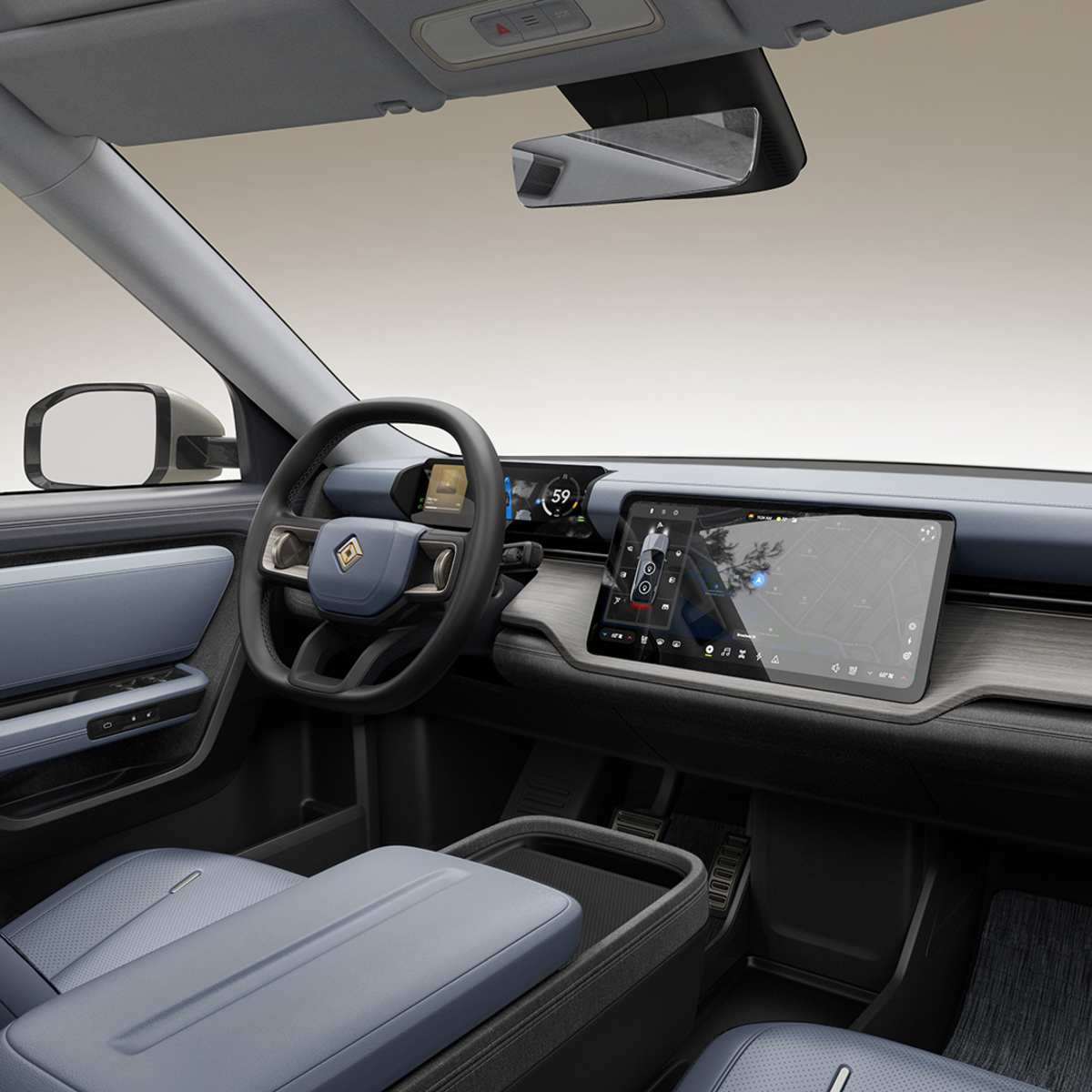
Rivian R2
"All right. Last question is frequent traveler 78749. Aren't you worried that the Rivian starts R2 without having been profitable with the R1 yet?"
Rivian R2 is the next electric vehicle lineup after the R1. The host is basically asking: should Rivian move on to the next model before the current one is making money?
Rivian R2 is the next-generation electric vehicle program Rivian is planning/rolling out after the R1 lineup. The discussion here is financial: the host questions whether Rivian should launch R2 before the R1 vehicle program is profitable, highlighting how EV companies balance product timelines with cash burn and scaling.
growth margin
"I think they actually were like non gap accountable last quarter, right? For a few quarter, they were growth margin positive on the vehicle, not profitable as a company just selling the R1s."
Growth margin is a profitability metric that looks at how much margin a company (or product line) generates as it grows—often discussed in terms of whether revenue growth is translating into improving unit economics. In this segment, the host contrasts growth margin being positive for Rivian’s R1 with the company still not being fully profitable overall.
non gap
"I think they actually were like non gap accountable last quarter, right?"
“Non-GAAP” means the company is using an adjusted way of reporting financial results, leaving out some items. The host is pointing out that the “profitability” claim depends on which kind of numbers you look at.
“Non-GAAP” refers to financial figures adjusted to exclude certain items so companies can present an alternative view of performance. The host is using it to describe Rivian’s reported results, implying the profitability discussion depends on which accounting basis is being used.

Rivian R1S
"...cle, not profitable as a company just selling the R1s. Then the Volkswagen deal and the software revenu..."
The Rivian R1S is an electric SUV with room for more than two people. It’s significant because it’s one of the main vehicles Rivian sells, so discussions about the company’s success and future plans often reference it. It also connects to how the car’s software and updates are handled.
The Rivian R1S is an all-electric, three-row SUV designed for families who want EV range and utility. In podcast discussions, it often appears alongside business and software topics because the R1S is a key product in Rivian’s lineup and ties into how the company funds development and profitability. That’s why it can be mentioned when talking about whether Rivian can sustain growth and improve its vehicles over time.
level two chargers
"Mount Kisco has a lot of level two chargers in town to get online. They're public parking lots soon."
Level 2 chargers are EV chargers that charge faster than the basic ones you might use at home. They’re often installed in places like parking lots and hotels, so you can plug in overnight and wake up with more battery.
“Level 2” is a home/parking-lot EV charging standard that uses AC power and is faster than basic Level 1 charging. It’s commonly found at workplaces, apartments, and some hotel parking lots, making it practical for overnight charging.
destination chargers
"This is in the context of destination chargers charging as much as super chargers like hotels and stuff."
Destination chargers are EV chargers at places where you’re parked for a while, like hotels. They’re meant for charging while you’re there, not for fast in-and-out charging.
Destination chargers are EV chargers installed at places where you park for a while—like hotels, restaurants, or tourist destinations. They’re designed for longer dwell times rather than quick top-ups, so they pair well with overnight stays.
super chargers
"This is in the context of destination chargers charging as much as super chargers like hotels and stuff."
Super chargers are the fast EV chargers you use when you need to add range quickly. They’re different from slower chargers you might use overnight at a hotel.
“Super chargers” refers to high-power DC fast charging stations that can add significant range quickly compared with Level 2. They’re typically used for road trips and faster turnaround, whereas destination charging is more about longer stops.
contract L2 chargers
"Dan overseas says most hotels I've been to have contract L2 chargers at 50 cents per kilowatt hour."
“Contract L2 chargers” are Level 2 chargers that a hotel or property pays for and manages through an agreement. That usually affects whether they’re free, how much they cost, and who can use them.
“Contract L2 chargers” means Level 2 charging equipment that a property has arranged via a service agreement, rather than being purely ad-hoc or free-for-anyone. The contract can determine pricing, access rules, and how reliably the chargers are maintained.
kilowatt hour
"Dan overseas says most hotels I've been to have contract L2 chargers at 50 cents per kilowatt hour."
A kilowatt hour (kWh) is the unit of electricity. When you see a price like “50 cents per kWh,” it means you pay based on how much energy your EV takes while charging.
A “kilowatt hour” (kWh) is the unit of energy used to measure how much electricity an EV charges. Charging prices are often quoted per kWh, so the same charger can cost different amounts depending on how much energy you add.
Tesla has some cool features, some cool connectivity features
"But yeah, Tesla has some cool features, some cool connectivity features, specificity for that, that makes them a great solution."
Tesla’s “connectivity features” are the app and in-car tools that help you find chargers and manage charging. It’s basically software that makes charging less of a hassle.
This refers to Tesla’s in-car and app-based charging and route-planning ecosystem, which can help drivers find compatible chargers and manage charging sessions. The “connectivity” angle is that the car and network can coordinate to make charging easier.
level one
"you have overnight charging or any kind of buy with a level one sometimes. Yeah, yeah, it's better than nothing."
Level 1 is the slowest way to charge an EV, usually using regular household power. It’s better than nothing, but it won’t add as much range quickly as Level 2.
“Level 1” charging is the slowest common EV charging setup, typically using standard household AC power. It can be useful when faster chargers aren’t available, but it usually takes much longer to add meaningful range.
Request an Explanation
Heard something you'd like explained? We'll add it to this episode.
Sign in to request explanations for terms you heard.
Want to learn more?
Browse our glossary for plain-English explanations of automotive terms, jargon, and concepts.
Help improve this episode
See something that's not quite right? Our annotations are AI-generated and can sometimes miss the mark. Click the flag icon on any annotation to suggest a correction.