The Tesla Model Y is one of Tesla’s most popular electric cars. In this segment, it’s the reference point for who’s cheaper and for comparing size to other EVs.
“Cosmos” is the name used in the podcast for a Lucid vehicle prototype they showed briefly. A prototype is an early version that helps the company test ideas before a final production car. The episode mentions it as a preview of something new from Lucid.
This is the big rechargeable battery inside an EV. It’s made from lots of smaller battery cells working together, with systems to help keep them cool and safe.
The Tesla Model S is Tesla’s well-known electric sedan. In this discussion, it’s mentioned as one of the big success stories for Tesla’s early EV lineup.
This is a way to measure how much electricity the car uses to drive a mile. If the number is lower, the car is using less power to go the same distance.
They’re talking about the Tesla Cybercab as an EV that uses energy extremely efficiently. The point is that its design helps it go farther on the same amount of electricity than other cars they mention.
They bring up the Lucid Air Pure as a benchmark EV. It’s mentioned because its efficiency number is worse than the Tesla Cybercab’s in their comparison.
They’re pointing out that the car is a two-door design, which usually means less interior space and a different shape. That shape can help efficiency, but it can reduce everyday usefulness.
They mention the Tesla Model 3 as a car they think is better overall. The idea is that it may not be the absolute most efficient, but it’s more practical day to day.
This is the fastest power the car can take from a fast DC charger. Higher peak numbers usually mean you can recharge faster, but the actual speed can change depending on conditions.
A battery warranty is the guarantee for the car’s battery. It usually has a time and distance limit, and changing that limit can affect how protected you are if something goes wrong later.
LFP is a type of EV battery. It’s generally considered durable and safe, and it can charge differently than other battery types.
Term
discharging rate
Discharging rate is how quickly the battery can give out energy. If the battery management limits it, the car may charge more slowly to keep the battery safe.
DC fast charging is the “quick charge” method for EVs. The battery can only take so much power at once, so the car may slow charging to protect the battery.
A charge curve is how fast an EV charges over the course of the session. Usually it starts fast and then slows down as the battery fills up.
Concept
solar panel production capacity (gigawatt hours)
Gigawatt hours is a measure of energy. When companies talk about factory “capacity” in those terms, it can be confusing because it may not map directly to how many solar panels they make.
They’re saying Tesla would buy the solar-factory equipment from a company in China called Maxwell. That matters because the supplier determines whether the factory can actually be built and scaled.
They’re talking about a solar factory sized in “gigawatts,” which is a measure of how much electricity the panels could generate. Bigger gigawatt numbers generally mean a much larger production plan.
Company
Inget
They bring up Inget while describing Tesla’s solar factory plans. That suggests Inget would provide equipment or manufacturing know-how for making the solar panels.
A wafer is a thin piece of the material that solar cells are made from. If Tesla builds the wafer too, it means they’re controlling more of the manufacturing process, not just assembling panels.
They mention a specific company—Suzhou Maxwell Technologies—connected to the equipment Tesla wants to purchase. If Tesla can’t secure that equipment, the factory timeline and scale could slip.
The Volvo EX-60 is an upcoming electric SUV. The hosts are talking about how far it can go on a charge (around 400 miles) and that it’s priced like a more premium EV.
For electric cars, “range” is how far you can drive before the battery runs out. Numbers like “up to 400 miles” are usually based on testing, not real-world driving every day.
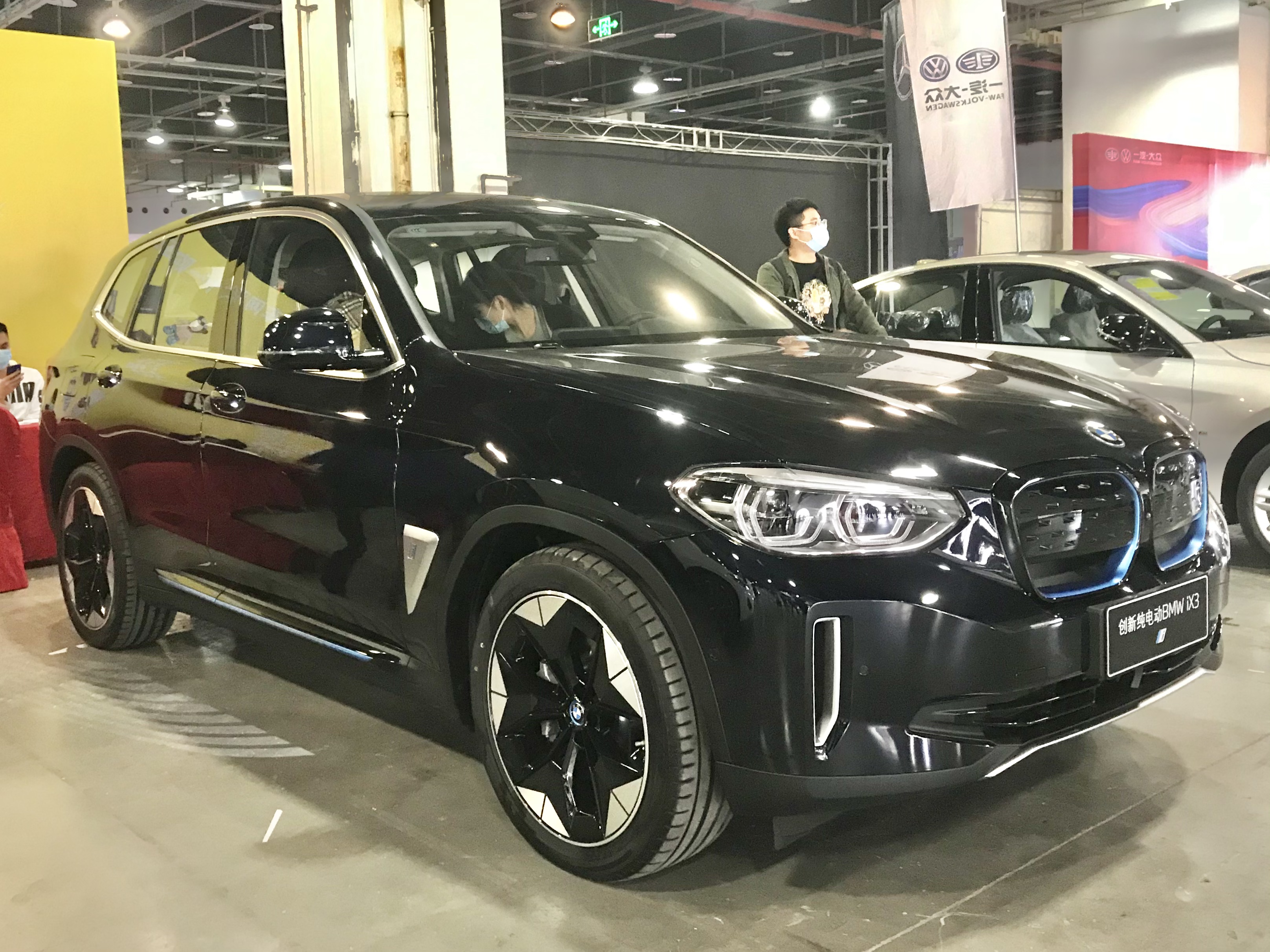
The BMW iX3 is BMW’s electric compact SUV, used here as a benchmark for where the Volvo EX-60 fits in the EV lineup. The comparison signals that the EX-60 is being pitched against established EV crossovers rather than entry-level models.
Android for automobiles is the software system that runs the car’s screen and infotainment features. It can determine what the interface looks like and what kinds of apps or features are available.
ADAS stands for driver-assist tech. It uses sensors and cameras to help the car “see” and can assist with things like staying in the lane or slowing down to avoid a crash.
Pilot Assist is a driver-assist mode that helps the car steer and manage speed. It’s meant to make highway driving less tiring, though you still have to supervise.
The Jaguar I-PACE is an electric SUV from Jaguar. It’s meant for people who want an SUV but with electric power instead of gasoline. The podcast mentions it as something someone would compare against newer Jaguar plans.
Charging power is measured in kilowatts. More kilowatts usually means you can add energy to the battery faster—if the car supports it.
Term
flux motor
A “flux motor” is an electric motor design that’s about controlling the magnetic forces inside the motor. That can help the motor make strong power efficiently.
This is basically how the car’s electrical system is designed to move power around. If it’s built to handle huge power, the car can be tuned or upgraded to make even more later.
Paddle shifters are the little levers behind the steering wheel. They let you control the car’s driving behavior more directly, like choosing “gears” without a normal gear lever.
This is about the battery’s anode, which is part that stores lithium. Using silicon can help batteries hold more energy, but it’s also a materials challenge that affects durability.
Term
MCA type cathode
The cathode is another key part of the battery. Different cathode materials can change how much energy the battery can store and how it holds up with use.
WLTP is a standardized test used to estimate how far an EV can go on a charge. It’s a useful comparison number, but your real range can be different depending on driving conditions.
This is how the car’s high-voltage electricity is set up. A higher-voltage design can help the car charge faster because it doesn’t need as much current to deliver the same charging power.
DC fast charging is the quick-charging kind of charging for EVs. Instead of charging through the car’s usual onboard conversion, it sends high-power electricity directly to the car so it can add range faster.
That “10 to 80 percent” range is a typical way reviewers measure how quickly an EV charges. Charging often slows as the battery gets fuller, so this window shows the more useful part of the charging curve.
320 kilowatts is the peak charging power being discussed for DC fast charging. Higher kilowatt numbers generally mean the car can add energy more quickly—though real-world results still depend on battery temperature, state of charge, and the charger’s limits.
The Xiaomi SU7 is an electric sedan made by Xiaomi. The podcast is talking about the “Ultra” version and comparing it to the top trim of another upcoming SUV. The main idea is how Xiaomi is offering different versions of the same basic car.
A Nürburgring record means the car set a standout time on the Nürburgring track in Germany. Car people use it as a way to compare performance because the track is challenging and realistic.
“Single motor” means the EV has one electric motor doing the work. Compared with two-motor versions, it’s usually simpler and can be cheaper, but it may not feel as strong or as adjustable in traction.
“Rear drive” means the power goes to the back wheels. That affects how the car launches and how it feels when you turn compared with cars that drive the front wheels or all four.
This is the car’s high-voltage electrical system. Higher voltage can make charging and power delivery more efficient, especially with the right charging setup.
CLTC is a standardized test method used to estimate an EV’s range. The number can be different from other countries’ range tests, so it’s not always a direct apples-to-apples comparison.
NVIDIA Thor 700 is the car’s “computer brain” for advanced driving features. It helps process sensor information so the system can understand the road and traffic.
ADS is the car’s system for advanced driving help—things like lane/traffic assistance. The host is saying whether you have to pay extra every month or if it’s included.
The Xiaomi YU7 GT is an electric SUV that the hosts say is trying to be very fast and high-end. They compare it to Tesla models to give you a sense of where it fits.
CDC is a suspension control system that adjusts how stiff or soft the shocks feel. “Dual valve” means it uses two valve paths to fine-tune that behavior.
Carbon ceramic brakes are high-performance brakes made from a special ceramic material. They’re designed to keep stopping power consistent even when you’re driving hard, but they cost more than normal brakes.
The GMC Sierra EV is an electric version of a pickup truck. A pickup is usually chosen for hauling and utility, and this one uses batteries instead of gasoline. The podcast mentions it as a standout electric-truck option people want.
Lucid Cosmos is an upcoming electric SUV from Lucid. The hosts are talking about when it will be fully shown and how it might compare to Tesla’s Model Y.
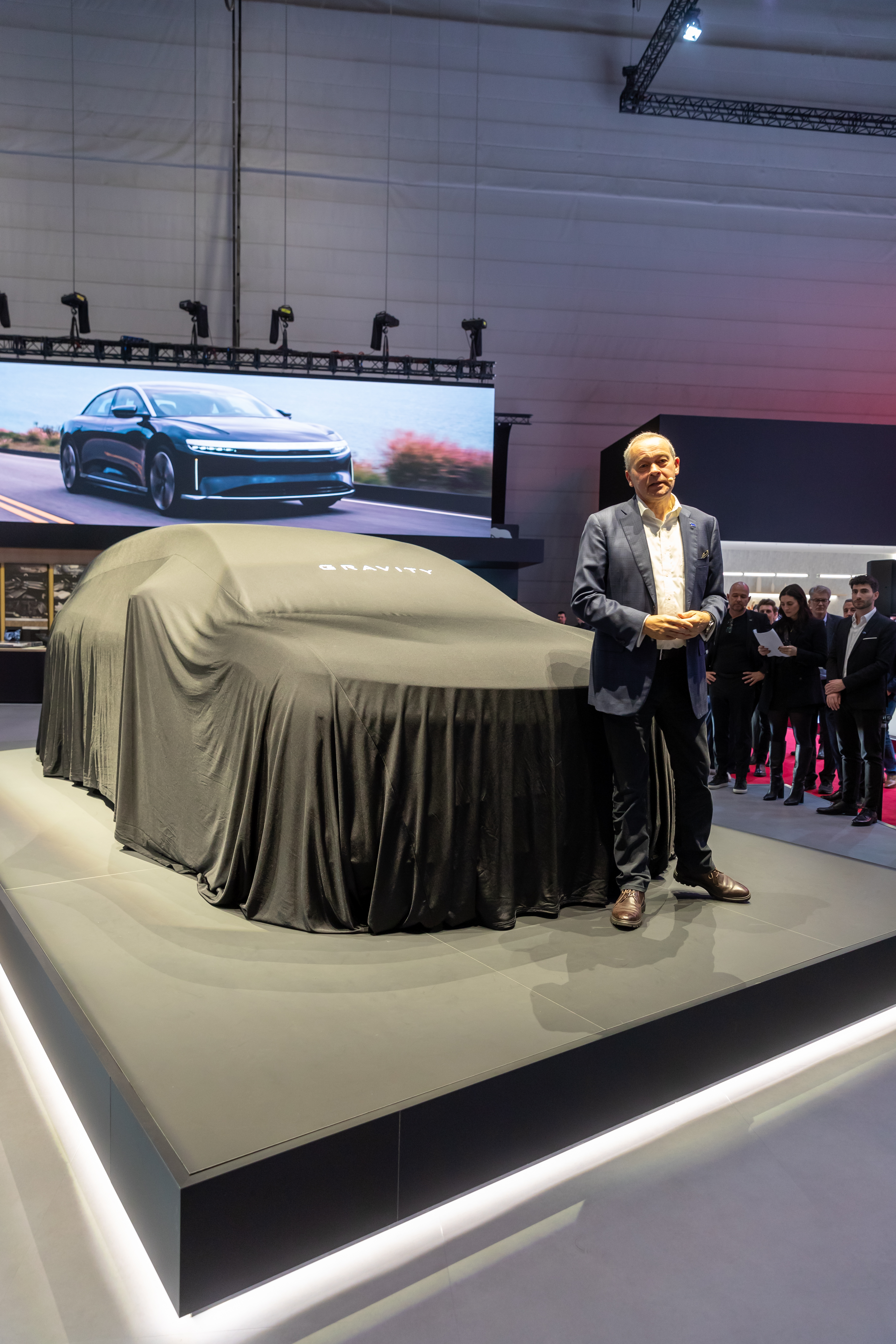
The Lucid Gravity is an electric SUV that Lucid is planning to sell. An SUV is a bigger vehicle meant for more space and versatility than a sedan. The podcast mentions it as a new model coming from Lucid.
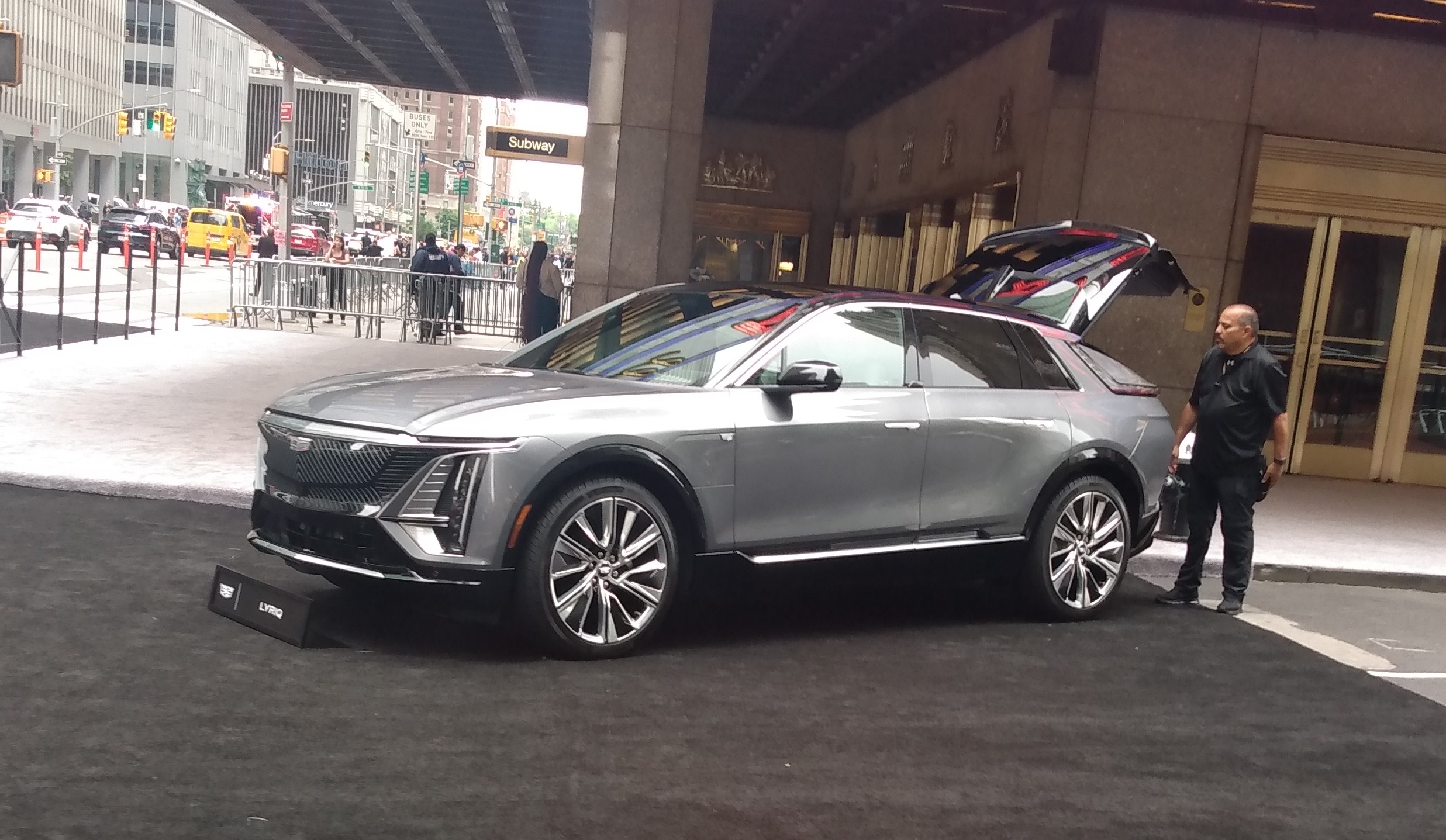
The Cadillac Lyriq is an electric SUV from Cadillac. It uses batteries instead of gasoline. The podcast mentions it because the speaker thinks it looks good and is comparing it to other Cadillac EVs.
The Cadillac Optiq is an electric SUV. The podcast mentions it while talking about Cadillac’s EVs and what they look like. It’s essentially one of Cadillac’s newer electric models being discussed for interest.
The Volvo XC90 is a luxury SUV. It’s built for comfortable rides and space for passengers and cargo. The podcast brings it up because someone is comparing it to Volvo’s newer electric SUVs.
Vehicle-to-home means using your EV like a backup power source for your house. In this discussion, they’re talking about whether Rivian can actually deliver that feature.
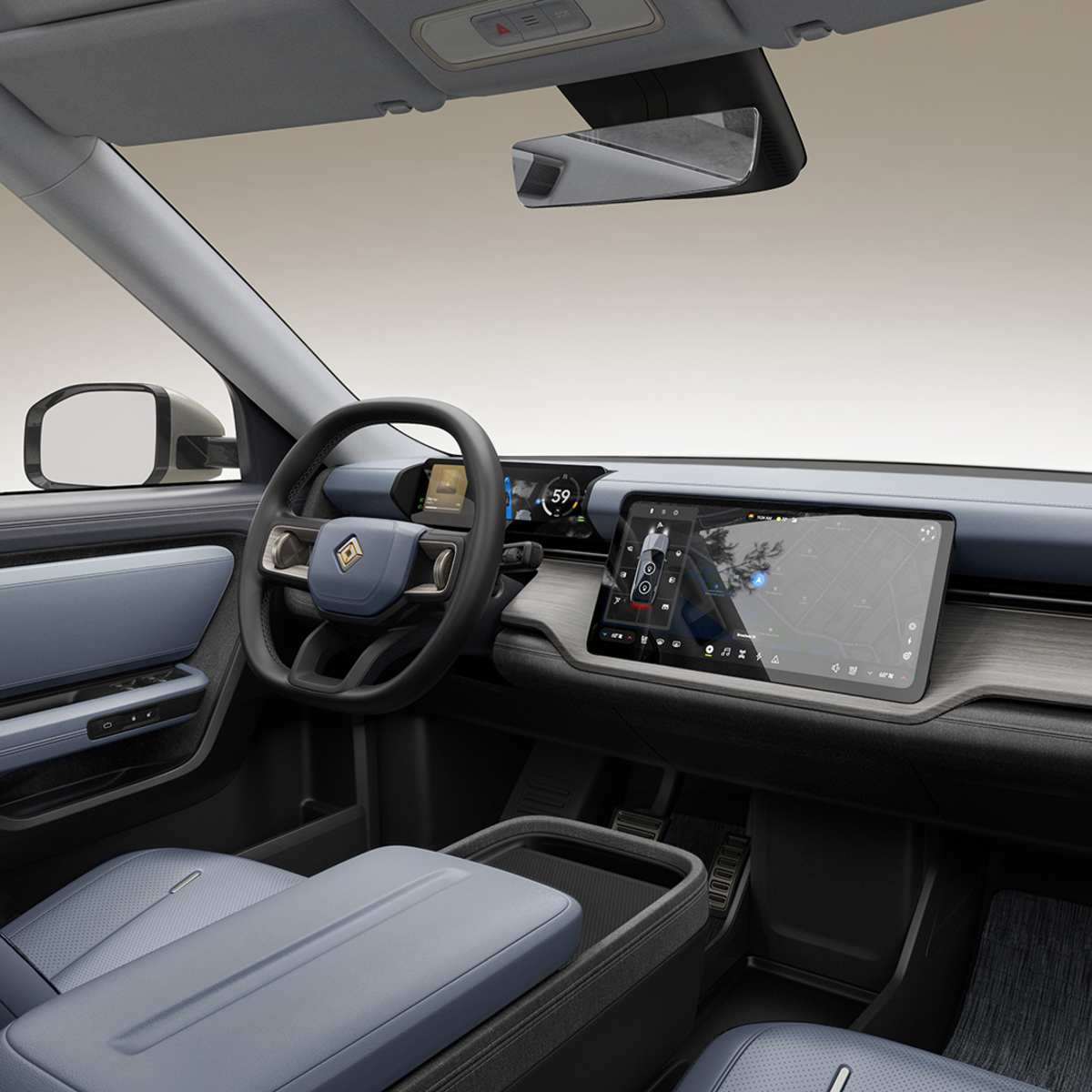
The Rivian R2 is Rivian’s upcoming smaller electric vehicle, positioned as a more accessible model than its earlier R1 platform. Here, it’s specifically mentioned in the context of Rivian’s vehicle-to-home (V2H) readiness claims and the remaining hardware work for the home side.
Term
DCBEL system
A DCBEL system is a way to make an electric car generate sounds on purpose. The goal is to help people hear what the car is doing, especially at low speeds.
An inverter is the electronics box that turns battery power into the kind of electricity the electric motor needs. It’s closely connected to how the motor is working, so it can be used to make the car’s sound more accurate.
Electric cars can be very quiet, especially when moving slowly. So some cars add a made-up sound that’s generated by the car to make it easier to notice and to give the driver feedback.
They’re talking about whether the car’s added sound should be only for the driver or also played outside the car. Outside sound can be helpful for safety, but people debate how it affects everyone around it.
The Dodge Charger is a performance car model. The podcast is bringing up an electric Charger (including the “Daytona” name) and talking about how it’s being presented as a performance vehicle. It’s basically about the Charger brand moving into electric driving.
Term
cattle sodium batteries
They’re talking about a battery type that uses sodium instead of lithium. Sodium is easier to get in large quantities, and the battery can often last through many repeated charging cycles.
Energy density is basically how much “power storage” the battery packs into its size. If it’s higher, the car can usually travel farther without needing a bigger battery.
Battery life cycle means how long the battery can keep working before it starts losing its ability to hold a charge. Longer life cycle is usually better for long-term use.
A sodium battery is a type of rechargeable battery that uses sodium instead of lithium. People talk about it because it could be cheaper, but it may not store as much energy per size as some lithium batteries.
The Tesla Semi is an electric truck meant for commercial use. It’s built to move goods over long distances using batteries instead of diesel. The podcast is discussing whether other companies will seriously compete with it soon in the US.
They’re talking about the made-up sounds some electric cars play through speakers. The question is whether it helps you drive more safely or makes it easier to drive aggressively.
It means the sounds you hear inside the car while driving. Electric cars are very quiet, so the host is saying that sound cues can help you realize you’re going faster than you think.
The Autobahn is a famous German highway system where cars can often go very fast. The host is using it as an example of how a quiet EV can make you underestimate your speed.
LIVE
21 we are live on the episode of The Electric Podcast.
I am Fred Lambert, your host and as usual, I'm joined by my co-host, Seth Wainchild.
We're doing good this week, Seth.
I'm doing good.
All right.
Before we jump right in, I want to say a quick thank you to today's sponsor, GM Energy.
If you want to experience more resilience and control over your home energy, the GM
Energy Home System adds stationary battery power for always ready backup energy for
your home, and the GM Energy PowerBanks takes in energy from the grid and stores it for
when you need it the most.
Learn more at gminergy.gm.com.
We're going to have a little bit more to say about them later on in the show, so stay
tuned for that.
But thank you, GM Energy, for sponsoring this week's episode of The Electric Podcast.
And on this week's episode, we're going to talk about a bunch of different things.
We took talk about the, well, a little bit about the event of the delivery of the Tesla,
the last, very last Tesla Model S and X, but honestly, there was not that much to talk
about on the event.
It was kind of just a little farewell.
But there was one piece of information about the cyber cab that I thought was worth talking
about.
So we're going to do that.
I'm going to talk about the situation, the worst situation with the new Chinese-made
Tesla Model 3 in Canada right now, which is like super, super cheap.
But Tesla's having like issues figuring out the specs of the vehicle.
It's strange.
We talk about our exclusive this week where we can confirm where Tesla plans to build
its giant solar panel factory in the U.S.
I'm going to talk about a little bit of information about this that was interesting in the SpaceX
S1 filing because SpaceX is going for an IPO in the coming weeks now and they filed the
S1.
So we got a little, a little more information about all the interconnection between the
Musk companies, including, you know, Tesla is our beat.
So that's what we do.
We're going to talk about the Volvo EX60, the full unveiling was earlier this week.
And that's a nice vehicle right there.
It's a very well-packaged car, nicely specced, a little bit on the expensive side, like it's
not as cheap as some people would want, but value-wise, I think it's very interesting.
Then we have an all-electric Mercedes AMG GT that was unveiled this week.
Very cool vehicle that our friend Jamie had the opportunity to see in person.
I'm going to talk a little bit about what he saw.
Then Xiaomi unveiled the latest version of the YU7, which is a new standard version that
undercuts the Model Y by almost $5,000.
And at the same time, they don't feel like both end of the spectrum, they don't feel
a new standard version and then they don't feel a new GT version, which just broke the
Norbering record for an SUV.
And then now we just got a sneak peek at the Lucid Cosmos this morning with a little prototype
siding outside the factory.
And for convenience, it was right next to a Model Y, so we can actually get a little
size comparison here.
But, yeah, let's start with, well, before the show is live, I know we started a little
early today, by the way, so I don't know, like probably not that many people are listening
live right now, because we started at 3 p.m. instead of 4.
I need to get to the airport right after the show, because I'm going to Rome for a special
unveiling that I cannot talk about, but you guys will know everything about it Monday,
Monday night, I think.
I think it's Monday night, it's going to happen, so Monday afternoon, maybe.
So yeah, sorry about that, but if you are watching live, you can put questions in the
comment section and we're going to, as usual, answer a question at the end of the show.
All right, so yeah, you probably didn't watch the unveiling event of the signature Model
S and X, right?
Oh, you're muted, is it?
I listened to it, I didn't actually watch it, I was listening to it in the car.
Yeah, it was, I mean, first of all, it was a full hour late, which is not a good look
for a trillion dollar company.
And then there was not anything very significant, it was kind of like a blast of the past type
of thing.
They looked into the program from the early days and the reminiscent on the first, all
the first that the Model S brought to the market, which is a lot, to be honest.
Even small things, people don't take for granted these days because literally it's in every
single car, but the giant touchscreen in the middle, like the giant iPad size touchscreen
on the middle, people don't remember that that literally predates the iPad, like the
iPad sort of popularized the touchscreen tablet throughout the world.
But the first model S prototype had that and it was before the iPad release.
And then of course, when the model S actually went to production, I think it was like around
the same time as the iPad and stuff like that.
But still, it was impressive for Tesla to develop, you know, a whole architecture of
a giant touchscreen tablet, making a center display in the vehicle.
And now it's just where every car has that.
And that's a small thing, obviously, the, you know, large scale lithium ion battery pack
using, you know, cylindrical cell is also it's probably the biggest innovation.
But technically, the Roadster was the first one to bring that.
Technically, the T zero before that, but, you know, it was all in the same basically
bloodline of electric vehicles.
And yeah, it was, it was a big success.
So 750,000 model S and X were delivered.
So it's a successful vehicle program, even though they were kind of neglected at the
end and, you know, the cells dwindle.
Overall, I think we can all agree that it was a, they both were super successful
vehicle program, both said and I, I think, are a giant fan.
I think we both had model S and X. Yeah.
Yep.
Yeah, you add them all X to it.
And it was said was one of the first one to get a model S to be a big fan of the program,
but there was no new information coming out of it.
At the end, they just handed out the keys to a few people.
There was no Roadster that was coming out.
Cause obviously the timing of the Roadster on suppose, suppose of revealing was kind
of close.
So people thought it might be it, but nope.
The only thing that I thought was kind of a new information interesting is the
announced that the cyber cab was the first electric vehicle certified with 165
watt hour per mile efficiency.
So that's, that's impressive.
It's, you know, you compare it to the second best, which is the lucid air pure
river drive.
That's 230 watt hour per mile.
So 28% less efficient.
Obviously, you know, there's a giant caveat to this, this is all cyber cab efficiency.
It is impressive how efficient it is, but it's, it is a two door core, two cedar,
very narrow.
It's, it's obviously built around the, you know, it's great to have an efficient vehicle,
but you have to balance the utility of the vehicle, the value of the vehicle and its
efficiency.
I think for that, like maybe not on value side of it, but in terms of actual utility,
obviously the lucid air blow that out of the water.
Even the model three is the more impressive vehicle in that view, in my opinion.
But if you want to make it like you want, you're willing to let go of some of the
balance in the utility for, for efficiency, then that's what you get with a, with a
cyber cab, a two cedar that's extremely narrow in the back.
But spending like 165 watt hour to travel a mile, like, I don't want to make this
up, but 165 watt hours, is it like almost like equivalent of what you get like in an
iPhone battery?
No, no, it's not, right?
What's that?
What's the kind of battery that you get in an iPhone, like a big iPhone?
Like how big is it?
Yeah.
No, it has to be less than a hundred and 600 watt hour, right?
Oh yeah, definitely less than that.
Okay, okay, but it is.
It's like one of those power bricks, those big power bricks.
Yeah, yeah, the bigger power brick.
It's, you basically use that and you can travel a full mile with this car.
So that's, that's, yeah.
But at the same time, the only thing this thing work is if autonomy works and it's not
quite there yet, especially not at scale.
Yeah.
Now the model three, so that was the big news earlier this month when Tesla launched this
new Shanghai made rear wheel drive model three with premium rear wheel drive model three
in Canada for 39,500 Canadian dollars.
Now that might not sound crazy for you Americans, but when you look at the equivalent in the US,
that would be like selling the model three at $30,000 USD.
So that's, that's huge.
But now this is kind of a little sour grape.
We're going to need the lunch because when Tesla launched the new version of it, which
the reason they can do that is like it's a new version of the model three built in Shanghai.
And with the reduced tariffs, it could be even cheaper because there's still like
67 percent tariffs on this, but you know, less cheaper than 100 percent tariffs
that was a month ago.
That's why they can bring the price down.
But when they launched it, there was a 4.2 seconds, zero to 60, zero to 100 kilometers,
so zero to 62 miles per hour.
And a few days later, that was changed to 5.2, a full second slower.
So that's weird.
It's weird where Tesla doesn't know the actual power of the vehicle.
And then again, this week, it was changed to 6.2 seconds, zero to 100 kilometers an hour.
So once again, so the first time Tesla said, sorry, it's not 4.2, it's 5.2.
It was an error in our system on the website, which I can understand because
it happens and obviously 4.2 for a rear wheel drive on low three doesn't make that much sense.
All wheel drives, that's the speed of the all wheel drives, the acceleration, sorry.
So they changed it to 5.2.
But if they found the error and you're like, yeah, that's the error, this is 5.2,
you correct it to the right one.
But then a few weeks later, you say, actually, it's 6.2.
So that makes the old website error a little less believable.
And not only that, they also changed the peak DC charging rate from 250 kilowatt to 175 kilowatt.
And the battery warranty from 192,000 kilometers to 160,000 kilometers.
So a lot of the specs I've changed in the last few weeks for no typos.
A lot of typos.
And, you know, I think personally for the speed, like 6.2 is not the end of the world.
Like if 5.2, 6.2 is a little bit slower.
Yeah, I think it's very bold.
Yeah, basically.
But the peak charge rate is a little bit disappointing though.
Like going from 250 to 175 for a Tesla in 2026.
You know, we know this used the latest new LFP sales.
Maybe my hope is that because I know a lot of people are buying this right now in Canada.
Like it's left and right.
They have friends.
They have friends.
Is quite honestly an incredible deal for the value.
So I'm not blaming anyone to buy that.
So my hope for them is that maybe Tesla, because it's a new battery that's going into
this car that's like limiting the discharging rate for the DC fast charging.
And that eventually it, you know, makes it a little bit faster.
But 175, it always depends on your charge curve too.
If you're able to maintain a high charge rate over time,
you can still have a pretty good charging cycle.
So we'll take a look once these hit the market because they're going to sell like crazy, I think.
All right, moving on.
We had an exclusive Tesla news this week where I was able to confirm with sources that Tesla
plans to build its new solar panel factory that was announced a few months ago by Elon Musk.
He's talking about 100 gigawatt hours of capacity.
The entire 100 gigawatt hour capacity is a bit confusing.
It's not clear because he said that SpaceX also wants to produce solar panels.
So now SpaceX, and this is going to compete on solar panel production.
And also experts that can build solar panels, I'm sure.
Yeah.
And those are far and few in between.
So deploying this at scale, it's super difficult.
Buying it, so the Tesla is not building its own equipment to buy this.
They are going to Maxwell in China and trying to buy equipment from there.
So it's not a done deal, by the way.
So the news here is that I can confirm for a fact that Tesla is planning right now to
build this factory just outside of Austin, Texas, not Austin, Houston.
Broke Shire is actually the little suburb just outside the city.
It's where Tesla is already building its megapack factory.
So they're going to make a factory to get out this gigawatt capacity solar panel facility.
And they are planning to do a full-scale facility here with Inget.
And the wafer, everything is going to be built there.
But the most part, the solar panel, solar module, manufacturing industry in North America has been
reliant on Asian solar cells to make the modules.
So this would make the whole thing.
So this is a big deal.
And the capacity, obviously, is ambitious, let's say, at least.
Like, I would think it with a grain of salt.
Like, you know, it's the same thing that Tesla said when it talked about
building battery cells for the first time.
Like, oh, 100 gigawatt hour per year capacity and all that.
It never happened, obviously.
They did produce battery cells and they are producing battery cells but nowhere near that volume.
So I would expect something similar going on here.
And again, not a done deal because there's reports that Tesla is trying to buy the
manufacturing equipment, billions of dollars worth of them from Suzhou Maxwell Technologies,
which is a Chinese company.
And they are reportedly some issues to clear the export in China.
Because, you know, China is having some issues like, all right, we're going to, you know,
sell you a billion dollars of equipment and then you're going to compete with us on, you know,
hundreds of billions of dollars worth of solar modules.
So they are, you know, and reportedly, according to a New York time article last week, yesterday,
the little visit that they had in China last week where Trump brought, you know,
Elon and Jensen and a bunch of leader from Silicon Valley and the U.S.
Part of the deal was tried to, part of the reason for the visit was to broker a deal
regarding this export of equipment.
And apparently it didn't go super well.
There's no clear feedback that that happened.
But from what I'm hearing, I think they're moving forward on this.
So it might have gone better than some of the reporting is going on right now.
We'll see.
The, right now, I think the production timeline is 2028, which is also pretty ambitious.
Let's put it like that.
It always is, right?
Yeah, Elon time.
Elon time.
All right, speaking of Elon, he has SpaceX at its S1 filing this week.
And oh my God, is it a crazy file?
He probably the craziest filing I've ever seen.
They literally, they calculated their total addressable market, the TAM,
which is like a metric, like an investor metric that if you're, you know,
trying to raise money with investor, they want to know what's your addressable market,
like how much, like how much money can you actually make with this?
Like let's say you take 10% of the market, how much money is that?
And basically, the SpaceX addressable market is like the entire universe.
It's bigger than the US GDP.
It's, it's everything.
They're like, forget it.
We can, we can take the entire AI industry.
We can take the entire space and space industry.
They have a good argument for it.
They're already like 80% of launch capacity or something like that.
So like, you know, it's a quasi monopoly, but the entire AI industry when,
when you know, XAI, GRUK is your basis for it.
It's like, good luck with that.
Yeah, there was, there was a lot of questionable thing about, you know,
the company is trying to list itself on the market in an IPO right now at 100 times revenue.
And Elon Musk is out there selling it as like, hey, I'm getting 30% of the IPO
allocation to retail investors as if like this is like a beautiful gift that he gives
retail investors for normally don't have access to, you know, they only can trade it
on the first day when it launches.
They cannot, you know, buy the stock before it's listed on the actual IPO.
But that is a lot less of a brag if you're listing your company like at a post IPO price
of 100 times revenue.
And, you know, I would like to tell you like a price to earning ratio, but I can because
now it's literally losing money.
I try to calculate it like it's, it's complicated when you go through the entire IPO, but
I try like to remove XAI from the equation because if you remove XAI or equation,
SpaceX was actually in 2024 making a little bit of money.
So you can get an idea if that would have continued into 2025, maybe SpaceX could have
technically traded at $2 trillion at a like 600 time earnings, which is absolutely nuts.
Normally, like even in the tech industry, like a 10 to 40 is nice.
Like, but 600 times is ridiculous.
Tesla is 300 times.
So it's also ridiculous.
What's a, what's a cow?
She think the, the IPO is going to be like value of space.
I think it's, I think most people are between $1.75 and $2 trillion.
It's nuts.
It's absolutely not like the company is making roughly like
$5 billion a quarter is like $20 billion a year and it's losing money like crazy right now,
mostly because of XAI.
Now the thing that a lot of people were like the saving grace of it all is like the new
entropic deal that, you know, XAI basically sold out its entire training capacity and
inference capacity to, to entropic because no one is using grub.
So like that was a fallback.
So, so that's their plan B is what people are praising, right?
Now I was like, oh, yeah, but that, but that means XAI is not going to have,
it's not going to continue to lose money.
Yeah.
I mean, Grock's going to like wither, isn't it?
If they're not training it.
Elon is insisting that they're still training it and, and so it's going to make a comeback.
But the reality of it all is that they just announced yesterday that entropic is taking
over Colossus too now.
So, so like it looks like the idea is just they're going to rent out their, their compute
capacity to entropic.
But the deal is apparently like 1.2 billion.
And that was before I think Colossus too.
So, so it's, you know, it could be as high as like 2 billion a month that entropic is
paying XAI now space tax.
So this, this, this is going to improve their financial quite a bit enough to be, be worth
2 trillion dollars.
Like not, not really, not even close really.
But one of the thing that I found the most interesting related to Tesla in the filing
is that TerraFab comments were interesting.
So TerraFab, you know, last month announced by, or two months ago, announced by Elon as
a joint project between SpaceX and Tesla to build like terawatt capacity of chip manufacturing
in the U.S. and Intel joined a month later.
And this is like, you know, the biggest project seemingly in the entire, you know, computing
world that's multi like 20 billion dollar investment.
And yeah, and Elon is framing it as like a critical part of the SpaceX IPO because
it's announced it right before the IPO and it's the basis of his like long-term growth plan
for SpaceX, which is to build AI data center in space.
So the TerraFab will build both chips for Tesla, primarily for the Optimus robot apparently,
and the other chip is going to be inference compute in space.
But then what we learned from the actual filing is that this deal is not a deal at all.
It's a general framework.
That's what they use, the term that they use.
It's, there's nothing set in stone.
While we have a framework agreement with Tesla, neither Tesla nor Intel are obligated to
remain part of the project and we are not entered any such defensive agreement.
There's no, any specific project undertaken pursuant to this framework will be subject to
separate negotiation and agreement, including any development timelines, milestone and capital
expenditure have not yet been determined.
There's no financial commitment.
There's nothing, there's nothing done.
So this is clearly Elon Musk rushing to announce a deal that's not made yet just before the IPO
to try to justify a crazy valuation.
But yeah, it's pretty crazy.
Like I've said it before on the podcast, but I have like a concern that this,
this thing could crash the entire stock market like it could launch.
Really?
Oh yeah.
I mean, it's $2 trillion.
It's imagine, imagine it launch, imagine the retail investor go crazy over it.
You know, it goes up 20%, 40%, 50% the first week or something.
And then the lockup period, which I think are less than six months for some people
are start to go away.
And then how do you not take profit at this point?
Like some of them, some people, and I'm not talking about the retail investor
necessarily that might be just makes a smaller percentage of money here.
But the people that have been there for a while, like the Google of this work,
we own like 10% of the company.
Like maybe you start thinking twice.
You're like, you look at your TPU at Google and you're like,
hey, we're actually a pretty good business training or system on TPU.
And like we're buying solar, wind, geothermal capacity to power those.
I don't really see a lot of value in space at a center.
And I can make like $200 billion if I sell my stake right now and finance my own AI effort,
which I think are better than SpaceX.
Like there's a lot of people that could start thinking like that.
And then, and then we're talking about hundreds of billions of dollars of value just
erased over a short period of time.
And that can snowball into panic in the market.
That's how it starts.
That's how those crashes start.
So I'm a little bit concerned.
I would like to see something more reasonable happen because I still, I love SpaceX.
Yesterday I was, I rushed to drive home so that I could watch the launch of the
Letters Starship happen and it didn't happen, but still I wanted to.
All right.
Let's talk a little bit about our friend at GM Energy here before we move on.
You know what?
Let's do one more and then we'll bring it out.
Oh, okay.
Do one more.
All right.
One more is a pretty crazy one.
It's the EX-60 from Volvo and that thing is quite a nice vehicle here.
It's up to 400 miles of range.
Up to just look at the packaging.
First of all, like this is a three-quarter.
It looks solid.
Like that's a, that's a good word for it.
It looks solid.
It's a beautiful vehicle.
It's going to compete like with the iX3, with the iRN, maybe Model Y, Rivian R2s.
Because it is not cheap.
It starts at $58,400.
So it's Genesis, you know, I would say a Genesis GV72, also a competitor.
Even the McCann, like at $80,000.
I don't know if, if I had the choice between an EX-60 at $60,000 and a McCann at $80,000,
I might be tempted to go with the Volvo, to be honest with you.
Yeah.
It's a good looking car.
I like that green.
Yeah.
That's green.
Yeah.
Yeah.
Green, gray, yeah.
83 kW battery pack for the base version for over 300 miles of range.
Then you can go with the P10 version that gets a 95 kW battery pack.
And this one, you know, brings you a 322 miles of range.
And then you have the P12, which is the fully equipped one.
A 117 kW pack on this thing for over 400 miles of range.
That's no joke.
Where are the interior, there you go, the interior pictures here because
it's very, very sleek interior here.
And you have the Volvo system.
So that's the Android base one.
Android or Google base?
Yeah.
It's called Android for automobiles, or it was last time I checked.
Yeah.
You keep changing the name.
All right.
Here you have the kid at full.
So if you want, if you want the 400 miles, okay, there's not even a price announced for
the non-version, but the EX60P10 all-wheel-drive Ultra is 67,000, 3,000.
So I'm sure that the P12 going to be over 70 at this point.
So yeah, it's going to close already to the to my can.
Between 320 and 270 kW of charging capacity, that's more than decent.
We don't have more interior pictures of this because the interior is really sleek.
Like the second row is absolutely beautiful.
It's even the seatbelts, they have a new seatbelt system in there.
It's very nice.
There's a lot of just beautiful, small details in this car that I really enjoy.
It's the design accent.
The Bose Gemini Assistant Pilot Assist from Volvo, that's their ADAS system.
21 speaker from Bose.
You know, they use so much Google, you have to wonder if like Google is saying,
hey, why don't we do a Waymo Lite?
You know, I mean, they have so much LiDAR stuff in there as well.
Yeah.
Yeah, it wouldn't be a bad partner.
I mean, I would definitely prefer that to the iPACE, but I think they are moving to their
whole high system now, like the new like Zeekr base.
Yeah.
So I think they're going to focus on that more because much like the CyberCAP,
I mean, you have more seats in the old high, but it's also like efficiency,
focus and everything.
So and it's cheaper.
Let's be honest with that.
Because if you want to even if you take the cheapest one here, it's $60,000.
But yeah, I'm looking forward to drive that one.
If whenever it comes here, I would like to do a test drive because
I think it's going to be one of the best value one in the $60,000 range.
All right.
Let's talk a little bit about our friend at GM Energy.
All right.
This today's episode is sponsored by GM Energy.
Smart energy features are no longer just a luxury.
They're a necessity.
One in four homes experience power outages each year.
Get off to extreme weather.
Many homeowners are looking for new ways to stay powered and connected.
Fortunately, home energy systems offer resilience, style and sustainability
benefits in one package.
A power outage doesn't have to put your life on pause.
GM EV owners can now use the GM energy home system to beat the blackout.
This advanced system allows vehicle to home capable Chevrolet Cadillac GMC EVs to store
energy and when needed supply energy back to the home, keeping the essentials running
and your sanity in check during an outage.
If you really want to experience more resilience and control of your home's energy,
the GM energy home system adds stationary battery power for always ready backup energy
for your home.
The GM energy power bank takes in energy from the grid and stores it for when you need it most.
Learn more at GMEnergy.com.
Sorry, GMEnergy.GM.com.
A huge thank you to GM Energy for sponsoring this week's show.
Yes, thank you GM Energy.
All right, and again, we are live on this show and I see we have some people coming in
even though we're early, so that's great.
If you guys have questions for us, you can put them in the comment section right now
and you get to it at the end of the show.
You can be about any topic that we're discussing today in the EV world or any other topic
that you would like or take on and you can, if you can put question dash whatever you
want to ask us, that would be helpful so that we don't have to go through the entire conversation
going on in chat too.
All right, moving on.
We have the world premiere of the Mercedes AGM GT four door coupe, which is the fastest,
most powerful AGM ever, Mercedes AGM ever, and a good looking vehicle.
It's a very aggressive look.
I don't know about the, okay, the front end.
It looks a bit strange from some angle, I don't know why.
Yeah, it's got like teeth coming out or something.
Yeah.
Looks like it has a mouth guard in there.
Yeah, a mouth guard, like a duck face, like it's doing a little...
But nonetheless, it's a pretty crazy vehicle.
I think that's 600 kilowatt charging or something.
It's just insane motor, like it's actual flux motor on this thing, just a ton of power.
Let me get the specs here.
I read Jamie's article, it was a few days ago, so I don't remember all of the specs,
but it's like a super powerful, small motor here.
You can see 65% reduction in length, 67% reduction in weight, three times the power.
It's, you know, when they acquired Yaza, a big motor manufacturer, a few years ago,
that's the production result of that.
All right, so combined all together, they have the motor produced 1153 horsepower.
Wow, that's on the, okay, they have a lower spec version, a GT55 model with 805 horsepower.
Not too shabby.
No, not too bad, especially on the car that small.
And they say that they have a way to get to a 1300.
So they say that the power train itself, the electrical architecture of the vehicle has
been designed to be capable of outputting to up to 1300 horsepower.
So we might see even more powerful future models, so they're not done just yet.
Yeah, so 0 to 60 is two seconds, 0 to 124 miles per hour, which is 200 kilometers per hour,
is 6.4 seconds, that's insane.
Top speed 186 miles per hour, which is 300 kilometers per hour.
The lower spec, the lower spec, it still does 2.4 seconds, 0 to 60.
That's nuts.
Curb weight of 5,400 pounds, that's not a light GT for sure.
Yeah, there's some V8 fake engine noise, so of course, Jamie was not happy about that,
we get that.
I don't remember if he said that you can remove them, so that's my main thing.
If you can remove them, I'm fine with them.
The, with paddle shifter, back to the steering wheel, because you can change them,
but can you remove them?
For the battery, they didn't use a new silicone anode attached to an MCA type cathode, interesting.
Came from Silanano, I remember Silanano, it's been a while.
Yeah, that's right, Mercedes invested in that.
So obviously, this is geared towards performance, but still get pretty decent efficiency range
with the WLTP between 371 to 435, depending on the version,
thanks to a 106-kilometer battery pack in this thing.
Yeah, 800-volt system for a DC fast charge of over 600 kilowatts, where you can get it,
obviously, but if you can, it pours.
10 to 80 percent, 25 is just 11 minutes, beautiful.
And then you can, if you're on the full-load charger, you can just charge at 320 kilowatts,
that's not bad at all.
Yeah, you get the power train here, sleek-looking power train.
We have the entire spec, we won't go into that just yet.
Yeah, look at the back seat, they are so blushery, you cannot move your ass from there.
It's just, you're basically sunk into that seat here, look at that depth.
That's great.
Yeah, still, okay, Frank, I don't know if you can put maybe a carry-on luggage in there.
Yeah, at least a backpack, and then you can put a couple of luggage in the back here.
Golf clubs.
Yep, more likely for this type of vehicle.
Look at Jamie looking good next to the, I have never been a giant fan of that color,
I don't remember the bold, the first bold had that color too.
But yeah, it doesn't look bad here, especially with those rims.
Tennis ball.
Yeah, yeah, tennis ball color, that's right.
No pricing on this just yet, but obviously, you know.
It's, if you have to ask.
Yeah, you cannot afford it.
You can check the Jamie's full article, Frank, and it's really interesting.
He's always produced great articles with these crazy cars.
And my dream car situation here, Xiaomi had a little event this week for the YU7,
where they unveiled both a new standard version and then they fully unveiled the GT version
that was hiding anticipated.
So the GT is to the Su7's Ultra is the equivalent for the YU7, but you know,
geared a little bit differently because it's still an SUV to some degree.
But look at that car.
Isn't that just like beautiful, beautiful car.
But what really stole the headline here, because obviously the GT just got the
Norbering record at the same time for SUV.
So, you know, another feather in the cap of Xiaomi is that Lee John, the CEO of the company,
you know, he's never been quite shy about comparing Xiaomi to Tesla.
You know, he's a big fan of Tesla and he's, he wants to benchmark all his product against
the company. And the original launch of the YU7, I was there in Berlin last year,
and he was, you know, comparing every spec to Tesla is like we beat them in every spec.
But the pricing was closer than a lot of people expected.
They expected that they would try to go a little bit downpricing.
And he mentioned that idea when he was like, I think we price a little bit too close to Tesla.
Like we just tried to be right in spec, but Tesla still carries kind of a premium
in China compared to domestic automakers.
So they're like, all right, we'll beat them there too.
So now they reduced, well, they did not reduce the price because they launched a new version
of the, of the YU7 called the YU7 standard now.
And they changed the pro to the long range instead that they call it now.
And it starts at 233,000 RMB, which is $32,400.
Single motor, river drive, 235 kilowatts, still 315 horsepower.
Which is really good.
Like for like a $32,000 cars, having over 300 horsepower is not bad.
Normally at that pricing, you're in the 200s.
5.9 seconds, 0 to 100 kilometers an hour.
73 kilowatt hour battery pack from CATL.
You still get the 752 volt architecture.
So I did the review of the YU7 last month and that's the big thing too.
They brought the base version to 800, almost 800 volt.
So they did the same thing here with the YU7.
So you still get 643 kilometers of CLTC.
So you beat the base Tesla on the CLTC again by 50 kilometers on this.
So that's, that's the big thing.
So you're almost $5,000 cheaper, 500 more, 50 kilometers more range.
And you get an air suspension on the base version.
So you get like active damper on the higher, on the premium model wise,
but on the base thing, you get like not much.
So you have that, you have LiDAR, you have the NVIDIA Thor 700 top system,
and you got the ADS system.
Instead of being a subscription, it's included in the car.
So it's a ton of value.
It's not even close here.
So that's the, I don't know, that's a GT version.
That's, yeah, it's a GT version here.
It still looks basically the same like the GT has like just a few design
accents more that are a little bit more aggressive.
But yeah, the GT is,
starts at $289,000 RMB, which is $54,000.
So this is like more equivalent to the performance version of the Model Y.
But the specs blow it out of water with 990 horsepower here,
0-100 in 2.92 seconds, 101 kWh battery pack, almost 900 volt architecture,
7.5 kilometers of range.
And on top of the air suspension, you have dual valve CDC for the suspension system.
Carbon ceramic brakes.
I mean, that's more like a Model X plaid-ish.
Oh yeah, oh yeah.
Performance wise, it's definitely closer,
size wise.
I mean, battery pack size is bigger.
I mean, it's a little smaller vehicle.
But yeah, right now, honestly, this is my dream car.
Like a Y-U7 GT, it's like my dream garage would be a Y-U7 GT with like a GMC Sierra EV.
So I thought that would be like my dream garage.
Just like 300 kilowatt hour of capacity.
All right, we have one more piece of news before we jump into the comment section.
So you guys put your comments right now with it in just a few minutes,
because we're going to talk about the cosmos.
You have the air, you have the gravity, and now you're about to have the cosmos.
So that was announced just a few months ago by Lucid.
But the only like, unveiled, like what the interior proportion are going to look like,
they didn't unveil the actual car, they just announced it basically.
It's going to be fully unveiled this summer.
But for now, for the first time, we get a pretty good look at what's going to be a form factor
of the vehicle here, thanks to a siding from John61640 on Twitter.
We spotted it just outside of the factory in Casa Grande, Arizona.
And it was lucky enough that the, yeah, the MOLY, last generation MOLY right next to it.
So you get like a good size comparison here.
It's basically, it's very much gravity looking.
It's kind of, yeah, it's gravity looking, but a little bit sleeker.
It looks like a little bit shorter, probably, like it's hard to tell from there.
But I would assume not just the height, but the length a little bit shorter.
And yeah, other than that, it looks very similar.
But yeah, that's supposed to be the new mid-size vehicle.
So about the same size as the MOLY looks like.
Maybe a little bit, not as tall as the MOLY.
And it's expected to be under $50,000 to compete with it.
So the thing I'm most curious about, to be honest with you, is the efficiency on this.
Because it does look super sleek.
And Lucid is already known for their poor train being extremely, extremely efficient.
So I'm curious to see if they break some record with that.
Because that could be interesting.
All right, let's jump into the comment section.
All right.
Skeptic says the EX30.
I think you meant the EX60.
Certainly looks good on paper.
I still think the R2 edges it out.
Thanks to price and autonomy features.
Yeah, that's a good point.
The R2 is pretty nice.
And I think it'll go off-road a lot better.
Yeah, that's right too.
It's also not exactly that makes market.
The EX60 is more like a commuter vehicle.
All right, A.Lutex says, Roe Monday, a new EV.
And I see a horse there.
I see electricity.
I hear, I see red.
Yeah, I have an embargo.
I cannot say anything.
But I'm sure you guys can put it together pretty easily what I'm going to check out.
Again, everything's going to be on sale on Monday.
Did you guys catch the out-of-spec trip across the UD?
What's UD?
In Chevy Bolt this week?
Oh, US.
I think they did a trip across the US, yeah.
They got some crazy range out of it with quite a bit of finessing.
You know, it's weird.
All my Chevy peeps have either quit or they're refreshed over there.
So I haven't had a chance to get the new Bolt yet.
We're trying to get one with Best Stain for the full review here in Canada.
And I think, so he's getting the gravity in a few weeks.
And then I think the Bolt is bolt booked up.
But we should get it this summer at some point to do a full engineering review and everything.
But yeah, I followed it a little bit.
Once I saw that they were, when you see quite a bit of finessing,
you mean hypermiling stuff?
Hypermiling stuff, yeah.
All these cross-country, the cannonball stuff with hypermiling and all that,
it just doesn't catch my attention as much.
It's cool.
I like efficiency.
Obviously, it's my biggest thing.
But I like usable efficiency.
You cannot convince a garage person to just hypermild their vehicle.
It's just not convenient.
All right.
Cyber cab efficiency is meaningless to almost everyone
if it doesn't come with the steering wheel.
Wow.
Yeah.
Oh, we're obviously assuming here that Tesla gets to a usable level of scalable autonomy
at some point, which I think they will.
Someone should write about the continued growth of EV sales worldwide,
despite lower US EV sales.
I think we might write something to that effect every day.
Have you read Electric?
It's like 90% of our coverage is like,
look what's happening around the world while the US is falling behind.
It's like half of our article is that.
Skeptic economist Patrick Boyle said he hasn't seen a prospectus with so many pictures
since the WeWorks scam.
Oh, that's not a good comparison.
Yeah, I had to use AI to scam through it and to look at the most important stuff
because it's like a 300-page prospectus.
Once I saw the TAM, the Total Addressable Market, I'm like, oh my god, this.
But at this point, Elon knows what he's doing.
Elon cultivates a specific type of investor, someone that is already captured inside of
his cult of personality because that's obviously the big part of the value here.
Really, the worrying thing for the world economy and specifically the US financial market
is the fact that a lot of institutional investors are falling for that stuff also.
Which is not surprising, to be honest with you, lately.
But yeah, that's the more concerning part because that could again, like I said earlier,
crash everything.
But at this point, if you're a Tesla investor and you're going,
I'm going to buy SpaceX because I love Elon, it's like, what has Tesla stuck
done for you in the last five years?
Because it's been trading sideways for the last five years at the 300,
like between 200 and 400 price to earning ratio.
SpaceX is going public at this site.
What would be a 600 price to earning ratio if they didn't buy XAI?
So, do you think it's going to be like a $4 trillion stuck in the next five years or so?
It's weird way to look at things.
Yeah, and the upside, it's so kind of overvalued now that even if it did do well,
it would kind of match what you're buying it at.
So, there's no real upside to it.
Yeah, the real winners are going to be the traders.
Everyone that trades on this because it's going to be a super volatile stock for a long time,
so with a lot of volume, so the traders are going to make their money and the actual people that
hold this, I think, like long term.
Even though I love the company, I think Starship is one of the coolest
thing that the humanity has ever done.
The money is, by the way, I don't like it.
I don't like the stock.
All right, Carl San Diego says maximum grip mode this week.
Elon sees his window for grip diminishing and Tesla is looking more and more like a loser
than a sustainable company.
Tesla will be absorbed by SpaceX, Warts and all.
Yeah, I think he's kind of going to see a joint.
The odds are that they're at 50% for that right now.
All right, Kalshi?
Yeah.
Interesting.
Skeptic says in 10 years we'll look back on the promises SpaceX is making and wonder
how we could have been so stupid to believe any of it.
I mean, I think it would be nice to have a AI dubbing of Elon Musk when he talks,
where you just downgrade all of his timeline expectation and promises.
Because, yes, do I think that SpaceX is going to build a sustainable base on Mars,
million people living there in the next decade?
No, I don't.
Do I think that greatly increasing the humanity's capacity to bring payload
in orbit and outside of the orbit is an important meaningful thing long term?
Yes.
And SpaceX is doing that, no doubt.
So if you can just tone it down a little bit, I think we can get close to a positive reality.
Did I skip that one?
You know, the SpaceX is a loser company because the fact that Elon wants the IPO,
Elon wanted to take Tesla private because of the hassles.
But when a company is a loser, IPO to cash out, that does have a little bit of a ring to it,
I guess.
I mean, IPO is an exit strategy for investors.
Like it's literally that.
So there's no doubt that some people who are invested in the stock
are going to exit at some point in the near future after they can pass IPO.
And Elon is one investor.
I think it would be a bad look for him to do that.
And with Tesla in 2022, 2023, basically.
But yeah, it's a possibility.
All right.
But Elon is a genius selling Hype and FOMO.
So SpaceX IPO will probably do fine.
Yeah, I think we...
Short term, yeah.
Short term is going to blow up probably.
All right.
Vistick is better looking.
I think we were talking about the Volvo at that point.
I guess it's a good looking car.
Actually, I like all of Cadillac's EVs.
The Lyric, I think is very good looking too.
The OPTIQ is like, man.
All right.
The IX3 is unbelievably ugly.
We're talking about BMW.
Hard to believe anyone would go for it over the Volvo.
It's not the worst BMW.
I think it's a big improvement.
I think the EX60 is a lot sexier.
Franco's EX60 fan, coming from the XC90 years ago.
Skeptic says, speaking of home energy, Rivian said this week that R2 is ready for vehicle to home,
but they're still working on the hardware for the home side.
Not to dis Rivian, but they also said that R1 was ready for vehicle to home.
So, and they've been saying that for quite a long time.
And you don't have the excuse now.
Like, I'm just working on the hardware.
There is hardware compatible.
Like, just use a standard DCBEL system.
Like, they are out there.
Like, you can just test it, make it compatible.
And then, you know, do a deal with those companies.
They'll be happy.
Yeah, they'll take on the risk of reliability.
And they'll pay you for it.
Like, you sell one at the Rivian dealership and they'll pay you.
So, I think they can just do that.
Matthew says, not sure why everyone is against fake sounds.
Drivers really heavily rely heavily on auditory feedback, such as engine revs
to subconsciously gauge their speed.
It's a safety feature.
I agree with that wholeheartedly.
But I don't know that the engine sounds that they generate are equivalent.
Like, I don't know that if you're going 65 miles per hour,
every time it's going to be the same pitch.
So, that's the thing I think that people don't get.
Like, I think the main issue with the fake sound is that they are fake sounds.
So, that they're not actually like, people stop at fake.
And they're like, I don't like that.
And I agree with them.
So, that's why one of the coolest solutions I've seen so far is the Ferrari.
What the Ferrari is doing with what is now called the loose.
And they put a sensor on the actual inverter of the motor that catches the vibration of the motor.
And then they have an algorithm that produces a sound that matches that vibration of the motor,
which changes as the motor read.
So, it's not, it's an artificial sound for sure,
but it's based on the reality of the motor turning.
So, that's, I think that's pretty cool.
So, there's two things.
So, you absolutely right match you that the feedback for the driver is essential.
So, there's that.
There's like not making a real sound is the tough part.
So, if you have that.
And then the other thing is like having to choose,
do you make that sound only available to the driver in the cabin?
Or do you make that fake sound outside Allah?
What's the Daytona, the charger EV?
Oh, yeah.
Yeah.
Yeah.
Charger, no, it's charger, right?
Yeah, it's a charger.
Which makes that sound outside of the vehicle with speakers.
So, that's a little bit more controversial.
But I'm all for make it, make everything an option.
If you make everything an option, it's fine.
All right.
Let's move on.
Question.
When will we get the promised 30k board battery electric vehicles?
Supposed to get on build this year.
Yeah.
But not about it soon.
Yeah.
We had, we had our issue with Ford over the last few months that they're
canceling a lot of programs.
Xiaomi doesn't charge a thousand dollars for white paint like Rivian.
Somebody's a little bitter about that white paint.
Yeah.
But I mean, the upcharge for paint like anybody else don't know.
I don't know what's the actual price though.
All right.
I'm going with the free silver, but yeah, I would have preferred white.
Yeah, I think people are a little upset about that.
What do you guys think about the newly announced
cattle sodium batteries that seem to have a great energy density good for cars?
We have talked about those in the past.
Fantastic, actually.
If they can, I mean, they're safer.
Their sodium is obviously very available.
It's half of salt.
It's longer lasting, more cycles too.
Yeah.
So right now they are mostly targeting the stationary energy storage market
because of the lower energy density and because of the higher life cycle.
Like literally like a sodium battery inside a car,
your car will be completely falling apart before the battery loses capacity,
which might sound like a good idea.
But at the same time, then you have what do you do with the battery?
Like you have to swap it into another car and it doesn't make that much sense.
So you're better off than if the battery breaks before the car,
but it's still not an ideal situation.
But there is some variation of the chemistry now that does make sense for cars.
Actually, we are getting some cells to test home for the sodium
because there is some, I have my little battery lab now at home that I can do that.
And there's some people that are saying that like,
there's some people that are calling sodium batteries,
some of the companies that are calling sodium batteries,
not necessarily really sodium.
So I'm really curious to see what we can find out.
All right.
Let's see.
Lava orange, no charge, no brainer.
I think that's a Rivian color, right?
I don't know.
Yeah, I guess we'll have to look.
Question, the Honda Prologue has a backup camera recall.
Do you think that will expand to Chevy Blazer EV recalls
since they are largely based on the same cars?
If it's the same hardware and it's a hardware problem, it sounds like, yeah, but...
And is it the hardware recall or is it just a test that just had like a battery camera
recall, but it was a software update?
Yeah, I think it might be software.
So not necessarily the same.
Do we have any indications of increased EV sales in the USA due to the oil crisis?
I think we got this question last time.
Yeah, but like the data, like the data is true.
Like the US is very opaque with their car sales data.
And we just got, we're starting to get some good data on April,
because April is really the first month that makes a big difference.
Now the war started in March, but you know, the bigger the impact is more in April now.
So yeah, what we're seeing right now, what's tricking out from April is indeed
EV sales are off.
Overall, overall car sales in the US is way down though.
I think it's down almost like 67 percent, which is significant year over year.
But but EV sales are up.
So which is not too surprising when you have like Ford all in gallon gas.
Yeah, do you see any serious competition to Tesla Semi in the next few years?
Not in the US.
You have the wind rose stuff, which is people call like the Tesla Semi clone.
I think I think it's probably the closest competitor.
Everything in China like China is just like just like passenger cars.
They are way ahead of everything EVs right now.
And yeah, they have they have interesting things.
Volvo is also doing pretty good.
It's just it's a little bit more expensive per mile of range.
Same thing for for Freightliner.
But yeah, because of that, I think Tesla in the US, just like their passenger cars,
like they have their little fee foam in the in the US.
And and that's it.
The rest of the world is just getting consumed by Chinese EVs.
And lastly, Carl says, if the fake sounds are relative to the insane acceleration,
it either shocks the system that you're driving excessively or
for motorheads, it reinforces bad road behavior.
What do you think about that?
I don't know.
I think that's a glass half empty point of view.
Yeah, yeah, I would agree with you on that because it's it's real feedback.
If it's if it's well done, it's real feedback.
I don't think it shocks you.
If anything, like I think it's more of a problem in an electric car that goes fast
and that's well built with a quiet cabin interior cabin.
It's it's you you are surprised by how fast you go.
Like you drive on the Autobahn and you're like, I'm going at 200 right now.
It's like it feels like I'm going 50.
It's so if you have your your inside noise feedback that's going like.
It can it can help like reminding you like you are in a high stress situation right now.
Dangerous situation.
You better be alert and better be ready.
So yeah, I'm more on that side of the story.
But again, when it comes to fake noise in electric vehicles,
my main thing is always the same.
It's optional.
That's the most it needs to be optional.
All right.
That's it for the electric podcast this week.
If you did enjoy the show, please give us a like a thumbs up and subscribe
wherever it is on the app you're watching.
It helps us show more than you think and it takes a second to do and it's free.
Just like the show.
And we're going to see you around the same place same time next week.
I'm going to be in Italy.
We're going to have a lot to talk about.
But yeah, have a safe weekend.
See you.
About this episode
EV and energy headlines take center stage: Tesla Cybercab efficiency gets compared in watt-hours per mile, while the hosts question how much that matters without scalable autonomy. They also dig into Tesla’s shifting Model 3 performance/charging/warranty specs and the practical limits of charge curves. Outside Tesla, Volvo fully unveils the EX60 with up to 400 miles of range and Android-based infotainment, Xiaomi refreshes the YU7 lineup, and Mercedes-AMG reveals an all-electric four-door GT with extreme power and charging claims.
In the Electrek Podcast, we discuss the most popular news in the world of sustainable transport and energy. In this week’s episode, we discuss Tesla going back to solar, Volvo EX60 unveiling, Xiaomi YU7 GT, AMG GT, and more.
Today’s episode is sponsored by GM Energy. If you want to experience more resilience and control over your home energy, the GM Energy Home System adds stationary battery power for always-ready backup energy for your home, and the GM Energy PowerBank takes in energy from the grid and stores it for when you need it most. Learn more at gmenergy.gm.com
As a reminder, we’ll have an accompanying post, like this one, on the site with an embedded link to the live stream. Head to the YouTube channel to get your questions and comments in.
After the show ends at around 5 p.m. ET, the video will be archived on YouTube and the audio on all your favorite podcast apps:
We now have a Patreon if you want to help us avoid more ads and invest more in our content. We have some awesome gifts for our Patreons and more coming.
Here are a few of the articles that we will discuss during the podcast: