Tesla Solar, Volvo EX60 unveiled, Xiaomi YU7 GT, and AMG GT
About this episode
EV and energy headlines take center stage: Tesla Cybercab efficiency gets compared in watt-hours per mile, while the hosts question how much that matters without scalable autonomy. They also dig into Tesla’s shifting Model 3 performance/charging/warranty specs and the practical limits of charge curves. Outside Tesla, Volvo fully unveils the EX60 with up to 400 miles of range and Android-based infotainment, Xiaomi refreshes the YU7 lineup, and Mercedes-AMG reveals an all-electric four-door GT with extreme power and charging claims.
In the Electrek Podcast, we discuss the most popular news in the world of sustainable transport and energy. In this week’s episode, we discuss Tesla going back to solar, Volvo EX60 unveiling, Xiaomi YU7 GT, AMG GT, and more.
Today’s episode is sponsored by GM Energy. If you want to experience more resilience and control over your home energy, the GM Energy Home System adds stationary battery power for always-ready backup energy for your home, and the GM Energy PowerBank takes in energy from the grid and stores it for when you need it most. Learn more at gmenergy.gm.com
The show is live every Friday at 4 p.m. ET on Electrek’s YouTube channel.
As a reminder, we’ll have an accompanying post, like this one, on the site with an embedded link to the live stream. Head to the YouTube channel to get your questions and comments in.
After the show ends at around 5 p.m. ET, the video will be archived on YouTube and the audio on all your favorite podcast apps:
We now have a Patreon if you want to help us avoid more ads and invest more in our content. We have some awesome gifts for our Patreons and more coming.
Here are a few of the articles that we will discuss during the podcast:
- Tesla Cybercab: hate it or love it, it is the most efficient EV ever
- Tesla can’t seem to figure out the power of its new cheap Model 3
- Exclusive: Tesla (TSLA) is building its giant solar panel factory in Houston
- SpaceX S-1 reveals Tesla’s Terafab deal is far from done
- Volvo reveals EX60 prices start at under $60,000 with over 300 miles of range
- World premiere: The most powerful Mercedes AMG ever is electric
- Xiaomi’s new YU7 undercuts Tesla Model Y by $4,350 with 50 km more range
- Lucid’s more affordable Cosmos midsize SUV spotted testing next to Tesla Model Y
Here’s the live stream for today’s episode starting at 4:00 p.m. ET (or the video after 5 p.m. ET:

Volvo EX60
"We're going to talk about the Volvo EX60, the full unveiling was earlier this week. And that's a nice vehicle right there."
The Volvo EX60 is Volvo’s upcoming electric SUV. The hosts are saying it looks like a well-equipped EV, but it may cost more than some people want.
The Volvo EX60 is Volvo’s all-electric SUV concept that’s positioned as a more premium, well-packaged alternative in the EV crossover space. In this segment, the hosts focus on how it’s “nicely specced” and priced higher than some shoppers expect, even while calling it interesting value.

Mercedes AMG GT
"Then we have an all-electric Mercedes AMG GT that was unveiled this week. Very cool vehicle that our friend Jamie had the opportunity to see in person."
The Mercedes AMG GT is a high-performance Mercedes-AMG model. Here, they’re talking about an electric version that was just revealed.
The Mercedes AMG GT is a performance-focused model line from Mercedes-AMG, and in this segment the hosts specifically discuss an all-electric version. They frame it as a major “unveiled this week” event and highlight that it’s notable enough for someone to see in person.

Xiaomi YU7
"Then Xiaomi unveiled the latest version of the YU7, which is a new standard version that undercuts the Model Y by almost $5,000."
The Xiaomi YU7 is Xiaomi’s electric car. The hosts say it’s cheaper than Tesla’s Model Y and that Xiaomi is offering different versions of the car.
The Xiaomi YU7 is an EV model from the Xiaomi brand, and this segment treats it as a direct pricing and range challenger. The hosts say the latest YU7 “undercuts the Model Y” by about $5,000 and also discuss it as part of Xiaomi’s lineup strategy (a “standard” version versus a “GT” version).

Tesla Model Y
"Then Xiaomi unveiled the latest version of the YU7, which is a new standard version that undercuts the Model Y by almost $5,000. ... And for convenience, it was right next to a Model Y, so we can actually get a little size comparison here."
The Tesla Model Y is one of Tesla’s most popular electric cars. In this segment, it’s the reference point for who’s cheaper and for comparing size to other EVs.
The Tesla Model Y is Tesla’s high-volume electric crossover, and it’s used here as the benchmark for both price and range comparisons. The hosts repeatedly reference it as the car Xiaomi undercuts and as the side-by-side comparison point for a Lucid prototype.
Cosmos Lucid Cosmos
"...SUV. And then now we just got a sneak peek at the Lucid Cosmos this morning with a little prototype siding outsi..."
“Cosmos” is the name used in the podcast for a Lucid vehicle prototype they showed briefly. A prototype is an early version that helps the company test ideas before a final production car. The episode mentions it as a preview of something new from Lucid.
In this episode, “Cosmos” refers to a Lucid prototype preview that’s described alongside the Lucid Gravity discussion. It’s presented as a new vehicle direction and teased with a “sneak peek” at an early prototype. That’s why it comes up: it signals what Lucid may be preparing beyond the Gravity.
lithium ion battery pack
"And that's a small thing, obviously, the, you know, large scale lithium ion battery pack [326.1s] using, you know, cylindrical cell is also it's probably the biggest innovation."
This is the big rechargeable battery inside an EV. It’s made from lots of smaller battery cells working together, with systems to help keep them cool and safe.
A lithium-ion battery pack is the large rechargeable battery assembly that powers an electric vehicle. The “pack” includes many individual cells arranged together, plus electronics and cooling to keep the cells operating safely and efficiently.
cylindrical cell
"And that's a small thing, obviously, the, you know, large scale lithium ion battery pack [326.1s] using, you know, cylindrical cell is also it's probably the biggest innovation."
Inside the EV battery, the power comes from many small battery units. “Cylindrical cell” means those units are shaped like little cans.
A cylindrical cell is one of the common lithium-ion cell formats used in EV battery packs, shaped like a small metal can. Tesla has historically used cylindrical cells, which can be easier to manufacture at scale and can influence how the pack is packaged and cooled.

Tesla Model S
"So 750,000 model S and X were delivered. [351.6s] So it's a successful vehicle program, even though they were kind of neglected at the [355.7s] end and, you know, the cells dwindle."
The Tesla Model S is Tesla’s well-known electric sedan. In this discussion, it’s mentioned as one of the big success stories for Tesla’s early EV lineup.
The Tesla Model S is a flagship electric sedan that helped prove EVs could be mainstream, not just niche. The segment cites it as part of a successful Tesla vehicle program, with large delivery numbers.

Tesla Model X
"So 750,000 model S and X were delivered. [351.6s] So it's a successful vehicle program, even though they were kind of neglected at the [355.7s] end and, you know, the cells dwindle."
The Tesla Model X is Tesla’s electric SUV. Here it’s mentioned alongside the Model S as part of Tesla’s early big-selling success.
The Tesla Model X is Tesla’s electric SUV, built on the same early EV platform strategy as the Model S. The segment groups Model X with Model S as part of a high-volume, successful Tesla vehicle program.
watt hour per mile efficiency
"cyber cab was the first electric vehicle certified with 165 watt hour per mile efficiency. So that's, that's impressive."
This is a way to measure how much electricity the car uses to drive a mile. If the number is lower, the car is using less power to go the same distance.
“Watt-hour per mile” (Wh/mi) is an energy-consumption metric for EVs that tells you how many watt-hours of electricity the car uses to drive one mile. Lower Wh/mi means the vehicle is more energy-efficient, which is why the host uses it to compare Cybercab vs other EVs.

Tesla Cybercab
"announced that the cyber cab was the first electric vehicle certified with 165 watt hour per mile efficiency. So that's, that's impressive."
They’re talking about the Tesla Cybercab as an EV that uses energy extremely efficiently. The point is that its design helps it go farther on the same amount of electricity than other cars they mention.
Tesla Cybercab is discussed here as an EV that’s been certified for very high energy efficiency. The host cites an efficiency figure in watt-hours per mile, using it to compare against other EVs like Lucid Air Pure and to highlight how vehicle shape and packaging affect real-world efficiency.

Lucid Air Pure
"you compare it to the second best, which is the lucid air pure river drive. That's 230 watt hour per mile."
They bring up the Lucid Air Pure as a benchmark EV. It’s mentioned because its efficiency number is worse than the Tesla Cybercab’s in their comparison.
Lucid Air Pure is used as the comparison point for EV efficiency in watt-hours per mile. The host contrasts its stated efficiency with Tesla Cybercab to show how different EV designs can change energy use.
two-door
"this is all cyber cab efficiency. It is impressive how efficient it is, but it's, it is a two door core, two cedar, very narrow."
They’re pointing out that the car is a two-door design, which usually means less interior space and a different shape. That shape can help efficiency, but it can reduce everyday usefulness.
In this context, “two-door” describes the vehicle’s body style and packaging, which can affect aerodynamics and interior space. The host argues that the Cybercab’s efficiency comes partly from being a very narrow, utility-limited design.

Tesla Model 3
"I think for that, like maybe not on value side of it, but in terms of actual utility, obviously the lucid air blow that out of the water. Even the model three is the more impressive vehicle in that view, in my opinion."
They mention the Tesla Model 3 as a car they think is better overall. The idea is that it may not be the absolute most efficient, but it’s more practical day to day.
Tesla Model 3 is mentioned as a more impressive EV than the Cybercab in terms of overall balance. The host contrasts “efficiency-first” tradeoffs with utility, implying that Model 3’s packaging and practicality make it feel better to live with.
zero to 100 kilometers an hour
"But when they launched it, there was a 4.2 seconds, zero to 60, zero to 100 kilometers,"
This is the time it takes to accelerate from 0 to 100 km/h. It’s basically the metric version of the 0–60 mph acceleration test.
“0 to 100 kilometers an hour” is the time to accelerate from 0 to 100 km/h (about 62 mph). It’s the metric counterpart to 0–60 mph and is often used in markets that prefer metric units.
0-60 time
"But when they launched it, there was a 4.2 seconds, zero to 60, zero to 100 kilometers,"
“0–60 time” means how many seconds it takes to go from 0 to 60 mph. Faster times usually mean quicker acceleration.
“0–60 time” is the elapsed time it takes a car to accelerate from 0 mph to 60 mph. It’s a common performance metric used to compare how quickly different powertrains and traction setups get moving.
peak DC charging rate
"And not only that, they also changed the peak DC charging rate from 250 kilowatt to 175 kilowatt."
This is the fastest power the car can take from a fast DC charger. Higher peak numbers usually mean you can recharge faster, but the actual speed can change depending on conditions.
The “peak DC charging rate” is the maximum power (in kW) the car can accept from a DC fast charger under ideal conditions. It strongly affects how quickly you can add usable battery range during a road trip, though real-world results can vary with temperature and battery state of charge.
battery warranty
"And the battery warranty from 192,000 kilometers to 160,000 kilometers."
A battery warranty is the guarantee for the car’s battery. It usually has a time and distance limit, and changing that limit can affect how protected you are if something goes wrong later.
A “battery warranty” is the coverage period and/or mileage/usage limit that protects the vehicle’s traction battery against defects or capacity loss. In this segment, the hosts note Tesla changed the warranty limit in kilometers, which can matter for long-term ownership cost and risk.
LFP
"You know, we know this used the latest new LFP sales."
LFP is a type of EV battery. It’s generally considered durable and safe, and it can charge differently than other battery types.
LFP stands for lithium iron phosphate, a lithium-ion battery chemistry. It’s known for being relatively safer and longer-lived than some other chemistries, though it can have different charging behavior and energy density.
discharging rate
"because it's a new battery that's going into this car that's like limiting the discharging rate for the DC fast charging."
Discharging rate is how quickly the battery can give out energy. If the battery management limits it, the car may charge more slowly to keep the battery safe.
Discharging rate is how quickly a battery can release stored energy, typically measured as power or current relative to the battery’s capacity. Battery management systems may limit charge/discharge rates to protect the cells, which can affect real-world charging speed.
DC fast charging
"this car that's like limiting the discharging rate for the DC fast charging."
DC fast charging is the “quick charge” method for EVs. The battery can only take so much power at once, so the car may slow charging to protect the battery.
DC fast charging is a method of charging an EV using direct current at high power. Because the battery has limits on how quickly it can accept charge, the car’s battery management can restrict the maximum charging rate during part of the session.
charge curve
"But 175, it always depends on your charge curve too."
A charge curve is how fast an EV charges over the course of the session. Usually it starts fast and then slows down as the battery fills up.
A charge curve describes how an EV’s charging power changes over time during a charging session. Even if a charger can deliver high power, the battery’s chemistry and temperature typically cause charging to taper as the state of charge rises.
solar panel production capacity (gigawatt hours)
"He's talking about 100 gigawatt hours of capacity. The entire 100 gigawatt hour capacity is a bit confusing."
Gigawatt hours is a measure of energy. When companies talk about factory “capacity” in those terms, it can be confusing because it may not map directly to how many solar panels they make.
Gigawatt hours (GWh) is an energy unit, and when used in manufacturing announcements it usually refers to the scale of energy storage or energy output the factory is intended to support. In this context, the host is questioning how Tesla’s stated capacity relates to solar panel output versus other production plans.
Maxwell in China
"They are going to Maxwell in China and trying to buy equipment from there. So it's not a done deal, by the way."
They’re saying Tesla would buy the solar-factory equipment from a company in China called Maxwell. That matters because the supplier determines whether the factory can actually be built and scaled.
The speaker says Tesla is going to Maxwell in China to source manufacturing equipment. In this context, Maxwell is a supplier involved in industrial hardware needed to build large-scale solar panel production.
gigawatt capacity solar panel facility
"So they're going to make a factory to get out this gigawatt capacity solar panel facility. And they are planning to do a full-scale facility here with Inget."
They’re talking about a solar factory sized in “gigawatts,” which is a measure of how much electricity the panels could generate. Bigger gigawatt numbers generally mean a much larger production plan.
A “gigawatt capacity” solar panel facility refers to the maximum power output the solar panels are designed to produce, measured in gigawatts (GW). In solar manufacturing discussions, this signals how large the factory’s annual production scale could be.
Inget
"And they are planning to do a full-scale facility here with Inget. And the wafer, everything is going to be built there."
They bring up Inget while describing Tesla’s solar factory plans. That suggests Inget would provide equipment or manufacturing know-how for making the solar panels.
The speaker mentions Inget as part of Tesla’s planned full-scale solar facility. Here, Inget is referenced as a company involved in the solar manufacturing supply chain for producing solar modules at scale.
wafer
"And the wafer, everything is going to be built there. But the most part, the solar panel, solar module, manufacturing industry in North America has been reliant on Asian solar cells to make the modules."
A wafer is a thin piece of the material that solar cells are made from. If Tesla builds the wafer too, it means they’re controlling more of the manufacturing process, not just assembling panels.
In solar manufacturing, a wafer is a thin slice of semiconductor material (commonly silicon) that solar cells are made from. The speaker emphasizes that “the wafer” would be built on-site, which is a major step in vertical integration.
solar module
"And the wafer, everything is going to be built there. But the most part, the solar panel, solar module, manufacturing industry in North America has been reliant on Asian solar cells to make the modules."
A solar module is basically a complete solar panel unit made from smaller solar cells. It’s the part that gets installed on rooftops or solar farms.
A solar module is a packaged unit of photovoltaic cells designed to convert sunlight into electricity. The speaker’s point is that Tesla wants to build not just panels, but the module-level manufacturing locally.
Suzhou Maxwell Technologies
"And again, not a done deal because there's reports that Tesla is trying to buy the manufacturing equipment, billions of dollars worth of them from Suzhou Maxwell Technologies,"
They mention a specific company—Suzhou Maxwell Technologies—connected to the equipment Tesla wants to purchase. If Tesla can’t secure that equipment, the factory timeline and scale could slip.
The speaker names Suzhou Maxwell Technologies as the company Tesla is reported to be trying to buy manufacturing equipment from. This highlights that Tesla’s solar factory plans depend on securing expensive production machinery from specific industrial suppliers.
Volvo EX-60
"It's the EX-60 from Volvo and that thing is quite a nice vehicle here. It's up to 400 miles of range."
The Volvo EX-60 is an upcoming electric SUV. The hosts are talking about how far it can go on a charge (around 400 miles) and that it’s priced like a more premium EV.
The Volvo EX-60 is an upcoming Volvo electric SUV positioned as a mid-size, range-focused EV. In this segment, the hosts highlight its claimed range of up to about 400 miles and its premium pricing, framing it as a direct competitor to other electric crossovers.
range
"It's up to 400 miles of range. Up to just look at the packaging."
For electric cars, “range” is how far you can drive before the battery runs out. Numbers like “up to 400 miles” are usually based on testing, not real-world driving every day.
In EV discussions, “range” means how far the vehicle can drive on a single charge. When hosts say “up to” a certain number of miles, they’re usually referring to a best-case estimate under standardized testing conditions.
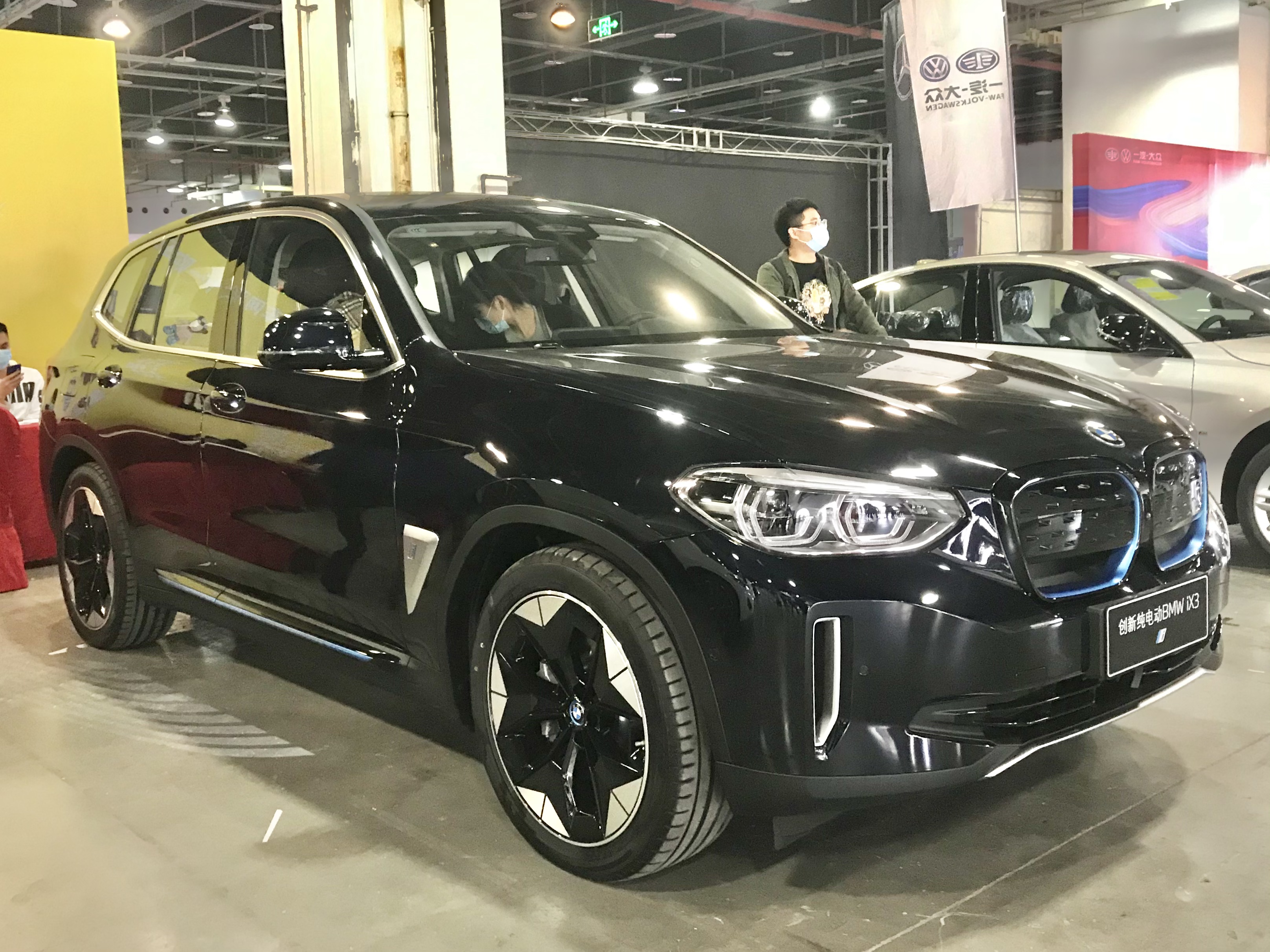
BMW iX3
"It's going to compete like with the iX3, with the iRN, maybe Model Y, Rivian R2s."
The BMW iX3 is BMW’s electric compact SUV, used here as a benchmark for where the Volvo EX-60 fits in the EV lineup. The comparison signals that the EX-60 is being pitched against established EV crossovers rather than entry-level models.
Android for automobiles
"And you have the Volvo system. So that's the Android base one. Android or Google base?"
Android for automobiles is the software system that runs the car’s screen and infotainment features. It can determine what the interface looks like and what kinds of apps or features are available.
Android for automobiles is Google’s in-car software platform used for infotainment and vehicle UI features. The hosts are discussing whether the EX60’s system is based on Android (and noting the naming changes), which affects how apps and interfaces are delivered.
all-wheel-drive
"if you want, if you want the 400 miles, okay, there's not even a price announced for [...] but the EX60P10 all-wheel-drive Ultra is 67,000, 3,000."
All-wheel-drive means the car can send power to all four wheels. That can help it grip better, especially in rain or snow.
All-wheel-drive (AWD) means power is sent to all four wheels, improving traction and stability—especially on slippery or uneven roads. In EV trims, AWD is often paired with higher-performance setups and can affect efficiency and range.
charging capacity
"Between 320 and 270 kW of charging capacity, that's more than decent. We don't have more interior pictures of this because the interior is really sleek."
Charging capacity is how quickly the EV can take in electricity when you plug it in. Higher capacity usually means faster charging.
Charging capacity refers to how much electrical power the EV can accept while charging, which largely determines how fast it can recharge. Here, they mention a range of kW charging capacity, framing it as “more than decent” for real-world usability.
ADAS system
"The Bose Gemini Assistant Pilot Assist from Volvo, that's their ADAS system."
ADAS stands for driver-assist tech. It uses sensors and cameras to help the car “see” and can assist with things like staying in the lane or slowing down to avoid a crash.
An ADAS system (Advanced Driver-Assistance Systems) is a suite of technologies that helps the driver with tasks like sensing traffic and lane markings. It can provide features such as adaptive cruise control, lane centering, and automated emergency braking depending on the vehicle.
Pilot Assist
"The Bose Gemini Assistant Pilot Assist from Volvo, that's their ADAS system."
Pilot Assist is a driver-assist mode that helps the car steer and manage speed. It’s meant to make highway driving less tiring, though you still have to supervise.
Pilot Assist is an ADAS feature that helps with steering and driving tasks, typically by combining camera/radar inputs with lane-keeping and adaptive speed control. It’s designed to reduce driver workload, especially in traffic or on highways.
LiDAR
"You know, they have so much LiDAR stuff in there as well."
LiDAR is a sensor that uses lasers to measure how far away things are. It helps the car build a more detailed picture of the road and nearby vehicles.
LiDAR (Light Detection and Ranging) is a sensing technology that measures distances by firing laser pulses and analyzing what bounces back. It’s often used in advanced driver-assistance and autonomous-driving stacks because it can create detailed 3D maps of the surroundings.

Jaguar Ipace
"...er. I mean, I would definitely prefer that to the iPACE, but I think they are moving to their whole high ..."
The Jaguar I-PACE is an electric SUV from Jaguar. It’s meant for people who want an SUV but with electric power instead of gasoline. The podcast mentions it as something someone would compare against newer Jaguar plans.
The Jaguar I-PACE is Jaguar’s electric SUV, designed to combine everyday usability with a performance-oriented feel. The episode mentions it in the context of preferences and a shift toward a broader “high” lineup direction. That suggests the I-PACE is being used as a reference point for what Jaguar offers today versus what it plans next.
test drive
"If whenever it comes here, I would like to do a test drive because"
A test drive is when you actually drive the car to see how it feels. Here, the host wants to try it to judge whether it’s worth the money.
A test drive is a short, supervised driving session used to evaluate how a car feels and performs. In this context, it’s being used as a next step to judge whether the vehicle is a strong value in its price range.
kilowatt charging
"I think that's 600 kilowatt charging or something. It's just insane motor, like it's actual flux motor on this thing, just a ton of power."
Charging power is measured in kilowatts. More kilowatts usually means you can add energy to the battery faster—if the car supports it.
“Kilowatt charging” refers to the power level of an EV charger, measured in kilowatts (kW). Higher kW generally means faster charging, assuming the car’s battery and charging system can accept that power.
flux motor
"It's just insane motor, like it's actual flux motor on this thing, just a ton of power. Let me get the specs here."
A “flux motor” is an electric motor design that’s about controlling the magnetic forces inside the motor. That can help the motor make strong power efficiently.
“Flux motor” is a specialized way of describing an electric motor design that’s focused on how magnetic flux is produced and controlled. In EVs, motor design affects how much torque/power you can get and how efficiently the motor can operate across different speeds.
horsepower
"All right, so combined all together, they have the motor produced 1153 horsepower."
Horsepower is a way to describe how much power the vehicle can produce. Higher horsepower usually means the car can accelerate more strongly.
Horsepower is a unit of power that describes how quickly an engine or motor can do work. For EVs, it’s often used alongside torque to communicate overall output, even though the underlying physics differs from gasoline engines.
electrical architecture
"So they say that the power train itself, the electrical architecture of the vehicle has been designed to be capable of outputting to up to 1300 horsepower."
This is basically how the car’s electrical system is designed to move power around. If it’s built to handle huge power, the car can be tuned or upgraded to make even more later.
“Electrical architecture” is the overall design of the vehicle’s electrical system—how power is routed and managed from the battery through the inverter/motor controls. Here, the host is saying it’s engineered to support very high power output, which is why future higher-power versions may be possible.
0 to 60
"Yeah, so 0 to 60 is two seconds, 0 to 124 miles per hour, which is 200 kilometers per hour, [1935.6s] is 6.4 seconds, that's insane."
“0 to 60” is how fast a car accelerates from standing still to 60 mph. Lower time means it feels quicker off the line.
“0 to 60” is a common acceleration benchmark measuring how many seconds it takes to go from 0 mph to 60 mph. It’s used to compare how quickly different cars launch, especially for performance EVs and sports cars.
paddle shifter
"The, with paddle shifter, back to the steering wheel, because you can change them, but can you remove them?"
Paddle shifters are the little levers behind the steering wheel. They let you control the car’s driving behavior more directly, like choosing “gears” without a normal gear lever.
A “paddle shifter” is a set of controls behind the steering wheel that lets the driver manually command gear changes (or simulated gear steps) without using a traditional shifter. On many performance EVs, it’s used to control driving modes and how the power delivery is mapped.
silicone anode
"For the battery, they didn't use a new silicone anode attached to an MCA type cathode, interesting. Came from Silanano, I remember Silanano, it's been a while."
This is about the battery’s anode, which is part that stores lithium. Using silicon can help batteries hold more energy, but it’s also a materials challenge that affects durability.
A “silicone anode” refers to using silicon-based material in the battery’s anode to improve energy density. In lithium-ion cells, the anode material affects how much lithium can be stored and how the battery ages under repeated charge/discharge cycles.
MCA type cathode
"For the battery, they didn't use a new silicone anode attached to an MCA type cathode, interesting. Came from Silanano, I remember Silanano, it's been a while."
The cathode is another key part of the battery. Different cathode materials can change how much energy the battery can store and how it holds up with use.
An “MCA type cathode” refers to a specific cathode chemistry/material family used in lithium-ion batteries. The cathode chemistry strongly influences voltage, energy density, and how well the battery performs over time.
WLTP
"with the WLTP between 371 to 435, depending on the version, thanks to a 106-kilometer battery pack in this thing."
WLTP is a standardized test used to estimate how far an EV can go on a charge. It’s a useful comparison number, but your real range can be different depending on driving conditions.
WLTP (Worldwide Harmonized Light Vehicles Test Procedure) is a standardized test method used to estimate EV range. It’s meant to be more consistent across markets than older testing cycles, so listeners should treat WLTP range numbers as test-based estimates rather than real-world highway results.
800-volt system
"Yeah, 800-volt system for a DC fast charge of over 600 kilowatts, where you can get it,"
This is how the car’s high-voltage electricity is set up. A higher-voltage design can help the car charge faster because it doesn’t need as much current to deliver the same charging power.
An 800-volt system is an EV electrical architecture that runs the high-voltage battery and power electronics at a higher voltage than the more common ~400V setups. Higher voltage can reduce current for the same power, which helps enable faster DC fast charging and more efficient power transfer.
DC fast charge
"Yeah, 800-volt system for a DC fast charge of over 600 kilowatts, where you can get it,"
DC fast charging is the quick-charging kind of charging for EVs. Instead of charging through the car’s usual onboard conversion, it sends high-power electricity directly to the car so it can add range faster.
DC fast charging is a method of charging an EV by feeding direct current straight into the vehicle’s high-voltage system. It’s called “fast” because it can deliver much higher power than standard AC charging, which is why it’s used for quick top-ups on trips.
10 to 80 percent
"10 to 80 percent, 25 is just 11 minutes, beautiful."
That “10 to 80 percent” range is a typical way reviewers measure how quickly an EV charges. Charging often slows as the battery gets fuller, so this window shows the more useful part of the charging curve.
“10 to 80 percent” refers to a common EV charging test window used to compare charging speed. Many EVs charge fastest after the battery is warmed up and before the battery management system starts tapering near higher states of charge.
320 kilowatts
"And then you can, if you're on the full-load charger, you can just charge at 320 kilowatts,"
320 kilowatts is the peak charging power being discussed for DC fast charging. Higher kilowatt numbers generally mean the car can add energy more quickly—though real-world results still depend on battery temperature, state of charge, and the charger’s limits.

Xiaomi SU7
"that was hiding anticipated. So the GT is to the Su7's Ultra is the equivalent for the YU7, but you know, geared a little bit differently because it's still an SUV to some degree."
The Xiaomi SU7 is an electric sedan made by Xiaomi. The podcast is talking about the “Ultra” version and comparing it to the top trim of another upcoming SUV. The main idea is how Xiaomi is offering different versions of the same basic car.
The Xiaomi SU7 is an electric sedan discussed in the context of its “Ultra” variant and how it relates to other upcoming trims. The episode compares the SU7’s Ultra to a different model’s top trim, focusing on how the naming and positioning map across vehicles. That makes it relevant for understanding how Xiaomi is structuring its EV lineup and pricing tiers.
Nürburgring record
"But what really stole the headline here, because obviously the GT just got the Norbering record at the same time for SUV."
A Nürburgring record means the car set a standout time on the Nürburgring track in Germany. Car people use it as a way to compare performance because the track is challenging and realistic.
A Nürburgring record refers to a fastest-lap or best performance time set on the Nürburgring circuit in Germany. Because it’s a long, complex track, enthusiasts treat these records as a meaningful benchmark for how well a car handles and accelerates in real conditions.
single motor
"Single motor, river drive, 235 kilowatts, still 315 horsepower."
“Single motor” means the EV has one electric motor doing the work. Compared with two-motor versions, it’s usually simpler and can be cheaper, but it may not feel as strong or as adjustable in traction.
A single-motor EV uses one electric motor to drive the wheels, typically resulting in simpler packaging and often lower cost than dual-motor setups. The tradeoff is that dual-motor cars can usually offer more traction control flexibility and stronger acceleration.
rear drive
"Single motor, river drive, 235 kilowatts, still 315 horsepower."
“Rear drive” means the power goes to the back wheels. That affects how the car launches and how it feels when you turn compared with cars that drive the front wheels or all four.
Rear drive (rear-wheel drive) means the electric motor sends power to the rear wheels. This layout can help with efficiency and packaging, and it often changes how the car accelerates and handles compared with all-wheel-drive or front-wheel-drive designs.
0 to 100 kilometers an hour
"Normally at that pricing, you're in the 200s. [2250.9s] 5.9 seconds, 0 to 100 kilometers an hour. [2255.8s] 73 kilowatt hour battery pack from CATL."
This is a test of how fast the car can go from 0 to 100 km/h. Faster times usually mean quicker acceleration.
“0 to 100 km/h” is a common acceleration test that measures how quickly a car can speed up from a standstill to 100 kilometers per hour. It’s used to compare how responsive different cars feel in everyday driving and in performance specs.
kilowatt hour battery pack
"[2250.9s] 5.9 seconds, 0 to 100 kilometers an hour. [2255.8s] 73 kilowatt hour battery pack from CATL. [2259.3s] You still get the 752 volt architecture."
That “kilowatt hour” number is how much energy the EV’s battery can store. More energy usually helps the car go farther.
A “kilowatt hour” (kWh) battery pack rating describes the battery’s energy capacity. In EVs, higher kWh generally means more potential range, though real-world range also depends on efficiency and drivetrain losses.
752 volt architecture
"[2255.8s] 73 kilowatt hour battery pack from CATL. [2259.3s] You still get the 752 volt architecture. [2263.0s] So I did the review of the YU7 last month and that's the big thing too."
This is the car’s high-voltage electrical system. Higher voltage can make charging and power delivery more efficient, especially with the right charging setup.
“752 volt architecture” refers to the EV’s high-voltage electrical system. Higher-voltage designs can reduce current for the same power, which can help with efficiency and enable faster charging and better power delivery (depending on the car and charger).
CLTC
"[2270.4s] So they did the same thing here with the YU7. [2273.3s] So you still get 643 kilometers of CLTC. [2277.2s] So you beat the base Tesla on the CLTC again by 50 kilometers on this."
CLTC is a standardized test method used to estimate an EV’s range. The number can be different from other countries’ range tests, so it’s not always a direct apples-to-apples comparison.
CLTC is a standardized EV range testing cycle used in China (China Light-Duty Vehicle Test Cycle). Because it’s measured under specific assumptions, CLTC range numbers often don’t match EPA or other regions’ testing results.
active damper
"[2289.7s] And you get an air suspension on the base version. [2293.3s] So you get like active damper on the higher, on the premium model wise, [2298.2s] but on the base thing, you get like not much."
Active dampers are shocks that can change how stiff or soft they feel while you drive. That can improve both ride comfort and handling.
An active damper is a suspension shock absorber whose damping force can be adjusted in real time. This helps the car respond differently to road conditions—aiming for better comfort and control than fixed dampers.
NVIDIA Thor 700
"[2298.2s] but on the base thing, you get like not much. [2300.3s] So you have that, you have LiDAR, you have the NVIDIA Thor 700 top system, [2306.8s] and you got the ADS system."
NVIDIA Thor 700 is the car’s “computer brain” for advanced driving features. It helps process sensor information so the system can understand the road and traffic.
“NVIDIA Thor 700” refers to an automotive computing platform from NVIDIA used to run perception and driving-related software. In EVs, these compute units are meant to process sensor data (like cameras and LiDAR) for driver-assistance and autonomy features.
ADS system
"[2300.3s] So you have that, you have LiDAR, you have the NVIDIA Thor 700 top system, [2306.8s] and you got the ADS system. [2308.5s] Instead of being a subscription, it's included in the car."
ADS is the car’s system for advanced driving help—things like lane/traffic assistance. The host is saying whether you have to pay extra every month or if it’s included.
“ADS” usually stands for “Autonomous Driving System,” meaning the car’s suite of sensors, processors, and software that supports automated driving functions. The segment also notes a key product detail: whether the system is subscription-based or included in the car.

Xiaomi YU7 GT
"starts at $289,000 RMB, which is $54,000. So this is like more equivalent to the performance version of the Model Y. ... Like a Y-U7 GT, it's like my dream garage would be a Y-U7 GT with like a GMC Sierra EV."
The Xiaomi YU7 GT is an electric SUV that the hosts say is trying to be very fast and high-end. They compare it to Tesla models to give you a sense of where it fits.
Xiaomi YU7 GT is being positioned as a high-performance electric SUV, with very large battery capacity and fast acceleration figures mentioned in the segment. The hosts compare it directly to Tesla’s Model Y and Model X Plaid, implying it’s aiming for the same “quick and premium” EV buyer.
101 kWh battery pack
"0-100 in 2.92 seconds, 101 kWh battery pack, almost 900 volt architecture, 7.5 kilometers of range."
The battery pack capacity tells you how much energy the car can store. More capacity usually helps with longer range and stronger performance.
A battery pack’s capacity (here, 101 kWh) indicates how much electrical energy the EV can store. Larger kWh generally supports longer range and/or more sustained power, though real-world results still depend on efficiency and driving conditions.
900 volt architecture
"0-100 in 2.92 seconds, 101 kWh battery pack, almost 900 volt architecture, 7.5 kilometers of range."
“900 volt” describes how the car’s electrical system is set up. Higher voltage can help the car charge faster and deliver power more efficiently.
A “900 volt architecture” means the EV’s electrical system is designed around a much higher voltage than typical 400V designs. Higher voltage can reduce current for the same power, which can enable faster charging and more efficient high-power operation.
0-100
"990 horsepower here, 0-100 in 2.92 seconds, 101 kWh battery pack, almost 900 volt architecture,"
0-100 is how quickly the car can accelerate from a stop to 100 (usually km/h). Lower time generally means the car feels quicker.
0-100 (often 0–100 km/h) is a performance metric that measures how fast a car accelerates from a standstill to 100 km/h. It’s commonly used because it reflects real-world “get up and go” rather than just top speed.
dual valve CDC
"And on top of the air suspension, you have dual valve CDC for the suspension system. Carbon ceramic brakes."
CDC is a suspension control system that adjusts how stiff or soft the shocks feel. “Dual valve” means it uses two valve paths to fine-tune that behavior.
Dual valve CDC refers to a controlled damping system that uses two valves to manage how quickly the suspension resists movement. By changing damping behavior, it aims to balance ride comfort with sharper handling response.
air suspension
"And on top of the air suspension, you have dual valve CDC for the suspension system. Carbon ceramic brakes."
Air suspension uses air bags instead of metal springs. It can change the ride height and help the car feel more controlled over bumps.
Air suspension uses air-filled springs instead of steel coils, allowing the car to adjust ride height and damping behavior. It’s often used to improve ride comfort and stability, and it can help the vehicle maintain consistent stance under different loads.
Carbon ceramic brakes
"Carbon ceramic brakes. I mean, that's more like a Model X plaid-ish."
Carbon ceramic brakes are high-performance brakes made from a special ceramic material. They’re designed to keep stopping power consistent even when you’re driving hard, but they cost more than normal brakes.
Carbon ceramic brakes use carbon-fiber ceramic brake discs, typically paired with specialized pads. They can offer strong fade resistance and high-temperature performance, but they’re usually more expensive and require proper driving/maintenance to avoid issues like uneven wear.

Gmc Sierra
"...ke my dream garage would be a Y-U7 GT with like a GMC Sierra EV. So I thought that would be like my dream gara..."
The GMC Sierra EV is an electric version of a pickup truck. A pickup is usually chosen for hauling and utility, and this one uses batteries instead of gasoline. The podcast mentions it as a standout electric-truck option people want.
The GMC Sierra EV is an electric pickup truck, bringing the Sierra nameplate into the EV market. In the episode, it’s mentioned as part of a “dream garage” idea, highlighting how people view electric trucks as the next step for traditional pickup buyers. That makes it relevant to conversations about EV adoption in the truck segment.
Lucid Cosmos
"because we're going to talk about the cosmos. You have the air, you have the gravity, and now you're about to have the cosmos. ... So that was announced just a few months ago by Lucid."
Lucid Cosmos is an upcoming electric SUV from Lucid. The hosts are talking about when it will be fully shown and how it might compare to Tesla’s Model Y.
Lucid Cosmos is a midsize SUV that Lucid is preparing to reveal, and the segment frames it as the next step in the brand’s lineup. The hosts discuss it in the context of proportions and timing, implying it’s meant to compete in the same EV space as Tesla’s Model Y.
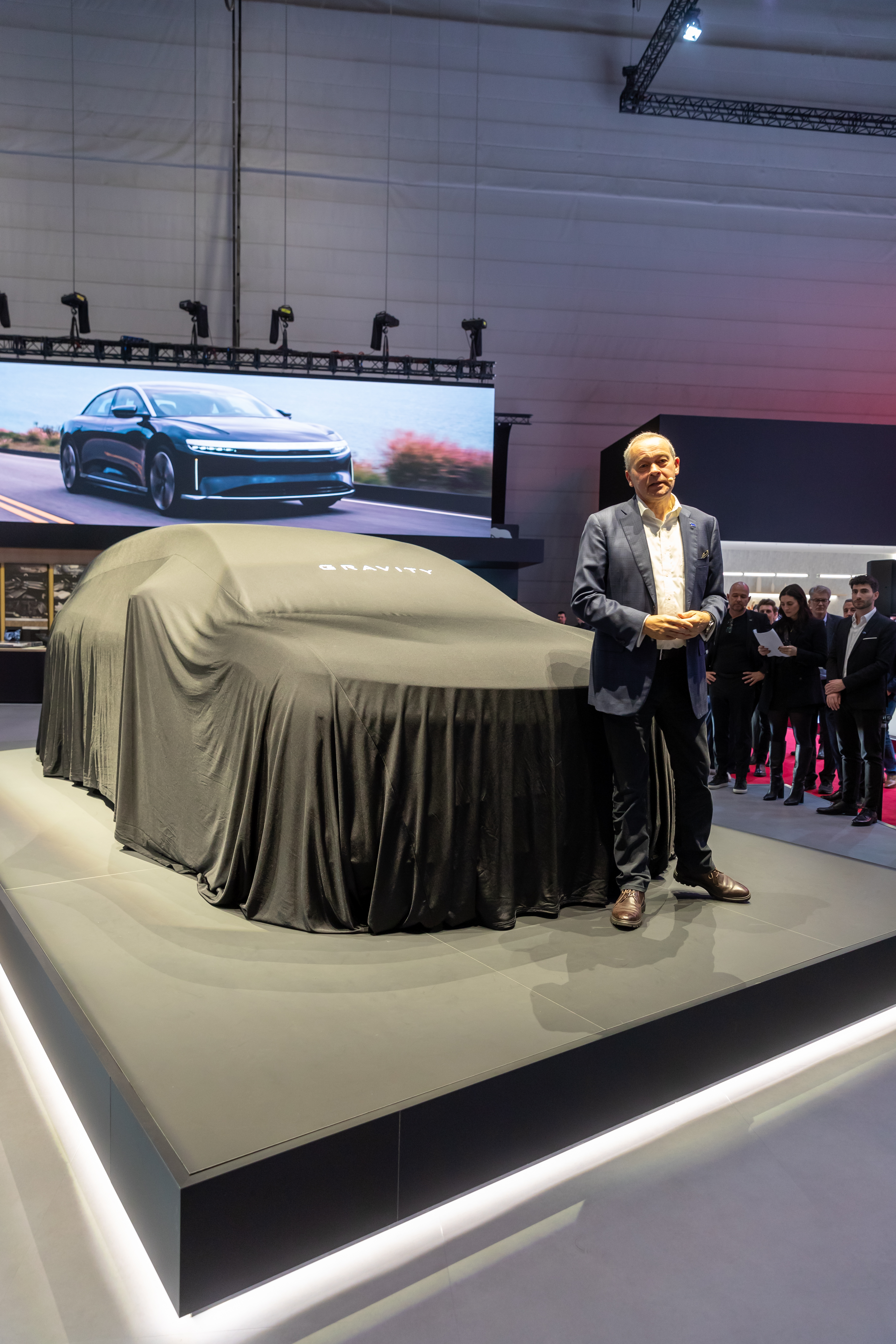
Lucid Gravity
"... about the cosmos. You have the air, you have the gravity, and now you're about to have the cosmos. So that..."
The Lucid Gravity is an electric SUV that Lucid is planning to sell. An SUV is a bigger vehicle meant for more space and versatility than a sedan. The podcast mentions it as a new model coming from Lucid.
The Lucid Gravity is Lucid’s upcoming electric SUV, positioned to bring Lucid’s efficiency and technology into a larger, family-oriented body style. It’s discussed in the episode as part of Lucid’s broader product narrative and upcoming releases. That makes it relevant to buyers watching how Lucid expands beyond its existing sedan lineup.
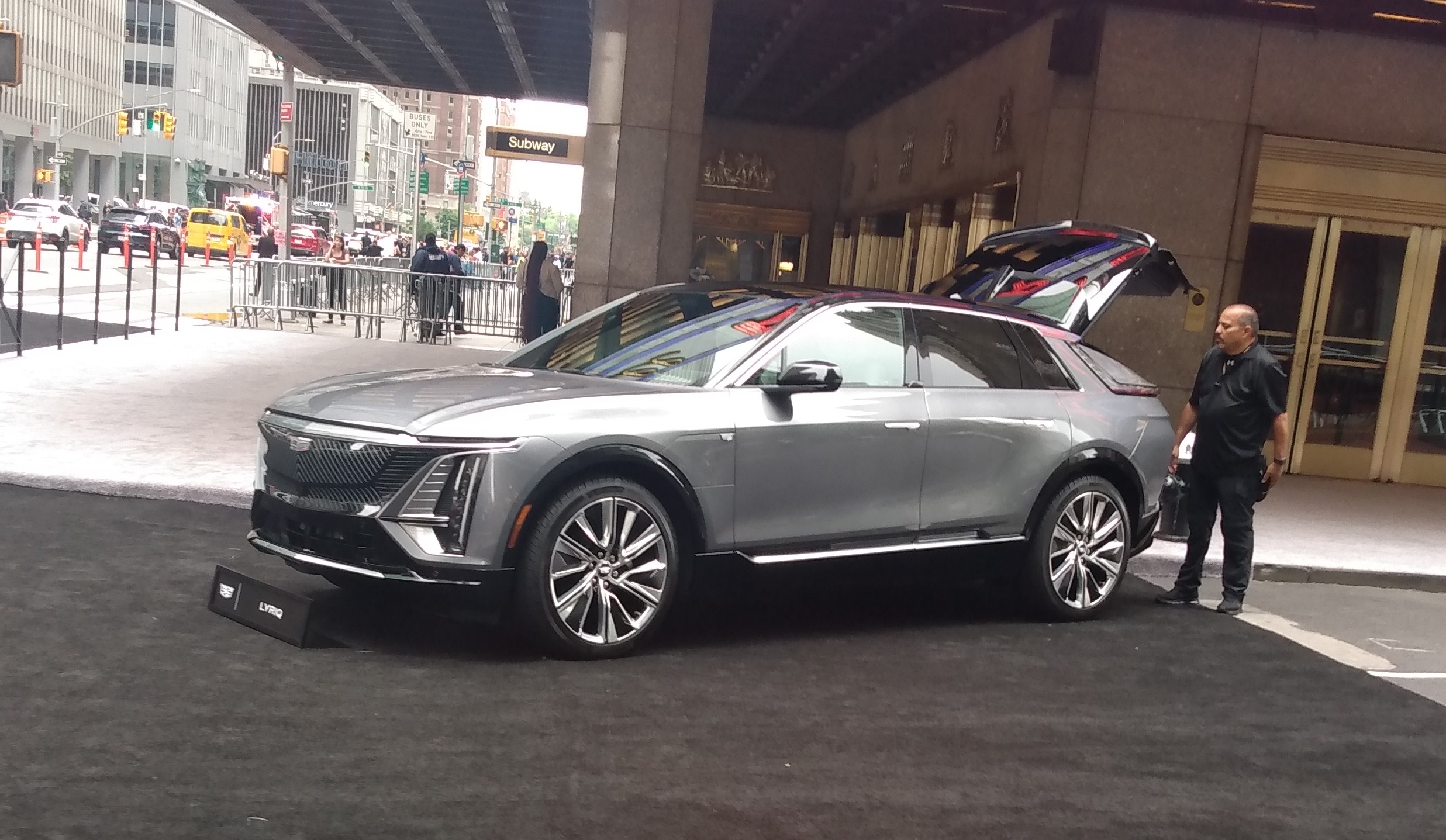
Cadillac Lyric
"Actually, I like all of Cadillac's EVs. The Lyric, I think is very good looking too. The OPTIQ is l..."
The Cadillac Lyriq is an electric SUV from Cadillac. It uses batteries instead of gasoline. The podcast mentions it because the speaker thinks it looks good and is comparing it to other Cadillac EVs.
The Cadillac Lyriq is Cadillac’s electric SUV, mentioned as a model the speaker finds visually appealing. In the episode, it’s part of a broader discussion of Cadillac’s EV lineup and which models stand out. That’s why it’s brought up: it’s an example of a current Cadillac EV that’s already on the market.

Cadillac Optiq
"The Lyric, I think is very good looking too. The OPTIQ is like, man. All right."
The Cadillac Optiq is an electric SUV. The podcast mentions it while talking about Cadillac’s EVs and what they look like. It’s essentially one of Cadillac’s newer electric models being discussed for interest.
The Cadillac Optiq is another electric SUV in Cadillac’s EV lineup, referenced alongside the Lyriq and other upcoming models. The episode’s mention focuses on how the Optiq looks and how it fits into Cadillac’s strategy of expanding EV options. It’s discussed as part of the “which EVs to watch” conversation.

Volvo XC90
"... a lot sexier. Franco's EX60 fan, coming from the XC90 years ago. Skeptic says, speaking of home energy,..."
The Volvo XC90 is a luxury SUV. It’s built for comfortable rides and space for passengers and cargo. The podcast brings it up because someone is comparing it to Volvo’s newer electric SUVs.
The Volvo XC90 is a midsize luxury SUV known for comfort, family-friendly packaging, and a premium driving experience. In the episode, it’s referenced as a point of comparison to newer Volvo EVs, including the EX60. That makes it relevant because it anchors what buyers may be moving from when switching to Volvo’s electric lineup.
vehicle-to-home
"Skeptic says, speaking of home energy, Rivian said this week that R2 is ready for vehicle to home, but they're still working on the hardware for the home side. ... And you don't have the excuse now. Like, I'm just working on the hardware. There is hardware compatible."
Vehicle-to-home means using your EV like a backup power source for your house. In this discussion, they’re talking about whether Rivian can actually deliver that feature.
Vehicle-to-home (V2H) is the ability for an EV to send electricity back to a home, typically to power appliances or support backup power. The hosts reference Rivian’s claims about its R2 being ready for vehicle-to-home, and they critique how long similar promises were made for the earlier R1.
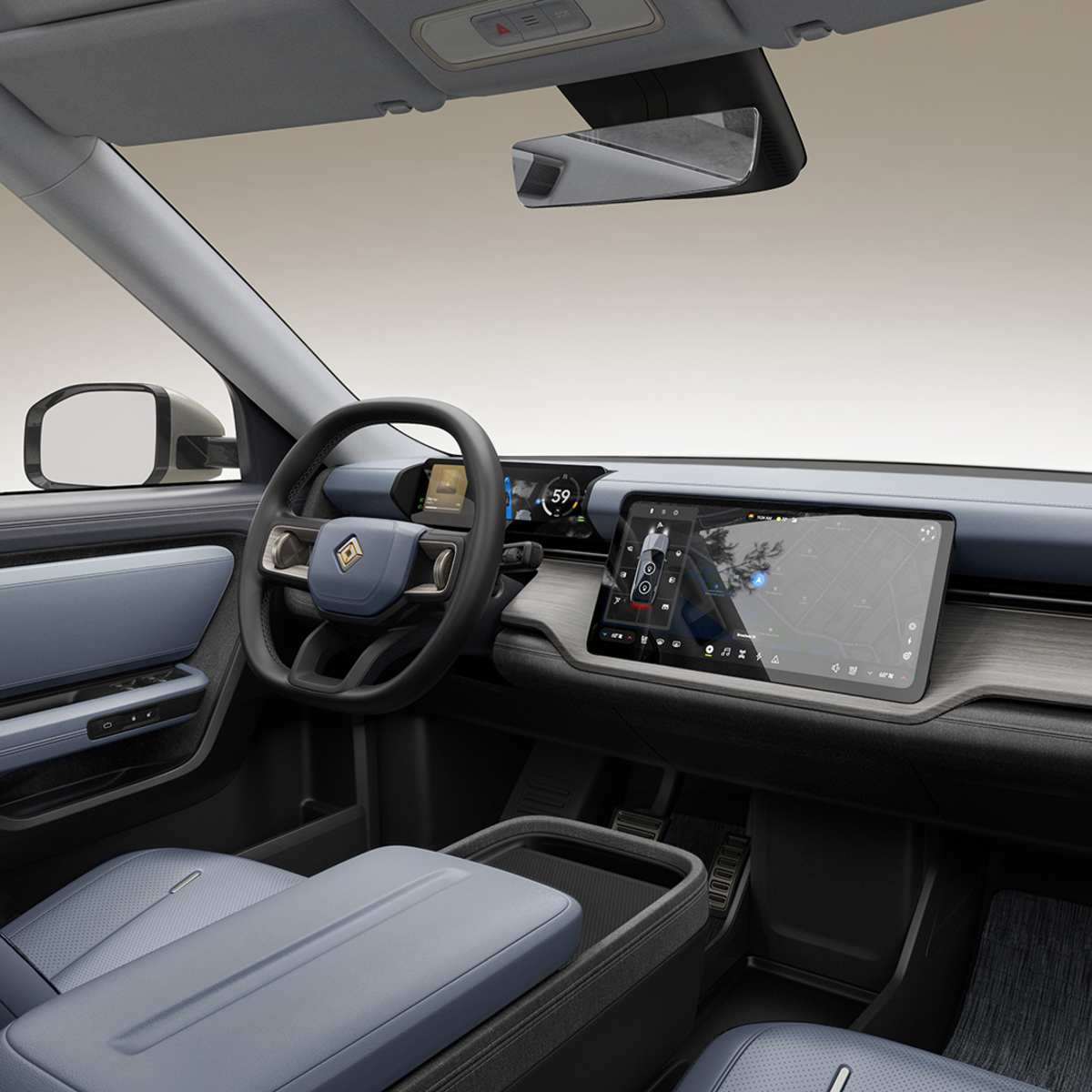
Rivian R2
"Skeptic says, speaking of home energy, Rivian said this week that R2 is ready for vehicle to home, but they're still working on the hardware for the home side."
The Rivian R2 is Rivian’s upcoming smaller electric vehicle, positioned as a more accessible model than its earlier R1 platform. Here, it’s specifically mentioned in the context of Rivian’s vehicle-to-home (V2H) readiness claims and the remaining hardware work for the home side.
DCBEL system
"Like, just use a standard DCBEL system. Like, they are out there."
A DCBEL system is a way to make an electric car generate sounds on purpose. The goal is to help people hear what the car is doing, especially at low speeds.
A DCBEL system is an in-car sound-generation setup that creates artificial audio cues for things like low-speed driving. It’s used to make EVs produce recognizable sounds so pedestrians and drivers get better auditory feedback.
inverter
"And they put a sensor on the actual inverter of the motor that catches the vibration of the motor."
An inverter is the electronics box that turns battery power into the kind of electricity the electric motor needs. It’s closely connected to how the motor is working, so it can be used to make the car’s sound more accurate.
An inverter is the power electronics component that converts the battery’s DC electricity into AC power for the electric motor. Because it’s tightly tied to motor operation, sensing inverter/motor vibration can help generate audio that better matches real driving conditions.
artificial sound
"So, it's not, it's an artificial sound for sure, [3162.1s] but it's based on the reality of the motor turning."
Electric cars can be very quiet, especially when moving slowly. So some cars add a made-up sound that’s generated by the car to make it easier to notice and to give the driver feedback.
“Artificial sound” in EVs refers to synthesized audio that imitates or complements the sensations of a running motor. Because electric motors are very quiet at low speeds, automakers add sound to help drivers (and sometimes pedestrians) understand the vehicle’s presence and behavior.
fake sound outside
"do you make that sound only available to the driver in the cabin? [3184.6s] Or do you make that fake sound outside Allah? [3187.6s] What's the Daytona, the charger EV?"
They’re talking about whether the car’s added sound should be only for the driver or also played outside the car. Outside sound can be helpful for safety, but people debate how it affects everyone around it.
The discussion is about whether EV “sound design” should be limited to the cabin or also played outside the vehicle through speakers. External sound is more controversial because it affects pedestrians and neighborhoods, but it can improve safety by making an approaching EV easier to detect.

Dodge Charger
"...fake sound outside Allah? What's the Daytona, the charger EV? Oh, yeah."
The Dodge Charger is a performance car model. The podcast is bringing up an electric Charger (including the “Daytona” name) and talking about how it’s being presented as a performance vehicle. It’s basically about the Charger brand moving into electric driving.
The Dodge Charger is a well-known muscle-car nameplate, and the podcast references the “Daytona” and an EV Charger concept. That matters because it signals how the Charger brand is evolving from traditional performance into electric power. The episode’s mention suggests they’re discussing the Charger EV’s identity and features, including sound/experience elements.
cattle sodium batteries
"What do you guys think about the newly announced cattle sodium batteries that seem to have a great energy density good for cars? We have talked about those in the past."
They’re talking about a battery type that uses sodium instead of lithium. Sodium is easier to get in large quantities, and the battery can often last through many repeated charging cycles.
The phrase appears to refer to sodium-ion batteries, which use sodium ions instead of lithium ions to store and release energy. They’re often discussed as potentially cheaper and more supply-friendly because sodium is widely available, and they can offer good cycle life (how many charge/discharge rounds they can handle).
energy density
"What do you guys think about the newly announced cattle sodium batteries that seem to have a great energy density good for cars?"
Energy density is basically how much “power storage” the battery packs into its size. If it’s higher, the car can usually travel farther without needing a bigger battery.
Energy density is how much electrical energy a battery can store for a given weight or volume. Higher energy density generally helps a car go farther on the same battery size, or use a smaller/lighter battery for the same range.
cycles
"It's half of salt. It's longer lasting, more cycles too. Yeah."
A “cycle” is one complete charge-and-use round for the battery. More cycles usually means the battery can last longer before it starts losing range.
A battery “cycle” is one full round of charging and then discharging (or an equivalent amount of energy throughput). Cycle life describes how many cycles the battery can handle before its capacity noticeably drops.
life cycle
"So right now they are mostly targeting the stationary energy storage market because of the lower energy density and because of the higher life cycle."
Battery life cycle means how long the battery can keep working before it starts losing its ability to hold a charge. Longer life cycle is usually better for long-term use.
Battery life cycle refers to how many charge-and-discharge cycles (or how long) a battery can operate before its capacity drops too far. A higher life cycle is attractive for stationary storage because the battery can last through many years of use.
sodium battery
"Like literally like a sodium battery inside a car, your car will be completely falling apart before the battery loses capacity, which might sound like a good idea."
A sodium battery is a type of rechargeable battery that uses sodium instead of lithium. People talk about it because it could be cheaper, but it may not store as much energy per size as some lithium batteries.
A sodium battery is a battery chemistry that uses sodium-based materials instead of the more common lithium-based ones. In EV discussions, the key point is that sodium batteries can be cheaper and use more abundant materials, but they may have different energy density and lifespan characteristics than lithium-ion.

Honda Prologue
"Question, the Honda Prologue has a backup camera recall. Do you think that will expand to Chevy Blazer EV recalls"
The Honda Prologue is Honda’s electric SUV. The host mentions it because there’s been a recall related to the backup camera.
The Honda Prologue is Honda’s electric SUV, built around GM’s Ultium EV architecture. In this segment, it’s mentioned specifically because the speaker says it has a backup camera recall, which is the kind of safety/infotainment issue that can affect EV usability.

Chevrolet Blazer EV
"Question, the Honda Prologue has a backup camera recall. Do you think that will expand to Chevy Blazer EV recalls"
The Chevrolet Blazer EV is an electric SUV. The host is wondering if a backup camera recall issue could spread to it too.
The Chevrolet Blazer EV is an electric SUV from Chevrolet. Here it’s referenced in the context of whether a Honda Prologue backup camera recall might also lead to similar recalls on other EVs.

Tesla Semi
"...Yeah, do you see any serious competition to Tesla Semi in the next few years? Not in the US."
The Tesla Semi is an electric truck meant for commercial use. It’s built to move goods over long distances using batteries instead of diesel. The podcast is discussing whether other companies will seriously compete with it soon in the US.
The Tesla Semi is Tesla’s electric heavy-duty truck designed for long-haul and fleet use. The episode asks about serious competition in the next few years, specifically noting that none is expected in the US. That makes the Semi a focal point for how quickly the electric trucking market may scale and who could challenge Tesla’s position.
fake sounds
"Carl says, if the fake sounds are relative to the insane acceleration, it either shocks the system that you're driving excessively or for motorheads, it reinforces bad road behavior."
They’re talking about the made-up sounds some electric cars play through speakers. The question is whether it helps you drive more safely or makes it easier to drive aggressively.
“Fake sounds” likely refers to artificial sound generation in EVs—audio cues created by speakers or sound systems to simulate engine/exhaust noise. The debate is whether these cues improve driver awareness and behavior or distract and encourage aggressive driving.
inside noise feedback
"I think it's more of a problem in an electric car that goes fast and that's well built with a quiet cabin interior cabin. It's it's you you are surprised by how fast you go... If you have your your inside noise feedback that's going like."
It means the sounds you hear inside the car while driving. Electric cars are very quiet, so the host is saying that sound cues can help you realize you’re going faster than you think.
“Inside noise feedback” refers to how much sound the driver hears from the car while accelerating and cruising. In EVs, the lack of engine noise can make speed feel lower, so designers may use cabin sound (or other cues) to help the driver better sense speed and effort.
Autobahn
"Like you drive on the Autobahn and you're like, I'm going at 200 right now. It's like it feels like I'm going 50."
The Autobahn is a famous German highway system where cars can often go very fast. The host is using it as an example of how a quiet EV can make you underestimate your speed.
The Autobahn is Germany’s high-speed highway network, known for long stretches where speed limits may not be enforced. It’s referenced here to illustrate how an EV can feel slower than it really is at very high speeds.
Request an Explanation
Heard something you'd like explained? We'll add it to this episode.
Sign in to request explanations for terms you heard.
Want to learn more?
Browse our glossary for plain-English explanations of automotive terms, jargon, and concepts.
Help improve this episode
See something that's not quite right? Our annotations are AI-generated and can sometimes miss the mark. Click the flag icon on any annotation to suggest a correction.