Allen Clark, Ford's Executive Director of Advanced EV Development and former Tesla engineer, shares insights on leading Ford's new universal EV platform. He discusses his transition from Tesla to Ford, motivated by the desire to create meaningful change and build affordable, exciting electric vehicles. The conversation covers the strategic move to Long Beach for talent access, the challenges of EV development, and the influence of industry veterans like Doug Field. Clark also reflects on his early Tesla projects and the evolving EV landscape, highlighting Ford's commitment to innovation and practical vehicle production.
Alan Clarke spent over a decade at Tesla — working on Model S, Model X, Model 3, Model Y, Cybertruck, and even Tesla’s battery swap program. Now he’s Ford’s Executive Director of Advanced EV Development — leading the Ford Universal EV Platform and the upcoming affordable midsize electric pickup targeting ~$30,000 and 300 miles of range.
"He's the executive director of Advanced EV Development at Ford Motor Company."
Advanced EV Development means working on making electric cars better and more efficient with new technology.
Advanced EV Development refers to the research and engineering efforts focused on improving electric vehicle technologies, including batteries, motors, and software.
"Executive director, Advanced EV Development for Ford Motor Company."
Ford is a big car company from America that makes many types of cars and trucks. They are working on new electric cars that run on batteries instead of gas.
Ford Motor Company is a major American automotive manufacturer known for producing a wide range of vehicles including trucks, SUVs, and electric vehicles. They have been investing heavily in advanced electric vehicle development.
"...t 19 bucks a share and like a GT3, a Maserati, a MC20. That's the third question."
The MC20 is a very fast and fancy sports car made by Maserati. It’s designed to be exciting to drive and looks great.
The Maserati MC20 is a high-performance sports car that marks Maserati’s return to supercar production, featuring advanced engineering and Italian design flair.
"And, you know, I worked on model X under him as well."
The Tesla Model X is a big electric SUV with special doors that open up like wings. It has lots of space and runs only on electricity.
The Tesla Model X is an all-electric mid-size luxury SUV known for its distinctive falcon-wing doors, spacious interior, and strong electric performance. It is part of Tesla's lineup of electric vehicles and offers advanced features and long range.
"And then this is product Titan as we call it. Who knows what Apple called it, but at the time, I didn't know what it was called. But it probably is what it was. Apple car. Yeah. The second time I talked to him, I just said, you know, I think if you can tell me when you're going to ship and that you're definitely going to ship, we should keep talking. But if not, you know, I don't think this is for me. How did you know that they may not ship? That's that's the part, like, because I remember when the plug was pulled on the Apple car, whatever it was, Project Titan, it seemed like just like a split second"
Project Titan is the name Apple uses for their car project. They are working on making a car or car technology, but it is not officially announced yet.
Project Titan is the codename for Apple's secretive automotive project, which is rumored to involve developing an Apple-branded electric vehicle or autonomous car technology.
"how hard it is to make EVs, what it takes to make EVs, the talent to make EVs that are, you know, different than what we were making before."
Electric vehicles are cars that run on electricity instead of gas. They use big batteries to store power and drive the motor.
Electric vehicles (EVs) are cars powered entirely or partially by electric motors using energy stored in batteries, rather than traditional internal combustion engines.
"...little bit bigger than Maverick, maybe similar to Ranger, maybe a little smaller, as hard to tell, that k..."
The Ford Ranger is a medium-sized truck that’s bigger than small trucks but not as big as the biggest ones. It’s good for carrying things and driving around town or on rough roads.
The Ford Ranger is a midsize pickup truck that sits between the smaller Maverick and larger full-size trucks like the F-150. Known for its balance of capability and maneuverability, it’s a popular choice for those needing more truck utility without going full-size.
"...-sized truck. I imagine a little bit bigger than Maverick, maybe similar to Ranger, maybe a little smaller..."
The Ford Maverick is a small truck that’s easy to drive like a car but can still carry stuff in its back. It’s good if you want a truck but don’t need a big one.
The Ford Maverick is a compact pickup truck introduced as a smaller, more affordable alternative to traditional trucks like the Ford Ranger. It offers car-like handling with the utility of a truck bed, making it popular for urban and light-duty use.
""It's that when we talk about this new skunkworks thing, it's been married with the thing that Ford's already really good at.""
A skunkworks is a small group inside a company that works on special projects, often new or secret ideas, separate from the main work.
Skunkworks refers to a small, specialized team within a larger company that works on advanced or innovative projects with a high degree of autonomy and secrecy.
""Manufacturing structural analysis, NVH dynamics. Ford's really strong in a bunch of different areas.""
NVH means how much noise and shaking you feel inside a car. Engineers work to make cars quieter and smoother to ride in.
NVH stands for Noise, Vibration, and Harshness. NVH dynamics refers to the study and engineering of how a vehicle manages and minimizes unwanted noise and vibrations to improve ride comfort and perceived quality.
"Then you go immediately into size of the battery, reducing the size to reduce the cost."
The battery size means how much electricity the car's battery can hold. Bigger batteries let the car go farther but usually cost more.
Battery size in electric vehicles refers to the capacity of the battery pack, which affects the vehicle's driving range and cost. Reducing battery size can lower costs but may reduce range.
"battery prices have fallen by like an order of, it's like, since about, I double check this, 15 years, they've gone from like $1,000 per kilowatt hour to now just about, I think Bloomberg is 108."
Battery prices mean how much it costs to make the batteries that power electric cars. These prices have dropped a lot, so electric cars are getting cheaper and easier to buy.
Battery prices refer to the cost per unit of energy storage, typically measured in dollars per kilowatt-hour (kWh). This cost has significantly decreased over the past 15 years, making electric vehicles more affordable and practical.
"...rison in several different ways. Let's call it a Model 3 versus like a Corolla. The power train costs for..."
The Tesla Model 3 is a car that runs on electricity instead of gas. It can go far on a single charge and has lots of modern features.
The Tesla Model 3 is a popular electric sedan known for its impressive range, performance, and advanced technology. It represents a significant shift toward electric vehicles in the mainstream market.
"...rent ways. Let's call it a Model 3 versus like a Corolla. The power train costs for the Corolla are somew..."
The Toyota Corolla is a small car that many people buy because it’s easy to keep running and doesn’t use much gas. It’s a simple and dependable car for everyday driving.
The Toyota Corolla is one of the best-selling compact cars worldwide, known for its reliability, fuel efficiency, and affordability. It’s often used as a benchmark for economical and practical transportation.
"And then in the Model Y batteries make up the largest chunk of the power train."
The Tesla Model Y is an electric SUV that uses batteries to run instead of gas, similar to the Model 3 but bigger and with more space.
The Tesla Model Y is a compact all-electric SUV that shares many components with the Model 3, including its electric powertrain and battery technology.
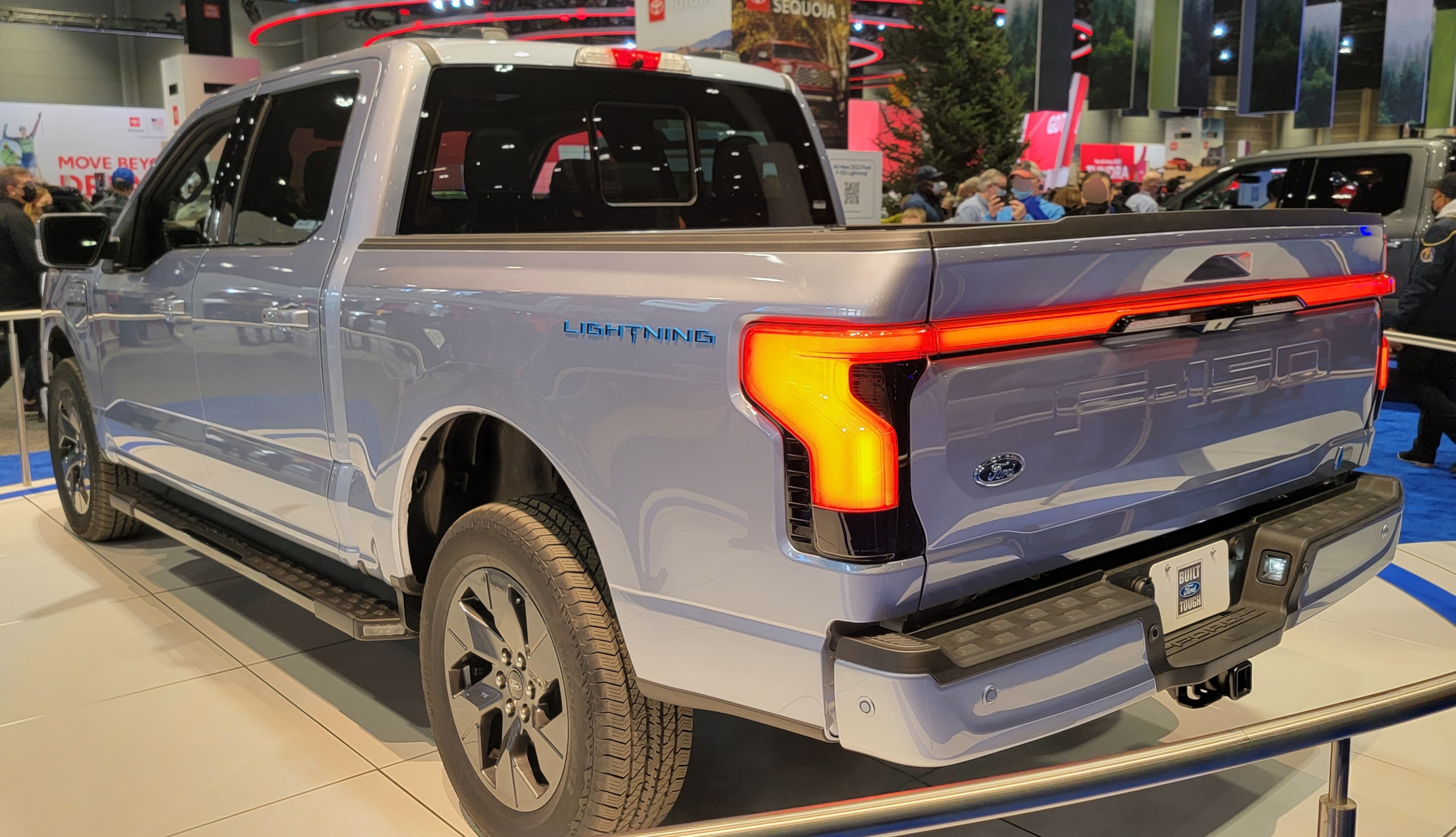
"...u saying you're going to likely have, like with a lightning, a standard and a long range or a larger and a s..."
The Ford F-150 Lightning is an electric truck that doesn’t use gas. It’s strong and can do many jobs like a regular truck but runs on batteries.
The Ford F-150 Lightning is the all-electric version of the popular F-150 pickup, offering strong performance, modern tech, and the utility of a traditional truck with zero emissions.
"... watched the animation of the cells going in and prismatic is basically like a prism. It's a box."
The Geo Prism was a small, simple car from the 1990s that was easy to drive and didn’t cost much. It was very similar to a Toyota Corolla.
The Geo Prism was a compact car sold in the 1990s, essentially a rebadged Toyota Corolla with a boxy design. It was an economical choice during its production years.
"going to make, the longest thing you're ever going to make, the shortest thing you're ever going to make, widest, narrowest, and then saying, all right, if I, if I cover an F-150 Raptor width, I'm going to carry this much scar mass and scar massed on all vehicles."
The Ford F-150 is a big truck that many people use for work or carrying heavy stuff. It’s very strong and can do a lot of different jobs.
The Ford F-150 is America’s best-selling full-size pickup truck, renowned for its durability, towing capacity, and versatility. It’s a benchmark in the truck segment and often referenced when discussing truck sizes and capabilities.
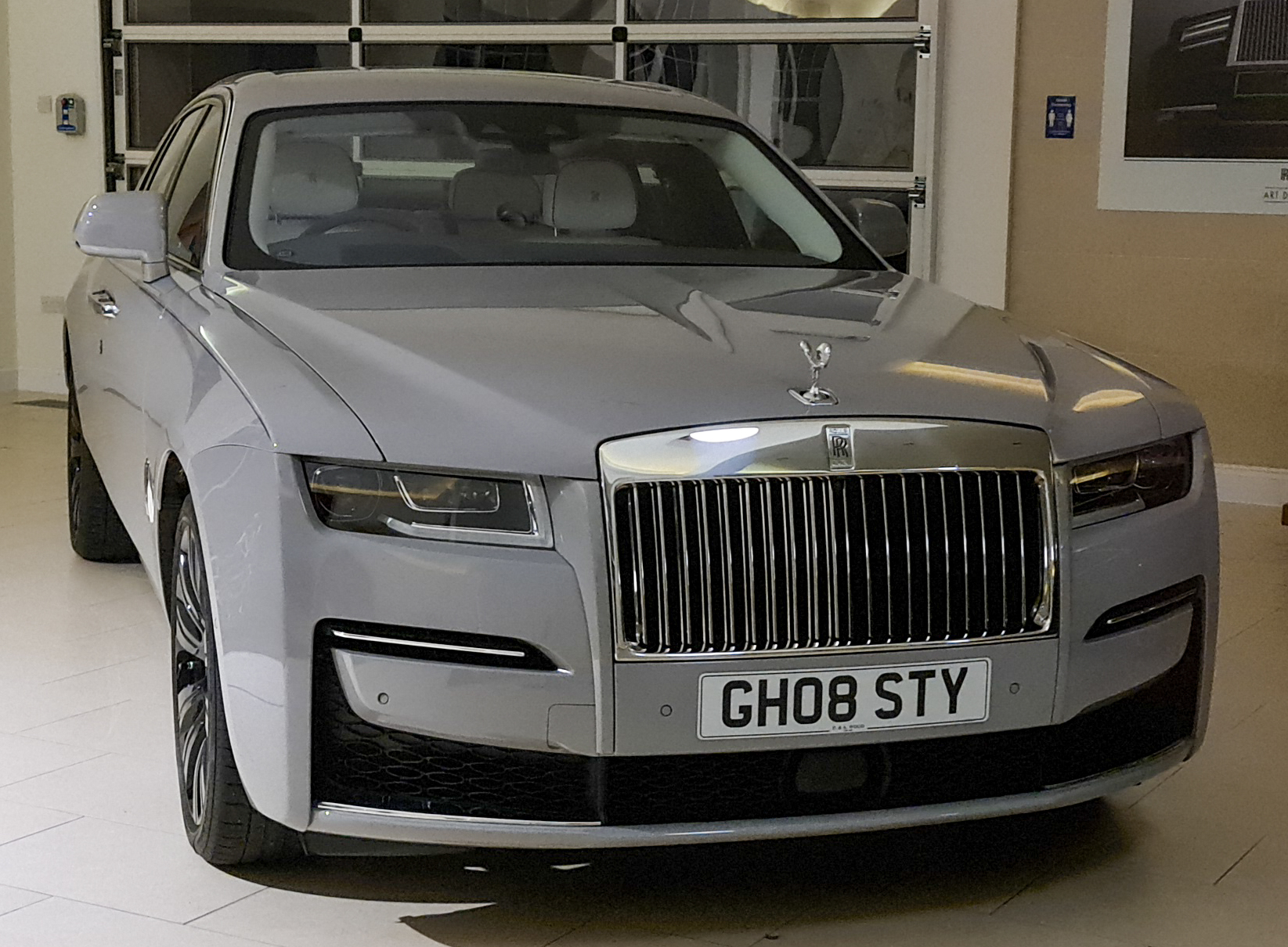
"...o when BMW put the five series, seven series and Rolls Royce Ghost on the same platform, the five series was really ..."
The Rolls-Royce Ghost is a very fancy and expensive car that’s made to be super comfortable and stylish. It’s built with the best materials and is very smooth to ride in.
The Rolls-Royce Ghost is a luxury sedan that shares a platform with BMW’s 5 and 7 Series but offers unparalleled craftsmanship, comfort, and prestige. It represents the pinnacle of luxury automotive engineering.
"...f credit because I remember, I got a, before the Mustang, the Maki came out. When we all heard they were ..."
The Ford Mustang is a fast and stylish car that many people love. It’s been popular for a long time and is known for being fun to drive.
The Ford Mustang is an iconic American sports car known for its performance, style, and cultural significance since the 1960s. It’s often discussed for its impact on car culture and its evolution over the decades.
"...be like, this looks, you know, look at Ridge, the Honda Ridge line, pretty close to a truck. Uh-huh. You know, you ..."
The Honda Ridgeline is a truck that feels more like a car when you drive it. It’s good for carrying things but is easier to drive than big trucks.
The Honda Ridgeline is a unibody pickup truck known for its car-like ride, innovative features, and practicality. It offers a different approach compared to traditional body-on-frame trucks.
"...ty close to a truck. Uh-huh. You know, you had a Hyundai Santa Cruz reference in the fine print at the bottom of..."
The Hyundai Santa Fe is a medium-sized SUV that’s good for families and carrying stuff. It’s comfortable and has many features.
The Hyundai Santa Fe is a midsize SUV offering a comfortable ride, modern features, and good value. It’s often compared to smaller trucks and crossovers for its versatility.
"... to a truck. Uh-huh. You know, you had a Hyundai Santa Cruz reference in the fine print at the bottom of you..."
The Hyundai Santa Cruz is a small truck that’s comfortable like an SUV but can carry things in the back. It’s good for everyday use and small jobs.
The Hyundai Santa Cruz is a compact pickup truck blending SUV comfort with truck utility, targeting buyers who want a versatile vehicle for urban and light-duty use.
"...u've got a cabin size that's larger than a Toyota RAV4, which is the number one selling SUV in the worl..."
The Toyota RAV4 is a small SUV that many people buy because it’s reliable and has plenty of space inside. It’s good for families and everyday driving.
The Toyota RAV4 is the world’s best-selling compact SUV, known for its reliability, fuel efficiency, and spacious interior. It’s a benchmark in the SUV market.
"So that means we test our vehicle at many different angles in the wind tunnel and in CFD. Oh, interesting. Okay."
CFD is a computer program that helps engineers see how air moves around a car. This helps them design cars that can go faster and use less energy.
CFD stands for Computational Fluid Dynamics, a computer simulation method used to analyze and optimize how air flows around a vehicle. It complements wind tunnel testing to improve aerodynamic design.
"Okay. And the important thing there is you're very rarely driving with no wind anywhere. Yeah, you might have a 90 degree crosswind that's five miles an hour. Ultimately, that's maybe three degrees of yaw of the air. Boy, I can tell you a story. Yeah, yaw sensitivity is very important."
The Toyota Supra is a sporty car that’s made to go fast and handle well. Many people like it because it’s fun to drive and can be customized.
The Toyota Supra is a legendary sports car celebrated for its performance and tuning potential. It has a strong enthusiast following and is often referenced in discussions about sporty Japanese cars.
"...ruck on the marketplace. It's your truck. Rivian R1T at 0.30 coefficient of drag. Oh, really? That's ..."
The Rivian R1T is an electric truck that can drive off-road and has a special shape to help it use less energy. It’s a new kind of truck that runs on batteries.
The Rivian R1T is an all-electric pickup truck notable for its off-road capabilities, innovative features, and aerodynamic design with a low drag coefficient. It represents a new wave of electric trucks.
"0.25, which would be better than a Prius or a... About the same as a Prius.
Prius 0.27, a Taycan or a Model X."
The Toyota Prius is a car that uses both gas and electricity to save fuel. It’s designed to move through the air easily so it uses less gas.
The Toyota Prius is a hybrid electric vehicle famous for its fuel efficiency and low aerodynamic drag. It has been a benchmark for aerodynamic design in passenger cars.
"Prius 0.27, a Taycan or a Model X. Which one? From the aerodynamics benchmarking,"
The Porsche Taycan is an electric car that goes very fast and is designed to move through the air easily, which helps it save battery power.
The Porsche Taycan is an all-electric sports sedan known for its performance and aerodynamic efficiency. It is often compared to other electric vehicles for its low drag coefficient.
"CD is only part of the story. A is the other part of the story. So once you add in CDA,"
CDA is a way to measure how much air pushes against a car when it moves. It looks at both how slippery the car is and how big the front of the car is.
CDA stands for the product of the coefficient of drag (Cd) and the frontal area (A) of a vehicle. It represents the total aerodynamic drag force acting on the vehicle, combining shape and size effects.
"...u can. Yeah. I remember like, like when, when the Lucid air came out and they were like, it's the most aerod..."
The Lucid Air is a fancy electric car that can go very far on one charge and is designed to be very smooth and efficient.
The Lucid Air is a luxury electric sedan known for its exceptional aerodynamics, long range, and high-end technology. It competes with premium electric vehicles like the Tesla Model S.
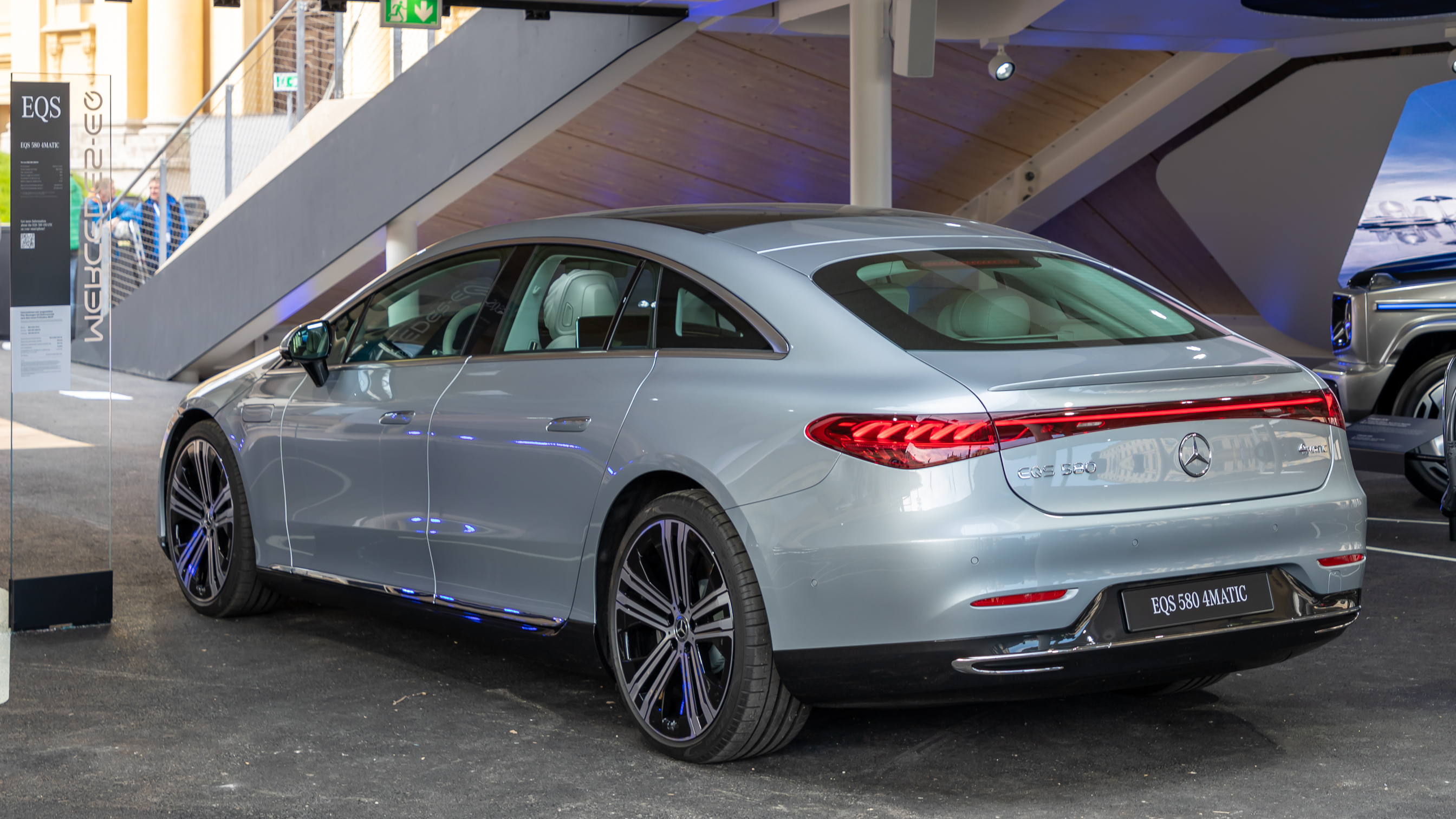
"...nd then, and then Mercedes was like, actually the EQS is the most. And I was like, I don't have a wind..."
The Mercedes-Benz EQS is a very fancy electric car that’s quiet, comfortable, and uses electricity instead of gas. It’s designed to be very smooth and efficient.
The Mercedes-Benz EQS is a flagship luxury electric sedan known for its advanced technology, comfort, and aerodynamic efficiency. It aims to set new standards in the electric luxury segment.
"... I was like, it looks like this, the angle of the Cybertruck build a cheap car, I guess is what I'm saying. Y..."
The Tesla Cybertruck is a new kind of electric truck that looks very different from normal trucks. It’s made to be very tough and powerful.
The Tesla Cybertruck is an all-electric pickup truck with a futuristic design and stainless steel exoskeleton. It’s notable for its unconventional looks and promises of high durability and performance.
"...e same answer I got. I was with Ferrari with the F80, which is a 400 volt battery, which steps down to..."
The BMW M3 is a fancy and fast car that’s good at driving on twisty roads. It’s more powerful than regular cars and feels sporty.
The BMW M3 is a high-performance version of the 3 Series, known for its sporty handling and powerful engines. It’s a benchmark in the luxury sports sedan segment.
"technology, EVs, like we're seeing it in everything from autonomy to humanoid robots, to EVs, right? Everywhere."
Autonomy means cars that can drive themselves or help the driver by controlling steering, braking, and acceleration.
Autonomy in cars refers to self-driving or driver-assist technologies that allow vehicles to operate with little or no human input. This is a rapidly developing area in automotive innovation.
"Yeah. And innovation is the only thing that will help us win. Right. And, you know, you have to take risk to innovate."
Innovation means coming up with new ideas and better ways to make cars and technology work.
Innovation in the automotive industry refers to developing new technologies, designs, and methods to improve vehicles, such as electric powertrains, autonomous driving, and advanced manufacturing.
"because that is going to be the actual biggest thing in our lifetime from, forget the powertrain side. The fact that you just don't have to drive anymore."
Powertrain means the parts of the car that make it move, like the engine and transmission.
Powertrain refers to the components that generate power and deliver it to the road, including the engine, transmission, driveshafts, and differentials.
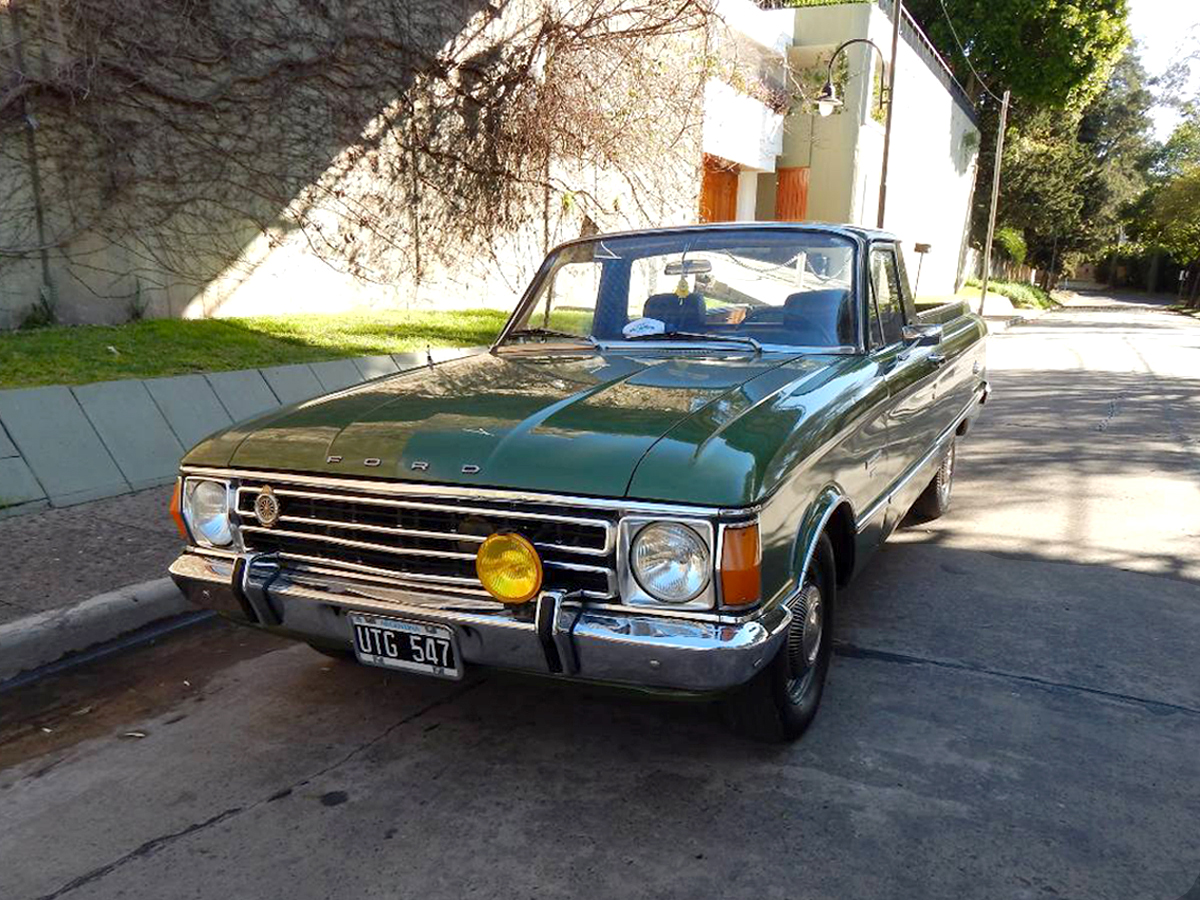
"... 3. Okay. Name of the truck and it's going to be Ranchero, right? It's going to be Ranchero. You guys regis..."
The Ford Ranchero was a car that had a truck bed in the back, so you could carry things but still drive like a car. It was popular a long time ago.
The Ford Ranchero was a coupe utility vehicle produced from the 1950s to the 1970s, combining car-like comfort with a pickup bed. It’s a classic example of a car-truck hybrid popular in its era.
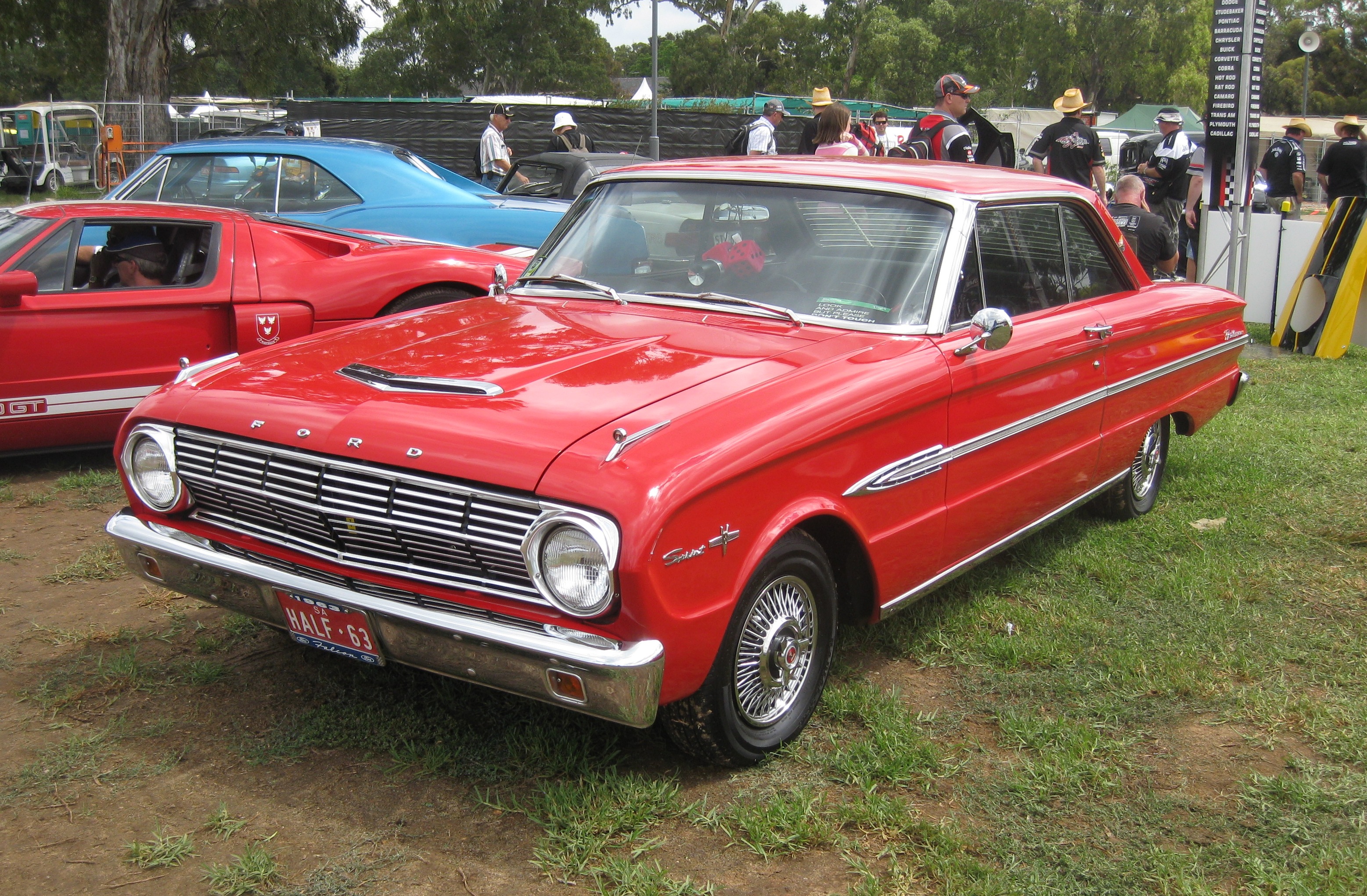
"...You're kicking it off. What's the Australian ute? Falcon. Falcon. F. You guys like Fs. Well, Ford loved E..."
The Ford Falcon is a type of car that was very popular in Australia. Some versions were like small trucks used for work and fun.
The Ford Falcon is a nameplate used by Ford in various markets, notably Australia, where it was a popular ute (pickup-style vehicle). It holds cultural significance in Australian automotive history.
"...ehind RAV4 and kind of maybe a little bit behind CRV. So it's probably like that factory could do 300,..."
The Honda CR-V is a small SUV that’s good for families because it’s reliable and doesn’t use too much gas. It’s easy to drive and has plenty of space.
The Honda CR-V is a compact SUV known for its reliability, practicality, and fuel efficiency. It competes closely with the Toyota RAV4 and is a popular choice for families.
"...his Ranchero against the Hilux or against the BYD shark, or like how like elbows out through this car to..."
The BYD Shark 6 is an electric car made in China that can go far on a charge. It’s a newer car that many people are starting to notice.
The BYD Shark 6 is an electric vehicle from Chinese automaker BYD, known for its modern design and competitive electric range. It represents the growing presence of Chinese EVs in global markets.
"...ou going to try to sell this Ranchero against the Hilux or against the BYD shark, or like how like elbow..."
The Toyota Hilux is a strong and tough truck that many people use for work and rough roads. It’s known for lasting a long time and being very reliable.
The Toyota Hilux is a rugged and reliable pickup truck popular worldwide, especially known for its durability in tough conditions. It’s often compared to other global trucks in utility and toughness.
"Or it could be, you know, other ECUs. It could be stuff. Yeah."
An ECU is a small computer in a car that helps control how the engine and other parts work to keep the car running smoothly.
An ECU (Engine Control Unit) is an electronic control unit that manages various functions of a vehicle's engine and other systems. Modern vehicles often have multiple ECUs controlling different aspects like powertrain, safety, and infotainment.
"because they can't figure it out, because they want to have a frunk. But then where do you put the engine?"
A frunk is a storage space in the front of a car where the engine usually is, common in electric cars.
A frunk is a front trunk, a storage compartment located at the front of a vehicle, typically found in electric vehicles that lack a traditional engine in the front.
"Tesla's famous for reducing model variation. They would just have a handful of vehicles like Standard, right? Long range or performance."
Model variation means the different types or versions of a car that a company sells, like basic or sport versions.
Model variation refers to the different versions or trims of a vehicle model offered by a manufacturer, such as different performance levels, ranges, or features.
"...ng as the stainless steel, which is a riff on the Model T. Are you going to be deploying similar tactics t..."
The Ford Model T was one of the first cars ever made that many people could buy. It helped make cars popular and easy to get.
The Ford Model T is a historic automobile produced from 1908 to 1927, credited with popularizing the assembly line and making cars affordable to the masses. It’s often referenced as the car that started the automotive revolution.
"... think also, certainly when Tesla started in the Model S days and the Roadster days, there was no benchmar..."
The Tesla Model S is a fancy electric car that can go a long way on one charge and is very fast. It has lots of smart features inside.
The Tesla Model S is a luxury electric sedan that revolutionized the EV market with its long range, high performance, and advanced technology. It remains a key model in Tesla’s lineup.
"...y when Tesla started in the Model S days and the Roadster days, there was no benchmarks. There was nothing ..."
The Tesla Roadster is an electric sports car that was the first car Tesla made. It showed people that electric cars can be fast and exciting.
The Tesla Roadster was Tesla’s first production car, an all-electric sports car that helped establish Tesla’s reputation for electric performance vehicles. It set early benchmarks for electric range and acceleration.
Honda F1 means Honda's racing team or engines in the fastest car racing competition called Formula 1.
Honda F1 refers to Honda's involvement in Formula 1 racing, either as an engine supplier or a team, showcasing advanced automotive technology and engineering.
"...So really, really lucky. My first car was an Audi 5000. Yeah. Front wheel drive, five cylinder, nice 10..."
The Audi 5000 was a fancy car from many years ago with a special engine. Some people remember it because of problems it had, but it was nice for its time.
The Audi 5000 was a mid-size luxury car from the 1980s and early 1990s, known for its five-cylinder engine and advanced features for the time. It has a mixed reputation due to past unintended acceleration controversies.
"...er that, I really got into a car called the Coop Quattro, which is just, you know, posters everywhere, got..."
The Audi Quattro is a sporty car that can drive on all wheels, which helps it go fast and stay safe on slippery roads. It was very important in racing.
The Audi Quattro is a legendary all-wheel-drive sports car that revolutionized rally racing and performance cars. It’s celebrated for its handling and technological innovation.
"...lls me he helped actually like take the Mercedes CLS. CLS is a part. Yeah. Okay. So you guys were like..."
The Mercedes-Benz CLS is a fancy car that looks sporty but has four doors like a regular car. It’s good if you want style and space.
The Mercedes-Benz CLS is a luxury four-door coupe known for blending sporty styling with sedan practicality. It helped create a new segment of stylish executive cars.
Select text to request an explanation
Welcome to The Inevitable, a podcast by Motortrend.
Hi there, and welcome to The Inevitable.
This is Motortrend's podcast, our podcast about the future of the car, the future of
mobility.
Where are we going?
How are we going to get there?
Today, as always, I'm joined by Ed Lowe, my co-host who's got a message for you, but
just before he does that, this is a long episode.
Much longer than we've done in a while, but it's because the guest is that high quality.
Ed, over to you.
Yes, The Inevitable podcast is brought to you by nobody currently.
We're looking for sponsors.
Shoot me a note, edward.loh.hurst.com, or slide into our DMs on Instagram, at Johnny Learman
and at lowdownlohdwn.
Yes, we do indeed have a great guest.
I could have talked to him for another six hours.
Instead, we just went just over two.
Old school.
Over two.
Ford's Allen Clark, sorry, once again, that's Ford's Allen Clark.
He's the executive director of Advanced EV Development at Ford Motor Company.
Great guy.
He's also a longtime Tesla engineer, worked there for many, many years.
We talk about all that.
We talk in particular about the Ford Universal EV platform, which Allen just did a big deep
dive on.
Yes, you can watch it on YouTube.
I will tell you right now, if you want to get a good visual, understand what we're talking
about, go to YouTube or just Google Ford Bounty Hunters.
Look for that video.
It's about 14 minutes long.
Pretty cool.
It tells you all about Ford's future direction for their EVs, packed with information and
experts, but we're going to talk to the man at the top of that program.
His name is Allen Clark and he's on right now.
Allen Clark.
Woo.
As I live and breathe.
This is tremendous.
Thank you for coming here.
We just did the intro, so we won't go into your title.
Let's just say it again.
Executive director, Advanced EV Development for Ford Motor Company.
You've been there now four years, two months per LinkedIn.
My first question to you is, why aren't you retired?
You have been, you were at, prior to joining Ford, right?
You were at Tesla since 2009.
That's right.
And then you got hired to Ford, hang on, you got hired to Ford in January of 2022.
And they must have had, like for the second question is, where do they pull the dumb truck
of cash to your place to get you to go from Tesla?
Before you answer, I was just hanging out with some buddies of mine that are all longtime
SpaceX engineers who all got Tesla stock at 19 bucks a share and like a GT3, a Maserati,
a MC20.
That's the third question.
We're all the toys.
We're all the toys.
They all showed up.
So first question, you're a young guy, you could, you could be kicking back on a beach
somewhere like, what are you doing?
Like, what, what are you doing?
Yeah.
I mean, some people are cash motivated.
Some people are power motivated.
I am, I'm change, I'm change motivated.
Nice.
Solid answer.
Yeah, I want stories.
I want stories to tell my grandkids.
I want to make a meaningful impact in something you can touch, feel.
And I think I learned that about myself pretty early.
So I was lucky.
I just want to say, because I was reading, you did the front suspension on the Model
S. That was your first thing at Tesla?
I mean, yeah, did is maybe an overstatement.
I worked, I worked around some incredibly intelligent suspension engineers.
I was responsible for releasing it.
Okay.
Like the hard points.
We're going to get into that.
Let's, let's, let's, let's stay on the Ford piece.
I want to talk first about Ford, universal EV platform, but also just, just quickly
because we are going to cover, I think, some of your other projects.
How did you get to Ford?
Like, how did that conversation go?
And was it, I have to guess, it was Doug, Doug Field, who came after you and said,
yo man, you want to come, come join or the thing we're building?
Or how does that work?
You have never heard him say yo man before?
Yeah, he's not a yo man.
Not a yo man kind of guy.
Yep.
Yeah.
Well, I mean, when I was at Tesla, I worked on model three and under, under Doug.
Right.
And, you know, I worked on model X under him as well.
And certainly one of the things I learned is the way he would set up a team, the way
he would create roles and responsibilities, the way he would sort of create interactions
within the team to get the best ideas to come out and then down select them into things
that we would want to ship left a really big imprint on my mind.
And it was certainly one of the densest times of learning in my whole career.
So that's like the, all right, I'm going to pick up the phone when Doug calls kind of
moment.
Then he goes to Apple.
You know, he, he did call me twice when he was working at Apple.
And, you know, I talked in the first time, kind of heard out what he had to say.
He couldn't tell me a lot about what he was working on.
And then this is product Titan as we call it.
Who knows what Apple called it, but at the time, I didn't know what it was called.
But it probably is what it was.
Apple car. Yeah.
The second time I talked to him, I just said, you know, I think if you can tell me when
you're going to ship and that you're definitely going to ship, we should keep talking.
But if not, you know, I don't think this is for me.
How did you know that they may not ship?
That's that's the part, like, because I remember when the plug was pulled on the
Apple car, whatever it was, Project Titan, it seemed like just like a split second
decision, like, how did he, was he telling you something where you're like, this may
not happen, or you just knew enough that, like, things don't always happen in the
Carbiz. I think it's that.
Yeah. I mean, everyone's so tight lipped.
I had no idea what they were working on.
Like now maybe because you could see what equipment they were buying.
You could see who they were hiring.
It was a little bit more obvious, but that was, you know, pretty early.
And so, yeah, I think when, when Doug went to Ford, I think some people said,
all right, well, you know, Doug's going to be an advisor at Ford.
But I know Doug well enough that I think he's taken on something really hard,
really meaningful, something that, you know, he thinks is really important.
So he called, he said, you know, this is what we're doing.
We have these ideas.
Let's, you know, let's chat about it.
So and you know, Ford is going to make cars and trucks and SUVs.
Like that's that's right.
It's not like it's not the iPhone company.
Making tablets.
Robots.
Yeah.
Who knows about that?
Let's not, let's not rule things out.
Are you the reason why this, the new EV?
I don't know what you call it.
Why your building, why the whole thing moved to Long Beach?
Because was that sort of conditional?
Like I'm not going to go to Dearborn or would you have moved for Doug?
Would you have gone up to Northern California?
Or do you spend a lot of time with there?
I do.
But yeah, at the time, I didn't know what I was going to do at all.
So when he called it was, I think, I think we need help.
We need to do things differently in EVs.
What if we just stood up an architecture team?
And you know, at Tesla, that's what I was doing.
And so I thought, all right, I think I'm capable of that.
I think I can go find really smart people who want to do it with me.
And I ended up, you know, that was sort of the remit at first.
And at that point as well, it was 2022.
Everyone's working from home for the most part still.
And so it was, all right, we'll figure out how this goes.
And then maybe I'll move to the Bay Area or maybe I'll move to Michigan.
Went home, talked to the wife and she said, sure, let's consider moving the family
maybe for one, two years.
I'm willing to try that out.
And then I started and then they said, hey, you know, there's an office in Irvine.
And so drove down to Irvine, met the team there.
Turns out there was some space.
And so we ended up starting the office in Irvine, California.
And then, you know, think as years progressed, then we said, OK, well, we have
to probably do some of our own software.
OK, let's hire for that in Palo Alto.
That's where the talent base is primarily.
And then all these other things happened with, you know, Faraday and canoe
and an app, whatever was happening at Apple.
And, you know, and both Rivian and Lucid having issues up and down,
like the talent pool having, being very dynamic in that time frame.
Then we just sort of kept building in both locations.
But the Irvine location, we really quickly ran out of space.
And every time we tried to say, you know, hey, we want a high voltage lab here.
You know, good luck.
This is a design studio, not a high voltage lab.
So then we started looking for spaces.
I had some very distinct criteria.
You know, engineers want to be quickly off the 405 somewhere.
They want to be able to live from the west side all the way down to, you know,
San Clemente or maybe even San Diego for some of our engineers.
You know, some want to live on more land inland.
Some want to live near the coast.
So we we searched from Torrance all the way down to Irvine.
And then we found this Douglas Park area, which was really special.
And that's in Long Beach.
That's right. Yeah.
And you live at the convenient because you also live in Long Beach.
Very convenient.
I see how that works.
But it's interesting, because I've heard other people say that there actually
is this incredible talent pool of like EV specific engineering talent
in Southern California and northern, obviously, but in Southern California
because GM had a lab out here, you know, you always read like, you know,
Rivian's laid off 5% of the workforce suddenly.
And it's like, well, those people are all Irvine, you know.
So, yeah.
And then two years ago, we we bought a company called Automotive Power.
OK, really smart power electronics engineers and software engineers.
And same story, like this hidden talent pool in SoCal that, you know,
we didn't know existed at the time.
Interesting.
For when you were at Tesla for all those years, were you you were primarily in
Hawthorne or no?
Primarily in Hawthorne.
I moved once to the Bay Area.
OK.
And that was for a project that's never been announced back in 2010, probably.
And then, you know, I got canceled and then they moved me back to Southern California.
Would you like to announce it now?
I wouldn't. OK.
Was that Palo Alto or Fremont?
That was San Carlos.
Oh, OK. Even before.
So that was a. Oh, right, right, right.
Very, very early.
OK. OK.
So so Doug calls, you pick up the phone, you say, OK, I'm in.
What.
What exactly did he sell you on?
Like, what was the what was the pitch?
The pitch was we want to go into affordable vehicles.
We want to go into affordable EVs and we don't want them to be boring.
And the entire leadership and the board is completely on board with doing it a
different way, help us do it in a different way.
So, you know, I I trust Doug a lot and I've spent a lot of time with Doug,
but I also didn't believe him.
So then I talked to Jim and then I talked to Bill and then I talked to a few
members of the board.
That's Jim Farley and Bill Ford, if you're playing at home.
OK. Yeah, yeah, yeah.
Bill and Jim, yeah.
Yeah. And then, you know, I think.
Jim said that he said two things that I thought were great was one was you'll
never learn about what the product specs are going to be on the product that
you're working on from Twitter.
It was called Twitter at the time.
Right.
That was a very typical thing that happened to me quite a bit at Tesla.
I was like, oh, is this what we're doing now?
OK.
And then the second is that we'd be working on cars.
Right.
Right.
I think at the time I was working a lot on autonomous things and humanoid things.
It was, you know, I've got cars in my veins and I've always loved cars.
It's a sickness.
I can't cure it.
Like I said, you're Ford.
You're going to be building cars.
We're going to finish with that.
We're going to talk about the personal stuff.
But OK, so we got the setup.
So now you're four years later and you dropped this Ford Bounty Hunters video.
This is kind of like you're coming out party, right?
Like nobody knew who.
I mean, we know within industry, but like you're out there.
You have the cool leather jacket on.
You're talking about the team.
You're talking about this product.
You're giving this vehicle and you're giving all sorts of hints about what it
might look like, which we're going to get into.
I think we'll say this in the intro, but if you haven't seen it, the whole context
of like the first part of this podcast is what Alan Clark is doing with Ford
with the Universal EV platform.
I love calling it FUEV.
I know that's a I'm going to get a pillage for that.
But the Ford Universal EV platform, there's a video out.
Go to YouTube, search word called Ford Bounty Hunters.
It's all about the efficiency piece.
I will commend you guys.
I'm a former science teacher.
That's a lot of science to put into about 15 minutes.
And I would it's it's going like this over.
I think a lot of people's heads.
I had to watch it about five times.
I watched it. I'm not very smart.
And I watched it once.
I thought it was pretty except for Vlad, who is the most interesting, but also like,
you know, did you read the fine print?
There's a lot of fine print, which we're going to get into.
I mean, there was no details, but yeah, who is that video for?
Who who are like, what's the point of doing?
What's the audience?
Yeah, who's the audience?
I think it's the industry.
OK, so it's people who like cars, who want to work on cars,
who, you know, trying to learn how to make EVs.
And, you know, I think it's working.
We've had people who are sort of on the fence about, you know,
should I join this effort?
And they call call up and say, hey, watch the video I'm joining.
Well, it's a hiring video.
It's like, is it a recruiting video?
Like it's got it's got many purposes.
I would say that's one of them.
But I think what we what we heard in August, when we talked about
where we're going to build this vehicle, which is which is in Louisville.
So that's Louisville Assembly plant in Kentucky.
The old escape plant.
Yeah. Escape Coursera was built there.
That's right. And so we, you know, we talked about that.
We talked about Louisville Battery Park in Marshall, Michigan,
where we're building lithium ion phosphate batteries.
You know, we had a lot of people basically said, this is great.
We really like how Ford's starting to show the process of how hard it is to make
EVs, what it takes to make EVs, the talent to make EVs that are, you know,
different than what we were making before.
So I think that started this, you know, continuous movement into us,
maybe sharing a little bit more of the journey with everyone of what it takes
to make an affordable EV.
Right. And if you haven't watched the video and you're listening right now,
you guys are announcing the first offering is a small or mid-sized truck.
I imagine a little bit bigger than Maverick, maybe similar to Ranger,
maybe a little smaller, as hard to tell, that kind of general.
Okay. And. He's nodding his head.
Yeah. And you said like 300 miles-ish of range, maybe a little bit more.
And what was fascinating to me was like, you know, like, you know, the front
subframe, instead of being like whatever, a lot of parts, it's going to be two parts
or two parts total, make up the subframe with these.
Three. Unicastings.
Yeah. Okay. So.
We're getting heavy. We're getting heavy. Yes.
That's all I want to give people contact.
So we compared it specifically to the Maverick.
Right.
And so the Maverick, if you take up the front parts and the rear parts of the structure,
it's 146 parts.
Okay.
We're now using one in the front and one in the back.
Yeah. So two parts.
So two parts. And, you know, I think the important thing there is not just, okay,
you've condensed the amount of assembly, like it changes your factory, right?
Your factory doesn't have all these robots, bot welding things together.
It's that when we talk about this new skunkworks thing, it's been married with the thing that
Ford's already really good at.
Manufacturing.
Manufacturing structural analysis, NVH dynamics.
Ford's really strong in a bunch of different areas.
And so.
And trucks.
And trucks. Good one.
So I mean, these, these castings are very light compared to the ones that we can buy
on the open market and benchmarks ourselves against.
But they're also the basis by which we assemble the vehicle, which is different.
So instead of the assembly line, it's now an assembly tree.
So there's a huge amount of sub assembly work that happens on these individual parts
outside the vehicle, which changes sequencing and changes
like the way the factory looks is different now.
Okay. I want to talk about that.
But let's try to get, did a good setup in terms of what the vehicles,
what the first vehicle is that was alluded to in this Bounding Hunters video.
But I want to go from the mission statement piece that you put out there in the first like
45 seconds of the video, which is to build great EVs that are not just fun to drive,
but compete on price with the best, including gas vehicles.
That's literally like, I was, I was, I wrote it and it's like, this is a mission statement.
I think this is like their, this is like the page one of their PowerPoint deck on this thing.
Might actually be.
Yes.
So great EVs, not just fun to drive, compete on price
with the best, including gas vehicles.
Then you go immediately into size of the battery, reducing the size to reduce the cost.
Okay. So the first of all the AI assisted questions I'm going to ask you is,
because you've talked about this a lot, why, why is this so critical?
You go into this, I'm excuse me for making you repeat some of it, but
battery prices have fallen by like an order of, it's like, since about, I double check this,
15 years, they've gone from like $1,000 per kilowatt hour to now just about,
I think Bloomberg is 108.
And hopefully going down.
Well, the next year's production is going to taper a little bit.
Wait, what's the target?
You know, you, you, you want a smaller battery, you want a lighter vehicle.
So a smaller battery, a lighter, a lighter battery.
And then you, and then you have the chemistry, which is LFP, which is also cheaper.
Like, do you have a particular cost per kilowatt hour target you're, you're trying,
you're, you're, you're getting after?
The target is lower.
That's about it.
We just don't stop.
I mean, this is keep finding performance.
And, you know, I think that's sort of the formula one methodology.
It's the, this, we're at a critical juncture where we're crossing the cost of a nice power
train with an EV power train.
And, you know, that happens.
You mean crossing, meaning you're hitting, you're close to parity.
Once you hit parity, you know, there's not really, unless you're driving 600 miles a day.
Which no one does.
That's a total outlier.
Or you're towing massive amounts.
People do do.
Which people do.
Then, you know, the EV is the best vehicle for you.
Right.
Okay.
Great.
Cause I had a question about parity because we, because I'm trying to figure out where,
like, how far do you, you know, as lower as a nice answer, of course you want to, but there,
there are, there are constraints, right?
The current cost of like a, I tried to do this comparison in several different ways.
Let's call it a Model 3 versus like a Corolla.
The power train costs for the Corolla are somewhere in the neighborhood of $4,000 to $5,000
per the, for the engine, maybe $2,000 to $3,000 for the transmission.
So call it $8,000.
And then in the Model Y batteries make up the largest chunk of the power train.
And then they're the mo, and for a rear drive, a single motor,
you're going to know this.
I'm going to try to look at your face while like, likely around $10,000, maybe.
I mean, that's the thing is it's just moving so fast.
So the power train cost is going lower, battery costs, so the $108 that you mentioned,
I don't know if you're talking about at the battery level or the cell level.
Battery, I asked the question, is battery, Bloomberg, Bloomberg said battery.
And then also that in China, LFP batteries are getting down into the, for volume,
$84 per kilowatt hour.
I've seen numbers as low as $53 per kilowatt hour.
That's good, which is quite obscenely low.
And we just don't know how much it's subsidized by the government buying,
paying for the capital for all the conversion capabilities.
You don't know unless you're the manufacturer and you're actually making it yourself
and you're buying the raw materials.
And that's the track that we're on.
That's why we're making batteries ourselves in Marshall, Michigan.
You have to build up that capability to build the most expensive part of your vehicle.
Today, Ford has lots of transmission plants and engine plants, and we understand the cost
for those incredibly well.
And we spent the last 100 plus years optimizing those.
And so if you look at, all right, what's the next most expensive thing?
That's why we're focused on at least a portion of our cells coming from
a place where we make them ourselves.
So you want to get a battery though that, because at the top it was around 300 miles,
from your video, from the Boundary 500 video, around 300 miles of range in a vehicle.
Again, that's cost competitive with the best, including gas vehicles.
And using LFP, I'm basically trying to arrive at the cell, the pack size,
which I think people are speculating is somewhere in the neighborhood of,
would it be 50 or 60 kilowatt hour?
The thing is we're not going to do one battery.
We're going to do multiple.
And we know we need that because customers have different use cases.
Multiple for the first vehicle.
I know you're going to do multiple.
It's a universal platform.
So you're going to have a longer wheelbase.
You're going to do a two, a three row crossover or SUV, maybe do a van.
You'll do a sedan.
But you're going to start with a truck.
Are you saying you're going to likely have, like with a lightning,
a standard and a long range or a larger and a smaller pack?
So I think what we've talked about so far is the mid-sized pickup truck.
We're going to have a single LFP battery to start off with.
But we have opportunity for multiple
chemistries and form factors that fit inside that same battery.
Well, that wasn't me.
My question was, you know, LFP, I understand, you know, it's cheaper.
It has had some advantages, has a lot of disadvantages.
And you said multiple chemistries.
So multiple LFP chemistries, or you would actually do lithium ion or lithium sodium
or other, is the battery plant working on that?
I think the most important thing is that we're agnostic to what the chemistry is
with the way that it's coupled.
So we've done the hardest thing first.
And that's the lowest cost, highest volume of battery.
So lithium ion phosphate has low specific energy and volumetric energy density,
which means that it's the largest thing.
It's in a, we've done it in a prismat.
And that prismat, we're directly structurally coupling to the battery.
So you're saying that LFP battery has to be larger physically than a lithium ion battery.
Everything is better with the other chemistries.
Everything's lighter and smaller.
More dense energy.
You can put in extra structure to protect it.
You can put in extra structure to couple it if you want to.
So it gives you more capability.
You can even insulate it if you wanted to.
So, you know, I think lithium ion phosphate has worse cold weather performance.
So you have to then ideally have an amazing thermal management system
on your software.
You're starting with this worse solution because it's the cheaper solution?
It is lower cost.
And we have methods to make sure that the customer gets the most amount of value out of it,
including bi-directional.
So it's also the good things about it are that it's very, very durable energy throughput.
And you can, again, for apartment dwellers who have to charge to 100% because they're not
allowed to have chargers at home, they don't have to worry about charging to 100%.
They can just do it and forget about it.
We will not only encourage that, but I think psychologically as a customer,
when you buy something and you never see it hit 100% and you're afraid of making it hit 100%
because it'll damage it, it's not a good feeling, right?
It's a weird, you get used to it, but it is a weird feeling.
It's just strange.
Okay, the logic makes sense.
The truck's gonna be, Ford does trucks.
Truck leadership, Ford rams that down and throws every opportunity.
So you're gonna make the workhorse of this universal EV platform
use the most affordable, the most durable.
Makes a lot of sense.
You said something in there, the form factors basically locked in for these prismatic cells.
So like the fact that it's a structural battery and I watched the animation of the cells going in
and prismatic is basically like a prism.
It's a box.
It's not a packet or like a, what do you call it?
A bunch of cells.
So does that mean, does this new form factor you're building for this first mid-size pickup truck,
all the batteries coming are gonna utilize that same prismatic shape?
Form.
All of the first products that we come out with will use that prismatic shape.
But you know, prismatic shapes, well, cylindrical is a prismatic shape, I guess.
So rectilinear for lithium-ion phosphate, you have to fill every last little nook and cranny with
the chemistry of the battery because it's inefficient from an energy standpoint.
Versus, you know, cylindricals tend to have nickel-based chemistries in them,
but you can waste the little spaces in between all the cylinders because they're so much more
energy dense than lithium-ion phosphate.
So it's what's at the pack level that matters most in what you can deliver.
And it's even, I mean, it's a fascinating landscape.
The costs are, you know, continue to be artificial in terms of what the near-term and long-term costs
are because you can look at the first principles, physics, like what atoms go into these things
and then what equipment do you have to buy and then what's the labor content and automation cost,
depreciating all of the things that have to go into this and then where the raw material is
going to come from and what's the logistics cost of that.
That's one way of doing it.
And that's where we look at these curves of battery costs just continue to go down and down and down.
But then there's also the artificial side of it, which is, you know, the industry movement, right,
is this lull in EVs means a glut of capacity, which artificially changes the costs.
You have automakers that are moving away from 2170s, making 2170s an interesting form factor as well.
So the real headline here is like agility is is crucial to competition here.
You have to be able to adapt to different form factors,
chemistries, you have to have the software capability to build new battery management systems,
to be able to fast charge, be able to thermally manage.
And if, you know, I think giving money to suppliers each time you want to do those is
going to get really expensive if you actually want to be agile.
So you're developing in-house stability like almost rhetorical, but like, you know,
when solid state batteries are ready, you guys will be able to do that in-house.
You won't have to go to a supplier.
And if, you know, I keep hearing about Mercedes has been talking about lithium-sodium
technology about 12 months away, which is like 20% more dense than lithium ion or power dense.
You guys will have all that expertise in-house.
Yeah. I mean, certainly even before I came to the company, Ford has some pretty incredible
battery expertise. And we sort of augmented that and continue to build the capability.
So yeah, Ford has a lot of capability to, I think, use, work with suppliers directly on
things that are coming out. We can't really do all of it.
And then, you know, we'll keep developing the things that we think are really important for us
to have no ion capabilities. Okay. Just related, and we can move them,
talk a little bit about Aero. And I misspoke. So you have two unicast things, which we'll get to.
And then in the middle is the structural battery that has these prismatic LFP cells.
What? And you said that it can accommodate for different or future chemistries.
Was there any kind of limiting factor in that, in the shape or in the manufacturing? Because,
you know, again, I watched your bounty hunters video like five times. You got all this cool stuff
in the pack. You put all of the wiring, this printed circuit board, everything is sort of
modular, right? Is that the right way to put it? Like, you don't have to add a bunch of stuff
additionally. It's the E-box, right? You had like the one E-box,
it's just all everything is contained in this thing, you can pop it in and out.
Does that limit what other, like is there a, oh, shoot, we're going to put solid state batteries
in this thing. And now it's a completely different center section for the structural battery,
or it can all fit in this, it all fits in this box. It all fits in the box. Okay, that's the whole
point. And I think height, height is a very, you know, when you, when you're doing a platform,
you're looking at the lightest thing you're ever going to make, the heaviest thing you're ever
going to make, the longest thing you're ever going to make, the shortest thing you're ever
going to make, widest, narrowest, and then saying, all right, if I, if I cover an F-150
Raptor width, I'm going to carry this much scar mass and scar massed on all vehicles.
Scar massed? Scar mass? Scar mass means like you pick up that mass in a base platform,
if you don't make it a variable that you can. Oh, okay, I know what you, so when BMW put the
five series, seven series and Rolls Royce Ghost on the same platform, the five series was really
fat all of a sudden, because it had to be able to also be a 5,500 pound car. Totally, yeah.
So we call that scar mass or scar cost. Right, okay, cool. I mean, if you don't know,
you know, architecture and product design, it's all about decisions and making decisions in the
right order, connected in the right way. There's a butterfly effect where you make a decision
early on, and then suddenly your factory looks different. And, you know, scar mass and scar
cost are ways of measuring those, because the customer gets impacted directly by those types
of things. Right. Yeah. Today I learned a new word. I've known about scar mass and talk about it
all the time, but I just never knew there was a term for it. Okay, so that's great, because that
informs, again, for the people who are listening, like, what are you guys talking about? We'll go
watch the video. Cars are about platforms, is what we're talking about. Well, there are lots of
shots, long shots of Alan and his colleagues standing in front of this sort of, it's like a
digital illustration of this vehicle in a, you know, like a wind tunnel, like the lines going
over the back. And what he essentially is, this is the first of this universal EV platform. And
depending on whatever the vehicle specifications are for the end product, you're going to be able
to move the wheelbase out or in, depending on the size of the battery you want to put there,
because you can make the car a lot wider. I don't know why you would, but you're going to,
you're going to have for a raptor, you're going to have this flexibility within, I guess, these
three main parts, the front casting, the rear casting, and then this structural battery in
between. Is that, that's an accurate super layman explanation of the point here? That's an excellent
explanation. Okay. I thought that the best part of the video was really, was the part where I was
like, well, was when you guys were, I think it was that Vlad gentlemen was talking about how
you can't have one reason for a change or has to be, or for a part has to have two functions.
The best part is no part. The second best part is one that has multiple functions. And the first
time I heard about that in passenger cars, I've heard none about that for like F1. That's, you
know, an A dream new principle. But with another Adrian new product was with the Aston Martin
Valkyrie. The does like whatever you want to think about the car or whatever that thing that's
thing that the fact that that car saw the light of day is insane because like they would be like,
you know, we want five more millimeters of shoulder room. And he's like, you got to come up
with two reasons why driver comfort isn't enough. You know, and so that really fascinated me because
really, the video made it sound like you're really applying like real race car decision-making
to a $30,000 economy product. Like, is it the cost-benefit analysis? That's a weird way to
build a cheap car, I guess is what I'm saying. Yeah. And you can't, what you're describing,
it's really tough to do if you're process-oriented. Right. Right. So, you know, going from A to Z
on making a car, you eventually say, all right, I'm going to keep making more different types of
cars that are similar to this last car. To efficiently do that, you create a set of requirements
and rules, you create organizational structures, you create process that keeps those organizations
delivering to the same timelines. Right. And Ford in the past has really been hamstrung by that.
You know, I recommend everyone who likes cars read the book Car about the making of the second
gen Ford Taurus and how even though the first gen Ford Taurus was the beat Honda and Toyota
suddenly was the best selling car in the U.S., it was six months late and the project manager was
fired and was seen as a failure internally because it broke the Ford process. So, it's interesting
that, and I know this is why Doug was hired, was to end what, why maybe getting away from Michigan
because GM also suffers from this and so, sorry to cut you off, but it's fascinating to hear this.
Yeah. I mean, it's to get the systems engineering benefits, which is pretty much just a complicated
way of saying, you know, get people to collaborate and think about other areas that are not their own.
When you say the best part is no part, the first of all is finding the no part is surprisingly
challenging. Yeah. You know, Vladimir, who you're talking about in the video, he had to talk to
every single engineer with any hardware across the entire vehicle in order to find those opportunities
with the same thing. If you want to find a part that can do multiple things, an exteriors engineer
might need to talk to a closures engineer that needs to talk to a structures engineer to say,
hey, do you guys want to delete your part? Because we can combine this into a single thing,
make it into a casting or make it into a forging or, you know, change the product form
or ask the question all the way to the top of, hey, does the customer even care about this?
Do we want it? Well, let's talk about one of those. And I want to get back to the overall arrow
piece because you open the door. The mirror in particular, the mirror housing, you talk,
there's a talk about how to adjust the mirror, you need one actuator, right? And then to make it
fold, you need another. So in this, in this new pickup truck, you're going to combine and have
one that does both. Does that mean it's like an old school like truck mirror where
the entire, basically the reflective part of the mirror is mounted to the housing. And if you
were just adjusting it to look the whole thing moves, and then when you turn off and walk away,
it did the whole piece folds. That's it. That's it. Okay. So then, but then there's only one position
for optimal arrow then, right? Based on the shape of the housing. Valid point. Okay. So that means
the arrow and emphasis have to go take wind tunnel models to the full scale wind tunnel and then
simulate in CFD as well as run in the wind tunnel, a bunch of different mirror positions.
But it's, I mean, I love, I love all this because it's really race car thinking, you know, it's,
again, back to Newie, I read his book, but like, you know, Graham here, Graham there,
eventually it's a kilogram. I would say the F1, does the F1 have mirrors? They do,
but they don't, the housing is optimized for arrow. And they're probably called, no, they don't,
everything is secondary enough. What I'm saying is the obsession with weight saving.
Right. Because I kept, I kept, you know, again, like I, how did I put this, in the video, you
guys were very proud and like, you know, and that saves, you know, like one ounce or, you know,
it was like, I understand that's a big deal, but I think like a lot of people are watching like,
what? Like you're excited about $1.30, you know, but it all, it all adds up to something.
We're like 30 minutes, so we have to do the spiciest part of this, which is you're showing
the, the, the, the side view of this potential pickup truck, right? And you're trying to be
clever because you got the lines going over it, and then you can kind of see a cut line for where
the cab's going to hit the bed and other sites, not us, we didn't do you dirty, like drew a line
and said, this is boys going to make a truck, looks like this looks terrible.
Well, yeah.
It looks like the truck law. You remember Simone Geertz, this YouTube lady a few years ago,
took a Tesla Model Y, I cut the back off of it, like defend yourself. It's got, from what you
see in the video, it's got a pretty high body side relative to, it looks like the greenhouse,
and it's got a swooping sort of Model Y, but you know, sort of like a, not a traditional,
not a Maverick, not an F-150, chunky monkey block front end, and then a very defined cabin,
a long bed. It has a very aerodynamic, you guys, I think mentioned teardrop shape, plus,
it looks like it'd be a pretty short bed.
Truck law, right? We got, you guys are going to build the, the truck law?
Definitely not a truck law.
Look up truck law. I think that was even, that was even a Model 3 that she started with.
It was earlier than the Y existed, I think.
So it's not, it's going to look way better.
Not a truck law. So I think what, what we talked about a bunch is, I think it'd be
easy to make a very aerodynamic, efficient truck that's a teardrop.
You probably wouldn't like what it looks like, and
Prius Camino, yeah. It's easy to do, yeah.
The Hold and Pickup Truck or whatever they call it.
I mean, we, so we had a quote early on, which was immediately aesthetically desirable,
and we created, we created all these sort of terms that the team
used as slogans. Okay.
And we'd look at it and say, is it immediately aesthetically desirable?
Are you drawn to it? No. Okay. Keep, keep trying.
It's, you know, it's funny for, I give them a lot of credit because I remember,
I got a, before the Mustang, the Maki came out.
When we all heard they were making a Mustang SUV, but it was like, wait, but,
and I went to Detroit, and, you know, we go down in the basement somewhere,
and deep dark secrets, and, but what struck with me wasn't so much the actual vehicle,
it was like what they were working on before they decided to make it sexy.
And it was just this awful like compliance car, and I think Farley was there,
and he said like, you know, like, we were building a car we didn't want to build for,
you know, dealers didn't want to sell it to customers who didn't want to buy it.
And we're looking, this is really horrible looking at 90s, like Pontiac type of like,
this is the future, you know, and, and so he's like, you know, we decided to make it sexy and,
you know, appealing. And I'm like, you know,
that's a good decision. So he told me that story before I joined Ford.
And that's one of the reasons why I joined Ford. Yeah. And so I gave him a lot of credit
because I think, I think like you look at the Chevy Bolt, like they did not make that decision.
Right. They made other decisions, very fine product,
but it's not immediately aesthetically appealing. And I, you know,
immediately aesthetically desirable desirable to whom to a traditional truck buyer. Are you
to a new like, who is going to like, because I think you're still, I mean,
based on the profile, you should assume you look similar to that, you're going to still have folks
to be like, this looks, you know, look at Ridge, the Honda Ridge line, pretty close to a truck.
Uh-huh. You know, you had a Hyundai Santa Cruz reference in the fine print at the bottom of
your video for the era, which we want to talk about. Also, a lot of people like, that's not a
truck. Like the Maverick, which is the same as the Santa Cruz functionally, like get to pass
because it looks like it looks like it looks like it looks, it's a two box. Like, so who,
who is this immediately aesthetically desirable for?
Well, I mean, I think street credit for being a truck is very important.
So it actually has to have the feature, the aesthetic features to say that's a truck.
What does a truck do? It, it tows, you can put your mountain bike over the tailgate,
you can reach over the side to get things in the front of the bed.
We had a long talk about that.
I'm not pandering to the audience here.
No, we had a long talk. Yeah, yeah.
Yeah, so.
That's crucial.
So yeah, I think there's some, some important like boxes you have to check just to make sure,
hey, it is a pickup truck. Um, the, we have to put that fine print in there.
We, we're constantly think about who's going to call bullshit on this.
Like if we say we have the most aerodynamically efficient truck, like make sure that everyone,
we check all the boxes of like, we compare ourselves against all of these different
trucks and vehicles. Um, but who, you know, who is the actual customer?
I think we're likely to have more SUV buyers coming into a pickup truck for the first time
than anything else. And, you know, it really is a, the pickup truck is a very universal.
I mean, it's called the universal EV, but it's a universal body form that allows you
to do a lot of different things. It's incredibly flexible.
And once it's an EV, you have secure lockable frunk.
One of the gripes with any pickup truck is, you know, where do I put my stuff?
I have to put maybe my stinky stuff inside the cabin with me because I have an open bed.
Then you've got a cabin size that's larger than a Toyota RAV4, which is the number one
selling SUV in the world. And then you have the towing as well as the stuff capability in the back.
So, you know, our hypothesis is that many people will say, this is my first pickup truck.
Okay. I think it makes sense because this is again, I think the knife cuts two ways for Ford.
You guys have, again, best F series number one selling truck for Ford for close to 50 years now.
Unless GM would ever like actually take GMC and Chevy sales and combine them.
Inside baseball math. Also have the Ranger, also have the Maverick. So, it's like,
how are you going to get somebody who's already either a customer or considering Ranger or Maverick
to look at this EV pickup truck? So, it has to be a newer, a different consumer. I notice that you
put capability and then cabin and then towing one, two, three and then bed fourth. Is that the,
is it, it looks like a pretty short bed. Are you not expecting people to use it as much because
Ford has other trucks that have longer beds? Is this going to be like a four foot, like a shorty,
a short bed pickup truck? No, I think we expect people to use it. But you're, yeah,
you're really good at reading into the details. Is the bed Maverick size?
It's a Maverick size. Okay, so four and a half feet. Is it, will it have any fancy features like
midgate, like convertible or bed extender, or the fan, like Rivian did a really fancy thing,
right, with yours? Very fancy tailgate. Where the tailgate then makes it longer.
Yeah, if you want to, it drops down, yeah. So, yeah, I think it's also very expensive to fix that
tailgate. We have to sort of put, put this into chapters, like help people understand,
okay, here's, here's how we got to the platform. Okay, once we get to the platform,
then we're going to roll out a bunch more details about what the actual product is,
keep people excited, get people engaged, make sure that you know what's coming.
You know, all the features that you just mentioned, there are things that we talked
about constantly during the architecture of the platform as well as the first product.
And everything is really healthy, long-term debate, some of it balanced with market studies,
some of it balanced with asking people what they do like and don't like,
and then eventually rolling up into a bunch of architectural decisions,
even to a point where like, should we, should we put it in there? Should we make it optional?
Should we not have it at all? And each of those then comes with a bunch of manufacturing constraints
that then create scar mass and scar cost. It's a really roundabout way of saying I'm not going to
tell you, but maybe help you understand how complicated this is.
Okay, but real quick though, with the arrow, before we move off the arrow, it's funny that
the worst thing about EVs, the thing that EVs do the worst is go 80 miles an hour for a long time.
That's like, that's where they suck. And they're real good at like running around town,
stopping and starting, recapture energy, but you guys mentioned it several times in the video,
like as speed increases, by whatever amount, the resistance doubles and then takes four times
the power. If you go twice as fast, the arrow holds you back four times as much and you need
eight X power to keep going to speed. Yeah, squared and to the third power.
Yeah. And so when you're just like steady state, 80 miles an hour at highway speeds,
as I'm calling it, like they're not good. So aerodynamics are really important with EVs,
much more so. Yeah, I want to add a couple of things to that though. Please. One is that,
you know, when we think about aerodynamics, many people think stick a car in a wind tunnel,
optimize it, you're good. Our focus is not just on that. It's also on yaw optimization. So that
means we test our vehicle at many different angles in the wind tunnel and in CFD. Oh, interesting.
Okay. And the important thing there is you're very rarely driving with no wind anywhere. Yeah,
you might have a 90 degree crosswind that's five miles an hour. Ultimately, that's maybe three
degrees of yaw of the air. Boy, I can tell you a story. Yeah, yaw sensitivity is very important.
And we think that that ultimately is a promise to a customer you may be not keeping if you're
not good at that, right? You have an EPA five cycle range number or two cycle range number,
whatever shows up on the sticker. And then you say, all right, that's my range. You go on your
first road trip. And if it's not that, it's, hey, why is it not that? And they don't care.
That's the wrong way. This is known as Tesla mileage to the EV community where it's just like,
interesting. Boy, it's rated at 300 and I got like 220 and like, so.
Yeah, in reality, it's physics, right? It's just, you know, you're going faster. The other thing is
that as much as we talk about getting more driving range, we often forget to talk a lot about the
fact that it makes your charging times better as well. So the more efficient your vehicle is,
the lower your charging times are. And once your charging time goes lower and lower and lower,
or once your efficiency goes higher and higher and higher, eventually you're basically saying,
you know, I could just plug into a normal wall outlet. I don't need an expensive charger.
I don't need to go to a DC fast charger. Then you start talking about miles per minute or miles
per hour rather than, you know, how long does it take to go from empty to full? Right.
Speaking about efficiency and aerodynamics, I watched a bit with Salim Merck,
Salim's piece was great. Early on, it said it's 15% more efficient than the most aerodynamic
truck on the market. And then like two minutes later, it actually, it showed that you're benchmarking
Maverick and a 2025 Maverick and a 20, I think it was 2022 Hyundai Santa Cruz. But before I did
that, I ran through Google and I said, well, it's the most aerodynamic truck on the marketplace.
It's your truck. Rivian R1T at 0.30 coefficient of drag.
Oh, really? That's aerodynamic.
Yeah. Santa Cruz, they said, is 0.37 and Maverick estimate, because apparently you guys don't
release that, 0.33 to 0.35. A 15% improvement on Johnny's truck and a Rivian R1T would put it
0.25, which would be better than a Prius or a... About the same as a Prius.
Prius 0.27, a Taycan or a Model X. Which one? From the aerodynamics benchmarking,
is it what you put at the bottom, Santa Cruz and Maverick, or did you guys actually benchmark a
Rivian R1T? Yeah, we benchmark all of those. But I think the reason why that's confusing is because
CD is only part of the story. A is the other part of the story. So once you add in CDA,
so you got to go back to AI and say, now look at frontal area of those vehicles, and then you
get the numbers. Okay. So it's not just drag coefficient. It's drag coefficient plus something
else equals times the frontal area. Because of the R1T is massive compared to what you're building.
Yeah. I mean, yeah, it's not massive compared to what we're building.
But bigger.
It's bigger. Small changes in frontal area have large energy impacts.
Right, right, right. Just going to have some gnarly front air dam
lip like a lot of these trucks have to keep the arrow in check.
I hope not. Okay. Well, I want to make your marketing team cringe here and punch them in the
gut. Are you going to have a claim that this truck's going to be more aerodynamic efficient
than a Toyota Prius? Because that's what I saw. I was like, oh, maybe that's what they're going
to say. Is it, is that, is there any consumer production car that you're going to target
for like, we're, we're slicker than a fill-in-the-blank? No. No? Okay. No, I don't think. And I think
I'm so curious. Are you not really involved in the marketing? No, he's building the spec.
The marketing team, they don't know anything. They're going to look at like, what do you guys,
what do you got? They're like, well, we could do this, this, and this. I'm like, oh, I intuitively
agree. The marketing team knows nothing. We're going to make an ad out of that. That's great.
That's going to our Super Bowl ad. Right. Okay. All right. I'll jump in to defend the marketing
team. I think they have really taken the challenge of, hey, this is different. Okay. And are doing
things very differently as a result. I apologize. I don't, I don't like marketing. But I was going
to say, like, it's tough, like with claims like that, like most aerodynamic, because, you know,
we have this where it's like, there's no way to test it. Like, I remember like, I was talking.
There's a cost down. There's a, you can. Yeah. I remember like, like when, when the Lucid air
came out and they were like, it's the most aerodynamic. Here's our drag coefficient, 0.2,
whatever it was. Oh, I got that. And then, and then Mercedes was like, actually the EQS is the most.
And I was like, I don't have a wind tunnel. Like, how do I settle this? And I was talking to a
friend of Mercedes and they're like, we have a much bigger marketing budget. We will win this
battle over Lucid. I was like, all right, you know, so Ford has, you know, big marketing budget.
You guys talked about it when I wasn't here. So let's, let's cover this piece and then move on
to Vlad's part of the video. And then quickly. If I throw my kids bag into the back of this
cab. Yeah. Can I, I'm just under six feet tall. You're like seven feet tall. Can I reach into
the back and not have to climb on the tire and grab the ball? Yes. Oh, great. Yeah. So, and
actually someone who is really passionate about this, someone I work really closely with on,
and when I was at Tesla, his name is Dan Smith, human factors and ergonomics expert,
absolute product obsession about every way. For that reason. For that reason.
You know, I was really lucky. He decided to take up a challenge at Ford with me and very,
very focused on exactly the use case you're talking about. It's impressive. It's impressive.
Yeah. Exactly. Yeah. No, I was, the story I was telling was- Wait a minute. Finish the story
about Dan. Yeah. I mean, he said that's one of the things that in his mind is a pickup truck
is something that you can interact with in that way. He's a big fan of when Ford put steps on
the side of pickup trucks as well. Yeah. You could step on the side and reach in when they're that
tall. But, you know, in the segment that we're talking about, beds and the size of the vehicle
tend to be a little small enough. So, you don't have to put extra cost into a step or anything to
do that. The story I was telling was a friend of mine got a Cybertruck, never had a pickup
truck before. I was like so excited about it. It was so great, so wonderful. And I said,
yeah, you know, I think it's pretty cool. However, it's like, it's really hard to get stuff out of
the bed. He's like, what are you talking about? And I took a water bottle and just rolled it
right against the center of the cab. I'm like, go get it. And he's like, because you're climbing
into a six foot bed that's shrouded by a triangle. It's not just, it is not, Cybertruck is the chief
offender. Yeah. But there are tons of these new hatchback style SUVs where something will roll to
the back. Yeah, you're like, how, especially if it's outside in Michigan and it's been snowing
and there's mud kicked up on the back and you're like, now I got to lean against this thing.
Or again, like, you know, and I had one for a year and it was very enjoyable, but like an F-250,
it's so tall, like, you know, like we had the tallest truck. It's like, okay.
That's when you need the stairs, right? Yeah. Pull it out of the tailgate. Well, yeah, that has
other problems, but yeah, yeah. Okay. I'm thinking about it now though, because that use case of the
water bottle specifically, it's round, so it rolls. Yeah. You know, probably by the end of next
weekend, the software engineers at Tesla are going to update some, something where it tilts the
entire vehicle. You could do that. You know, like, like, I know like anything with air suspension
has the capability. No, just drop the rear, yeah. Bounces a little bit like the Mercedes.
You could. Yeah, you could. Okay. Let's talk about this, the weight piece here. Your colleague,
Vlad, talked a lot about the unit castings, not mega castings, unit castings. 27% casting weight
advantage over our competitors. Pause the video, blow up the fine print. It's 2022 model Y. Okay.
So our model Y, we have one motor from bot one, weighs 4,456 pounds. I don't think you're saying
there's a 27% casting advantage over the total weight. So I wouldn't try to look up the weight
advantage per casting and those, the casting weights for a later model Y, something like 132
pounds for the rear and roughly 286 pounds for the front casting. You're saying you're going to have
a 27% advantage over those two castings. That's right. Okay. So the entire, so the, the combined
weight will be somewhere in the 350 pound range for the castings. I don't know the numbers in
front of me. It sounds roughly, roughly two test numbers. It was 132 for the later and then 286.
Okay. So that's 420. Yeah, 420 pounds. Now, so 27% less. Yeah, about 300 pounds. In the video,
it's confusing. I was watching the video, I was like, man, this thing though, they're these wings.
Sorry. They're these wings that come up on the back of the suspension tower, right? I think.
And they, I was like, it looks like this, the angle of the Cybertruck
top of the bed rails. But what are those, what are those, what's why, why are they flared upwards
towards the front of the vehicle? Two main reasons. Okay. One is it's a unibody pickup
truck and it needs to do truck things. So it needs to be durable. So that means that the most
efficient way to react the loads of the whole thing bending when you're putting heavy stuff
inside of it is by, you know, picking up on the highest, tallest things around it. And the second
is that we're really focused on making the vehicle fun to drive. So to make it fun to drive, you want
to react spring and damper loads to structural elements. So if you look at that, that's a,
that's a direct path from the damper to other structural elements. That means that the dynamics
team can do more tuning with a very rigid thing behind it and make it fun to drive.
And is that, it's a great answer. Is that, that's not, so that's not specifically for
just the truck. That, that those shock towers in the back could conceivably be used for the next
vehicle that comes after a crossover. That's a, that's like a fixed shared part. The rear one is
not a fixed shared part. That is, that is a specific pickup truck. Because you gotta worry
about load leveling in a pickup truck because you put a lot of weight in the back. And so you have
to figure out the geometry. Yeah. And there's a whole bunch of decisions you have to make in a,
in a platform about exactly that. Right. And you can't, and you're probably not going to have
air suspension in a vehicle at this price point. So sounds very expensive. Yeah. So you got to
figure out springs, do is do is geometry and springs. I think what Charles is saying is,
because you're a mechanical engineer that's overkill for the vehicles to come later,
because you wouldn't be expecting to put all the capability, whatever the weight,
the towing that you would need in the back end of the vehicle. Yeah. And the, you know, you're,
it's a bed that's sitting on top of it, right? And so you're trying to get the dampers as far
outboard as possible. The springs as far outboard to make yourself have a bed. You want to put a
forbade sheet of plywood in there. You want to be able to, you know, actually fit those things in a
bed. And then once you have an SUV or you have a sedan or you have a van, your constraints are
a little bit different. So we had to determine, okay, when are we going to constrain ourselves,
scar mass, scar cost, based on the first thing versus not. And it turns out, you know, when you
make large castings like this, you have to buy a bunch of tools or make a lot of tools for these
anyway. And so we went through the cost-benefit analysis and determined that it made sense to do
a specific product form factor for future top hats. Okay. And you said four by eight sheet of
plywood. So the truck will fit a four by eight sheet of plywood in the bed?
That seems like it'd be something our customers would really want a lot.
Tailgate down. Tailgate down sitting on top of the wheel wells or surely it would fit between the
wheel wells? He's smiling. I'm saying nothing. Yeah, I think there's a lot more that we get
to share about. The thing is, number one thing we learned in figuring out who buys a truck like this,
a vehicle like this in general is that very few of them are only doing it because it's the only
thing that they can afford. It's because they see value in it. And you have to, if you want them to
see value in this relative to a gasoline product, you have to give them more than what they would
get in a gasoline product. So that means, you know, we push the occupants around, we've given them
more leg room in the second row, we've done a lot of feature content addition to very carefully
put the money that our customers are going to spend on this product in the places we think
are the most compelling. One last question with bed and arrow. To get great arrow, I've always
heard you have to have a tonneau cover. You have a tonneau cover? So I think the, and I'll speak
for Salim here because he's taught me a lot about this is the answer is if you take a regular pickup
truck, a tonneau cover will make it more efficient. In our case, a tonneau cover would actually
make our aerodynamics slightly worse. Got it. Okay. And that's because, you know, I think you
have to go look at it holistically, test it in a wind tunnel and, you know, where the roof lands
relative to the top of your roof is different. Very, very important. Got it. Yeah. You're being
super modest because your name is on the cyber truck tonneau cover, Pat. You've done a lot of
Googling it. Yes, I have. Okay, we'll get to that. All right. So the acquisition continues.
All right. So we talked a lot about batteries already, which again, was like the fourth part
of this video. The one thing I, one thing caught my ear, you mentioned it.
Universal, oh, God, never lost it. Universal. It's the Ford Universal EV. And you have a
universal production system? Is that like a Toyota production system? Is that like you're
going to trademark that? Or is this something, is it an intro term? Like what is that? Did I
mishear you? You did not mishear me. Okay. So you're talking about Toyota production system,
Ford production system. Actually, interestingly, and yeah, because Johnny was talking about
reading books, I read a book not too long ago, I didn't realize that, and I was reading a book
about the Toyota production system. I didn't realize it was based on the Ford production system
from a long time ago. Optimized. But very changed a lot. Yeah. And on chords, right? Yeah. And on
chords, among many other things related to quality. And so, you know, we still have the Ford
production system. And in fact, we're revitalizing the Ford production system within the company
in a really positive way. But this production system specifically talks more about the hardware
and the methodology for how we assemble the whole vehicle. So, line versus tree?
Line versus tree, exactly. So, if you architect a vehicle in a different way,
and you ultimately end up with a very different solution for how you put it
together. And the way we started thinking about this, you know, three and a half years ago or so,
once we had a somewhat compelling platform concept, we then got manufacturing to come in and we
basically brought in manufacturing as part of our architecture team inside the Skunkworks.
And as we were developing the product, we, you know, thought about all these different
ways of breaking apart the vehicle in a way that allows more surface area. Because that ends
up being the way we assemble vehicles today is kind of silly. You make a tube, you have to convey
it through your factory. So, that means the cost of capital to convey it through your factory is
based on the size of this 3D object that you have to convey through a factory, right? So,
from first principles, you've done a pretty inefficient thing, which has made the largest
thing first, and you have to convey it through your whole factory. The second issue you end up
with is now you've created this thing where you have to stick people or robots inside of it to
try to access all the different things that need to be assembled from harnesses to ECUs, to carpets,
to consoles. Dash panels, all the seats, right? Yeah, okay. So, your dash panel has to fit through
a door. Your seats have to fit through the door. There's wiring harness, right? Dump it in and then
plug it in, yeah. And then, I mean, once your wiring harnesses get so complicated, they're not
malleable anymore. So, in most of our factories, we have ovens, and the ovens have the wiring
harnesses in them, so you can then flexibly put them where they need to go. That's how thick
they've gotten because of how complicated cars are these days. So, you know, when you start thinking
about those as constraints and you say, all right, which of those, if we relieved any of those
constraints, how many stations would you delete in your factory? How much easier would it get for
an operator, like not going over fenders, but instead being able to walk into a front end,
for example? Like, what do you get there? And that's what we used as a guiding principle
for how we wanted to start looking at breaking up the vehicle in a different way.
And with a tree, sorry, sorry, as opposed to a line, that means the vehicle's more stationary,
I don't want to say totally stationary, and then, like, things come down the branches to it.
Was that the idea of a tree? Yeah, so it's three big parts that get subassembled by themselves.
So, if you think about how much, going back to the Ford production system, this is also in the
Toyota production system, like the less inventory you have at any given time, like the less start
to finish, the higher quality your product is, which is not something that's intuitive.
It's not intuitive at all. Yeah, I sort of get it, but I've heard it all my life, yeah.
And so you can imagine, if you can have less in process inventory at any given time,
right now, if you take that tube of a vehicle and start putting one piece on at a time,
you're going to have a really long line based on the number of parts that you're putting in it,
right? But if you can instead say, you know, here's a front end somewhere else that's being
subassembled that has less content, that line shorter, maybe that line doesn't have to go
through the paint process. Same thing with, you know, maybe the large center section that gets
seats and consoles and carpets and all the harnesses loaded on it, doesn't have to go
through all the same processes that, you know, a whole rear end would have to go.
So you've created this whole new tool set. It's a whole new optimization nightmare or opportunity,
depending on how you look at it. We've certainly used this as an opportunity.
So what are the three main parts that you mentioned, three parts coming together? Is it the
batteries one? Batteries one, you got a front end and you got a rear end.
And then the body, you think it was a top hat. That's like the, that's nothing.
It's the part that makes it give the product form that then gives it its capabilities.
But it's not one, it's not, you think of it as a rear end of front end in the middle of the
battery and then the top hat's just a top hat. Top hat's just a top hat.
So then to really break it down, would the battery then come into the universal production system
with the carpet, the seats on top, the probably not the center console and everything? Or is it,
is that, is that the way it's imagined that it would all kind of?
It could. That's the way I would imagine it for sure. And I think, I think the cool thing is,
you know, once we did this, this whole video about efficiency and the platform, you know,
we're really excited to show off the production system, the manufacturing engineers,
all the architects, all the different product system owners that have gone, you know,
that all comes into creating a production system that's going to be, you know, pretty next level.
So we'll get a tour. We'll get a tour of that. I love, I love car factories.
Yes. I think car factories are, it's just like, for me, it's really one because it's,
it's just so magic. It is. And they're all different and they're all cool.
Uh-huh. Yeah. I agree.
Yeah. Awesome.
All right. Let's keep, let's keep cranking here. Um, regarding the Lucas,
how do you say the name? D-Tololo?
D-Tololo.
Oh, okay. You'll, you'll do that one. Lucas's part, all about energy management,
zonal architecture. You went from product, you know, standard cars are 30 ECUs. Now you got
five main modules. I've heard this before. We, Rivian did this whole thing too. They went from
what, 17 to seven, 14 to seven?
17 to seven.
17 to seven.
But then Volkswagen has bought, you know, Rivian's thing and so like on the,
if you're really calling it, but the new Polo, it's ID one, I think, one. It's got one ECU.
Right. Well, which I've heard it might be a step too far.
Yeah. But, but, you know, it's just like, wow.
Some things you want closer to where they're actually at, right?
Yeah. Maybe it was three, maybe it was three, but anyway, it was very low. Yeah.
So it's now a 48 volt system, which allows you to reduce the thickness of the copper,
the wiring in the harness. The harness is now 4,000 feet shorter and 22 pounds lighter.
That'll matter.
Then the first gen, you know, first gen EV harness, which I suspect you picked the biggest one,
lightning, then a four lightning. No.
Mocky.
Mocky.
Mocky. Yeah.
That's what I thought was Mocky.
I thought it was Mocky.
Okay.
Thanks for the credit on that one.
I was like, I'm right this. I'm going to pick the biggest thing,
the heaviest thing you got.
Although, I mean, how much bigger would the lightning be? I mean,
it just was a bigger battery. I think it was more...
I think it scales less by size and more so by feature content. So, you know,
lightning has massaging seats and air conditioned seats and it's got all this other,
you know, electric running boards and...
Right. Oh, yeah. Right.
So, I didn't just try to come with questions of my own. I asked some smart people at work,
like Eric Tingwell, our testing director.
He says, look, UEV is all about optimizing costs and yet it has a 48 volt low voltage
architecture. Surely, that is not the cheapest way to do low voltage or is it?
What is the engineering advantage of doing 48 volts and why should the customer care?
I mean, ideally, the customer shouldn't care other than they look at the purchase price and it's
lower. Okay.
So, that, I mean, that's maybe the car geeks. We really love it. The engineers love it.
So, again, you talked about recruiting tool before. It's an interesting recruiting tool
because once people realize, oh, you're using 48, that's a whole new set of challenges.
It's not rinse and repeat of the last thing. I want to come work on that new thing.
It's helpful for that. I would say that we're going to be really happy if it's
cost parity or slightly lower in cost than our outgoing products in terms of 12 volt.
But within the platform's lifespan, I'm fairly certain that it'll be quite a bit less expensive.
We do a whole bunch of drop downs from, because we're starting at 400,
everything that's stored on board is 400 volts. So, you have to somehow get that down to
LEDs that are using five volts, sensors that are using three volts.
So, there's a lot of stepping down of low voltage that's already happening,
but the distribution is the most amount of copper. It's the most amount of like labor
intensive runs that have to happen. It's the largest size connectors that are in the vehicle as well.
So, ultimately, the system's advantage of lower cost and lower mass is definitely there.
The hardest part is the supply chain part of it, which is just everyone who sells you these end
points, they build their end points in the millions. It doesn't make sense for any individual
automaker to make most of those end points because one production line can or two production lines
can produce enough for the entire market, for example. Right. So, we need those end point
manufacturers to partner with us to go to 48 volt for us to be successful.
Flip side of that though, I noticed you just said it's a 400 volt system, not an 800 volt system.
It's not just a cost thing, a complexity thing. I always thought 800's battery charge faster and
again, recruiting talent like it's the future. Hey, 400 volts, what they were doing in 2011.
Why is that a function of lithium ion phosphate?
It is a lot of different variables. 800 helps you most in charging.
There is a threshold that you drop in terms of weight and duty cycle of the vehicle where
400 makes way more sense than 800 and where does that make more sense? It's really in,
I'd say first of all, if you optimize your powertrain for the location of the charge port,
the high voltage power electronics, the battery where your primary drive unit is that you're
going to drive with, your high voltage cables are so short that when you go to 800 volts,
really their size doesn't matter that much. It gets lighter and smaller, but it's not that
much. Yeah, exactly. But it does make your components inside of those
items that I just mentioned more expensive. So your inverter, for example,
all of the switching electronics that are inside of them for an 800 volt system are more expensive
than a 400 volt system. So you have to say, all right, is it worth it from an efficiency mass
and cost standpoint? And the other part is that inside your battery, each battery cell is a specific
voltage and then once you put them in series and add them up, it has to add to either 400 or 800
volts. And so you really limit yourself, if you say it's 800, then our batteries, for example,
would have to be half the size they are right now. Right. And that'll increase manufacturing costs
and it increases the total cost of the, because your cell itself, you have to make twice as many
of those cells. So even it's the same amount of the chemistry itself, you have twice as many
terminals, you have twice as many vents. It's funny, this is the same answer I got. I was with
Ferrari with the F80, which is a 400 volt battery, which steps down to 48 volt for the dampers.
And I said, why, it's a four million dollar car, like why not just do 800 volts? And they were,
same answer. I don't really understand what they just said, but yes, it was like,
there's no real advantage at that point to 800 volts. And it's like, the thing doesn't plug in,
there's no charging and blah, blah, blah, and it charges fast enough. Back on 40 volt architecture,
you had just, you had already left, but is it really true that Tesla gave, handed everybody,
or sent everybody a guide on how to do the 48 volt architecture? And did you get it? Did you read it?
It is true. I did read it. Is it any good? You know, I asked when they got it,
because I saw an article and I actually emailed Jim Farley to see whether he'd sent us a copy
and he said no. Is it something we would be able to understand, like late people or is it like,
you would be brutally bored by what's inside of it. So yeah, I would say Elon tweeted about it.
I had never seen it. So I looked everywhere in the company. Does it exist? And it didn't exist.
So then we asked someone inside of Tesla, can you help us get in touch with someone who can
give it to us? And they said, we'll send it to you in two weeks. They did send it to us.
Our technical experts looked at it and the outcome was like, okay, yeah, we get what they're
thinking. And this is an interesting starting point. But we were really far along in the 48 volt
work already. And there are standards already that you can use for 48 volt. They were on the
market. So I'd say that nothing was really earth shattering. And I think they've updated it. I
haven't read the updated ones. Maybe they've updated and put more detail in since then.
But yeah, I would say that it was a, it was a somewhat incomplete document that we got.
Hilarious. Okay. Did we miss anything? Cause I just, I kind of put you through the
ringer and then we have, I have a bunch of lightning round questions for you. No pun intended.
From the bounty hunters or just what you're doing. Is there an update? Like how was,
how was your debut presentation received? Like, were you surprised at some of the comments you
saw? I think you guys got a little bit of heat for the truck, the real truck, hardcore truck
enthusiasts are like, oh, but they always like, you know, if it's, if it's, yeah, give me that,
give me my two bucks. I want to say like a barn. Yeah. If it's not a Raptor R, they don't care.
Anything, any surprises post opening up about what you're doing?
The number one surprise I think that I'm getting in general is that, you know, I think
part of the reason why I'm at Ford is to revitalize, you know, our competition globally.
Right. Is there's people who are on the sidelines who are watching us get beaten by the Chinese in
technology, EVs, like we're seeing it in everything from autonomy to humanoid robots,
to EVs, right? Everywhere. So, you know, I'm, I'm here, my whole team is here fighting. Ford is
here fighting. And then Farley is very, Jim Farley is very concerned about China. Like,
this is something he's made very, every time I speak to him, it's very, it's like front of
mind for him. Yeah. And innovation is the only thing that will help us win. Right. And, you know,
you have to take risk to innovate. You have to go fast to innovate. You can't be in a completely
separate effort off to the side. It needs to be directly onto your product with a bunch of people
who are motivated, ready to fail so that they can then fix what they failed and make it work.
So, I think I've been surprised by how many comments there are about people just throwing
stones from the sideline. And I really wish, you know, people will just get in the game,
like come be part of the solution. And, you know, I think where we are as an auto industry right
now, A, it's in, it's super exciting, right? There's so much change from software-defined vehicles
to the powertrain. It's a blast. But also, like, it's very meaningful right now. It's directly
connected to our country's success. So, you know, I wish more people would just get in the game and
start putting their money where their mouth is, putting their work into, you know, us being
successful in developing technology rather than throwing stones. Yeah, no, it's interesting,
because I look around like, you know, and again, it's hard to even call Stalantis American at
this point, but like, yeah, they're just going backwards. But like GM, like, you know, their
EVs are great. And then like, you know, Cadillac is like, they have a full EV lineup, you know,
like they have a tiny little SUV EV. And they go up to the IQ, you know what I mean? So, it's like,
it's, it's interesting that like, two Detroit based companies would just approach things so
differently. And like Ford, like, you know, the Mach-E, great vehicle, it's not perfect as an EV,
it's a great vehicle. Lightning was interesting. Kudos that they got the thing out as quickly as
they did. And that it looked exactly like the regular pickup truck. That's got, that's a huge
win, I think. It was, but they already killed it. So, it didn't work. But in terms of, in terms of
figuring out what the consumer wanted, they did not do a Cybertruck. And they didn't do a Rivian
either. They're like, where are we giving an aerosolik truck? Like, no, that's an F-150.
From 500 feet away, you actually can't tell which F-150 it is, but you should know it's an F-150.
Yeah, I get that. But again, it was decent range, decent capability. Yeah, but it is fast.
Yeah. They're all fast. Super comfortable. But also, it's out of production. So,
you know, it's just interesting. It's like where Ford is, but it's, but we've known that they have
this, you know, Doug Fields unit, this, what was it, the Blue Ford or whatever, they split the company.
Modally. Modally. Modally. Split the company. And, you know, so I'm very excited to actually see this
and the timeframe is like 27? 27, yeah. Like January or December?
We'll get there. We'll get the light around. We'll do the light around. Okay. Okay. So,
let me just summarize what Alan said and you're throwing in there. I think to their, to
Ford's credit, like, got some EVs, some competitive EVs out there. Now, yeah, it took
some big write downs. Like, okay, that strategy didn't work. Not the only one in the business
doing that. But Alan's bigger point, the people who like Poo Poo EVs, and yeah, this is an EV-focused
podcast. So, yes, I'm shilling a little bit for what we're talking about. But it is the most
exciting time in the automotive industry, bar none. Like, I tell people all the time,
we're in California. We got some Vietnamese cars running around on this street. My wife
yesterday said, what's a VinFast? What's a VinFast? Right? I saw two VinFast. We saw Fisker Karma.
We saw the ocean go like this and then like that. Yeah. You know, there's randomly, there are so
many cool vehicles out there and it is, it is like wide open. If you're not excited about this and
it is existential for all these car companies. If you're not excited-
It's a lot of car enthusiasts, it's existential.
Yeah. You're not, you're not a car enthusiast. If you don't like get excited about all this
craziness and then just don't even get me started on ADAS and full self-driving and semi-autonomous
systems because that is going to be the actual biggest thing in our lifetime from, forget the
powertrain side. The fact that you just don't have to drive anymore. As I told my parents,
I'm like, this is bigger than anything you've driven in the last 70 years, guys. And they're
wild. But let's pivot to some lightning round questions because then I want to talk about the
rest of the time about some other stuff you have worked on. So you said, when was the pickup in
27? Great. But hang on, January or December? Middle of the year. Okay. Q2 or 3?
Middle of the year is as granular as I'd like to be. 2 and 3. Okay. Name of the truck and it's
going to be Ranchero, right? It's going to be Ranchero. You guys registered the trademark.
It's Ranchero because you got a Ford, you got the R, you got Raptor, you got Ranger,
plus Maverick's got a hard R in there, Maverick. Ranchero, Ranchero.
It's got, like, it's got some sort of legacy built into it. It's an interesting name. Yes.
Ford Courier. Courier. Ford Courier. That's the van, isn't it? No, no. Ford Courier was a pickup
truck. It was a small pickup truck done in conjunction with Mazda. The fact that you didn't
know it, it's Ranchero. There was a Courier van as well. That's in Europe,
but yes, in the U.S. Courier. Yeah, Ranchero would be good. It's one of those things where like,
anyone who knows what a Ranchero is, that was kind of, you know, had a sort of a negative
connotation. They're dead, so it's probably a fine name. Garbage. Do you have any good names?
Me? Any good ideas? Rancheros. Carry all out. You like Ranchero?
Yeah, I like that Ford is a legacy car brand, so it should lean on legacy brands. And then you
probably have some cool chrome badging with like a scripty kind of R that you could do with
lassos or something. I don't know. I'm caught up, Gar. I can think of some. I can't think of anything
right now. You're kicking it off. What's the Australian ute? Falcon. Falcon. F. You guys like
Fs. Well, Ford loved E's for a really long time. But it was the trucks, you know, F-150s or Falcon.
You want to talk about volumes? I mean, this is the first one out of the gate and you saw a lot
of trucks. Do you have any volume targets you want to talk about? Not that I want to talk about,
but I do want to say that volume is very important because economies of scale equal low cost really
is, you know, I think a lot of the supply, like the tier one suppliers won't wake up for
numbers below a certain amount. They don't really want to work on projects that aren't
high enough volume that they can, you know, efficiently run production. And it's the same
thing. You know, we were building this at Louisville, Kentucky at the plant there in Louisville,
and that was making escapes and coarse air. So you can kind of do the math of what the capabilities
of the whole factory. But as you can imagine, the UED platform could build also then multiple
top hats on top of it. So I think that's the important part too is that not everyone's going
to want to pick up truck. There's going to have to be other top hats after that. And the escape,
I mean, I don't know the exact numbers, but it was always like, you know, behind RAV4 and kind of
maybe a little bit behind CRV. So it's probably like that factory could do 300,000 units a year
easily. I believe that was what you could Google it. But that was like, you know, escape productions
about that. That's a lot. Globally competitive vehicle. Is this North American primarily,
or are you going to try to sell this Ranchero against the Hilux or against the BYD shark,
or like how like elbows out through this car to the, you know, this truck, sorry,
for the rest of the world? What's the strategy? Our goal is to give the business the capability
to deploy it anywhere Ford wants to deploy it. And that means thinking about every global regulation
and making sure that the platform can address all those global regulations and the capability.
And then, you know, North America is our focus to start off with. And that means it's really
easy to turn on any international markets later. Inclusive of China? I think right now the market
conditions in China are very, they're very challenging because of how much each individual
car company is propped up by multiple layers of subsidies. It's very anti-non-Chinese vehicle at
the moment. Yeah. So I imagine that it wouldn't be very successful if we tried to go to China.
You think you would be price competitive in China or impossible?
You can't be price competitive in China unless you make it in China.
Which is why, yeah. But I mean, the truck is, it's a little bit of a gotcha too because
trucks are sort of illegal in China. At least you can't, my understanding is in the tier one
cities, you can't drive an F1 like a full-size pickup truck except like between the hours like
2 a.m. and 6 a.m. because it's considered a commercial vehicle. Like it's delivery only
then get out. Which I was like, huh. But I don't know whether that would apply to a small pickup
truck, but they're not showing a lot of that stuff. Yeah. Americans like pickup trucks the rest of the
world. Well, there's actually a huge market. There's a ton of green market raptors in China.
They love it. Yeah. A ton is relative. I mean, you know, like Ford sells a million pickup trucks,
GM sells a million pickup trucks like, you know. Broncos too. Yeah. They like Broncos a lot there.
Speaking of, so Ford is a multi-power train brand with gas hybrid and EV customers. Is what you're
doing in Long Beach and Silicon Valley applicable? Are you building this for use in
non-EV power trains? Will there be, I mean, it's, I think the answer is in Ford universal EV
platform, but could we expect any of the learnings for other parts of the Ford business?
So I think Pheves, EREVs, hybrids, I consider them EVs, types of EVs that have multiple power
trains. Right now we're hyper focused on EVs. And part of that is because I think the only way to
be successful in creating an entirely new software and electrical platform is by focusing. And we
have a gift. That's like the number one gift probably that the leadership of Ford has given us
is that we're hyper focused on one set of power trains, one platform, and the rest of Ford doesn't
have that benefit. They're looking at every power train, every product form all at the same time.
And so any changes means, okay, you want to do this because it's better here. Okay, check the
entire lineup if it works for that as well. So I think what ultimately then will happen is that
first, ideas from the platform or proliferate into other Ford products, those that don't really need
gutting the entire baseline of what it is. And then the second thing could be like the unit casting.
For sure. Yeah. Yeah. Or it could be, you know, other ECUs. It could be stuff. Yeah. And one of the
examples I've given, for example, is for an EV, you have to design an entirely new charge port.
We've made our charge port pretty unique in terms of what its capabilities are. So if you're doing a
UEV team, can we use your charge port? So stuff like that, I think we'll start to pick up steam
as it gets into serious production. Yeah. Yeah. Because you don't want to run into like what I'm
hearing about like, you know, what's happening with Scout right now, where it's like, it sounds
like they've been delayed a year because they announced they're going to do, you know, an EV and
an EREV without changing the design at all before they designed, engineered the EREV. And now they've
like pushed it back silently, pushed it back a year, because they can't figure it out, because
they want to have a frunk. But then where do you put the engine? And like, how do you put an engine
under the back of an SUV with ground clearance? Do you get delayed with something? I'm surprised.
I just, why would they have bothered with the EREV? Just make it a good EV. But that's me. That's me.
Tesla's famous for reducing model variation. They would just have a handful of vehicles like
Standard, right? Long range or performance. There's no XL XLT Larry at limited colors
with tons of different bed combos. There's also, like with Cybertruck, you can have it any color
you like as long as the stainless steel, which is a riff on the Model T. Are you going to be
deploying similar tactics to keep this the cost down? Is it going to be like a mono spec or
limited spec or like single color, something wild like that? Like Elon's famously said,
paint shop, one paint shop, $200 million. Let's get rid of it or whatever. Do the whole thing in
stainless. Is that on the menu? Is reducing options, optionality, or are you going to deliver
the same sort of Ford experience that people know? It's not the same Ford experience that people know,
but it's not the extreme of no choices that we see from other startups. But there are very
concrete levers that what you just described are created by limiting number of paint colors,
limiting the amount of option content. So if you want to make a sub $40,000 vehicle,
it ultimately needs to have some of those trade-offs. So we need to understand our customer
really, really well. But I do also think that it's important to give the variability in the
places that customers actually think matter. And so that's been a big focus is how do we not
create factory complexity while also creating feature content that our customers want,
but they don't necessarily want to pay for and they don't, not every customer wants it,
only some want it. But I mean, part of Ford trucks, I mean, Ford figured out like you needed an
off-road variant between FX4 and Raptor. You know what I mean? Like it's just a slice of that pie
thinner and thinner and thinner with different trim lines or whatever it's called.
Like you will, you know, there'll be a tremor, whatever, Ranchero. I mean, you know,
eventually, right? Ranchero Raptor. I have a hypothesis for why that exists. And it's related
to the dynamics between the leadership teams and marketing and all the dealers and the way that
works is, you know, okay, this is the size of the pie that we have today. And then, you know,
if we add this new trim, these are the new customers we would get in. Sure. And so it creates,
you know, you can actually use data, use clinics, use many different methods of saying like, I'm
going to get 1% more customers, 1% more, and then you just keep adding, and then you have 7,000
different product lines. We're on the opposite end of that, right? If you have like what other
mid-size electric pickup truck will exist in 2027. So as a consumer, you have very little choice.
And so you're just going to say, okay, well, these are the things that do matter to me. And as
long as we understand what those are and create that set of choices, you know, we don't need FX4,
we don't need Raptor. So you're saying with market maturity, that'll add the trim levels. But
trim levels. That's right. Okay. Well, you open the door for this. You said there's no other
mid-size EVs. Have you been looking at all at Slate or Tello? Have you been tracking or like
curious about these little EV, tiny EV startup pickup trucks? Yeah, I'm super excited about
all of the different variants of different trucks that are going to exist at the time. Yeah.
Okay. Anything, does the Amazon backing or the modularity of the Slate give you any,
also that it's an anagram for Tesla? You know, Slate, if you give you any pause,
I think there's some former Tesla people there, right? A lot. Yeah, a lot. Are you like me?
You're a really nice guy. I'm sure you're. I think it's super cool what they're doing. And
I'm excited to drive one. I'm excited to check them out in person. Yeah.
Let me, this is the last one of the lighting room. I want to talk about some other stuff after
this. When your former colleagues at Tesla or somebody like Sandy Monroe tears down your Ford
Universal EV pickup truck, what are they going to learn? Does Tesla tear down competitive?
They don't even care. Do they? Yeah, they do. They definitely do. They definitely do. Yeah,
I think, yeah, you can't stick your fingers in your ear and you need to. You can't? Yeah. I mean,
I think and be competitive. No, you cannot. And I think also, certainly when Tesla started in the
Model S days and the Roadster days, there was no benchmarks. There was nothing to tear down,
really. And things have changed, right? There's, and so I think it's nice to look at the
radical solutions that exist, especially. There's a bunch of radical cost solutions that come from
China. There's a bunch of radical performance solutions that come from Europe. So, yeah, so
what will Sandy Monroe and other benchmark can tear down? Hopefully, I mean, hopefully,
they'll find some Easter eggs. They'll find some stuff that we've hidden in there for them.
They're going to get a bunch of head scratchers, I think, is like, why would they do it this way?
You know, this is more expensive or where do these parts exist? They're not even here.
And they're not going to be able to easily answer it. And they're going to have to go back
to the drawing board and look at, okay, if you get all these three, five, six, seven,
12 parts together, and you think about the functions that they're doing, this is why they
did it that way. And I think, you know, there's going to be quite a bit of that, I'd imagine,
if we did our jobs properly. Like, chortle with Geely when you first see these reports.
You guys got it wrong. Well, I think the important part, and people have asked us
constantly. So, you know, you've innovated in all these different ways. You've changed the
product form. You've changed the way that the power train exists within the EV platform.
What's next? Like, we just can't stop. We have to keep innovating. We have to keep coming off
with new ideas. Because if we stop, everyone's just going to copy us, and then we won't have a
competitive advantage. Right. Oh, I like that. All right. We have a ratio of the coals on this
board stuff. Let's get to know you personally. Also, let's give a shout out to our mutual friend,
Lisa Chai. Hi, Lisa. So, I'm sure she probably has not made it this far. She's your neighbor.
She's a friend of a friend of mine. And we send Instagram stories back and forth of silly design
things that we look at. You see Davis, mechanical engineer. I'm going to guess it's not on your
LinkedIn. You graduated around 2006? 2008. Oh, 2008. Look at young guy. Holy smokes.
See something that's not quite right? Our annotations are AI-generated and can sometimes miss the mark.
Click the flag icon on any annotation to suggest a correction.