
The 2026 9WERKS Awards Live & Grant Larson’s Design Secrets
About this episode
Grant Larson takes center stage as 9WERKS Radio’s live 2026 NineWorks Awards roll on at Porsche Centre Bournemouth. Hosts recap the awards format and winners, then pivot into Larson’s design journey—from early Boxster work and roof-system development to 911 derivatives, showcars, and “exclusive” programs. Along the way, the conversation connects Porsche design to motorsport heritage, team-based sketching and clay/digital workflows, and Sonderwunsch “special wish” one-offs. The episode blends awards energy with real design secrets.
The wait is over! In this very special episode of 9WERKS Radio, we take you live to the podium at Porsche Centre Bournemouth for the 2026 9WERKS Awards. Join Lee Sibley and Andy Brookes as we reveal the winners across nine categories, celebrating the very best of the UK Porsche industry. From the Tuthill 911K and Paragon Porsche to RPM Technik and Sir Chris Hoy, this episode is a celebration of the "Driven Not Hidden" mantra in its purest form.
The headline act of the evening, however, was our Guest of Honour: the legendary Grant Larson. In a fascinating and exclusive presentation recorded live on the night, Grant pulls back the curtain on a peerless 35-year career at Weissach.
In this episode, Grant Larson discusses:
- The Boxster Beginnings: How a single sketch saved Porsche in the early '90s and the secrets behind the 986’s DNA.
- Sonderwunsch Secrets: Grant’s massive impact on Porsche’s "Special Wish" department and the art of modern-day bespoke coachbuilding.
- Designing Icons: Insights into the creation of the Carrera GT, the 997, and the recent 992 Sport Classic.
Whether you were there on the night or are catching up from the driver's seat, this is a landmark recording in 9WERKS history.
THE 2026 WINNERS REVEALED:
- Best Marketplace Sales: Paragon Porsche
- Best Restomod: Tuthill 911K
- Best Porsche Servicing: RPM Technik
- Best Radio Guest: Sir Chris Hoy
- Best Porsche Content: Henry Catchpole
- Outstanding Customer Experience: Garage Therapy
- Best Event: Porsches By The Lake
- DNHC Personality Of The Year: Ben Bailey
- Lifetime Achievement Award: Grant Larson
Find your dream Porsche on the 9WERKS Marketplace: 9werks.co.uk/marketplace
Thanks to our friends heritagepartscentre.com for sponsoring this podcast, get up to 10% off your basket by entering the code ‘9WERKS10’ at the checkout on heritagepartscentre.com
‘9WERKS Radio’ @9werks.radio is your dedicated Porsche and car podcast, taking you closer than ever to the world’s finest sports cars and the culture and history behind them.
The show is brought to you by 9werks.co.uk, the innovative online platform for Porsche enthusiasts. Hosted by Porsche Journalist Lee Sibley @9werks_lee, and 911 owner and engineer Andy Brookes @993andy, with special input from friends and experts around the industry, including you, our valued listeners.
If you enjoy the podcast and would like to support us by joining the 9WERKS Driven Not Hidden Collective you can do so by hitting the link below, your support would be greatly appreciated.
show car
"Well, it's the beginnings of the Boxster which is that 1993 show car that Grant designed and then how that evolved into the production model which arrived in 1996."
A show car is basically a “preview” vehicle. It’s built to show what a future production car might look like or how it might be designed.
A show car is a concept or prototype vehicle built to demonstrate design direction, styling, and sometimes technology. It’s often shown at events before a production model exists, and in this segment it’s used to describe the 1993 Boxster design origin.
Sondervansh secrets
"And then he also disclosed some Sondervansh secrets, which is something that's becoming ever more important at Porsche."
The hosts mention “Sondervansh secrets” as something Porsche is putting more emphasis on. From the context, it sounds like it’s about special customization—making cars that are more unique than the standard versions.
“Sondervansh” appears to be a stylized/incorrectly transcribed reference to Porsche’s special customization or bespoke program concepts. In context, the hosts say these “secrets” are becoming increasingly important at Porsche, suggesting a focus on unique, tailored builds rather than standard production.
one-of-one build
"And he did actually let slip when we can all next expect to see the one-of-one build. Remember that yellow nine-o-three speed that was released last year?"
A one-of-one build means Porsche is making a car that’s unique—there’s only that one. The hosts are saying there’s another special, custom-only car coming soon.
A one-of-one build is a single, unique customer car—no identical production counterpart. The hosts say Grant Larson let slip when the audience can next expect to see Porsche’s next one-of-one, framing it as a special, highly exclusive release.
Porsche
"Porsche was a company where there wasn't a lot going on... So I left Munich to come to Porsche when there was a lot of management changes, a new chief designer, which was Harm Legai."
Porsche is a German sports-car brand famous for engineering-focused design and motorsport heritage. The speaker discusses internal leadership/design changes at Porsche, including a new chief designer and a shift into a “new era.”
flush glass
"So I went to Audi because Audi at that time was, well, they had flush glass and advanced aerodynamics and all this Ferdinand Piech stuff."
Flush glass is when the windows are fitted so they’re almost level with the car’s body. That helps the air flow more smoothly around the car.
Flush glass means window glass that sits nearly even with the surrounding body panels, reducing steps and turbulence. That can improve aerodynamic efficiency by smoothing airflow around the cabin.
Audi
"So I went to Audi because Audi at that time was, well, they had flush glass and advanced aerodynamics and all this Ferdinand Piech stuff."
Audi is a German car company. Here, they’re being praised for design details that help the car cut through air more smoothly.
Audi is a German automaker known for engineering-led design and aerodynamics. In this segment, the host credits Audi’s “flush glass” and advanced aerodynamics to the influence of Ferdinand Piëch-era priorities.
advanced aerodynamics
"well, they had flush glass and advanced aerodynamics and all this Ferdinand Piech stuff."
Advanced aerodynamics means the car is shaped to move through air more efficiently. The goal is usually less drag and better stability at speed.
Advanced aerodynamics refers to design choices that reduce drag and manage airflow for better efficiency and stability. In car design, it often includes shaping surfaces, controlling airflow around the cabin, and reducing turbulence.
Ferdinand Piech
"well, they had flush glass and advanced aerodynamics and all this Ferdinand Piech stuff."
Ferdinand Piëch was a powerful auto executive. In this quote, he’s mentioned as the reason Audi was focused on advanced aerodynamic design.
Ferdinand Piëch was a major automotive executive associated with Volkswagen Group, and he’s often linked to a strong engineering and performance culture. Here, his name is used to frame Audi’s push toward aerodynamic efficiency and design details.

Porsche 356
"So, yeah, I have a bunch of big 356 fans, a couple of BW, like Old Buss and Karmagea and Myers-Manx with a Porsche 356 motor in it and four of those boxers and one of those a 997 since about a year."
The Porsche 356 is one of Porsche’s earliest classic sports cars. People love it because it’s a lightweight, air-cooled design that helped define what Porsche became.
The Porsche 356 is an early Porsche sports car known for its lightweight design and air-cooled flat-four engine layout. It’s a foundational model for the brand’s identity and is widely collected and restored today.
boxers
"...Myers-Manx with a Porsche 356 motor in it and four of those boxers and one of those a 997 since about a year."
“Boxers” refers to a flat engine design where cylinders move opposite each other. It’s a layout Porsche is known for.
“Boxers” refers to boxer engines—flat engines where opposing cylinders move in and out horizontally. This layout is common in Porsche’s air-cooled engines and helps with a low center of gravity and compact packaging.

Dune Myersmanx
"So, yeah, I have a bunch of big 356 fans, a couple of BW, like Old Buss and Karmagea and Myers-Manx with a Porsche 356 motor in it and four of those boxers and one of those a 997 since about a year."
A dune buggy is a small off-road vehicle made for driving on sand and uneven ground. People often build them as custom projects. In the podcast, they mention buggies that use Porsche engines, showing how Porsche parts can be used in these builds.
A dune buggy is a lightweight off-road vehicle designed for sand and rough terrain, often built with a simple, open layout and a focus on traction and fun. In the podcast context, the host references specific dune buggy builds that use Porsche 356 engines and other Porsche-based components, showing how Porsche powertrains can be adapted into custom off-road projects. That’s why it appears alongside names like Myers-Manx and other classic buggy references.

Porsche Carrera GT
"And Carrera GT, and then after a couple of the Showcar Carrera GT, you know, Tony Hatter, you might have met, he was the one responsible for getting into production"
This sounds like a Porsche performance project name. “Carrera” is Porsche’s performance branding, and “GT” usually means it’s aimed at faster, more track-style driving.
“Carrera GT” is being referenced as a Porsche project that came after the Boxster/986 work. Porsche’s “Carrera” naming is tied to its performance-focused 911 lineage, while “GT” typically signals a more track-oriented, high-performance direction.
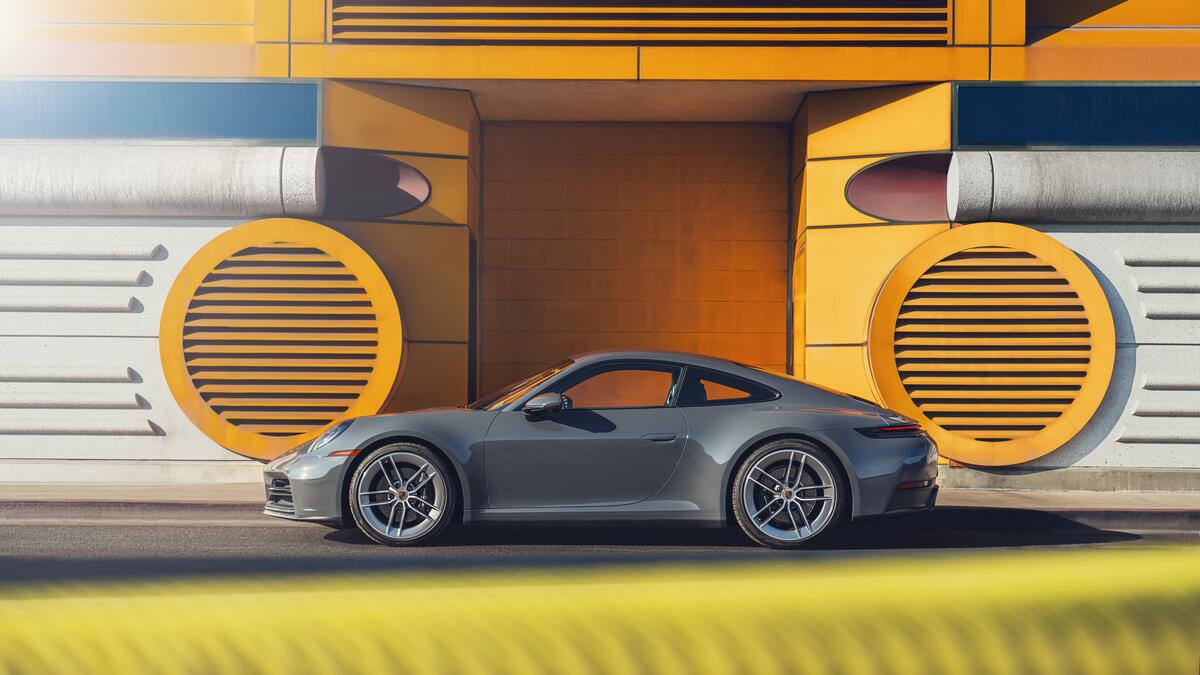
Porsche 997
"Yeah, I was a Showcar. And then one of my favorite projects was a 997. And then I got into derivatives like the Speedster, the Targa."
The Porsche 997 is a specific generation of the 911. It’s the “middle” modern-era 911 that many people consider a sweet spot in look and feel.
The Porsche 997 is the 911 generation that followed the 996 era, and it’s widely discussed among enthusiasts for its refined driving feel and design. In this segment, Grant Larson ties his work to the 997 and then to later 911 derivatives.
advanced roof system
"We had this advanced roof system, how do you say, development program, and out of that program, the Targa came out, the Speedster,"
This is about the mechanism that lets the roof open or change configuration. On cars like the Targa, it’s designed so you can get open-air driving while still keeping the car strong and protected.
An “advanced roof system” refers to the engineering of how a roof panel or roof section moves—often including mechanisms, seals, and structural design that maintain rigidity. For Targa- and Speedster-style cars, the roof system is a key part of making open-air driving practical without compromising safety and stiffness.
heritage version
"I worked on the 991 Speedster, the Showcars, [1072.7s] and the heritage version together with other people."
A “heritage” version is a modern interpretation of a brand’s older design themes—often referencing classic styling cues, proportions, or details. In Porsche’s context, it usually means design work that nods to historical models while still fitting contemporary engineering and brand identity.
motorsport cars
"So I was always a big fan of motorsport cars. [1111.2s] And in previous management situations,"
Motorsport cars are race-focused vehicles. They’re set up to handle hard driving repeatedly—things like grip, cooling, and stability matter more than comfort.
Motorsport cars are purpose-built or heavily modified vehicles designed for racing conditions rather than everyday driving. They often prioritize aerodynamic efficiency, cooling capacity, and chassis balance to handle repeated high-load driving.
Le Mans living legend
"...every now and then we have an oddball car. [1170.5s] One of your one was this Le Mans living legend. [1173.1s] It was actually an idea for seven years of Porsche"
“Le Mans living legend” refers to a person or car associated with the 24 Hours of Le Mans who has become a well-known figure in that racing world. In this segment, it’s used to describe an “oddball” Porsche project that the speaker says they had access to.
boxer eight cylinder
"...to do a B8, it has a boxer eight cylinder, [1180.4s] Cayman based car with a visible engine. [1183.6s] Too expensive, so we didn't do it."
A boxer-eight is a type of engine where the cylinders sit in two opposite sides. The pistons move in and out like a boxer’s punches, and that shape helps with how the car is balanced and built.
A boxer-eight cylinder is an engine with eight cylinders arranged in two opposing banks, where the pistons move toward and away from each other like a boxer’s fists. This layout is associated with Porsche’s flat-engine design language and affects engine height, weight distribution, and how the engine can be packaged in the chassis.
lightweight thing
"what you can do with the car if you take things away from it, this whole lightweight thing."
“Lightweight” means making the car weigh less. A lighter car usually feels quicker and handles better because it’s easier to speed up, slow down, and turn.
“Lightweight” in performance car design means reducing mass so the car accelerates, brakes, and changes direction more easily. In motorsport, shaving weight can also improve tire wear and overall efficiency because the car has less inertia to manage.

Porsche 935
"Yeah, a couple of highlight projects for me with the club sport, the 935, as well as probably the next page,"
The Porsche 935 is a famous Porsche race car. It’s based on the 911 but built specifically for racing, with a big focus on speed and track performance.
The Porsche 935 is a legendary 911-based race car built for endurance racing, best known for its turbocharged performance and wide-body, track-focused design. In Porsche history, it’s a standout example of how the brand’s motorsport engineering can be translated into a very aggressive, purpose-built package.
spoilers
"There's the GT3R rent sport, with one of the biggest spoilers, I think that we've ever done."
A spoiler is an aerodynamic add-on that helps press the car down onto the road. That extra grip can make the car faster and more stable at speed, though it may create more air resistance.
In racing, a spoiler is an aerodynamic device that helps generate downforce—pushing the car’s tires harder onto the track. More downforce generally improves grip and stability, especially at speed, but it can also increase drag.
mid-engine car
"[1290.0s] you look back in Porsche's history, [1291.3s] the very first car was a mid-engine car, [1294.8s] with a famous name, number one. ... [1303.3s] If Porsche was ever going to do a mid-engine car,"
A mid-engine car has the engine mounted closer to the middle of the car. That can help the car feel more balanced and easier to handle.
A mid-engine car places the engine near the center of the vehicle, typically between the front and rear axles. That layout can improve balance and handling because the weight sits closer to the car’s center of gravity.
flat 8
"also had this 8-cylinder, mid-engine 8-cylinder, flat 8, and of course, this was a picture I took at the old-timer Grand Prix in Nürburgring..."
A “flat 8” means the engine’s cylinders are laid out flat, with two sides. It helps the engine sit lower in the car, which can make handling feel more stable.
A “flat 8” is an engine where eight cylinders are arranged horizontally in two banks (four on each side), like a boxer-style layout. In Porsche applications, the flat design keeps the engine low, which can improve handling by lowering the car’s center of gravity.

Porsche 914
"...not so much an inspiration, they were great cars, 914s, especially with the 6-cylinder,"
The Porsche 914 is an older Porsche sports car. Some versions came with different engines, and the six-cylinder cars are often the ones people talk about most. It’s remembered as part of Porsche’s history and as a fun, classic sports-car option.
The Porsche 914 is a classic-era sports car that’s often remembered for its distinctive place in Porsche history and for being a relatively affordable entry point to the brand. It’s especially discussed by enthusiasts when talking about the different engine options, including the six-cylinder versions. That’s why a podcast might highlight “914s, especially with the 6-cylinder” as a notable facet of the model’s legacy.
6-cylinder
"they were great cars, 914s, especially with the 6-cylinder,"
A “6-cylinder” engine has six cylinders. More cylinders can change how the engine makes power and how smooth it feels, and here it’s being used to describe a 914 setup people like.
A “6-cylinder” engine uses six cylinders to produce power, typically with smoother operation and different torque characteristics than smaller four-cylinder setups. In the context of the Porsche 914 mention, it refers to the enthusiast interest in 914s equipped with a six-cylinder configuration.
front-engine
"it was a four-door front-engine car like I was doing in Audi before that"
“Front-engine” means the engine is in the front of the car. This is a common layout and it affects how the car’s weight is distributed.
A front-engine layout places the engine at the front of the car, usually ahead of the front axle. It’s common in many sedans and can simplify packaging, but it also shifts more weight forward compared with mid-engine or rear-engine designs.
rear mid-engine
"it's a rear mid-engine, it's called 996, project 996, based on a lot of components from the 989"
A “rear mid-engine” car puts the engine in the back half of the car, but not all the way at the very rear. That placement helps the car’s weight balance better for handling.
“Rear mid-engine” describes an engine placement where the engine is located behind the passenger compartment but still forward of the rear axle. This layout helps with weight distribution and can make the car feel more balanced through turns.
Lightweight Roadster
"then we did this project, sort of like Lightweight Roadster, kind of a project with the advanced engineering people"
“Lightweight Roadster” refers to a kind of project where the goal is to make the car lighter. A lighter car usually feels more responsive and can be more fun to drive.
“Lightweight Roadster” is mentioned as a project type/initiative, implying a focus on reducing mass to improve driving feel and efficiency. In Porsche development history, lightweight roadster concepts are often used to explore new engineering approaches before committing to production.
sales were dropping
"being canceled and restarting, you start to almost kind of lose hope a little bit, and sales were dropping,"
They’re saying the company’s sales were going down. When that happens, it can make it harder to keep funding new car projects.
The segment ties engineering and project cancellations to business pressure, noting that sales were dropping. That kind of market slowdown can affect how aggressively a company funds new vehicle programs.

Mercedes 500E
"in that year, 1992, 1993, [1558.2s] Porsche produced around two and a half thousand [1561.0s] Mercedes 500Es, [1563.7s] because they were, as well as Audi,"
The Mercedes-Benz 500E is a special, higher-performance Mercedes sedan. The host brings it up to explain how Porsche’s production numbers were influenced by what other companies were doing at the time.
The Mercedes-Benz 500E is a high-performance executive sedan from Mercedes-Benz that’s often discussed for its rarity and for being built in relatively small numbers. In this episode, it’s mentioned as part of the production support ecosystem around Porsche in the early 1990s.
Fiat 500e
"... produced around two and a half thousand Mercedes 500Es, because they were, as well as Audi,"
The Fiat 500e is a small electric car based on the Fiat 500. It’s made to be easy to drive in tight city spaces. The podcast mentions it in the context of how many were produced and how that compares to other cars.
The Fiat 500e is an all-electric version of the Fiat 500, built for compact, city-focused driving. In the podcast context, it’s mentioned alongside other production numbers and comparisons, which suggests the discussion is about electric-car availability and how many were made. That makes it relevant when talking about what exists in the real world versus what’s imagined or planned.

Porsche 928
"One of them being the 928 with 730 units, [1582.6s] making it one of the most rare,"
The Porsche 928 is a Porsche grand tourer with a V8 engine. Here, they’re pointing out that only a small number were made, which makes it especially rare.
The Porsche 928 is a grand-touring Porsche built around a front-engine, V8 layout and known for being a more comfort-focused alternative to the 911. In this segment, the host highlights production scarcity by citing a specific unit count for the 928.
unlimited edition models
"and just think of this myself, [1588.1s] one of the most rare unlimited edition models,"
“Unlimited edition” is a marketing/production term used for limited-run models that are not capped at a fixed number of cars. The host is using it to emphasize how rare certain Porsche variants can be even when the label suggests open-ended production.

Porsche Boxster
"sharing 996 with the Boxster's idea from Horst Marchat, he was the development chief at the time, so we started working on this idea of not only doing a Boxster, a mid-engine car,"
The Porsche Boxster is a Porsche roadster with the engine placed closer to the middle of the car. They’re talking about how Porsche used Boxster ideas when planning a mid-engine approach alongside the 911.
The Porsche Boxster is Porsche’s mid-engine roadster, known for bringing the brand’s sports-car balance to a more accessible package. In this segment, the host connects the Boxster’s development approach to Porsche’s plan to pair mid-engine ideas with the 911’s architecture.
B-pillar
"nearly identical, technically, from the B-pillar forward,"
The B-pillar is the vertical support post in the car body between the front and rear doors. Saying “from the B-pillar forward” means the front part of the car shares the same basic structure or design.
The B-pillar is the structural post between the front and rear doors (or between the windshield and rear side window area). Mentioning “from the B-pillar forward” implies Porsche shared or aligned design/structure elements in the front cabin area while differing elsewhere.
X, Y coordinates in space
"Yeah, an extremely manual process with tools [1729.6s] that made everything take extremely long, [1732.3s] making X, Y coordinates in space."
This is a way of describing exact locations using numbers on a grid. The host is saying the process required very precise placement, which made everything take a long time.
“X, Y coordinates in space” describes using a grid-like reference system to define exact positions. In design workflows, it often means mapping shapes and surfaces precisely before they’re translated into physical parts.
sculpting seats out of clay
"very talented German designer named Stefan Stark, [1757.7s] and they're even sculpting seats out of clay. [1761.6s] There's a lot of innovations in the car that he had,"
They literally shape the seat shape out of clay first. It helps designers test the look and feel before building the final parts.
“Sculpting seats out of clay” refers to a physical, full-size design prototype process. Designers shape clay to refine ergonomics and form before committing to production tooling.
clayed it all back in again
"we slid it back a couple hundred millimeters, I don't remember how much, and then clayed it all back in again just to save time."
They’re describing a hands-on shaping step using modeling clay. They reshape the body surface to get the right look and fit before moving on to the final build.
“Claying” is a common prototype-bodywork technique where builders use modeling clay to refine the shape before final fabrication. It’s used to quickly re-form surfaces (like the rear end around the license plate area) when the fitment or proportions need adjusting.
digital thing
"These days it's a digital thing, you stretch it and you do it overnight, and it's done."
They’re saying these days they can do the shaping/design work using computer tools instead of doing it all manually. That makes the process faster because the changes can be planned and produced quickly.
“Digital thing” here refers to using digital design/CAD workflows instead of doing everything by hand. The idea is that you can adjust bodywork dimensions virtually, then produce the result faster (e.g., by overnight work).
13-inch wheels
"that's where we're dealing with the production car, nothing fit, we had 13-inch wheels, an exhaust pot, I don't even know what you call that thing,"
Wheel size changes how the car sits and what parts can physically fit around the tire. They’re pointing out that with “13-inch wheels,” nothing lined up the way it should on their project.
Wheel size affects fitment, stance, and how the body and suspension clear the tire. Mentioning “13-inch wheels” signals they were dealing with packaging and clearance constraints on the modified car, since smaller wheels can change proportions and how other components fit.
movable spoiler
"nothing fit, no movable spoiler, so a high rear end, so it was a rocky, it was basically a rocky road."
A movable spoiler is a wing or lip that can move to change how the car cuts through the air. They’re saying their design didn’t allow the spoiler to work as planned, so they had to adjust the rear shape instead.
A movable spoiler is an aerodynamic device that can change position to alter airflow and downforce. The segment implies they couldn’t fit the spoiler in the intended way, which then affected the car’s rear-end shape and overall aerodynamic packaging.
mid-engine roadster packaging
"geometrically a 996 on the front of our small, lightweight, mid-engine roadster. So a bit of a challenge."
Mid-engine roadsters place the engine behind the driver but ahead of the rear axle, which strongly influences how the front and rear volumes can be used. Here, the hosts describe how they had to adapt the front geometry and overall packaging to fit large luggage while working within the constraints of a small, lightweight layout.
headlamps
"you can see here that the Friday headlamps, I don't want to get too much into that, right, Lee?"
Headlamps are the car’s front lights. Here, they’re talking about the specific design and styling of the headlight shape and how it fits the overall look of the car.
Headlamps are the vehicle’s front lighting units, but in design discussions they often refer to the specific shape and integration of the lamp housings into the bodywork. The host references “Friday headlamps” as a design detail they’ve already covered, suggesting a distinctive lighting package tied to the show car’s styling.
patent out of this
"just as an innovation, not thinking that anything was going to happen, but some other engineers thought that, ah, we can make a patent out of this,"
“Make a patent out of this” means the engineers think the idea is new and could be legally protected. In car terms, it usually refers to a special design trick or solution that others can’t copy easily.
When engineers say they could “make a patent out of this,” they mean the design feature is novel enough to be legally protected. In automotive design, this often applies to unique packaging, aerodynamic elements, or mechanical solutions that provide a measurable advantage.

Tesla My Model
"That's to be careful what I'm saying. So that's my model on the upper left, having a little bit of, after ..."
The Tesla Model Y is an electric SUV, meaning it runs on batteries instead of gasoline. It’s made for everyday driving and family-friendly space. The podcast mentions it as a specific model being discussed in relation to something else.
The Tesla Model Y is an all-electric compact SUV built around battery-electric propulsion and modern software features. It’s commonly discussed in the context of Tesla’s lineup and how different models are designed for everyday use. In the podcast excerpt, it’s referenced as “my model” in a comparison or layout, suggesting it’s part of a broader discussion about design or ownership experience.

Honda Nsx
"Roland Heiler, one of the younger designers, his 356 Honda NSX,"
The Honda NSX is a well-known sports car from Honda. It’s mid-engine, meaning the engine sits closer to the middle of the car, which helps it handle well.
The Honda NSX is a mid-engine sports car that’s famous for its lightweight construction and for being engineered like a true driver’s car rather than a styling exercise. In enthusiast circles, it’s often referenced as a benchmark for how a modern supercar should feel and handle.

Toyota MR2
"I think that's a Toyota MR2, and a Nissan 300ZX,"
The Toyota MR2 is a small sports car with the engine placed toward the middle. That layout helps it feel more balanced when you drive.
The Toyota MR2 is a compact sports car best known for its mid-engine layout, which gives it balanced handling for its size. It’s frequently used as a “reference car” because it demonstrates how packaging and weight distribution affect driving feel.

Nissan 300Zx
"I think that's a Toyota MR2, and a Nissan 300ZX, and behind that is a Mazda Miata,"
The Nissan 300ZX is a sports car made by Nissan. It’s a two-door coupe designed for performance and driving enjoyment. The podcast mentions it as one of several sports cars being talked about together.
The Nissan 300ZX is a classic Japanese sports coupe known for its performance-focused design and enthusiast following. In the podcast excerpt, it’s mentioned in a lineup alongside other sports cars, suggesting the discussion is about comparing or identifying different cars in a collection. That makes it relevant as a recognizable model within a broader set of performance vehicles.
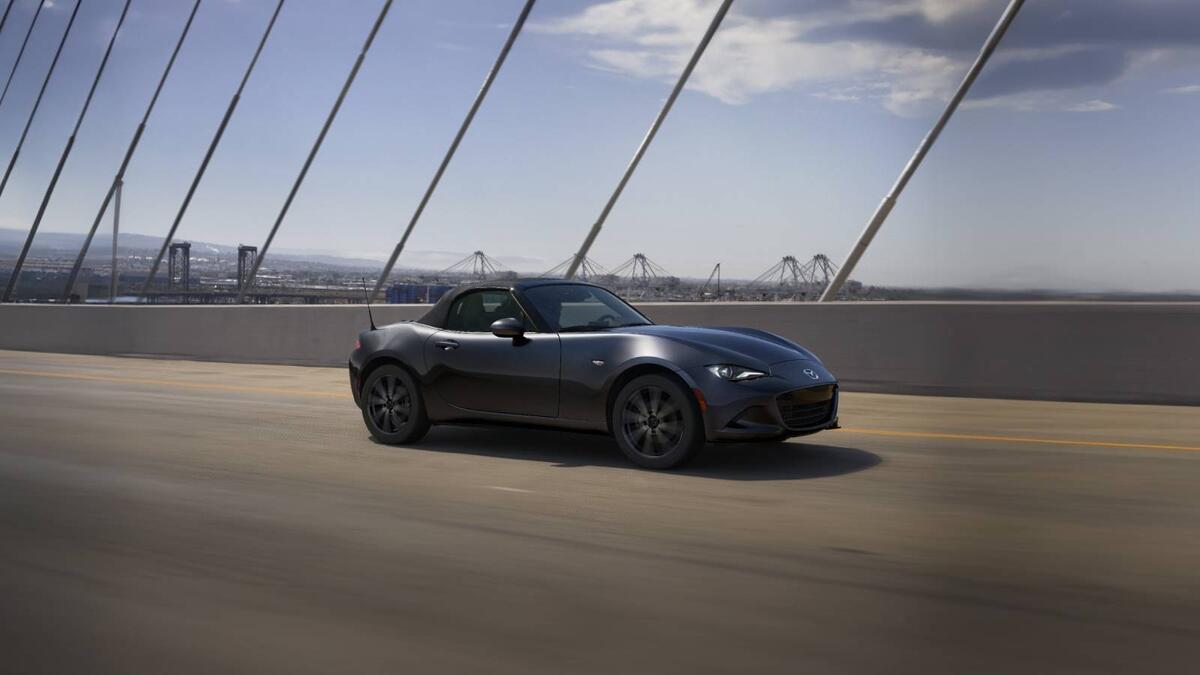
Mazda MX-5 / Miata
"and behind that is a Mazda Miata, so we always have these reference cars."
The Mazda Miata is a small, lightweight roadster. People like it because it’s easy to drive and feels very connected to the road.
The Mazda Miata is a lightweight, driver-focused roadster that became a benchmark for “fun per dollar” handling. It’s often used as a reference car because its simple, balanced design highlights how chassis feel and steering response shape the driving experience.

Porsche 956
"that the 956 and 962 at all are racing, same people as well,"
The Porsche 956 is a famous Porsche race car from the Group C era. It was built to win endurance races like Le Mans, where cars have to stay fast for a long time.
The Porsche 956 is a legendary Group C race car built for endurance racing, especially the 1980s Le Mans era. It’s known for its purpose-built aerodynamics and engineering that helped Porsche dominate long-distance racing.

Porsche 962
"that the 956 and 962 at all are racing, same people as well,"
The Porsche 962 is another famous Porsche endurance race car. It was built to keep Porsche winning in the Group C racing era.
The Porsche 962 is the evolution of Porsche’s Group C endurance racer, designed to keep the team competitive as rules and technology changed. Like the 956, it’s strongly associated with Porsche’s success in long-distance racing.
tube frame chassis
"chassis engineers who did a complete, complete tube frame chassis, we even had it in the show,"
A tube frame chassis is a skeleton made from metal tubes that holds the car together. Race teams use it because it can be strong, light, and easier to adjust for track use.
A tube frame chassis uses a welded network of metal tubes as the car’s main structure, rather than relying on a full unibody. This is common in race cars because it can be very stiff and lightweight, and it’s easier to build and modify for competition needs.
test track
"we rolled out, we took it out to the test track [2067.0s] and found a hill,"
A test track is a special road for cars to be tested safely. They used it to see how the show car was behaving and to troubleshoot issues.
A test track is a controlled driving environment used to evaluate how a car behaves under real-world conditions like speed, braking, and stability. In this segment, it’s where they roll the car out after removing the engine and try to assess what’s wrong.
downforce
"we're looking at the spoiler, because we thought we'd like to have a nicer spoiler than that, or maybe not at all, but it needed downforce, so it was a safety issue."
Downforce is the “squish” force from the air that pushes the car down onto the road. More downforce usually helps the tires grip better when you’re going fast.
Downforce is the downward aerodynamic force that pushes a car toward the road. Designers use it to improve grip at speed, which can make handling more stable and predictable.
tail lamp
"the boss was unsure about the tail lamp shape, the fried egg was sort of nailed, but every designer that walked by, they said, okay, right away on the spot, do a tail lamp for us."
A tail lamp is the rear light on the car. It’s not just for looks—its shape and placement help other drivers see what the car is doing.
A tail lamp is the rear lighting unit used for brake lights, running lights, and visibility to other drivers. In design discussions, its shape and packaging can affect aerodynamics, styling, and how the car reads visually at night.
facelift
"we were able to change that into, [2184.7s] now that's the facelift over there, [2186.6s] into the one that showed up,"
A facelift is when a car gets a refresh partway through its production—often changes to the front and rear styling. It’s like a “new look” version of the same model generation.
A facelift is a mid-cycle update to a car’s styling and sometimes its equipment or mechanical details, usually to refresh the model without redesigning it from scratch. In this segment, the speaker contrasts an earlier look with “the facelift,” implying the bumper/front-end design was revised to match the updated styling.
Porsche Boxster Coupe
"Anyway, so something else, we parallel to doing a Boxster, we also did this car called the Boxster Coupe, and using the... without changing the rear end, the rear deck lid, the rear trunk lid, boot lid..."
This was Porsche’s idea of making a more enclosed version of the Boxster. The goal was to give people a hard-top feel, while reusing existing rear body parts to keep the project practical.
The Porsche Boxster Coupe was an attempt to turn the Boxster’s open-top concept into a more enclosed “hard-top” style car. In this segment, they describe how they tried to package it by reusing parts like the rear deck/trunk/boot lid while keeping the rear end unchanged.
rear deck lid
"without changing the rear end, the rear deck lid, the rear trunk lid, boot lid, there we go, we tried to make the best out of an enclosed version"
The rear deck lid is the panel at the back of the car that you open to access the rear storage area. They’re talking about reusing that part to help build an enclosed version.
The rear deck lid is the body panel that closes over the rear area on some Porsche roadsters/coupes, often forming access to the rear storage space. In this segment, it’s part of the packaging discussion for the Boxster Coupe concept.
boot lid
"the rear deck lid, the rear trunk lid, boot lid, there we go, we tried to make the best out of an enclosed version"
A boot lid is basically the trunk lid—what you open to get into the rear storage. They’re listing which rear panels they tried to carry over for the enclosed design.
A boot lid is the hinged panel that closes the trunk/boot opening at the rear of a car. The hosts mention it alongside the rear deck and trunk lid to describe how the enclosed Boxster Coupe would use existing rear bodywork.

Porsche Cayman
"and it wasn't quite attractive enough, we did not have the capacity to build it, and it eventually was put on hold until the Cayman showed up a couple of years later."
The Porsche Cayman is Porsche’s coupe version in the Boxster/Cayman family. In this story, it’s mentioned as the reason the earlier enclosed Boxster idea didn’t move forward right away.
The Porsche Cayman is Porsche’s mid-engine coupe that arrived after the Boxster Coupe idea was put on hold. Here, the hosts connect the delay of the enclosed Boxster concept to the later arrival of the Cayman.
Sonderwunsch
"he asked me to shine a little bit of light on the subject of Sonderwunsch, that's a German word for special wish, that's been around since the 80s,"
“Sonderwunsch” is German for “special wish.” It means a customer asked for something custom or out of the ordinary, rather than just ordering a standard car.
Sonderwunsch is a German term meaning “special wish,” referring to customer-specific customization requests. In Porsche context, it often describes bespoke options or tailored requests beyond standard configurations.
paint to sample plus
"what's paint to sample plus, is a paint that doesn't exist that you match, sometimes it's based on existing color, but you don't like it 100% you do something to it, for example the Jackie X edition,"
“Paint to sample plus” means you don’t just pick a color from a chart—you start with a known color and tweak it until it matches what you want. It’s a more personalized version of custom paint matching.
“Paint to sample plus” refers to a custom paint process where you start with an existing color reference and then modify it to better match the customer’s target shade. The speaker contrasts it with “paint to sample” by explaining that the final color is essentially a new, tailored variant.

Porsche 918S
"from 356 all the way to 918s, and the other thing called re-commission,"
“918s” is almost certainly talking about Porsche’s 918 Spyder, a very high-end modern supercar. They’re saying the restoration program covers everything from early classics up to cars like that.
“918s” most likely refers to the Porsche 918 (the 918 Spyder), a modern halo supercar known for its advanced hybrid powertrain. Here it’s used as the upper end of the range for the factory restoration work mentioned in the segment.
re-commission
"from 356 all the way to 918s, and the other thing called re-commission,"
Re-commissioning means “getting the car back into working order.” If a car has been sitting or was taken apart, this is the step where they check everything and make sure it’s ready to drive again.
Re-commissioning is the process of bringing a car back into service after it’s been stored, partially disassembled, or otherwise out of active use. In the context of factory restorations, it typically involves inspection, recommissioning systems, and verifying the car is ready to run and meet the intended configuration.
one-off
"on the very tip of the iceberg of the Sonderwunsch thing is the one-off, which is a car such as this one"
A one-off means a car that’s made only once. Instead of being mass-produced, it’s built to match a specific person’s request. In this story, it’s a unique Porsche speedster design.
A one-off is a vehicle built as a single, unique example rather than as a production model. In custom-vehicle culture, one-offs often come from a specific client request, with bespoke bodywork, interior, and exterior details. Here, the host uses “one-off” to describe a custom Porsche 993 speedster designed by Luca Tracci.
3D scanning / scanning cars for measurement
"we pulled that out, and we scanned all of the cars, [2584.2s] 964 Speedsters, Cabriolets, Turbos, [2586.9s] even Boxster Spiders, ... [2597.2s] the family member's car, [2599.0s] to measure it and scan it and analyze it,"
They’re talking about using scanning tools to capture the car’s shape digitally. That lets the team measure details accurately instead of relying only on eyeballing or old drawings.
The hosts describe scanning cars with the same equipment to measure and analyze them. In automotive design, this kind of digital measurement helps teams compare bodywork, proportions, and fitment details across multiple reference vehicles.
Porsche Boxster Spyder
"964 Speedsters, Cabriolets, Turbos, [2586.9s] even Boxster Spiders, [2588.1s] we even used the 991 Speedster as an influence,"
The Porsche Boxster Spyder is a lightweight, track-focused open-top Boxster variant. Here, it’s grouped with other Porsche models they scanned, indicating they were collecting design/fitment references beyond just 911s.
Blender
"and we had offline a digital modeler in Blender, [2651.7s] we were talking about that program Blender, [2653.6s] 3D digital program, building the car,"
Blender is a computer program for making 3D shapes. Car designers can use it to sketch and refine ideas digitally before building real parts.
Blender is a 3D creation software used to model and render digital objects. In automotive design contexts, it can be used to build and iterate car body concepts in a virtual environment before moving to physical prototypes.
3D model
"and he had the car, [2661.3s] the customer's idea sort of roughed in as a 3D model, [2665.1s] so that was pretty cool, I was even impressed."
A 3D model is a computer-made “virtual version” of the car. Designers use it to plan the shape and layout before building anything in real life.
A 3D model is a digital, computer-generated representation of a car’s shape and packaging. In custom design workflows, it’s used to rough in the customer’s idea before physical mockups, helping teams visualize fitment and proportions early.

Tesla 3D Model
"... car, the customer's idea sort of roughed in as a 3D model, so that was pretty cool, I was even impressed."
The Tesla Model 3 is an electric car that uses batteries instead of gasoline. It’s a sedan, so it’s shaped like a typical four-door car. The podcast mentions it because it relates to how an idea can be turned into a real 3D design during development.
The Tesla Model 3 is an all-electric sedan known for being one of Tesla’s most widely used models. It’s often discussed in terms of design and how customer feedback or early concepts translate into a production car. In the podcast context, it’s tied to a story about a customer’s idea being roughed in as a 3D model, which highlights the design process behind the car.
scanned
"and we even scanned Luca in the donor car [2679.4s] to find out how much space his had, [2682.6s] he was a fairly tall guy with a lot of white hair,"
Here, “scanned” means they measured the real car with a scanner to capture its exact shape. That helps them design parts that fit correctly instead of guessing.
In this context, “scanned” refers to capturing a real car’s geometry (often via 3D scanning) to measure space and proportions accurately. That data can then be used to design a new body or interior layout that fits the donor car’s real-world dimensions.
donor car
"and we even scanned Luca in the donor car [2679.4s] to find out how much space his had, [2682.6s] he was a fairly tall guy with a lot of white hair,"
A donor car is the “starting car” they use for parts or measurements. It helps the project match real sizes so the final build fits properly.
A donor car is a vehicle used as the source of parts, measurements, or structural reference for a project. In custom builds, the donor’s real dimensions and components help ensure the new design fits and functions as intended.

Porsche Macan
"...as that didn't work, the headlamp was basically a Macan unit that was a challenge to, how do you say,"
The Porsche Macan is a compact SUV made by Porsche. It’s designed to be practical for daily driving while still feeling sporty. The podcast mentions it because a part from the Macan was used as a reference for something else.
The Porsche Macan is Porsche’s compact luxury SUV, built to combine everyday usability with sporty handling and performance. In the podcast context, it’s mentioned as a source for a specific headlamp component, which points to how parts and design elements can carry over within a model range. That kind of detail is typical when discussing engineering or design challenges.
rear louvers
"[2746.4s] he wanted the rear louvers, [2747.8s] not like the old 993, but like the 997, [2750.9s] so we included that."
Rear louvers are vent-like slats on the back of the car. In this case, they’re talking about picking a specific rear-louver look from one 911 generation to match the intended design.
Rear louvers are slatted openings or vents on the rear of a car, used for styling and sometimes for airflow management. Here, the designer is choosing the rear-louver design language from the 911 (997) rather than the older 993, which affects how the car’s back end looks and reads visually.
PTS program
"and I think it's now part of the PTS program, [2780.4s] you can also order Otto Yellow in the next years,"
PTS is Porsche’s custom paint program. It means you can order a special color (like “Otto Yellow”) instead of only choosing from the usual factory colors.
Porsche Tequipment (often shortened in conversation to PTS) is Porsche’s program for bespoke paint-to-sample customization. It lets customers order specific custom colors—like “Otto Yellow”—that aren’t part of the standard palette.
engine to the transmission
"He mounted this different project from his GT3. [2800.8s] He mounted the engine to the transmission himself in Sufenhausen,"
That phrase describes connecting the engine and the gearbox so the car can transfer power correctly. It’s a major assembly step, not just a small adjustment.
Mounting the engine to the transmission means physically connecting the powertrain components so they work as one unit. This is a key assembly step because alignment and mating surfaces affect driveline smoothness and fitment.
fried egg lamps
"He wanted to have, he had a 996 cabriolet and wanted to backdate the head lamps to the fried egg lamps."
“Fried egg lamps” is a nickname for a classic round Porsche headlight look. People use it because the lights are shaped like a round “egg,” and it’s considered the more traditional style.
“Fried egg lamps” is an enthusiast nickname for the classic Porsche 911 headlight design with round, protruding lenses that resemble a fried egg. The segment contrasts this look with later 911 headlight styles, framing it as a more nostalgic “classic” appearance.
backdate
"He wanted to have, he had a 996 cabriolet and wanted to backdate the head lamps to the fried egg lamps."
“Backdate” means changing a newer car to look like an older version. In this case, it’s about swapping the headlights to get a classic look.
In car customization, “backdate” means modifying a newer car to look like an earlier model year or era. Here, the customer wanted to change the 996 cabriolet’s headlights to match the older “fried egg” style.
over-engineered
"[3184.0s] Could you talk us through the thinking behind the current [3190.0s] target design, kind of over-engineered aspect [3194.0s] how it opens in the order? [3196.3s] Over-engineered, yeah."
“Over-engineered” here means the designers put in more complexity or effort than strictly necessary. The idea is that the car’s design and how it opens are built with extra refinement.
“Over-engineered” in car design usually means the design uses more complexity, robustness, or refinement than the minimum needed to meet basic requirements. In this context, it’s tied to how the “target design” and opening mechanism are executed, suggesting extra engineering effort for drama, packaging, or durability.
target design
"[3184.0s] Could you talk us through the thinking behind the current [3190.0s] target design, kind of over-engineered aspect [3194.0s] how it opens in the order?"
“Target design” means the designers had a specific goal for how the car should look and work. They’re talking about the planned design direction and why they made certain choices.
“Target design” refers to a design direction or set of goals that the team is trying to achieve—often balancing styling, aerodynamics, packaging, and user experience. Here, it’s discussed alongside an “over-engineered” aspect and how the car “opens,” implying a deliberate design brief rather than ad-hoc styling.
pre-advanced engineering development
"[3214.8s] because it was a project that I was very deeply involved with [3217.4s] in this, Fortenvikling is called, [3219.2s] the pre-advanced engineering development stuff."
This phrase describes an early engineering stage—before the project fully ramps up. It’s where ideas get tested and shaped so the final car can be developed properly.
“Pre-advanced engineering development” sounds like an early-stage engineering phase where concepts are validated before full development. In this segment, the speaker says they were deeply involved in that work, implying it’s part of the process for turning design intent into an actual, buildable car.
cabriolet
"And as soon as you make a cabriolet or going back to the target from the 964 on backwards, it was all straight lines, very straight, very geometric."
A cabriolet is just a convertible. The speaker is saying that making a car a cabriolet changes the design, because the roof has to fold away and the body has to be shaped to fit it.
A cabriolet is a convertible-style car where the roof can be removed or folded down. In this segment, the speaker ties the cabriolet roof structure to design constraints—straight, geometric lines and the need for “headroom” and packaging space for the roof when it’s down.
Porsche 918 Spider
"But in two pieces, split in the middle, kind of like Courage GT and a 918 Spider before the Courage GT just existed, before the 918 Spider."
The Porsche 918 Spider is a high-end Porsche supercar. In this discussion it’s mentioned because its roof is designed in a way that’s similar to the “split removable top” idea the speaker is describing.
The Porsche 918 Spider is a modern plug-in hybrid supercar with a removable roof design that’s referenced here as a comparison point for how a convertible can be engineered. The speaker specifically contrasts the roof’s split, two-piece removable top concept and how the roof structure affects packaging and thickness.
kinematics
"And then they had this idea because these advanced engineering guys, they were really well versed and real proud of the kind of work that they could do, which was a lot of kinematics and electronics and things."
Kinematics is about how moving parts are designed to move. It’s the “motion design” side—how things pivot, slide, and operate—often paired with electronics that control or monitor the movement.
In automotive design, kinematics is the study of how parts move—linkages, pivot points, and motion paths—without focusing on the forces behind the motion. When Porsche talks about “kinematics and electronics,” they’re usually describing how a mechanism’s movement is engineered and controlled.
movable parts
"And they came up with the idea of the target, as we know it, with all of the movable parts. And they showed how it was and showed what it would be like."
Movable parts in a car design can be mechanisms that change configuration—like retracting, folding, or swapping structural elements. Here, the speaker ties movable parts to a “target” concept and contrasts solid versus removable roll-bar sections, highlighting how motion can complicate safety and engineering.
rollover bar
"I was thinking at the time, you have this rollover bar, and it's like cast and solid aluminum brushed or not."
A rollover bar is a safety structure meant to help protect you if the car flips over. The idea is to keep a strong “survival space,” and changing how it’s built can affect how well it works.
A rollover bar is a structural element designed to help protect occupants in a rollover by maintaining a protective space. In this segment, the host discusses how splitting a rollover bar with movable parts can reduce its structural function, which is why the design trade-off matters.
roll bar
"like cutting through a roll bar, a functional structure. But then we had a presentation of A and B, the solid roll bar, and the two removable parts and all their problems, and then the electric one."
A roll bar is a safety structure meant to protect the cabin if the car rolls. The host compares solid versus removable designs to explain how the structure’s job can be harder when it has moving or powered parts.
A roll bar is a structural safety component intended to resist deformation during a rollover. The segment contrasts a solid roll bar with removable sections and an “electric” version, implying that different designs trade off strength, packaging, and complexity.
electric one
"and then we had a presentation of A and B, the solid roll bar, and the two removable parts and all their problems, and then the electric one. And the electric one was a kinematic wonder."
“Electric” means the mechanism is powered by a motor or actuator. Instead of moving by hand, it can deploy or retract automatically, which changes how the system is engineered and used.
“Electric” here refers to a powered mechanism that uses electrical actuation to move or deploy parts. The host frames it as a “kinematic wonder,” suggesting the mechanism’s motion and control are the engineering highlight, even if marketing focused on usability.
marketing test
"But that wasn't what impressed the marketing people. They said, at this price class, this is what people are going to expect from Porsche, not to stop if it's raining or whatever to its sun. So that won the marketing test."
A “marketing test” here is basically: would normal buyers like and understand this feature? They’re checking it against everyday expectations like how easy it is to operate and whether it still leaves room for luggage.
A “marketing test” in this context means evaluating a design based on what customers expect and how they will use the feature in real life. The host says marketing judged the concept by whether it would meet expectations for stopping in rain, opening/closing, and using luggage space.
Apple CarPlay
"Yeah, it's [4036.3s] Apple CarPlay is [4038.6s] dropping or dropped the last piece. It's dropped, yeah. [4041.6s] So we were starting to use it."
Apple CarPlay is a way to connect your iPhone to your car. It shows certain phone apps on the car’s screen so you can use navigation and music more easily while driving.
Apple CarPlay is a smartphone-to-car interface that lets you use compatible iPhone apps through your car’s infotainment screen. It typically supports navigation, music, calls, and messages, so the car can act like a safer, integrated display for your phone.
Android Auto
"So yeah, on Android and if you have a phone of the fruit-based variety as well, head over to the App Store, download Roadtrip Trials."
Android Auto lets you connect an Android phone to your car. It brings key apps like maps and music onto the car’s screen.
Android Auto is Google’s smartphone-integration system for compatible cars. It displays supported apps on the infotainment screen and routes audio and controls through the car.
Remastered Singer Vehicle Design
"...start with the Singer creations? Let's be honest. Singer vehicle design. Central feature at Goodwood Festival Speed"
A Remastered 911 is a Porsche 911 that’s been reworked to feel more modern while keeping the original 911 identity. It’s the kind of car you’d see at major car events because it’s more of a special build than a standard production model. The podcast mentions it because it’s connected to well-known custom design work and was featured at Goodwood.
A “Remastered 911” refers to a modernized, restyled Porsche 911 concept or build that updates the classic 911 formula with contemporary design and engineering choices. In the podcast context, it’s tied to Singer creations and highlighted as a central feature at the Goodwood Festival of Speed, which points to its role as a design-forward interpretation of the 911. That’s why it’s discussed as a notable “facet” of the 911 story beyond factory production.
GT3 RS engine
"Really enjoyed that. GT3 RS engine in a 964. And what is the black on black?"
A “GT3 RS engine” means the special high-performance engine from the GT3 RS. Here, they’re talking about putting that kind of engine into a different 911 generation for a more extreme setup.
A “GT3 RS engine” refers to the high-performance powerplant used in the Porsche 911 GT3 RS, which is tuned for sharper response and track-oriented output compared with standard 911 engines. In this context, it’s being discussed as an engine swap or configuration inside a Porsche 911 (964), which is a common way specialists create unique hybrids.
black on black
"And what is the black on black? What do you mean? The black on black. The one that's missing."
“Black on black” is shorthand for an all-dark aesthetic—typically black exterior paint paired with black interior trim and/or black wheels—creating a monochrome look. It’s a styling choice that can be hard to spot in photos, which is why the hosts are debating what specific “black on black” car they mean.
RestoMod
"So the winner of RestoMod 2026 is the 911K"
RestoMod means taking an older car, fixing it up, and then upgrading it with newer tech or parts. It tries to keep the classic style but make it drive and feel better than the original.
RestoMod is a restomod: a classic car that’s been restored and then modernized with updated engineering, electronics, and/or performance parts. The goal is usually to keep the original look while improving drivability, safety, and reliability versus the factory setup.
Tatt Hill
"is the 911K by Tatt Hill. What a car. Congrats to the Tatt Hill team."
Tatt Hill is the team responsible for the winning build they’re talking about. They’re being thanked because they made the car.
Tatt Hill is credited as the team behind the Porsche 911K build that won the 2026 RestoMod award. That makes them the project’s builder/organizer in the context of the show.
3.2G
"We were on track last weekend and then your 3.2G was on its door handles."
“3.2G” means the car was experiencing about 3.2 times the force of gravity. It’s a way to describe how intense the acceleration or forces were—like a really hard corner or jolt.
“3.2G” refers to acceleration measured in G-forces, where 1G is roughly the force of gravity. Saying the car’s “3.2G was on its door handles” implies very high lateral/impact loads, like what you’d feel during aggressive cornering or a hard track moment.

Porsche 959
"Yes, yeah, there's some cool cars in there at the moment. Multiple 959s, Carrotty Tees, and some other very rare Porsche models."
The Porsche 959 is a very famous Porsche from the 1980s. People love it because it used cutting-edge tech for its era, including a turbo engine and advanced all-wheel drive.
The Porsche 959 is a landmark supercar from Porsche’s 1980s era, famous for its advanced engineering and rally-bred tech. It’s especially known for its sophisticated all-wheel-drive system and turbocharged setup, which made it feel far ahead of its time.
aircon
"But we do everything. Aircon, change your tyres, restore your car, build your engine, sell your car."
“Aircon” just means the car’s air-conditioning. It’s what keeps the cabin cool and comfortable, and it can need servicing like other car systems.
In car talk, “aircon” refers to the vehicle’s air-conditioning system. It’s a climate-control feature that cools and dehumidifies the cabin, and it can require service over time (like refrigerant checks and component inspections).
restore your car
"Aircon, change your tyres, restore your car, build your engine, sell your car."
“Restoring” a car means bringing it back to a previous condition—often to factory-spec appearance and function. In enthusiast circles, restoration can range from cosmetic refreshes to full mechanical rebuilds and sourcing hard-to-find parts.
Request an Explanation
Heard something you'd like explained? We'll add it to this episode.
Sign in to request explanations for terms you heard.
Want to learn more?
Browse our glossary for plain-English explanations of automotive terms, jargon, and concepts.
Help improve this episode
See something that's not quite right? Our annotations are AI-generated and can sometimes miss the mark. Click the flag icon on any annotation to suggest a correction.
1 community members have helped improve this episode.