The Ford Model T was one of the first cars that many people could afford, which changed how people traveled. It was made a long time ago and is important because it helped start the car industry as we know it today.
The Ford Maverick is a smaller, budget-friendly pickup truck designed to be accessible for everyday people, similar to how the Model T was in its time.
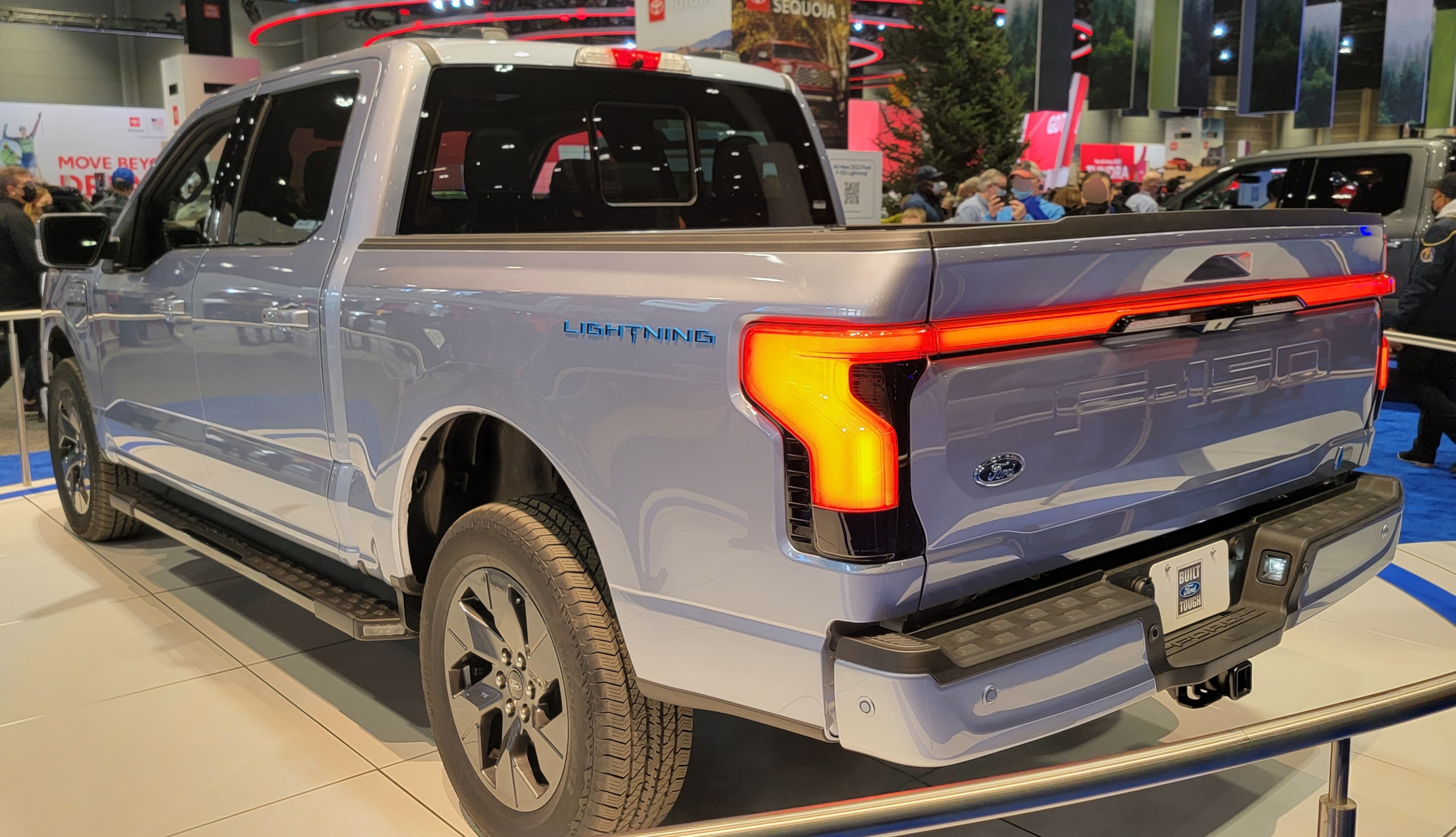
The Ford F-150 is a full-size pickup truck that many people in the U.S. buy for work and personal use. It's known for being tough and having many options to choose from.
Dealer markup is when a car dealership charges more than the price set by the manufacturer. This extra charge can make buying a car much more expensive.
Affordability means how easy it is for people to buy cars without struggling financially. If cars are too expensive, fewer people can afford them.
Term
$100,000 SUV
An SUV that costs $100,000 is a luxury vehicle with many features and options. These vehicles are often larger and more expensive than regular cars.
Term
$70,000 pickup truck
A pickup truck that costs $70,000 is one of the more expensive options available. These trucks often come with advanced features and luxury options that drive up the price.
Term
$1,500 a month car payment
A car payment of $1,500 a month means that someone is paying that amount every month to own or lease a car. It's a sign that the car is likely very expensive.
Ford Motor Company is a major car manufacturer in the United States, famous for making cars like the Ford Mustang and Ford F-150. It was started by Henry Ford over a hundred years ago.
The Volkswagen Beetle is a small, round car that became very popular because it was fun to drive and affordable for many people. It has a unique shape that makes it easily recognizable, and it has been around for a long time, becoming a classic car loved by many.
Inexpensive people movers are cars that are made to be affordable for everyone, so more people can have a way to get around. The idea is to create cars that are easy to buy and use for daily travel.
The Kia K4 is the least expensive new car you can buy in the U.S. right now. It costs about $23,535, making it a good choice for people looking for an affordable vehicle.
The sticker price is the price shown on a car's window that tells you how much the car costs. It's what the manufacturer suggests you pay before any extra costs are added.
Trim levels are different versions of the same car model. Each version has its own set of features and price, so you can pick one that has what you want.
Profit margin shows how much money a company makes after covering its costs. For car manufacturers, it tells how much profit they make for each car sold.
A 10-year note is a loan that you pay back over ten years. For car loans, this means you can make smaller monthly payments, but you might end up paying more in interest over time.
The Land Rover Range Rover is a fancy SUV that can drive on rough roads and still feel comfortable inside. People like it because it looks good and has a lot of nice features, but it can be quite expensive to buy and maintain.
The Escalade V is a powerful version of the Cadillac Escalade, which is a large luxury SUV. It offers a lot of space and comfort, along with a strong engine for better performance.
The Jeep Grand Wagoneer is a big, fancy SUV that can carry a lot of people and stuff. It's designed for both comfort and adventure, but it can be very expensive to buy.
The Grand Wagoneer L is a big luxury SUV from Jeep. It has a lot of space inside and comes with fancy features, making it great for families or anyone needing extra room.
CarEdge.com is a website where you can find information and tools to help you buy a car. They have features that let you search for cars and learn more about them before you buy.
LIVE
It's noon here in Venter City, New Jersey, and New York, New York, a city so nice they
named it twice. And this is Car Edge Live for Friday, June 30th with your hosts, me,
Ray here in Frigid, Venter City, and Zach hanging out at a wee work in New York City,
and I'm guessing it's equally as cold there. How are you today, Hanson?
It was nine degrees this morning when I walked to the diner to get breakfast, and holy cow,
it was difficult to breathe actually because it was so cold when the wind was hitting my face.
It definitely cold out there. Dad, good thing though because things are heating up back at
CarEdge.com, maybe cold outside, but we got a hot deal for another 20 hours. We're offering some
savings on our car buying service in CarEdge Pro. As a friendly reminder, back at CarEdge.com,
we provide a car buying service that takes care of the research, dealer outreach, and even negotiation
on your behalf. Back at CarEdge.com, we learn what matters to you, contact dealers,
compare real offers, and help you get the best deal without the stress. Check it out, CarEdge.com.
Now today- Can I make a suggestion of that? Instead of being concerned with, well, what's
important to the customer, why don't we act like a cornpea worship and tell them what's important
to them? And okay, I'm just kidding. I'm sorry. What were you referring to?
You are commercial. We want to know what's important to them.
We learn what matters to you. Well, I think we should be just like car dealers and
we should tell customers what matters to them. That's how car dealers do it.
You don't get the joke. I'm on it though. Maybe I'll get it. Do you want to try one more time?
No, I do not. No. No. Maybe after this show, you can explain that one to me. Here's the deal,
folks. A really interesting article came out this morning that helps put into reference
why 2026 will be the year the car market finally actually resets. Now, this article comes from
thedailyeconomy.org and it's a really interesting piece written by this man, Jeffrey. Now essentially,
what Jeffrey did is he asked the question, how many work hours does a car cost today from the
Model T all the way to today's world? What is fascinating here is we can now demonstrate
just how out of sync car prices are with the average American's ability to actually afford
things. Question for you to kick things off. The Model T, why was that such a big project over
at Ford? Dan, you and I actually, if I'm not mistaken, were two, three years ago in Detroit
at the Rouge factory, Ford Rouge factory. What was the Model T all about? Give us a brief history
lesson on the Model T. It was about affordable transportation for the masses. It was all about
being able to build a car that just about any working person could afford. Henry Ford wanted
the workers that were building the cars to actually be able to afford to buy one of those cars.
That is not the case today. So some of the assessment and analysis done here,
dad, were around how many work hours it would actually take to purchase one of those vehicles.
So you can see here, approximately, and this is adjusted for time. During the age of the Model
T, it was approximately 650 hours of labor were traded to purchase a Model T. That is how many
hours of work the average person had to do to get their hands on that affordable mass market
vehicle. That might seem like a large number to some of you. It might seem like a small number
to some of you. Let that be our baseline for the rest of our conversation here. 650 hours of work
to get your hands on the common man's car. Any guesses that where we are today, and the analysis
here was really well done, focused on Ford, in the first analysis that the author actually did,
was around the Maverick, which is their more affordable kind of Model T for the common age.
Do you have any guesses how many work hours or labor hours it takes today? Everything in
relational adjustment and whatnot to get your hands on a Ford Maverick. 2,500. 2,500 is the
guess there. I promise you we're going to get close to that number. For the Maverick, fortunately,
dad, you're going to find some fun in this. The Maverick's MSRP is $29,840. The reason I said
you're going to have some fun with this is because you and I both know good luck finding
one for $29,840. Now, that being said, if you were to find one of those, you're at 940 hours to
purchase. Now, most Americans end up financing that vehicle. When financing, you're actually at
$39,000 because you're paying down the interest on that vehicle. On that $29,840 MSRP vehicle that
you financed, you're actually trading 1,235 labor hours of work. Again, just to put perspective here,
it costs double the amount of work to buy a Ford Maverick that doesn't even exist. We'll do an
example here. Good luck finding a sub $30,000 Ford Maverick. If you're going to be like most people,
you're going to finance it, it's going to end up costing you double what it costs to get your
Model T equivalent back in the day. That to me was immediately eye-opening because it's already
fudging the numbers. It's already using a Ford Maverick that, again, is a unicorn, doesn't
actually exist. Wouldn't it be interesting then if we know, for instance, that the average
new car transaction prices today are around $50,000? Wouldn't it be interesting to know what that
average car cost and wait, wait, wait? Then knowing full well that the average transaction
price for a Ford F-150 is somewhere between $65,000 and $70,000, wouldn't that be an interesting
stat to know? You and the author think similarly. Setting aside the simpler utilitarian Maverick,
it's been widely reported that the average price of a new vehicle in the US is about $50,000.
That equates to $1,581 labor hours, almost triple the amount of work to be done to get
your hands on the average new car. Now, if you finance, imagine you put $10,000 down and you're
at 7% interest rate for 60 months, the total cost is $64,500. We're up to over 2,000 labor hours.
I think, Deb, the author here is being generous saying you're putting $10,000 down and you're
financing for 60 months. In many cases, people are putting no dollars down and financing for 72
months. That's the other part of today's car market reset. Longer loan terms.
Yeah, here's the reality. The average loan term today is like 70.5 months. We're already 10 and
a half months off on his calculations. That loan term is only going to get longer and longer
as we continue to proceed down this path of overpriced vehicles.
So this is what's so fascinating about it is we are really realistically in an era where if you
compare the Model T when it first came out to today, it's going to cost you three times to four
times to maybe five times as much labor hours, work that you have to do, earnings that you have
to bring in to get yourself a vehicle. Because again, the examples that we're using here are
fairly, I don't know, innocuous. They are not common. You are not going to find yourself.
Let's do a real example here. So it's the Super Crew XL is a $29,840 MSRP
Ford Maverick. All right, let's try and find one really quickly. So we're searching nationwide for
Ford. Yeah. Maverick. Yeah. Trim was from Roll Crew.
XL or something? Yeah. I mean, I have XLT, but I don't even have the, let's see here.
And now it's sort by MSRP lowest. Okay, $25,140. The dealer's asking $34,000.
And look at these other options that are still showing up. $24,000 to $23,000.
Let's click on this one. Let's actually look at this. This is fascinating here.
So if you actually are in the market, I'm like, all the way down, all the way down,
all the way down, I want to go to the dealer website. I mean, look at this, Dad. Look at this.
Look at this. The author of this publication, again, to demonstrate the best case scenario,
is saying that you can find a Ford Maverick for $29,840, which is essentially the closest thing
we have to the Model T from Ford in today's world. And it's going to cost you significantly more
work hours, 940 compared to 650. Then when we do the actual car search to find a Ford Maverick
at that price point, the lowest trim level option, which again, we did back on caredge.com.
We found a 2026 for $25,140. Look at today's world. The dealer's actually advertising it
with a $10,000 dealer markup. Come on, man. The reset has to happen. Has to happen,
because this is the type of stuff that makes it unsustainable and unbearable for consumers to
actually purchase, which in materialize itself in the January sales numbers, which I am
anticipating will be terrible for the auto industry. I would think January sales numbers
are going to be down. And I think they're going to be down for two reasons. One, affordability
is still an issue. And B, we've had some rather severe weather that will certainly impact the
close of the month. And so I don't think we're going to see nearly the number of sales that
was anticipated at the beginning of the month. But having said that, if I had a dollar
for every time over the last five or six years that we have said pricing as we know it today
is unsustainable, I would be probably a millionaire today. And every year,
I continue to be proven wrong. So what we think looking at the statistics would indicate that
it's unsustainable, it is actually inconceivable to me that it's sustainable, because it has been
and continues to be. And until the manufacturer's actions match their words in regards to affordability,
and I don't see that happening anytime soon, but until that happens,
they believe that this is extremely sustainable, just selling to the 12 to 15% of the population
out there that can afford that $70,000 pickup truck, or that $100,000 SUV, or that $1,500
a month car payment. But Dad, I think what's so fascinating about this analysis that we reviewed
is that even on the best case scenario, most affordable option, it's still magnitudes more
expensive today to buy a car than it was when did the Model T come out, 1914?
In the early 1900s, I guess?
Yeah, 1907. So in any century, we have made it less accessible to get your hands on an automobile,
like that is unequivocally true. And then when you really start to dig into it, it's not even
that the most accessible options are accessible because of things like this. Additional dealer
markup. Again, we did not prepare for this. Y'all watched the show enough to know that we don't
prepare for anything. This is the first example that shows up. You sort back on caredge.com for
the lowest MSRP Ford Maverick first sale, XLT in the United States. And the first one has a $10,000
additional dealer markup. The next two are prior model years that haven't sold. They're all prior
model years that haven't sold. Look at all these ones sitting around that dealers are using as
demo cars with 100 miles on them. I mean, this is at its core what makes this so damning for the
industry, which is why I think the reset has to happen. January sales numbers come in the way
that we're anticipating them. And yes, you are right. Some of that has to do with the weather.
A lot of that also has to do with the fact that cars are not affordable and people are refusing
to purchase them. And you can only extend credit terms so far for so long. Eventually, the music
cuts out. And it seems like we're getting ever so much closer to the music finally cutting out a
little bit. The lights coming on and the industry waking up and saying, okay, we actually do need
more affordable options, which again, you and I have talked about for a while now. As the 2025
and older inventory does age out, gets sold out, the manufacturers aspire to replace it with more
affordable vehicles. But will they actually do that? Time will tell.
If Henry Ford were alive today, it would be interesting what the conversations around the
boardroom table would be at Ford Motor Company as far as what has happened to his vision of being
able to produce vehicles that the common person could afford to buy. I would think that if he
were alive today, and he were looking at the stats that we just looked at, he would be beside
himself. He would be screaming at those who were running his company today. Because we are so far
away from what he had envisioned. We are so far away from, say, what VW had envisioned with the
Beetle when they first came out with it, you know, where they wanted to make inexpensive people
movers. We are so far removed from that concept to where the chasm between those who can participate
and those who would like to participate has never been wider. And my fear is that it's only going
to widen further. It will be at some point in the future, probably during your lifetime,
where only the elites will have automobiles, will own automobiles. The rest of us will use
robo-taxies, rideshare, whatever it is, but we won't own it, okay? We'll rent it for the time
that we're traveling in it, but we won't own it because it'll only be for the rich and the ultra
rich. And as we know, the vast, vast, vast majority of society is not rich or ultra rich.
It's a very, very small percentage who are. We either, either manufacturers will change
course, which I don't see happening. Or we will just learn to accept it as our fate in life.
So that's where this article, I think, became even more interesting as the author went ahead
and did the cheapest new car for sale in the United States of America right now,
which is the Kia K4. Yes. Now, the Kia K4 would still chew up 740 labor hours at a $23,535
sticker price. So the cheapest car in America comes from Kia and it's still
significantly more expensive than the comparable Model T was way back when. And forgive me here,
but we're going to do it again live. Let's actually now let's clear all these filters.
And let's look now Kia K4. Because dad, if I'm not mistaken,
Kia is another brand who over time has gone up market. Oh yeah. So we'll sort by MSRP Lois here.
And so yes, I mean, look at that. You have some $20,000 options. I'm curious. This one's got miles
on it, obviously, but I'm curious how many of these are out there relative to the more
expensive ones. And you know what, let's put that to the test as well here. So we'll just
back to default. Forgive me. I don't know the Kia trim levels by heart, but I'm thinking.
Where do you think the LX is the least? Yeah, so let's see. There's 864 nationwide Kia K4 LXs.
Let's see. Was that the cheapest one? Yes. Now let's deselect the LX. And let's look at where
they have the most, which it looks like it looks like is the LXS and then the GT line. Let's see
how expensive are they? There's the GT line, which is a little bit more expensive, actually not too
bad. $5,000. $5,000 water. $5,000 more expensive. And then let me grab, whoops, it was the, ah,
let me scroll. There we go. LXS. Look dad, the LXX actually isn't that much more expensive.
No. Not that much more expensive. So you know what, this actually, this is good. This proves a
little bit of like, Kia actually does have a lot of cheap options still out there. That's good. I
was anticipating kind of seeing the opposite. It is interesting. I'm going to do one more thing,
and then, and then I'll move on from this. Let's get rid of trims and let's now just go back here.
There are 19,451 Kia K4s for sale nationwide right now. Let's see. How does that compare to
37,000 Sported, 17,000 Tellurides? Like, okay. So they don't make them any K4s relative to some of
the other models. That's what's interesting to see. Well, why? Because there's no money in it for them.
Okay. Because it's a $23,000, $24,000 vehicle that is certainly a low profit margin vehicle for
dealers. If you were to go back to that list, we would have invoice pricing if we were to click
on some of these, and we would see how little margin there is built into the... Also, if I may,
this is another example. One of the cheapest MSRP Kia K4s has a $27,265 MSRP, $26,175
invoice price. Again, the dealer's charging some markup here because they're advertising it for
$29,155. This is one of the most damning aspects of doing this live experiment on the heels of
doing this analysis or reviewing this analysis about how much work it takes to buy vehicles.
When the cheapest options, we've now found two of them in this, what, 15-minute live show, we've
found two of them that are the cheapest options in the United States that then have dealer markups.
Yes. And why is that? Because I don't know. There was a $1,000 markup built into the vehicle.
And so, the dealer doesn't think that's enough markup to sell a car. I would imagine, obviously,
the margin for Kia is a lot smaller in that than, say, a telluride.
Yeah. Let's take a quick peek. So, let's go back. So, this is the K4. Let's go back to just Kia
really quickly. Let me zoom out. And then, yeah, let's look at telluride. Let's go back to whatever
we can do with it in Arizona. $52,000, $53,000, $52,000. And then, let's look at, yeah, there's
much more margin built into the vehicle. $53,525 to $51,384. Yes. So, you know, you've got 20-some
hundred hours as opposed to $1,000. And the same thing has to translate into the profit margin
for Kia itself once they wholesale those vehicles to their dealers. And that's why
I believe that we're not really going to see as much effort from these manufacturers
to reintroduce more affordable vehicles. I just think it's going to be talk. That's just me.
I want to come back to how the author concluded this piece, which, again, for those of you that
are just joining today's show, I found this incredible article in the Daily Economy,
gentleman named Jeffrey L. Degner. I'll send him this video afterwards. Thank you, Jeffrey,
for doing this work. The way that he ends this piece that I think is really, really,
really interesting. Where was it? Where was it? Where was it?
Credit expansion. He talks about how if Henry Ford was, yeah, here it is. The installment,
all right, here it goes. The cost of financing is another reasonable objection to this comparison.
The average annual budget burden isn't so bad even though the total paid is higher.
Installment and credit purchase plans, which Henry Ford personally regarded as morally repugnant,
were already available in the 1920s. In fact, the company resisted but lost significant market
share during the roaring 20s when competitors like GM deployed credit purchasing. As a result,
in 1918, roughly half of car purchases on the US roads were forged, but by 1930, 75%
of US-owned vehicles were purchased on credit. This was another interesting aspect of this
when you were talking about what would Henry Ford say. Well, Henry Ford was against the idea of
taking out debt to finance the purchase of these vehicles. Obviously, he lost his business, lost
market share way back when, even when vehicles were more affordable. Everything has geared more
towards credit to the point where you can go finance that burrito, which is a huge concern for
all of us, but that's the new reality. The reality is that we as a society, at least here in the
United States, and I think in most European countries, survive on credit. The worldwide
economy seems to be based on you acquire things you can't afford because we're going to lend you
the money to make it seem like you can afford it so that you will have what we hope you will
consider to be an affordable payment. It is not that you will acquire things that you can afford
because, well, you could actually pay for them. We don't want you to pay for them. Banks don't
want you to pay for them. How many billions upon billions upon billions of dollars do banks make
off of lending you money? Whether it be 29.99% interest on credit cards or whether it be the
interest on automobile loans, the whole worldwide economy is based on convincing people to have
the things that they want that they can't afford to buy, but we're going to make it seem like you
can afford to buy it because we've come up with a financing plan. My God, you could afford it to
holiday, couldn't you? What if you did with one less Coca-Cola this month? The world's economy
would come to a halt if people only bought what they could actually pay for. The world would
collapse in on itself if that were the case again. I think that it'll just be talk about
really affordability and that we as a society will come to terms with the fact that automobile
loans, which used to be 12 months or 24 months, will now be 120 months. They'll be 10-year notes.
It's just because that's the way of the world. How come Jim can have that and I can't?
Well, you can have what Jim has. It's just going to cost you $39.95 a month. You can afford that,
can't you? That's it. That's society as we live in it today.
All right, Dad, you want to go? We haven't done this in a long, long time, but I've got a good one
queued up for today. Really, you've got to be kidding me? We haven't done one of those in
feels like decades. All right, well, here we go, folks. Really, you've got to be kidding me.
Baltimore Mayor's $163,000 SUV tops the costs of all Maryland Executive Vehicles records shown.
Now, here's the guess. I don't want you to see the actual vehicle. What vehicle do you think
Baltimore's mayor paid $163,000 for? It's a luxury SUV. What do you think?
A Range Rover.
A Range Rover. I think it's a straight car.
Pretty mean streets in Baltimore. I've driven them. The only way you're going to get through
Baltimore is in that Range Rover. I don't think a Baltimore Mayor would be very mayoral
riding around in a Range Rover. It just feels a little too European to me. We've got some guesses
here, a MyBock, a Hummer, a Porsche, a Suburban. Dad, I'm going to give you one more guess here.
I think a little more American, man. A little more rough and tough and American. Escalade V.
That'd be a good one. Dad, I want to inform you. The reason this is the really got to be
kidding me is not because they're the most expensive vehicle in the mayor's office.
It's actually because of how stupid a vehicle I think the mayor chose to spend $163,000 on.
Use that to inform your thinking. Honestly, I don't have a Hummer.
Okay. We're getting closer. You ready to laugh?
Yeah. A 2025 Jeep Grand Wagoneer.
We would get one to $163,000. Oh my God. Oh my. Oh my. That is so sad. That's not even a real
vehicle. I mean, it's certainly not a $163,000 vehicle. I'm not sure that Jeep Grand Wagoneer
will be able to make it through the mean streets of Baltimore without breaking down.
And trust me, there's neighborhoods in Baltimore where you don't want to break down,
and that Wagoneer is not going to save your ass when you do. That's absolute insanity.
I mean, how do they get it to that price? I mean, that thing's got to be optioned out, baby.
$163,495 2025 Jeep Grand Wagoneer. When I saw this, I thought for sure I had to share it with you,
because again, just spending that much money as a government official on your SUV is nuts.
Like we're in an affordability crisis. We're talking about all that. Okay. Set that aside.
You're going to spend that kind of money, get a G-wagon for it. At least it'll make it through
the mean streets. You're waking up and you're rationalizing to your staff and to your taxpayers.
We're going to spend $163,000 on a car for me. I'm that important. And then you choose a 2025
Jeep Grand Wagoneer. Get out of here. Come on. Yeah, that is... Well, you know, like I always
like to say, nothing succeeds quite like failure. And obviously this mayor, bless his or her heart,
you know, what the hell? I might only get one term. I might also ride around with an expensive car.
You know what? I'm actually curious though. Let's go over. I would put up on the street.
I'm curious what the highest MSRP... I've never seen one price that high. In the 120s was the
highest I'd ever seen them. Yeah, I cannot believe they can get optioned up that expensive.
I mean, what did they do to it? They had a special mayoral package? Yeah. Yeah. Honestly,
maybe they paid markups or something. I don't know. You know. Yeah, 120s. Like, I don't really know.
You can't get it into the 160s. Does... The Grand Wagoneer L? No. Like, how did they even get it that
expensive? You can't... I mean, you know, unless you're... Unless you're customizing. Also, look
at this, by the way. Look at this. This is a 2024 that still has it sold. $121,000 MSRP.
You know what that whole thing says to me? That that mayor, whoever he or she may be,
you should have utilized car edge. And we could have saved the city of Baltimore a few bucks.
Yeah, that actually makes me say, and this is entirely, in my opinion, does not represent or
warrant anything from car edge, makes me wonder what salesperson and store that mayor bought that
Jeep Grand Wagoneer from. And I wonder if they're friends, because there's no rational way to spend
$163,000 on a Jeep Grand Wagoneer, but someone got a hell of a payday on the other side of that.
And I'm just wondering. And again, that's my opinion. That's my... You know, this is all
fabrication, the story in my head. Doesn't represent anything about car edge.
And that's the question that just went through my mind.
It just baffles the mind to think that any elected official would... And we know it goes on,
both locally and federally and statewide, that they think so highly of themselves,
that they should just misspend their constituent's money. Because, well, I'm the mayor of a pretty
miserable city in America. And Baltimore is great. Baltimore is bounced back.
Yeah, yeah. You can believe that as much as you want. Baltimore is bounced back.
Downtown Baltimore is dying quicker than anything in America. Businesses are leaving Baltimore.
So, I hate to break it to you. So, you have a city that's on the brink. And the best
way to help it is, well, we're going to overspend for a mayor so they can have this really nice
American-made vehicle to drive around in, if and when it drives. This is absolute lunacy.
This is the type of stuff that every politician should be held accountable for,
because it's our money. I'll never forget when we had a homeowners association meeting at the
condo here. And somebody asked about what our defense about having pets in the building is
costing us. And the president of the board said, well, I don't know exactly. And my response was,
I think you're supposed to know exactly because you're spending our money. Okay, so that when a
homeowner asks how much, you don't just guess. You say, I don't know exactly. Let me find out and
get back to you. But you should come to the meetings more often saying that politicians
need to be held accountable. The questions need to be asked. And then there's that follow-up
question that always needs to be asked, which is why? For sure. For sure. But the point of today's
show, not necessarily to call out politicians, to point out that paying $163,000 for a Jeep Grand
Wagoneer is really, you've got to be kidding me. Gold. Today's show, though, folks, was brought
to you by CarEdge.com. We're about to head into a fun weekend. Hope everyone stays warm. If you
have never been to our website, please check it out, CarEdge.com. A couple ways we can help you.
You can use the car search like we demonstrated today. We have the research center, our car buying
service, CarEdge Pro. We can help you with a warranty as well. We've got a promotion going on
there and save some money on auto insurance. Learn more about why my dad and I started this
company down on the page. Please read our origin story and a huge thanks to everyone who tunes in
every single Monday through Friday to spend some time with us. We really appreciate nothing we've
accomplished. Me and my dad have accomplished as possible without you who choose to be here.
So thank you. Thank you. Thank you. And dad, we'll be back in February. We'll be back on Monday with
another episode of CarEdge Live starting February 2026. I'm sure we'll have something good to talk
about. I can't wait. And the good news is it's supposed to be extremely cold for the next two
to three weeks. Gotta love it. When am I moving to Vegas, babe? You know, it's supposed to be 72
degrees in Vegas today. Why is my ass here in Ventner where it's supposed to go up to 20?
These are decisions you have made that have set you up with where you are. Folks, we're back on
Monday. We're going to do some deep thinking me and my dad and figure out why we are where we are.
How's that sound? Yes, I like that. All right. We'll see you all back here Monday.
Thanks, everybody. Have a great weekend.
About this episode
A deep dive into the unsustainable state of the car market as we approach 2026, highlighting the alarming disparity between vehicle prices and the average American's ability to afford them. The hosts discuss an article that compares the labor hours required to purchase a Model T versus modern vehicles, revealing that it now takes significantly more work hours to buy even the most affordable cars. They also touch on the impact of financing and dealer markups, questioning the future of car affordability and the potential for a market reset.
Today on CarEdge Live, Ray and Zach discuss the latest news on car prices. Tune in to learn more! Hosted by Simplecast, an AdsWizz company. See https://pcm.adswizz.com
for information about our collection and use of personal data for
advertising.