A market reset means the car market is changing a lot, like prices going up or down, or how many cars are available. It can affect how easy or hard it is to buy a car.
Dealer fees are extra costs that car dealers add when you buy a car, like paperwork fees or extra services, which make the total price higher than just the car's sticker price.
OTD means the full price you pay for a car, including the car itself plus all extra fees and taxes. OTD data means real prices people actually pay, not just the sticker price.
The Ford Mustang Mach-E is a new kind of car that runs on electricity instead of gas. It's made by Ford and is special because it uses the famous Mustang name but is more like a family car with lots of space.
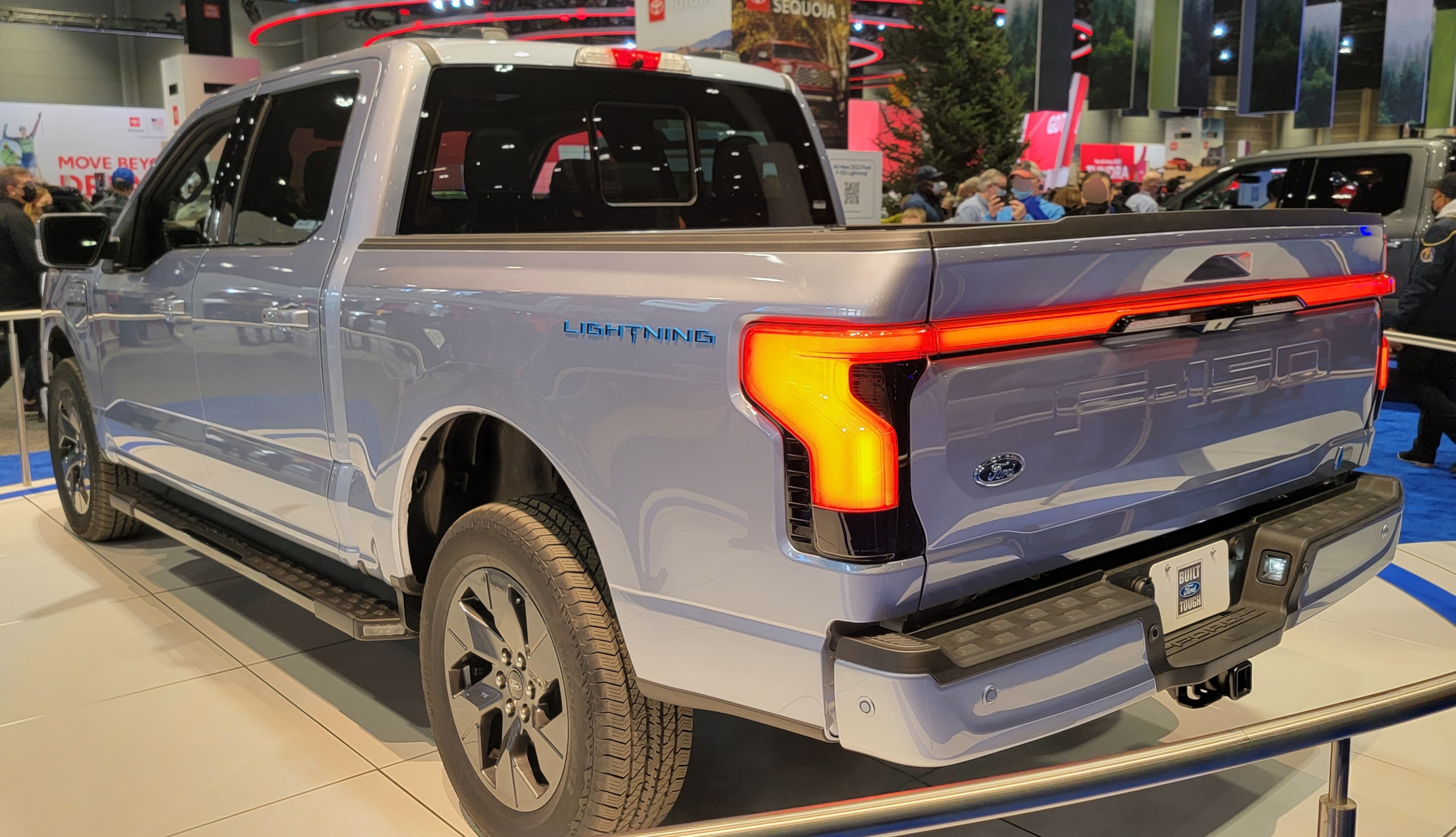
The Ford F-150 Lightning is a big truck that runs on electricity instead of gas. It's popular because it can do a lot of work and is better for the environment.
Electric vehicles are cars that run on electricity instead of gas. They use big batteries to power the motor and don't pollute the air like regular cars.
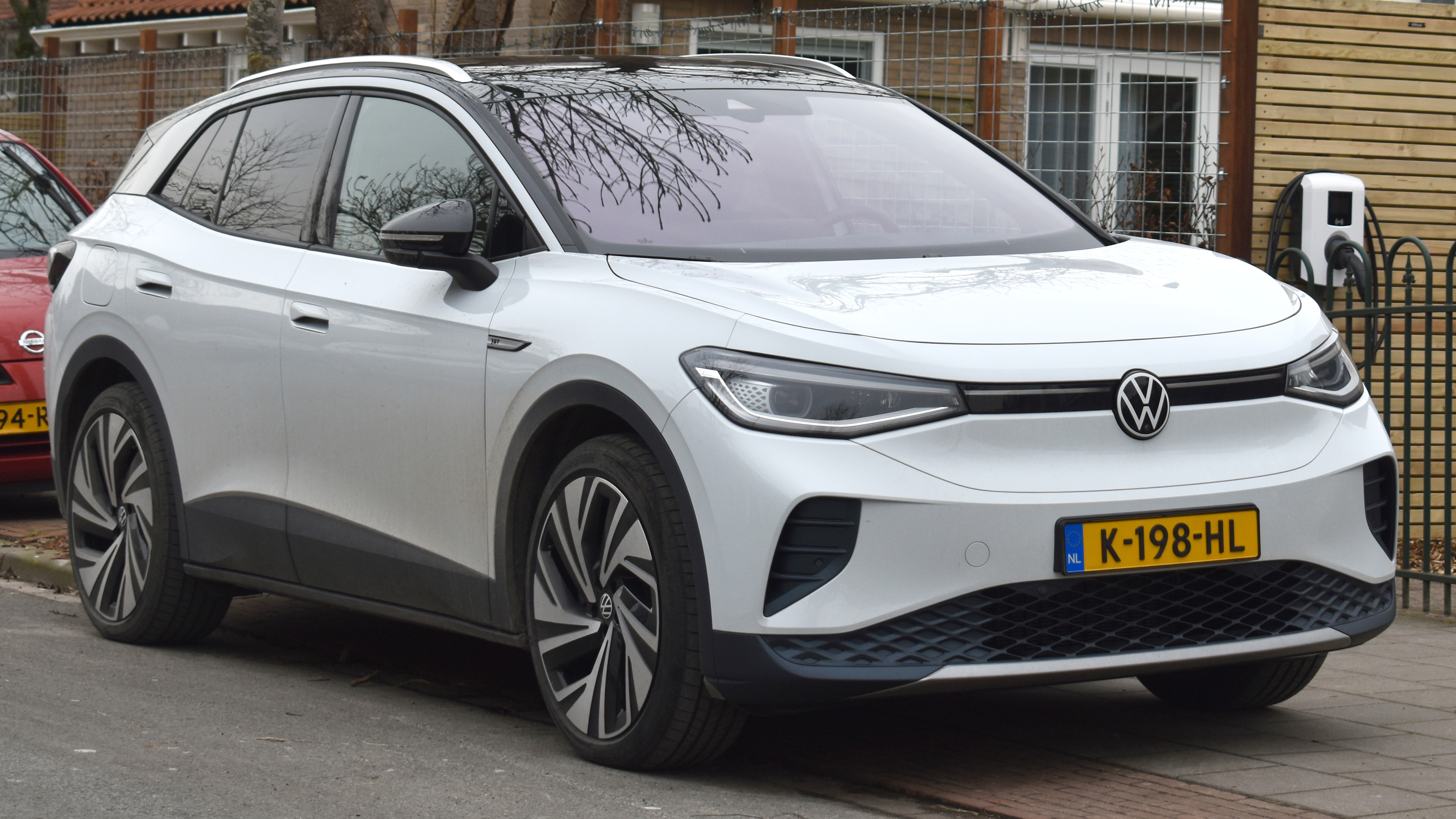
The Volkswagen ID.4 is a small electric SUV that doesn't use gas and is easy to drive. People like it because it's comfortable and has good technology inside.
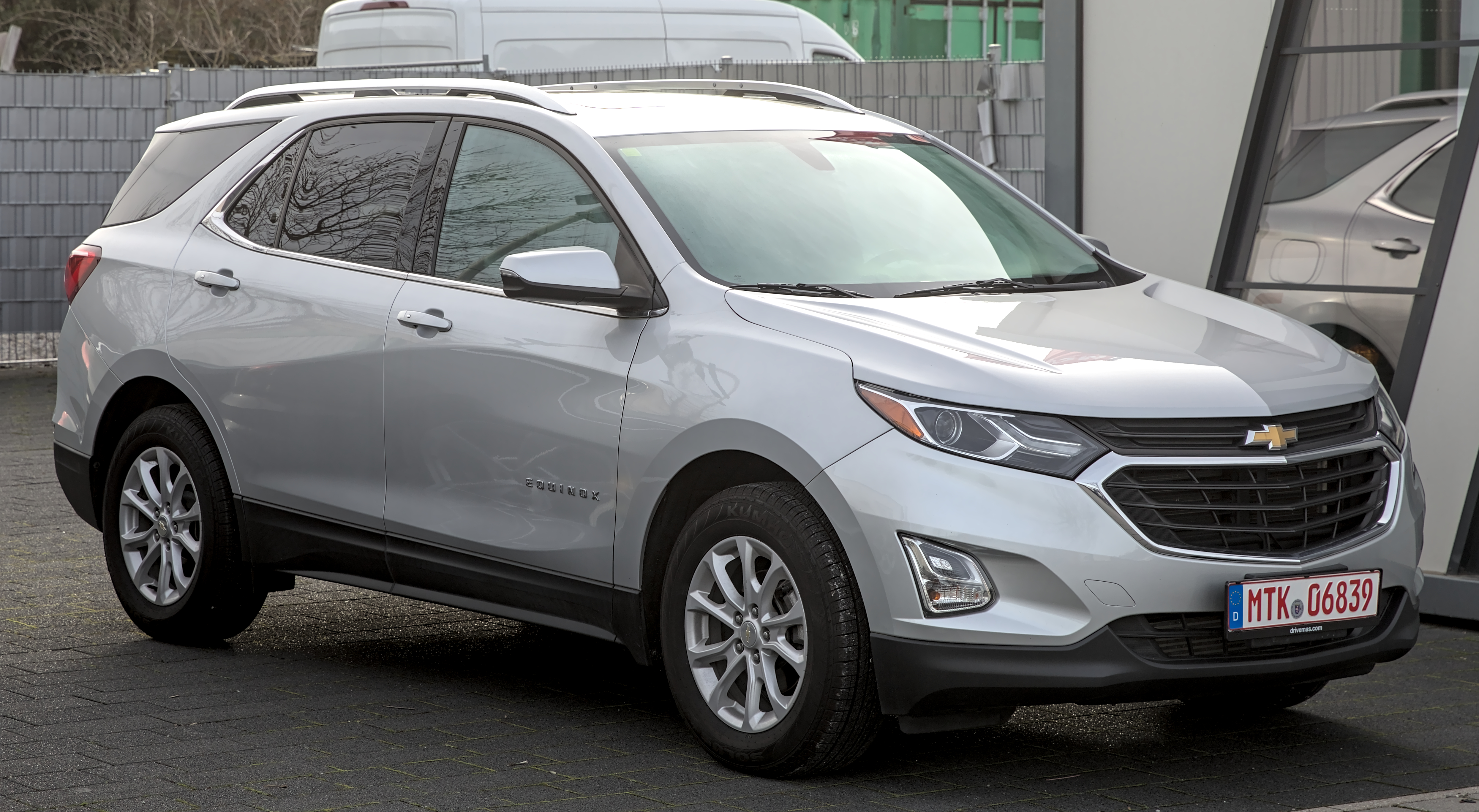
The Chevrolet Equinox EVRS is a small SUV that runs on electricity instead of gas. It's a good choice for people who want a car that's better for the environment and doesn't cost too much.
Hybrid powertrains use both a gas engine and an electric motor to help save fuel and pollute less. This means the car can use less gas and still run well.
Fuel costs are how much money you spend on gas to keep your car running, and this can go up or down depending on gas prices and how much gas your car uses.
A Hemi V8 is a powerful type of car engine that has a special shape inside the cylinders to make the car go faster and use fuel better. It's popular in muscle cars.
Gas mileage means how far a car can go before it needs more gas; better mileage means saving money on fuel.
LIVE
It's noon here in Ventner City, New Jersey, and our nation's capital, Washington, D.C.,
and this is Carage Live for Monday, March 9th with your hosts, me, Ray here in Ventner, and Zach
hanging out in his apartment in D.C., and I understand I should be in panic mode. Oh, my,
my, the market reset is coming. Okay, I'll be good now.
All right, y'all. Happy Monday. We got good energy. This is Monday. Good to be with you,
Pops. Glad you're feeling well. Today's show is brought to you by CarEdge.com. Car sites show
you fake prices. We'll get you the real one for those of you that are unfamiliar. CarEdge,
the company my dad and I own, is a car buying service. We take care of the research, dealer
outreach, and even negotiation. We learn what matters to you. Contact dealers, compare real
offers, and help you get the best deal without the stress. If you're interested in learning more
about our services and how you can support our company and our incredible team, check out CarEdge.com.
We've been talking about it for a couple of weeks now. We also have dealer ratings and reviews live.
This is still in beta, but it's getting stronger every day. Car dealer ratings based on real prices
come here on CarEdge.com. Find a dealership you're interested in, and you can learn more about their
dock fee, if they add add-ons. You can see how transparent they are. You can see even, dad,
the original quotes that we were able to receive from that dealership so that you can see. There
you go. You got some savings. You've got loyalty and only a $477 dock fee. Check that out. Data-driven
car dealer ratings and reviews. Now, dad, the pay... Wait, wait, wait, wait. Are you saying
these dealer reviews are data-driven and not subjective? These are not based on people's
opinions. These are based on data and fact. Exactly. Yes. Everything here is based on
actual information, OTD data information. Yeah, exactly. Man, that separates us from the rest of
outfits out there where dealers beg their customers to give them great surveys and great
reviews. Would you like a free oil change? We just need a 10 on our survey. Could you put a Google
review? This is just data-driven. There's no way to enhance this. I'll be good now.
All right, folks. 2026 car market reset panic mode. I didn't know anyone could do more advertisements
than me, but I guess I know where I got it from. EV incentives. A sign of a broader market reset.
Dad, today's show is the panic mode button has been hit for the 2026 car market reset. You can
see here, dad, we've got automakers out there that have produced electric vehicles that are not
selling. You and I talked about that last week. Well, now we have a story in automotive news.
Automakers and dealers are working together to entice buyers with sweetened deals. In some cases,
close to $15,000 off certain vehicles. This article goes into discussing how Coon's automotive
group here in my area of Washington, D.C. is discounting some of their new 2024 Ford Mustang
Mach-E's by $15,000 and their new Leftover 2025 Ford F-150 Lightnings by $10,000 or more. Dad,
we talked about last week, 400,000 unsold new cars from prior model years that have not sold so far
in 2026. The biggest culprit for that, not necessarily in terms of volume, but the deep
discounts these automakers and dealers are going to have to offer. The biggest panic button being
hit, it's for these electric vehicles that are now just not selling at all.
Well, let me ask you a silly question, you know what I mean.
That's a silly question, pops.
What's the likelihood of that changing when, say, gasoline gets to $5 a gallon here in the
East Coast as opposed to just in California and the West Coast?
People drive big-ass SUVs and big-ass pickup trucks when gas is cheap. What do they do when
gas gets expensive? Well, they try to look for ways to get rid of those vehicles.
Would they then, perhaps, possibly turn to EVs as a way to reduce their fuel costs because of
rising gasoline prices? I don't know. I mean, I don't know how high gasoline would have to get
for people in this country to go, okay, I'll get an EV instead. But it's interesting or it will be
interesting over the next few weeks or months to see what happens to the EV market as gasoline
prices continue to rise. You are onto something that is quite interesting because the whole
concept behind this reset is that it's actually a reset of EVs. We had had for many years a push to
have consumers purchase EVs and we've seen rapid depreciation of EV values. Again,
some of the notes that are highlighted here in this article, and forgive me, I had it wrong at the
outset, $10,000 off on the 2024 brand new Ford Mustang Mach-E, $16,000 off the brand new 2025
F-150 Lightning. But what you're saying, Dad, is actually the reset could actually happen to a
market or a segment of the market that has traditionally been even more profitable, which
would be internal combustion engine, full-size pickup trucks, SUVs, things like that. And maybe
on the other side of that, EV prices actually do start to bounce back up or at least not fall off
a cliff as rapidly as they have been. That'll be something we're obviously going to watch to see
what happens to gasoline prices. But in the meantime, Dad, all you got to do is look at the
slowest selling cars in the United States of America right now. And EVs are all over this.
This is caredge.com slash slowest. And when you look at the top five here, you've got the Ford
Mustang Mach-E at the number five spot and the Volkswagen ID-4 at the number one spot. So two
out of your top five slowest sellers in the United States are electric vehicles. And that
article, again, Dad, it was not a $10,000 incentive on a 2025 Ford Mustang Mach-E.
It's on the 2024 that still hasn't sold. So lots of balls being juggled here in terms of dynamics
within the market. And the reset could be EV specific or it actually could be more broad to
your point. And what's interesting to me is on the Ford side of things, we know that the invoice
cost and the MSRP were within about a hundred bucks of each other. There was no margin per say
in the vehicle. Whatever profits were going to be had were going to be paid by Ford for hitting
volume levels that were set by Ford. So for members of our community who aren't familiar with that
when Ford launched their electric vehicle program, they made it clear, we're not making money on this
and dealers, you're not going to make money on this. There's no markup from the invoice price of
the vehicle, what you pay for it to the MSRP, what you sell it for. Obviously now they're selling
for significantly below MSRP and below invoice price. My point was is that Ford actually paid
an incentive to the Ford dealers for selling the EVs, especially in volume, if they could hit
volume goals that had been set. They received extra money for selling them and being in the EV
business. But this is, are those $16,000 discounts on those 2025 Ford lightings? Are those coming
from Ford Motor Company or are those? That's a combination, Dad, from the dealer and from
incentives from the manufacturer. Okay, so how much of the 16,000 is coming from Ford and how
much of it is coming from Coons? And my suspicion is that quite a large percentage of that 16,000
is coming from the dealer. Look at this, Dad. Here's a perfect example. Chevrolet is offering at
least $8,750 in customer cash on the 2026 Equinox EVRS with 10,000 from the manufacturer available
to conquest customers. So there are big chunks of money being thrown out from the automaker, but
still even if it's 10,000, you got to get another six that's coming from the dealer. So
losses across the board here on the EV side, and that's where the reset in the panic mode I think
is primarily. But Dad, look at this comment here from Igor. I did a report on Friday when I was
at the auction that dealers are already dumping big V8 engine vehicles. Gas prices are only going
to continue to go up. I actually think your point at the beginning of the show is astute and on point.
The reset actually could be that EV prices start to go back up in gas vehicles and Dodger, for example,
Jeep, Crystallantis, their whole big push, we're going to go back to the big engines. That could
actually backfire tremendously here if gasoline prices go sky high. Yeah, it certainly might have
sounded like a great idea prior to the oil situation that we find ourselves in at the moment.
It's interesting to me how quickly things can change. It's insane how quickly things can change.
Yes, I mean because you can relax government standards all you want, but if you suddenly
have to pay six, seven, eight dollars a gallon for gasoline, then people aren't real interested in
driving gas guzzling vehicles anymore. I mean, I've lived through this so many times. It's frightening
where when gas is relatively inexpensive and people drive those big gas pickups and the
big gas SUVs that are getting 15 miles of the gallon, 18 miles of the gallon,
they're paying three dollars a gallon. Well, when that doubles and suddenly they say to themselves,
well, I've got a $900 car payment and now suddenly I have a $450 a month fuel payment.
Yeah. It is amazing how much of a loss those types of people are willing to take to get
into something that is more fuel efficient. And so will that more fuel efficient vehicle
be smaller, higher gas mileage vehicles? Or will a lot of these people ultimately go,
and I would think the area, if you do it, would ultimately go to pre-owned EVs?
Because those prices have fallen off a cliff. But you know where it also could go, Dad? And
you know the brand who is probably best situated to deal with this, where they could go?
Hybrid powertrains and Toyota. This could actually continue to drive demand back to Toyota if we
have. Because we know the reason we think people have not purchased EVs in mass is primarily price
point. There's also all these other factors like range, anxiety, and things along those lines.
But the biggest one is price point. If they were cheap enough, people would probably buy them.
They've gotten pretty cheap, but not that cheap. Obviously the Mach-E, for example,
not selling with a $10,000 discount. And it's two model years old already,
the F-150 Lightning, $16,000 discount. It's not cheap enough. But you know what, Dad? If you have
hybrid powertrain vehicles out there and you have low enough prices and you have gas prices going
this could actually be a reset. And this could be even more demand for the Toyotas of the world,
which quite frankly, they can't take any more demand right now. We ran the numbers before
the show. Nine out of the top 10 fastest selling vehicles in the United States of America right
now are Toyotas and Lexus. And seven of those are Toyotas. So they can't afford to have any
more demand, which is a great problem, but still a problem. Well, yeah. I mean, I'm telling you,
Zach, I can't tell you the number of times I've seen this happen and the amount of
loss people are willing to take in order to get out of these gas guzzlers. And yeah, a lot of
people are going to look at hybrids and they're going to look at vehicles that instead of getting
15 to 18 miles of the gallon, suddenly are getting 40 and 50 miles of the gallon. And then
you know, a year from now or whenever when gasoline prices stabilize again,
people will forget. It is the perfect example of how people cannot remember the pain that they go
through. There is this saying that if a woman could actually remember the pain of childbirth,
they'd only give birth to one child. Okay. Okay. But the fact that the mind plays games and goes,
yeah, let's do this again. Okay. Well, the same happens to gas guzzling vehicles. There's a certain
amount of pain associated with these gas guzzlers when gasoline prices get really high.
And then when gas prices stabilize again, people forget the pain that they went through,
both mental and economic. And so it just, I am interested to see what happens to the market
having lived through any number of times where gas has spiked and people have wanted to get
out of their big ass vehicles. And trust me, the value of those big ass vehicles,
they will drop faster than the value of EVs did. You've watched this movie before,
haven't you? Wasn't this when you said cash for clunkers? Is that when this happened?
I mean, I saw when I was with many, there was a spike in gas prices. And you know,
people were coming in trying to trade these big trucks. And it's like, man, if we couldn't steal
them, we weren't trade them. Okay, because you just didn't know how much more they were going
to decline in value. The amount of loss that people were willing to take in order to get out of them
was staggering because we know that people don't budget well when it comes to their car.
We know that the average new car payment today is I think $802 or $800 or some dollars a month.
For a new car. We know that insurance rates are higher than they've been. So let's be kind and
let's, you know, let's say that it's $150 a month. So now you're at $950 a month. And let's say
you were spending $300 a month for fuel, for gasoline. So now you're at $1,250 a month. But
now you're going to watch your fuel costs double. So instead of spending $300 a month,
you're going to spend $600 a month. Let's do, we have this handy dandy calculator, Dad. This is
calculator.net. Gosh, we love them. Let's say you're driving 10,000 miles a year, 25 miles per
gallon, $3 in gas. Yes. $1,200 in fuel costs. Okay. Okay. Now let's change this to what do
I think it might be five by the end of March. All right. So let's do five just as an example.
Yes. So now we're up to $2,000. If we also then look at less fuel-efficient vehicles,
you can see here, 20 miles per gallon, we're actually talking $2,500, 10 miles per gallon,
we're talking five. You can quickly start to quantify here that this is, we just have 10,000
miles, which we know many people drive much more than that. The average in this country is 15,000
miles a year. Okay. So let's do 15 and let's do what do you want to put here for the gas price?
Well, the national average today is $3.48. That's today. All right. So we're talking $2,088 with
25 miles per gallon is what people are spending on fuel. Now what if this doubles? Yeah. So it's
$6.96. $4,200 a year. And then of course- That makes a huge difference to somebody.
Yeah. And you can see here, Dad, if you're getting even worse fuel economy, obviously,
you're paying worse. No, just it quantifies. It quantifies that this has a big impact. And this
could put a lot of people over the edge when that monthly payment now goes from X to Y,
that could be the threshold for them. Because people get hung up on their monthly payment.
Okay. And when I say their monthly payment, the only monthly payment they think of initially
is the monthly car payment. Okay. I sold cars for enough years that there might have been a
handful of people in 43 years who said, yeah, but let me check to see how much my insurance is going
to be and what my fuel costs. Nobody does that. All they care about is what their monthly payment
for the car is. Well, if they can budget $800 a month for the car. Yeah.
They haven't really thought about the rest of the budget, which is the fuel costs and the
insurance costs. And if gas prices double, people don't have enough spread in their budget, don't
what's the word I'm looking for? The ability to handle an increase. Okay. Because most people
are living on the edge. And what do I mean by that? Well, they live paycheck to paycheck.
Most people don't have $500 to put together for an emergency. So this is where the reset
could happen on that side of the market. You're going to have a bunch of people trying to get
out of these vehicles. And what happens that increases supply, obviously demand is decreased
because how many people are going to be wanting to pick up these big gas guzzling vehicles?
The whole impetus for today's show was to talk about this article in automotive news, which already,
just in a weekend, has become potentially obsolete because the story is no longer potentially going
to be EV prices cratering. It could be big internal combustion engine vehicle prices
cratering. This will be something that we have to, well, you know, we should ask the
Blackbook team dad to come on sometime soon, maybe in the next month, and have them do a
comparison of powertrain and depreciation because, yeah, this makes plenty of sense if gas prices
go sky high, panic mode for the auto industry. Well, at this particular point in time,
there's no reason to believe that gas prices won't go sky high. I realize that a lot of,
I mean, we were fortunate enough in this country where we can produce enough of our own fuels,
but that doesn't mean that the cost of oil in this country isn't going to go up based on what's
happening in the rest of the world. And so if oil can't make it out of the Gulf Coast states,
then how's that going to impact the future cost of oil? And how will that then, I mean,
because let's face it, it's been, what, nine, 10 days since the Iran thing started, okay?
The first tanker that would have probably made it to wherever it needed to go between that time
and now probably wouldn't have gotten there yet, but gas prices have already spiked like 50, 60
cents a gallon. Based on what? Based on the fact that, okay, in the future, we're not going to be
able to get all the oil that we need, or the world won't be able to get all the oil that it needs.
So now there's going to be real impacts here for the auto industry, and it's going to be more of
the whipsaw that the auto industry has experienced for quite frankly, the past few years. You and I
started CarEdge at exactly the right time. There's a new story every week, and this one is very much
whipsaw. We thought, and I continue to a degree, do believe EV prices will crater, but if gas prices
do what they have the potential to do, then why wouldn't people be eating up and buying up these
used electric vehicles? And we're in spring selling season. We're just at the beginning of the spring
selling season. So watching what happens, especially the used vehicle prices, will be so interesting
here with these dynamics at play. And watching what happens at companies like Stalantis, where
they had the toughest time for a number of years because they overpriced their vehicles and they
went too far up market. And then they wrote off what was it, $20-some billion? Taking a write off
of $20-some billion for pivoting from EVs because, well, at least in North America,
you know, the customers are screaming, we want the Hemi V8s. We, okay, so, well, we're going to
give that back to you. And then all of a sudden, we find ourselves in a situation that gas prices
are going to go sky high. And they have to be, I mean, all these good folks, they're all going to
hairline like me because it's like, how do you plan? How do you read what the future is going
to be? Because that's what all these companies do. They try and look at everything.
Let's come back to our lane, Pops. Let's help Yolanda out here. So is it recommended to buy a
hybrid or an electric vehicle? So if you're in the market right now, Dad, are you encouraging
someone to look at a hybrid or an EV? What's your take on this? Well, I think it depends
on each customer's situation. And what I mean by that, Yolanda, is, okay, do you live in a single
family home? Can you have a charger installed in your home, in your garage, so that you can
charge your vehicle at home? Or do you live in an apartment complex or condominium of some kind,
where then it would suddenly become easier for you to have to go elsewhere in order to charge
your vehicle? So it depends to me on where you can charge your vehicle, how close those
charging stations are to you, as to whether or not it might make sense to look at an EV.
If you find yourself in a situation where it would be more difficult to charge a vehicle,
then I would recommend a hybrid. We know hybrids work, okay? And I'm not saying EVs don't work,
but it doesn't take any type of special infrastructure for a hybrid to work. So
I don't know, I still think, and I've been saying this for five years now, that I believe hybrids
are the bridge to wherever it is that we're going, fuel-wise. And the market is, I mean,
the market for hybrids is strong. That's what people want. That's what people are buying. That's
what's selling. Yeah, look at Toyota. Look at Toyota. That's a great example of it.
Dad, if I may, I want to let anyone in on a new beta project we are working on. You can see,
I'm on AutoTrader.com here, but we're working on an update to the CarEdge browser extension.
You see this, Dad? Now on AutoTrader, I can see that Earnhardt Ford is rated AC by CarEdge.
I can click on this. It'll take me to my Earnhardt Ford page back on CarEdge.com. I can see they
have a dock fee that's $100 above the average in Arizona. 100% of the time that CarEdge has
negotiated with Earnhardt Ford, they've added add-ons, but we've been able to negotiate about
$1,500 off when engaged with them. I can click here to see the recent quotes that we've had
with Earnhardt Ford and look at this, Dad. First quote, $40,995. Second quote, $39,500.
Let's click in. Boom. There you go, folks. You can see here, we've got that spray-in bedliner for
$899, $1,000 discount, et cetera, et cetera, the $1,000 rebate. If I hit the back button here,
let's see that lower OTD. What a beautiful thing. What a beautiful thing. The discount's now $2,836.
Coming to a browser near you soon, you'll be able to shop for vehicles on any dealer or marketplace
website and have the CarEdge overlay so you can see how transparent that dealer is just like that.
May I say, Earnhardt Ford was quite the choice for you to select because from 1988, was it,
until 1993, we had a Golf USA store in Mesa, Arizona and how Earnhardt of Earnhardt Ford was
a customer of mine. He used to buy golf equipment from me and I didn't force him to take a spray-in
bedliner for any of the clubs he bought and my dock fee was much lower. But yeah, that's interesting
stuff. Is that like a browser extension or is that what that's called? That's a browser extension.
Yep. So again, it's in progress right now, but just wanted to share briefly there and get some
feedback in the chat and from the community. Now, there was one other story I wanted to bring up
today. Let's not spend too long on it, but I just want to float it here. Did you see this
Carvana acquired another Stalantis dealership? That's going on, man. They're getting into the
new car business. I think they're done for the time being because they're limited to one a year
now. Supposedly. Yeah, well, we'll see. I mean, Stalantis is desperate for groups or people
to come in and say, hey, I'd love to have a CDJR dealership. But yeah, listen, they're going to
try and disrupt the new car side of things. And let's face it, the reason, at least in my opinion,
the reason that they keep going with CDJR dealerships is because the creditworthiness of CDJR
customers to a great degree fits exactly the customer that Carvana is looking for.
The truth of the matter is Carvana wants to be in the car loan origination business
and the vehicle that they use to do that is when they sell cars and trucks.
Okay, that's how they get in the loan origination business. So this is a way for them to
try their hand at new cars. And apparently it's been somewhat successful because they've ended
up with six Stalantis stores in a year's time. We'll see how it actually disrupts the industry.
But I do know that most brands in Stalantis is no different. They put a cap on how many
of their franchises any major group can have. So as much as the Penske organization wants to buy
up every BMW dealership it can, BMW won't let them because they don't want them to have an
outside share of the market that they can control. Still is interesting to keep seeing Carvana's name
and the headlines. Okay, we had a thoughtful contribution come from Daniel. Thank you, Daniel.
So instability and oil prices are loved by automakers and car dealers to keep sales strong.
Yes and no. They're not loved by automakers because automakers when you look at what automakers
build and what they want to build, especially when they know that car sales are expected to
decline this year. They want to build the high profit margin, high priced big gas vehicles.
Okay and those vehicles don't get good gas mileage and those vehicles are going to be the ones
that people are going to shy away from as gas prices continue to go up. So I'm not sure automakers
love it because I don't think they can switch to suddenly producing smaller, less expensive,
better gas mileage vehicles as quickly as the customer demand might suggest.
Yeah, I think you're right. It's a good thing in some ways and a very, very challenging thing.
Oh, yeah.
And others. All right, y'all. We're going to call it a show for today. Again,
if you're unfamiliar, caredge.com, me, my dad, and I don't know about the 20, 30, 40 of us behind
the scenes, we work every single day to provide a car buying service that makes buying a car easier.
We take care of research, dealer outreach, and even negotiation. We learn what matters to you,
contact dealers, compare real offers, and help you get the best deal without the stress. You can
learn more back at caredge.com. We appreciate everyone tuning in. We'll be back with more
caredge live tomorrow. And as always, we read your comments. We appreciate them. Subscribe to
the channel if you haven't already and enjoy the afternoon. It is mid-70s and sunny here in D.C.,
dad. So I'm going to go work outside somewhere. Well, it's mid-50s and sunny here in Inventor,
which is why I'm actually wearing a short-sleeved shirt today. Yeah. And hopefully tomorrow,
I won't be nearly as panicked as I was today, but we shall see whatever the news brings us tomorrow.
We'll see you then, folks. Love you, dad. Love you too, handsome. Thanks everybody for being here.
If you liked the show, please take a moment to rate, review, and subscribe. It really does help
the show to grow. Thank you for listening.
About this episode
The discussion centers on the 2026 car market reset, focusing on the significant discounts automakers and dealers are offering on electric vehicles (EVs) like the Ford Mustang Mach-E and F-150 Lightning due to slow sales and large unsold inventories. Rising gasoline prices could shift consumer behavior, potentially increasing demand for EVs or hybrids, especially Toyota's popular models. The hosts analyze how the market reset might affect EV depreciation, dealer incentives, and the broader impact on gas-guzzling trucks and SUVs amid fluctuating fuel costs. They also highlight CarEdge's data-driven dealer ratings and the evolving car buying landscape.
Today on CarEdge Live, Ray and Zach discuss the latest information on the state of the car market. Tune in to learn more! Hosted by Simplecast, an AdsWizz company. See https://pcm.adswizz.com
for information about our collection and use of personal data for
advertising.