
The 2026 Trailseeker is the Perfect Subaru For High Gas Prices
About this episode
The 2026 Subaru Trailseeker is framed as a practical EV answer to high gas prices, blending Subaru familiarity with Toyota BZ Woodland–style EV underpinnings. The host walks through EV basics like “no boxer,” no frunk, adjustable regen drag, and X mode, then gets specific on a 74.7 kWh battery, 150 kW fast charging, and 3,500-pound towing. Real-world range, home charging with plug-and-charge, and trail-friendly camera views round out the pitch.
The new Subaru Trailseeker has Outback practicality, EV efficiency, and enough off-road credibility to handle the forest service roads you and your dog will point it at.
In this full review, I break it all down- performance, range, charging, interior tech, and how it compares to its twin—the Toyota bZ Woodland. Yes, they share a lot. But Trailseeker might be the smarter buy.
With standard AWD (hey, it's a Subaru), 375 horsepower and a starting price under $46,000 (about the same price as an Outback), this is the quickest Subaru you can buy right now. But is it the best one for everyday drivers?
If you're considering an EV but still want Subaru practicality (and room for the dog), this might be the one to watch.
symmetrical all-wheel drive
"Subaru is well-known for a few things – symmetrical all-wheel drive, the flat boxer engine, and [12.8s] that the company caters to a minority few automakers chase – dogs."
This is Subaru’s type of all-wheel drive that’s set up in a balanced way front-to-rear. The goal is better grip and more predictable handling when the road is slippery.
“Symmetrical all-wheel drive” is Subaru’s AWD layout where the front and rear are designed to be balanced around the vehicle’s centerline. That symmetry is intended to help traction and handling consistency across different road conditions.
flat boxer engine
"Subaru is well-known for a few things – symmetrical all-wheel drive, the flat boxer engine, and [12.8s] that the company caters to a minority few automakers chase – dogs."
A flat boxer engine is a special engine shape where the cylinders sit sideways. Subaru uses it because it can help the car sit lower and feel more balanced.
A flat boxer engine is an engine design where cylinders lie horizontally and opposing pistons move in opposite directions (“boxer” motion). Subaru is known for this layout because it can help keep the center of gravity lower than many inline engines.
EV
"Trailseeker is a different kind of Subaru, sure it has all-wheel drive and room for man's [25.4s] best friend. [25.9s] But it's an EV, so no boxer. [29.9s] If you really squint, okay, you don't have to squint at all to see that this is pretty"
EV means the car runs on electricity from a battery. The host is pointing out that an EV doesn’t have the usual gas-engine setup, so there’s no boxer engine here.
EV means electric vehicle—meaning the car is powered primarily by electric motors instead of an internal combustion engine. In this segment, the host highlights that because it’s an EV, it doesn’t use Subaru’s boxer engine.
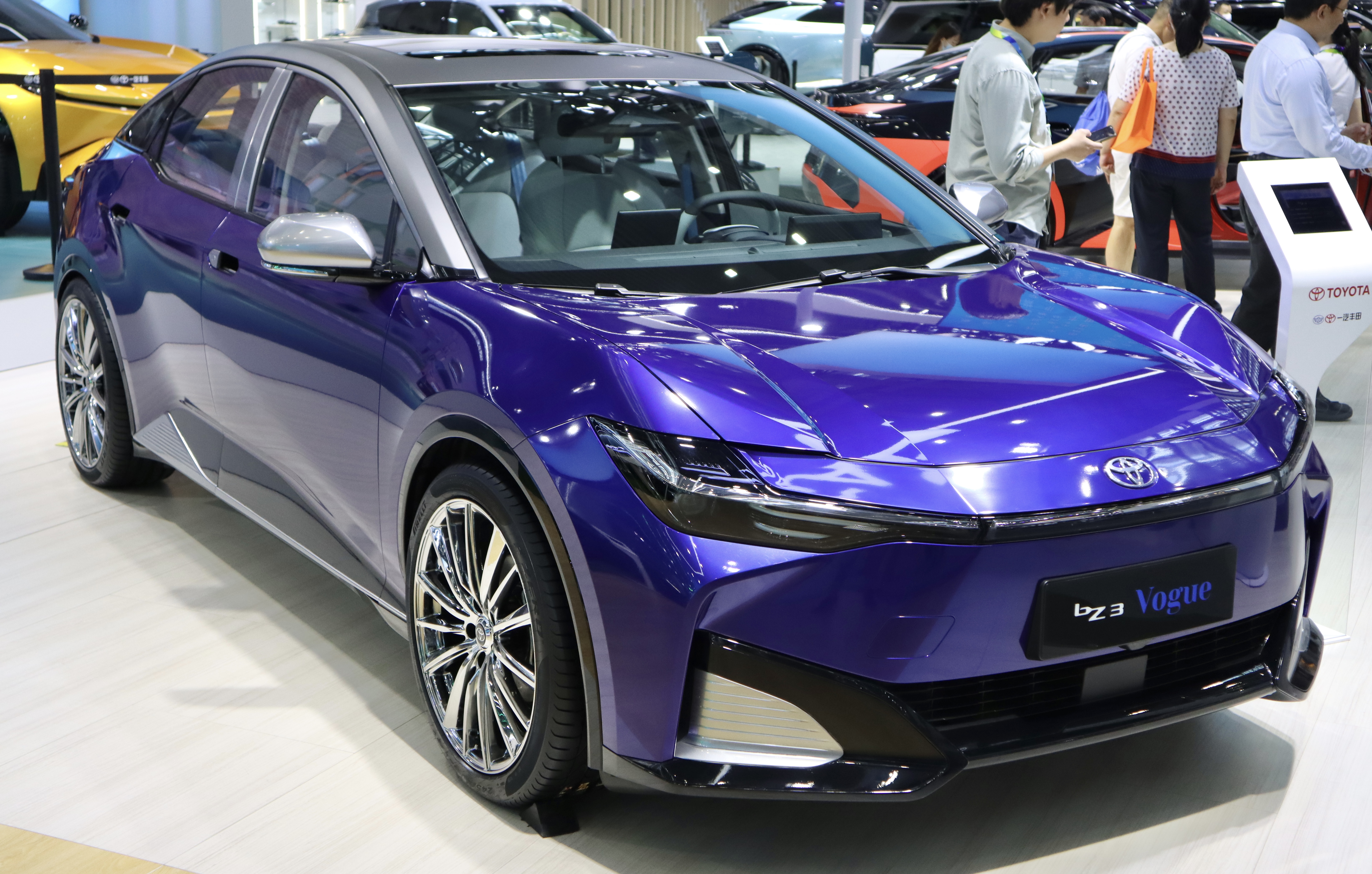
Toyota BZ Woodland
"But it's an EV, so no boxer. [29.9s] If you really squint, okay, you don't have to squint at all to see that this is pretty [36.7s] much the same as the Toyota BZ Woodland. [39.6s] They share most body panels, the architecture, the drivetrain."
The Toyota BZ Woodland is brought up because it’s very closely related to the Subaru Trailseeker. The host says they share the main EV “bones” and powertrain layout, which is why they feel similar.
The Toyota BZ Woodland is referenced as the Trailseeker’s close EV platform cousin, sharing major underpinnings like the architecture and drivetrain. The host uses this comparison to explain why the two vehicles look and package similarly.

Subaru Outback
"This is a limited trim, with destination it retails for just under 46 grand. [61.4s] That's about the same price as a Subaru Outback. [69.2s] And really, it kind of looks like the previous generation that had station wagon feels."
The host uses the Subaru Outback as a comparison point for money and styling. They say the Trailseeker’s price is similar to an Outback, but the Outback has moved away from a wagon look.
The Subaru Outback is referenced as a pricing benchmark for the Trailseeker, with the host saying the EV’s retail price is about the same as an Outback. The segment also contrasts how the Outback’s styling has shifted toward a more SUV-like look.
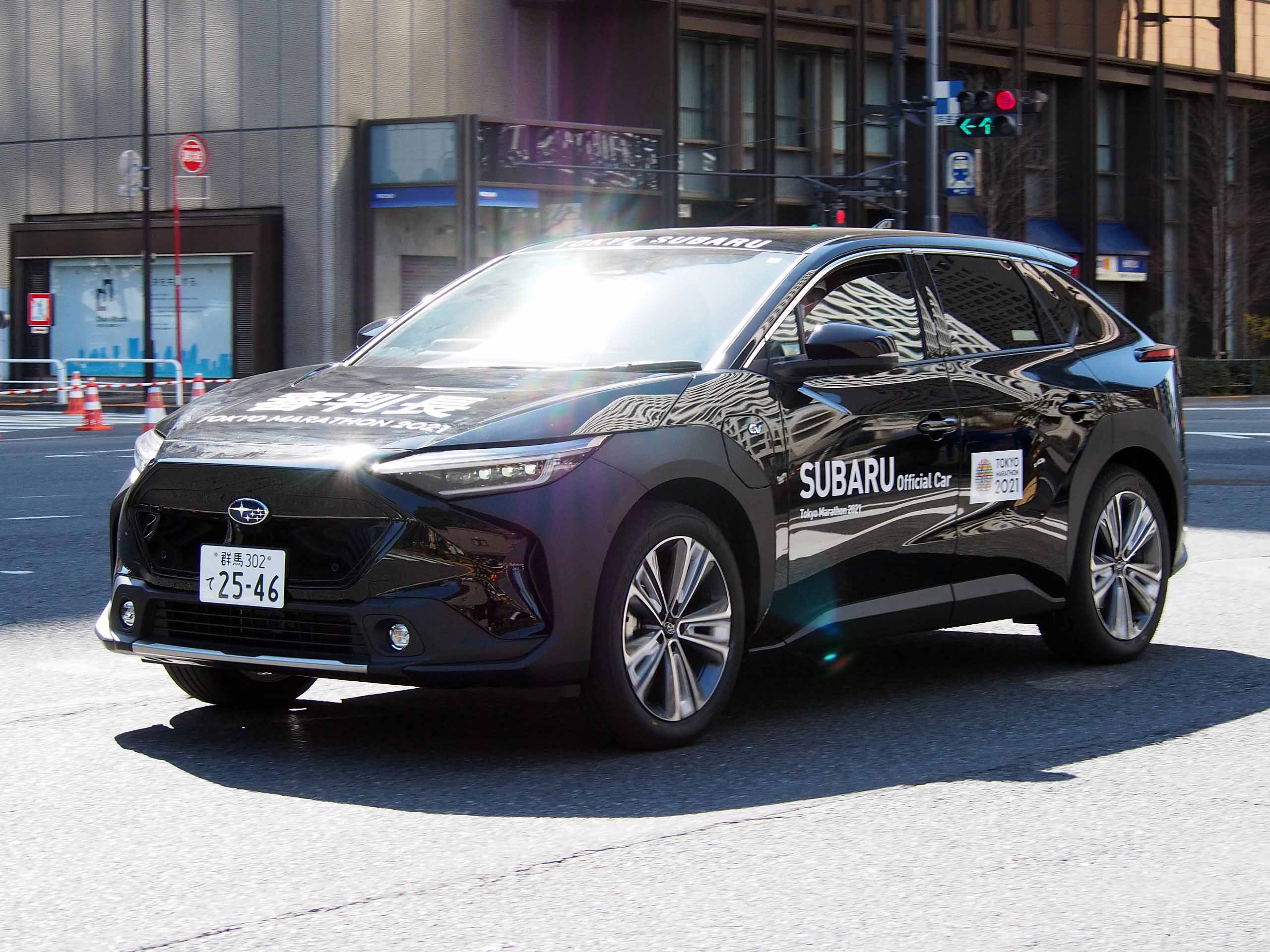
Subaru Solterra
"...same wheelbase and passenger space as the smaller Solterra. The extra half-foot goes to the cargo room, by F..."
The Subaru Solterra is an all-electric SUV. The podcast is comparing its size to a related Subaru EV and explaining how the extra space is used for cargo. In simple terms, it’s about how much stuff you can carry.
The Subaru Solterra is Subaru’s electric SUV, designed to deliver SUV space and capability in an EV package. The podcast discusses how it shares key dimensions with a related model, while using the extra length to increase cargo space. That kind of packaging detail matters because it affects how much room you get for everyday gear.
wheelbase
"Trailseeker has the same wheelbase and passenger space as the smaller Solterra. [89.8s] The extra half-foot goes to the cargo room, by Fido at Bigger Crate to ride in."
Wheelbase is the length of the car between the front and rear wheels. A longer wheelbase usually means more space inside and/or more room for cargo.
Wheelbase is the distance between the front and rear axles. It strongly influences interior space and how much room the vehicle can allocate to passengers and cargo.
panoramic glass roof
"There's a touring trim that's one-grade higher. [120.7s] It adds stuff like a panoramic glass roof."
A panoramic glass roof is a large roof section made of glass that spans much of the cabin. It’s typically used to increase natural light and give passengers a more open, airy feel.
pound-feet of torque
"Each motor makes 198 pound-feet of torque, but no total figure is offered. [144.5s] Time to play frunk or no frunk. [146.7s] I've not looked under the hood."
Torque is the twisting force that helps the car move. “Pound-feet” is just the unit used to measure how strong that force is.
“Pound-feet of torque” is a measurement of rotational twisting force produced by the motors. Torque matters because it strongly influences how quickly a vehicle accelerates, especially at low speeds.
frunk
"Time to play frunk or no frunk. [146.7s] I've not looked under the hood. [148.5s] Lock in your answer. [150.1s] I'm guessing no. [151.8s] And the verdict is no frunk."
A “frunk” is a storage compartment in the front of some EVs. It’s like a trunk, but it’s up front instead of in the back.
A “frunk” is the front trunk/storage compartment on many EVs, created because there’s no traditional engine up front. The host is evaluating whether the Trailseeker has that space and how its packaging affects practicality.
one-speed transmission selector
"There's a small display in front of the driver where it should be. [179.3s] The one-speed transmission selector takes a little time to figure out. [183.3s] Owners will get used to it."
Many EVs don’t use a traditional multi-gear gearbox. Instead, they use one main gear ratio, and the selector is just how you choose forward or reverse.
An EV often uses a single-speed reduction gear instead of a multi-gear transmission, because electric motors make strong torque across a wide range. The “one-speed transmission selector” is the control used to choose drive states (like forward/reverse) even though there aren’t multiple gear ratios.
drive modes
"[184.6s] Like all cars these days, Trailseeker gets drive modes that make a small difference. [190.4s] Unique is X mode. [192.5s] This is a Subaru, after all."
Drive modes are different settings that change how the car feels while you’re driving. They can adjust things like how quickly it responds when you press the pedal.
Drive modes are selectable settings that change how an EV responds—typically things like throttle mapping, steering feel, and power delivery. The host says the Trailseeker’s modes make only small differences, but they still affect how it behaves day to day.
X mode
"[190.4s] Unique is X mode. [192.5s] This is a Subaru, after all. [194.5s] There are two settings to help slog through sloppy stuff."
“X mode” is a special Subaru driving setting meant for slippery or messy roads. It’s designed to help the car get through conditions that are harder than normal driving.
“X mode” is a Subaru-specific off-road/traction-oriented drive setting designed to help the vehicle cope with rough or slippery conditions. In this segment, it’s described as having two settings to help “slog through” sloppy surfaces.
regeneration drag
"[194.5s] There are two settings to help slog through sloppy stuff. [198.0s] The regeneration drag is adjustable. [200.8s] I'll get to that in the driving impressions."
Regeneration drag is the slowing you feel in an EV when you take your foot off the accelerator. It comes from the car recharging the battery while it slows down, and you can adjust how strong that slowing feels.
Regeneration drag refers to the slowing effect you feel when an EV uses regenerative braking. By adjusting it, the driver can control how much the car “coasts” versus how strongly it slows down when you lift off the accelerator.
74.7 kilowatt hour lithium ion pack
"It's a 74.7 kilowatt hour lithium ion pack. And the charge port is Nax."
That 74.7 kWh number is how big the electric battery is. A bigger battery usually means you can drive farther before needing to recharge, but driving conditions still matter.
A 74.7 kWh lithium-ion pack is the Trailseeker’s battery capacity, measured in kilowatt-hours. Higher kWh generally means more stored energy, which can translate to more driving range—though real-world range also depends on speed, weather, and how you use features like towing or roof racks.
charge port
"And the charge port is Nax. Nax take rate is 150 kilowatts."
The charge port is where you plug the car in to charge it. The faster the charger you use, the quicker you can add energy back to the battery.
The charge port is the physical connector on the vehicle used to plug into an EV charger. In this segment, the host ties it to charging capability by mentioning the charging rate (150 kW), which affects how quickly you can refill the battery.
150 kilowatts
"Nax take rate is 150 kilowatts. Trailseeker has zip."
150 kilowatts is how fast the car can charge at a fast charger. Higher numbers usually mean you can add energy more quickly.
150 kW is the maximum charging power the host says the Trailseeker can accept. Charging power (measured in kilowatts) strongly influences how fast the battery can be replenished during a fast-charge session, especially when paired with a compatible charger.
zero to 60 benchmark
"Trailseeker has zip. It'll do the zero to 60 benchmark in just over four seconds."
Zero to 60 is a test of how fast the car speeds up from a stop to 60 mph. It’s a quick way to compare acceleration between vehicles.
The zero-to-60 benchmark is a common performance test that measures how quickly a vehicle accelerates from 0 mph to 60 mph. It’s used as a simple, comparable way to describe “off-the-line” acceleration feel, especially for EVs.
uncontrolled intersections
"with the grip of all-wheel drive and a lot of grunt off the line, you can get across uncontrolled intersections with ease."
An uncontrolled intersection is one without traffic lights or stop signs. You have to judge when it’s safe to go, and the car’s traction and acceleration help you move through.
Uncontrolled intersections are intersections without signals or stop signs that require drivers to judge gaps and traffic flow. The host is using this as a real-world scenario where AWD traction and EV torque help you accelerate smoothly and clear the intersection quickly.
4,500 pounds
"For an SUV that weighs 4,500 pounds, this moves. It's the quickest machine in Subaru's fleet."
That 4,500-pound number is how heavy the SUV is. Heavier cars usually take more energy to move, so it’s notable when an EV still feels quick.
4,500 pounds is the SUV’s curb weight, which affects acceleration, braking, and energy consumption. The host uses the weight to emphasize that despite being heavy for an SUV, the Trailseeker still accelerates strongly.
Max towing is 3,500 pounds
"Max towing is 3,500 pounds. But remember that tugging a trailer sucks the life force out of a battery pack."
Max towing is the highest trailer weight the car is allowed to pull. Pulling a trailer usually uses a lot more battery power in an EV, so range drops.
Max towing is the maximum trailer weight the vehicle is rated to pull safely. The host then connects towing to EV efficiency by saying it “sucks the life force out of a battery pack,” which is a practical reminder that towing increases energy use and can reduce range.
a lot of aerodynamic drag
"Gear on the roof adds a lot of aerodynamic drag and EVs don't like that. Trailseeker is quiet at speed."
Aerodynamic drag is the “air resistance” that slows you down. If you add stuff on the roof, it can increase that resistance and make the EV use more battery.
Aerodynamic drag is the resistance a vehicle experiences as it moves through air, and it rises quickly with speed. The host says roof-mounted gear adds drag, which matters for EVs because more drag means the battery has to work harder to maintain speed.
eyesight suite
"The eyesight suite of Active Electronic Safety Tech includes automatic emergency braking and adaptive cruise control with lane keeping that allows hands off the wheel."
Eyesight is Subaru’s set of safety features that help the car avoid crashes and assist with highway driving. In this segment it includes emergency braking and lane/spacing help.
Subaru’s Eyesight suite is the brand name for its active safety and driver-assistance technology. Here, the host says it includes automatic emergency braking and adaptive cruise control with lane keeping.
automatic emergency braking
"The eyesight suite of Active Electronic Safety Tech includes automatic emergency braking and adaptive cruise control with lane keeping that allows hands off the wheel."
Automatic emergency braking is a safety feature that can brake by itself if the car thinks a crash is about to happen. It’s meant to help prevent or reduce collisions.
Automatic emergency braking (AEB) is a driver-assistance system that detects a potential collision and can apply the brakes automatically to reduce impact severity or help avoid the crash. The host lists it as part of Subaru’s Eyesight suite.
adaptive cruise control
"automatic emergency braking and adaptive cruise control with lane keeping that allows hands off the wheel."
Adaptive cruise control is like regular cruise control, but it also slows down or speeds up to keep distance from the car in front. It helps on highways, especially in traffic.
Adaptive cruise control (ACC) automatically adjusts the vehicle’s speed to maintain a set distance from the car ahead. In this segment it’s paired with lane keeping, describing a hands-off capable highway assistance setup (though drivers still need to supervise).
lane keeping
"braking and adaptive cruise control with lane keeping that allows hands off the wheel."
Lane keeping helps the car stay in its lane. It can gently steer if you start drifting, and it works best when lane lines are clear.
Lane keeping is a driver-assistance function that helps keep the vehicle centered in its lane using steering inputs. The host frames it as part of the Eyesight system that can allow hands-off driving, which typically depends on road markings and driver monitoring.
Supercruise
"Briefly, it's not hands-free like Supercruise. This isn't Subaru's camera-based system."
Supercruise is a feature that can help drive the car more automatically, including steering, in certain situations. The host is saying the Trailseeker doesn’t do that hands-free.
Supercruise is a hands-free driver-assistance system associated with General Motors that can steer and manage driving under certain conditions. The host contrasts it with the Trailseeker’s system, saying the Subaru setup isn’t hands-free like Supercruise.
camera-based system
"This isn't Subaru's camera-based system. It's the Toyota setup, which is comparable in everyday use."
A camera-based driver-assistance system uses cameras to “see” the road and help with features like staying in the lane. The host is saying this car isn’t using Subaru’s usual camera setup.
A camera-based driver-assistance system uses cameras to detect lane markings, vehicles, and other road features to support functions like lane centering and adaptive cruise. The host says this isn’t Subaru’s camera-based approach, implying a different sensing/control strategy is used.
compliant suspension
"This is a very comfortable vehicle with a compliant suspension, which means when you chuck it hard into a corner, there is going to be some body roll."
A compliant suspension is set up to soak up road bumps instead of feeling stiff. The tradeoff is that when you take a hard corner, the car may lean a bit more.
A compliant suspension is tuned to absorb bumps and ride more smoothly by allowing controlled movement. In this review, the host links that compliance to predictable handling but also notes it can increase body roll when cornering hard.
body roll
"This is a very comfortable vehicle with a compliant suspension, which means when you chuck it hard into a corner, there is going to be some body roll. Not an awful lot of feedback coming up through the wheel either."
Body roll is the car leaning outward when you turn. If it leans a lot, it can feel less “planted” in corners.
Body roll is how much a car leans to the outside of a turn as lateral forces act on it. More body roll usually means the suspension is prioritizing comfort or the car is less aggressively controlled in cornering.
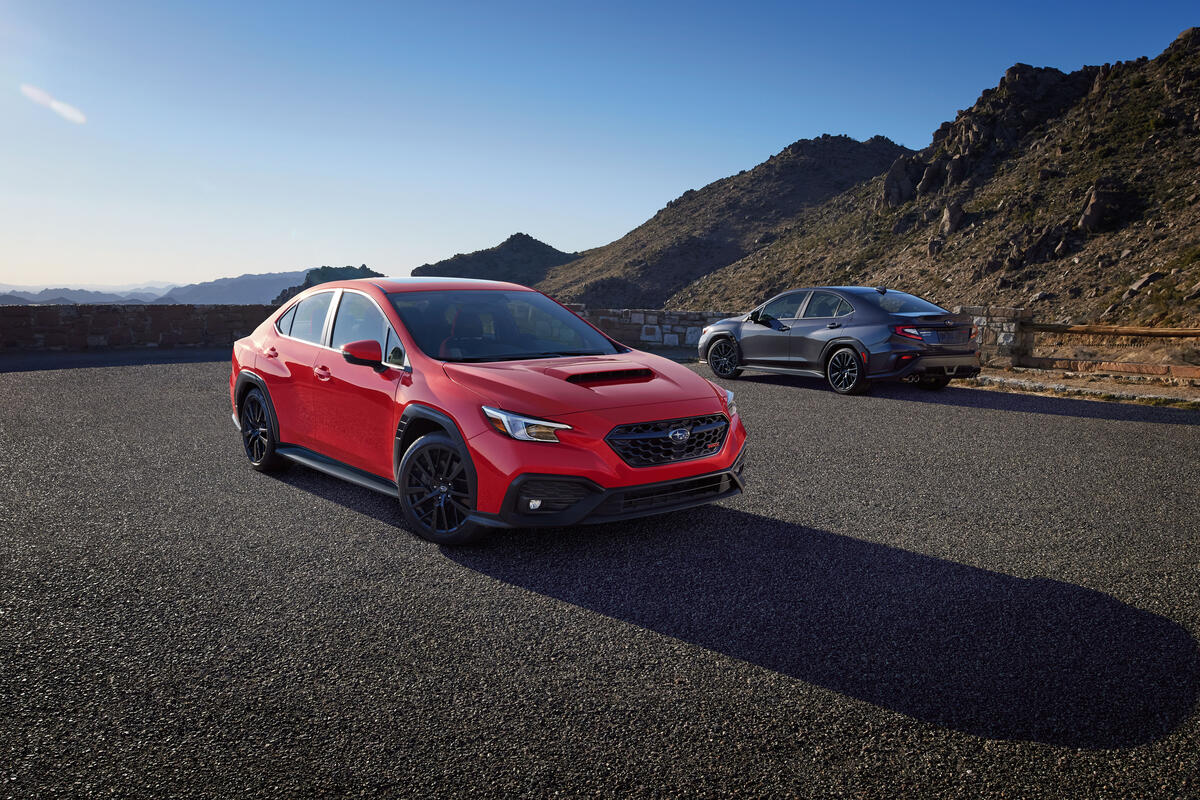
WRX STI
"This is not a WRX STI. But you grab the heavy battery in the floor and the steering is pretty accurate."
The WRX STI is Subaru’s performance-focused rally-bred model known for sharper steering feel and more aggressive handling tuning. The host says the Trailseeker is not that kind of car, implying it’s tuned more for comfort than for driver feedback and hard-cornering response.
gauge cluster
"The squircle wheel helps to see the gauge cluster, the shape takes a while to get used to,"
The gauge cluster is the screen or panel the driver looks at for important info like speed and battery level. The host is saying the steering wheel design makes it easier to see.
The gauge cluster is the driver-facing display behind or within the instrument panel that shows key information like speed and battery status. The host notes the Trailseeker’s wheel shape helps visibility of this cluster.
squircle wheel
"The squircle wheel helps to see the gauge cluster, the shape takes a while to get used to,"
A squircle wheel is a steering wheel with a rounded-square shape instead of a perfect circle. The host says it helps you see the dashboard information more easily.
A squircle wheel refers to a steering wheel with a squarish-but-rounded (square + circle) shape. In this segment, the host credits that unusual shape for improving sightlines to the gauge cluster.
head-up display
"and while the display is high enough to eliminate the need for a head-up display, it's kind of plain looking."
A head-up display shows key driving info on the windshield. The host is saying this car’s screen placement makes a HUD less necessary.
A head-up display (HUD) projects driving information onto the windshield so you can see it without looking down at the instrument panel. The host says the display is positioned high enough that you may not need a HUD.
recuperation
"Graphics show when you're draining electrons from the pack and when recuperation is sending them back to the cells."
Recuperation is how an electric car “recharges” a bit when you slow down. Instead of wasting energy as heat, it turns some of that slowing motion back into electricity for the battery.
Recuperation is the EV process of recovering energy when slowing down, converting the car’s motion back into electricity. The host contrasts it with draining electrons from the battery pack, describing how energy flows between the pack and the drive system.
one-pedal driving
"Some EVs offer very aggressive one-pedal driving settings, a lot of regeneration drag. I have this in the highest mode."
One-pedal driving means you can slow down mostly by lifting off the accelerator. It can make driving easier, but if it’s set too strong, it may be harder to keep a smooth, constant speed.
One-pedal driving is an EV control style where lifting off the accelerator provides strong regenerative braking to slow the car. The goal is to reduce brake pedal use, but it can also make speed control harder and feel jerky for some passengers if the regen is set aggressively.
modulation
"It's okay, oftentimes you will be using the brake pedal, which has great modulation, by the way."
Brake modulation is how smoothly and controllably the brakes respond to how hard you press. Good modulation makes it easier to slow down gently instead of abruptly.
Brake modulation is how precisely you can control deceleration by varying brake pedal pressure. The host praises the Trailseeker’s brake modulation, implying it’s easy to fine-tune slowing even when the EV’s regen behavior is also in play.

Tesla Model Y
"And that makes people car sick. Test the Model Y Uber drivers? Looking at you."
The Tesla Model Y is an electric SUV made by Tesla. It’s designed for everyday driving, but some people are talking about whether the way it drives can make passengers feel sick. The podcast is suggesting testing it with real ride-share drivers to see how it affects riders.
The Tesla Model Y is a compact electric SUV known for its strong efficiency and modern tech-focused design. It often comes up in discussions about real-world driving experiences, including how smooth the ride feels for passengers. In this podcast context, it’s specifically referenced in relation to whether the ride can make people feel car sick, with a call to test it with Uber drivers.
EV range vs real-world driving
"EVs are generally much less expensive to fuel... The EPA rates the touring and limited trims at 274 miles of travel... I'm seeing 240-250 before I feel the need to juice up"
They’re comparing the EV’s advertised range to what it really does in everyday driving. They also explain how that affects how often you need to charge.
The segment compares EPA-estimated EV range to what the host actually sees in mixed driving and cooler temperatures. It also ties range expectations to daily driving habits (like driving less than 70 miles per day).
EPA rates
"The EPA rates the touring and limited trims at 274 miles of travel. Now in mixed driving, in temperatures in the mid-40s to mid-50s, I'm seeing 240-250 before I feel the need to juice up"
“EPA rates” means the government’s testing estimate for how far an EV can go on one charge. Real life can be different, especially in cold weather.
“EPA rates” refers to the U.S. Environmental Protection Agency’s standardized testing used to estimate an EV’s driving range. It’s a useful benchmark, but real-world range can drop in colder temperatures or with different driving styles.
juice up
"I'm seeing 240-250 before I feel the need to juice up, keeping in mind that I'm okay with running the battery down to 20 miles or so."
“Juice up” just means charging the EV battery. They’re saying when they start needing to plug in again.
“Juice up” is EV slang for charging the battery. In this context, the host is describing when they typically need to recharge based on real-world range in cooler temperatures.
ground clearance
"Can Trailseeker actually seek trails with 8.5 inches of ground clearance? Yes, though this alley in my neighborhood will have to do today."
Ground clearance is how much space there is between the bottom of the car and the ground. More clearance helps when the road has bumps, ruts, or rocks.
Ground clearance is the distance between the vehicle’s lowest point and the road. Higher ground clearance helps an EV (like the Subaru Trailseeker) avoid scraping the underbody when driving on uneven trails, ruts, or rocky paths.
rock crawling
"Nobody's doing serious rock crawling in a vehicle like this. On a tougher stretch of trail, the forward camera system would be very helpful."
Rock crawling is very serious off-roading where you carefully drive over rocks and obstacles at low speed. The host is saying this EV isn’t built for that kind of extreme trail driving.
Rock crawling is a slow, technical off-road driving style where a vehicle navigates rocks and steep obstacles with minimal wheel slip. The host uses it to clarify that the Trailseeker isn’t intended for extreme off-road rock-crawling challenges.
forward camera system
"On a tougher stretch of trail, the forward camera system would be very helpful. The invisible car view helps a lot when dodging big rocks and tree stumps."
A forward camera system is a camera view that shows what’s in front of the car. It helps you spot obstacles when the trail gets rough.
A forward camera system uses cameras mounted on the vehicle to show what’s ahead, helping drivers navigate obstacles and tight trail conditions. Here, the host says it would be helpful on a tougher stretch of trail.
invisible car view
"The forward camera system would be very helpful. The invisible car view helps a lot when dodging big rocks and tree stumps."
“Invisible car view” is a camera display that makes it easier to see what’s right in front of the car. It helps you avoid rocks and other obstacles because you can better see the ground.
“Invisible car view” is a camera-based visualization that overlays or “removes” the vehicle from the display so you can see the ground and obstacles ahead. It’s meant to improve obstacle-avoidance by making it easier to judge clearance around rocks and stumps.
plug-and-charge
"Trailseeker supports plug-and-charge, look-ma, no apps or credit cards. And you've probably figured out by now that this can access the Supercharger network."
Plug-and-charge means you plug the EV in and it starts charging automatically. You don’t have to open an app or swipe a card at the charger.
Plug-and-charge is an EV charging feature where you connect the cable and the car automatically authenticates and starts charging without manually using an app or payment card. It reduces friction at public chargers and is especially useful when you’re stopping frequently on trips.
Supercharger network
"And you've probably figured out by now that this can access the Supercharger network. The top 150 kilowatt charge rate is not the fastest, but Trailseeker's charge curve is nice and even."
The Supercharger network is a big set of fast charging stations. If your EV can use it, road trips are easier because you can find fast chargers more reliably.
The Supercharger network is Tesla’s fast-charging network used by compatible EVs for quicker top-ups on road trips. Access to it matters because it can reduce uncertainty about finding reliable, high-power chargers along your route.
charge curve
"The top 150 kilowatt charge rate is not the fastest, but Trailseeker's charge curve is nice and even. If you don't road trip much, then maybe the max DC fast charge rate doesn't really matter."
The charge curve is how fast the car charges over the whole charging session, not just the peak speed. A smoother curve can make charging feel more predictable and efficient.
A charge curve describes how an EV’s charging power changes over time during a fast-charge session. Even if the peak kilowatt number isn’t the highest, a “nice and even” charge curve can mean more consistent charging and better overall trip efficiency.
DC fast charge rate
"If you don't road trip much, then maybe the max DC fast charge rate doesn't really matter. You won't be using it. Besides, it's much less expensive to charge at home."
DC fast charging is the quick-charging style you usually find at public stations. The fast charge rate is basically how quickly the car can take power in those moments—useful mostly when you road trip.
DC fast charging is a method that uses direct current to deliver high power to an EV, allowing quicker charging than typical home setups. The “fast charge rate” refers to how much power the car can accept at peak and during the session, which mainly matters for frequent road trips.
120-volt charging
"The average American only travels 40 miles a day, and in that case, standard 120-volt charging is all that's needed as long as the cars plugged in at night."
120-volt charging is the normal wall-plug way to charge an EV. It’s slower, but if you drive a short distance each day and charge overnight, it can work fine.
120-volt charging refers to using a standard household outlet (Level 1 charging) to recharge an EV. It’s slower than public fast charging, but for modest daily mileage it can be enough if you plug in overnight.
native route charge planning
"I did this for years. One thing, I couldn't find native route charge planning in the system. You'll have to use an app."
Native route charge planning is the car’s built-in feature that helps plan charging stops on a trip. If it’s not available, you may have to use an app to figure out where to charge.
Native route charge planning is built-in EV navigation that helps you plan charging stops based on your route and battery state. If it’s missing, the driver may need a third-party app to plan where and when to charge.
heated seats
"and it gets a round steering wheel. The heated seats are covered in hide from synthetic cows. They're quite comfortable with good bowl string."
Heated seats use electric heating elements to warm the seat cushions and/or backrests. They’re a comfort feature that can reduce how quickly you feel cold in cooler weather, especially before the cabin warms up.
ventilation
"Step up to touring for ventilation and the option of leather. It could be worth it, since the $2,600 upgrade delivers the big glass roof and radiant leg warmers up front."
Seat ventilation uses airflow to keep you cooler. It’s helpful in hot weather, unlike heated seats which warm you up.
Seat ventilation typically means fans and airflow channels in the seat to help remove heat and moisture. It’s the opposite of heated seats and is most useful in warm weather or for drivers who run hot.
radiant leg warmers
"It could be worth it, since the $2,600 upgrade delivers the big glass roof and radiant leg warmers up front."
Radiant leg warmers are heaters aimed at warming your legs. They can make you feel comfortable faster in cold weather because they warm you directly.
Radiant leg warmers are in-cabin heating elements designed to warm the driver and/or passengers’ legs directly using radiant heat. They can feel effective even when the cabin is not fully warmed, improving comfort during cold starts.
surround view camera
"If you don't have emails to send while charging, [611.8s] maybe play with the surround view camera, it's pretty trippy. [616.3s] There's also an automatic parking feature, but I find that kind of fussy."
It’s a set of cameras around the car that shows you a “bird’s-eye” view. That makes it easier to park and avoid hitting curbs, poles, or other cars.
A surround view camera system uses multiple cameras around the car to stitch together a top-down or wide-angle view. It helps you judge clearance when parking or maneuvering in tight spaces.
automatic parking feature
"maybe play with the surround view camera, it's pretty trippy. [616.3s] There's also an automatic parking feature, but I find that kind of fussy. [621.4s] The cup holders are deep in the console."
This is a parking assist that can steer the car into a spot for you. You still have to supervise and control speed, but it reduces the effort.
An automatic parking feature uses sensors and steering control to help park the car with minimal driver input. Depending on the system, it may handle steering while you manage speed, shifting, and brake/accelerator.
data plan
"If you decide to pay for the data plan once the trial period ends, [666.2s] natural noise commands are terrific. [668.7s] They allow you to keep your eyes on the road."
It’s the paid cellular service that lets the car stay connected to the internet. After a free trial, you may need to pay to keep features working.
A data plan is the cellular subscription that enables connected-car features like remote services, live traffic, and over-the-air functions. Many systems offer a trial period, then require payment to keep those services active.
natural noise commands
"If you decide to pay for the data plan once the trial period ends, [666.2s] natural noise commands are terrific. [668.7s] They allow you to keep your eyes on the road."
Instead of pressing lots of menus, you can talk to the car in normal language. The car tries to understand what you mean and does the task for you.
Natural language commands let you control infotainment functions by speaking in a conversational way, rather than using rigid button sequences. In this case, it’s used to ask about the vehicle’s remaining range.
trip range
"Hey Subaru, how much range do I have in the pack? [677.1s] Your trip range is 242 miles. [681.7s] These work pretty darn well."
It’s the car’s estimate of how many miles you can drive before it runs out of energy. The number can go up or down depending on how you’re driving and conditions.
Trip range is the estimated distance the vehicle can travel before the battery (or fuel) is depleted, based on current conditions and recent driving. It’s a real-time estimate that can change with speed, weather, and driving style.
charge pad
"there'll be no fighting over the charge pad. Chevy Blazer does not get Android Auto or Apple CarPlay, and no cords needed here."
A charge pad is a spot in the car where you can place your phone to charge it without plugging in a cable. The host is saying it reduces arguments about who gets to charge first.
A charge pad refers to a wireless charging surface in the vehicle, usually for phones. The host’s point is that multiple passengers can charge without competing for a single wired connection.
Android Auto
"there'll be no fighting over the charge pad. Chevy Blazer does not get Android Auto or Apple CarPlay, and no cords needed here."
Android Auto is a way to connect your Android phone to the car so you can use certain apps on the car’s screen. It’s meant to make navigation and music easier while driving.
Android Auto is a smartphone integration system that lets you use compatible Android apps on the car’s infotainment screen. It typically provides navigation, music, and messaging in a driver-friendly interface.
Apple CarPlay
"Chevy Blazer does not get Android Auto or Apple CarPlay, and no cords needed here."
Apple CarPlay lets you connect an iPhone to the car and use certain apps on the car’s screen. It’s designed to keep things like maps and music accessible while driving.
Apple CarPlay is a smartphone integration system that mirrors selected iPhone apps onto the car’s infotainment display. It’s commonly used for navigation, calls, messages, and music with a consistent, easy-to-use interface.

Chevrolet Blazer
"Chevy Blazer does not get Android Auto or Apple CarPlay, and no cords needed here."
The host brings up the Chevy Blazer to compare tech features. They’re saying it doesn’t support Android Auto or Apple CarPlay, so it may be harder to use your phone apps through the car screen.
The Chevrolet Blazer is being used as a comparison point for infotainment and connectivity features. The host specifically notes it lacks Android Auto and Apple CarPlay, which affects how easily you can use your phone’s apps and navigation in the car.
separate climate zone
"No separate climate zone, but directional vents help. There are bun warmers for the outboard passengers and no shortage of USB ports."
A separate climate zone means different parts of the car can have different temperature settings. The host is saying this vehicle doesn’t do that, so it’s more “one temperature for everyone.”
A separate climate zone is an HVAC feature that lets different areas of the cabin have independent temperature settings. The host notes the Trailseeker doesn’t have this, so passengers can’t fully dial in different temps for their side.
directional vents
"No separate climate zone, but directional vents help. There are bun warmers for the outboard passengers and no shortage of USB ports."
Directional vents are vents you can aim to blow air where you want it. The host is saying it helps even though the car doesn’t let different passengers set different temperatures.
Directional vents are adjustable air outlets that can aim airflow toward specific seating positions. The host mentions them as a workaround because there’s no separate climate zone, meaning everyone shares the same overall temperature control.
USB ports
"There are bun warmers for the outboard passengers and no shortage of USB ports. Like many EVs, the floor is as flat as a pancake in Kansas, and that helps with footroom."
USB ports are the charging/data connections inside the car. More ports means fewer arguments about who can plug in their phone.
USB ports in the cabin are used to power and/or connect devices like phones and tablets. The host highlights “no shortage” of them, which matters for keeping passengers charged and entertained.
outboard passengers
"There are bun warmers for the outboard passengers and no shortage of USB ports."
Outboard passengers are the people sitting on the left and right ends of the back seat. The host is saying those seats get the heated-seat feature.
Outboard passengers are the people seated on the outer sides of a row (typically the left and right seats), as opposed to the middle seat. The host mentions heated seats for these outer positions.
flat as a pancake
"Like many EVs, the floor is as flat as a pancake in Kansas, and that helps with footroom."
They’re saying the back floor is very flat. That makes it easier to put your feet comfortably in the back seat, especially compared with cars that have a hump or raised floor.
The host is describing a very flat cabin floor, which is common in many EVs because the battery packaging can allow a flatter underfloor area. A flatter floor improves footwell usability for rear passengers.

2026 Subaru Trailseeker
"Here's Trailseeker's biggest advantage... Summing up the 2026 Subaru Trailseeker, there's a lot to like here, starting with design inside and out."
The 2026 Subaru Trailseeker is a Subaru made for people who want to carry gear and still have a comfortable, usable interior. The host is basically saying it’s laid out well for trips—lots of room for stuff and smart storage, plus a more rugged-looking exterior.
The 2026 Subaru Trailseeker is a Subaru wagon/crossover built around practical cargo space and outdoor-friendly packaging. In this segment, the host focuses on how its interior layout (cargo volume, storage under the floor, and seat access) supports wilderness-style trips and everyday hauling.
Solterra Soltera
"Here's Trailseeker's biggest advantage. Soltera is six inches shorter, seven packs wedge into its..."
The Solterra is Subaru’s electric SUV. The podcast is comparing it to another EV model by talking about how the other one is shorter. This helps explain how the different sizes can change what the vehicles are like to live with.
In this podcast context, “Solterra” refers to the Subaru electric SUV, and the discussion highlights a key size advantage. The episode notes that the Trailseeker is six inches shorter than the Solterra, and then moves into how that relates to the vehicle’s design and capacity. That makes the Solterra relevant as the baseline for comparing interior and storage tradeoffs.
28 cubic foot cargo space
"Soltera is six inches shorter, seven packs wedge into its 28 cubic foot cargo space... Big Brother here has 34 cubic feet."
“Cubic feet of cargo space” tells you how much stuff the car can hold. It’s like measuring the size of the trunk or cargo area, so you can compare how practical each model is.
“Cubic foot cargo space” is a volume measurement (how much space fits), not a weight rating. The host uses it to compare how much stuff each Subaru can carry, emphasizing that Trailseeker’s larger volume makes hauling easier.
34 cubic feet
"Big Brother here has 34 cubic feet. Hauling nine bundles of softness and absorbency is a more relaxed affair."
This “34 cubic feet” number is how much space the car’s cargo area has. Bigger number generally means you can fit more gear for road trips or outdoor activities.
“Cubic feet” here is again cargo volume, used to quantify how much the Trailseeker can store behind the seats. The host contrasts 34 cubic feet with the smaller Soltera’s 28 cubic feet to argue the Trailseeker is more practical for trips.
wilderness exploring
"Subaru owners are likely to do wilderness exploring. There is a travel charge cord, but no spare tire, only a repair kit."
The host is saying this car is meant for people who take trips outdoors and need to bring gear. The cargo space and storage are the features that support that lifestyle.
The host connects the Trailseeker’s cargo and storage layout to a use case: taking the car into nature and carrying gear for outdoor trips. This is a practical “why it matters” framing for the interior packaging details.
repair kit
"There is a travel charge cord, but no spare tire, only a repair kit. There might be room for a space saver if the dual level floor is at its highest."
Instead of a spare tire, this car uses a repair kit. It’s meant to help you get back on the road after a flat, but it’s usually a temporary fix rather than a full replacement tire.
A repair kit is an alternative to a full spare tire, typically including sealant and an air pump to temporarily fix a puncture. The host notes there’s no spare tire, so the kit is the intended roadside solution for tire damage.
space saver
"There might be room for a space saver if the dual level floor is at its highest. Oh, and the security shade has its own storage area under the floor."
A “space saver” is a smaller spare tire meant to take up less room. It’s usually not meant for long-distance driving like a normal spare, but it can help you get to a tire shop.
A “space saver” is a compact spare tire, smaller than a full-size spare to save weight and cargo space. The host implies the Trailseeker’s floor setup might allow fitting one only if the dual-level floor is positioned a certain way.
dual level floor
"There might be room for a space saver if the dual level floor is at its highest. Oh, and the security shade has its own storage area under the floor."
A dual level floor means the cargo floor can be adjusted to different heights. That can change how much space you have and what storage items can fit underneath.
A dual level floor is a configurable cargo floor that can be set higher or lower to change how much flat storage space you get and what fits underneath. Here, it’s tied to whether a compact spare (“space saver”) could be stored.
security shade
"Oh, and the security shade has its own storage area under the floor. Nice touches back here include power, bag hooks, and a little nook."
A security shade is a cover that hides what’s in the trunk/cargo area. It helps keep things out of sight, and this car stores it neatly under the floor when not in use.
A security shade is a retractable cover that hides cargo from view, helping reduce visibility of valuables. The host calls out that it has its own storage area under the floor, which keeps the cargo bay tidy.
40-20-40 split seats
"It's quite a reach to get to the seat releases, so these are very helpful. 40-20-40 split seats would be good to have."
“40-20-40 split seats” means the back seat is split into three parts. You can fold one side or just part of the middle to make more room for cargo while still leaving some seats usable.
40-20-40 split seats means the rear bench is divided into three sections: 40% of the seat on the left, 20% in the middle, and 40% on the right. This lets you fold part of the seat to create different cargo/passenger configurations, like carrying tall items while keeping some seating.
Max cargo space is 74 cubic feet
"Skiers would appreciate those, but at least this area is useful. Max cargo space is 74 cubic feet. That's pretty big."
This is the biggest amount of space the car can offer for luggage or gear. The host is highlighting that the Trailseeker can hold a lot when you set it up for maximum cargo.
“Max cargo space” is the largest cargo volume the vehicle can provide, typically achieved with seats folded and the cargo floor configured for maximum room. The host uses 74 cubic feet to emphasize that the Trailseeker is very cargo-capable for a wagon-like layout.
Request an Explanation
Heard something you'd like explained? We'll add it to this episode.
Sign in to request explanations for terms you heard.
Want to learn more?
Browse our glossary for plain-English explanations of automotive terms, jargon, and concepts.
Help improve this episode
See something that's not quite right? Our annotations are AI-generated and can sometimes miss the mark. Click the flag icon on any annotation to suggest a correction.
1 community members have helped improve this episode.